Monthly Archives: March 2017

Mamoosh pittas and the question of artisan food

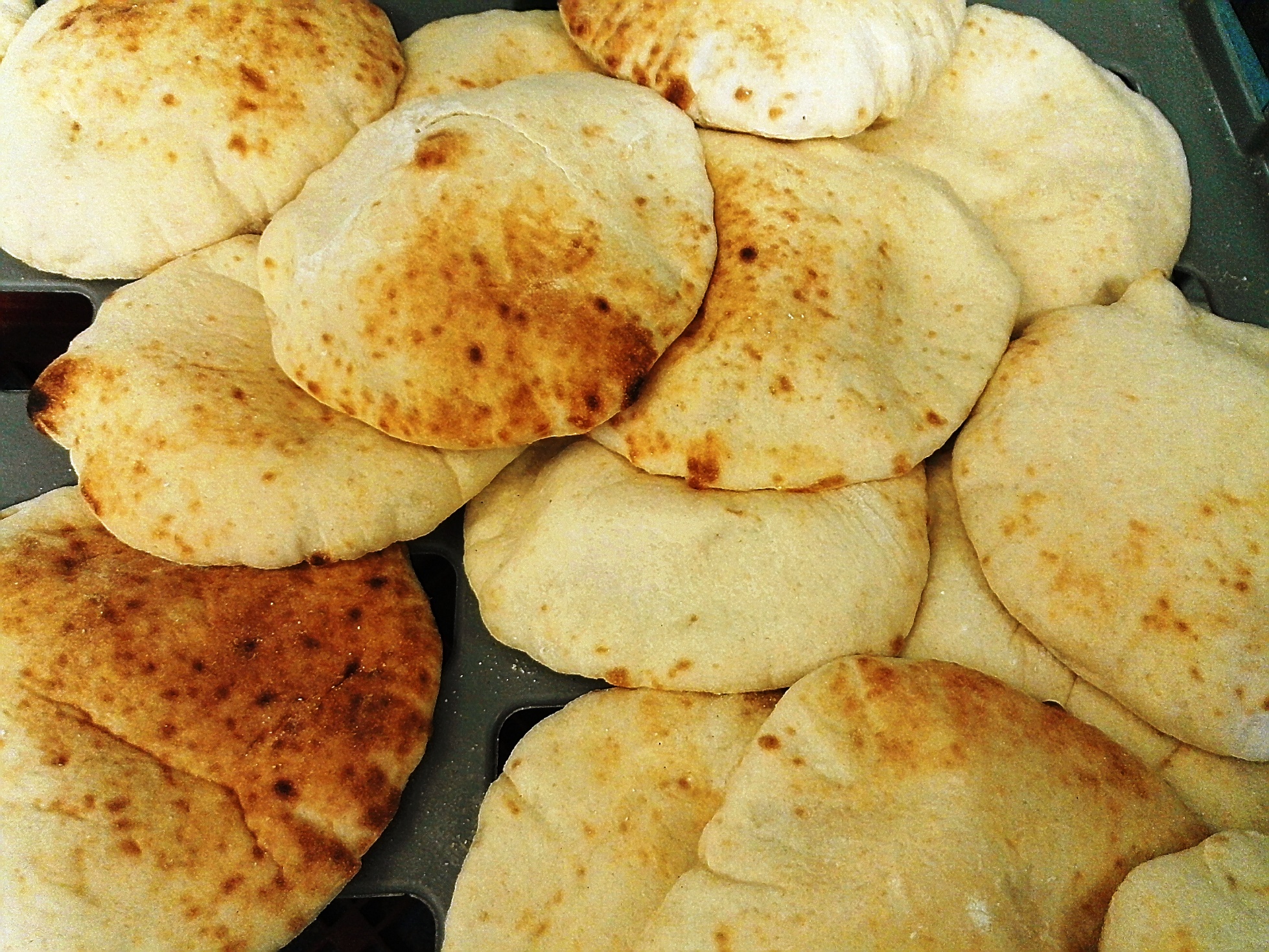
Real pittas from Mamoosh

When making food by hand to sell direct to the public, one thing you will almost certainly argue about with yourself – and possibly with friends and family too – is pricing. Despite Britain being a place where we idolise chefs, buy recipe books in bulk, sit glued to food-themed TV, and like to fantasise about the artisan food producer life, most people still buy most of their food from supermarkets. And supermarkets are very much a product of the post-World War 2, post-rationing hunger for cheapness and plenty, quantity over quality.

Any artisan food producer has to compete with this.

Einat Chalmers of Mamoosh rolling pittas

Einat Chalmers runs Mamoosh1 out of small bakery within an industrial in Newhaven, on the East Sussex coast. Her main product is pitta2 bread. She sells four for £2. This seems like a bargain to me, but then I’m a middle-class stereotype who tries to eschew industrial food. People, even friends, criticised my prices when I sold Italian biscuits on the market, but my margins were very narrow, and the time it takes to handmake real food is a world away from the time it takes for a factory to spit out industrial food.

Scaling brioche buns by hand

Einat has some professional kit but is essentially making her pitta by hand: dividing the dough, shaping the balls, feeding a small dough roller, laying them on trays to prove, then dropping them onto her new addition: a proper pitta oven. Then removing them by hand too. With a supermarket’s pitta, the dough is almost certainly not touched by hand at all as it moves through an automated production process in a factory, not a bakery.

And frankly supermarket pitta tastes like cardboard; a conclusion I reached years ago and one that’s affirmed every time I eat Einat’s bread. Never mind that many will find the result indigestible; not because they can’t eat wheat, but because industrial bread doughs simply aren’t proved for long enough.
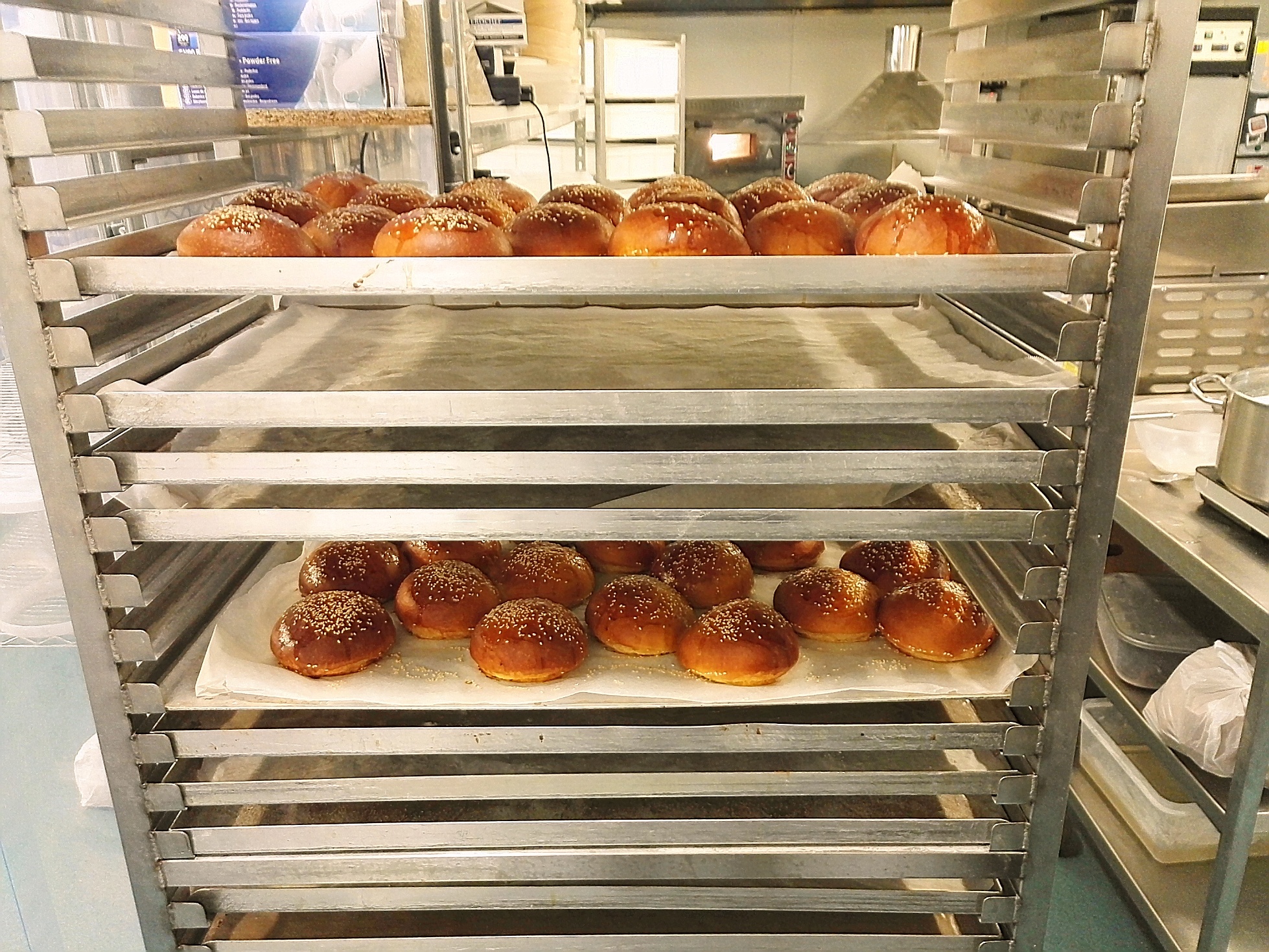
Mamoosh brioche buns

Einat, who grew up in the north of Israel close to Lebanon, sells her delicious pitta on the markets in Lewes. They’re a key part of my family’s diet these days. My fussy son calls it “pocket bread” and it’s a good way to get him to eat something filling. Einat also makes brioche buns to supply The Pig and Jacket, who do pulled pork and hog roast, and croissants and Danish, which she sells at the smaller market in Newhaven. She says she turns out up to around 250 brioche buns and 900 pitta a week but is gradually expanding. The latter production is helped by that pitta oven.

Mamoosh croissants, pain au chocolate and Danish pastries proving

I’ve never seen one before but it’s a great bit of kit, gas elements heat a large rotating disc of cast iron from below, while other flames brown the pittas from above. Einat says she was encouraged to invest in one by her restaurateur father in Israel, and when I visited the bakery I got a great sense of its efficacy. It heats to about 450-500C (a temperature similar to that found in a wood-fired pizza oven) in about 10 minutes. About a dozen pittas can fit on the disc and the rotation takes about a minute. The results are great: pocketed but puffy and tender, an entirely different animal to the abovementioned cardboard pittas more familiar to British supermarket shoppers. They may cost about 50p for six, but to my mind that’s a false economy: not only are they poor quality in terms of ingredients and production process, they’re also barely edible for anyone who’s even vaguely discerning about the bread they eat.
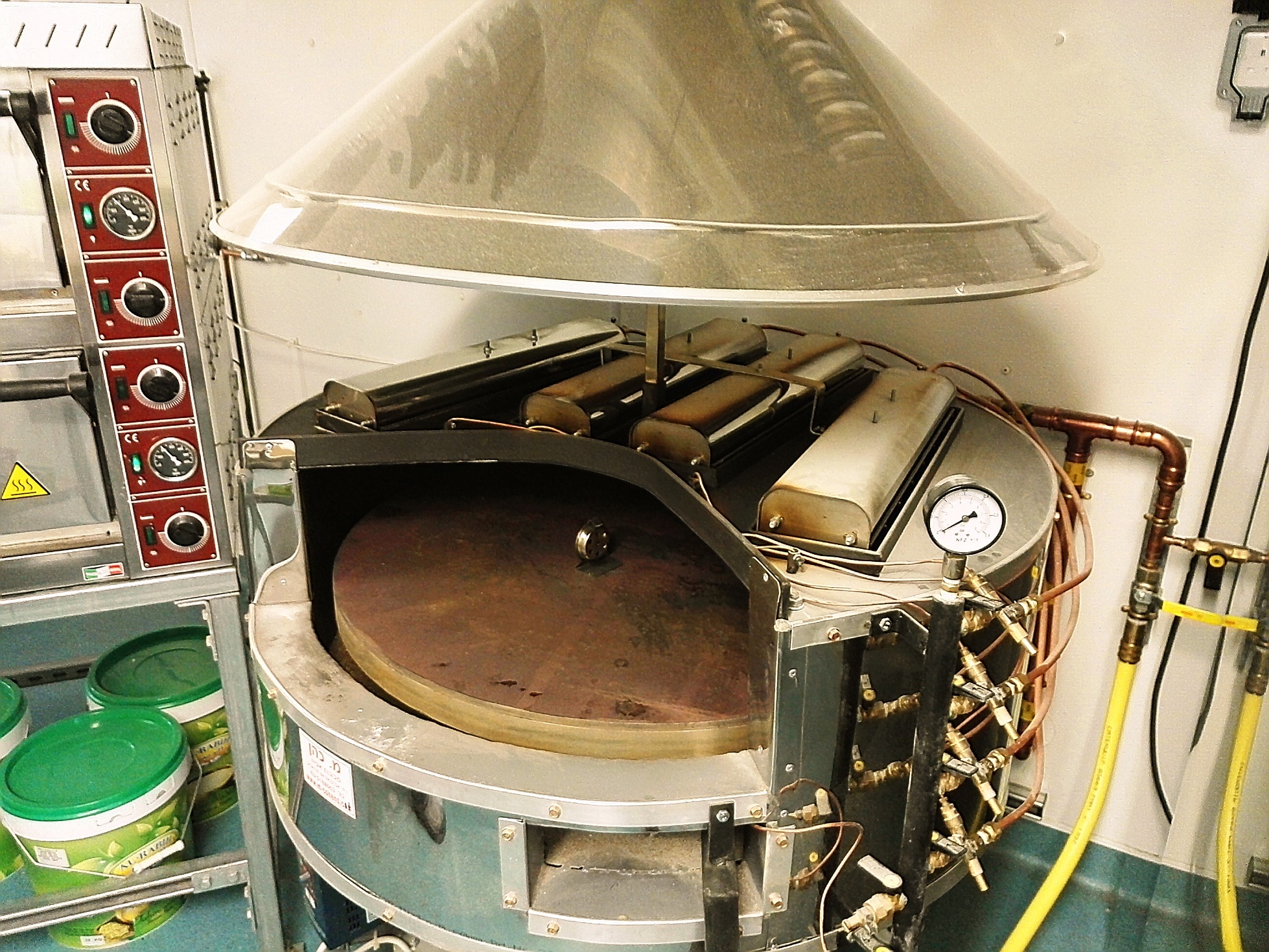
Pitta oven

Einat, who trained as a chef at the French Culinary Institute and interned in bakeries in New York in the late 1990s, taught herself sourdough and pitta at home. She’s lived in Sussex with her Scottish husband for about 15 years and worked on and off for Brighton’s Real Patisserie before starting her pitta business. I think she’s really onto something. I urge anyone who’s in Lewes for the food markets to check out her pitta, they’re one of those foods that very tellingly highlights the difference between real, handmade products and industrial crap. One of those products that, in a mouthful, qualifies and justifies the price differences3.

Mamoosh pittas are available at the Friday morning food market, in the Lewes Market Tower, from Talicious falafel stall, or you can get them straight from Einat’s Mamoosh stall at the Lewes farmers market on the first and third Saturday of every month. I’m eating some now with some of my hummus as I hit “Publish”.
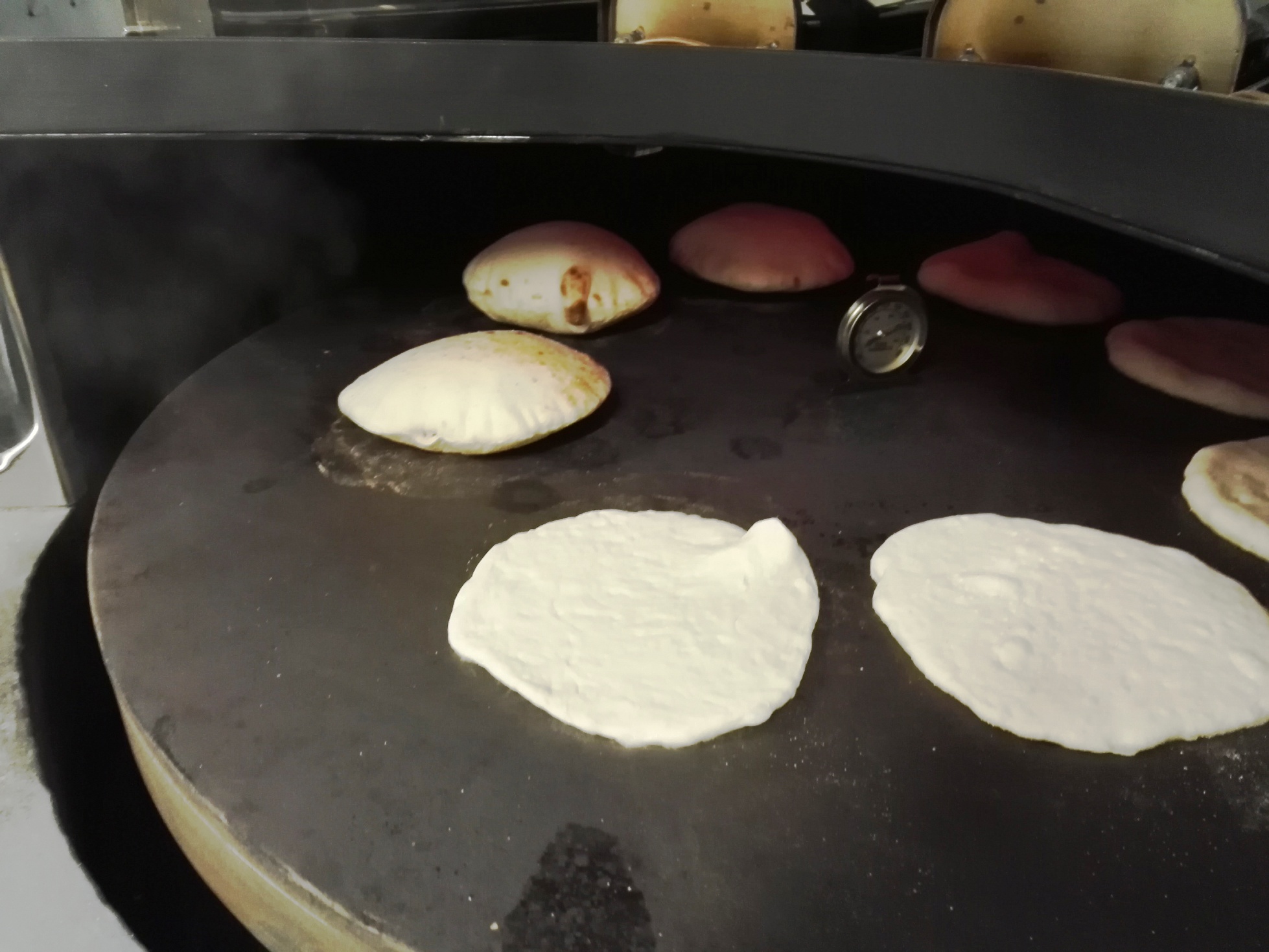
Pittas baking

Mamoosh pittas and other products are available (as of April 2017):
At the Lewes Farmers Market, morning of first and third Saturday of the month, the Precinct, High Street, Lewes BN7 2AN, where Einat has a stall.
At the Lewes Food Market, every Friday morning at the Market Tower, BN7 2NB.
At the Hillcrest Country Market, every Thursday morning, the Hillcrest Centre, Newhaven BN9 9LH.

Footnotes
1 Einat explains the name thus: “Mamoosh comes from the word mummy (mother), probably introduced by the Polish Jews and become part of the Hebrew slang. “e use it mainly as a slang for sweetie, darling, honey, dear.”

2 In English pitta or pita is borrowed from the modern Greek πίτα. As it’s a transliteration, presumably there are arguments for both spellings. Indeed, the Greek word can also be translated as pie or cake. Older etymology of the word is contested so can’t help.

3 This is a tangent but just to preemptively respond to any criticism that I’m writing simply from a naive middle-class position, here’s a little more food for thought. Many people say that only the better-off can eat what I call real foods, and the poorer are dependent on cheap industrial produce, often frozen or in the form of ready meals, from budget supermarkets etc. This is obviously a complex issue but a story I read in the i newspaper on 2 March seemed to confirm something I’ve long thought – if you base your diet on fresh veg, grains, pulses, don’t expect red meat with every meal and don’t throw away food (itself an enormous issue, and one of the things that will bring about the downfall of our society), you can eat more affordably.

The article quotes from a report by the Institute of Economic Affairs (IEA), “the UK’s original free-market think-tank”, and its author says, “A diet of muesli, rice, white meat, fruit and vegetables is much cheaper than a diet of Coco Pops, ready meals, red meat, sugary drinks and fast food. The idea that poor nutrition is caused by the high cost of healthy food is simply wrong.” The IEA is not a body I know well, and it’s of neoliberal disposition and I’ve not read the original report, so I’m slightly wary of quoting from it.

15 Comments

Filed under Bakeries, Breads, Discussion, Food misc

Welcome Holler Boys Brewery!

Steve Keegan at Holler Boys Brewery

The small East Sussex town of Lewes once had a dozen breweries. In the 19th century, these included Harvey’s, Southdown, Lyells, Beards, Verralls, Ballards, Bear Yard, Cliffe (then South Malling Steam Brewery). The latter burned down, the former still majestically dominates the centre of town – architecturally and olfactorily. All the rest are gone too. But the story of the region’s brewing reflects the wider story of Britain’s brewing.

The 20th century saw the decimation of diversity, the reduction of enormous regional variety and its replacement in pubs, largely, with interchangeable industrial lagers. A few real ales hung on, defended by CAMRA. Then, around the turn of the millennium, new ‘craft beer’ breweries began to appear; with the advent of 2002’s Progressive Beer Duty1, they started flourishing.

I don’t really like the real ale/craft beer distinction, especially as the latter has no accepted definition. But what I do like is the restoration of diversity with the emergence of innumerable new breweries. The number of breweries in the UK is now at its highest in 70 years2.

In the Lewes area, we now have Burning Sky, Gun, Long Man, 360, Isfield, among others. They were even microbrewing out of the Elephant and Castle pub and the Pelham Arms has its new Abyss Brewing operation. Excitingly, we’re getting another new brewery now near Lewes. It’s called Holler Boys, a name that’s sure to connect with the area’s Bonfire boys and girls, as it comes from a Bonfire prayer3.

Steve Keegan at Holler Boys Brewery. And wort.

Old hand, new brewery
It’s being set up by Steve Keegan, an old hand in the booze industry: he was at the forefront of setting up pubs that sold craft beer, before he borrowed £700 on his credit card and set up Late Knights Brewery in Penge, south London, in 2012. It was his night job, but Late Knights quickly became very successful, with them opening up a half dozen bars, including the Brighton Beer Dispensary. They ended up with a £2.2 million turnover. Then, in Autumn 2016, it all came to an end. While Steve’s relationship with their investor was getting difficult, he injured his head badly playing football and was laid up with labyrinthitis, barely able to talk. Steve and his girlfriend and creative collaborator, Bethany Warren, are also expecting – indeed, the baby is due this month, around the same time as the first batch of beer.

It was through Bethany, a local girl, whose father has a vineyard near Crowborough, that Steve met Anthony Becvar. Anthony’s Czech granddad immigrated here in the 1930s – “a military man who knew what was coming,” says Anthony – and starting to farm at Little Goldsmiths, near Blackboys. He’s the third generation to run the farm.

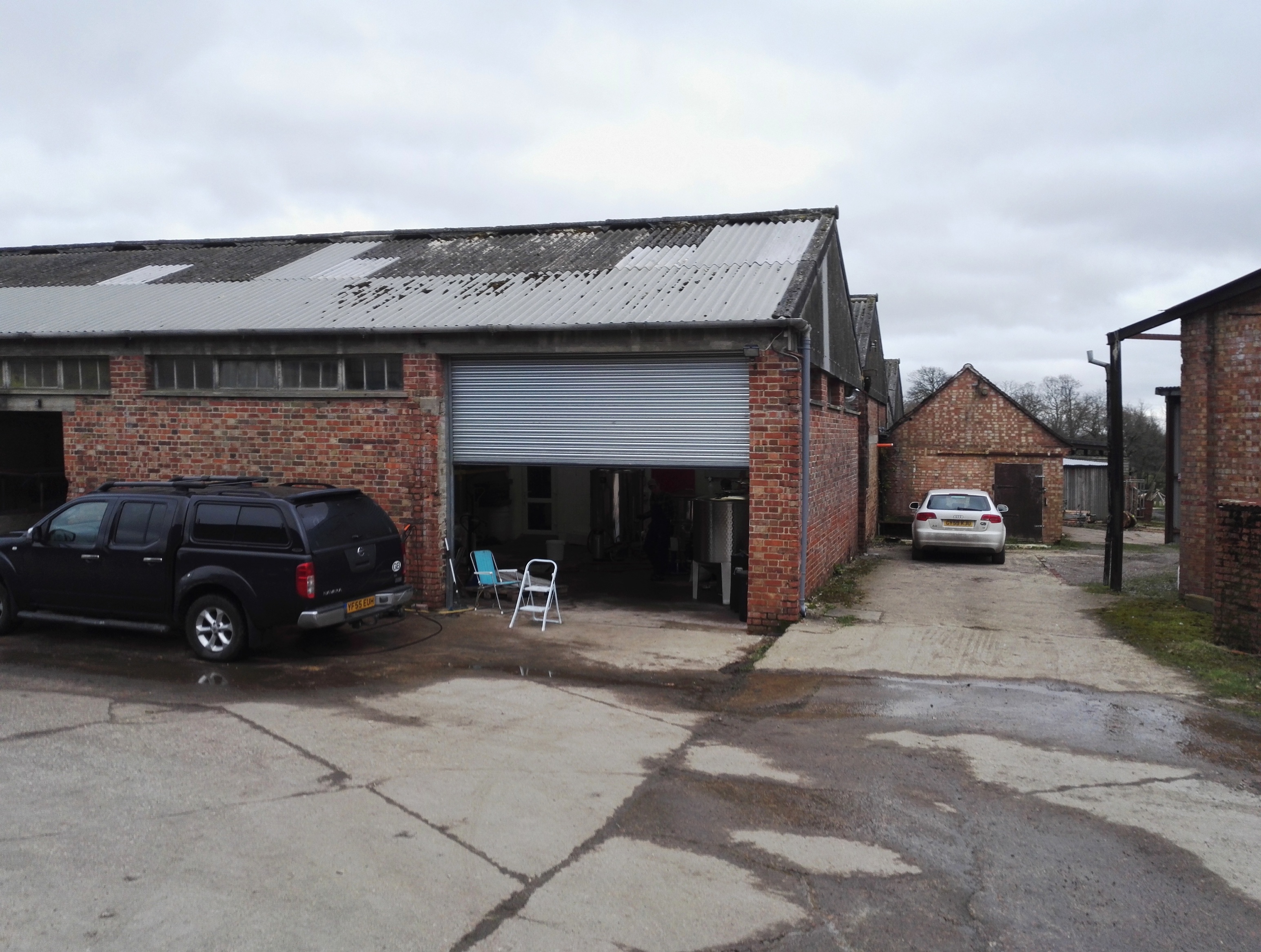
Not only has Anthony switched away from dairy to arable, he’s another example of a farmer diversifying. Farm buildings are used for all sorts these days – from soft play to brewing. Holler Boys is being set up in the building that once was used for milking, and is still partly used for storing bales. They’ve put in walls, creating the brewing space, cold room and office so far, with the latter to be fitted out to host tastings.

Brewery in a cow shed

What’s in a name?
Originally Steve planned to use the name Ironstone, a nod to the bedrock of his home turf around Middlesbrough, but also to the Blackboys area, which gets its name from the sooty faces of the charcoal burners and smelters who once toiled here. It turned out Molson Coors had it copyrighted though, and weren’t forthcoming when he tried to negotiate. Then a small backroom brewery in Staffordshire started using it too, so they found a new name. Bethany is involved in Bonfire, a member of Cliffe Bonfire Society, so would understand full well the potential local resonance of the name.

When me and my friend Alex Markovitch (of Kabak Food, who knew Steve from Penge; Steve’s also provided beer for Alex’s Festival of Jim over several years) visited in late February, Steve was busy brewing up a batch of Golden Ale. He says, “The past two months we’ve been plumbers, electricians and painters” so he was excited to now be brewing. The Golden Ale is using NZ Pacific Gem (for bittering) and Kentish Goldings (for aroma). He explained that many of the big flavour US hops favoured by craft brewers are all bought up by the big boys so he’s almost forced to innovate with the hops, malts and even the yeasts that are more available. This particular beer is based on an 1890 recipe which he found after being inspired by Peter Haydon, a director at Meantime Brewery, writer and former General Secretary of the Society of Independent Brewers, to research.

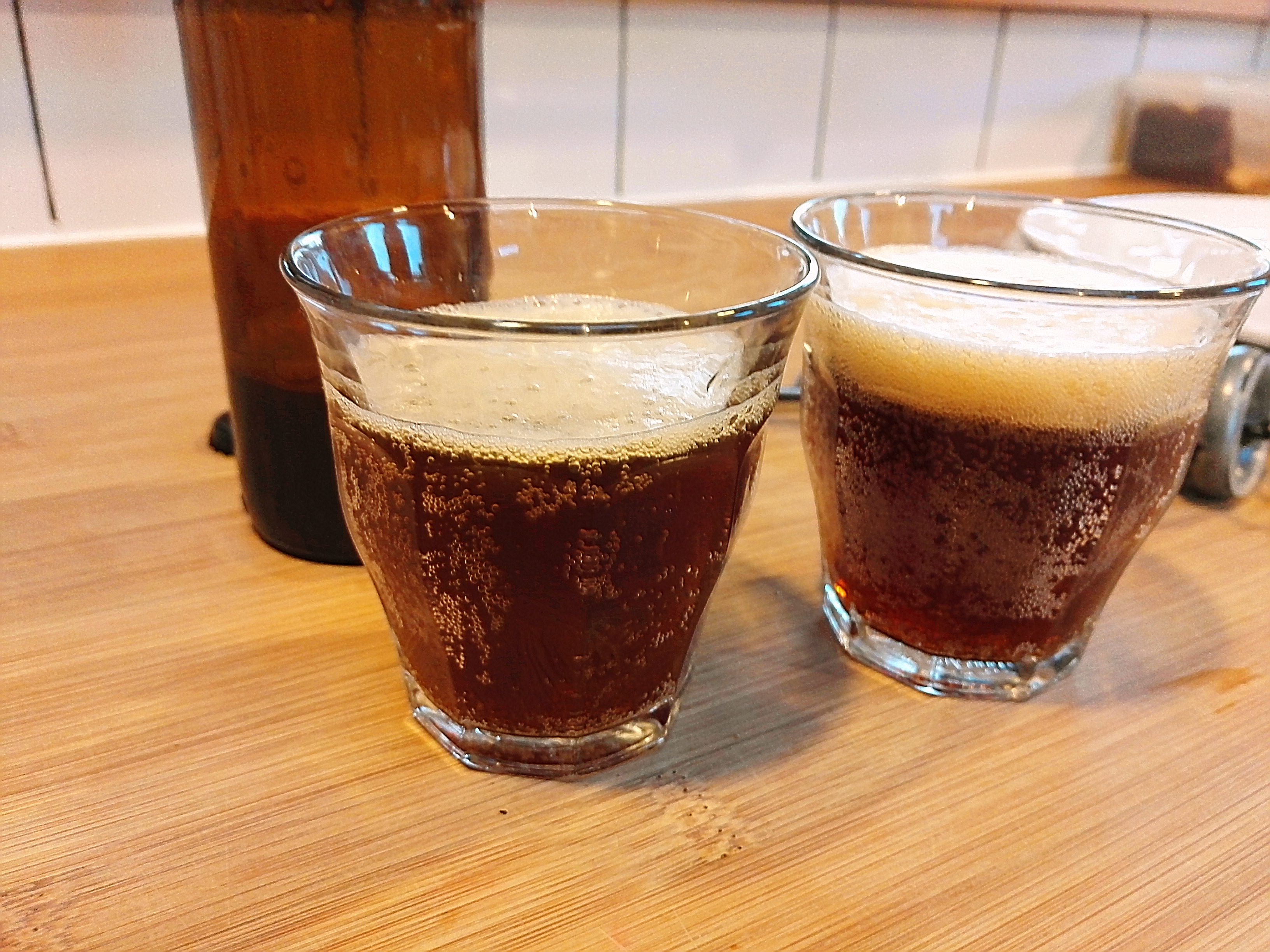
Belgian red from Holler Boys Brewery

Testing, testing
He’s also doing tests for an English IPA and a black lager, as well as planning a “crisp, easy-drinking” session IPA, 4-4.2%. Steve also gave me and Alex a chocolate milk stout and a Flemish red beer (made with Belgian yeast). I always feel chuffed to get beers from brewers even before they’ve finalised their branding4: a bottle without a label is strangely exciting. We really enjoyed the Belgian Red, a beer that has both a hoppy crispness and a warm, full body. Steve explains, “with the craft world dominated by the hop side of things at the moment, there is certainly going to be a shift into what we can do with malt and yeast. The Flemish red is my way of showing what a Belgian yeast can really do.”

I’m looking forward to seeing some of Steve’s beers appearing in the pubs of Lewes. He said the brews should be ready later this month. Initially he’ll be focussing on bottling and casks, which he plans to sell “within half an hour of here”, to places where the beer is well looked after. Down the line there’s talk of kegs, can, even venues, as that’s Steve’s background – when he started Late Knights he was running places in London, Oxford and Brighton and had been an operations manager for Fullers. But as Late Knights grew so fast, he’s keen to pace himself better this time, get the brew right, build up slowly, retain control. He says, “I’ve turned down a lot of investment… actually I want to do it myself.” Unlike with Late Knights, he even has a proper lease with Anthony for using the farm buildings.

Steve and Anthony talk about growing hops, keeping bees, and maybe even trying barley (though Anthony says, “It’s not the best ground for barley”). The farm has “plenty of space” – 200 acres (81 ha or 0.8 km2) – for such projects. Time will tell. It’s all rather thrilling, to taste these beers after having a previous acquaintance with Late Knights, then be able to sit back and see what happens next. Steve, Bethany and the baby, with assistance from Anthony, production in tanks dubbed Wayne, Long John, Jake and Ellwood, are initially aiming for 100 casks5 a week, with a range of English IPA, Golden, Session IPA and Stout.

Holler Boys tanks


Notes
1. Under Gordon Brown, the taxation of breweries was changed so that smaller companies paid less tax on the beer they were selling. Wikipedia gives more detail.
2. Peter Brown, in this (undated) article.
3. It comes from this verse of Bonfire Prayer. The full prayer can be found here.
“God’s providence he was catch’d
With a dark lantern and burning match,
Holler boys, holler boys, ring bells ring
Holler boys, holler boys, God Save the King!”
4. Labels etc are being designed by Brighton-based illustrator Billy Mather, billymather.co.uk.
5. There are 73 imperial pints in a cask, so 7,300 pints; that is about 37.5 hectolitres.

7 Comments

Filed under Ale, beer, Breweries