Monthly Archives: December 2013

High tea, post-colonial-style, at Raffles, Singapore

View of Raffles
Last time we visited Singapore, we were arriving from India, barely recovered from a nasty dose of food poisoning garnered in the picturesque squalor of Kerala’s backwaters and were so relieved to be in this generally clean, orderly city with its reliable food hygiene. This time round we were coming from amiable, underpopulated New Zealand. We did frequent one food hall in Auckland for a bit of Asian food, but Singapore really is an amazing place for such affairs, known here as hawker centres.

I love hawker centres. For a few dollars and you can indulge in all sorts of Asian goodies – predominantly representing Singapore’s mix of Chinese, Malay and South Asian/Indian ethnic groups, but also Indonesian, Japanese, Thai and more.

Singapore really is an amazing food city.

Not that it’s all about the hawker centres though. The city boasts eating options in all price categories and styles. Indeed, our first morning we had breakfast in a place called Prego, which was a pizzeria by night and had walls covered in Italian sayings (such as “A tavola non si invecchia” – at the table, one doesn’t age). Elsewhere are fancy cake shops, restaurants with French or American-trained chefs, fusion places, and a gazillion other eateries tucked away in the endless malls, quaysides, hotels and science fiction developments. (Wandering around the Marina and some of the malls was like being in the sets for Logan’s Run or THX-1138, and entering the Marina Bay Sands – a trio of skyscrapers with what looks like a giant ship laid across the top – gave me a flashback to playing Halo 3 ODST.)

Then of course there’s the colonial heritage. Which of course means Raffles.

Raffles Tiffin Room

Named after Sir Thomas Stamford Raffles (1781-1826), the founder of Singapore, Raffles is the quintessential 19th century remnant of the British Empire’s endeavours in Southeast Asia. It started life as a modest harbour-side bungalow in 1887 then went on to expand into an array of white, colonnaded, neoclassical buildings that seem to cover at least an acre and, miraculously in a city of thrusting capitalistic redevelopment, managed to survive the wrecking ball purges of the 20th century.

We’d had discussions with various friends about visiting this place, but the fact that we were in a room in a modern hotel across the road, overlooking the Raffles complex, decided us that we just had to go, despite the costs. But would it be? A bar? Which bar? An evening Singapore Sling? No – it had to be high tea in the Tiffin Room.

Raffles Xmas cakes w Santa

I love afternoon tea and high tea. It’s my favourite form of party (okay, when it sprawls into the evening and some boozing that’s even better). I love to make cakes, scones and biscuits. We’ve had afternoon tea at various venues over the years, but this had to be the most storied. And certainly the most expensive. The Raffles cake stand and buffets set us back way more than the combined cost of all our other Singapore meals put together. They’d even bumped up the price about 30 per cent to celebrate Christmas. Yay.

And although the food itself wasn’t exactly the most refined – there were no fine pastries, no choux, no macaroons – it was still lovely. What you were really paying for was the venue – a beautiful high-ceilinged room – and the service – dozens of staff moving between the tables, removing your used plates to make room for another trip to the buffet, topping up your teacup so you end up consuming litres, and generally being very courteous. If slightly haphazard with their info – our first guy got his scones and mince pies mixed up, called marzipan “cookies” and flapjack “fruitcake”.

It was all good fun, though I had to restrain myself from starting to refer to the staff as “My good man” and wishing people a “Frightfully good Christmas.”

Anyway, we started with a cake rack, with white sliced bread triangular cucumber, salmon, egg etc sandwiches, crusts removed of course, mince pies (nice crusty pastry, mild mincemeat) and a white chocolate high-heeled shoe, dyed red, and filled with brandy flavoured whipped cream. Oookay. This latter didn’t seem so popular with the other diners; I felt kinda sorry for whoever laboured over them in the kitchen.

Then there were several buffets – one with dim sum, one with an array of cakes and scones, one with fruit, and even one with a variety of iced teas.
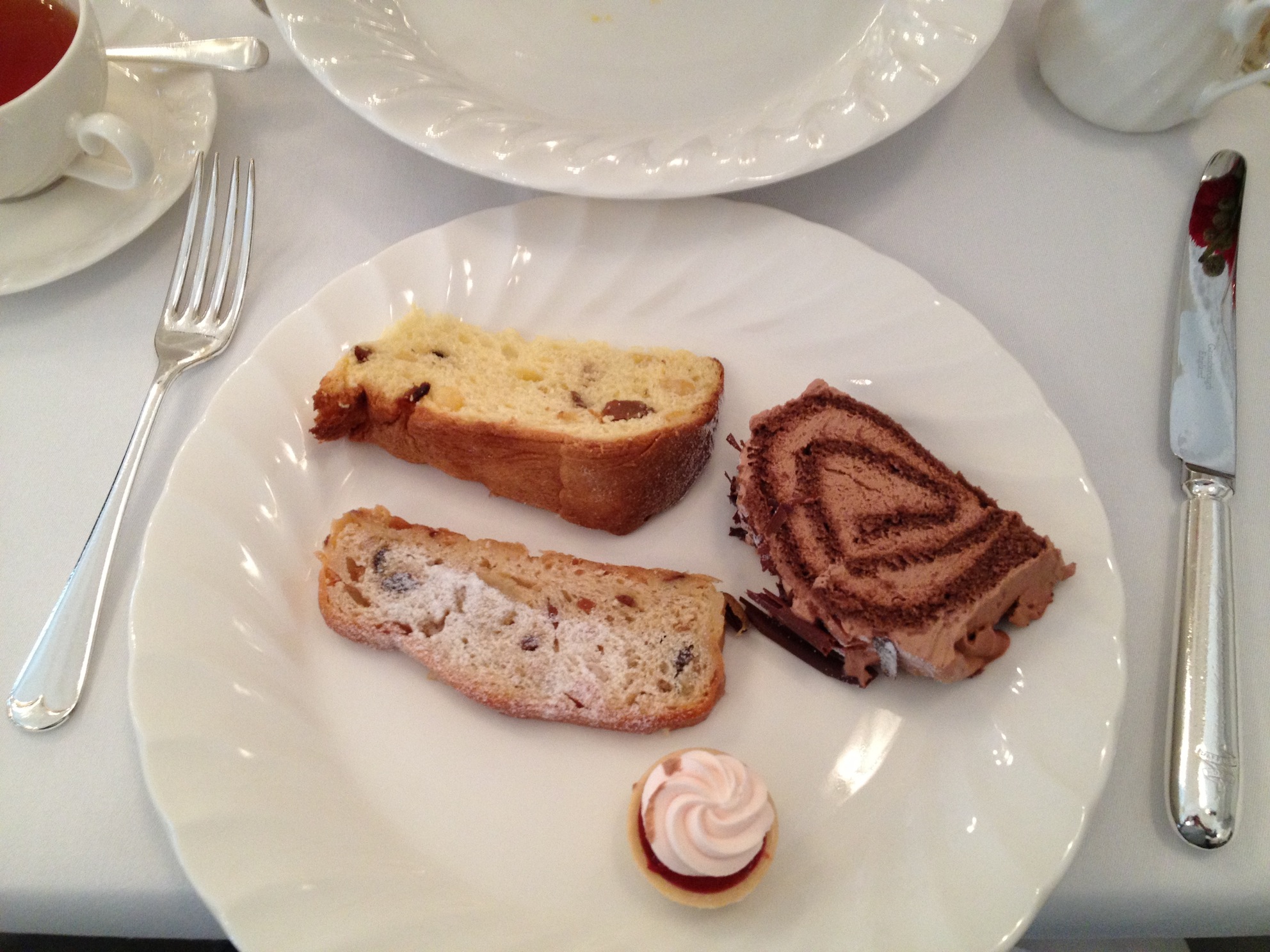
Stollen, panettone, yule log at Raffle Christmas high tea

I enjoyed being able to fill up a plate with various national Christmas cakes – panettone, stollen and chocolate yule log. Fran favoured a white chocolate, rose, guava and champagne log thing. The stollen’s label had migrated several metres to the right, somehow, to beside a bowl of cream – clotted cream! Miraculous. A scone with clotted cream on the Malay Peninsula at Christmastime.
The German marzipan-filled enriched bread even inspired me to create this Christmas-cracker-worthy joke: “Where did you buy your German Christmas cake?” “I didn’t, it’s stollen.”

Too much tea perhaps…

What a fab experience.

They even had a harpist playing ‘Greensleeves’, ‘Parsley, Sage, Rosemary and Thyme,’ and ‘Here, There and Everywhere’.

The only real disappointment was the fact that they have a dress code – smart casual, shirts with collars etc – but don’t enforce it enough. Call me a snob, but spending all that money, and enjoying the opportunity to dress up a bit (as much as possible when one’s lived out of a backpack for two months), it was a bit shoddy to have people in jeans, T-shirts and trainers sitting nearby. Come on Raffles – standards! Standards!
3 Comments

Filed under Cakes, Restaurants etc, Travelling

The Last of New Zealand

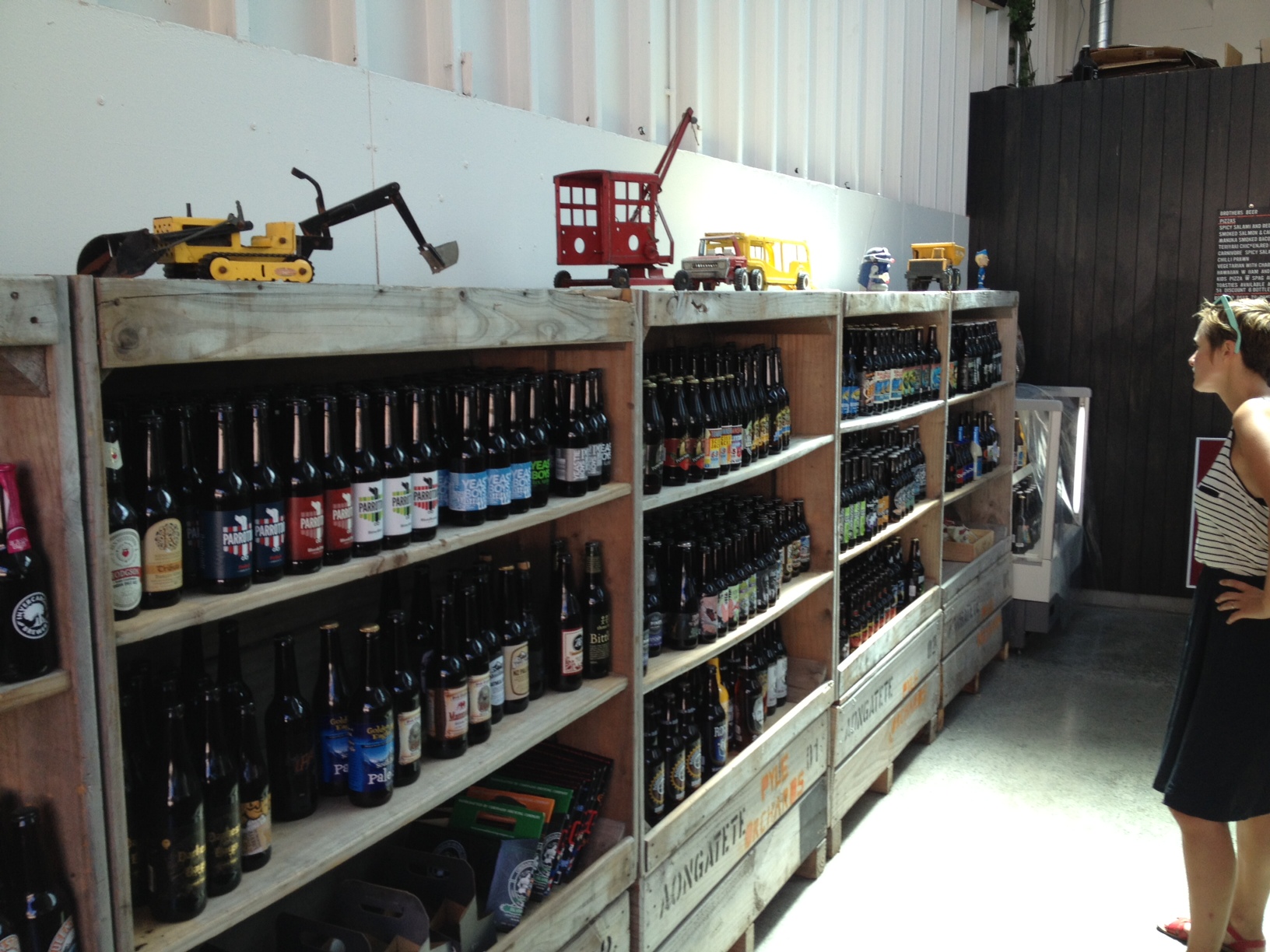
Brothers shelves

The past week or so we’ve had a great time catching up and hanging out with old friends. Hence a bit of slackness on the blog. Plus, well, I’m aware this has really become a beer blog the past few months, and I’m slightly sick of the sound of my own (typed) voice on this subject.

That said, we’ve finally left NZ, so I wanted to write up some final thoughts on NZ craft beer, and in some ways retract some of what I said earlier.

I won’t be talking about bread and cake, though I’ve really enjoyed the baked goods of Bread and Butter, a small chain of real bakers in Auckland. Great breads, and I came to crave their almond croissants the last few days I was in town.

Strident ales
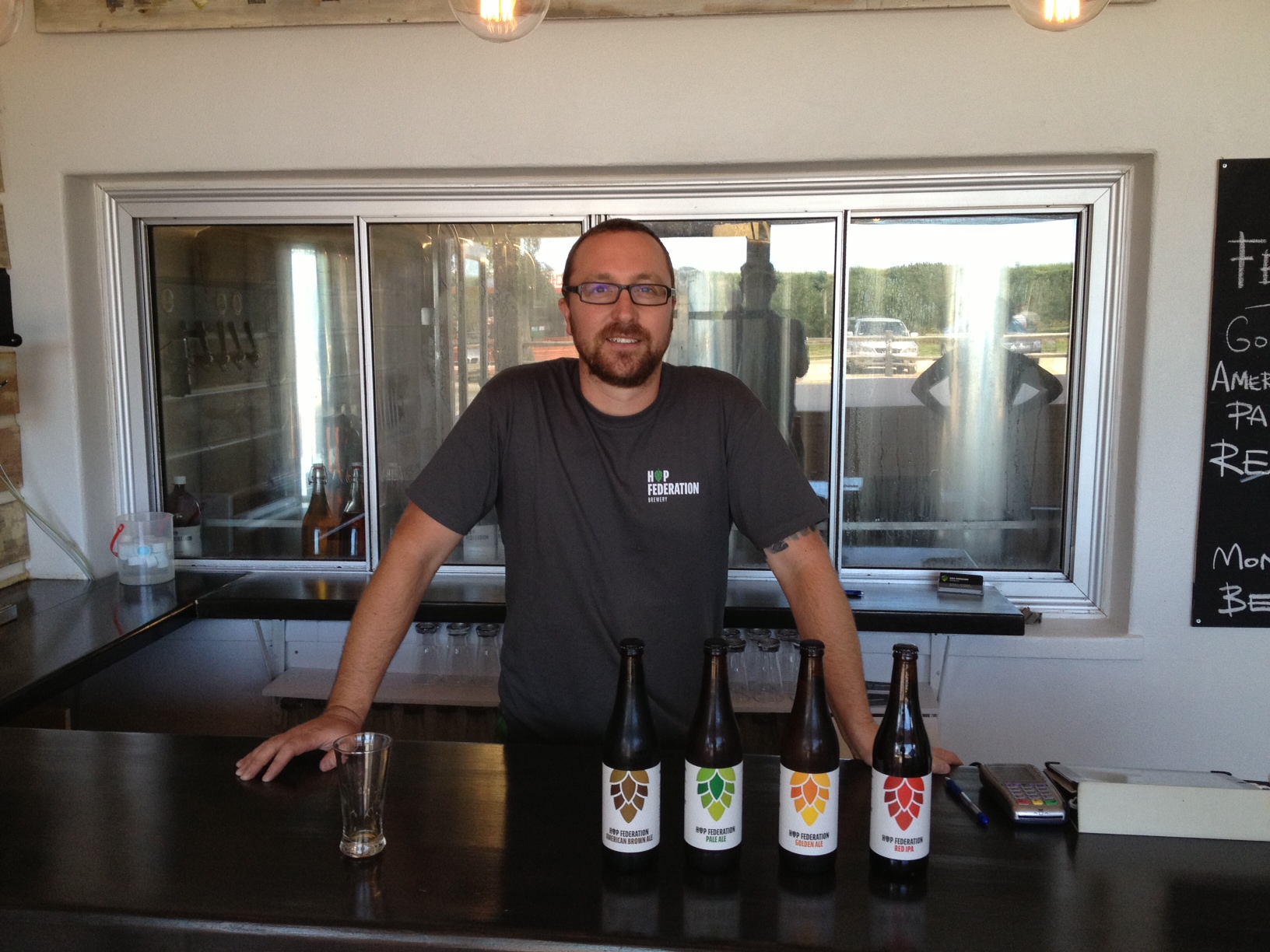
I’ll say straight away that in our final days in NZ, we finally drank some beers that had a lot of assertive hoppy character, something I’d started to begin to think didn’t exist in the craft beer scene there. Specifically, we went to a few places in Auckland that I wish I’d known about when we’d been there five weeks earlier. These places were recommended by the very genial Simon Nicholas of Hop Federation, one of the last breweries we visited on the South Island.

Simon Nicholas at Hop Federation

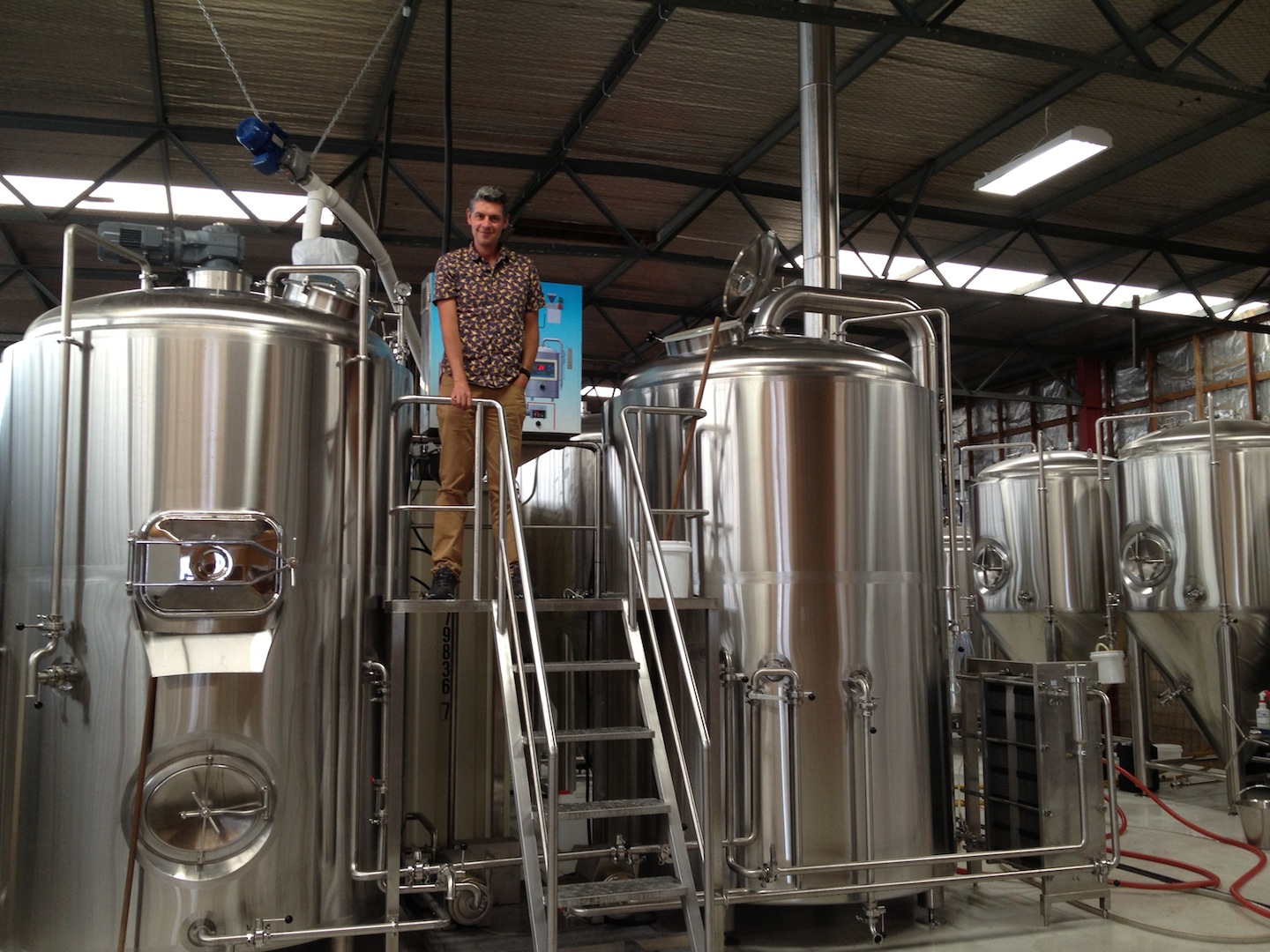
Simon was the head brewer at Hallertau, the Auckland brewery whose beers we’d enjoyed at The Golden Dawn on Ponsonby Road. He had recently relocated to the South Island, buying up the former Monkey Wizard microbrewery in Riwaka, outside Motueka in Tasman.

This small operation was previously run as a hobby by an English dentist, so Simon was in the midst of transforming the place into a full-time serious operation, and was also in the midst of tinkering with the beers he was developing. It was a really pleasure to chat with him and enjoy the beers he kept saying he was still “mucking about with”. Frankly, they were all superb already, but I’ll be interested to go back when he’s satisfied with them. (Or, ideally, find a few bottles at a decent beer pub in Britain, like London’s Cask Pub & Kitchen.)

His Red IPA was his biggest success so far, and it was delicious. He called it a “bit of a muck about”, but this lovely dark amber beer is sharp and resiny smelling, and has a great balanced taste from dry hopping with Simcoe and Cascade hops and mellowing it with Gladfield malt from Canterbury.

Driving past Hop Federation, Riwaka

Hop shortage
He said he wanted to make it with exclusively NZ hops, but they just weren’t available – indeed, he explained despite the Motueka area’s fame for hop-growing (something that was affirmed in a mid-19th century painting we saw in the Nelson museum), half a decade or so ago many were pulled out and replaced with jazz apple orchards. Just when NZ hops were becoming even more in demand in the international craft brewing scene. Ooops.

“There’s a worldwide hop shortage for our hops – it’s a real shame,” he said. Furthermore, as hops are all centrally controlled in NZ, it’s not even possible to grow your own adjacent to your brewery.

Before leaving the South Island we visited Bays Brewery near Nelson Airport, which was more traditional than craft (for example, they pasteurise and filter, like McCashin’s; Simon wrinkled his nose at the very idea of this. Indeed, why make a product that’s carbonated by an organism then kill that organism?) and Golden Bear in Mapua.

Golden Bear, Mapua, NZ

The latter has an American brewer, so I was intrigued to chat with them, as US craft beer tastes seem very unlike those of NZ, but when we arrived on a beautiful summer evening, there was a gig and a lively crowd in their brewpub, so that wasn’t really on the cards. Their Seismic IPA wasn’t bad though.

Golden Bear beers

Though TBH, I enjoyed a bit of the Mussel Inn’s Captain Cooker manuka at the café just over the yard from the brewery more. That was one the few beers I mentioned on my old blog during our previous visit to NZ back in 2007.

Back in the big sprawl
So yes, Auckland. When we got back, we first had a few days staying at the Piha bach (Kiwi English for holiday home) of our friends Jude and Roger. I bought a few beers to take with me, and was tricked by yet more “faux craft” branding. This was Hancock & Co, whose branding emphasised a whole yarn dating back to the mid-19th century; in reality, the brand is actually new, created by an off-license chain and exploiting some NZ brewing heritage. (See here.)

This wasn’t a trap one could fall into at Brothers Beer though. This was the place recommended by Simon: a small brewery close to the town centre in a funky development called City Works Depot.

The brewery has been in operation for about a year, according to the slightly unfriendly girl serving, whose too-cool-for-school attitude contrasted with the friendliness of most of the brewery folk we met on our South Island road trip (3095km – god help me. There go the last tatters of my green credentials when combined with all these aviation crimes).

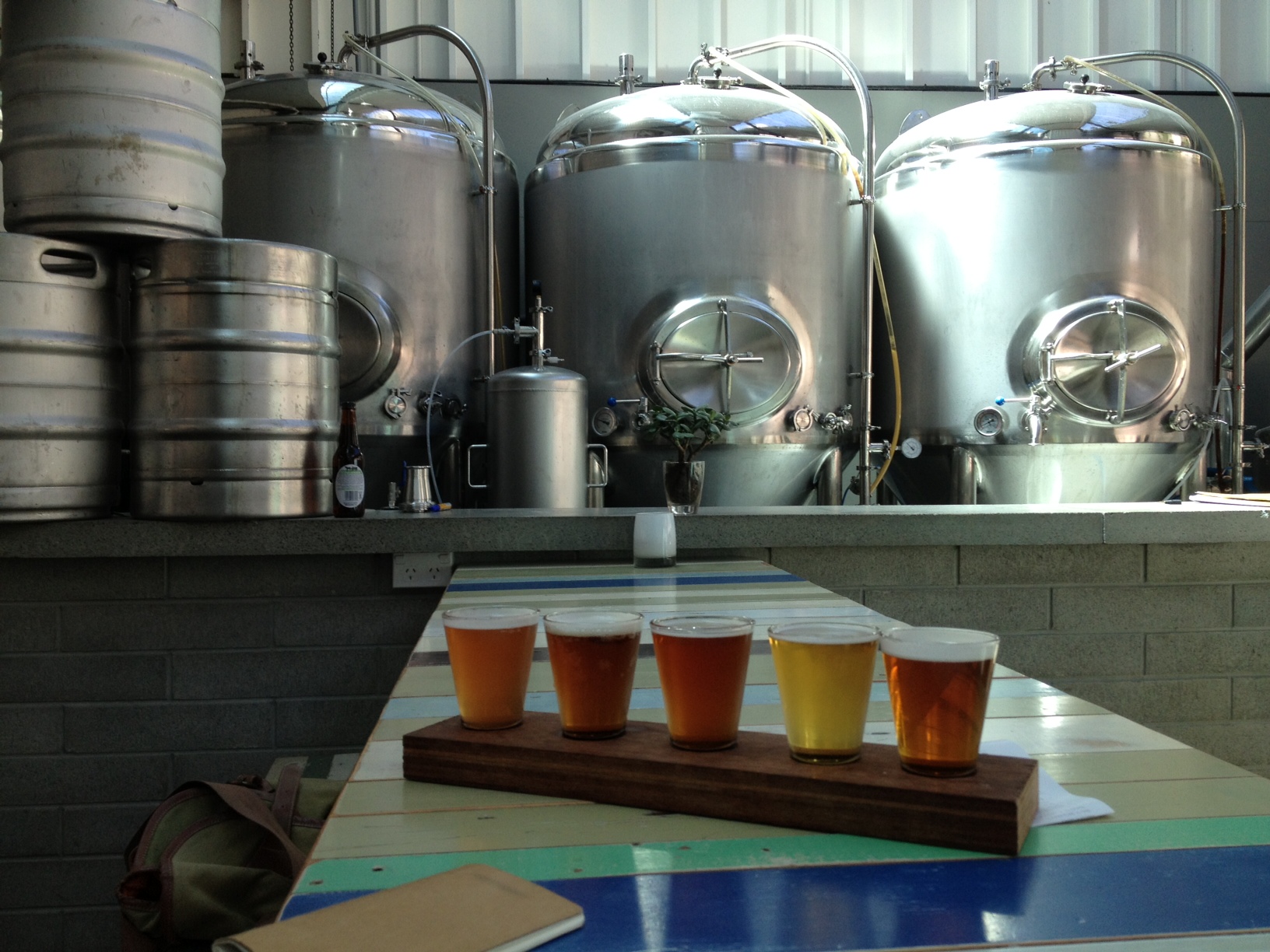
Tasting paddle at Brothers BeerShe warmed up a bit when we got chatting more about beer. We had a tastling padddle of five of their brews. Alongside their own beers – brewed, with a cloud of malty mashy odours, right there – they had some representation from other breweries, like Yeastie Boys (based in Wellington). The venue also has some slightly sagging shelves laden with bottles of genuine craft beer – so no Hancock’s, Boundary Road or Founders and plenty of Mike’s, Parrot Dog, Townsend’s, Invercargill Brewery and 8 Wired etc, and even some overseas stuff like Speakeasy, which we’d had in its native San Francisco.

Brothers’ beers proved something of a relief and a revelation. When we were in Auckland before, other than Hallertau at The Golden Dawn, we’d struggled to find any decent craft beer on tap. Here, though, was a brilliant selection – and not only that, some of them were fantastically dry and bitter, displacing our experiences of so many mild-mannered, she’ll-be-right malty lagers and under-hopped ostensible IPAs. Yay. Flipping yay.

So their El Dorado IPA (6.7%) came with a scent of ginger and lemon, and a big-bodied taste of hoppiness, and a dry mouthfeel. Their Aramis pale ale (5.3%) had a smell and taste that was both minerally and yeasty, reminiscent of Marmite, along with a bitter-sweet balance of hop and malts. Surprisingly, the one we liked best was their Gronholm Imperial Pils (8%). I’m really not a fan of lagers, pils and pilsners generally but this was a really complex beer. Fran said, its odour was of “something very green – peas? Smells amazing.” I got grapefruit and a real astringency akin to tea tree or eucalyptus essential oils. Fran also said it had a “Strong male sweat thing”, which might sound off-putting, but it really worked. Big, bitter and delicious.

No blimmin’ NZ draught mild brown lager here.

Though I’d still say their taps are pouring a little cold. And they need some hand pumps.

The latter we found at our next Auckland port of call, another recommendation from Simon: Vulture’s Lane, a pub on Vulcan Lane, just off the unprepossessing Queen Street in downtown Auckland. Why didn’t I find this place before?! Guidebooks and Google both failed me.

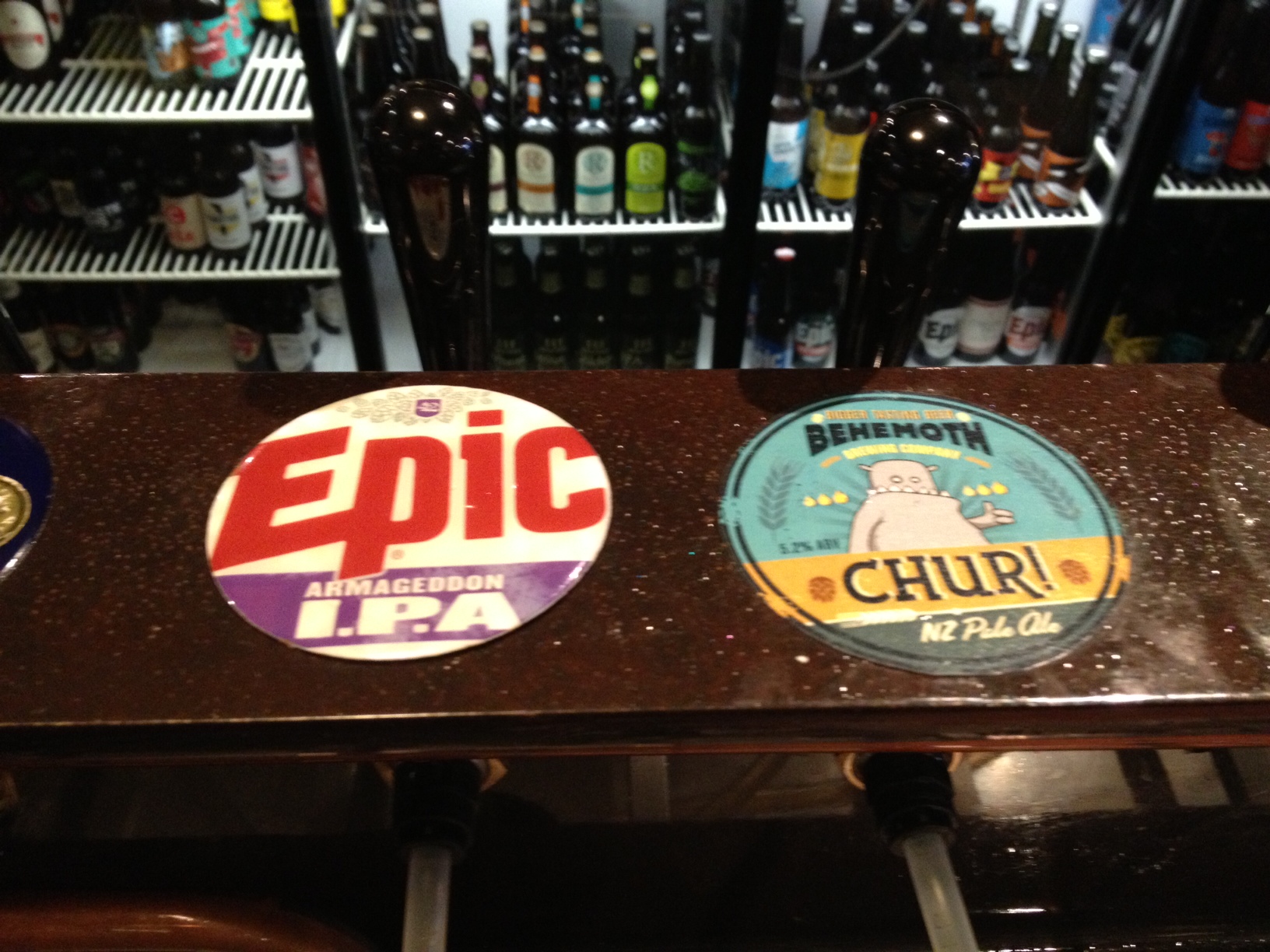
Chur at Vulture's Lane

They had a great selection, including yet more breweries I’d not even heard of before: like Hot Water Brewing Co, a new outfit in the Coromandel (close to the famed, freaky Hot Water Beach) and Behemoth Brewing Company. We had a golden ale from each, Golden Steamer Ale and Chur. I had to have the latter as the label was cool; it was delicious too, even, crisp and fresh, sweet, bit of hop, resin. A really nice, balanced summer ale.

Finally and farewell
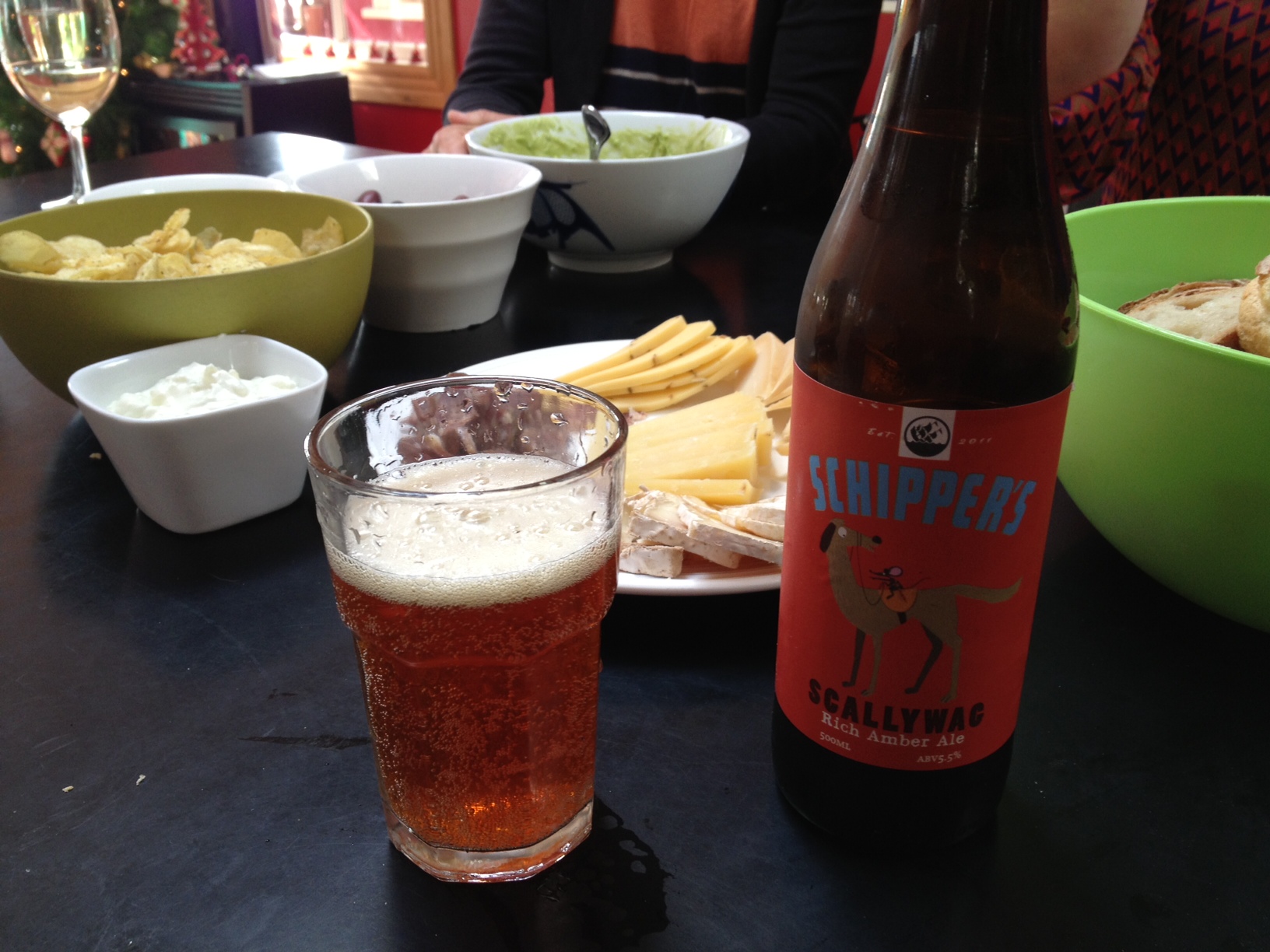
My final few bottles of NZ beer before our departure were a Taranaki Pale Ale, from Mike’s, which Kelly at Green Man in Dunedin had mentioned as NZ’s only other organic brewery currently, and Scallywag Rich Amber Ale, from Schipper’s, in Auckland.

Scallywag

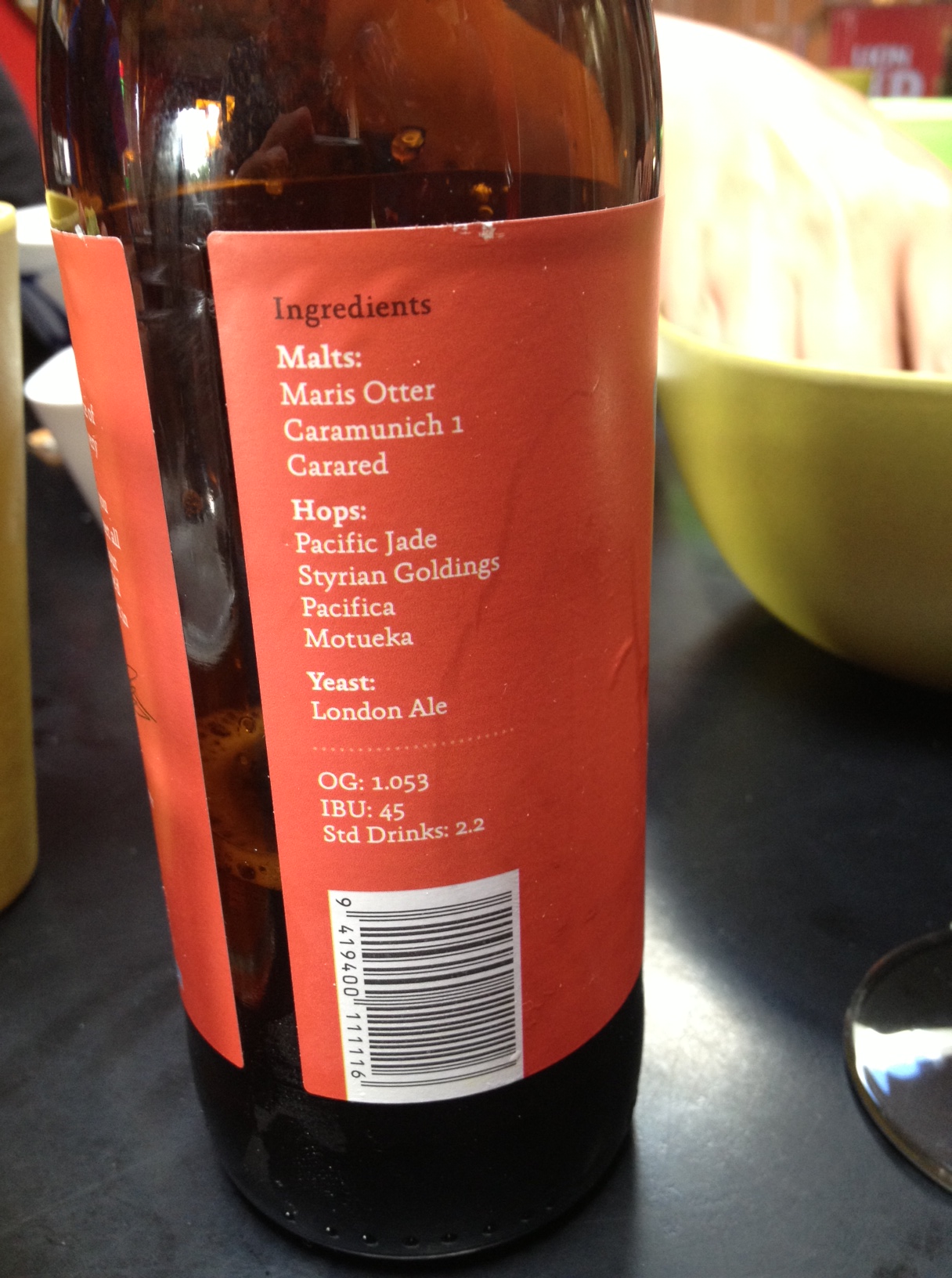
The latter I had to buy as it had another cool label that not only reflected the great dog company we’ve had on this trip (notably, in a bit of utterly coincidental alliteration, from Baxter, Bandit and Betty) but even listed all the hop varieties, malts and even the yeast used in the brew – what an excellent touch, for an excellent beer, a sweet, deep, rich, crisp ruddy brew that’s not unlike Hop Federation’s Red IPA.

Schipper's Scallyway label

Now we’ve gone I wish I’d had more time, and more prior knowledge, and someone to share the driving with.

Never mind.

We’re in Singapore now, enjoying the monsoon, and having a day off the booze to help with the jetlag. Though I do hope to get to Brewerkz and Red Dot (Reddot?) before we head on home to Blighty for Christmas.

Me at Scotts

Leave a comment

Filed under Ale, beer, Bakeries, New Zealand beer, Travelling

Nelson – small town big beer city

Nelson contradiction

I love the city of Nelson, in Tasman Bay at the top of NZ’s South Island. It has a cathedral and a royal edict, so it can call itself a city, but really it’s just a quiet small town.

When I lived in NZ in my mid-twenties, it was where I came for a break from the intensity of the sandfly infested, bush-clad hills and cliffs of the Buller Gorge, with its reliable rains and very short window of sunlight opportunity in the winter. The sun always seemed to shine in Nelson. And indeed, when we drove up on Sunday night, after two days of torrential downpours on the West Coast and in the Buller, the clouds parted.

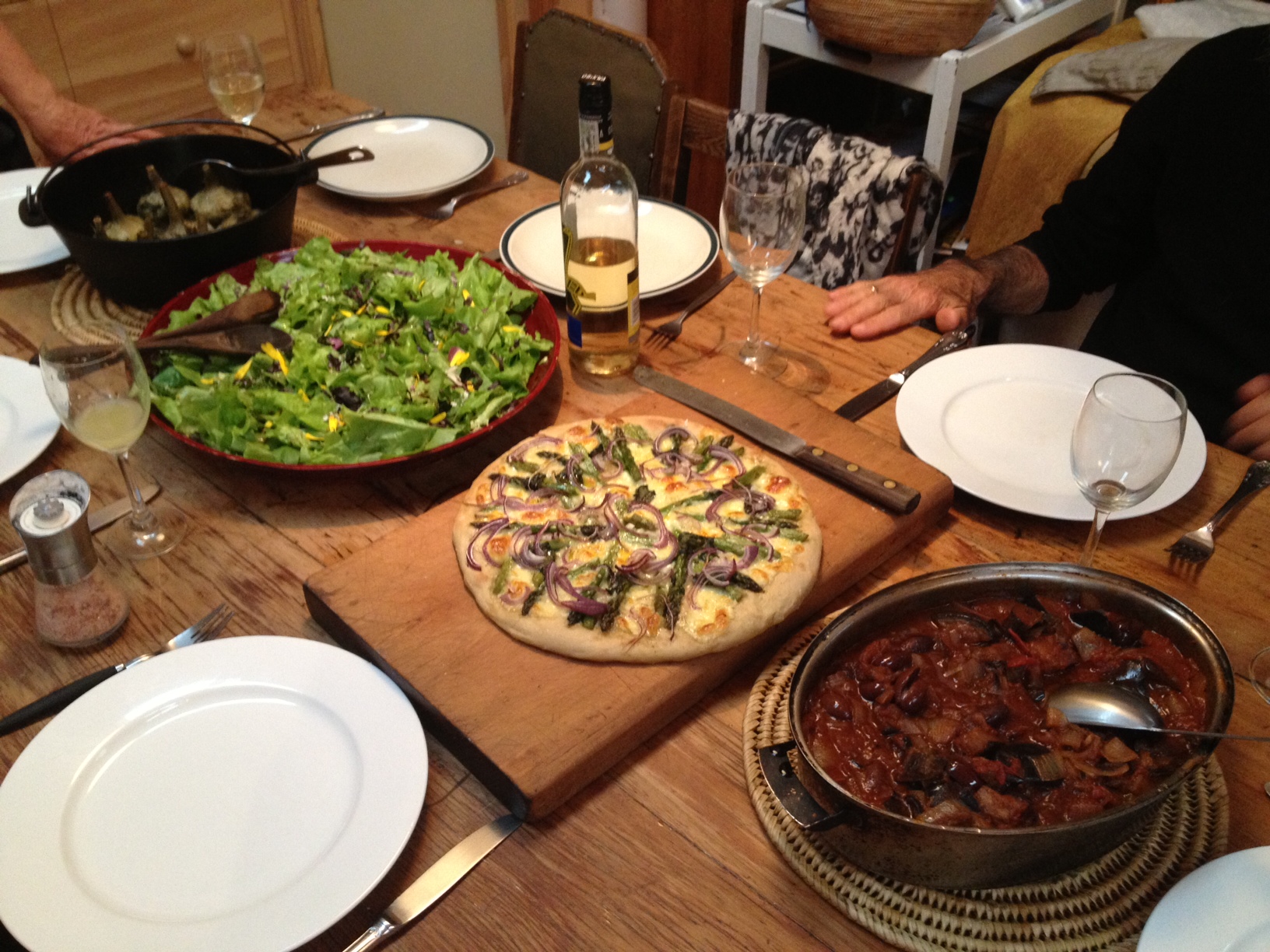
We’d had a lovely, though brief visit to the farm and old friends I used to live with, and we even managed an Italian-ish lunch, with pizza, caponata (south Italian artichoke stew) and carciofi alla romana (Roman-style artichokes; though without the Romanesco artichokes, it was a little challenging) but as we don’t have that much time on this trip, we wanted to move on: to Nelson, with its claim of being the Craft Brewing Capital of NZ, and its dozen or so breweries. And population of not much more than 50,000; my home town has 35,000 people and a big fat zero breweries.

Pizza at OMM

Clear skies, empty stomach, free house
The clearing skies of Nelson were a welcome sight though. I dreamed of dry shoes and, enthused, we rushed out and started drinking beer. I thought the lunch would see us through, but my stomach was actually rather empty and the beer caught up with me. Oops.

Still, the venue was fantastic. The Free House is an ex-church on Collingwood Street in Nelson. Enter via a gate, past a large yurt (for events), and there’s the little chapel, with rendered walls and corrie iron roof.

It was a quiet Sunday evening, and the place reminded us a little of the village halls of our generation’s coming-of-age discos. Except for the giant cockroach sculptures on the wall. And the beer: 10 keg taps, three handpumps.

Stephen, the guy serving, said they’d been going since 2009 – so a few years after our last visit. The handpumps – which, he says are getting “more and more, more and more” attention from drinkers more used to the bubbles of kegs – were at this time all dedicated to Townsends, a independent local brewery, founded in 2005 and using Nelson hops and 25,000 year old water, “drawn up from over half a kilometre under the Moutere Valley Clay.”

We tried their JC IPA, which had nice resin, citrus, pine smells but a fairly mellow, malty taste. Nice medium body, but pretty minimal bitter crispness – a bit too mild for my idea of an IPA.  Also Sutton Hoo, an “American amber ale” which was very rich and smooth.

When I asked Stephen for the most assertive beer they had on, he gave me a Volcano Red from Mata Brewery on the North Island. Fran also tried Mata’s Black Brew Stout. Both were great, but the former was 7% and really got me on the aforementioned empty stomach.

Brewing founders
The next day, my beer cravings had abated somewhat. So we first focussed on food, and culture. We visited a great Nelson bakery, the Swedish Bakery at 54 Bridge Street, and had some quality pastries for breakfast.

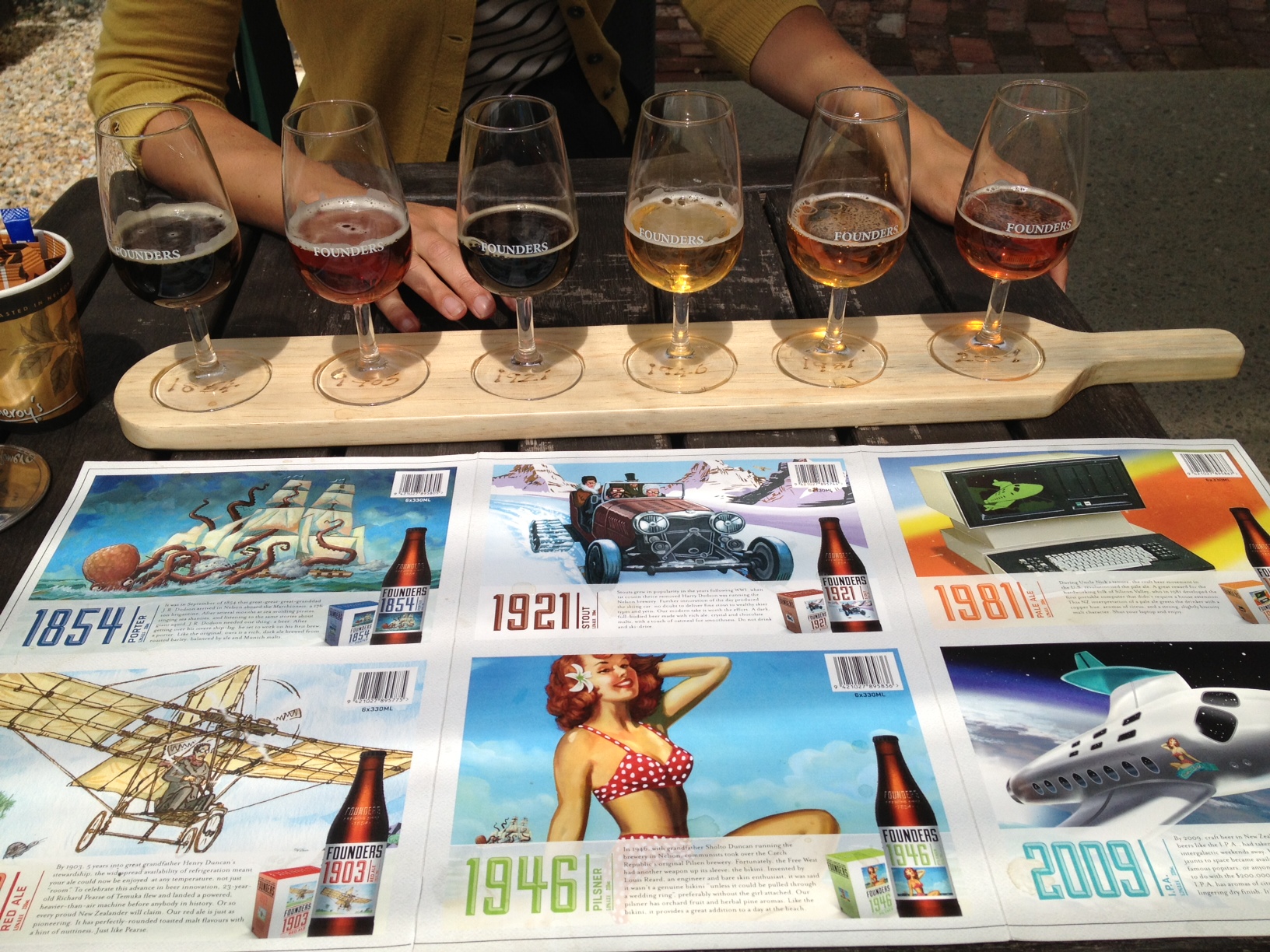
After some museum action, we headed out to Founders Heritage Park, a kind of Truman Show set with old NZ buildings, few hundred metres of train line, a recreation of a windmill, and a brewery, also called Founders.

It’s a brewery that’s been relaunched this year with some great artwork, but the standard of the branding made me a bit suspicious, as did the blurb’s insistence on saying things like “Spanning over 6 generations and almost twice as many brewers, Founders has been brewing beer in Nelson for almost 160 years”.

Founders taster

Indeed, dig a little deeper and it becomes clear there hasn’t exactly been 160 years of continuous, independent brewing. Indeed, from 1969 to 1999, they were owned by DB (one of the two big NZ brands). Between 1999 and 2012 they did seem to be an indie, at Founders Park and the “First fully certified organic brewery in the Southern Hemisphere and only one of six in the world.” In 2012, however, they sold to Boundary Road Brewery, which is itself part of the so-called Independent Liquor Group, which is part of Japanese drinks giant Asahi.

We did a taster of their six current brews and while they were all nice enough (albeit on tap and served too cold), some bordered on bland and the 2009 IPA was again a case of not enough hop bitterness.

Later on, we went to the State Cinema (where I’ve been seeing films since 1994), which has a pizzeria, Stefano’s, where the pizzaiolo is dubbed “The King of Pizza”. Maybe him and Rome’s Gabriele Bonci need a pizza-off. Stefano’s looked pretty awesome, though we’d just eaten elsewhere so didn’t sample.

After a film, we did managed one more beer (a half each) from one of the ever-increasing number of Sprig & Fern outlets. This is another Nelson small brewery brand, that is slowly but surely expanding, to Wellington, to Auckland. I tried their IPA, which was pleasant enough, but lacking in the hoppy bitterness. Again.

Return of the Mc
As I’ve said several times recently on this blog, between the ages of about 18 and 24, I didn’t drink, put off booze by bad 1980s corporate lager, which dominated the pubs of my teenage years. It was NZ’s Black Mac, a kind of schwarzbier (black lager), that subsequently got me interested in beer. So I felt I had to go to the new McCashin family brewery.

Rochdale ext

Terry McCashin, who first started brewing Mac’s beers in 1981 had sold his brewery – which really kicked off NZ craft beer – to Lion Nathan in 1999, killing its craft credentials. In 2009, though, his son, Dean, moved back into their original premises, the 1950s Rochdale Cider factory in Stoke, just outside Nelson, and started brewing again, as a fully NZ-owned operation.

Bravo. Kinda convoluted. But bravo.

The brewery has a great café and woman at the bar who greeted us was charming. The guy who guided us and five others was sweet too, though he didn’t introduce himself and seemed to struggle when questions took things off-script. He did have an interesting take on how to define “craft beer” though – “a craft will adhere to the materials – water, yeast, hops and malt”. So while industrial brewers can and do add sugars, craft brewers rely on the complex sugars from the malts.

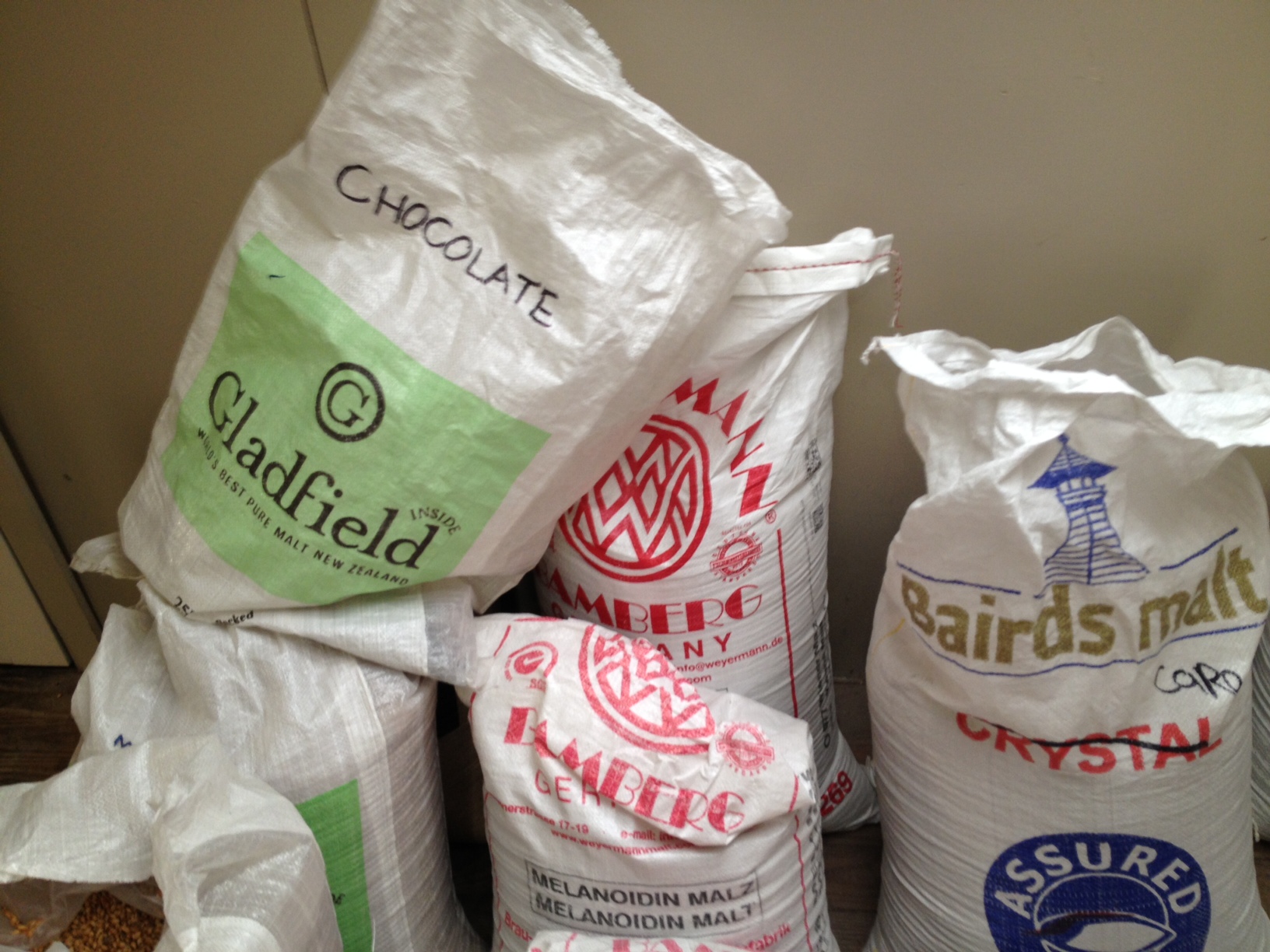
Malts at McCashin's

He talked about how the brewery is producing beer (under the ‘Stoke’ brand), ciders, wine and is even embarking on vodka and whisky distilling. They also contract brew: we watched Moa bottles coming off the bottling and pasteurising line.

Yes, they filter and pasteurise. They also add CO2. The guide said the gas was to please the Kiwi taste for fizzier beer, but this seems to contradict what Stephen of the Free House was saying about their hand pumps. Plus, the guide also said that without pasteurisation beer wouldn’t have the longevity (“Lucky to get two weeks”), but this is contradicted by hundreds of traditional and craft brewers the world over who are bottle conditioning with live yeasts.

After a wander round the brewery, we tasted about a dozen Stoke beers. Now clearly these guys know their beer and know the beer business, but several of them seem fairly similar – mellow, malty, bubbly, not much in the way of bitterness or strong hoppiness.

Their most popular and garlanded beer, the Stoke Amber, is a really pleasant summer beer, but doesn’t have much character beyond a nice colour and a slightly strawberry smell. Their Lager, Pilsner and Gold are all fairly similar, and their Stoke IPA isn’t far off – it’s too mild to really stand out as an IPA. (Again.)

They do have more interesting beers, like the Cirrus Wheat, with its big banana smell and taste, and Smokey Ale, with its overtones of bacon-flavoured crisps or even kippers, and their Double Pale Ale finally has a bit of bitterness (it’s dry-hopped), but all in all, I found their wares a little underwhelming.

McCash still life

But then maybe nothing they could do would hold up against my memories of my 24-year-old self’s first revelatory experience of a rigger of Black Mac, filled up in a rough Murchison pub and drunk on the veranda of my friends’ place in the Buller.

So we drove on, leaving the other Stoke breweries – Lighthouse, Bays – for another day. Thankfully, on our way around Tasman Bay we went to another brewery, which really restored our faith in the NZ beer scene. But this post is getting far too long, and the view outside is far too splendid to ignore, so I’ll save that for another day.

Right, I’m off to see some glowworms.

1 Comment

Filed under New Zealand beer, Travelling

The long way round to whitebait pizza

Whitebait pizza

Whitebait fritter is a classic NZ dish. In the season – or all year round if you catch enough and freeze them – whitebait is mixed with egg and fried up like a fishy omelette. Done well, it’s delicious. Done badly, well, it’s a bit of a pointless slaughter of many little fishies. And added to a pizza, well that’s a whole different story, and one we encountered this evening.

This morning, we left Mount Cook/Aoraki and headed for the South Island’s wild and woolly West Coast. Although Mount Cook is only about 50km from the coast as the crow flies, by combustion engine it’s more like 500km plus.

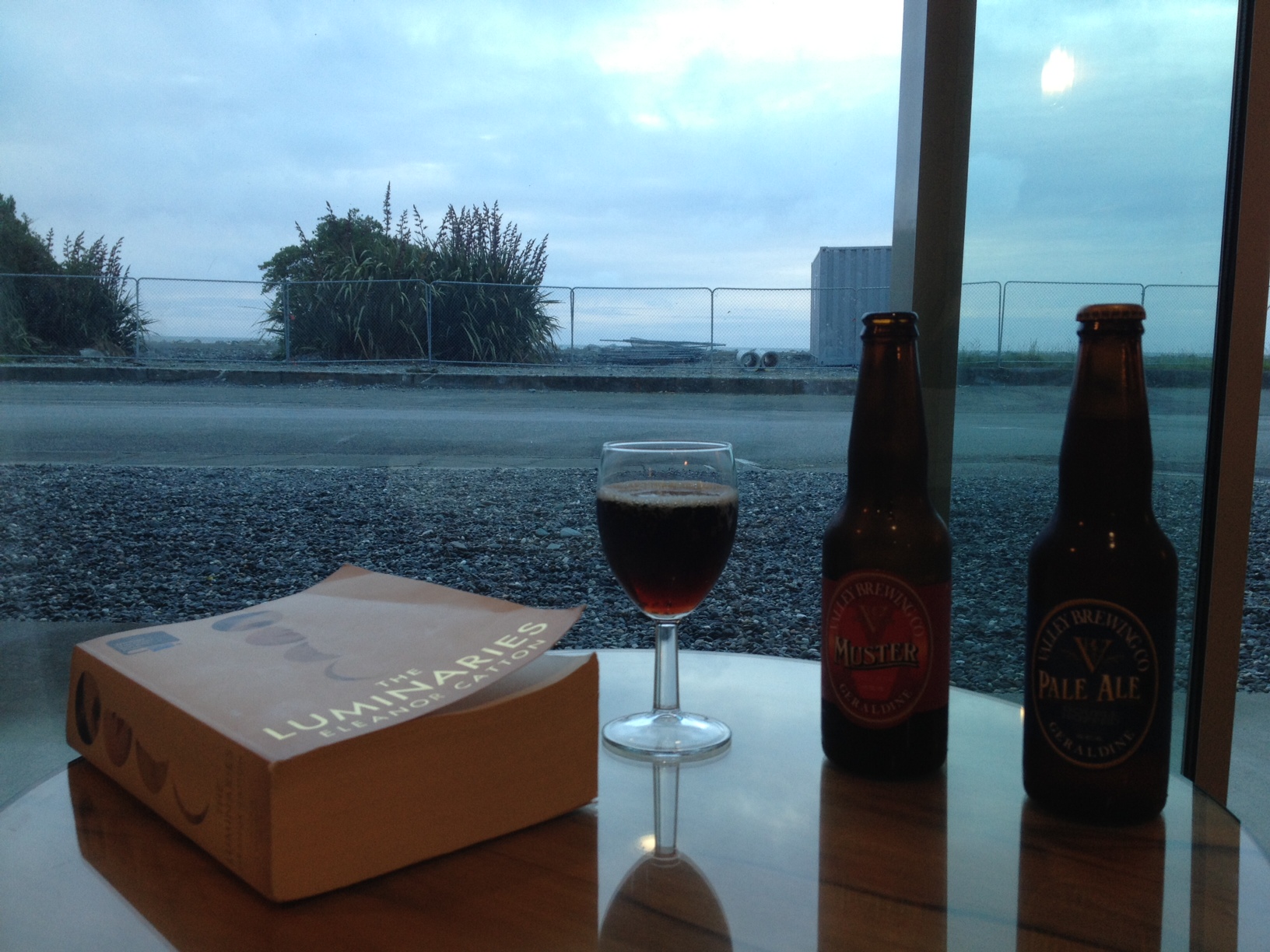
Cars can’t really manage the bloody great glaciated mountain range, you see. You have to drive all the way out from Mount Cook Village’s dead end highway, then east, then northeast towards Christchurch, then finally northwest and west over Arthur’s Pass, an impressive route that saddles at 920m. Alternatively, we’d have had to backtrack to Wanaka in the south, then loop up north over the Haast Pass. Either way is a mission. But Fran was determined to go to Hokitika – she’s reading Eleanor Catton’s award-winning, 832 page novel The Luminaries, which is set in this West Coast town in its 1860s gold-rush days.

Luminaries and beer

It was a great journey though. We left our hostel, visited one last, epic glacier (Tasman), then drove out along the massive glaciated valley, past bright blue lakes, hydro projects, and onto the Canterbury Plains, along very English, or even French, avenues of poplars, oaks and willows. Through alpine tussock grasslands, past the incredible rock formations of Flock Hill and Kura Tawhiti, aptly named Castle Hill in English, past various ski areas, and then we got back to some areas that hadn’t been deforested for sheep stations.

Arthur’s Pass, and the descent toward the West Coast is precipitous in places, an amazing route, surrounded by peaks and native forest, frequently by keas (NZ’s unique alpine parrot) but not always entirely fun when the inevitable speeding local in a 4WD tries to chase you at 100kmh around every sharp bend marked with a 45kmh sign.

Pinwheel and citrus slice in Geraldine

En route, we stopped at Geraldine, famed for a Bayeux Tapestry replica made with sewing machine needles (or somesuch). We didn’t check it out, concerned about our timing, but did eat a few idiosyncratic Kiwi snacks like a pinwheel, a savoury bun stuffed with cream cheese and red pepper, and citrus slice, a kinda of granola bar whose health benefits were undone by a thick layer of lemony icing. We also bought a few beers from the nearby Valley Brewing Co, a double hopped Pale Ale and Muster Red Ale (“Local barley and Nelson hops”), which we’re enjoying now.

The culinary highlight of the day, and indeed of the last week, however, was the abovementioned whitebait pizza. Rome’s renowned pizzaiolo Gabriele Bonci has opened my eyes to new levels of pizza inventiveness (with seasonal delights like Brussels’ sprouts and mortadella) but even he didn’t prepare me for this.

Fat Pipi Pizza

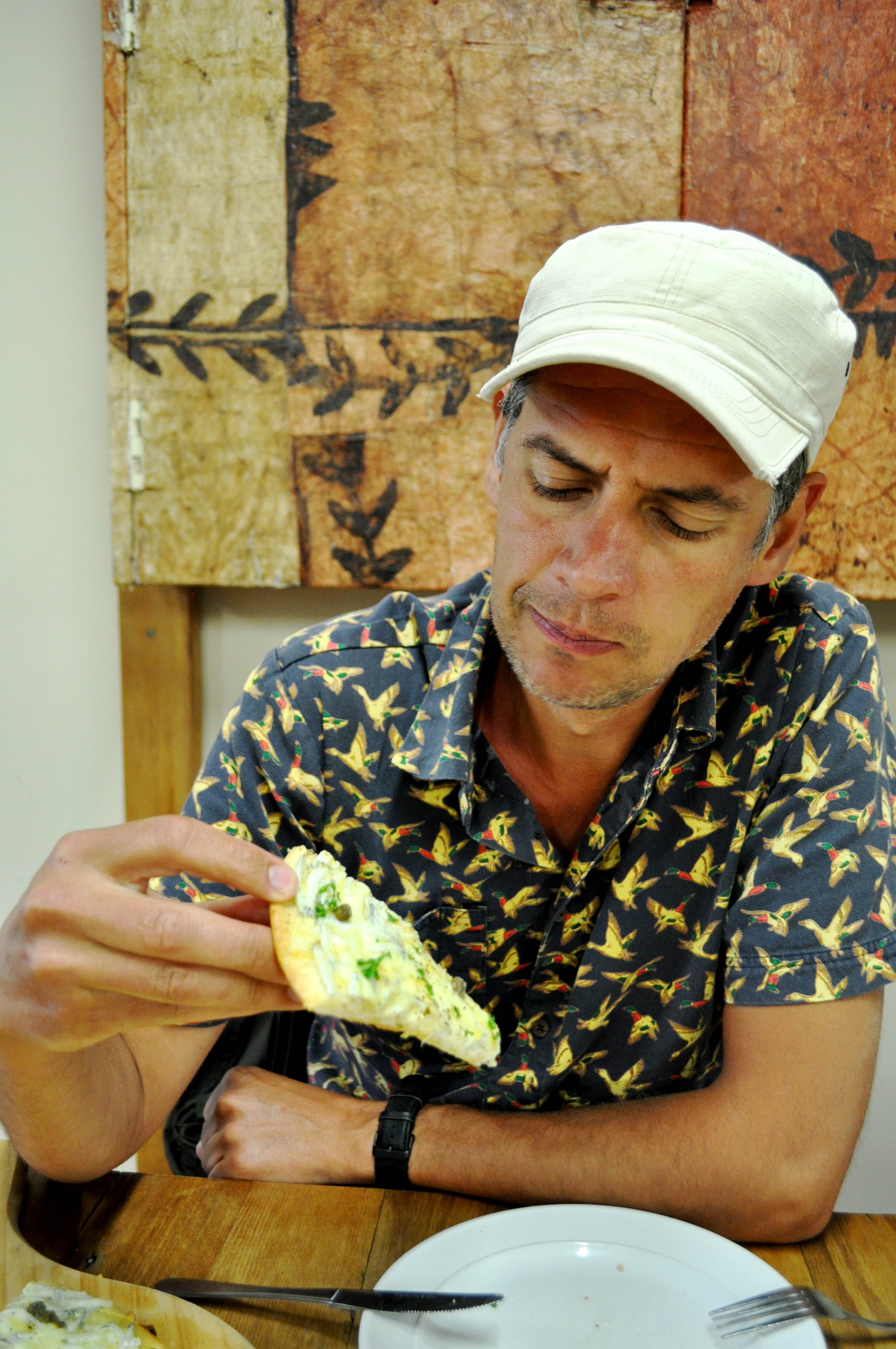
The venue was Hokitika’s Fat Pipi Pizza, and this is their signature dish. The full 26 inch version supposedly includes a quarter pound (114g) of whitebait. I had the slightly more modest 20 inch, which still featured a serious amount of whitebait fritter, combined with mozzarella, capers and parsley, and served with lemon wedges. It was delicious. The capers and lemon cut through any fattiness from the cheese and egg, while the fish offered some slightly salty protein, care of the Hokitika River.

Tomorrow we plan to visit some of the remarkable old gold workings in the Hokitika Gorge, but in the meantime, we’re enjoying sitting in a hotel room, digesting pizza and feeling vaguely threatened by the sea. The room was going cheap, as recent storms have been trying to scour away the beach, and by extension the town, and apparently we’ll be woken by diggers working at low tide tomorrow morning trying to shore the place up. No matter, it’s still a delight to be listening to the waves a mere 20m away, and watching a line of sunset brightness slicing through the grey cloud.

Addendum
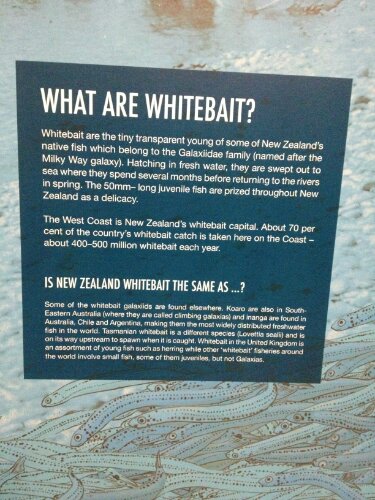
Whitebait is a big deal in Hoki. The town’s history museum dedicates about a third of its space to whitebait, including a lot of blurb from Booker-winning author Keri Hulme (The Bone People), who says “she’s not particularly serious about anything except whitebaiting.”
image


Oh, and months later, after Fran had finally had a chance to look at her pics, I found this. I don’t look quite convinced at this point:

Whitebait pizza


5 Comments

Filed under Cakes, New Zealand beer, Pizza, Travelling

Round the bottom of Down Under, and to its highest point

Pork sandwich and pizza at the Hermitage, Aoraki/Mount Cook in the distance

We’re currently in Aoraki/Mount Cook Village, the cluster of accommodation, Department of Conservation (DOC) buildings and an aggregates operation that lies just down the magnificent, glacier-carved valley from the mountain – “Cloud Piercer” in the Maori – that is New Zealand’s highest, at 3,754m (12,316 feet).

We arrived yesterday lunchtime and as the room in our slightly shambolic hostel wasn’t ready, we headed up to the DOC visitor centre and the Hermitage, a version of which has been hereabouts since 188something (first incarnation destroyed when a glacial lake broke its moraine and flooded, second in a fire in 1957) and providing succour to generations of climbers, hikers and bus loads of Japanese tourists. We had a pizza on their balcony. The pizza was nothing to write home about, but you couldn’t argue with the view of old Cloud Piercer. Thankfully not too shrouded. Friends had warned us it’s very commonplace to visit here and never actually see the peek for the clouds.

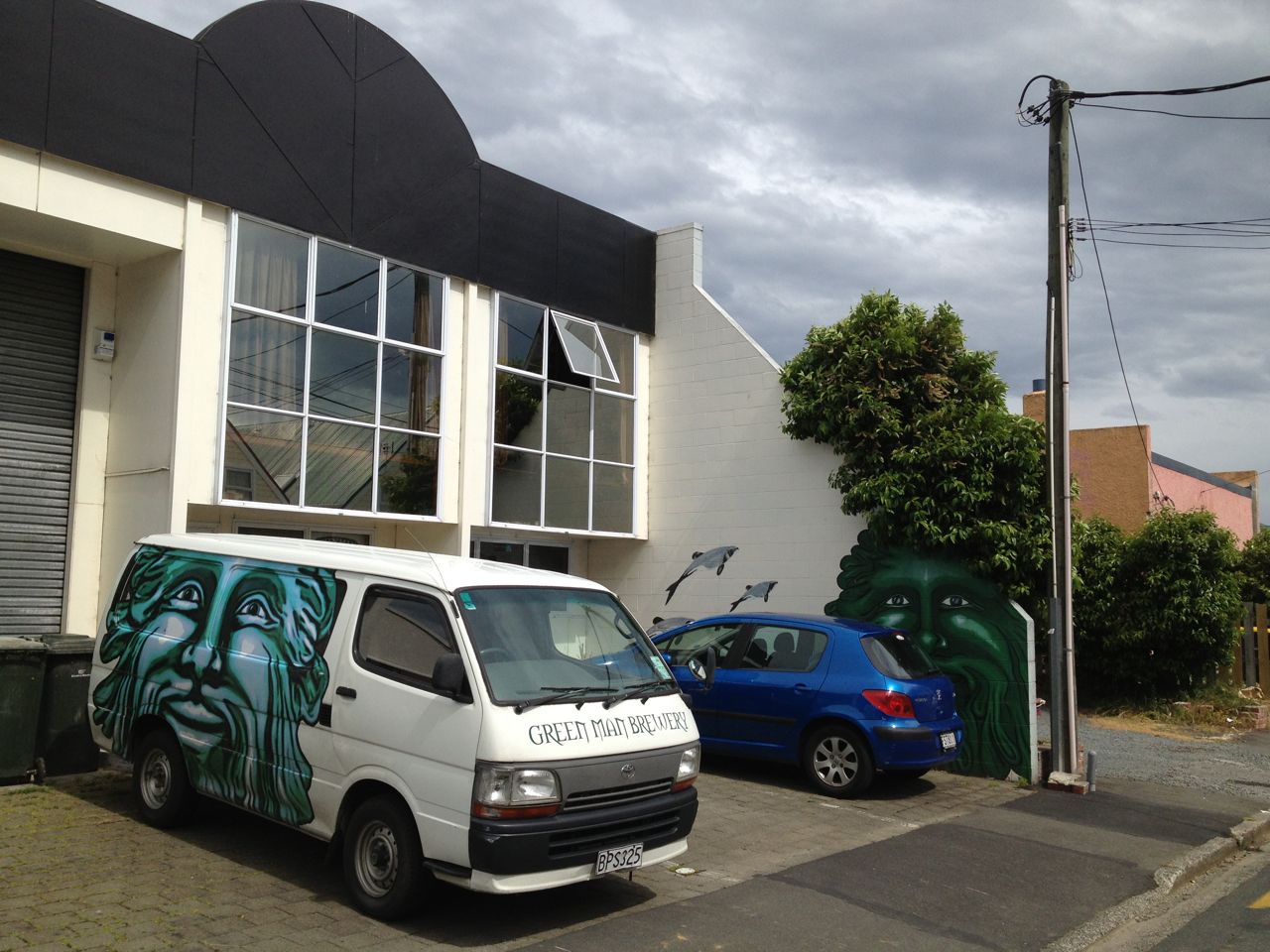
Green Man brewery, Dunedin

After my last post, we had another day in Dunedin, and visited Green Man – which is not only possibly the last independent, New Zealand-owned brewery in town, it’s one of only two organic breweries in NZ. (The other is Mike’s in Taranaki.) It also uses a foliate head as its logo, which is cool, especially for an Old World kid like me who used to enjoy spotting them in England’s great cathedrals and chapter houses.

Looming large over Dunedin is the Speight’s brewery. The brand, which was established in 1876, still pushes its tradition and heritage, but, like so many NZ companies, it was bought out. And like so many NZ beer brands this means it was bought out by Lion, part of Kirin, part of Mitsubishi. We toyed with a brewery visit, but didn’t really have the time. Possibly a shame, as I’d composed a load of questions to ask the guide about how the production, and the nature of the product, has changed over the decades, especially with becoming part of such a conglomerate.

Really Kiwi
A visit to Green Man was far more rewarding, as the guy there, Kelly, gave us plenty of his time, and we went away armed with several of their brews. They have a core range of six brews: a Czech Pilsner, a Premium Lager, a Schwarzbier (which I’m drinking now – fairly mild, bit metallic, but sweet and refreshing), an alcoholic ginger beer (which I found a bit acrid), a Tequila Beer (lager, lime) and an IPA (which was pretty good – more robust and flavoursome than many NZ beers I’ve been trying). In summer, they also do a wheat beer and Cyclist, a shandy (or a “radler,” as it’s known in NZ – except that name’s been part of a controversy when someone, mentioning no names, tried to copyright it). Kelly said they’re also working on a cider and a bock aged in whisky oak.

It sounds like it’s been a difficult year though – not only do they only have only four hop varieties to choose from due to the limits of organic production, there was also a bad summer last year that resulted in a general shortage.

Open Fermenter md

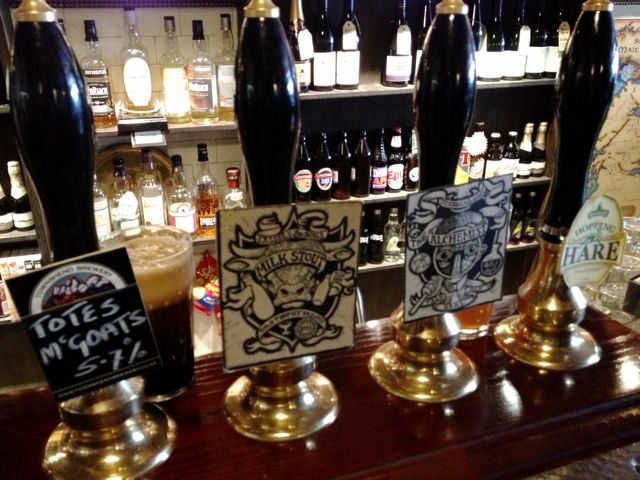
It was a great brewery, with its open fermenters and open attitude, and a relief in the face of all the corporate and no-longer-NZ that seems to dominate here. Kelly even gave us a recommendation for a pub. The Octagon, Dunedin’s centre, has a Macs (ie Mitsubishi) pub and a Monteith’s (ie Asia Pacific Breweries) pub, but it was trickier to find actually NZ beer. Kelly pointed us towards the Albar, which not only had a couple of beers from Cassels and Sons (The Alchemist, a citrussy pale ale, and Milk Stout, a stout with a lot of dark fruit syrup and charcoal) a craft brewery in Christchurch, they were even on handpump and kept at the right temperature! The barman (Scots) said the Kiwis “just don’t understand” about keeping beer at the right temperature. These were the best pints we’d had so far in NZ, I reckon – not too cold, not too gassy.

Cassels and Sons beer at Albar, Dunedin

The true South Island
After Dunedin, we headed on down to Stewart Island – a decidedly not summery, magical place, and as far south as we’d been not just in NZ, but ever. Really right round the bottom of down under. The signpost at Bluff, where you get the Stewart Island ferry, said London was 19,000km (11,800 miles) away. (We had visited the equivalent signpost at the top of the North Island six years ago.)

I believe it used to have a brewery, but now the pub only served Speight’s – dull, generic and far too cold, especially when served in glasses that were kept in the fridge! Still, the Sunday night pub quiz was a blast after we’d done some hikes in the Antarctic winds and surprising sunshine. We – me and Fran, a Scots couple, a young Californian orthnithologist (who even managed to see a kiwi) and our hostel host, Jacqui (who was Welsh-Scots with an Irish boyfriend, NZ employment and a unique accent) even managed to come fourth out of 16 teams. If only we’d guessed the Wallace and Gromit clue!

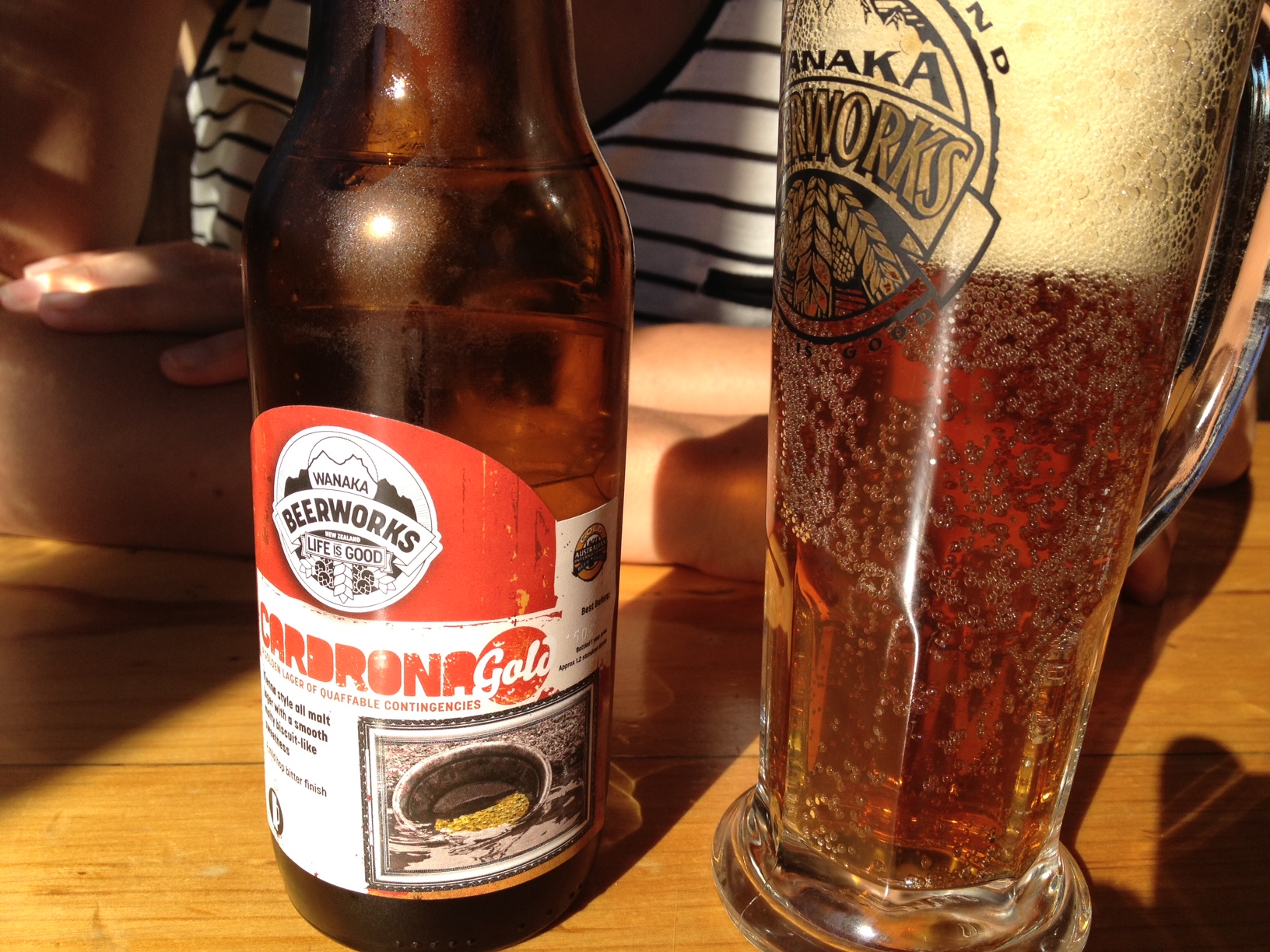
Cardrona Gold, Wanaka

Drinkable Lager Shock!

After Stewart Island we had a few nights in Wanaka, a rapidly growing, temperate town in Central Otago – an area defined by the rapid introduction of British style sheep farming, the ensuing deforestation highlighting the drama of the local mountains. I hiked up one (Roys Peak, that is a peak of many Roys, not a peak of one possessive Roy) and I’m still feeling it a few days later.

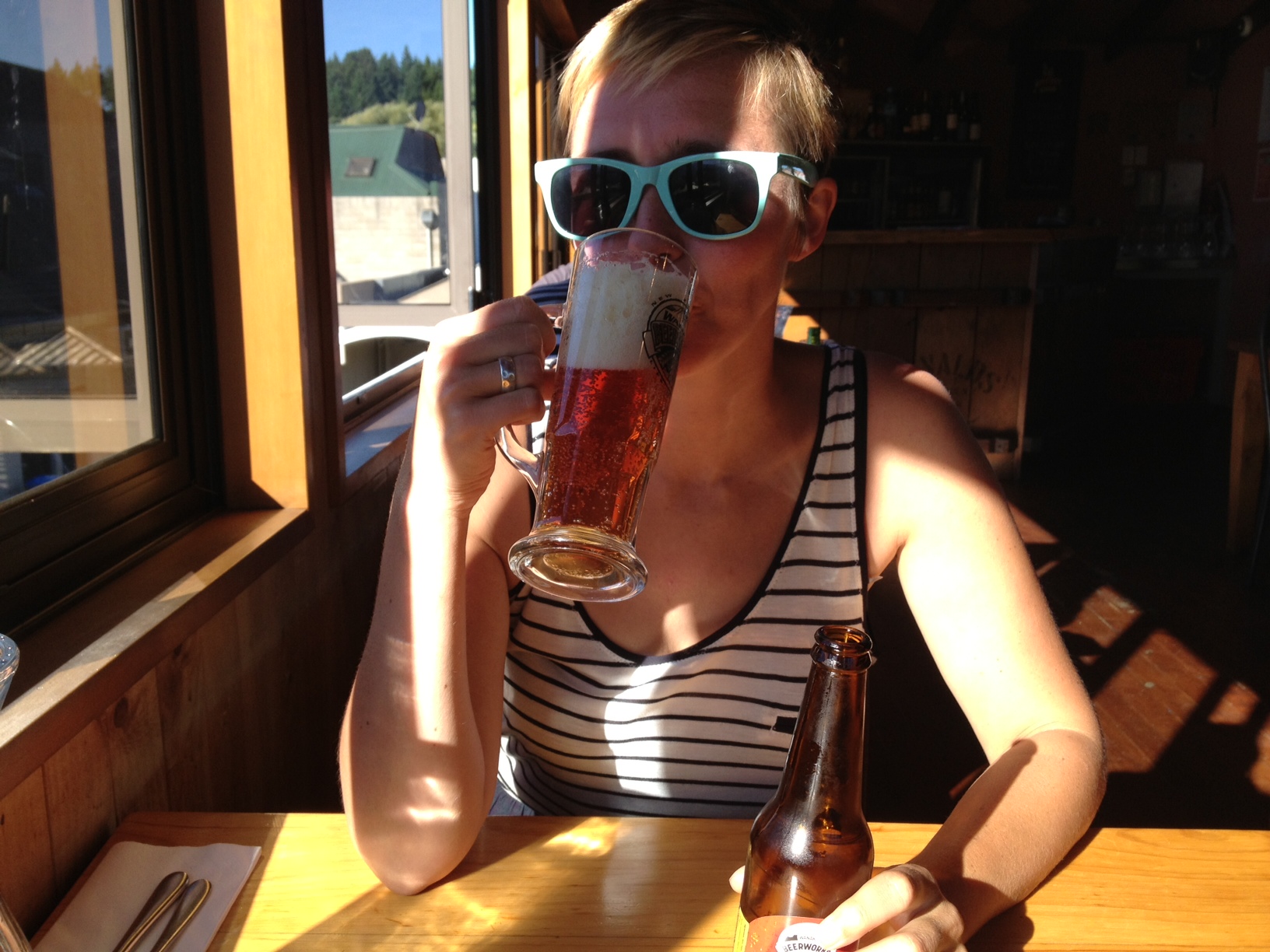
After my hike, we treated ourselves to a few beers, then a curry with a lake view. The beers were from Wanaka Beer Works, which is just outside town at the airport. The brewery only seems to produce lagers, which puts me off slightly, as I prefer bottom to top fermented beers, but actually their Cardrona Gold “All Malt Lager”, named after a high hill pass outside town, is pleasant, one of the few drinkable lagers I’ve had. (Even though it’s a variation on the classic “NZ Draught” formula – see below.)

Fran curry beer Wanaka

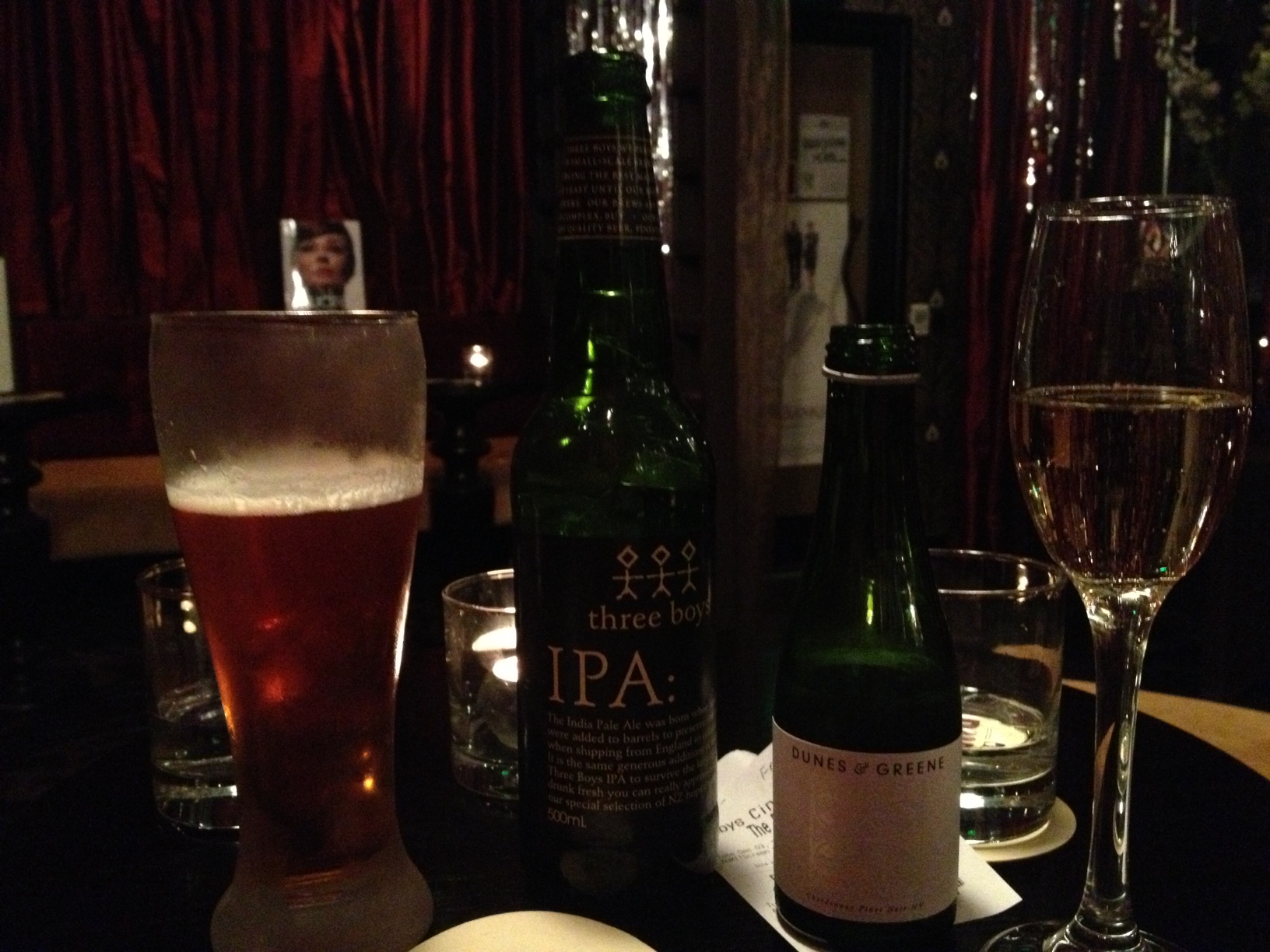
Wanaka also boasts not one but two idiosyncratic independent cinemas. Our friend Benny had recommend Cinema Paradiso, but it was all booked for an event, so we went to Rubys (which I assume is actually “Ruby’s”), a great place on the edge of town that has an atmospheric lounge bar – a great spot for a cocktail, glass of wine, or beer. I had an IPA from Three Boys, a brewery in Christchurch. It was served too cold, in a cold glass, and was more malt than hop, but was a pleasant amber, fruity ale.

Three Boys IPA at Rubys, Wanaka

She’ll be right
So now we’re spending our second night in Aoraki/Mount Cook Village, parked up. As Designated Driver, I crave these moments where I can put the car keys down and actually enjoy some of the bottles we’ve been collecting along the way. The past few evenings, this has included a couple from Invercargill Brewery, both of which I found a bit metallic, as well as several Green Mans and even a few from Brew Moon still.

To be honest, as much as I’m enjoying visiting these breweries and sampling their wares, I’m a little disappointed by NZ craft beer. NZ changed how I feel about beer back in 1994, but now it’s changing how I feel about NZ beer. So much of it, even the craft beer, feels like it’s pulling its punches. Are NZ beer drinkers really so afraid of more body, more robust flavour, bigger hop hits? So afraid of anything other than cold pale lagers and pilsners and, more specifically, cold, too cold, “NZ draught” (a mildly malty, minimally hoppy amber or brown lager, like Tui, Canterbury Draught, DB Draught and Speight’s Gold Medal Ale, which isn’t really an ale).

So many of the beers, aside from being served too cold, are just so generic and mild-mannered, the liquid expression of the easy-going “She’ll be right” attitude. I’m really hoping that during our last few weeks here we’ll discover some feistier beers. In the meantime, I think Brew Moon and Garage Project might be my favourites so far. But I’m craving those big flavours, like the APAs we were finding in the US before we came here. Come on NZ, you have just great hops, so many skilled breweries, let’s have some attitude!

Green Man IPA, Mount Sefton

[PS – someone give me some real WiFi please. Another blog brought to you after hours of wailing and gnashing of teeth.]

4 Comments

Filed under New Zealand beer, Travelling