Category Archives: Feasts

Sussex wassail apple cake

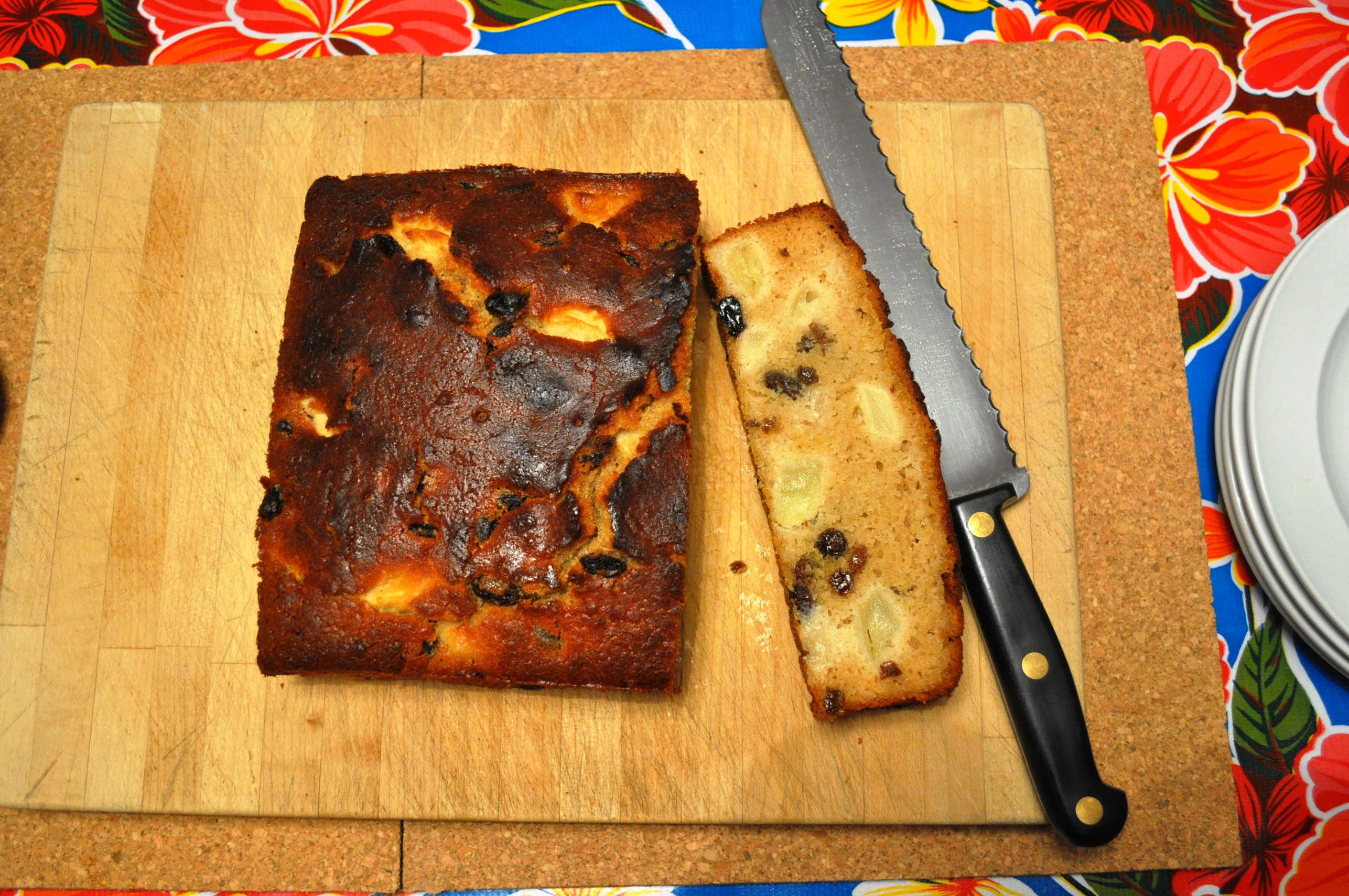
Sompting wassail cake
We live in a somewhat charmless 1950s-1960s neighbourhood, but we have a decent-sized garden and are close to some beautiful countryside. That garden contains, among other things, two old apple trees. A neighbour who’s lived here since the estate was built says much of it was an orchard beforehand. So those veteran apple trees, gnarled and neglected, deserve some respect as survivors.

One way we in southern Britain, particularly the southwest and southeast of England, traditionally paid our respects to our apple trees was by wassailing. To wassail is to salute, to wish good health, with the ail part of this Old English/Old Norse word equivalent to the modern English hale, as in “hale and hearty”, whole and in good health.

The word also refers to a drink drunk when wassailing, from a wooden “wassail bowl”. I must admit I didn’t make the drink this time, as the recipes I found on this fascinating site are types of punch-like concoction involving mulled cider, mulled ale, mulled cider and ale mixed, mulled cider and ale and fortified wine mixed, all often also mixed with whipped egg and garnished with toast. For toasting your apple trees, your neighbours, your community, in the hope of winning over apple tree spirits and guaranteeing a good harvest – and plenty more cider the following year. As a teenager I drank far too much snakebite – half-half beer and cider – and it made me so sick it put me off alcohol for years. So although I love tradition, I’m wary of cider-ale combinations.

Wassailing is traditionally carried out on Twelfth Night – that is, 5 January, the night before Epiphany. However, there’s also a tradition that favours Old Twelvey Night – the night of 17 January, the eve of the Epiphany according to the Julian calendar, which was replaced by the Gregorian calendar for most Westerners and Christians in 1582. This is – or was – favoured in the southwest of England, where Fran’s from, and my mother’s mother was from.

Anyway, after a few ciders – both local and from Normandy, another gift from some family friends – Fran and my mother, Helen, started singing a wassailing song, that goes (oddly, considering most the trees are bare of leaves):

“Here we come a-wassailing
Among the leaves so green;
Here we come a-wand’ring
So fair to be seen.”

The song is probably Victorian. Indeed, although these traditions may well be ancient, possibly with pre-Christian origins, as we so much British folk culture, the form we know today was likely largely shaped by the Victorians.

While they tried to remember the song, I made an apple cake. This recipe is from Sompting, a Sussex village about 16 miles (25km) away from where we live in Lewes. The original recipe makes for a fairly substantial foot-square cake, a little large for my family gathering.

The woman who provided the recipe, one Marjorie Clarke said of the cake tin, “We use a special one with a hole in the base, so that the cake can be carried on the end of a spear in the procession.” That’s probably not the sort of cooking kit you have. I certainly don’t, and don’t really fancy drilling a hole in one of my tins. So I think a standard square, or similarly proportioned rectangular one should do. I reduced the quantities and tweaked it slightly. Then burned the top a bit in my new oven. But no matter, that felt suitably rustic and the cake was lovely and moist, the raisins fattened with very natural Wobblegate Sussex Scrumpy I used.

Local ingredients

225g eating apples
110g raisins
225g cider
170g butter
100g (4 tbsp) honey
4 medium eggs (approx 190g egg white & yolk)
200g self-raising flour
2 tsp baking powder

1. Grease and line an 18cm square baking tin, or similar.
2. Preheat the oven to 180C.
3. Put the raisins in a saucepan, cover with the cider, bring to the boil then remove from the heat.
Apple, raisins, cider
4. Add the apple pieces to the cider and raisins, and allow to cool while you continue.
5. Cream the butter and honey then gradually add the beaten egg. If it starts to curdle, add a little of the flour.
6. Sieve together the flour and baking powder.
7. Add half the flour to the batter, and combine.
8. Add half the cider mixture to the batter, and combine.
9. Add the other half of the flour and fold in.
10. Add the rest of the cider mix and carefully combine, until the mixture is uniformly mixed, but not over-mixed.
11. Pour the mix into the tin.
12. Bake for about an hour, or until risen and firm.

We didn’t visit neighbours and sing to them and their apple trees. Instead we stayed indoors and ate cake and raised our glasses of cider in the direction of our apple trees – the old ones augmented by a crabapple I planted last year and a dwarf apple I planted three years ago, which was a wedding present from my cousin and her husband. Here’s to a good fruit-bearing year! Wassail!*


* Yes, I know I should have posted this on Saturday, but there’s always next year.
5 Comments

Filed under Baking, Cakes, Feasts, Recipes

Galette des rois and celebrating the end of Christmas with Epiphany

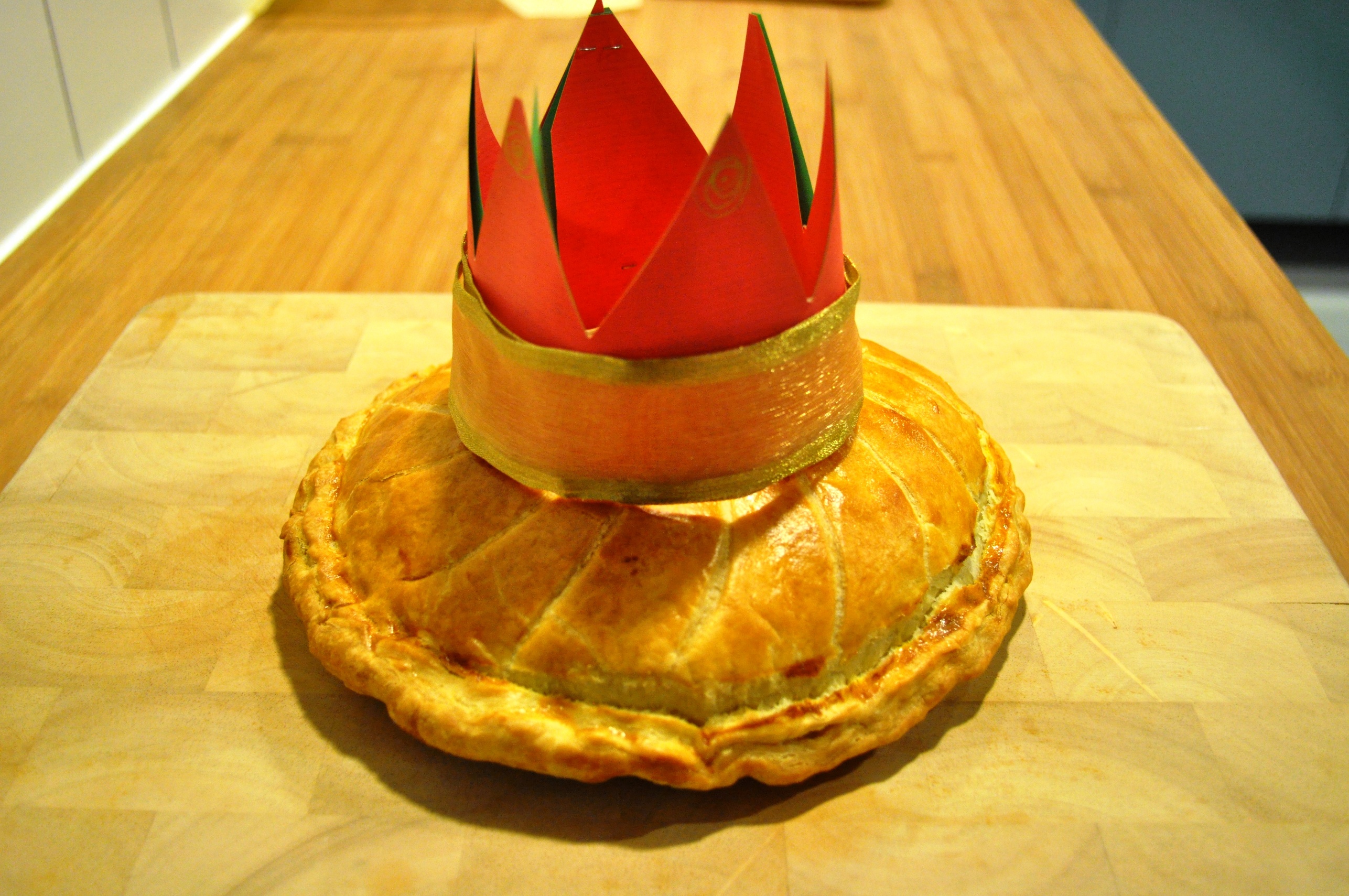
Crowned galette des rois

I love the Christmas season, but one thing I loathe about its modern British incarnation is how it begins in the middle of October. People start stressing, hurry to put up their trees at the start of December, then run out of steam by about Boxing Day, with some even taking down their decorations. Yet Boxing Day, the 26th, is only the Second Day of Christmas.1

We all know the song that starts “On the first day of Christmas my true love gave to me…” but miss the significance. Formerly, Christmas was celebrated from Christmas Eve and Christmas Day itself, when the feasting started and was sustained until Twelfth Night, 5 January, the eve of Epiphany. This ending of the season on 6 January is still celebrated in some cultures with king cakes, or kings cake. The kings in question? Why that would be the Three Kings, the Magi.

This is all perhaps a bit confusing for those who grew up with formalised Nativity plays and scenes that pack in the whole cast of characters – holy family, kings, shepherds, sheep, oxen, camels – for the actual birth of Christ. But alternative names for Epiphany are Three Kings Day, or simply the Day of the Kings, as it’s when they arrive at the famed Bethlehem farm outbuilding and give their gifts. Indeed, some cultures still do their main gift-giving on Epiphany. It’s an important Christian feast day, hence the feast foods: the king cakes.

The end of Christmas
Not only are variations on king cakes served on Epiphany, they can be served repeatedly through Carnival season right up until Lent, with the New Orleans version, for example, being essential for Mardi Gras, Fat Tuesday.

The northern French king cake – galette des rois – isn’t the richest concoction, but I still love how this tradition is one in the eye for all the hackneyed dogma that gets trotted out with the British New Year celebrations about how you have to stop indulging and embrace self-denial. Indeed, one of the things I loved during our two years living in Rome was how Carnevale brought with it uniquely indulgent seasonal sweets soon after New Year.

Before our time in Italy, the biggest connection to another European country and culture in our household came with Fran’s Francophilia. She’d made a connection with France when she was young, studied French, and spent several years living in Brittany and Paris when she was in her late teens and twenties. It was Fran who first told me about the galette des rois five years ago.

While southern French, parts of the US South and some Spanish and Latin cultures do a more cake-like king cake made with enriched dough, and decorated with coloured icings and candied fruits2, the northern French galette des rois is a more modest concoction. It’s a sweet pie, made with puff pastry (pâtes feuilletées) and filled with almond paste, frangipane; essentially a pithivier.

Slice

Cake, round and flat
What is a galette? Well, it’s defined as an “espèce de gâteau rond et plat” – “a type of cake, round and flat”. From what we can work out, it’s the diminutive of gale, again meaning a round, flat cake but also used to describe a small round stone, worn flat by water3. Alan Davidson says, “the word being derived from galet, a pebble perfect for skipping”. The word is perhaps best known from galettes brettonne, Breton galettes – pancakes made with buckwheat flour found in that region of northwest France. It also refers to certain types of biscuits and cookies, also round and flat.

Charming
Anyway, as well as being a modest treat, the fun thing about galette des rois is the inclusion of a fève – literally a dried bean (like the Italian word fava, broad bean). This is hidden in the frangipane mixture and bestows good luck on the person who finds it in their portion. This is not unlike the old British tradition of hiding a coin in Christmas pudding, and indeed lots of cultures have festive baked goods that include a charm of some form: it’s common to other king cakes, the Bulgarian banitsa contains a kusmeti charm, etc.

The modern form of the fève is a small ceramic or plastic figure of the baby Jesus. Last time I made one, I debated using a Monopoly piece but opted instead for a marble. This time, however, I decided to use something edible, so chose half a walnut. No danger of choking! The French tradition is for the youngest child of the gathering to sit under the table and call our names as the slices are served, for an added layer of chance. Whoever wins the fève gets to wear the paper crown you place on top of the galette des rois when you serve it and be the family king or queen for the rest of the day. Or nominate someone else if they’re not feeling the lure of such absolute authority.

The inclusion of a bean is likely a pre-Christian Roman tradition, when for one day in winter slaves and masters would eat together, and even the slave could be king of the feast, or at least the magister bibendum, “master of the drinks” or toastmaster. As Davidson points out, when the pagan Roman empire was Christianised, it made sense to declare 25 December Christ’s birthday, “co-opting these immensely popular holidays” and midwinter ceremonies, notably Saturnalia.

Recipe
This time round I also made my own puff pastry, using a recipe from the new 2011 translation of Ginette Mathiot’s The Art of French Baking (originally Je Sai Faire La Patisserie, “I Know How to Make Pastries”, 1932). It was okay, not great. Partly it didn’t puff well as I messed up the edge of the galette; that’s a tricky bit, as you need to seal it well to contain the frangipane, but not to the point of preventing any rising and puffing of the pastry. Anyway, most people will probably prefer to just use bought puff pastry – if so, make sure it’s all-butter as the richness and flavour is essential.

400-500g all butter puff pastry

Frangipane filling:
85g ground almonds
85g caster sugar
Pinch salt
85g unsalted butter, softened butter
2 medium eggs, beaten (that is, about 100g of beaten egg)
A dash of rum (optional)
One fève charm (optional)

Wash:
1 egg yolk
1 tsp milk

1. First make the frangipane. Combine the almonds, sugar and pinch of salt.

Add butter
2. Add the softened butter and squash it in, then cream it in fully. Keep creaming until the mixture becomes a paler colour.

Cream
3. Add the beaten egg, a little at a time, and the rum (if using) and beat to combine. Cover and put in the fridge while you prepare the pastry.

Beat till pale
4. Line a baking sheet with parchment.
5. Roll out the pastry then, using something round that fits your baking sheet, cut two discs. Mine were 230mm (9 inches) in diameter.

Cut out discs
6. Put both circles on the baking sheet with another piece of parchment in between, cover with plastic to stop them drying out and rest (them, not you) in the fridge.
7. Whisk together the egg yolk and milk for the wash.
8. Take the pastry and filling out of the fridge again and separate the discs.
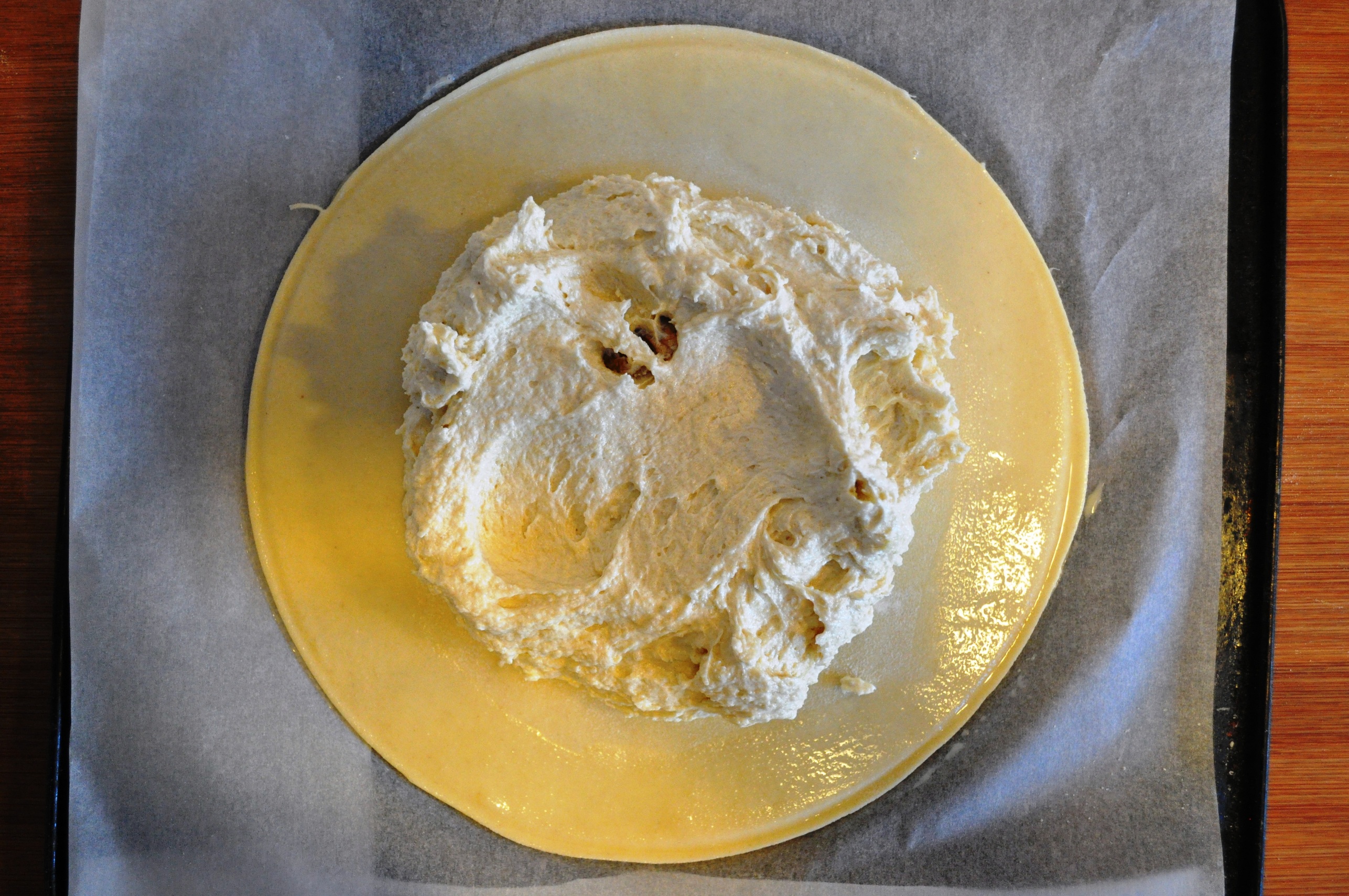
9. Put the almond filling in the middle of the bottom piece of pastry, leaving about 25mm all the way around the edge.

Add filling
10. Put a fève in the mix, making sure no one sees where it’s hidden.
11. Brush the exposed edge of pastry with water, put the other disc of pastry on the top then seal together tightly.
12. You can chill again now, leaving it until ready, even overnight. Again, cover or put in a plastic bag to stop it drying out.
13. Preheat the oven to 200C.
14. Brush the glaze all over the top.

Glaze and incise top
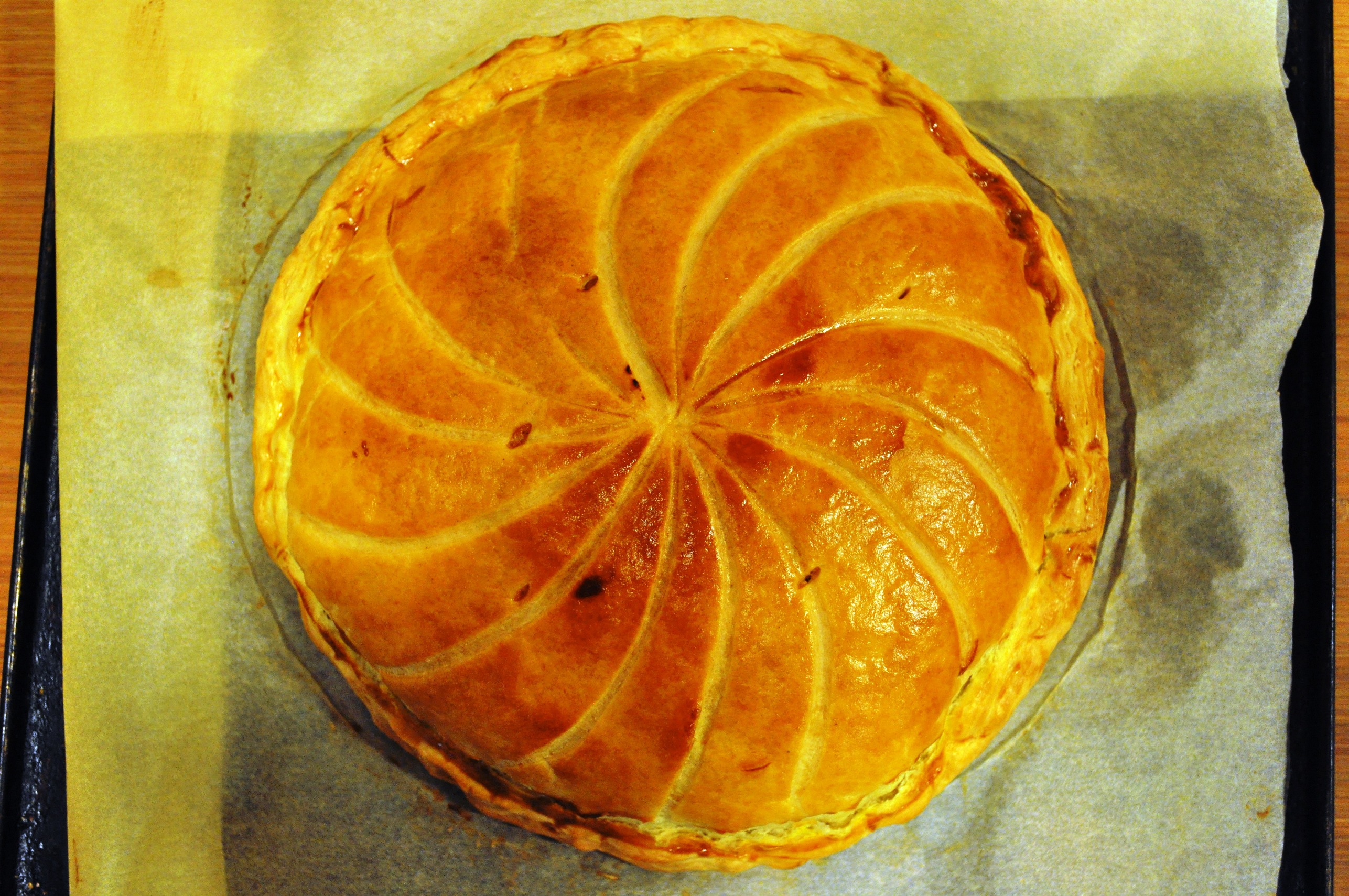
15. With a sharp paring knife, cut a pattern on the top. Traditionally, this involves diagonal lines or curving sunrays, but you can be as creative as you want. Stab a few holes too, to allow steam to escape. You can scallop or crimp the edge too, but see the above note.
16. Bake for about 30 minutes or until crisp and golden. (As soon as it’s out of the oven, you can also give it an extra glaze with sugar syrup.)

Baked 1
17. Serve warm or at room temperature, topped with the paper crown.

And forget about those silly New Year’s pronouncements to punish yourself for overeating over Christmas. Just moderate! So, for example, don’t eat an entire galette des rois on your own, greedily trying to win that crown. Fran got it – or half of it at least, a flaw in the plan of using a walnut – in her first slice.

Fran as the Epiphany galette des rois queen


1 Most count Christmas Day as the First Day of Christmas, though some start with 26th December, St Stephen’s Day, the British Boxing Day. If you follow the Julian calendar, you have to wait until 6 January to start the Twelve Days of Christmas. Thanks Alex and Nick for informing me of that with your Ukrainian Christmas celebrations on our Epiphany, yesterday.

2 Called variously gâteau des rois or royaume or reiaume, roscón de reyes or rosca de reyes, corona dels reis, tortell de reis and bolo de reis.

3 Fran also conjectures that the word relates to the Gaelic gall, which means “stranger”, but also “rock, stone” but it all gets a bit confusing when you learn the Breton language name for Breton galettes is Krampouezhenn gwinizh du.


Addendum

My folks visited at the weekend, and brought with them something given to them by some friends who live in Normandy, who bought it in their local patisserie – it’s a brioche des rois, another variation on the kings cake theme. None of us were sure what the red slices of candied fruit were – apple perhaps?

Brioche des rois


12 Comments

Filed under Baking, Discussion, Feasts, Pies & tarts, Recipes

Lebkuchen in my new kitchen

Lebkuchen

So we’re in week 22 or 23 of our 12 week building project now, with the few final jobs dragging on and on. But the good news is that we got a kitchen back in the past few weeks. We’ve now got it in pretty usable order.

It’s a fairly slow process getting used to a new kitchen: the layout, your workflow in the space, the new equipment. In this case, the only new kit we got was an oven. As a baker, this is obvious the most important thing. Especially as, suddenly, we seem to be poised on the verge of that annual blow-out that is Christmas.

Now, I love seasonal and festival specialities, and over the years I’ve enjoyed trying various international seasonal baked goods like stollen, panettone and kringle. I did the latter, a Scandinavian sweet bread, while living in Italy, and the panettone, the classic Italian sweet seasonal bread, while living in England. I’m in the process of revising my panettone recipe but in the meantime, I wanted to try another classic European Christmas baked treat – lebkuchen, the traditional German biscuit or small cake that’s related to other European sweets like British gingerbread biscuits and cakes, Danish honning hjerter (honey hearts), Polish Toruń pierniki, and various international spice and honey cakes.

As biscuits, these were considerably less of a challenge than an enriched dough when trying to get used to a new oven.*

Lebkuchen were a big part of our Christmas eating when I was younger – perhaps strangely as we’re thoroughly English. But my dad had business partners in Switzerland and Germany and the latter would send us a bag or tin of these spicy, soft German biscuits every year, possibly starting in 1979. Indeed, one large tin, decorated with seasonal scenes, is still in use by my parents as a biscuit tin 15 or so years after it was gifted to them.

Despite enjoying them over the years, I’d never tried to make them. So it was nice to see a recipe in The Guardian’s Cook section last week, from 2013 Great British Bake Off contestant and now newspaper food writer Ruby Tandoh. This was the first of Tandoh’s recipes I’d tried, if memory serves, and it worked well. I tweaked a few things though, partly as I like a tad more spice than she was suggesting, and as I’m pretty sure lebkuchen need honey in them.

I would also say the spice mix is up to you. Yes, they need ginger, but you can mix up the other spices to taste: basically you’re going for that medieval winter feast vibe, and traditionally lebkuchen can involve aniseed, allspice, cinnamon, cloves. As fresh spices are always more alive with flavour, if you have a small spice grinder or pestle and mortar, that’s great.

Here’s the original recipe on The Guardian’s site, and here’s my tweaked version:

120g unsalted butter, cut into small cubes
160g plain flour
1 t baking powder
5 t ground ginger
1/2 t cinnamon
6 whole cloves
2 cardamom pods
1/2 t aniseeds
100g ground almonds
80g soft light brown sugar
A pinch of salt
2 large egg yolks
60g runny honey

To glaze
20g water
100g icing sugar

1. Preheat your oven to 180C (fan oven)
2. Grind any fresh spices you’re using.
3. Sieve together the flour, baking powder and all the spices into a large bowl, discarding any big bits of cardamom pod etc.
4. Rub in the butter, until it resembles crumbs.
5. Add the ground almonds, sugar and salt to the flour and spice mix.
6. In a separate bowl, beat together the honey and egg yolks.

Lebkuchen 1

7. Pour the egg and honey mix into the dry mix and bring together with a fork or spatula to create a soft, moist dough.

Lebkuchen 2

8. Take lumps of the dough and roll into a ball. Ruby said “conker-sized” pieces, but as any British schoolchild of a certain age will know, conkers can seriously vary in size so I scaled mine at 30g. This resulted in 19 perfectly sized biscuits. Or go smaller, scaling them at 20g.

Lebkuchen 3

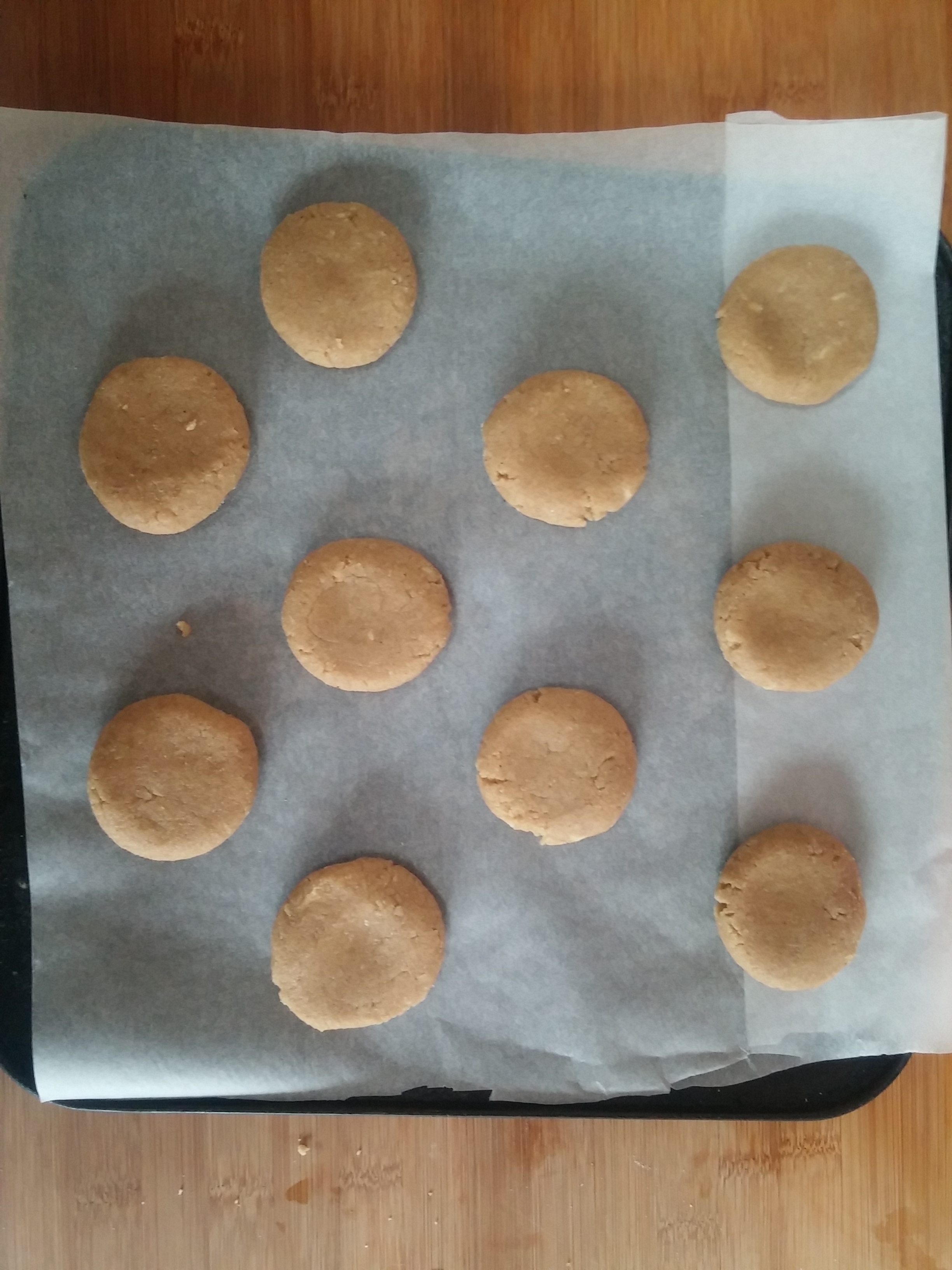
9. Squash the balls with your palms, flattening them out on lined baking sheets leaving some space between for expansion.
10. Bake for about 8 minutes then swap the trays around on the shelves so they bake evenly.
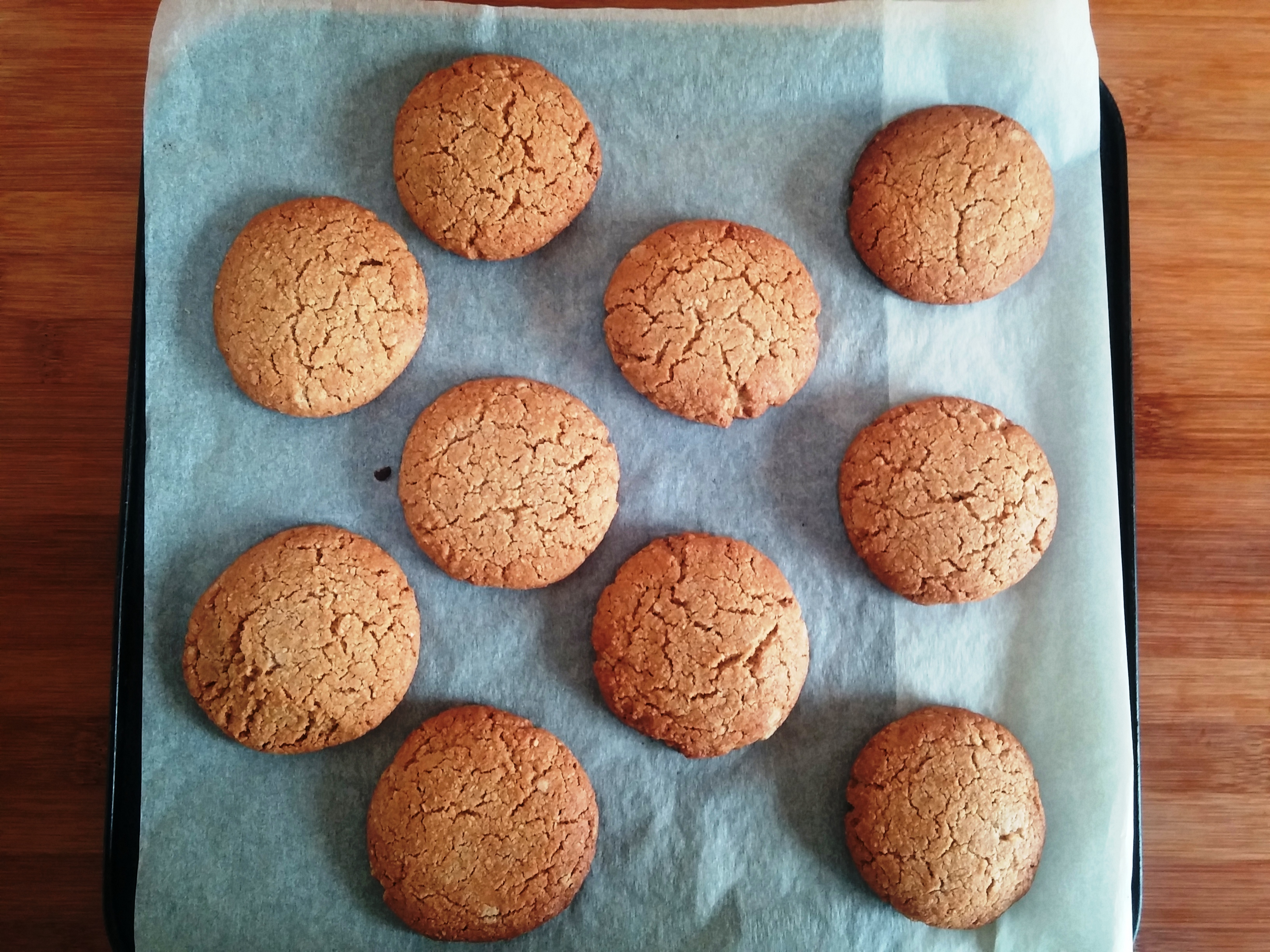
11. Bake for another 8 minutes or so – you want them nicely coloured, but not too dark. This will depend on the fierceness of your oven.

Lebkuchen 4

12. While they’re still baking, sieve the icing sugar into a small bowl then add a small dribble of water, about 20g, or 2 or 2 T. You want a runny, but not too runny, icing.
13. When the biscuits are baked, leave them on their trays and glaze by brushing on the icing “liberally” while still hot.

Lebkuchen 5

14. Leave to cool on the tray.

* A Rangemaster Professional + 110 Induction. My first impression is, sadly, that the ovens heat up slowly and are a good 10C less hot than it says on the dial. I should do a proper review at some stage as it’s not like you buy new cookers often, and it’s not like you can try before you buy.

2 Comments

Filed under Baking, Biscuits, cookies, Feasts, Recipes