Tag Archives: ale

Birradamare’s Birra Roma at Zoc, Rome

Birradamare's Birra Roma and 'Na Biretta Rossa

Saturday lunchtime we stopped by Zoc trattoria (aka Zoc 22) for some food and ale. Zoc is owned by the same people as the more established Urbana 47 in the Monti neighbourhood of Rome. Urbana 47 is stylish place where the food is produced along sound principles, with an emphasis on season and local (“KM0”), the provenance of ingredients front and centre on the menu.

As it should be.

We eat far too much food where we have no idea of the origins of the ingredients. This is important for all ingredients, but especially so for meat and dairy, where barbaric industrial techniques have cheapened the human relationship with animals, resulting in a form of de-humanised husbandry that emphasises quantity at any cost. Sadly, many people have been duped by the persuasiveness of the meat industry and supermarkets. Your intensively reared beef, pig unit pork, or industrial broiler chickens really aren’t that cheap if you factor in the subsidies and the cost we’ll all have to pay in the long run for the accompanying pollution and disease.

The bar at Zoc, Rome

So yes, bravo Urbana for its principles. These principles are similarly followed at Zoc, where the menu lists not just the ingredients, but the azienda that’s provided them. The trattoria even has photos on the wall of some of their suppliers, including one chap Fran recognised as the guy we’ve bought salumi from at the market in the Testaccio Ex-Mattatoio (currently closed for the summer – go figure).

I was also encouraged by the drinks list, which mostly consists of local wines, but also includes four bottled beers from Birradamare. Birradamare has pretty much established itself as the craft brewery for Rome. Although it’s not in the city, but instead is located at Fiumicino, the town at the mouth of the Tiber near the airport of the same name, its products are fairly ubiquitous here. If a Rome venue has just one craft beer brand on offer, chances are it’ll be Birradamare (eg here).

I ordered a Birra Roma, Fran a ʼNa Biretta Rossa. I’ve had the latter before – it’s a decent malty beer, inspired by German bocks, sweet and medium bodied, with 6.4% ABV. Its colour is amber or copper. Surprisingly, the Birra Roma was a similar colour (see pic, above), despite being called a birra oro (golden ale) on Birradamare’s site or even bionda (blonde) on the label. Birradamare’s own site says the Roma is 35EBC, which is about right, but there’s no way the Rossa is 74EBC (a serious porter tone). Surely that’s an error?

Anyway, the Birra Roma (5.5% ABV). Like Baladin’s Nazionale, which I tried a few days ago, the Roma seems to be one of the many experiments going on to create specifically, uniquely Italian style beers. In this case, even a specifically Roman beer. It’s a beer that clearly takes into consideration Italians’ love for fairly straightforward but strong lagers, as it was inspired by Bavarian Märzen lagers. I found it had a slight orange aroma, slightly hoppy. Taste-wise, it’s hoppy but not bitter (35 IBU apparently), crisp, fresh, with very faint smokiness and more body than a lager. Interestingly, Fran said it reminded her of the sea, of seaweed and salt and Breton Atlantic  beaches, the Côte Sauvage, which is far more poetic than I can be about it.

Birra Roma at Zoc Rome

So anyway, we were enjoying the beers, and the ambiance of the place, which is located in a 1950s block on the Centro Storico side of the river near the Ponte Sisto. The dining area is spacious, with high ceilings and some great design features, like an enlarged detail of a nautical map (I love maps). Much of the furniture is for sale, with price tags, so there’s a slightly distracting feeling of eating in a hip secondhand furniture showroom. There’s also a decent sized courtyard at the back, though it was a pretty hot day when we visited, and they seemed to be trying to cool it off with misters – which only succeeded in making everything soggy.

When the food finally arrived, it was pretty tasty. Fran had three chicken legs and a fig, the flavour profile a nice change to much Roman food, with some turmeric, cumin, rosemary. But it really was just three drumsticks and a fig, for €16. Mine, meanwhile, was half an aubergine (/ melanzana / eggplant) and one piece of cheese toast. Like Fran’s, the flavours were a nice change, more north African say, though it was underseasoned. And just plain meagre (for €9). I’m more than happy to pay for quality and provenance, for more ethical food, but there’s got to be some balance – the portions were so small we left feeling hungry, which isn’t what you want when your bill comes to €44. We even had to ask for bread (a dense, white sourdough, somewhat stale), and there we no other contorni (side dishes). Essentially we paid meal prices for a snack.

Blown up nautical charts on the wall of Zoc

This is all something they need to work on, to make for a more satisfying experience. They could also do with working on the service. The staff were amiable enough but just seemed a bit apathetic. When, for example, a fuse tripped, cutting out the fans and lights, the waiter wandered around for a while first before going to click it back on. He wasn’t busy either, there were just a few covers there for Saturday lunch. Perhaps it’s busier in the evening. Although it’s right near two very popular areas – Trastevere and the Centro Storico around Campo de’ Fiori – it’s just off the main drag. Although Urbana 47 suffers from the same small portions/ high-ish prices issue at least it’s got a bit more atmosphere from being busier, as Via Urbana is a more lively street.

So, Zoc: nice spot, good beer, sound principles, iffy value for money. Must try harder (er, as I may have had on my school reports a few times in days of yore).

Info:
Via delle Zoccolette 22, 00186 Rome, Italy
zoc22.it (English site, sort of) / 06 6819 2515 / info@zoc22.it

Birradamare
Birradamare.it (English homepage) / 06 658 2021 / info@birradamare.it

4 Comments

Filed under Ale, beer, Restaurants etc

Revelation Cat beers at Brasserie 4:20, Rome

Brasserie 4:20 Rome, the bar

Brasserie 4:20 is not in a prepossessing location. Sure it’s located not far from Porta Portese, a 17th century gate in Rome’s 3rd century Aurelian Wall. And sure the actual street, Via Potuense, is historical, constructed in the 1st century AD to connect the city to Portus at the mouth of the Tiber. And sure the section where Brasserie 4:20 is located comes alive on Sundays for the Porta Portese market, a kilometre-plus of stalls selling tat clothes, cheap electricals and bric-a-brac. It’s even the place to go in Rome to buy bikes or scooters of occasionally dubious provenance. (Porta Portese is one of the locations of Antonio’s desperate search in Vittorio De Sica’s unbearably heartwrenching neorealist classic Bicycle Thieves [Ladri di biciclette, 1948]: go to 9:52 here.)

But, frankly, this stretch of Via Portuense is a scruffy rat-run.

At rush hour, it’s an untrammelled racetrack for Rome’s horrendous car population, and not a great place to tackle on foot – there are no pavements, just potholed gutters. One side of the road is given over to semi-derelict buildings, wasteland and one restaurant overlooking the Tiber. The other side, where 4:20 is located, consists of a large, graffitied wall punctuated with arches. Even when 4:20 is open, it doesn’t exactly look inviting – a dark entrance in the wall, a few smokers outside.

So I’ve walked past dozens of times, without even quite making it inside. Shame on me really, as it’s a) not that far from where I live and b) one of Rome’s most significant birrerie (beer bars).

We resolved to finally visit on Saturday, meeting several Italian friends, many of them counfounding stereotypes by enjoying good beer as much as wine.

Fortunately, at 5.45pm on a Saturday the stretch of Via Portuense was quiet, Brasserie 4:20 safe to approach on foot. The bar was quiet too as although the sun is well and truly over the yardarm as far as we (and other Brits) are concerned, 6-ish is a freaky time to have a drink for Italians, as one of our friends commented straight away on their arrival. Still, at least it meant we had our choice of seating.

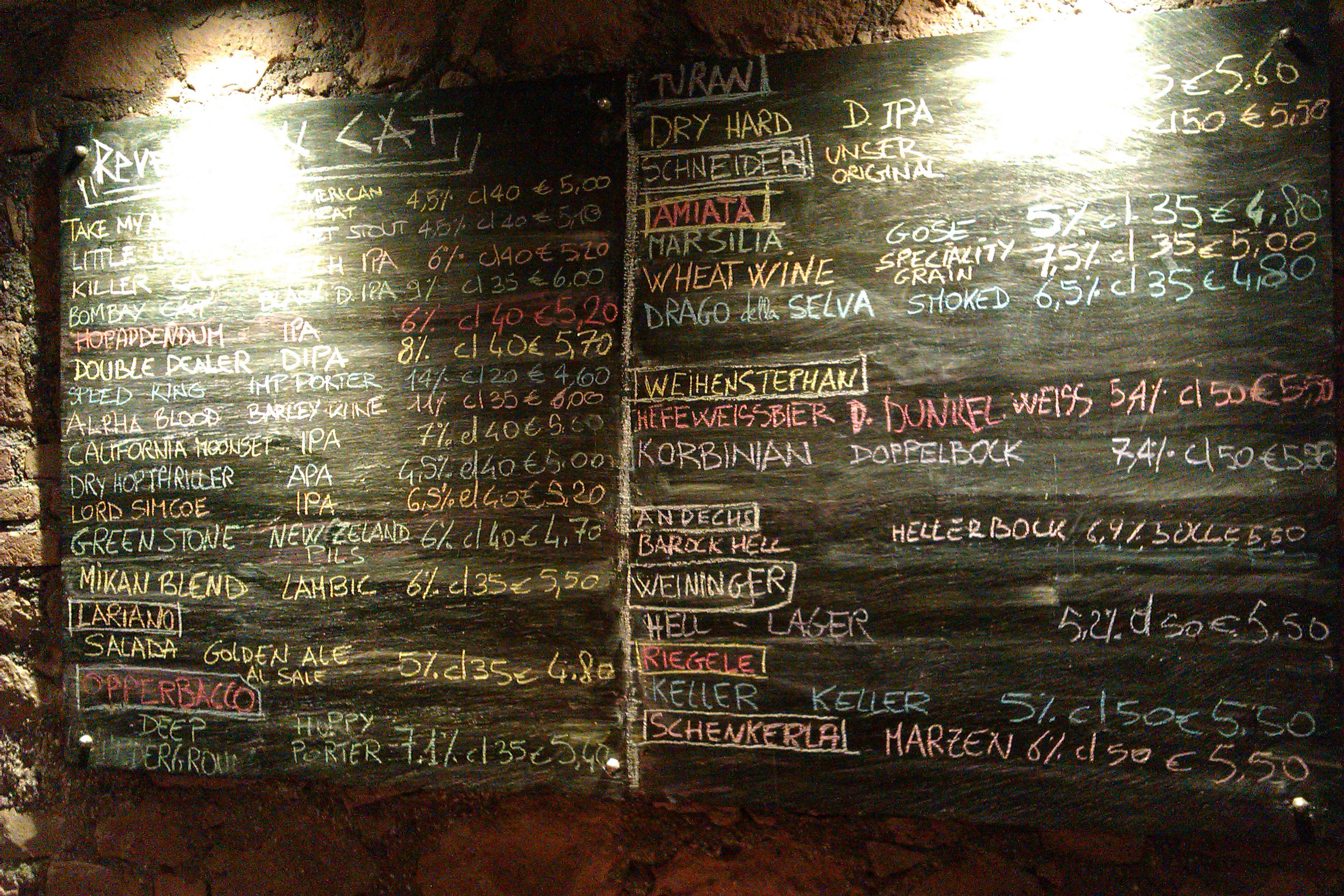
Some of the beers available at Brasserie 4:20 Rome

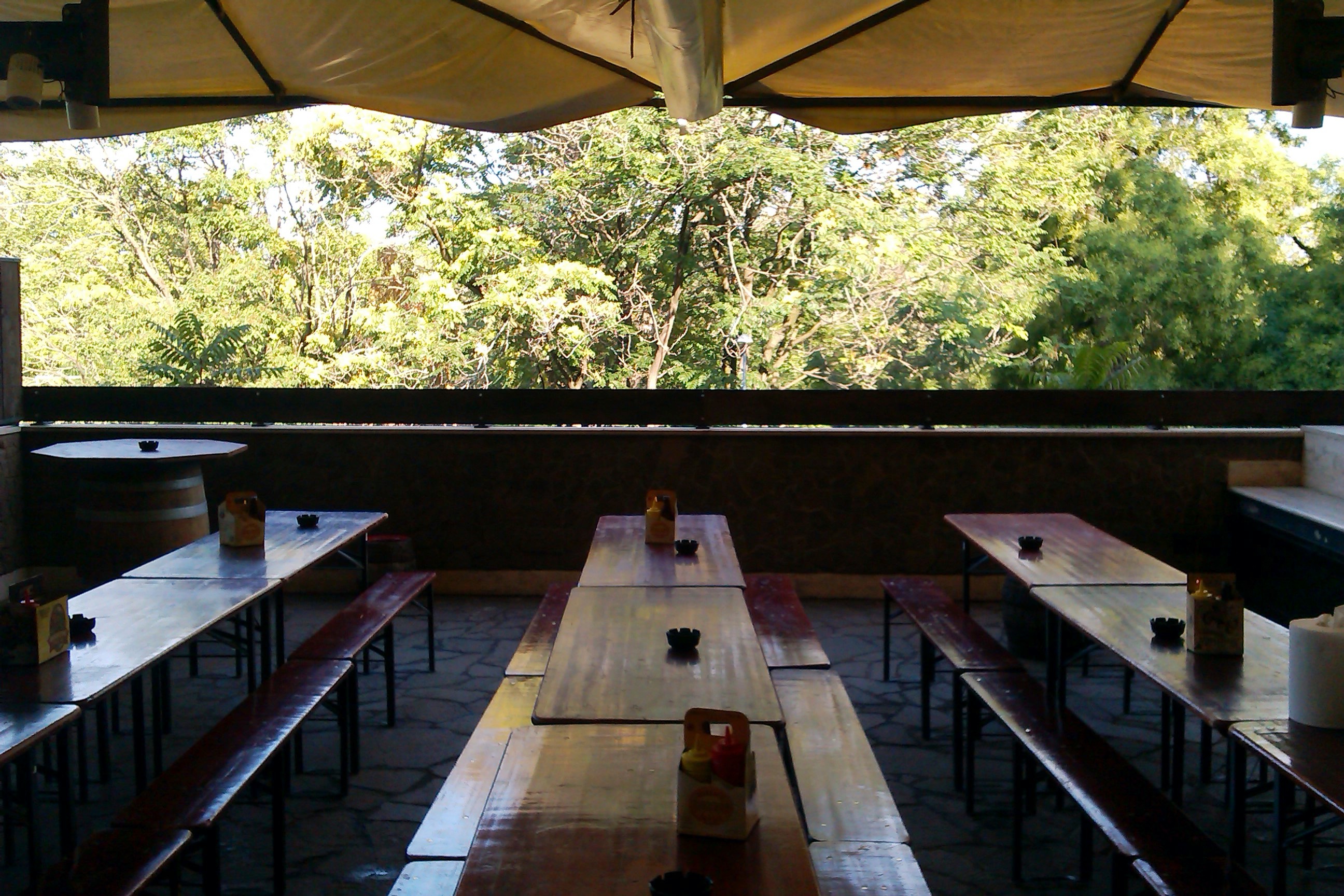
Downstairs is an atmospherically gloomy cavern of bare brick walls, a long bar featuring a barricade of taps, and seating that includes a couple of inviting (though tight) horseshoe-shaped booths. We settled into one of these, not realising there was also an upstairs terrace, with awnings. This was handy as we’d just had a massive thunderstorm, which had given way to blazing sunshine. After ordering our first beers, we relocated upstairs to enjoy the space and partake of an aperitivo buffet. It was basic – some couscous, some pasta salad, bread, a few dips – but included in the price of the drinks at that time of the evening.

As for the drinks, 4:20 only has beer, whiskey and water. Downstairs, there are apparently 47 taps, including 12 hand pumps, though I didn’t count them. Upstairs, there’s a more limited selection, with six taps, but hey, it’s hardly a long schlep back, down some stairs and past a mound of containers of fry oil. Yes, there’s also food. In this case, that means burgers (mostly), the smell of which was filling the air on the terrace. They use beer a lot in the preparation of the food, though we didn’t sample anything beyond the buffet.

Some more of the beers available at Brasserie 4:20 Rome

Beer-wise, there are menus on blackboards on the wall. We weren’t offered an actual menu, though they may exist, especially as they have a selection of bottled beers. These are the only refrigerated beers, as the tap beers are kept in a cellar and served at ambient temperature – important for the “organoleptic quality” according to their site. What this means is that the precise qualities of a bar are better experienced – by smell, taste etc – at ambient temperature. (Ice cold beer is of course nice on a hot day but that’s another argument.)

The beer comes from a variety of craft breweries, some Italian, but also a lot of Belgian, British etc. Among the Italian breweries, a major presence here is Revelation Cat (English site) – a Rome-based outfit whose products are distributed by Impex, which owns 4:20 as far as I can tell. So Revelation Cat is effectively the house brewery.

When we visited, there were 13 Revelation Cat beers available. Fran chose their Little Lover, a 4.5% ABV stout so chocolaty it could almost have been mistaken for a milkshake in a blind tasting. Okay, not really, but it was very pleasant, in a sweet, mild, creamy kind of way.

I’m still on a quest to find a perfect golden summer ale, so I was torn between Salada from Lariano brewery, in Lombardy – a golden ale al sale, “with salt” – and Magical Mystery Gold from Free Lions, a brewery I talked about over here. I got the latter as it was from a little closer to home, Tuscania, northwest of Rome. I’ve still not found my ultimate golden ale, but Magical Mystery Gold wasn’t bad. I seem to be drinking a lot of citrussy beers at the moment, and this was no exception with an aroma of grapefruit. Taste-wise, it was strongly hopped, dry and crisp.

Brasserie 4:20 Rome, the roof terrace, July 2013

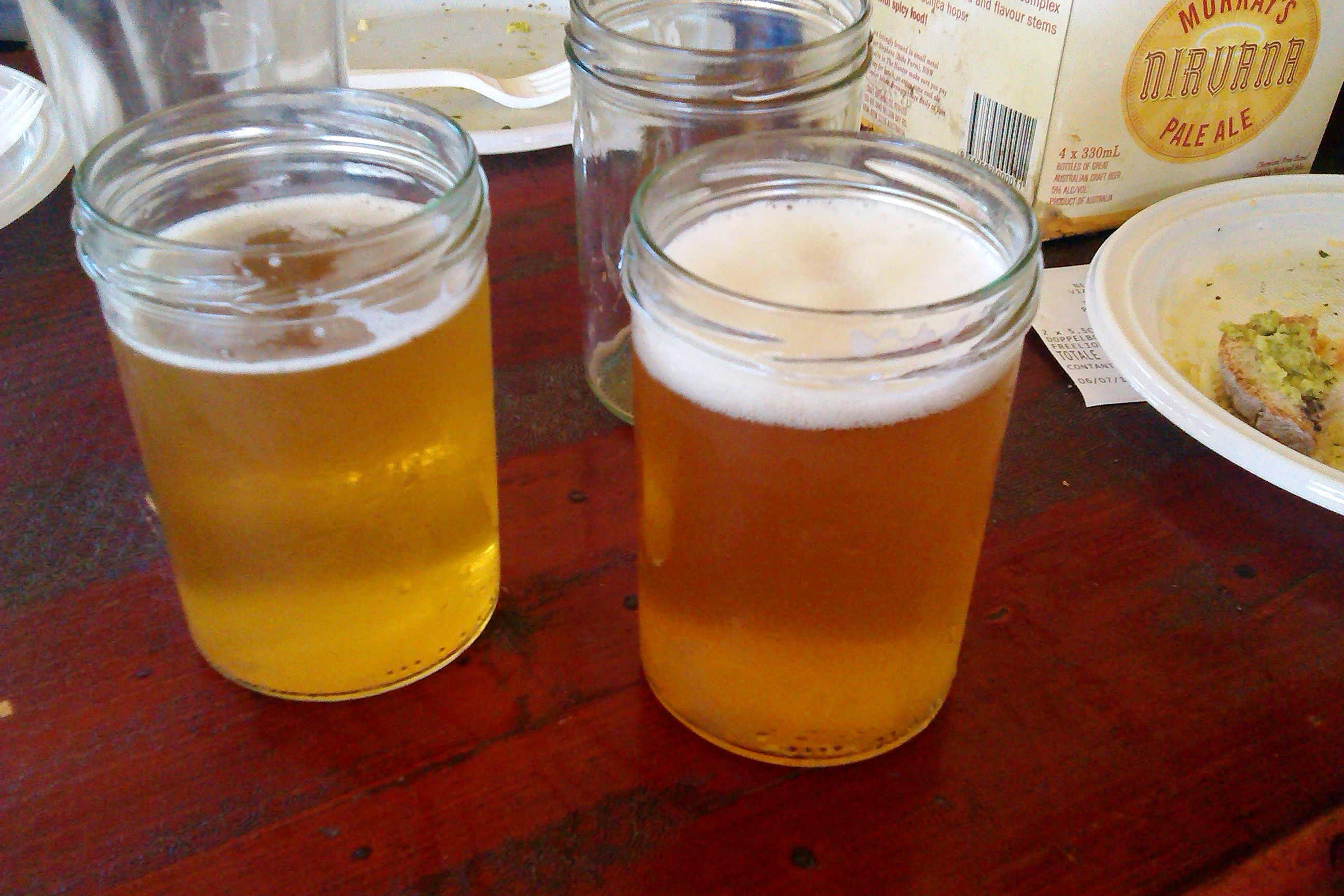
We managed to get in a couple more after this, from the small selection on the terrace. These were California Moonset and Take My Adweisse. We had to order the latter on the strength of the terrible pun alone. Both are from Revelation Cat. These were served in jars. This seems like a strange affectation; I’d rather drink from something that doesn’t have a thread on the lip. The beers were both interesting though.

Take My Adweisse is a 4.5% hoppy American wheat ale. It’s not terribly bitter, but instead is crisp, fairly floral (elder, etc), and refreshing. California Moonset, on the other hand, was fairly odd. It’s nominally a 7% IPA, but I found it pretty challenging, with a pungent odour of, well…. rot? Cat pee? I’d need to drink it again to really nail the description, but I found the smell almost off-putting. Taste-wise it was pretty hoppy, with some serious clashing flavours – resin, citrus, malt. I’m not sure whether it was interesting or unrefined.

Take My Adweisse (left) and California Moonset (right) from Revelation Cat. In jars.

Anyway, after all that we had to go – as we had a birthday to attend at Open Baladin, perhaps Rome’s best known beer bar. This experience of two key beer Roman birrerie in one day was telling. Although we had a good time at 4:20, and I’ll definitely go again, I found our welcome a bit unfriendly there, with three staff just giving us a cool stare when we first arrived. Baladin, on the other hand, I’ve always found more friendly, and the staff ready with advice.

Also, I had my most interesting beer of the evening at Baladin. I asked a friend who works there what she thought was their best beer at the moment, and she recommended a Wallonie saison beer, from Extraomnes, another Lombardy brewery. I’m increasingly getting into saisons as they seem to be challenging without the confusion of a beer like California Moonset. This 6.7% beer was golden-orange in colour, with a serious head and an inviting perfume of herbs and spice. Flavour-wise it balanced a slight peppery piquancy with notable, but not overly bitter, hoppiness and a broad fruitiness, tending finally to crisp and dry. In my notes I wrote “fermenting fruit, bubblegum”. Hm.

All in all, a great evening of socialising and beer sampling. And I’m definitely keen to get back to 4:20, see if I can warm them up a bit asking for recommendations, as it’s certainly a serious beer joint, for fans of real beer.

Infodump:
Brasserie 4:20, Via Portuense 82, 00153 Rome
Impexbeer.com 4:20 site (English)
Open Mon-Sat from 5pm, Sun from 7pm.

Revelation Cat brewery

2 Comments

Filed under Ale, beer, Bars, pubs etc, Breweries

Specchia White Night amber ale at Tree Bar

Last night, we had tickets to go and see Neneh Cherry and Fat Freddy’s Drop at the Cavea of the Auditorium Parco della Musica, in the Flaminio district of Rome. This is the area to the north of Piazza del Popolo,  the popular spot for tourists, shoppers and manifestazioni at the top of Via Del Corso, central Rome’s main consumer strip and sometime location of yacht races *.

We’d never been far into Flaminio, so were keen to check out a spot called the Tree Bar, and the Auditorium itself. The Auditorium was designed by Renzo Piano, who has more recently radically altered London’s skyline with the Shard, and was inaugurated in 2002. The complex consists of three beetle-roofed concert halls with the Cavea in between – a fourth, open air auditorium. This is where we were headed. But first, a beer.

The central Roman section of Via Flaminia (one of the city’s ancient routes, heading north) is canonically long and straight, and plied by trams. It’s lined with handsome mid-20th century apartment blocks and collection of tired looking markets, workshops and older, more historical buildings, along with a couple of stretches of open park. Tree Bar, a former kiosk, nestles in one of these.

Inside, it has has light, Scandinavian style wood fittings, outside there’s a terrace area that spills into the park. Some kids’ football kept escaping from their game – inside a dry fountain – and flying past us while we drank.

With its emphasis on aperitivo drinking, Tree Bar has a long menu of sparkling wines and cocktails, but thankfully there were also a few craft beers tucked in there too, with three bottled beers in a section marked “Birre Artigianale”. I didn’t know any of them, so asked the waiter what one, from a brewery in called B94 in Lecce, Puglia, was. He said it was a birra artigianale. Yes, but what type, I persisted, and he managed to come up with the fact that it was an amber ale. Okay, fine, that’s enough for me. He also said it was enough for two (a 75ml bottle), but Fran wanted a cocktail.

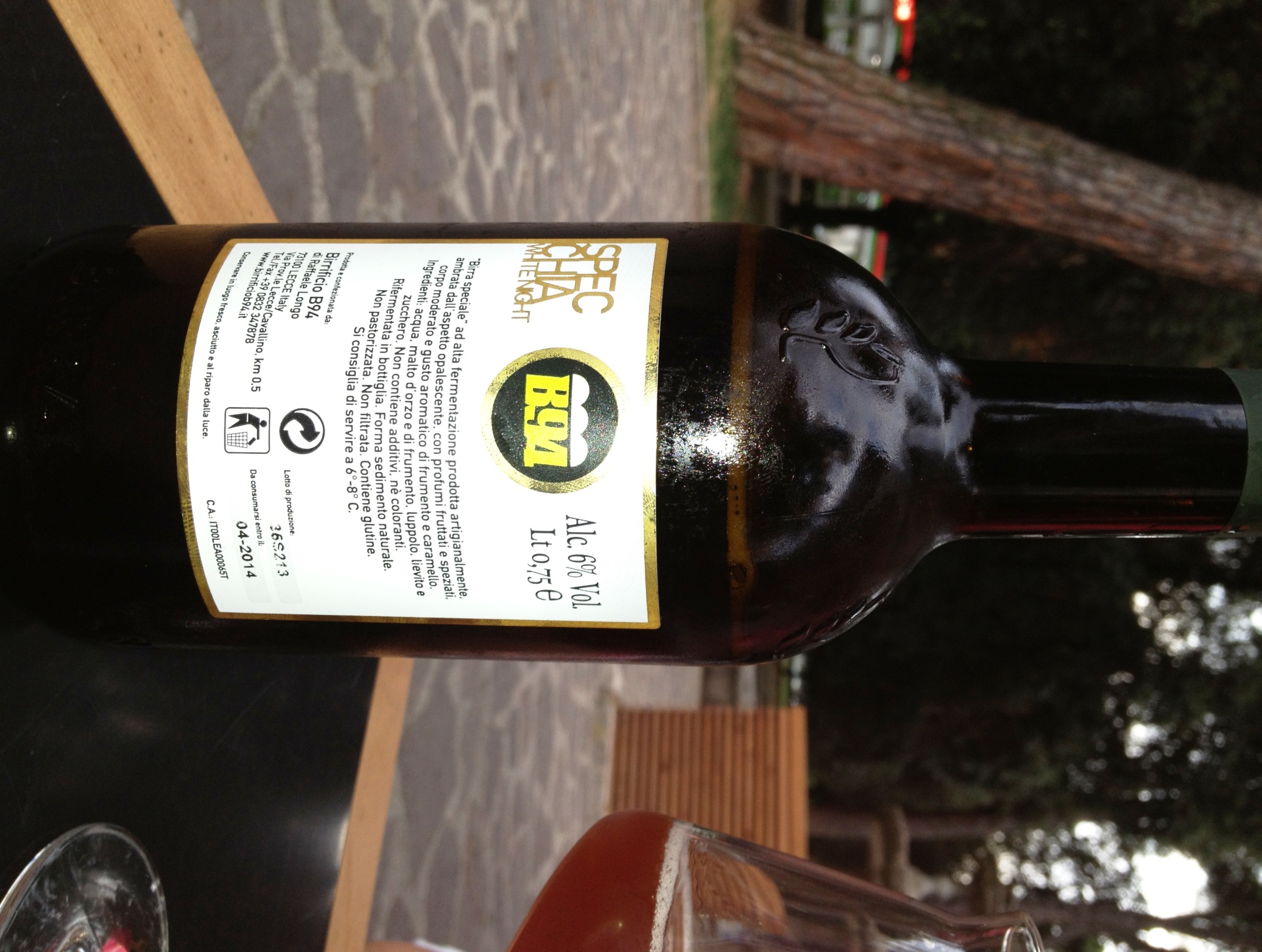
B94 Specchia White Night, plus snacks, Tree Bar, Rome

When it arrived, a black bottle with a slightly muddle label design and the apparent name “Specchia White Night”, I told him not to worry, it’s not too much for one person – as I’m British. Nothing like reinforcing stereotypes.

Anyway, he poured and inch of so, and there wasn’t much head, and the liquid was a murky amber-brown. I poured more, a bit more vigorously, and got a better head. Head, or schiuma, is very important in the appreciation of Italian craft beers – all the descriptions mention it. My Guida alle Birre d’Italia 2013 says it’s a beer with colore ambra intenso con schiuma di buona persistenza. Which I’d have to disagree with – the head wasn’t very persistent.

I didn’t get much in the way of strong scents coming off it, bar malt and some melon, or apple. Which made a nice contrast to the more citrusy beers I’ve been drinking a lot lately. Taste-wise, the maltiness (from both malted barley and wheat) was combined with a fairly strong bitter hoppiness and yeastiness, along with some spice (cloves), caramel and even a soapiness. It was a reasonably drinkable beer, with a medium body, low-middling carbonisation and 6% strength, though perhaps slightly heavy for my tastes for a warm summer evening. Plus, well, another aspect of my Britishness – the name and label brought disconcerting flashes of White Lightning, a trashy cider from the early 1990s. An unfortunate association.

B94 Specchia White Night's label, at Tree Bar, Rome

Still, it’s always good to try something new, from a brewery I’d not heard of before. Apparently B94 was founded in 1994 by Raffaele Longo to make beers for his friend. It’s that step from home-brewing to commerce that’s the familiar narrative for many micro-breweries.

Having quickly consumed Tree Bar’s stuzzichini (a plate of appetizers/snacks often served at aperitivo time), we had a pizza too. The food wasn’t bad – the stuzzicini included some pieces of particularly nice frittata and they seem to use some wholegrain flours in their doughs. Thus fuelled, we dashed on up the road to get to the venue.

Neneh Cherry had, disappointingly, bailed (with no reason or excuse forthcoming online), and the support act were pretty noodly, but the Cavea is a great location, the overcast weather didn’t give way to rain, and Fat Freddy’s Drop – New Zeeland’s finest reggae-dub-soul-rave combo – were energetic and entertaining, taking us through their new album, Black Bird, and including a few old favourites. Though they didn’t do an encore. What’s up guys? Grumpy? Tired from the world tour?

Fat Freddy's Drop, Auditorium Parco della Musica, Rome, 3 July 2013

Infodump
Via Flaminia 226, 00196 Roma
treebar.it

* “In December 1878 [the Tiber’s] floodwaters in the Via del Corso were so deep that a sailing race was held held there…” (p114, Whispering City, RJB Bosworth)

1 Comment

Filed under Ale, beer, Bars, pubs etc

Casa Veccia’s Formenton and Dazio at Oasi della Birra, Testaccio, Rome

Formento

Haven’t been to Oasi della Birra in Testaccio for what seems like an age. It had become something of a regular haunt, but then something in the aperitivo buffet wasn’t quite right, then other life-things got busy, and well, months went by. But last night I found myself back there, enjoying the evening sun – after a faltering spring, the Roman summer has arrived – and wondering what had become of my chum Cameron. (Never did get those texts.)

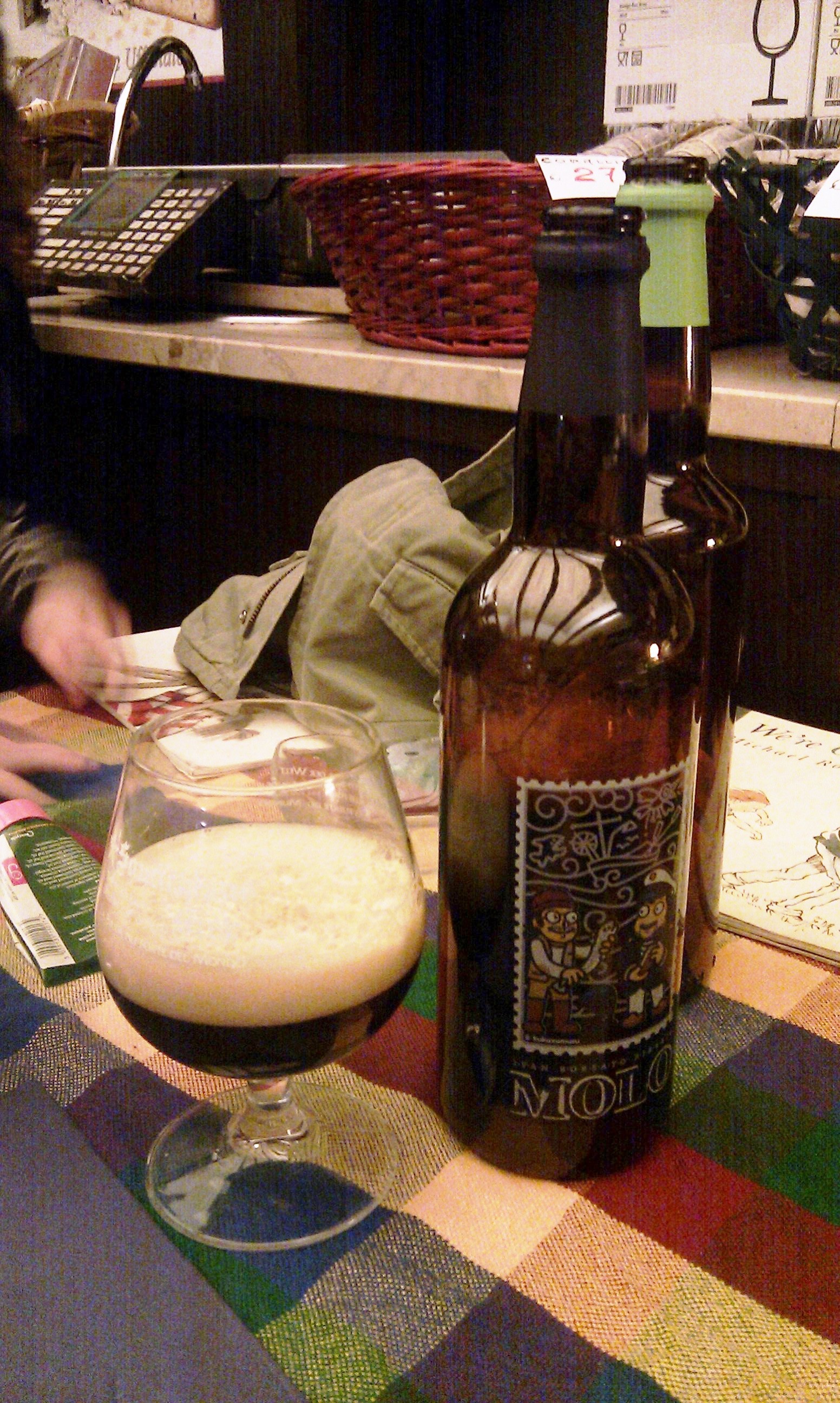
On a previous visit, we’d tried a called Molo, a stout made with port from a confusingly named brewery that’s either called Casa Veccia or Ivan Borsato Casa Veccia or Casa Veccia Ivan Borsato Birraio. I’m afraid I hadn’t heard of Ivan Borsato before,  but I like your beers, Ivan, and I like their branding… even if the bottles neglect to actually include such salient information as what type of beer is contained therein.

So this time round, I asked one of the guys from the Oasi what Formenton was, clearly having forgotten what I wrote on my own blog in March. He said it was made with farro (I didn’t get into the issue of what specific farro). As I like my ancient wheat varieties, and it was a warm evening, that seemed like a good place to start. Like many wheat beers, it’s a beautiful bright golden yellow, especially when suffused with the Roman evening sun. I should probably mention the head, as Italian beer reviews always talk about the quality of the schiuma, but what can I say? It’s frothy. But not as frothy as the second beer (see below).

The taste is typically fruity. Cameron  and my wife Fran thankfully arrived before I got too sozzled drinking alone. They both talked about the banana notes (typical to weissbier), but I reckon it had a whole macedonia – that’s Italian for fruit salad – in there, with melon, grapefruit, orange zest, and apple flavours, and even a bit of ginger. At 5.5% it’s not exactly weak, but it’s refreshing and very drinkable, with negligible hoppiness.

Oh, and if you’re really serious about your wheat and white beers, and understand the difference, and can read Italian, there’s a spiel on the brewery’s site about how Formenton “was created from the union of two beers that marked the history of beer: weissbier [wheat beer] and blanchebier [white beer].” Now, I never really had a strong sense of the difference between these beers, as both exist under the wheat beer aegis. But according to the Borsato spiel, and a quick spin around online, the former are more German in origin, cleaner, simpler, with minimal hoppiness and, most of all, are defined by the proportion of wheat in place of some of the (malted) barley. The latter are more Belgian (and Dutch), and may have been made without hops – using herbs instead in something called a gruit. Modern gruit may involve herbs, but also citrus and hops. Both are top-fermented. And, frankly, in this era of innovative craft beers, the dividing line between them is blurred. Formenton, for example, made a point of it. That’s something that’s so good about Italian craft brewing; as the country doesn’t have laboriously rigid brewing heritage and tradition, it’s unafraid to mix things up. Yay. I imagine the two Matt Groening style cartoon chaps on the bottle saying an Italian “yay” at their success with Formenton.

Dazio with OTT head

The second Casa Veccia we tried, and is here featured in a terrible out of focus photo (crappy new phone), showing how I’d rushed to pour it and creating and ridiculous head, was the 6.2% ABV Dazio. The guy in Oasi said it was an ambrata (amber) ale but the Casa Veccia site specifies it’s an APA. As I was talking about yesterday, APA seem to be a very popular style in the Italian birra artigianale scene. And very nice they can be too. And again, unlike in other brewing traditions where beardy specialists might dogmatically insist there’s a distinction between an APA and an amber ale, in Italy it seems an APA can be ambrata.

Dazio was also delicious but very different. Arguably, it’s not as obvious a summer drink, with hints of toffee apple and such autumnal things , along with cinnamon and ginger, but it did the job very nicely thanks last night. Oh, and flavour-wise, Fran said “Turkish delight”, while the Casa Veccia site itself talks about this beer – “in an English style with American hops” – having Profumi terziari come pepe, cuoio, chiodi di garofano, liquirizia: “Tertiary aromas of black pepper, leather, cloves, liquorice.” I didn’t get all that myself, but fair enough. I like the idea of a leather-scented ale. The site also talks about its hoppiness and bitter flavour, but I felt it was pretty mild and mellow. The site also provides a nice bit of history about how the APA evolved from the IPA and the IPA evolved out necessity, with British soldiers in India craving beer, but the long voyage souring the milder ales of home. The solution was more hops, to better preserve the ale. Thanks Ivan and everyone in the Vetch House. Quite why the Dazio label features a cartoon astronaut I don’t know.

2 Comments

Filed under Ale, beer

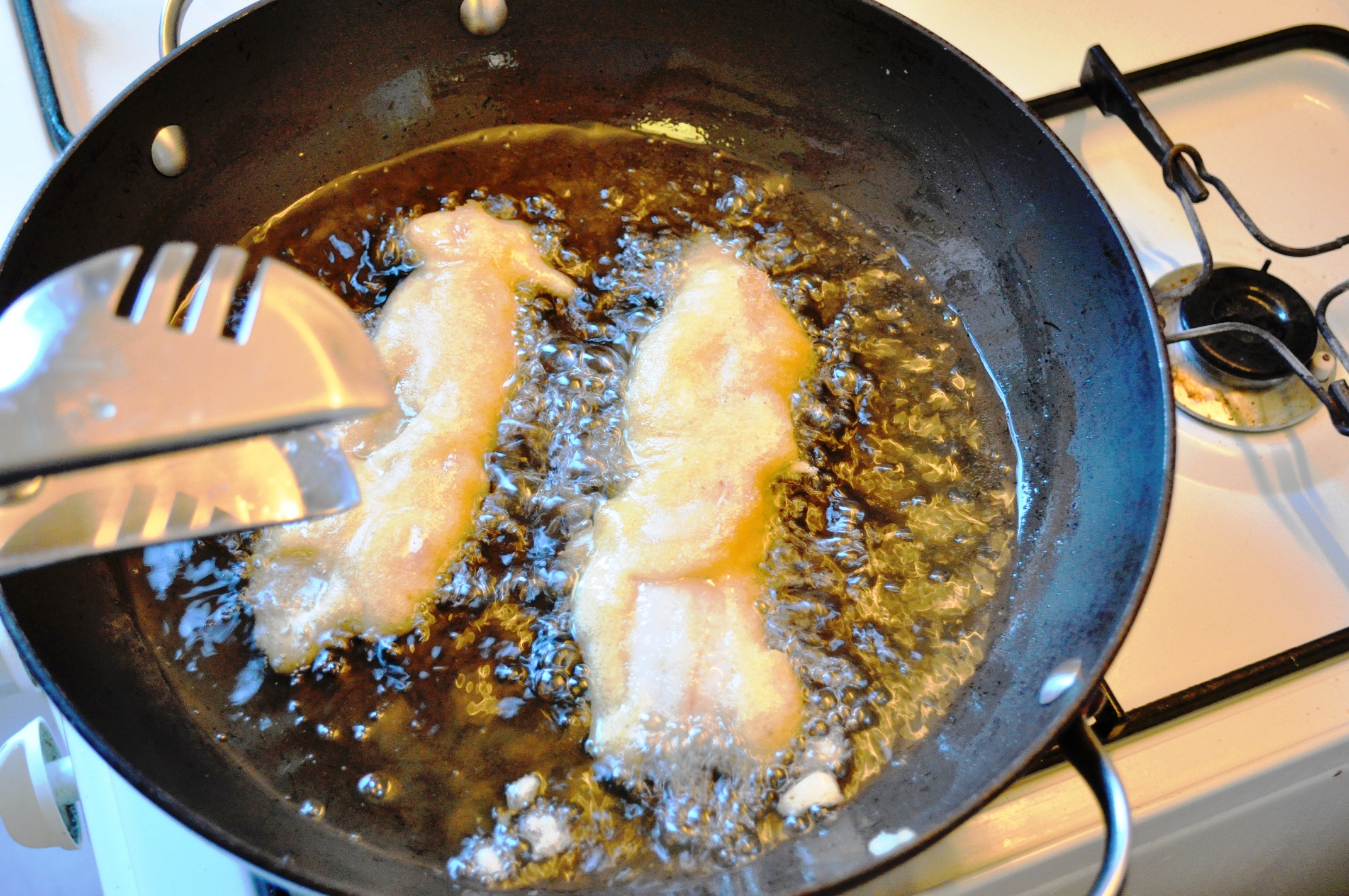
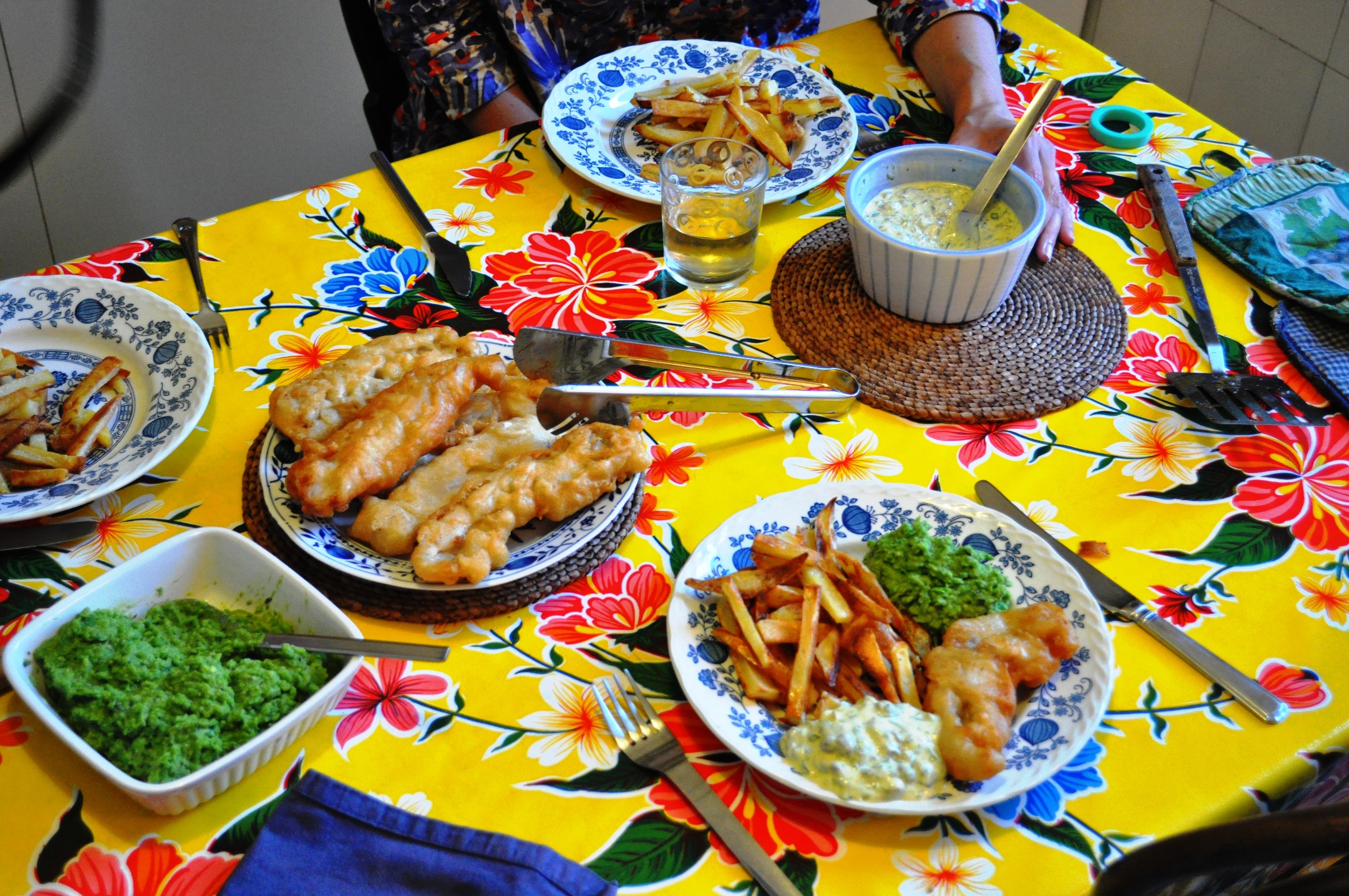
Beer-battered fish and chips with mushy peas and tartar sauce

aerial photo

This post perhaps takes the blog on a slight tangent, but what the heck. It involves beer. And the project was an excuse to buy a selection of beers from a new shop on Viale Quattro Venti in Rome (number 265; it’s a branch of the small chain Gradi Plato). It’s one of a crop of shops that’s been springing up in the time we’ve lived in Rome that specialise in selling international and craft beers.

This guy had a global selection, so I asked him for something Italian, and light and golden, as I wanted to use it to make batter… and drink. We discussed various things, and although he didn’t really seem to understand the term “golden ale” (though I have seen it on other beer menus here), we bought a pils (that is a Pilsner lager), an APA and a wheat beer.

lineup9 md

Now if only I could remember the name and address of the shop. I can’t. But it’s here on streetview, the righthand closed shutter.

Anyway. As strangers in a strange land, we occasionally crave the foods of home. In this case, we’re Brits, and I’ve been craving fish and chips. You could say that the Roman filetto di baccalà when served with patatine fritte is basically the same thing, but… well, no. Just no. Filetto di baccalà is made with salt cod, and while it is battered, it can be made too far in advance meaning the batter can be flaccid, the fish mushy. Plus, I just need my condiments and sauces. It always bemuses us that while Romans have such a passion for deep-fried goodies – fritti – they tend to eat them dry and unaccompanied. A plate of fritti like suppli (rice balls with mozz in the centre, coated in breadcrumbs and deep-fried), fiori di zucca (zucchini/courgette flowers stuffed with mozz and anchovy, deep-fried in batter), and various fried animal bits like animelle (sweetbreads) really ought to be eaten with a nice tangy sauce, something involving tomatoes and peppers, like a tangy chili jam. Even ketchup would be nice. But no.

This craving for fish and chips means I’ve been experimenting with making it at home. I’d only tried this a few times when we lived in the UK as, frankly, why bother in a land of chippies and gastropubs selling fish and chips?

I read around for good recipes and then broadly went with Felicity Cloake’s advice from her “How to cook the perfect…” column in the Guardian. Though her recipe makes too much batter for my needs. And I forgot to chill the flour. Apparently having all the ingredients as cold as possible makes for a lighter batter, but mine sufficed just with cold beer. Of the three beers I bought, I used the pils, reasoning that it was more effervescent, and would help keep the batter light. Plus, I don’t actually much like pils to drink so was more keen on drinking the other two.

I used a Madonna Pils from Free Lions in Tuscania, near Viterbo, Lazio, a brewery founded by Andreas Fralleoni after a career in the banking industry. Leaving behind the evils of banking to make craft beers? Well done that man. (They only have a holding page online at the moment, but it features their funny little logo.) So while I found this pils a bit acrid and hoppy to drink, it made an excellent batter ingredient.

whisking batter

Beer batter recipe

This makes enough for about 4 medium sized fillets.

200g plain / all-purpose / 0 or 00 flour
1/2 teaspoon baking powder
1/4 teaspoon fine sea salt
280g cold beer – preferably something light with a good sparkle

1 Preheat the cooking oil. I used sunflower oil. The fat you fry in is a whole other argument. A true fish and chip aficionado would say it has to be beef fat/dripping, but, well, sod that. Sunflower oil is fine and doesn’t conflict with the flavour of fish.
2 Sieve together the flour and baking powder and add the salt.
3 Whisk in the beer to achieve a thick, creamy consistency.
4 Batter the fish and deep-fry straight away.

5 Fry for about 8-10 minutes. This will depend on the thickness of the fillets. You want a nice golden-brown, crisp batter.

deepfrying

The last time we experimented with this, Fran was in charge of buying the fish. As the names of the fish on our local market stall remain such a challenge (she clearly didn’t refer to my handy list of fish names in Italian, English and Latin), when she explained what she wanted the fillets for they persuaded her to buy palombo. Which was unfortunate as this may well be small, potentially endangered species of hound shark.

This time round, I was in charge. Buying “sustainable” fish is always a tricky proposition, and frankly something that’s subject to a lot of greenwash and disinformation. My loose rule of thumb is to avoid tuna species, avoid monkfish species, avoid cod, and generally stick with things like anchovies and mackerel, ideally caught by small, local fishing boats.

In this case, I ended up buying some fish the vendors referred to as “local”: musdea, aka mostella, which I believe is a type of forkbeard, a relative of cod, Phycis phycis or Phycis blennioides. Although neither are on the IUCN red list (they’ve not be assessed yet), the latter species is listed as one to avoid on the UK’s Marine Conservation Society site. Hopefully it’s not been so overfished in the Med, but I know that’s a vain hope. The only consolation is that we don’t do this too often. Sustainability is of course about making the right choices, but for a society like ours, predicated on over-consumption, realistically it’s also about doing the wrong things less frequently.

Anyway. After I’d fought the fillets to remove the bones, this forkbeard fried up really well. I don’t have an oil thermometer (though I would like one of those fancy IR guns, available from a corporate tax-dodger not very near you), so I just played it by ear. I did three batches, with the second two pretty much perfect. Apparently you want 185C or thereabouts for deep-frying fish in batter.

Fish & chips and ale

It went down very well with the other beers I’d purchased: La 68 from Math brewery in Florence, Tuscany, and Runner Ale from Pontino brewery, which seems to be part of All Grain SRL in Latina, southern Lazio.

Math don’t have a proper site up yet, and I don’t know anything about them, but I love their style already. The design is cool and La 68’s label includes a funny little fellow with a speech bubble with this beguiling epigram: Il disordine é l’ordine meno il potere, “Disorder is order without the power/means/ability” The beer itself was a fresh summer beverage: a 5% wheat beer whose ingredients also include spezie, “spices”. I’m not sure which, but it had a nice limey flavour and subtle hoppiness.

La 68

Like La 68, Runner Ale isn’t in my Italian craft beers guide, but it’s similarly very drinkable: notably because, unlike many of the Italian craft beers I encounter, it’s not overly strong, at only 4.5% ABV. It’s an (Italian) American Pale Ale. APA style beers seem very popular in the Italian microbrewery scene and, despite me being British, it’s a style I’m really enjoying at the moment. Italian APAs are often light yet full-bodied, tasty without being aggressively bitter or hoppy. And as with the La 68, the Runner Ale’s bottle also comes with a quirky quote, in this case Come tuo avvocato ti consiglio di andare a tavoletta. It’s attributed to Dr Gonzo, Hunter S Thompson’s creation, and I think it means “As your lawyer, I advise you to go to the bar.”

runner ale

Sides and condiments

As you can see, I went the whole hog here and did chips, tartar sauce and mushy peas. I’ll admit the chips were not proper chips. As I don’t have a proper deep-fat fryer or even a pan with a frying basket, I couldn’t be bothered. I’d read up Cloake and discussed proper chips with friends (the knowledgeable Oli Monday saying they were best when “oil-blanched”, frozen, then deep-fried a second time) for my last experiment, but this time I just cut chip shapes and roasted them, without any pre-cooking, with plenty of sunflower oil and salt. They tasted good even if they weren’t proper chips.

nice spread

As for the tartar sauce. I just had to. As I said above, fried food needs condiments. One of things that drives me made about British pubs is getting tartar sauce in those tiny sachets. I need about 10 per meal. So here I made a decent bowlful for the three of us.

Tartar sauce ingredients
1 egg yolk
1 cup / 240g oil (half-half sunflower oil and extra virgin olive oil)
1 teaspoon of Dijon mustard
A good handful of cornichons or gherkins, roughly chopped
A good handful of capers, rinsed, soaked, drained, squeezed out and roughly chopped
A good handful of parsley, roughly chopped
Some water, lemon juice and salt and pepper

1 Put the yolk in a bowl and whisk it a little with the Dijon.
2 Start adding the oil, whisking constantly, starting with just a few drops.
3 When the oil and yolk starts to emulsify, you can pour in the oil, whisking continuously.
4 When the mayo starts to thicken, thin it down with lemon juice and water, to taste.
5 Add the cornichons, capers, parsley and taste – your capers could be quite salty still, so you might not need to add more salt.
6 Add more lemon juice to taste.

And last but not least: mushy peas

Years ago, there was a great ad campaign in Britain that called some industrial brand of mushy peas “Yorkshire caviar”. Funny, if not entirely true. The industrial stuff, made with dried marrowfat peas (that is, big old starchy peas, Pisum sativum) rehydrated and dyed green, can be pretty nasty. Homemade mushy peas, however, are delicious.

To serve 3-4

1 About four good handfuls of peas. I used half-half frozen and freshly podded. (It’s the end of peas season here; if it’s not pea season, just use frozen peas.)
(Yes yes, I’m not being very accurate here but I didn’t bother to weigh any of these things. Say about 350-400g)
2 Place the peas in a pan with a good knob of butter, say 30g.
3 Add a handful of fresh mint, roughly chopped.
4 Add enough water to cover then bring to the boil and simmer for about 10 minutes, until the peas are tender.
5 Drain (keeping the cooking water) then puree with a zizzer (er, hand-blender), food processor, or just mash with a work to the desired consistency, adding more of the cooking water as necessary.
6 Add a bit more butter if you fancy it and season to taste with salt. You could add black pepper, but frankly with something so lovely and pea-y and minty, I don’t think it’s needed.

Serve it all together, warm and lovely. With good quality craft beers – chosen according to your taste and the season, naturally.

9 Comments

Filed under Ale, beer, Other food, Recipes

Casa Veccia’s Molo

Back at Oasi della Birra in Testaccio, with my chum Rachel and my wife Fran. Fran’s beers of choice are unfailingly porters and stouts. As the bar – disappointingly – doesn’t have any Italian beers on tap, we were drinking bottled beers. We asked for a 32 Via dei Birra Altra, a double-malted dark brown ale. They’d run out, but offered us another dark beer. This turned out to be Molo from a micro birrifficio (microbrewery) called Casa Veccia. Not one I’d heard of before. Turns out it’s in Povegliano, in Treviso province of the Veneto, inland from Venice.

Reading the info on Casa Veccia’s Facebook page, the story of the brewery seems not unlike that of several of the other Italian microbreweries I’ve been learning about. (Indeed, it’s a story that’s repeated in the microbrewery scene across the world.) Ivan Borsato, a chef and cookery teacher, says he started making beer for a laugh with three friends in April 2009 but by the end of the year he’d glimpsed an opportunity take it to a professional level. By January 2011 they were producing their first commercial beer, Dazio, an American Pale Ale, then Formenton, a wheat beer.

Borsato, meanwhile, is recognised on all the labels, which says “Micro Birrificio Casa Veccia Ivan Borsato Birraio” with birraio meaning master brewer. (And veccia meaning “vetch“, that is the Vicia genus of Fabaceae, the pea family or legumes.) In fact, I’m not really even sure what the brewery is called, as my beer guidebook simply lists it as Ivan Borsato Birraio.

The labels are also distinctive for their Matt Groening-esque cartoons. (Actually designed by Kulkuxumusu from Pamplona, Spain.) Molo’s label seems to feature some kind of exchange between salty sea dogs, swapping a fish for a bottle of beer.

Anyway. Enough pre-amble. The beer.

The most notable thing about Molo is that it’s a dark, dense 6.5% stout that contains tawny porto, that is tawny port – port that’s been aged in wooden barrels and, according to Wikipedia, imparted with a nutty flavour through gradual oxidation. Now personally, I don’t touch port, not after a work Christmas party about 20 years ago when I learned the hard way how it  gives the worst hangovers. Something to do with congeners. But it certainly added a depth of flavour to the Molo, an almost rare meatiness alongside the more typical stouty flavours of well-roasted and toasted malt, slightly burnt biscuit etc. Though nothing fishy, despite the image on the label.

2 Comments

Filed under Uncategorized