Monthly Archives: February 2014

Types of beer

Are innumerable: even the key styles have sub-varieties, or the names may have changed meaning over time and distance, or the same style may have different names in different languages or dialects, just to add to the muddle.

This list is just an attempt to consolidate my knowledge. I’ll keep adding to it, either as I learn more, or realise I’ve forgotten stuff, or when people correct me. Or to add images.

Abbey
Belgian beers in vein of Trappist beers, but without the official monastic supervision.

Ale
Generic term for beers that are made with top fermenting yeasts at warmer temperatures. Historically, ales were unhopped but not any more. Not for a long while.

Altbier
“Old beer”, a German (specifically Düsseldorf and Westphalia) dark ale.

Amber
Coppery ales that derive their colour from crystal malts.

American IPA
US evolution of the English IPA. Big, aromatic, bitter ales made with the distinctively citrussy, resiny West Coast US hop varieties: Cascade, Amarillo, Chinook, Simcoe, Centennial, Columbus. The quintessential beer of the craft beer movement.

APA
American pale ale. “The first true American craft-beer style, this took inspiration from the pale beers brewed in Europe and then made them American by using the hugely fruity hops grown the West Coast of the United States.” (Mark Dredge). On a spectrum with pale ales and American IPAs.

Barley wine
A fairly generic term, but basically an English style of strong ale, with 8% ABV plus. Indeed, at 12% some have a comparable strength to grape wine.

Bière de Garde
“Beer for keeping”, strong ale from Pas de Calais, equivalent to Belgian saison beers.

Bitter
Synonymous with English pale ale. Ales with wide variation in colour and strength, but most typically around 5% and golden-brown. By modern standards not especially bitter or hoppy, more defined by mellow maltiness.

Bière blanche
See witbier (below).

Blonde
Generic term for light, golden coloured pale ales of varying malt and hop profiles.

Bock
Strong German lager. The name, purportedly, derives from accent and dialect variables in Germany, where the place where the style originated – Einbeck – became ein bock (“a billy goat”). Variables include doppelbock (see below).

Brown ale
Fairly generic term for a sweet, brown generally mild, lower alcohol ale. More specifically an English ale type, originally.

Doppio malto
Italian birra doppio malto (“double malt ale”) can be seen as the equivalent of English strong ales or even some barley wines, or strong Belgian abbey beers, or Trappist dubbels. Italian beers are classified as analcolica (non-alcoholic, though technically low-alchohol), leggera(light) or normale, speciale and doppio malto, with each category defined by its gradi plato – a measurement of density.

Dubbel
“Double”. Medium to strong brown Trappist ale.

Dopplebock
Dark, maltier version of bock (see above).

Dunkel
“Dark” in German, and used to refer to various dark lagers. More typical of Bavaria. Malty, not as strong as dopplebocks.

ESB
Extra special bitter. An English brewer’s highest original gravity bitter, after session/ordinary bitter (lower) and special/best bitter (middling).  Synonymous with premium bitter.

Faro
A type of lambic (see below). Made by blending  a lambic and a young, sweetened beer.

Frambozen, framboise
Dutch/Belgian raspberry lambic (see below).

Fruit beer
Any beer that uses fruit adjuncts. May be whole fruit, purées or juices. Kriek cherry lambic is a fruit beer, for example, but others may be more convention brews augmented with fruit ingredients.

Geuze, gueuze
A type of well-carbonated Belgian lambic, made with blend of older (2-3 years) and young lambics.

Golden ale
Generic term for light golden ales, sometimes used synonymously with “blonde”. Arguably, golden ales have less body, and are crisper, more like lagers.

Hefeweizen
“Yeast wheat” in German. A type of wheat beer with low hoppiness, high carbonation, phenolic clove aromas. See also kristallweizen.

Helles
“Bright” in German. Distinguishes this lager from dunkel. Munich pale lager inspired by Czech pilsners.

IPA
India Pale Ale. Now a varied style (see American IPA) but original English versions were less punchy, made with older, mellower English hop varieties. The hoppiness originally developed out of necessity – its preservative quality allowed the ale to survive the long journey to British imperial India without going off.

Imperial stout, Russian Imperial stout
Strong (9% ish ABV) dark beer style first brewed in 18th century England for export to Russia. Brewing industry veteran Ian Swanson, teacher at the Beer Academy, said it was a case of the ships needing ballast as they went to Russia and brought back timber.

Kolsch, Kölsch, Koelsch
A light, lager-like top fermented beer from Cologne (Köln), Germany. Becoming popular as it’s easily accessible to lager drinkers, but is quicker to make, not requiring lagering (cold store conditioning).

Kriek
A type of Belgian lambic made with sour cherries.

Kristallweizen
A type of wheat beer: a hefeweizen that’s been filtered for brightness.

Lager
Generic term for beers that are made with bottom-fermenting yeasts at colder temperatures, and involve a cold “lagering” (literally “storage” in German) conditioning period, originally in caves or tunnels.Where caves or tunnels weren’t an option, winter ice was used to cool the cellars. This was superceded by refridgeration in the 1870s. Lagers were first brewed in Britain in Glasgow and Wrexham in the 1880s, but didn’t really start to take over until the 1960s. Despite German (etc) pride in lagers, it’s the culprit for some of the worst crimes against beer in its long history, and the reason I stopped drinking for years as a teenager in the late 1980s. Shockingly for a country with such an important ale history, the biggest selling beer in Britain since 1985 is a generic industrial lager. Mentioning no names. …. Carling.

Lambic
Distinctive beer style specifically from Pajottenland region of Belgium (southwest of Brussels). Relies on spontaneous fermentation and wild yeasts (like Brettanomyces bruxellensis and Brettanomyces lambicus) and lactobacilli, and as such is very different to other beer styles with their tightly controlled yeast strains. Various sub-varieties, like kriek, geuze, faro. 30% unmalted wheat. Winey and sour flavours. Hops used for preservation not bitterness, so often old and intentionally cheesy. Aged in sherry and wine barrels.

Märzen, Märzenbier, Marzen
A malty lager originally from Bavaria though now more generic.

Mild
Low gravity, malty beer from England. “Mild” originally referred to a young, fresh beer, as opposed to a more flavoursome old, or stale, beer but more recently can mean “mildly hopped.” X to XXXX strengths, historically.

Milk stout
A variable of stout (see below), made with lactose (milk sugar). Lactose is unfermentable so the resulting beers have a thick, creamy body with lower ABVs.

NZ draft, NZ draught
Common New Zealand beer style. A malty, minimally hopped brown lager with ABV around 4-5%.

Oatmeal stout
Stout made with oats alongside the malt, adding a smoothness.

Oktoberfest, Oktoberfestbier
Traditionally Märzen lagers brewed in March and largered to October. Now a registered trademark of six members of the Club of Munich Brewers.

Old ale
Name for dark, malty British ales, generally 5% ABV plus. Originally contrasted with mild ales.

Oud bruin
“Old brown”. From the Flemish region of Belgium, a malty brown ale with sour notes due to an atypically long aging process.

Pale ale
Generic term for ales produced with pale malts. English bitters, IPAs, APAs and Scotch ales are all variations on pale ale.

Pilsener, Pilsner, Pils
Type of pale lager that originated in the Bohemian city of Plzeň (Pilsen), now in the Czech Republic. Now many lagers made outside of Pilsen are considered pilseners.

Porter
Originally a dark, nutritious ale drunk by London porters in the 18th century, made with dark brown malts . A strong porter was a “stout porter”, though now the terms are almost interchangeable.

Pumpkin beer
US style, made with pumpkin flesh and often unveiled ceremoniously in the Autumn. Often spiced with pumpkin pie spices: nutmeg, cinnamon, cloves and allspice. A type of vegetable beer.

Rauchbier
“Smoked beer” from Bamberg, Germany. Made with malt dried oven an open flame.

Roggenbier
A Bavarian type of rye beer with light, dry, spicy taste. Brewed with same yeast as hefeweizen (see above).

Rye beer
Beers featuring rye alongside the more typical malt (malted barley). See roggenbier.

Saison
A fairly generic French term (“season” ) for strong-ish pale ales. Saison beer evolved in the farms of Wallonia, French-speaking Belgium, where it was brewed in late winter, and stored for drinking by farm workers slaving away at the harvest and whatnot.

Schwarzbier
“Black beer”. German term for dark lagers made with dark malts.

Scotch ale
Scottish style of pale ale, malty but lightly hopped. Also known as “wee heavy”, apparently. May feature peaty or smoked malts, often fairly strong (6-9% ABV).

Session
Not so much a style as a strength: weak-ish beers (4% ABV or less, generally) than can be drunk fairly copiously in a “session”. Generally more about the (US, citrussy) hops than the malt.

Smoked beer
Beers made with smoked malt – which is dried with open fire. Not a fan.

Stout
Originally a British term to describe strong beer, such as “pale stout” or “stout porter.” Evolved and muddled up with porter, and came to be another name for dark (black-ish) ales. Remained popular in early 20th century when porters all but died out, before its revival in the 1970s.

Trappist
Beer produced by, or under the supervisor of, Trappist monks. As of 2014, there are 10 Trappist beer producers, mostly in Belgium, but also in Netherlands, US and Austria. Chimay most famous. Various top-fermented styles, classified as Enkel (single), Dubbel and Tripel.

Tripel
“Triple”, strongest of the Trappist beers.

Vegetable beer
Any beer that’s made with vegetable ingredients – like the US pumpkin beers. Another popular vegetable beer flavouring ingredient is chili pepper. Even though it’s technically a fruit (see fruit beer).

Vienna
Local equivalent of dunkel or schwarzbier, that is a dark lager.

Weissbier
“White beer” in Bavarian. A category of wheat beers that includes hefeweizens.

Weizen
“White” in German. Wheat beers, same as weissbier basically but a different dialect name.

Wheat beer
Beers (usually ales, see above) made with a high proportion of wheat – at least 50% – along with the malt.

Witbier
“White beer”, aka “bière blanche”. Wheat beer from the Netherlands and Belgium (predominantly). Tends to be hazy when cold, due to yeast and wheat proteins suspended in the liquid. Mostly feature gruit: a Dutch term (grute in German) for blends of herbs, spices and fruit used for flavouring and preserving certain continental beers prior to the popularisation of hops in the middle ages. Today these may well involve coriander and orange zest.

It’s one big happy fermented family! Pop Chart Lab, a Brooklyn-based design team have done some excellent visualisations of it, here and (a newer version) here.
2 Comments

Filed under Ale, beer, Misc

Brutti ma buoni, mark III

Brutti 3, plate

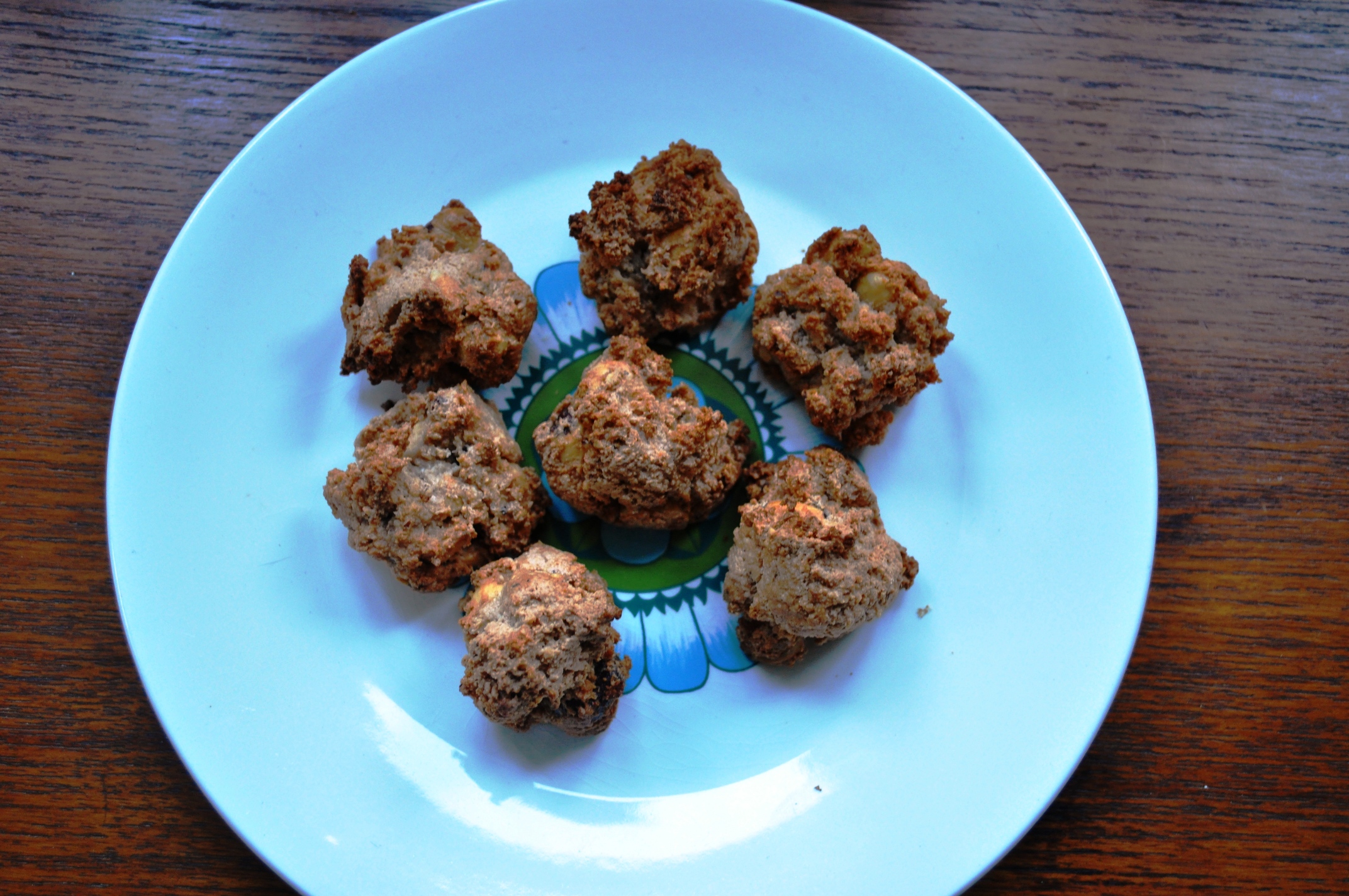
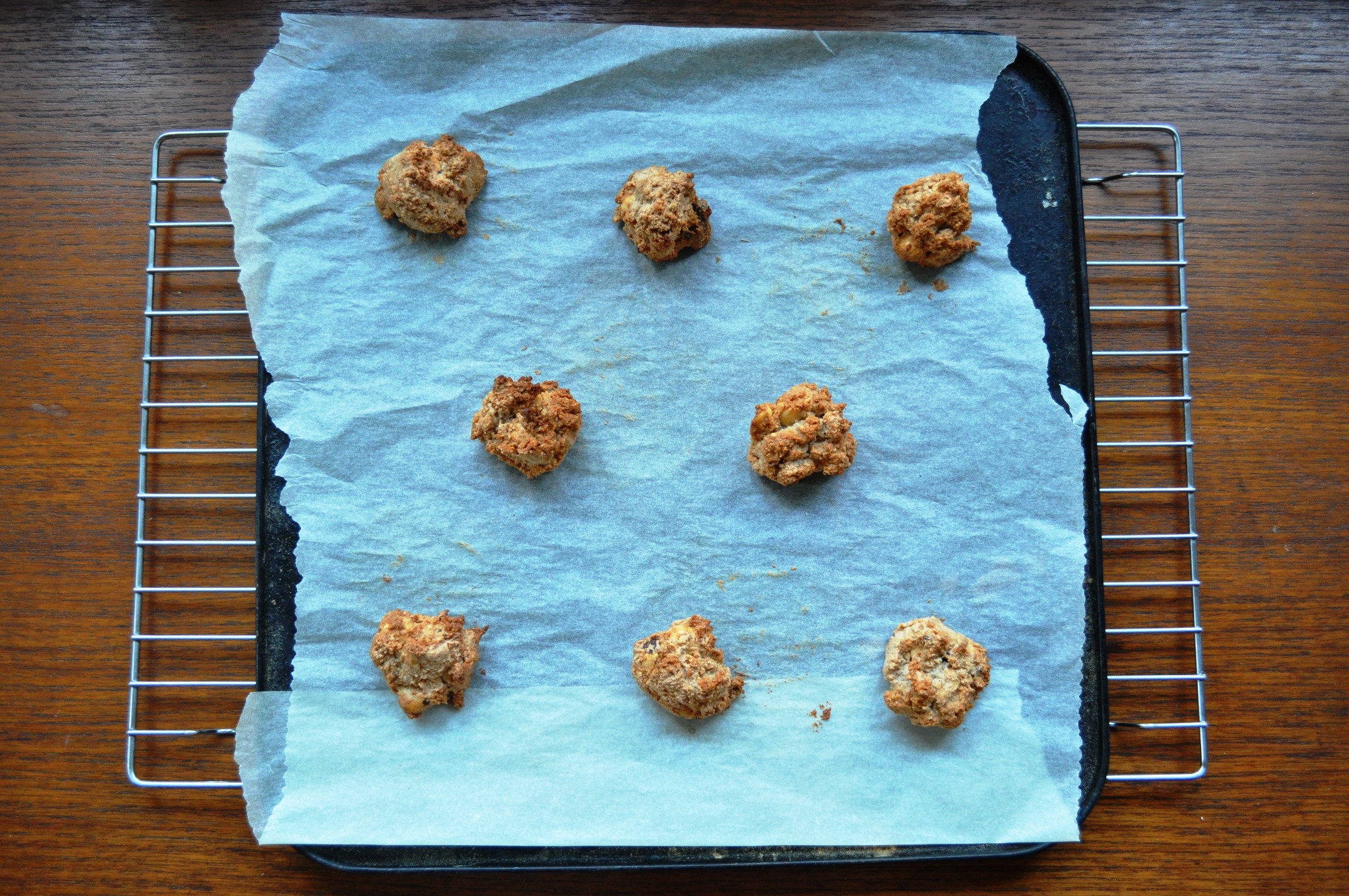
This is the third recipe for brutti ma buoni – Italian “ugly but good” hazelnut cookies.

It’s very different to the others I’ve tried, or read, as it doesn’t involve whisking the egg whites. All the other recipes I’ve seen involve whisked egg whites, resulting in cookies with a meringue or macaroon-type character. Not these, which are still delicous, but much more crunchy little lumps, reminiscent of coconut macaroons, unlike the more disc-like previous version I tried, or the knobbly mounds of the first recipe I tried.

So many variations with so few variables!

Anyway, this recipe is from my favourite baker, Dan Lepard (whose personal site is still pending an update; it’s been down for yonks now, sadly!). His recipes in the Guardian newspaper are almost always reliable, and I recommend the book that collects them, Short and Sweet. I also heartily recommend his bread book, The Handmade Loaf. Of the three recipes I’ve tried for brutti ma buoni, however, I must admit this is my least favourite: I just prefer the texture when the egg whites are whisked.

The full recipe, along with Dan L’s panettone recipe, is available here.

Brutti 3, baking sheet

5 Comments

Filed under Biscuits, cookies

Beer School

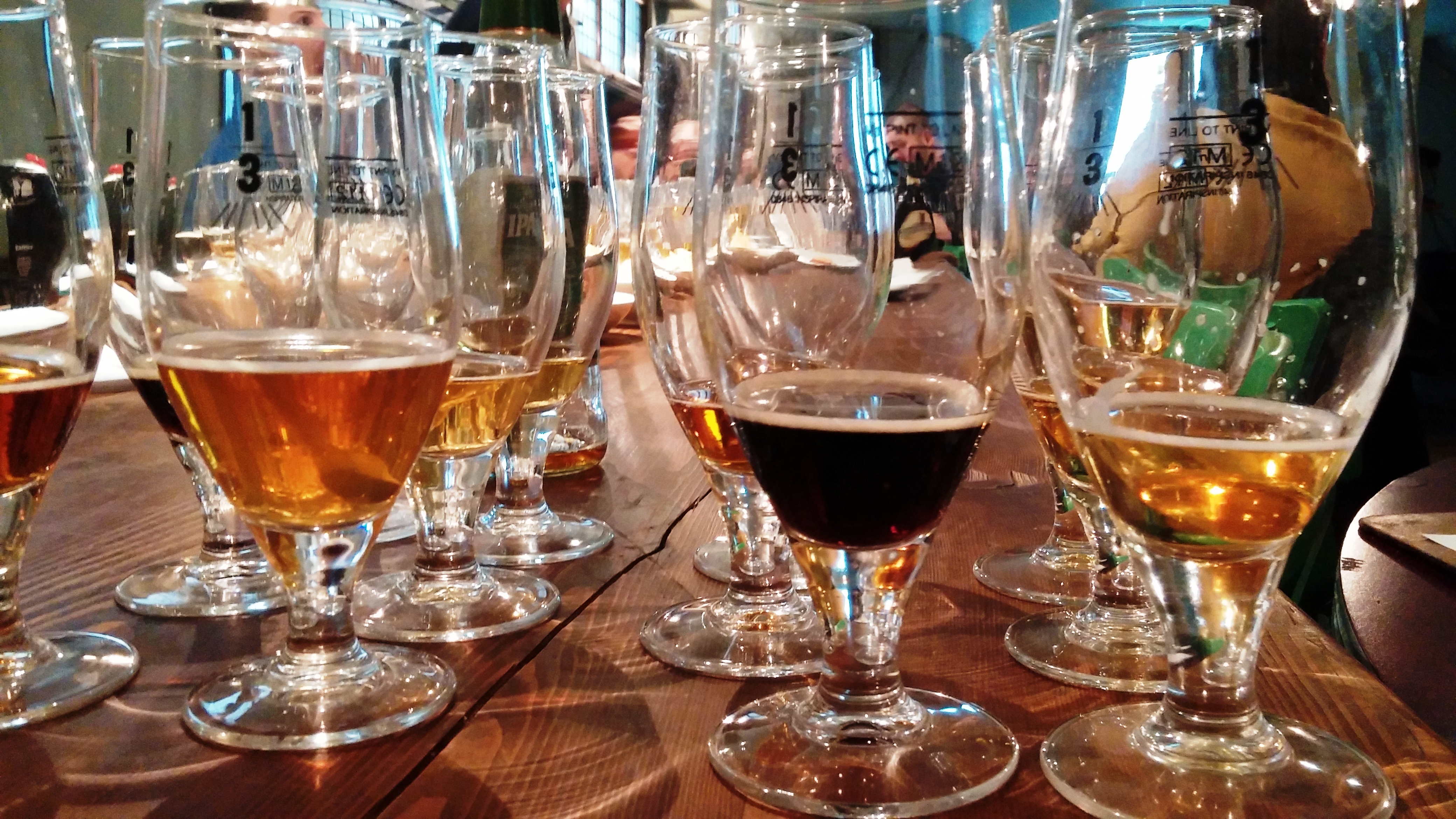
Beer samples

It was a bit different to any other days I’ve ever spent in classrooms.

Sitting in the downstairs room of The Draft House, near Tower Bridge in London, I learned about beer, discussed beer, drank beer and drank beer with food.

Although I’ve enjoyed beer for years, it’s only the past few years, and particularly while living in Italy, that I got more serious about trying to understand it, its history, its many permutations, and how to match it with food. But self-education can only go so far, so moving back to England presented a good opportunity to actually go to beer school, or more precisely attend a course run by The Beer Academy.

Founded in 2003, and part of the IBD (Institute of Brewing and Distilling) since 2007, the Academy has a goal “to enlighten, educate and enthuse candidates about all aspects of beer.”

With two, day-long classes run by brewing industry veteran Ian Swanson, and attended by a variety of knowledgeable people from various corners of the trade (including maltings, hospitality, marketing, and even a representative of the Worshipful Company of Brewers), it was a highly informative experience.

Now I just really need to gen up on my chemistry. Sure, I was pretty good at chemistry at school, but that was 20 years ago, so I really need to study my dimethyl sulphide, acetaldehyde, diacetyl etc before I truly become comfortable about throwing these terms into conversation.

2 Comments

Filed under Ale, beer, Misc

Fornacalia, Fornax and burnt spelt

Bakery of Modestus, Pompeii

Today, I’m thanking Fornax for the batch of granola I’ve just baked.

Although calendars have changed a tad over the millennia, February 17 is apparently – more or less – Fornacalia, the feast day of Fornax. Fornax was one of ancient Rome’s divinities, specifically a goddess associated with the oven.

Although I’m not religious, neither as a follower of living religions or (presumably) defunct ancient Roman practises, I’m interested in religious and mythological stories. And as my oven works so hard for me, it seems only right to at least stop and acknowledge Fornax and Fornacalia. Never mind the act of stopping to acknowledge how fortunate I am to have a working oven, ready fuel and enough food.

The name Fornax is connected with the modern English word “furnace” as well as the modern Italian word forno, which you’ll often see on bakeries*. Fornax was both the name of the oven, kiln or furnace and the name of the personification of these pieces of equipment that were, and are, so fundamentally important for baking bread, cooking, heating, metal working and pottery.

An oven specifically for making bread was called a clibanus. The modern English word focus, meanwhile, is actually the Latin for hearth, fireplace. The picture above is of ancient Roman bakery, with the oven on the left and lava grindstones on the right. It’s the bakery of Modestus in Pompeii, and when it was unearthed, the oven had iron doors in place still with the remains of 81 carbonised loaves of bread behind.

My charred spelt offering

Apparently ancient Romans draped their ovens with garlands and made an offering of spelt, which was itself carbonised in the oven. The former doesn’t seem entirely safe with a modern (-ish) electric and gas affair, but burning I’ve burned a handful of spelt (a suitably ancient form of wheat) while the oven is still hot from the granola. Thanks for all the baked goods Fornax!

Ovid, Fasti
This is from book 2 (February) of Ovid’s six book poem published in 8AD:
“The earth of old was tilled by men unlearned:
war’s hardships wearied their active frames. More
glory was to be won by the sword than by the curved
plough; the neglected farm yielded its master but
a small return. Yet spelt the ancients sowed, and
spelt they reaped; of the cut spelt they offered the
first-fruits to Ceres. Taught by experience they
toasted the spelt on the fire, and many losses they
incurred through their own fault. For at one time
they would sweep up black ashes instead of spelt,
and at another time the fire caught the huts them-
selves. So they made the oven into a goddess of
that name (Fornax) ; delighted with her, the farmers
prayed that she would temper the heat to the corn
committed to her charge. At the present day the
Prime Warden (Curio Maximus) proclaims in a set
form of words the time for holding the Feast of Ovens
(Fornacalia)…”

Fornacalia granola

* There’s some suggestion, like here, that fornax was also related to the word “fornication”. But “Fornacalia” seems to be commonly misspelled “Fornicalia” – by, among others, that blog, and me. But etymolgy of the word “fornication” is in the Latin root fornix, meaning arches, vaults, basements, and brothels situated in such places, not the word fornax. Though they may be related, as fornus is Latin for “oven of arched or domed shape.” I can’t find any info about the roof “forn-“.

Of course, baking, sex, fertility and pregnancy have long been connected, with fertility goddesses often having purview over both crops and human reproduction. And you could say that the proving and expansion of a beautiful ball of real bread dough makes a suitable figurative comparison with the swelling of a pregnant human belly, I’ve yet to find a satisfactory explanation of the origin of the phrase “to have a bun in the oven”. Various suggestions are knocking about online if you care to google.

4 Comments

Filed under Misc

Brutti ma buoni, mark II

On plate 3

Considering brutti ma buoni – Italian “ugly but good” – cookies are basically just made of nuts, egg white and sugar, methods of making them are surprisingly varied. How much albumen? How much sugar? Grind the nuts? All of them? How fine? Leave some whole? Whisk the egg whites? Cook the mixture in a pan? Include some cocoa? Never mind the question of using almonds.

The first recipe I tried was from the American Academy in Rome’s Biscotti book. They were good, but I wasn’t entirely satisfied. It’s taken me this long to get round to trying a different recipe. I thought I’d better try an actual Italian one, direct from an Italian source.

One of the biggest, perhaps the biggest, Italian recipe site is Giallo Zafferano (“Yellow Saffron”). When googling Italian recipes you may well get prompted to visit there first. Although I’m gathering other recipes, I thought why not start here? So here’s a tweaked, reduced translation of their recipe. The original makes “about 70” cookies, which seems excessive for domestic consumption – unless you’ve got a very big family that loves hazelnut meringuey things.

Even if you don’t speak Italian, it’s worth checking out the site for the pics of the procedure.

Makes about a dozen.

200g whole, skin-on hazelnuts
20g water
25g caster sugar
1/2 t honey
35g egg white (ie the white of one egg, more or less)
90g icing sugar

On tray

1. Gently roast the hazelnuts, at about 150C, until they’re starting to brown. Remnove but keep the oven on.
2. Rub the hazelnuts in a tea towel (which I believe you US lot call a “dish towel”) or cloth to remove the skins. Don’t agonise if a little bit stays stuck.
3. Divide the nuts in two, and coarsely grind half of them in a food processor.
4. In a pan, warm the water and caster sugar until the latter dissolves, then stir in the honey and allow to cool slightly.
5. In a clean bowl, whisk the egg white to peaks.
6. Slowly pour in the syrup, whisking constantly.
7. Keep whisking for another few minutes or so (the original recipe says 10, but this seems excessive), then sieve in the icing sugar.
8. Keep whisking for another few minutes. You’ve basically got a meringue mix.
9. Add the ground nuts, then the remaining, whole, nuts and fold to combine.
10. Line a baking sheet (or two) with parchment, then dollop dessertspoonfuls onto it, leaving space between for the cookies to flow and expand a bit while baking.
11. Bake at 150C for about 12 minutes, until they’ve coloured slightly or as the original puts it, until they’ve achieved “un colore leggermente dorato” (“a lightly golden colour”). Which seems a bit misleading, as egg while plus hazelnut doesn’t really equal golden. It’s more a pale brown.
12. Cool. I actually left mine to cool in the oven, turned off, as you would meringues.

The result is very nice, note unlike some hazelnut meringues I remember my mother making on occasion when I was a nipper. I still don’t think this is quite the perfect brutti ma buoni recipe though, so I’ll try another soon, specifically one that uses the technique where the mixture is cooked first before baking, drying it out more. Onwards, bakers!

2 Comments

Filed under Biscuits, cookies, Recipes

Wholesome, wholegrain Magister and einkorn bread

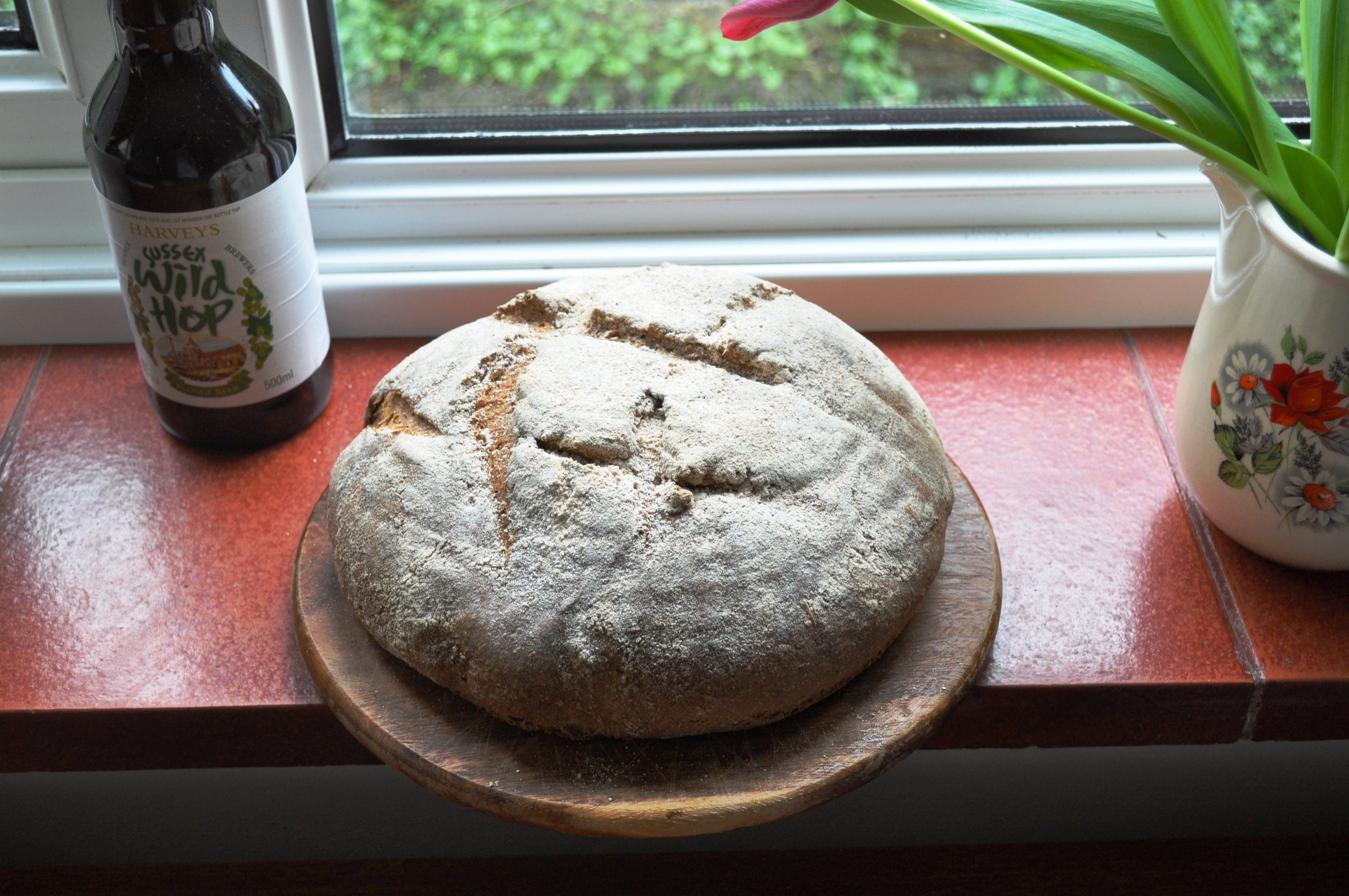
With Sussex Hops

One of the things I enjoyed in my bread-making experiments in Italy was trying different flours, many of them traditional or what’s called “heritage grains”. This is a slightly vague term, muddled up with food fads, but basically it just means grains that are older strains. In the case of wheat*, they can either be alternative varieties to common/bread wheat (Triticum aestivum), or local variables, cultivated over generations to suit a particular terroir.

When I was trying to get my head around the Italian names for grains and flours – particularly the vexed question of what’s meant by “farro” – I wrote a few posts (here and here), where I started learning about some of the different strains and varieties of wheat.

Key heritage wheats that have survived the 20th century’s industrialisation and intensification of agriculture are einkorn, emmer and spelt, or to use their scientific names: Triticum monococcum, Triticum dicoccum and Triticum spelta. As with a lot of taxonomy, things are constantly being revised or bickered about; spelt is interesting, as it’s either Triticum spelta, or classified as Triticum aestivum var spelta, ie a variety of common wheat.

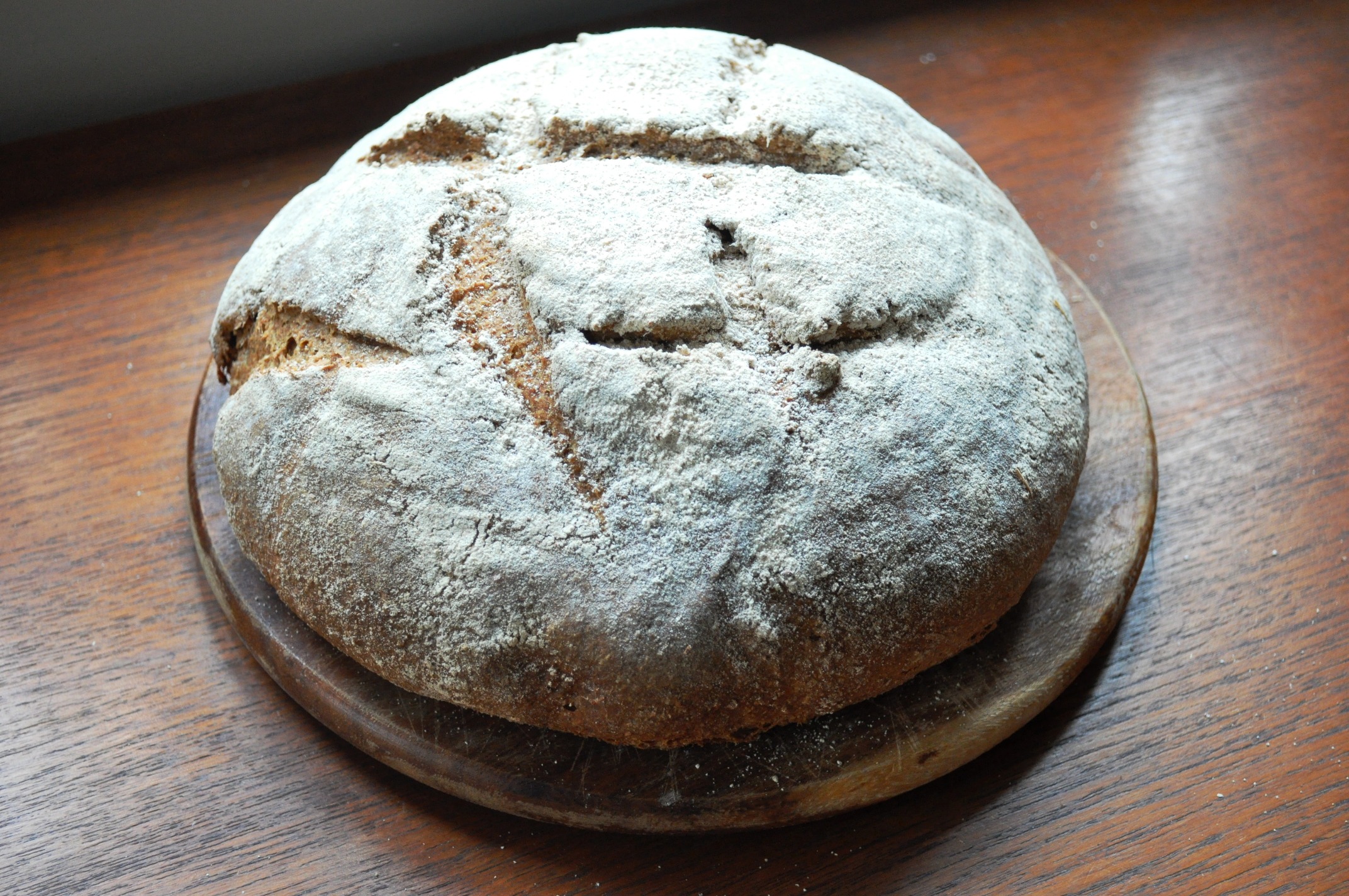
Whole loaf

Olde English
Since coming home to England at Christmas, after our two years in Italy and two months travelling in the US and NZ, it’s taken me a while to get back into the bread-making.

This is partly as we have a rubbish oven, partly as I forgot to pick up my leaven from my mother, who had been looking after it, and partly because Lewes now has a couple of great places to buy real bread these days: Flint Owl and The Hearth, which also has the town’s only proper pizza, made by master baker Michael Hanson and pizzaiolo and in his wood-fired oven.

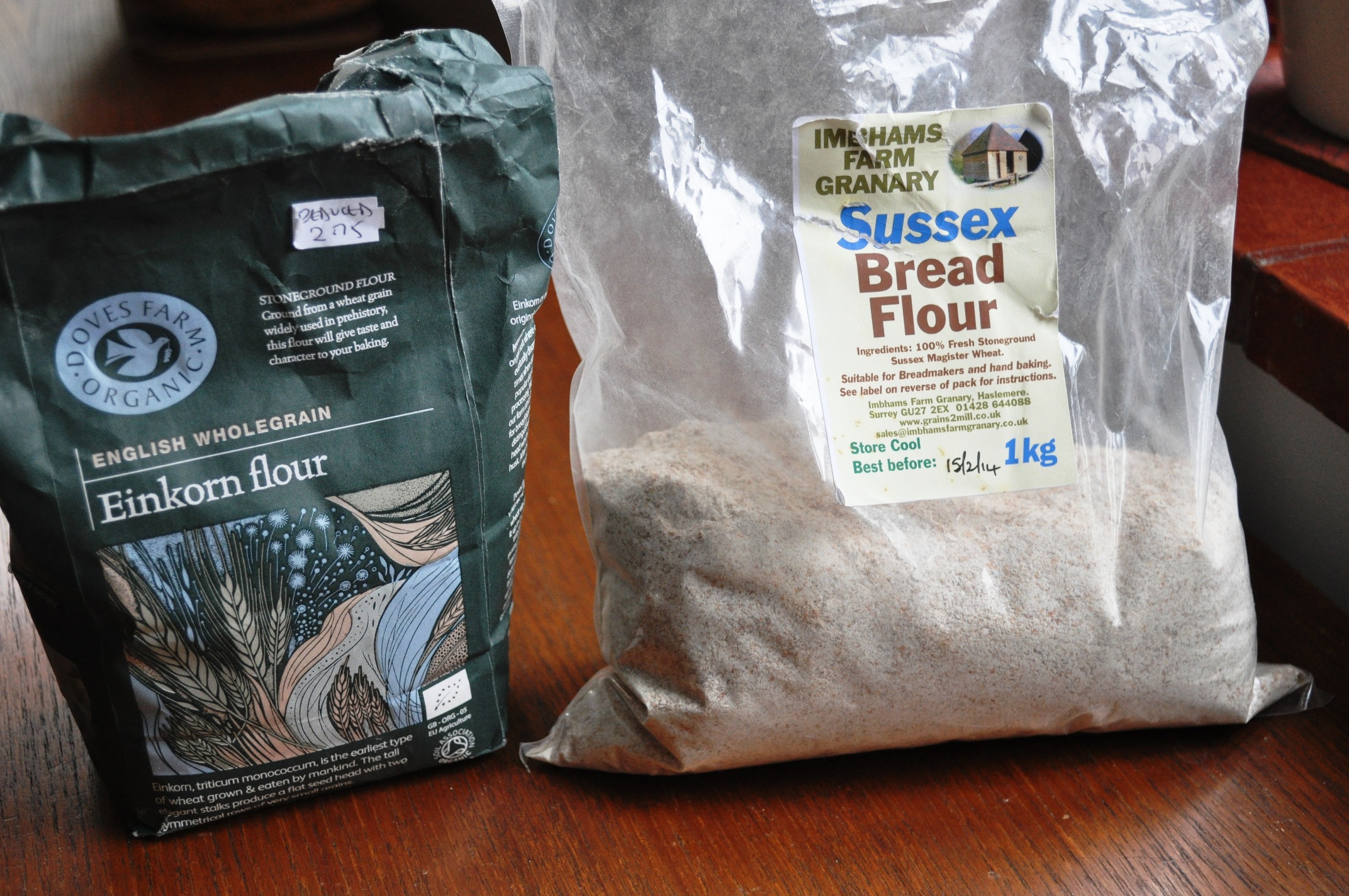
Yesterday, however, I dived back in to the bread-making. I’ve been buying flours, and some of it needed using – particularly the Dove’s Farm wholegrain einkorn I bought that had a “Best before” date of July 2013. Ooops. Best before dates are, as sane people know, just a guideline, but flour does get a bit stale and loses its verve.

Still, at least it’s flour with form. The packet says Dove’s, one of Britain’s bigger organic flour brands, has been growing it on their farm on the Wiltshire/Berkshire border since 2008, and that the einkorn itself “was the original wheat, developed over 20,000 years ago”, and that it’s “the earliest type of wheat grown & eaten by mankind.” As such it can be seen as the crop that symbolises the human transition from wandering hunter-gatherers to settled farmers. You could say it’s the foodstuff that represents the founding of human civilisation, in Eurasia at least.

Einkorn, Sussex

So that had to go in. As did some lovely Sussex Bread Flour from Inbhams Farm Granary. These guys are a small operation, based in Surrey, the county to the north of Sussex. They sell a range of British grains and flours, as well as home milling equipment. Their emphasise the importance of freshness in grain products. Ironic considering the potentially state of the einkorn flour I had.

Still, the Sussex Bread Flour is not only relatively fresh, and thoroughly local, it was also a nice variety – Magister wheat, which Imbhams describe as “an older two row** variety” that “is a strong (high protein) grain”. It’s a winter wheat, and a variety of Triticum aestivum. I asked about the flour, and James Halfhide of Inbham’s explained that “Magister is a modern 21st century grain introduced from Germany and a ‘2 row’ variety – so an ‘older style’ of grain not unlike spelt or naked barley. So you could say it will carry some older characteristics – one we liked was the flavour. More modern breeding has lead to the ‘4 row’ varieties so they look ‘square’ and usually shorter straw stems.”

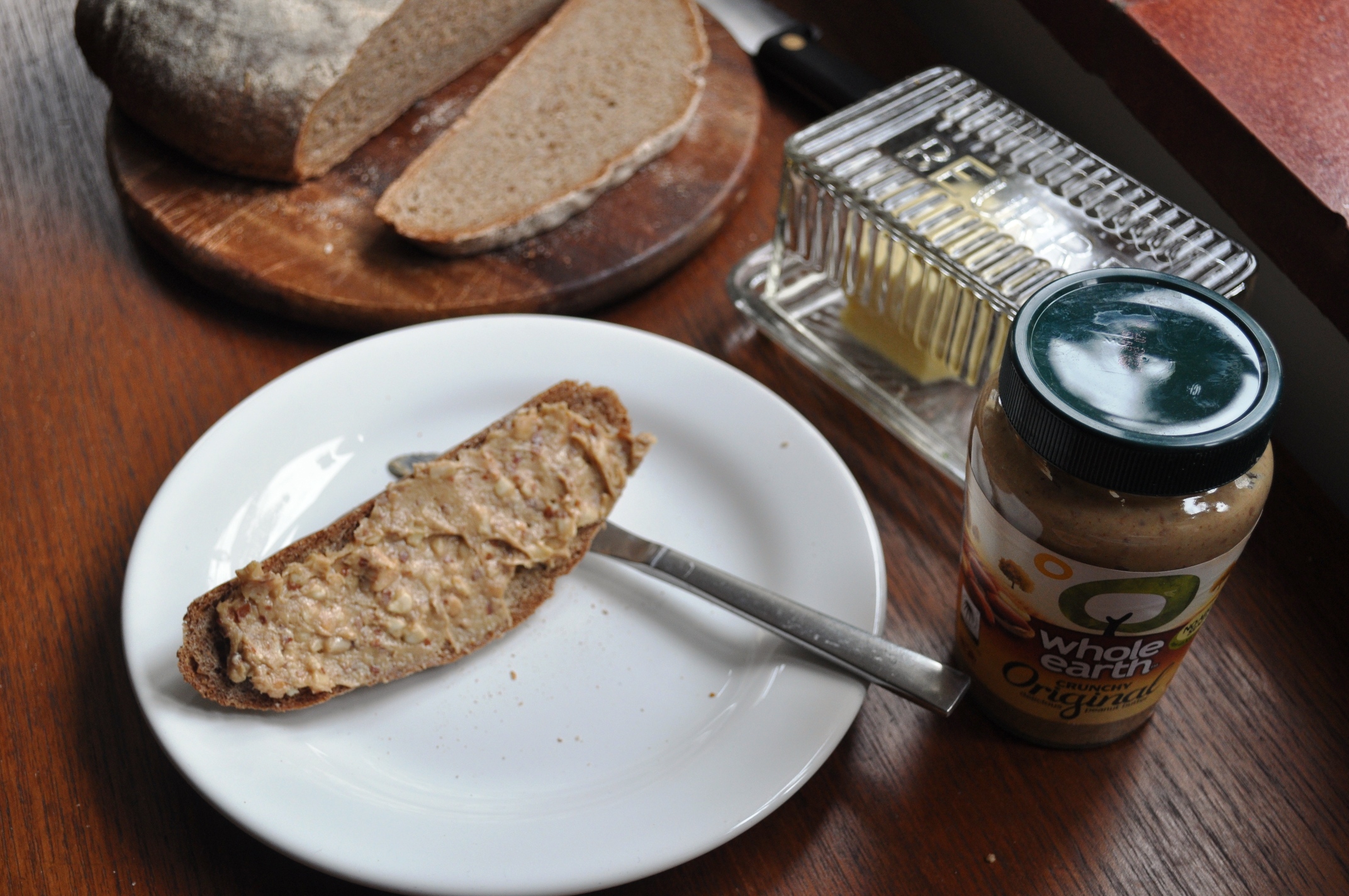
Between the two flours, both wholemeal, it made for a seriously wholesome dough, with only minimal elasticity. The einkorn has a protein level of 10.6% and while the Magister might be higher protein (around 12.5%), it’s stoneground and very branny. The resulting loaf has a close, slightly crumbly crumb. Very tasty though. And great with my favourite peanut butter brand.

Being back home in southern England, with its ongoing wind-wracked soggy apocalypse, might be miserable in some senses compared to poncing around the NZ summer or living in Roma, but at least I can get my Whole Earth Crunchy Original – a delicious type of peanut butter made with the peanut skin left on and one of the few foodstuffs I was transporting back to Italy after trips to England.

Sorry, it’s just better than any of those US Peanut Butter & Co varieties I’ve tried, despite that brand’s success (and hip excursions into film and TV; I first spotted it on screen a year or so ago in Girls) and even better than Pic’s Really Good, which I enjoyed a lot in NZ, as it’s from Nelson, a town I’ve got a lot of affection for. Those skins in tandem with butter – yes, butter, I like animal fat with my peanut fat – and this wholesome bread made for a cracking elevenses snack on this filthy morning.

Whole Earth

Not really a recipe

For one medium loaf I used:
500g wholegrain einkorn flour
250g Sussex Bread Flour
525g water
12g fine salt
10g fresh yeast

I’m using these same flours to feed up my leaven, but that’s not really ready for baking yet, so fresh yeast it was.

I also used water from our Brita filter. The tap water here in Lewes is pretty hard, and full of god knows what chemicals. I’m not sure the Brita existing makes it as pleasing as water bubbling from the ground in a mountain meadow in spring time, but hey, it’s got to be slightly better.

I just crumbed the yeast into half flour, then added the water and made a sponge. Then I added the salt and the rest of the flour.

I gave the dough a few short kneads over about an hour, then formed a ball.

Then I left in a cold place (about 10C; cold crappy 1950s construction house, basically) for about eight hours.

I gave it a quick shape into a ball, then a final prove in a warm place (about 20C; old-school airing cupboard) for a couple of hours, until it had doubled in size.

Baked at 230C for 20 minutes, then another half an hour at 200C.

Wholesome, historic and local.

Magister einkorn cut

* “Wheat” isn’t just one member of the grass family (Poaceae or Gramineae), it’s several, including many strains that have had ooh, ten-plus millennia of crossing and selective breeding.
** As I understand it, when talking about grains as 2-row, 4-row, 6-row, it’s a reference to the number of rows of kernels on the ear.

7 Comments

Filed under Baking, Breads, Recipes