Monthly Archives: May 2015

Wholemeal honey cake

Wholemeal honey cake

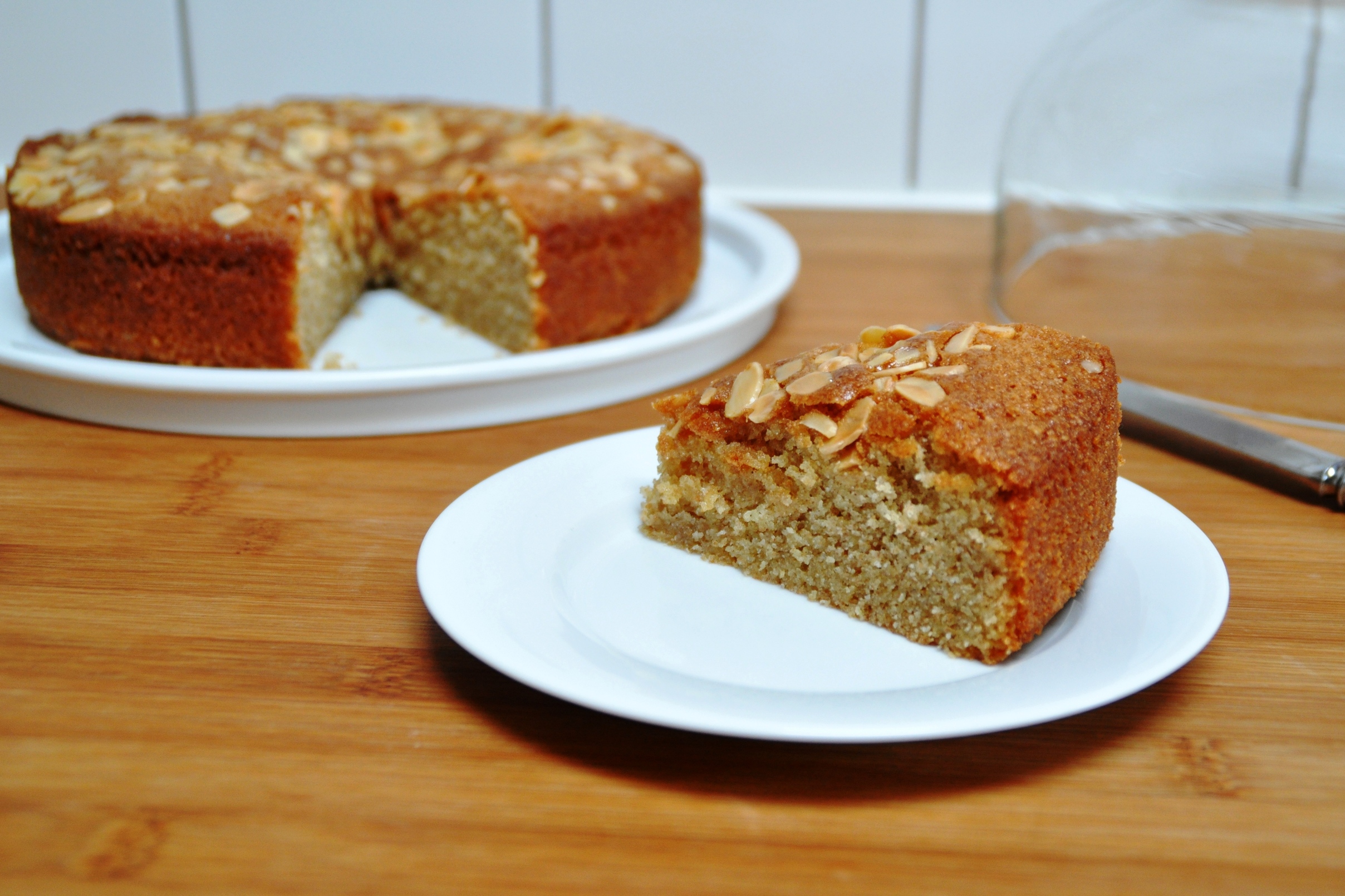
I love cakes made with ground almonds. And I love cakes with sweet syrups poured over them after baking. So this cake is a result – it has both.

It’s from a recipe by Gill Meller, now group head chef of Hugh Fearnley-Whittingstall’s River Cottage operation. As with my last syrupy cake, revani, it’s a recipe I got from the paper several years ago. It’s one I strongly associate with my parents’ place in northwest Devon, as the original newspaper cutting lives in a file there, along with some notes about what’s not quite right with it. Notably, the version as it appeared in the Guardian had too much butter in it, which seriously leaked out on baking. The version on the River Cottage site reduces the butter and increases the oven temperatures. For our family version, we reduce the butter even more.

The original also uses self-raising wholemeal flour – something that’s not especially common, so you can replace it with plain wholemeal flour and a bit more raising agent. But watch it with the baking powder. See notes below. More specifically I use a low protein (less than 10%) wholemeal flour, as opposed to a higher-protein bread-making wholemeal flour (12% plus). It would work with bread flour, but might be slightly heftier. As it is, it’s surprisingly soft for something so brown and branny.

Plain wholemeal flour

Not gluten free… but it could be
On the flour note, anyone who reads my blog will know I don’t generally have problems with modern common wheat (Triticum aestivum) and gluten. I prefer locally grown and/or stoneground where possible, and I find that as long as I don’t eat industrially made wheat products – specifically that paragon of bad modern food, white sliced – I’m fine.  For those of you who like, or have to, avoid modern wheat, I suspect this cake could work pretty well with either older wheat such as spelt (Triticum spelta), which has less starchy endorsperm and less gluten.

It may even work with alternatives to grass/cereal flours (wheat, rye, barley, oats etc), such as pseudocereal buckwheat (Fagopyrum esculentum). I’ve put the latter on my shopping list as it’s a foodstuff I enjoy for its own merits and want to try for this cake. Half-buckwheat, half-ground almonds sounds pretty good to me.

Wholemeal honey cake ingredients

250g unsalted butter, softened
250g caster sugar
4 eggs, lightly beaten
150g ground almonds
150g self-raising wholemeal flour*
2g baking powder [this is about a 1/3rd of tsp and has been a problematic aspect of this recipe, see below]
1 tsp powdered cinnamon
Pinch fine sea salt
40g flaked almonds
100g honey

1. Preheat the oven to 170C.
2. Grease a 23cm (9″) diameter springform cake tin and line the bottom with baking parchment.
3. Cream together the butter and sugar until light and fluffy.
4. Beat in the egg, a little at a time.
5. Beat in the ground almonds.

Bran

6. Sieve together the flour, baking powder and cinnamon, add a pinch of salt, then fold this in too. Sieving lightens and combines, but also removes the bran. The bran is good, rich in dietary fibre, protein, B vitamins and various minerals (including iron) – so chuck it into the mix too!
7. Put the mixture in the tin, scatter the 40g flaked almonds over the top. Place on a baking sheet (it may still leak some butter) then bake for about 1 hour, until a knife or skewer comes out clean. As long as the top’s not charring, it’s better to overbake this cake than underbake it. It’ll be more stable and the almonds and honey will keep it moist.
8. Warm the honey in a saucepan. I weigh mine straight into a pan, to avoid any sticky complications. Plus, if you only have set honey, heating it will make it runny, and if you’re using runny honey, it’ll make it runnier, so it’ll seep through the sponge better. While the cake’s hot, drizzle over the honey.
9. Place the tin on a wire rack to cool. Serve warm with cream, ideally clotted, for a pudding or at room temperature at teatime.
Wholemeal honey cake

Excuses excuses
I’m not going to deny I got some sinkage in the middle on the cake photographed here. It doesn’t affect the taste of course, but in terms of aesthetics, and perfectionism, it’s annoying. That said, if you look at F-W’s version on that Guardian page, it’s sunk in the middle too, so I’m in good company.

Potential causes of cakes sinking in the middle are:
1. Too much raising agent. It can cause cakes to over-rise then collapse.
2. Not baked quite long enough. However, if the cakes is pulling away from the edges of the tin and a skewer comes out clean, it generally means it’s done.
3. Overbeating the mixture.
4. Wholemeal flour is trickier than white flour. With all that (lovely, nutritious) bran and whatnot, it doesn’t lend itself to retaining a nice delicate structure.

I’m going with option 4, with a bit of option 1 on the side, for today’s excuses. I’ve made this cake again since this entry, and reduced the baking powder again and had much better results.


* Or 145g wholemeal flour with, total, 5g 0r 1 tsp baking powder.
6 Comments

Filed under Baking, Cakes, Recipes

Delicate shortbread fingers

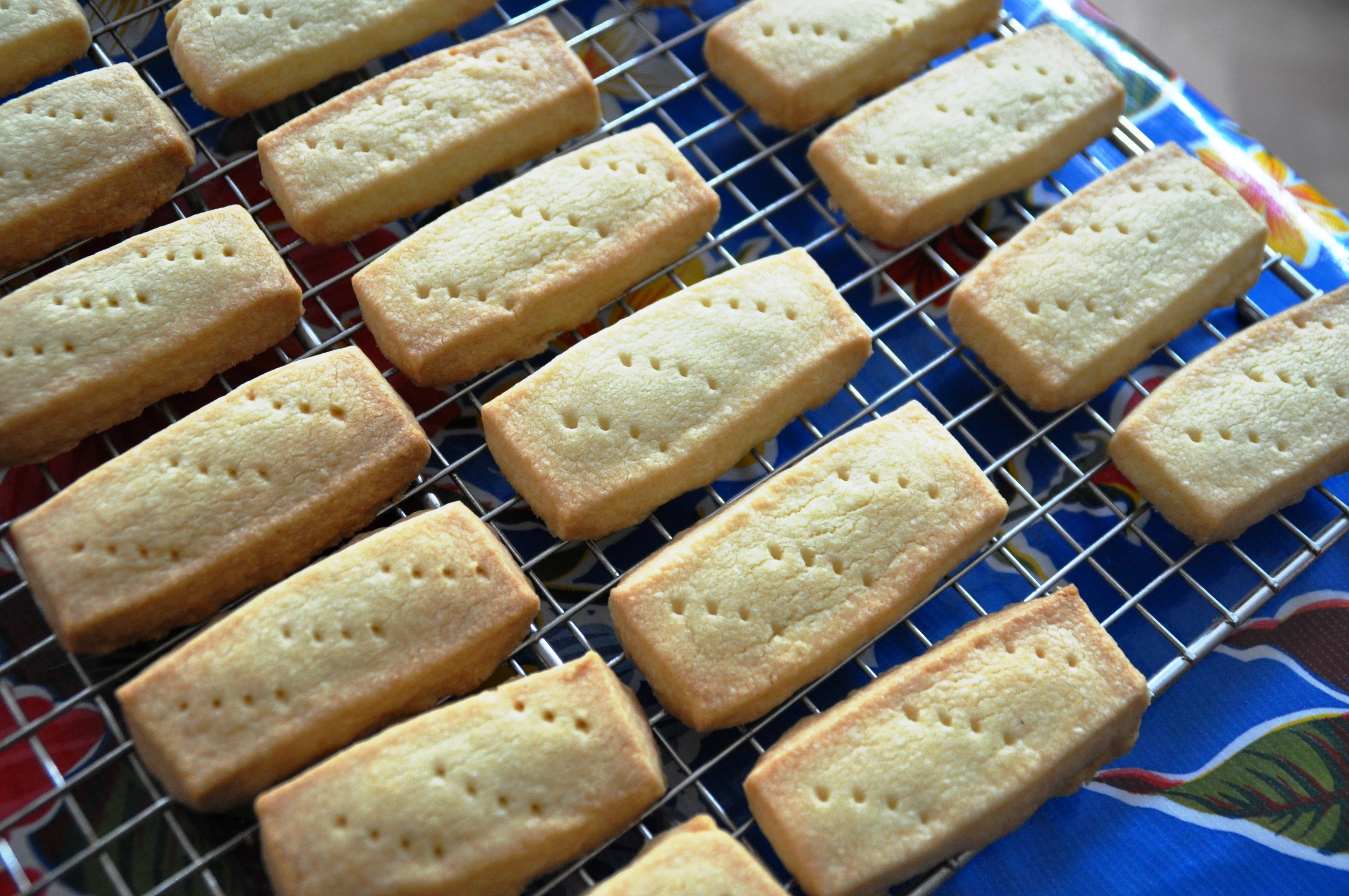
Shortbread fingers

Every family has its funny little games. One I play with my mother is “What’s the most past its best-before-date ingredient in the back of the cupboard?” These tend to be spices, but in this case, at my folks’ place I found a box of cornflour1 that was… well, let’s say that at least it was from this century.

Now, one of the many wasteful habits we have in the modern world, especially in the West, is throwing away perfectly good food. Love Food Hate Waste says that in the UK alone “We throw away 7 million tonnes2 of food and drink from our homes every year, the majority of which could have been eaten.” This may be a massive underestimate though. Other stats3 have it at 15 million tonnes. Think of that. That’s a mountain of food. A mountain of food that was produced with vast amounts of energy, that goes into landfills, when elsewhere people are starving – or indeed, relying on food banks here in the UK, the sixth biggest economy in the world.

So rather than giving it to the birds or the bin, I thought, why not try and use up the cornflour. Certainly, in its long career at the gloomy back of the cupboard, it’s not improved, but nor has it become inedible – it’s probably lost some of its power-to-thicken, but it hadn’t rotted or become toxic or bad for you. It just got stale.

Shortbread/shortcake
I’d been browsing Jane Grigson’s English Food and naturally, given my inclinations, I was in the Teatime chapter. Among the entries is one for Shortcakes. Though these are actually shortbreads, or shortbread biscuits. Grigson, writing in 1974, before the internet made everyone a expert and/or pedant, simply says, “Scottish shortbread is one of the many international variations on the shortcake theme”.

Shortbread is one of those recipes that utilises memorable proportions: 3 parts flour, 2 parts butter, 1 part sugar. For the flour, the Grigson recipe gave an option for either using ground rice or cornflour mixed with flour, so this seemed like a great way to use up the museum piece.

I’ve made shortbreads with ground rice and semolina before, which gives them a bit of crunch, but using cornflour takes them the other way – into a softer biscuit that almost dissolves in the mouth. The delicate texture can be further enhanced by using icing (powdered) sugar wholly or partially for that 1 part sugar.

A note on techniques
Shortbread can be made by either creaming the sugar and butter, then adding the flour, or by rubbing the butter into the flour, then adding the sugar. Grigson’s recipe did the latter, and gave the delightfully in-depth instructions of “Mix to a dough”.

Shortbread isn’t a million miles away from a shortcrust pastry, so the rubbing-in method seemed like a logical choice. As with a shortcrust pastry, try to avoid overworking the flour.

Now, I’ve made these twice in the past week: once with the, er, vintage cornflour, and once with some fresh stuff now I’m back home. Both worked well: the, er, well-aged cornflour resulted in a slightly softer, more powdery biscuit that was perfectly edible and palatable. Stale flour isn’t ideal, but it won’t kill you. So don’t bin it the moment it goes over its best-before date. Think of those 7 – or 15 –  million tonnes.

200g plain (all purpose) flour
100g cornflour (corn starch)
200g unsalted butter
50g caster sugar
50g icing sugar

1. Preheat the oven to 180C.
2. Line a couple of baking sheets with parchment or silicone mats.
3. Weigh out the flours and sieve them together into a large bowl. Or just combine and whisk a bit with a fork if you can’t be bothered with the sieve.
3. Cut the butter into small cubes, add it to the flour and rub it in until the mixture is crumb-like.
4. Add the sugars to the mixture and squeeze to all together to form a dough. It will be crumbly. You want it crumbly – crumbly = short.

Shortbread fingers - cutting the paste

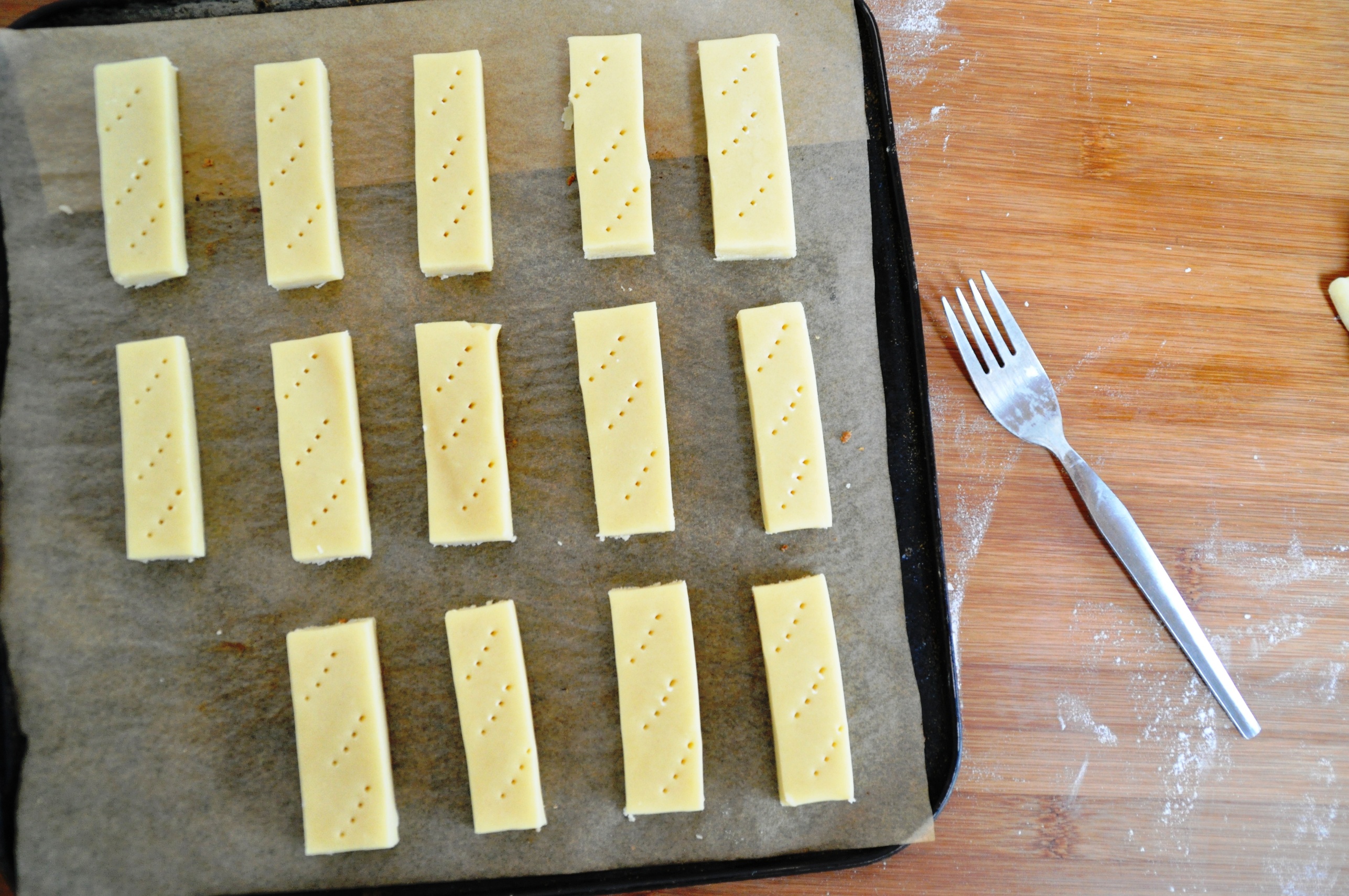
5. Roll out the paste on a lightly floured worktop, to a thickness of about 12mm. I made mine into fingers, cutting pieces about 70 x 25mm.

Shortbread fingers - prick with a fork
6. Put the piece on the baking sheets and prick them with a fork.
7. Put them in the oven and bake for about 15 minutes. The classic shortbread is baked to the point where it’s still pale, but I like mine just starting to colour. Your choice – add or subtract a few minutes from the baking time to suit your tastes.


1. What Americans call corn starch and Italians amido di mais. Whatever you call it, it’s a starch extracted from the endosperm – the carby bit – of kernels of Zea mais, maize, or corn in US English.
2. 7 million metric tonnes is 7.72 million short/US tons or 6.9 long/imperial tons. By any measure, a lot.
3. This article in The Guardian is about a new law in France to stop supermarkets wasting so much food. It has stats from Eurostat, with the UK at the top of an EU league table of food wasters.

7 Comments

Filed under Baking, Biscuits, cookies, Recipes

Syrupy almond-semolina cake – revani or basbousa

Revani cake

Some time in the late-1990s, I cut this recipe out of a newspaper. The writer was definitely Andy Harris, the paper was possibly The Independent. I went through a phase of making it loads then, I don’t know, it just seemed to get forgotten. I’ve no idea why, as it’s great. Just my sort of thing – quite dense and textured thanks to its use of almonds and semolina and moist thanks to a flavoursome syrup poured over after baking.

The name Harris used was revani (alternatively ravani), and he wrote about it as a Greek cake. Actually, similar and related cakes made with almonds, semolina and citrus syurp are common through much of the Eastern Mediterranean, Levant, Maghreb and Middle East. These are known as basbousa (rendered into English in various spellings), hareesa/harisa, namoura and kalbelouz. Some versions also feature coconut. I don’t fancy this as syrup is spiced up with cinnamon, cloves and orange and in tandem with the flavour of almonds, I think the coconut would be a bit much.

I’ve added a little orange blossom water to the original recipe. In part to boost that orangey-ness, but also as I find it’s the sort of ingredient that gets pushed to back of the cupboard and forgotten until it’s a decade over its best-before date. So I want to keep using it. Harris’s recipe featured brandy, but I don’t have any, I’m not sure what it would add, and I’m pretty certain that when this cake it made in Muslim nations it wouldn’t contain any booze.

Fitting in with my interest in feast day foods too, it may also eaten by Coptic Christians in Egypt and beyond for their Great Lent and Christmas celebrations. Though this info seems to be lurking on Wikipedia, unverified, and repeated elsewhere by lazy bloggers. Oh, oops. I’m struggling to confirm it, and don’t know any Copts.

Syrup
350g granulated sugar
700g water
1 cinnamon stick
6 whole cloves
Zest and juice of 1 orange
1 tbsp orange blossom water (optional)

Cake
200g granulated sugar
225 g unsalted butter
6 medium eggs (about 300g beaten egg)
110 g plain flour
175 g semolina
1 tbsp baking powder
110 g blanched almonds [or ground almonds, see below]
1/2 tsp vanilla essence
1/2 tsp almond essence
Extra blanched almonds to decorate

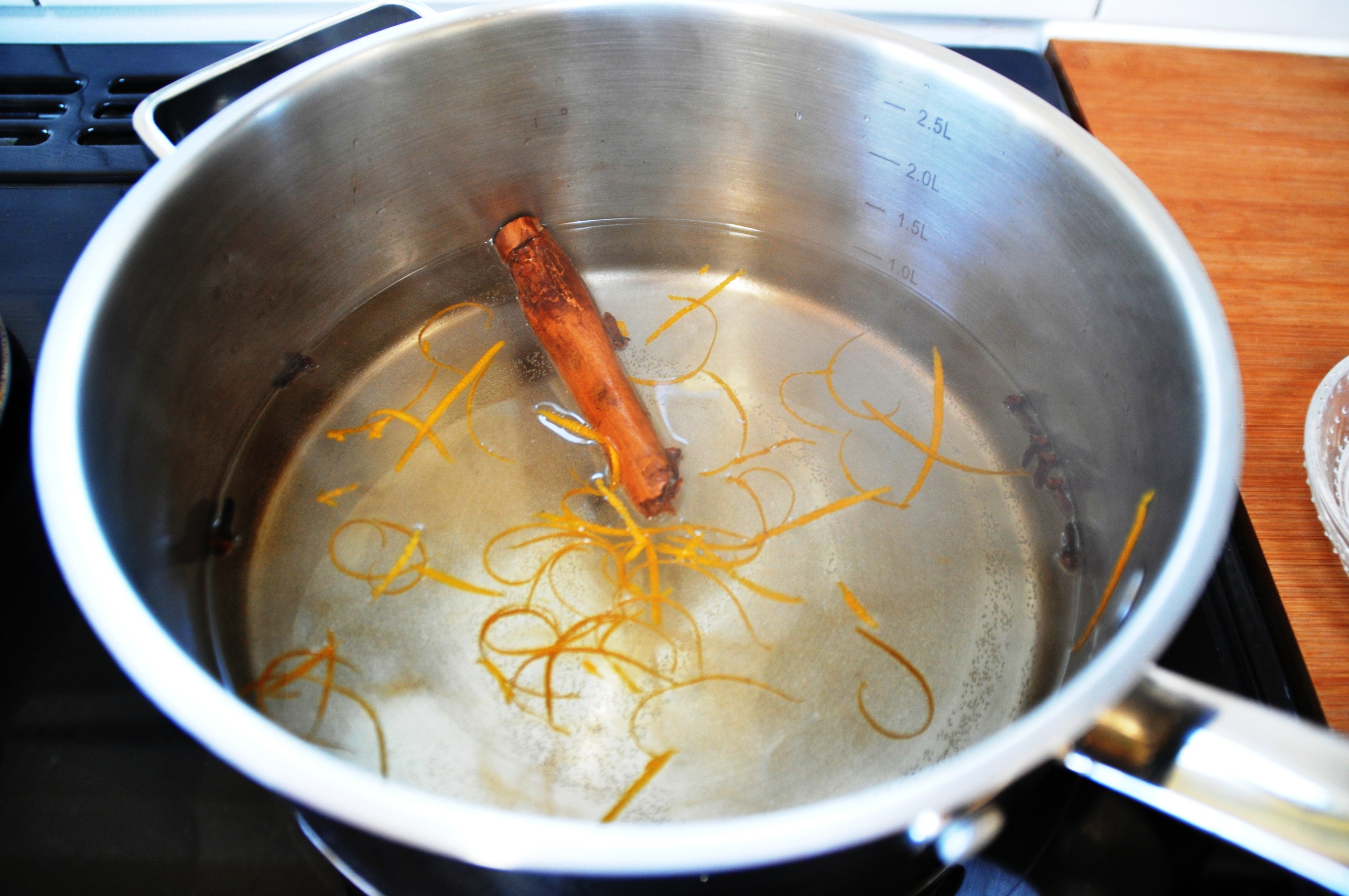
1. To make the syrup, dissolve the 350g sugar in the 700g water in saucepan over a low heat.
Revani cake syrup
2. Add the cinnamon stick, cloves and orange zest and juice and simmer for 15 minutes.
3. Take the syrup off the heat and allow to cool. Stir in the orange blossom water, if using.

Revani cake ingredients

4. In a large bowl, or with a food mixer, beat the butter and sugar together until creamy and light.
5. Beat the eggs with the vanilla and almond essences, then gradually add the egg to the creamed mixture, incorporating well.
6. If using blanched almonds, chop them finely – either by hand or in a food processor. Alternatively use ground almonds – you won’t have quite such an interesting texture but it’s easier. I used a mix this time round – 40g ground almonds and 70g blanched almonds, chopped.
7. Sieve together the flour, semolina and baking powder. Add the chopped almonds/ground almonds.
7. Add the flour mix to the creamed mix and blend well.
8. Preheat the oven to 180C.
9. Grease a rectangular tin, about 32x20cm.

Revani cake batter

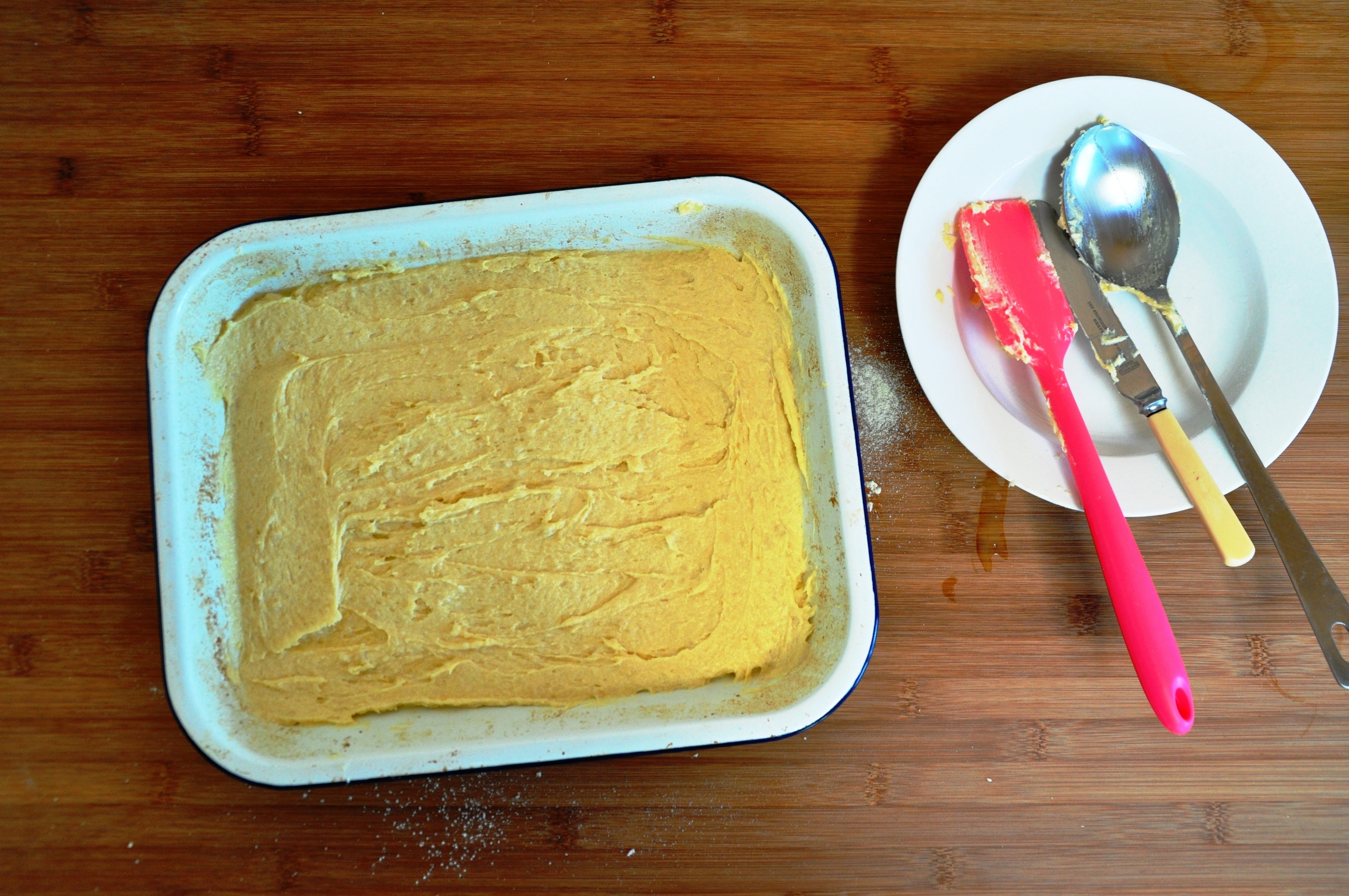
10. Spoon the batter into the tin, smooth it, and put in the oven for about 30-40 minutes, until firm and browned.

Revani cake - score a diamond pattern

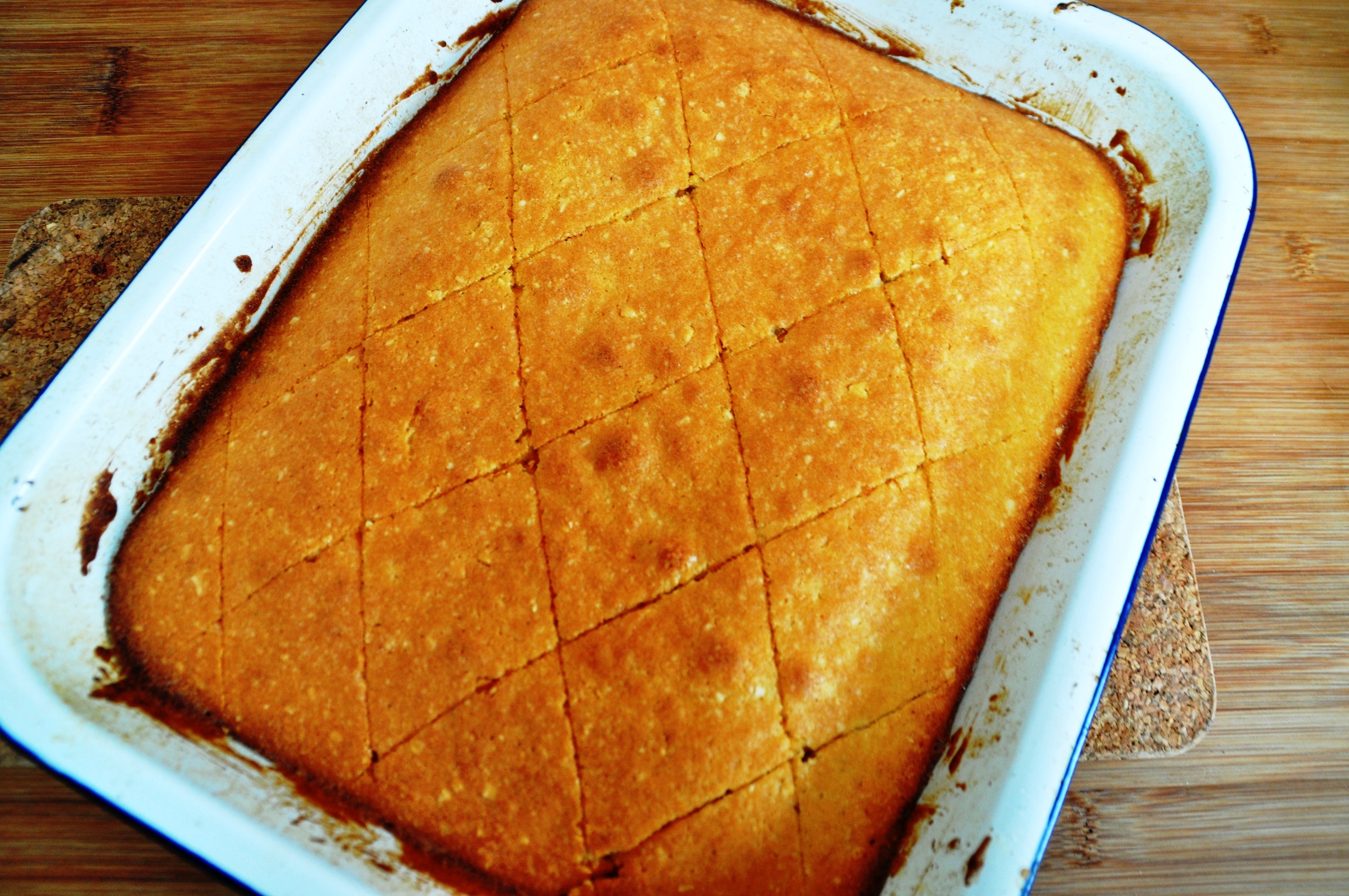
11. Remove from the oven and score a diamond pattern in the top with a sharp knife.

Revani - pour syrup over, straining out the spices

12. Pour the syrup onto the warm cake – through a sieve or strainer to catch the spices and zest.

Revani - decorate with blanched almonds
13. Decorate the diamonds with a blanched almonds.
14. Allow to cool and serve at room temperature for tea or as a dessert. The latter can be souped up by being served with honey-sweetened Greek yogurt or poached fruit.

Revani, basbousa

A note on photography
When I thought I’d broken Fran’s camera last week, actually I’d just broken the lens thread. Phew. So we got a new (well, second-hand) lens. It’s an 18-200mm F/3.5-6.3, so Fran could use it more for landscapes and stuff.

I’m not a photographer, and struggled enough to learn how to use the kit lens effectively, but now I’m struggling again. I can’t quite get in close enough, suspect I won’t be able to rely on the autofocus as much, and doubly suspect I probably could do with a faster 35mm or 50mm prime lens or something with a better macro. Gawd knows. It’s all changed so much since I got my photography O-level in 1986….

Leave a comment

Filed under Baking, Cakes

Many ways to bake

Stone and casserole

If my blog is isn’t getting updated quite so regularly these days, it’s because Fran and I are at a pretty intensive stage of a journey we’ve been on the past decade. It’s a journey that’s much shorter for most people: that of starting a family.

The old-fashioned way failed us, so we tried medical intervention. Quackery also failed us, so the past year or so we’ve been involved in the adoption process.

As anyone who’s had similar experiences will tell you, it’s a roller-coaster. The adoption process in the UK is predicated on extending the protection of children in care who may well have had tragic, sad or painful starts to life. So as the prospective adoptive parent, you’re scrutinised to within an inch of your life, every corner of your life checked, considered, evaluated.

You spend months filling in forms, being interviewed. The sheer weight of bureaucracy can make you buckle with its Kafkaesque convolutions as you struggle to prove you can be a good parent – without ever having had the experience of being a parent, thanks to the fickle vagaries of nature. It’s tough, but the end goal is clear – giving a child a good home.

Baking as palliative
When times are tough, baking is gives me solace. Bread-making especially is unique and special: it’s about making a basic food stuff, but it’s so tactile. Plus it’s all about fertility too, in its modest way. You’re reliant on the life incarnate in microorganisms: yeast, and, for sourdoughs, yeast and lactobacilli (bacteria). You need to nurture them, feed them, encourage them to reproduce. Reproduce as fervently as possibly. Unlike us, they shouldn’t need any intervention.

So I’ve been baking a lot recently. I’ve been baking most of my life, and making bread for at least 20 years, though it’s only been the past eight years or so I’ve made pretty much all the bread we eat at home. Although I’ve got a baking diploma, I’m not a professional. The thing professionals have over home bakers is a mastery of skills acquired through repetition. For long baking shifts, often through the night, professional bakers will make their doughs, prove them, shape the loaves, bake them, perfecting the processes.

So although I have a reasonable knowledge of all these things, I haven’t the mastery: it’s a lot harder to achieve when making one or two loaves a week. Especially if, like me, you have an enquiring mind and want to keep experimenting. There are so many variations on basic techniques, so many kinds of flour, so many permutations. So I keep on playing around.

I was a pretty good artist when I was young, but art, like bread-making, like any skill, is something that needs constant practise. Creativity needs nurturing. I carried a notepad and sketched all the time until my mid-twenties, but then it just tailed off. I don’t really know why. Anyway, my creative urges these days mostly go into food, into baking. Talking to my friend Rachel, who knows all about our trying-to-start-a-family saga,  she suggested the baking obsession is also an expression of my creativity, my nurturing instincts. (I’m not a stereotypical macho male, obviously.)

If fate, and the powers that be, allow us to adopt and, finally, start a family, I don’t intend to stop baking. But I suspect I’ll have less time for free-form experimentation as the focus of the nurturing will be very different.

Bread experiments in the oven
Another thing Rachel’s said to me is: make your blog more personal. But I’ve not really known how to approach this. This attempting-to-start-a-family thing is mine and Fran’s big personal project. Fran’s sort of tried to put me off talking about it, but we process things differently.

The way I see it, with a pregnancy, you get to a point where you can’t not talk about it – it becomes publically obvious. I feel we’ve been involved with the adoption process for long it’s reaching an equivalent to that publically obvious stage. Just without the bump. Without the literal bun in the oven. Instead, there are my bread experiments in the oven.

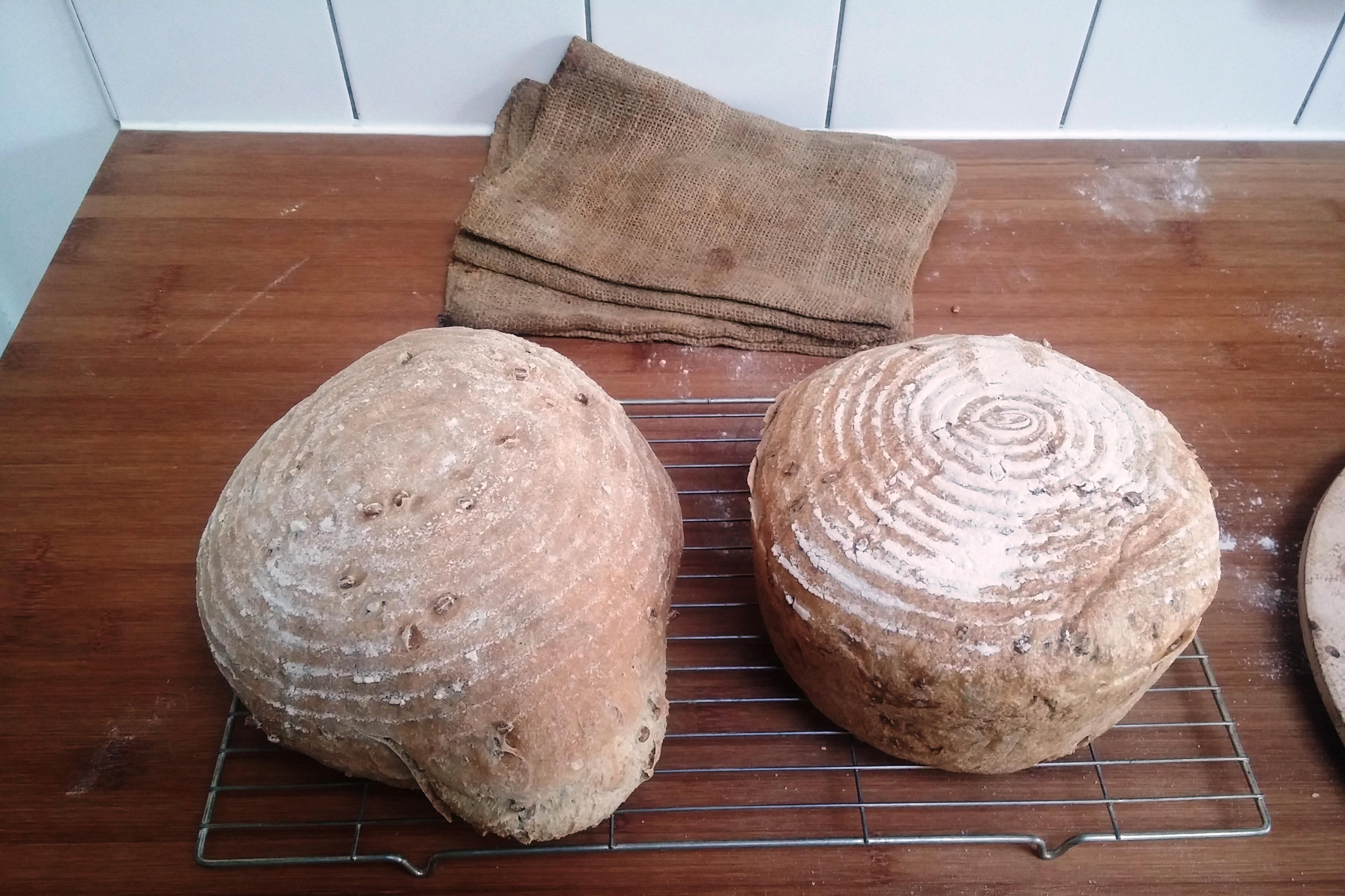
This is my latest haphazard experiment. I wanted to see how the same dough behaved when baked in two different ways.

Lively sponge

I made a dough using a kilo of flour, a mixture of white wheat flour, wholemeal spelt flour and rivet flour. I combined 400g of this with 650g of water and 15g of yeast to make a sponge pre-ferment.

Full of wheatberries

I let that ferment for a few hours at about 17C, then made up a dough with 15g fine sea salt and about 200g of cooked wheatberries (wheat grains) I had.

Well risen

Then gave all that a prove for about five hours, giving it some turns and folds.

I then managed to break Fran’s camera. We’d had two days of howling winds, 40-50mph (64-80kph), and that frays your nerves somewhat. Clearly it made me clumser than usual. I’d just said to myself, better watch out, the concrete floor would destroy this camera if dropped – then I dropped it while climbing a small stepladder to take an overhead photo. So now my pics are taken with my inferior phone camera. And I need to take a trip to the camera shop.

Divided up

After breaking the camera, both pieces of dough were scaled at the same weight, both were moulded the same way, and both were given their final prove in round bannetons.

Final prove

After the final prove, I put one in a Le Creuset casserole dish, pre-heated in the oven at 220C. Some call this the Dutch oven technique. I used a peel to slide the other onto a baking stone (or, more specifically, my pizza stone). Both were then baked at 220C for 20 minutes, then 30 minutes more at 180C.

Baked

Now, as you’ll see from the photos, despite all these years of baking, I’m still making some errors. Firstly, the two kilos of dough I had was too much for the size of Le Creuset I was using. Oops. Secondly, the one I baked on the stone, not being constrained by a container, did a funny oven spring and opened out sideways. This is frustrating for several reasons as I know the factors full well:
1. I probably didn’t leave it long enough in the final prove.
2. It may have opened up better if I’d give the top some slashes.
3. I quite possibly didn’t get the dough tight enough in the moulding stage.

The latter is one a baking skill I really struggle with. Sometimes I nail it, sometimes I fail miserably. I’ve managed 80% hydration ciabatta, then made a 70% hydration ball that’s turned out a discus.

Cut

Anyway, the real thing I was wondering about with this experiment was whether the crust and the crumb of the bread would be markedly different when baked with the different techniques. I was expecting they would be. They weren’t. Both are lovely loaves, soft, wholesome, good for sandwiches or, when they’ve staled a bit, toast.

For this experiment, I probably should have divided the dough in three, and baked a third on a steel baking sheet. Not sure my oven’s big enough though. Still, it was a fun experiment, a nice distraction from the anxiety and emotional intensity of the adoption. And, heck, one day I hope it’s the sort of bread my kids will like for their school lunches.

25 Comments

Filed under Baking, Discussion, Misc

Tippaleivät – Finnish May Day fritters

Tippaleivat

In England, for May Day we all – of course – morris dance around poles bestrewn with ribbons and get drunk on ale*. I’m not sure we have any particular traditional celebration foods. So I was looking around for treats from other nations. I came across tippaleivät (plural) or tippaleipä (singular).

Tippaleivät are eaten in Finland as part of celebrations on Vappu, the Finnish May Day, Walpurgis day. Love that word, Walpurgis. Walpurgisnacht. That’s German of course, though Germany has a relative of tippaleivät, cruller, the US has its funnel cake, while they’re all also arguably a distant relative of the South Asian jalebi. Mmm. Jelabi.

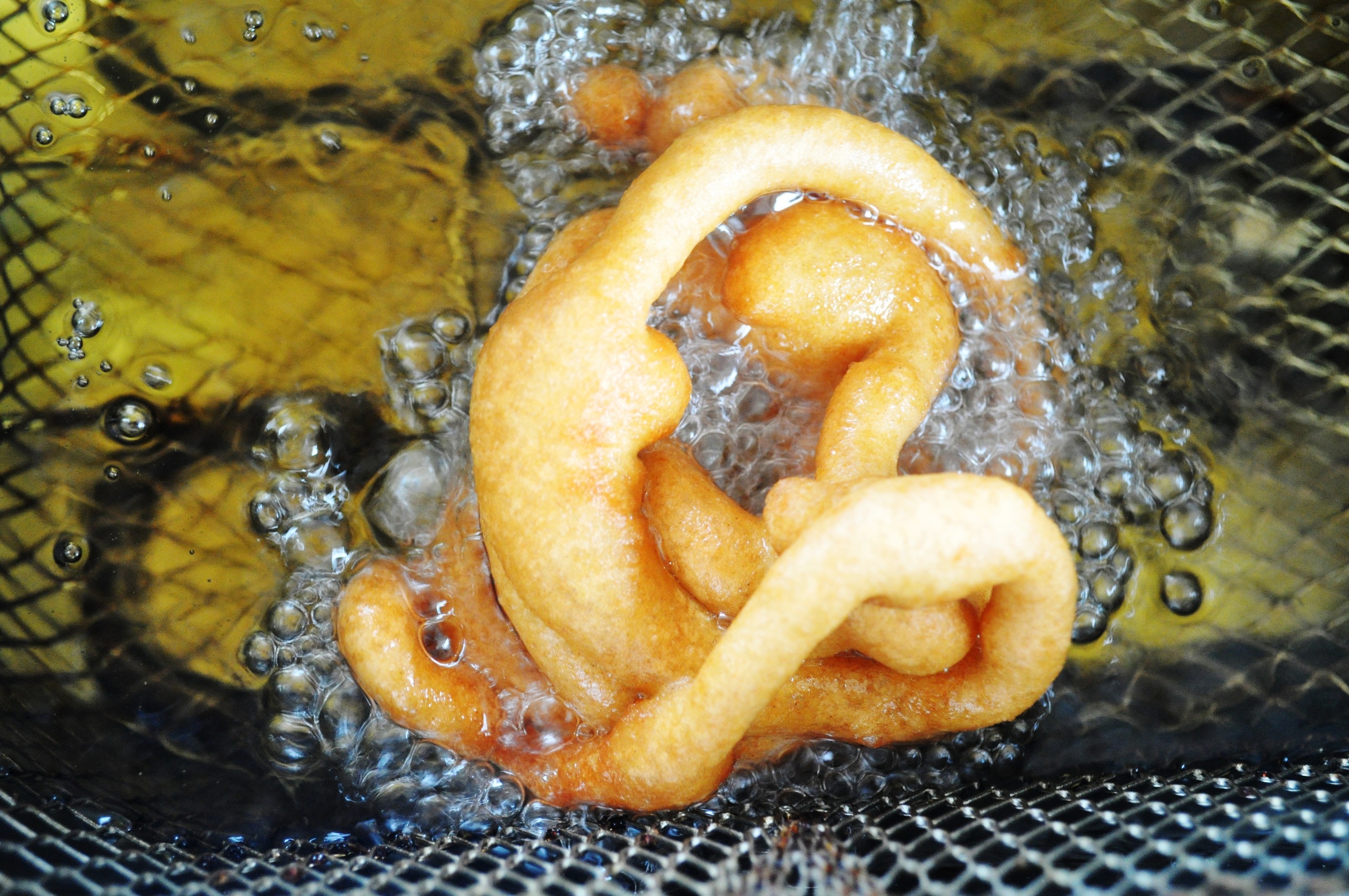
Frying 2

Basically they’re just swirly fritters, which can be flavoured with lemon zest and vanilla, though the latter can come via a dusting of vanilla-flavoured icing (powdered) sugar. I’ve seen recipes for yeasted versions, versions with baking powder, and versions with no raising agent at all. I’ve taken the middle path.

My Finnish friend Tomps tells me that tippaleipä means “drop bread” – as in, you’re dropping the batter. I’ve read lots of tips on how to shape the fritters as you fry them as you just pipe a worm of thick-ish batter straight into the oil. Some people say use a ladle, others a metal ring of some persuasion, or even a tin can with both ends removed.

But using a ladle and a piping bag simultaneously over hot oil seems a tad fiddly to me, whilst most tin cans these days have a plastic lining – not ideal in oil at 180C (360F, for those of you in the 19th century). So I just did mine free-form. They’re perhaps not the neatest, but they hit the spot.

Squeezing, dribbling

Happy May Day! Happy Vappu! And indeed happy Beltane!

2 medium eggs (about 100g beaten egg)
25g caster sugar
200g plain flour
1 tsp baking powder
1/2 tsp fine salt
100g milk
1/2 tsp vanilla essence [optional]
zest of half a lemon [optional]
Sunflower or rapeseed (canola) oil, for deep-frying
Icing sugar, for serving

1. In a large-ish bowl, combine the egg and sugar, and vanilla (if using), and beat slightly.
2. Sieve together the flour and baking powder, add the salt and zest (if using).
3. Alternately add flour mix and milk to the egg, beating to create a thick batter.
4. Put the batter in a piping bag fitted with a smallish nozzle, max about 5mm. Alternatively you could use a plastic freezer bag and snip off the corner. Just keep it away from the hot oil!
5. Heat the oil to 180C.
6. Drizzle a thread of batter into the oil, forming a nest shape.

Dribbling, frying
7. Cook until golden, about 4 minutes, then take out and drain on paper towels.

Frying
8. Serve dusted with icing sugar.

In Finland, they’re eaten with a lemony mead drink, sima. We’re just having ours with coffee and hot chocolate.

Tippaleivat, overhead


* Or not. Due to the convention of Bank Holiday Mondays, today isn’t a national holiday – that comes on Monday. Which isn’t actually May Day.

6 Comments

Filed under Cakes, Pastry, Recipes