Monthly Archives: April 2021

Wild garlic focaccia

Wild garlic focaccia

When I was a little kid in the 1970s, I was intrigued by the copy of Richard Mabey’s 1972 classic Food for Free on my parents’ bookshelves. But I also loved actual shopping with my mum. I remember walking down the high street of my home city, Winchester, her carrying a wicker basket and us visiting actual grocers, bakers, fishmongers and butchers. But Sainsbury’s had also arrived, and they were soon gone. Put out of business. Times changed.

I loved the supermarket too, fascinated by the variety and such things as hazelnut flavoured Mr Men yogurt. So we weren’t exactly food foragers, but my mum is knowledgeable about plants so could often identify things in hedgerows and woods on family walks. Like most people, we foraged blackberries, but while I did learn that rosehips had been used to make a vitamin-rich syrup during the privations of World War 2, for us at primary school they were more important for crushing up and sticking down the back of other kids’ shirts as itching powder.

Foraging, like baking, is of even more popular these days. And spring is when, among other things, the wild garlic appears. Wild garlic, like blackberries later in the year, is an entry level foraging plant, it’s easy to identify and can be plentiful. We met up with some old friends the other day, for our first pub garden get-together in who knows how long, then took the long way home afterwards. Dom took us to a favoured wild garlic patch, importantly away from the main dog toileting route. A strong garlic flavour is good. A dog wee flavour, not so much.

Wild garlic tends to grow in cool, shady places in deciduous woods and close to streams. Your nose may well help you find it. It’s so pungent, in principle it’s hard to confuse. Though it does grow alongside lords and ladies1 (Arum maculatum), whose young leaves can look similar at a glance but are a very different shape when inspected. And don’t smell of garlic. But they are also toxic, so take care.
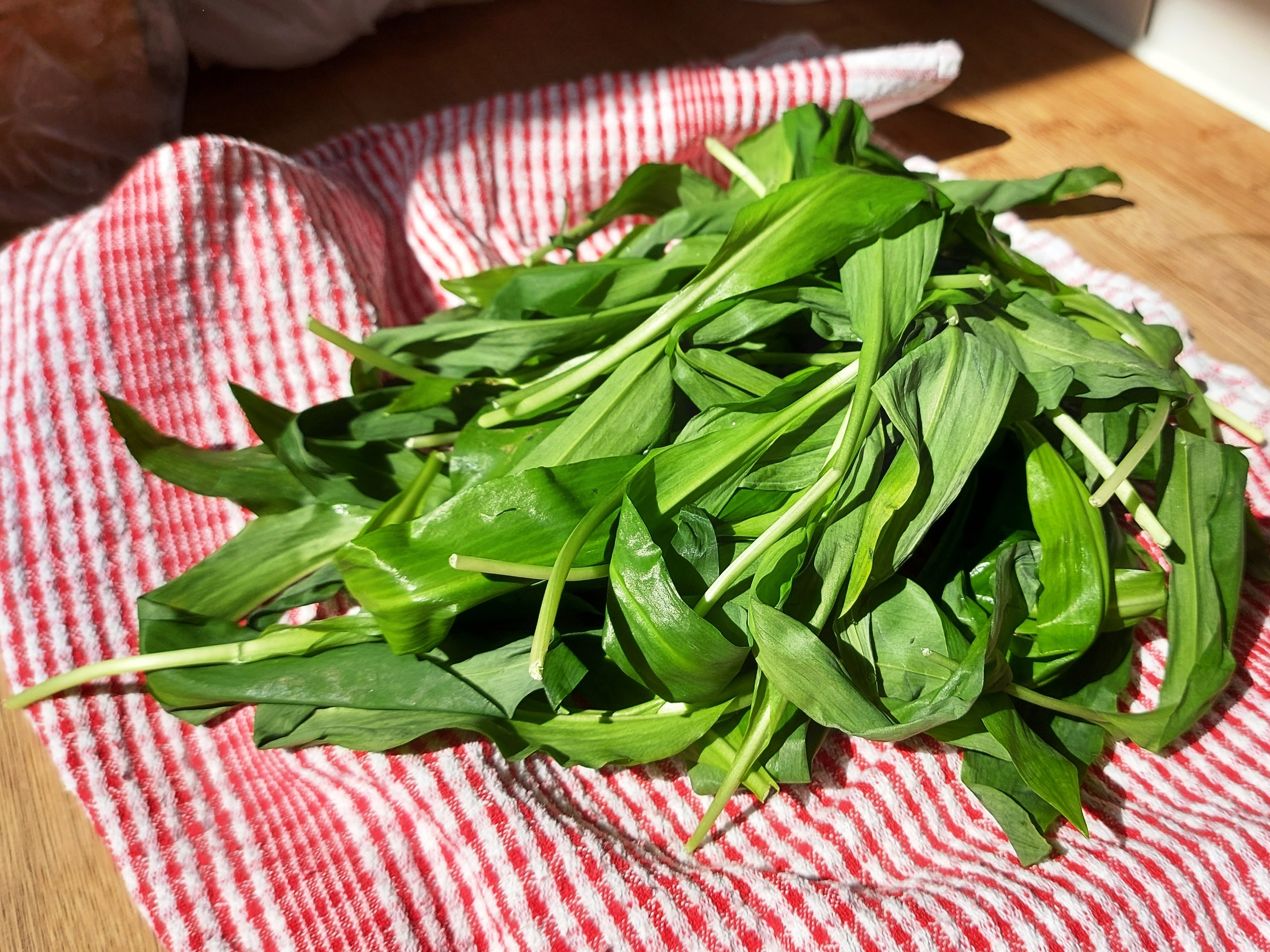
Fresh wild garlic - washed

Food for bears
Wild garlic is a wonder. Even its Latin name is great – Allium ursinum, bear garlic. Do bears like it? They’re smart omnivores, so it wouldn’t surprise me. We hunted them to extinction in Britain though, so it’s not something I’ll ever see here. The common name I grew up with for wild garlic is ramsons, which apparently derives from the old English hramsa, and may be related to the Greek krómmyon, meaning onion.

Anyway. We got a lot on that jaunt with Dom and family. I say a lot, but it was actually only two small nappy disposal bags, which were buried at the bottom of our backpack (unused), a legacy of the kids’ younger days.

If you have a lot of wild garlic, you may well need to process it. Years ago, when we still had an airing cupboard, I dried it, but found it lost its flavour. Fresh, it makes a good pesto, whizzed up with nuts, oil, grated parmigiana and seasoning. It’s also good for a simple pasta, just roughly chopped, softened in olive oil and combined, perhaps with a squish of lemon juice. You can also use it to make the Middle Eastern coriander condiment zhoug (thanks to my friend Alex, owner of Middle Easten food business Kabak for that one). Another way to process it was suggested by Dom: wild garlic butter. Just chop the garlic leaves fine, then combine it with softened butter, form into a roll, then freeze in greaseproof paper. You can then cut slices off to cook with, using it in lieu of normal garlic in recipes.
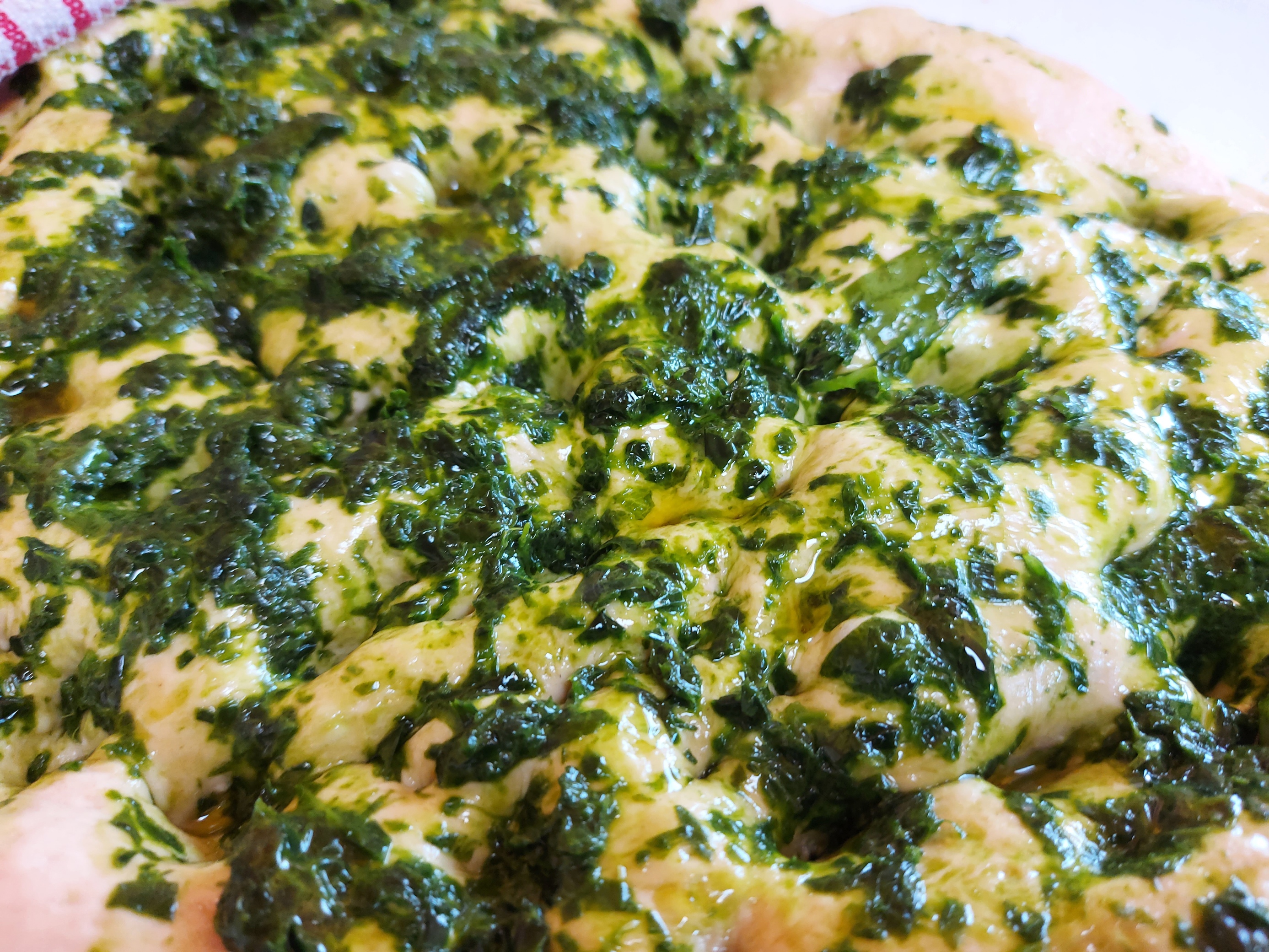
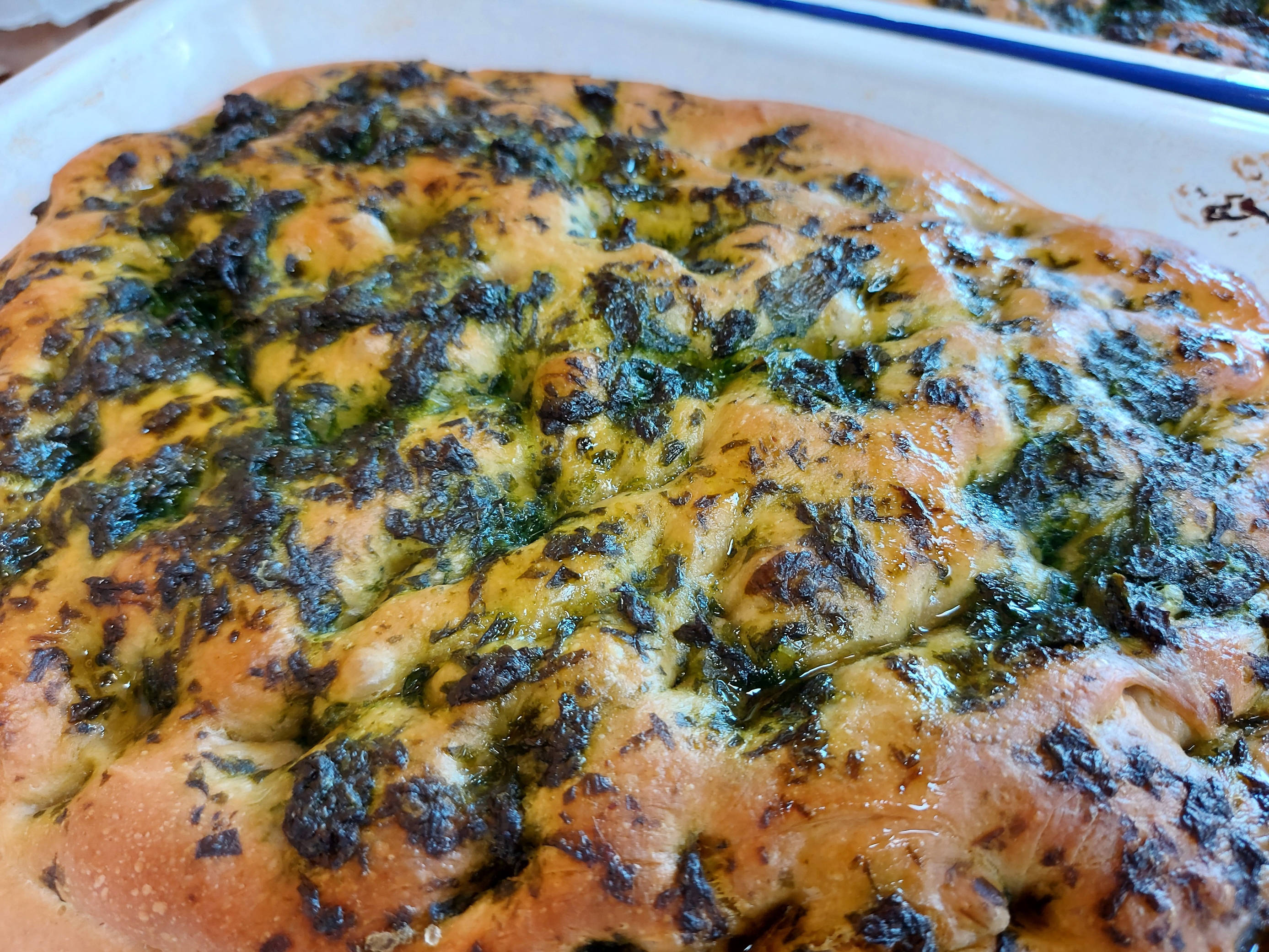
Focaccia variations
This year, I had another thought – wild garlic focaccia. As with every idea, it’s already out there on the internet, but I just used my basic focaccia recipe and added some wild garlic whizzed up in a food processor.

What we know as focaccia in Britain is more specifically Genoese focaccia, a white, somewhat soft tray baked bread containing a decent amount of olive oil. They bake it with salt, olives or herbs like rosemary. I’ve asked one Italian friend if they eat Allium ursinum over there, and he says yes, but not often. Which surprises me, as they have a strong foraging culture there. Even our local market in Rome would sell a misticanza2 of mixed foraged greens – foraged weeds – including dandelion leaves and whatnot. In the 1960 film Two Women / La ciociara, starring Sophia Loren as a shopkeeper who flees WW2 Rome to her native village in the mountains with her daughter, there’s a scene where the villagers are foraging the fields for any misticanza, any greens they can eat to keep starvation at bay.

Anyway, here’s the recipe. Use the basic recipe – with whatever editions you like – at other times of the year when wild garlic isn’t available.

Makes one large, 1kg, loaf

Ingredients
360g water, tepid
6g active dried yeast or 12g fresh yeast
585g strong white bread flour
9g fine sea salt
60g extra virgin olive oil

For the wild garlic paste. (I’m not going to be my usual precise self for this bit, as it’s flexible.)
About 80g wild garlic, a nice big handful
A few glugs of extra virgin olive oil
Good pinch of coarse sea salt
Add some chili flakes if you like some heat

Plus some more extra virgin olive oil

Method
1. Put the water in a mixing bowl (or indeed the bowl of a mixer, if you prefer) and add the yeast. Leave it to froth up.
2. Add the flour, salt and olive oil and bring to a dough.
3. Knead until smooth, by hand or in a mixer.
4. Leave 10 minutes or so and give it another quick knead.
5. Leave half an hour, then stretch into a rectangle and fold into thirds.
6. Leave the dough to prove until doubled in size.
7. Stretch the dough out and put in an oiled baking tray. I use a rectangular enamel one that is 25x35cm, 5cm deep.
8. Leave the dough to rest and prove a bit more, for about 15 minutes.
9. Make the wild garlic paste in a food processor – just squash the leaves in, with a few glugs of extra virgin olive oil and a good pinch coarse sea salt. Whizz it up to a coarse paste.
10. Smear the paste all over the dough, pushing in your fingertips to give the bread its distinctive cratered surface and disperse the garlic.
11. Cover and leave to prove one last time, until doubled in size.


12. Preheat your oven to 220C.
13. Give the bread another drizzle of olive oil then bake for around 20 minutes, until golden.
14. Remove from the oven and drizzle with a bit more olive oil, so the bread is nice and moist.
15. Cool in the tin for 10-20 minutes then remove. Eat warm or later on. All that oil means it stays soft well for a few days.
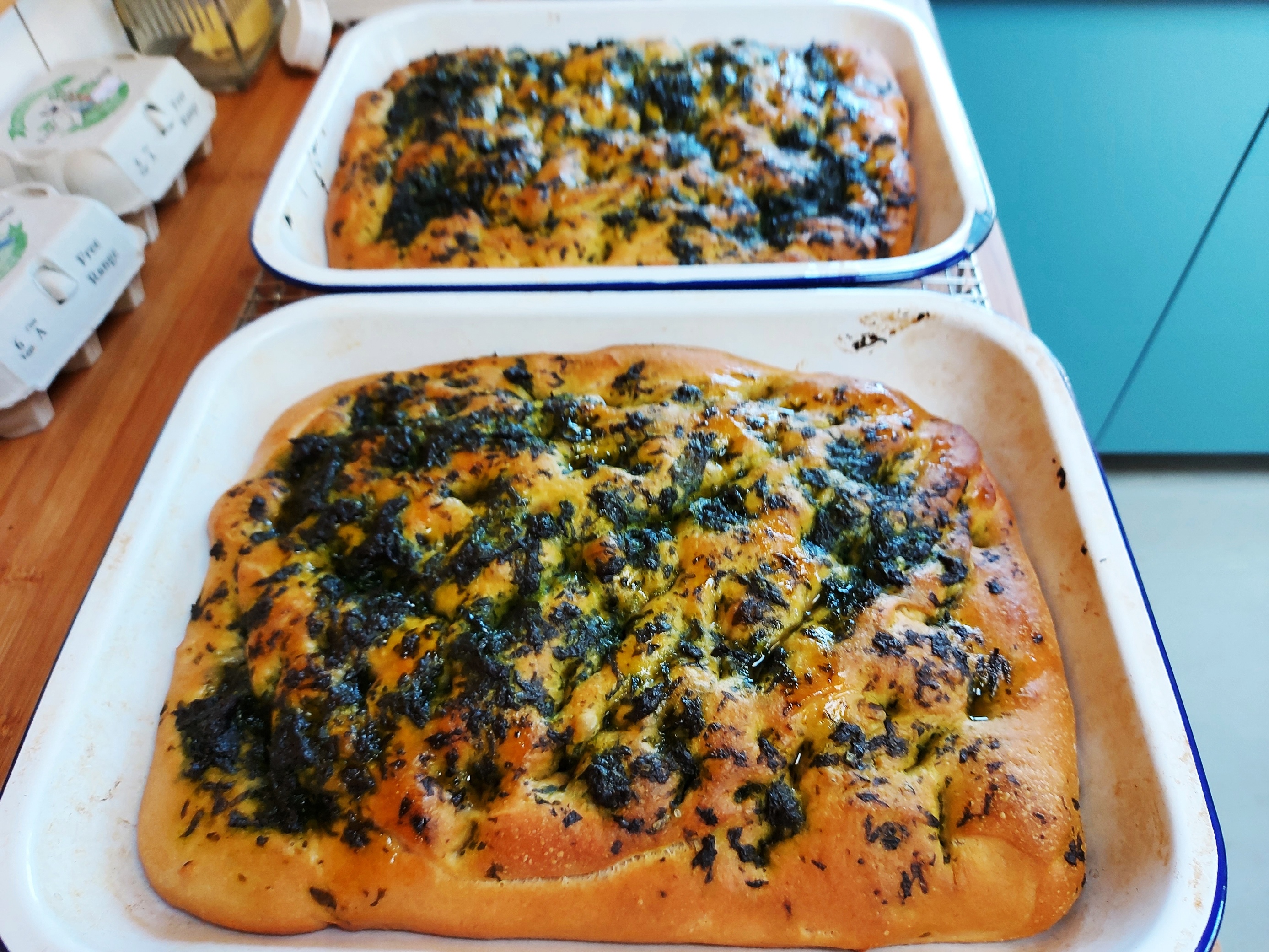
Like many parents, I struggle to get anything green into my kids’ diets. I’m somewhat baffled by the seemingly innate resistance to any brassicas for example. It’s purple sprouting broccoli season in England now, and that veg is such a delight – sweet, and you’d think child-friendly with its small, tender heads. But no. The kids did, however, love this bread. The big one (increasingly big this year) absolutely scovered3 the stuff.
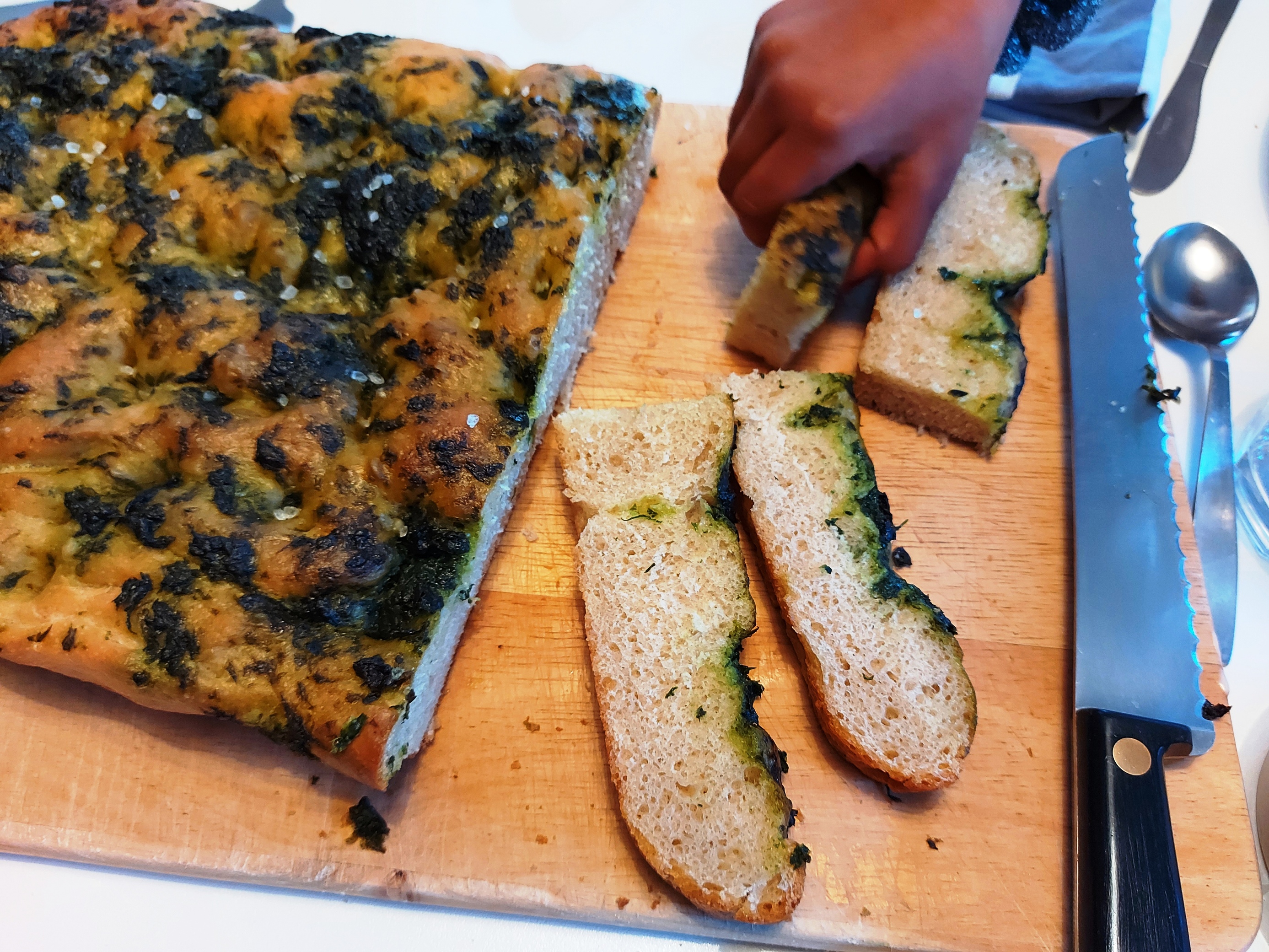
Wild garlic focaccia

1 Just look at the Wikipedia page for all the wonderful common names for this lily. I grew up calling it lords-and-ladies or cuckoo pint, but there are numerous other names.
2 In Oretta Zanini de Vita’s book The Food of Rome and Lazio, she lists “Arugula [rocket], wild chicory, rampion, salad burnet, wood sorrel, borage, wild endive, poppy greens and other bitter greens” for Misticanza Romana.
3 Our family portmanteau word that derives from “scoffed” and “hoovered”.
1 Comment

Filed under Baking, Recipes

Horse, grain, stone, bread

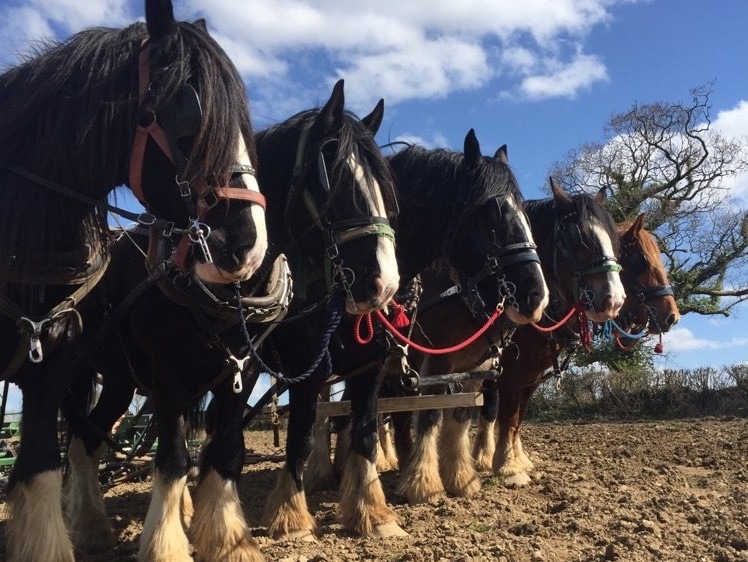
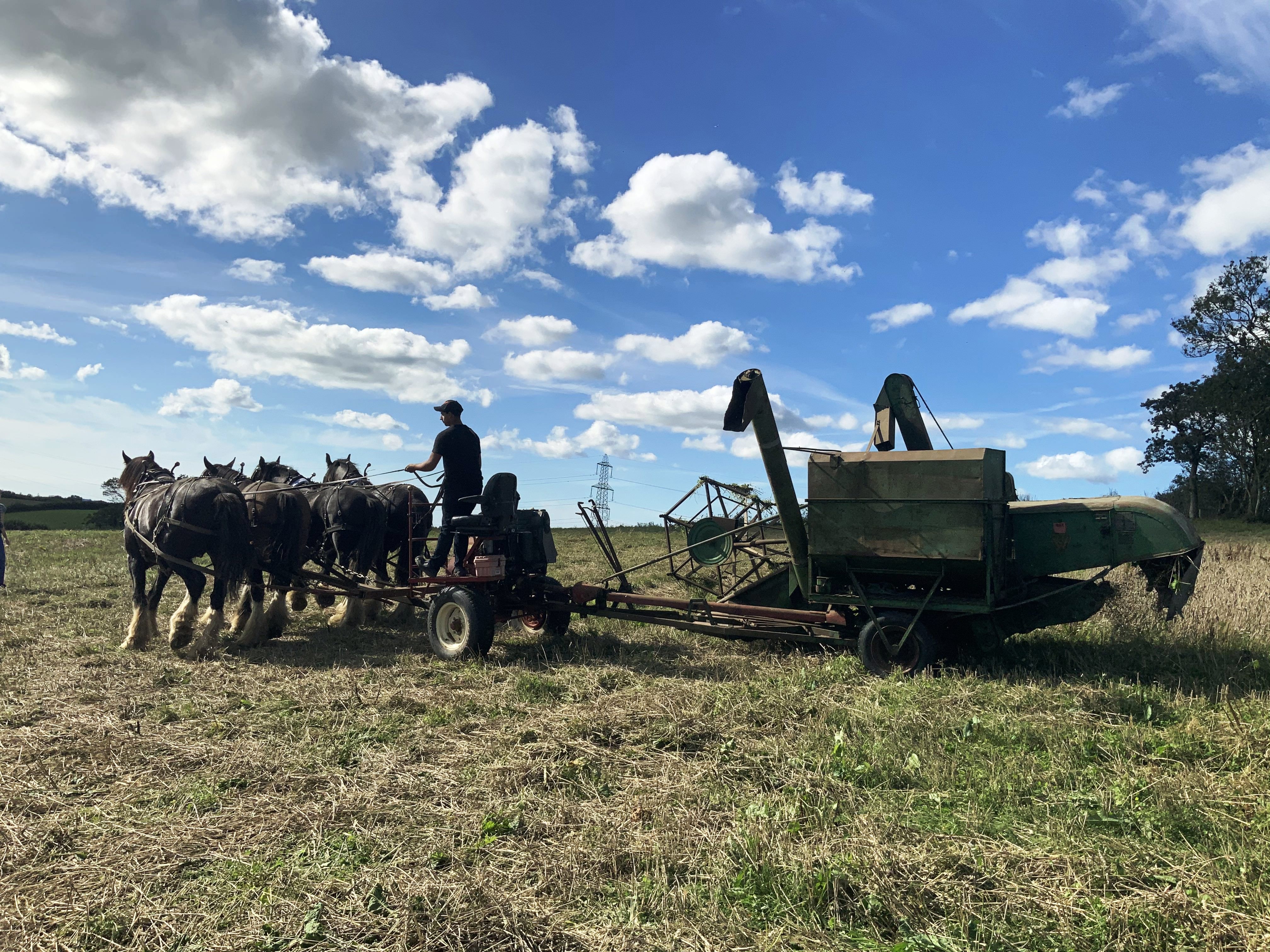
 The Waterers' Shire team at work

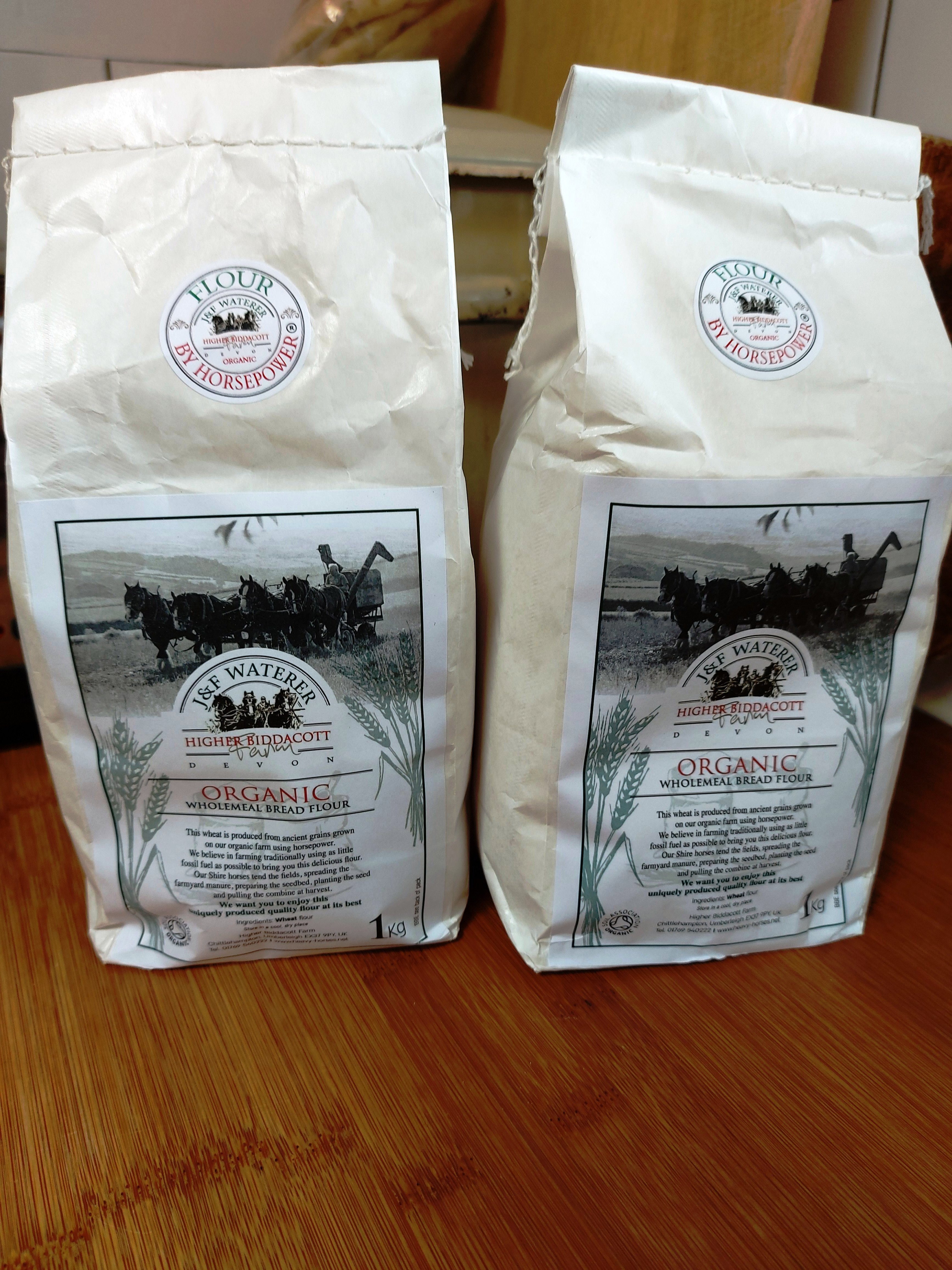
Obviously, I love bread, but what particularly excites me is making bread with a story. So when I got an email from British grains and pulses seller Hodmedod’s1 mentioning Flour by Horsepower – flour ground from grain grown with heavy horses – I was sold. Heavy horses are just awesome creatures. And I love to think of that food narrative: field, heavy horse, grain, millstone, flour, bread.

Anyone who knows me in person will at some point have been regaled with reminiscences of my experiences in New Zealand-Aotearoa. On my first visit, in 1990, I ended up living at Newton Livery, a small farm owned by Stephen McGrath in the stunning, sand-fly infested Buller Gorge. Stephen, who died in 2020, was something of a legend, a formidable figure with blacksmith’s shoulders and big beard. He influenced numerous young travellers like myself, introducing us to his idiosyncratic lifestyle – which hinged around his love of heavy (or draft) horses, specifically Clydesdales.

Heavy horsepower
The Clydesdale breed was favoured for export to New Zealand in the late 19th century and prevails there, though for those of us living in England, we’re more likely to encounter Shires. For example, before the plague, here in Lewes, East Sussex, local heritage brewery Harvey’s had a Shire-drawn dray delivering beer around town one day a week2. Both Clydes and Shire are absolutely magnificent breeds, which can weigh up to a metric tonne3 and have extraordinary energy, pulling power and charm. In some ways, I wish I’d been able to maintain more contact with them over the years. So buying the Flour by Horsepower was one way I could feel some contact, however vicariously. Specifically the Shires of Fiona and Jonathan Water, who grow the grain using the horses at their farm Higher Biddacott.

Not only was the flour made from grain grown on a farm worked with Shires, that farm is in north Devon, another place that’s been significant in my life. I had an aunt in Barnstaple, but more importantly I spent 20 years visiting my parents in the area, and Fran and I even got married in Pyworthy, near Holsworthy, a mere 25 miles (40km) as the crow flies from Higher Biddacott. I do wish I’d heard about it sooner, so I could have visited when life took me to that part of the world more frequently. As well as growing grain, owners Jonathan and Fiona Waterer have a B&B and run courses, where you can learn to drive heavy horses.

They’ve farmed at the 40 hectare (100 acre) Higher Biddacott since 1996. Fiona says, “We farm organically and are moving towards regenerative agriculture all with our horses.” Jonathan is a life-long heavy horseman, Fiona saying, “he has worked horses since the age of 10 on his father’s farm. He finished school, went to agricultural college and then ranched out in Alberta, Canada. He returned to Exmoor in 1982 to a small hill farm. In 1996 we moved to Higher Biddacott and on both farms he has used horses. They are his passion and he trains many horses for other people as well.”

The Waterer Shire horses

Flour with history and flavour
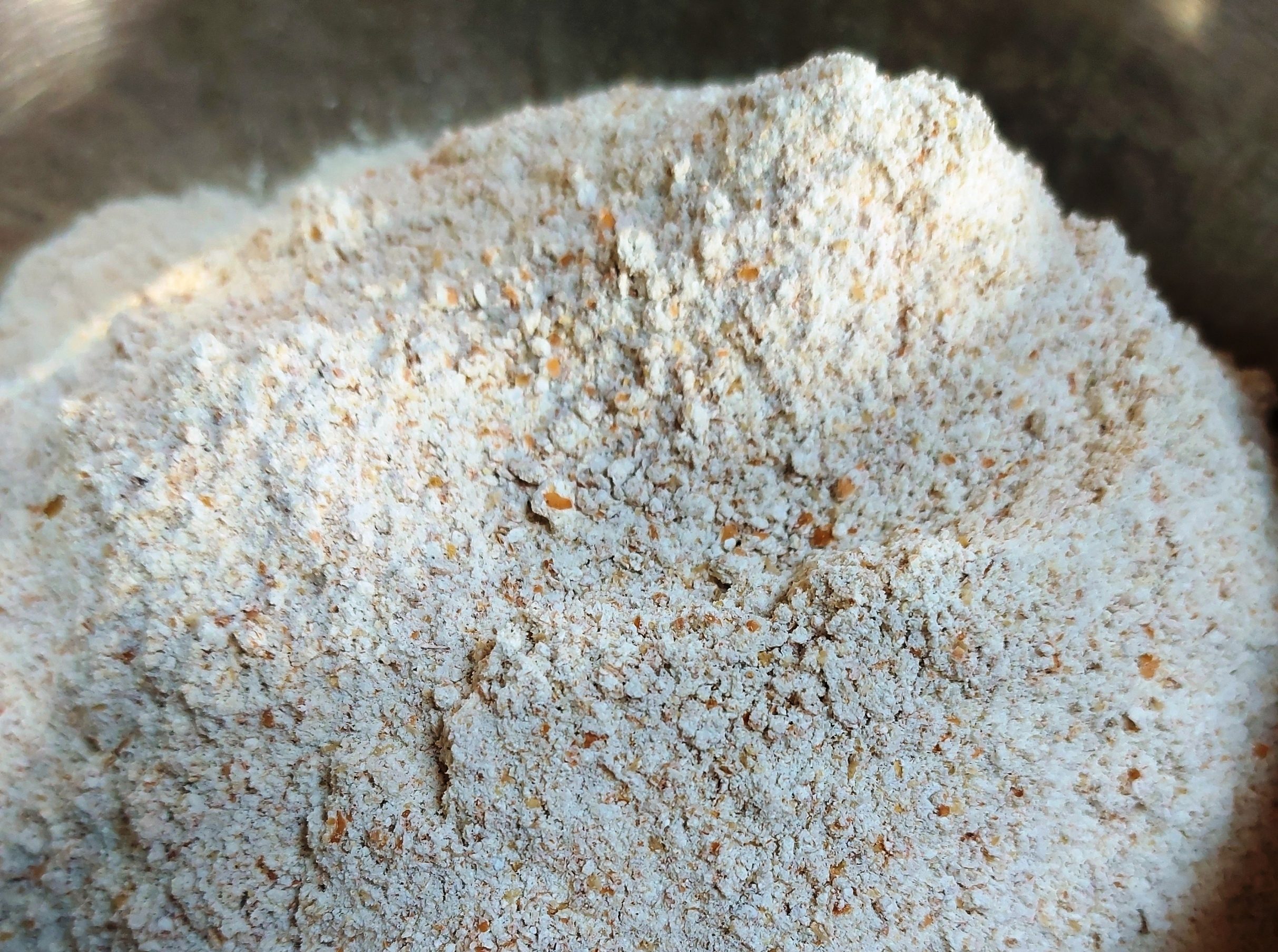
I’ve used a lot of different flour in my time, including heritage and local varieties (eg here and here). But with my connections to Devon and heavy horses, I’m really pleased to have discovered Flour by Horsepower, stoneground from the Waterers’ grain at Shipton Mill.

This year, the Waterers’ wholemeal flour is available in two types, made with Squareheads Master or French landrace wheat. We’re likely to see different varieties from them in future now they’ve established a relationship with Hodmedod’s. “We have just finished tilling our Spring wheat and oats,” says Fiona. “We also have some winter wheat in the ground. We have YQ [Yield/Quality4], Mulika and Wild Farm grain varieties of wheat.” All of which lend themselves to organic and regenerative practices.

For my first bake with Flour by Horsepower, I used the Squareheads Master. “We’re very excited about the flavour,” says Fiona. “I use it 100 per cent for a savoury pastry as the ancient grains are not as strong as modern wheats.” That is, they’re lower in protein that what we in Britain mostly use for bread-making these days. I will do some pastry at some point as I’ve got a great recipe from my other Buller Gorge mentor, Nadia Jowsey, but first I made bread.

Squareheads Master is a grain that was developed in the 1860s, from selective breeding of landrace varieties. As such, at the time it was revolutionary for its higher yields. From our modern point of view, however, after the 20th century’s intensification and heavy, frequently toxic industrialisation of agriculture, it is a heritage grain. And clearly one that lends itself well to being farmed with horses in the green fields of north Devon.

When I lived in Newton Livery,  I wasn’t there at the right time for ploughing, tilling and sowing, but did see the horse-drawn reaper-binder in action at harvest time. Until it broke. Stephen could fix anything, but couldn’t get it fixed it time in the weather window we had for harvesting his field of oats, so we did it by hand. Luckily it was a small field, as it was hard work – humans simply do not have even a fraction of the agricultural horsepower of actual horses and a lot of favours were called in to get enough manpower. I wish I’d taken some photos, but suspect I was a bit busy. If and when the plague passes, and we’re back in Devon, maybe one day I’ll see the Waterers bringing in their harvest by horse power. Seeing massive draft horses doing the job they were bred for is a real treat.

Sandwiches in the March sun
Anyway, we just had sandwiches for lunch using my bread made with 50% Flour by Horsepower Squareheads Master flour and 50% Stoates strong white bread, all stoneground, all quality. I used my usual basic bread recipe, leaving the preferment or sponge for several hours to help the flavours develop. I then did a few of my usual, toast-for-the-family tin loaves and one round loaf given a final prove in cane banneton. Cos cobs are cute.

The resulting bread is very good. It’s wholesome and tasty – real grains, milled with stone, result in flour that has a flavour you cannot find with industrially farmed and roller milled grain flours. The crust, with its extra caramelisation and Maillard reaction, is wonderfully nutty, so it’s no surprise Fiona was excited. Perfect for a sandwich lunch in the garden on a warm spring day. Eating the sandwich, I could almost see those Shires steadily working their way across the north Devon landscape.


Footnotes
1 Hodmedod’s are great. They sell all sorts of British grown pulses, grains and flours, including such surprises as British chickpeas and quinoa: did you know they could be grown here? At a time when Britain has isolated itself from the EU, our reliance on China for everything from electronics to tinned beans is questionable, and climate change means that industrialised monoculture agriculture becomes unreliable, the work of Hodmedod’s and its suppliers is essential, finding landrace and locally viable alternatives to internationally sourced foods that will add to British food security, and the sustainability of the jawdroppingly wasteful food production industry.
2 I loved seeing the Harvey’s dray, but it was a bit of a tourist attraction as the Shire team itself wasn’t especially local, but specially brought in. And yet, drays for urban delivery of beer make absolute sense – they use very little fuel (when they’re local), they don’t belch out fumes when stopping and starting, they can pull very efficiently up hills. I’d love to see more, but these days people get so angry about anything that impinges on their perceived rights as a motorist. When I worked for an art magazine in Sunderland in the mid-1990s, local brewery Vaux (which brewed from 1837 until it closed down in 1999; the brand was relaunched in 2019) did indeed still use a dray to supply nearby pubs. Makes me realise how old I am – half a century. I even have memories of being woken by a horse-drawn rag and bone cart in Leeds in the early 90s. Rag and bone men are long gone.
3 1000kg = 158 stone = 2200 lb = just shy of 1 imperial or long ton.
4 YQ, Yield/Quantity or Yield and Quantity, is the popular name for a recently developed crop, bred at Wakelyns Agroforestry by Professor Martin Wolfe and the Organic Research Centre. Hodmedod’s already sell YQ flour and grain and has an informative blurb. There’s also a good discussion of its significance here.

2 Comments

Filed under Baking, Discussion, Flour & grain