Category Archives: Misc

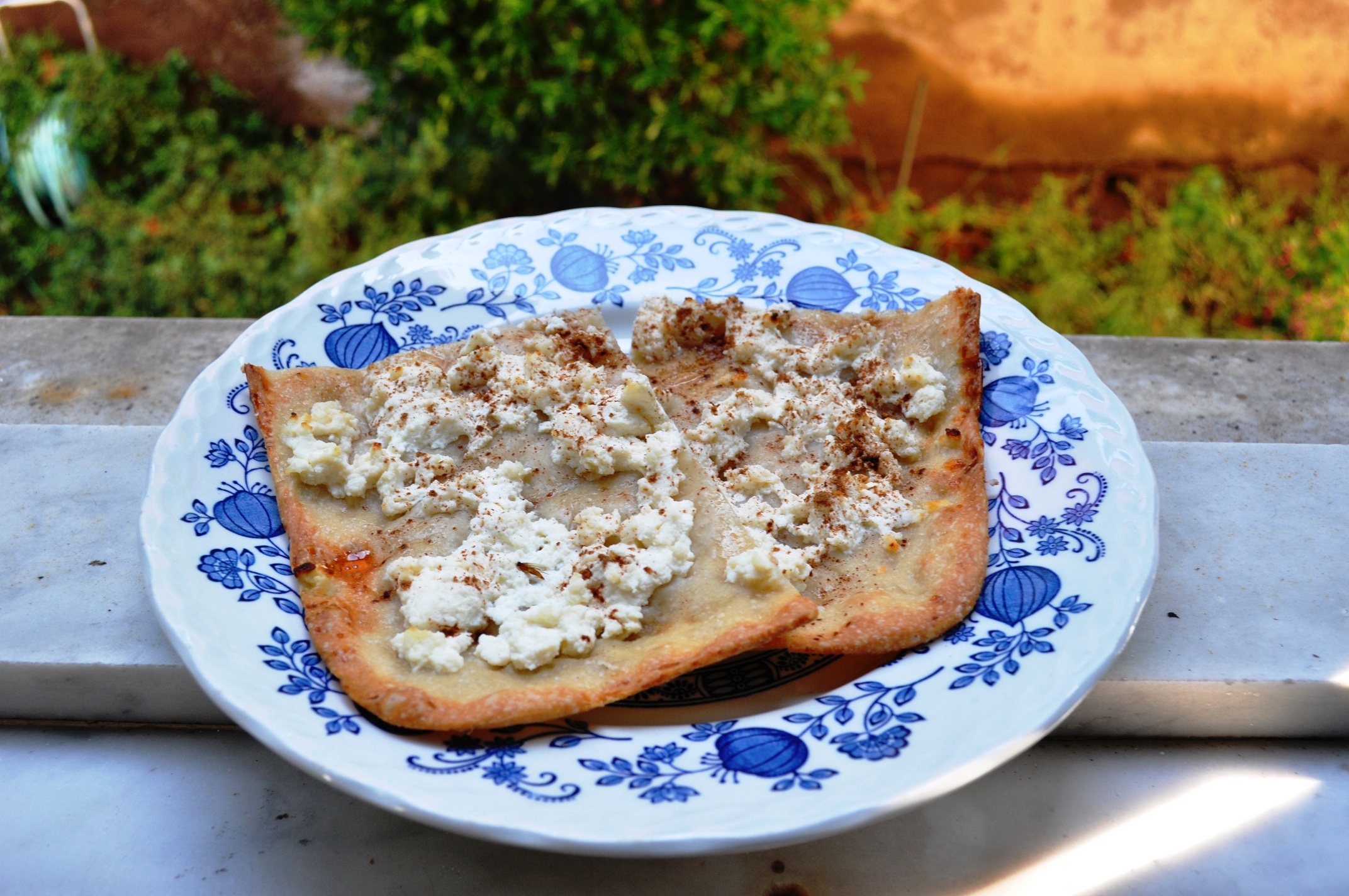
Ricotta and cinnamon pizza

Cinnamon and ricotta pizza

Ricotta. Generally, I don’t know what to do with this classic Italian “recooked” whey cheese. I’ve used it in cheesecakes before, and it is delicious eaten for breakfast with a drizzle of honey. But the sheer scale of its presence in Rome, where fresh stuff arrives by the tonne every day, indicates it’s used very widely indeed.

Shops like the likeable Antica Caciara in Trastevere have an entire window dedicated to baskets of the stuff. Farmers markets’ also tend to have several stalls selling bucketloads of the stuff. Since our farmers’ market was shifted out of Testaccio, and as it’s August and most of Rome’s markets are closed anyway, we’ve been frequenting our new Punta Vendita Aziendale (direct-from-farm shop) near Ponte Testaccio. (Actually, it’s three outlets in one venue. See Info, below). They have a lot too, and on a couple of occasions when we’ve been stocking up on other goodies, they’ve given us some. It’s all about the freshness with Roman ricotta, so I suppose they just don’t want it hanging about – and they want to encourage our loyalty.

So what else do people do with the stuff? Well, I’m slowly discovering.
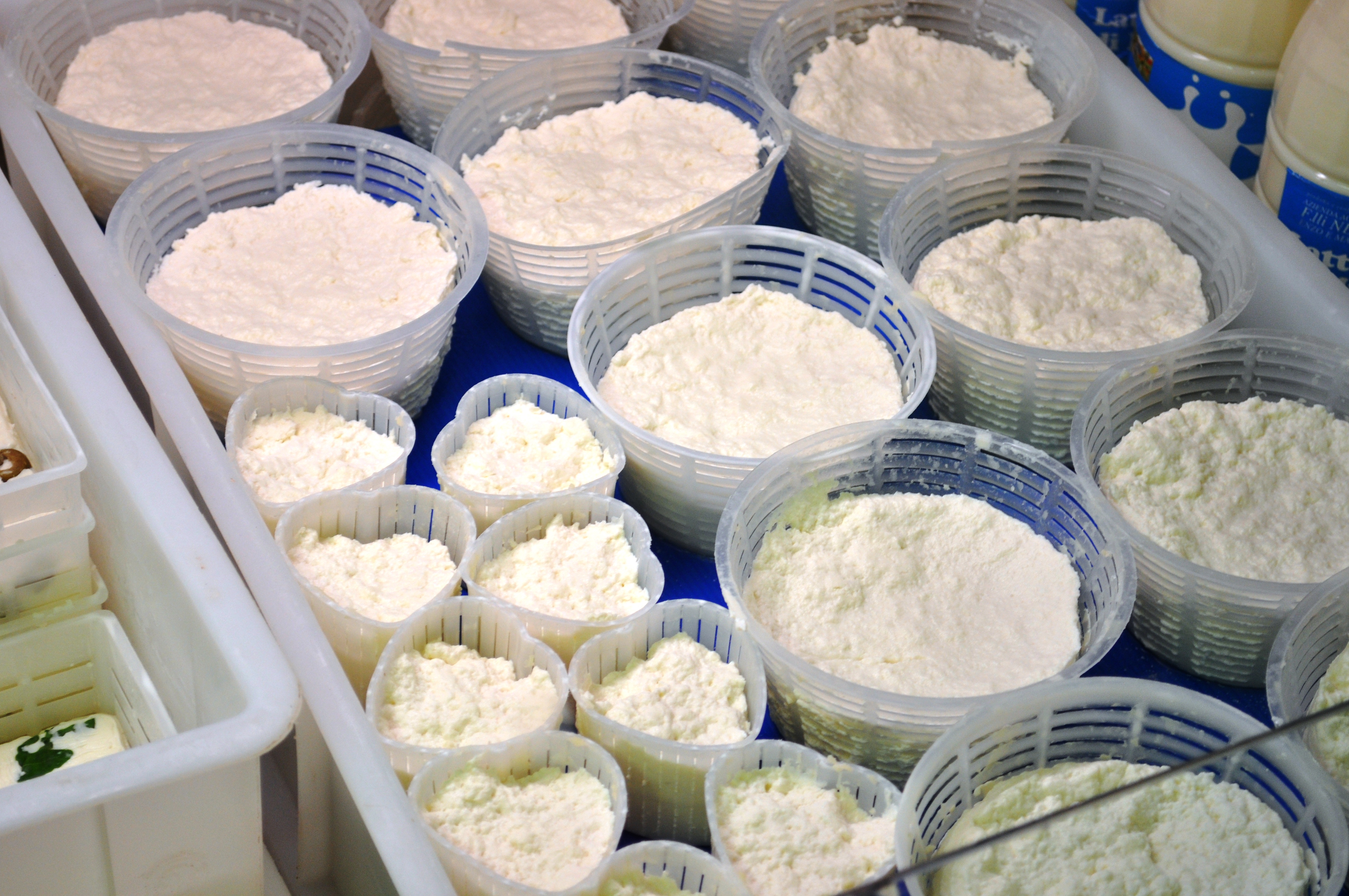
Fresh ricotta

It’s used in a few classic, simple pasta dishes, but to be honest, I don’t much like them; even with excellent quality ricotta such dishes seem oddly bitter to me. There’s a kind of cappuccino di ricotta according to ‘Cucina Romana’ by Sara Manuelli1, but I’ve never seen that. Manuelli also gives a recipe for ricotta condita that just involves the cheese, egg, sugar, cocoa and some booze. It sounds like a kind of trifle or tiramisu, but without any sponge. Other versions, such as in Oretta Zanini di Vita’s ‘The Food of Rome and Lazio’2 use finely ground coffee instead of cocoa.

When I got the cookbook ‘La cucina di Roma e del Lazio’3, one thing that caught my eye straight away was the budino di ricotta (ricotta pudding, or ricotta cake), which they make in a handsome ring form. So I gave it a go. It seemed simple – just ricotta, sugar, lemon zest, a little booze and some eggs, some separated, with the whites whisked to give the pudding some lightness.

Ingredients for ricotta and cinnamon pizza. Ricotta, sugar, cinnamon, dough. Basta.

It all seemed to go well. Until I turned it out of the tin. It deflated a bit. Okay, fine. But then I ate some. Really not my bag. I’m sorry to say I found it oddly nauseating, just unpleasantly whey-y, so I won’t be repeating the recipe here. I should have known really, as I’d made a baked ricotta pudding before, using ‘Cooking Apicius’ – recipes based on a collection from the late classical period4. That one involved lots of bay leaves and at first bite was amazing, but at second bite was exotically disgusting.

So I was back to square one with my slightly vexed question of what to do with ricotta.
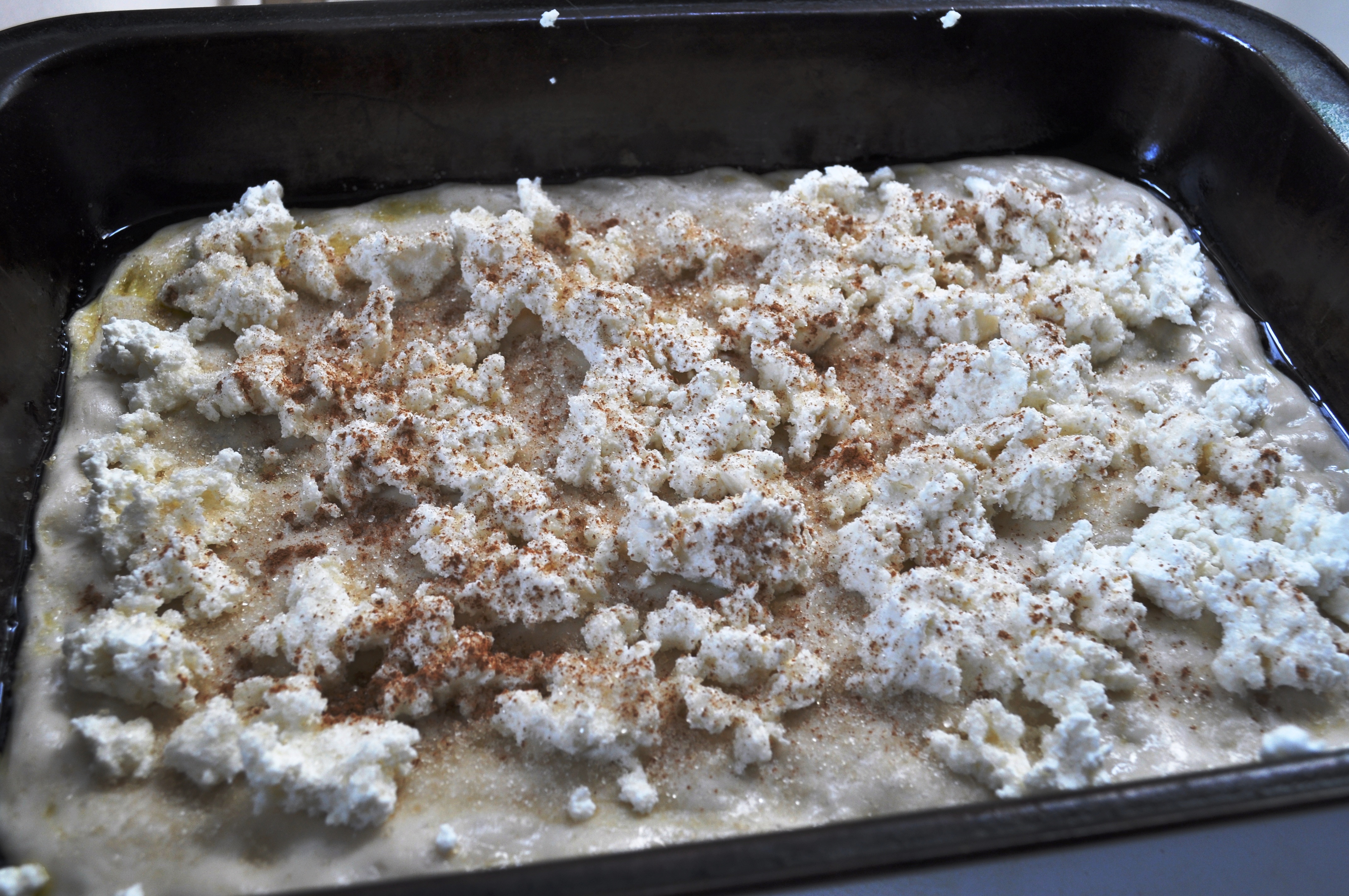
Ricotta and cinnamon pizza, before baking

And then Azienda Agricola Fratelli Nesta, one of the abovementioned three outlets, went and gave us another couple of etti5 of ricotta.

Luckily, ‘La Cucina di Roma e del Lazio’ has several other ricotta-based recipes. One of which is so absurdly simple I had to give it a try. It’s a sweet pizza, and would you know, I had some spare pizza dough.

According to authors Marie Teresa di Marco and Marie Cécile Ferré this is a “super-simple sweet that you can often find in the bakeries of Tuscia”. Tuscia is the historical region of the Etruscans (the Tusci in Latin), a large area of central and western Italy that now corresponds with most of Tuscany, northern Lazio and parts of Umbria. The recipe in is specifically called “Pizza ricotta e cannella di Tarquinia”. Tarquinia is an ancient Etruscan town near Viterbo, north of Rome.

I can’t find any mention of a ricotta and cinnamon pizza from Tarquinia or Tuscia,  or anywhere for that matter, online, but then, Italy hasn’t poured all of its vast and varied (food) culture onto the internet. So I’ll just give the two Maries the benefit of the doubt.

Anyway, I’m not going to mess about trying to put it in grams or whatever as it really is simple and flexible. It’s all about the “qb”, the quanta basta, the “how much is enough”. That is, the right amount according to your intuition and inclination.

You just need to make some basic white bread or pizza dough; I won’t give a recipe here, as there are numerous recipes in other sources. Just find one that suits you. I’d recommend one with a nice long fermentation.
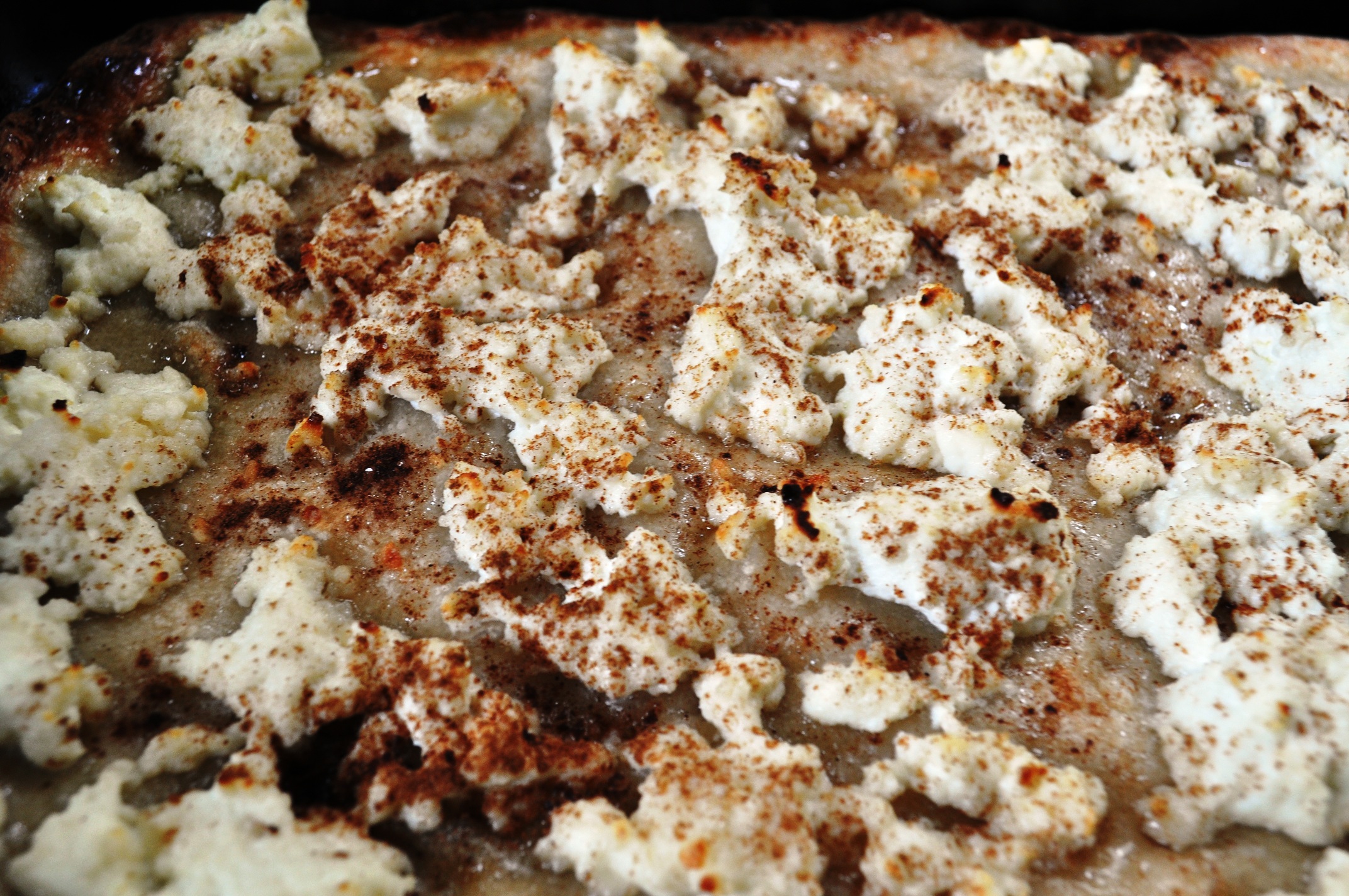
Ricotta and cinnamon pizza

The ricotta and cinnamon pizza recipe isn’t even a recipe per se, it just says:

Bread dough
Ricotta
Sugar and cinnamon
Extra virgin olive oil

Then mentions the bakeries of Tuscia, where “the bread dough often comes in a thin form, covered with ricotta, sprinkled with sugar and cinnamon, then drizzled with extra virgin olive oil. You bake it in a hot oven for about 20 minutes.”

And you know what? It’s delicious. I especially like the way the oily, sugary mix caramellises on the crust. Sure, it’s an example of those Medieval flavour mixes of sweet, spice and savoury that us Brits don’t use so much these days and, sure, perhaps it’s slightly confusing quite when you might want to eat it. Is it a main course, is it a dessert, is it for afternoon tea, or even a breakfast snack? But frankly, it’s so simple and satisfying, you can eat it whenever you want. I scoffed most of mine at 5.15pm as the hangry hour was approaching.

Info
Punta Vendita Aziendale (direct-from-farm shop), Via Bernadino Passeri 8, 00154 Rome.
Open Tues, Wed, Fri and Sat 8.00-19.00,  Sun 8.00-14.00

Footnotes and stuff
1 ‘Cucina Romana’ by Sara Manuelli appears to be out of print. The copy I’m referring to was published in 2005 by Conran Octopus, ISBN 1 84091 407 6.
2 ‘The Food of Rome and Lazio’ by Oretta Zanini di Vita also appears to be out of print. The book I’m referring to is translatedby Maureen B Fant, and is listed on her website. First published 1993 by Alphabyte di Maureen Brown SAS, ISBN 88 86128 02 9. I’m not sure, but it may have been reprinted in 2003 by the University of California Press as ‘Popes, Peasants, and Shepherds: Recipes and Lore from Rome and Lazio’.
3 ‘La cucina di Roma e del Lazio’ (“The cooking/cuisine of Rome and Lazio”) by Marie Teresa di Marco and Marie Cécile Ferré is, so far, only available in Italian. Published 2012 by Guido Tommasi Editore-Datanova, ISBN 978 88 96621 844.
4 ‘Cooking Apicius: Roman Recipes for Today’ by Sally Grainger. More information here from the publisher, Prospect Books, along with a PDF download with ” the preliminary matter, the introduction, the list of recipes and the opening historical discussion of Cooking Apicius”.
5 An etto (plural: etti), or ettogrammo is a commonly used measure in Italy, especially for buying market produce. It’s a hectogram/hectogramme – that is 100g, 0.1kg, or about 3 and a half ounces.
Leave a comment

Filed under Discussion, Misc, Other food, Pizza, Recipes

Dinner at Plistia restaurant, Pescasseroli, Abruzzo

This post does not feature beer. But it does feature some bread, as well as as soup containing grains. And a little cake. Some of which is photographed with my rubbish phone’s rubbish camera.

I know, I know, quality blogging is all about quality photography, especially when food is involved, but generally we’re not lugging the DSLR around with us when we eat and drink. I really need to get a decent phone with a decent camera, or even a new compact camera.

In my defence, I’d say I was more of a writer than a photographer, so hopefully I can describe these dishes through the medium of the English language, to compensate for the blurry pics.

So, the weekend of Saturday 29 June 2013, we headed out of Rome to get some mountain air in Abruzzo. We stayed in the town of Pescasseroli, at the heart of Abruzzo National Park. I’ve written about our hikes here; at the end of our second, long hike, we had a restaurant booked for Fran’s birthday dinner. This was Plistia, a restaurant and albergo located on the main road through the small town.

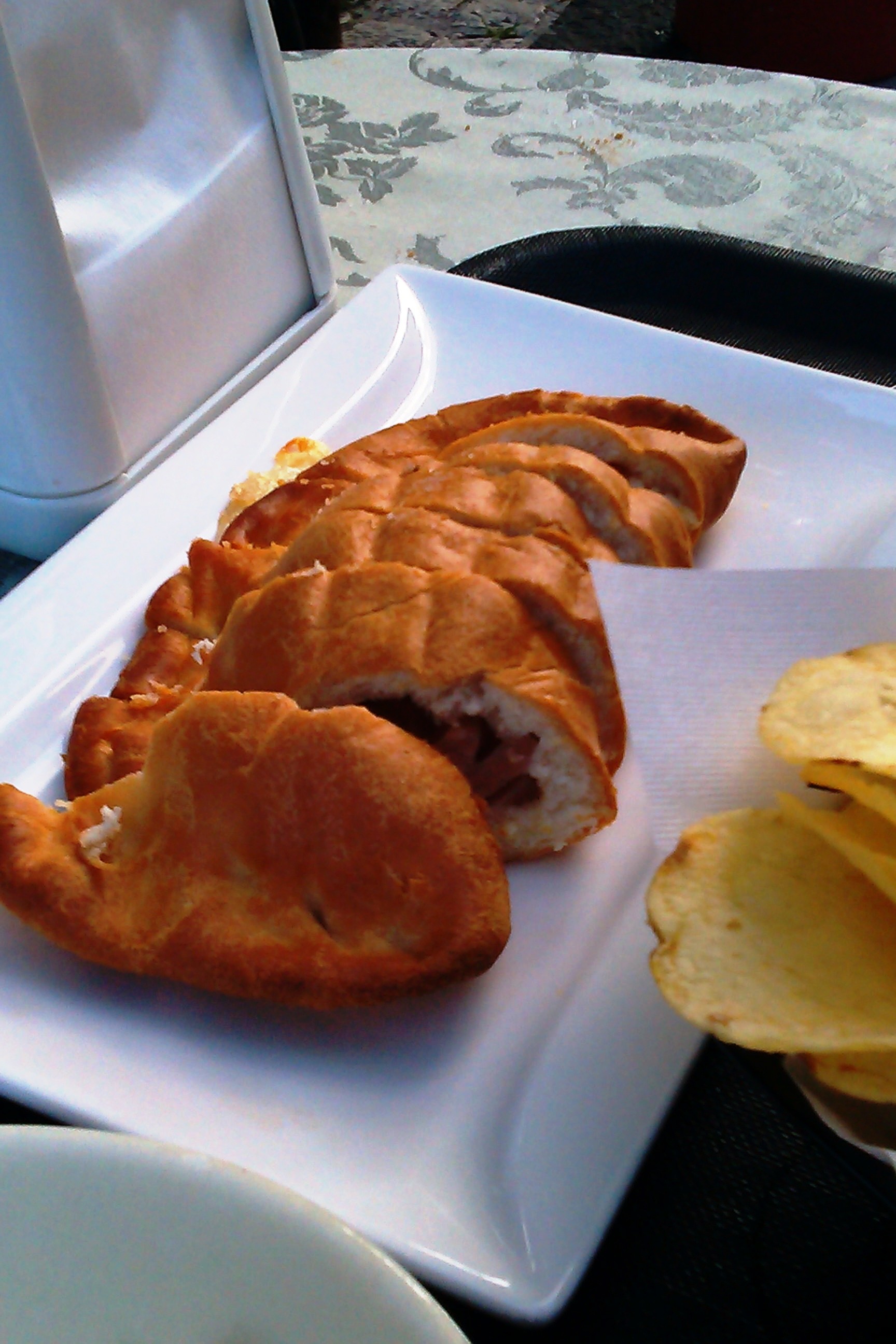
A kind of pasty - ok, a calzone - in Pescasseroli, Abruzzo

First, however, we had an aperitivo in a bar on the nearby piazza. The snacks included this Abruzzo “pasty” (probably actually a type of calzone, but they’re all related right?), and some sparkling Pecorino.

Many people don’t realise it, but Pecorino isn’t just the name of sheep’s milk cheese, it’s also a very good white wine from Abruzzo and adjoining regions, or more specifically a grape variety. Since we moved to Italy and started learning more about the vast number of Italian wines that don’t make an impression in the export market, it’s become our go-to white wine. Although Pecorinos (Pecorini?) vary, they’re generally slightly foral wines with some body – and as such a very nice versatile alternative to something like a Sauvignon Blanc or Pinot Grigio. When we moved on to Plistia, the host, Cicitto, settled us in and filled our glasses with more Pecorino.

No menus were offered, but we were absotuly happy with his. He just said, “We’re going to feed you, lots of food, take it slowly”. Considering you enter the restaurant via a dogleg hallway with a view straight into the open kitchen, they’re clearly confident about their food. Fran had researched the place more than me, but I was also reassured by this confidence, and years of Slow Food certificates on the wall.

On our honeymoon, in Croatia and Italy, Fran and I had agreed that for a couple of taster menus we had arranged, we would eat everything, despite our personal preferences (hers: red meat; mine: very little red meat). When Cicitto went to get the first dish, Fran and I shook on “Croatia rules”. Of course, this being inland Italy, where the food is hearty and the red meat ready and bleeding, that was always going to be more in her favour, but hey – it was her birthday!

The first course was a cheese plate. Cicitto said four of the seven cheeses were world champions. I don’t know anything about cheese world championships (it doesn’t really get the TV coverage of the World Cup, say), but they were delicious: five sheeps’ milk and one goats’ milk, of varying characteristics: young and sweet, mature and crunchy. The two harder, more mature ones we were instructed to eat with a strawberry sauce with balsamic, and a very nice combination it was too.

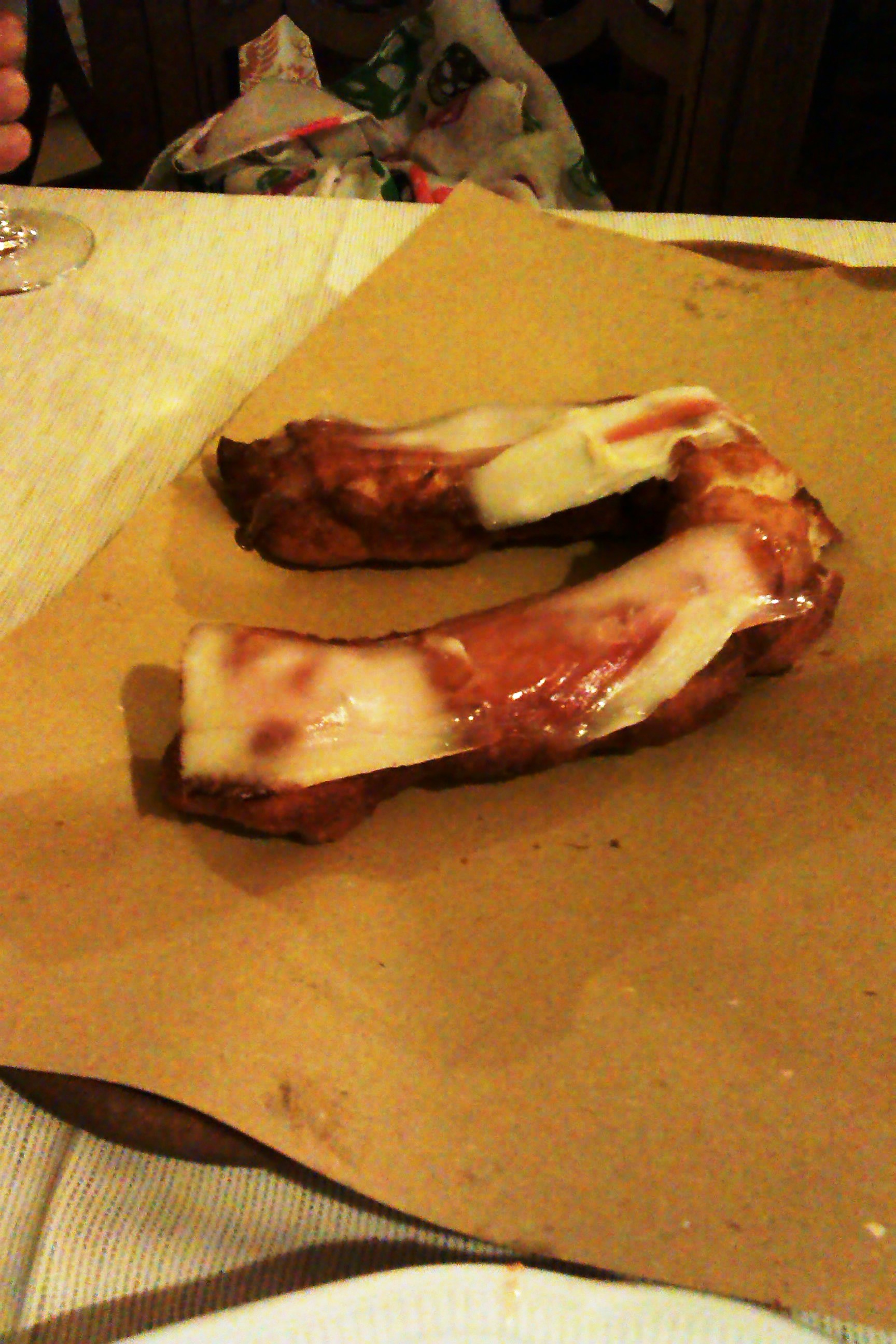
lardo bread

Next up we had something that was apparently an invention of the chef, Laura, Cicitto’s wife, rather than a traditional Abruzzo item with a name… I think. I could be wrong. Anyway, it was basically like a savoury doughnut, swathed in lardo. People assume lardo is just Italian for lard, but it’s a false friend. Lard is actually struzzo. Lardo is in fact a cured meat, like prosciutto crudo but with an emphasis on the fat. Racheleats discusses of the differences between several types of salumipancetta, guanciale and lardo – and has a good photo to illustrate it:

pancetta, guanciale, lardo from Racheleats

Again, despite the crapness of my photo it was delicious. The bread, made with a lievito madre (natural leaven), was white and soft inside, and the crust was crunchy and fatty, from the cooking oil and from the flavoursome melting lardo. It’s exactly the sort of thing I’d never naturally be inclined to try, but loved when I did.

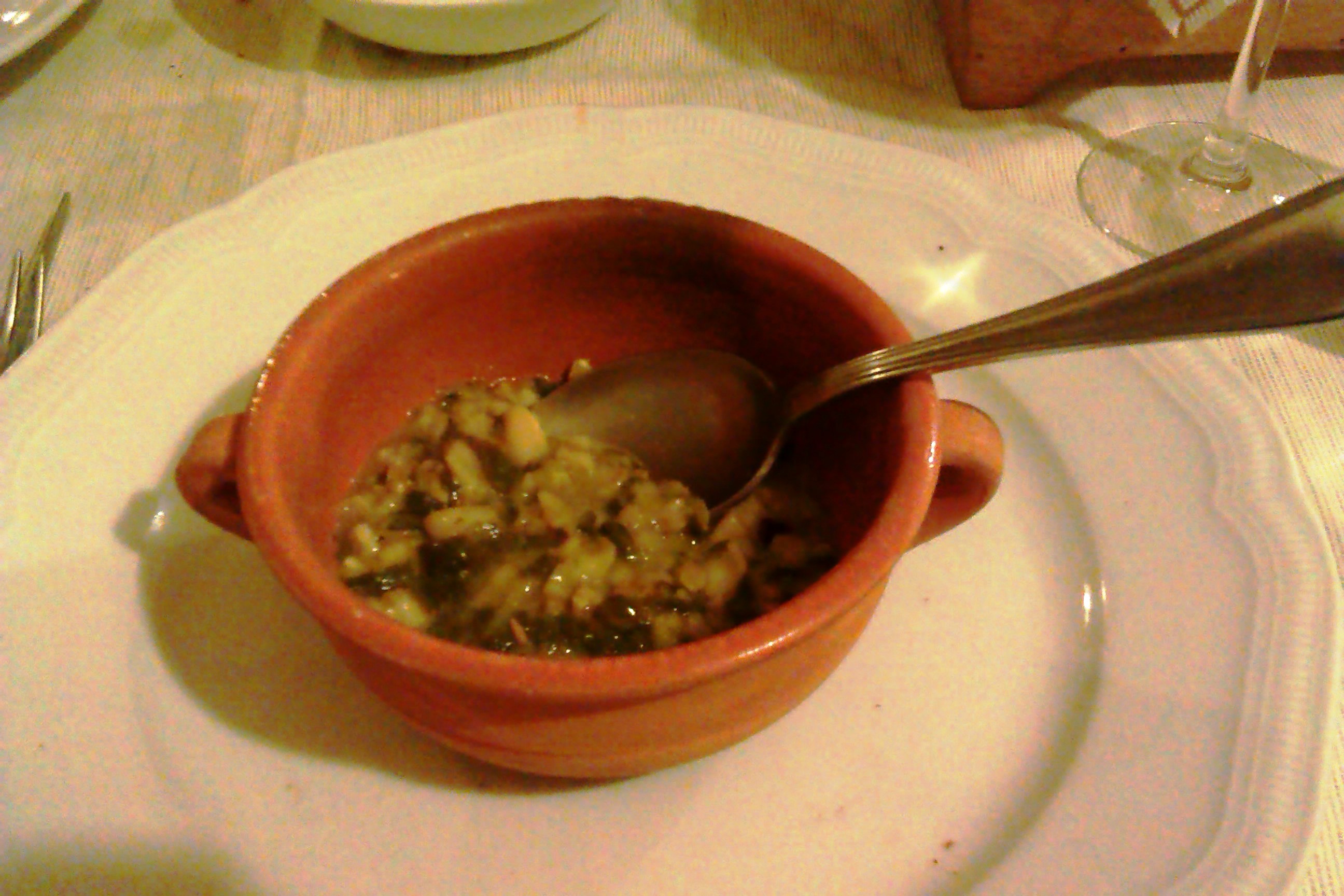
Next up was a soup. This was exactly the sort of thing I would naturally want to eat: a thoroughly rustic minestra. This one was made with grains, beans and greens. The grains were farro decorticato, or more specifically they were husked emmer. The beans were cannellini, or similar. The greens were an Abruzzo spinach. It was one of those soups that had such depth of flavour you wonder how it was achieved with such simple ingredients. It wasn’t even made with a meat stock, apparently. Fab. As much as I enjoyed the whole meal, the soup alone would have made me happy.

Soup at Plistia, Pescasseroli

After the soup we had not one but two pasta primi. The first was caramelle, that is filled pasta shapes that resemble wrapped hard sweets, or like ravioli that have had their ends twisted. The filling here was faraona – guinea fowl – and they had a buttery sauce with juniper berries. The latter are an important part of Abruzzo cuisine it seems.

Caramelle at Plistia, Pescasseroli

The second pasta was made with short, flat noodle pieces (possibly maltagliata – “badly cut”) that had parsley and pecorino cheese in the dough. It was served with a sauce with a little guanciale, saffron and some thin so-called wild asparagus. This was one of the meal’s weaker courses as it was a little salty and the asparagus was a bit woody. I’m surprised they had it, as over in Lazio we’re way past asparagus season. Sure there’s a different climate in the mountains of Abruzzo, but asparagus is a spring vegetable, and it was 30 June.

After all this, we were pieno come le uova (“full like eggs”), but meataholic Fran could hardly resist the offer of a steak. I don’t really eat steak, so we had one between us and she had the lion’s share. It was tender and bloody, and came in a deglazing sauce of red wine with black peppercorns and more juniper.

We were officially full by this point, but it seemed almost rude to deflect the offer of a desert. We had one plate, with a meringue and a kind of light custard, a ricotto cake and a chocolate form filled with more of the custard. These provided a sugary hit, but didn’t really compare with the flavoursome savoury courses.

Overall though, a suberb meal, and one of the best I’ve had in Italy. Furthermore, it cost about €40 a head – a price you could easily pay in Rome for just two mediocre courses and a few glasses of wine. Most certainly a meal with buon rapporto qualità-prezzo. So if you find yourself in Abruzzo, perhaps doing some hiking in the beautiful mountains, we heartily recommend a visit to Cicitto and Laura at Plistia’s restaurant.

Infodump:
Plistia, Via Principe di Napoli 28, 67032 Pescasseroli, Abruzzo
albergoristoranteplistia.it / info@albergoristoranteplistia.it / +39 (0) 863 910 732

3 Comments

Filed under Misc, Other food, Restaurants etc

Flapjack action photos

Not really. A certain amount of inaction actually, but here are the flapjacks I blogged about before, being eaten in the mountains around Pescasseroli, in Abruzzo National Park.

Flapjack break, near the ruins of Castel Mancino, above Pescasseroli

Flapjack break, near the ruins of Castel Mancino, above Pescasseroli

Flapjack and wild thyme, etc

Flapjack with wild thyme and other flowers

Flapjack at Rifugio di Lorio

Flapjack at Rifugio di Lorio (1830m), Rocca Ridge, west of Pescasseroli, Abruzzo

If you’re interested in hiking in Abruzzo and the Apennines, I’ve done another post here, on my other, not-specifically-foodie-blog.

2 Comments

Filed under Discussion, Misc, Other food