Category Archives: Ale, beer

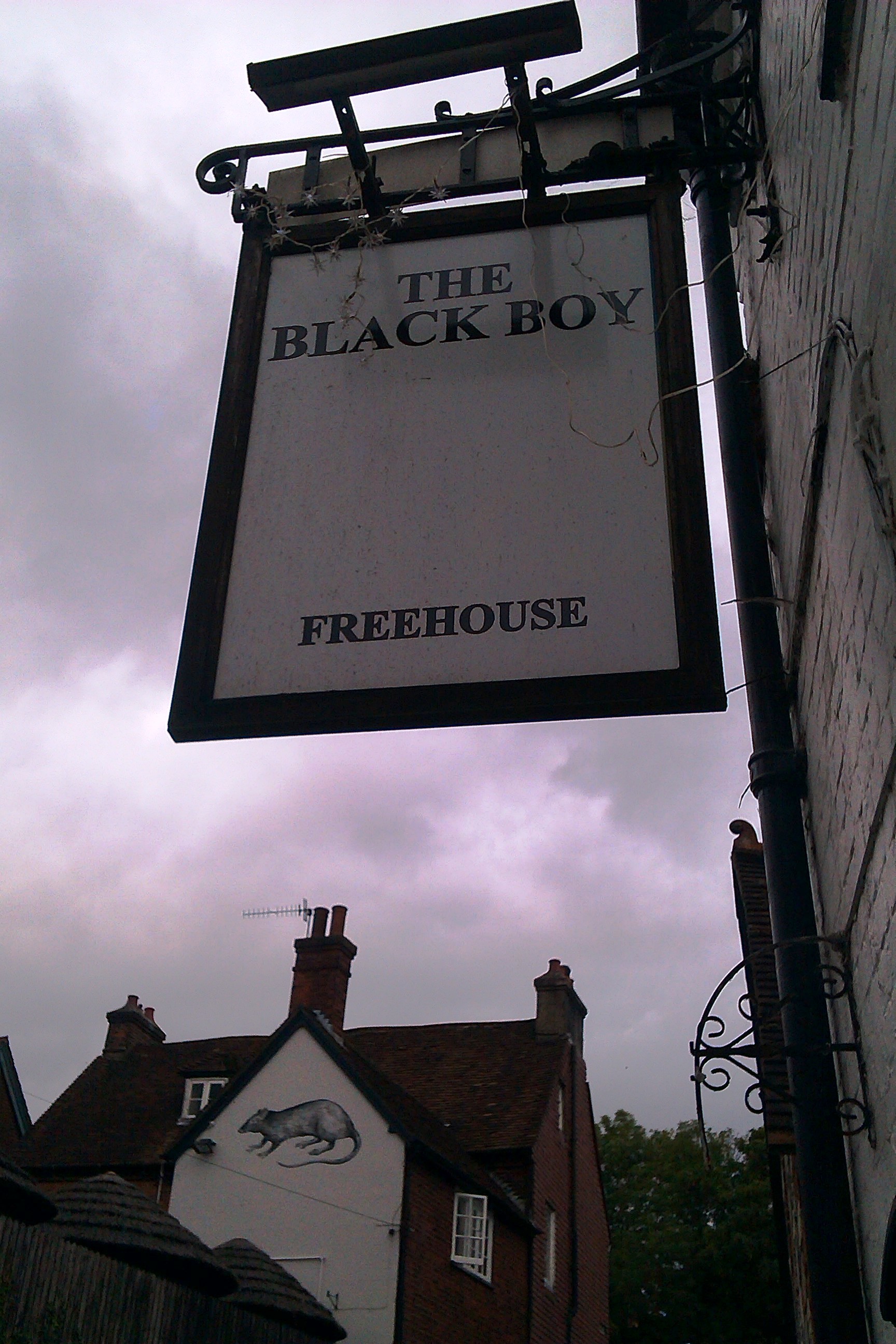
Ruddy Darter at The Black Boy, Winchester

Ruddy Darter at The Black Boy, Winchester

My hometown is Winchester, in Hampshire, an hour southwest of London out of Waterloo railway station. Although small, it’s technically a city, the ancient capital of England, boasting a cathedral – with the longest nave of any Gothic cathedral in Europe, apparently. My mother says she often overhears tour guides saying the high street is the oldest in Europe too, but I’m not sure how that’d be qualified. (When it was a Roman city, the main drag was in the same position, if that’s any help.) It’s got an Iron Age hillfort, King Arthur’s Round Table (honest), some bits of medieval city wall, and even a few city gates, despite the Victorians’ best efforts to destroy the historical infrastructure.

It’s also got a lot of pubs, though many of them are pretty mediocre. Among the not-mediocre Winchester pubs is my old local, The Black Boy. (My old old local, The Mash Tun, died the death and now seems to be a tapas bar.)

I’ve been going to The Black Boy for, well, probably decades. It’s a great little pub, in a low-ceilinged old building, replete with plenty of novelty clutter (taxidermied beasts, eviscerated books), fireplaces (that are actually used in the winter), and plenty of nooks and crannies. More importantly, however, there’s also a decent selection of real beers. Not only that, they have a policy to stock local real beers, so expect stuff from breweries and Hampshire (mostly) and other parts of ye olde Kingdom of Wessex, like adjacent Wiltshire. Oh, and it’s friendly too – not something you always experience in British boozers.

The Black Boy, Winchester

The Black Boy always seems to carry Flowerpots Bitter from The Flowerpots Brewery in Cheriton, a few miles away from Winchester. I often choose their 3.8% bitter (so mild-mannered after all the strong Italian beers I’ve been drinking lately!), but for this visit to The Black Boy I sampled some of the other ales they had on and chose Ruddy Darter.

Although it’s classified as an English bitter by Beer Advocate and a Premium Bitter/ESB by Ratebeer, more specifically I’d call Ruddy Darter an amber ale, with its deep coppery-red colour. Andwell, the Hampshire brewery that makes Ruddy Darter, refer to it as a Ruby Ale, in a Premium Ale style. (Andwell, by the way, was founded in 2008; Ruddy Darter is their most recent beer.)

However you define it, Ruddy Darter is delicious. It’s got a fruity smell, which continues into the taste, which is also warmly malty, with a good sweet caramel flavour and mellow hoppiness. My pint was hand-pumped, with low carbonation, though I suspect the bottled version would be bubblier. (Something I experimented on a few days later with some beers from Holsworthy Ales, in Devon. Will write that up shortly.). Oh, and it’s named after a dragonfly, which is pretty cool. All in all, a very pleasant quick visit to an old haunt.

[Usual apology for quality of photos. One of my reasons for visiting Winchester was to get a new phone with a good camera, but I couldn’t quite bring myself to sign up for another 24 month contract or whatever.]

Leave a comment

Filed under Ale, beer, Bars, pubs etc

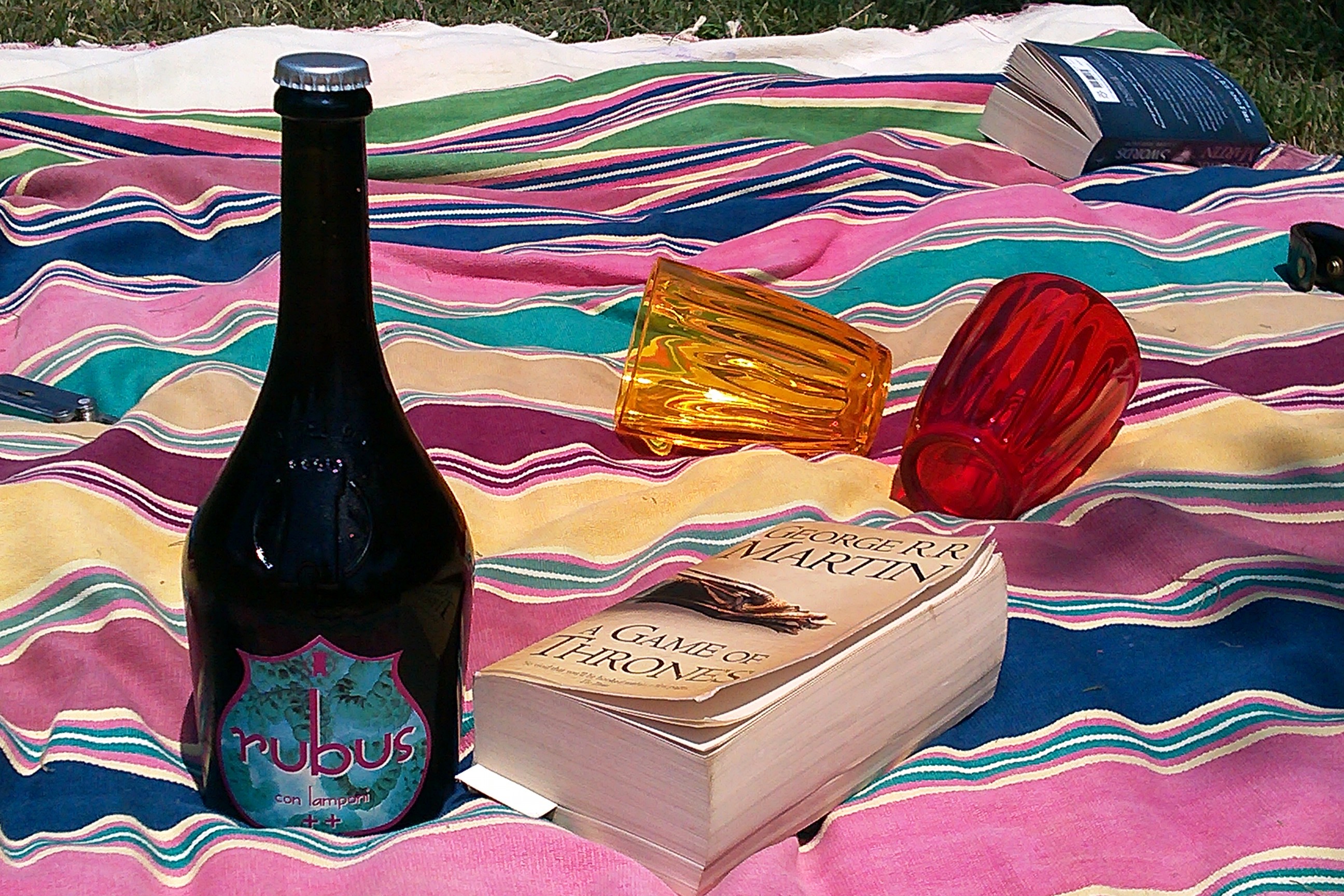
Birra del Borgo’s Rubus in Villa Doria Pamphili Park

Rubus beer, Birra del Borgo

Fruit beers. Strange drinks frequently made by simply adding fruit extracts or syrups to a finished brew, resulting in concoctions that are basically just flavoured beer.  Something I’ve never had any inclination to drink. But there are also other, more sophisticated fruit beers, where the fruit – real, unmolested fruit – plays an essential role in the brewing process.

Belgian lambics are the most famous of these beers, utilising wild yeasts and bacteria present on the skins of fruit for spontaneous fermentation. That is, rather than using a domesticated strain of Saccharomyces cerevisiae – mankind’s longtime ally (or slave) in brewing, baking and winemaking – the wild yeasts and bacteria are used for the fermentation and give the brews distinctively different flavours, along with any flavour from the actual fruit used.

Birra del Borgo‘s Rubus may not stricly be a lambic – it doesn’t use the specific yeasts and bacteria of those Belgian beers – but it’s certainly a close relative. It’s made with raspberries (lamponi), which have just come into season here in Lazio. The ratio of fruit to beer in the brew is a about 10 per cent (” 100 grams of fresh fruit are added for every litre of beer”; a litre of liquid basically weighs a kilo) and does involve a controlled spontaneous fermentation.

No one seems quite sure how to define it though. While RateBeer does simply call it a Fruit Beer, on Birra del Borgo’s own site, it’s classified as a Spiced Ale, though spice isn’t the defining factor. BeerAdvocate, meanwhile, categorises it as an American Wild Ale – another related type of beer that’s been influenced by lambics. However it’s best categories, Rubus is a unique brew.

It’s based on Birra del Borgo’s classic Duchessa – a kind of saison that’s already fairly fruity, and is made not with malted barley but with an ancient wheat strain known in Italy as farro. Now, In Italy, the word farro is used to refer to three strains of wheat: Triticum monococcum (einkorn); Triticum dicoccum (emmer); and Triticum spelta (spelt). As Borgo make another brew specifically called Enkir with einkorn, I guesssed Duchessa is made either with emmer or spelt. But guessing’s not as good as hard facts, so I emailed the brewery and Luciana Squadrilli kindly replied and clarified: “Per la Duchessa utilizziamo il Triticum Dicoccum.” So it’s made with emmer. She explained it’s a traditional crop from Rietino, in Rieta, the province where the brewery is local.  Originally they bought from a small supplier near the brewery, but in the past few years as they’ve grown, they’ve started sourcing the grain from just over the border, in Abruzzo. Whether the grain used is from Lazio or Abruzzo, Duchessa is a great summer ale – smooth yet crisp and refreshing. Rubus is possibly even more so.

Birra del Borgo Cortigiana on tap, Rome farmers market

We had a chat with the girl selling Birra del Borgo’s wares at the famers’ market near Circo Massimo (Circus Maximus) in central Rome the other day. I’d been intrigued reading about their latest monthly “bizarre beer” – in this case, Duchessic, a collaboration with Cantillon in Brussels, which blends Duchessa with a lambic – and wondered if it was available. She said no, as it was a small-scale experiment in the brewery, but recommended Rubus as an alternative. As we were planning a picnic, a fresh fruity beer seemed like a good idea. Though I also bought their Hoppy Cat Cascadian Dark Ale / IBA / BIPA,  just for comparison with the B Space Invader I wrote about a few days ago. She also gave us a sample of Cortigiana, their smooth, sweet golden ale.

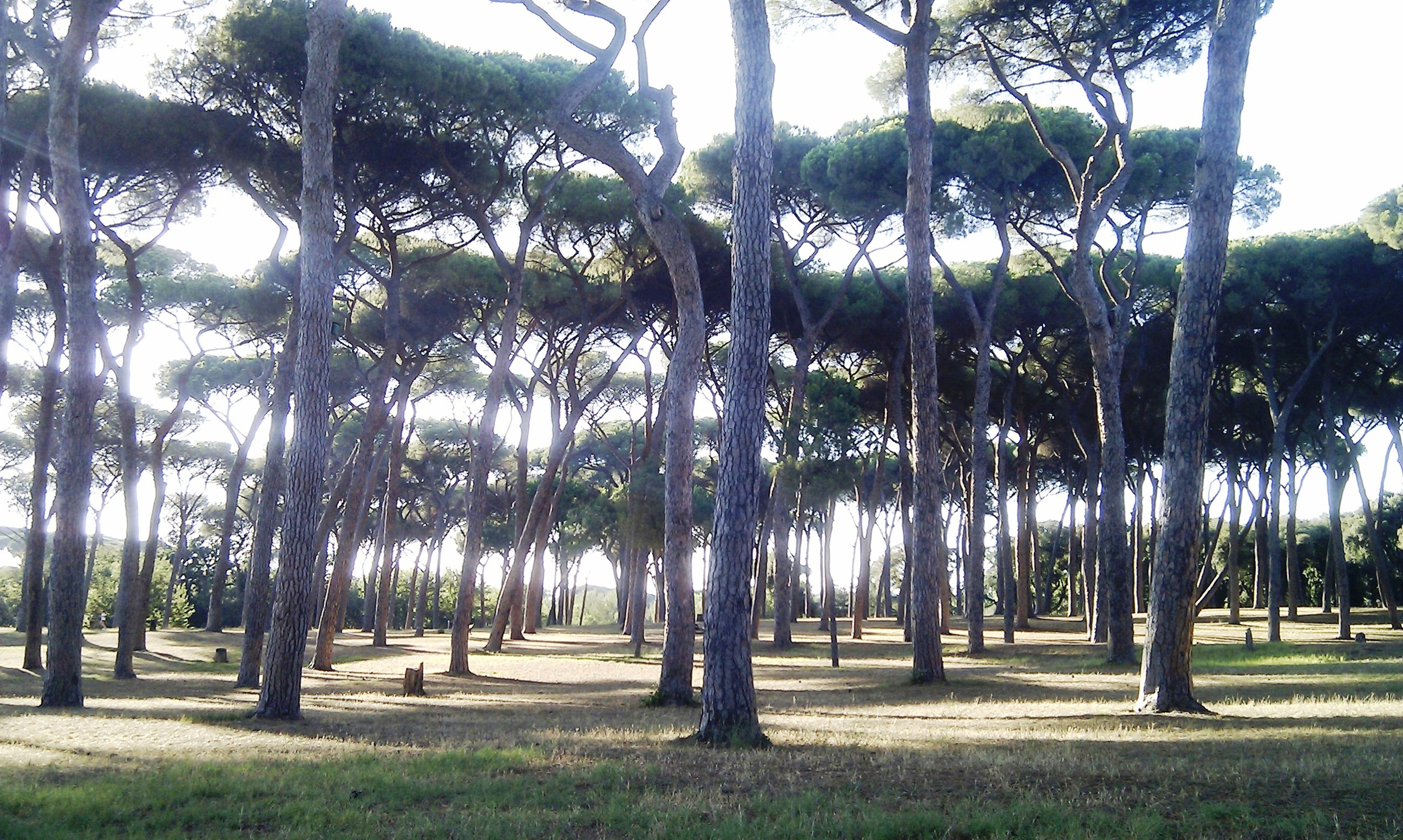
So yesterday afternoon, we headed up to the park: the grounds of Villa Doria Pamphili in the west of Rome. It’s a great place, Rome’s equivalent of London’s Hampstead Heath. In the summer it’s frequented by sunbathers, families, men in ridiculous lycra on mountain bikes, shirtless runners showing off their physiques in the heat, Rome’s south Asian community having protracted games of cricket, Rome’s Pilipino community having vast get-togethers. Although there’s the occasional slightly dodgy area where the path peters out in undergrowth or a seemingly pleasant walk among the oleander turns into a giant toilet, it’s generally pleasant, especially on a hot day, with fountains, uncrowded fields, shady deciduous woods and stands of pines, and a lake. There’s even a nice café-bistro that uses organic produce and whatnot.

Pine trees in Villa Doria Pamphili park

We headed for our usual spot near the chapel in front of the villa, and got settled in, hoping our crappy busta termica (cooler bag) would do the job in the 35C heat while we waited for our friends. We couldn’t quite wait though, and had to crack open the Rubus while it was still hot. Clearly from the photo (top of post) we weren’t usual the ideal receptacles – plastic beakers don’t exactly offer a refined organoleptic experience – but they did the job nicely, as this did indeed turn out to be a suitable picnic beer.

It’s not a beer that’s all about the subtle interplay of hops and malt. It’s a well-carbonated, crisp drink that has more in common with a sparkling wine than a  beer, as it really is defined by fruit not grain or hop. Indeed, aside from the fact that it’s 5.8% ABV, it’s very easy to drink, it’s almost like a fizzy soda pop. It’s got a gently fruity, berry perfume, a loose, loose head that subsides fast and the taste tart, but not overly so. Any sourness is well balanced with a sweetness.

Looking at people’s reviews on RateBeer and BeerAdvocate, I get the impression that it’s a fairly different experience when it’s on tap, so I will add an addendum if I get to try it alla spina. Previously, I’d rarely have chosen a fruit beer, but my enjoyment of this bottle of Rubus might help me push through any lingering prejudices.

Info:

Circo Massimo farmers market / Il Mercato di Campagna Amica del Circo Massimo
Via di San Teodoro 74, 00186 Rome
mercatocircomassimo.it
Open Saturdays 9am-6pm, Sundays 9am-4pm. July: Saturdays only. August: closed.
Birra del Borgo’s stall is usually at the back.

Birra del Borgo
Birradelborgo.it (English site) | 07 463 1287 | info@birradelborgo.it

Leave a comment

Filed under Ale, beer

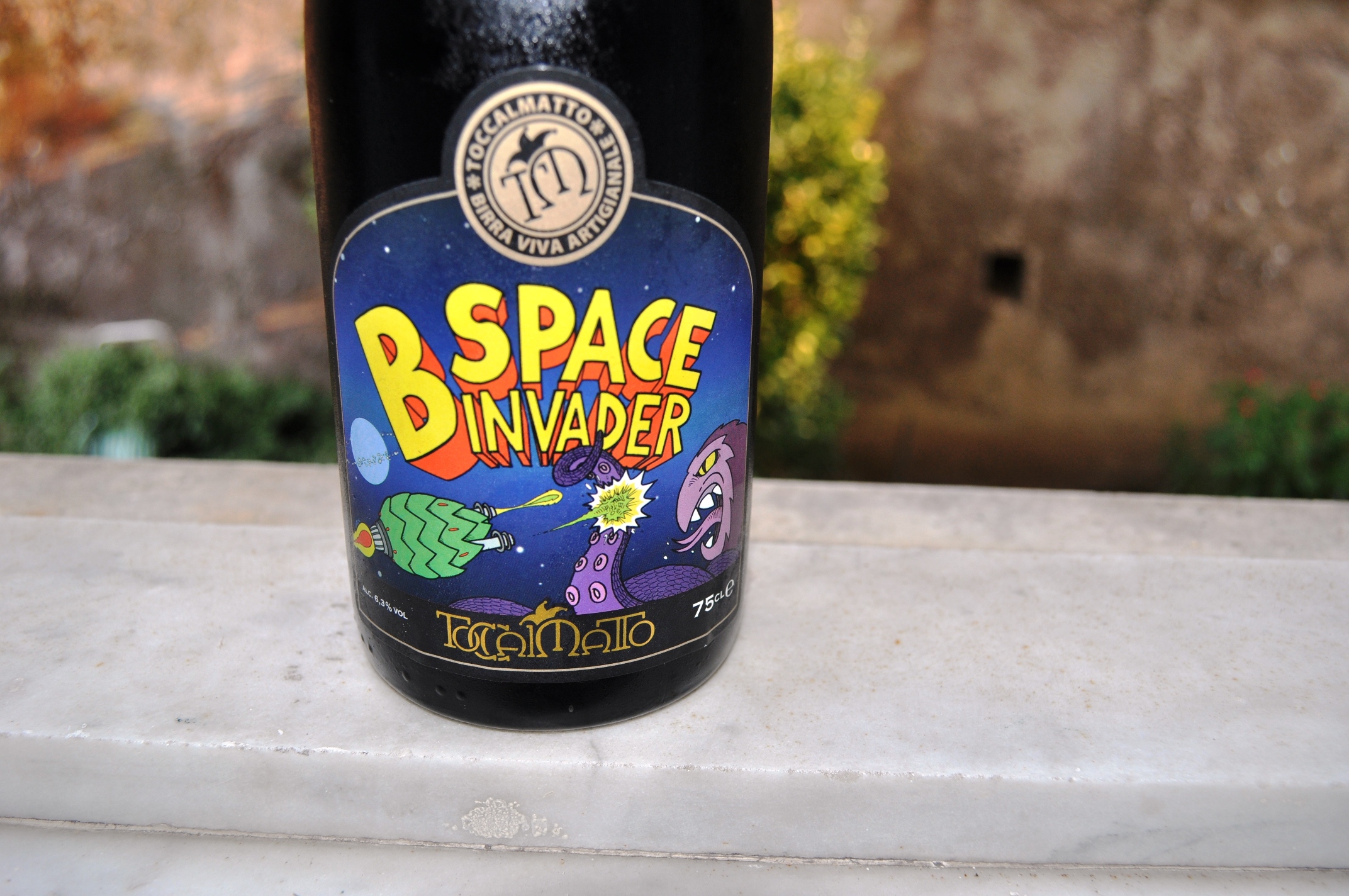
Toccalmatto’s B Space Invader dark beer

Toccalmatto's B Space Invader Cascadian Dark Ale

This is a pretty bonkers beer. Its packaging is eccentric. The blurb on the label is wilful. The taste is full-on.

I bought this one the other day from a craft beer shop, drawn by the label and the name: B Space Invader. How could I not? I was a child of the late 70s and 80s. Everything conspired for kids (especially boys) born around 1970 to become science fiction obsessives: Star Wars arrived in 1977, when we were totally susceptible to Lucas’s films’ hokey recycled charms and stupendous special effects. The germ of SF geekdom was consolidated by the first flowering of videogaming, with Space Invaders (1978) cabinets arriving in our local ice rink when I was about 10. Then we encountered more grownup fare, like Blade Runner (1982), and things were set. The makers of B Space Invader at Toccalmatto brewery in Emilia-Romagna clearly have a similar frame of reference. As well as the actual name of this beer, the label even includes this quote: “E ho visto i raggi B balenare nel buio vincino alle porte di Tannhause…” Tweaked slightly, but here’s the original – from Blade Runner of course.

So yes, how could I resist. Perhaps you shouldn’t judge a book by its cover, but it’s certainly fun to buy beers on the strength of their labels. Well, that and actually picking up the bottle and reading how it’s described. The label here calls it an “Intergalactic Black Cascadian Incredible Pale Ale / Birra Scura Estremamente Luppolata”. The latter part means “Extremely hoppy dark beer”. Which I find slightly confusing – a dark (v dark) pale ale? But yes, I should stop being so literal as this is a style of beer that’s become popular among craft brewers and fans the past few years.

Toccalmatto's B Space Invader Cascadian Dark Ale, rear label

Here’s a discussion of this style of beer, which evolved on the North American west coast, written by Matt Van Wyk of Oakshire Brewing in Eugene, Oregon, USA. He says this beer “is known by three different names: Black IPA, India Black Ale (IBA), or Cascadian Dark Ale (CDA)”.  Here’s his definition of the style: “It’s dark in color of course, with a prominent ‘Northwest’ hop aroma – citrusy, piney and resinous. The body has some sweet malt flavors, with hints of roastiness and toasted malt. The flavors should strike a beautiful balance between citrusy-resinous Northwest hops and, to a lesser degree, roasted, chocolate malt or caramel notes. The finish should be semi-dry, not heavy like a porter or stout. Hop aromas and flavors should be prominent, but the malt balance should not be lost in an onslaught of hops. In other words, when closing your eyes, it should not simply taste like a typical American IPA.”

The Guardian’s Tony Naylor offers a more succinct definition, saying this style of beer offers: “a great upfront wallop of tropically fruity and acutely bitter hop flavours underpinned by the smokier, roasted malt character of a stout”.

Like the Italian APAs I’ve been enjoying, an Italian BIPA/IBA/CDA will also be something subtly different to its North American forebears, but broadly B Space Invader conforms to Naylor’s description, though perhaps less so to Van Wyk’s. The aroma is more blackberry, blackcurrant and prune than piney or citrussy. The flavour – once you’ve got past the thick, creamy head – is big and intense. A lot of hops, a lot of roasted malts, though not with the coffee or chocolate flavours you can get with porters. Nor is its body creamy like a porter; it’s crisp and medium carbonated.

Van Wyk also says the American BIPA/IBA/CDA flavour is defined by the use of Pacific northwest hop varieties. B Space Invader is apparently made with Simcoe and Amarillo hops, varieties from Washington State, so that conforms. But it also apparently contains Australian Galaxy hops, shifting it well away from that North American West Coast context.

Toccalmatto's B Space Invader Cascadian Dark Ale, rear label

BIPA/IBA/CDA has also been subject of a debate about whether it’s genuinely a new style of beer. Certainly it reminds me of older black beers, things like Black Mac from Mac’s Brewery in New Zealand. Black Mac played a major role in my path to enjoyment of decent beers. After spending my 1980s adolescence drinking the vile lagers that were popular in the UK then – and, worse, snakebite; even thinking about it makes my head hurt – I gave up booze for several years. It was only while living on a small farm in NZ, aged 24, that I realised beer could be pleasant and interesting. Gosh. Flagons of Black Mac opened my eyes. (This was around 1994, back when Mac’s was the pre-eminent NZ craft brewery. In fact Terry McCashin, the founder, kicked off the microbrewery scene in NZ, much like Teo Musso of Baladin has in Italy.) Black Mac was one of my principle gateway beers, and although B Space Invader is a helluva lot bigger, stronger (6.3%) and more intense than Black Mac (4.8%), the similarities are there: notably in the balance of hoppiness and toasted malts. And yet Black Mac is defined as a dark ale or a Schwarzbier, styles of beer that have been around for since the Middle Ages.

So although B Space Invader is top fermented, unlike Schwarzbier, which is a dark lager and bottom fermented, flavour-wise the boundaries between BIPA/IBA/CDA and some older styles can be minimal. I’m not quite sure what B Space Invader has to do with Space Invaders or Blade Runner, or SF in general – though it made me buy it.

Info
Toccalmatto
toccalmatto. it (sort of English site) | 05 2453 3289 | info@birratoccalmatto.it

Leave a comment

Filed under Ale, beer

The Hangry Hour and Birra del Borgo’s ReAle

Birra del Borg's ReAle at The Hole, Trastevere

One aspect of Roman life I just cannot get used to is meal times. Or more specifically, dinner time. During the hot summer months (ie now) we’ll be going to bed around 11pm, thinking of that pesky alarm going off at 6.30am the following day, while the sound of chatter, and crockery and cutlery, and kids crying, wafts towards us from the restaurant a few doors down. How the heck can they still be eating at nearly midnight? What are those babies doing up at this hour? My body clock just couldn’t cope with those hours. I cannot even begin to imagine how I’d survive Barcelona.

My troubles usually start around 5pm. I’ve eaten a big lunch at 1-ish, I’ve had a few snacks during the afternoon, but still my body starts telling me it’s time to eat big towards late afternoon. I’m just too programmed. Growing up, the main meal of the evening was always at 7pm, or even earlier when I was a little kid. Around 6pm I’m getting hangry, and around 7pm I really really want to eat. Don’t talk to me. Just give me some damned protein. It’s the Hangry Hour. Or at least it used to be, but in Roma it can turn into the Hangry Two Hours, or more.

This problem often coincides with meeting Fran from her train home from work. On a summer’s evening, we sometimes head straight from the station to a bar for an aperitivo. Last night, this involved a jaunt to the less touristy part of Trastevere – that is, east of Viale di Trastevere, in the bend in the river. Specifically, Piazza del Ponziani.

Although neither of the bars there are any good for satisfying my Italian craft beer cravings, it’s just a nice spot. Although there are ex-pats and tourists there, for the most part it still just feels like an ordinary neighbourhood piazza, where the locals all seem to know each other. I even recognise a lot of them now, and their dogs, though I’m probably still just another straniero to them. I don’t think the girls in one of the bars, The Hole, recognise me yet either, but I still like their bar. I’m not sure what. It kinda lives up to its name, they’re reliably surly, and we even got shat on by gulls earlier this summer, but we keep going back.

As it was The Hangry Hour, Fran insisted with get a snack. In a lot of places, you get a snack (or even a buffet) included in the price of your drink at aperitivo time, but not at The Hole. We paid €8 for a plate of salumi e formaggi (cold cuts and cheese), which turned out to be just the latter. And they were pretty poor. A worse culinary crime, however, was the bread.

Many foreigners still labour under the delusion that you can’t get bad food in Italy, it’s all artisan and hand-made. And blah. Seriously, blah. That’s just a load of bollocks. The bread The Hole gave us was what’s known as pancarré in Italian – basically industrial white sliced bread. It’s not unlike British white sliced made with the Chorleywood Bread Process, the industrial invention that did more than anything else to destroy the craft of baking in Britain.

The process turned 50 last year, and continues to dominate wheat-based industrial “food” products in the UK, despite its nutritional poverty and the fact that it’s quite likely at the heart of people’s problems with eating wheat products, from feelings of bloating to Coeliac disorder. Although certain quarters have been determined to deny Chorleywood products are problematic, other – scientific – work has proved that long fermentation breads are digestible to people with coeliac. Ironically, this work lead by a scientist from the University of Naples.

So yeah, despite the Hangry, I couldn’t really eat that pancarré – I tried a nibble, but it was spongy and bland. And stale.

pancarre'

At least The Hole has the one Italian craft beer on their menu available this time. That beer is ReAle, from Birra del Borgo.

Like Birradamare (which I talked about here) Birra del Borgo is one of Lazio’s main local micro-breweries and fairly easy to find in Rome. The 6.4% ABV ReAle is a classic Italian craft beer. It’s an APA – and most Italian craft breweries seem to do APA style beers. So much so that Italian APAs really need a name or category of their own, as they’re evolving from APA much like APA evolved from IPA and other pale ales. (Even though Italian APAs still use American hops, like the ever-popular Cascade. Maybe one day they’ll grow more hops in Italy, and have enough to realy hone a fully Italian APA.)

Italian APAs are generally less hoppy and more malty than genuine US APAs, to suit the Italian palette. ReAle is no exception – the predominant flavours here are malt – notably crystal malts, as the beer has a nice slightly-burnt-caramel flavour, along with a certain orange or grapefruit fruitiness. It’s a very nicely balanced beer, with a certain warmth – not warm like a nice cup of cocoa, but warm from the bright amber-copper colour and flavour.

So even though the beer didn’t exactly take the edge off the hanger, it certainly distracted me from the terrible pancarré and dodgy cheese. Afterwards, we eschewed the dubious delights of Trastevere and headed back to Osteria Pistoia on Via Portuense for a pretty decent dinner.

Info:
Birra del Borgo
Birradelborgo.it (English site) | 07 463 1287 | info@birradelborgo.it

The Hole
Via dei Vascellari 16, Rome
06 589 4432

Random addendum
Talking of hangry, among the many T-shirt designs I’ve mused about over the years, how about a pic of Hulk (smashing, perhaps) with the text: “You wouldn’t like me when I’m Hangry!” If you do have a T-shirt printing operation, feel free to steal this idea – but drop me a line if you do!

6 Comments

Filed under Ale, beer, Bars, pubs etc, Uncategorized

Birradamare’s Birra Roma at Zoc, Rome

Birradamare's Birra Roma and 'Na Biretta Rossa

Saturday lunchtime we stopped by Zoc trattoria (aka Zoc 22) for some food and ale. Zoc is owned by the same people as the more established Urbana 47 in the Monti neighbourhood of Rome. Urbana 47 is stylish place where the food is produced along sound principles, with an emphasis on season and local (“KM0”), the provenance of ingredients front and centre on the menu.

As it should be.

We eat far too much food where we have no idea of the origins of the ingredients. This is important for all ingredients, but especially so for meat and dairy, where barbaric industrial techniques have cheapened the human relationship with animals, resulting in a form of de-humanised husbandry that emphasises quantity at any cost. Sadly, many people have been duped by the persuasiveness of the meat industry and supermarkets. Your intensively reared beef, pig unit pork, or industrial broiler chickens really aren’t that cheap if you factor in the subsidies and the cost we’ll all have to pay in the long run for the accompanying pollution and disease.

The bar at Zoc, Rome

So yes, bravo Urbana for its principles. These principles are similarly followed at Zoc, where the menu lists not just the ingredients, but the azienda that’s provided them. The trattoria even has photos on the wall of some of their suppliers, including one chap Fran recognised as the guy we’ve bought salumi from at the market in the Testaccio Ex-Mattatoio (currently closed for the summer – go figure).

I was also encouraged by the drinks list, which mostly consists of local wines, but also includes four bottled beers from Birradamare. Birradamare has pretty much established itself as the craft brewery for Rome. Although it’s not in the city, but instead is located at Fiumicino, the town at the mouth of the Tiber near the airport of the same name, its products are fairly ubiquitous here. If a Rome venue has just one craft beer brand on offer, chances are it’ll be Birradamare (eg here).

I ordered a Birra Roma, Fran a ʼNa Biretta Rossa. I’ve had the latter before – it’s a decent malty beer, inspired by German bocks, sweet and medium bodied, with 6.4% ABV. Its colour is amber or copper. Surprisingly, the Birra Roma was a similar colour (see pic, above), despite being called a birra oro (golden ale) on Birradamare’s site or even bionda (blonde) on the label. Birradamare’s own site says the Roma is 35EBC, which is about right, but there’s no way the Rossa is 74EBC (a serious porter tone). Surely that’s an error?

Anyway, the Birra Roma (5.5% ABV). Like Baladin’s Nazionale, which I tried a few days ago, the Roma seems to be one of the many experiments going on to create specifically, uniquely Italian style beers. In this case, even a specifically Roman beer. It’s a beer that clearly takes into consideration Italians’ love for fairly straightforward but strong lagers, as it was inspired by Bavarian Märzen lagers. I found it had a slight orange aroma, slightly hoppy. Taste-wise, it’s hoppy but not bitter (35 IBU apparently), crisp, fresh, with very faint smokiness and more body than a lager. Interestingly, Fran said it reminded her of the sea, of seaweed and salt and Breton Atlantic  beaches, the Côte Sauvage, which is far more poetic than I can be about it.

Birra Roma at Zoc Rome

So anyway, we were enjoying the beers, and the ambiance of the place, which is located in a 1950s block on the Centro Storico side of the river near the Ponte Sisto. The dining area is spacious, with high ceilings and some great design features, like an enlarged detail of a nautical map (I love maps). Much of the furniture is for sale, with price tags, so there’s a slightly distracting feeling of eating in a hip secondhand furniture showroom. There’s also a decent sized courtyard at the back, though it was a pretty hot day when we visited, and they seemed to be trying to cool it off with misters – which only succeeded in making everything soggy.

When the food finally arrived, it was pretty tasty. Fran had three chicken legs and a fig, the flavour profile a nice change to much Roman food, with some turmeric, cumin, rosemary. But it really was just three drumsticks and a fig, for €16. Mine, meanwhile, was half an aubergine (/ melanzana / eggplant) and one piece of cheese toast. Like Fran’s, the flavours were a nice change, more north African say, though it was underseasoned. And just plain meagre (for €9). I’m more than happy to pay for quality and provenance, for more ethical food, but there’s got to be some balance – the portions were so small we left feeling hungry, which isn’t what you want when your bill comes to €44. We even had to ask for bread (a dense, white sourdough, somewhat stale), and there we no other contorni (side dishes). Essentially we paid meal prices for a snack.

Blown up nautical charts on the wall of Zoc

This is all something they need to work on, to make for a more satisfying experience. They could also do with working on the service. The staff were amiable enough but just seemed a bit apathetic. When, for example, a fuse tripped, cutting out the fans and lights, the waiter wandered around for a while first before going to click it back on. He wasn’t busy either, there were just a few covers there for Saturday lunch. Perhaps it’s busier in the evening. Although it’s right near two very popular areas – Trastevere and the Centro Storico around Campo de’ Fiori – it’s just off the main drag. Although Urbana 47 suffers from the same small portions/ high-ish prices issue at least it’s got a bit more atmosphere from being busier, as Via Urbana is a more lively street.

So, Zoc: nice spot, good beer, sound principles, iffy value for money. Must try harder (er, as I may have had on my school reports a few times in days of yore).

Info:
Via delle Zoccolette 22, 00186 Rome, Italy
zoc22.it (English site, sort of) / 06 6819 2515 / info@zoc22.it

Birradamare
Birradamare.it (English homepage) / 06 658 2021 / info@birradamare.it

4 Comments

Filed under Ale, beer, Restaurants etc

Mastri Birrai Umbri’s Cotta 74 at home, now

Mastri Birrai Umbri Cotta 74 Doppio Malto

My introduction to Italian craft beers came by way of the birreria Ma Che Siete Venuti a Fa (aka the “football pub”), which was located at the end of street where we spent our first week in Rome, in that ex-pat and tourist favourite neighbourhood Trastevere, along with Open Baladin bar, which we discovered soon after, and this brewery – Mastri Birrai Umbri.

Mastri Birrai Umbri is currently Italy’s biggest craft brewer, and I’ll be writing more about it, and a visit to their brewery, in a month or so to accompany an entry by Jeremey Cherfas of Eat This Podcast. In the meantime, here’s a glimpse of life a casa Bread, Cakes and Ale. It’s Sunday night, it’s 3o-ish degrees (that’s mid-80s  in that weird old currency some people insist on using), thunder is rumbling, the cats are demanding their dinner, and me and the missus are both on our laptops trying to sort stuff. To accompany our activities, we’ve opened a bottle of Mastri Birrai Umbri’s Cotta 74. Partly cos it’s delicious but also partly because we might need the bottle, with its fancy cap, as we’re making some spicey plum ketchup in the kitchen as we speak, thanks to a large consignment of fruit from a neighbour.

I talked about Cotta 74 a bit over here, when I used it to as an ingredient in a chocolate cake. No chocolate is involved tonight, just plain old supping. The beer, a 6% ABV double-malted dark brew in an Abbey Dubbel style is tasting good – tangy, malty, light on the hops, with hints of charcoal.

2 Comments

Filed under Ale, beer

Baladin and del Borgo beers at No.Au bistrot, Rome

Baladin Nazionale, Bira del Borgo Keto Reporter at no.au

Just to the northwest of the faintly grotesque tourist nexus that is Piazza Navona, Rome’s Centro Storico (“historic centre”) offers a maze of streets, alleyways and piazzette. There, it’s possible to wander, get lost, find yourself again, elude the tourists mobs, bump into them again, and even find filming locations from Eat Pray Love (ugh). Among the cobbles and crumbling apartment blocks are numerous bars, restaurants and gelaterie. Our destination last night was No.Au, a bar/restaurant located between the handsome Chiostro del Bramante and the somewhat chichi Via dei Coronari (which even boasts one of Rome’s few cupcake shops these days. Bloody cupcakes).

No.Au, which opened in summer 2012, is a collaboration between several big names in Italy’s craft brewing and food scene who wanted to “recreate the atmosphere of a Parisian bistro, with quality products and good company, in the centre of Rome.” You’ll find the whole spiel (in English), and an explanation of the name of the place, here on the Baladin site. Why is it on the Baladin site? Because one of those (five) big names is Teo Musso, the founder and master brewer of Baladin, Italy’s biggest craft brewer.The bar and taps at No.Au Rome

So key is Musso in the Italian craft brewery scene, a biography has even recently been published. It’s called ‘La birra artigianale è tutta colpa di Teo’ (“Baladin. Craft beer is Teo’s fault” – ie Musso is to blame, ie responsible, for the whole craft beer scene in Italy.) Presumably the title is slightly tongue-in-cheek, but certainly Musso is among the most influential of Italy’s craft brewers. His collaborators here are Luca Tosato (also of Baladin), Leonardo di Vincenzo (master brewer of Birra del Borgo), Paolo Bertani (also of Borgo, and previously Baladin) and Gabriele Bonci (renowned pizzaiolo and TV regular whose company produces the breads for Open Baladin bar. We did a pizza course with him last year).

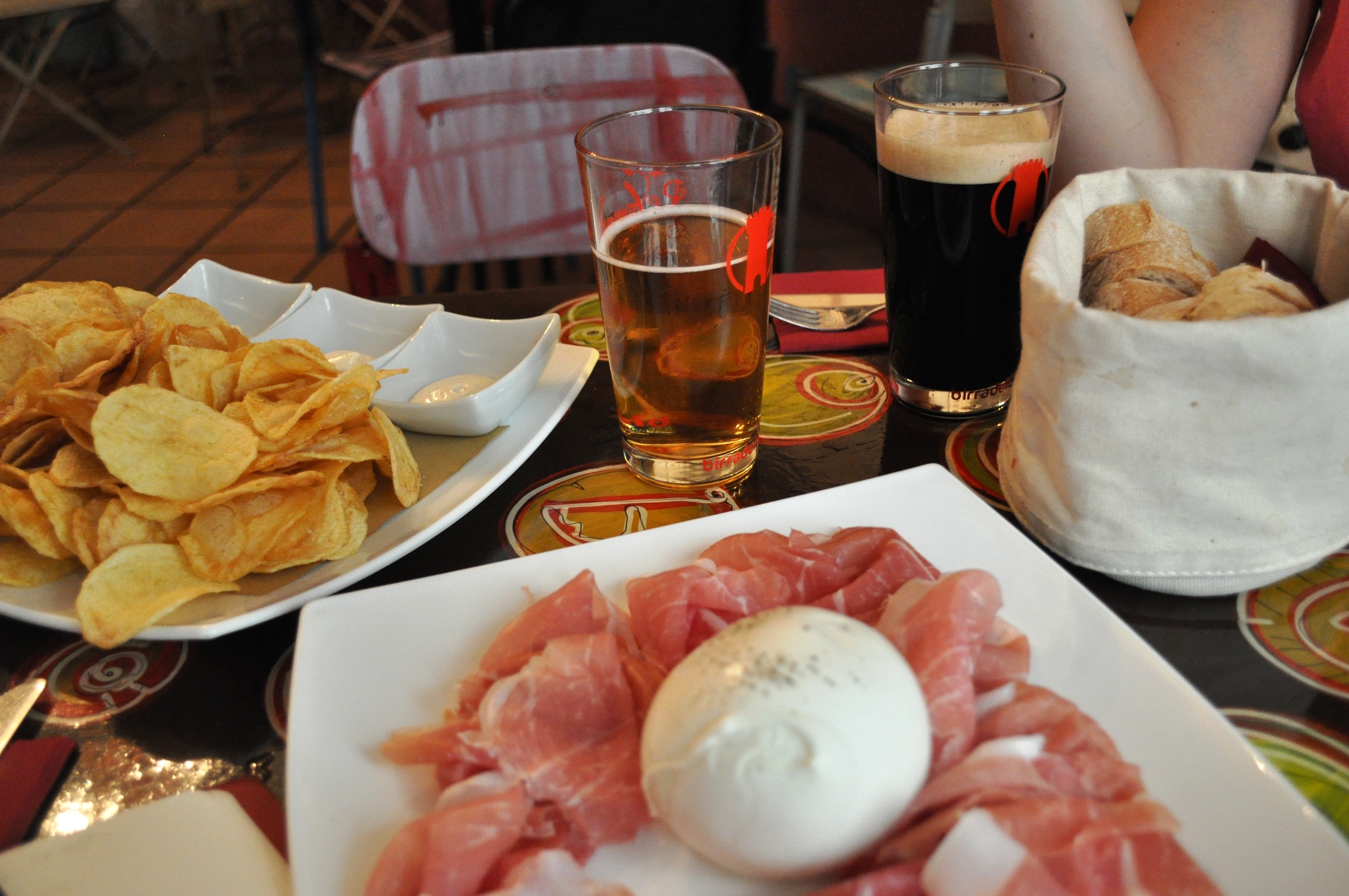
It’s no surprise, then, that at No.Au, the main beers you’ll find on tap are from Baladin and del Borgo, but they also have others, in bottles, both Italian and international. Beside where we sat was an old box of US brewer Dogfish Head’s intriguing/strange Midas Touch. I stayed with Baladin for my first choice. As I’d tried a lot of the offerings on tap, I went for a Nazionale (6.5% ABV), which the friendly, helpful waitress described as a “simple” beer. It’s described as an Italian Ale – as it’s top fermented and also because it’s made with entirely Italian ingredients. This includes the hops – which was a pleasant surprise, as so many Italian craft beers seem to depend on international hops.

No.Au Rome snacks

This really was a pleasing beer, perfect to accompany the antipasti we’d ordered:  a plate of bufala e prosciutto and some very fine freshly cooked potato crisps/chips accompanied by three flavours of mayo. As the waitress said, it was simple – a golden yellow, with a quickly subsiding soft head, very subtle aroma of ginger and lemon, and a fairly sweet, mildly hoppy smooth taste (27 IBU). Molto beverina.

Fran’s first beer was Keto RePorter (5.2% ABV) from Birra del Borgo. This porter is made with the addition of Kentucky tobacco leaves, but it was also very mild from the few sips I had.

As the beers were served in half-pints, and we’d finished the antipasti, I fancied trying something a little more interesting, so the waitress recommended Baladin’s Open Rolling Stone, which they described as an Italian APA on their blackboard, but as an IPA on Ratebeer. Either way, this beer, branded for the magazine of the same name, is very tasty. It’s relatively strong, at 7.5%, and had a slight perfume of camomile and a reasonable head. At first taste it was soft and sweet, but this gave way to a drier, slightly hoppy flavour (it’s still only a fairly moderate 36 IBU though, according to Baladin’s site). I was enjoying this one, but about half-way through my half-pint it started getting a bit detergenty, losing its crispness.

Wine, food, beer at No.Au Rome

Fran’s second one was a Genziana from del Borgo. I’ve had this before, though didn’t try it last night. It’s a really interesting beer made with bitter gentian flowers.

When some friends arrived, we ordered some more food. The emphasis here is on snacks and food that’s either stirato (“ironed” ) or crudo (“raw”). The ironing takes place on a piastra (flat top grill).  I was slightly surprised to see a lot meat available (such as sandwiches made with burger buns and sliced roast beef), as over at Katie Parla’s site she reports how Bonci’s places are going vegetarian for a month to protest Rome’s lack of appreciation of Lazio’s farmers and producers. I asked the waitress, and she said the menu was in transition. So if you visit any time in late July, there may be more vegetarian food.  I had seppia (cuttlefish), which had been ironed in a folded sheet of parchment, with zucchini. Served with an ink mayo, it wasn’t bad, but I would say this place is more about the drinks and antipasti, more a place for aperitivi or after-dinner drinks.

Talking of after-dinner drinks, when we’d eaten, I ordered one more (hey, that still makes just one and a half pints).  I got Baladin’s Isaac, a 5% blanche made with orange zest and coriander and it was a perfect palette cleanser.

No.Au exterior, note like of sign

All in all, a very pleasant evening. Although the place only started to fill up, and the lights went down, around 8.30-9.00pm, it’s definitely a good place to visit for quality Italian craft beers. And plates of cheese. And maybe even some wine. Oh, and the music was pretty good too. All this within a stone’s throw of Piazza Navona and its thoroughly-worth-avoiding eating and drinking options.

Info
No.Au, Piazza di Montevecchio 16A, 00186, Rome
No.Au blog / noauroma@gmail.com / 06 45 65 27 70

Baladin brewery (English site)

Birra del Borgo brewery (English site)

4 Comments

Filed under Ale, beer, Bars, pubs etc, Breweries, Restaurants etc

Revelation Cat beers at Brasserie 4:20, Rome

Brasserie 4:20 Rome, the bar

Brasserie 4:20 is not in a prepossessing location. Sure it’s located not far from Porta Portese, a 17th century gate in Rome’s 3rd century Aurelian Wall. And sure the actual street, Via Potuense, is historical, constructed in the 1st century AD to connect the city to Portus at the mouth of the Tiber. And sure the section where Brasserie 4:20 is located comes alive on Sundays for the Porta Portese market, a kilometre-plus of stalls selling tat clothes, cheap electricals and bric-a-brac. It’s even the place to go in Rome to buy bikes or scooters of occasionally dubious provenance. (Porta Portese is one of the locations of Antonio’s desperate search in Vittorio De Sica’s unbearably heartwrenching neorealist classic Bicycle Thieves [Ladri di biciclette, 1948]: go to 9:52 here.)

But, frankly, this stretch of Via Portuense is a scruffy rat-run.

At rush hour, it’s an untrammelled racetrack for Rome’s horrendous car population, and not a great place to tackle on foot – there are no pavements, just potholed gutters. One side of the road is given over to semi-derelict buildings, wasteland and one restaurant overlooking the Tiber. The other side, where 4:20 is located, consists of a large, graffitied wall punctuated with arches. Even when 4:20 is open, it doesn’t exactly look inviting – a dark entrance in the wall, a few smokers outside.

So I’ve walked past dozens of times, without even quite making it inside. Shame on me really, as it’s a) not that far from where I live and b) one of Rome’s most significant birrerie (beer bars).

We resolved to finally visit on Saturday, meeting several Italian friends, many of them counfounding stereotypes by enjoying good beer as much as wine.

Fortunately, at 5.45pm on a Saturday the stretch of Via Portuense was quiet, Brasserie 4:20 safe to approach on foot. The bar was quiet too as although the sun is well and truly over the yardarm as far as we (and other Brits) are concerned, 6-ish is a freaky time to have a drink for Italians, as one of our friends commented straight away on their arrival. Still, at least it meant we had our choice of seating.
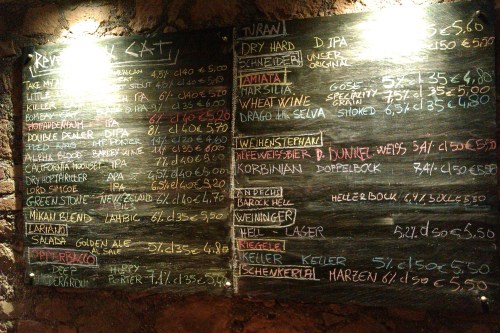
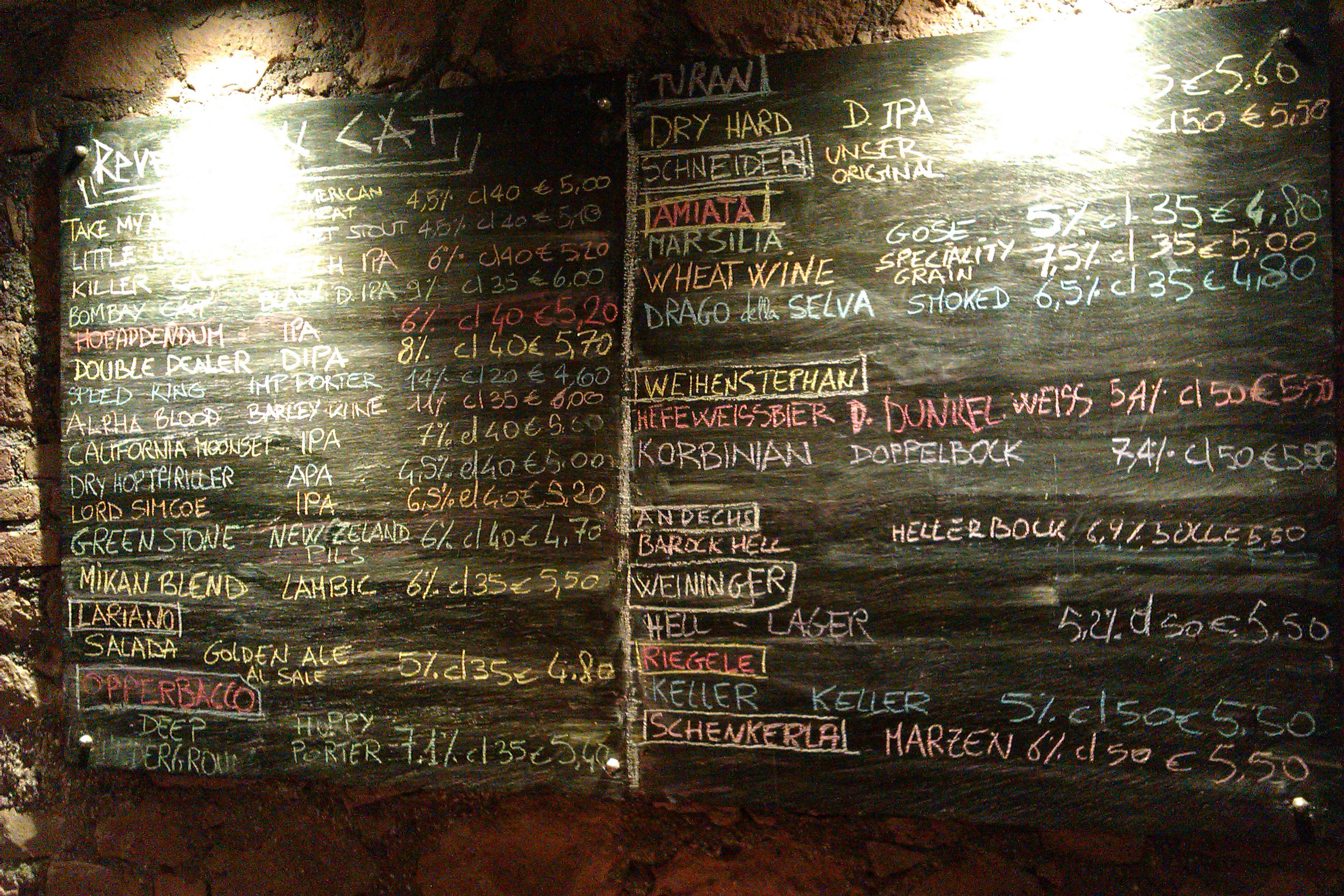
Some of the beers available at Brasserie 4:20 Rome

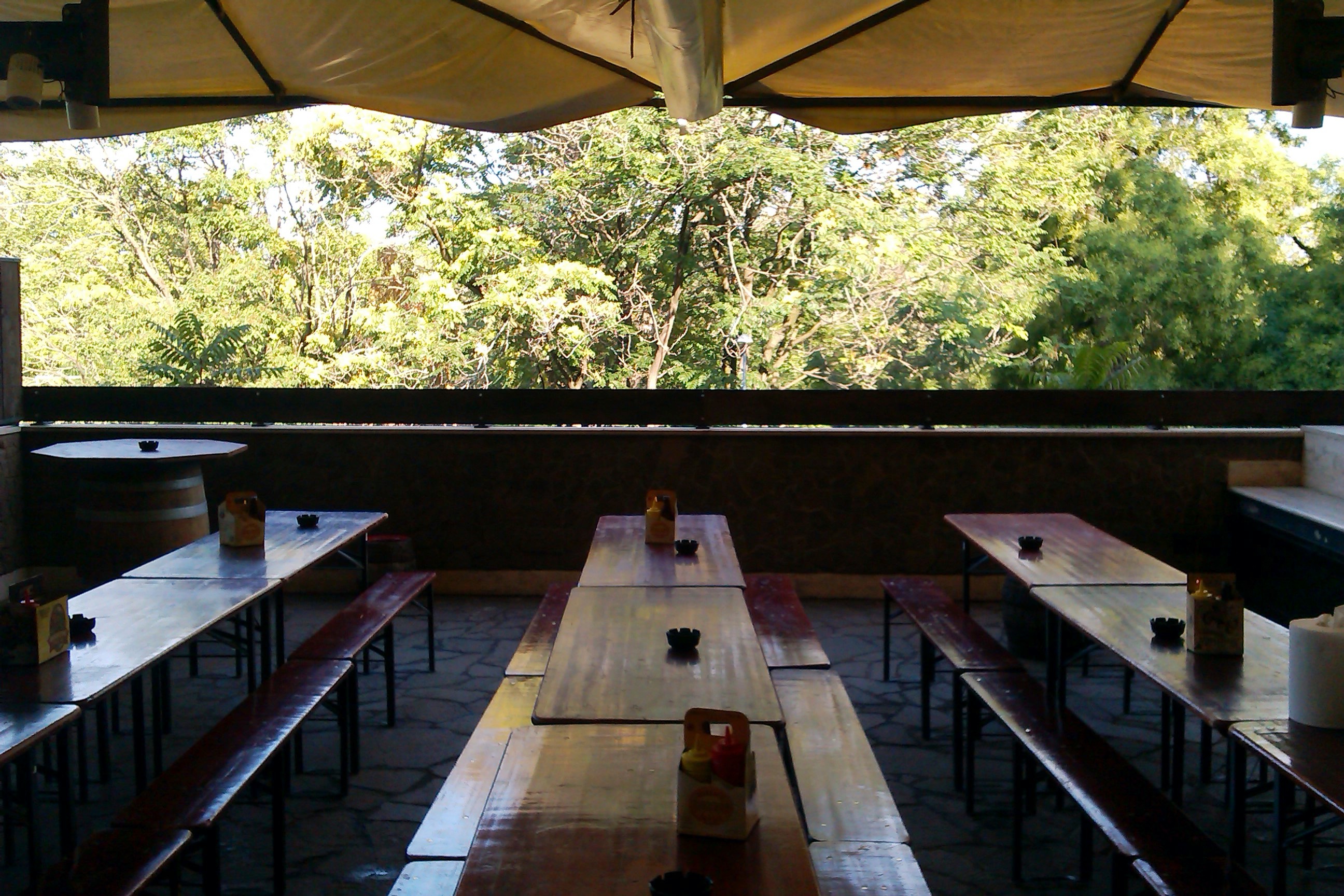
Downstairs is an atmospherically gloomy cavern of bare brick walls, a long bar featuring a barricade of taps, and seating that includes a couple of inviting (though tight) horseshoe-shaped booths. We settled into one of these, not realising there was also an upstairs terrace, with awnings. This was handy as we’d just had a massive thunderstorm, which had given way to blazing sunshine. After ordering our first beers, we relocated upstairs to enjoy the space and partake of an aperitivo buffet. It was basic – some couscous, some pasta salad, bread, a few dips – but included in the price of the drinks at that time of the evening.

As for the drinks, 4:20 only has beer, whiskey and water. Downstairs, there are apparently 47 taps, including 12 hand pumps, though I didn’t count them. Upstairs, there’s a more limited selection, with six taps, but hey, it’s hardly a long schlep back, down some stairs and past a mound of containers of fry oil. Yes, there’s also food. In this case, that means burgers (mostly), the smell of which was filling the air on the terrace. They use beer a lot in the preparation of the food, though we didn’t sample anything beyond the buffet.

Some more of the beers available at Brasserie 4:20 Rome

Beer-wise, there are menus on blackboards on the wall. We weren’t offered an actual menu, though they may exist, especially as they have a selection of bottled beers. These are the only refrigerated beers, as the tap beers are kept in a cellar and served at ambient temperature – important for the “organoleptic quality” according to their site. What this means is that the precise qualities of a bar are better experienced – by smell, taste etc – at ambient temperature. (Ice cold beer is of course nice on a hot day but that’s another argument.)

The beer comes from a variety of craft breweries, some Italian, but also a lot of Belgian, British etc. Among the Italian breweries, a major presence here is Revelation Cat (English site) – a Rome-based outfit whose products are distributed by Impex, which owns 4:20 as far as I can tell. So Revelation Cat is effectively the house brewery.

When we visited, there were 13 Revelation Cat beers available. Fran chose their Little Lover, a 4.5% ABV stout so chocolaty it could almost have been mistaken for a milkshake in a blind tasting. Okay, not really, but it was very pleasant, in a sweet, mild, creamy kind of way.

I’m still on a quest to find a perfect golden summer ale, so I was torn between Salada from Lariano brewery, in Lombardy – a golden ale al sale, “with salt” – and Magical Mystery Gold from Free Lions, a brewery I talked about over here. I got the latter as it was from a little closer to home, Tuscania, northwest of Rome. I’ve still not found my ultimate golden ale, but Magical Mystery Gold wasn’t bad. I seem to be drinking a lot of citrussy beers at the moment, and this was no exception with an aroma of grapefruit. Taste-wise, it was strongly hopped, dry and crisp.

Brasserie 4:20 Rome, the roof terrace, July 2013

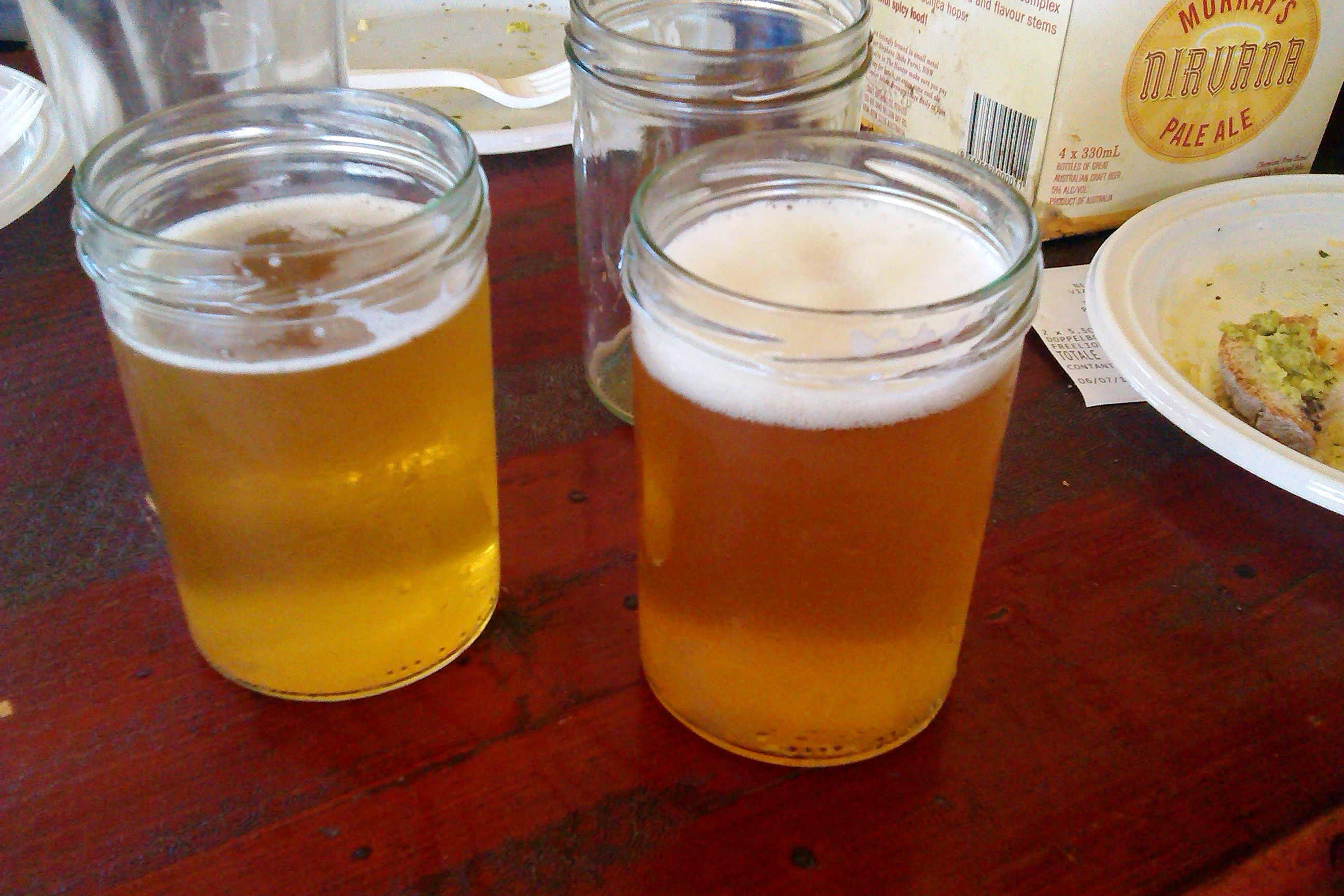
We managed to get in a couple more after this, from the small selection on the terrace. These were California Moonset and Take My Adweisse. We had to order the latter on the strength of the terrible pun alone. Both are from Revelation Cat. These were served in jars. This seems like a strange affectation; I’d rather drink from something that doesn’t have a thread on the lip. The beers were both interesting though.

Take My Adweisse is a 4.5% hoppy American wheat ale. It’s not terribly bitter, but instead is crisp, fairly floral (elder, etc), and refreshing. California Moonset, on the other hand, was fairly odd. It’s nominally a 7% IPA, but I found it pretty challenging, with a pungent odour of, well…. rot? Cat pee? I’d need to drink it again to really nail the description, but I found the smell almost off-putting. Taste-wise it was pretty hoppy, with some serious clashing flavours – resin, citrus, malt. I’m not sure whether it was interesting or unrefined.
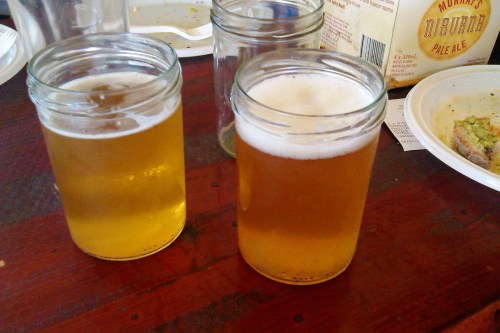
Take My Adweisse (left) and California Moonset (right) from Revelation Cat. In jars.

Anyway, after all that we had to go – as we had a birthday to attend at Open Baladin, perhaps Rome’s best known beer bar. This experience of two key beer Roman birrerie in one day was telling. Although we had a good time at 4:20, and I’ll definitely go again, I found our welcome a bit unfriendly there, with three staff just giving us a cool stare when we first arrived. Baladin, on the other hand, I’ve always found more friendly, and the staff ready with advice.

Also, I had my most interesting beer of the evening at Baladin. I asked a friend who works there what she thought was their best beer at the moment, and she recommended a Wallonie saison beer, from Extraomnes, another Lombardy brewery. I’m increasingly getting into saisons as they seem to be challenging without the confusion of a beer like California Moonset. This 6.7% beer was golden-orange in colour, with a serious head and an inviting perfume of herbs and spice. Flavour-wise it balanced a slight peppery piquancy with notable, but not overly bitter, hoppiness and a broad fruitiness, tending finally to crisp and dry. In my notes I wrote “fermenting fruit, bubblegum”. Hm.

All in all, a great evening of socialising and beer sampling. And I’m definitely keen to get back to 4:20, see if I can warm them up a bit asking for recommendations, as it’s certainly a serious beer joint, for fans of real beer.

Infodump:
Brasserie 4:20, Via Portuense 82, 00153 Rome
Impexbeer.com 4:20 site (English)
Open Mon-Sat from 5pm, Sun from 7pm.

Revelation Cat brewery

2 Comments

Filed under Ale, beer, Bars, pubs etc, Breweries

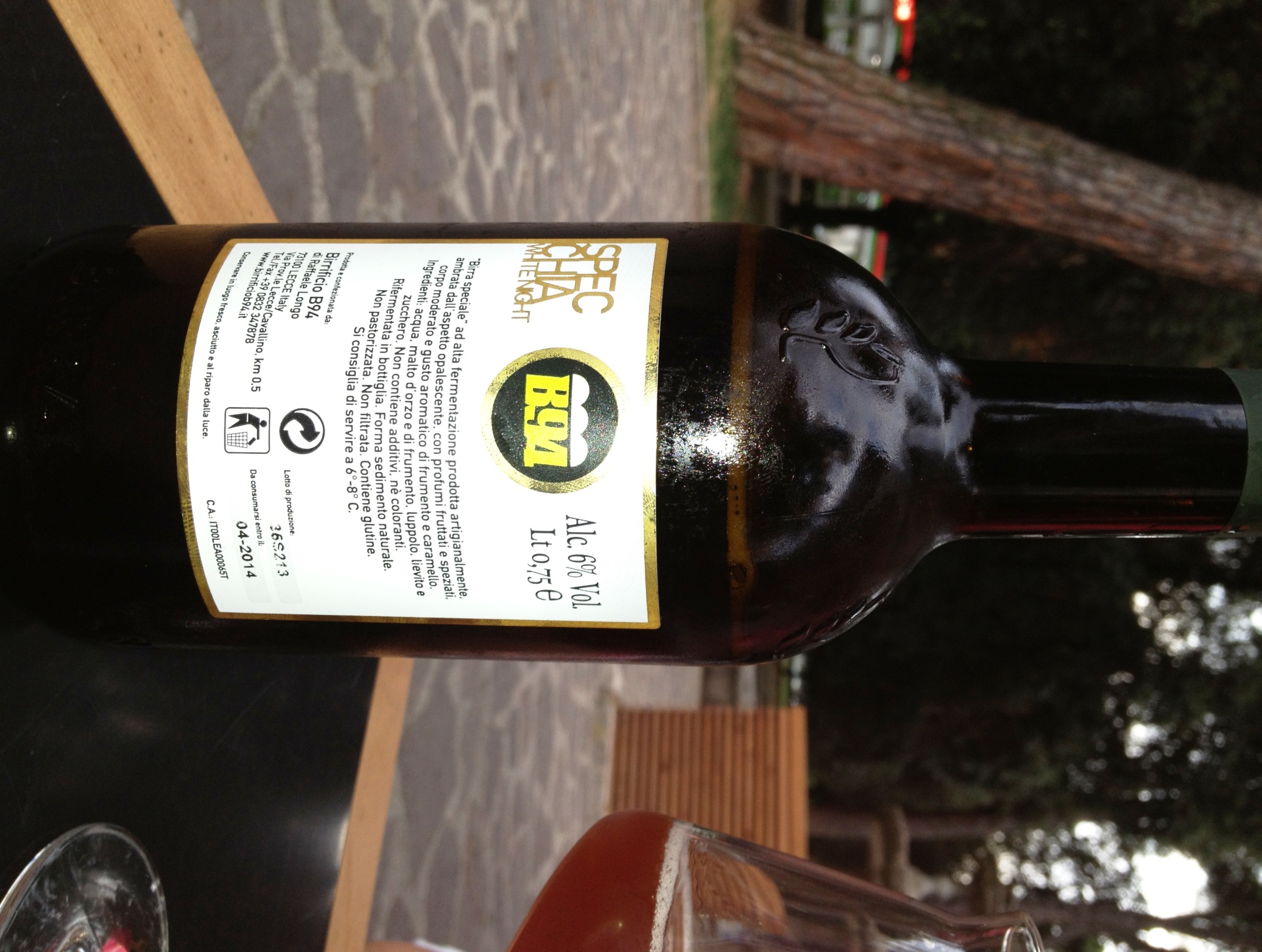
Specchia White Night amber ale at Tree Bar

Last night, we had tickets to go and see Neneh Cherry and Fat Freddy’s Drop at the Cavea of the Auditorium Parco della Musica, in the Flaminio district of Rome. This is the area to the north of Piazza del Popolo,  the popular spot for tourists, shoppers and manifestazioni at the top of Via Del Corso, central Rome’s main consumer strip and sometime location of yacht races *.

We’d never been far into Flaminio, so were keen to check out a spot called the Tree Bar, and the Auditorium itself. The Auditorium was designed by Renzo Piano, who has more recently radically altered London’s skyline with the Shard, and was inaugurated in 2002. The complex consists of three beetle-roofed concert halls with the Cavea in between – a fourth, open air auditorium. This is where we were headed. But first, a beer.

The central Roman section of Via Flaminia (one of the city’s ancient routes, heading north) is canonically long and straight, and plied by trams. It’s lined with handsome mid-20th century apartment blocks and collection of tired looking markets, workshops and older, more historical buildings, along with a couple of stretches of open park. Tree Bar, a former kiosk, nestles in one of these.

Inside, it has has light, Scandinavian style wood fittings, outside there’s a terrace area that spills into the park. Some kids’ football kept escaping from their game – inside a dry fountain – and flying past us while we drank.

With its emphasis on aperitivo drinking, Tree Bar has a long menu of sparkling wines and cocktails, but thankfully there were also a few craft beers tucked in there too, with three bottled beers in a section marked “Birre Artigianale”. I didn’t know any of them, so asked the waiter what one, from a brewery in called B94 in Lecce, Puglia, was. He said it was a birra artigianale. Yes, but what type, I persisted, and he managed to come up with the fact that it was an amber ale. Okay, fine, that’s enough for me. He also said it was enough for two (a 75ml bottle), but Fran wanted a cocktail.

B94 Specchia White Night, plus snacks, Tree Bar, Rome

When it arrived, a black bottle with a slightly muddle label design and the apparent name “Specchia White Night”, I told him not to worry, it’s not too much for one person – as I’m British. Nothing like reinforcing stereotypes.

Anyway, he poured and inch of so, and there wasn’t much head, and the liquid was a murky amber-brown. I poured more, a bit more vigorously, and got a better head. Head, or schiuma, is very important in the appreciation of Italian craft beers – all the descriptions mention it. My Guida alle Birre d’Italia 2013 says it’s a beer with colore ambra intenso con schiuma di buona persistenza. Which I’d have to disagree with – the head wasn’t very persistent.

I didn’t get much in the way of strong scents coming off it, bar malt and some melon, or apple. Which made a nice contrast to the more citrusy beers I’ve been drinking a lot lately. Taste-wise, the maltiness (from both malted barley and wheat) was combined with a fairly strong bitter hoppiness and yeastiness, along with some spice (cloves), caramel and even a soapiness. It was a reasonably drinkable beer, with a medium body, low-middling carbonisation and 6% strength, though perhaps slightly heavy for my tastes for a warm summer evening. Plus, well, another aspect of my Britishness – the name and label brought disconcerting flashes of White Lightning, a trashy cider from the early 1990s. An unfortunate association.

B94 Specchia White Night's label, at Tree Bar, Rome

Still, it’s always good to try something new, from a brewery I’d not heard of before. Apparently B94 was founded in 1994 by Raffaele Longo to make beers for his friend. It’s that step from home-brewing to commerce that’s the familiar narrative for many micro-breweries.
Having quickly consumed Tree Bar’s stuzzichini (a plate of appetizers/snacks often served at aperitivo time), we had a pizza too. The food wasn’t bad – the stuzzicini included some pieces of particularly nice frittata and they seem to use some wholegrain flours in their doughs. Thus fuelled, we dashed on up the road to get to the venue.

Neneh Cherry had, disappointingly, bailed (with no reason or excuse forthcoming online), and the support act were pretty noodly, but the Cavea is a great location, the overcast weather didn’t give way to rain, and Fat Freddy’s Drop – New Zeeland’s finest reggae-dub-soul-rave combo – were energetic and entertaining, taking us through their new album, Black Bird, and including a few old favourites. Though they didn’t do an encore. What’s up guys? Grumpy? Tired from the world tour?

Fat Freddy's Drop, Auditorium Parco della Musica, Rome, 3 July 2013

Infodump
Via Flaminia 226, 00196 Roma
treebar.it

* “In December 1878 [the Tiber’s] floodwaters in the Via del Corso were so deep that a sailing race was held held there…” (p114, Whispering City, RJB Bosworth)

1 Comment

Filed under Ale, beer, Bars, pubs etc

A quick tour of Nomentana neighbourhood and New Morning beer at Kombeer bar

New Morning

My friend Giammarco, teacher, novelist, ghost writer for academics (!), doesn’t much like beer, certainly not proper beer. He’s the sort of guy who’s satisfied with the axis of industrial yuck that is Peroni/Morretti/Menabrea. So I was quite surprised when we met up for drink in Nomentana, a neighbourhood northeast of Termini station and just outside the Aurelian Walls, and he suggested a nearby birreria (beer bar). A new birreria? Come no!

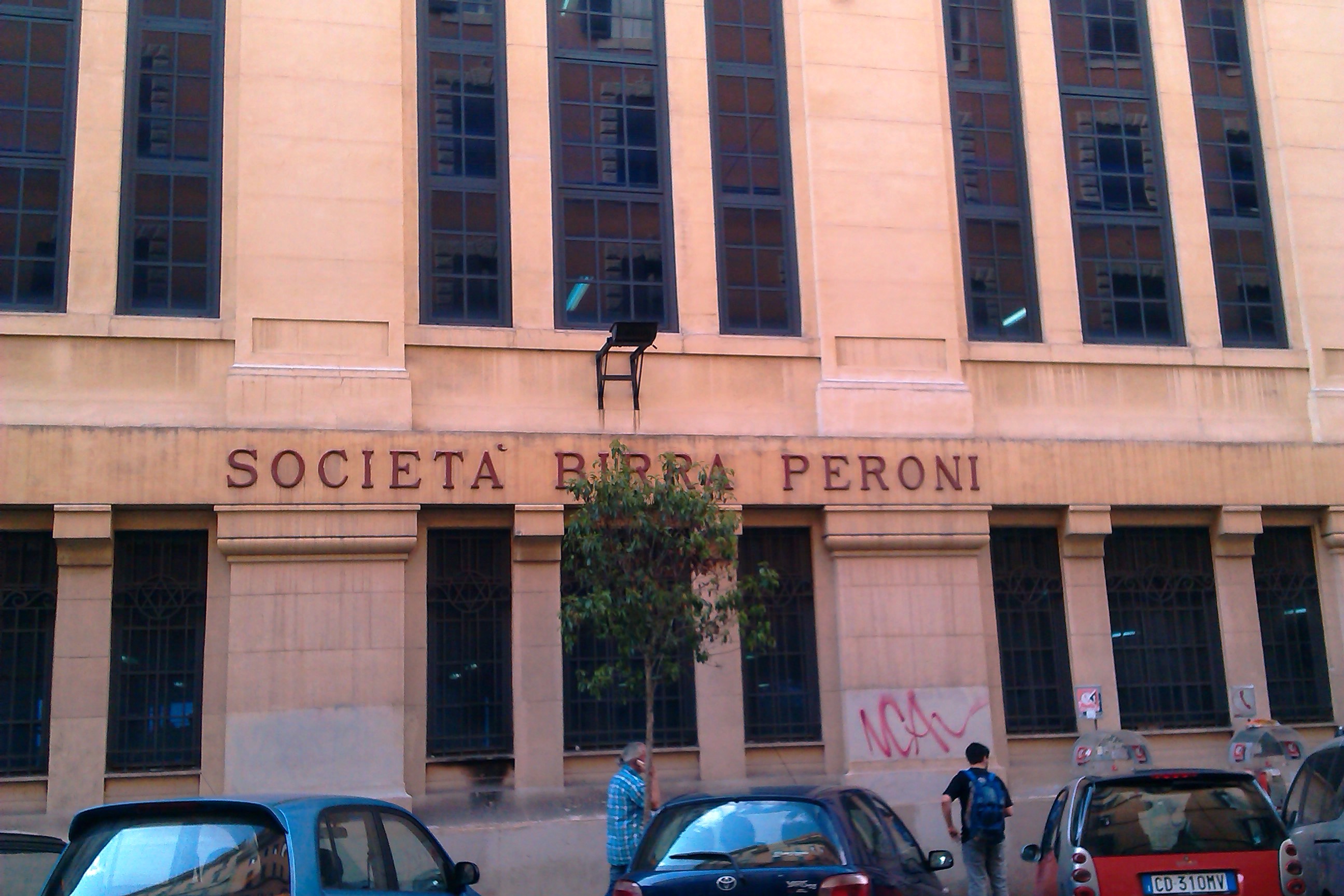
It proved to be an interesting stroll. I already knew the main drags through Nomentana but had never really explored the backstreets. We didn’t exactly explore, but just strolled through. Giammarco dove into a second-hand bookshop where he got a pristine novel for a mere Euro (a book like that would sell for about £5, €6, in the UK). It’s a shame I can’t really read idiomatic Italian… what bargains. We strolled on, past the old Peroni factory, built in 1908-1922. Production stopped there in 1971.

IMAG0032

Apparently the building is being converted into a giant birreria. According to Giammarco. Though it being Roma, even if that is on the cards, it may take 10 years and several changes of local government for it to actually fall into place. Indeed, this site (in Italian) says it was going to be converted into a centre for arts documentation and a cinema, so who knows what’ll happen to the redevelopment plan. Like Battersea Power Station, some developer will probably just get his way to turn it into expensive apartments in the end.

We then passed by the Mercato Nomentano di Piazza Alessandria, a very handsome building with grandly arched entrances and looming pediments. The market was built in 1926 in what Giammarco called a “Liberty” style – that is art nouveau – and inaugurated in 1929. I’m no architectural historian, but it looks more art deco to me, or at least from a kind of transitional style. Check out this old pic from 1940.

PIAZZA_ALESSANDRIA_1940

After a worrying moment where it looked like Giammaroc couldn’t remember the location of the birreria we were looking for, Kombeer, we finally found it…. Closed. It was 5.45pm. This always bemuses me as a Brit because our drinking culture is so much about leaving work and going straight to the pub. Go to any British city and if you’re in an area dense with offices, come 5.30pm, the pubs will like as not be chockablock with people loosening their ties (poor bastards) and forgoing any proper solid food.

We malingered a bit while the Kombeer staff swept up and laid out seating in their little patio area among the parked cars. Before too long we were seated and the waitress came to discuss the beers. Which is all very nice in a hands-on kind of way, but not great is you speak bad (or no) Italian. And not ideal if you’re not acquainted with Italian birre artigianale – which dominate the options here, though there we also some international craft beers, both bottled and alla spina (on tap).

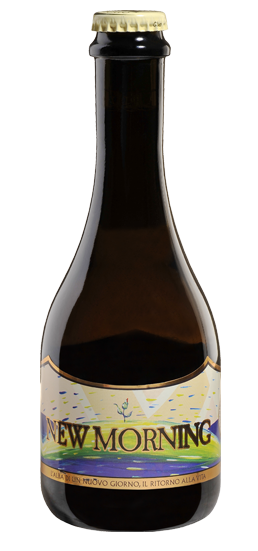
Although I speak some Italian and know some of the breweries and beers, I really didn’t follow… my brain doesn’t work so well when it comes to, like, remembering stuff, so in the absence of a menu I went to the bar to check out the taps. There are about eight, with the sort of temporarily attached labels that indicate regular rotation of new beers. The waitress let me try a few beers, which is always a good sign, and I chose a New Morning (English site) as I remember enjoying it elsewhere many months ago.

New Morning (or Nuova Mattina, depending on which batch you get) is a saison-style beer from Birrificio del Ducato, northwest of Parma in the Emilia Romagna region of northern Italy. This award-winning brewery was founded in 2007 by Giovanni Campari. Their own site calls this food science and technology graduate and former home brewer a “radical and visionary Brewmaster” and certainly the beers of theirs I’ve tried ­– Verdi Imperial Stout, Sally Brown ­– have been tasty and interesting, so fair dues.

new-morning

Anyway, I wasn’t familiar with saison beers before coming to Rome – heck, I’m the first to say I’m an enthusiast not an expert. But from the saisons I have tried, it’s a pretty diverse style (genre?) of beer, though it’s generally defined by fruity flavours, with varying degrees of spiciness and hoppiness and minimal maltiness.

New Morning itself was, at first taste, fairly hoppy, but when a full glass arrived, replete with substantial but quickly subsiding head, the complexity of flavour quickly amended this sensation, with definite spiciness and floral notes. This is unsurprisingly, given that the beer’s made with “wild flowers, chamomile, coriander, green peppercorn and ginger.” My questions for Mr Campari would be – what wild flowers?

Still, such a nagging query didn’t undermine my enjoyment. In fact, while Giammarco sipped one, taking an age with his aperitivo in true Italian style and mourning the rigid state of Italian culture, I – in true British style – went back inside to ask for another. Hey, it’s only 5%. The bar, which is funky in an easy-going way, was still empty at 7.30pm. Which struck me as strange, especially as the neighbouring pizzerias were filling up with the local bourgeoisie. Maybe Kombeer gets rammed later in the evening. I’ll have to re-visit at some stage. Sheesh, so many beer bars to visit, so many birre artigianale to try.

Oh, and apparently Campari named the brew after the 1970 Bob Dylan song.

Infodump:

Kombeer BirreriArtigianale, Via Alessandria 39, 00198 Roma

Birrificio del Ducato
birrificiodelducato.net (English)

Leave a comment

Filed under Ale, beer, Bars, pubs etc