Ruddy Darter at The Black Boy, Winchester

Ruddy Darter at The Black Boy, Winchester

My hometown is Winchester, in Hampshire, an hour southwest of London out of Waterloo railway station. Although small, it’s technically a city, the ancient capital of England, boasting a cathedral – with the longest nave of any Gothic cathedral in Europe, apparently. My mother says she often overhears tour guides saying the high street is the oldest in Europe too, but I’m not sure how that’d be qualified. (When it was a Roman city, the main drag was in the same position, if that’s any help.) It’s got an Iron Age hillfort, King Arthur’s Round Table (honest), some bits of medieval city wall, and even a few city gates, despite the Victorians’ best efforts to destroy the historical infrastructure.

It’s also got a lot of pubs, though many of them are pretty mediocre. Among the not-mediocre Winchester pubs is my old local, The Black Boy. (My old old local, The Mash Tun, died the death and now seems to be a tapas bar.)

I’ve been going to The Black Boy for, well, probably decades. It’s a great little pub, in a low-ceilinged old building, replete with plenty of novelty clutter (taxidermied beasts, eviscerated books), fireplaces (that are actually used in the winter), and plenty of nooks and crannies. More importantly, however, there’s also a decent selection of real beers. Not only that, they have a policy to stock local real beers, so expect stuff from breweries and Hampshire (mostly) and other parts of ye olde Kingdom of Wessex, like adjacent Wiltshire. Oh, and it’s friendly too – not something you always experience in British boozers.
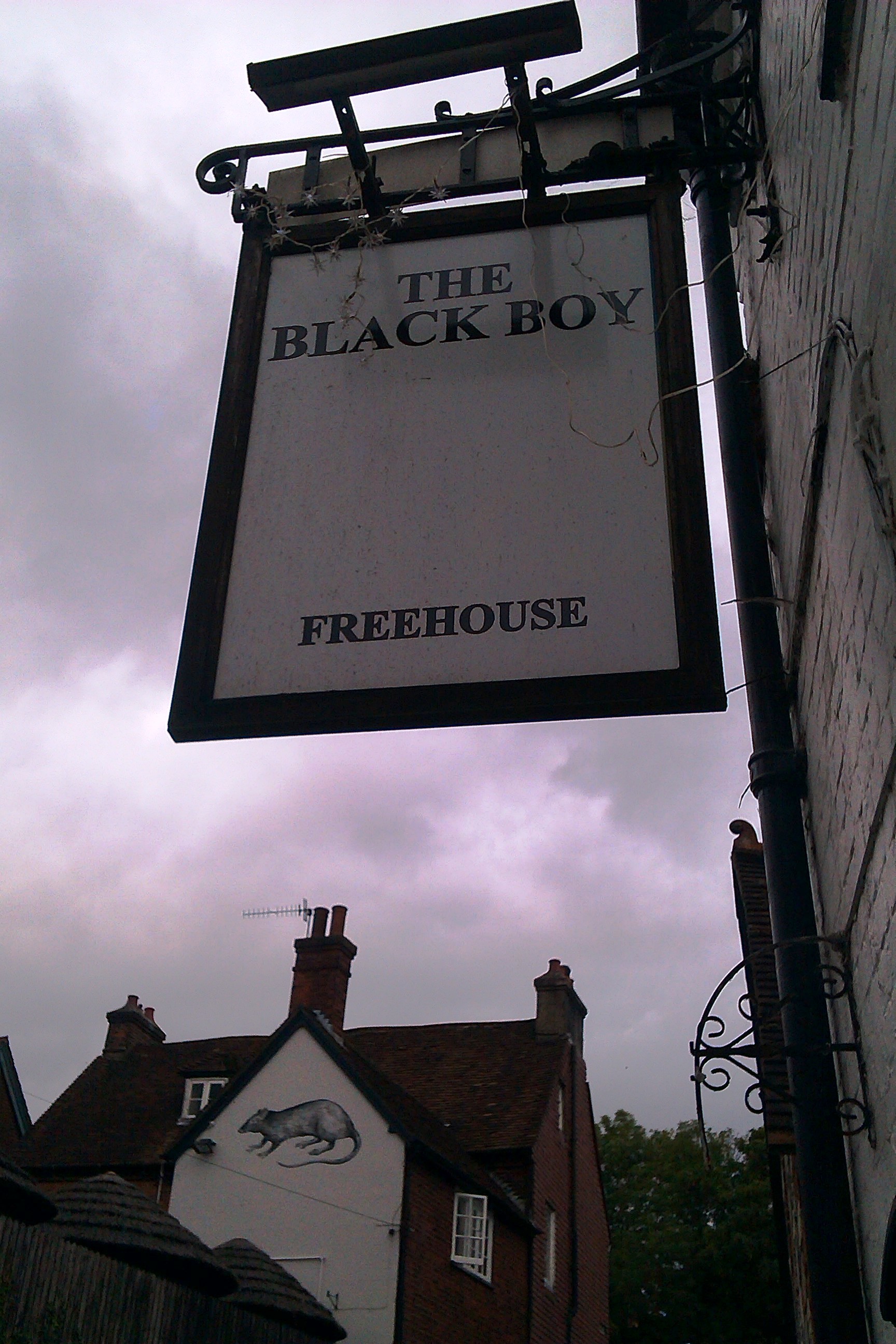
The Black Boy, Winchester

The Black Boy always seems to carry Flowerpots Bitter from The Flowerpots Brewery in Cheriton, a few miles away from Winchester. I often choose their 3.8% bitter (so mild-mannered after all the strong Italian beers I’ve been drinking lately!), but for this visit to The Black Boy I sampled some of the other ales they had on and chose Ruddy Darter.

Although it’s classified as an English bitter by Beer Advocate and a Premium Bitter/ESB by Ratebeer, more specifically I’d call Ruddy Darter an amber ale, with its deep coppery-red colour. Andwell, the Hampshire brewery that makes Ruddy Darter, refer to it as a Ruby Ale, in a Premium Ale style. (Andwell, by the way, was founded in 2008; Ruddy Darter is their most recent beer.)

However you define it, Ruddy Darter is delicious. It’s got a fruity smell, which continues into the taste, which is also warmly malty, with a good sweet caramel flavour and mellow hoppiness. My pint was hand-pumped, with low carbonation, though I suspect the bottled version would be bubblier. (Something I experimented on a few days later with some beers from Holsworthy Ales, in Devon. Will write that up shortly.). Oh, and it’s named after a dragonfly, which is pretty cool. All in all, a very pleasant quick visit to an old haunt.

[Usual apology for quality of photos. One of my reasons for visiting Winchester was to get a new phone with a good camera, but I couldn’t quite bring myself to sign up for another 24 month contract or whatever.]
Leave a comment

Filed under Ale, beer, Bars, pubs etc

Bread malfunction!

In my last post about bread-making, I mentioned that the previous two loaves I’d made had started out seeming fine but after a few days they went bad. The crumb, which had previously been firm and at that sweet-spot between dry and moist, started to collapse, becoming dense and damp in the centre. It wasn’t a problem I’d had before so I started wondering what was causing it: under-proving,  over-baking, some dodgy flour?

Or the heat.

Surely it was something to do with the heat? Although I baked with decent results last summer, when July and August similiarly peaked at around 40C  (100-plus in ye olde Fahrenheit), this year my bread seems to be suffering.

Even the nice durum wheat-strong bread flour loaf I baked last Thursday. Although it was great on Thursday and Friday, by Saturday morning, when we headed out of town for a night, it was suffering from the same problems. We got back last night, and the crust that was left was in a very sorry state.

So this is how it looked after it had cooled on the day of bake:

CU

And this is how it looked after three and a half days.

bread gone wrong

Sure it was a few days old, and getting stale (particularly around the edges, near the crust), but the core has gone all damp and dank, fizzy and yeasty. Not pleasant.

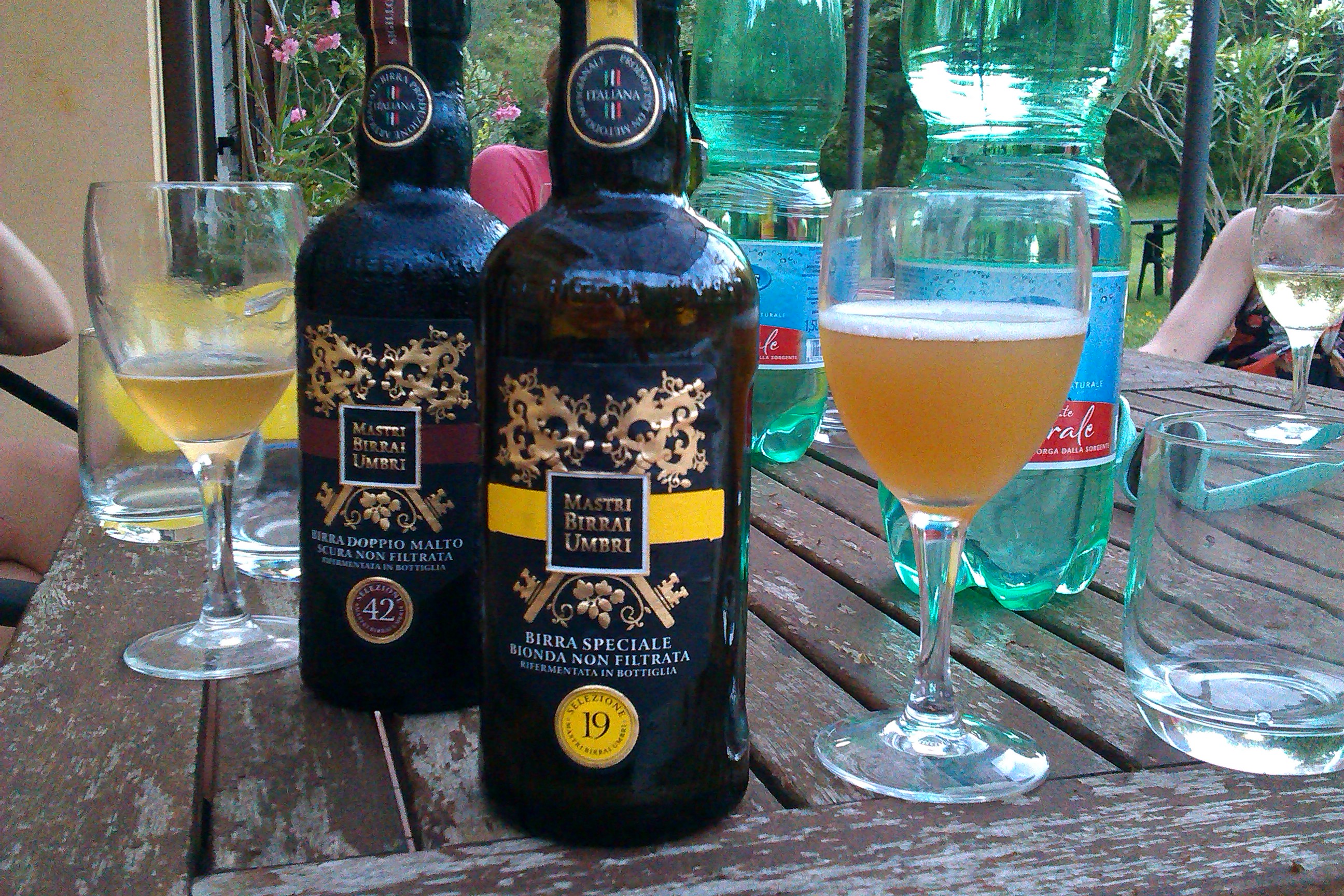
This yeastiness got me thinking: has it started fermenting again? The yeasts used in the dough were killed by the oven of course – the bread was baked at around 230C, and yeasts die at around 60C.  So are there wild yeasts in my bread bin for example? I mooted this question with my friend Michele. He’s not a baker, though he is a master brewer (at Mastri Birrai Umbri, whose wares we were enjoying Saturday night), so he knows his yeasts.

2013-07-27 20.29.52

He asked if I had fruit near where I stored the bread. Yes, I said, there’s a fruit bowl near the bread bin. It’s a great time of the year for seasonal fruit here in Roma – the region is cranking out apricots, plums, peaches, Coscia pears, figs, etc etc etc. Even someone like me who doesn’t much like fruit is enjoying this bounty.

But maybe it’s messing up my bread. Fruit, even when rinsed, has abundant wild yeast cultures on its skin.  Just think of advice you might have read about starting a natural leaven/sourdough: use some grapes, or raisins, or a some rhubarb (not strictly fruit, but close enough). These wild yeasts will be thriving at the moment, as the weather is humid and hot, as Rome heads for high summer. Even now, without the oven cranking at 240C, the kitchen is 30C. A pretty nice temperature for yeasts, moulds and bacteria.

So maybe the wild yeasts are finding my bread and starting to feed on it.  Which might indicate that I’ve not proved long enough, not leaving the yeast I’ve used in the bake long enough to cosume all the natural sugars in the flour. I’m not sure.

Fellow bakers – any thoughts?

4 Comments

Filed under Breads, Discussion, Flour & grain

Durum wheat sponge and dough bread

Baked and cut durum and Manitoba bread

After my recent, pleasingly successful experiment with a biga, I made a couple of loaves that seemed wonderful, but one turned out to be under-baked (shame on me), and the second just went weird after a few days. I think, like me, it can’t really handle the heat, as the Roman summer inches towards the trials of August, with  its high-30s (100 ish and more old money) temperatures, and thriving tiger mosquito population.

I made a multigrain seeded loaf that seemed great the first few slices, but didn’t like being taken to the park for a picnic in 35C temperatures (followed by a massive storm). The previously nice, firm crumb collapsed and went kind of fizzy. Again, it was as it if had been under-baked. And possibly even under-proved, though this is bizarre as it’d had a nice long prove, mostly in the fridge as the 25C kitchen was too warm.

To try and diagnose this mystery, I vowed I’d make a nice simple white loaf, just with strong white flour (or Manitoba as it’s known in Italy) and see how it coped with the heat.

Farina di grano duro and farina di Manitoba

Every time I open my flour bin, however, I see a pack of something that needs a bit of stock-rotation. In this case, I wanted to use up some of a bag of grano duro flour, that is durum wheat, (Triticum durum). It’s a type of flour that is more typically used for pasta, but I’ve baked with it before. I also had a bag of rice flour hanging around, so some of that went in too.

Also, following the biga experiment, I decided to do a sponge and dough method. Just to see if it coped better with the heat than the previous two loaves, that were made with the bulk fermentation method (BFM).

The BFM is your basic bread-making that involves creating a dough with all the flour, all the water, all the yeast, and processing that: first prove, shaping, second prove, bake. The sponge and dough method, on the other hand, involves using liquid (all or most of it) and part of the flour, with the yeast, then fermenting that more liquid mixture, called the sponge, before adding the rest of the flour and proceeding with a dough, proving, shaping and baking. Like a biga, a sponge is a type of pre-ferment.

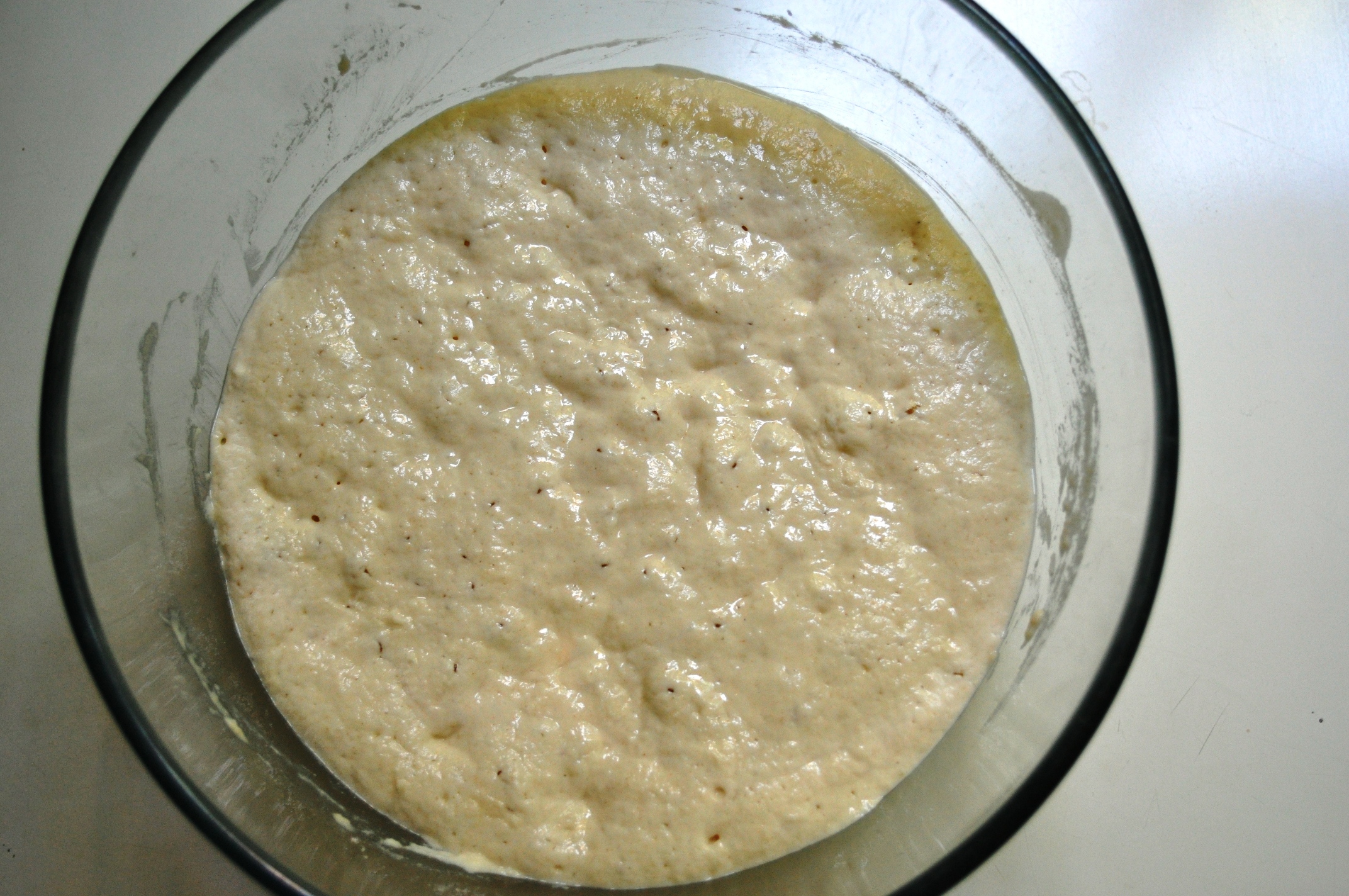
Duro-Manitoba sponge

A note on the yeast
I use fresh yeast. It’s known as lievito di birra in Italy, or cake yeast in North America.

If you’ve only got active dried yeast (ADY), use 4g. If you’ve only got instant/easyblend yeast, use 3g. Add the latter directly to the part of the flour you’re mixing with the liquid to make the sponge.

A basic rule of thumb for conversion is x3: that is, 3g ADY = 9g fresh yeast. You need less instant yeast than ADY. But I wouldn’t agonise: as long as your least is alive and well and happy, it’ll do what it needs to do even with a few gram’s variation. The time it takes the dough to ferment and prove will also vary depending on the temperature of water you use, the temperature of your kitchen, etc.

Ingredients
200g grano duro/durum wheat flour
50g rice flour
250g strong white/Manitoba flour (00 or 0 grade)
350g water (tepid)
10g fresh yeast
10g fine sea salt

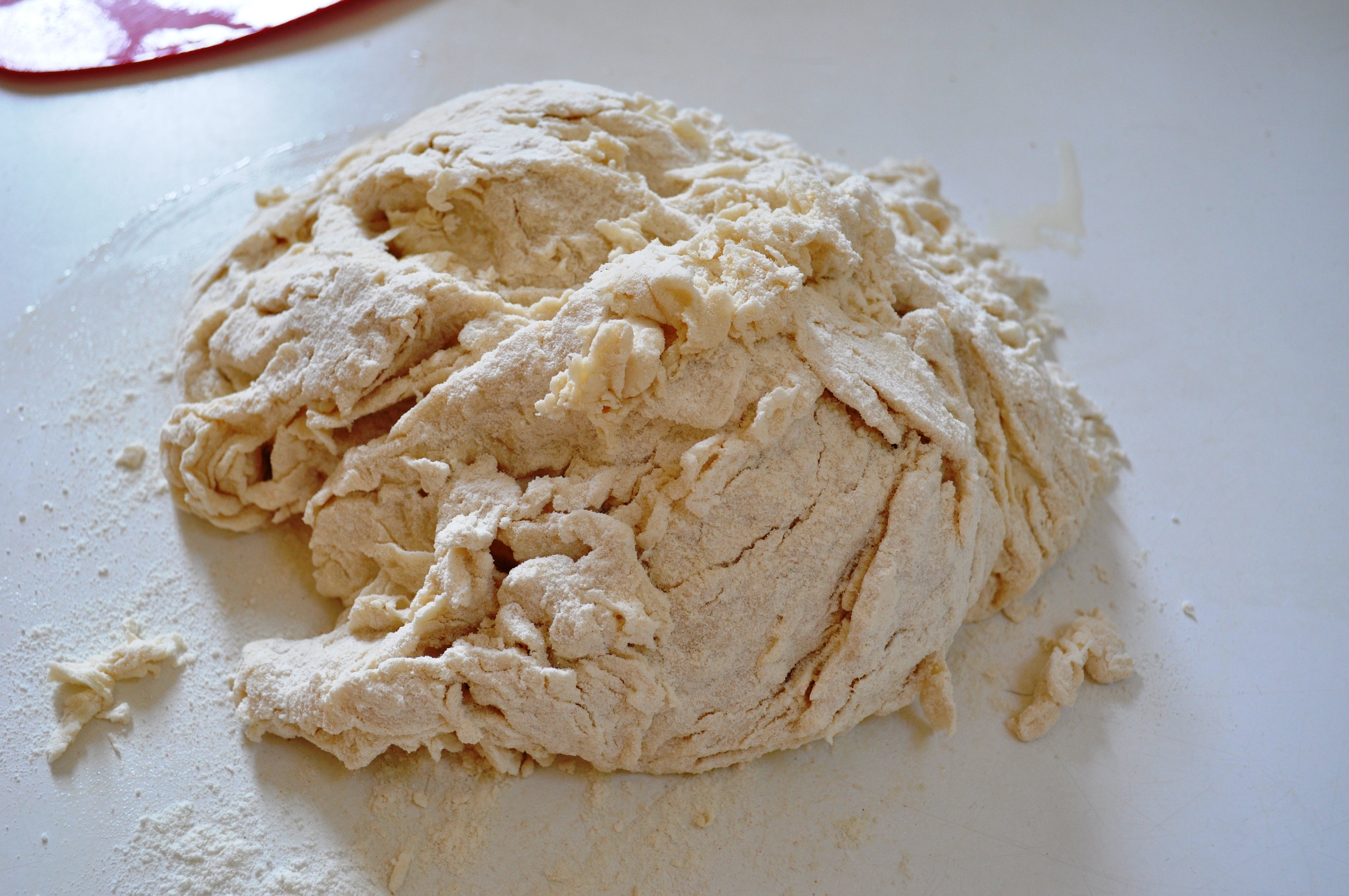
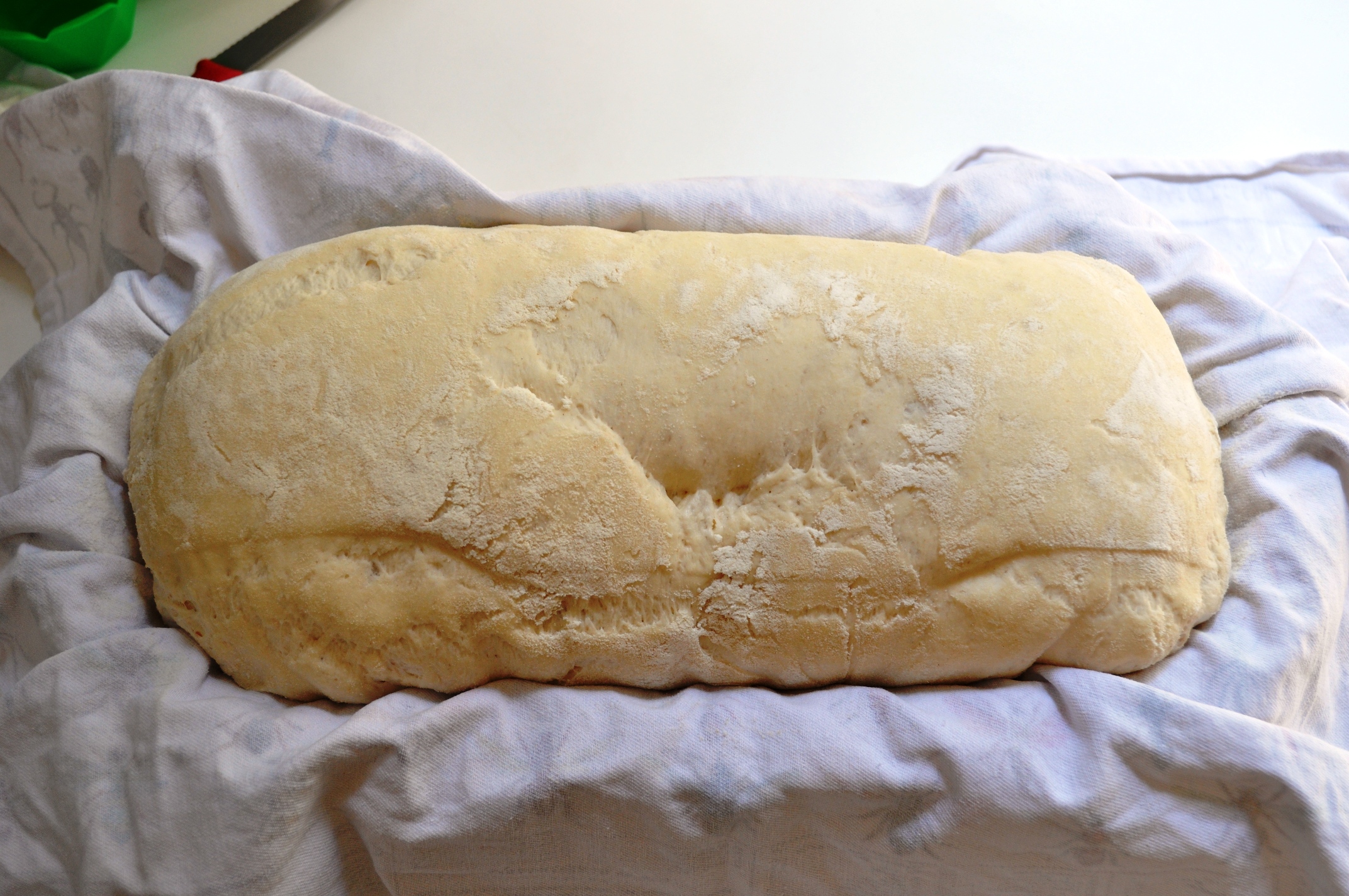
Dough, unkneaded

Method
1. Combine the water and yeast in a bowl. Whisk slightly to break up the yeast.
2. Combine all the flours in a bowl.
3. Put half of the flour mix in another bowl. Add the water/yeast mixture.
4. Stir together the flour and water/yeast to make a sponge.
5. Leave the sponge , covered, to ferment. I left mine for about 80 minutes in a warm kitchen. It should look nice and bubbly and active when it’s ready.
6. Add the salt to the remaining dry flour, mix it in, then add this to the sponge.
7. Bring the dough together in the bowl, turning it out when it’s mostly combined.
8. Knead the dough until smooth. You can do a longer knead once, or the Dan Lepard method of short kneads three times in half an hour.

Dough, kneaded
9. Form a ball of dough and place it in a clean bowl. I add a drop of veg oil to the bowl for nonstickiness.
10. Cover and leave to prove until doubled in size. Again, depends on temps etc, so check every now and then. It’ll probably be around one and a half hours if it’s in a warm place.

Dough, first prove
11. Turn out the dough, and form a ball.
12. Leave the ball to rest for 10 minutes.
13. Form a baton.
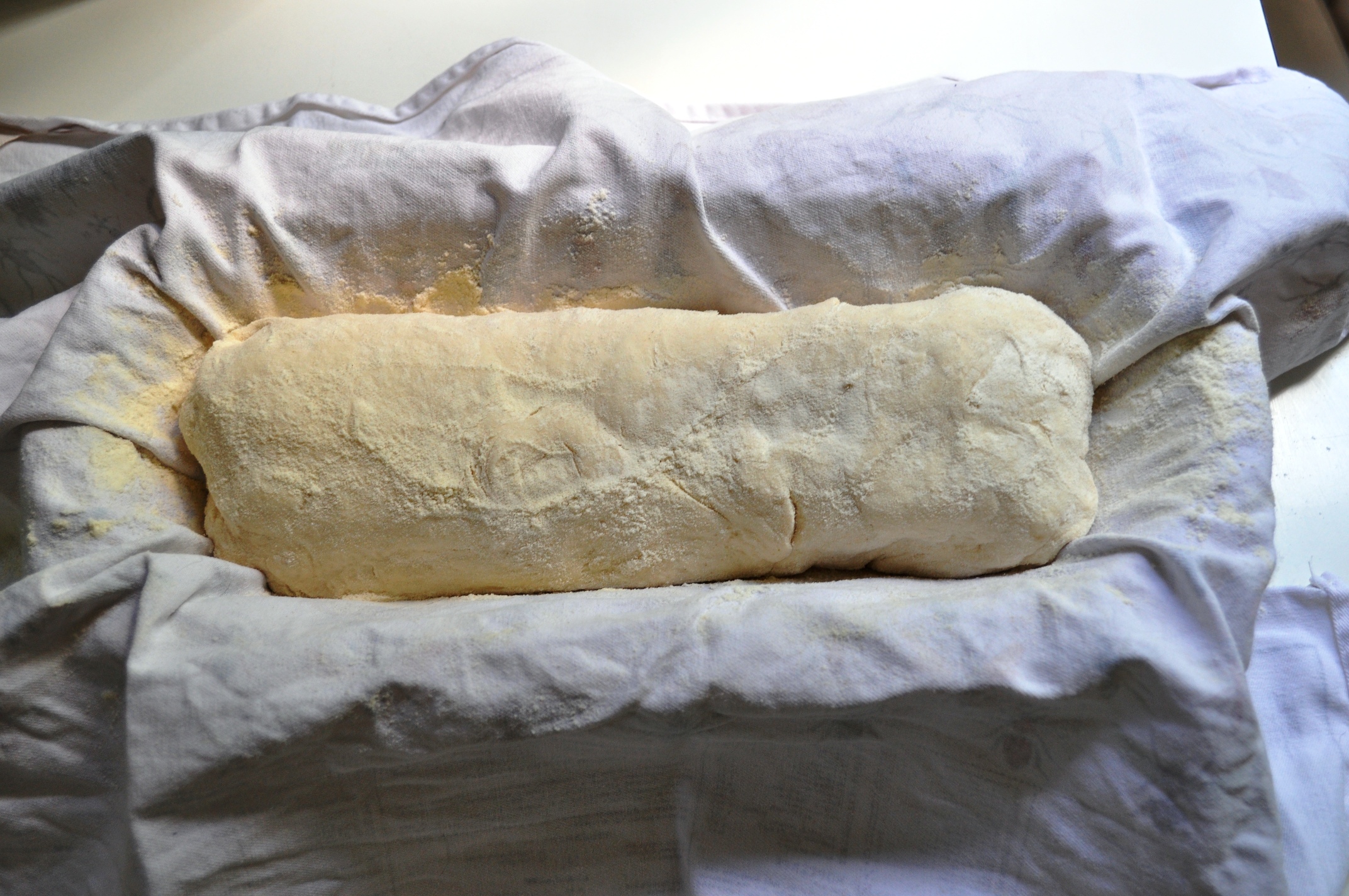
14. Leave the baton to prove again, ideally in a basket or banneton lined with floured cloth.

Dough, in proving basket
15. Pre-heat oven to 220C.
16. When the baton is doubled in size and soft to the touch, turn out onto a baking sheet.
17. Bake for around 25 minutes, then turn down the heat to 200C and bake for another 20 minutes, or until the loaf is well-browned and feels fairly light and ‘hollow’ when picked up.
18. Cool on a wire rack.

Dough, in proving basket, proved

Thus far, this bread has been behaving – and not giving me any insights into what went wrong with my previous loaf. If the crumb suddenly collapses and starts to ferment, I’ll report back.

Leave a comment

Filed under Breads, Recipes

Pine nut cheesecake, or cheesecake della nonna

Pine nut cheesecake, cheesecake della nonna

If you’re in a Roman restaurant and they offer you desert, it’s quite likely you’ll encounter torta della Nonna – that is “Grandma’s tart” or “Grandma’s cake”. I’m not sure about the labour laws, but all this pudding-making must keep granny pretty busy.

Sources vary, but torta della nonna is either a Florentine or a Ligurian dish. Though surely any nonna has her own torta? There are variations, but most commonly in Rome it’s a tart made with a sweet pastry crust and a filling based on custard and/or ricotta. Its defining feature is pine nuts, pinoli.

This post isn’t, however, about torta della nonna. As I had some leftover cookies that had been smashed on their journey to and from the park for a picnic on Sunday, I thought I’d make a cheesecake with a della nonna twist: ie, with the addition of pine nuts.

A note on the cookies
I made some cornmeal cookies – they were basically like a digestive, but with a slightly different crunch, and a few spices (cinnamon, ginger). They worked well, but you can use whatever biscuits you like: digestives are most typical for UK cheesecakes, US recipes use graham crackers. My friend Juli-from-Jersey said the cornmeal cookies reminded her of snickerdoodles, though they’re cookies with a name so ridiculous I can’t quite bring myself to discuss them.

I won’t include the cornmeal cookies recipe, but will say digestives are so easy to make you don’t need to reach for some plastic-wrapped stuff from a factory. I’ve included a simple recipe at the bottom of this post. If you do use this recipe, I’d add some cinnamon and ginger to the crumb base mix.

A note on the candied peel
Only use your own candied peel, or other hand-made stuff. Don’t use that yucky sticky stuff you get in tubs from the supermarket. Peel is easy to make. Honest. Just Google it, if you’ve not tried before. I’m still using some of my candied-vodka-infused-kumquats-from-the-garden-peel.

A note on cheeses
Often, cheesecake recipes will just say “cream cheese” in the ingredient list. It’s a bit vague. Though perhaps it doesn’t matter what cream cheese, as a baked cheesecake mixture seems pretty forgiving. Here I used mascarpone and robiola. The latter could be replaced with something like Philadelphia, if you really had to. You could also do, say, half-half mascarpone and ricotta. I might try that next time as you can get stupendous fresh ricotta here in Roma.

Pine nut cheesecake slice, cheesecake della nonna

Ingredients
Base:
40g hazelnuts
120g cookies/biscuits like digestives
60g butter

Cheesy bit:
250g mascarpone
200g robiola
2 eggs
Zest of 1 lemon
100g caster sugar
30g candied peel
60g pine nuts

To serve:
30g pine nuts
Icing sugar

Method
1. Pre-heat the oven to 180C.
2. Toast the hazelnuts until starting to brown.
3. Grind the hazelnuts in a food processor until fairly fine, then add the cookies and grind to a medium crumb.
4. Melt the butter in a pan, then combine with the hazelnuts and cookie crumbs.
5. Push the crumb mix into the bottom of a 20cm loose-bottomed cake tin.
6. Combine the cheeses, eggs, sugar, and zest, blending well by hand or with a handheld zizzer.
7. Finely chop the candied peel and add to the cheese mix, along with the pine nuts.
8. Pour the cheese mix onto the crumb base.
9. Bake for around 50-60 mins until the top is browning and even cracking slightly, and firm to the touch.
10. Remove the sides of the tin, and leave to cool completely.
11. When the cake is cool, toast the extra pine nuts and sprinkle on top, dusting the whole lot with icing sugar.
12. You could serve it with some whipped cream, for added deliciousness. We didn’t as it’s hard to get nice cream here in Roma, despite the cornucopia of other wonderful dairy products.

Extra! Free! Digestive biscuits recipe
90g butter
120g wholemeal flour
120g oatmeal
40g caster sugar
Pinch salt
Pinch baking soda
1 egg, beaten

1. Preheat oven to 200C.
2. Rub butter into flour, stir in the rest and bind with beaten egg.
3. Roll and cut out rounds.
4. Prick with a fork.
5. Put on baking sheet, sprinkle with oatmeal and bake in a hot oven till browned.

2 Comments

Filed under Biscuits, cookies, Cakes, Pies & tarts, Puddings & desserts, Recipes

Birra del Borgo’s Rubus in Villa Doria Pamphili Park

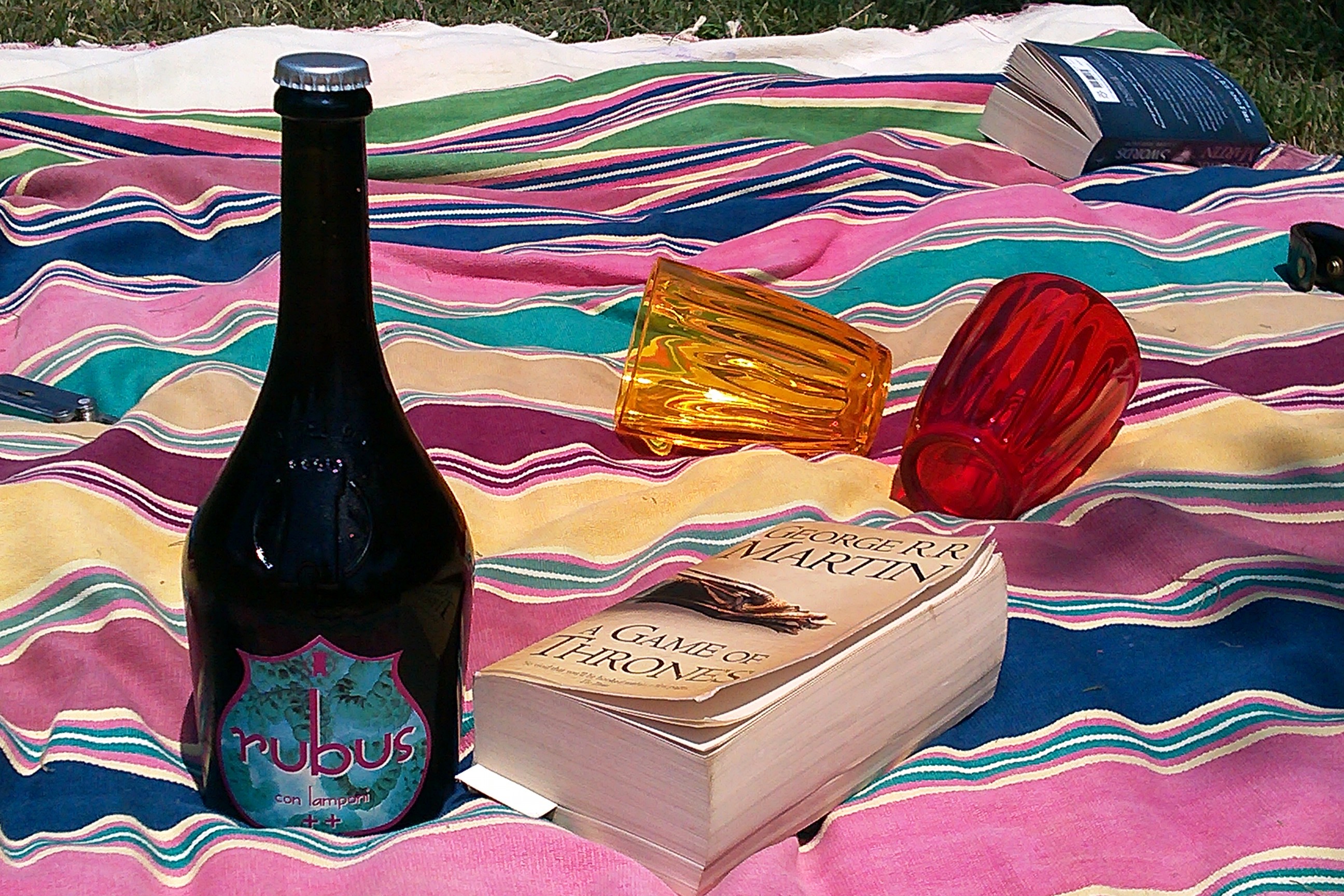
Rubus beer, Birra del Borgo

Fruit beers. Strange drinks frequently made by simply adding fruit extracts or syrups to a finished brew, resulting in concoctions that are basically just flavoured beer.  Something I’ve never had any inclination to drink. But there are also other, more sophisticated fruit beers, where the fruit – real, unmolested fruit – plays an essential role in the brewing process.

Belgian lambics are the most famous of these beers, utilising wild yeasts and bacteria present on the skins of fruit for spontaneous fermentation. That is, rather than using a domesticated strain of Saccharomyces cerevisiae – mankind’s longtime ally (or slave) in brewing, baking and winemaking – the wild yeasts and bacteria are used for the fermentation and give the brews distinctively different flavours, along with any flavour from the actual fruit used.

Birra del Borgo‘s Rubus may not stricly be a lambic – it doesn’t use the specific yeasts and bacteria of those Belgian beers – but it’s certainly a close relative. It’s made with raspberries (lamponi), which have just come into season here in Lazio. The ratio of fruit to beer in the brew is a about 10 per cent (” 100 grams of fresh fruit are added for every litre of beer”; a litre of liquid basically weighs a kilo) and does involve a controlled spontaneous fermentation.

No one seems quite sure how to define it though. While RateBeer does simply call it a Fruit Beer, on Birra del Borgo’s own site, it’s classified as a Spiced Ale, though spice isn’t the defining factor. BeerAdvocate, meanwhile, categorises it as an American Wild Ale – another related type of beer that’s been influenced by lambics. However it’s best categories, Rubus is a unique brew.

It’s based on Birra del Borgo’s classic Duchessa – a kind of saison that’s already fairly fruity, and is made not with malted barley but with an ancient wheat strain known in Italy as farro. Now, In Italy, the word farro is used to refer to three strains of wheat: Triticum monococcum (einkorn); Triticum dicoccum (emmer); and Triticum spelta (spelt). As Borgo make another brew specifically called Enkir with einkorn, I guesssed Duchessa is made either with emmer or spelt. But guessing’s not as good as hard facts, so I emailed the brewery and Luciana Squadrilli kindly replied and clarified: “Per la Duchessa utilizziamo il Triticum Dicoccum.” So it’s made with emmer. She explained it’s a traditional crop from Rietino, in Rieta, the province where the brewery is local.  Originally they bought from a small supplier near the brewery, but in the past few years as they’ve grown, they’ve started sourcing the grain from just over the border, in Abruzzo. Whether the grain used is from Lazio or Abruzzo, Duchessa is a great summer ale – smooth yet crisp and refreshing. Rubus is possibly even more so.

Birra del Borgo Cortigiana on tap, Rome farmers market

We had a chat with the girl selling Birra del Borgo’s wares at the famers’ market near Circo Massimo (Circus Maximus) in central Rome the other day. I’d been intrigued reading about their latest monthly “bizarre beer” – in this case, Duchessic, a collaboration with Cantillon in Brussels, which blends Duchessa with a lambic – and wondered if it was available. She said no, as it was a small-scale experiment in the brewery, but recommended Rubus as an alternative. As we were planning a picnic, a fresh fruity beer seemed like a good idea. Though I also bought their Hoppy Cat Cascadian Dark Ale / IBA / BIPA,  just for comparison with the B Space Invader I wrote about a few days ago. She also gave us a sample of Cortigiana, their smooth, sweet golden ale.

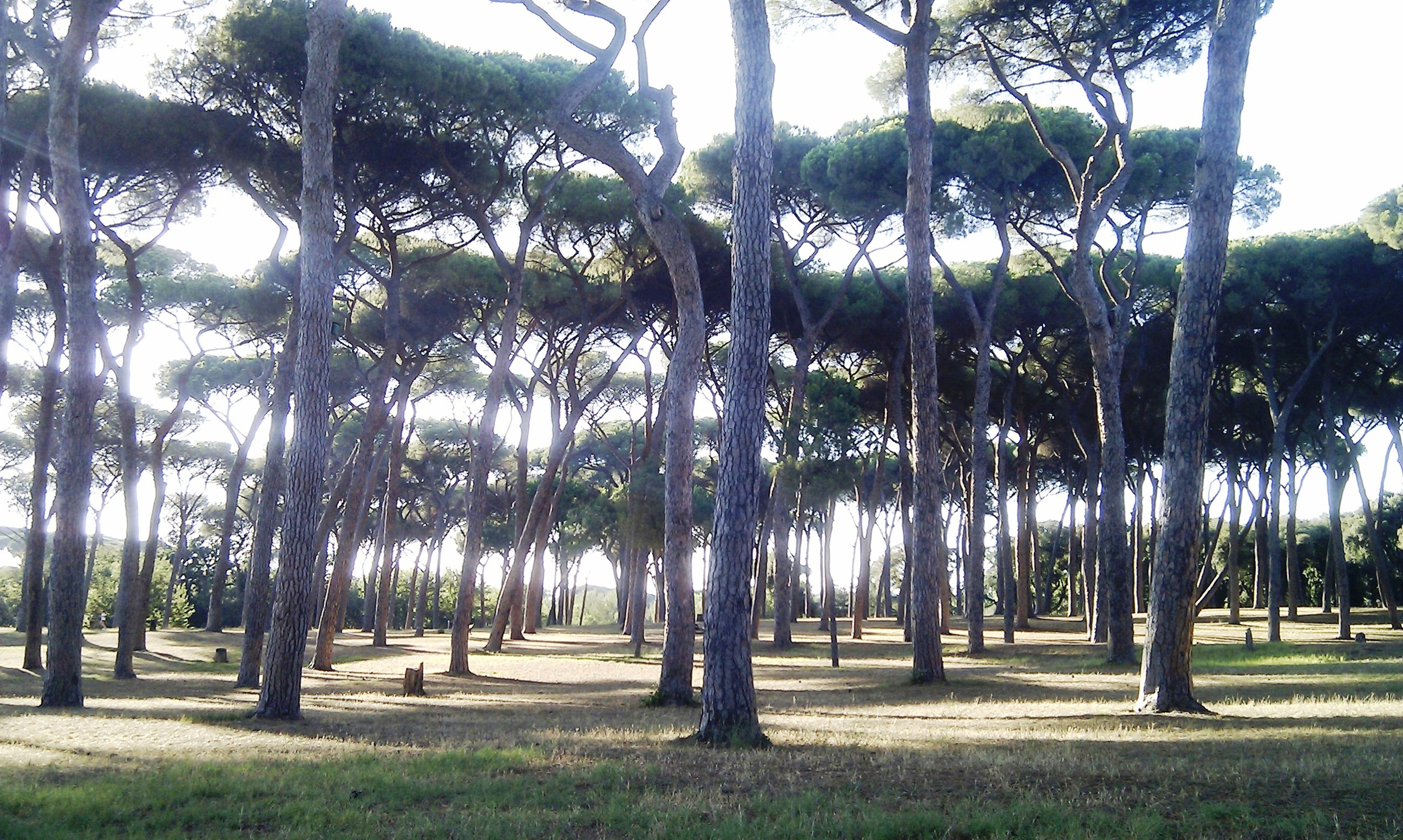
So yesterday afternoon, we headed up to the park: the grounds of Villa Doria Pamphili in the west of Rome. It’s a great place, Rome’s equivalent of London’s Hampstead Heath. In the summer it’s frequented by sunbathers, families, men in ridiculous lycra on mountain bikes, shirtless runners showing off their physiques in the heat, Rome’s south Asian community having protracted games of cricket, Rome’s Pilipino community having vast get-togethers. Although there’s the occasional slightly dodgy area where the path peters out in undergrowth or a seemingly pleasant walk among the oleander turns into a giant toilet, it’s generally pleasant, especially on a hot day, with fountains, uncrowded fields, shady deciduous woods and stands of pines, and a lake. There’s even a nice café-bistro that uses organic produce and whatnot.

Pine trees in Villa Doria Pamphili park

We headed for our usual spot near the chapel in front of the villa, and got settled in, hoping our crappy busta termica (cooler bag) would do the job in the 35C heat while we waited for our friends. We couldn’t quite wait though, and had to crack open the Rubus while it was still hot. Clearly from the photo (top of post) we weren’t usual the ideal receptacles – plastic beakers don’t exactly offer a refined organoleptic experience – but they did the job nicely, as this did indeed turn out to be a suitable picnic beer.

It’s not a beer that’s all about the subtle interplay of hops and malt. It’s a well-carbonated, crisp drink that has more in common with a sparkling wine than a  beer, as it really is defined by fruit not grain or hop. Indeed, aside from the fact that it’s 5.8% ABV, it’s very easy to drink, it’s almost like a fizzy soda pop. It’s got a gently fruity, berry perfume, a loose, loose head that subsides fast and the taste tart, but not overly so. Any sourness is well balanced with a sweetness.

Looking at people’s reviews on RateBeer and BeerAdvocate, I get the impression that it’s a fairly different experience when it’s on tap, so I will add an addendum if I get to try it alla spina. Previously, I’d rarely have chosen a fruit beer, but my enjoyment of this bottle of Rubus might help me push through any lingering prejudices.

Info:

Circo Massimo farmers market / Il Mercato di Campagna Amica del Circo Massimo
Via di San Teodoro 74, 00186 Rome
mercatocircomassimo.it
Open Saturdays 9am-6pm, Sundays 9am-4pm. July: Saturdays only. August: closed.
Birra del Borgo’s stall is usually at the back.

Birra del Borgo
Birradelborgo.it (English site) | 07 463 1287 | info@birradelborgo.it

Leave a comment

Filed under Ale, beer

Toccalmatto’s B Space Invader dark beer

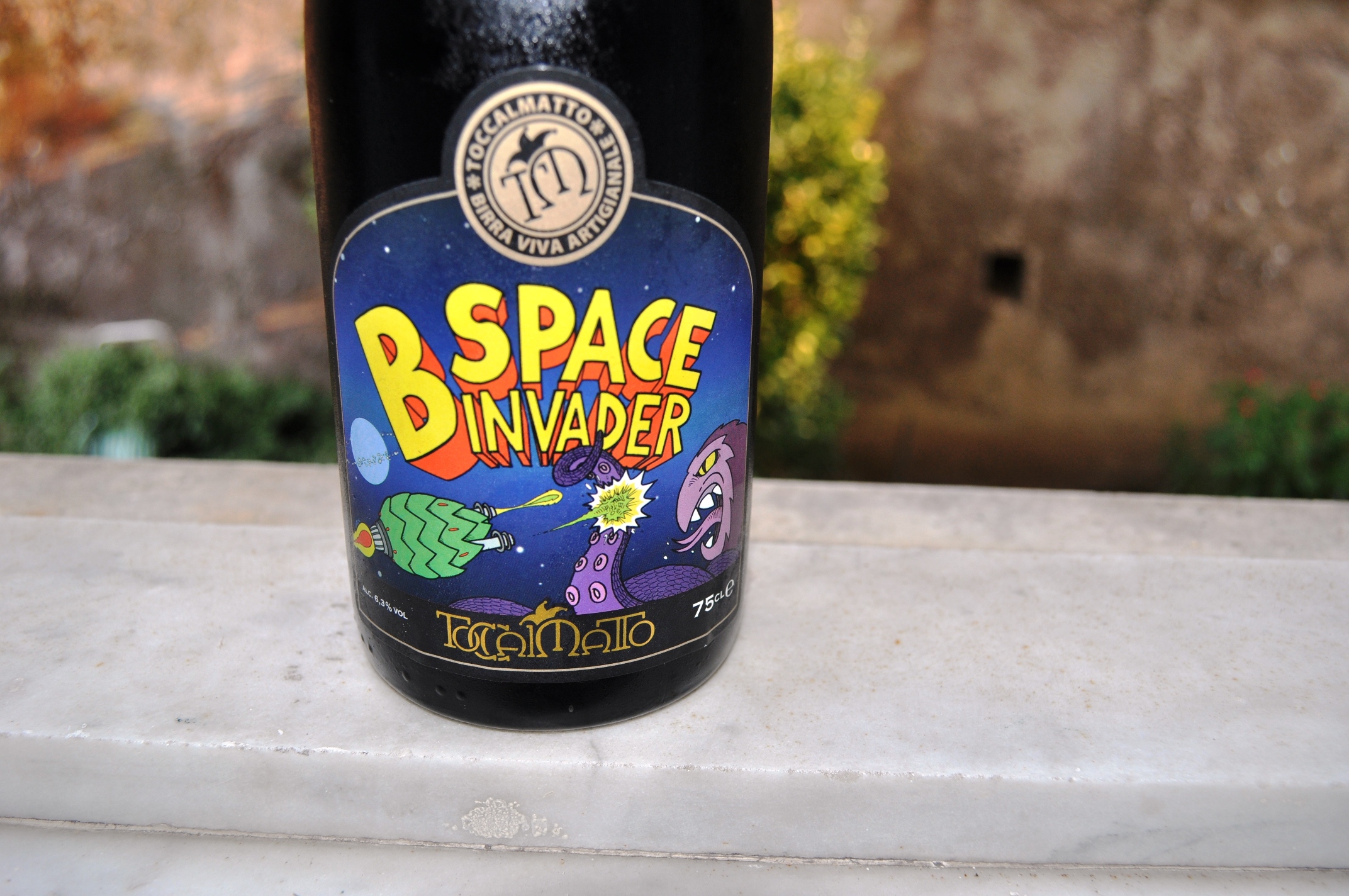
Toccalmatto's B Space Invader Cascadian Dark Ale

This is a pretty bonkers beer. Its packaging is eccentric. The blurb on the label is wilful. The taste is full-on.

I bought this one the other day from a craft beer shop, drawn by the label and the name: B Space Invader. How could I not? I was a child of the late 70s and 80s. Everything conspired for kids (especially boys) born around 1970 to become science fiction obsessives: Star Wars arrived in 1977, when we were totally susceptible to Lucas’s films’ hokey recycled charms and stupendous special effects. The germ of SF geekdom was consolidated by the first flowering of videogaming, with Space Invaders (1978) cabinets arriving in our local ice rink when I was about 10. Then we encountered more grownup fare, like Blade Runner (1982), and things were set. The makers of B Space Invader at Toccalmatto brewery in Emilia-Romagna clearly have a similar frame of reference. As well as the actual name of this beer, the label even includes this quote: “E ho visto i raggi B balenare nel buio vincino alle porte di Tannhause…” Tweaked slightly, but here’s the original – from Blade Runner of course.

So yes, how could I resist. Perhaps you shouldn’t judge a book by its cover, but it’s certainly fun to buy beers on the strength of their labels. Well, that and actually picking up the bottle and reading how it’s described. The label here calls it an “Intergalactic Black Cascadian Incredible Pale Ale / Birra Scura Estremamente Luppolata”. The latter part means “Extremely hoppy dark beer”. Which I find slightly confusing – a dark (v dark) pale ale? But yes, I should stop being so literal as this is a style of beer that’s become popular among craft brewers and fans the past few years.

Toccalmatto's B Space Invader Cascadian Dark Ale, rear label

Here’s a discussion of this style of beer, which evolved on the North American west coast, written by Matt Van Wyk of Oakshire Brewing in Eugene, Oregon, USA. He says this beer “is known by three different names: Black IPA, India Black Ale (IBA), or Cascadian Dark Ale (CDA)”.  Here’s his definition of the style: “It’s dark in color of course, with a prominent ‘Northwest’ hop aroma – citrusy, piney and resinous. The body has some sweet malt flavors, with hints of roastiness and toasted malt. The flavors should strike a beautiful balance between citrusy-resinous Northwest hops and, to a lesser degree, roasted, chocolate malt or caramel notes. The finish should be semi-dry, not heavy like a porter or stout. Hop aromas and flavors should be prominent, but the malt balance should not be lost in an onslaught of hops. In other words, when closing your eyes, it should not simply taste like a typical American IPA.”

The Guardian’s Tony Naylor offers a more succinct definition, saying this style of beer offers: “a great upfront wallop of tropically fruity and acutely bitter hop flavours underpinned by the smokier, roasted malt character of a stout”.

Like the Italian APAs I’ve been enjoying, an Italian BIPA/IBA/CDA will also be something subtly different to its North American forebears, but broadly B Space Invader conforms to Naylor’s description, though perhaps less so to Van Wyk’s. The aroma is more blackberry, blackcurrant and prune than piney or citrussy. The flavour – once you’ve got past the thick, creamy head – is big and intense. A lot of hops, a lot of roasted malts, though not with the coffee or chocolate flavours you can get with porters. Nor is its body creamy like a porter; it’s crisp and medium carbonated.

Van Wyk also says the American BIPA/IBA/CDA flavour is defined by the use of Pacific northwest hop varieties. B Space Invader is apparently made with Simcoe and Amarillo hops, varieties from Washington State, so that conforms. But it also apparently contains Australian Galaxy hops, shifting it well away from that North American West Coast context.

Toccalmatto's B Space Invader Cascadian Dark Ale, rear label

BIPA/IBA/CDA has also been subject of a debate about whether it’s genuinely a new style of beer. Certainly it reminds me of older black beers, things like Black Mac from Mac’s Brewery in New Zealand. Black Mac played a major role in my path to enjoyment of decent beers. After spending my 1980s adolescence drinking the vile lagers that were popular in the UK then – and, worse, snakebite; even thinking about it makes my head hurt – I gave up booze for several years. It was only while living on a small farm in NZ, aged 24, that I realised beer could be pleasant and interesting. Gosh. Flagons of Black Mac opened my eyes. (This was around 1994, back when Mac’s was the pre-eminent NZ craft brewery. In fact Terry McCashin, the founder, kicked off the microbrewery scene in NZ, much like Teo Musso of Baladin has in Italy.) Black Mac was one of my principle gateway beers, and although B Space Invader is a helluva lot bigger, stronger (6.3%) and more intense than Black Mac (4.8%), the similarities are there: notably in the balance of hoppiness and toasted malts. And yet Black Mac is defined as a dark ale or a Schwarzbier, styles of beer that have been around for since the Middle Ages.

So although B Space Invader is top fermented, unlike Schwarzbier, which is a dark lager and bottom fermented, flavour-wise the boundaries between BIPA/IBA/CDA and some older styles can be minimal. I’m not quite sure what B Space Invader has to do with Space Invaders or Blade Runner, or SF in general – though it made me buy it.

Info
Toccalmatto
toccalmatto. it (sort of English site) | 05 2453 3289 | info@birratoccalmatto.it

Leave a comment

Filed under Ale, beer

The Hangry Hour and Birra del Borgo’s ReAle

Birra del Borg's ReAle at The Hole, Trastevere

One aspect of Roman life I just cannot get used to is meal times. Or more specifically, dinner time. During the hot summer months (ie now) we’ll be going to bed around 11pm, thinking of that pesky alarm going off at 6.30am the following day, while the sound of chatter, and crockery and cutlery, and kids crying, wafts towards us from the restaurant a few doors down. How the heck can they still be eating at nearly midnight? What are those babies doing up at this hour? My body clock just couldn’t cope with those hours. I cannot even begin to imagine how I’d survive Barcelona.

My troubles usually start around 5pm. I’ve eaten a big lunch at 1-ish, I’ve had a few snacks during the afternoon, but still my body starts telling me it’s time to eat big towards late afternoon. I’m just too programmed. Growing up, the main meal of the evening was always at 7pm, or even earlier when I was a little kid. Around 6pm I’m getting hangry, and around 7pm I really really want to eat. Don’t talk to me. Just give me some damned protein. It’s the Hangry Hour. Or at least it used to be, but in Roma it can turn into the Hangry Two Hours, or more.

This problem often coincides with meeting Fran from her train home from work. On a summer’s evening, we sometimes head straight from the station to a bar for an aperitivo. Last night, this involved a jaunt to the less touristy part of Trastevere – that is, east of Viale di Trastevere, in the bend in the river. Specifically, Piazza del Ponziani.

Although neither of the bars there are any good for satisfying my Italian craft beer cravings, it’s just a nice spot. Although there are ex-pats and tourists there, for the most part it still just feels like an ordinary neighbourhood piazza, where the locals all seem to know each other. I even recognise a lot of them now, and their dogs, though I’m probably still just another straniero to them. I don’t think the girls in one of the bars, The Hole, recognise me yet either, but I still like their bar. I’m not sure what. It kinda lives up to its name, they’re reliably surly, and we even got shat on by gulls earlier this summer, but we keep going back.

As it was The Hangry Hour, Fran insisted with get a snack. In a lot of places, you get a snack (or even a buffet) included in the price of your drink at aperitivo time, but not at The Hole. We paid €8 for a plate of salumi e formaggi (cold cuts and cheese), which turned out to be just the latter. And they were pretty poor. A worse culinary crime, however, was the bread.

Many foreigners still labour under the delusion that you can’t get bad food in Italy, it’s all artisan and hand-made. And blah. Seriously, blah. That’s just a load of bollocks. The bread The Hole gave us was what’s known as pancarré in Italian – basically industrial white sliced bread. It’s not unlike British white sliced made with the Chorleywood Bread Process, the industrial invention that did more than anything else to destroy the craft of baking in Britain.

The process turned 50 last year, and continues to dominate wheat-based industrial “food” products in the UK, despite its nutritional poverty and the fact that it’s quite likely at the heart of people’s problems with eating wheat products, from feelings of bloating to Coeliac disorder. Although certain quarters have been determined to deny Chorleywood products are problematic, other – scientific – work has proved that long fermentation breads are digestible to people with coeliac. Ironically, this work lead by a scientist from the University of Naples.

So yeah, despite the Hangry, I couldn’t really eat that pancarré – I tried a nibble, but it was spongy and bland. And stale.

pancarre'

At least The Hole has the one Italian craft beer on their menu available this time. That beer is ReAle, from Birra del Borgo.

Like Birradamare (which I talked about here) Birra del Borgo is one of Lazio’s main local micro-breweries and fairly easy to find in Rome. The 6.4% ABV ReAle is a classic Italian craft beer. It’s an APA – and most Italian craft breweries seem to do APA style beers. So much so that Italian APAs really need a name or category of their own, as they’re evolving from APA much like APA evolved from IPA and other pale ales. (Even though Italian APAs still use American hops, like the ever-popular Cascade. Maybe one day they’ll grow more hops in Italy, and have enough to realy hone a fully Italian APA.)

Italian APAs are generally less hoppy and more malty than genuine US APAs, to suit the Italian palette. ReAle is no exception – the predominant flavours here are malt – notably crystal malts, as the beer has a nice slightly-burnt-caramel flavour, along with a certain orange or grapefruit fruitiness. It’s a very nicely balanced beer, with a certain warmth – not warm like a nice cup of cocoa, but warm from the bright amber-copper colour and flavour.

So even though the beer didn’t exactly take the edge off the hanger, it certainly distracted me from the terrible pancarré and dodgy cheese. Afterwards, we eschewed the dubious delights of Trastevere and headed back to Osteria Pistoia on Via Portuense for a pretty decent dinner.

Info:
Birra del Borgo
Birradelborgo.it (English site) | 07 463 1287 | info@birradelborgo.it

The Hole
Via dei Vascellari 16, Rome
06 589 4432

Random addendum
Talking of hangry, among the many T-shirt designs I’ve mused about over the years, how about a pic of Hulk (smashing, perhaps) with the text: “You wouldn’t like me when I’m Hangry!” If you do have a T-shirt printing operation, feel free to steal this idea – but drop me a line if you do!

6 Comments

Filed under Ale, beer, Bars, pubs etc, Uncategorized

Plum and almond muffins

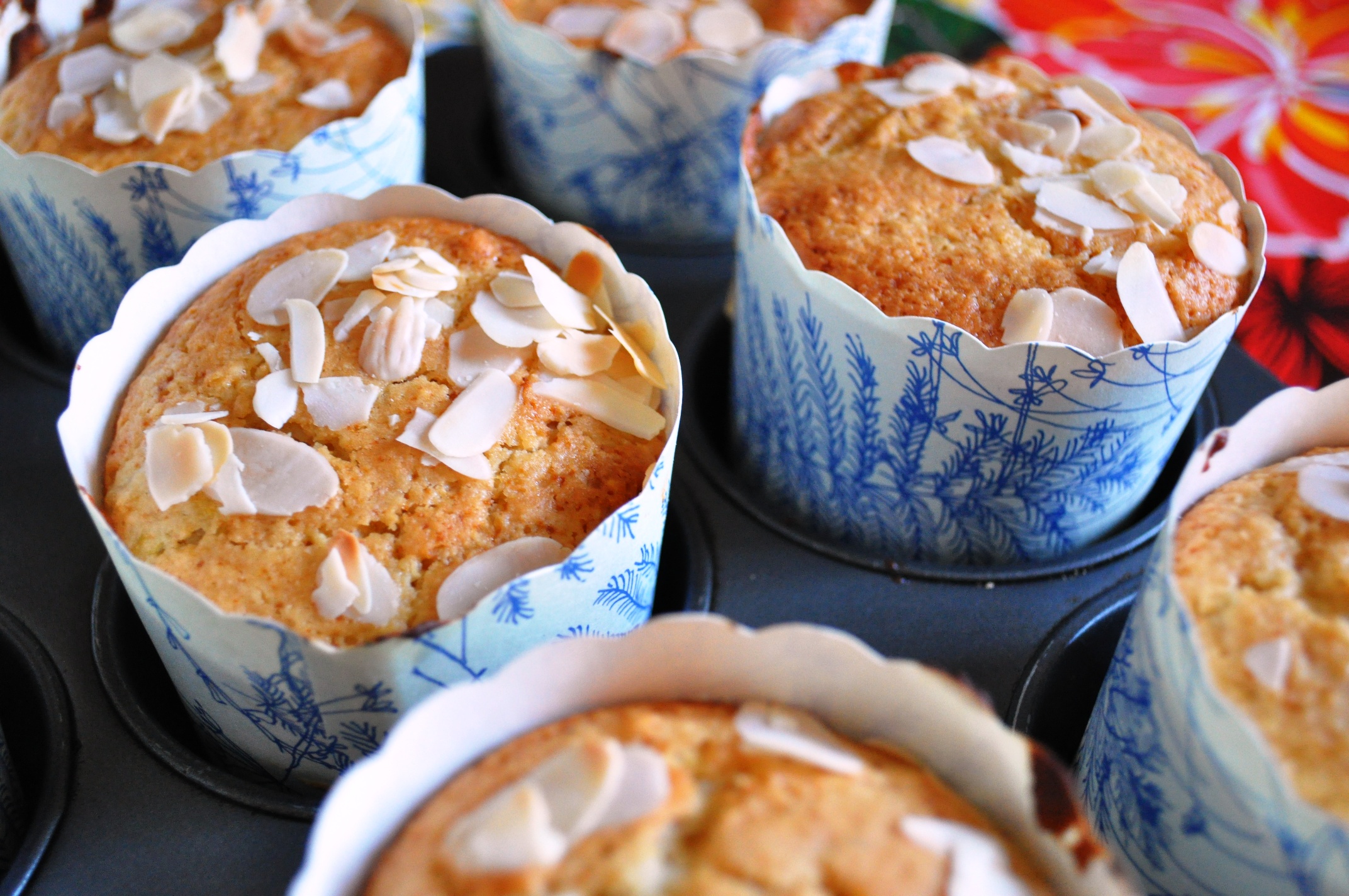
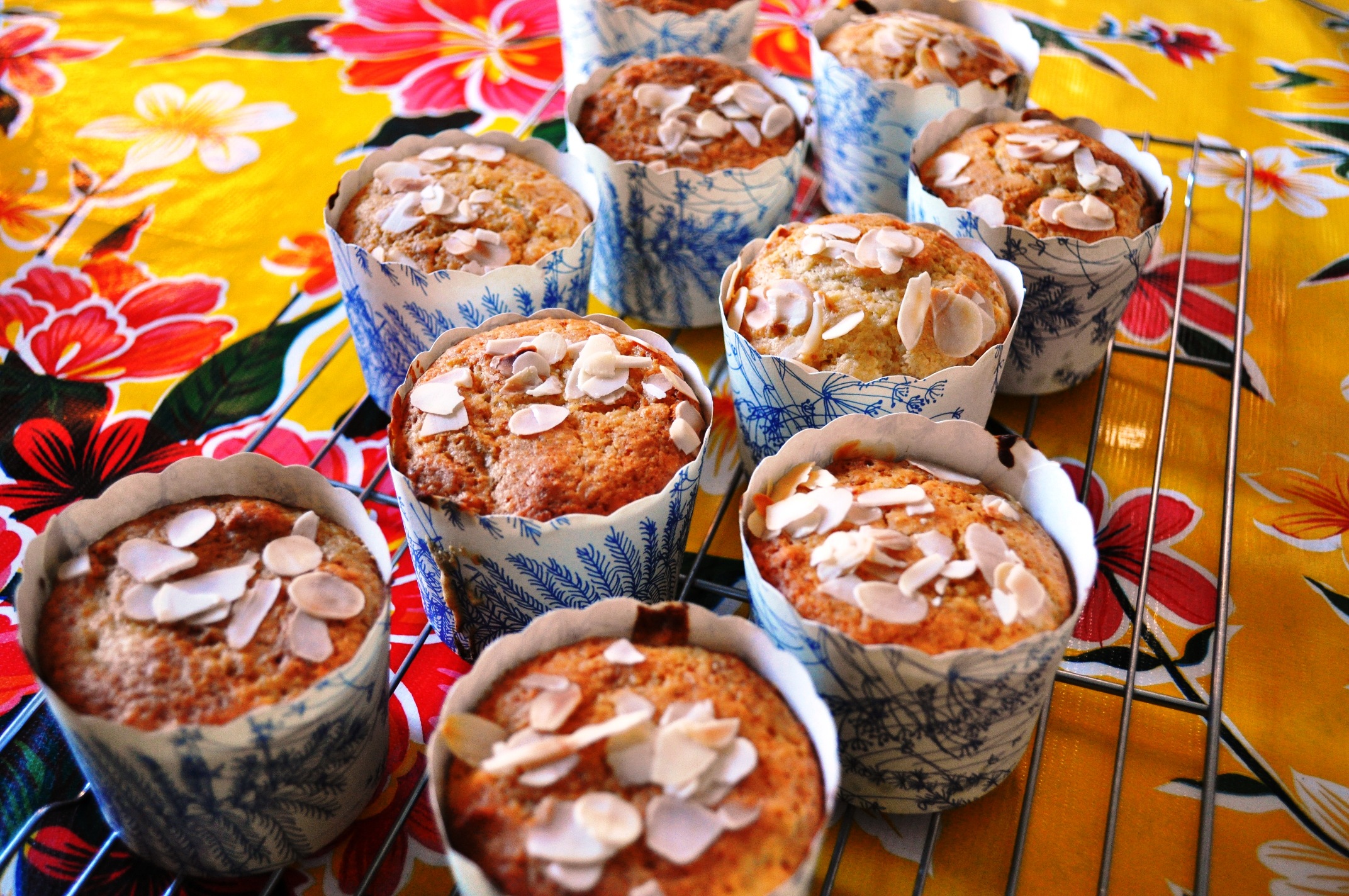
Freshly baked plum and almond muffins

At the weekend, our next-door neighbour gave us a big tray of plums. We used the majority of them to make spiced plum ketchup (recipe at the bottom), but had some left over.

I don’t like plums. In fact, I don’t much like fruit generally… though I can eat it happily if it’s baked into something with evil refined sugar. Even better if it’s then served with vanilla ice-cream, gelato or cream (especially clotted cream: West Country caviar). So I was planning to use the plums to make some kind of torta di prugna (plum cake). I found some recipes, worked on them, headed for the kitchen and strapped on my apron – only to find the missus had left the bottom of my spring-form cake-tin at work. Gee, thanks wife.

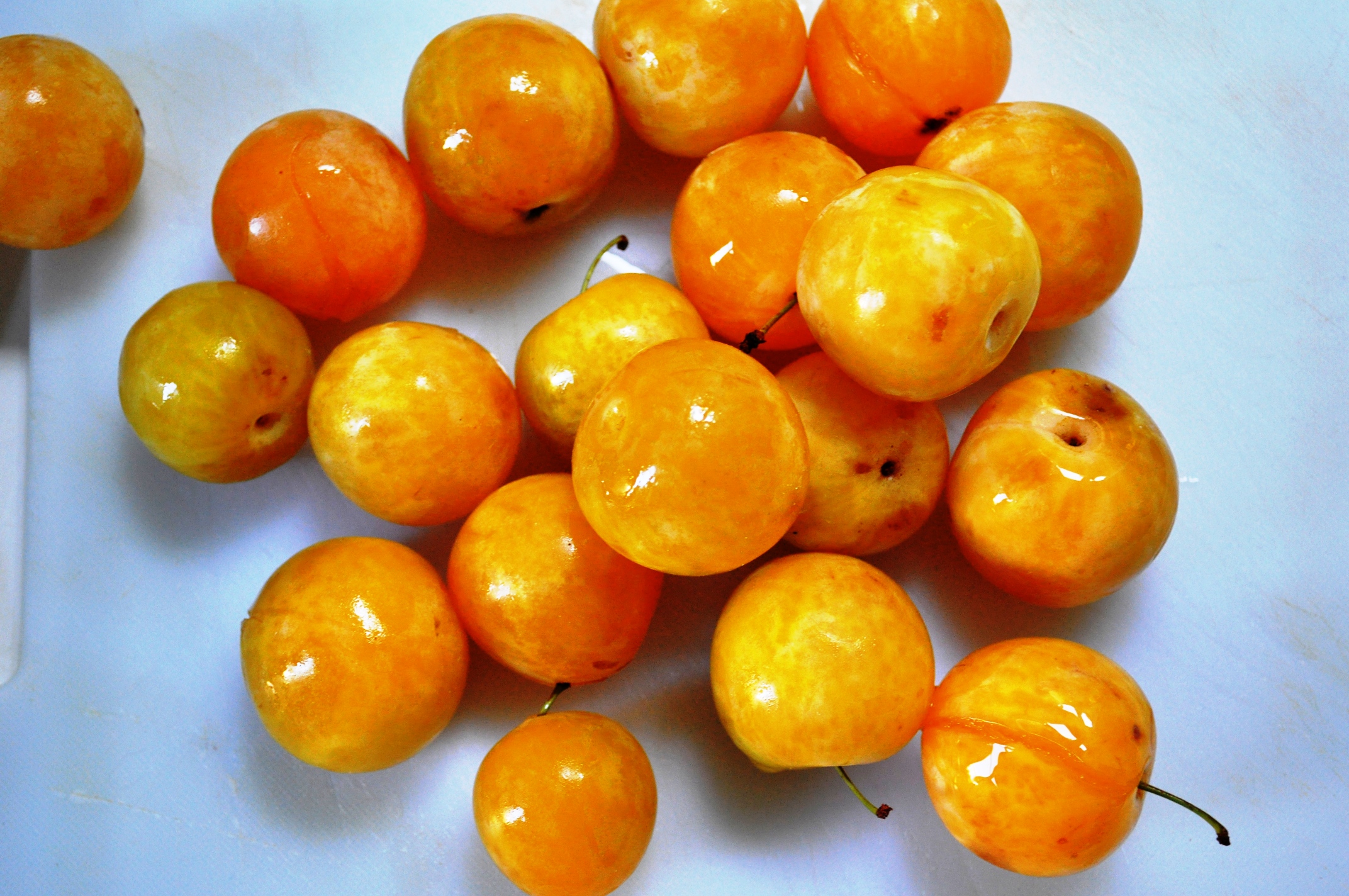
Plums

So instead, I thought I could use some of the fancy muffin cases1 I bought from a kitchenware stall on Testaccio market that’s full of lovely wood, enamel and crockery stuff; all a bit old-fashionedy-vintage-style-hip, but delightful. These cases are very handsome, though they don’t quite sit right in my muffin tray. Hence, some of the muffins turned out a bit wonky. Plus, I would have liked the muffin top to have peeked out of the case a bit more (ahem), but hey, this was – as usual – a fairly experimental recipe I adapted from other recipes, so you learn by doing right?

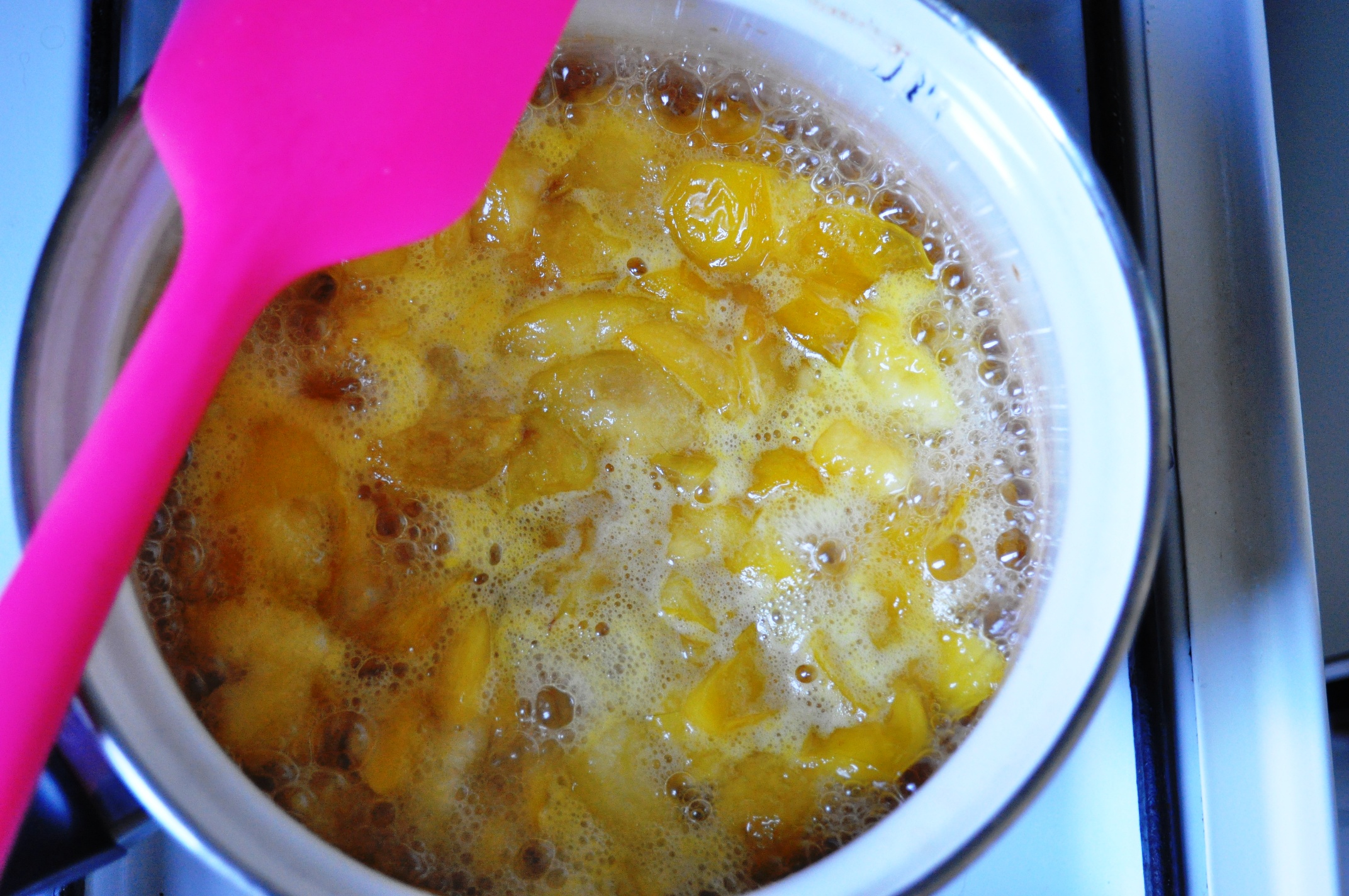
Making a sweetened, stewed, sloppy semi-puree of plums

As for the plums, I much prefer dark purple ones, but our neighbour gave us a yellow variety, possibly a Mirabelle or similar. They were over-ripe, but that’s fine. I wasn’t aiming for chunks, just some flavour in the form of a sweetened, stewed, sloppy semi-puree.

Also, I think some crystallised ginger or preserved ginger would have been nice in this recipe but I didn’t have any. Not even sure I can get it in Roma, though I did tend to have a few jars malingering in the back of the fridge when I lived in the UK.

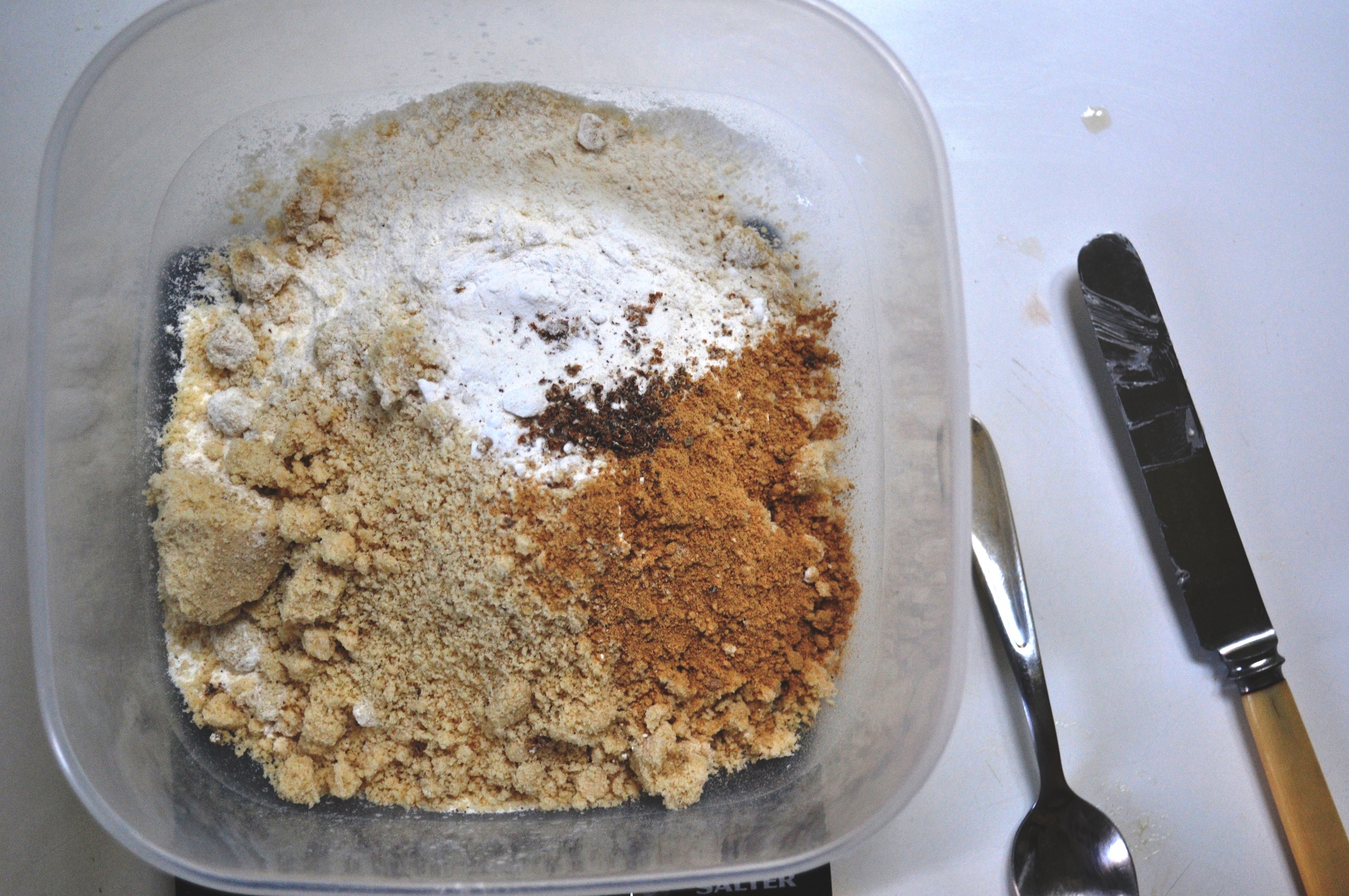
Flour, ground almonds, ground ginger, cardamom

Recipe ingredients

A dozen-ish good-sized plums
50g golden syrup (use sugar if not available)
100g caster sugar
100g butter
1 egg
40g yogurt (none of that low-fat nonsense)
220g self-raising flour2
80g ground almonds
1 tsp baking powder
1/2 tsp baking soda
1 t ground ginger (or more, if you really like ginger)
1/2 ground cardamom (again, more to taste if you really like cardamom)

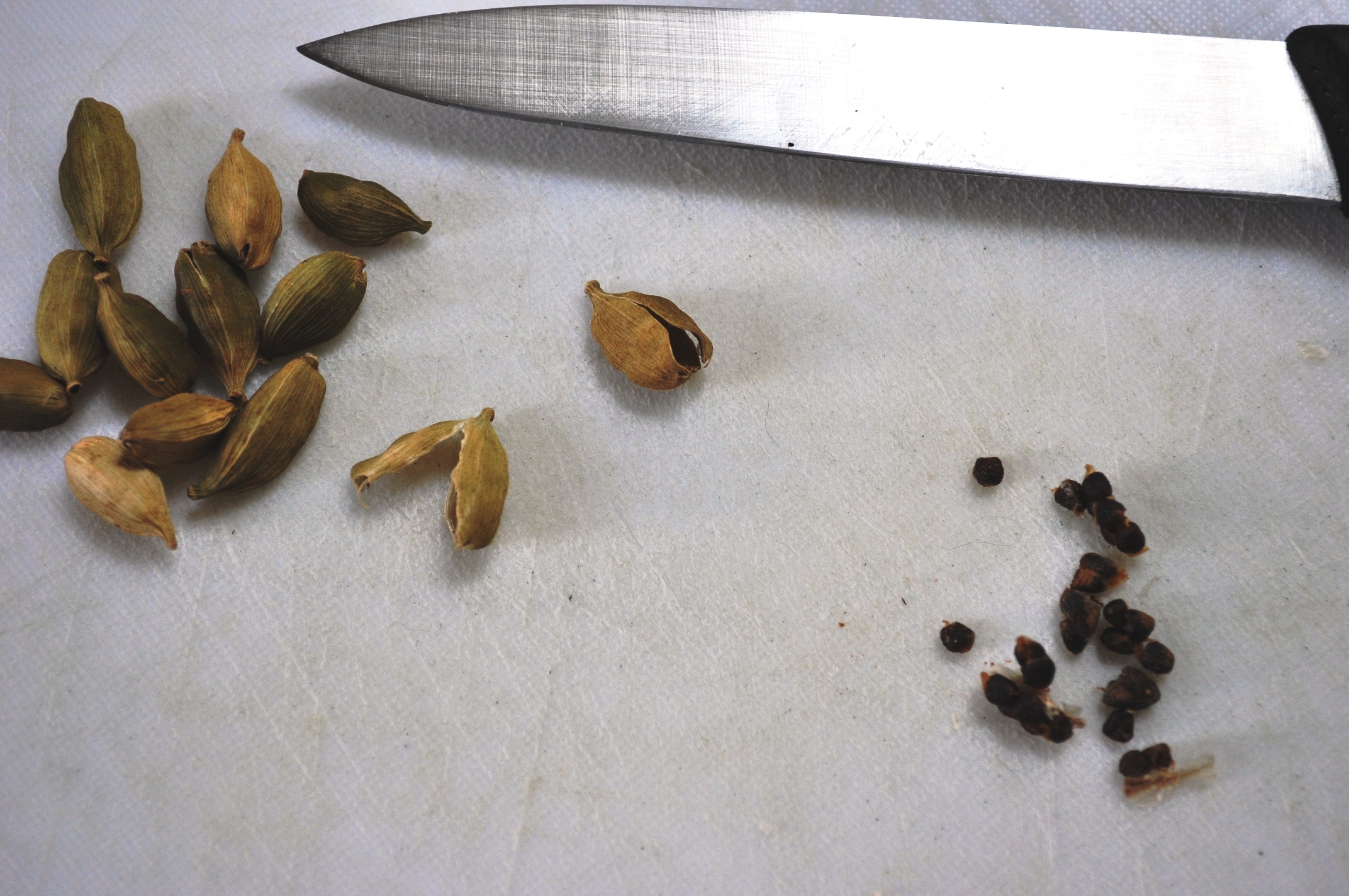
Cardamom pods and seeds

Method

1. Preheat the oven to 180C.
2. Prepare a muffin tray and 12 (ish) cases.
3. Roughly chop and de-stone the plums.
4. Put the plum pieces in a pan with the golden syrup or sugar.
5. Good the plums for 10 minutes or so. It doesn’t matter if they break down.
6. Remove from the heat and allow to cool.
7. Cream together the butter and caster sugar. (Using a hand blender, or food mixer, or good old-fashioned spoon.)

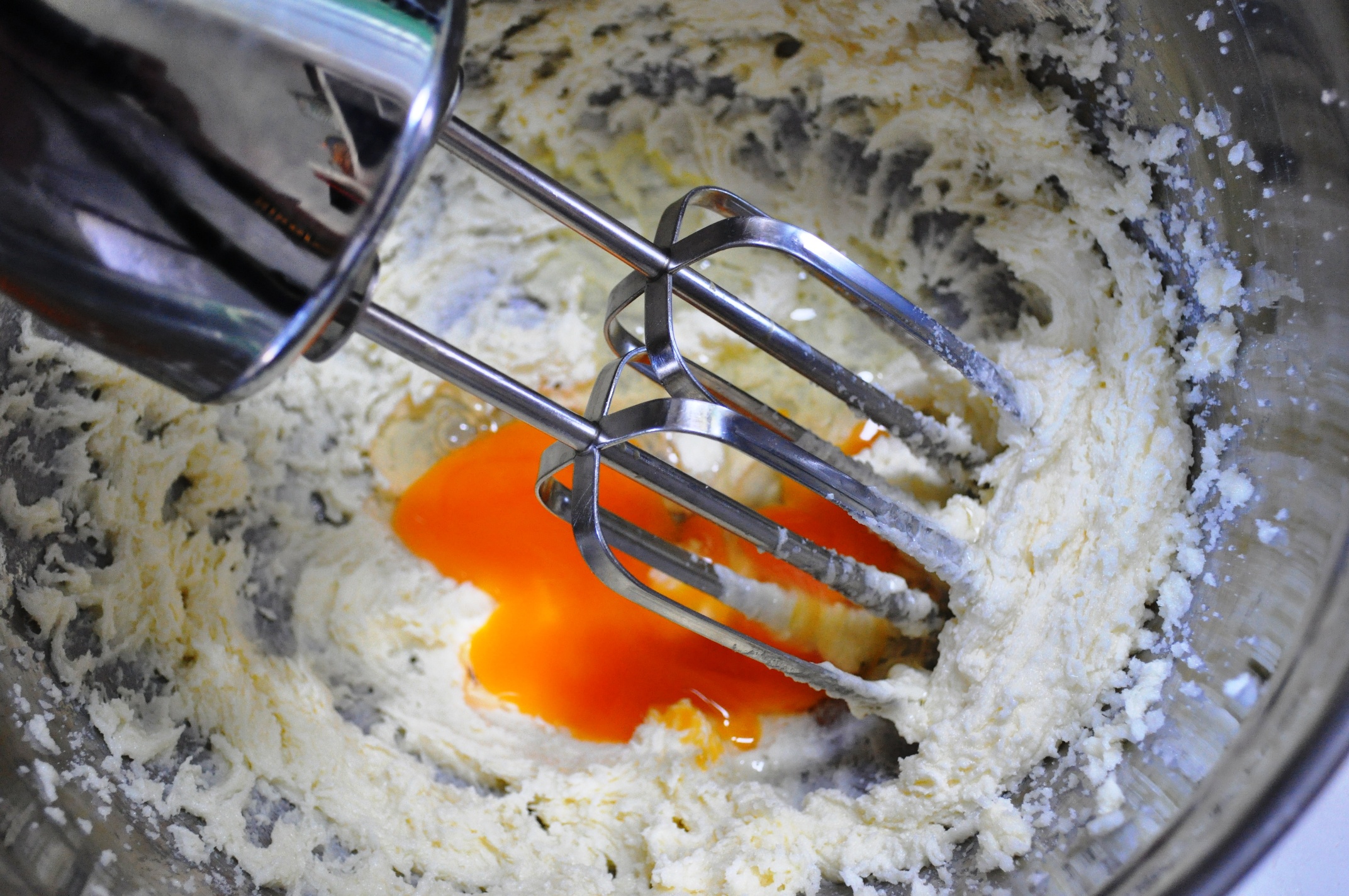
Beat in the egg to plum muffin mix
8. Add the egg and beat. If all your ingredients are at room temp, it shouldn’t curdle. If it does, don’t worry, just add a little of the flour.
9. Add the yogurt and beat.
10. Add the plums and their syrupy juice.
11. Combine the flour, ground, almonds spices, raising agents. Sieve together. The ground almonds probably won’t all go through the sieve. I wouldn’t worry about this, the sieving is more to loosen up and combine the powders than really aerate it (that’s the raising agents’ job, when you bake).
12. Add the powder mix and combine.
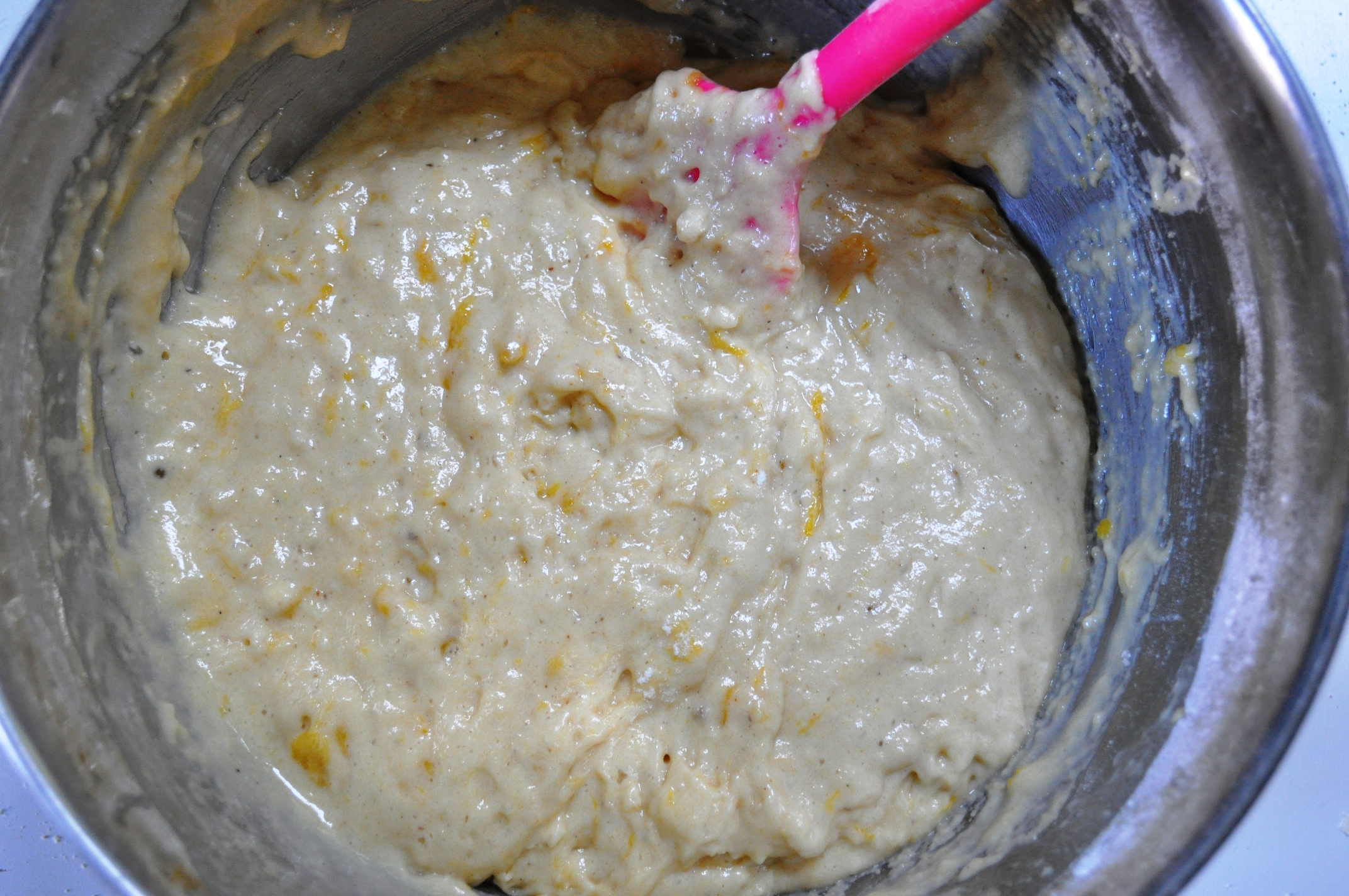
13. It’ll be a pretty wet, light mix (the bicarb starts working subito). Spoon it into the muffin cases, to about three-quarters full.

Plum muffin mix, all combined
14. Sprinkle the tops with flaked almonds.
15. Bake for around 20-25 minutes, until nicely browned and firm to the touch.
16. Cool, in muffin cases, on a wire rack.

Baked plum muffins

Footnotes, etc

1 The muffin cases are a brand called House Doctor. They don’t seem to have a clear online presence, but they’re available in the UK from this outlet, based on Brighton, Sussex.

2 If you don’t have self-raising flour, just use plain or all-purpose flour. Add 1 teaspoon of baking powder to every 110g of flour. So instead of 220g self-raising flour here, the recipe would require 220g plain flour with 2 extra teaspoons of baking powder (along with the other 1 teaspoon of baking powder and half teaspoon of baking soda). And if you don’t have baking powder, but do have baking soda and cream of tartar (tartaric acid) you can make your own baking powder too. See this page in the BBC baking glossary.

If you work in cups, there are plenty of conversion tools online, like here and here, though they all seem to vary a little. Instead, I’d urge you – buy some electronic scales! They can be very affordable and make life so much easier.

Spicy plum ketchup

This is a great recipe, especially if you have a plum tree and often find yourself with a glut. It’s from my friend Nadia in New Zealand. Old Man Mountain, the farm where she used to live, had a great big old purple plum tree and we’d make a batch every year. It’s a pretty versatile recipe though – although it’s best with purple plums, you can use any. We had a Mirabelle in our garden in London, and we used Mirabelle again this time round. Plus, as it’s hard to get malt vinegar in Italy, we also used red wine vinegar this year. Seems to have worked okay.

This is for a small batch – enough for a about 1.2 litres. So double or triple or quadruple it if you like it and have more plums!

1.8kg plums
2 large onions
30g allspice
8g cayenne
900g white sugar
30g whole ginger, bruised
75g salt
570ml malt vinegar

1. Stone the plums.
2. Put all the ingredients in a large saucepan.
3. You can put all the spices in a bag, but I don’t bother – I just add them to the mix.
4. Simmer for three hours.
5. Put through a mouli legume if you’ve got one. Alternatively, push through a sieve. (And discard the bits.)
6. Put in sterilised bottles (we used wine bottles with screw-tops or those bottles with olde worlde style clip/stopper).

6 Comments

Filed under Cakes, Recipes

Birradamare’s Birra Roma at Zoc, Rome

Birradamare's Birra Roma and 'Na Biretta Rossa

Saturday lunchtime we stopped by Zoc trattoria (aka Zoc 22) for some food and ale. Zoc is owned by the same people as the more established Urbana 47 in the Monti neighbourhood of Rome. Urbana 47 is stylish place where the food is produced along sound principles, with an emphasis on season and local (“KM0”), the provenance of ingredients front and centre on the menu.

As it should be.

We eat far too much food where we have no idea of the origins of the ingredients. This is important for all ingredients, but especially so for meat and dairy, where barbaric industrial techniques have cheapened the human relationship with animals, resulting in a form of de-humanised husbandry that emphasises quantity at any cost. Sadly, many people have been duped by the persuasiveness of the meat industry and supermarkets. Your intensively reared beef, pig unit pork, or industrial broiler chickens really aren’t that cheap if you factor in the subsidies and the cost we’ll all have to pay in the long run for the accompanying pollution and disease.

The bar at Zoc, Rome

So yes, bravo Urbana for its principles. These principles are similarly followed at Zoc, where the menu lists not just the ingredients, but the azienda that’s provided them. The trattoria even has photos on the wall of some of their suppliers, including one chap Fran recognised as the guy we’ve bought salumi from at the market in the Testaccio Ex-Mattatoio (currently closed for the summer – go figure).

I was also encouraged by the drinks list, which mostly consists of local wines, but also includes four bottled beers from Birradamare. Birradamare has pretty much established itself as the craft brewery for Rome. Although it’s not in the city, but instead is located at Fiumicino, the town at the mouth of the Tiber near the airport of the same name, its products are fairly ubiquitous here. If a Rome venue has just one craft beer brand on offer, chances are it’ll be Birradamare (eg here).

I ordered a Birra Roma, Fran a ʼNa Biretta Rossa. I’ve had the latter before – it’s a decent malty beer, inspired by German bocks, sweet and medium bodied, with 6.4% ABV. Its colour is amber or copper. Surprisingly, the Birra Roma was a similar colour (see pic, above), despite being called a birra oro (golden ale) on Birradamare’s site or even bionda (blonde) on the label. Birradamare’s own site says the Roma is 35EBC, which is about right, but there’s no way the Rossa is 74EBC (a serious porter tone). Surely that’s an error?

Anyway, the Birra Roma (5.5% ABV). Like Baladin’s Nazionale, which I tried a few days ago, the Roma seems to be one of the many experiments going on to create specifically, uniquely Italian style beers. In this case, even a specifically Roman beer. It’s a beer that clearly takes into consideration Italians’ love for fairly straightforward but strong lagers, as it was inspired by Bavarian Märzen lagers. I found it had a slight orange aroma, slightly hoppy. Taste-wise, it’s hoppy but not bitter (35 IBU apparently), crisp, fresh, with very faint smokiness and more body than a lager. Interestingly, Fran said it reminded her of the sea, of seaweed and salt and Breton Atlantic  beaches, the Côte Sauvage, which is far more poetic than I can be about it.

Birra Roma at Zoc Rome

So anyway, we were enjoying the beers, and the ambiance of the place, which is located in a 1950s block on the Centro Storico side of the river near the Ponte Sisto. The dining area is spacious, with high ceilings and some great design features, like an enlarged detail of a nautical map (I love maps). Much of the furniture is for sale, with price tags, so there’s a slightly distracting feeling of eating in a hip secondhand furniture showroom. There’s also a decent sized courtyard at the back, though it was a pretty hot day when we visited, and they seemed to be trying to cool it off with misters – which only succeeded in making everything soggy.

When the food finally arrived, it was pretty tasty. Fran had three chicken legs and a fig, the flavour profile a nice change to much Roman food, with some turmeric, cumin, rosemary. But it really was just three drumsticks and a fig, for €16. Mine, meanwhile, was half an aubergine (/ melanzana / eggplant) and one piece of cheese toast. Like Fran’s, the flavours were a nice change, more north African say, though it was underseasoned. And just plain meagre (for €9). I’m more than happy to pay for quality and provenance, for more ethical food, but there’s got to be some balance – the portions were so small we left feeling hungry, which isn’t what you want when your bill comes to €44. We even had to ask for bread (a dense, white sourdough, somewhat stale), and there we no other contorni (side dishes). Essentially we paid meal prices for a snack.

Blown up nautical charts on the wall of Zoc

This is all something they need to work on, to make for a more satisfying experience. They could also do with working on the service. The staff were amiable enough but just seemed a bit apathetic. When, for example, a fuse tripped, cutting out the fans and lights, the waiter wandered around for a while first before going to click it back on. He wasn’t busy either, there were just a few covers there for Saturday lunch. Perhaps it’s busier in the evening. Although it’s right near two very popular areas – Trastevere and the Centro Storico around Campo de’ Fiori – it’s just off the main drag. Although Urbana 47 suffers from the same small portions/ high-ish prices issue at least it’s got a bit more atmosphere from being busier, as Via Urbana is a more lively street.

So, Zoc: nice spot, good beer, sound principles, iffy value for money. Must try harder (er, as I may have had on my school reports a few times in days of yore).

Info:
Via delle Zoccolette 22, 00186 Rome, Italy
zoc22.it (English site, sort of) / 06 6819 2515 / info@zoc22.it

Birradamare
Birradamare.it (English homepage) / 06 658 2021 / info@birradamare.it

4 Comments

Filed under Ale, beer, Restaurants etc

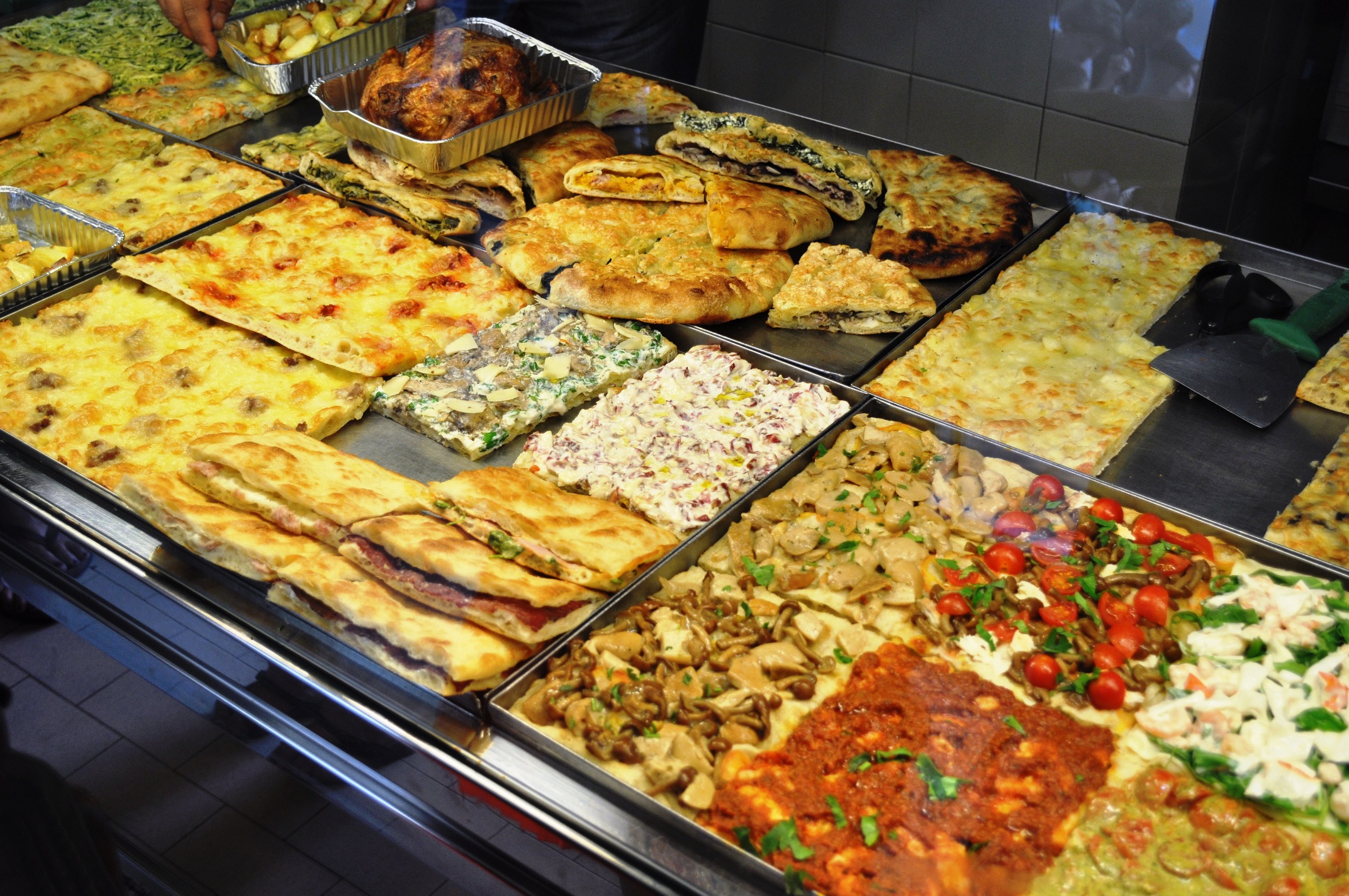
Pizza al taglio di Eligio Fattori, Monteverde, Rome

Fine selection of pizzas at Eligio Fattori, Monteverde, Rome

Although it’s Gabriele Bonci that gets much of the acclaim in the Roman (and wider Italian) pizza scene for his Pizzarium outlet, in every neighbourhood in the city there are a gazillion other pizza al taglio (“pizza by the slice”) places quietly going about their business. Many of these are mediocre – though even then, they’re better than the majority of pizza to be found internationally. And some of them are even pretty good. Pizza al taglio di Eligio Fattori is one of them.

It’s found in the hinterlands between Monteverde Vecchio and Monteverde Nuovo, not that far from the Gianicolo (Janiculum) and the splendid open space that Villa Doria Pamphili park. For a long time, we’ve been giving our patronage to a pizza a taglio place closer to home (Da Simone on Via G Carini), but when a friend and fellow baker mentioned Eligio Fattori, and its famed long fermentation dough, we had to check it out. And we’re very glad we did too.

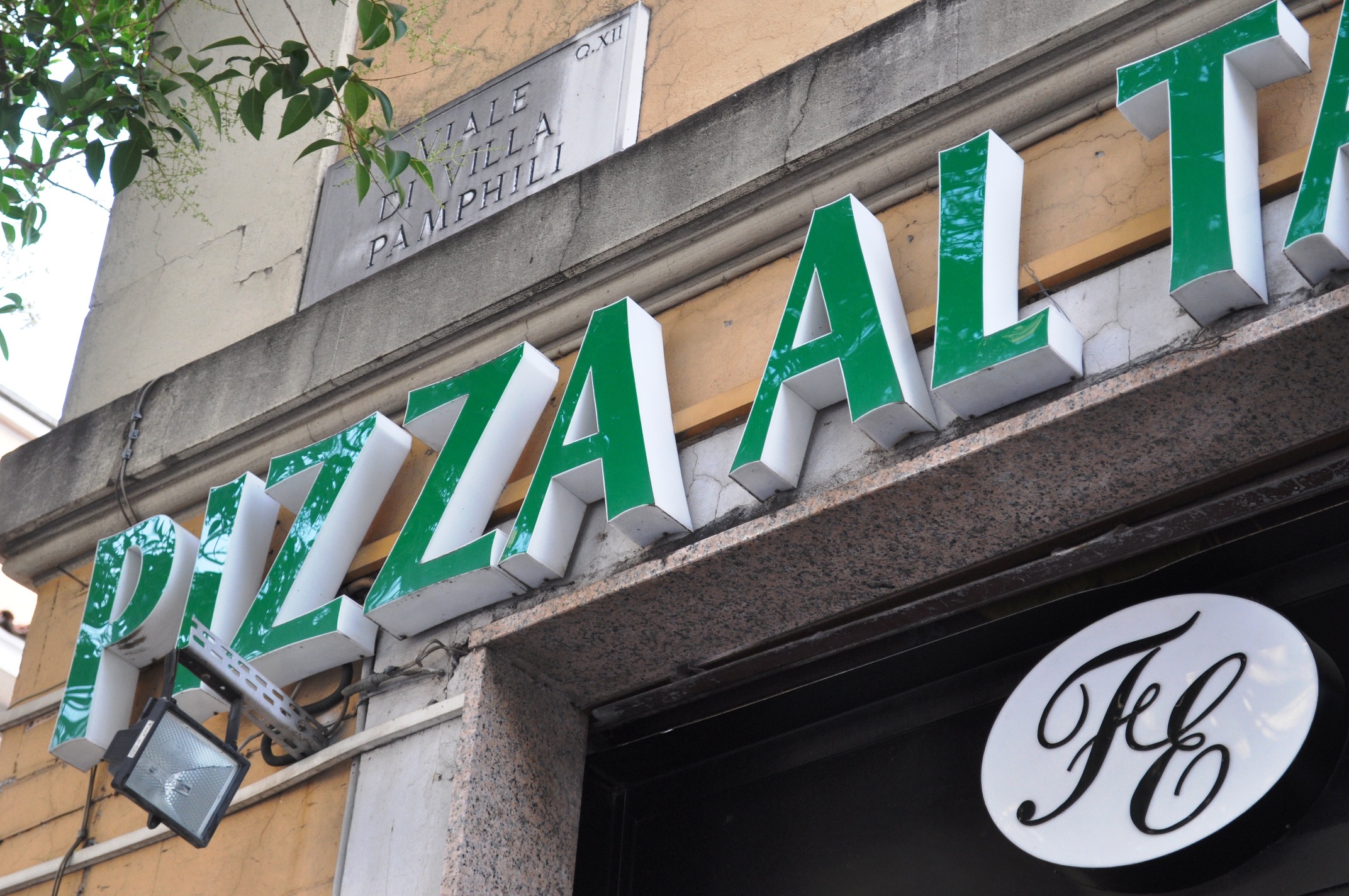
Pizza a taglio di Eligio Fattori, Viale di Villa Pamphili, Rome

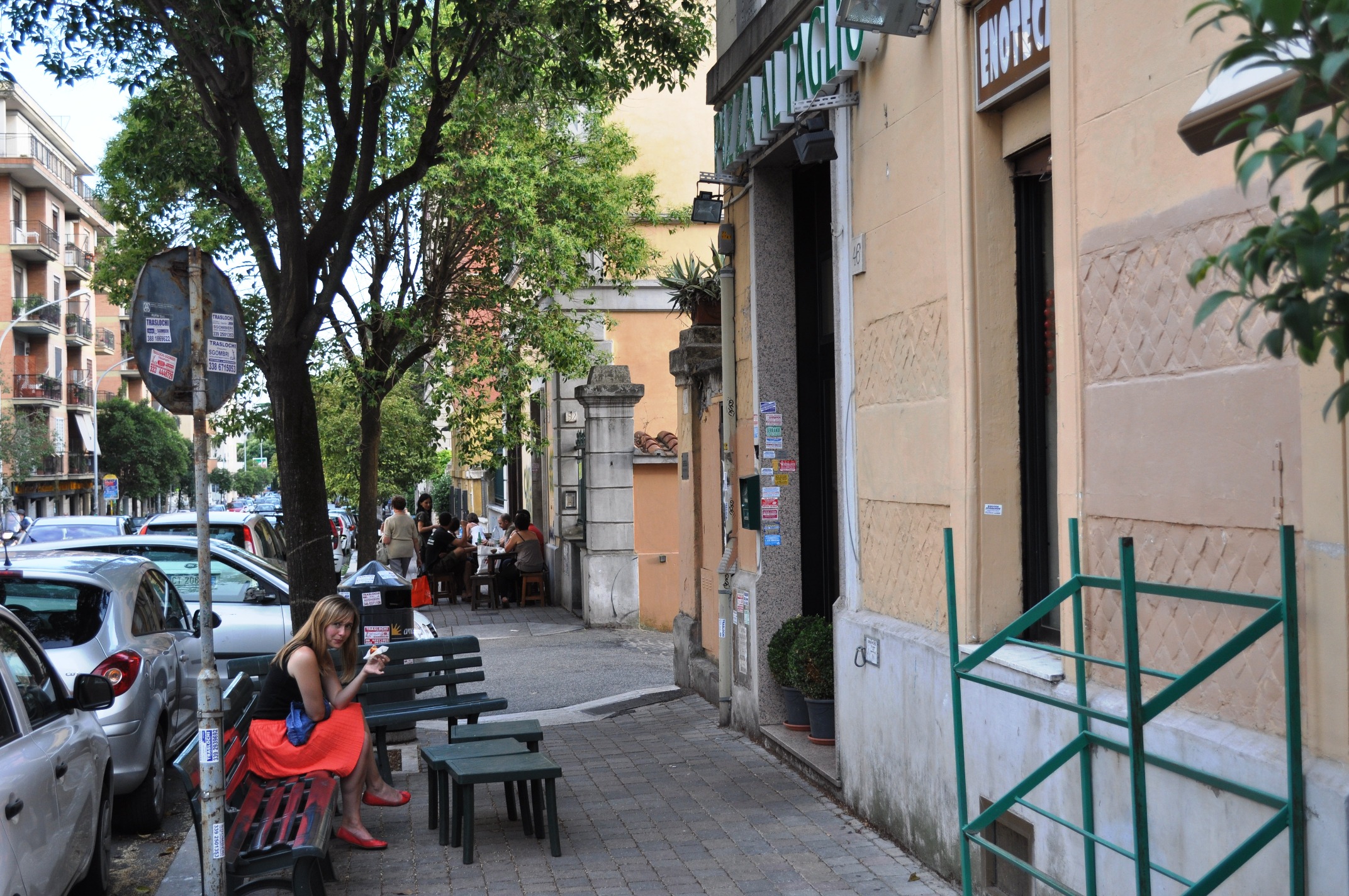
Sometimes, I meet Fran after work, and walk up from Trastevere railway station, up Viale dei Quattro Venti, paying a visit to the beer shop that’s recently opened up there (number 265; it’s a branch of Gradi Plato), before turning off the main drag and up onto Viale di Villa Pamphili.

Pizza a taglio on Viale di Villa Pamphil Rome, Irish pub beyond

Located just past an unexpected “Irish pub” called Finn MacCumhal, Pizza al taglio di Eligio Fattori looks very ordinary. It doesn’t even have a name, just a little symbol with two illegible letters in the style of the General Electric logo (are they “E” & “F”? Dunno) and “Pizza a taglio” in large green letters. In the summer and fair weather, there are some plastic benches outside. When we were arrived an old couple and some mums and kids were there, finishing feasting on boards of pizza slices.

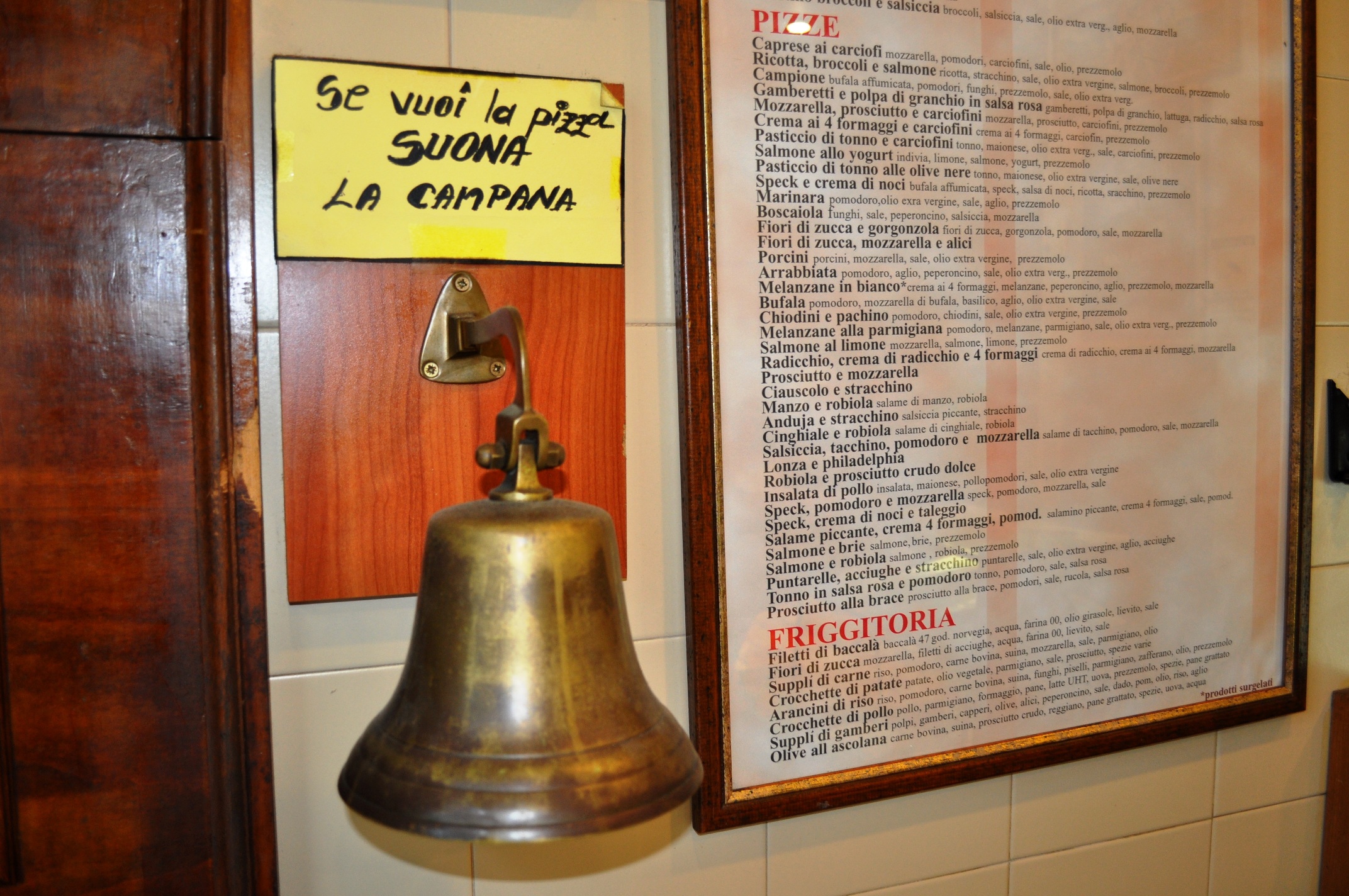
If you want pizza, ring the bell

Inside, it’s pretty small (Siamo un piccolo negozio con un grande prodotto – “We’re a small shop with a grand product”), but has some character. There’s a bell on the wall with a sign saying “If you want pizza, ring the bell” and there’s a framed quote by John Ruskin (in Italian). This is a nice touch for us, as we lived just off Herne Hill in south London for several years – and Ruskin used to live just up the road (before our time of course….). Here’s an English translation of the quote. Whether this Common law of business balance was even authored by Ruskin is debated, but clearly they’re saying if you feel you’re paying a little more for the Eligio Fattori pizza, it’s because you’re paying for better quality, though prize-wise it seems pretty on a par to other a taglio places.

Ruskin

I’ve got their business card here and it says they have “200 types of pizza” – though not all at the same time. They change seasonally. It also lists their accomplishments, including Pizza campione nel mondo – pizza world champion – 1991 and 2011. I’m not sure it’s the best pizza I’ve ever had, but for a neighbourhood a taglio place it’s great. This is in part because, where many places apparently use factory made frozen dough (Marco Farchioni, of Farchioni olive oil, recently told me), Eligio Fattori make their own – and even boast on their card that they make: L’unico impasto al mondo realizzato metà acqua metà farina, 1 gr di lievito ogni chilo di farina. Senza aggiunto di grassi animali con olio extravergine e soia. 72 ore di lievitazione naturale. That is, “The only dough in the world made with half water, half flour, 1g of yeast for every kilo of flour. Without added animal fats, with extravirgin olive oil and soya oil. 72 hours of natural  leavening.” This isn’t exactly a recipe, and 72 hours seems a little long – surely the yeast would exhaust itself? – but the results are very good.

Pizza a taglio di Eligio Fattori, Viale di Villa Pamphili, Rome

On our visit a few days ago, we had suppli (which were tasty, but not a patch on home-made), and a couple of different pizzas from their extensive choice, which includes many  stuffed styles. I had a one with cherry tomatoes and some chili – and it was delicious. Basic, without too many toppings, is often best as there’s no conflict among the flavours. Fran had speck with a gorgonzola sauce. I didn’t try it, but she said it was “creamy, lovely, with wood-smoky speck, and the sauce over the top, so the dough didn’t get soggy.”

Our platter

I kinda wish we’d got more. I’m making myself hungry just writing about it.

Info:
Pizza a taglio di Eligio Fattori, Viale di Villa Pamphili 46A, Monteverde, Rome
Tel 06 581 2208

3 Comments

Filed under Pizza