Monthly Archives: March 2014

Brazil nut, maple and white chocolate blondies

White chocolate maple Brazil nut blondies

If you’re a baking obsessive and have a bit of a sweet tooth, you’ll know that feeling when you just have to have something sweet and homemade in the house. Call it a sugar addiction, but I prefer to think of it as enthusiasm. (I’m not allowed to say I’m passionate about it though, as that’s Fran’s linguistic bugbear du jour.)

The other day, I was heading home, thinking, Damn, we’ve eaten all the last batch of cookies. I fancied something chocolately, and while some chocolate cookies are quick to knock out and conventional brownies are  easy to make (I normally use a no-nonsense Stephanie Alexander recipe I’ll post here one of these days), I thought I’d veer towards blondies instead.

For those who haven’t encountered them before, blondies are like brownies – a gooey, sweet, tray-bake – but are light in colour and flavoured more by the sugar (something rich like Demerara), and not by cocoa and dark chocolate.

White chocolate maple Brazil nut blondies

Here’s what I came up with.

75g unsalted butter
100g Demerara sugar
80g maple syrup
75g plain flour
1 t baking powder
2 eggs
1 t vanilla essence
100g brazil nuts
100g white chocolate

1. Preheat the oven 180C (160F fan).
2. Grease and line a square or rectangular baking tin. I used a 22cm square.
3. Melt together the butter and sugar, until the latter is starting to dissolve.
4. Add the maple syrup to the butter and sugar and remove from heat.
5. Sieve together the flour and baking powder.
6. Beat the sugar-butter mixture into the flour.
7. Beat the eggs and vanilla into the mixture.
8. Coarsely chop the nuts and white chocolate and stir into the mixture.
9. Pour the mixture into the baking tin and smooth.
10. Bake for about 20 minutes. As with brownies, you don’t want to over-bake blondies, you want them to retain some moisture and squidge. Exact cooking time will depend on your oven.


2 Comments

Filed under Baking, Cakes, Recipes

Thornbridge acronym ale taste test

Thornbridge's Jaipur and Chiron

Very pleasant, somewhat flying visit to Sheffield over the weekend to visit friends, and celebrate a Big Birthday. Said birthday celebrations took place in the Beauchief Hotel, which serves Thornbridge beers. Andrew Drinkwater over at Andrew Drinks classifies Thornbridge as a “big regionals” along with Adnams, and presumably Harveys down here in Sussex.

I talked a fair bit about Thornbridge over here, back when I encountered their Tzara, a Kölsch-style beer at the Cut Bar in London.  It was really good to have a chance to try more of their range though.

Long boozy lunch
It’s said that long, long, rambling, amiable lunches are a more Mediterranean thing, but we – about 40 Brits – managed to do about five hours of eating and drinking and chatting. During this time, I mostly drank Thornbridge’s Lord Marples, a 4%, fairly dark British cask bitter that was toffee apple, slightly spicy, a great winter drink. Yes, it’s been hot for March the past few weeks in England, but it was cool and rainy again on this particular Saturday.

A vs I
I tried several other Thornbridge ales, with the most interesting test being a comparison between their mutli-award-winning Jaipur and Chiron (both from kegs). The former is a 5.9% IPA, the latter a 5% APA. It’s a shame the bar didn’t also have Thornbridge’s Kipling “South Pacific Pale Ale” and Halcyon (“Imperial IPA” – ie stronger) to complete the journey through closely related, hoppy ales.

Two was good though, with the IPA being a classic 19th century style of English ale, now highly influenced by APA, an American style of ale that emerged in the 1970s as arguably an evolution of the IPA, or more specifically as an evolution on American IPA. So what we had here was a modern English take on an older English style of ale, and a British take on a related style of American ale. Broadly, you could say a more traditional, English IPA was defined by its inclusion of English hops, with their subtle, dry, bitter flavours. Jaipur, however, is made with a range of American hops, and as such had a bigger, more overt citrussy flavour along with its crispness.

Yes, but…
The Chiron is bigger though, more aromatic, tangier, more fruity, with more citrus, pine, passionfruit in both the aroma and the taste, as you’d expert from an actual US APA. Both delicious. But I do wonder why Thornbridge call the Jaipur an IPA when it’s so heavily influenced by APA you could just as easily market it as an (English) APA.

Leave a comment

Filed under Ale, beer, Breweries, British beer

Our friend yeast

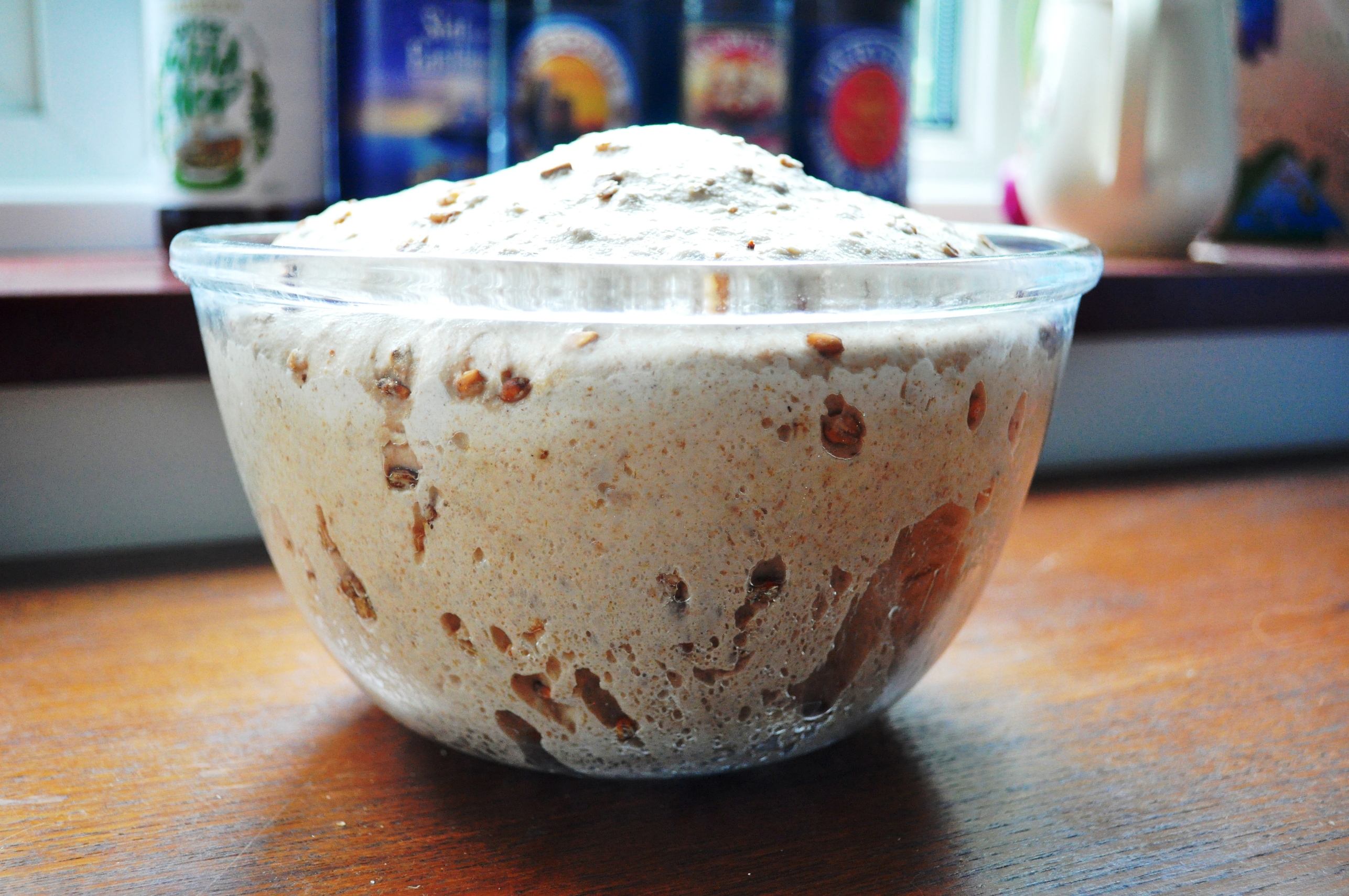
Unproved bread dough

Proved bread dough

It doesn’t matter how many times I make bread, I always find the rising, the leavening, of dough enormously pleasing. The quiet industry of yeast is nothing short of a wonder, and our relationship with it remarkable.

Yeast is a microscopic type of fungus. Of course, “yeast” in the baking and brewing senses refers to a variety of different species of yeast. Predominantly, however, bakers’ yeast is a strain of Saccharomyces cerevisiae. The main yeast used in brewing is also a strain of Saccharomyces cerevisiae. It’s also a key player in winemaking.

Some etymology
Myco is the Greek for fungus (with mycology the discipline of studying fungus). Saccharo, like saccharine, is also from the Greek, for sugar. So Saccharomyces means sugar-fungus.

Cerevisiae is generally translated as meaning “of beer”, but to go a little deeper, it’s presumably related to Ceres, the Roman goddess of grain, agriculture, and fertility, and the origin of our word “cereal”. (Ceres is also the name of a yucky strong Danish lager much loved by undiscerning Italians, but we won’t go into that.)

Cerevisia / cervisia means “beer” in Latin, and is the origin of the Spanish cerveza and even the obscure Italian word cervogia. Indeed, struggling through an Italian etymological dictionary, the vis is the Latin for “force” or “strength”, so the Latin name for beer seems to literally mean “the drink containing the strength of cereal”.

This is one of those many occasions when I wished I’d studied Latin. I went to a flippin’ Catholic school for crying out loud, but we didn’t do Latin!

Anyway, for most of humanity’s long history of bread-making and brewing, we were oblivious not just to the specific strains of yeast, but even to the whole concept of microorganisms. And yet there they were, helping us access the nutritional qualities of grain through the millennia. Yeast was first observed in 1680, but not recognised as a living thing. Louis Pasteur identified yeast as the cause of alcoholic fermentation in 1857 and the cause of dough inflating a few years later.

Even today, there’s plenty of disagreement about certain aspects of the nature of yeast: according to various figures, in a single gram of yeast, for baking or brewing, there are between 8 and 20 billion cells.

Oh, and after all that Latin and Greek, the word yeast itself is from the Old English gist/gyst, with very similar words in other northern European languages and, it seems, a Sanskrit root – yásati, meaning “(to) boil” or “to bubble”

Fungus fun for all the family
So thanks yeast. Or yeasts, as it’s not just S. cerevisiae. Other Saccharomyces are used in the production of food and drink, such as S. pastorianus (the hybrid strain used for bottom-fermenting lagers and pilsners; formerly known as S. carlsbergensis), S. bayanus and S. uvarum.

Then there’s the whole Brettanomyces genus. This name means “British yeast” and was so-named during investigations into English ales at the Danish Carlsberg brewery in the early 20th century. B. bruxellensis is an essential element in the production of Belgian Lambics and related sour beers.

Then there are other genera like Kazachstania, with K. exigua, found in sourdough cultures and olive brine. Heck, even the Candida genus comes into play. Yes, C. humilis, a yeast from the genus responsible for a lot of fungal infection, and even wine spoilage, is considered the “dominant species” for the production of some sourdoughs.

I like dogs, but with their invaluable services in the production of staple food and drink, to leavening bread doughs and fermenting alcohols, perhaps these yeasts have a better claim to being man’s* best friend(s).

* Sorry, inherently sexist language. Can’t really sidestep this by putting mankind’s or humanity’s either.

Leave a comment

Filed under Discussion, Misc

A pond pudding – Sussex or otherwise

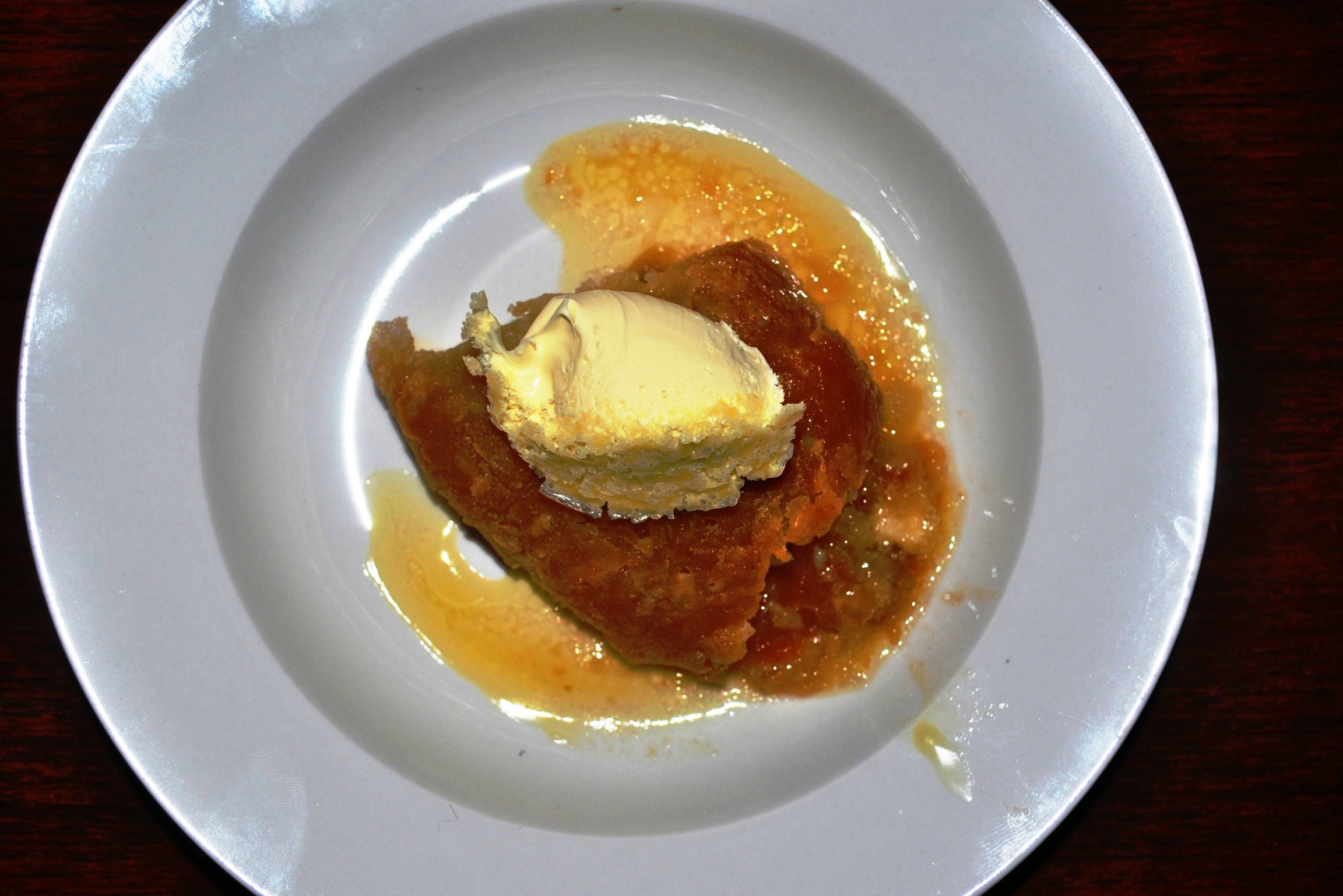
Sussex pond pudding with clotted cream

This was the first nominally, specifically Sussex-in-origin recipe I tried, years ago, when I first bought the ‘The Pudding Club Cookbook’* by Keith and Jean Turner.

In their intro to the recipe (I do like a bit of blurb), the Turners say “Some brisk correspondence exists in the archives over this pudding. Purists declare the edition of a lemon to be the ‘twentieth-century whim of a seriously misguided cook,’ and furthermore ‘the pudding dating from the seventeenth century is served with roast Southdown lamb, and the pudding crust dotted with currants, the centre oozing with butter and sugar’.”

Further variables are recorded. The version in Hannah Woolley’s ‘The Queen-Like Closet’ (1672) has it made with a whole apple inside instead. Certainly apples would have been easier to source, and afford, for many 17th century cooks.

MK Samuelson’s ‘The Sussex Recipe Book With a Few Excursions into Kent’ (originally published 1937, reprinted 2005) does corroborate that the recipe was made without lemon and with currants. Ditto Florence White’s ‘Good Things In England’ (originally 1932), which lists another recipe early 20th century version that involved currants and no lemon. Though the inclusion of currants was vehemently denied by a Wikipedia contributor who said this made it a Kentish pond pudding. (I’ve revised that Wikipedia page.) The lemon seemed to arrive in the recipe in the mid-20th century, with some crediting it to Jane Grigson’s ‘English Food’ (published 1974). “The genius of the pudding is the lemon,” which would be fairly immodest if it was her innovation.

Such is the nature of debate about historical recipes. And, as I’ve said before, surely any dish is going to be mutable depending on season, availability, what’s in your cupboard, what your family prefers, what your family can afford, how your granny did it, etc.

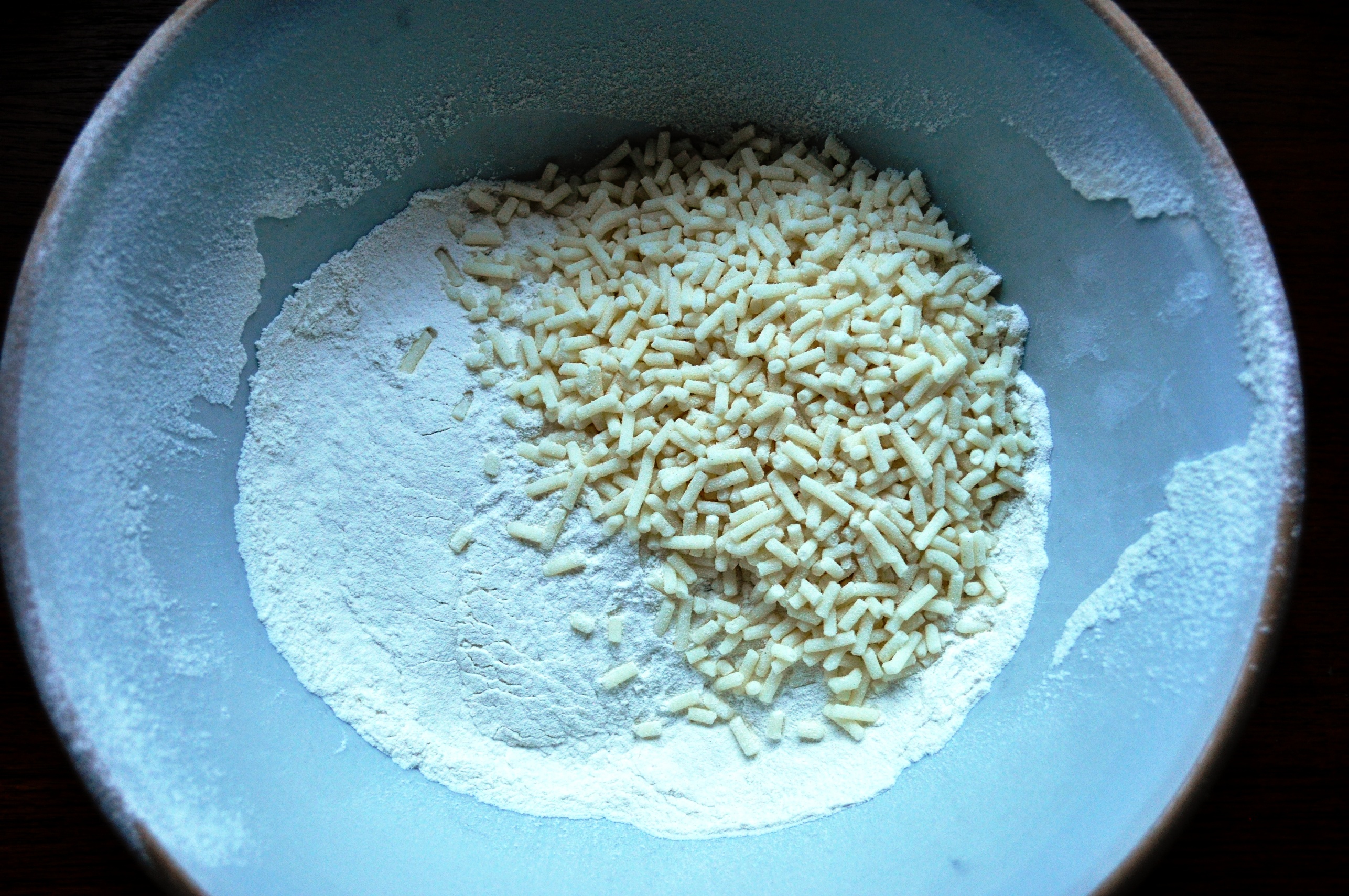
Pond pudding - flour and suet

A pond of sugar and butter
Suffice to say, the word “pudding” traditionally referred to boiled items that, in Medieval cooking, could feature dried fruits, meats, spices, sugar and spices. This hybrid of flavours isn’t common in English cooking these days though I discussed the whole relationship between pudding and sausages, etc, over here.

Retaining the legacy of meat products in puddings, the fat used for the pastry or dough of  English puddings of a say 19th century and later traditional, when they had evolved into something sweet, was likely suet. Suet is raw animal fat from around the kidneys of cow or, less commonly, sheep.

These days a pond pudding is most likely to be sweet. I would say that what defines a pond pudding is an oozing of buttery sugary sauce, which gestates inside the crust while the dish is steaming and streams out when the pudding is upturned and cut for serving. The Samuelson recipe calls for 1/2 lb (225g) to 1/2 lb of Demerara sugar. I’ve used a little less.

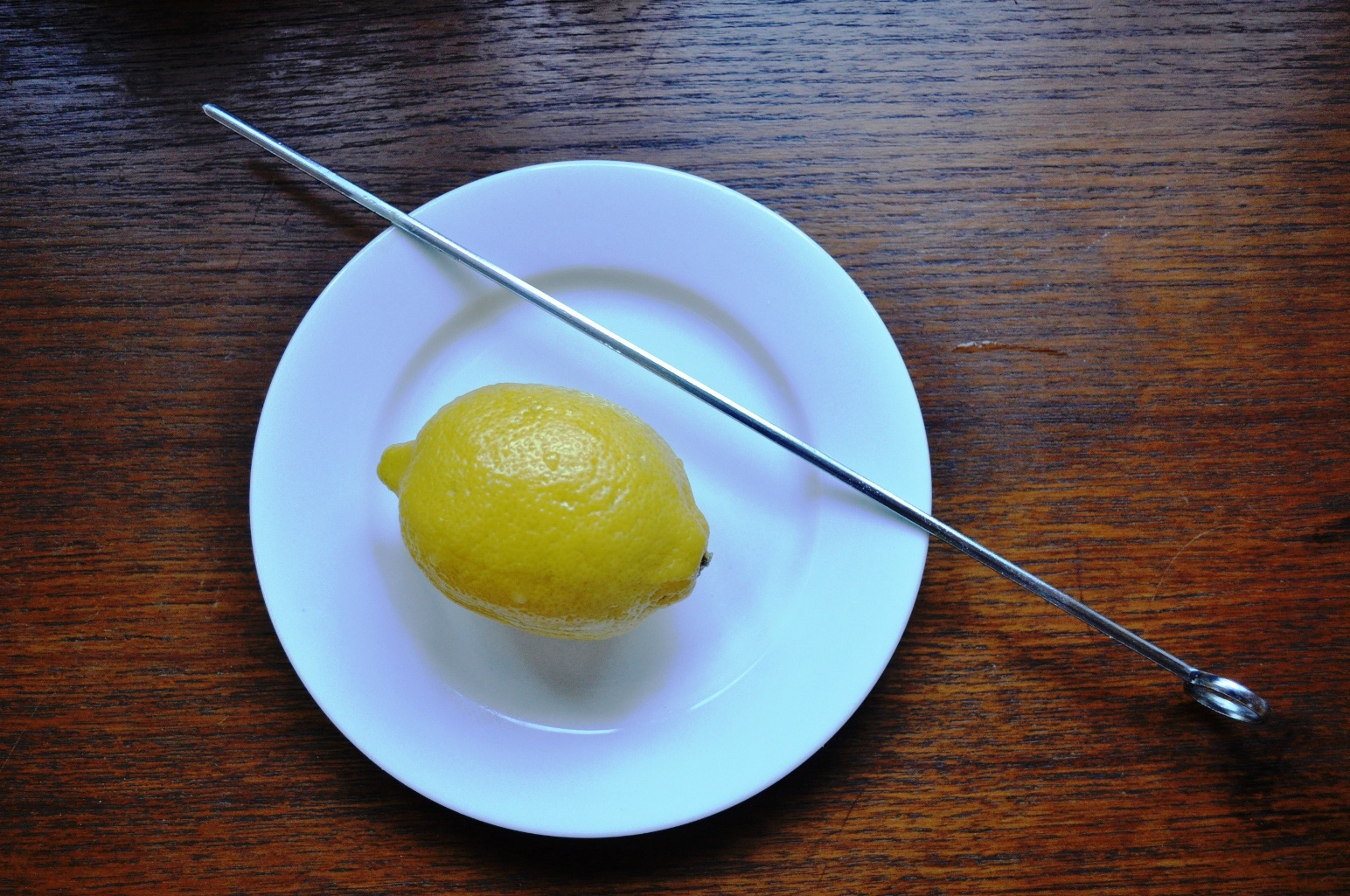
Sussex pond pudding lemon and skewer

Recipe
250g self-raising flour
Pinch of salt
120g shredded suet**
140ml milk and water, mixed. Don’t worry too much about the proportions.
120g butter
120g Demerara sugar
1 lemon

1. Grease a 1 litre (2 pint) pudding basin. The original recipe called for a 2 1/2-3 pint basin, but I found this too big.
2. Sieve the flour and add the pinch of salt.
3. Add the suet to the flour, then bring to a dough, using a knife, by slowly adding the milk and water mix. Don’t add too much, as you don’t want a sticky dough.
4. Turn out the dough and work to bring together into a ball.
5. Roll out the dough to about 6-8mm thick, in a roughly circular shape.
6. Cut a quarter out of the dough, and form this back into another small ball.
7. Line the basin with the 3/4 portion of dough, bringing the edges together and sealing them using a little more of the milk and water mix, or just water.

Sussex pond pudding, butter and sugar
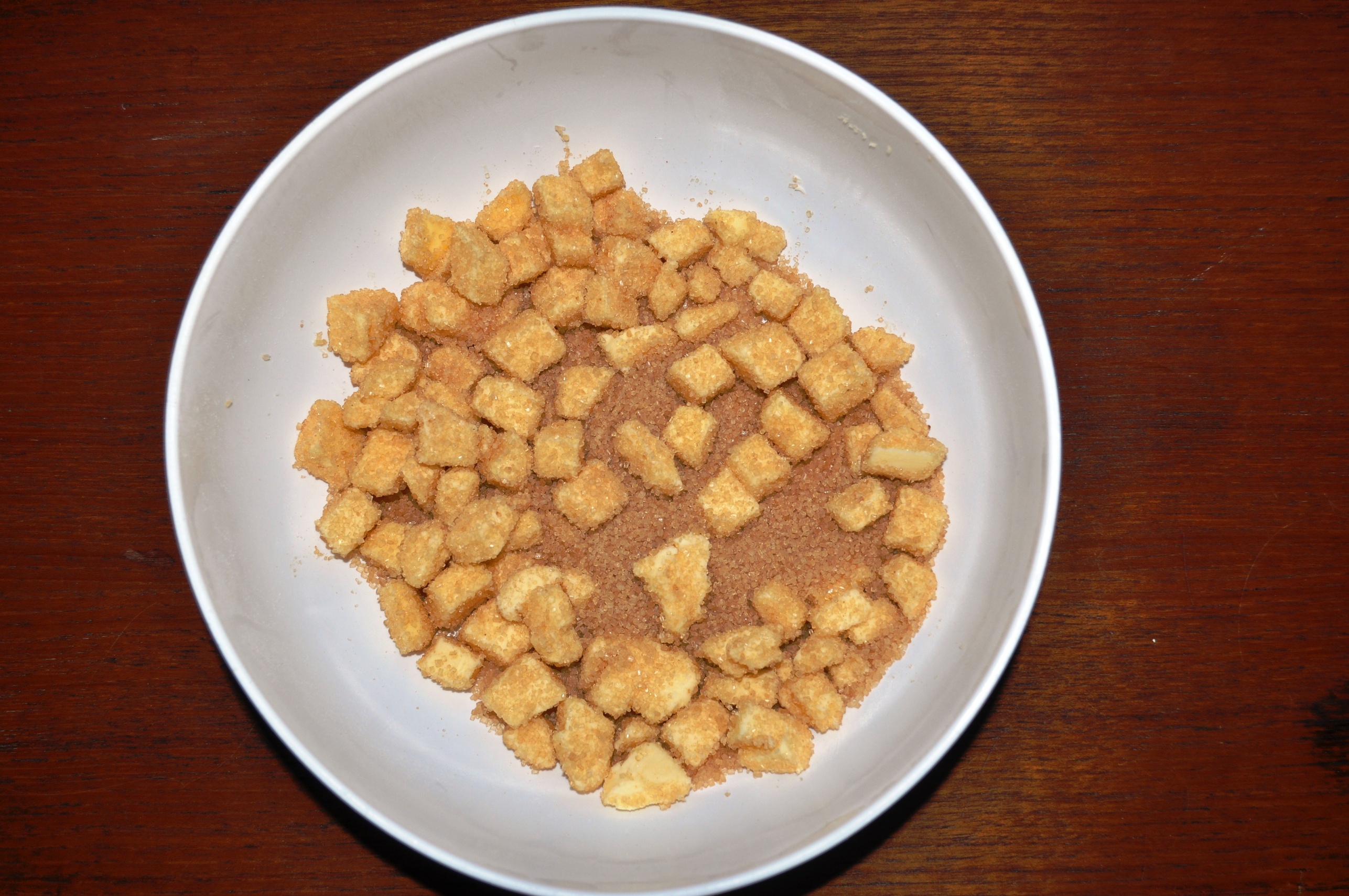
8. Cut the butter into small cubes, and mix with the Demerara.
9. Put half the butter and sugar mix in the basin.
10. Prick the lemon all over with a large skewer then put this in the basin.
11. Cover the lemon with the rest of the butter and sugar mix.

Sussex pond pudding
12. Roll out the final portion of dough and use it to create a lid, closing up the sides, again, dampened with some milk and water or water.
13. Cover the dish tightly. I generally do this with foil, with a pleat in it, though you can use baking parchment, and tie it off.
14. Steam the dish for about 3 hours. I do this in the top of a vegetable steamer, but you can also sit the dish directly in simmering water in a large saucepan. Make sure the saucepan doesn’t boil dry.
15. When cooked, remove the cover and turn the dish out onto a plate with enough of a rim to collect all the butter lemon sauce that flows out.
16. Serve with cream, ice cream or custard. We had clotted cream.

Pond pudding, before steamingPond pudding, after steaming

Apparently, Heston Blumenthal was inspired by this type of pond-pudding-with-a-lemon-inside to create a Christmas pudding with an orange inside. I don’t see any reason why you shouldn’t do this recipe with an orange inside either. Or indeed add currants to the crust paste. As long as it gushes butter and sugar, you’ll have your own bespoke pond pudding.

Sussex pond pudding

* The Pudding Club, “‌est. 1985”. Their recipe book was revised in 2012 and is now published as Great British Puddings. Strangely there’s a maternity-wear brand that’s nicked the same name, muddling the British desert curator’s Google viability. Ma dai! Come on! Give over!

** I do eat some meat, but only good quality local, free range products. So here I used vegetable fat suet as I’m struggling to find good quality, non-industrial versions of both suet, and lard, as used in my previous recipe. It’s funny, as the real food movement, and all us (middle-class) consumers, have made sure good quality, free range and/or organic meats are commonplace these days, but lard or suet from well-husbanded animals is less available. Strange really, as you’d think if a farm was rearing free range pigs, it’d have some free range lard. Ditto farms with well husbanded cows – what happens to all that kidney fat? Of course using vegetable fat suet is also ethically problematic as it likely contains some portion of palm oil, and palm oil is notorious for being grown on plantations created in cleared and burned tropical rainforest, one of planet earth’s most important types of ecosystem.

1 Comment

Filed under Recipes

Sussex plum heavies

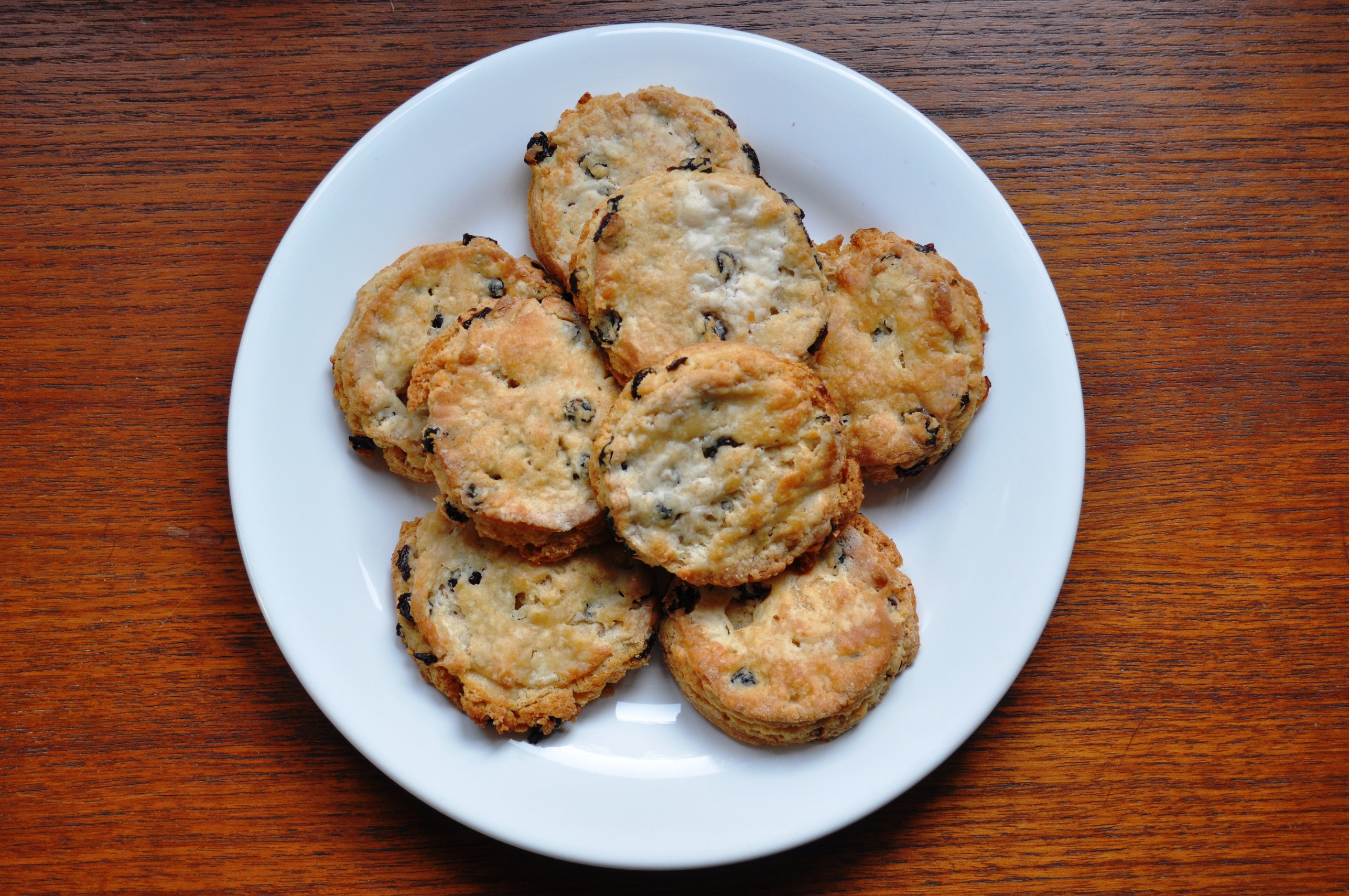
Sussex heavies, plum heavies

Seeing some Eccles cakes in Lewes got me thinking. Lewes, SE England, is a long way from the Eccles cake’s origins: Eccles, in Greater Manchester (and formerly Lancashire), NW England.

Why have these small cakes, made with flaky pastry and a currant filling, become commonplace in England when so many other traditional, regional products are virtually forgotten? After all, there’s nothing terribly unique about a product made with flour, sugar, fat and dried fruit. Indeed, other variables not unlike the Eccles cake include the Banbury cake* (Oxfordshire), the Chorley cake (Lancashire) and even the Cornish heavy, which has a distinctive criss-cross pattern on top. Furthermore, surely there’s a Sussex equivalent?

A quick Google lead me to Sussex heavies, aka (as I understand it) plum heavies. Which may once have been made with dried plums (prunes) but seem to have evolved into yet another variation the small curranty pastry-cake.

I’ve never seen these in a bakery, in Sussex or elsewhere. Maybe some places still make them, but I doubt it – a Google image search for “plum heavies” brought up one image when I wrote this, but that site has subsequently died. If they were more of them out there, I’m sure today’s baking enthusiast foodie bloggers would have posted more about them.

Fat and flour

Pastry archaeology
So investigating them is a form of archaeology. Reading about them and planning a recipe is like an archaeologist looking at bones and fabric scraps and trying to envisage what the person must have looked like. You can’t ever be sure, and any idea that what I’m doing here is “authentic” is a bit silly.

It’s particularly tricky in this case as there seem to be various different interpretations. Such diversity is not unusual with any traditional recipe of course, but quite often, as with Eccles cakes, the simple fact of their popularity, and their larger-scale production, means they have become more standardised.
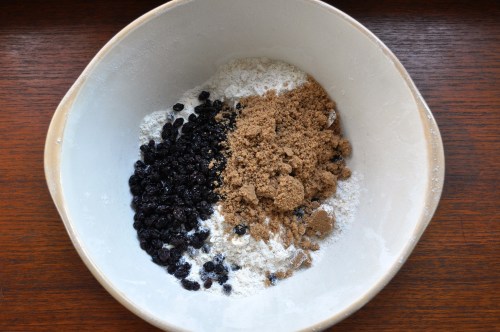
Flour, fat, currants, sugar

Elizabeth David’s ‘English Bread and Yeast Cookery’ put me on to another book called  ‘Sussex Recipe Book, with a Few Excursions into Kent’ by MK Samuelson. Although originally published in 1937, I’ve acquired a 2005 reprint. It contains two different recipes, acquired from a pair of 1930s Sussex ladies, one for “Sussex plum heavies” and one for “Plum heavies”. The former is simply “dough”, lard, currants and brown sugar worked together and formed into buns. The latter is much more like a scone, with lard and butter rubbed into flour, with sugar and raisins added, and a dough formed with milk. They’re rolled, cut into rounds, brushed with milk and baked.

“You have got plum-heavies for tea”

Other information suggests heavies were snacks for outdoor workers like famers and shepherds, as well as for children. Recipewise says “they were also commonly given out at Halloween to trick or treaters”, but I’m dubious. Trick or treating wasn’t a widespread English activity before recent commercial cash-ins on the US tradition (though arguably that had its origins in Celtic culture).

Recipewise does quote another nice source though, an 1875 Lewes publication with the wonderfully Victorian title of ‘A dictionary of the Sussex dialect and collection of provincialisms in use in the county of Sussex’ by Rev.WD Parish, vicar of Selmeston, Sussex. The full text includes this definition of the plum heavy: “A small round cake made of pie-crust, with raisins or currants in it.” It also includes this anecdote: “Dr JC Sanger, of Seaford [Sussex], when Government Surgeon at the Cape of Good Hope, was sent for to see an English settler. Reaching the house at tea-time, he joined the family at their meal, and on sitting down to the table he said, ‘You come from Sussex.’ ‘ Yes,’ was the answer, ‘from Horse-mouncies (Hurstmonceux), but how did you know that?’ ‘Because you have got plum-heavies for tea,’ said the doctor, ‘which I never saw but when I have been visiting in Sussex.'” (p88).

Sussex heavies, plum heavies

Anyway, all sources online agree they were called heavies as they were dense concoctions made with plain flour, quite possibly in the form of leftover scraps of pastry. In some modern recipes they’re more like a scone, in others more like an Eccles cake, with the paste given extra flakiness by the use of lard ­– a key cooking fat in traditional English baked goods, despite how out of fashion it may be now. I found a few recipes that even involved some basic lamination. So that’s what I’ve based mine on. And I’ve used self-raising flour, to make them slightly less heavy heavies.

Recipe

225g self-raising flour
1/4 t salt
85g lard
85g butter [170g fat, total]
100g currants
50g soft brown sugar
100g milk, QB
Beaten egg to glaze

Method
1. Sift together the flour and salt.
2. Cut the fats into small pieces, or even grate it coarsely.
3. Rub 50g of the fat into the flour.
4. Add the currants and sugar and, using a palette knife, bring together with milk. Don’t pour all the milk in at once – use just enough to combine. What Italian recipes call QB, quanto basta, “how much is enough”.
5. Turn out the dough onto a lightly floured surface and knead lightly. Like with pastry, if you overwork the dough, it’ll toughen up.
6. Form a rough slab and roll it out to form a rectangle about 30 by 12 cm.

Rolling out
7. Flake one-third of the remaining fat (40g) over the bottom two-thirds of the dough.

Adding fat
8. Fold the un-fatty top third down onto the fatty middle third, then fold the fatty bottom third up.

First fold
9. Rotate 90 degrees then roll out again to about the same size and repeat the process with another 40g of fat.
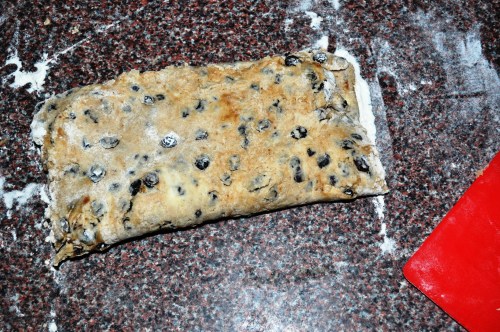
Second fold
10. Give it one final fold in the same way with the last 40g of fat.
11. Wrap the dough in plastic and leave to rest in the fridge of about 45 minutes. More won’t hurt.
12. Preheat the oven to 200C (180C fan).
13. Roll out the dough about 6mm thick
14. Cut out 6.5cm rounds. (Or whatever size round cutter you have. This is all I could find. Lost loads of kitchen stuff in our double house move, including a large portion of Fran’s cookie cutter collection. *weep*.)

Cutting rounds
15. Place on baking sheets (greased or lined with parchment) and brush with beaten egg. Or milk, which is easier.
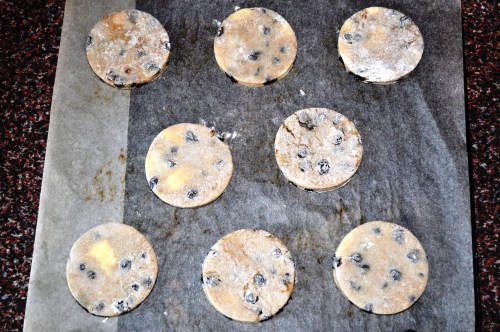
Before baking
16. Gather the scraps and roll out again. Cut more rounds, until you’ve used all the dough.
17. Bake for about 15 minutes, or until a nice golden brown.

Baked
18. Cool on a wire rack.

This recipe, with a 6.5cm cutter, produced about 14 rounds, then another 8 or so from the scraps. The ones made from the scraps rerolled have a slightly different consistency. The first rolling retains the lamination, but recombining then re-rolling the scraps mean it will be shredded. These ones, however, are probably more like the historical Victorian Sussex heavies, simply made with pastry scraps, some fruit and a sprinkle of sugar. Both are yummy, short, flaky and not too sweet.
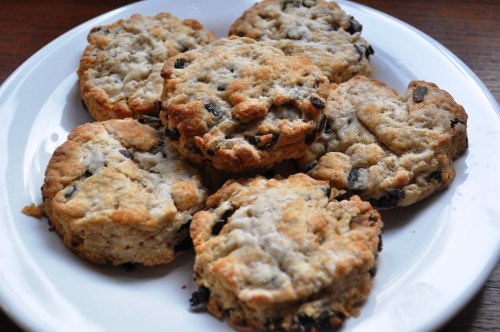
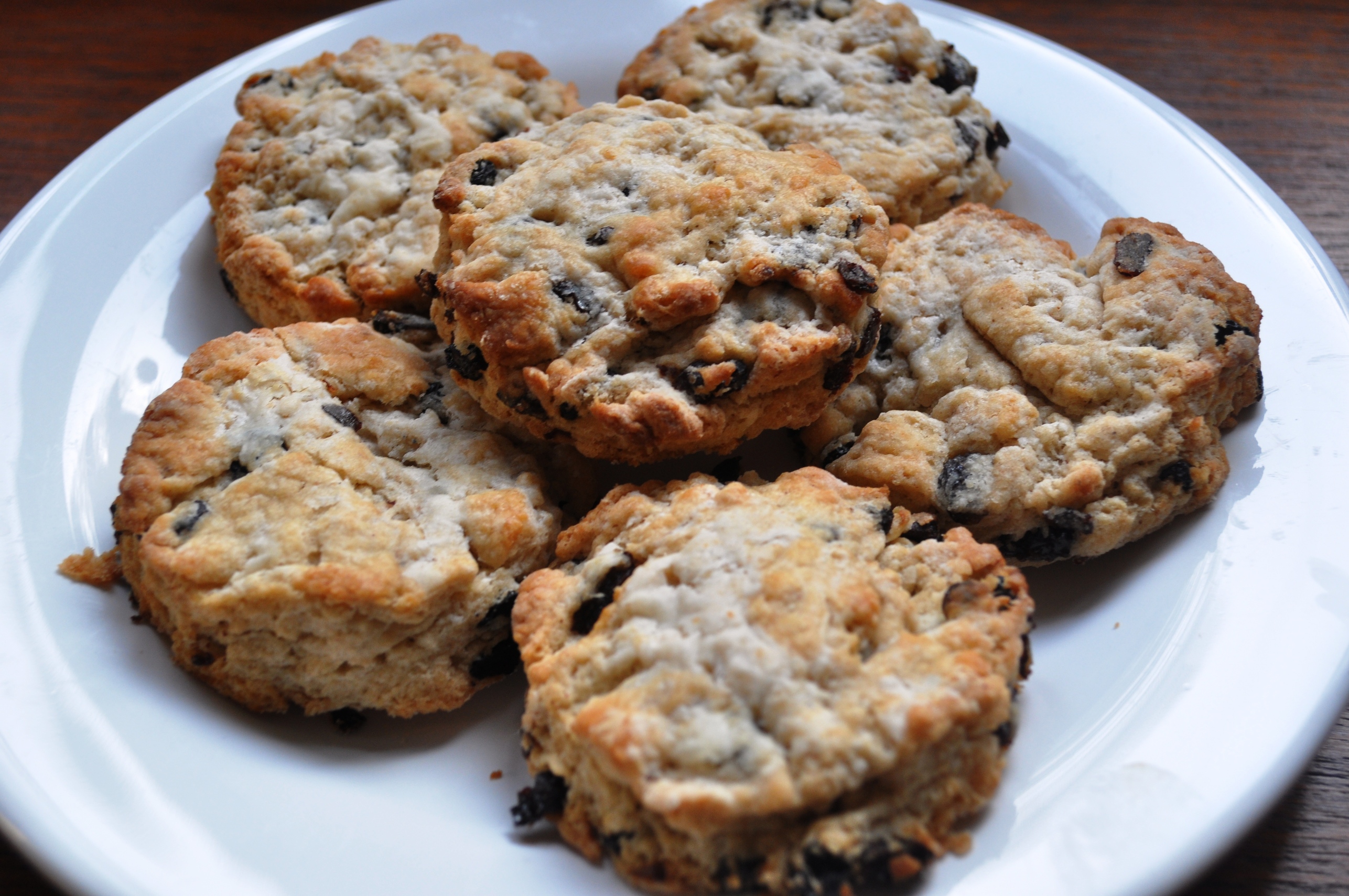
Sussex heavies

A very enjoyable bit of food archaeology. Now I just wish some 90-year-old Sussex native would see this and reply with a description of the real things they ate as kids.


* The April 2014 issue of ‘Great British Food’ magazine has this intriguing story: “It’s possible that the recipe for Banbury cakes was brought to England by crusaders in the 12th century – a similar type of cake is known to have existed in Syria at the time, and the soldiers would have been able to acquire dried fruit and spices at a reasonable prices.” It’s a credible theory, as Midle Eastern delights like baklava and ma’amoul are in the same broad family of sweet-pastries-filled-with-dried-fruits-and-nuts. As are fig rolls, an industrialised incarnations of an (ancient) Egyptian pastry.

14 Comments

Filed under Cakes, Recipes

Buckwheat pancakes with rhubarb maple compote

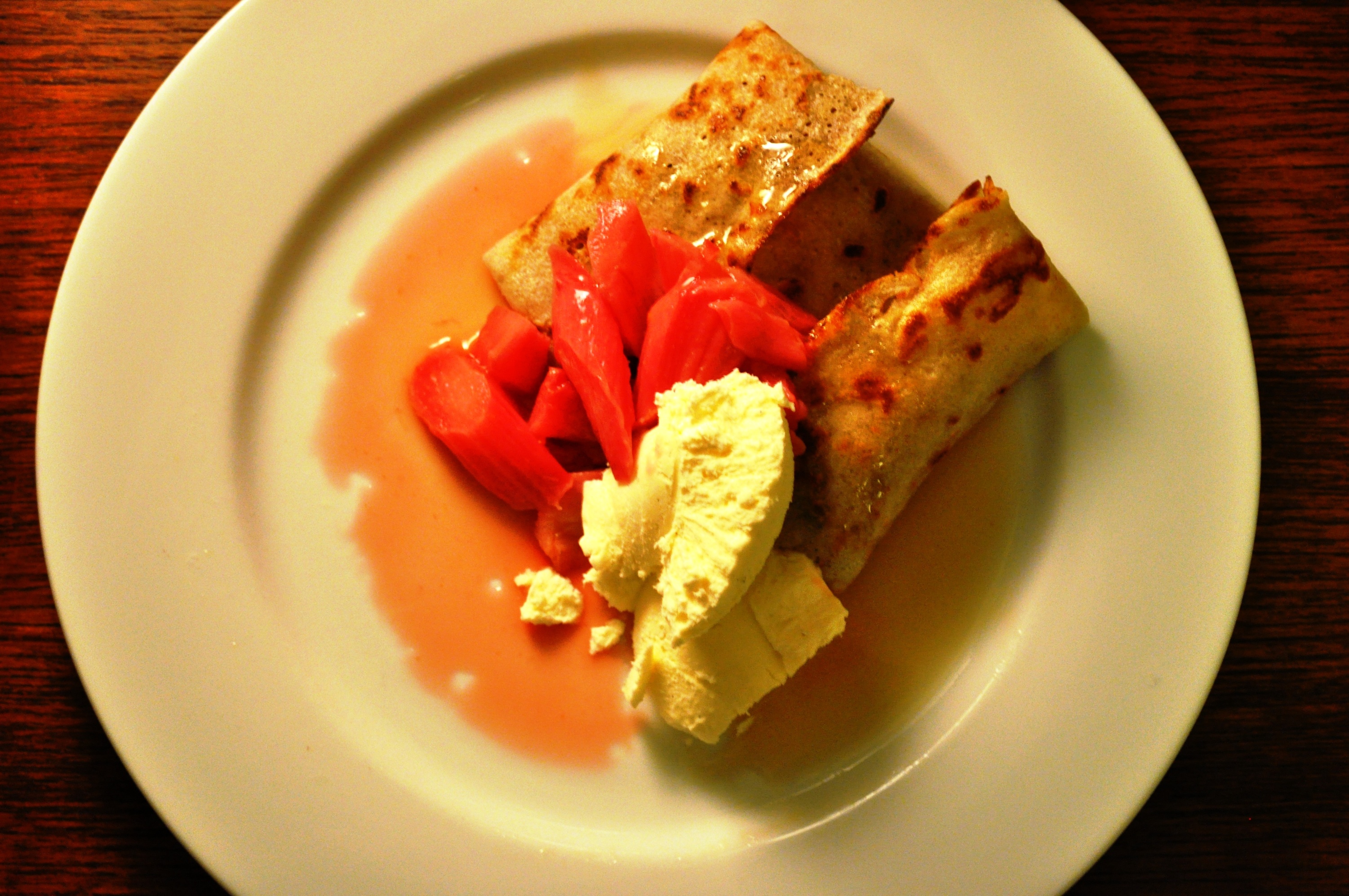
Buckwheat pancakes with rhubarb compote

This is one of those dishes that’s pleasing on a number of levels: it tastes good, it’s a take on a feast day speciality, it features seasonal produce, and the two principle components are even botanically related.

In fact, it was delicious, the compote featuring a variety of sharp and sweet flavours, which I tempered with some vanilla ice cream (though clotted cream, or crème fraîche, or mascarpone, or even custard, wouldn’t have been bad either), while the pancakes were satisfying and simple. The buckwheat flour I used from Dove’s farm was surprisingly pale and the pancake batter was not unlike one made with a plain white wheat flour.

Pancakes

Pancake Day
So yes, it was Pancake Day (aka Shrove Tuesday, Mardi Gras, Martedi Grasso etc, the start of Lent). Fran wanted buckwheat pancakes, and her usual filling of ham and gruyere. I wanted something meat-free, so did a kind of celeriac and cauliflower cheese (as both veg are in season).

The past few springs, I occasionally saw rhubarb on the market in Rome, where it was an expensive imported delicacy. Being back in Blighty, I fancied some for dessert pancakes – and it’s in in season at the moment. Sort of. It’s forced rhubarb that’s available, with the growers in Yorkshire enticing the pink stalks out of the nutritious soils of their dark sheds. Heated sheds, so it’s not like it’s the most eco of crops, but traditionally it was important as a means of providing some “fruit” in British markets in an otherwise lean period. It’s certainly wonderful stuff, with its pink palette and sharp flavours. And forced has the edge on outdoor grown rhubarb, which comes into season in April and lacks the delicacy, with its tougher, weathered hide.

Rhubarb isn’t a fruit of course, it’s the stems of the plant Rheum rhabarbarum (its italian name is rabarbaro), a member of the polygonaceae family. Buckwheat (Fagopyrum esculentum) is another member of this family; its starchy seeds being so grain-like they’re treated very similarly – though it lacks gluten, so presents challenges for those who want to use it for bread-making. It’s much more commonly used for noodles (such as Japanese soba, or even north Italy’s delicious but heavy duty pizzoccheri) and pancakes. The latter exist in various national cuisines, most famously Russia’s blinis and France’s galettes. These are a speciality of Brittany, where Fran lived for a while in her youth – hence her passion for them.

Anyway, some recipes. You need to make the pancake batter ahead of time, and ditto the compote can be made in advance.

Buckwheat pancakes

Buckwheat pancakes
Makes about 6 large (22cm ) pancakes. Double or triple the quantities if you’re hungry or have a large family.

100g buckwheat flour
Pinch salt
1 egg
300g milk
50g butter
Oil or butter for frying

1. Whisk together the egg and milk.
3. Put the flour and salt in a bowl, and pour in the liquid, whisking constantly.
4. Leave the batter to rest in the fridge for at least an hour.
[Now make your compote, below]
5. When you’re ready to make the pancakes, melt the 50g butter and whisk this into the batter. (I also added 1 extra egg white, just cos I had one hanging around.)
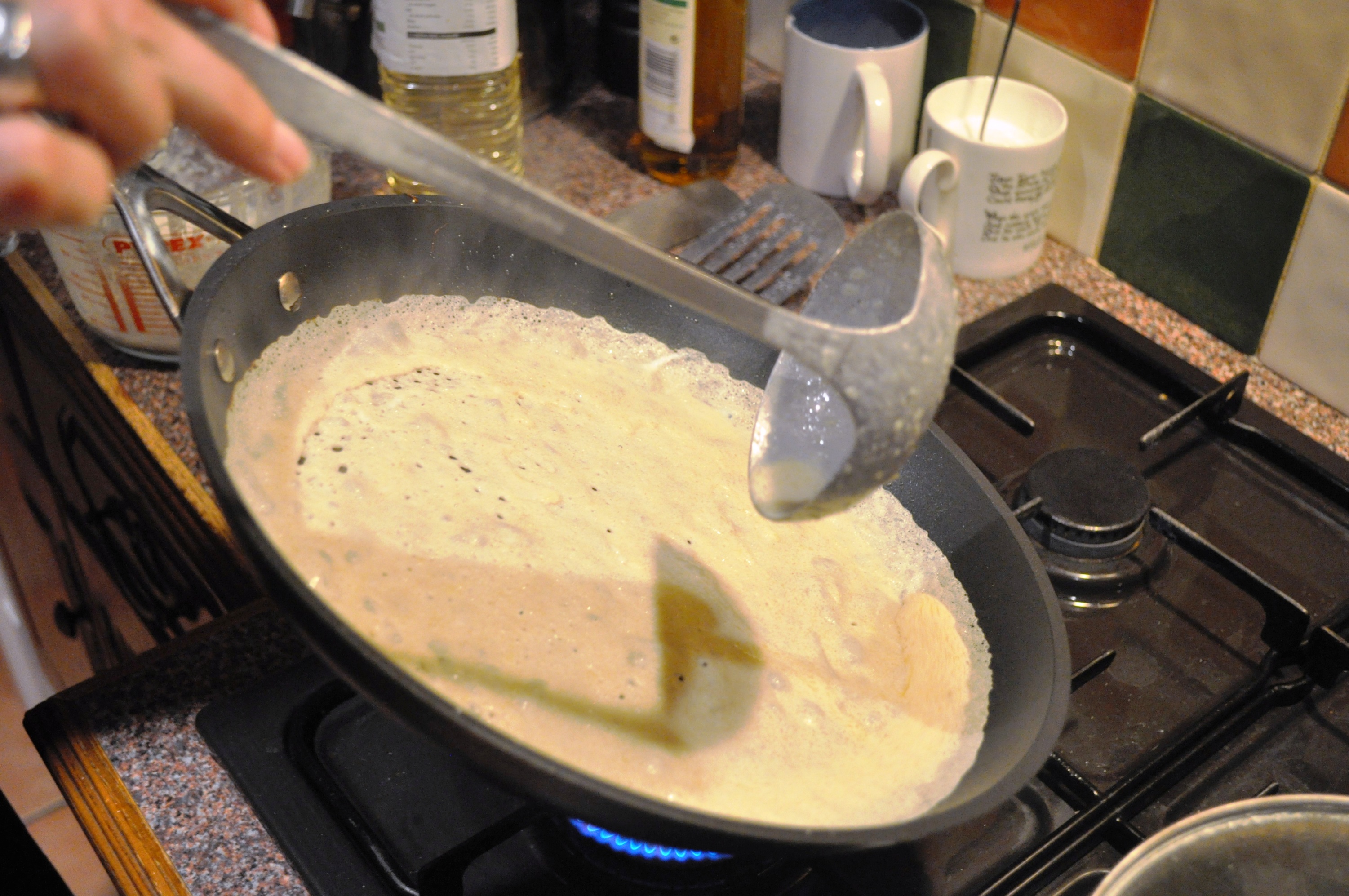
6. Heat oil or butter in frying pan and when it’s hot, add ladlefuls of the mixture (about 80ml each).

Buckwheat pancakes
7. Fry until browning nicely then flip over.
8. Keep warm on a plate in a low oven.

Rhubarb maple compote

800g rhubarb
2cm fresh ginger, finely grated
1 orange, juice and fine zest
50g soft brown sugar
50g maple syrup
1 t cinnamon
1 vanilla pod

Compote

1. Chop the rhubarb into pieces about 2cm long. (Cut skinnier stalks slightly longer and fatter stalks slightly shorter, so they’re all about the same size and cook evenly).
2. Put in a large bowl with all the other ingredients and toss or stir to combine and coat. (We tend to keep our ginger root in the freezer, then just grate it on a Microplane/fine grater. Easy.)
3. Put the mixture in a roasting tray and cook for about 30-40 minutes at a low temperature, 150C (130C fan).
4. When the rhubarb pieces are tender remove from oven.
5. Strain, keeping the juices.
6. Boil the juices to thicken it. Don’t boil it all away though!

Assembly

To assemble the pancakes, keep your frying pan warm after making them, then put one back in the pan, add a good dollop of rhubarb in the centre, and fold over the sides, like an envelope. Cook a little and flip over, to seal slightly. Or don’t bother. You could roll the pancakes with the filling if you prefer that form.

Put on a plate, with another dollop of compote, some of the juices and a good drizzle of maple syrup.  I was wondering if I’d overdone it with too many flavours here – orange, maple, ginger, cinnamon and vanilla – but they all actually slot together nicely. Serve with your indulgent dairy product of choice.

We had salad with our savoury pancakes for our main course and that contained some common sorrel (Rumex acetosa) – which is another member of the polygonaceae family. So our Pancake Day dinner was a real polygonaceae feast. Truly a versatile element of the plant kingdom.

Buckwheat pancakes with rhubarb compote

5 Comments

Filed under Other food, Recipes