Category Archives: Ale, beer

Fritti, pizza, local Sussex booze – and chocolate pine nut ricottta tart

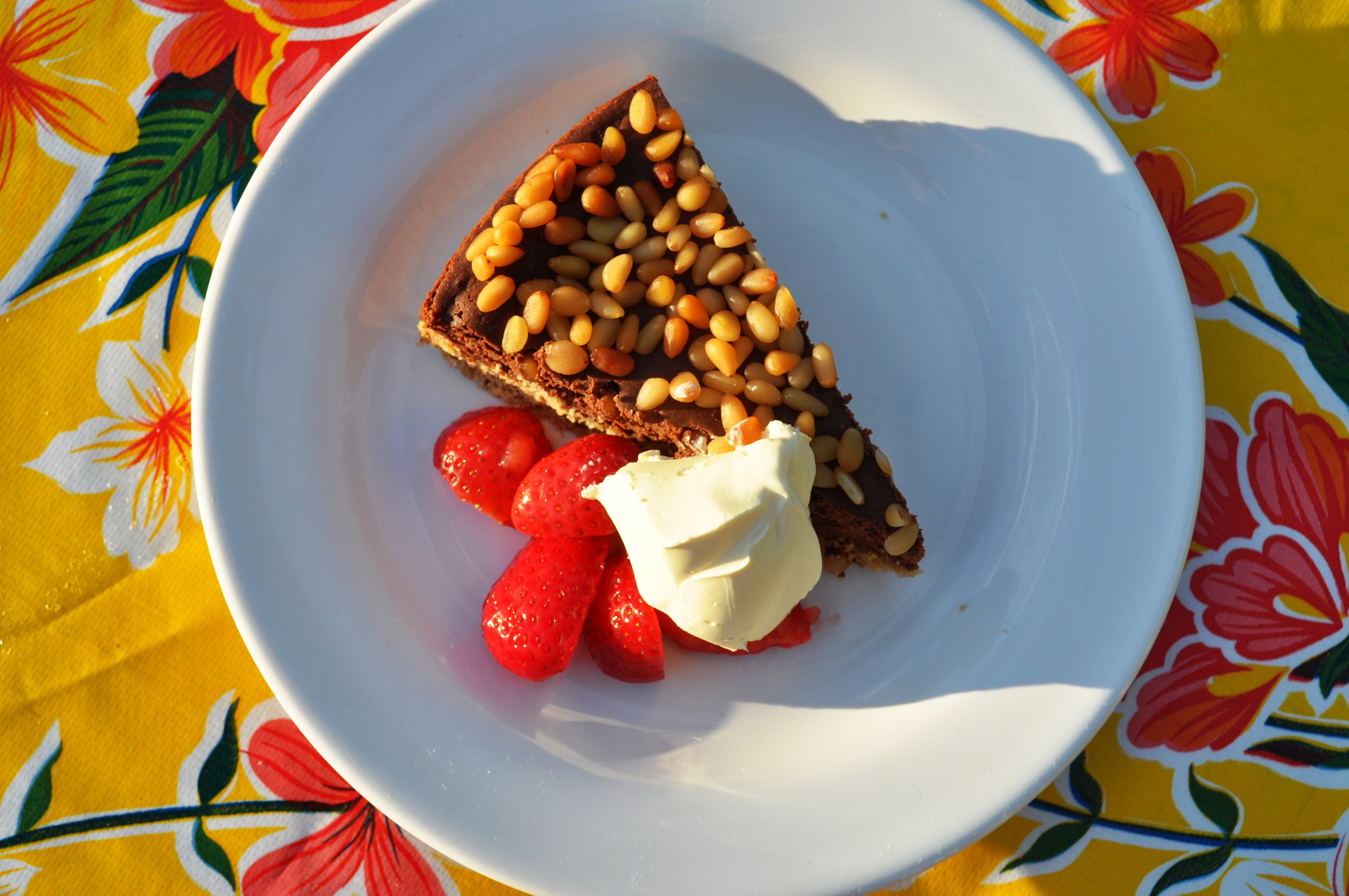
Slice with strawbs and cream

We’d been planning a pizza and local beer evening with friends here in Lewes, Sussex, for a while. This evolved into a pizza, local beer, local wine, local cider and Roman-style fried starters (fritti) evening, with the latter becoming viable after we borrowed a deep fat fryer.

We started the evening with an aperitivo of kir royales made with sparkling wine from Breaky Bottom, one of several vineyards we’re lucky enough to have near us on the chalk South Downs. I tried not to drink too much though, as I was driving the deep fat fryer.
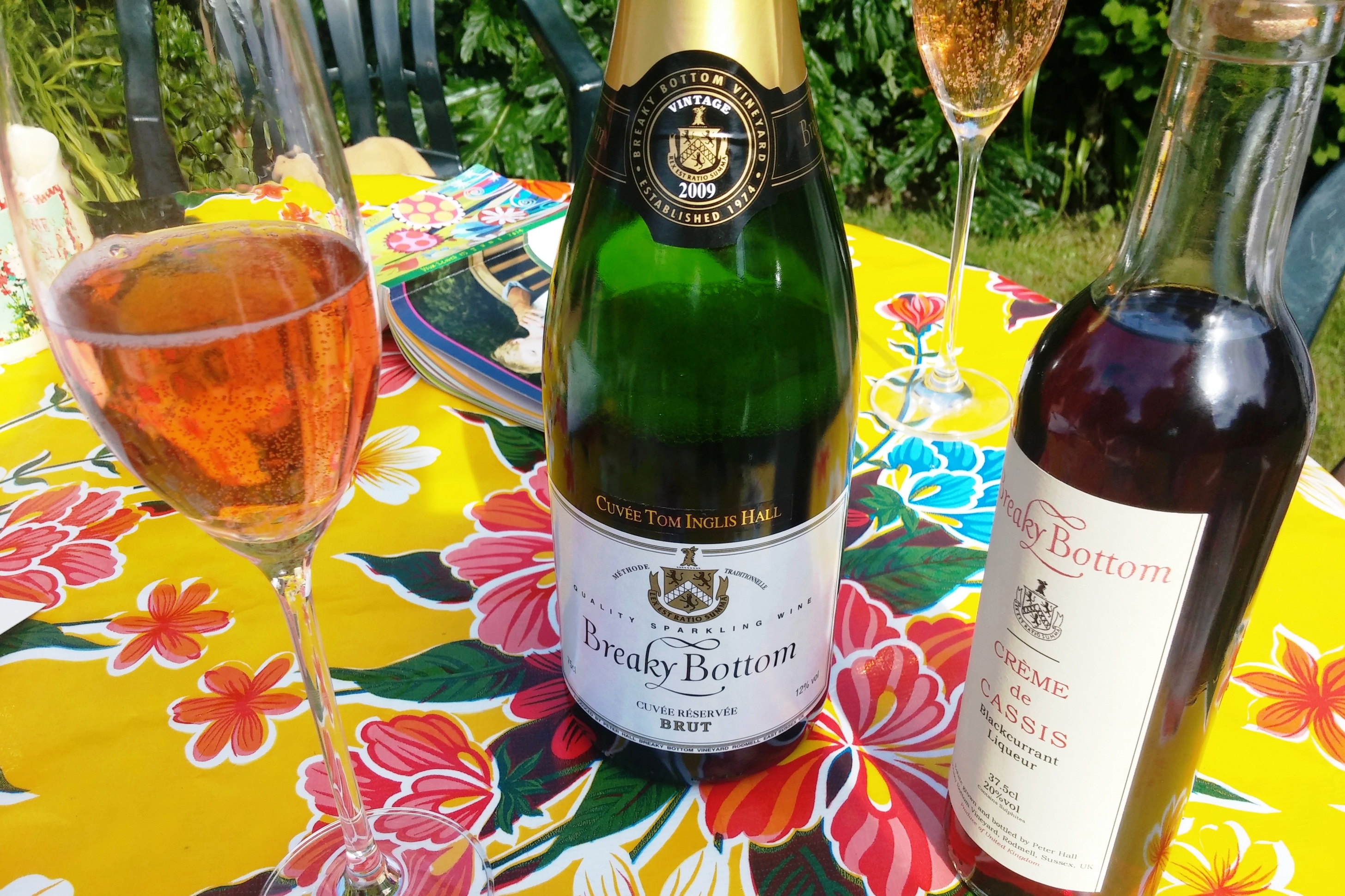
Breaky Bottom

Missing these things from Rome, we did suppli al telefono, which are deep-fried balls of risotto with melting mozzarella inside; carciofi alla giudia, Romano-Jewish deep-fried artichokes, which I’d never done before, but worked very well (you trim the artichoke, remove the choke, then deep-fry it. Then deep-fry it again); and calamari fritti – fried squid bits, which I simply floured with semolina.
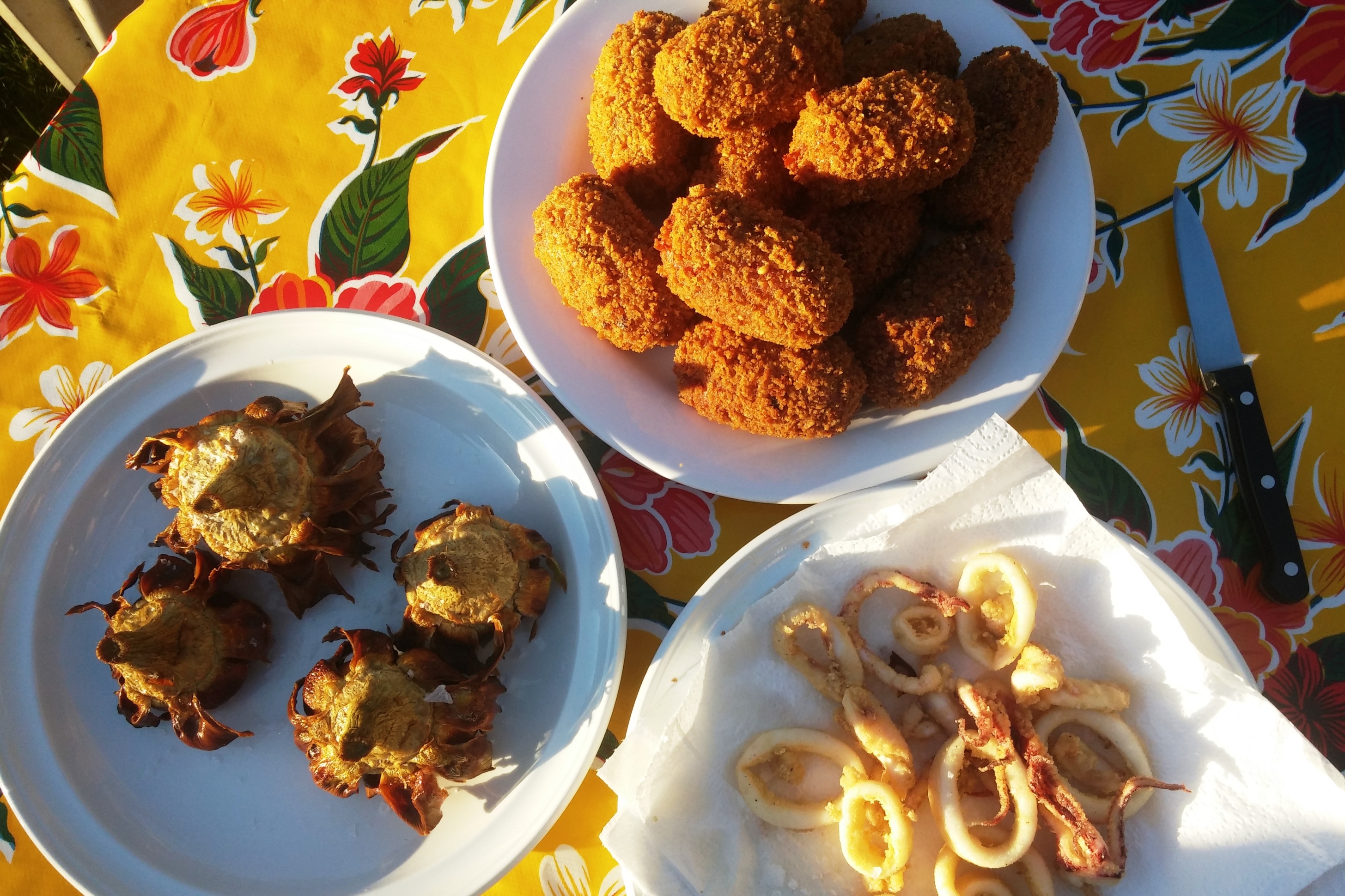
Fritti

Seasonal pizza
For the pizzas, I did about 2kg of dough. Here it is before and after its 24 hour prove. It was a monster.
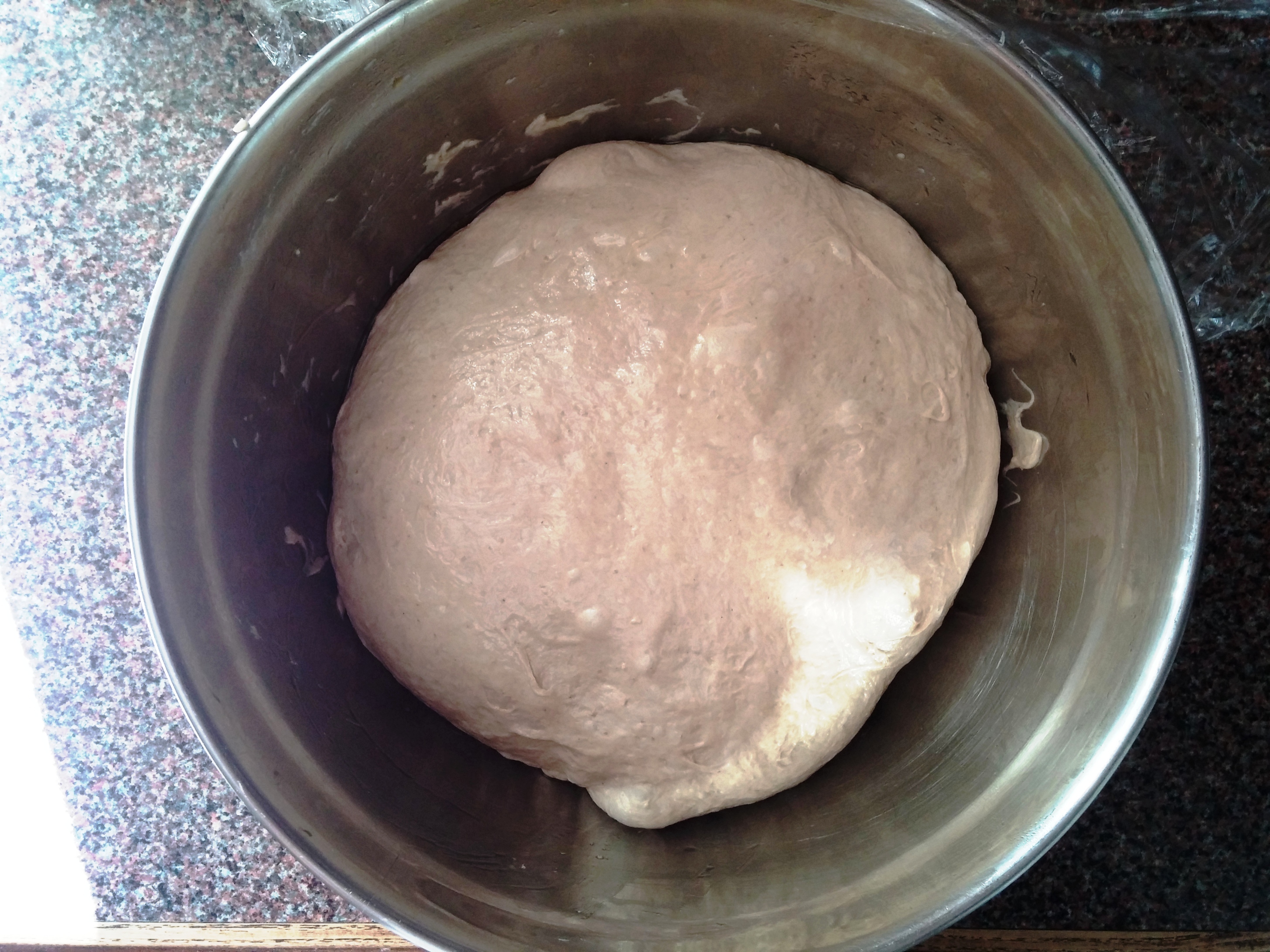
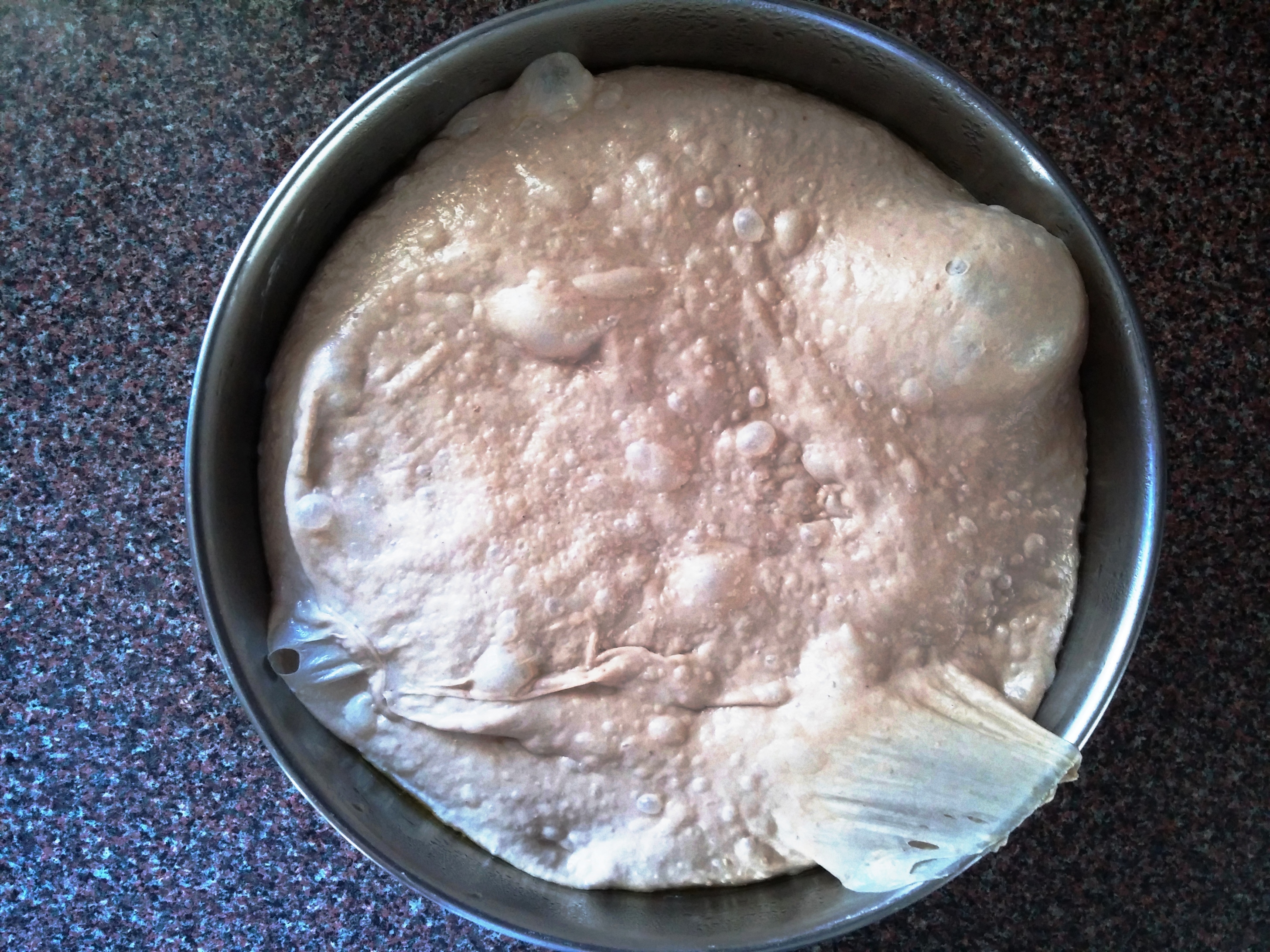
Pizza doughPizza dough, after final prove

Then we made four different topping. One thing we learned from Gabrieli Bonci in Rome is to not be afraid to experiment with toppings, not be a slave to the canonical pizzas, and to use seasonal ingredients. It’s a great time of year for seasonal produce, so alongside the artichokes, the markets also furnished us with other good stuff like asparagus and radicchio. Here’s our pizza menu, typos and all.

Pizza menu

We were so busy trying to bake them and serve them – and drink our way through a very fine selection of further wines, cider and beer – we forgot to take any pics. The booze included Danebury Vineyards’ Madeline Angevine white (not Sussex, but Hampshire, though bought from Harveys) and various beers from Harveys and Long Man, the brewery named after the giant figure on the hillside at Wilmington, about 10 miles east of Lewes.

We did do one classic pizza, a Margherita, but otherwise we used seasonal ingredients and local cheeses and meats. For the latter, we used some smoked pancetta from Beal’s Farm Charcuterie, combined with local asparagus. The other two pizzas we did were bianche – white, that is, without tomato sauce. This is commonplace in Rome, but international pizza all seems to default to rossa (red), with tomato sauce. First, we did radicchio, fresh garlic and two cheeses from High Weald Dairy: their ricotta and Medita, a salty feta-style sheep’s milk cheese. Second, we did roasted baby leeks with mozzarella and Twineham Grange, a local parmesan-style cheese, aged for 15 months, which satisfies my need for a local cheese that’s good for grating on pasta dishes etc. We did use bog-standard mozzarella throughout, as no one’s making a Sussex version. Yet.*

Pie!
After all that fried food and stodge, what else did the meal need? Ah yes, fat and sugar. A dessert. After making a pine nut tart recently, I’ve been wondering about a chocolate version. As, like any sane person, I adore chocolate. Plus, we’d seen the High Weald ricotta on the market.

Side, through glass cloche

Anyway, the chocolate pine nut ricotta tart is based on a recipe by Giada de Laurentiis, granddaughter of the legendary film producer Dino and iconic actress Silvana Mangano. The original recipe was in cup measures. I tried translating these to grams using online charts, as well as using actual cup measuring spoons: each approach gave me completely different weights. This is why I’m not a fan of cups – for flour, especially, they’re inaccurate, as there’s the question of how compacted the powder is.

The resulting pastry was very crumbly and impossible to roll, so I effectively filled the bottom of a loose-bottom cake tin with it, as you would with biscuit crumbs for a cheesecake. Indeed, this is basically a type of cheesecake, though the filling is dense and very rich. After all that fritti and pizza and booze it was perhaps a bit much – or at least a big slice was a bit much. Perhaps it’d be a more suitable end to a slightly lighter meal!

You’ll need a food processor for this recipe.

Pastry
200g plain flour
20g polenta
100g pine nuts, toasted
35g caster sugar
Pinch salt
120g butter, melted and cooled slightly

Filling
110g water
150g caster sugar
225g dark chocolate, chopped
200g ricotta
8og full-fat cream cheese
3 eggs
100g pine nuts

1. To make the pastry, combine the plain flour, polenta, 35g sugar, salt and 100g toasted pine nuts in a food processor, blending until the nuts are well ground.
2. Add the butter and pulse until the mixture is well combined. It’s unlikely it’ll ball up like a normal pastry dough.
3. Use the mix to line a 26cm loose-bottomed tin. I used a cake tin, though a flan or pie tin would work.
4. Put the pastry case in the fridge for at least half an hour, or for a day or so if you make it in advance.
5. Preheat oven to 180C (160C fan).
6. Line the pastry case with baking parchment then fill with baking beans.
7. Bake for about 25 minutes, then remove the beans and parchment and bake for another 10 minutes until golden.
8. Allow the pie case to cool while you prepare the filling.
9. Heat the water and 150g sugar in a small saucepan, bring to the boil and simmer to dissolve the sugar, then remove from the heat and allow to cool slightly.
10. Over a separate pan of simmering water, melt the chocolate in a heatproof bowl, avoiding contact with the water.
11. Beat together the eggs.
12. Using a hand blender or the food processor again, combine the ricotta and cream cheese, then slowly add the egg.
13. Continue beating or processing until smooth.
14. Slowly add the sugar syrup, beating or processing until all combined.
15. Pour the filling into the pastry case and bake, at the same temperature, until almost set – check at about 15 minutes.
16. Sprinkle the other, non-toasted pine-nuts over the top then continue baking until it’s all set and the pine-nuts are nicely toasted, another 15-20 minutes, depending on your oven.
17. Allow to cool and serve. We served it with some cream and macerated strawberries.

Cloche

A note on the food matching
Although we and our guests put together a great collection of local boozes, after the initial aperitivo I stuck with Harveys’ Knots of May. This is a seasonal light mild, reddish-brown in colour and only 3%, which I bought direct from cask at Harveys in a 4 pint / 2.4 litre plastic jug, aka container, aka rigger, aka growler, aka polysomething or other.

It’s a delicious beer, but I’m not sure its malty sweetness made for the best food pairing with the fritti and pizza. Something a little more acid or bitter might have been better for cutting through the fattiness of the cheese etc.

It did, however, work well with the desert. I’m still blundering uncertainly through the beer and food matching business but that malty sweetness, and light, low body, went well with the dense, chocolately pudding.
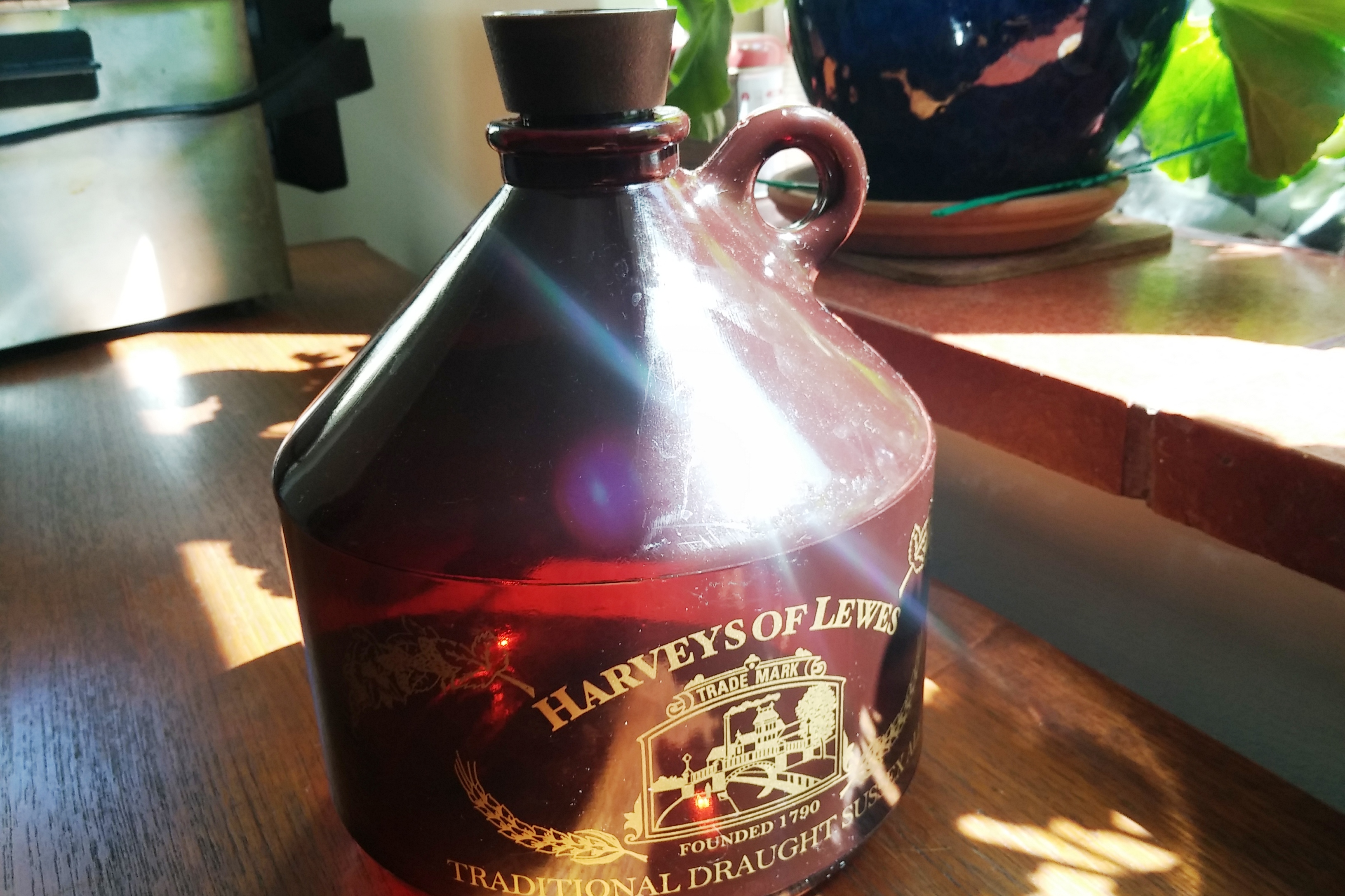
Little brown jug - empty


* There is a British buffalo mozzarella being made these days, from my home county of Hampshire, just to the west. I’ve yet to try it. Plus, mozzarella di bufala is far too good – and pricey – to use for melting directly on pizza. For that you use the standard cow milk mozzarella, known as fior di latte (“flower of milk”, “milk flower”) in Italy. Bufala is best added after the end comes out of the oven and allowed to melt just slightly with the latent heat.

2 Comments

Filed under Ale, beer, Baking, Pies & tarts

A tour of my local brewery: the famed, historic Harveys of Lewes

Harveys chimney

Anyone who’s read my blog before will know I’m an advocate of local produce. And a big fan of real beer. For me, “local plus beer” means Harvey & Son Ltd (aka Harveys, Harveys of Lewes) – a traditional brewery that is a mere 800 metres as the crow flies from my house in Lewes, East Sussex.

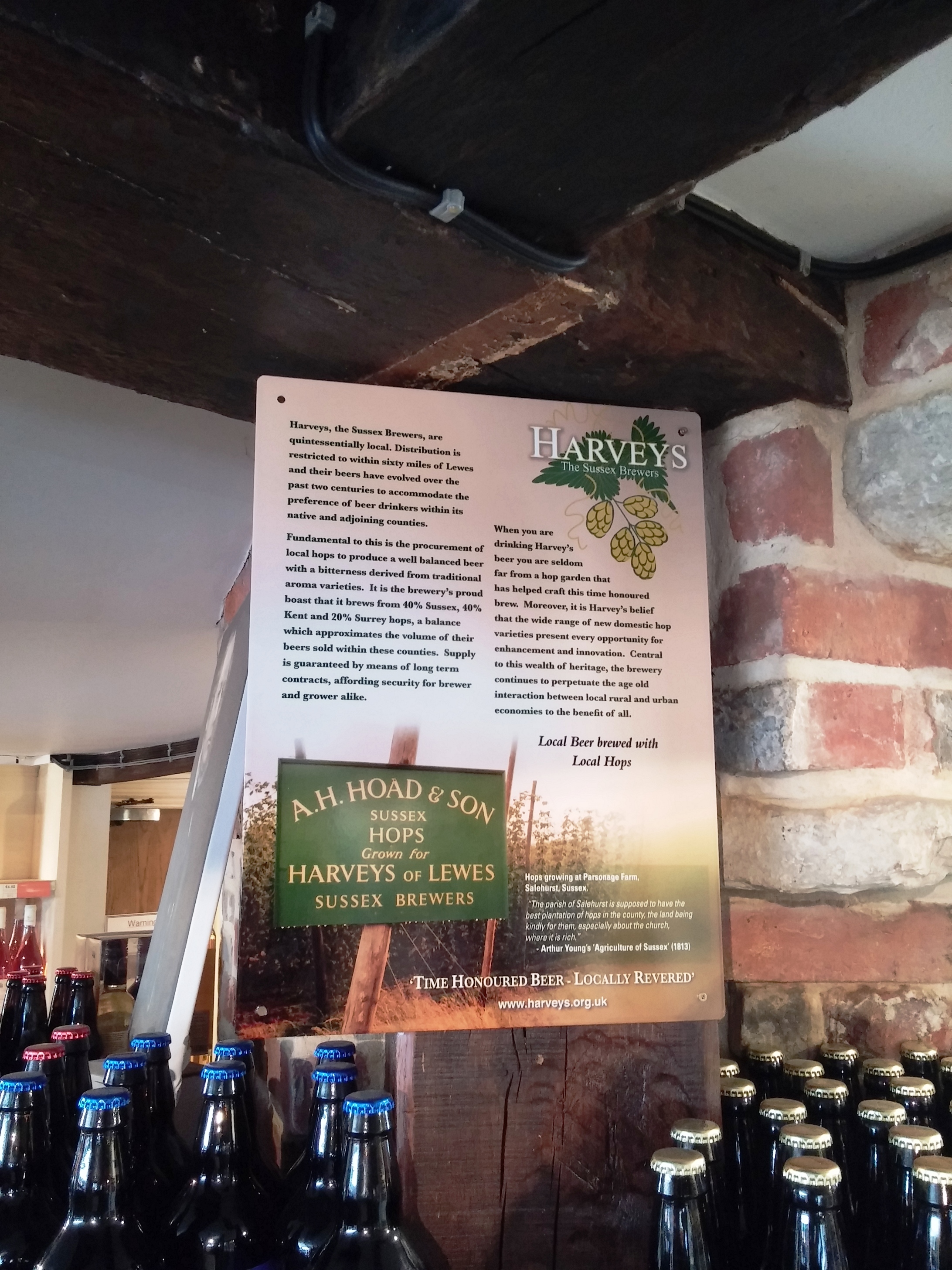
Harveys also has an emphasis on local. The brewery gets uses water from a borehole, using local rain – or more specifically, as Edmund Jenner explained, local rain that’s been filtered through the rocks over the past 30 years. Locally grown hops and barley for their malt are the main other ingredients, and most of their beer is consumed within 60 miles of the brewery. Head brewer and joint managing director Miles Jenner has said ubiquity “diminishes the product”. It’s also an eminently sensible attitude in an era where the fuel burnt when transporting foodstuffs is a major contributor to climate change.

Shop poster

Shopaholic
Harveys also has an excellent shop in the centre of Lewes, where I buy my Harveys beers, then take the bottles back for reuse. I really am lucky to have this operation on my doorstep. And as I keep going and asking questions when I’m buying beer (and wine) from the shop, I got invited on a brewery tour – something that otherwise has a two-year waiting list. Even luckier!

The aforementioned Edmund is the son of Miles. As well being a member of the family that’s been brewing at Harveys for since the 1930s and a man who knows his brewing, he’s also a historian: which is ideal when talking about a firm that was established in 1790.

The original John Harvey was a wine merchant – hence the shop has an excellent selection of wine alongside the Harveys beers. (My favourite currently is from Danebury Vineyards – which grows on the flank of an Iron Age hill fort where I used to play and picnic a lot as a child.) Since medieval times, Lewes had been an important port, despite being about seven miles inland. Wharfs lined the banks of the Ouse in the centre of town, and John Harvey used these to bring in wines, spirits, and even coal – indeed, Harveys is still technically a coal merchant too, despite a spat with bureaucrats in 1948.

Danebury wine

Flood waters and liquor
The current brewery yard, alongside the river, used to contain a pile of coal – previously used as the principle fuel for the brewery. They were still burning through the pile when the floods of October 2000 hit Lewes, overwhelming the flood wall – then in construction – and rushing into the brewery. There’s a mark on the doors into the yard indicating the height the flood-waters reached. I’m more than six foot tall and it’s near my eye-level.

Ed explained they had just filled the hopbacks on the ground floor with 50 barrels (about 8,185 litres) with wort when the Ouse rushed in. They were used to flooding in the brewery, as indeed the whole of this stretch of the Ouse valley has a long history of it, but this inundation was atypical and extreme. Yet two days later, the hopbacks were intact in situ, the weight of the liquid holding them in place, despite damage to other equipment. The insurers said they wouldn’t be back in business for nine months, but they were actually brewing again in nine days, in part thanks to the help of other breweries like Kent’s Shepherd Neame. The beer that had been in fermenting upstairs during the crisis was saved and sold as the renowned “Ooze Booze”, with profits going to the flood appeal.

Back to the 1830s
John Harvey had acquired the Bridge Wharf site in 1838. Three of his offspring, Henry, Edwin and William, developed Harvey & Son. John himself died in 1862, while Henry and Edwin died in 1866. William, no brewer, brought in a chap with the wonderfully Victorian name of Henry Titlow-Barrett to handle the growing brewery business. The borehole that supplies the water  was one of T-B’s developments. His incentive? Well, Ed said there was a typhoid breakout, which was traced to the local utility company. That’s a pretty good motivator.

Any brewer will tell you of the importance of the water, or the “liquor” as it’s known by many British brewers, but Ed says that, “along with the yeast strain, it defines the character of the beer.”

Another of T-B’s major contributiuons to the history of the brewery was the redevelopment of the Bridge Wharf site, with substantial new buildings constructed in 1881, designed by famed brewery architect William Bradford.

The brewery still utilises Bradford’s energy-efficient tower design to this day, though a second tower was added in 1985 – just before the building acquired a Grade II listing. The building certainly has a memorable roofline, with its towers, flues and even a brick smokestack – part of the old coal-burning plant, which was half-demolished in the 1950s, then rebuilt in the 1970s, and is graced with a slight curve. I’ve read that some people call the grand old brewery building “Lewes Cathedral”, though I’ve yet to hear that.

Harveys malt room

Grains of truth
After a quick jaunt into the yard, to appreciate Bradford’s oriel window, we headed back inside and upstairs to the malt room. A grand chamber, it’s wood-lined and packed with sacks of malt, notably the popular Maris Otter.

Ed described the malting process, though I won’t go into too much detail about that here – suffice to say, the grain is tricked into germinating to unlock its sugars. The sugars are essential to brewing, as the fermentation involves feeding the yeast. And what does yeast like to eat? Sugars.

Ed also talked about the “extract potential” of grain – that is, how much sugar it will be able to yield. This has a bearing on brewing as strong beers need more sugars to feed the yeast, which then produces the alcohol. So either you have to use more malt, or use malt with a higher extract potential. Speciality malts – chocolate, roast, caramel, biscuit, crystal malts etc – are used to give beers colours and flavours but generally have lower extract potentials. So while Harveys’ Sussex Best Bitter, their flagship brew and what I was drinking in the Lewes Arms last night, contains just two per cent speciality malts, their Imperial Extra Double Stout contains up to a third.

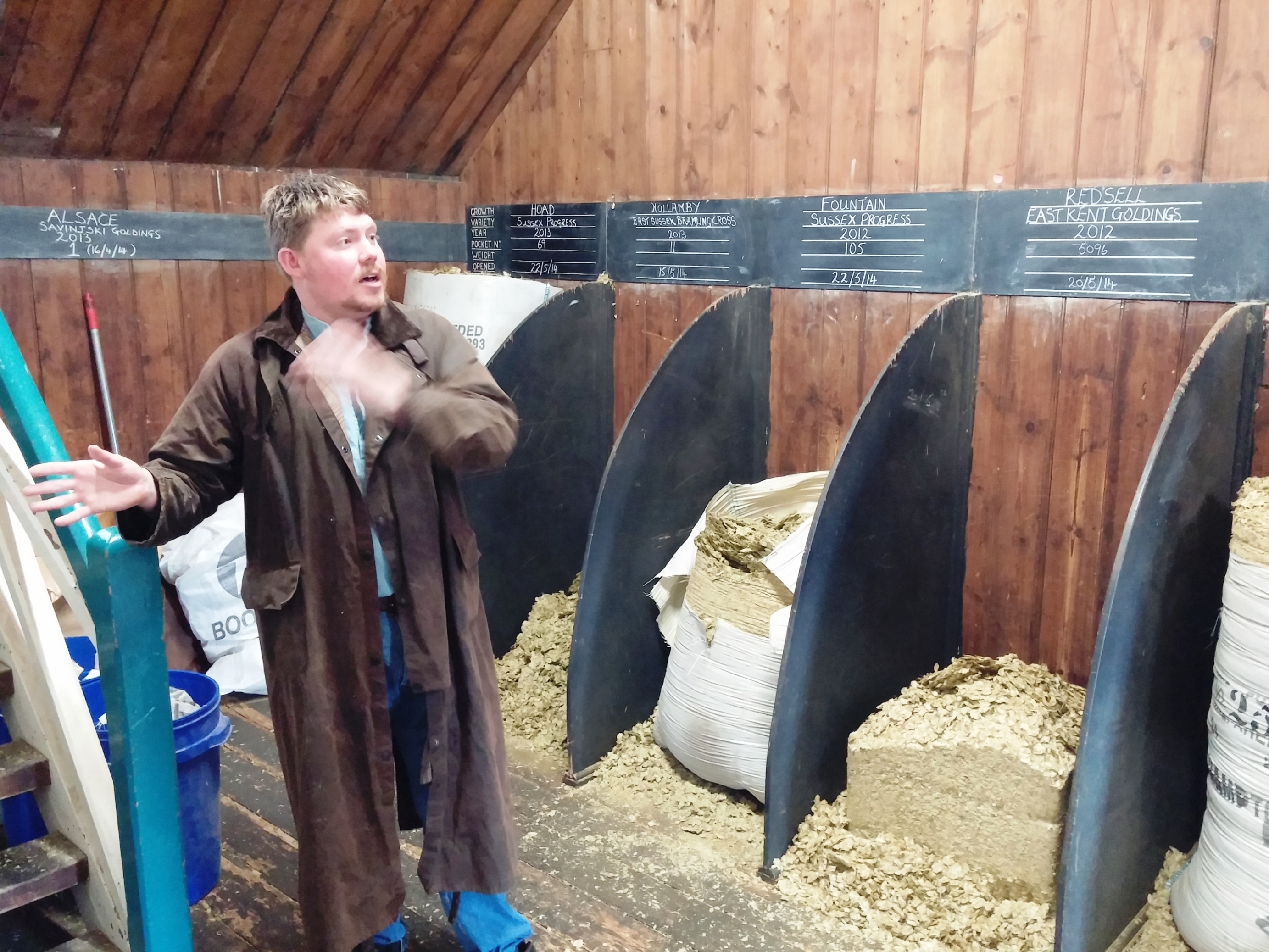
Ed Jenner in hop room

The green stuff
Next door to the malt room is the hop storage room, with contains wooden alcoves resembling stalls for seriously truncated horses.

Here we got into the fascinating discussion – about the historical difference between ale and beer. Although these days both terms are used fairly generically, with ale meaning “not lager”, originally “beer” was a Dutch drink – made with malted barley and hops. The older British styles of drink were made with malted barley and potentially other herbs for flavouring and preservation (see my post about Harveys’ Priory Ale). English brewers were fairly prejudiced against hops, seeing them as foreign muck, but within few centuries of them arriving (c1500), most British ale was made with at least some hop, for its preservative qualities. The term “ale”had come to mean a “less well-hopped brew”.

Ed also described some of the key qualities of hops for us, notably their alpha acid characteristics. Whereas hops, and specifically home-grown hops, were used in Britain more for their preservative and certain bittering qualities, these days, many craft beers contain New World hops that are much more overtly flavoursome and stridently aromatic.

Flavour and aroma distinctions are largely defined by the hops used, and the alpha acid levels of those hops. So while British hops might have alpha acids of about 4-6%, and give arguably more subtle bittering, New World hops might have up to 16% alpha acid (or higher). This higher alpha acid doesn’t just result in more explicit bitterness, but can also bring more overt aromas of tropical fruit, citrus and pine. Though it’s not just a question of the provenance of the hop variety, it’s also a question of where it’s grown, as the climate and terroir have an influence. Cascade is a classic American hop, originating in Oregon, though when grown in Britain, it will have different qualities – and indeed, Harveys use British Cascade in their intriguing Sussex Wild Hop, alongside a hedgerow variety discovered nearby in 2004. (This is a story I want to get to the bottom of; watch this space.) Hop essential oils are also significant for aromas.

Harveys copper mash tun

The mash tuns
Moving sideways and down a bit, we reached Harveys’ mash tuns. I always love any mention of mash tuns, as my the main pub of my teenage years was named The Mash Tun. Not all the memories are good – notably as it was the 1980s, when bad lager really dominated, and I was too ignorant to know anything about real beer – but I still have a fondness for these large vessels where the malt, ground into grist, is cooked up with liquor. I like the feel of the words in my mouth – as well as the promise of their product.

Harveys has two mash tuns one copper, located in the old tower, and one stainless, put in in 1985 in the new tower. The copper one was from a design patented in 1853 and was made in 1924. It was used by Page and Overton brewery in Croydon and in a 1954 auction, Mr Jenner had to go up against scrap merchants – who deferred to his bids when they learned he actually wanted it for brewing.

Each mash tun holds 120 barrels, that is about 19,650 litres. They’re first warmed by steaming to 70C (158F; Ed did everything in Fahrenheit, which is a foreign language to me). After the enzymes have worked the mash, freeing up more of those sugars, half the husk from the grist settles to a false floor in the vessels. The sweet wort is then gradually drained, lautered. It’s then sparged, sprayed with more water to get out as much of the goodness as possible.

Near the mash tuns, on the other side of the head brewer’s office, the brewery still contains two old steam engines, one of them, a small eight horsepower machine, is from the old Beards brewery. Beards was one of the dozen or so other Lewes breweries that didn’t survive the ebb and flow of the industry.

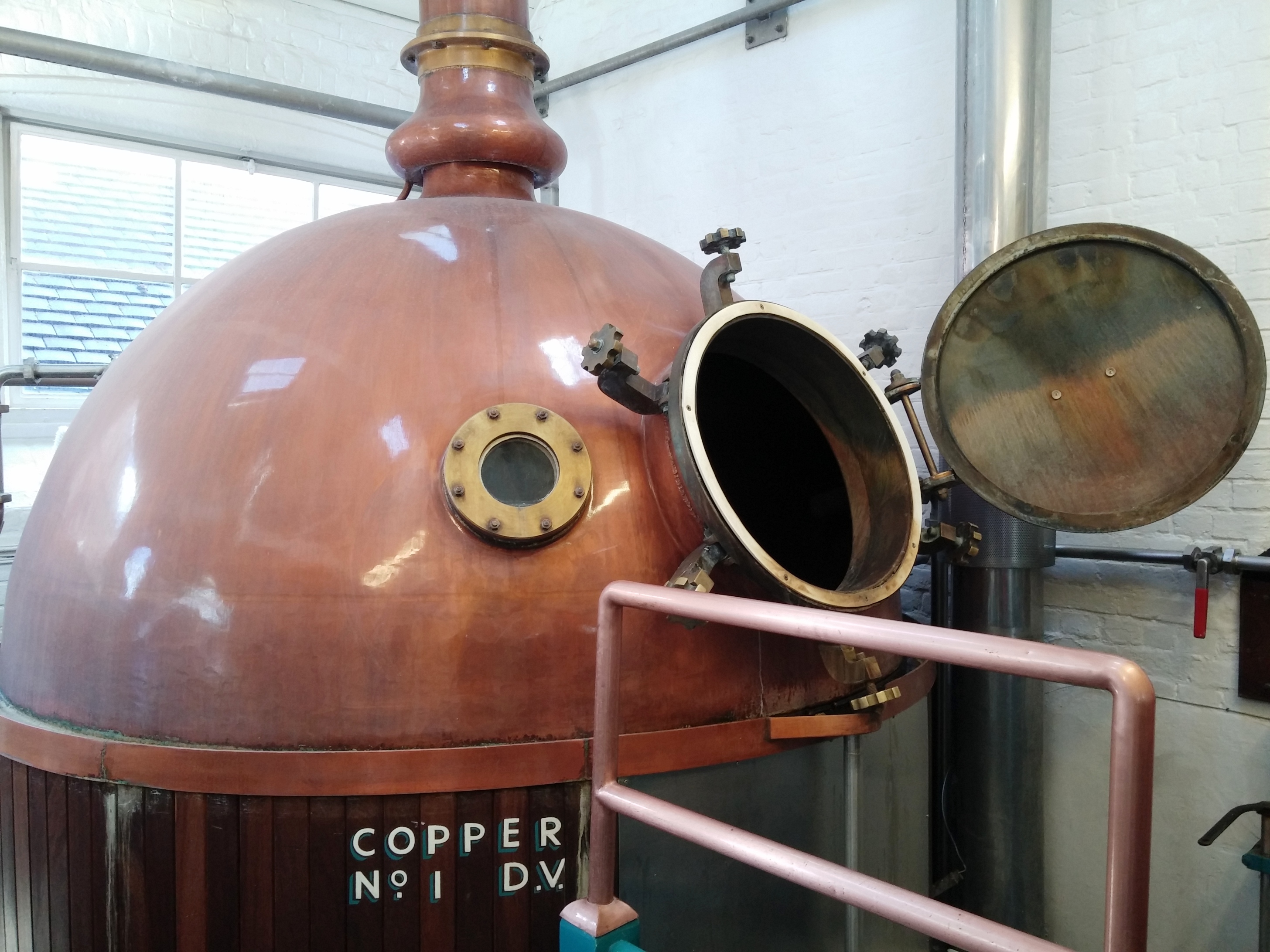
Harveys copper no 1

Flowing downhill
The wort then continues its journey, into receivers, then into the coppers, or boiling kettles. Harveys has two – Number 1 is copper, and looks very Jules Verne, but was actually made in 1999 in Scotland. Number 2 is stainless steel.

Here, hops are added at two different points, and the heating izomerises them – changing the atoms in the molecule into something that gives a bitter flavour . The liquid from the kettles then flows on downstairs again, into the abovementioned hopbacks. The journey continues with the liquid pumped through heat exchangers, cooling it enough for the addition of the yeast – for the next, perhaps most important stage: the fermentation.

After the wort is cooled to 15C (60F), yeast is added – Ed said at a rate of “one pound per barrel”, so that’s about 454g per 164 litres. (164 litres is more or less the size of a UK barrel, 36 imperial gallons. A US beer barrel is 31 US gallons, or 26 imperial gallons, about 117 litres. And that, folks, is why I like metric.)

Harveys, barm in fermenter

So if the day’s brewing starts at 6am, it takes until 4.30pm to get the liquid into the fermenters, which Ed also referred to as tuns. Once the yeast is added, this all-important organism, which I’ve previously made the argument for being man’s true best friend, gets to work. As ales are made using mostly top-fermenting yeasts, it diffuses through the liquid but mostly settles on the top. Anaerobically, it metabolises the sugars, creating alcohol and carbon dioxide – bubbles. To encourage the yeast to reproduce (asexually), the fermenting mix is aerated, the temperature kept low and steady.

The fermentation continues for three days, the yeast forming a thick crust on the top in an “intestine or brain pattern”, which protects the beer, keeps it pure.

Harveys, fermenter brain crust 2

Harveys has been using the same yeast culture since 1957, with Ed explaining it “gives us our flavour, our brand identity.” Before then, their yeast was supplied by the Burton Pure Yeast Company. When it went bust, Harveys had a scramble to try and find a replacement source of the same strain. The sample Harveys received was wrong, so they asked for further samples from breweries all over the country. They eventually received one from John Smiths in Tadcaster that was right, enabling Harveys to keep on brewing consistently.

Or almost consistently. Ed says that the yeast culture itself is changing subtly with every brew, every generation and he conjectures this “little variation stops it being dull to the palette”. I certainly like this idea – it’s like a sourdough culture that might be decades old, but colonies of yeasts and bacteria evolve and change slightly with every use, every generation.

Fermenters

The right temperature
After fermentation, the beer is cooled to 60F / 15C again: closer to cellar temperature, which CAMRA defines as 12-14C, and the optimal temperature for serving many ales. Descending, we reached the racking cellar, where some of the final steps take place – notably the clarification of the beer, using finings – that is, derivatives of fish swim bladders. Quite how anyone ever discovered they had this effect is bewildering, but long molecules of the finings sink through the liquid, collecting sediment.

The beer will undergo some secondary fermentation in the cask, adding some extra fizz. This period of cask conditioning varies depending on the beer in question. So their Old Ale is conditioned for four weeks, their Porter for six, and their Imperial Stout for 18 months.

Not that Ed is entirely staunch about just drinking cask beer. Like me, he agrees that good beer is good beer, if it’s made with knowledge and skill, if it’s served properly. So if it comes in a bottle or a keg, that can be fine too. I drink a lot of Harveys in bottles at home, as I mentioned at the start. Though I do prefer a hand-pumped cask beer, I’m not averse to real beer from a keg. In the meantime, we ended the tour by trying several of Harveys’ classics brews – from a handsome row of casks in the cellar.

All in all, a wonderful experience, and a fascinating compare and contrast with some of the other breweries I’ve visited the past few years, notably Mastri Birrai Umbri in Umbria. The latter is purpose-built, but relies on traditional knowledge and values from a family with a similarly long tradition of food production. And both have a not dissimilar output: Harveys produces 45,000 UK barrels per year, which in new money is about 74,000 hectolitres, while Mastri produces 100,000hl.

For more information about Harveys, their website is comprehensive – about everything from their beer to their history to their environmental credentials, though this doesn’t even mention that their new depot, a few hundred metres away over the river, has a roof covered in PV solar panels, which generated 98kW of power. Again, eminently sensible. What a great company.

5 Comments

Filed under Ale, beer, Breweries, British beer

Thornbridge acronym ale taste test

Thornbridge's Jaipur and Chiron

Very pleasant, somewhat flying visit to Sheffield over the weekend to visit friends, and celebrate a Big Birthday. Said birthday celebrations took place in the Beauchief Hotel, which serves Thornbridge beers. Andrew Drinkwater over at Andrew Drinks classifies Thornbridge as a “big regionals” along with Adnams, and presumably Harveys down here in Sussex.

I talked a fair bit about Thornbridge over here, back when I encountered their Tzara, a Kölsch-style beer at the Cut Bar in London.  It was really good to have a chance to try more of their range though.

Long boozy lunch
It’s said that long, long, rambling, amiable lunches are a more Mediterranean thing, but we – about 40 Brits – managed to do about five hours of eating and drinking and chatting. During this time, I mostly drank Thornbridge’s Lord Marples, a 4%, fairly dark British cask bitter that was toffee apple, slightly spicy, a great winter drink. Yes, it’s been hot for March the past few weeks in England, but it was cool and rainy again on this particular Saturday.

A vs I
I tried several other Thornbridge ales, with the most interesting test being a comparison between their mutli-award-winning Jaipur and Chiron (both from kegs). The former is a 5.9% IPA, the latter a 5% APA. It’s a shame the bar didn’t also have Thornbridge’s Kipling “South Pacific Pale Ale” and Halcyon (“Imperial IPA” – ie stronger) to complete the journey through closely related, hoppy ales.

Two was good though, with the IPA being a classic 19th century style of English ale, now highly influenced by APA, an American style of ale that emerged in the 1970s as arguably an evolution of the IPA, or more specifically as an evolution on American IPA. So what we had here was a modern English take on an older English style of ale, and a British take on a related style of American ale. Broadly, you could say a more traditional, English IPA was defined by its inclusion of English hops, with their subtle, dry, bitter flavours. Jaipur, however, is made with a range of American hops, and as such had a bigger, more overt citrussy flavour along with its crispness.

Yes, but…
The Chiron is bigger though, more aromatic, tangier, more fruity, with more citrus, pine, passionfruit in both the aroma and the taste, as you’d expert from an actual US APA. Both delicious. But I do wonder why Thornbridge call the Jaipur an IPA when it’s so heavily influenced by APA you could just as easily market it as an (English) APA.

Leave a comment

Filed under Ale, beer, Breweries, British beer

Types of beer

Are innumerable: even the key styles have sub-varieties, or the names may have changed meaning over time and distance, or the same style may have different names in different languages or dialects, just to add to the muddle.

This list is just an attempt to consolidate my knowledge. I’ll keep adding to it, either as I learn more, or realise I’ve forgotten stuff, or when people correct me. Or to add images.

Abbey
Belgian beers in vein of Trappist beers, but without the official monastic supervision.

Ale
Generic term for beers that are made with top fermenting yeasts at warmer temperatures. Historically, ales were unhopped but not any more. Not for a long while.

Altbier
“Old beer”, a German (specifically Düsseldorf and Westphalia) dark ale.

Amber
Coppery ales that derive their colour from crystal malts.

American IPA
US evolution of the English IPA. Big, aromatic, bitter ales made with the distinctively citrussy, resiny West Coast US hop varieties: Cascade, Amarillo, Chinook, Simcoe, Centennial, Columbus. The quintessential beer of the craft beer movement.

APA
American pale ale. “The first true American craft-beer style, this took inspiration from the pale beers brewed in Europe and then made them American by using the hugely fruity hops grown the West Coast of the United States.” (Mark Dredge). On a spectrum with pale ales and American IPAs.

Barley wine
A fairly generic term, but basically an English style of strong ale, with 8% ABV plus. Indeed, at 12% some have a comparable strength to grape wine.

Bière de Garde
“Beer for keeping”, strong ale from Pas de Calais, equivalent to Belgian saison beers.

Bitter
Synonymous with English pale ale. Ales with wide variation in colour and strength, but most typically around 5% and golden-brown. By modern standards not especially bitter or hoppy, more defined by mellow maltiness.

Bière blanche
See witbier (below).

Blonde
Generic term for light, golden coloured pale ales of varying malt and hop profiles.

Bock
Strong German lager. The name, purportedly, derives from accent and dialect variables in Germany, where the place where the style originated – Einbeck – became ein bock (“a billy goat”). Variables include doppelbock (see below).

Brown ale
Fairly generic term for a sweet, brown generally mild, lower alcohol ale. More specifically an English ale type, originally.

Doppio malto
Italian birra doppio malto (“double malt ale”) can be seen as the equivalent of English strong ales or even some barley wines, or strong Belgian abbey beers, or Trappist dubbels. Italian beers are classified as analcolica (non-alcoholic, though technically low-alchohol), leggera(light) or normale, speciale and doppio malto, with each category defined by its gradi plato – a measurement of density.

Dubbel
“Double”. Medium to strong brown Trappist ale.

Dopplebock
Dark, maltier version of bock (see above).

Dunkel
“Dark” in German, and used to refer to various dark lagers. More typical of Bavaria. Malty, not as strong as dopplebocks.

ESB
Extra special bitter. An English brewer’s highest original gravity bitter, after session/ordinary bitter (lower) and special/best bitter (middling).  Synonymous with premium bitter.

Faro
A type of lambic (see below). Made by blending  a lambic and a young, sweetened beer.

Frambozen, framboise
Dutch/Belgian raspberry lambic (see below).

Fruit beer
Any beer that uses fruit adjuncts. May be whole fruit, purées or juices. Kriek cherry lambic is a fruit beer, for example, but others may be more convention brews augmented with fruit ingredients.

Geuze, gueuze
A type of well-carbonated Belgian lambic, made with blend of older (2-3 years) and young lambics.

Golden ale
Generic term for light golden ales, sometimes used synonymously with “blonde”. Arguably, golden ales have less body, and are crisper, more like lagers.

Hefeweizen
“Yeast wheat” in German. A type of wheat beer with low hoppiness, high carbonation, phenolic clove aromas. See also kristallweizen.

Helles
“Bright” in German. Distinguishes this lager from dunkel. Munich pale lager inspired by Czech pilsners.

IPA
India Pale Ale. Now a varied style (see American IPA) but original English versions were less punchy, made with older, mellower English hop varieties. The hoppiness originally developed out of necessity – its preservative quality allowed the ale to survive the long journey to British imperial India without going off.

Imperial stout, Russian Imperial stout
Strong (9% ish ABV) dark beer style first brewed in 18th century England for export to Russia. Brewing industry veteran Ian Swanson, teacher at the Beer Academy, said it was a case of the ships needing ballast as they went to Russia and brought back timber.

Kolsch, Kölsch, Koelsch
A light, lager-like top fermented beer from Cologne (Köln), Germany. Becoming popular as it’s easily accessible to lager drinkers, but is quicker to make, not requiring lagering (cold store conditioning).

Kriek
A type of Belgian lambic made with sour cherries.

Kristallweizen
A type of wheat beer: a hefeweizen that’s been filtered for brightness.

Lager
Generic term for beers that are made with bottom-fermenting yeasts at colder temperatures, and involve a cold “lagering” (literally “storage” in German) conditioning period, originally in caves or tunnels.Where caves or tunnels weren’t an option, winter ice was used to cool the cellars. This was superceded by refridgeration in the 1870s. Lagers were first brewed in Britain in Glasgow and Wrexham in the 1880s, but didn’t really start to take over until the 1960s. Despite German (etc) pride in lagers, it’s the culprit for some of the worst crimes against beer in its long history, and the reason I stopped drinking for years as a teenager in the late 1980s. Shockingly for a country with such an important ale history, the biggest selling beer in Britain since 1985 is a generic industrial lager. Mentioning no names. …. Carling.

Lambic
Distinctive beer style specifically from Pajottenland region of Belgium (southwest of Brussels). Relies on spontaneous fermentation and wild yeasts (like Brettanomyces bruxellensis and Brettanomyces lambicus) and lactobacilli, and as such is very different to other beer styles with their tightly controlled yeast strains. Various sub-varieties, like kriek, geuze, faro. 30% unmalted wheat. Winey and sour flavours. Hops used for preservation not bitterness, so often old and intentionally cheesy. Aged in sherry and wine barrels.

Märzen, Märzenbier, Marzen
A malty lager originally from Bavaria though now more generic.

Mild
Low gravity, malty beer from England. “Mild” originally referred to a young, fresh beer, as opposed to a more flavoursome old, or stale, beer but more recently can mean “mildly hopped.” X to XXXX strengths, historically.

Milk stout
A variable of stout (see below), made with lactose (milk sugar). Lactose is unfermentable so the resulting beers have a thick, creamy body with lower ABVs.

NZ draft, NZ draught
Common New Zealand beer style. A malty, minimally hopped brown lager with ABV around 4-5%.

Oatmeal stout
Stout made with oats alongside the malt, adding a smoothness.

Oktoberfest, Oktoberfestbier
Traditionally Märzen lagers brewed in March and largered to October. Now a registered trademark of six members of the Club of Munich Brewers.

Old ale
Name for dark, malty British ales, generally 5% ABV plus. Originally contrasted with mild ales.

Oud bruin
“Old brown”. From the Flemish region of Belgium, a malty brown ale with sour notes due to an atypically long aging process.

Pale ale
Generic term for ales produced with pale malts. English bitters, IPAs, APAs and Scotch ales are all variations on pale ale.

Pilsener, Pilsner, Pils
Type of pale lager that originated in the Bohemian city of Plzeň (Pilsen), now in the Czech Republic. Now many lagers made outside of Pilsen are considered pilseners.

Porter
Originally a dark, nutritious ale drunk by London porters in the 18th century, made with dark brown malts . A strong porter was a “stout porter”, though now the terms are almost interchangeable.

Pumpkin beer
US style, made with pumpkin flesh and often unveiled ceremoniously in the Autumn. Often spiced with pumpkin pie spices: nutmeg, cinnamon, cloves and allspice. A type of vegetable beer.

Rauchbier
“Smoked beer” from Bamberg, Germany. Made with malt dried oven an open flame.

Roggenbier
A Bavarian type of rye beer with light, dry, spicy taste. Brewed with same yeast as hefeweizen (see above).

Rye beer
Beers featuring rye alongside the more typical malt (malted barley). See roggenbier.

Saison
A fairly generic French term (“season” ) for strong-ish pale ales. Saison beer evolved in the farms of Wallonia, French-speaking Belgium, where it was brewed in late winter, and stored for drinking by farm workers slaving away at the harvest and whatnot.

Schwarzbier
“Black beer”. German term for dark lagers made with dark malts.

Scotch ale
Scottish style of pale ale, malty but lightly hopped. Also known as “wee heavy”, apparently. May feature peaty or smoked malts, often fairly strong (6-9% ABV).

Session
Not so much a style as a strength: weak-ish beers (4% ABV or less, generally) than can be drunk fairly copiously in a “session”. Generally more about the (US, citrussy) hops than the malt.

Smoked beer
Beers made with smoked malt – which is dried with open fire. Not a fan.

Stout
Originally a British term to describe strong beer, such as “pale stout” or “stout porter.” Evolved and muddled up with porter, and came to be another name for dark (black-ish) ales. Remained popular in early 20th century when porters all but died out, before its revival in the 1970s.

Trappist
Beer produced by, or under the supervisor of, Trappist monks. As of 2014, there are 10 Trappist beer producers, mostly in Belgium, but also in Netherlands, US and Austria. Chimay most famous. Various top-fermented styles, classified as Enkel (single), Dubbel and Tripel.

Tripel
“Triple”, strongest of the Trappist beers.

Vegetable beer
Any beer that’s made with vegetable ingredients – like the US pumpkin beers. Another popular vegetable beer flavouring ingredient is chili pepper. Even though it’s technically a fruit (see fruit beer).

Vienna
Local equivalent of dunkel or schwarzbier, that is a dark lager.

Weissbier
“White beer” in Bavarian. A category of wheat beers that includes hefeweizens.

Weizen
“White” in German. Wheat beers, same as weissbier basically but a different dialect name.

Wheat beer
Beers (usually ales, see above) made with a high proportion of wheat – at least 50% – along with the malt.

Witbier
“White beer”, aka “bière blanche”. Wheat beer from the Netherlands and Belgium (predominantly). Tends to be hazy when cold, due to yeast and wheat proteins suspended in the liquid. Mostly feature gruit: a Dutch term (grute in German) for blends of herbs, spices and fruit used for flavouring and preserving certain continental beers prior to the popularisation of hops in the middle ages. Today these may well involve coriander and orange zest.

It’s one big happy fermented family! Pop Chart Lab, a Brooklyn-based design team have done some excellent visualisations of it, here and (a newer version) here.

2 Comments

Filed under Ale, beer, Misc

Beer School

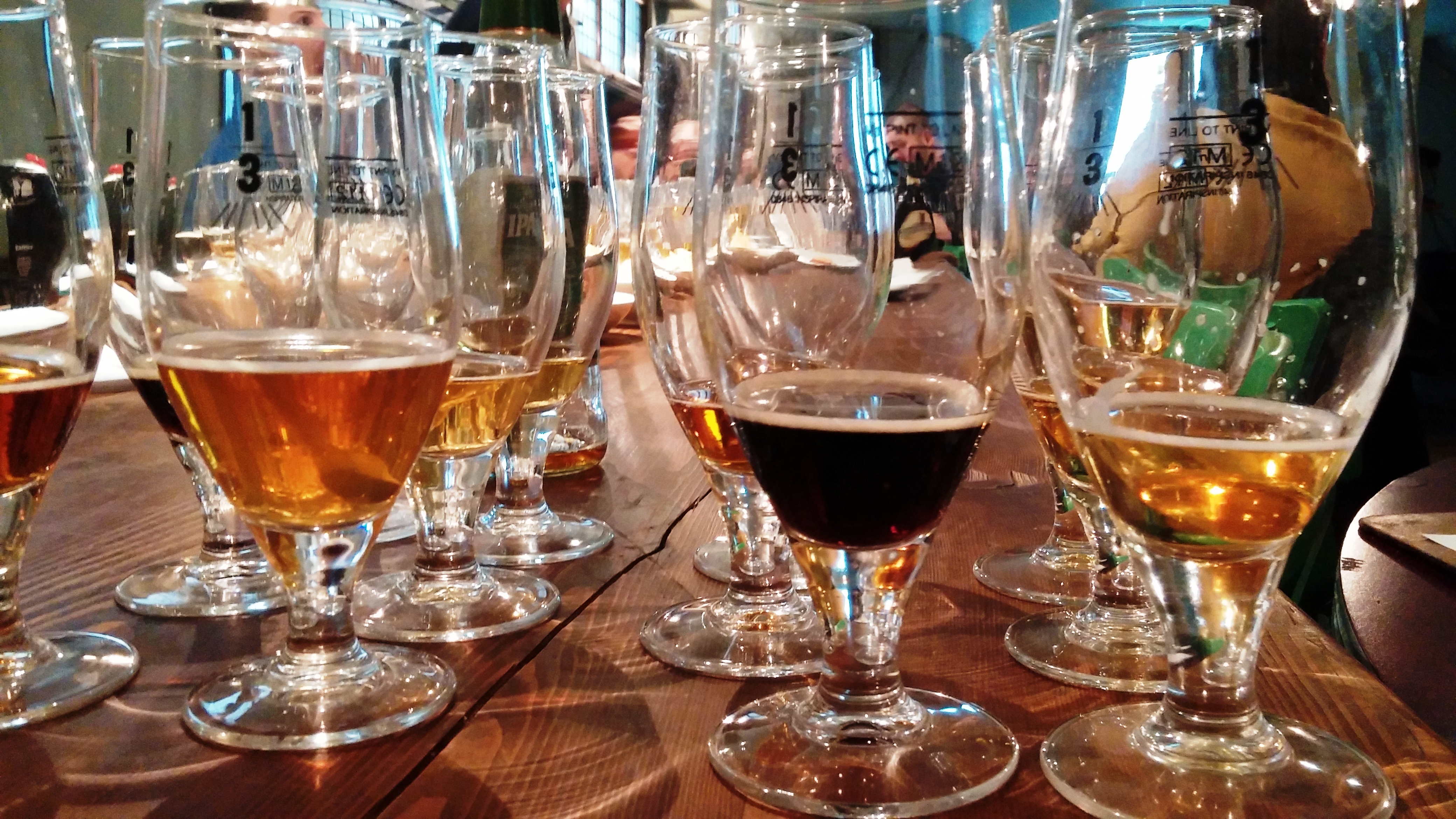
Beer samples

It was a bit different to any other days I’ve ever spent in classrooms.

Sitting in the downstairs room of The Draft House, near Tower Bridge in London, I learned about beer, discussed beer, drank beer and drank beer with food.

Although I’ve enjoyed beer for years, it’s only the past few years, and particularly while living in Italy, that I got more serious about trying to understand it, its history, its many permutations, and how to match it with food. But self-education can only go so far, so moving back to England presented a good opportunity to actually go to beer school, or more precisely attend a course run by The Beer Academy.

Founded in 2003, and part of the IBD (Institute of Brewing and Distilling) since 2007, the Academy has a goal “to enlighten, educate and enthuse candidates about all aspects of beer.”

With two, day-long classes run by brewing industry veteran Ian Swanson, and attended by a variety of knowledgeable people from various corners of the trade (including maltings, hospitality, marketing, and even a representative of the Worshipful Company of Brewers), it was a highly informative experience.

Now I just really need to gen up on my chemistry. Sure, I was pretty good at chemistry at school, but that was 20 years ago, so I really need to study my dimethyl sulphide, acetaldehyde, diacetyl etc before I truly become comfortable about throwing these terms into conversation.

2 Comments

Filed under Ale, beer, Misc

There and back again

This blog is still alive. As are we – perhaps against the odds, as Britain has had the worst winter storms for 20 years and we arrived home right in the middle of them. We touched down at Heathrow 22 December, when large swathes of our fair isle were already flooded, and repeatedly buffeted by high winds. We even managed to get down to the southwest of England on a train, then across Devon for Christmas (with no water on Xmas morning – but hey, between me, my dad on the phone and my father-in-law we fixed it), then back up the country to my folks’ place, then across to the southeast, to finally settle in Lewes, Sussex.

We haven’t got any proper internet yet, but before I even think about complaining about the two and a half week time between ordering and connection I have to remind myself it took us five months – five whole flippin’ months – to get internet in Italy’s great capital.

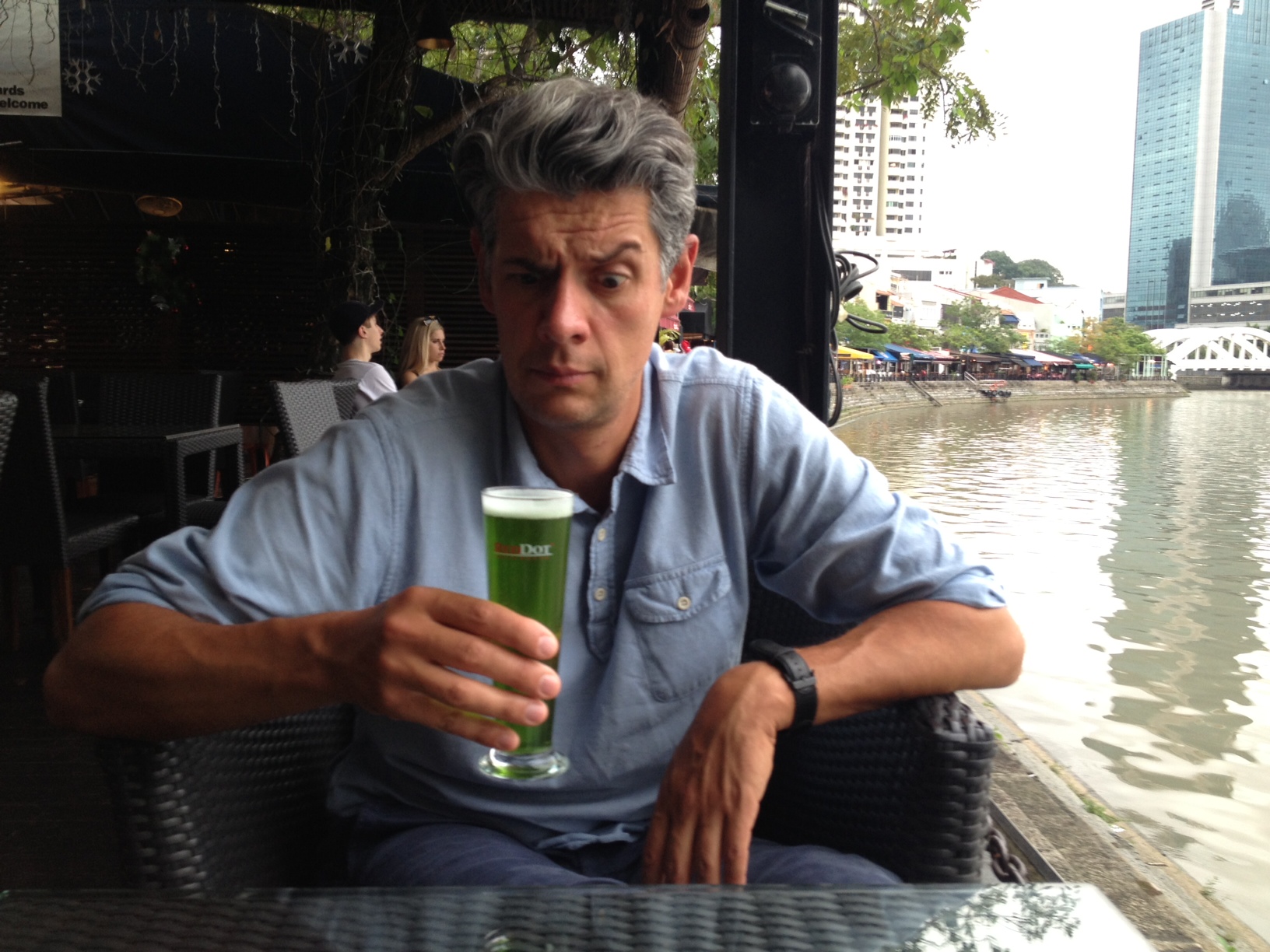
So in the meantime, here’s one of my last drinks on our travels, in Singapore. It’s a lager made with spirulina from RedDot (or Reddot, or Red Dot) brewery. We also visited Singapore’s other key brewery, Brewerkz, that night. It all seems like a very very long time ago, but it’s only just over three weeks.Monster Green lager at Red Dot, Singapore

And here’s me back in wet, wintry Blighty drinking ale (cask Old Ale, then bottled IPA) from Harvey’s, the small-ish, traditional family brewery that’s survived here in Lewes since 1790.

Drinking Harvey's at The Swan, Lewes

I’ll probably talk more about Harvey’s, but sadly I don’t think I’ll be on a brewery tour any time soon. Apparently they’re booked for two years.

Having posted those pics, however, I’m not actually drinking that much beer at the moment. My tipple of choice is currently hot chocolate, and I’ve been trying various varieties, and making biscuits to dunk in it. I’ll report back on my findings soon. Via the miracle of real – indeed fibre optic – internet. Fingers crossed the installation goes without a hitch tomorrow. Touch wood. Touch cornicello. Make inverted mano cornuta gesture. Etc. Not that I’m superstitious.

2 Comments

Filed under Ale, beer, Travelling

The Last of New Zealand

Brothers shelves

The past week or so we’ve had a great time catching up and hanging out with old friends. Hence a bit of slackness on the blog. Plus, well, I’m aware this has really become a beer blog the past few months, and I’m slightly sick of the sound of my own (typed) voice on this subject.

That said, we’ve finally left NZ, so I wanted to write up some final thoughts on NZ craft beer, and in some ways retract some of what I said earlier.

I won’t be talking about bread and cake, though I’ve really enjoyed the baked goods of Bread and Butter, a small chain of real bakers in Auckland. Great breads, and I came to crave their almond croissants the last few days I was in town.

Strident ales
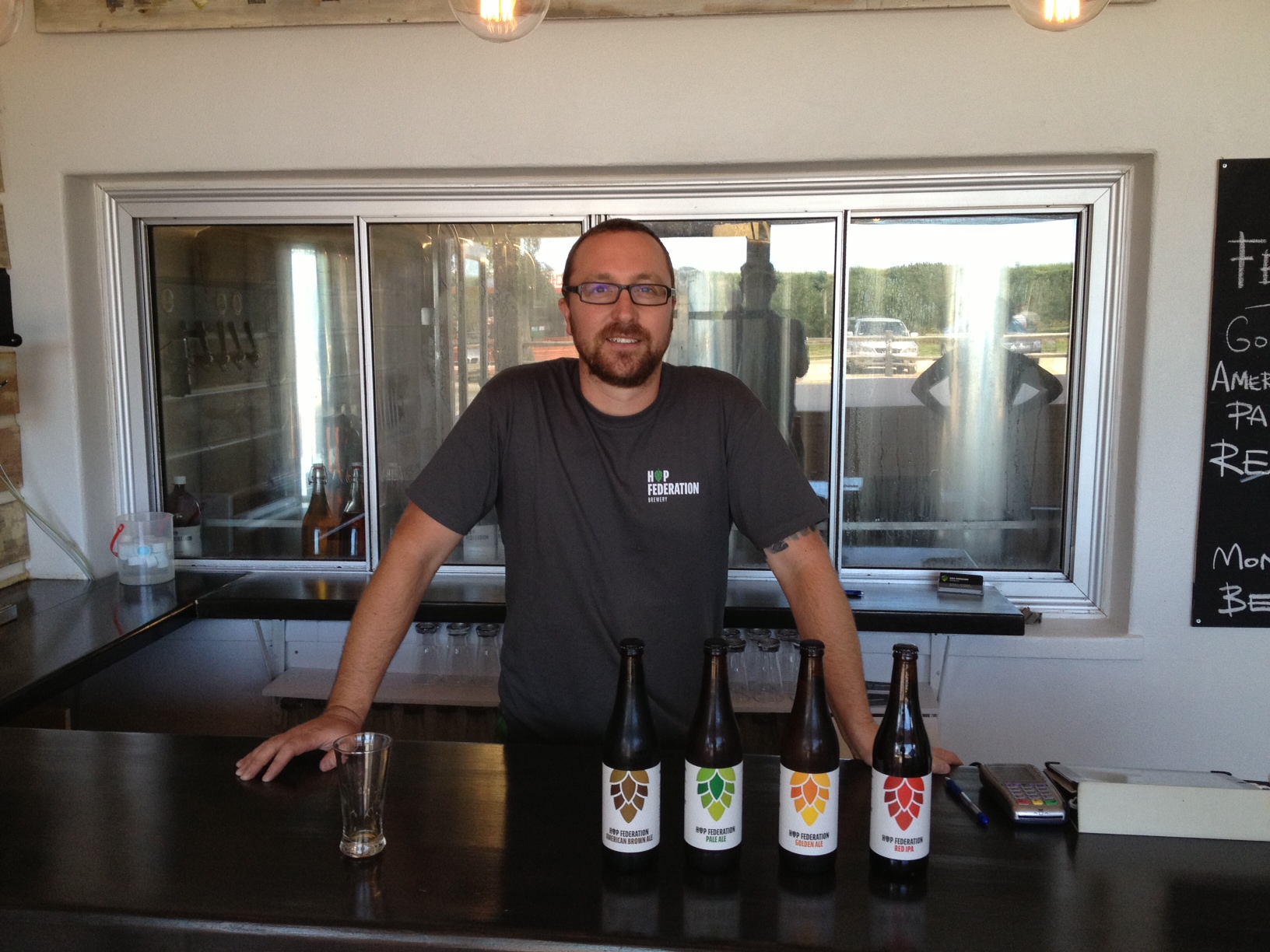
I’ll say straight away that in our final days in NZ, we finally drank some beers that had a lot of assertive hoppy character, something I’d started to begin to think didn’t exist in the craft beer scene there. Specifically, we went to a few places in Auckland that I wish I’d known about when we’d been there five weeks earlier. These places were recommended by the very genial Simon Nicholas of Hop Federation, one of the last breweries we visited on the South Island.

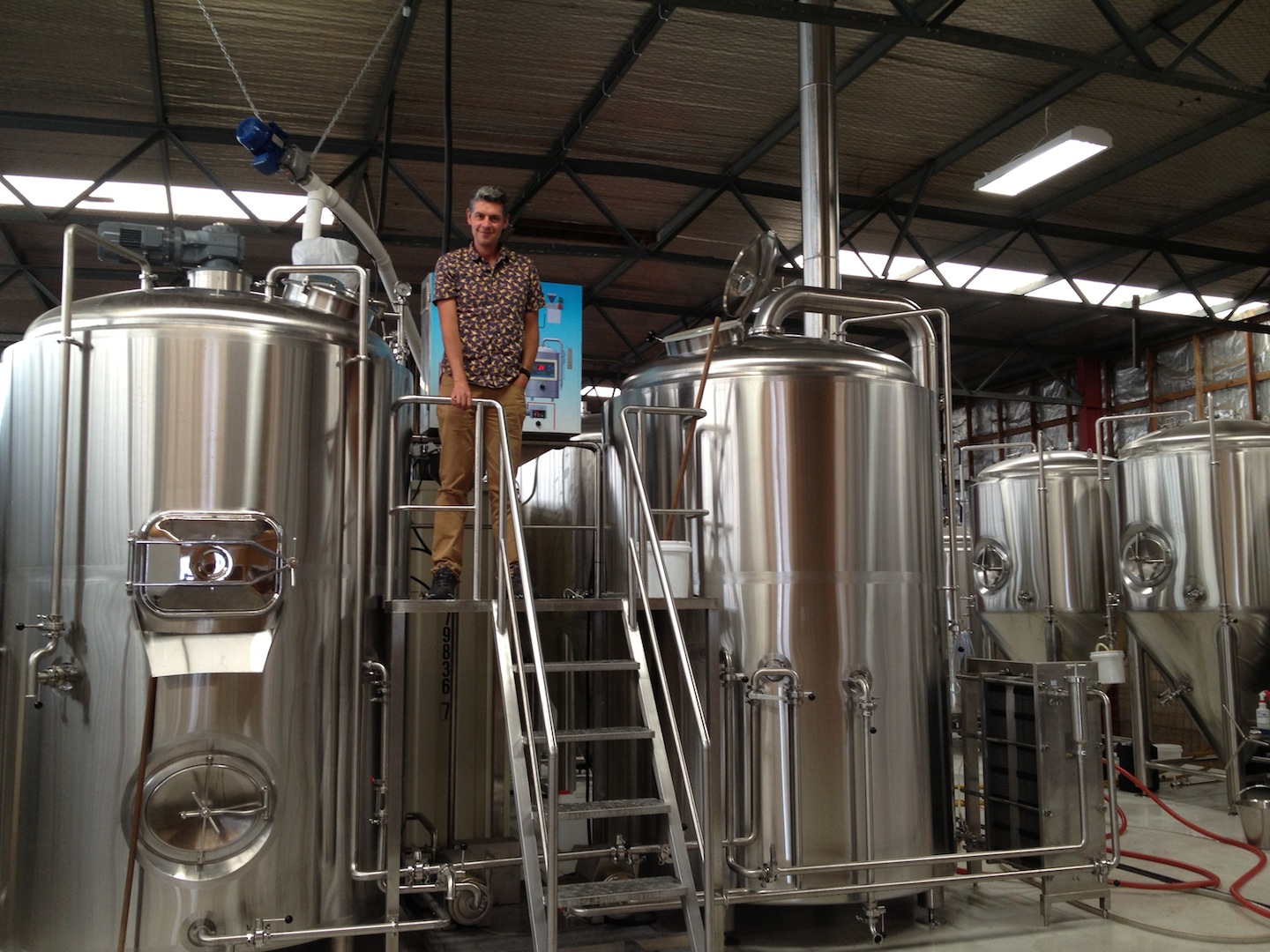
Simon Nicholas at Hop Federation

Simon was the head brewer at Hallertau, the Auckland brewery whose beers we’d enjoyed at The Golden Dawn on Ponsonby Road. He had recently relocated to the South Island, buying up the former Monkey Wizard microbrewery in Riwaka, outside Motueka in Tasman.

This small operation was previously run as a hobby by an English dentist, so Simon was in the midst of transforming the place into a full-time serious operation, and was also in the midst of tinkering with the beers he was developing. It was a really pleasure to chat with him and enjoy the beers he kept saying he was still “mucking about with”. Frankly, they were all superb already, but I’ll be interested to go back when he’s satisfied with them. (Or, ideally, find a few bottles at a decent beer pub in Britain, like London’s Cask Pub & Kitchen.)

His Red IPA was his biggest success so far, and it was delicious. He called it a “bit of a muck about”, but this lovely dark amber beer is sharp and resiny smelling, and has a great balanced taste from dry hopping with Simcoe and Cascade hops and mellowing it with Gladfield malt from Canterbury.

Driving past Hop Federation, Riwaka

Hop shortage
He said he wanted to make it with exclusively NZ hops, but they just weren’t available – indeed, he explained despite the Motueka area’s fame for hop-growing (something that was affirmed in a mid-19th century painting we saw in the Nelson museum), half a decade or so ago many were pulled out and replaced with jazz apple orchards. Just when NZ hops were becoming even more in demand in the international craft brewing scene. Ooops.

“There’s a worldwide hop shortage for our hops – it’s a real shame,” he said. Furthermore, as hops are all centrally controlled in NZ, it’s not even possible to grow your own adjacent to your brewery.

Before leaving the South Island we visited Bays Brewery near Nelson Airport, which was more traditional than craft (for example, they pasteurise and filter, like McCashin’s; Simon wrinkled his nose at the very idea of this. Indeed, why make a product that’s carbonated by an organism then kill that organism?) and Golden Bear in Mapua.

Golden Bear, Mapua, NZ

The latter has an American brewer, so I was intrigued to chat with them, as US craft beer tastes seem very unlike those of NZ, but when we arrived on a beautiful summer evening, there was a gig and a lively crowd in their brewpub, so that wasn’t really on the cards. Their Seismic IPA wasn’t bad though.

Golden Bear beers

Though TBH, I enjoyed a bit of the Mussel Inn’s Captain Cooker manuka at the café just over the yard from the brewery more. That was one the few beers I mentioned on my old blog during our previous visit to NZ back in 2007.

Back in the big sprawl
So yes, Auckland. When we got back, we first had a few days staying at the Piha bach (Kiwi English for holiday home) of our friends Jude and Roger. I bought a few beers to take with me, and was tricked by yet more “faux craft” branding. This was Hancock & Co, whose branding emphasised a whole yarn dating back to the mid-19th century; in reality, the brand is actually new, created by an off-license chain and exploiting some NZ brewing heritage. (See here.)

This wasn’t a trap one could fall into at Brothers Beer though. This was the place recommended by Simon: a small brewery close to the town centre in a funky development called City Works Depot.

The brewery has been in operation for about a year, according to the slightly unfriendly girl serving, whose too-cool-for-school attitude contrasted with the friendliness of most of the brewery folk we met on our South Island road trip (3095km – god help me. There go the last tatters of my green credentials when combined with all these aviation crimes).

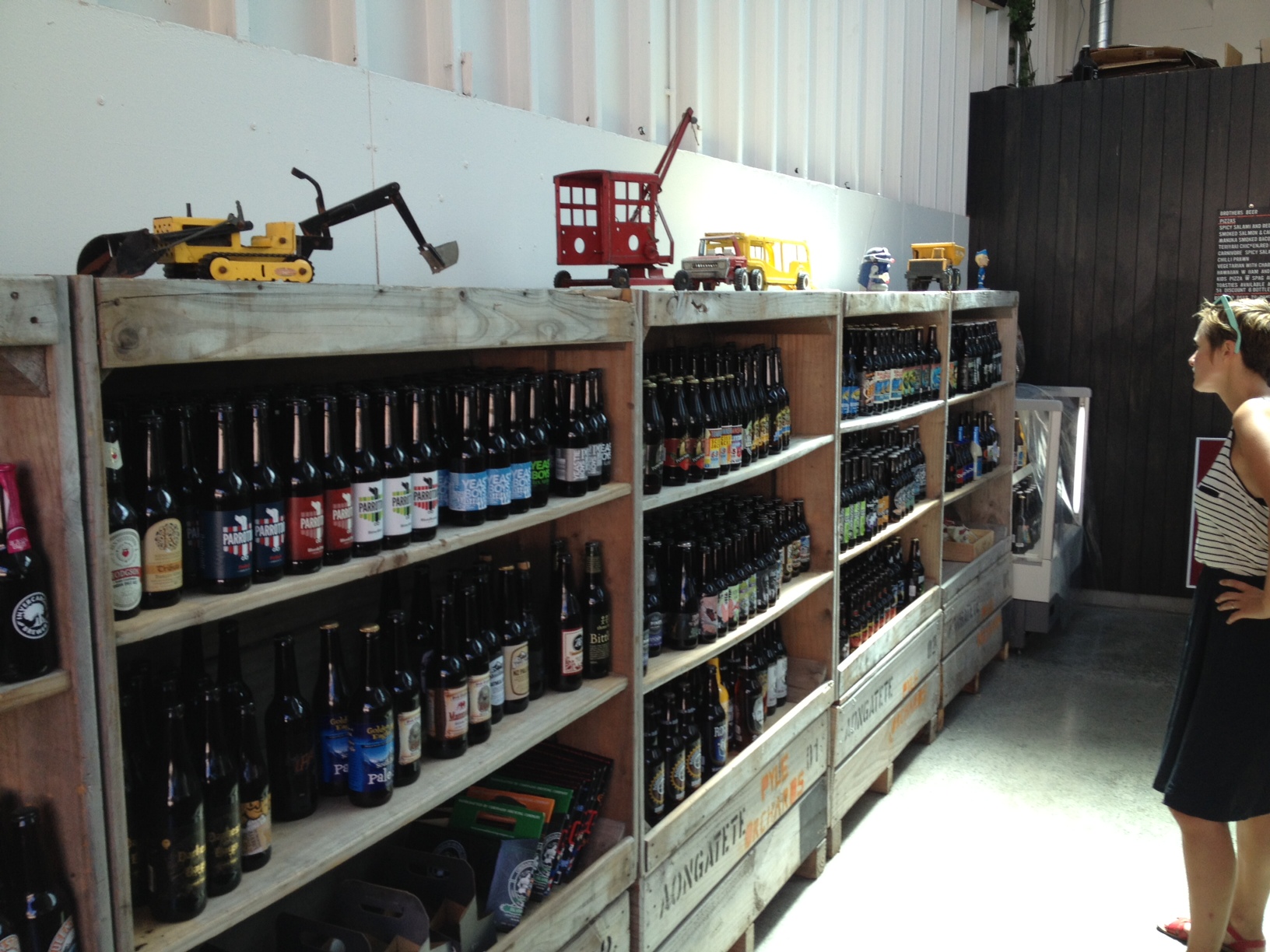
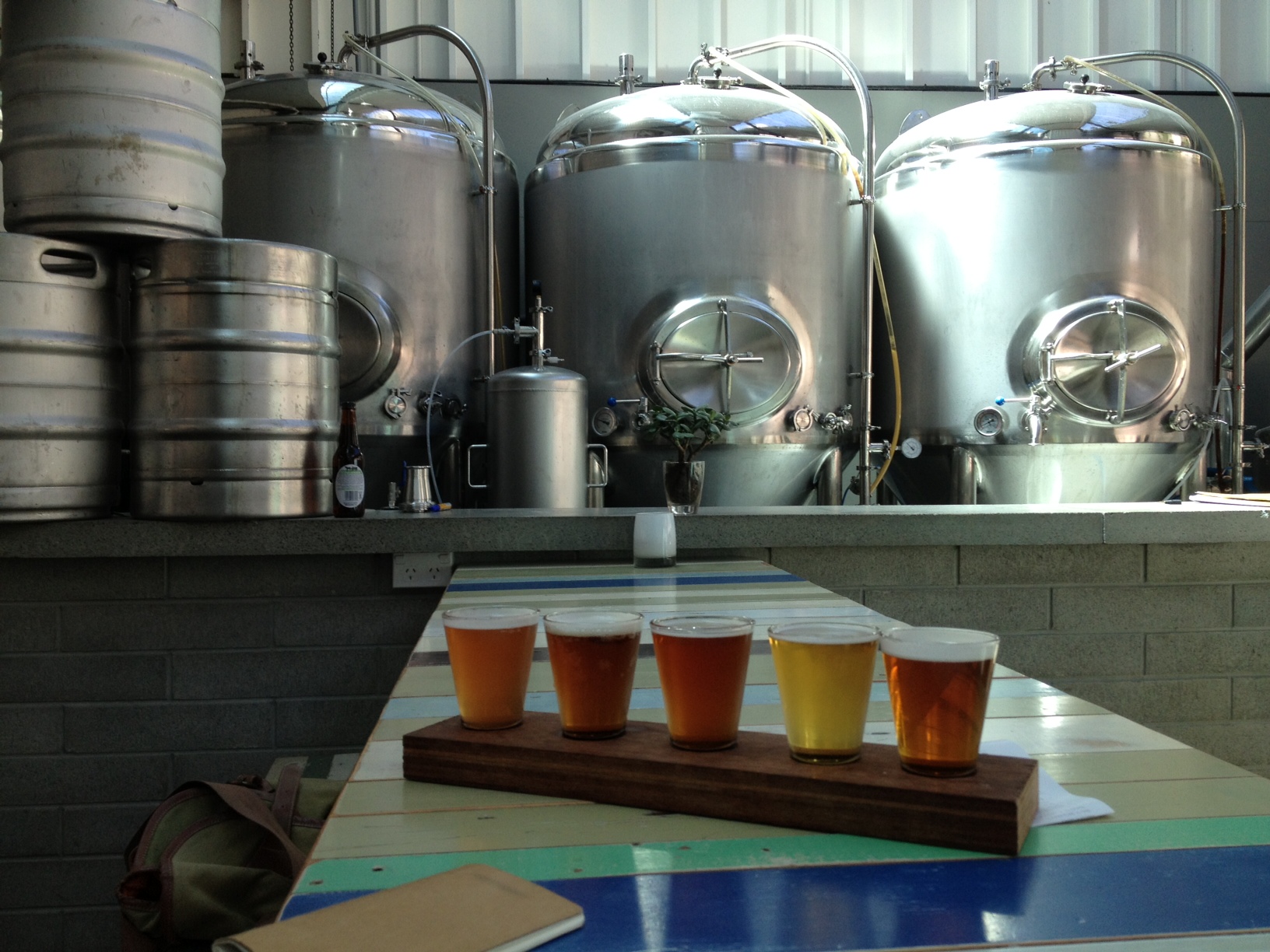
Tasting paddle at Brothers BeerShe warmed up a bit when we got chatting more about beer. We had a tastling padddle of five of their brews. Alongside their own beers – brewed, with a cloud of malty mashy odours, right there – they had some representation from other breweries, like Yeastie Boys (based in Wellington). The venue also has some slightly sagging shelves laden with bottles of genuine craft beer – so no Hancock’s, Boundary Road or Founders and plenty of Mike’s, Parrot Dog, Townsend’s, Invercargill Brewery and 8 Wired etc, and even some overseas stuff like Speakeasy, which we’d had in its native San Francisco.

Brothers’ beers proved something of a relief and a revelation. When we were in Auckland before, other than Hallertau at The Golden Dawn, we’d struggled to find any decent craft beer on tap. Here, though, was a brilliant selection – and not only that, some of them were fantastically dry and bitter, displacing our experiences of so many mild-mannered, she’ll-be-right malty lagers and under-hopped ostensible IPAs. Yay. Flipping yay.

So their El Dorado IPA (6.7%) came with a scent of ginger and lemon, and a big-bodied taste of hoppiness, and a dry mouthfeel. Their Aramis pale ale (5.3%) had a smell and taste that was both minerally and yeasty, reminiscent of Marmite, along with a bitter-sweet balance of hop and malts. Surprisingly, the one we liked best was their Gronholm Imperial Pils (8%). I’m really not a fan of lagers, pils and pilsners generally but this was a really complex beer. Fran said, its odour was of “something very green – peas? Smells amazing.” I got grapefruit and a real astringency akin to tea tree or eucalyptus essential oils. Fran also said it had a “Strong male sweat thing”, which might sound off-putting, but it really worked. Big, bitter and delicious.

No blimmin’ NZ draught mild brown lager here.

Though I’d still say their taps are pouring a little cold. And they need some hand pumps.

The latter we found at our next Auckland port of call, another recommendation from Simon: Vulture’s Lane, a pub on Vulcan Lane, just off the unprepossessing Queen Street in downtown Auckland. Why didn’t I find this place before?! Guidebooks and Google both failed me.

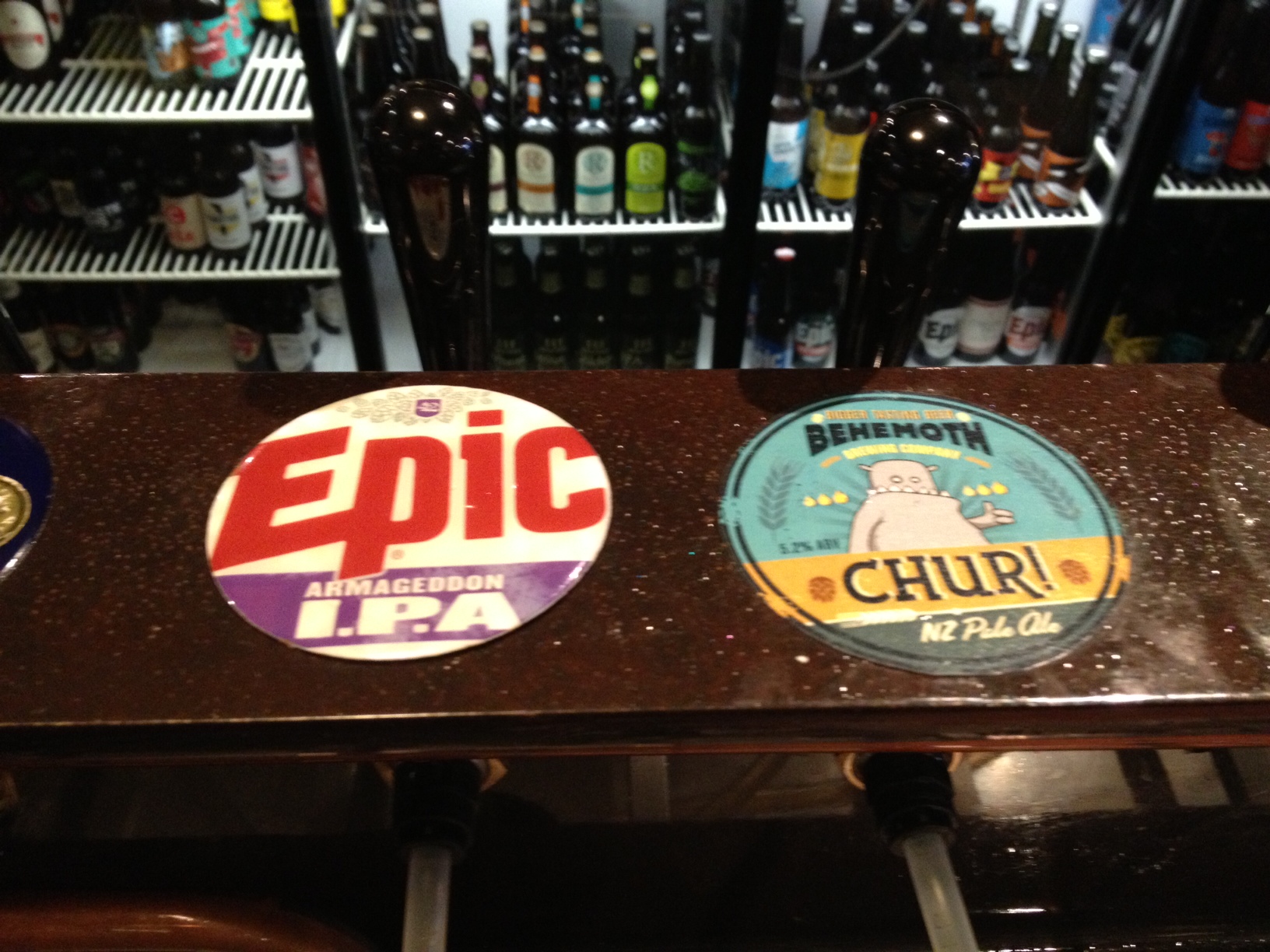
Chur at Vulture's Lane

They had a great selection, including yet more breweries I’d not even heard of before: like Hot Water Brewing Co, a new outfit in the Coromandel (close to the famed, freaky Hot Water Beach) and Behemoth Brewing Company. We had a golden ale from each, Golden Steamer Ale and Chur. I had to have the latter as the label was cool; it was delicious too, even, crisp and fresh, sweet, bit of hop, resin. A really nice, balanced summer ale.

Finally and farewell
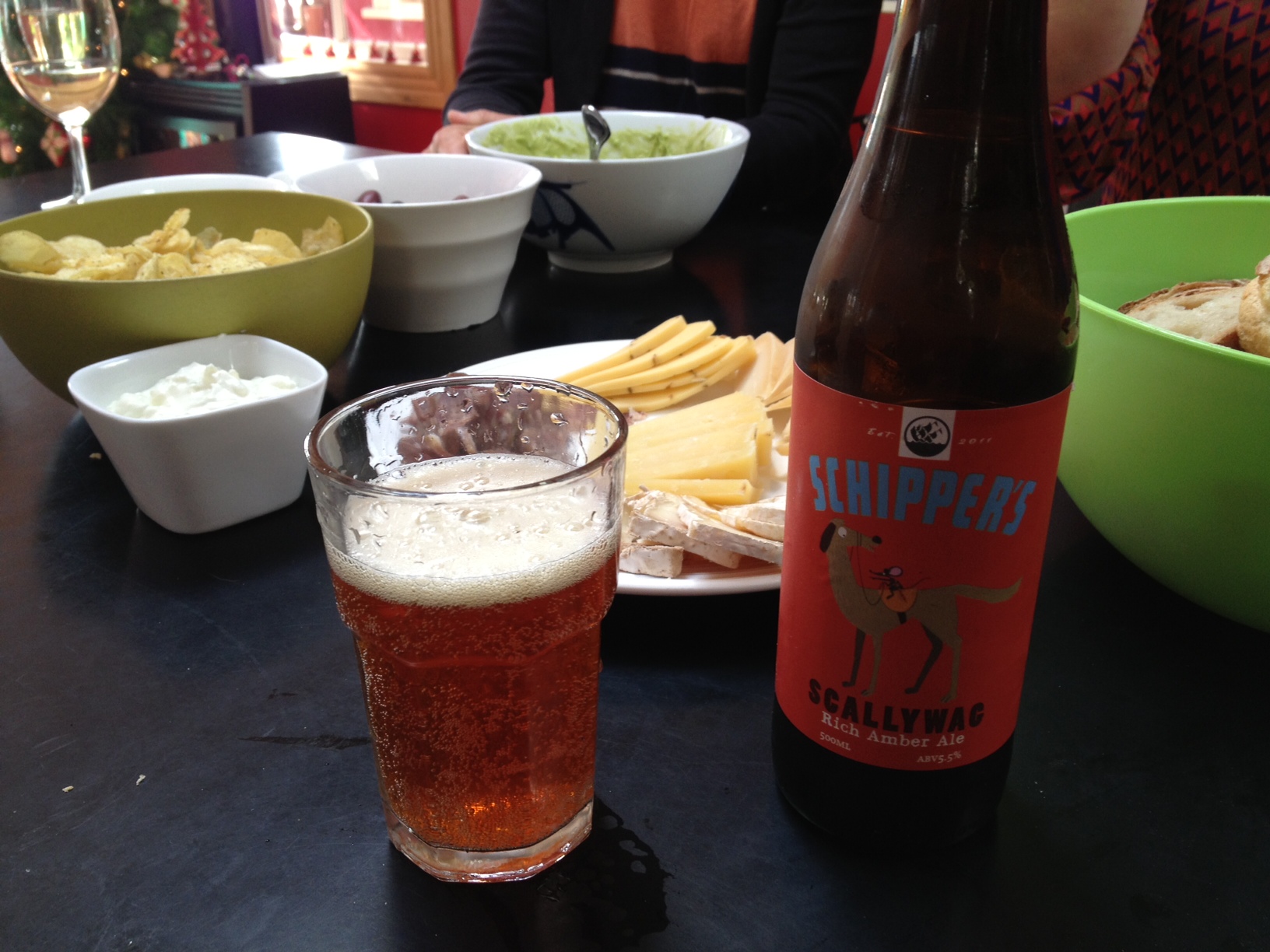
My final few bottles of NZ beer before our departure were a Taranaki Pale Ale, from Mike’s, which Kelly at Green Man in Dunedin had mentioned as NZ’s only other organic brewery currently, and Scallywag Rich Amber Ale, from Schipper’s, in Auckland.

Scallywag

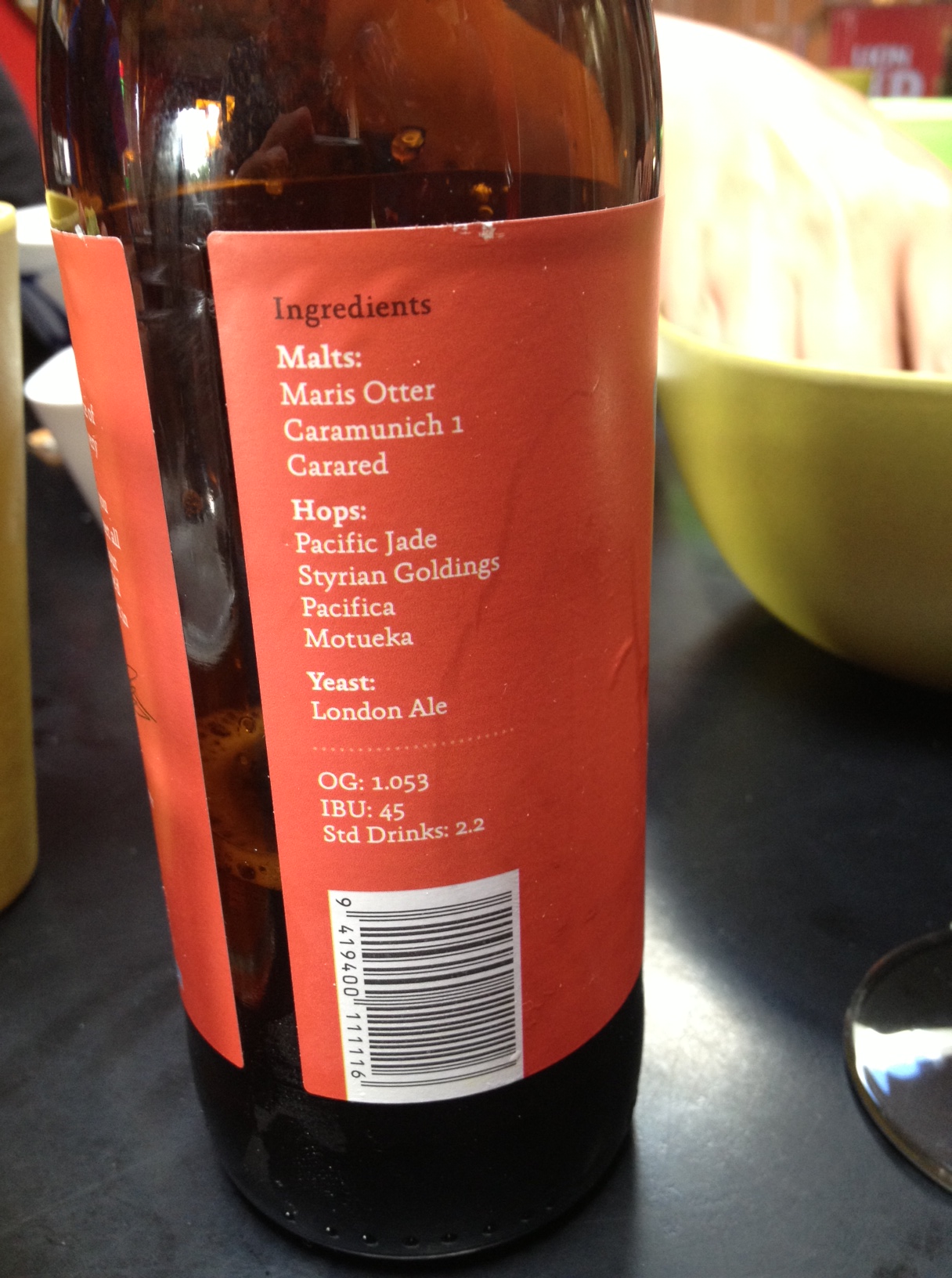
The latter I had to buy as it had another cool label that not only reflected the great dog company we’ve had on this trip (notably, in a bit of utterly coincidental alliteration, from Baxter, Bandit and Betty) but even listed all the hop varieties, malts and even the yeast used in the brew – what an excellent touch, for an excellent beer, a sweet, deep, rich, crisp ruddy brew that’s not unlike Hop Federation’s Red IPA.

Schipper's Scallyway label

Now we’ve gone I wish I’d had more time, and more prior knowledge, and someone to share the driving with.

Never mind.

We’re in Singapore now, enjoying the monsoon, and having a day off the booze to help with the jetlag. Though I do hope to get to Brewerkz and Red Dot (Reddot?) before we head on home to Blighty for Christmas.

Me at Scotts

Leave a comment

Filed under Ale, beer, Bakeries, New Zealand beer, Travelling

Wellington: ugly buildings, splendid beards and fine beer

Havana and block md

We’re big fans of train travel, but NZ seems to have decided it’s a novelty, not a basic, logical sensible part of a sustainable transport policy: so the train from Auckland to Wellington only runs every other day. And is a tourist attraction, not really a quotidian mode of transport. So instead of a stately cruise down through the North Island on two rails, put in at great expense and manpower in the 19th century, we headed south in a coach instead.

We arrived in Wellington, NZ’s pint-sized, hill-and-ocean-hemmed, notoriously windy capital around 8.30pm after 12 delightful hours in the combustion engine behemoth that is the InterCity coach.

The wind – which had kept the first European visitors to NZ, Abel Tasman and James Cook, out of the harbour – wasn’t blowing, which is probably a good thing, as we found ourselves on the 22nd floor (actually the 14th or something, after all the superstition non-floors – 13 etc – have been factored in) of the generic chain hotel we’d accidentally booked. If the place had been being gusted it would have freaked Fran out even more; as is she was already worrying about what this elevation would be like in the event of earthquake.

Earthquakes are of course no joke in NZ. Christchurch, the South Island’s principle city, was terribly mangled by quakes in 2010 and 2011 and as a result building legislation has been revised. Now Wellington is a city that boasts fascinating topography, with craggy bays and hills, but it’s also defined by plentiful dull modern architecture, notably, but not exclusively in the CBD, and piss-poor town planning. The fact that the only characterful historic areas, notably the idiosyncratic Cuba Street, will probably get a massive makeover due to the combination of the new legislation and your predictable developer greed (lack of vision, aesthetic insensitivity etc etc) means the city will probably look very different if we come back in a few years.

In the meantime, we enjoyed trying to find interesting eating and drinking places, scrabbling through our hefty NZ Rough Guide, pottering up and down Cuba Street, round into backstreets, where older buildings are just about hanging on amid the identikit modernity. Having slept badly in our air-conned eyrie of blandness, we fancied the comfort of a cinema, so bought tickets to go to the Light House on Wigan Street. (Great little cinema, which even had some local craft beer like Tuatara; profoundly manipulative film One Chance.) Beforehand, however, we managed a quick beer across the street at the Havana, a bar, or pair of bars, in two old huts dwarfed by depressing modern buildings.

At the Havana we had a couple of beers from ParrotDog, a local brewery. Both – Bitter Bitch IPA and Flaxen Feather Blonde – were bottled, too cold straight from the fridge, very carbonated, but featured a decent amount of tasty NZ hops.

Angry Peaches beer and dinner at Olive, Wellington

After the film, we went to dinner at Olive on Cuba Street. This was a really nice restaurant, one of the best meals we’ve had for ages. It felt kinda posh, and I felt kinda scruffy, and I agonised about what wine to have (I settled on a very pleasant Milton Te Arai Vineyard Demi Sec 2009 Chenin Blanc) before changing tack after a glass and deciding I’d much rather try a beer from Garage Project, another Wellington brewery, a micro operation based in an old petrol station. The eccentrically hospitable waitress accommodated this with aplomb, as did the amiable waiter with his stupendous beard (if he’d had a black t-shirt showing off tats he’d look like a classic craft beer hipster). Jeepers, I’m getting serious beard envy. I’d love one of those dense lustrous beards, but unless I glue one on, I know I’ll go to my grave without every having that experience.

Anyway, the Garage Project beer was called Angry Peaches and was it great. The scent was fruit, cranberry, lemon and “Fairy Liquid” (Fran) and it was pleasingly not over-carbonated, mellow (despite the name) and sweet.

Fran Malthouse bar

The following day we went to the Malthouse (Courtnay Place), a great beer bar with an impressive selection, including more from Garage Project. There was even another guy with a great beard, damn him. We were served by a helpful, knowledgeable barmaid (no beard) who gave us several samples before we both alighted on the two beers on the hand pumps as an alternative to all the carbon dioxide on other taps. Our choices were from another local brewery, Fork & Brewer: Moon Blink Black IPA (5.8%) and Base Jumper (6.3%). The latter is a really smooth, surprisingly mild APA, with caramel and cereal tastes, and several hop varieties (Simcoe, Cascade, Centennial from the US; Orbit and Motueka from NZ) while the former is floral and blackcurranty.

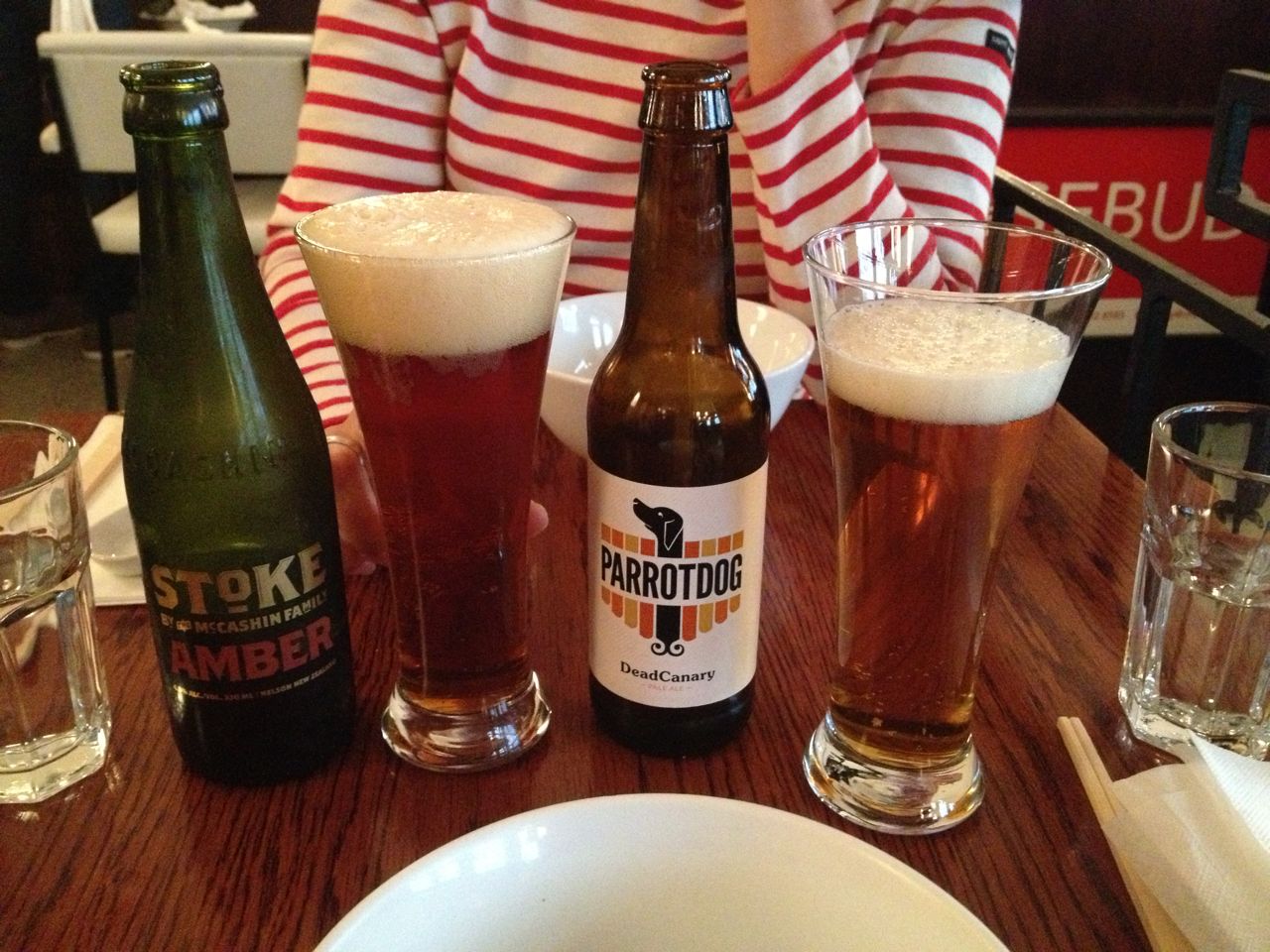
Afterwards, we went to Chow, a kinda pan-Asian tapas place, with more good food – and, shock horror, actual spiciness, something that was very elusive in NZ a decade ago – and good beer. I had another ParrotDog, Dead Canary Pale Ale (5.3%), a gingery, orangey, malty ale while Fran had a Stoke Amber Ale. Stoke is part of the sprawl south of Nelson, original home of Mac’s, and Stoke is the McCashin family’s new brewery’s new brand. It was a delicious beer too, smooth but crisp. Good to see the McCashins back in business. Be interesting to see if they sell (out) this brand in a few years too, or keep it a microbrewery.

Beers in Chow, Wellington

So all in all, Wellington hasn’t disappointed on the beer or food front. Oh, and that thing I mentioned in the last post comparing its food options with NYC – the Rough Guide 2012 actually says “Wellington has more places to eat per capita than New York and the standard is impressively high.” Yep.

Now we’re on the ferry taking us across the Cook Straits to the South Island, aka the Mainland, aka the Middle Island. This route seems to be where old English Channel (and other European) ferries go when they retire. Just a week or so ago, one of these veterans dropped a propeller. Hopefully ours will make it, as at the other end, Picton, we get a smaller boat back up into the Marlborough Sounds to meet my wonderful old friend Nadia, who was one of my principle baking (and cooking generally) teachers and has a wood-fired oven with a view of the sea. Hopefully we’ll do some baking together, and I can get some bread back onto this blog, which has, I know, become somewhat ale-focussed of late.

2 Comments

Filed under Ale, beer, Bars, pubs etc, New Zealand beer, Restaurants etc, Travelling

An Auckland craft beer hunt

Recreation of a historic Auckland boozer in the Auckland Museum

Considering New Zealand was the country where I learned to love real beer, and considering last time we visited (in 2007) we encountered a range of interesting craft beers, Auckland has proved a bit of a damp squib on the real beer front the past few days. Everywhere we went, there were your classic Kiwi blokes with pints and jugs of generic lager in front of them.

A restaurant (-ish) we went to on the waterfront in the recently redeveloped Wynyard Quarter had a few interesting craft beers – but they were Australian. Then further along the quay, a nominal brewpub just had Mac’s on tap. Now Mac’s was indeed the very beer that taught a teetotalling 24-year-old that beer could be delicious. The Mac’s brand was named after former All Black Terry McCashin, who founded a brewery in Nelson, in the north of the South Island, in 1980, in a former cider factory. McCashin’s a figure comparable to Italy’s Theo Musso of Baladin, in that he was at the forefront a nation’s new wave of real brewing establishments.

I was living not far from Nelson in 1994, and gallon jugs of Black Mac, filled from the tap in the nearest pub (15km away) introduced me to beer that could… gosh… taste nice, and be interesting – unlike all the foul filthy lagers that had been available to me as a teenager growing up in 1980s Britain, and put me off the whole concept of beer and booze.

Like so many interesting brews, though, the Mac’s brand was bought out by Lion Nathan (a part of Kirin, itself a part of Mitsubishi) and, really, the quality deteriorated, while the availability increased. Indeed, it reached a point where Mac’s was no longer brewed at the original McCashin’s brewery. Hence my lack of interest in the aforementioned brewpub. Mac’s tipped too far from craft into conglomerate-industrial for my liking.

I was starting to despair of Auckland being a washout for craft beer. Despite the rest of the country’s international fame for its hops, its array of craft beers, and some, like the Epic I mentioned in the last post, being made right in Auckland, it seemed the city itself didn’t have that many, if any, decent brewpubs or craft beer bars.

I’d really expected to see at least a couple on the Ponsonby Road, with its slew of cafés and eateries of varying degrees of poncyness. But nope. One promising looking place that called itself a “tap house and eatery” on the sign looked rather defunct, and another cool place we’d read about, well… it was too well stashed for our jetlagged selves to find the first time we walked past. In our defence, most of the block it sits in is being redeveloped, it’s got no sign, the address is on one road but the entrance is round the corner, and even that entrance has no sign or name. We found it yesterday though. And very nice it is too.

Hallertau taps at the Golden Dawn, Ponsonby, Auckland

It’s the Golden Dawn (134 Ponsonby Road – but entrance on Richmond Road). It’s got an atmospheric bare brick wall bar, and a fairly large courtyard, with another bar. It’s a gig venue; it does food that sounded intriguing (we didn’t eat); and it has a pretty extensive wine menu. It also had a reasonable amount of bottled craft beers, and five taps, with beer from Hallertau, a microbrewery in Riverhead, northwest of Auckland. (Warning – if, like my mum and my wife, the use of the word “pop”, in the sense of visit spontaneously, annoys you, don’t read the copy on the homepage of the brewery’s site.) The barman was friendly, and we even discussed Mac’s – apparently the McCashin’s are brewing again in their original brewery. Their whole story is available as a book, but it might be easier to just visit their new brand’s site.

As for beers at the Golden Dawn, Fran had a Hallertau #4 Deception Schwarzbier, which looks and tastes like certain porters: it’s very black, has a smell of dark berries and taste of charcoal and chocolate, but it’s actually bottom fermented, that is a black lager. I had one of Hallertau’s seasonal beers, a KomissionA NZ Pale Ale, which was a fruity, sweet, crisp ale, quite carbonated and bitterly hoppy only in a fairly mild-mannered sense. A mellow, easy-drinking beer, good for a summer’s evening. (Swapping hemispheres is odd. My body is confused.)

Hallertau pints, Golden Dawn

Anyway, we’ve only been in Auckland three days, so I know there will be more better beer bars out there somewhere. It’s such a sprawly city (1.5 million, but the size of LA – one of the least densely populated cities in the world), it’s hard to cover the ground by shank’s pony, the mode of transport I’m really preferring to stick to given my current unfitness.

For example, wandering around Grey Lynn earlier, I did spy Malt (442 Richmond Road). This looked like a place to check out… I restrained myself, and looking now, it’s branded as a Monteith’s bar. Monteith’s was another of NZ’s smaller scale breweries, based on the West Coast of the South Island – and like Mac’s, it was bought out, in this case by DB Breweries, one of the two big, internationally owned NZ beer brands. It’s a Dutch-Singaporean conglomerate these days. (The other big NZ beer brand, Lion, is also owned by Kirin/Mitsubishi.) So that kinda put me off, except that Malt at least had guest craft beers.

If I was here longer, I’d check out a few more places, like brewpub Galbraith’s, Three Lamps (also in Ponsonby – but we keep walking in the opposite direction, so I only just discovered it), Deep Creek (in Browns Bay, northeast Auckland) and others.

At least we’ve fitted in some cultcha, with a visit to the beautifully refurbished Auckland Art Gallery, and the Auckland Museum, which since my last visit a decade or so ago has also had some handsome new additions. Its curation leaves a little to be desired though – more contextualisation please!

Anyway, tomorrow we’re off down to Wellington. NZ’s capital is a great little town and one that, I read somewhere, has more cafés per square km than Manhattan. So hopefully some of them will also be craft beer bars. Certainly the last few years Wellington has started claiming to be the “craft beer capital of NZ”, vying with Nelson.

5 Comments

Filed under Ale, beer, New Zealand beer, Travelling

A few of my favourite things

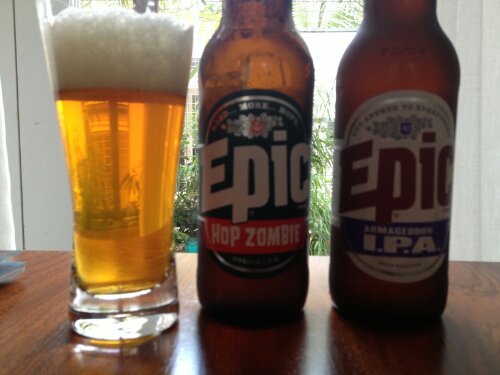
Thirteen hours of sleepless trans-Pacific flight; a Monday 11 November that, mind-bogglingly, didn’t exist; a lively early morning meet-up with some old Auckland friends, some of their kids, their parrot, their amiable chihuahua and not so friendly Staffy mutt; a pleasing discovery of how much the New Zealand artisan cheese scene has progressed in the half-decade or so since our last visit, and ensuing silly spend… and exhaustion caught us up; I had promised myself NO BEER today so I’d sleep better tonight and get in sync with the new time zone more swiftly but wandering a bottle shop, how could I resist these? Products that encapsulate three of my favourite things: real beer, NZ itself, and the apocalypse.

image

They’re from Epic Brewing Company, a brand currently contract brewed out of the Steam Brewing Company facilities, right here in Auckland. And not to be confused with the Utah brewery of the same name.

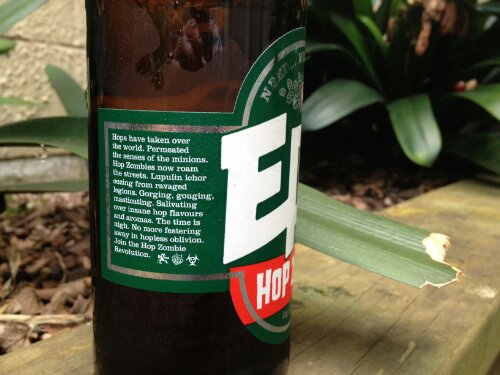
Currently drinking the Hop Zombie, while really feeling like a bit of a jetlagged zombie. It’s a serious hoppy hit with a scent that’s floral, fruity (grapefruit, passionfruit) and salty-sweaty (ok, even cheesy-feety) and a taste that’s bitterly crisp, sweetly dry and a little salty. It’s strong too, at 8.5%. And, as we’re back in the modern metricated world, it comes in 500ml bottles.

image

Delicious, but I’m not sure I’ll last much longer today with jetlag and such strong ale.

3 Comments

Filed under Ale, beer, New Zealand beer, Travelling