Casa Veccia Calibro 5

Calibro 5 Ivan Borsato Casa Veccia

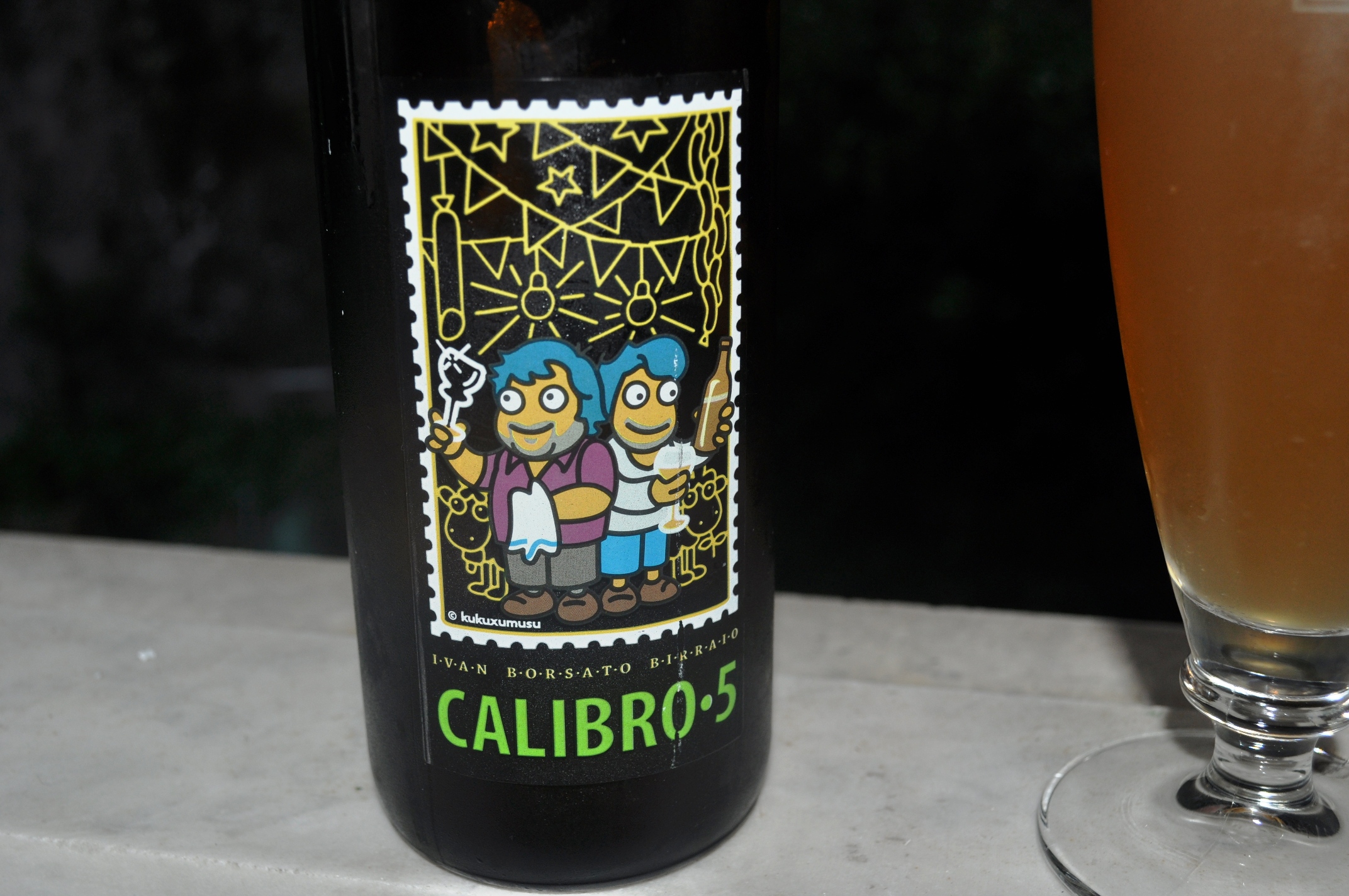
This is the forth of the Micro Birrificio Casa Veccia Ivan Borsato Birraio beers I’ve tried (after Molo, Dazio and Formenton). As with the other ones, Calibro 5 has a great Matt Groening-style cartoon on the label, this time showing two chaps who seem to be having a party with a couple of phantom sheep. Reading Borsato’s description on their site (in Italian), apparently the image is of a rustic party, because “Le Calibro 5 è la birra per tutti, di tutti e per tutto” – because “Calibro 5 is the beer for everyone and everything.”

Indeed, the spiel is predominantly about how it Borsato and Casa Veccia’s most multi-purpose beer, one that goes with all sorts of foods – and specifically it goes really well with pizza. Why? Because pizza is a dish that varies greatly according to what toppings you choose, and as such needs a versatile beer.

I’m not quite sure what type of beer it is though, specifically. The site describes it as “Belgian Ale-style”, but I dislike that expression. It’s like saying a beer is “British Ale-style”, or “American Ale-style”. I suppose “Belgian Ale-style” is a fairly catch-all term for beers that don’t necessarily fit neatly into other brackets, but I just dislike the woolliness. Untappd calls it a blonde ale, though again, this is a generic term that refers to little other than colour.

Casa Veccia Ivan Borsato Calibro 5 label

It’s certainly a light golden-orange-brown colour, murky, with a foaming but quickly subsiding head. I got very subtle scents of pineapple, lemon, soap. The taste meanwhile, was very sweet, honey-ish, with a little black pepper. Overall, a very easy drinking beer. This is, in fact, its purpose – a low alcohol (by Italian standards: 5% ABV) beer that is made using Kolsh (sic; Kölsch), a strain that, Borsato explains, “is a neutral yeast that limits the natural fermentation, making the beer diminishingly (?) dry but not excessively perfumed or flavoured.” It’s more malty than hoppy, though while the latter gives negligible bitterness, the former is also pretty mild.

Borsato recommends this one be drunk at 4-6C, colder than most ales – so cold you won’t get so much perfume or flavour, but he suggests that at this temperature it’ll be thirst-quenching and refreshing. So again, another good option for encouraging industrial lager drinkers to try a top fermented beer – or indeed a real beer. The spiel on the site does also say that if it’s drunk a few degrees warmer you will get the maltiness more.

So a very easy, versatile beer and another pleasant, pleasing beer from this Casa Veccia Ivan Borsato Birraio brewery, all of whose range I’ve so far really enjoyed. Oh, and the name is just a reference to the ABV: calibro means calibre, size or gauge.

Info
Micro Birrificio Casa Veccia Ivan Borsato Birraio
0422 872397 | ivanborsato.it | birraio@ivanborsato.it

Leave a comment

Filed under Ale, beer

Birra del Borgo’s BdBi(g)BodyIBU at No.Au, Centro Storico, Rome

Birra del Borgo's BdBi(g)BodyIBU at No.Au, Centro Storico, Rome

Back at No.Au again the other night, one of our favourite little places in Rome’s Centro Storico (and in Ponte, rione V, if you read my last postʼs comments about the different Roman neighbourhoods).

One of the beers I was introduced to by the always friendly and helpful girls who work there has perhaps the most impossible name I’ve ever encountered. It’s Birra del Borgoʼs BdBi(g)BodyIBU.

The name, apparently, is a play on Disney-Cinderella’s “Bibbidi-bobbidi-boo” song, but once you get past its strange coding – which is easier to read than say, after a few pints, in a mixture of Italian and English – its implications are clear.

Birra del Borgo's BdBi(g)BodyIBU

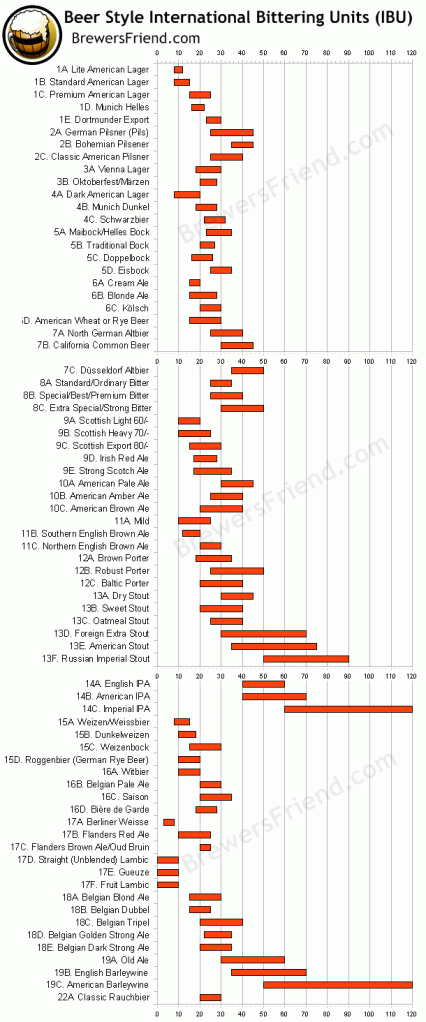
This is a Birra del Borgo (BdB) experiment in making a bitter beer with a serious IBU, that is a high International Bittering Units figure. The brewery site says, “Its main feature is the massive use of hop, a mix of different varieties that gives an extraordinary aroma and a remarkable bitter side, with 100 IBU.

If you check out the handy table (below), other 100 IBU beer include Russian Imperial Stout, Imperial IPA and American Barleywine. Most beers clock less than 50 IBU.

And yet, surprisingly perhaps, it is a really balanced beer, not simply defined by its bitterness or its strength (7.1% ABV). It has a nice copper-red colour, middling head, and fruity aromas, with some grape and wine-iness. Taste-wise, it is bitter, yes, but also very malty, with a nice broad cereal flavour.

Very pleasant drinking alongside our vast antipasti platters of cheeses and salumi (cured meats).

IBU International Bittering Units chart

Info
No.Au, Piazza di Montevecchio 16A, 00186, Rome
No.Au blog / noauroma@gmail.com / 06 45 65 27 70

Birra del Borgo brewery (English site)

Leave a comment

Filed under Ale, beer, Bars, pubs etc

Lambrate’s Ortiga golden ale at Birrifugio, Portuense, Rome

Dark Star Revelation and Lambrate Ortiga, Birrifugio

We finally made it to another of Rome’s beer bars the other day: Birrifugio. It’s a place we’ve passed many a time, when we’ve been feeling like a 6pm beer but it’s run along Roman beer bar hours, not opening until 7.30pm. It’s one of the self-styled “6 historic pubs of the capital”1. It’s also styled as “Birrifugio Trastevere” on the business cards and website. Except it’s not in Trastevere.

Trastevere is one of the city’s rioni, neighbourhoods that were mostly established in medieval Rome. Apart from Prati, the area north of the Vatican, these rioni are all within the 3rd century Aurelian Walls. Birrifugio – whose name is a nice little pun, “beer-refuge” – is just off Viale Trastevere, but about a kilometer outside the walls, which cut across the boulevard at the Ministry of Education.

The hospitality industry does like to be liberal with its definition of Trastevere, as it’s such a popular area, with its narrow cobbled streets hung with laundry, churches, restaurants and whatnot. But no, Birrifugio is firmly esconced in the postwar urbanisation between the Viale and the Tiber, in the same area as Sunday’s sprawling Porta Portese market So what is this area?

It’s something that’s bugged me for ages, as we live just up the hill and traverse it often en route to Testaccio etc. We just resorted to calling it “that triangle”. But apparently it’s technically within Portuense, which isn’t a rione, it’s a quartiere. This name – “quarter” –  is used for some of the districts that developed with the urban sprawl of the 20th century.

Sorry, I had to get that straight. But the point is, if you go looking for Birrifugio, it’s not a pub in the depths of cutesy Trastevere like Ma Che Siete Venuti a Fà? It’s in a very different neighbourhood –  but is no less decent a bar.

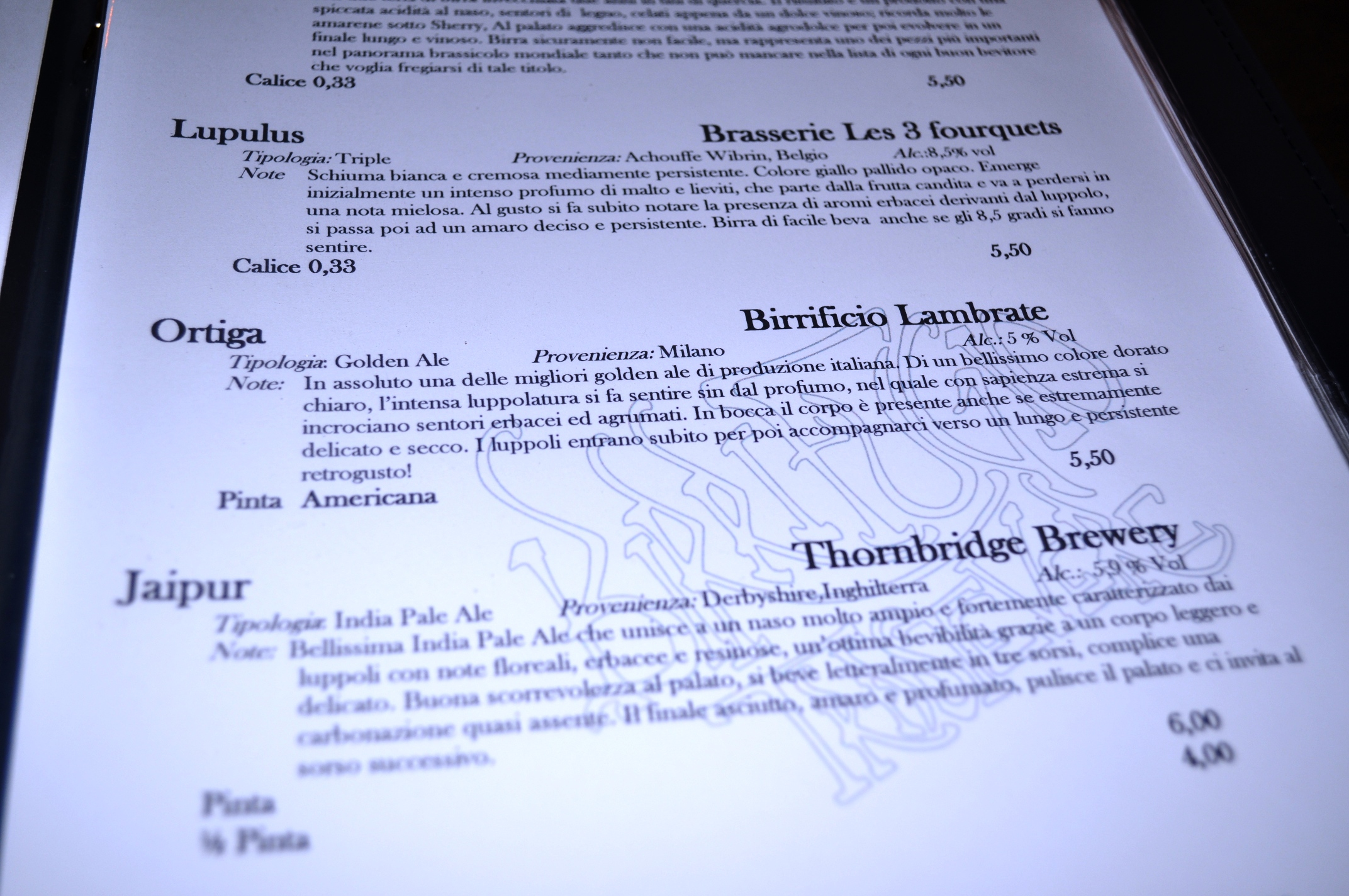
Birrifugio beer menu

Indeed, we arrived just as it was opening and the barman was immediately friendly and helpful. He gave us menus, talked us through the beers, both in the menu and on the blackboard, and chatted about his recent trip to a beer festival in London.

Unlike, say, Open Baladin or No.Au, Birrifugio (and its sister bar in Ostia) doesn’t have a great emphasis on Italian products. Instead, it has an international selection, on this occasion including brews from Belgian, England, etc. It also has a fairly comprehensive food menu, including Roman favourites and a more diverse choice: wurst, goulash, crêpes, sauerkraut. And something listed as “fish & chips”…

As the place feels not unlike a British pub (albeit a fairly modern one fitted out to feel a bit olde), I went for the latter. Just cos. It wasn’t really fish and chips in the proper sense (that, really, can only be done well in Britain or NZ, in my experience), and nor was the fish filetto di baccalà, the traditional Roman battered salt cod that is actually fairly similar to British chippie fish. It was instead a crumbed affair, probably from frozen. But no matter: the antipasti we had, speck rolled around mozzarella and walnut and served with a sauce made with a lot of mustard and weiss beer, was clearly freshly made and delicious. As was Fran’s burger, again handmade.

Birrifugio taps

But we weren’t really there for the food, we were there for the beer

I had the only Italian beer they had on tap, and Fran went for a Revelation from Dark Star. This is a brewery in West Sussex, in the south of England, not far from where we may well be living next year. Revelation is a seriously hoppy APA style ale. My beer on the other hand was an Ortiga from Lambrate brewery in Milan.

This is an immediately likeable, easy-drinking 5% ABV golden ale (“in stile English golden Ale“), one of those top-fermented beers that could open a whole new world up to lager drinkers. It’s a bright, clear orange-yellow colour. It’s made with pilsner and crystal malt. It’s got a light, fresh aroma, slightly piney, slightly citrusy, but nothing very strong, and a flavour that’s similarly fresh and very crisp.

It’s got a clean, dry mouthfeel, and is very hoppy at the end. I can’t state with certainty which hops are used though. Lambrate’s site doesn’t say, and other sources aren’t entirely in agreement. It’s either Aurora and Cascade (according to the Guida alle birre d’Italia 2013) or Aurora and Styrian Golding (according to Ratebeer). Ratebeer also says it’s dry hopped, which really sounds about right.

Lambrate Ortiga label

It’s a pity I didn’t know about this brewery when we visited Milan last year, as it’s got a brewpub and another bar in the Lambrate district of the city, and the Guida has a quote that says the former is “probably the best brewpub in Italy”.

Oh, and Lambrate’s beers have great labels too. They’re designed by an artist called Roger Webber, whose work can be seen here. I sort of get the text2 on Ortiga’s comic strip-style label, but when I Googled it for more info, I got a wiki page written in Lombàrt orientàl, that is East Lombardian, the language used in Milan and thereabouts. Considering I’m struggling enough with Standard Italian, this was a challenge. According to (English) Wikipedia, “Milanese and Italian are distinct Romance languages and are not mutually intelligible.” Or, as I’d probably prefer to phrase it, they’re mutually unintelligible.

So a friendly, professional beer (and whisky) bar, a pleasant beer, and a label with linguistic implications I don’t even want to think about too much.

Info
Birrifugio
Via Federico Rosazza 6, 00153 Roma
(+39) 06 5830 3189 | birrifugio.com | trastevere@birrifugio.com

(Also at Via Ferdinando Acton 18, 00122 Ostia)

Birrificio Lambrate
Brewpub Via Adelchi 5, 20131 Milano
Pub Via Golgi 60, 20133 Milano
Tel (+39) 02 70606746 | birrificiolambrate.com | birra@birrificiolambrate.com

Notes
1 It’s on a flyer I picked up at Ma Che Siete Venuti A Fà? The six are: Ma Che, Birrifugio, Il Serpente (San Lorenzo), Le Bon Bock (Gianicolense), Mastro Titta (Ostiense), Treefolk’s (near the Colosseum).

2 The label says: “Faceva il palo nella banda dell ortica, ma era sguercio non ci vedeva quasi più ed è così che li hanno presi tutti senza fatica, li hanno presi tutti, quasi tutti tutti, fuorchè lui.” Which is standard Italian I think and means something like “He was on lookout duty for the Nettle Gang, but he was cross-eyed and he pretty didn’t see them [the cops], and just like that, they caught everyone without hassle, they took everyone, almost everyone, except him.” Or, in you prefer, in Milanese: “Faceva il palo nella banda de l’Ortiga, ma l’era sguercc, el ghe vedeva quasi pù, e l’è staa inscì che j’hann ciappaa senza fadiga, j’hann ciappaa tucc, ma proppi tucc, foeura che lù.” More info about the song here. In Milanese.

Leave a comment

Filed under Ale, beer, Bars, pubs etc, Breweries

Pudding, boudin, budino and complex historical relationship between desserts and sausages

In my last post, I mentioned my attempt to make a boudin di ricotta (below). It either went wrong, or this retro cheesecake just wasn’t to my taste. Either way, one thing the dish got me thinking about was the word budino, which can be translated as “pudding”.

Budino di ricotta, baked

As anyone who’s interested in food, or eating, or sausages, or dessert, knows, the meaning of the word pudding can be little complicated. Likewise budino.

English has the word pudding, French boudin, and Italian budino. Surely these are all related? It’s agreed that the latter words come from the Latin for gut or intestine, botellus, which relates to the modern Italian word budella. English etymological dictionaries, on the other hand, suggest that the word pudding may comes from old English and German words for swellings and lumps (puducpuddek etc). Thankfully, other sources posit1 botellus as an alternative source too. The relationship seems too strong for the English word to not have the Latin root, surely?

Originally, pudding, budino and boudin all referred to much the same kind of product: sausages made with blood, meal, fat and animal bits (including ambergris, a sperm whale digestive byproduct), all stuffed into intestinal membrane and steamed or boiled.

Sanguinnacio

This sense of the word still exists in the things like the Scottish haggis, or the British black pudding, its French cousin boudin noir, and even an Italian cousin called sanguinaccio 2 (from the Latin sanguis, blood). Interestingly, though, the latter straddles both the older sense of the savoury pudding, and the modern usage, which more commonly refers to desserts. Italy has various versions of sanguinaccio, running the spectrum from full savoury sausage, to a chocolate pudding traditionally thickened and flavoured with fresh pigs’ blood at the time of slaughter to a basic chocolate pudding like a mousse, with nary a pig byproduct.

Pudding cloth boiled pudding

Although in British English, the word pudding has become almost synonymous with dessert, for me (I’m English), it more specifically refers to dishes that have been steamed or boiled.

Again, in the Middle Ages, food, specifically the food of the rich, would blend what we now consider very different flavours: the savoury with the sweet, meat with spices, salt and sugar. British mincemeat (as in Christmas mince pies) originally took this form, for example.

When one strain of the pudding evolved into savoury sausages, other strains evolved into desserts. The meat in the dish would have been reduced to fat in the form of suet or lard, while the grain, fruit, sugar and spices might have stayed. The animal membrane was replaced with a cloth, then latter a ceramic bowl, though the pudding was still cooked by boiling or steaming.

mason cash pudding basin

This path of evolution gives us things like British Christmas pudding, schoolboys’ favourite spotted dick, bread-and-fruit summer pudding and other dishes where even the fruit and spice has evolved out, such as one personal fave, treacle sponge pudding. Strangely, the word’s usage narrowed down even further in North American English, where, as I understand it, pudding just refers to mousse or custard-like deserts.

The abovementioned treacle sponge pudding is basically just a steamed cake mixture made with golden syrup (a gingery version of mine can be found here). If an equivalent type of mix is instead baked, then served as a dessert, it’s still a called a pudding (in BE). It may be long way from stuffed intestine but it’s still a descendant. We also still have savoury puddings in Britain, where a pastry crust is filled with meat and/or vegetables and steamed or boiled in a ceramic pudding basin (eg this one made with venison).

So any time Anglophones from North America and the British Isles find themselves arguing about the meaning of the word pudding – something we’ve done with a Canadian friend – bear this wonderful, convoluted history in mind!

Footnotes
1 From Etymonline: pudding (n.) c.1300, “a kind of sausage: the stomach or one of the entrails of a pig, sheep, etc., stuffed with minced meat, suet, seasoning, boiled and kept till needed,” perhaps from a West Germanic stem *pud– “to swell” (cf. Old English puduc “a wen,” Westphalian dialect puddek “lump, pudding,” Low German pudde-wurst “black pudding,” English dialectal pod “belly;” also cf. pudgy).

Other possibility is the traditional one that it is from Old French boudin “sausage,” from Vulgar Latin botellinus, from Latin botellus “sausage” (change of French b– to English p– presents difficulties, but cf. purse). The modern sense had emerged by 1670, from extension to other foods boiled or steamed in a bag or sack (16c.). German pudding, French pouding, Swedish pudding, Irish putog are from English.

2 You can find recipes for various versions of sanguinnaccio online. There’s a more savoury one here (and pictured above). And while this one is made using sausage casings, it’s more a dessert. While this one (in Italian) is decidedly a dessert, made with neither sausages casings or even blood: so basically a chocolate mousse.

2 Comments

Filed under Discussion, Misc, Other food, Puddings & desserts

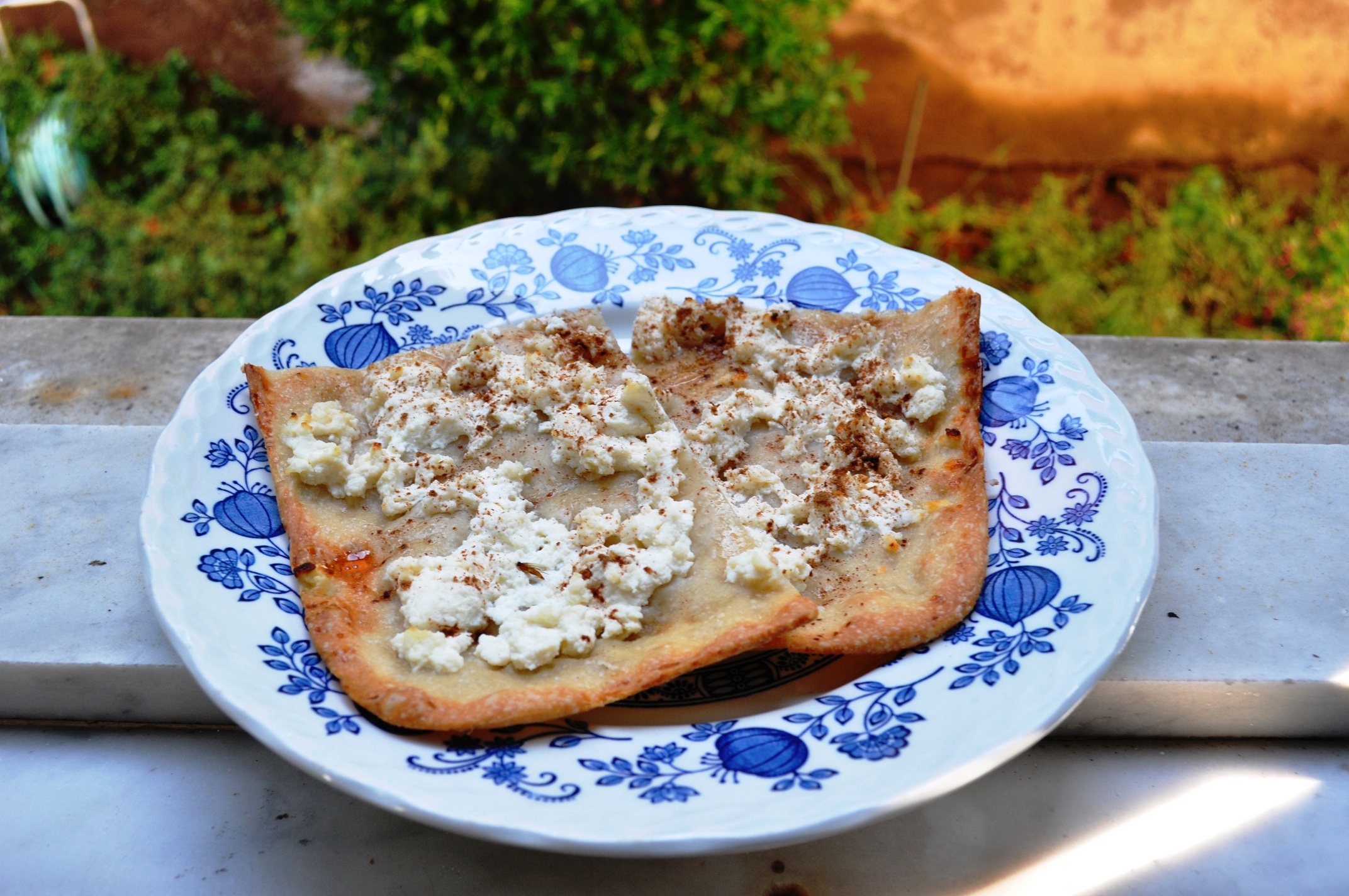
Ricotta and cinnamon pizza

Cinnamon and ricotta pizza

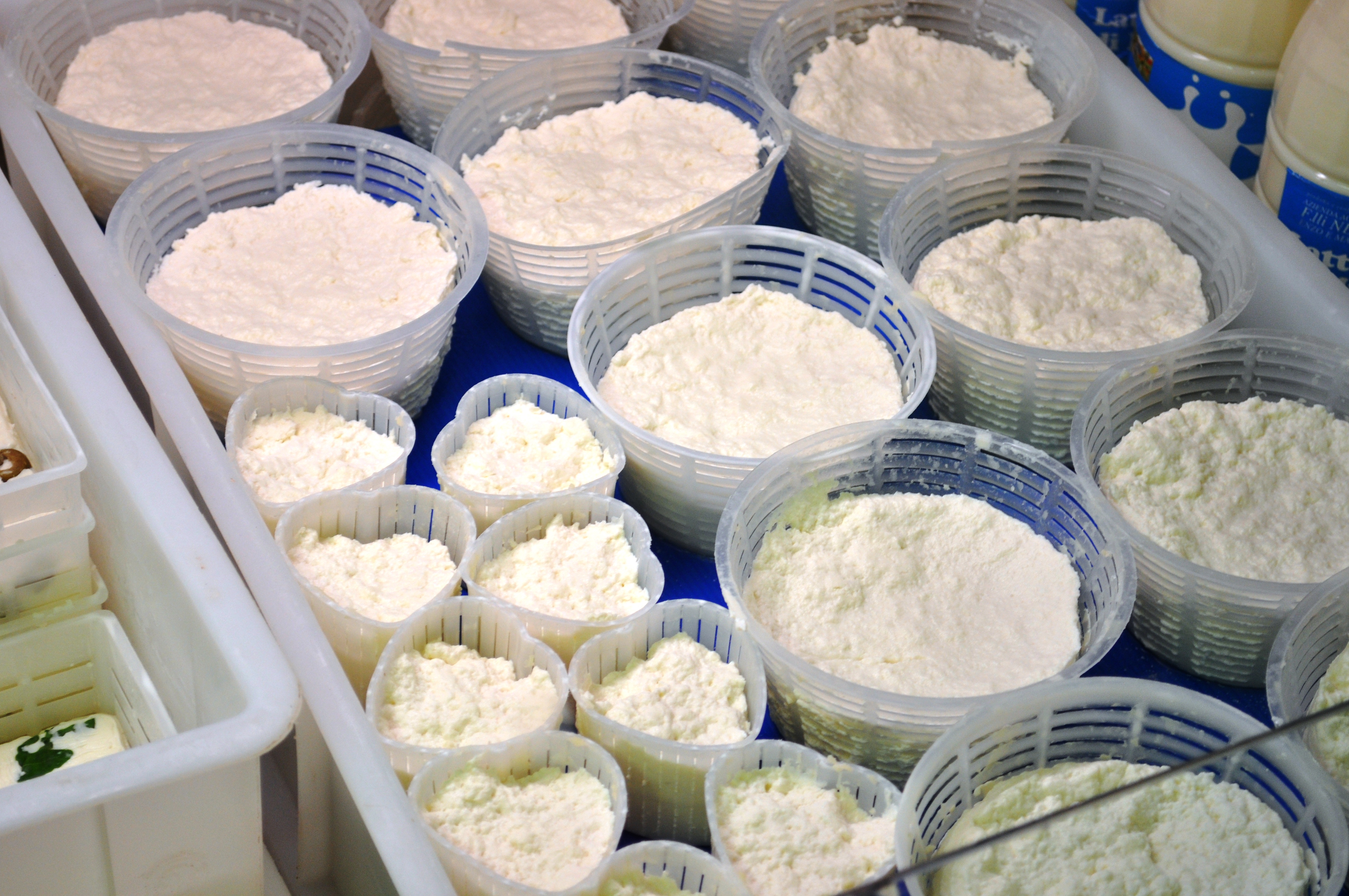
Ricotta. Generally, I don’t know what to do with this classic Italian “recooked” whey cheese. I’ve used it in cheesecakes before, and it is delicious eaten for breakfast with a drizzle of honey. But the sheer scale of its presence in Rome, where fresh stuff arrives by the tonne every day, indicates it’s used very widely indeed.
Shops like the likeable Antica Caciara in Trastevere have an entire window dedicated to baskets of the stuff. Farmers markets’ also tend to have several stalls selling bucketloads of the stuff. Since our farmers’ market was shifted out of Testaccio, and as it’s August and most of Rome’s markets are closed anyway, we’ve been frequenting our new Punta Vendita Aziendale (direct-from-farm shop) near Ponte Testaccio. (Actually, it’s three outlets in one venue. See Info, below). They have a lot too, and on a couple of occasions when we’ve been stocking up on other goodies, they’ve given us some. It’s all about the freshness with Roman ricotta, so I suppose they just don’t want it hanging about – and they want to encourage our loyalty.

So what else do people do with the stuff? Well, I’m slowly discovering.

Fresh ricotta

It’s used in a few classic, simple pasta dishes, but to be honest, I don’t much like them; even with excellent quality ricotta such dishes seem oddly bitter to me. There’s a kind of cappuccino di ricotta according to ‘Cucina Romana’ by Sara Manuelli1, but I’ve never seen that. Manuelli also gives a recipe for ricotta condita that just involves the cheese, egg, sugar, cocoa and some booze. It sounds like a kind of trifle or tiramisu, but without any sponge. Other versions, such as in Oretta Zanini di Vita’s ‘The Food of Rome and Lazio’2 use finely ground coffee instead of cocoa.

When I got the cookbook ‘La cucina di Roma e del Lazio’3, one thing that caught my eye straight away was the budino di ricotta (ricotta pudding, or ricotta cake), which they make in a handsome ring form. So I gave it a go. It seemed simple – just ricotta, sugar, lemon zest, a little booze and some eggs, some separated, with the whites whisked to give the pudding some lightness.

Ingredients for ricotta and cinnamon pizza. Ricotta, sugar, cinnamon, dough. Basta.

It all seemed to go well. Until I turned it out of the tin. It deflated a bit. Okay, fine. But then I ate some. Really not my bag. I’m sorry to say I found it oddly nauseating, just unpleasantly whey-y, so I won’t be repeating the recipe here. I should have known really, as I’d made a baked ricotta pudding before, using ‘Cooking Apicius’ – recipes based on a collection from the late classical period4. That one involved lots of bay leaves and at first bite was amazing, but at second bite was exotically disgusting.

So I was back to square one with my slightly vexed question of what to do with ricotta.

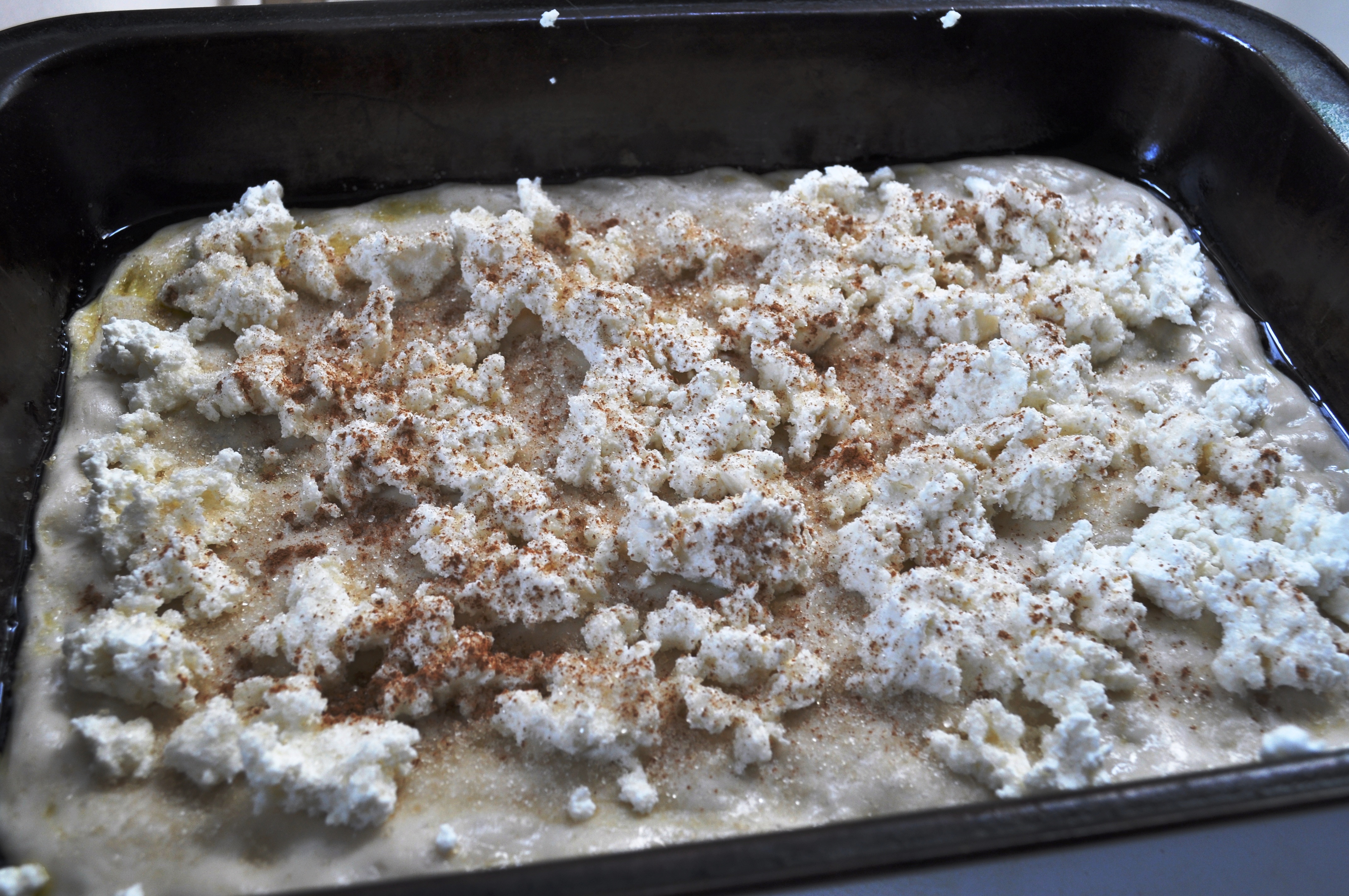
Ricotta and cinnamon pizza, before baking

And then Azienda Agricola Fratelli Nesta, one of the abovementioned three outlets, went and gave us another couple of etti5 of ricotta.

Luckily, ‘La Cucina di Roma e del Lazio’ has several other ricotta-based recipes. One of which is so absurdly simple I had to give it a try. It’s a sweet pizza, and would you know, I had some spare pizza dough.

According to authors Marie Teresa di Marco and Marie Cécile Ferré this is a “super-simple sweet that you can often find in the bakeries of Tuscia”. Tuscia is the historical region of the Etruscans (the Tusci in Latin), a large area of central and western Italy that now corresponds with most of Tuscany, northern Lazio and parts of Umbria. The recipe in is specifically called “Pizza ricotta e cannella di Tarquinia”. Tarquinia is an ancient Etruscan town near Viterbo, north of Rome.

I can’t find any mention of a ricotta and cinnamon pizza from Tarquinia or Tuscia,  or anywhere for that matter, online, but then, Italy hasn’t poured all of its vast and varied (food) culture onto the internet. So I’ll just give the two Maries the benefit of the doubt.

Anyway, I’m not going to mess about trying to put it in grams or whatever as it really is simple and flexible. It’s all about the “qb”, the quanta basta, the “how much is enough”. That is, the right amount according to your intuition and inclination.

You just need to make some basic white bread or pizza dough; I won’t give a recipe here, as there are numerous recipes in other sources. Just find one that suits you. I’d recommend one with a nice long fermentation.

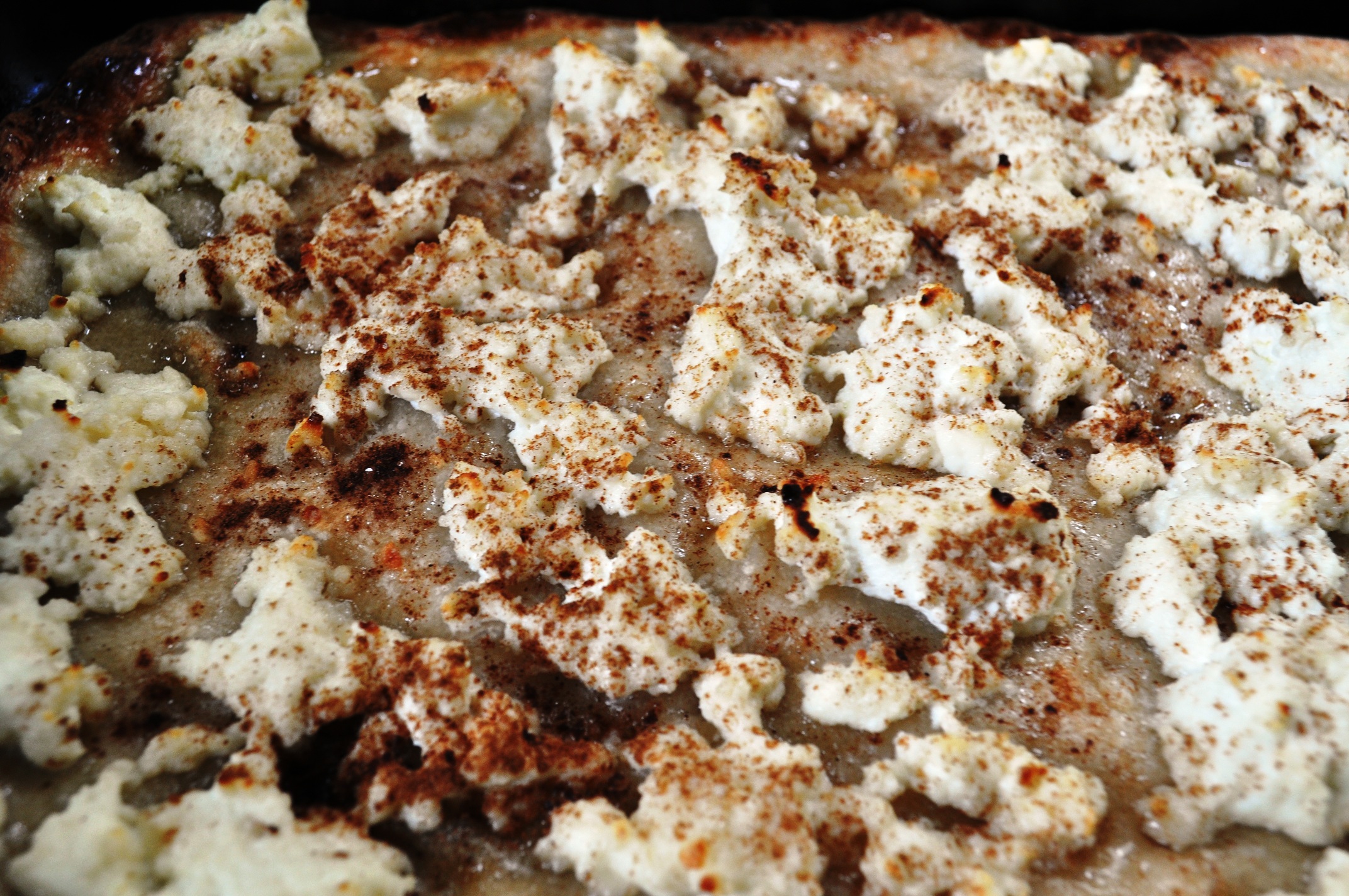
Ricotta and cinnamon pizza

The ricotta and cinnamon pizza recipe isn’t even a recipe per se, it just says:

Bread dough
Ricotta
Sugar and cinnamon
Extra virgin olive oil

Then mentions the bakeries of Tuscia, where “the bread dough often comes in a thin form, covered with ricotta, sprinkled with sugar and cinnamon, then drizzled with extra virgin olive oil. You bake it in a hot oven for about 20 minutes.”

And you know what? It’s delicious. I especially like the way the oily, sugary mix caramellises on the crust. Sure, it’s an example of those Medieval flavour mixes of sweet, spice and savoury that us Brits don’t use so much these days and, sure, perhaps it’s slightly confusing quite when you might want to eat it. Is it a main course, is it a dessert, is it for afternoon tea, or even a breakfast snack? But frankly, it’s so simple and satisfying, you can eat it whenever you want. I scoffed most of mine at 5.15pm as the hangry hour was approaching.

Info
Punta Vendita Aziendale (direct-from-farm shop), Via Bernadino Passeri 8, 00154 Rome.
Open Tues, Wed, Fri and Sat 8.00-19.00,  Sun 8.00-14.00

Footnotes and stuff
1 ‘Cucina Romana’ by Sara Manuelli appears to be out of print. The copy I’m referring to was published in 2005 by Conran Octopus, ISBN 1 84091 407 6.
2 ‘The Food of Rome and Lazio’ by Oretta Zanini di Vita also appears to be out of print. The book I’m referring to is translatedby Maureen B Fant, and is listed on her website. First published 1993 by Alphabyte di Maureen Brown SAS, ISBN 88 86128 02 9. I’m not sure, but it may have been reprinted in 2003 by the University of California Press as ‘Popes, Peasants, and Shepherds: Recipes and Lore from Rome and Lazio’.
3 ‘La cucina di Roma e del Lazio’ (“The cooking/cuisine of Rome and Lazio”) by Marie Teresa di Marco and Marie Cécile Ferré is, so far, only available in Italian. Published 2012 by Guido Tommasi Editore-Datanova, ISBN 978 88 96621 844.
4 ‘Cooking Apicius: Roman Recipes for Today’ by Sally Grainger. More information here from the publisher, Prospect Books, along with a PDF download with ” the preliminary matter, the introduction, the list of recipes and the opening historical discussion of Cooking Apicius”.
5 An etto (plural: etti), or ettogrammo is a commonly used measure in Italy, especially for buying market produce. It’s a hectogram/hectogramme – that is 100g, 0.1kg, or about 3 and a half ounces.

Leave a comment

Filed under Discussion, Misc, Other food, Pizza, Recipes

Loverbeer’s Madamin oak amber ale at Ma Che Siete Venuti a Fà?

Loverbeer's Madamin at Ma Che Siete a Fa, Trastevere, Rome

Exactly two years ago, me and Fran, the missus, moved to Rome. We opted to travel by train, leaving England in a mild-mannered 17C and arriving in Rome to a fierce 40C-ish heat.

So naturally we were thirsty.

Before we moved into what would be our home for the next two years, we spent a few nights in a flat in cutesy old Trastevere. And would you believe it, right at the end of our street was one of Rome’s best beer bars. This was Ma Che Siete Venuti A Fà? The wonderful name means “But what have you come here to do?” It’s apparently a football chant – effectively taunting the rival team with “why bother?”. But in context of walking into this Hobbity hole-in-the-wall boozer, the obvious answer is “drink quality beer, of course”. The bar does have a football thing going on, with two TV screens, I didn’t really register this element initially, as they had such an intriguing selection of beers.

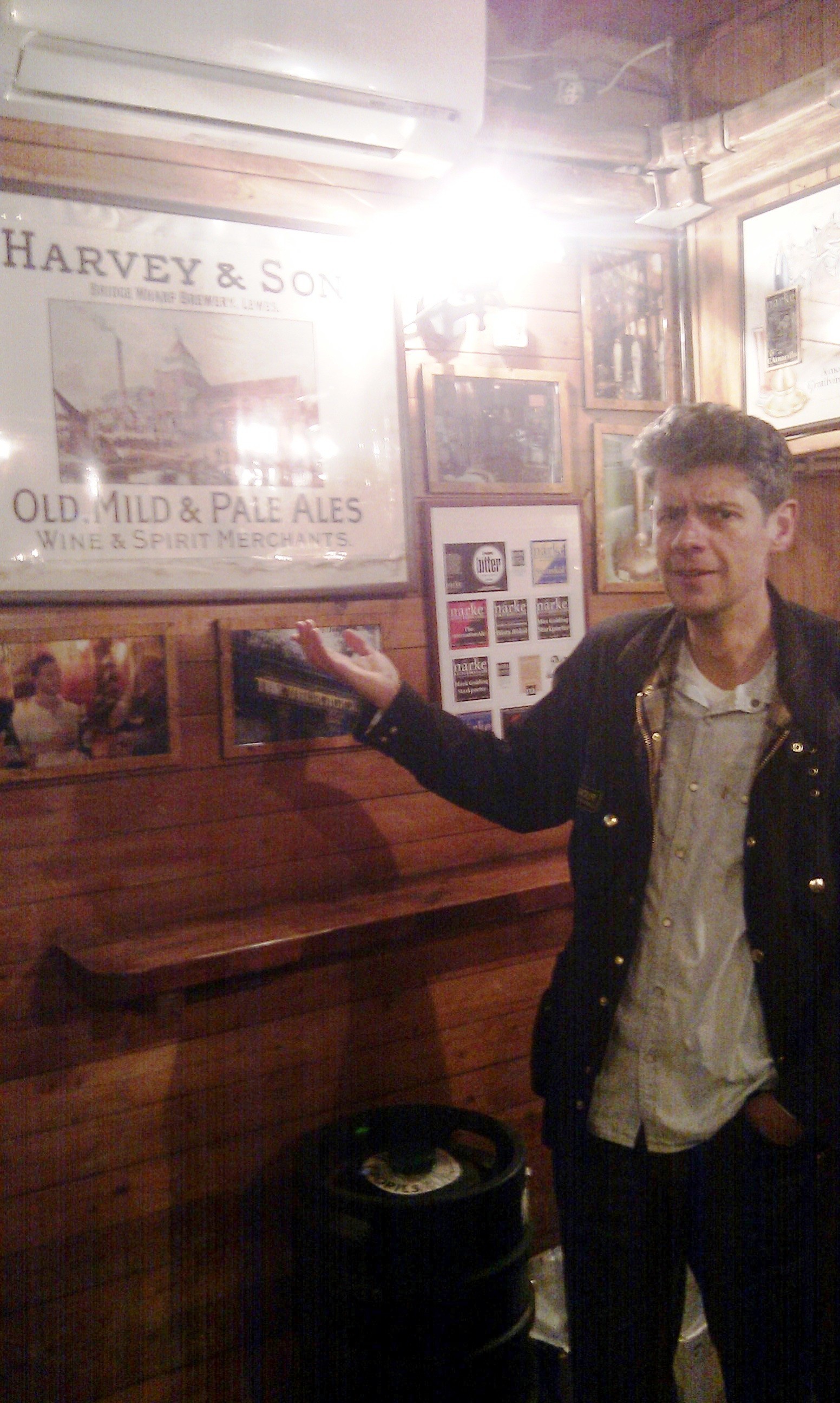
Furthermore, as we’d just moved from Lewes in southern England, it was amusing to discover posters for Harvey’s Brewery, a Lewes institution, in Ma Che’s (generally fairly smelly, now redecorated and still fairly smelly) back room.

Harvey's brewery poster at Ma Che Siete Venuti a Fa', Trastevere, Rome

As 25 August was our two-years-in-Rome anniversary, I thought we needed to go back to Ma Che and drink some more interesting beer.

Brettanomyces and Saccharomyces
We’d already had three or so fairly boozy days, so I vowed to just have one beer. I wanted something weird and challenging after all the nice easy golden ales I’ve been drinking lately. There was a selection of about 16 beers on tap, with three on hand pump. They rotate their stock, but on this visit the beers were from Italy, Germany, Belgium and Norway.

Ma Che Siete Venuti A Fa' beers, 25 August 2013

I try to only drink beer from the nation I’m in at the time, so it had to be Italian, giving me a choice of nine. Ruling out the golden ale, pils and IPA narrowed it down more. Stouts are Fran’s department, so that ruled out another two. In the end, I chose Madamin Oak Amber Ale from Loverbeer brewery, which is in the Turin region of Piedmont, northwest Italy.

adamin is an unusual beer by any standards.  It’s very fruity as it’s been conditioned in “tini di rovere” – oak vats, formerly used for wine production. I found it very sour and tart, and the initial fruitiness I got in the smell and taste was more sour cherry, plum and blackcurrant than grape. Maybe this was my memory playing tricks on me though as one of the first ever beers I had in Ma Che two years earlier was a kriek lambic.

Anyway. Some more info. It’s a top fermentation beer, inspired, according to the blurb on Loverbeer’s site, by Belgian beers – meaning lambics, as the fermentation here relies on wild yeasts in the wood of the vats, specifically Brettanomyces (aka Brett, Dekkera), in contrast to the Saccharomyces cerevisiae more commonly associated with controlled bread, beer and wine production.

Taps, Ma Che Siete Venuti a Fa', Trastevere, Rome

Beer, wine, scrumpy
The blurb also says that the process heightens the acidity and restrains the bitterness of the beer, making it a versatile drink that’s suitable accompaniment for Mediterranean cuisine.  (“L’acidità appena pronunciata e l’amaro molto contenuto, rendono questa birra versatile  negli abbinamenti e adatta ai piatti tipici della cucina mediterranea.”) I’m not sure about this: do Italians want their beers to be more sour and fruity? I get the impression from the amount of vile strong import lager (Ceres, Tennent’s) Italians drink, many prefer acrid, metallic lagers.

Either way, I’m not sure it’d be a good meal accompaniment. It was too deciso (“decisive”). And indeed, it’s a beer that simultaneously complex and strangely rustic, like some pungent, low carbonation farmhouse scrumpy from the Southwest of England.

Loverbeer Madamin and Brewfist Fear at Ma Che Siete Venuti a Fa'?

So this 5.7% ABV, handsomely reddish-brown, medium-light bodied beer, named after the Piedmontese dialect for “young lady” (madamin, closer to the French mademoiselle than the Italian signorina), was certainly an interesting choice. A memorable beer to celebrate our two-year anniversary in Rome. But I’m not entirely sure I’ll be rushing to buy it again. Though I’m always happy to try the wares at Ma Che Siete Venuti a Fà?, an essential destination for any beer enthusiasts visiting Rome.

Info
Ma Che Siete Venuti A Fà?
Address: Via di Benedetta 25, Trastevere, 00153 Rome, Italy
Tel (+39) 380 507 4938 | football-pub.com (English site)

Lovebeer di Valter Loverier
Strada Pellinciona 7, 10020 Marentino, Piedmont, Italy
Tel (+39) 3473636680 | loverbeer.com | info@loverbeer.it

3 Comments

Filed under Ale, beer, Bars, pubs etc

Italian breakfast, and why a cornetto isn’t a croissant

Cornetto, saccottino and cappucino at Baylon Cafe, Trastevere, Rome

Let the Games Begin (Che la festa cominci) is the latest novel by Italian writer Niccolò Ammaniti. He’s probably best known for Io non ho paura (I’m Not Scared), the 2001 novel that became a film in 2003.

A pretty broad satire of contemporary Roman society, Let the Games Begin is passingly entertaining, but it suffers from less-than-perfect translation and editing. As well as some fairly rudimentary editorial errors, the idiomatic translation doesn’t feel quite right. It’s also quite haphazard with its translation of Italian food names. While it’s content to refer to supplì as supplì, it seems to determinedly translate cornetto as croissant.

A cornetto (“little horn”) is not a croissant (French for “crescent”). Nor is it an ice-cream. It’s an Italian relative of the croissant, likely with the same origins, but today a distinct product. Sure they look similar, but they’re slightly different. Read on.

No one is in agreement about the origins of the crescent-shaped pastry, but one abiding story (or myth) is that it was invented in Austria to commemorate the defeat of the Ottomans, who besieged the city in 1683. Wikipedia gives more background. Whatever the origins of the pastry (other variables include chiffel and kipfel), since its birth the regional and national versions have diverged.

Breakfast pastries
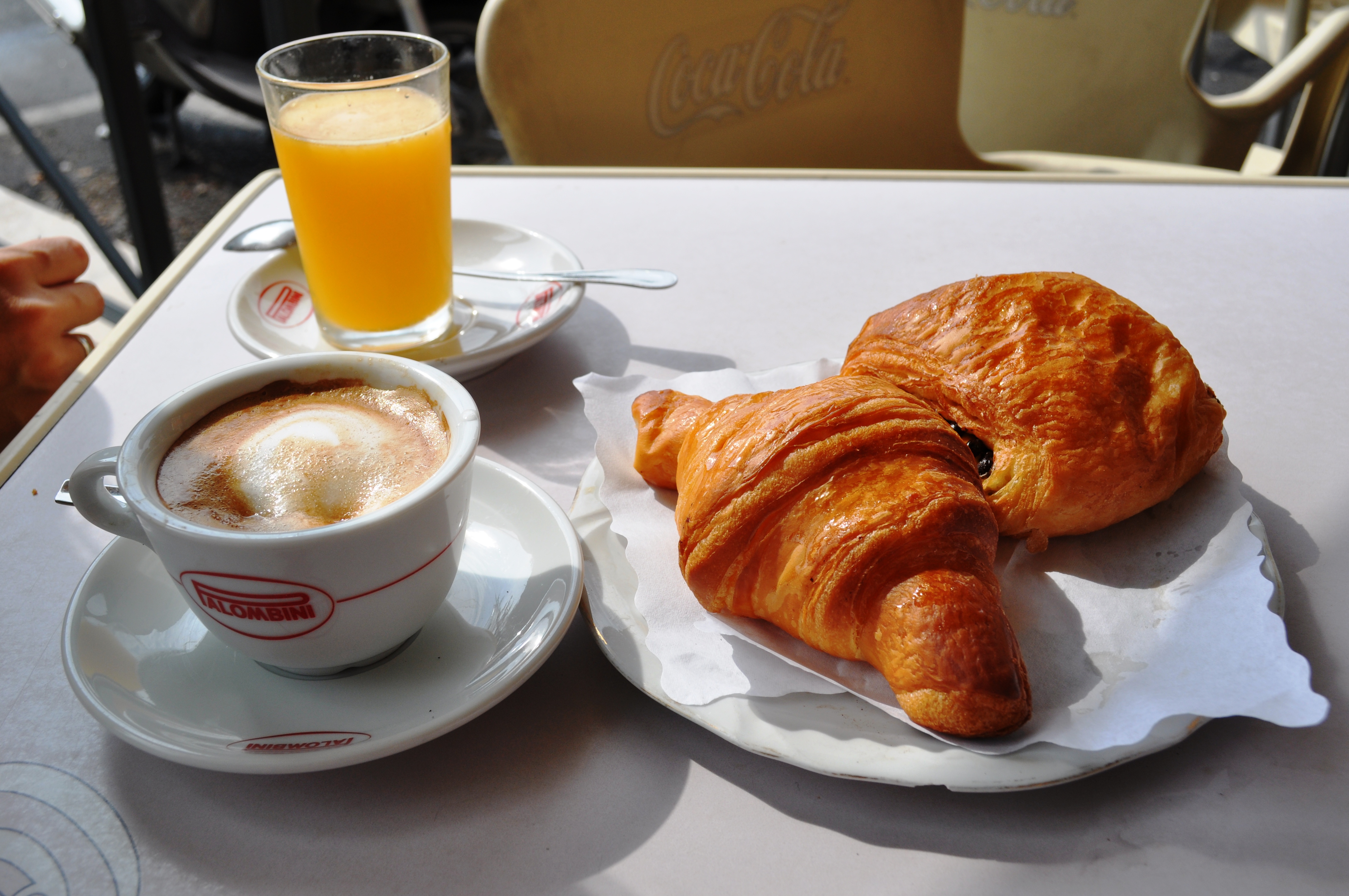
Both the croissant and the cornetto are breakfast pastries. The quintessential breakfast I witness being consumed day-in day-out in Rome is a coffee – either a simple caffè (espresso) or cappucino (often just called cappuccio in Rome) – with a cornetto, normally just a cornetto semplice (“simple”, ie plain).

Many cafés offer a large selection of different breakfast pastries, or lieviti (literally “yeasteds” or “risens”, meaning pastries made with a yeasted dough) and if possible I get a saccottino al cioccolato. In Italian, a sacco is a sack, so this literally is a “little sack with chocolate”. And yes, it closely resembles another French – or Viennese – pastry: the pain au chocolat, known by many ignoramuses as a “chocolate croissant” . Guys, it’s not a crescent-shape, so how can it be a croissant?

The cornetto semplice is also apparently also known as the cornetto vuoto (“empty”), to contrast it with various types of cornetti ripieni (“filled”). These include cornetto alla crema (with custard), alla marmellata (with jam, marmalade or other conserve), al miele (with honey; this is often made with an integrale, wholewheat, dough), and cornetto al cioccolato. The latter is an actual cornetto that is usually filled with that vile brown vegetable-oil product beloved of Italians, Nutella.

Choice of pastries at Baylon Cafe, Trastevere, Rome

The (subtle) difference
The French really don’t go in for all these filled variables, beyond ones with almond paste, but the biggest difference between cornetti and croissant is the lamination.

A proper croissant must be made with butter, and must be repeatedly folded and rolled, to achieve a lamination wherein the rolled dough contains several thin layers of the fat. When the croissant is baked, water in the dough is turned to steam, but this is trapped by the fat, causing pressure and rising between the layers. The resulting pastry, when done right, should be crisp and flaky, with a taste of butter but no greasiness.

A cornetto on the other hand isn’t so assiduously laminated, and can even be made with lard, not butter. The dough also contains more sugar. The result is a pastry that is just a lot sweeter than a proper French croissant, and can have a more enriched bread or cake-like texture, more like a French brioche. Some cornetti are very flaky and like croissants, but many others are more cakey; there’s a lot of variation.

Indeed, cornetti are sometimes called brioche in some northern parts of Italy, though in Naples, Sicily and parts of south with a historical French influence, the name brioche is used for a pastry more like the Gallic version. But that’s another story.

Cappuccio, spremuta, pastries at Caffe Arabo, Trastevere, Rome

A couple of cafés
Our lifestyle at the moment takes us to two cafes regularly for weekend morning cornetti. I’m not saying these have the best cornetti in Rome – how could I, without sampling cornetti in every single one of the thousands of cafés and pasticcerie in Rome? – but they’re places we enjoy.

The first is Baylon, which we started frequenting because… well, I can’t really remember. They’re so grumpy and resolutely unfriendly that even after we’ve been going there two years only one of the staff actually acknowledges us. The Ricardo Darin-lookalike is a particular sourpuss. Unlike many more traditional Roman cafés, however, it has space to hang out, and Wi-Fi. Plus, unlike many places in the tourist nexus of Trastevere, they don’t charge stupid prices.

So we keep on going back – partly for the space, partly as we can get our Saturday morning weekly English language paper nearby, and partly because they it has great selection of lieviti. Apparently it used to be a local landmark pasticceria (pastry bakery), so at least they have their own kitchens for the baking.

Our Sunday routine, on the other hand, developed as we used to go down to the farmers’ market in Testaccio’s Ex-Mattatoio every week. Although that’s now sadly been shunted further out of town, at least a direct-from-farm shop has opened near Ponte Testaccio, on the Trastevere Station side of the river, where we can get many of the same quality fresh products. There’s also Porta Portese market every Sunday, with its enormous selection of tat, junk and bric-a-brac.

Case of pastries at Caffe Arabo, Trastevere, Rome

On our route down the hill from our house, via the massively grand 19th century, weed-infested, broken-glass strewn, graffitied Ugo Bassi steps, we go to Caffè Arabo on Viale di Trastevere. This is a more traditional Roman café, no Wi-Fi or anything of that poncy nonsense, but it’s still kinda idiosyncratic. Plus, a couple of the staff not only recognise us but are friendly, even amiably laughing at my ordering a (hot) tea on a hot day. “The British drink tea in every season, every weather,” I shrugged.

They don’t have a kitchen, so their cornetti are bought-in, but they’re not bad. And occasionally they even have saccottini al cioccolato to satisfy my chocolate cravings.

Neither places, however, has croissant. A few Roman cafés do apparently do French-style croissant, but I’ve yet to sample them.

Of course, not everyone has a coffee and cornetto for breakfast or elevenses here in Rome. We sat down at Arabo last Sunday, Fran ordered a cappucino and cornetto, I ordered a spremuta d’arancia (freshly sqeezed orange juice) and a saccattino al cioccolato – then two guys sad down beside us and ordered beers. It was 10.30am.

Info
Baylon Café
Via San Francesco A Ripa 151, 00153 Rome
bayloncafe.com

Caffè Arabo
Viale di Trastevere 20, 00152 Rome

48 Comments

Filed under Cakes (yeasted), Discussion, Other food, Restaurants etc

Toccalmatto’s Oceania hoppy Saison

Toccalmatto Oceania hoppy saison

Another Toccalmatto with another crazy bit of label design, like Zona Cesarini but more especially B Space Invader. This time, the label seems to portray a strange fantasy Polynesian coconut-tiki-demon seizing a double-jointed (or even bone-less) hula dancer, like some King Kong riff.

Oceania isn’t actually on Toccalmatto’s site (here. Beware! Airbrushed goth babe), or in the Guida alle birre d’Italia 2013, but apparently it was created in 2011 as a one-shot but added to the range on the strength of a good response from punters.

The label calls it a “New World Hoppy Saison” in nice helpful English then expands: Birra doppia malta chiara, secca e beverina / Unisce speziatura classica delle Saison agli aromi dei luppoli Neozelandesi e Australiani / Birra di Alta Fermentazione – Rifermentata in Bottiglia. That is, “A double-malted clear beer, dry and drinkable / Uniting classic saison spiciness with the aroma of New Zealand and Australian hops / Top fermented – Bottle conditioned.”

Toccalmatto Oceania back label

The ingredients are water, malted barley, malted wheat, hops, sucrose, yeast. The sucrose is perhaps unexpected – you’d think with not one but two malts there would be enough sugars for the yeast, but adding more is presumably a factor in its fortification. Yep, it’s another strong beer: 7% ABV.

Some comments online also suggest adding sucrose to your brew can make it taste “cidery”, but others strongly refute this as a misconception that arose from poorly balance homebrew kit beers. This well-informed forum contributor, PseudoChef (a biochemist from Chicago), says: “Adding sugar to your recipe can be advantageous in that it helps ‘dry’ out the beer and thus reducing cloying body sweetness in some styles and accentuating hop bitterness in others.”

Certainly the Oceania is in no way cidery, and is indeed dry not sweet. Overall it’s another great beer from Toccalmatto.

Toccalmatto Oceania

It pours with a decent head. It has an odour of citrus (orange, grapefruit), fresh cut grass, fresh herbs growing in the sun (rather than, say, cut dried herbs or hay. Or is that getting a bit specific?). The body is medium-light, and colour is orangey-yellow and slightly cloudy. It’s well-carbonated, and has a tart, fruity flavour with touches of resin. Presumably from the hops, which in this case are New Zealand (Motueka, Pacific Jade) and Australian (Galaxy, Rakauand).

Finally, it has a fresh, crisp mouthfeel. Indeed, despite having something of that sweet-sour-spicy-fruity complexity you get with a good saison, it’s another lovely refreshing summer beer, and again one that’s so beverina (drinkable) it belies its strength.

2 Comments

Filed under Ale, beer

Laboratorio Piccolo Birrificio’s Steamer at Tram Depot, Testaccio, Rome

Steamer beer at Tram Depot, Testaccio, Rome

We’ve been hanging out a lot in the hot August evenings at this (relatively) new place in Testaccio. It’s basically a converted kiosk on the pavement, like an old newsstand (edicola), but somehow it manages to be cool, charming and strangely mellow considering it’s right beside the busy crossroads of Via Marmorata and Via L Galvani/ Via M Gelsomini. There’s live DJ action with great tunes (hip hop, rare groove etc) on an evening, and the kiosk looks like a vintage tram coach to boot.

Its main appeal for Fran, Rachel and chums is the grattachecca. Grattare is the verb “to scrape, to scratch, to grate” and is a reference to the way a large block of ice is treated. At Tram Depot, a veteran grattachecca sensei in a bandana skilfully scrapes and grates the ice, fills a beaker, and pours over your choice of cordial. In this case, that means French Sirop de Monin. A few bits of fruit or fresh coconut complete the refreshing concoction.

It’s a relative of granita. Or, basically, a Roman Slush Puppy, given an extra classy twist with French cordials. Which use fewer artificial colours than Slush Puppy, but some of them still look a bit gaudy to be entirely natural. The Monin site says they’re “highly concentrated, natural flavourings” – no mention of natural colours. So I’m guessing there are some coal tar derivatives in some of them….

Piccolo Lab's Steamer, label, at Tram Depot, Testaccio

I can see the appeal of these alcohol-free ice drinks on a hot Roman summer’s day, but personally I’d rather have a beer. Tram Depot have one industrial lager on tap, but thankfully they also have a few bottled real beers. Among them is Steamer, a “hopped amber ale” created by brewer Lorenzo Bottoni that I’ve previously had at Necci. Though at Necci they had it on tap and it was comparatively flat. The bottles are markedly more carbonated.

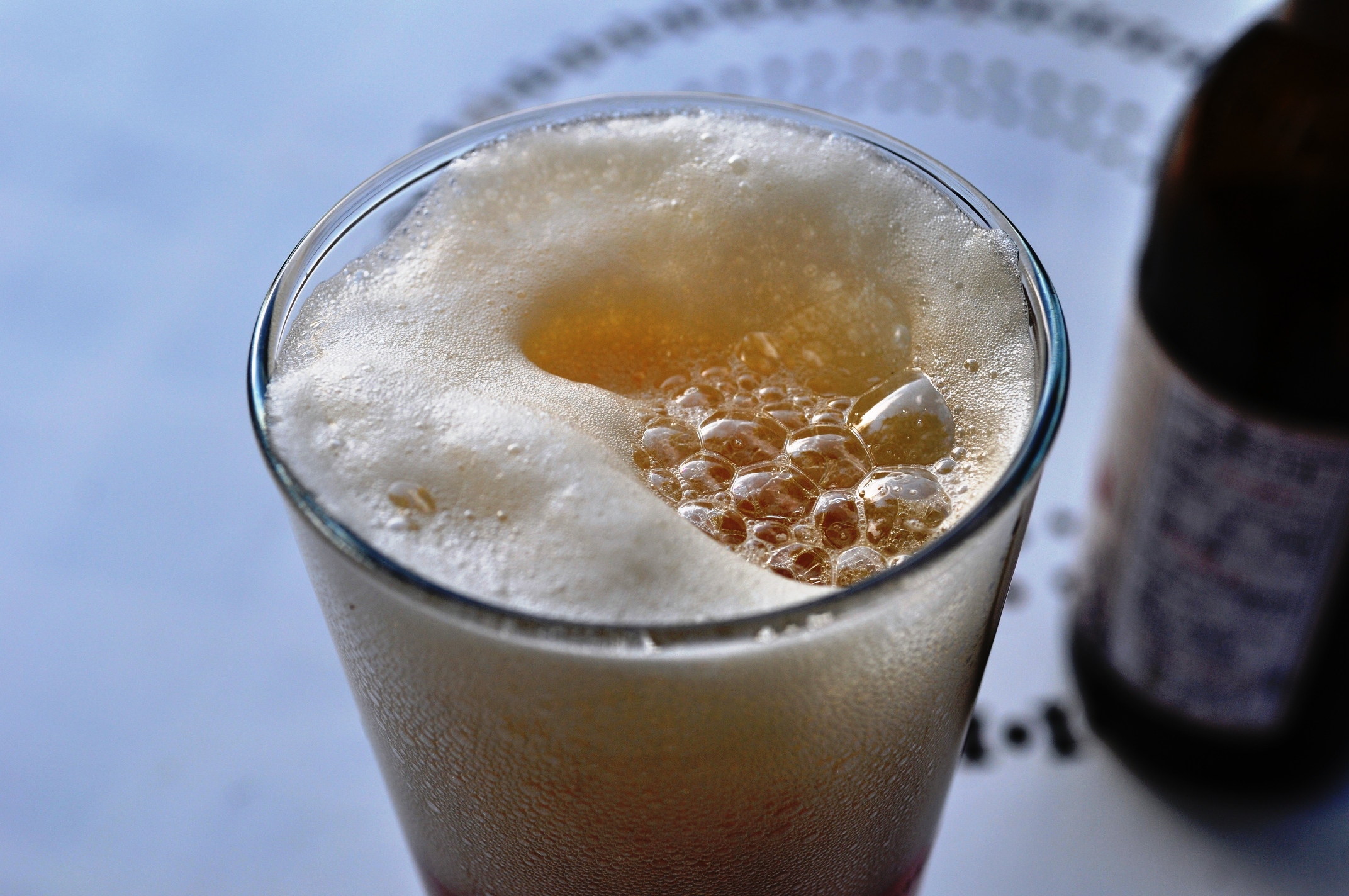
The first time we had them, it had a massive comedy head. “Bad pour! Bad pour!” scolded my friend Stels, who was consuming a less troublesome grattacheccha. All three of us drinking the Steamer had the same Attack-of-the-Froth!

Steamer beer head

Stels told me about a technique for making the head subside. Rub a finger in the greasy crease alongside your nose and stick it in the foam. I’d never heard of this before, but she’s from New Jersey.

And yet, it works, after a fashion. Like putting soap in your bath foam, it makes the bubbles collapse. In the above pic, the orifice on the right with larger bubbles is where I stuck my finger.
The beer itself was still good. I wrote the other day after drinking Birrificio Math’s La 16 how I wasn’t entirely sold on Italian strong ales, but Steamer is pretty good stuff. It’s a lovely deep, misty amber colour, it’s pretty hoppy (it says 39.7 IBU, but it tastes like more) and it’s fairly darned strong (7.6%) but supped slowly on a summer’s evening is a great alternative to grattacheccha. Until someone invents beer grattachecca.

Info
Tram Depot, via Marmorata (angolo Via Manlio Gelsomini), Testaccio, Rome
Open 8.30am (ish) to 2.00am, seven days a week.

Laboratorio Piccolo Birrificio
piccololab.it / info@piccololab.it

1 Comment

Filed under Ale, beer, Bars, pubs etc

Maritozzi con la panna recipe

Maritozzi con la panna

A while back, we went on a field trip and scoffed maritozzi con la panna at Regoli. They are reputedly Rome’s best. They are indeed delicious, albeit a bit OTT with the whipped cream (panna montata. Not to be confused with hannah montana).

Seeing as I made splits the other day, and splits and maritozzi con la panna are basically both variations on the enriched dough cream bun, it seemed fitting that I try and make maritozzi too. Me living in Rome, and them being a local speciality and all. My version isn’t quite so generous with the cream as Regoli’s, though how much you use is really up to you.

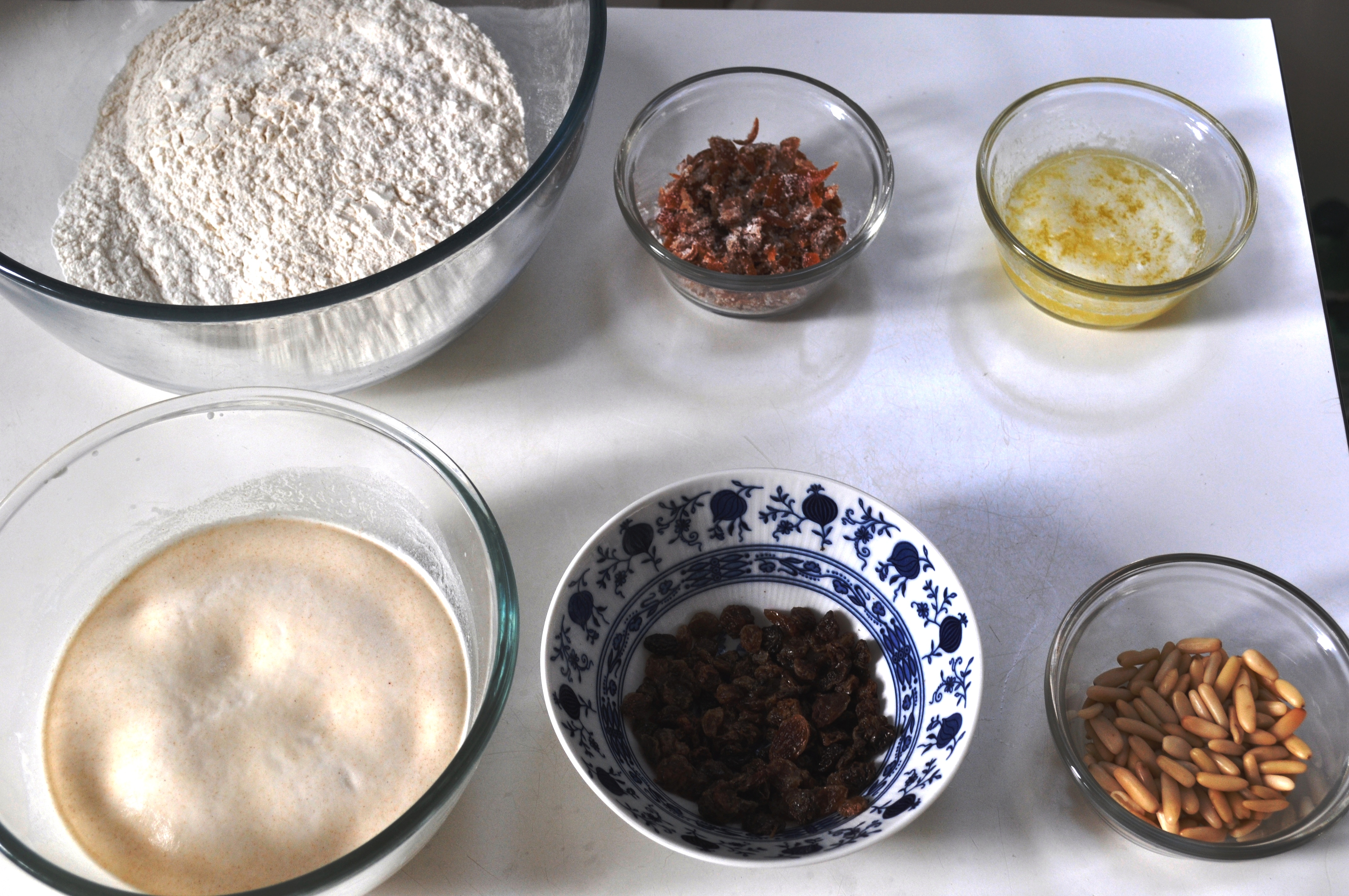
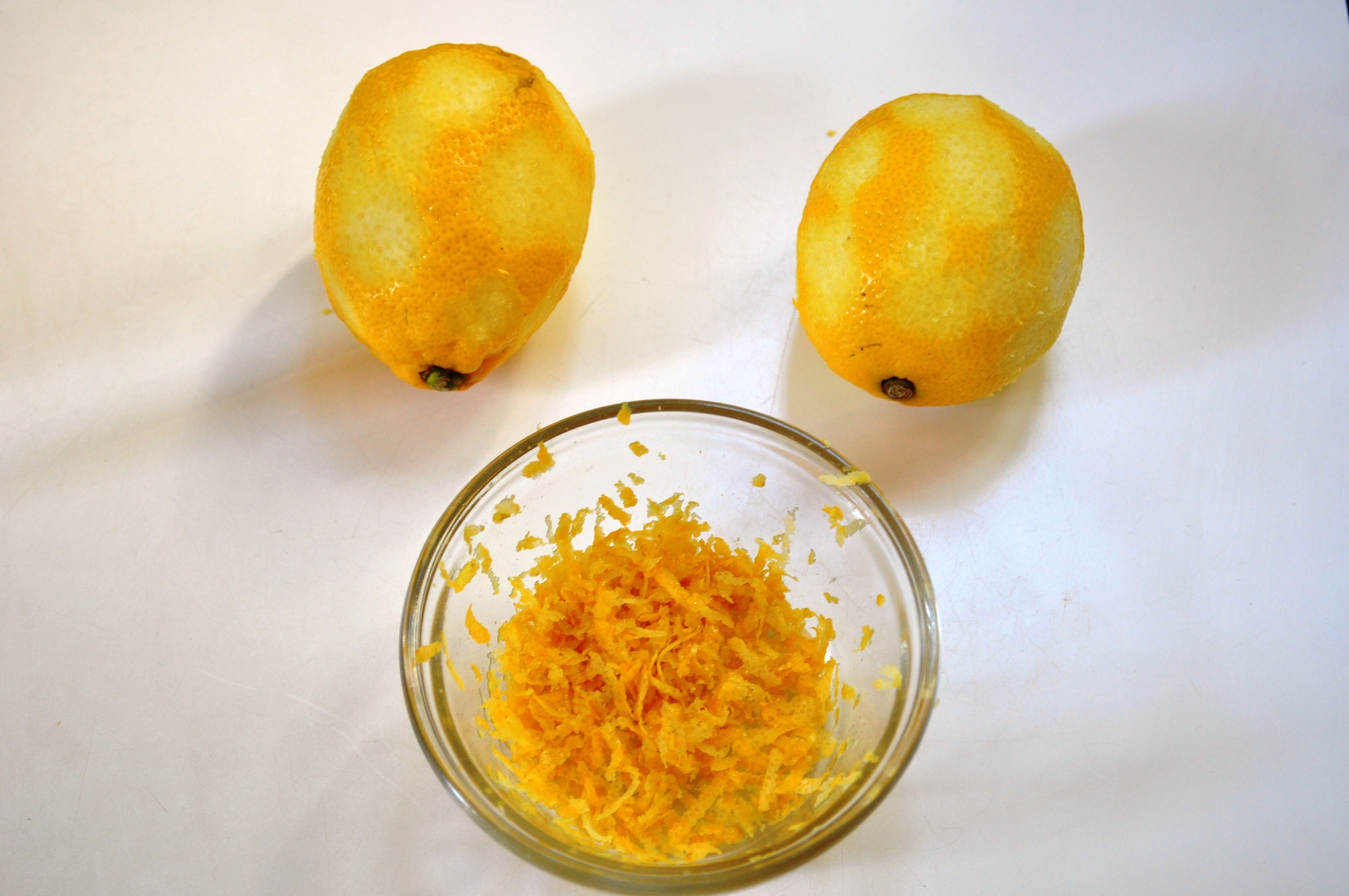
Maritozzi ingredientsLemon zest

My research took me to numerous recipes on Italian websites1. The basic gist really is an enriched dough, some with milk instead of water, some with oil or butter, all with egg and/or egg yolks.

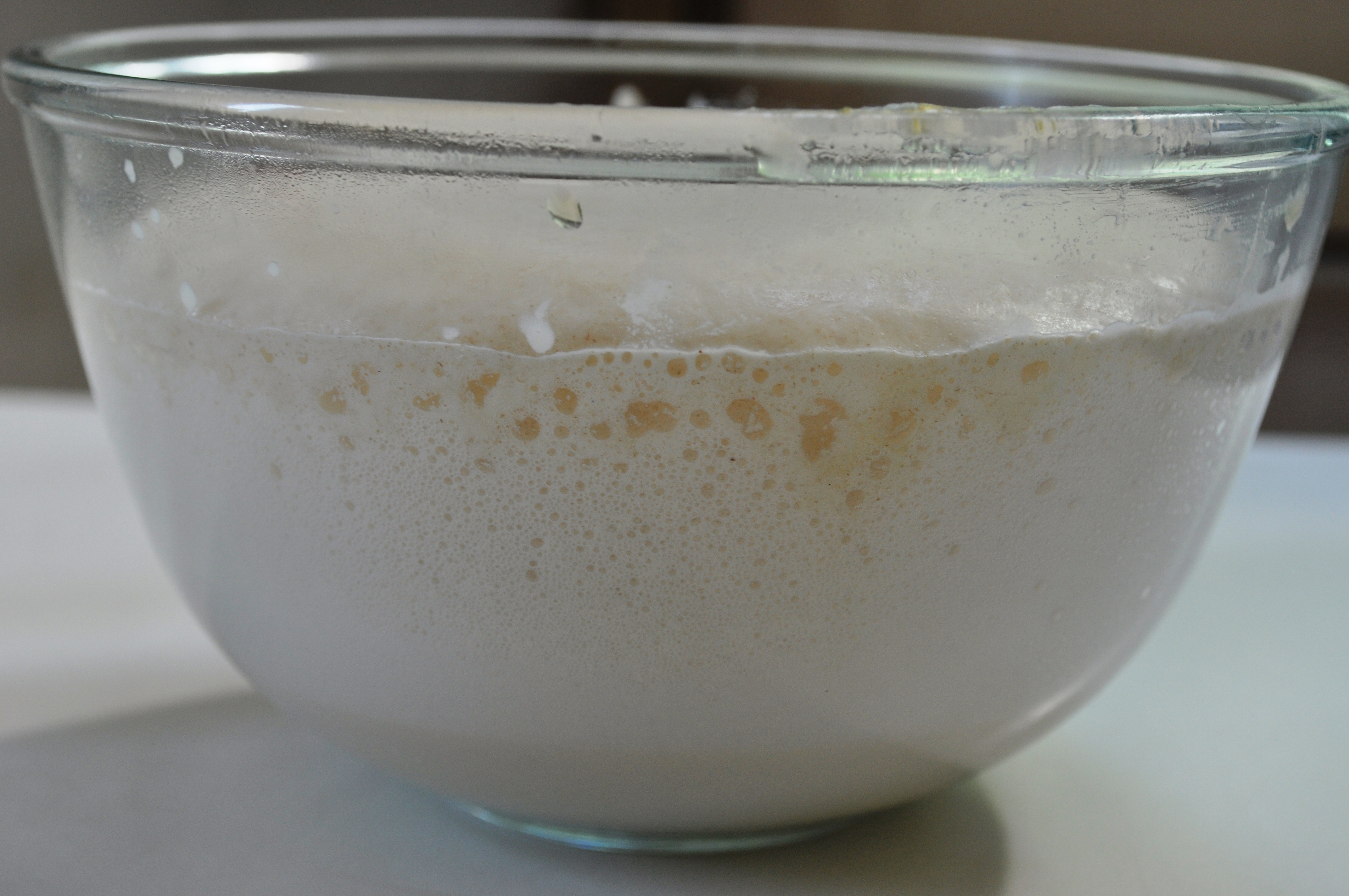
My recipe is a kind of hybrid, though relatively authentic in that it contains the key flavourings of candied peel, citrus zest, raisins (or sultanas) and pine nuts. Some of the recipes I found use a biga, but I decided to use the sponge-and-dough technique. Here’s the nice active sponge:

Nice active sponge for maritozzi

For this recipe I agonised with professional-style recipe calculation 2, bakers’ percentages and scaling weights. Then I made a schoolboy error and left a key ingredient out of the dough. Then I burnt the buns.
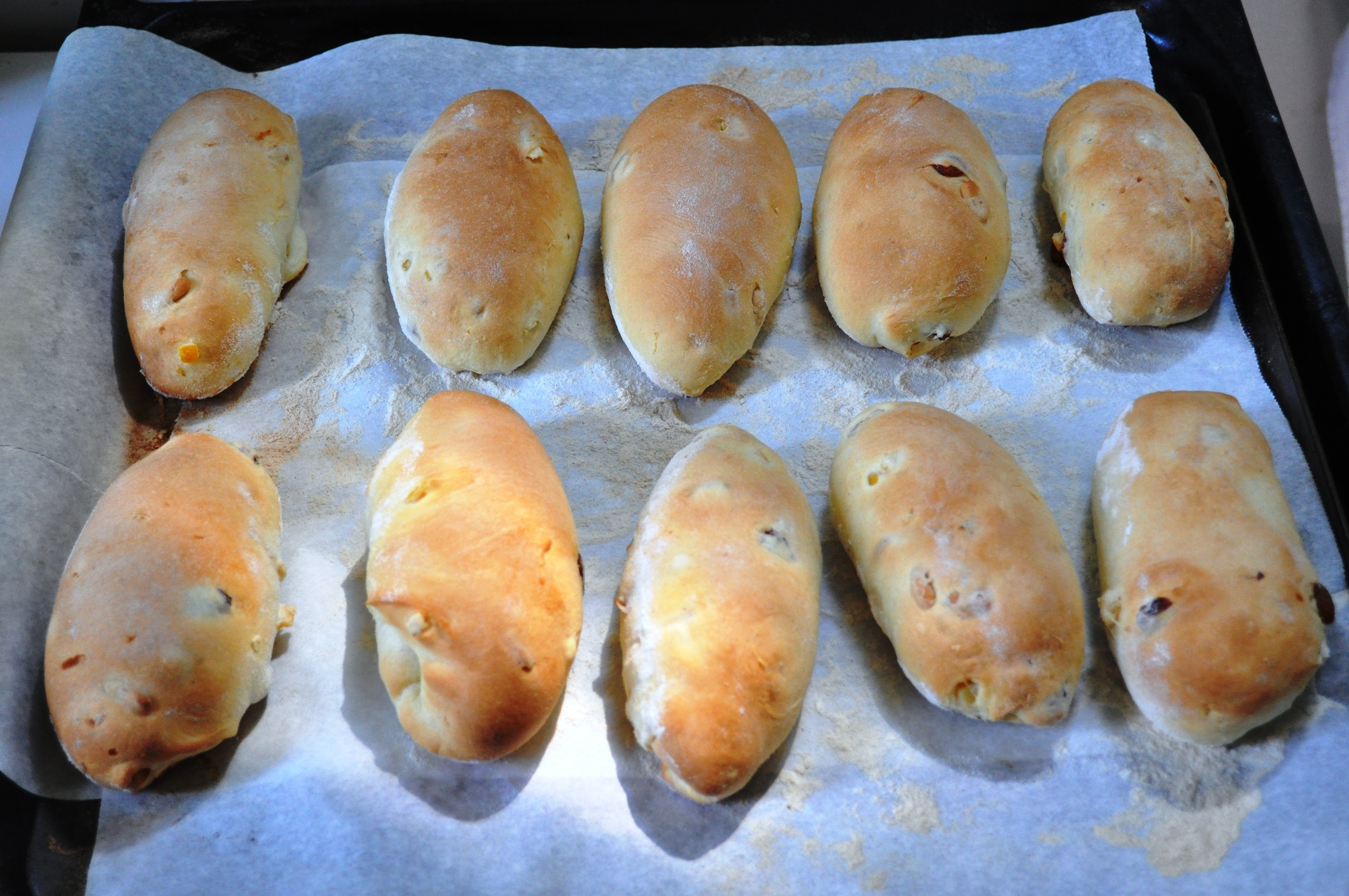
So I made a second batch too – and tried to remember all the ingredients and tried to not burn them. (In my defence, my oven has fierce bottom heat, even when I use multiple sheets for some shielding, so it’s hard to get nice colour on top without the bottoms getting a little bruciato…)

This recipe makes 10.

Ingredient Bakers’ percentage Quantity (g) Notes
Sponge:
Strong white flour 10 43 Aka manitoba
Milk 47 224 Warmed
Yeast 5 22 Fresh. If using ADY, use 11g, instant, easyblend use 9g
Caster sugar 5 22
Dough:
Strong white flour 60 258 Aka manitoba
Plain flour 30 129 Aka all-purpose, or Grano tenero 00
Salt 1 4
Caster sugar 7 30
Butter 12 52 Melted and cooled. Or oil. See ‘Options and decisons’, below
Egg yolk 8 34 Separate a few eggs, beat the yolks then weigh off on electronic scales
Zest 1 4 Lemon, orange or mix
Pine nuts 8 34 Aka pinoli
Raisins or sultanas 8 34 Soaked in hot water for 10 minutes or so, squeezed out
Candied peel, chopped 8 34 Orange or citron or both

Method

1. Make up the sponge by combining the first four ingredients: the milk (warmed to about blood temp), yeast, sugar, flour. Whisk together.
2. Leave the sponge, covered, to ferment. You want it nice and bubbly. Time will depend on the warmth of your kitchen or chosen location. With all that yeast and sugar it won’t take too long – around 20 minutes.
3. When it’s nice and active, add the rest of the ingredients (except the pine nuts and fruit) and bring to a dough. Do by hand or with a mixer with dough hook. If the dough feels a bit dry and tight, add a little more tepid liquid – either water or milk.

Adding the fruit and pine nuts to maritozzi dough
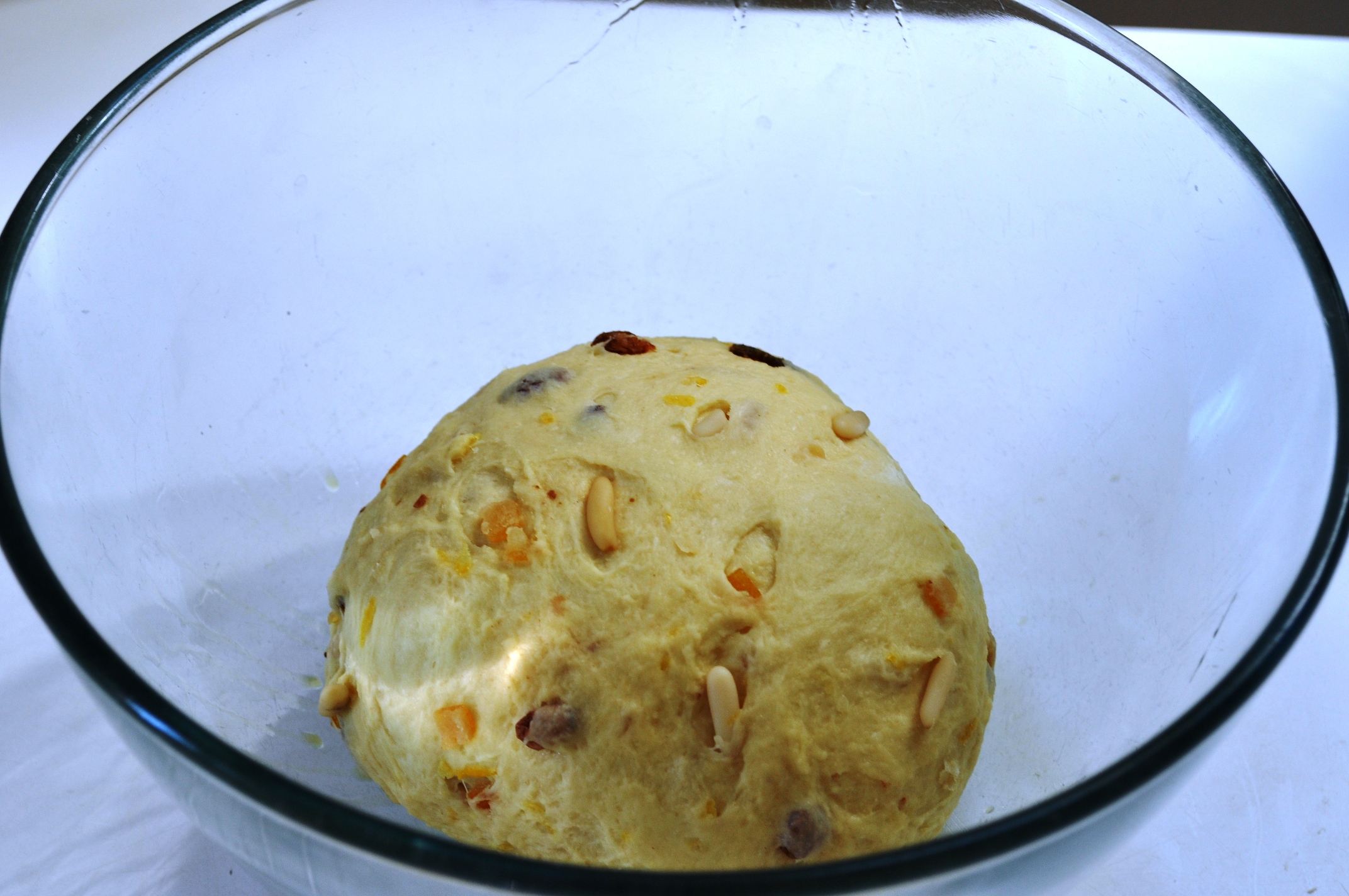
4. When you’ve achieved a nice smooth dough, stretch out, then add the fruit and pine nuts. Fold it over and knead again.
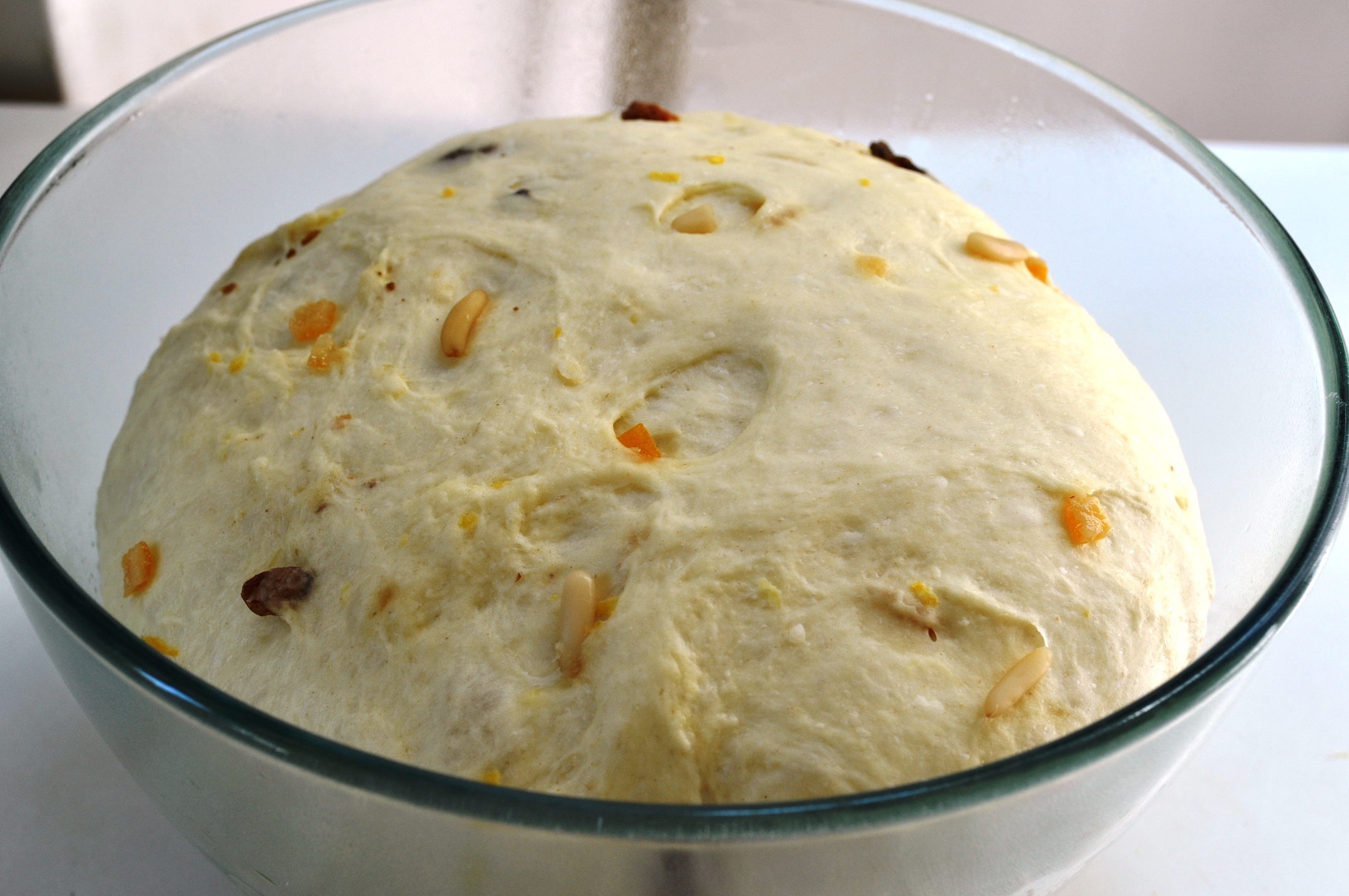
5. Put the dough in a clean bowl and leave to prove again. Prove until doubled in size. Again, time will vary.

Dough, before 1st proveDough, after 1st prove
6. Gently deflate the dough, to regulate the structure. (This is called “knocking back” in Britain, but all that business with thumping it with your fist is far too violent – you don’t want to lose all the inflation.)
8. Form a ball and rest for 10 minutes.
9. Divide the dough into 10 pieces, each weighing 85g or thereabouts.
10. Form the pieces into balls, then allow them to rest again for 10 minutes.
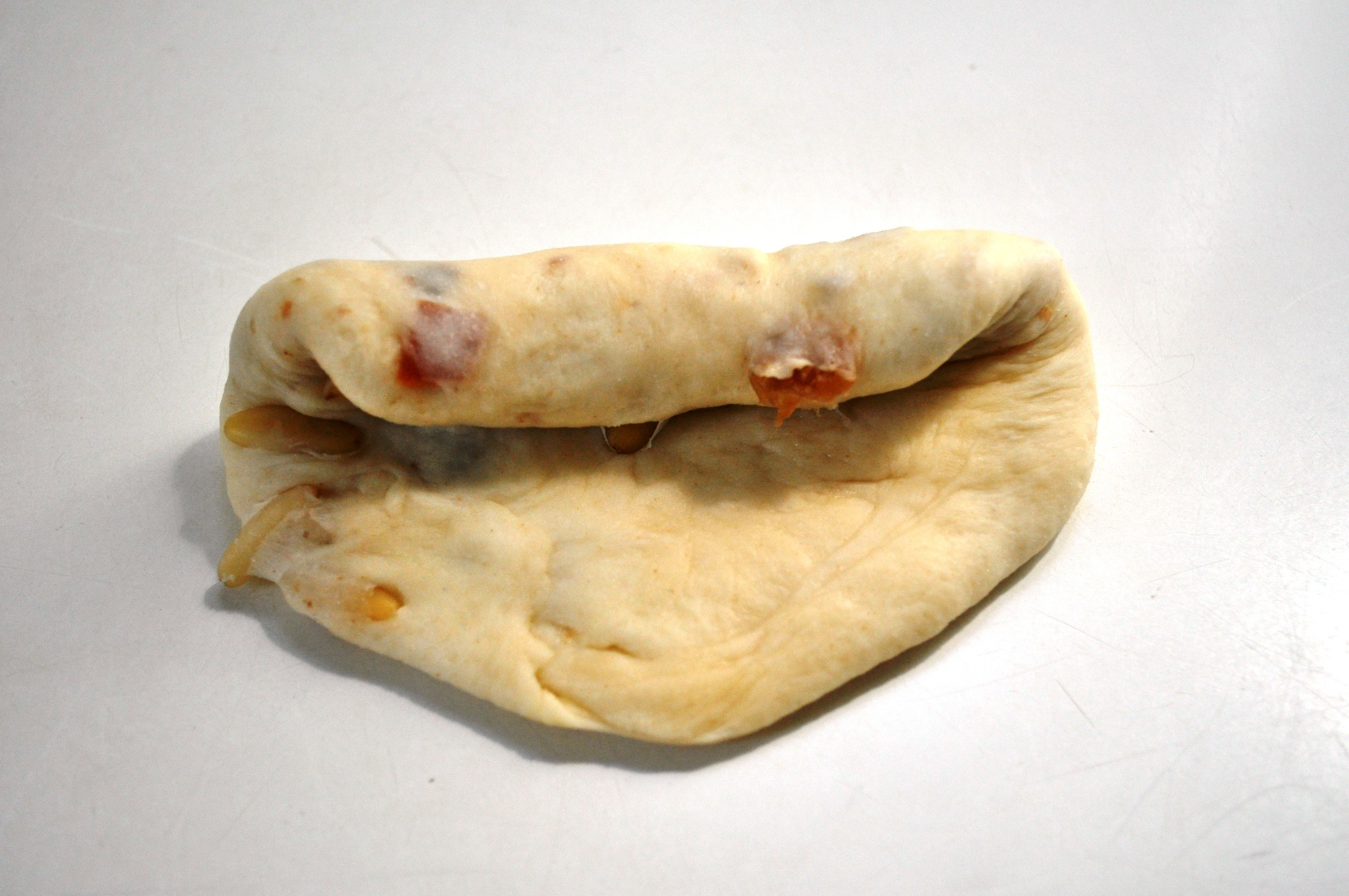
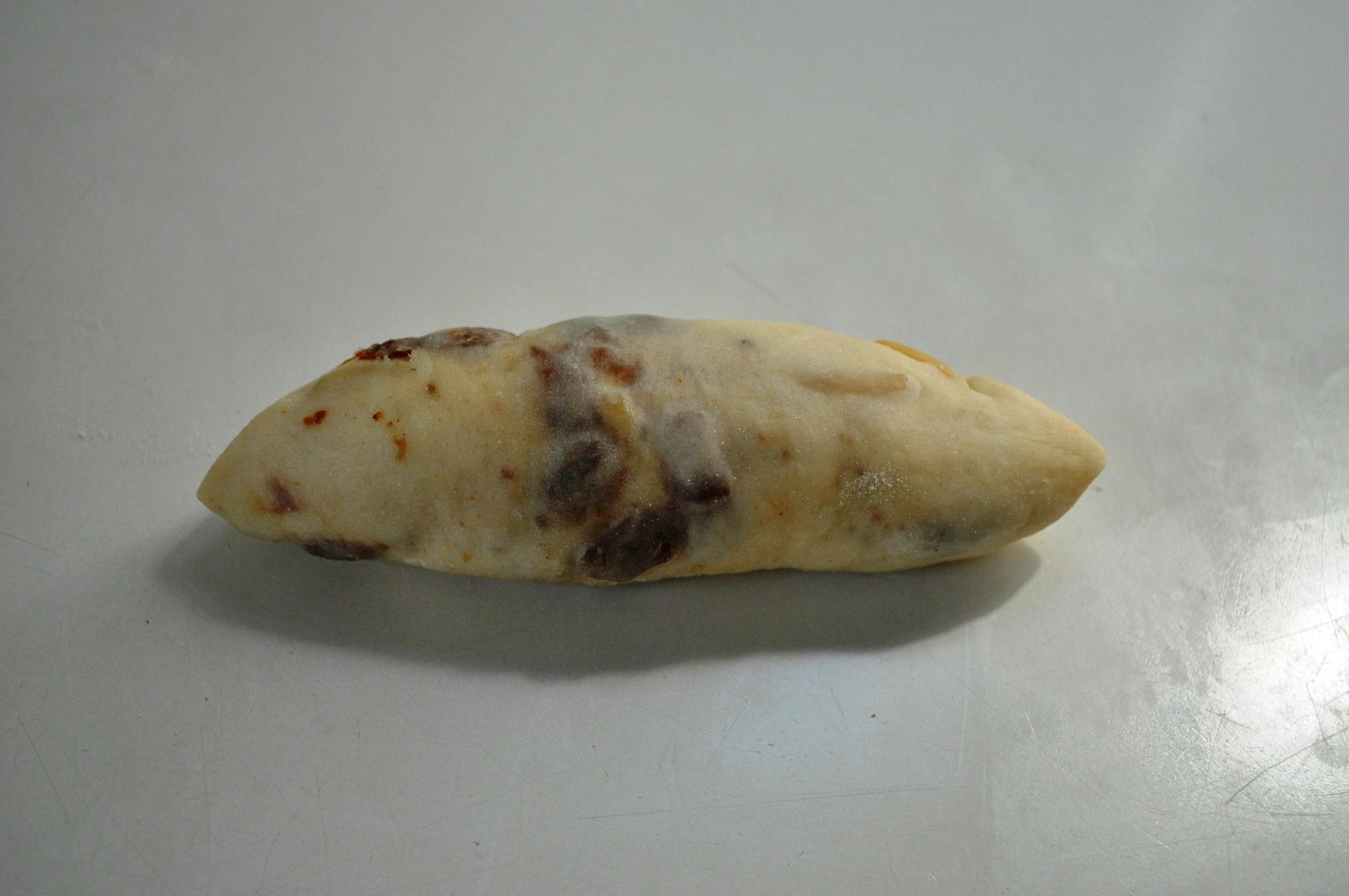
11. Form the balls into cylinders by turning over (so the rougher base is upwards), flattening and rolling up. You can roll the ends to a tighter point if you want. You might want to also pinch the seam (on the underside) closed so it doesn’t open up again.

Shaping a finger roll 1: ballShaping a finger roll 2: ball, undersideShaping a finger roll 3: ball, squashed/rolled outShaping a finger roll 4: ball, squashed/rolled out and rolled upShaping a finger roll 5: cylinder, rounded endsShaping a finger roll 6: cylinder, pointed ends
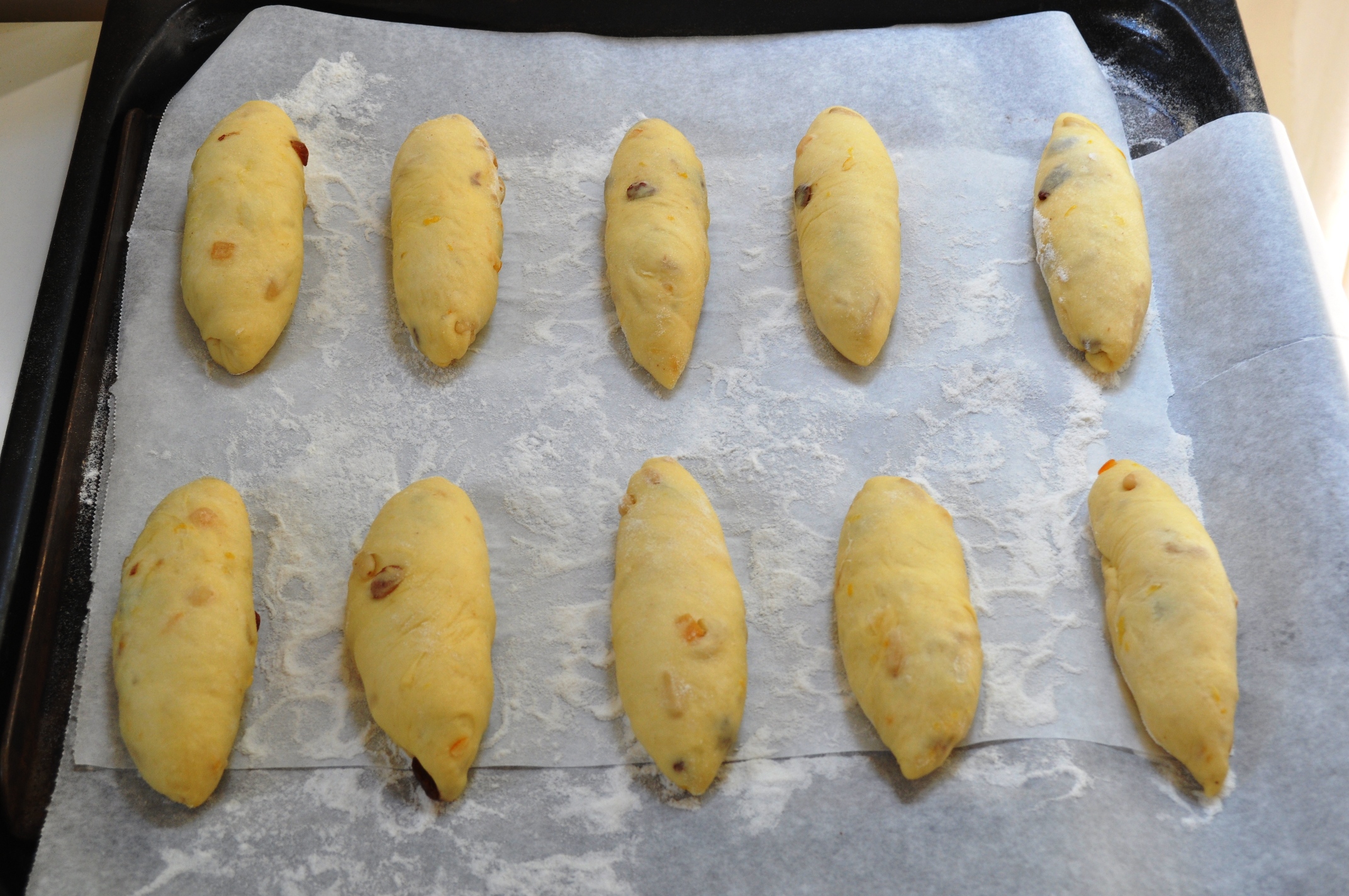
12. Place on a lined baking sheet, and leave to prove again, until doubled in size and soft to the touch.
13. Preheat oven to 200C.
14. Bake until nicely browned on top, around 15 minutes. (Again, depends on your oven.)

Final prove, beforeFinal prove, after
15. While they’re baking, make a stock syrup with 50g sugar and 50g water, brought to the boil together. This is optional (see Options and decisions, below).
16. When the rolls are baked and still warm, brush with the syrup.

Fresh from ovenGlazed
17. Leave to cool entirely on a wire rack.
18. Whisk 500g whipping cream to stiff peaks. (You might need more, but healthy types might get upset if I put “whisk 1 litre” of cream…)
19. Split each roll long-ways and fill with cream, with piping bag.
20. You can also serve with a sprinkling of sieved icing sugar (see bel0w).

Maritozzo crumb - plenty of fruit and pine nuts

Options and decisions

The last two steps are involve some decisions, depending on you how you want to present your calorie bombs. Although some of the photos you’ll find online have the creamed piped with a star nozzle, many of the maritozzi I see in Rome have the cream smoothed off (with a palette knife presumably). I think I prefer the latter.

As for the icing sugar, this is why I said the stock syrup glaze was optional. If you’re going to sieve icing sugar all over (again, this is very popular for the presentation of cakes and pastries in Rome), the glaze could arguably be seen as useless. So you could either not bother with the glaze, or you could even brush the rolls with beaten egg, egg yolk or even milk (full-fat) before baking, to give them varying degrees of golden crust as they bake.

Maritozzo con la panna - and with icing sugar

As for the butter – if you want to be more wholeheartedly (southern) Italian with this recipe, replace the butter with good quality olive oil , which some of the recipes I’ve looked at use. Some also use sunflower oil, or similar.

One final option – you can also add some vanilla essence when making up the dough. Maybe a teaspoonful, around 6g.

Enjoy!

Footnotes

1. Here are some of the recipes I looked at online, all in Italian: Giallo Zafferano (Italy’s biggest online recipe resource); Alice (a cookery channel; this one uses a biga and some “qb”); Arturo (another cookery channel, related to Alice); Cookaround (a forum); PaperBlog (an online magazine); La Cuochina Sopraffina (a blog, though this one seems to be missing some vital info); Paciulina (another blog); also the book La Cucina di Roma e del Lazio by Maria Teresa di Marco and Marie Cécile Ferré.

2. This style of recipe calculation is very handy if you’re trying to accurately scale up quantities, and for doing costings. You start by adding up all the bakers’ percentages (ie, all the ingredients given as a percentage of the total flour used. Comprehensively explained here). In this case, that gives me 215. You then divide the total dough required by that figure to give you a “recipe factor”.

Here, the total dough I want for 10 buns each made with 90g of dough is 900g. Add a little extra (2%) for loss/wiggle room, giving a total desired dough weight of 918g. 918 divided by 215 gives a recipe factor of 4.3 (rounded).

Then, multiply the bakers’ percentage by the recipe factor to give the ingredient weight (which you can also round, obviously).  The total of these ingredient weights should be the total dough. As I rounded a few figures up, the total weight of ingredients here is 924g.

So If you wanted to do 30 buns instead, simply work out a new total dough weight, ie 90g x 30 = 2700g. Add 2% for loss, giving g. 2754 divided by 215 gives a recipe factor of 12.8 (rounded), etc.

14 Comments

Filed under Cakes (yeasted), Recipes