Two days of hiking in Abruzzo National Park

We’ve just done a couple of days of hiking in Abruzzo National Park, in the central Apennines of Italy. We stayed at the small town of Pescasseroli, a very friendly place located in the centre of the park and at an elevation of around 1150m.

We followed a couple of routes from the Lonely Planet book Hiking in Italy by Brendan Sainsbury. We caught a bus direct from Rome to Pescasseroli, then just started our walks in the town.

Day 1 – short walk above Pescasseroli

We headed out of the town into a valley to the west. This is path B3, which climbs from pasture and into pine forest on the hillside. On the map we used, the hill and ridge are called Bocca di Forno – “The Oven’s Mouth”.
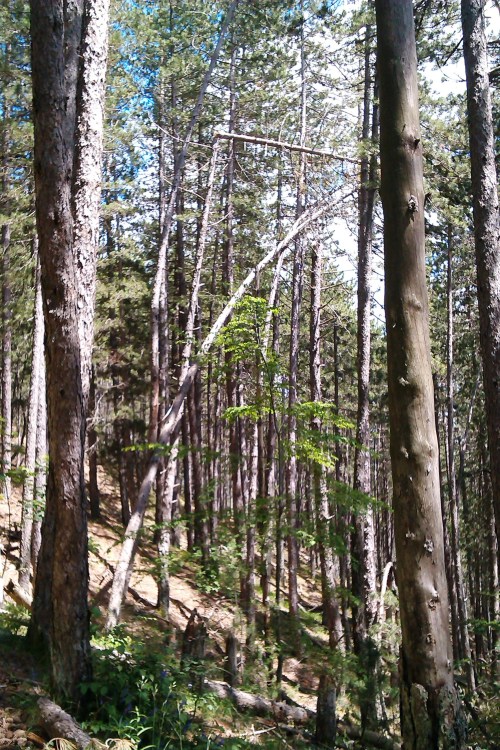
The path curved around the hillside, continuing through pine forest, with some clearings that were full of flowers and butterflies.

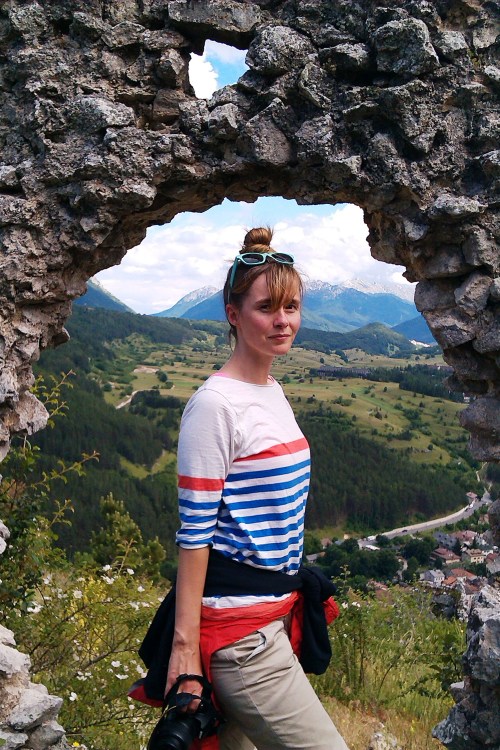
The path then descended into the ruins of Castel Mancino, a mysterious 10th-11th century fortress that fell into disuse then became a source of building stones for the village below. Seeing the first ruined tower among the pine trees was like something out of Skyrim. Fab.

And here’s Fran.
Day 2 – Rocca Ridge

This was our main walk. Sainsbury gives his route at 19.5km, but we finished it by looping back onto part of the path we followed yesterday, heading for a bar by a more scenic route, so we did around 22km (about 13.5 miles).

We headed up a valley due south of Pescasseroli, onto path C1, then, leaving behind a farm, onto path C3. The whole landscape here is shaped by transhumance, and we immediately encounterd a herd of white cows grazing among the beech trees by Rifugio della Difesa. There were guarded by a very professional Maremmano who barked at us until we were a decent distance beyong the herd.

Path C3 takes you up through beatiful beech forest, which reminded me of the Amon Hen woodland where Frodo separates himself from the Fellowship in the denouement the first film in the Lord of the Rings trilogy. New Zealand beech (Nothofagus) is in an entirely different botanical family to European beech (Fagus) though.
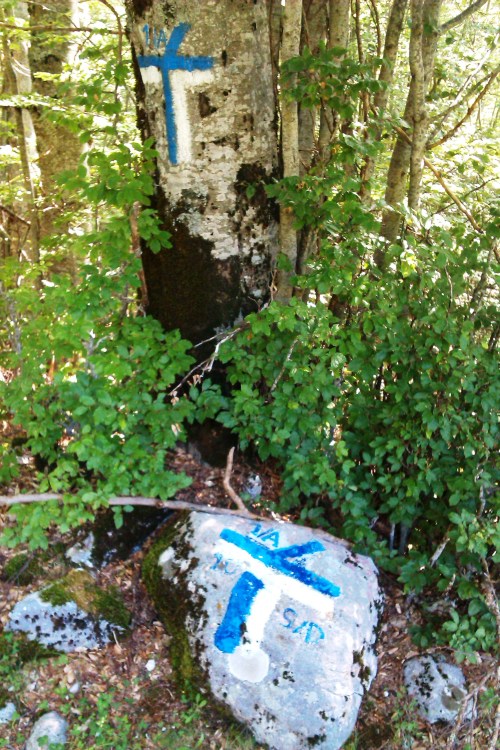
Although most of these trails are fairly well blazed, especially in the woods, occasionally the markings can be baffling, never mind the fact that the colour coding changes and the route names seem to be being revised. (This pic is probably out of order, can’t remember specifically where it was.)

We continued on, past the slightly sorry church of Santa Maria di Monte Tranquillo (at around 1600m), then up to a high pasture at the fairly derelict, private Rifugio (shelter) di Monte Tranquillo. There, four people on horses passed us, with the leader going all cowboy and chasing a grazing herd higher up the mountainside.

Although it’s hard to capture with a photograph, things got a bit steeper here as we climbed up around Monte Pietroso (1876m).
Fran, who has a kind of steep-slopes-vertigo, suddenly found herself facing one of her worst fears. Even though she’d chosen the route… clearly named “Rocca Ridge” in the book. (Another of her worst fears is formidable dogs. She’s even quite nervous around cows. So, so far, the walk was going well, challenging her fears and phobias!). The path up round Pietroso isn’t clear, but soon you reach the ridge itself.

Shortly after we got up to the highest point of the walk, La Rocca itself, with the 1924m summit marked by a cairn.

We continued along the ridge, heading north along path C5. Fran pushed the pace here as she wanted off. Steep slopes on both sides weren’t an ideal birthday present. (I won’t even mention her anxiety about thunder storms.) It was a fabulous walk though, with flowers everywhere,  including several types of geranium, greater celandine, wild thymes, several types of euphorbia, viper’s bugloss (love that name; it’s great in Italian too – viperina azzurra. Nicer thatn Echium vulgare) and many many others, like wild chives. I never realised chives liked mountaintops that are covered in snow and ice for several months of the year.

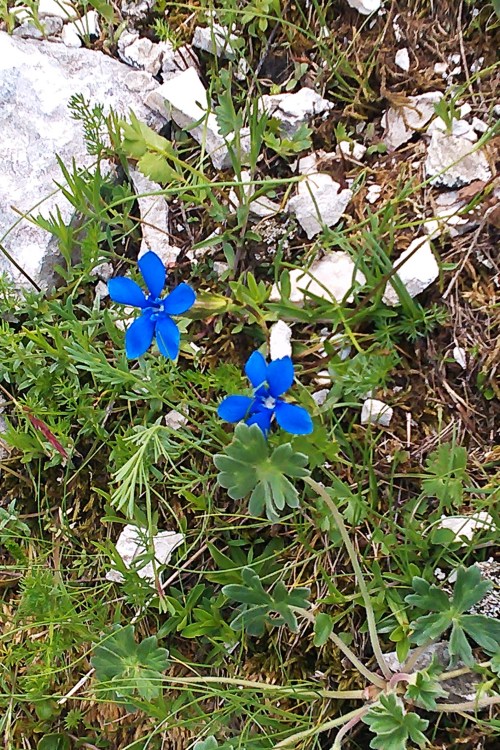
And gentians. Such an amazing colour.
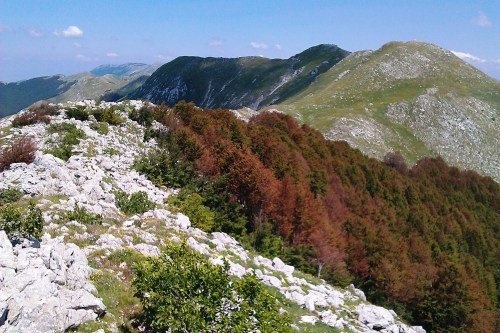
There were even the remants of some snow. If you look at one of the pics above, the beech forest seems to be tinged in Autumnal red, but this is actually withered and dying leaves – I suspect the spring growth was hit by some late snow-fall.

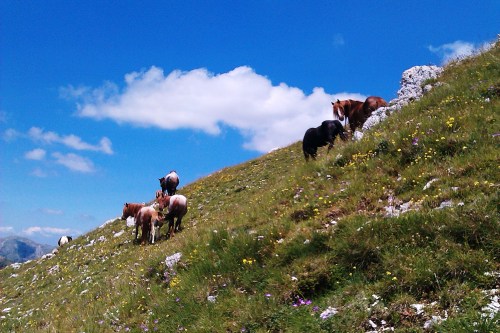
And some more rugged mountain horses. I’ve never seen horses as sure-footed and mountain goat-like as these.
Although there are a few dozen brown bears left in the area, wolves, golden eagles, and allegedly even lynx, our wildlife encounters included some raptors (possibly Buteo buteo, the common buzzard), innumerable butterflies and other insects enjoying the flowers, and swifts whistling around our ears on the ridge. Best of all, however, was thisVulpes vulpes specimen, who came jogging along the the ridge path from the other direction.

We thought he’d run off when saw us, but he kept getting closer, until he stopped at our feet, like a pet dog expecting a treat. I suspect hikers do feed the foxes, hence the behaviour, but it was still a wonderful moment, as foxes are among my favourite animals. I even thought about patting him like a dog until the word “rabies” popped into my mind. He was a very healthy looking specimen though, so it was probably just my turn to be paranoid.

We eventually left the ridge at Rifugio di Lorio (padlocked – apparently you have to get the keys from the park authorities. Which seems pretty silly, to have a shelter you can’t access if you’re caught in a storm). I had a flapjack break, then we started the descent.
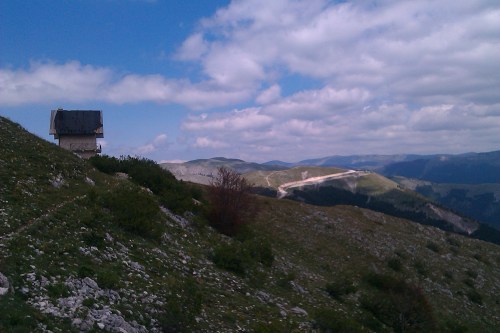
Path B4, dropped to the east, took us back into the beech forest and onto path B1, though this seemed to be called something else on the blazes (R7?), just to confuse things.

We even subsequently saw a small, weathered sign pinned to a tree that said we weren’t even supposed to have walked C5, the ridge route, without a guide, as part of the bear conservation programme. Maybe having some info on the park website, pinning the signs at both ends of the park, and, oh, opening the tourist office, might have been a better way to disseminate this info. Presumably none of the other half-dozen hikers we’d seen on the path had received this info either. So Italian.

We descended through the forest, past some ski facilities (absurd looking without snow), then back onto part of the path we’d done yesterday, under the castle ruins. I was craving a beer, but when we finally made it to Pescasseroli’s only birreria they only had foreign muck and industrial beer, so I forwent that essential part of any hike and settled instead for an aperitivo later.

We were joined by another Marammano, presumably retired. These guys are ubiquitious in Pescasseroli, wandering to the streets blagging stuzzichini (aperitivo snacks).

All in all, a great walk. Despite Fran’s uncertainties. Soon forgotten, after a glass and a half of prosecco. (Only a half – a big dog barged the table, smashing the glasss, before Fran could finish her second one.)

We concluded the day with one of the best meals we’ve had in Italy.

(Apologies – the pics are mostly taken on my rubbish phone’s 5MP camera I’m afraid. Fran is the real photographer with the proper DSLR. Maybe she’ll put some on Flickr at some point, and I can link to them.)
13 Comments

Filed under Italy, Main thread

Flapjacks

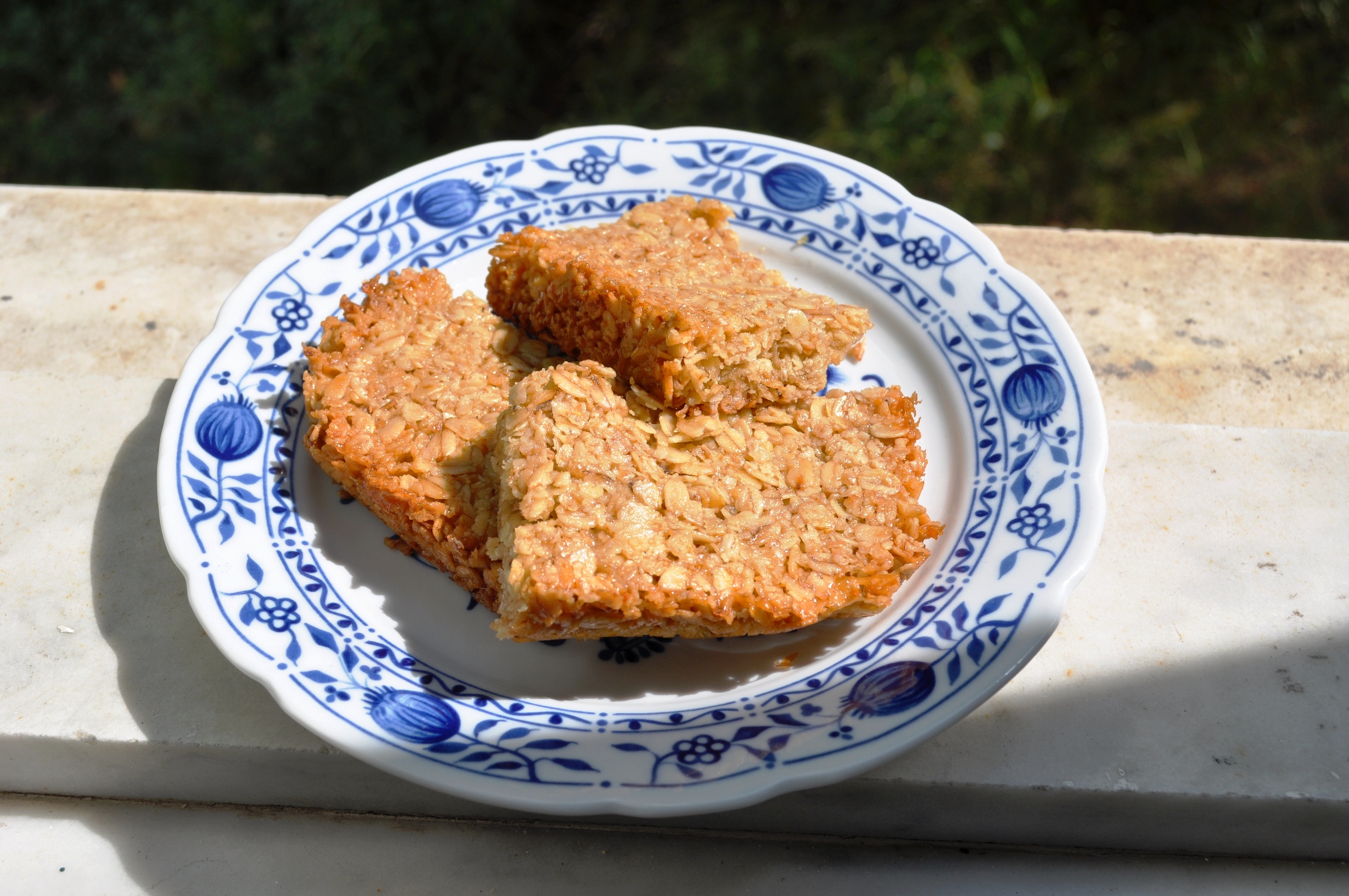
plate of flapjacks

Growing up in Britain, I was quite confused when I first heard the American English usage of “flapjack”. I ate a lot of flapjacks when I was a kid, and it was a staple of my university years, so the idea that the name could be used for anything other than a sweet slab of oaty goodness did not compute. Apparently the American usage of the word is for a pancake, something made with batter and fried in a pan. Wuh? What in blazes? What the flip?

I’ve experienced a lot of this low-level cultural confusion lately, having done three months in the kitchens of the American Academy in Rome. Some days I’d talk to a California colleague and they’d look at me totally blankly, following neither my accent nor my idiom. Other days, it seemed like everyone was doing comedy English accents, taking the piss. Anyway, I digress (as usual).

This is a flapjack. It’s made with rolled oats.

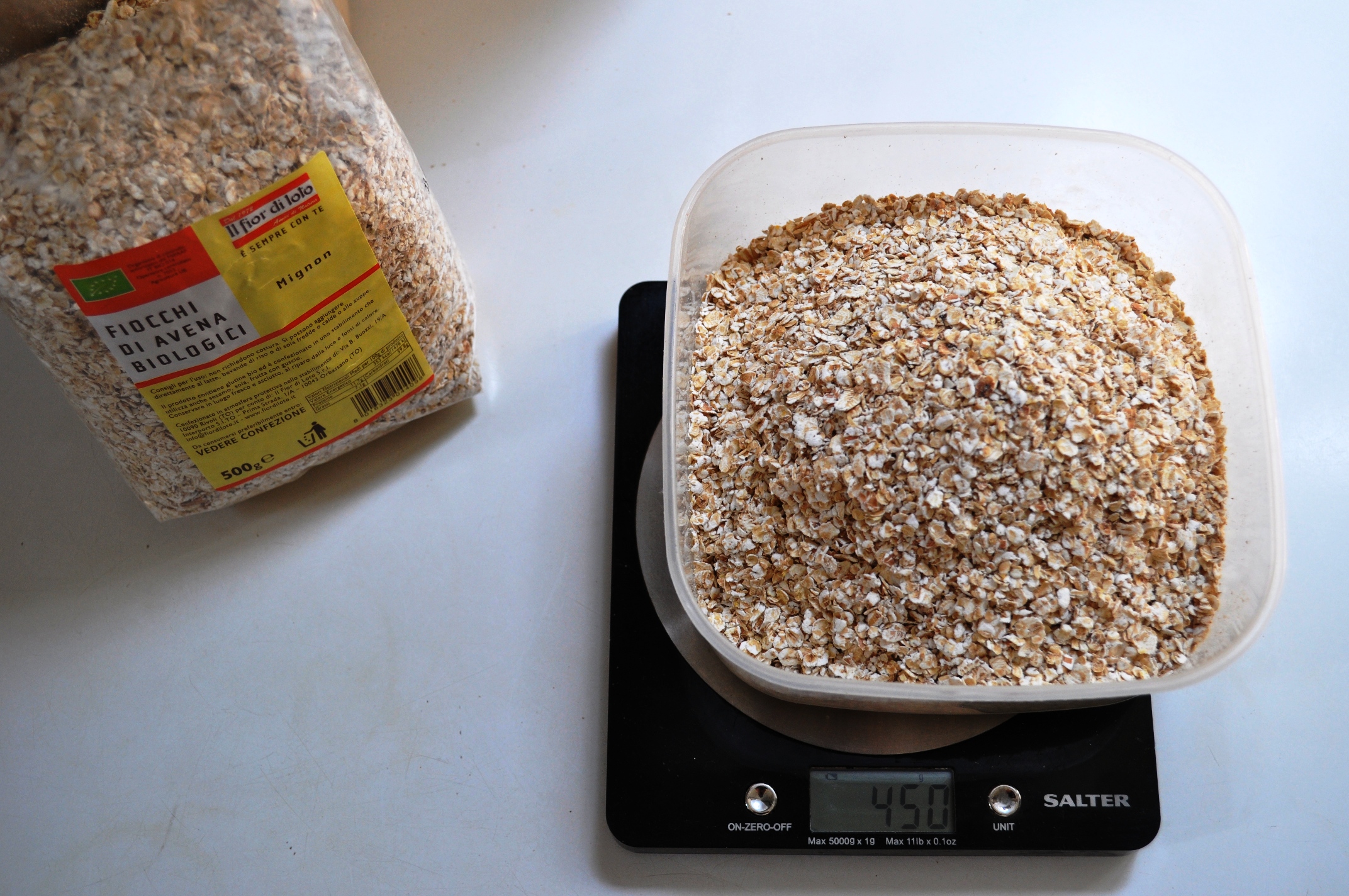
oats

We’re – finally – going hiking in the mountains this weekend, and when you’re hiking, you need energy food. Oats are perhaps the best straightfoward, real energy food you can get. Feed them to working horses and they’ll go and go. Eat porridge (gah – oatmeal!), muesli or granola for breakfast and you’re set till lunchtime. It’s all about the slow energy release from the complex carbohydrates. Oats are also great because the bran (the high fibre bit)  reduces low-density lipoprotein, or “bad cholesterol”. I should probably say “some research indicates” it reduces LDL or something, but I thought there was a pretty good scientific consensus these days. Oats are also high in protein – not the increasingly problematic proteins of starchy modern wheat, but a different type that’s reportedly akin to meat or egg protein.

Humble, but a real superfood.

So flapjacks are great. Except for the fact that, when making them, you undo a lot of the good work of the oat in its natural state by slathering it with butter and refined sugars, in the form of sugar and golden syrup.

Golden Syrup

The butter is essential for proper flapjacks, but what defines them is really the golden syrup. Ah, golden syrup. I believe this doesn’t exist many parts of the world, but in my British upbringing it was v important – notably for the quintessential winter steamed pudding known as treacle sponge. Which isn’t made with treacle (black, ie molasses) but is made with golden syrup (golden). It looks like honey, but is basically a viscous liquid sugar. Technically it’s an inverted sugar syrup. Felicity Cloake in The Guardian also dedicates one of her “How to make the perfect…” blogs to flapjacks. She discusses the whole crunchy vs chewy thing, so I’m not going to go into that. She also includes a link to this useful site, with an in-depth discussion of flapjacks.

Suffice to say, flapjacks are stupidly simple and unsophisticated, they’re packed with rolled oats, they’re very sweet, and they’ll help you get across mountains. I just hope it doesn’t thunder and lighting when we’re up there among the peaks of Abruzzo National Park, as that’d totally freak out Fran. And, as much as I’d dearly dearly love to see one of western Europe’s few (really tragically few – maybe a three dozen or) remaining brown bears, let’s just hope one doesn’t get too excited about the flapjacks, as that’s totally freak us both out. We should be alright; if they were made with honey, that’d be another story, as bears love honey right?

As for a recipe. Well, I made a lot of flapjacks when I was at universty, and played around with the recipe extensively. I’ve not made them for years though, and my recipe is tucked away somewhere, in another country, in a shed, in a box, in a knackered old blue scrapbook. So instead, I used Cloake’s, with a few minor tweaks that I’d probably tweak some more were I to make them again any time soon.

sugary fatty goodness

Preheat oven to 180C (160C fan).

Line a baking tin with baking parchment. Cloake suggests a 30x20cm tin, but I think these would be better thicker, so if you have a tin a size down from that, I’d recommend using it.

Melt 250g butter in a large pan, along with 70g of brown sugar (Demerara is traditional; I used more of a soft brown as sugar types are little different here in Italy to in the UK) and 150g golden syrup. (Guys – seriously, electronic scales, tare function, easy. Tablespooning golden syrup is messy and inaccurate. Not that accuracy really matters for a recipe like this. It’s not a fancy cake with exacting chemical reactions.)

When the mix is all melted, add 450g of rolled oats. You can use a mixture of jumbo and quick-cook porridge oats, whatever you fancy. Add a pinch of salt too, if you’ve used unsalted butter.

Bake for about 25 minutes until nice and golden brown. Mine are a bit underbaked but the darned oven in our rental flat has very aggressive bottom heat so I didn’t want to char the bottom trying to get a golden brown top. I’ve had a charred bottom before, and it’s not fun.

sugary fatty oaty goodness

3 Comments

Filed under Biscuits, cookies, Other food, Recipes

A quick tour of Nomentana neighbourhood and New Morning beer at Kombeer bar

New Morning

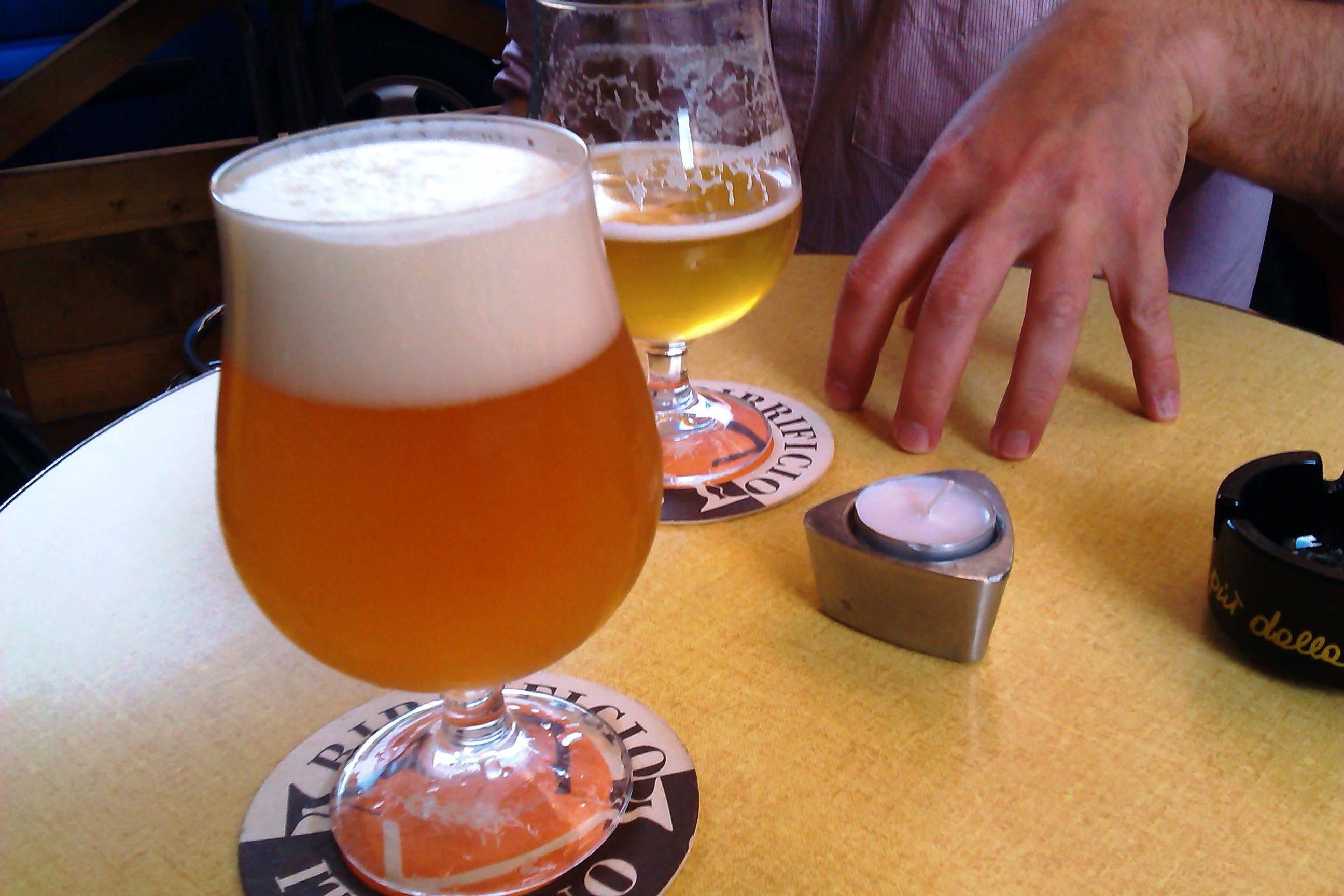
My friend Giammarco, teacher, novelist, ghost writer for academics (!), doesn’t much like beer, certainly not proper beer. He’s the sort of guy who’s satisfied with the axis of industrial yuck that is Peroni/Morretti/Menabrea. So I was quite surprised when we met up for drink in Nomentana, a neighbourhood northeast of Termini station and just outside the Aurelian Walls, and he suggested a nearby birreria (beer bar). A new birreria? Come no!

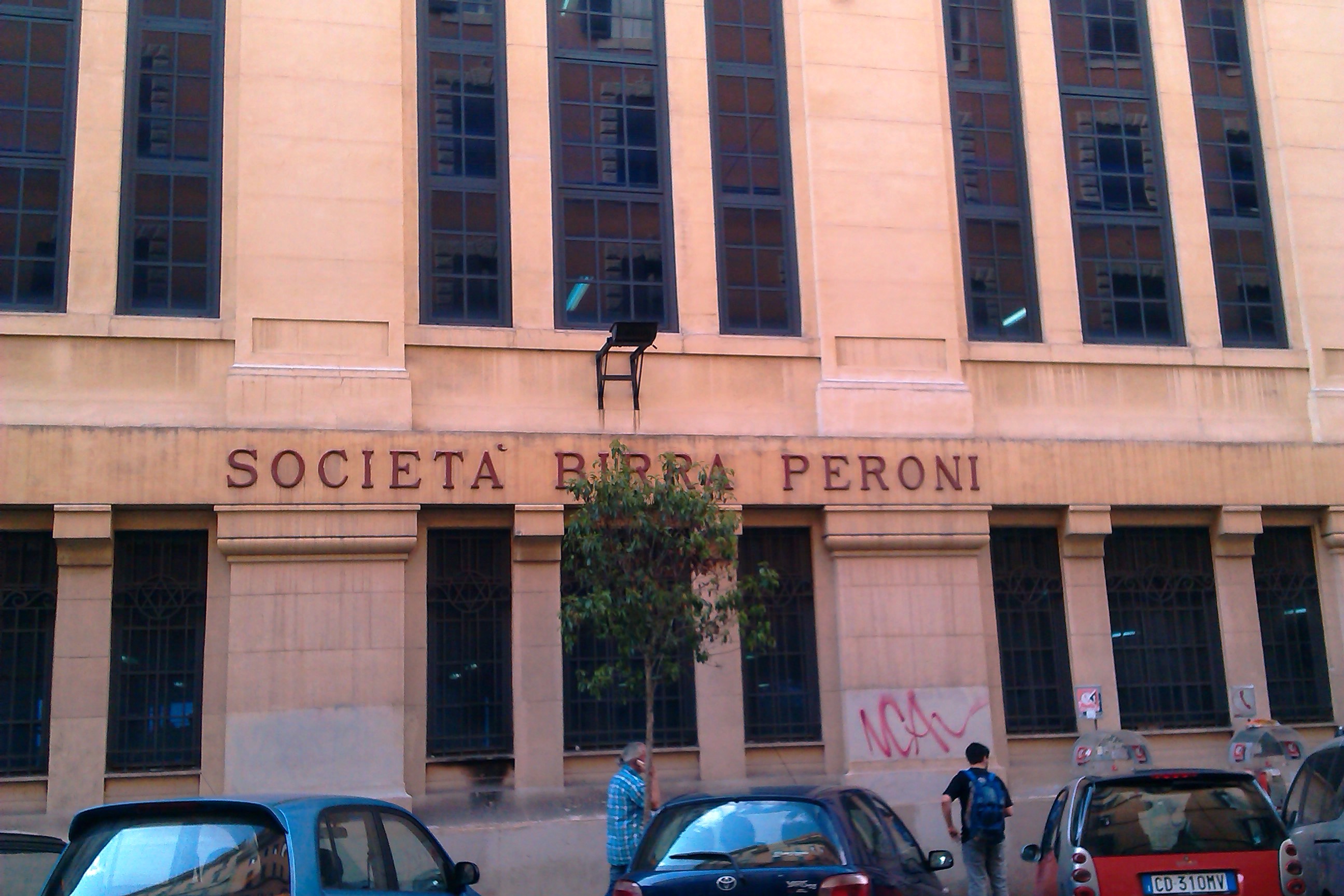
It proved to be an interesting stroll. I already knew the main drags through Nomentana but had never really explored the backstreets. We didn’t exactly explore, but just strolled through. Giammarco dove into a second-hand bookshop where he got a pristine novel for a mere Euro (a book like that would sell for about £5, €6, in the UK). It’s a shame I can’t really read idiomatic Italian… what bargains. We strolled on, past the old Peroni factory, built in 1908-1922. Production stopped there in 1971.

IMAG0032

Apparently the building is being converted into a giant birreria. According to Giammarco. Though it being Roma, even if that is on the cards, it may take 10 years and several changes of local government for it to actually fall into place. Indeed, this site (in Italian) says it was going to be converted into a centre for arts documentation and a cinema, so who knows what’ll happen to the redevelopment plan. Like Battersea Power Station, some developer will probably just get his way to turn it into expensive apartments in the end.
We then passed by the Mercato Nomentano di Piazza Alessandria, a very handsome building with grandly arched entrances and looming pediments. The market was built in 1926 in what Giammarco called a “Liberty” style – that is art nouveau – and inaugurated in 1929. I’m no architectural historian, but it looks more art deco to me, or at least from a kind of transitional style. Check out this old pic from 1940.

PIAZZA_ALESSANDRIA_1940

After a worrying moment where it looked like Giammaroc couldn’t remember the location of the birreria we were looking for, Kombeer, we finally found it…. Closed. It was 5.45pm. This always bemuses me as a Brit because our drinking culture is so much about leaving work and going straight to the pub. Go to any British city and if you’re in an area dense with offices, come 5.30pm, the pubs will like as not be chockablock with people loosening their ties (poor bastards) and forgoing any proper solid food.

We malingered a bit while the Kombeer staff swept up and laid out seating in their little patio area among the parked cars. Before too long we were seated and the waitress came to discuss the beers. Which is all very nice in a hands-on kind of way, but not great is you speak bad (or no) Italian. And not ideal if you’re not acquainted with Italian birre artigianale – which dominate the options here, though there we also some international craft beers, both bottled and alla spina (on tap).

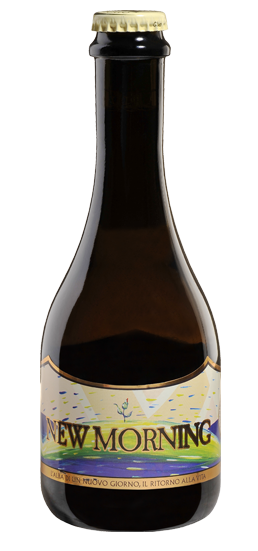
Although I speak some Italian and know some of the breweries and beers, I really didn’t follow… my brain doesn’t work so well when it comes to, like, remembering stuff, so in the absence of a menu I went to the bar to check out the taps. There are about eight, with the sort of temporarily attached labels that indicate regular rotation of new beers. The waitress let me try a few beers, which is always a good sign, and I chose a New Morning (English site) as I remember enjoying it elsewhere many months ago.

New Morning (or Nuova Mattina, depending on which batch you get) is a saison-style beer from Birrificio del Ducato, northwest of Parma in the Emilia Romagna region of northern Italy. This award-winning brewery was founded in 2007 by Giovanni Campari. Their own site calls this food science and technology graduate and former home brewer a “radical and visionary Brewmaster” and certainly the beers of theirs I’ve tried ­– Verdi Imperial Stout, Sally Brown ­– have been tasty and interesting, so fair dues.

new-morning

Anyway, I wasn’t familiar with saison beers before coming to Rome – heck, I’m the first to say I’m an enthusiast not an expert. But from the saisons I have tried, it’s a pretty diverse style (genre?) of beer, though it’s generally defined by fruity flavours, with varying degrees of spiciness and hoppiness and minimal maltiness.

New Morning itself was, at first taste, fairly hoppy, but when a full glass arrived, replete with substantial but quickly subsiding head, the complexity of flavour quickly amended this sensation, with definite spiciness and floral notes. This is unsurprisingly, given that the beer’s made with “wild flowers, chamomile, coriander, green peppercorn and ginger.” My questions for Mr Campari would be – what wild flowers?

Still, such a nagging query didn’t undermine my enjoyment. In fact, while Giammarco sipped one, taking an age with his aperitivo in true Italian style and mourning the rigid state of Italian culture, I – in true British style – went back inside to ask for another. Hey, it’s only 5%. The bar, which is funky in an easy-going way, was still empty at 7.30pm. Which struck me as strange, especially as the neighbouring pizzerias were filling up with the local bourgeoisie. Maybe Kombeer gets rammed later in the evening. I’ll have to re-visit at some stage. Sheesh, so many beer bars to visit, so many birre artigianale to try.

Oh, and apparently Campari named the brew after the 1970 Bob Dylan song.

Infodump:

Kombeer BirreriArtigianale, Via Alessandria 39, 00198 Roma

Birrificio del Ducato
birrificiodelducato.net (English)

Leave a comment

Filed under Ale, beer, Bars, pubs etc

Maize bread, pane di mais

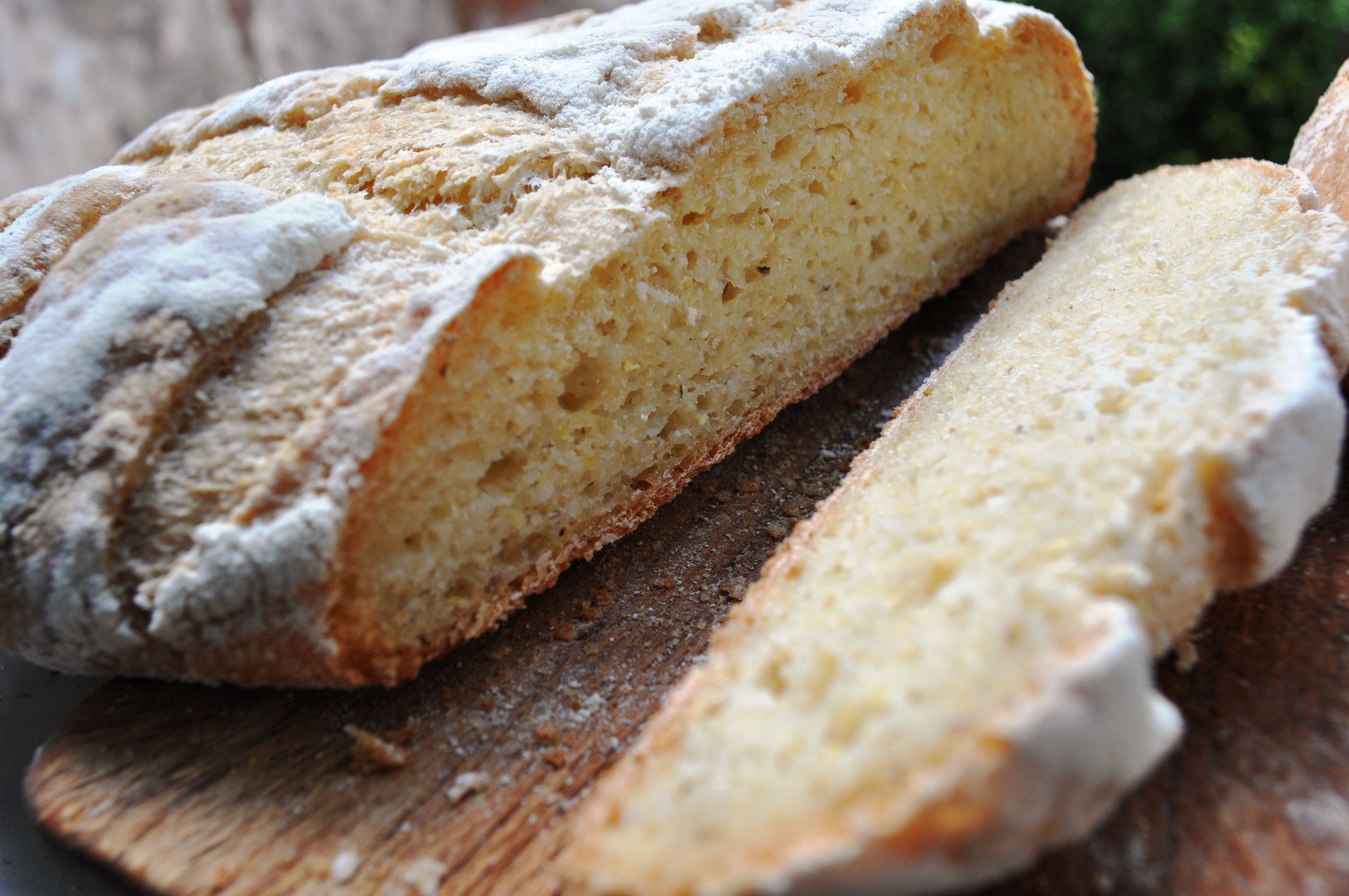
sliced

Maize, mais, Zea mays – the cereal cop mostly commonly known these days as “corn”. Although my brain still can’t quite embrace that as in British English “corn” is a more generic word for cereal grain, specifically in England it’s traditionally used to refer to wheat grain. Etymologically, it apparently comes from the old Germanic and Norse word korn meaning “grain”.

The word corn still makes me think of corn dollies – forms and figures woven in Britain from the harvest’s last sheaf of wheat, ryes, oats or barley. Although wonderfully pagan (they were believed to contain the fertility of the grain over winter, before being ploughed back into the ground with the sowing of the new season’s crop), they were still making these things for harvest festival and including them in displays in church during my Christian upbringing.

Meira flour

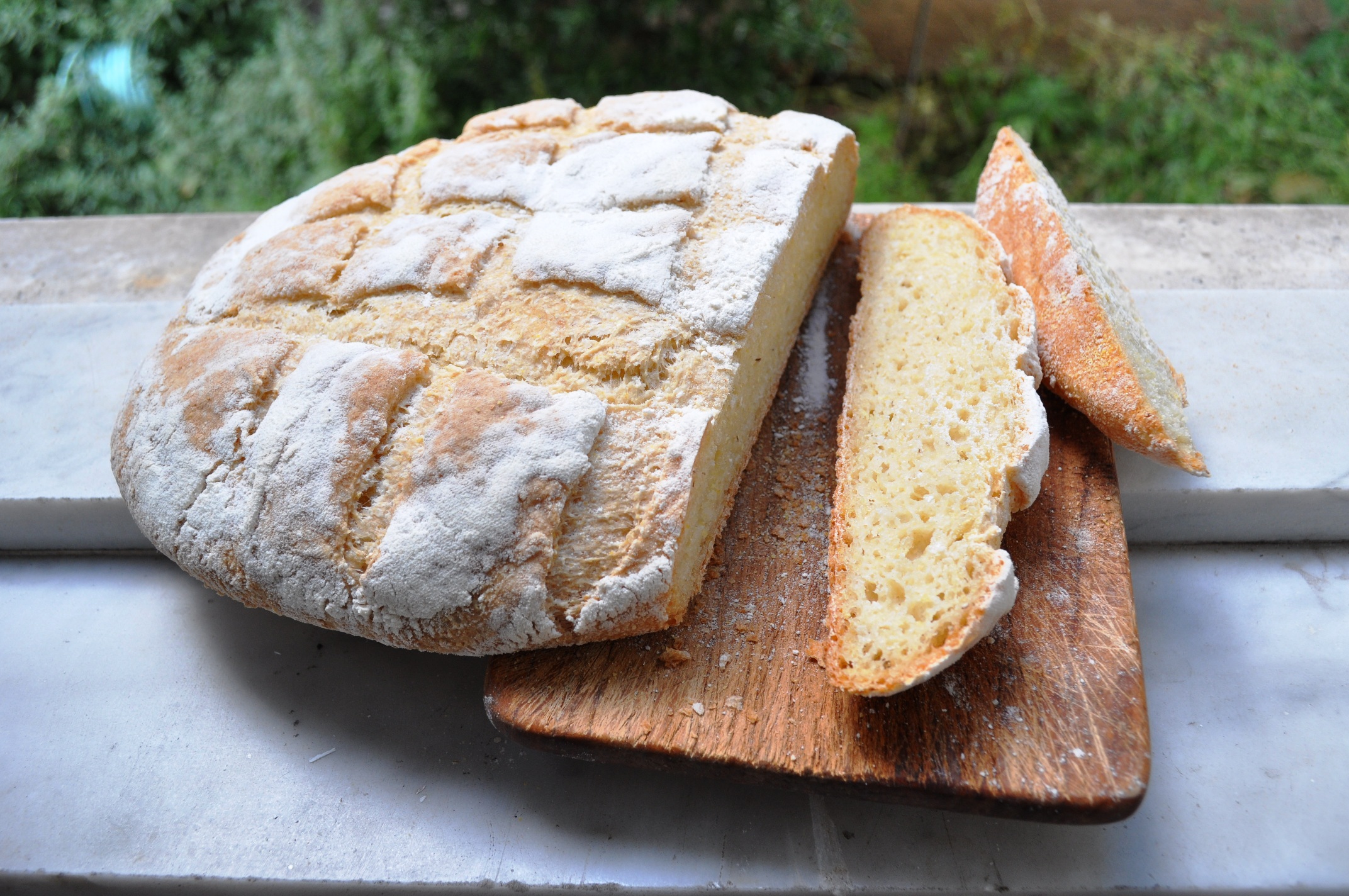
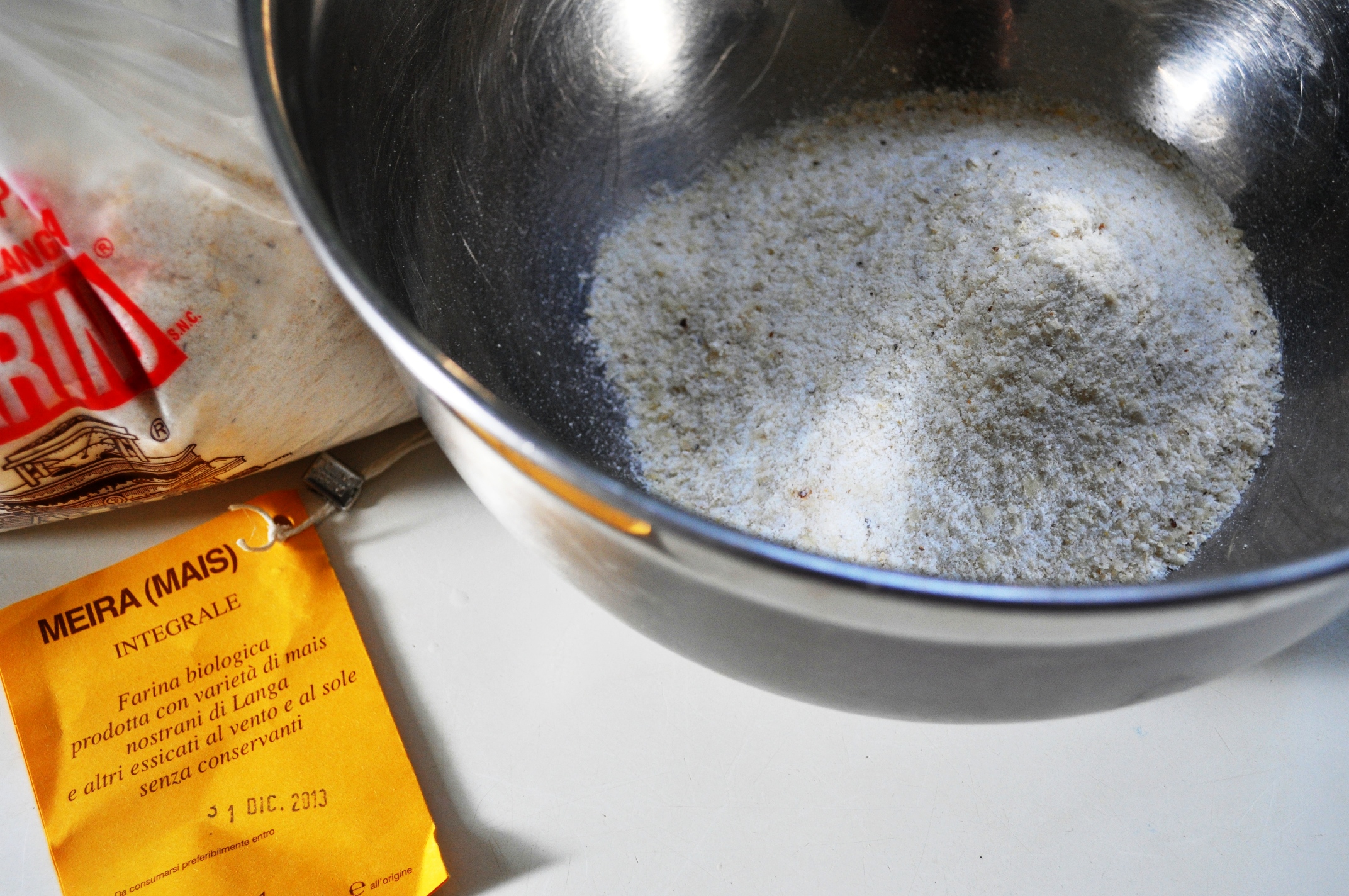
Anyway, here’s a maize bread. It’s not a cornbread, as that name’s already taken by a staple of the US South, and, well, this is a very different proposition. This one is based on a Dan Lepard recipe in his essential baking book The Handmade Loaf. Apparently Lepard was inspired by pane di mais of northern Italy. Which doesn’t surprise me, given the importance of maize and polenta up there, but I’ve never encountered a maize bread down here in Roma. He also talks about it being a “yellow bread”, but I made mine using Mulino Marino‘s ‘Meira’, which is surprisingly pale and white. With rustic dark bits – it’s an organic wholegrain (integrale) flour, made with maize dried by the wind and sun and stoneground, according to the spiel on the label.

Incidentally, some of the Mulino Marino range is now available in the UK through the excellent Bakery Bits online shop. I’ve got mixed feelings about this as I’m increasingly trying, as much as possible, to use the produce of the area I’m living in, or at least the country, as food transportation is a serious contributor to climate change. Although the 2006 book is dating, I highly recommend Michael Pollan’s The Omnivore’s Dilemma, which talks a lot about the fossil fuel factor in food production and transportation, and also goes into the horrifying story of how, at an industrial scale, maize has become an insanely inefficient and illogical (in calorie terms) primary crop. Indeed maize is the second biggest agricultural product in the world, with much of it used to produce high fructose corn syrup, a key driver of the obesity epidemics of the US and UK etc.

forming dough maize loaf

I’d like to imagine the maize that was used to make my Meira flour is a world away from the quietly apocalyptic industrial plains of maize in the US Midwest, China and Brazil. Certainly Italy’s not a major maize grower – despite the historical role of polenta here, the country is too generally mountainous to be caught up in modern industrial agricultural practises on the epic scale found in these larger nations. (In 2011, it produced around 9.7 million tonnes, compared to 313 million tonnes grown in the US. Source: FAOSTAT)

So yes. When I’m living back in the UK, the whole locavore thing is going to be an interesting challenge after living in Italy, place of eternal citrus and a umpteen flour varieties. (I am genuinely worried – the British weather was always haphazard, but climate change is really affecting it, with 2012 apparently devoid of a summer, and much of the British grain harvest ruined by the damp. “It’s been a soul-destroying year for farmers growing crops.”)

Anyway.

Back to the bread.

dough ball

I’d made a version of this one before, almost exactly three years ago. That time, I used a Mexican style maize flour – masa harina. Reading about it all now, I realise that although masa harina and farina di mais are both basically flours made with maize grain, they’re very different propositions. The former has been made with grain that’s been “nixtamalized”: soaked with slaked lime. This alkali liquid changes the molecular structure and means the resulting flour is easier to make into a dough (notably a corn tortilla dough). It’s all a bit technical for me. I’m sure Jeremy Cherfas could explain the chemistry properly.

well risen

The Meira flour is more for polenta, I believe, and needs to be cooked up with water. Which I didn’t exactly do. Food for thought for next time. The bread turned out okay. Even if I’m still really annoyed with myself for losing my moulding mojo. A lot of the freeform bread I’m making at the moment just collapses when I take it out of the proving bowl or basket. This one was no exception. Furthermore, I’m not getting great oven spring. Grrr. Annoyed.

bloody discus

But it tasted good. And, Googling pane di mais now, even one of the Italian versions I found had the old discus form factor, so I’m not the only one (see this fairly low hydration one, made with 500g grano tenero 00, 300g maize flour and 450ml water). Another other Italian one, here, seems to be 100% hydration – 500g maize flour, 500ml water – though it appears to be tin-baked, with some nice oven spring. If it the one on the left of the pic. Not sure. Then there’s a very different version here, made in more of a challah form and flavoured with rosemary.

Anyway. Again. This post is getting long. People tell me not to write long and ramble, but sod that. If I can’t do it in my own blog post, and can’t me my true side-tracking self, what’s the point in blogging?

bloody discus baked

The recipe:

1. Mix together 50g polenta flour / farina di mais and 100g water.
2. Cook it together in a pan, stirring, then turn out to cool.
3. Crumble, squish and squash the polenta up into 300g warm water.
4. Add 60g yogurt and stir.
5. Add 15g fresh yeast (lievito di birra) and stir well.
6. Stir together 200g maize flour (in this case, Meira farina di mais), 300g strong white bread flour and 8g fine sea salt in a large-ish bowl.
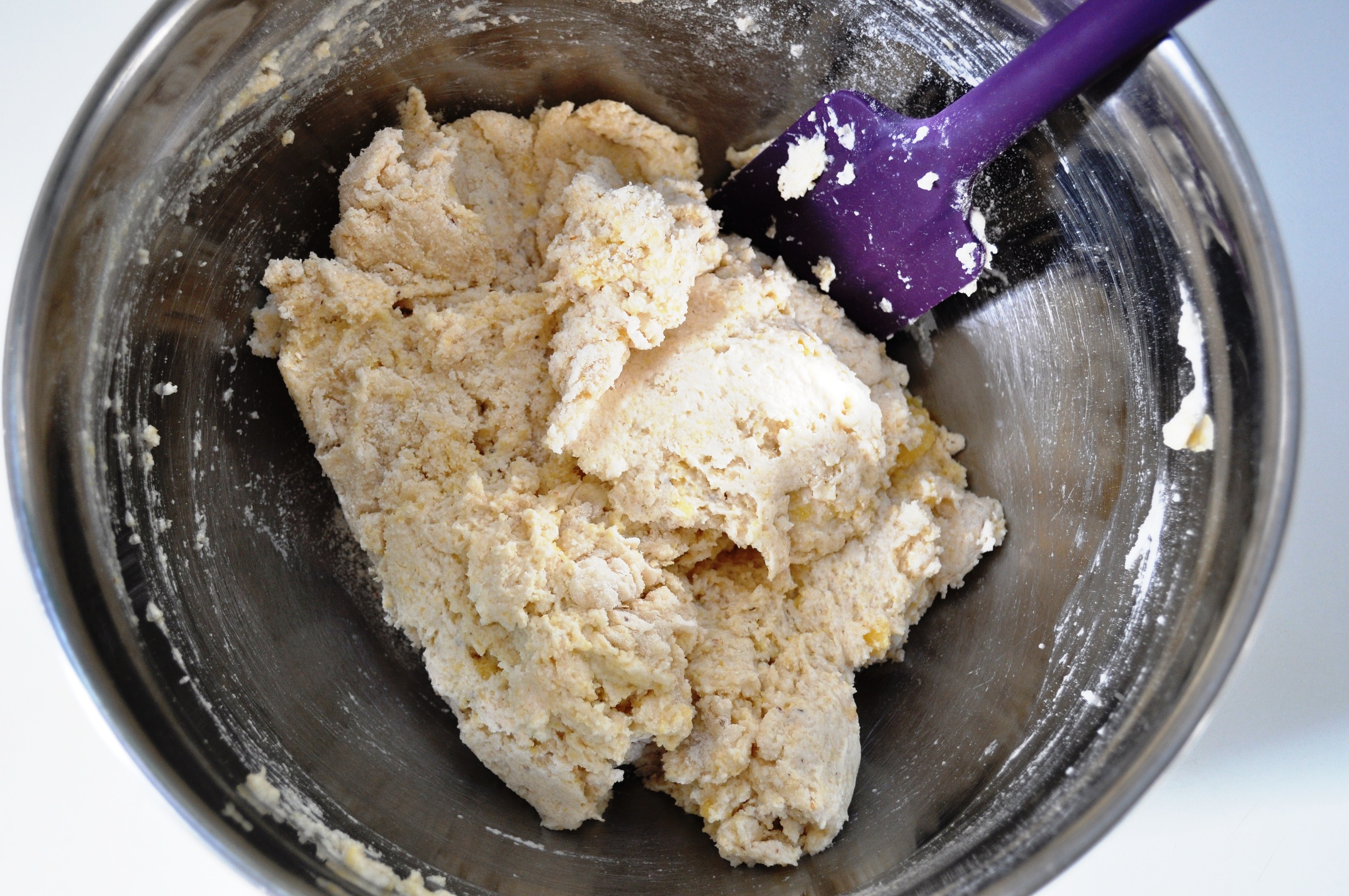
7. Add the liquid to the flour and bring to a dough.
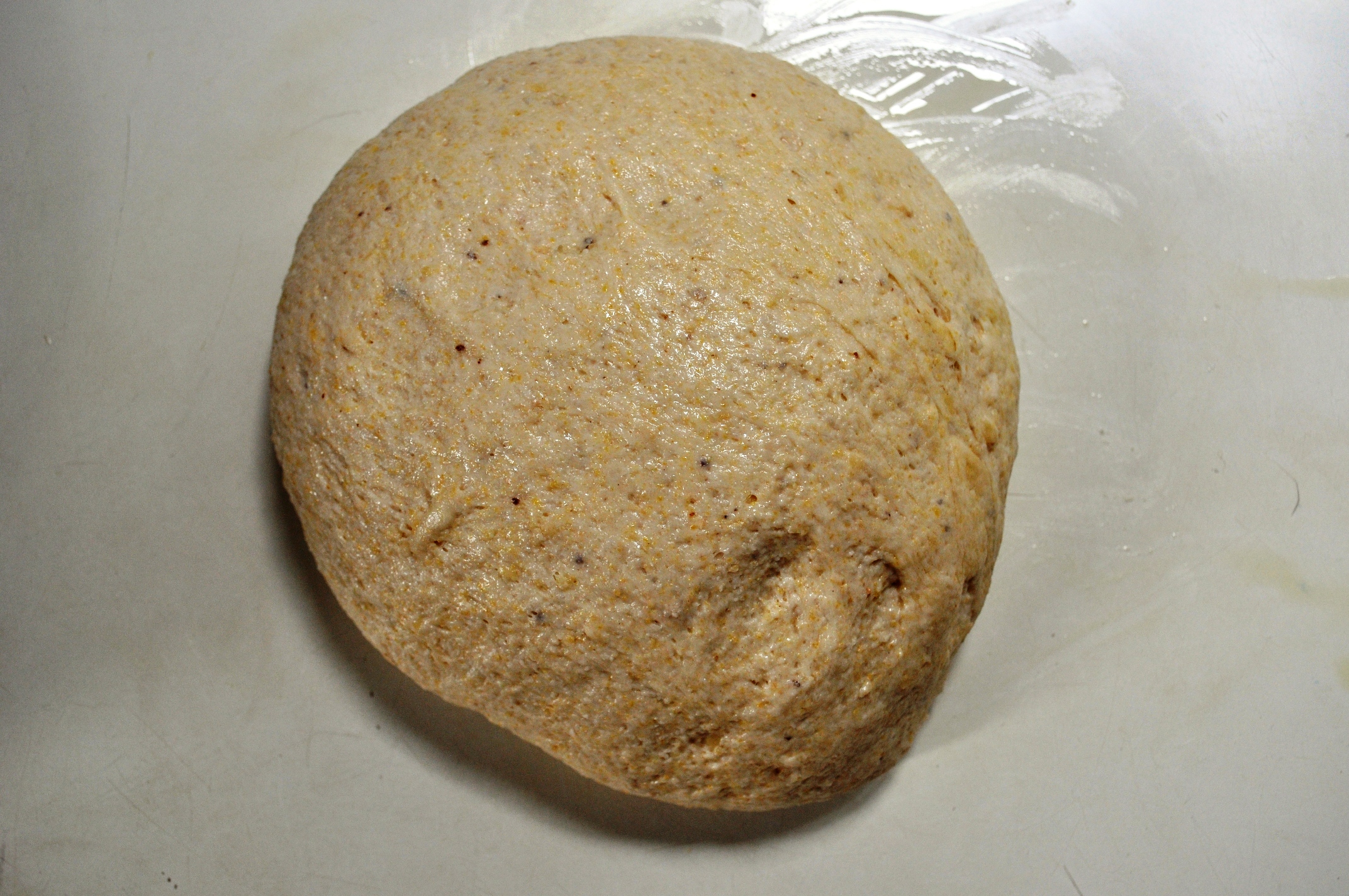
8. Knead reasonably well and bring to a ball.
9. Rest for about 10-15 minutes, then give it another knead.
10. Repeat this process 5 times, then leave the dough to prove for about half an hour, until doubled in size.
11. Gently form a ball.
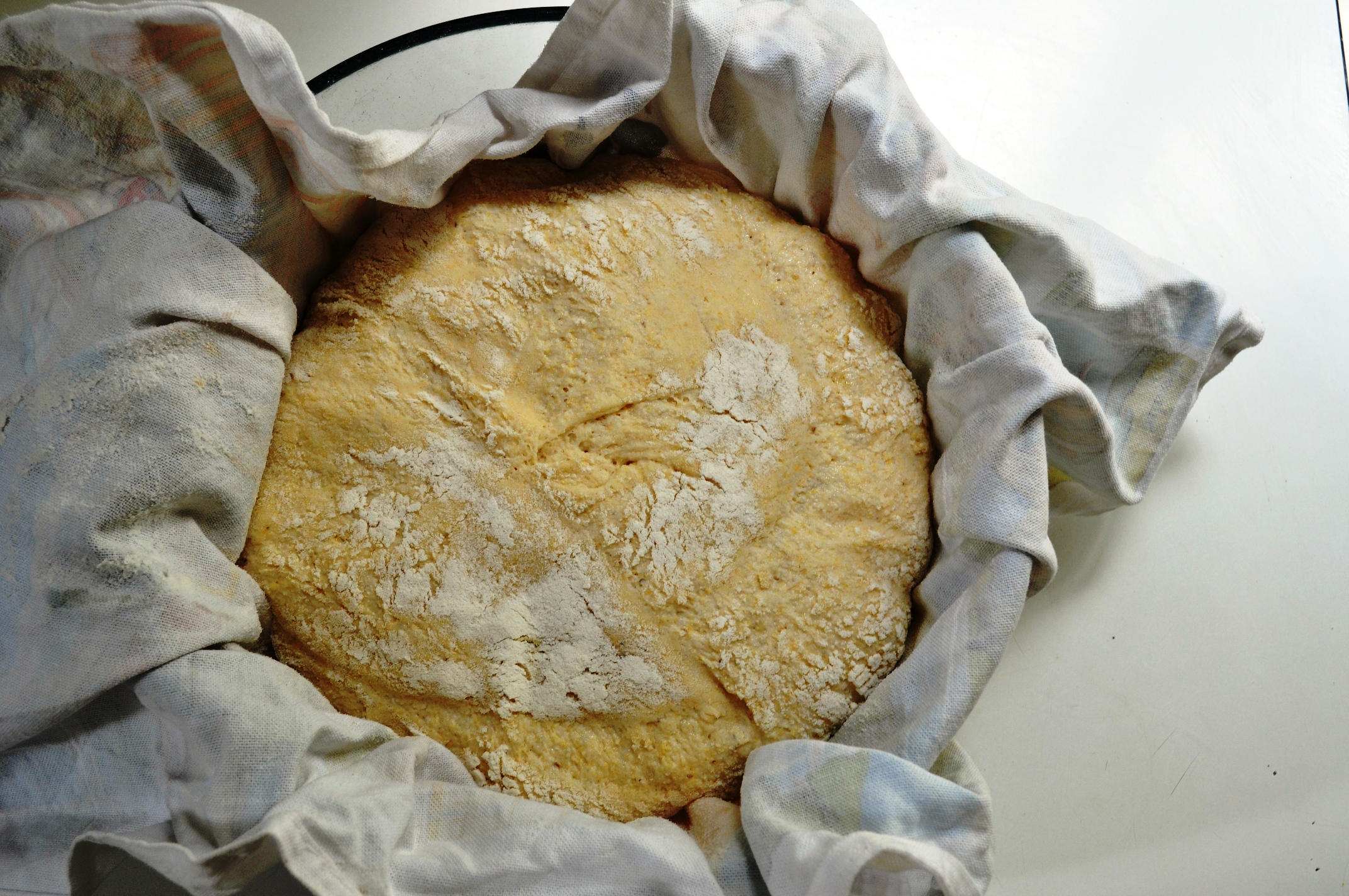
12. Line a 25cm (10 inch) bowl with a cloth, rubbed with flour. Put the ball of dough, seam-side up, in the bowl and cover with the cloth. You can even use a shower cap over the bowl to keep the nice warm healthy fermenty atmosphere in, a tip I learned from my fellow ex-pat Roman baker Krumkaker.
13. Prove again until doubled in size.
14. Preheat oven to 220C.
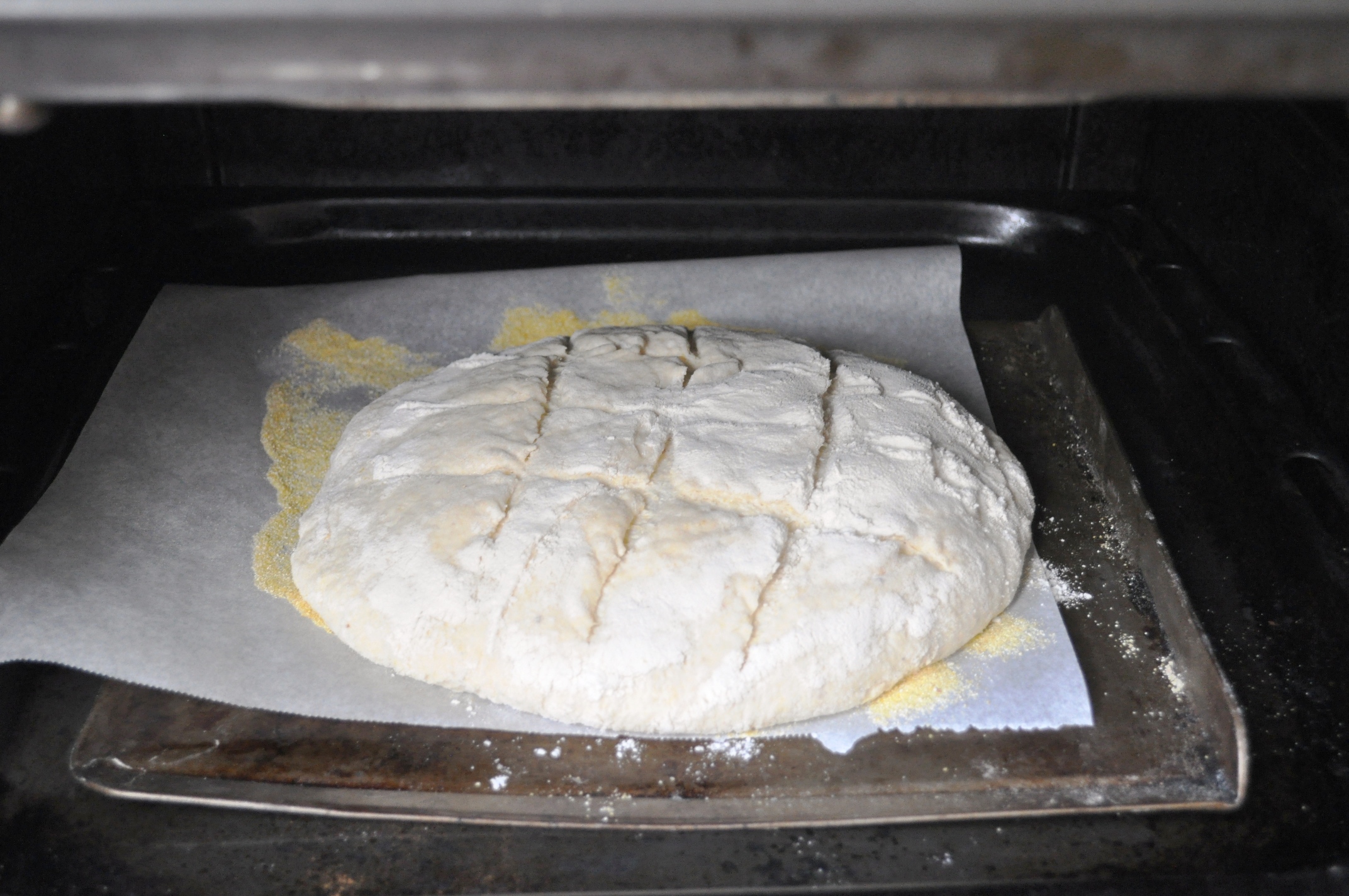
15. Gently turn out the dough onto a baking tray lined with parchment sprinkled with more farina di mais or polenta.
16. Cut a grid pattern into the dough with a sharp knife or lame.
17. Bake for around 50 minutes. I turned my oven down to 200C after around 25 minutes, but every oven is different.
18. When baked, cool on a wire rack.
19. Eat – with lots of salad and your finest local cheeses. We had some great sheep and goat milk cheeses from the farmers’ market near the Circus Maximus. I always think of Charlton Heston and Ben-Hur when I’m down there, even if in that film the race took place in another circus, in Jerusalem, and even if Rome’s Circo Massimo is basically just a scrappy field with very little in the way of remaining structure.

crumb CU

2 Comments

Filed under Breads, Recipes

Honey, almond and peel cookies

fresh baked

This was a bit of a haphazard baking experience. I’d wanted to make some biscuits or cookies that included citrus peel, as I’d recently made some. I also wanted to try some more recipes from the American Academy in Rome’s Biscotti book.

It’s a handsome, nicely-designed book, and I know from working in the Academy kitchens that their biscotti and cookies are very good. But, like The Hummingbird Bakery Cookbook, Biscotti is a recipe book that really needed more testing, to make sure the recipes were scaled correctly for a domestic kitchen. Many of the recipes have large yields and rely on you having a proper food mixer. I don’t want to bake for 40 people, nor do I have a Hobart (I wish!).

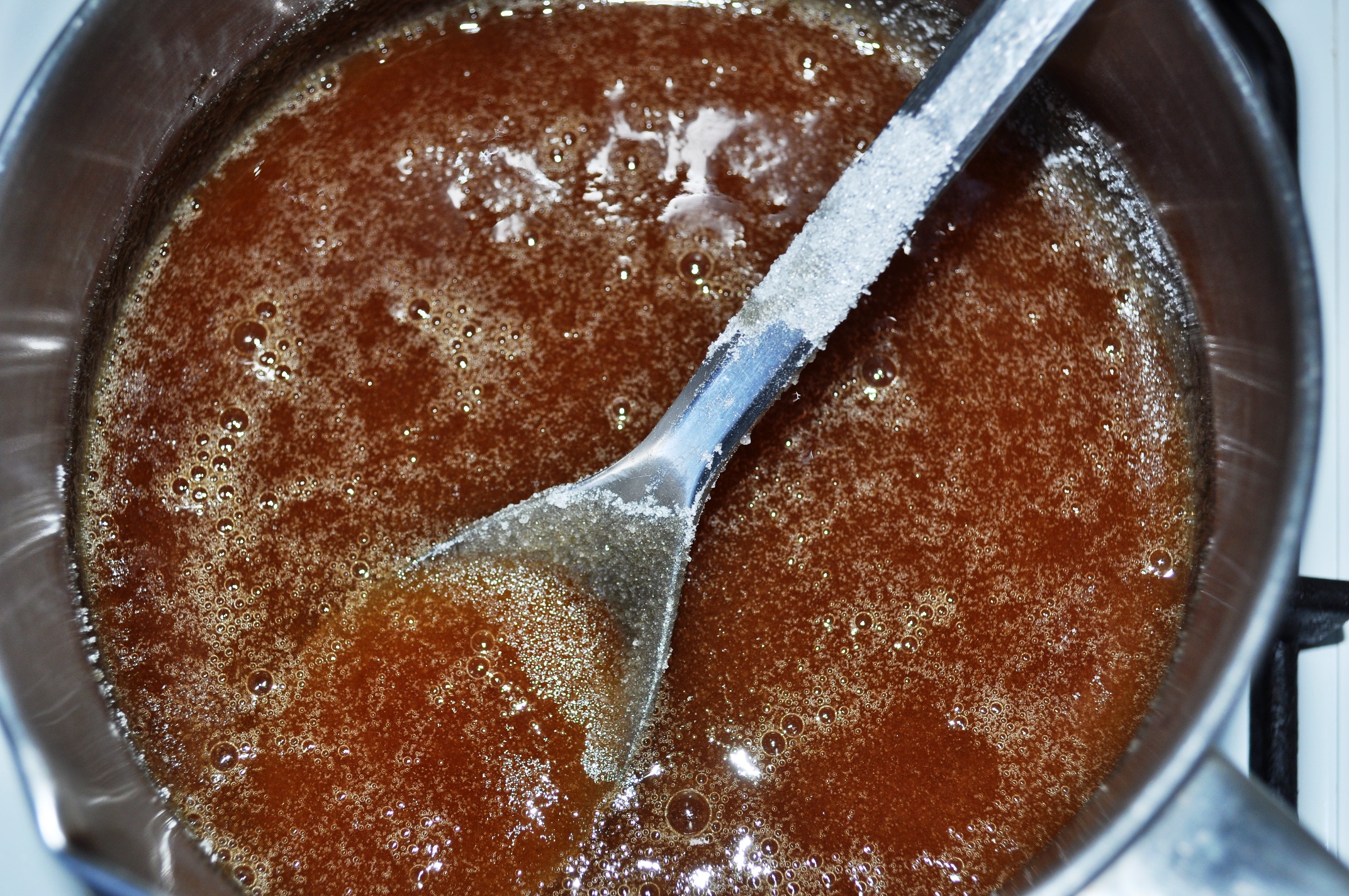
melt honey and sugar 2

So I read the Biscotti di miele (honey cookies) recipe with some trepidation. It “Yields 60 cookies”. It doesn’t involve fat or eggs. It seems to rely on having a mixer. It uses baking soda, but doesn’t seem to have enough acid for the alkali sodium bicarbonate (baking soda) to react with – just some grappa. And even if it did, it says to rest the dough “in a cool place overnight (not in a fridge”). Which is confusing – won’t the soda just react with the grappa when they’re first combined, producing then dispersing the leavening CO2, then have not efficacy at all once it’s rested? Oh, and its summer here in Rome now, 35C-ish (that’s mid-90F, for you 19th century types) – so there is no “cool place” in my flat, beyond the fridge.

chopping peel

Still, I liked the sound of the flavours – honey, almonds, peel, some spices, so I plunged in. So this is my first attempt at a more domestic, less fussy version of these cookies. It’s not quite right, but the flavour is good. As I didn’t have any grappa (yuck), I changed the baking soda to baking powder, which is already combination of acid and alkali, designed to react and create leavening CO2 when heated. I also jettisoned some of the original recipes spices – cloves (because I find them a bit pungent, and too Christmassy) and nutmeg (because I didn’t have any).

chopping almonds

Ingredients
170g honey
125g granulated sugar
1/2 tsp almond essence
1 tsp baking powder
1/2 tsp cinnamon
260g plain/all-purpose flour
60g candied peel (I used my famous vodka-soaked kumquat zest, now candied), finely chopped
65g raw almonds, finely chopped, or indeed ground in a food mixer
50g (ish) milk
60g icing sugar + water for icing

bring together the dough

1. Melt together the honey and sugar, cooking until the sugar crystals have dissolvde.
2. Put aside to cool, adding the almond essence.
3. Sieve together the baking powder, flour and cinnamon.
4. Add the chopped almonds and peel to the honey.
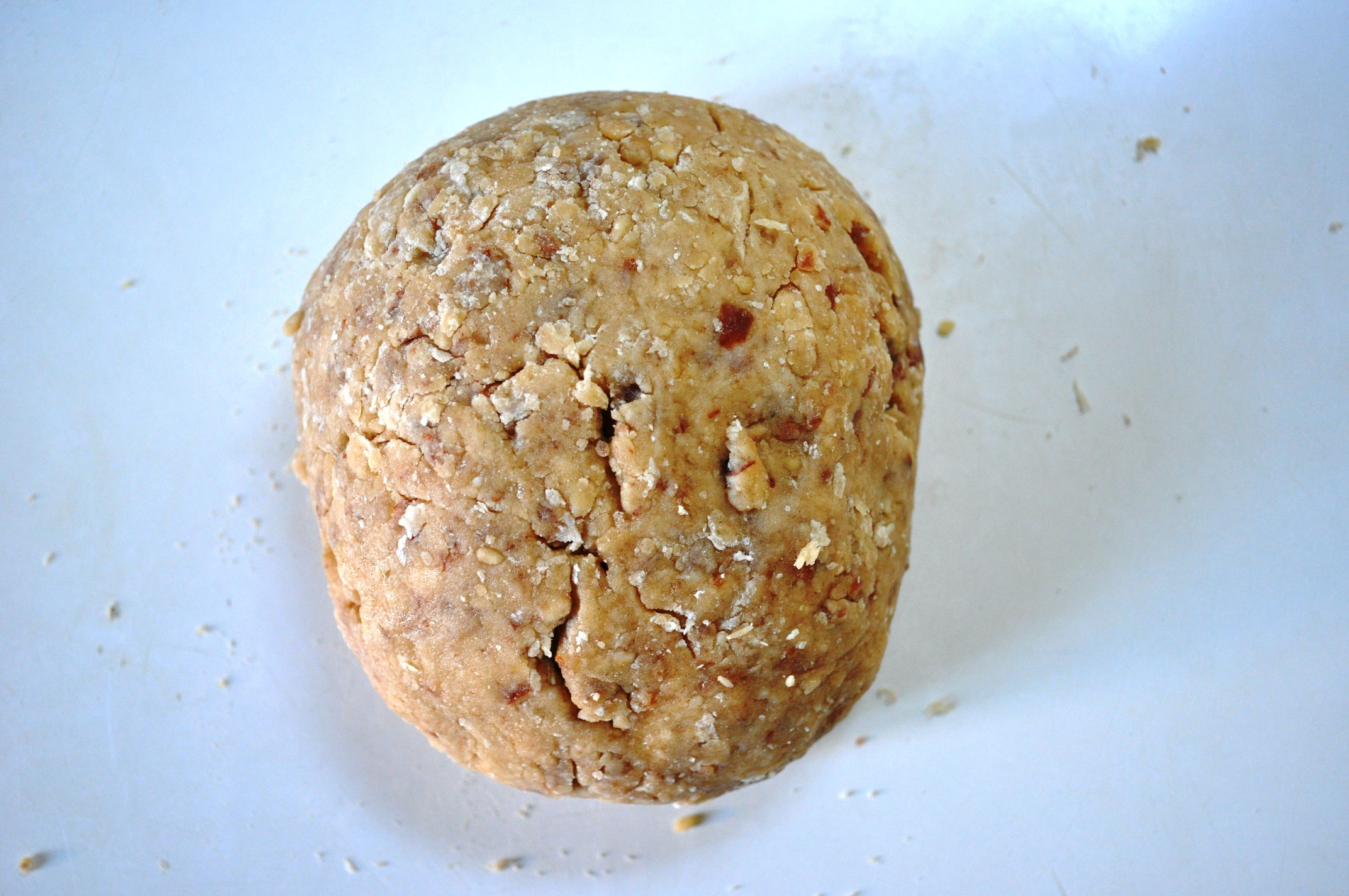
5. Combine the gloopy honey mixture and flour. Ideally done in a mixer, but it’s possible by hand.
6. Bring to a dough. Add milk if it’s too dry.
7. Form a ball and rest, wrapped in plastic, for an hour or so.

bring together the dough 2
8. Roll out the dough thinly – less than 5mm ideally.
9. Cut with your cookie cutters of choice.
10. Bake on sheets lined with parchment for around 10 minutes in an oven preheated to 180C, until golden brown.
11. Place on a wire rack to cool.
12. While cooling, brush with a simple icing made from icing sugar mixed with water to achieve a runny consistency.
13. Allow the cookies to cool completely and the icing to set.
14. Eat, dunked in milky tea.

ready to bake

So yes, although they still feel somewhat experimental, these cookies were still delicious – particularly for the slight crunch of almond and the chewiness of the peel, the latter complimented by the cinnamon.

iced

1 Comment

Filed under Biscuits, cookies

Seta at Thien Kim and ʼnaBio at Ai Tre Scalini

As much as I love Italian food, sometimes you just want something a little different. A different set of flavours. As Brits, we regularly get cravings for curry. There are a few places in Rome that scratch the itch, but aren’t really anything to write home about. Another craving we’ve had is for Vietnamese food. Having lived in London for many years, we were spoiled by having access to some great Vietnamese places, notably on the Kingsland Road.

Over the past 20 months or so, we’ve walked past a Vietnamese place in Rome several times. It doesn’t have a menu outside, its window is graffitied and overall it doesn’t look prepossessing. But while the summer has arrived, and all the popup bars and restaurants are lining the Tiber, we thought, let’s ignore the evening sun and instead head into the gloom of Thien Kim, which is located on the Centro Storico side of Ponte Sisto, the pedestrian bridge that connects Trastevere.

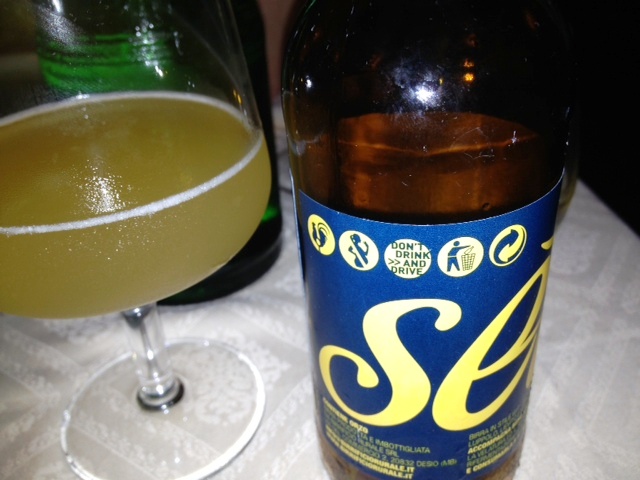
It was indeed gloomy, and quiet, but the welcome was friendly, and – would you believe it?– they had a few Italian craft beers on the menu. So alongside my food, I had Seta beer. The 5% ABV Seta is from Rurale brewery in Lombardy.

Seta

Seta means silk, and the beer was clearly designed to be a smooth, refreshing summer drink. It’s described as “Wit – blanche” on the Rurale site, that is a Witbier – a Belgian style top-fermented white beer that’s defined in part by the murkiness of the liquid. Seta is no exception, with a cloudy yellow colour and an even, mild body. Although it does contain hops, the hoppiness is negligible, and instead the flavour is defined by the presence of coriander and zest of both bitter and sweet oranges.

Interestingly (for a cereal enthusiast like me), it’s also made with three grains: malted barley, non-malted wheat (grano tenero, that is Triticum aestivum, common wheat), and oat flakes. Me and Fran got notes of ginger, jasmine, lemon. The bottled version I had didn’t have anything much in the way of head, and the body was only subtle fizzy. We’d just come from one of our favourite bars, where  – despite their sign outside saying “Birre artigianale” (artisan beers) – they’d run out of craft beers, so I had a Menabrea amber. It was foul and headachey, so the eminently drinkable Seta was a relief. It also ably lubricated the fair-to-middling food (some crisp courgette flowers stuffed with prawn, a tasty sweet-sour mushroom soup, then a totally over-salted squid main course).

The following day we were in town again and after escaping the heat to watch ‘Man of Steel’ (or “the new Superman film” as non-geeks might not get the “Man of Steel” name) in an air-conditioned cinema, we were wandering Monti thinking about dinner. As it was still fairly early though, we dived into Ai Tre Scalini, a bar and wine cellar “since 1895”. Har. It’s a characterful place though – cool without being affected, friendly without being disingenuous. When we sat down I spotted a picture on the wall of the actors Totò and Aldo Fabrizi in ‘Guardie e ladri’ (‘Cops and robbers’), one of Italian cinema’s great mid-20th century comedies of post-war struggle and social change. Cool, I like that film, thought I – only to notice that there were using the image as a sign warning you about pickpockets. That’s the first time I’ve seen such overt warnings in Rome, and it’s kinda depressing. Like British bars that look quite ordinary and pleasant but have bouncers outside them – indicating the place is rough and used to fights.

After some criminal highjinks in Naples a few weeks ago, we’re a bit nervy about such things now.  So I thrust my wallet deep and checked out the menu. It’s mostly a wine bar (Vino e specialità nostrane – “Wine and homemade/local specialities”) but they did have beers from ʼna Biretta, the brand of Birradamare brewery just outside Rome. You can’t really find a more local craft beer in Rome than ʼna Biretta. Indeed, he very brand name is Romanesco – with ʼna just being the typically truncated dialect for una, “one” or “a”. As in “Givvus a beer!”

'naBio

I’ve had a lot of ʼna Biretta but never tried their ʼnaBio, so ordered one. Although the beer is apparently ispirata alle lager tedesche (“inspired by German lagers”), it’s not as pissy, thin, sharp and headachey as ubiquitous industrial lagers, indeed it’s got a surprising body. In fact, BeerAdvocate classifies its style as Munich Helles Lager, that is a more malty, fuller bodied type of lager developed in Germany in the late 19th century to counter the inroads of Czech pilsners. Birradelmare don’t classify it as such, just calling it a lager, but it seems a reasonable assessment. Sort of. Because as well as being bio, that is “organic”, ʼnaBio, like the Seta above, also involves interesting use of grain.

Ratebeer classifies its style as Speciality Grain. In this case, the grain is farro, though in Italian that word is used for three different types of ancient wheat. A quick bit of detective work  Googling indicates that the organic farro used in the beer is from Monteleone di Spoleto in Perugia province, Umbria, and that they specifically cultivate Triticum dicoccum, or emmer wheat.

The emmer isn’t malted, but is combined in the brew with malted barley. The result is a beer with more body than a typical lager while also being light and refreshing, with a golden-yellow colour, negligible head and dry, crisp flavour, with a slight aroma of cut grass or even silage. My wife said “Brussels sprouts” – which might sound freaky, but she loves Brussels sprouts, so that’s a commendation. It went down very easily, and helped wash down the dry aperitivo snacks: deepfried chickpeas, delicious slightly spiced taralli.

The word that seems to be bandied around a lot for lighter, refreshing beers in Italian is dissetante. In Italian thirst is sete, and the verb to quench the thirst is dissetare. So yes, both Seta and ʼnaBio are definitely dissetante, thirst-quenching.

Infodump:
Thien Kim, Via Giulia 201, Centro Storico, Rome
+39 6 6830 7832

Ai Tre Scalini, Via Panisperna 251, Monti, Rome
+39 6 4890 7495 / aitrescalini.org / aitrescalini@colosseo.org

Birrificio Rurale
birrificiorurale.it / info@birrificiorurale.it

ʼna Biretta/Birradamare
nabiretta.it  / info@nabiretta.it

Leave a comment

Filed under Ale, beer, Bars, pubs etc, Restaurants etc

Laboratorio Piccolo Birrificio’s Steamer amber ale at Necci, Rome

steamer at Necci

Last night we made it back to Necci, in Pigneto – the neighbourhood that was once on the wrong side of the railway tracks, but has now become something of a haven for (young, and young-ish, black-clad) people wanting to do a bit of boozing and yakking away from any crazy Roman traffic. Via del Pigneto itself has a great traffic-free section that’s packed with bars, but cross over another set of tracks, turn a few corners among the unique low-rise buildings – very different to the apartment blocks of other Roman neighbourhoods – and you’ll get to Necci. Or !Necci dal 1924″.

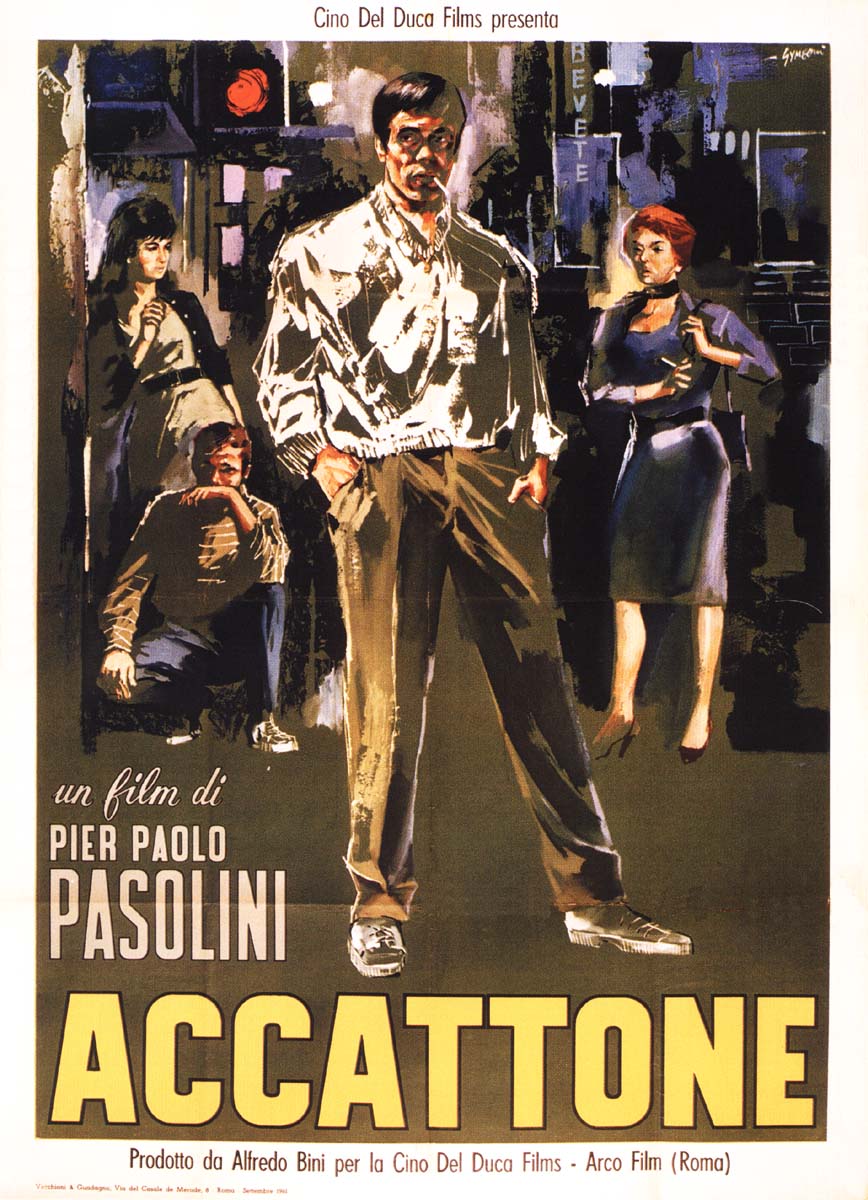
Now, as I wrote here, the whole “open since 1498” thing gets my goat. Innumerable osterie/trattorie/ristoranti proclaim their year of founding as if it’s somehow important even when they churn out mediocre food. Not so Necci. This is a place that’s doing so much right. Although it’s nearly a century old, and a neighbourhood landmark, and was the filmmaker Pier Paolo Passolini‘s main hangout when he made his breakthrough film Accattone (1961), it’s not stuck in aspic. The heritage is just part of the fabric of a lively, diverse venue that offers pretty much everything to all comers, any day of the week. Except, that is, a decent beer menu. More on which later.

Accattone

Although Necci has all this history, and is a great place physically, with a funky interior and shady terraces, its success is also down to a unique scenario whereby it’s run by business partners Massimo Innocenti (manager) and Ben­jamin Hirst (chef), who took over the venue in 2006. Hirst? That doesn’t sound very Italian, and indeed it’s not – he’s a British chef. A British chef running the kitchens of an  Italian eatery? Yes. Shocking.

This partnership is something that’s potentially unique in the Roman restaurant scene. After all, Italians in general are bloomin’ sniffy about the idea of foreigners being able to cook, and yet here’s a Brit proving them wrong, and overseeing a far more interesting menu than many places in Rome. I say that in part because the inventive dinner menu features not just the usual Roman offal, but a lot of fish dishes too – which can be a rarity in osterie/trattorie/ristoranti here, despite the city only being 20km or so from the sea.

It’s not just all about dinner at Necci though. It’s a café with a pasticceria on the opposite corner, a shop, a lunch venue and a great spot for an aperitivo. Indeed, it’s there I had my first (excellent) sbagliato: a “wrong” Negroni, made with vermouth, campari and prosescco instead of gin. They even have an decent wine list. The only disappointment for me was the selection of beers.

The whole ethos for Necci, according to the Projetto Gastronomico section of their site, is an emphasis on organic produce from Lazio and central Italy, and everything made on the premises – “from the cornetti (Italian croissants) to the bread, from the gelato to the tagliatelle, from the cakes to the gnocchi”.

The site uses the word autarchico, which translates into English as autarkic… Yes, I didn’t know that one either, but it means self-sufficient, independent. (They’re exactly the sort of principles I’d like to apply if I ever run a food business.) The site also says Hirst, who initially studied art history before getting into cuisine (working in France, the US and Italy, with experience in patisserie and vegeterian food, though there was little of the latter available last night) works to recreate traditional osteria dishes – but the ones that people may have forgotten. It’s slow food without the rhetoric, apparently. So, in amongst all this, why don’t they have a few more Italian craft beers? Although Massimo flagged up one Italian craft beer on their menu, Steamer, when we came to order, the waiter seemed to determined to sell me a Stella Artois. Which isn’t just industrial muck, it’s decidedly not from Lazio or central Italy or Italy at all. And yet Lazio alone boasts several microbreweries producing interesting, quality beers: Birra del Borgo, Turan and Itineris, to name but a few.

steamer label

Still, we had a great night, and the Steamer was delicious. It’s brewed by Lorenzo Bottoni under the label of Laboratorio Experimental Brews / Laboratorio Piccolo Birrificio (“little brewery lab/workshop”). The site has a section called Manifesto, where Bottoni talks about how his brewing is always a collaborative experience. Which is nice. Clearly Bottoni and his chums between them have a lot of knowledge and are deploying it to produce interesting beers. They don’t seem to have a fixed brewery location, but seem to be a kind of brewing flying squad. Well, not flying – cycling. I like them even more as, from a quick jaunt round their Facebook page, they seem to be pretty big on bikes. Bravi!

Anyway, Steamer. It’s a hoppy amber ale. But not that hoppy. Middlingly hoppy. On the nicely designed, informative site, the Laboratorio gives the IBU (International Bitterness Units) as 39.7, which puts it on the cusp between mellower pale ales (usually 20-40 IBU) and hoppier, more bittererer IPAs (usually 40-60 IBU, depending on your sources and on type). The hops in question here are a mixture of Cascade and Amarillo from the US, and Nelson Sauvin from New Zealand. Which makes me happy and strangely emotional, as I’ve spent a lot of time in and around Nelson, a marvellous little town that’s played a key role in NZ’s craft brewery scene.

Steamer’s fairly strong, at 7.6%, but goes down smooth, with a body that’s almost verging on the milkiness of a thick stout or porter. A fruity aroma is accompanied by a caramel and biscuitty taste, the latter possibly arising from the interesting use of malted rye, instead of barley. All in all, a highly notable beer. As the site itself says, it’s something that was developed In risposta allo strapotere delle IPA-DIPA-APA, una birra luppolata il cui amaro si accompagna alla setosa ruvidita’ conferitale dalla segale, that is “In response to the excessive power of the IPA-Double IPA-APAs, a hoppy beer in which bitterness is accompanied by the silky coarseness of the rye.” Okay.

So yes. I’m really enjoying Necci. Although I’m disappointed by the presence of generic and or non-Italian beers on the menu, I’m encouraged by the fact that the one Italian artisan beer included has clearly been chosen with care. I just wish this place was nearer where I live…

Infodump:
Necci, Via Fanfulla da Lodi 68, Pigneto, Roma
+39 6 9760 1552 / necci1942.com / info@necci1924.com
Open 8am-1am, seven days a week.

Laboratorio Piccolo Birrificio
piccololab.it / info@piccololab.it

2 Comments

Filed under Ale, beer

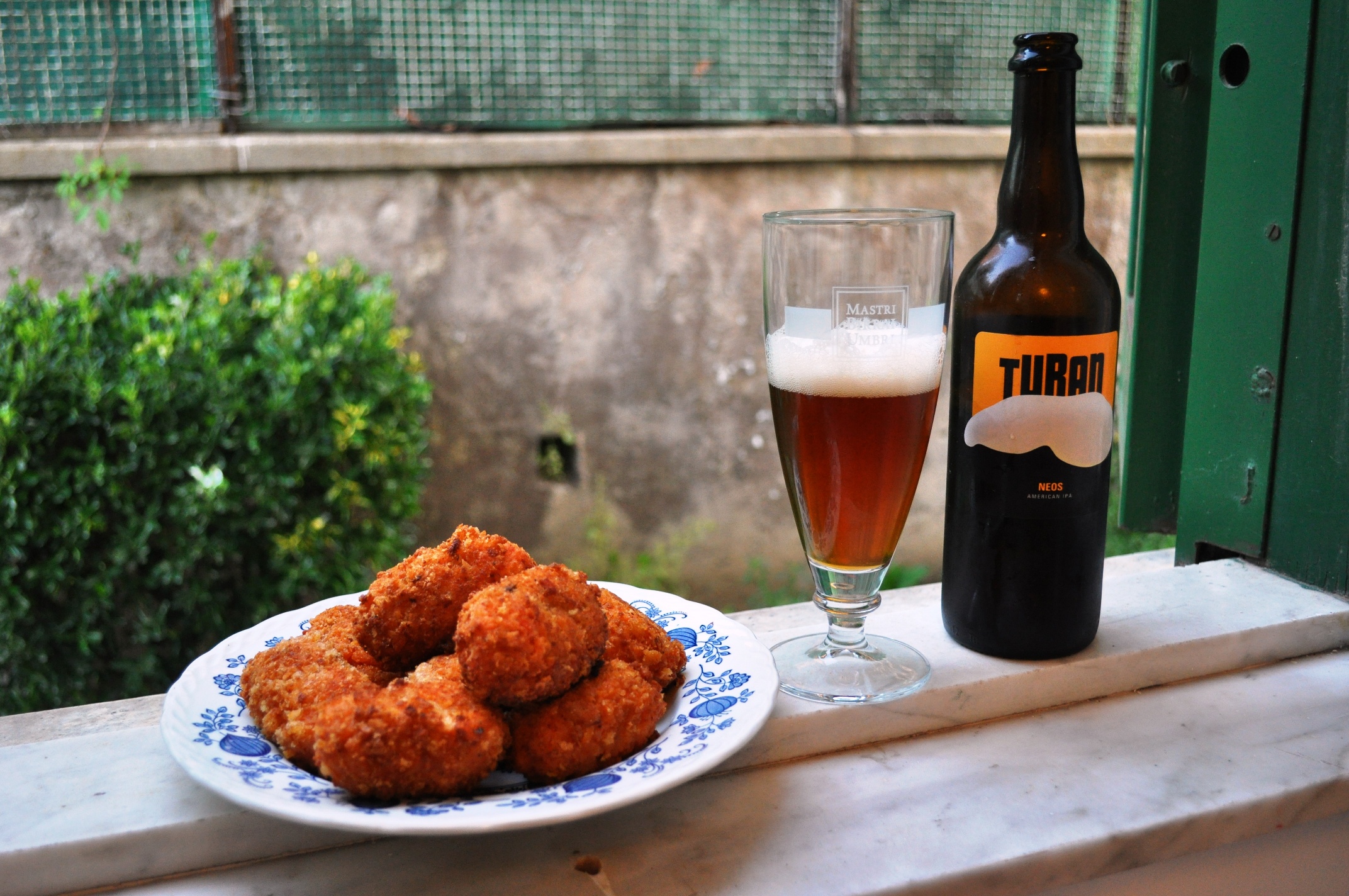
Turan Neos APA with suppli

suppli and Neos on windowsill 2

Sunday evening, our chum Cameron made a delicious tomato risotto. She made what’s known in the vernacular as a “shit ton” of the stuff, but that’s good. We’re in Rome. And in Rome, when you’ve got leftover risotto you make suppli. So on Monday we did. I’ve mentioned the Roman love of fried goodies before. Suppli have got to be the best though. Deepfried risotto croquettes with a heart of melty mozzarella. What’s not to like?

You can use plain risotto, or a fancy flavoured risotto, depending on what leftovers you have, but generally it’s risotto rice with tomato, at least round these ’ere parts. Said leftover risotto is made into a ball, a piece of mozzarella is stuffed in the middle, then the whole lot is rolled in flour, then dipped in beaten egg, then rolled in breadcrumbs or pangrattato (toasted/dried crumbs). Then deepfried – long enough to melt the mozzarella so that when you eat it, it forms a string. Apparently this recalls the curly telephone cable of yore, before wireless handsets and mobile phones and all that newfangled stuff and the full name is suppli al telefono.

Me and Cameron learned to make them while working in the kitchens of the American Academy in Rome. They can be a bit fiddly, as it can be a bit messy making sticky balls and dipping them in egg. Frankly, I’ve no idea how one keeps one’s hands clean making them, despite how much I was shouted at by Academy chefs. At the Academy, we used an icecream scoop to make the balls, but even then you had to do all that dipping. There was a video (featuring Mr Bonci), but the link’s dead now. There, they made a point of wetting their hands first. They even made a pastella – a batter – to roll the balls in, combing egg, flour and water. Might try that next time, though even they’re getting messy. In this video (Italian, but subtitled in English), he just uses flour then egg, and does manage to keep the whole thing nice and tidy. Practice I guess.

Still, having said all that about messiness, our suppli were the best I’ve had. A delicious risotto, with plenty of garlic and a subtle chili heat, and some lovely breadcrumbs from my own bread, all fried until golden brown in hot sunflower oil and then eaten with Neos American pale ale (APA) from Turan brewery in Lazio (in Montefiascone, north of Viterbo to be exact). Yum. I’d bought the Neos for a ridiculous price at the slightly ridiculous middle-class food emporium that is Eataly and been waiting for a special occasion to crack it open. Cameron had recently revealed she’d OD’d on APAs, coming from their heartlands of California, but I’m still loving them, or at least the Italian take on APA. Over here, one connoisseur writing in English and certainly more knowledgeable than me is quite sniffy about a Neos he had, draft, at Baladin bar, calling it “kind of boring,” but the bottled one we had was delicious.

Fougass, Neos and suppli (unfried)

It’s a dark amber ale, with a medium head that dissipates fairly quickly (thankfully, given that I’m often rushing and pouring badly trying to get the right photo…). Me and Fran enjoy malty beers (indeed, she’s a stout and porter kinda girl generally), so the fact that this is a fairly malted beer with strong flavour of caramellised, or even slightly burnt, sugar is good. Any sweetness is balanced by a subtle hoppiness and a medium-light body, making it a decent ale to accompany food. Fried food. Deepfried, cheesy food. Perhaps the bottled version differs to the version the guy had at Baladin.

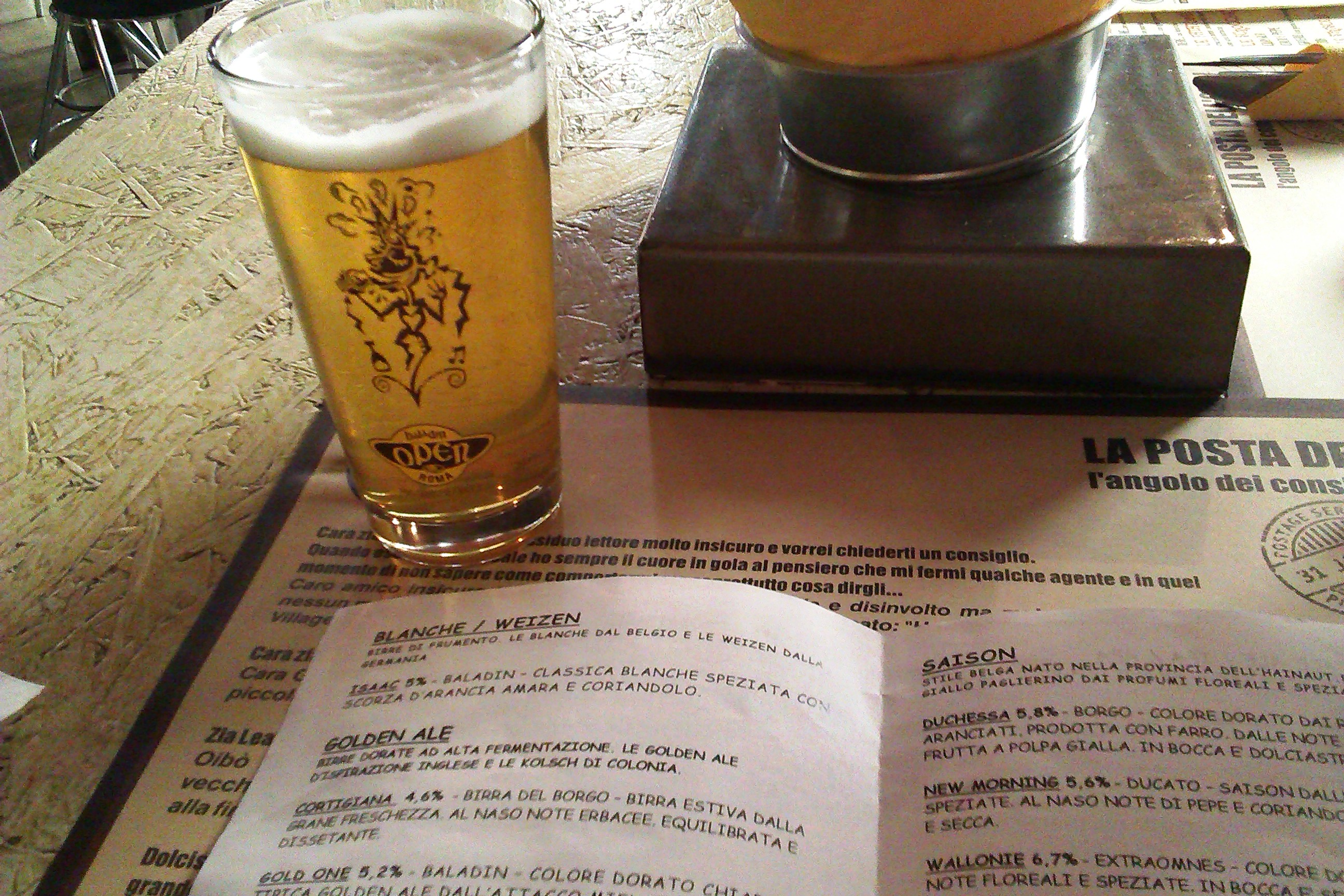
Talking of Baladin, and boring beers, we also had a few slightly disappointing beers at Open Baladin bar on Saturday. I’d been looking forward to some golden ale (with fond memories of things like Fuller’s Honey Dew – my gateway beer on the path to enjoying real beer) so was happy to see Baladin had a few listed in their menu. I tried Cortigiana (4.6%) from Birra del Borgo in Lazio, then Gold One (5.2%), from Baladin’s own brewery in Piedmonte and found both slightly weak and watery, more than like a lager or pils than a more full-bodied summer ale. They were fine, just a little underwhelming.

Baladin golden ales

Similarly underwhelming was FluviAle’s Golden Ale, at Porto Fluviale bar in Ostiense a few days previously. Though I don’t think I’ll be returning to Porto Fluvial for a while as the beer they served my friend Rachel, a Terminal, was terrible. It was very flat but worse it just tasted musty. When we complained the waitress said it was because it was hand-pumped. Hand-pumping might explain a lack of effevesence, sure, but not the mustiness. When my wife had another drink that also tasted musty, it put me off the place completely. Guys – there’s something mouldering in your system. Clean your pipes!

So yes, the best beer experience I’ve had the past week-ish, was definitely the one involving a  bottle of Neos and home-made suppli, served with a tasty tomato chutney.

6 Comments

Filed under Ale, beer, Other food

Casa Veccia’s Formenton and Dazio at Oasi della Birra, Testaccio, Rome

Formento

Haven’t been to Oasi della Birra in Testaccio for what seems like an age. It had become something of a regular haunt, but then something in the aperitivo buffet wasn’t quite right, then other life-things got busy, and well, months went by. But last night I found myself back there, enjoying the evening sun – after a faltering spring, the Roman summer has arrived – and wondering what had become of my chum Cameron. (Never did get those texts.)

On a previous visit, we’d tried a called Molo, a stout made with port from a confusingly named brewery that’s either called Casa Veccia or Ivan Borsato Casa Veccia or Casa Veccia Ivan Borsato Birraio. I’m afraid I hadn’t heard of Ivan Borsato before,  but I like your beers, Ivan, and I like their branding… even if the bottles neglect to actually include such salient information as what type of beer is contained therein.

So this time round, I asked one of the guys from the Oasi what Formenton was, clearly having forgotten what I wrote on my own blog in March. He said it was made with farro (I didn’t get into the issue of what specific farro). As I like my ancient wheat varieties, and it was a warm evening, that seemed like a good place to start. Like many wheat beers, it’s a beautiful bright golden yellow, especially when suffused with the Roman evening sun. I should probably mention the head, as Italian beer reviews always talk about the quality of the schiuma, but what can I say? It’s frothy. But not as frothy as the second beer (see below).

The taste is typically fruity. Cameron  and my wife Fran thankfully arrived before I got too sozzled drinking alone. They both talked about the banana notes (typical to weissbier), but I reckon it had a whole macedonia – that’s Italian for fruit salad – in there, with melon, grapefruit, orange zest, and apple flavours, and even a bit of ginger. At 5.5% it’s not exactly weak, but it’s refreshing and very drinkable, with negligible hoppiness.

Oh, and if you’re really serious about your wheat and white beers, and understand the difference, and can read Italian, there’s a spiel on the brewery’s site about how Formenton “was created from the union of two beers that marked the history of beer: weissbier [wheat beer] and blanchebier [white beer].” Now, I never really had a strong sense of the difference between these beers, as both exist under the wheat beer aegis. But according to the Borsato spiel, and a quick spin around online, the former are more German in origin, cleaner, simpler, with minimal hoppiness and, most of all, are defined by the proportion of wheat in place of some of the (malted) barley. The latter are more Belgian (and Dutch), and may have been made without hops – using herbs instead in something called a gruit. Modern gruit may involve herbs, but also citrus and hops. Both are top-fermented. And, frankly, in this era of innovative craft beers, the dividing line between them is blurred. Formenton, for example, made a point of it. That’s something that’s so good about Italian craft brewing; as the country doesn’t have laboriously rigid brewing heritage and tradition, it’s unafraid to mix things up. Yay. I imagine the two Matt Groening style cartoon chaps on the bottle saying an Italian “yay” at their success with Formenton.

Dazio with OTT head

The second Casa Veccia we tried, and is here featured in a terrible out of focus photo (crappy new phone), showing how I’d rushed to pour it and creating and ridiculous head, was the 6.2% ABV Dazio. The guy in Oasi said it was an ambrata (amber) ale but the Casa Veccia site specifies it’s an APA. As I was talking about yesterday, APA seem to be a very popular style in the Italian birra artigianale scene. And very nice they can be too. And again, unlike in other brewing traditions where beardy specialists might dogmatically insist there’s a distinction between an APA and an amber ale, in Italy it seems an APA can be ambrata.

Dazio was also delicious but very different. Arguably, it’s not as obvious a summer drink, with hints of toffee apple and such autumnal things , along with cinnamon and ginger, but it did the job very nicely thanks last night. Oh, and flavour-wise, Fran said “Turkish delight”, while the Casa Veccia site itself talks about this beer – “in an English style with American hops” – having Profumi terziari come pepe, cuoio, chiodi di garofano, liquirizia: “Tertiary aromas of black pepper, leather, cloves, liquorice.” I didn’t get all that myself, but fair enough. I like the idea of a leather-scented ale. The site also talks about its hoppiness and bitter flavour, but I felt it was pretty mild and mellow. The site also provides a nice bit of history about how the APA evolved from the IPA and the IPA evolved out necessity, with British soldiers in India craving beer, but the long voyage souring the milder ales of home. The solution was more hops, to better preserve the ale. Thanks Ivan and everyone in the Vetch House. Quite why the Dazio label features a cartoon astronaut I don’t know.

2 Comments

Filed under Ale, beer

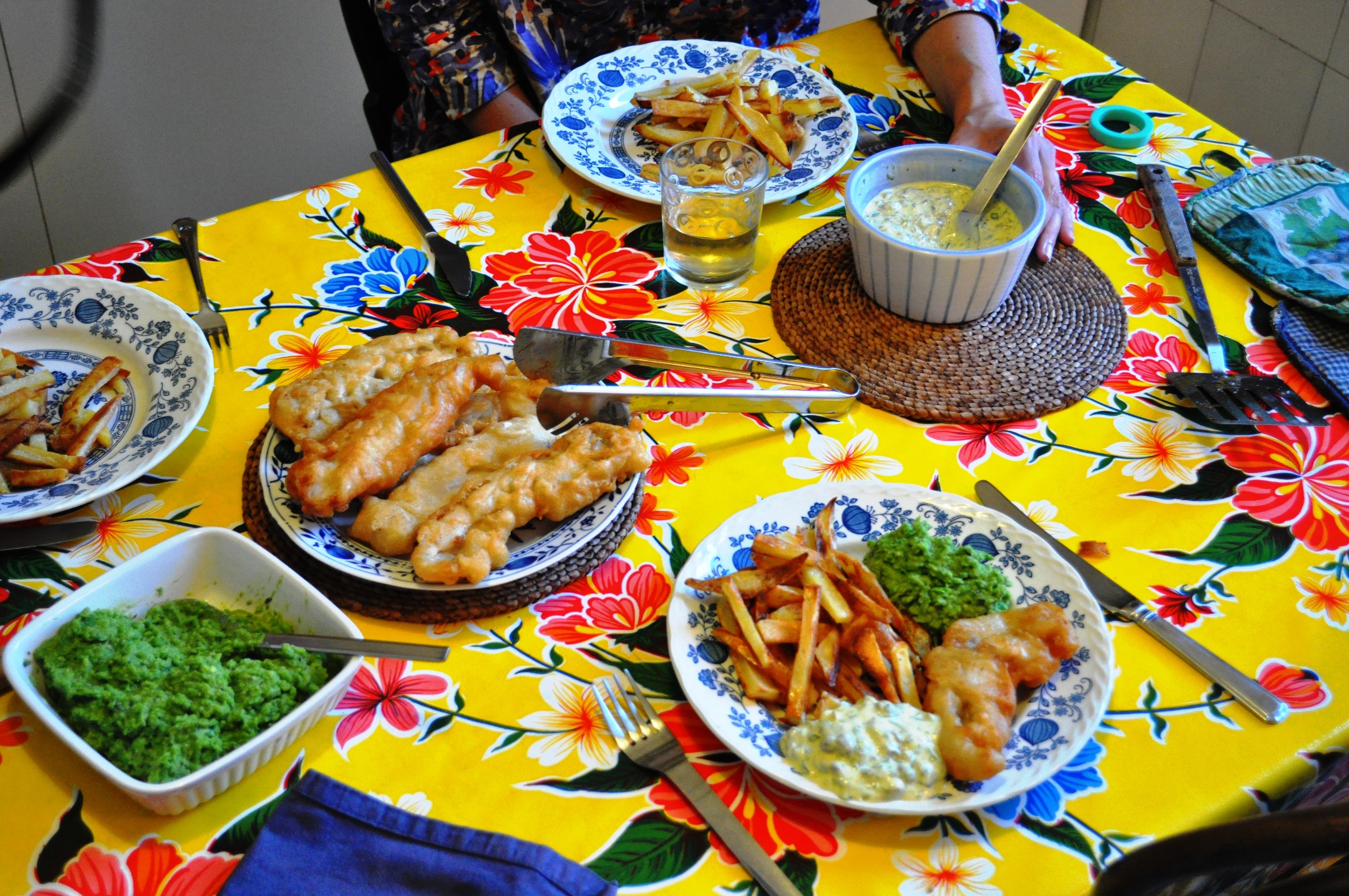
Beer-battered fish and chips with mushy peas and tartar sauce

aerial photo

This post perhaps takes the blog on a slight tangent, but what the heck. It involves beer. And the project was an excuse to buy a selection of beers from a new shop on Viale Quattro Venti in Rome (number 265; it’s a branch of the small chain Gradi Plato). It’s one of a crop of shops that’s been springing up in the time we’ve lived in Rome that specialise in selling international and craft beers.

This guy had a global selection, so I asked him for something Italian, and light and golden, as I wanted to use it to make batter… and drink. We discussed various things, and although he didn’t really seem to understand the term “golden ale” (though I have seen it on other beer menus here), we bought a pils (that is a Pilsner lager), an APA and a wheat beer.

lineup9 md

Now if only I could remember the name and address of the shop. I can’t. But it’s here on streetview, the righthand closed shutter.

Anyway. As strangers in a strange land, we occasionally crave the foods of home. In this case, we’re Brits, and I’ve been craving fish and chips. You could say that the Roman filetto di baccalà when served with patatine fritte is basically the same thing, but… well, no. Just no. Filetto di baccalà is made with salt cod, and while it is battered, it can be made too far in advance meaning the batter can be flaccid, the fish mushy. Plus, I just need my condiments and sauces. It always bemuses us that while Romans have such a passion for deep-fried goodies – fritti – they tend to eat them dry and unaccompanied. A plate of fritti like suppli (rice balls with mozz in the centre, coated in breadcrumbs and deep-fried), fiori di zucca (zucchini/courgette flowers stuffed with mozz and anchovy, deep-fried in batter), and various fried animal bits like animelle (sweetbreads) really ought to be eaten with a nice tangy sauce, something involving tomatoes and peppers, like a tangy chili jam. Even ketchup would be nice. But no.

This craving for fish and chips means I’ve been experimenting with making it at home. I’d only tried this a few times when we lived in the UK as, frankly, why bother in a land of chippies and gastropubs selling fish and chips?

I read around for good recipes and then broadly went with Felicity Cloake’s advice from her “How to cook the perfect…” column in the Guardian. Though her recipe makes too much batter for my needs. And I forgot to chill the flour. Apparently having all the ingredients as cold as possible makes for a lighter batter, but mine sufficed just with cold beer. Of the three beers I bought, I used the pils, reasoning that it was more effervescent, and would help keep the batter light. Plus, I don’t actually much like pils to drink so was more keen on drinking the other two.

I used a Madonna Pils from Free Lions in Tuscania, near Viterbo, Lazio, a brewery founded by Andreas Fralleoni after a career in the banking industry. Leaving behind the evils of banking to make craft beers? Well done that man. (They only have a holding page online at the moment, but it features their funny little logo.) So while I found this pils a bit acrid and hoppy to drink, it made an excellent batter ingredient.

whisking batter

Beer batter recipe

This makes enough for about 4 medium sized fillets.

200g plain / all-purpose / 0 or 00 flour
1/2 teaspoon baking powder
1/4 teaspoon fine sea salt
280g cold beer – preferably something light with a good sparkle

1 Preheat the cooking oil. I used sunflower oil. The fat you fry in is a whole other argument. A true fish and chip aficionado would say it has to be beef fat/dripping, but, well, sod that. Sunflower oil is fine and doesn’t conflict with the flavour of fish.
2 Sieve together the flour and baking powder and add the salt.
3 Whisk in the beer to achieve a thick, creamy consistency.
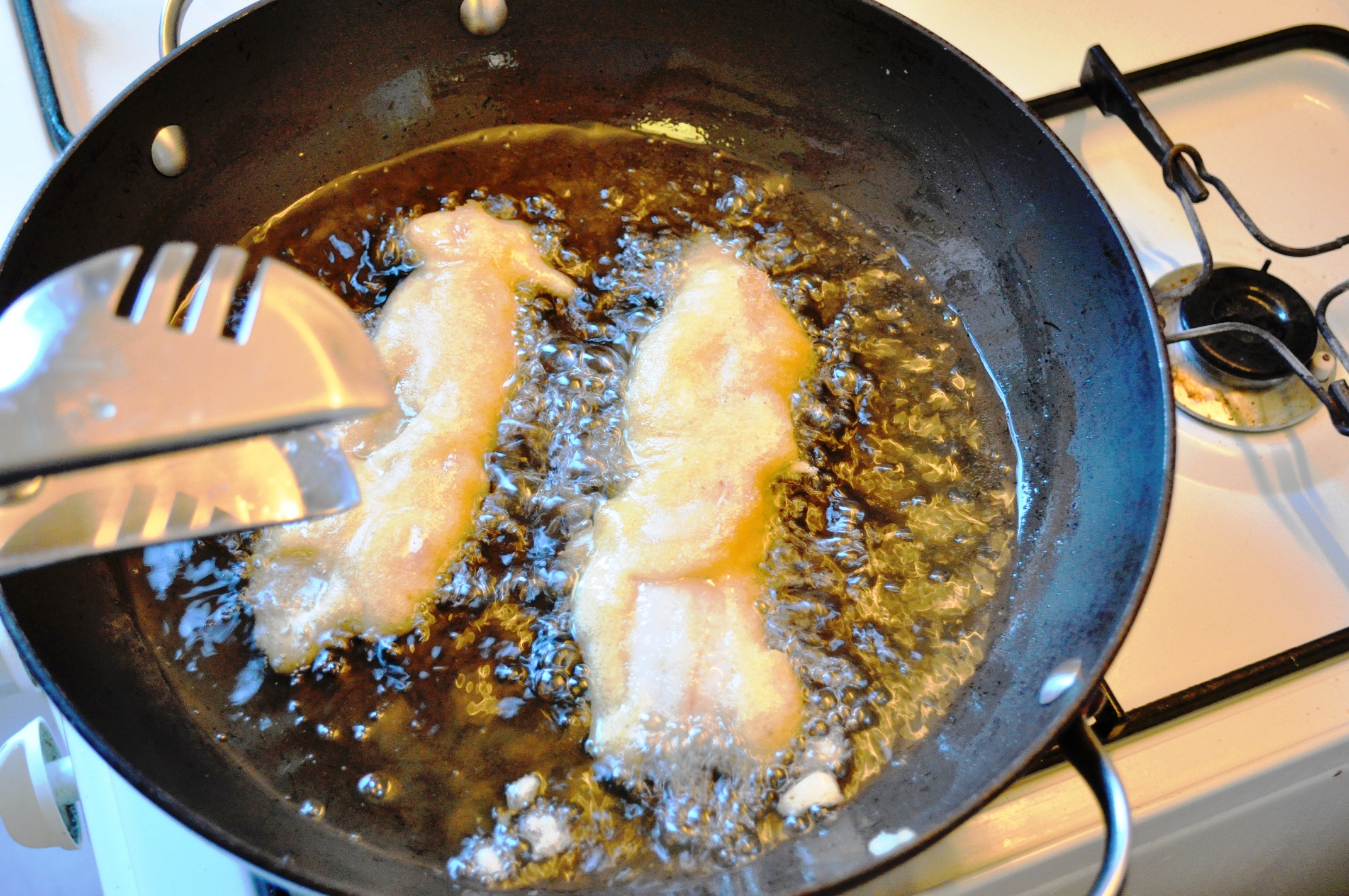
4 Batter the fish and deep-fry straight away.

5 Fry for about 8-10 minutes. This will depend on the thickness of the fillets. You want a nice golden-brown, crisp batter.

deepfrying

The last time we experimented with this, Fran was in charge of buying the fish. As the names of the fish on our local market stall remain such a challenge (she clearly didn’t refer to my handy list of fish names in Italian, English and Latin), when she explained what she wanted the fillets for they persuaded her to buy palombo. Which was unfortunate as this may well be small, potentially endangered species of hound shark.

This time round, I was in charge. Buying “sustainable” fish is always a tricky proposition, and frankly something that’s subject to a lot of greenwash and disinformation. My loose rule of thumb is to avoid tuna species, avoid monkfish species, avoid cod, and generally stick with things like anchovies and mackerel, ideally caught by small, local fishing boats.

In this case, I ended up buying some fish the vendors referred to as “local”: musdea, aka mostella, which I believe is a type of forkbeard, a relative of cod, Phycis phycis or Phycis blennioides. Although neither are on the IUCN red list (they’ve not be assessed yet), the latter species is listed as one to avoid on the UK’s Marine Conservation Society site. Hopefully it’s not been so overfished in the Med, but I know that’s a vain hope. The only consolation is that we don’t do this too often. Sustainability is of course about making the right choices, but for a society like ours, predicated on over-consumption, realistically it’s also about doing the wrong things less frequently.

Anyway. After I’d fought the fillets to remove the bones, this forkbeard fried up really well. I don’t have an oil thermometer (though I would like one of those fancy IR guns, available from a corporate tax-dodger not very near you), so I just played it by ear. I did three batches, with the second two pretty much perfect. Apparently you want 185C or thereabouts for deep-frying fish in batter.

Fish & chips and ale

It went down very well with the other beers I’d purchased: La 68 from Math brewery in Florence, Tuscany, and Runner Ale from Pontino brewery, which seems to be part of All Grain SRL in Latina, southern Lazio.

Math don’t have a proper site up yet, and I don’t know anything about them, but I love their style already. The design is cool and La 68’s label includes a funny little fellow with a speech bubble with this beguiling epigram: Il disordine é l’ordine meno il potere, “Disorder is order without the power/means/ability” The beer itself was a fresh summer beverage: a 5% wheat beer whose ingredients also include spezie, “spices”. I’m not sure which, but it had a nice limey flavour and subtle hoppiness.

La 68

Like La 68, Runner Ale isn’t in my Italian craft beers guide, but it’s similarly very drinkable: notably because, unlike many of the Italian craft beers I encounter, it’s not overly strong, at only 4.5% ABV. It’s an (Italian) American Pale Ale. APA style beers seem very popular in the Italian microbrewery scene and, despite me being British, it’s a style I’m really enjoying at the moment. Italian APAs are often light yet full-bodied, tasty without being aggressively bitter or hoppy. And as with the La 68, the Runner Ale’s bottle also comes with a quirky quote, in this case Come tuo avvocato ti consiglio di andare a tavoletta. It’s attributed to Dr Gonzo, Hunter S Thompson’s creation, and I think it means “As your lawyer, I advise you to go to the bar.”

runner ale

Sides and condiments

As you can see, I went the whole hog here and did chips, tartar sauce and mushy peas. I’ll admit the chips were not proper chips. As I don’t have a proper deep-fat fryer or even a pan with a frying basket, I couldn’t be bothered. I’d read up Cloake and discussed proper chips with friends (the knowledgeable Oli Monday saying they were best when “oil-blanched”, frozen, then deep-fried a second time) for my last experiment, but this time I just cut chip shapes and roasted them, without any pre-cooking, with plenty of sunflower oil and salt. They tasted good even if they weren’t proper chips.

nice spread

As for the tartar sauce. I just had to. As I said above, fried food needs condiments. One of things that drives me made about British pubs is getting tartar sauce in those tiny sachets. I need about 10 per meal. So here I made a decent bowlful for the three of us.

Tartar sauce ingredients
1 egg yolk
1 cup / 240g oil (half-half sunflower oil and extra virgin olive oil)
1 teaspoon of Dijon mustard
A good handful of cornichons or gherkins, roughly chopped
A good handful of capers, rinsed, soaked, drained, squeezed out and roughly chopped
A good handful of parsley, roughly chopped
Some water, lemon juice and salt and pepper

1 Put the yolk in a bowl and whisk it a little with the Dijon.
2 Start adding the oil, whisking constantly, starting with just a few drops.
3 When the oil and yolk starts to emulsify, you can pour in the oil, whisking continuously.
4 When the mayo starts to thicken, thin it down with lemon juice and water, to taste.
5 Add the cornichons, capers, parsley and taste – your capers could be quite salty still, so you might not need to add more salt.
6 Add more lemon juice to taste.

And last but not least: mushy peas

Years ago, there was a great ad campaign in Britain that called some industrial brand of mushy peas “Yorkshire caviar”. Funny, if not entirely true. The industrial stuff, made with dried marrowfat peas (that is, big old starchy peas, Pisum sativum) rehydrated and dyed green, can be pretty nasty. Homemade mushy peas, however, are delicious.

To serve 3-4

1 About four good handfuls of peas. I used half-half frozen and freshly podded. (It’s the end of peas season here; if it’s not pea season, just use frozen peas.)
(Yes yes, I’m not being very accurate here but I didn’t bother to weigh any of these things. Say about 350-400g)
2 Place the peas in a pan with a good knob of butter, say 30g.
3 Add a handful of fresh mint, roughly chopped.
4 Add enough water to cover then bring to the boil and simmer for about 10 minutes, until the peas are tender.
5 Drain (keeping the cooking water) then puree with a zizzer (er, hand-blender), food processor, or just mash with a work to the desired consistency, adding more of the cooking water as necessary.
6 Add a bit more butter if you fancy it and season to taste with salt. You could add black pepper, but frankly with something so lovely and pea-y and minty, I don’t think it’s needed.

Serve it all together, warm and lovely. With good quality craft beers – chosen according to your taste and the season, naturally.

9 Comments

Filed under Ale, beer, Other food, Recipes