Tag Archives: ale

Types of beer

Are innumerable: even the key styles have sub-varieties, or the names may have changed meaning over time and distance, or the same style may have different names in different languages or dialects, just to add to the muddle.

This list is just an attempt to consolidate my knowledge. I’ll keep adding to it, either as I learn more, or realise I’ve forgotten stuff, or when people correct me. Or to add images.

Abbey
Belgian beers in vein of Trappist beers, but without the official monastic supervision.

Ale
Generic term for beers that are made with top fermenting yeasts at warmer temperatures. Historically, ales were unhopped but not any more. Not for a long while.

Altbier
“Old beer”, a German (specifically Düsseldorf and Westphalia) dark ale.

Amber
Coppery ales that derive their colour from crystal malts.

American IPA
US evolution of the English IPA. Big, aromatic, bitter ales made with the distinctively citrussy, resiny West Coast US hop varieties: Cascade, Amarillo, Chinook, Simcoe, Centennial, Columbus. The quintessential beer of the craft beer movement.

APA
American pale ale. “The first true American craft-beer style, this took inspiration from the pale beers brewed in Europe and then made them American by using the hugely fruity hops grown the West Coast of the United States.” (Mark Dredge). On a spectrum with pale ales and American IPAs.

Barley wine
A fairly generic term, but basically an English style of strong ale, with 8% ABV plus. Indeed, at 12% some have a comparable strength to grape wine.

Bière de Garde
“Beer for keeping”, strong ale from Pas de Calais, equivalent to Belgian saison beers.

Bitter
Synonymous with English pale ale. Ales with wide variation in colour and strength, but most typically around 5% and golden-brown. By modern standards not especially bitter or hoppy, more defined by mellow maltiness.

Bière blanche
See witbier (below).

Blonde
Generic term for light, golden coloured pale ales of varying malt and hop profiles.

Bock
Strong German lager. The name, purportedly, derives from accent and dialect variables in Germany, where the place where the style originated – Einbeck – became ein bock (“a billy goat”). Variables include doppelbock (see below).

Brown ale
Fairly generic term for a sweet, brown generally mild, lower alcohol ale. More specifically an English ale type, originally.

Doppio malto
Italian birra doppio malto (“double malt ale”) can be seen as the equivalent of English strong ales or even some barley wines, or strong Belgian abbey beers, or Trappist dubbels. Italian beers are classified as analcolica (non-alcoholic, though technically low-alchohol), leggera(light) or normale, speciale and doppio malto, with each category defined by its gradi plato – a measurement of density.

Dubbel
“Double”. Medium to strong brown Trappist ale.

Dopplebock
Dark, maltier version of bock (see above).

Dunkel
“Dark” in German, and used to refer to various dark lagers. More typical of Bavaria. Malty, not as strong as dopplebocks.

ESB
Extra special bitter. An English brewer’s highest original gravity bitter, after session/ordinary bitter (lower) and special/best bitter (middling).  Synonymous with premium bitter.

Faro
A type of lambic (see below). Made by blending  a lambic and a young, sweetened beer.

Frambozen, framboise
Dutch/Belgian raspberry lambic (see below).

Fruit beer
Any beer that uses fruit adjuncts. May be whole fruit, purées or juices. Kriek cherry lambic is a fruit beer, for example, but others may be more convention brews augmented with fruit ingredients.

Geuze, gueuze
A type of well-carbonated Belgian lambic, made with blend of older (2-3 years) and young lambics.

Golden ale
Generic term for light golden ales, sometimes used synonymously with “blonde”. Arguably, golden ales have less body, and are crisper, more like lagers.

Hefeweizen
“Yeast wheat” in German. A type of wheat beer with low hoppiness, high carbonation, phenolic clove aromas. See also kristallweizen.

Helles
“Bright” in German. Distinguishes this lager from dunkel. Munich pale lager inspired by Czech pilsners.

IPA
India Pale Ale. Now a varied style (see American IPA) but original English versions were less punchy, made with older, mellower English hop varieties. The hoppiness originally developed out of necessity – its preservative quality allowed the ale to survive the long journey to British imperial India without going off.

Imperial stout, Russian Imperial stout
Strong (9% ish ABV) dark beer style first brewed in 18th century England for export to Russia. Brewing industry veteran Ian Swanson, teacher at the Beer Academy, said it was a case of the ships needing ballast as they went to Russia and brought back timber.

Kolsch, Kölsch, Koelsch
A light, lager-like top fermented beer from Cologne (Köln), Germany. Becoming popular as it’s easily accessible to lager drinkers, but is quicker to make, not requiring lagering (cold store conditioning).

Kriek
A type of Belgian lambic made with sour cherries.

Kristallweizen
A type of wheat beer: a hefeweizen that’s been filtered for brightness.

Lager
Generic term for beers that are made with bottom-fermenting yeasts at colder temperatures, and involve a cold “lagering” (literally “storage” in German) conditioning period, originally in caves or tunnels.Where caves or tunnels weren’t an option, winter ice was used to cool the cellars. This was superceded by refridgeration in the 1870s. Lagers were first brewed in Britain in Glasgow and Wrexham in the 1880s, but didn’t really start to take over until the 1960s. Despite German (etc) pride in lagers, it’s the culprit for some of the worst crimes against beer in its long history, and the reason I stopped drinking for years as a teenager in the late 1980s. Shockingly for a country with such an important ale history, the biggest selling beer in Britain since 1985 is a generic industrial lager. Mentioning no names. …. Carling.

Lambic
Distinctive beer style specifically from Pajottenland region of Belgium (southwest of Brussels). Relies on spontaneous fermentation and wild yeasts (like Brettanomyces bruxellensis and Brettanomyces lambicus) and lactobacilli, and as such is very different to other beer styles with their tightly controlled yeast strains. Various sub-varieties, like kriek, geuze, faro. 30% unmalted wheat. Winey and sour flavours. Hops used for preservation not bitterness, so often old and intentionally cheesy. Aged in sherry and wine barrels.

Märzen, Märzenbier, Marzen
A malty lager originally from Bavaria though now more generic.

Mild
Low gravity, malty beer from England. “Mild” originally referred to a young, fresh beer, as opposed to a more flavoursome old, or stale, beer but more recently can mean “mildly hopped.” X to XXXX strengths, historically.

Milk stout
A variable of stout (see below), made with lactose (milk sugar). Lactose is unfermentable so the resulting beers have a thick, creamy body with lower ABVs.

NZ draft, NZ draught
Common New Zealand beer style. A malty, minimally hopped brown lager with ABV around 4-5%.

Oatmeal stout
Stout made with oats alongside the malt, adding a smoothness.

Oktoberfest, Oktoberfestbier
Traditionally Märzen lagers brewed in March and largered to October. Now a registered trademark of six members of the Club of Munich Brewers.

Old ale
Name for dark, malty British ales, generally 5% ABV plus. Originally contrasted with mild ales.

Oud bruin
“Old brown”. From the Flemish region of Belgium, a malty brown ale with sour notes due to an atypically long aging process.

Pale ale
Generic term for ales produced with pale malts. English bitters, IPAs, APAs and Scotch ales are all variations on pale ale.

Pilsener, Pilsner, Pils
Type of pale lager that originated in the Bohemian city of Plzeň (Pilsen), now in the Czech Republic. Now many lagers made outside of Pilsen are considered pilseners.

Porter
Originally a dark, nutritious ale drunk by London porters in the 18th century, made with dark brown malts . A strong porter was a “stout porter”, though now the terms are almost interchangeable.

Pumpkin beer
US style, made with pumpkin flesh and often unveiled ceremoniously in the Autumn. Often spiced with pumpkin pie spices: nutmeg, cinnamon, cloves and allspice. A type of vegetable beer.

Rauchbier
“Smoked beer” from Bamberg, Germany. Made with malt dried oven an open flame.

Roggenbier
A Bavarian type of rye beer with light, dry, spicy taste. Brewed with same yeast as hefeweizen (see above).

Rye beer
Beers featuring rye alongside the more typical malt (malted barley). See roggenbier.

Saison
A fairly generic French term (“season” ) for strong-ish pale ales. Saison beer evolved in the farms of Wallonia, French-speaking Belgium, where it was brewed in late winter, and stored for drinking by farm workers slaving away at the harvest and whatnot.

Schwarzbier
“Black beer”. German term for dark lagers made with dark malts.

Scotch ale
Scottish style of pale ale, malty but lightly hopped. Also known as “wee heavy”, apparently. May feature peaty or smoked malts, often fairly strong (6-9% ABV).

Session
Not so much a style as a strength: weak-ish beers (4% ABV or less, generally) than can be drunk fairly copiously in a “session”. Generally more about the (US, citrussy) hops than the malt.

Smoked beer
Beers made with smoked malt – which is dried with open fire. Not a fan.

Stout
Originally a British term to describe strong beer, such as “pale stout” or “stout porter.” Evolved and muddled up with porter, and came to be another name for dark (black-ish) ales. Remained popular in early 20th century when porters all but died out, before its revival in the 1970s.

Trappist
Beer produced by, or under the supervisor of, Trappist monks. As of 2014, there are 10 Trappist beer producers, mostly in Belgium, but also in Netherlands, US and Austria. Chimay most famous. Various top-fermented styles, classified as Enkel (single), Dubbel and Tripel.

Tripel
“Triple”, strongest of the Trappist beers.

Vegetable beer
Any beer that’s made with vegetable ingredients – like the US pumpkin beers. Another popular vegetable beer flavouring ingredient is chili pepper. Even though it’s technically a fruit (see fruit beer).

Vienna
Local equivalent of dunkel or schwarzbier, that is a dark lager.

Weissbier
“White beer” in Bavarian. A category of wheat beers that includes hefeweizens.

Weizen
“White” in German. Wheat beers, same as weissbier basically but a different dialect name.

Wheat beer
Beers (usually ales, see above) made with a high proportion of wheat – at least 50% – along with the malt.

Witbier
“White beer”, aka “bière blanche”. Wheat beer from the Netherlands and Belgium (predominantly). Tends to be hazy when cold, due to yeast and wheat proteins suspended in the liquid. Mostly feature gruit: a Dutch term (grute in German) for blends of herbs, spices and fruit used for flavouring and preserving certain continental beers prior to the popularisation of hops in the middle ages. Today these may well involve coriander and orange zest.

It’s one big happy fermented family! Pop Chart Lab, a Brooklyn-based design team have done some excellent visualisations of it, here and (a newer version) here.

2 Comments

Filed under Ale, beer, Misc

Thin air, good beer

And a little sunburn.

Bear Lake, Rocky Mountain National Park Colorado

We’re currently in Estes Park, on the edge of Rocky Mountain National Park, an area just recovering from terrible floods in September. Today we’ve had an icy walk around a lake at 2888m (9475ft), played some crazy golf and stocked up on beer from Estes Park Brewery, which is at an altitude of 2292m (7522ft). This tickled me as Dartmoor Brewery claims to be “England’s highest brewery” – at 1465ft, that is 447 in sensible, modern metre measures.

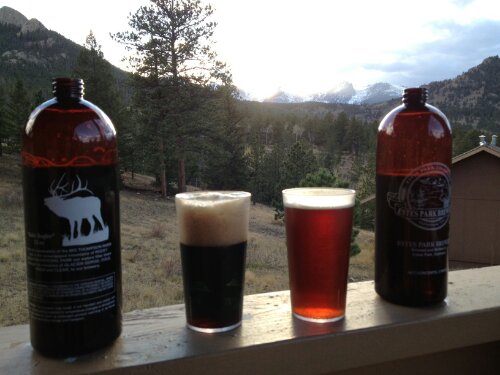
Baby Bugler 2 pint bottles of Estes Park Porter (left) and Redrum Ale (right), with Rockies sunset

The air is thin for us lowlanders, but the beer is good, especially when drunk on the veranda of our cabin with the sun setting and coyotes howling. (It’s also the elk rut and we’ve had a lot of their eerie bugling. I even cooked dinner on our first night here with these massive deer grazing just outside the window.)

The Shining Ale, Estes Park brewery

Really enjoying the brewery’s amber ale, named Redrum ale. Yep, we’re in The Shining territory. Stephen King was inspired to write his classic story while staying in room 217 at the Stanley Hotel in Estes Park. The brewery even does a The Shining beer to further milk the connection – especially in this run-up to Halloween, a festival that reaches bonkers proportions in the US, compared to the UK’s more traditional shifting of Samhain/All Souls’ Day/Halloweeny activities to Bonfire Night, 5 November.

Tomorrow we head downhill again, but only to Boulder – a town that’s already a mile high. And has 25 breweries within county limits. I don’t think we’ll be visiting them, as we need more child friendly activities, but maybe I’ll be able to try a few brews in passing.

1 Comment

Filed under Ale, beer, American beer, Misc, Travelling

Post number 100, a celebration of Italian craft beer, and getting ready to leave Rome

Italian craft beers

According to WordPress’s strange date conventions I started this blog with a post published 2012/11/07. For most of the world1, this would otherwise be known as 07/11/2012, 7 November 2012.

It was started so I had a place to write about my baking experiments, my interest in the baked goods I encountered while living in Rome, where we moved in August 2011, and my burgeoning enthusiasm for Italian birre artigianali (artisan beers, craft beer).

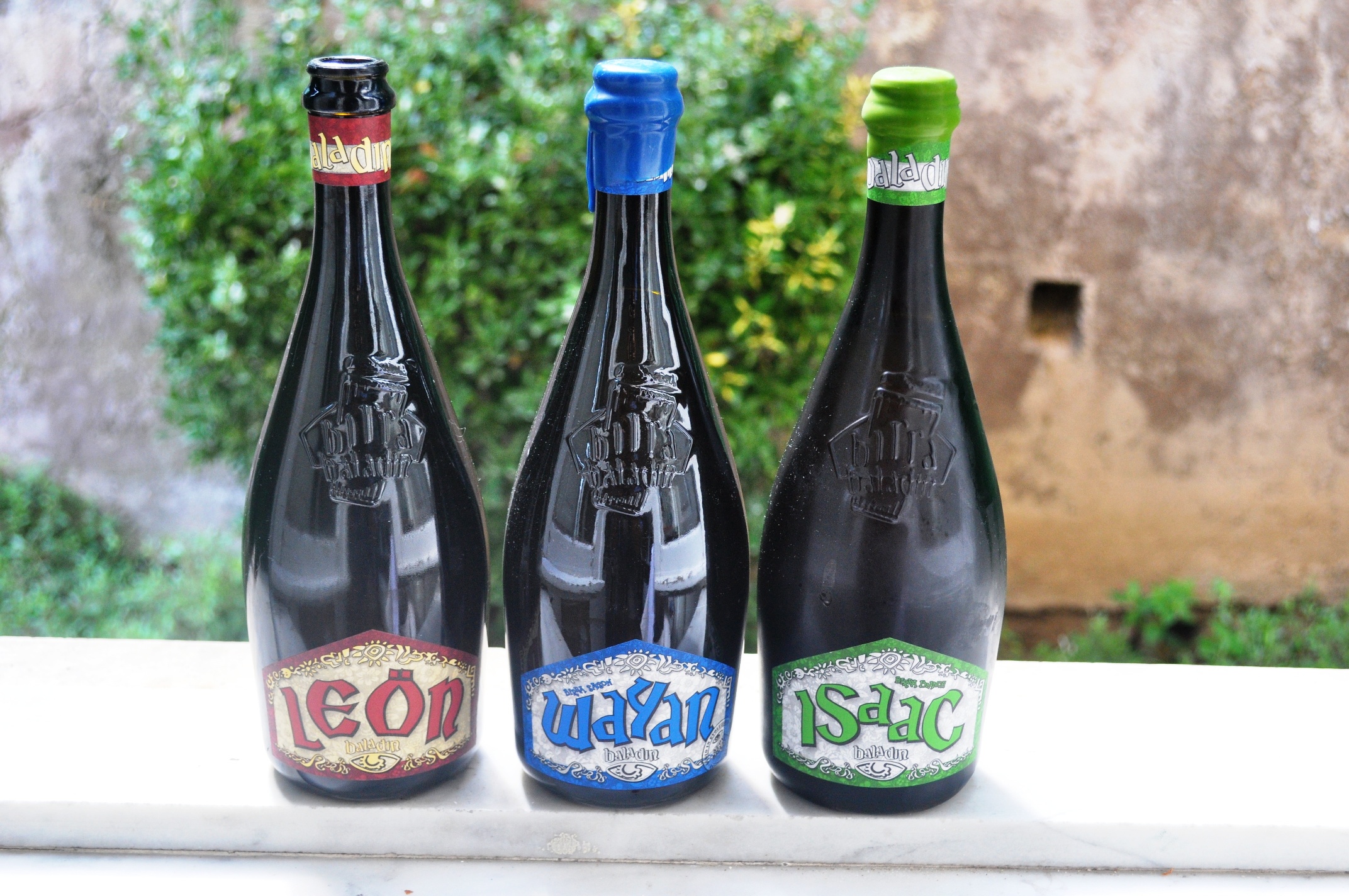
Some Baladin beers

Leon, Wayan and Isaac from Baladin, the brewery that really kicked it all off in Italy and still produces many of the best, most intereting beers here.

Now, almost 11 months later, I’ve arrived at my 100th post…. just as we’re preparing to leave Rome after two roller-coaster years. These included:
difficult work (Fran);
unpaid work/unemployment (me; including one [dubious] SF-fantasy novel, an internship on the American Academy’s Sustainable Food Project, and this educating-myself-about beer and waffling on about baking project);
faltering attempts to learn Italian;
lots of baking (some great; some heavy; some that went mushy);
lots of food (some amazing, a lot mediocre);
lots of beer (mostly interesting);
bewilderment at the Italian ways of doing things (or not doing things; like having to wait five months to get our internet connected, or the post office that doesn’t sell stamps);
still no kids (sadly);
neighbours from hell (WTF!? It’s 4am! Again! Che cazzo state facendo?! Stiamo provando di dormire. Mortacci tua!);
zanzare;
some great new friends;
witnessing Palme d’Or winner Nanni Moretti move in next door;
and, overall, an incredible immersion in this bonkers, intoxicating, dilapidated, exasperating, traffic-choked, caffeine-fuelled, history-sozzled city.

Draco beer

Draco, from Birrificio Montegioco. Made with bilberry (aka blueberry) syrup, no less.

When I wrote the 99th post, I thought, “Accidenti! I better do something interesting for the arbitrary landmark of number 100″. But that stymied me.

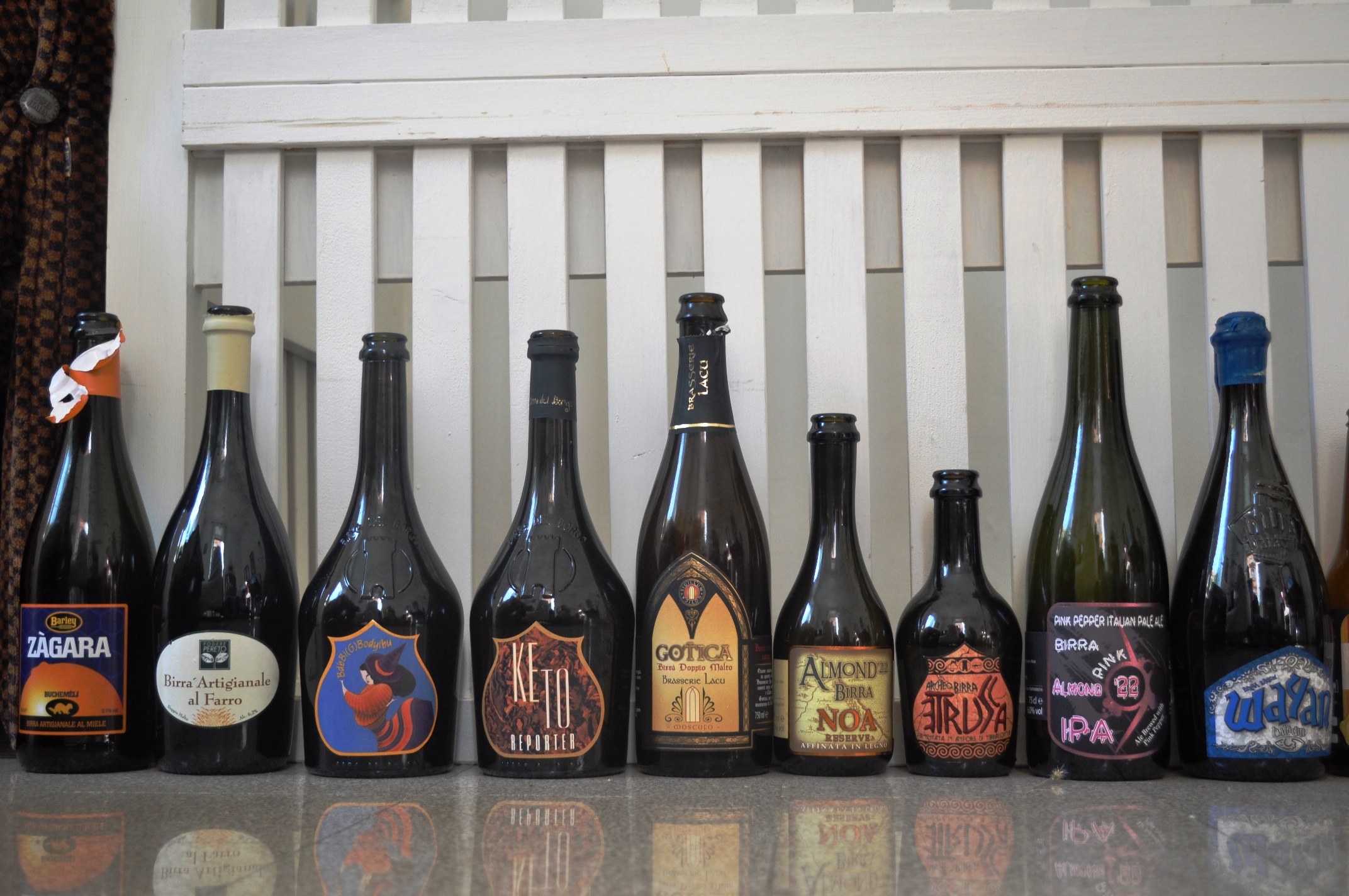
So instead, here are a load of pictures of beer. They’re mostly from a party we had at the weekend that doubled tripled up as a goodbye, a free jumble sale, and a celebration of Italian craft beer. Although we had a great selection of fascinating brews, they are only the tip of the iceberg of the 500 or so birra artigianale breweries currently operating in Italy. I wish I could stay here and keep on drinking my way through them, but we need to return to Britain.

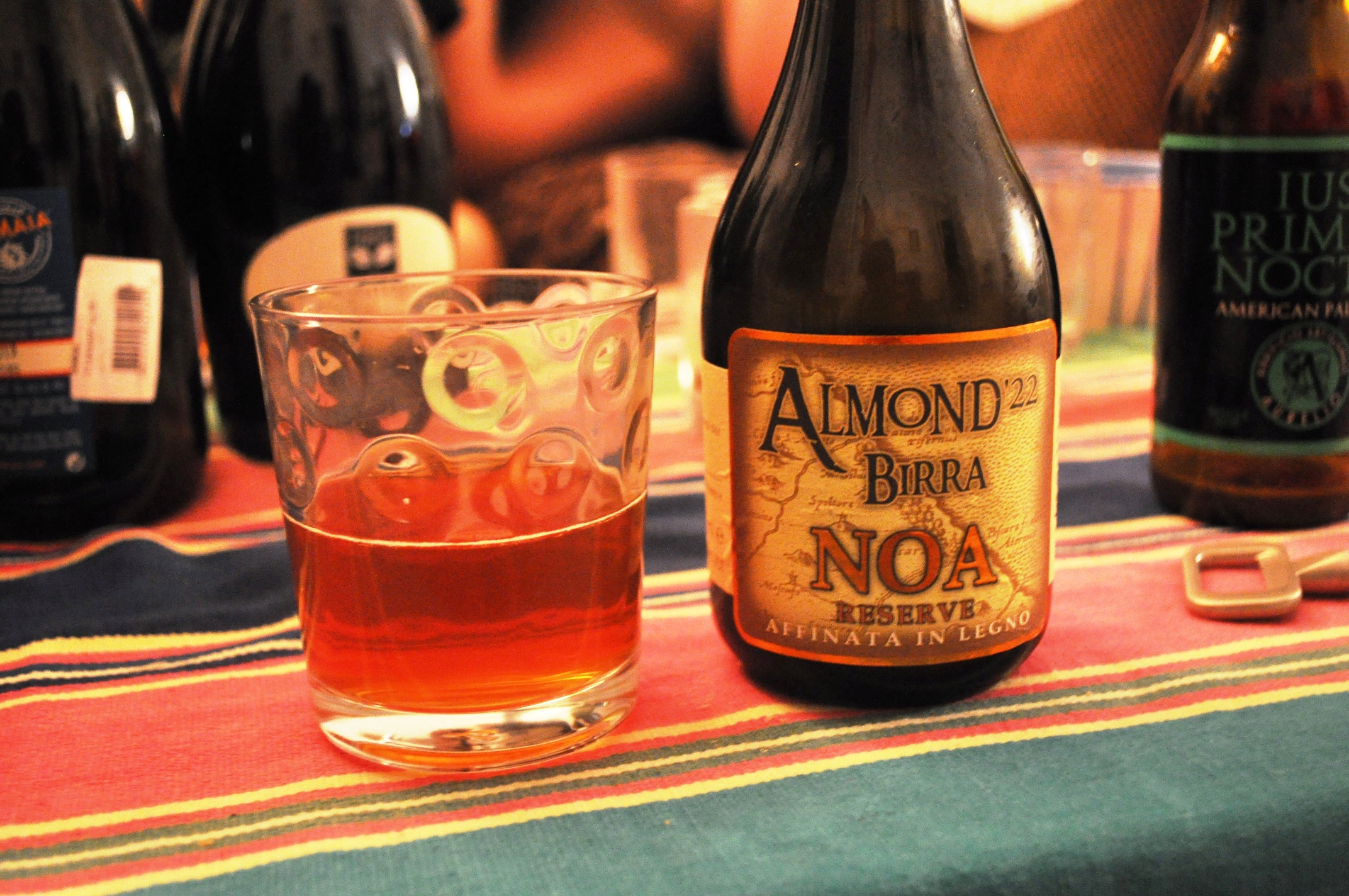
Noa Reserve

Noa Reserve – one of the strangest beers we had that evening. Aged in barrels, it basically tastes of whisky, brandy, or as our friend MM said, “a memory of foreign land you’ve never been too.”

I do hope any readers of this blog won’t be put off by the fact I won’t have the glamorous “I live in Rome” factor any more. For the next few months, we’ll be visiting friends and family in the US and NZ, before settling back home around Christmas. So the blog will change slightly – not its tone, but its context.

We’ll see how it goes.

I certainly have no intention of stopping baking and I’m really excited to get back to the real beer scene in the UK, which, like that of Italy, has grown exponentially the past few years, with 197 new breweries opening in the past year alone, while London alone has nearly 50, up from just two in 2006.

Ecco, more photos of beer:

Marche'l Re

Marchè’l Re from Loverbeer brewery. Possibly even stranger than Noa Reserve, me and chef Chris Behr concluded it was like “drinking fruit beer from an ashtray”.2

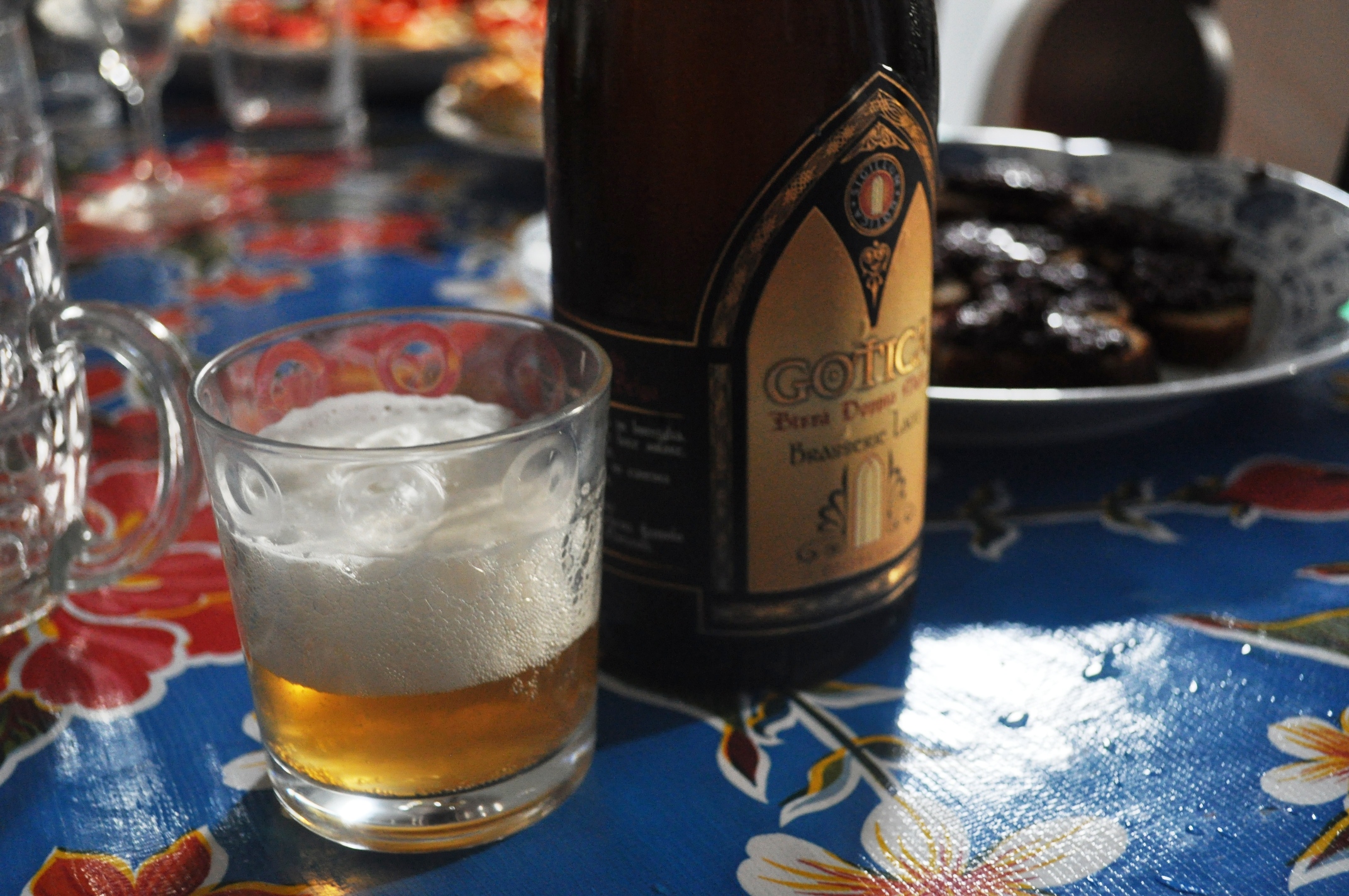
Gotica from Brasserie Lacu

Gotica from Brasserie Lacu, a light double malted Belgian abbey ale – made in Belgium for the Italian market.

Rubbiu MRL

Can’t really find out much about this one, Rubbiu, but it was a great gift – as it came from a small brewery in a friend’s small home town outside Rome.

Zagara beer from Barley brewery

Zagara beer, an orange blossom honey ale from Barley brewery in Sardinia. So the first Sardinian beer I’ve ever had.

Line-up left

Line-up, centre

Line-up, right

And finally, a bit of nocturnal ambience. Thanks to anti-mosquito candles.

Isaac, anti-mozzie candles

1 Except you contrarians in the US, of course, who would insist on confusing the rest of us by using putting 11/07/2012 for 7 November 2012.

2 We didn’t necessarily mean this in a bad sense. I wish I’d written about Loverbeer more in my time here, but I’ve only really discovered them fairly recently. (I did write about their Madamin.) As they really are producing some of the most interesting beers in Italy. They seem intent on combining the traditions and tastes of wine and beer. So their D’uva beer  is made with 20% grape must and tastes much more like a sparkling wine than a beer, not unlike say Birra del Borgo’s Rubus.

I’m increasingly interested in this whole area of making beer that doesn’t really taste of hops or malt. It’s fascinating, and I’m very divided. The above mentioned Noa Reserve, from Almond ’22 brewery, is another example, as is the fascinating Etrusca (which can be seen in one of the above pics), a beer made by three different breweries (Baladin and Borgo in Italy, and Dogfish Head in the US) according to an ancient recipe; it tastes much more like wine or mead than beer. I very much enjoyed experiencing the weirder beers we had, but I think my favourite of the evening was Ius Primae Noctis (“right of the first night”, Latin for “droit du seigneur”), a hoppy, citrussy Italian APA from Birrificio Aurelio, which is in Ladispoli, not far from Rome. So yes, I’m clearly not leaving behind hoppy beers any time soon.

11 Comments

Filed under Ale, beer, Discussion, Italian beer

Black beer bread

Black beer bread

Readers of this blog may have already spotted that we’re ‘Game of Thrones’ fans. ‘Game of Thrones’ is not only the name of HBO’s excellent TV series, it’s also the title of the first book in George RR Martin’s A Song of Fire and Ice cycle of books and it made a cameo appearance in this post, where we were lolling around in the park drinking Birra del Borgo’s Rubus, reading and enjoying the sun.

I can’t remember what hyperlinked amble took me there, but Inn At The Crossroads is the officially recognised blog for recipes based on foods found in A Song of Fire and Ice. Being a baker, my attention was immediately grabbed by their bread recipes. Specifically black bread – something that’s mentioned in the books as common fare of the people of Winterfell and the North.

Here is Inn At The Crossroads’ first Black bread, and here is their Black bread redux, aka Black beer bread. I wanted to try something similar, but not using commercial yeast – as this didn’t seem to fit into the whole quasi-Medieval vibe of Martin’s world. Instead, I wanted to use beer barm, a byproduct of fermentation.

My first experiment with a real barm bread was pretty successful, though I didn’t use any actual beer or dark flours to make it, so it wasn’t really a black bread or a black beer bread. This, however, is.

Again, I used Mulino Marino Pan di Sempre, a stoneground organic white flour that is made with a blend of Triticum aestivum (that is, common bread wheat), Triticum spelta (spelt wheat) and Triticum monococcum (einkorn wheat), but I also added some wholewheat flour.

I made a leaven with the same barm as before, feeding it up with flour over a few days, then I made up a dough, using beer as the only other liquid, not water.

Now, I mentioned that Dan Lepard’s ‘The Handmade Loaf’ has a recipe he calls “Barm bread”, though he makes it without actual barm, just beer and a leaven. He also heats the beer, killing the yeasts, but retaining the flavour. I wanted to retain the live yeasts from a bottle-conditioned beer, so didn’t heat it.

Flour, dark ale and barm leaven for my Winterfell black bread

The beer I used was Birrificio Math’s La 27, a 4.8% dark beer from the brewery near Florence. They call it a stout, but stout, traditionally, meant strong, and more recently has come to be associated with more full-bodied creamy porters. It’s neither.

The La 27 has a solid fruity smell: specifically black berries like blackberries (!), elderberries and blackcurrants, with a touch of smokiness and a little chocolate, but taste-wise it’s dull, a little charcoal, but not much more depth of flavour. The body was thin and watery, and over-carbonated. The aftertaste was oddly bitter. It was black though, or black enough for a black beer bread.

So anyway, here’s the recipe. If you try it, don’t be afraid to adjust the quantities, as I was very much experimenting when I made it.

I made my beer barm leaven with barm, flour and some cooking water from farro grain; I’d say it was about 80% hydration, effectively. If you can’t get hold of a beer barm, a normal leaven/sourdough starter will suffice, though it won’t be quite as fun.

For the beer, use a non-pasteurised, non-filtered, bottle-conditioned dark ale, stout or porter (not Guinness).

280g beer barm leaven
400g flour (a mixture of white and wholegrain)
10g salt
250g dark ale, stout or porter

1. Combine the salt and flours.
2. Combine the leaven and beer, stirring well.

Winterfell black bread
3. Pour the liquidy gloop into the flour.
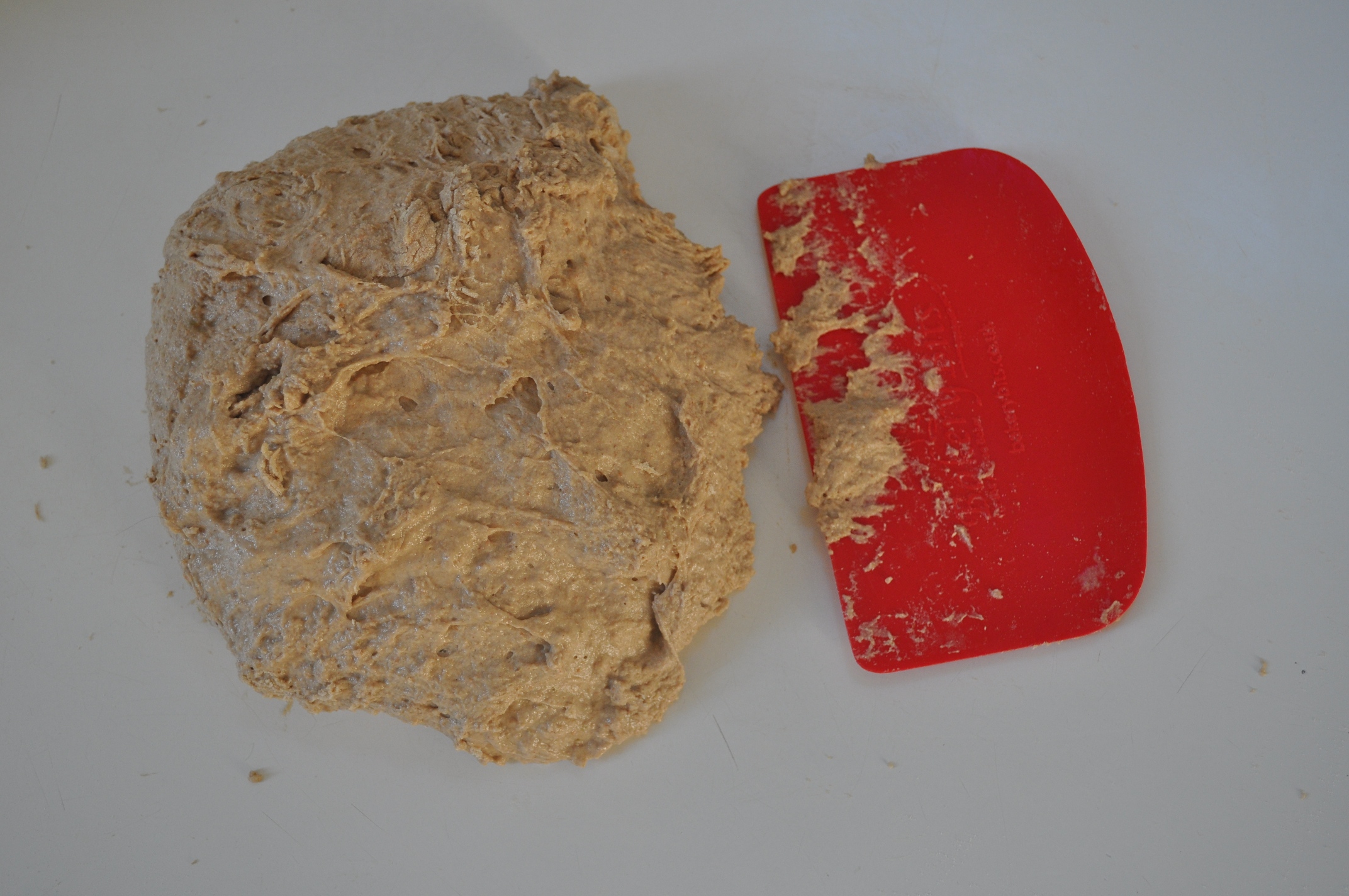
4. Bring together the dough. It’ll be pretty sticky. Which is good, albeit tricky to handle. Don’t agonise.
Winterfell black bread

5. Form a ball with the dough, put it in a bowl or plastic container, cover with plastic or a lid, then put in the fridge.
6. Leave in the fridge for around 14 hours.

Winterfell black bread
7. Take the dough out of the fridge and allow to come to room temperature (around 20C ideally).

Winterfell black bread
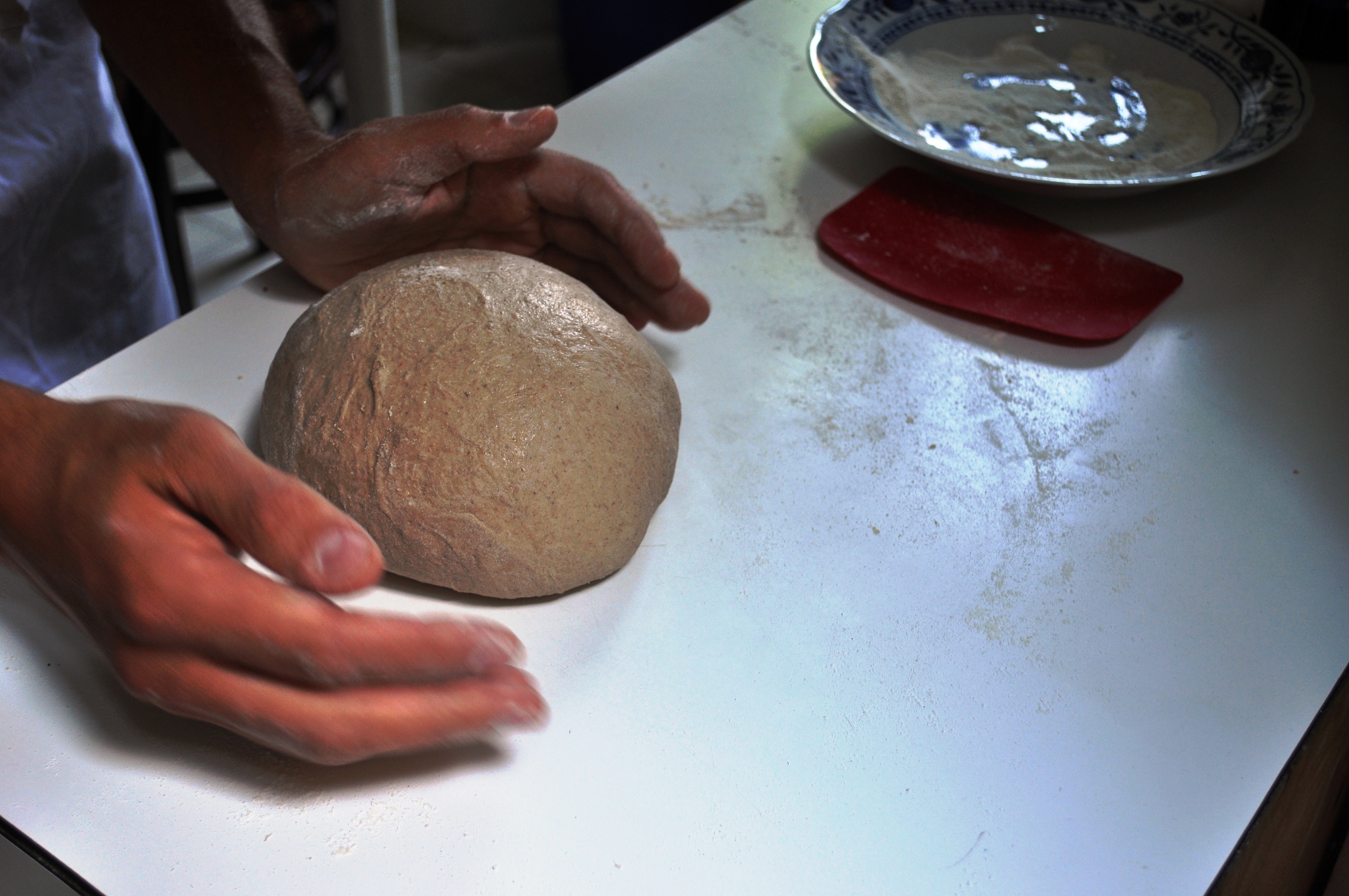
8. Form a ball, then put it – smooth-side down – in a bowl or proving basket lined with a floured cloth.

Winterfell black bread
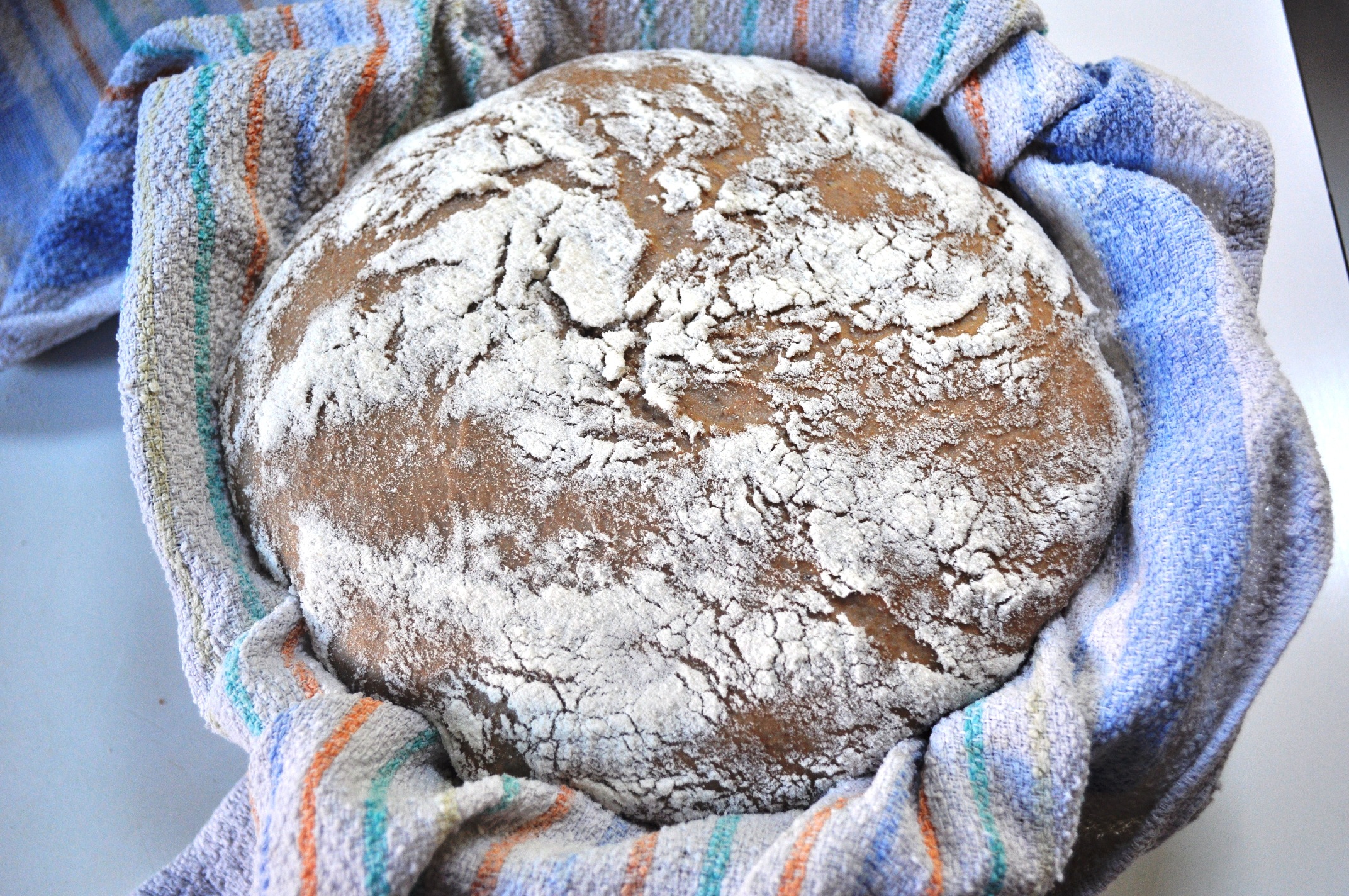
9. Prove again for about 5-8 hours more. This will depend on the temperature of your room, the liveliness of the yeasts, etc. You want to leave it until it’s doubled in size and is soft to the touch, nicely aerated.

Winterfell black bread, final prove
10. Preheat your oven to 240C.
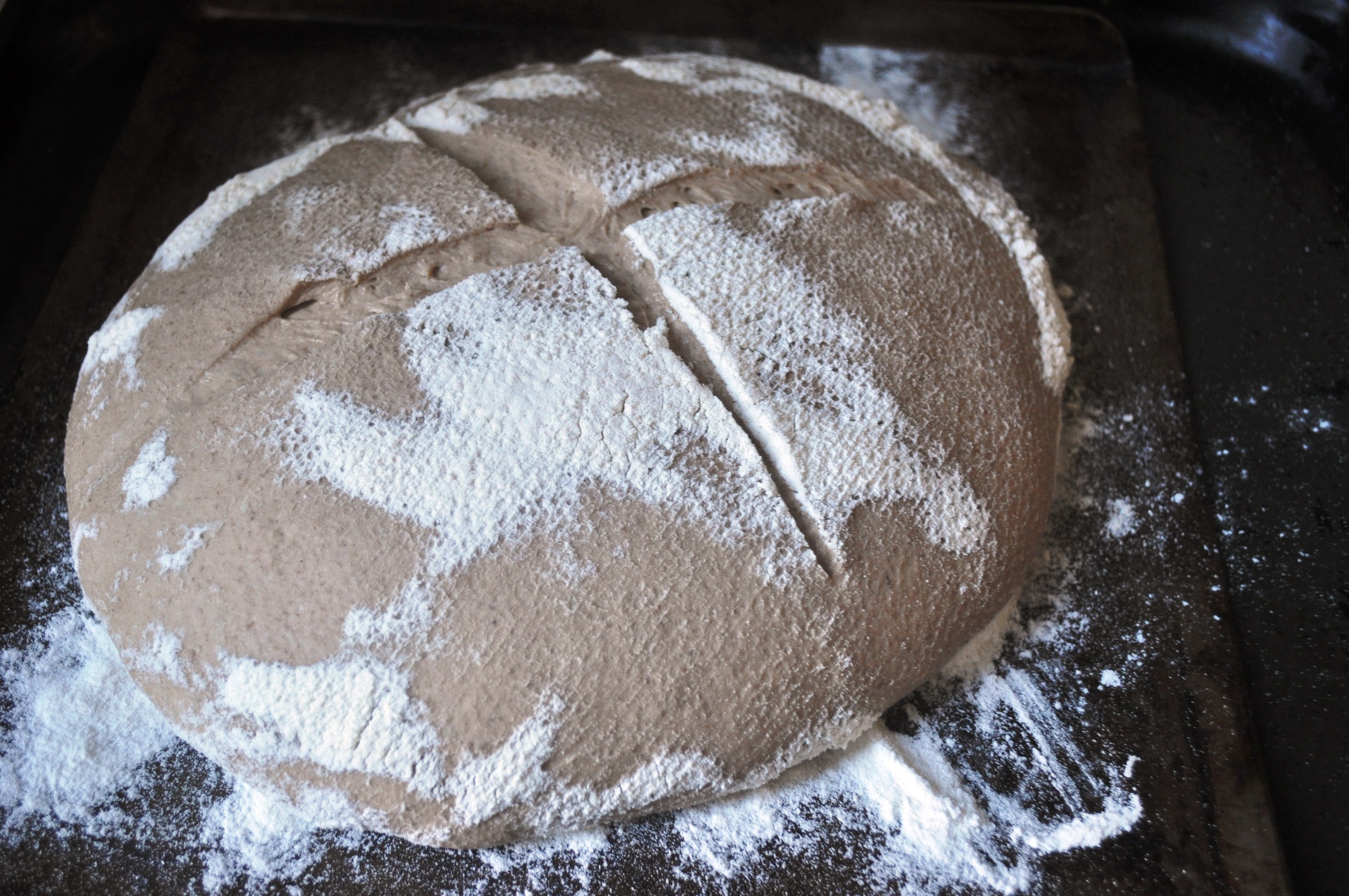
11. Upturn the ball onto a baking sheet (so the smooth-side is up), slash, then bake for 20 minutes.

Black bread
12. Turn down the oven to 200C and bake for a further 20 minutes, or until the bread is done. This can be tricky to judge, but you want it to feel lighter, and sound hollow when tapped on the bottom.
13. Cool on a wire rack.

Black bread

Now, the finished loaf looked rather pleasing, and had a lovely smell of chocolate, a scent that you get with certain stouts. Oddly, this smell wasn’t strong with the beer itself, but it’s come through with the baking.

Winterfell black bread

Taste-wise, it’s certainly pretty rustic but is oddly bitter-sweet. I’m not a chemist, but I wonder if the bitterness is related to the alcohod.

I’m sure it would have served very nicely for the hungry Brothers of the Night’s Watch, freezing their behinds off on the Wall. We, on the other hand, enjoyed it for breakfast on a mild late-summer Roman morning slathered with honey. Then for lunch with a lovely crunchy, sharp medium aged pecorino.

Follow my blog with Bloglovinʼ

3 Comments

Filed under Ale, beer, Breads

Real beer barm bread

Beer barm bread

Once Upon A Time
Once upon a time, breweries and bakeries lived side-by-side harmoniously. Brewers merrily went about their noble work, mashing, sparging, fermenting. One blessed by-product of the process was a foam that frothily formed on top of the fermenting liquor. The dusty baker from next door would welcome consignments of this malty foam – barm – and use its natural yeastiness to leaven his dough.

And so it went for long ages.

Until some learned men in the late 18th and 19th centuries improved humankind’s understanding of bacteria and yeasts. By the late 19th century, yeast specifically cultivated for bread-making had become commercially available in block, then in dry, granulated form. And slowly, sadly, the close bond between breweries and bakeries faded away.

This idea of bread being made with brewery by-products has intrigued me for ages, but not having had a ready supply of barm, I’ve never actually tried it before.

A Dan Lepard beer bread

Beer breads
Dan Lepard in ‘The Handmade Loafʼ does a loaf he calls “Barm bread”, but it’s made using a bottle conditioned beer, that is then heated. This seems counter-intuitive, as it kills the yeasts in the beer, but apparently it’s to cook off some of the alcohol, which retards the action of any yeast in the mix. Lepard was effectively using the beer as a flavouring, and then re-introducing yeasts, I believe; so however lovely the results were, it wasn’t a genuine barm bread. (One of my attempts using his method a few years ago is picture above.)

My recent enjoyment of Game of Thrones and the Song of Fire and Ice novels, the source for his great HBO TV series, lead me to the Inn At The Crossroads. This inspired blog features involves real-world interpretations of the fantasy world foods mentioned by George RR Martin in his books, and it got me thinking again about pre-industrial yeast bread-making.

Westeros’ finest
Specifically, I was checking out The Inn At The Crossroads’ bread recipes. They have a few for Martin’s black bread, with the second version made using dark ale, stout or porter. Okay, thought I, that looks fun. But I had one criticism. Surely in Martin’s quasi-Medieval world, they wouldn’t have had “1 packet yeast”; bread would surely have been made with the barm method.

I made a comment along these lines, and one of the site’s creators, Chelsea Monroe-Cassel replied, saying “I agree that this would be the very best way to make this bread!” She also said, “I’ve made several trub breads, with great success.” I’d not heard of trub bread too, but this one is made using the sediment from the fermenter.

Beer barm

My project slightly moved away from the black bread theme, though, as initially I just wanted to make a bread with barm, and with flour with older grain – ie arguably more medieval – varieties.

I bought some Mulino Marino Pan di Sempre, a stoneground organic flour that is made with a blend of Triticum aestivum (that is, common bread wheat), Triticum spelta (spelt wheat) and Triticum monococcum (einkorn wheat).

My friend Michele Sensidoni, a brewer, kindly furnished me with a bottle of barm. It wasn’t very prepossessing stuff: gloopy, brown and malty, separating slightly, but it was exciting to finally get my hands on the stuff.

Beer barm and Mulino Marino Pan di Sempre flour

So:
100g barm
100g flour
Mixed and left overnight. My kitchen was at around 23C. The next day this was clearly alive, and reasonably vigorous. Here’s the before and after shots:

Beer barm leaven Beer barm leaven

I formed a dough with:
200g barm leaven (ie, all of the above)
500g flour
10g salt
300g water

Adjust the water if necessary; you want a nice moist dough.

Beer barm bread, dough

I then put all this in a container and left it in the fridge for 24 hours.

I then took it out of the fridge, and let it come back to RT (again, around 23C).

Beer barm bread dough, before final prove

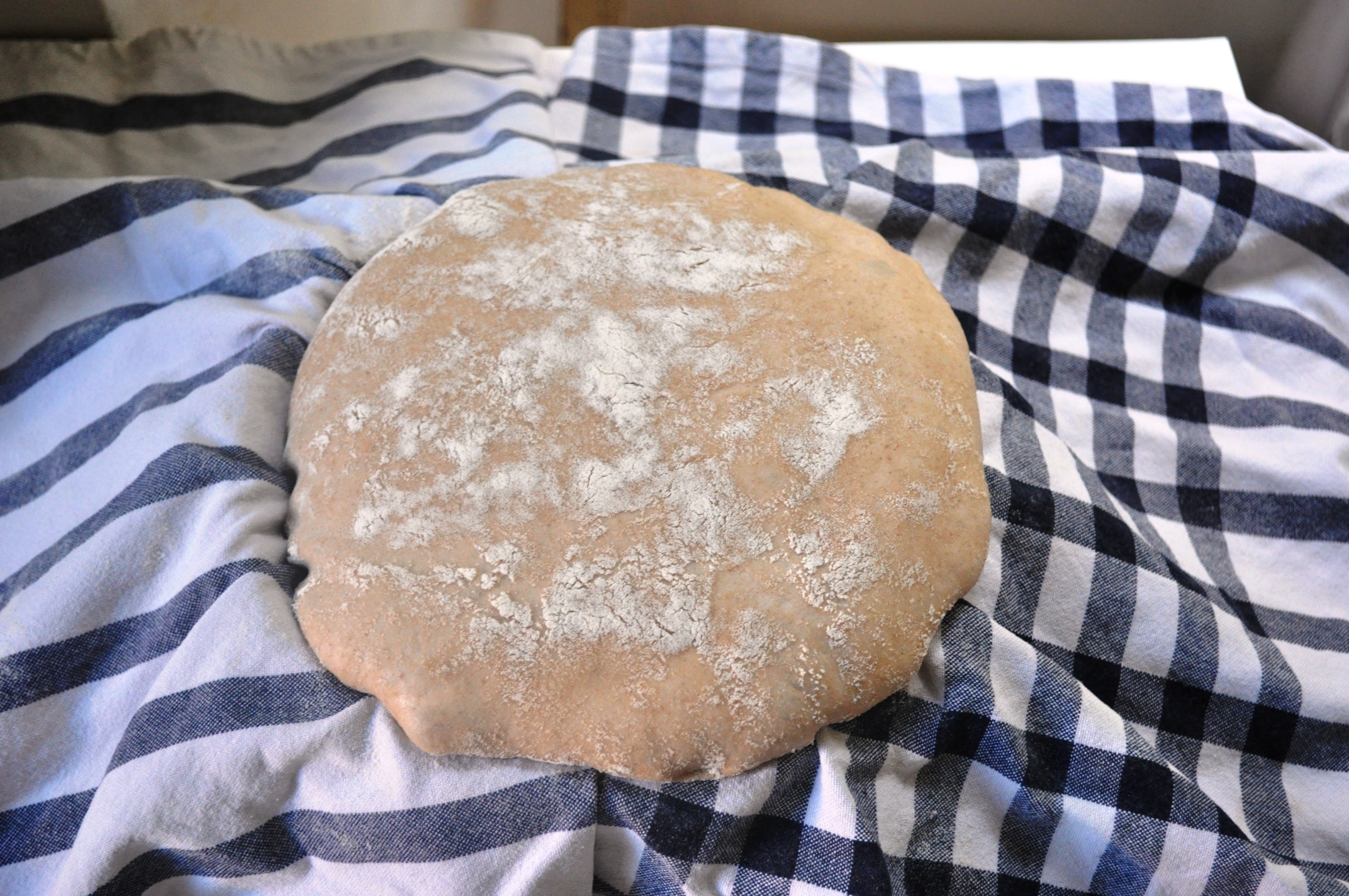
After a few hours, I formed a ball, and put it in a proving basket lined with a floured cloth.

I let it prove again at RT for around 9 hours.

Beer barm bread dough, proved

I preheated the oven to 230C.

Beer barm bread, pre-bake

When the dough was nice and swollen and soft, I baked it for 20 minutes, then turned down the oven to 210C and baked for another 20 minutes.

Beer barm bread, fresh from oven

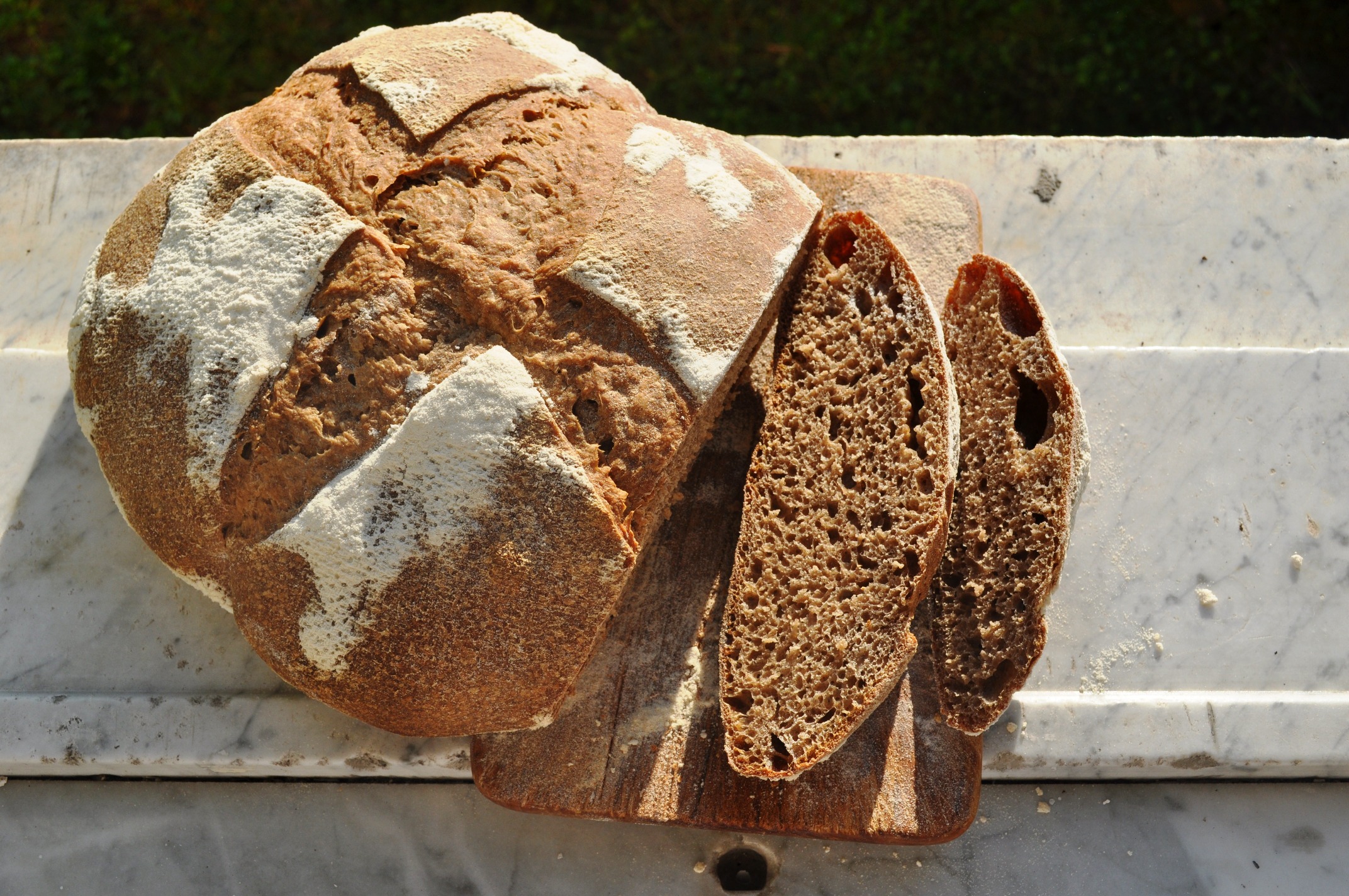
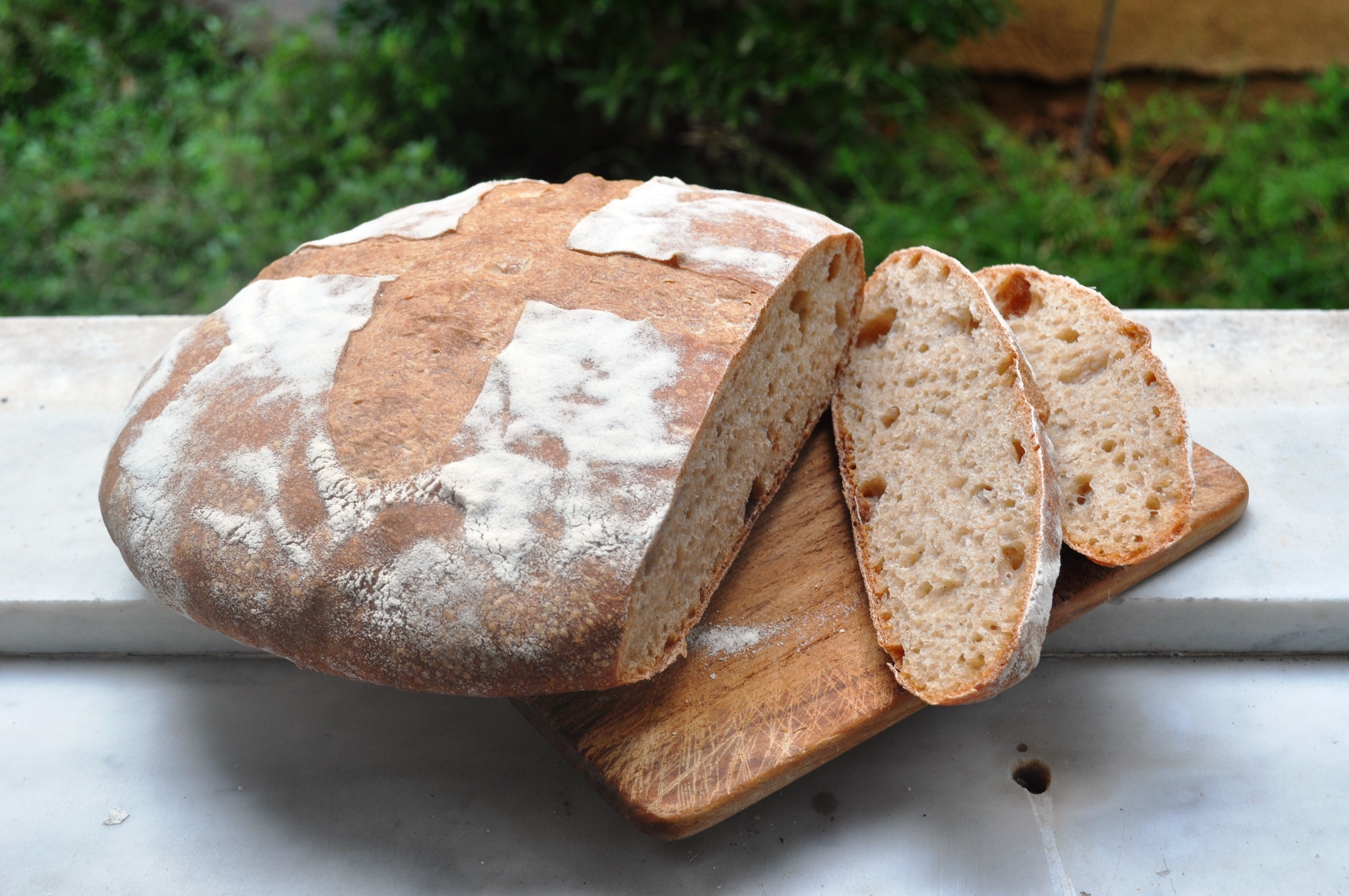
The results are very pleasing. It’s got a chewy crust, a reasonably open crumb and a taste that’s subtly sour. Yay.

Crumb CU

Oh, and for etymology geeks (like me), the British English word barmy, meaning a bit bonkers, crazy, comes from barm. As a barm is the foamy scum that results from fermentation, someone who is barmy is a bit bubbly, excitable, unpredictable and possibly even frothing at the mouth. Don’t worry though, making and eating this bread won’t have that effect on you. [insert suitable smiley here to compensate for lame attempt at humour]

29 Comments

Filed under Ale, beer, Breads, Recipes

Toccalmatto’s Oceania hoppy Saison

Toccalmatto Oceania hoppy saison

Another Toccalmatto with another crazy bit of label design, like Zona Cesarini but more especially B Space Invader. This time, the label seems to portray a strange fantasy Polynesian coconut-tiki-demon seizing a double-jointed (or even bone-less) hula dancer, like some King Kong riff.

Oceania isn’t actually on Toccalmatto’s site (here. Beware! Airbrushed goth babe), or in the Guida alle birre d’Italia 2013, but apparently it was created in 2011 as a one-shot but added to the range on the strength of a good response from punters.
The label calls it a “New World Hoppy Saison” in nice helpful English then expands: Birra doppia malta chiara, secca e beverina / Unisce speziatura classica delle Saison agli aromi dei luppoli Neozelandesi e Australiani / Birra di Alta Fermentazione – Rifermentata in Bottiglia. That is, “A double-malted clear beer, dry and drinkable / Uniting classic saison spiciness with the aroma of New Zealand and Australian hops / Top fermented – Bottle conditioned.”

Toccalmatto Oceania back label

The ingredients are water, malted barley, malted wheat, hops, sucrose, yeast. The sucrose is perhaps unexpected – you’d think with not one but two malts there would be enough sugars for the yeast, but adding more is presumably a factor in its fortification. Yep, it’s another strong beer: 7% ABV.

Some comments online also suggest adding sucrose to your brew can make it taste “cidery”, but others strongly refute this as a misconception that arose from poorly balance homebrew kit beers. This well-informed forum contributor, PseudoChef (a biochemist from Chicago), says: “Adding sugar to your recipe can be advantageous in that it helps ‘dry’ out the beer and thus reducing cloying body sweetness in some styles and accentuating hop bitterness in others.”

Certainly the Oceania is in no way cidery, and is indeed dry not sweet. Overall it’s another great beer from Toccalmatto.

Toccalmatto Oceania

It pours with a decent head. It has an odour of citrus (orange, grapefruit), fresh cut grass, fresh herbs growing in the sun (rather than, say, cut dried herbs or hay. Or is that getting a bit specific?). The body is medium-light, and colour is orangey-yellow and slightly cloudy. It’s well-carbonated, and has a tart, fruity flavour with touches of resin. Presumably from the hops, which in this case are New Zealand (Motueka, Pacific Jade) and Australian (Galaxy, Rakauand).

Finally, it has a fresh, crisp mouthfeel. Indeed, despite having something of that sweet-sour-spicy-fruity complexity you get with a good saison, it’s another lovely refreshing summer beer, and again one that’s so beverina (drinkable) it belies its strength.

2 Comments

Filed under Ale, beer

Birrificio Math’s La 16 amber ale with jasmine flowers

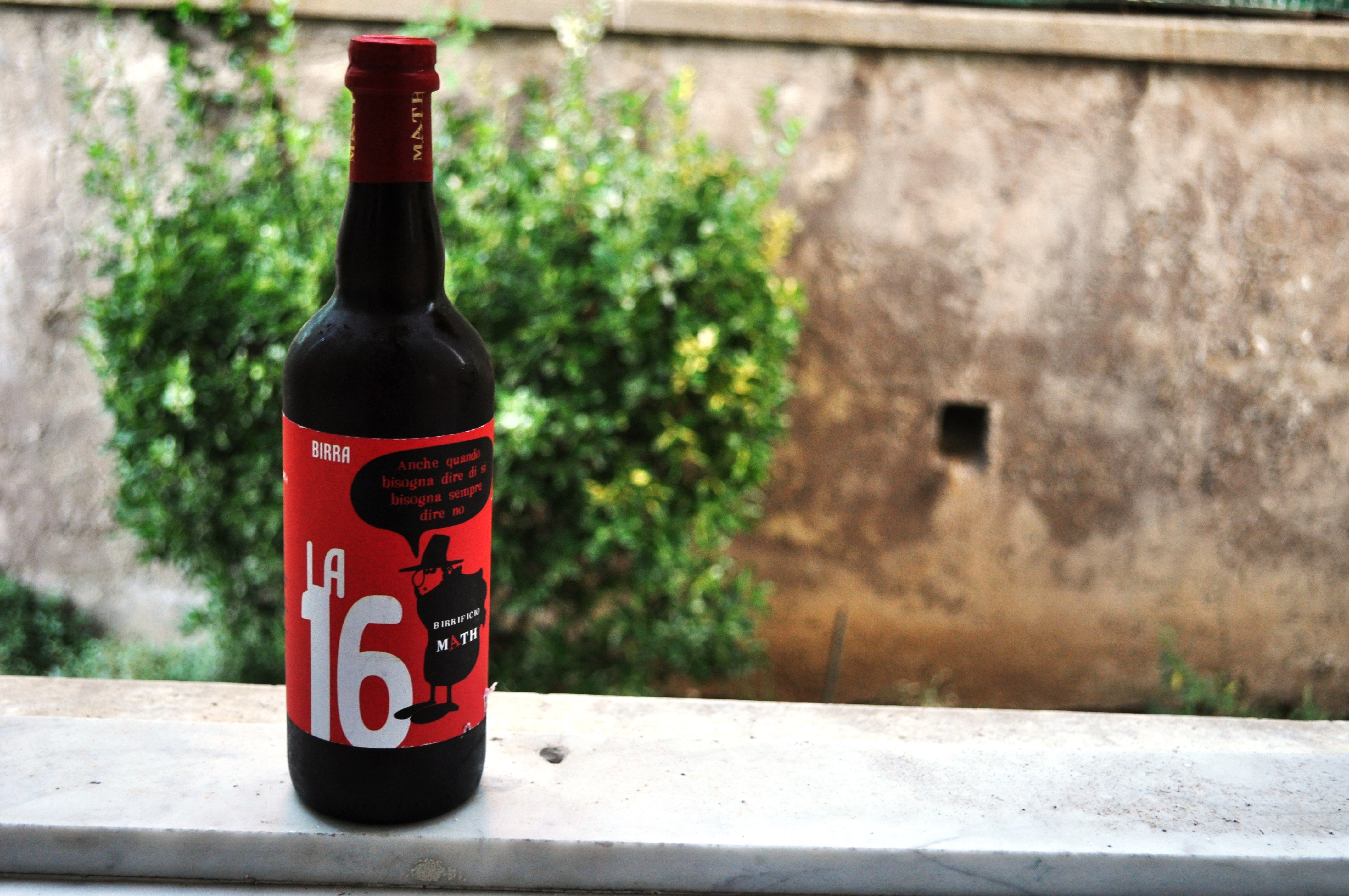
Birrificio Math La 16 bottle

Quite intrigued by this one. I’d enjoyed my previous experience of a brew from Math brewery (birrificio), La 68, a wheat beer I drank when experimenting with making fish and chips and the label on the La 16 said it was a Birra ambrata ai fiori di gelsomino – an amber beer with jasmine blossoms. The ingredients once more included the cryptic spezie too (spices – but what blimmin’ spices?). What’s not to like? Well, I was slightly wary of the 7% ABV. I would have thought I was getting used to Italian strong beers, but it seems to be going the other way. Especially as I drank this shortly after coming home from a trip to England, and enjoying several quality ales with less than 5% ABV.

One tricky factor at the moment is getting the temperature of the beer right. It’s been around 35C for several weeks now, peaking even higher a few weeks ago. Ergo, I keep my beers in the fridge, reasoning that I can take them out and let them warm up a bit before drinking. It’s not an exact science though; my food thermometer has died, so I’m having to guess when the beer is at the ideal 10C-ish.

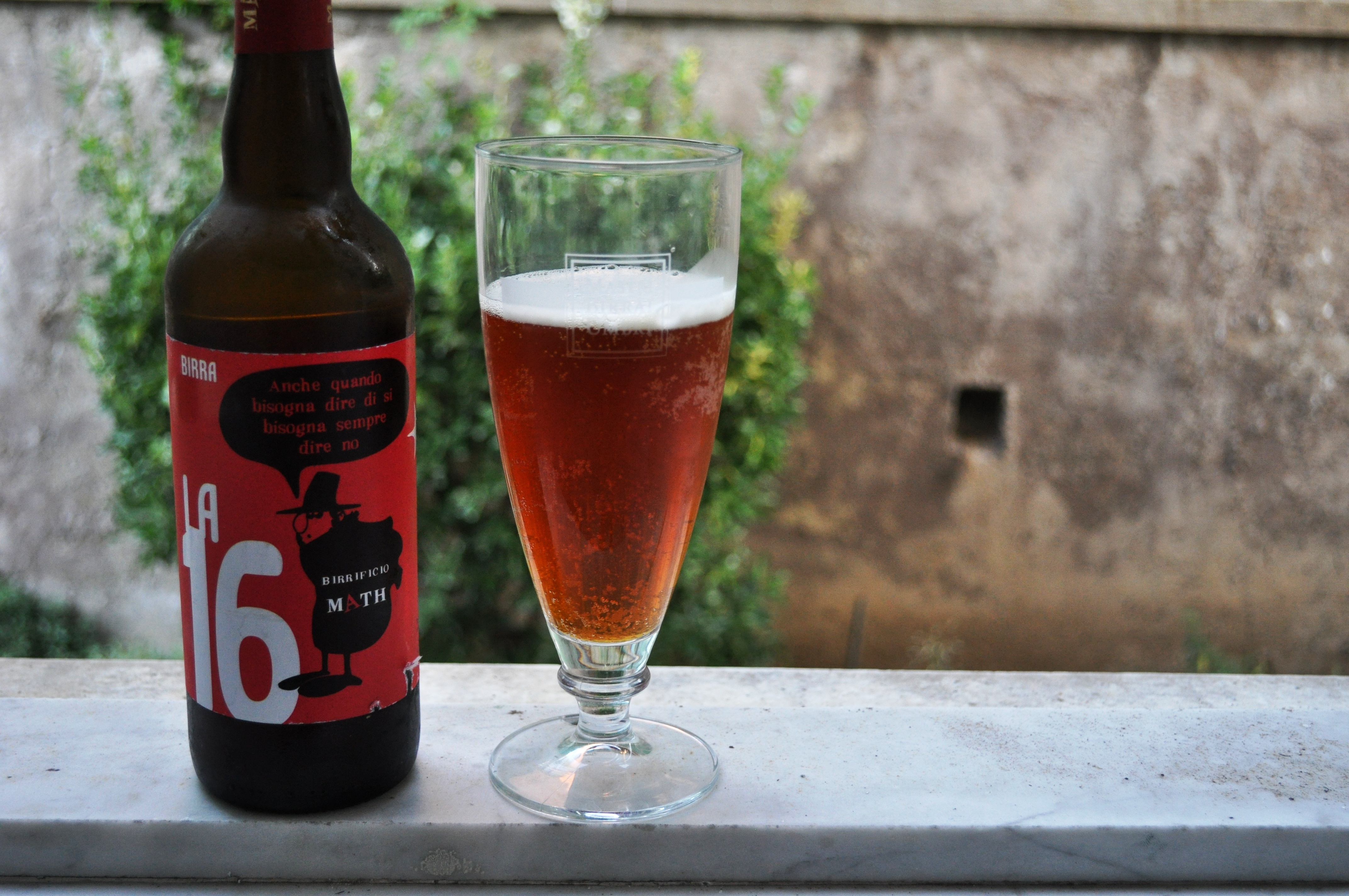
Birrificio Math La 16 and glass

Maybe I guessed wrong this time, but drinking the La 16 I really got surprisingly little interesting perfume. I thought the jasmine flowers would make their presence felt, but I didn’t get that at all. Perhaps it was still too cold? Or perhaps it’s just not as great a beer as I was hoping. Tasting it too, I didn’t really get much floral or spicy. Very little fruitiness at all, just a fairly heavy malt and decided heavy hoppiness. So: not well balanced. Medium body, medium carbonation, pleasant coppery brown colour, borderline unpleasant taste.

It was assertively bitter, to the point of being too much, as if the hops have been cooked too long. Stewed, like an old cup of tea. Or at least it was too stewed for my taste. I’m really beginning to not enjoy these Italian strong ales (sometimes called “Belgian style” – but I dislike that expression. There are so many types of Belgian beer, it’s too vague). They’re just not subtle. Drinking them is like eating gelato (or ice-cream) too fast – you get that instant ache at the front of the brain. You’re punched with the hoppiness, with the high alcohol content.

Or as Loeser, the protagonist in Ned Beauman’s The Teleportation Accident, says when he opens a bottle of terrible (ersatz) champagne and has a swig: “It’s as if they’ve decided to incorporate the eventual hangover directly into the flavour as a sort of omen.”

Birrificio Math La 16 label

Leave a comment

Filed under Ale, beer

Mastri Birrai Umbri brewery visit

Light malt at Mastri Birra Umbri

Mastri Birrai Umbri’s beers have featured on this blog several times (eg here and here). When I first moved to Rome a few years ago, I didn’t know anything about Italian birra artigianale (craft beer), but that soon changed: in part because I discovered beer bars Ma Che Siete Venuti a Fà? and Open Baladin and in part because it turned out the boyfriend of a London friend was actually a brewer in Umbria. This was Michele Sensidoni, master brewer of Mastri Birrai Umbri, whose beers don’t feature on the menus of the birrerie (beer bars), but were to be found on the shelves of my local supermarket.

Last month, Jeremy Cherfas and I paid a visit to Michele at the brewery, located in the charmingly named village of Bastardo in central Umbria. Over at Eat This Podcast, Jeremy’s done a comprehensive podcast about the visit, but I want to add a few more things here, along with some more photos.

The brewery, whose name means “master brewers of Umbria” or “Umbrian master brewers”, was founded by the Farchioni family: one of biggest names in olive oil in Italy. The Farchioni family has been farming and producing foodstuffs for centuries. Although they weren’t previously involved in brewing, Umbria has a beer history, with a brewery, Fabrica della Birra Perugia, that closed in 1929. Indeed, Italy itself has an ancient association with beer. Cervisia or cerevisia, as it was known in Latin (and the clear root word for the Spanish word cerveza and even the uncommon Italian word cervogia*), was used as payment for troops in ancient Rome, and was a common drink among the poorer members of society.

Obviously, wine was more important as the viniculture became more dominant, though barley (orzo) has long been grown in Italy, and experiments into hop-growing were done in Perugia at the start of the 20th century (check out this archived newspaper story, in English, from 1912). They’re even starting again now – and why not? If you look at this interesting conjectural map from 1919, the north of New Zealand’s South Island, a major hop-growing area, is similarly located to central Italy in terms of longitude. Mastri Birrai Umbri hope to eventually locally source all their ingredients, though hops may be last.

The sala cottura, or brewhouse, at Mastri Birrai Umbri

Michele has a doctorate in food science and technology from the University of Perugia, he was head brewer at the pilot plant of CERB (Centre di Excellenza per la Ricerca sulla Birra; the Italian Brewing Research Centre), he did an internship at Campden BRI (the beer research institute in Surrey, UK) and he has a background in homebrewing. He’s also a proud Umbrian and as such was the ideal candidate to run the purpose-built brewery for the Farchionis and pursue a remit to make brews featuring typical local ingredients. He started experimenting with brews in 2010.

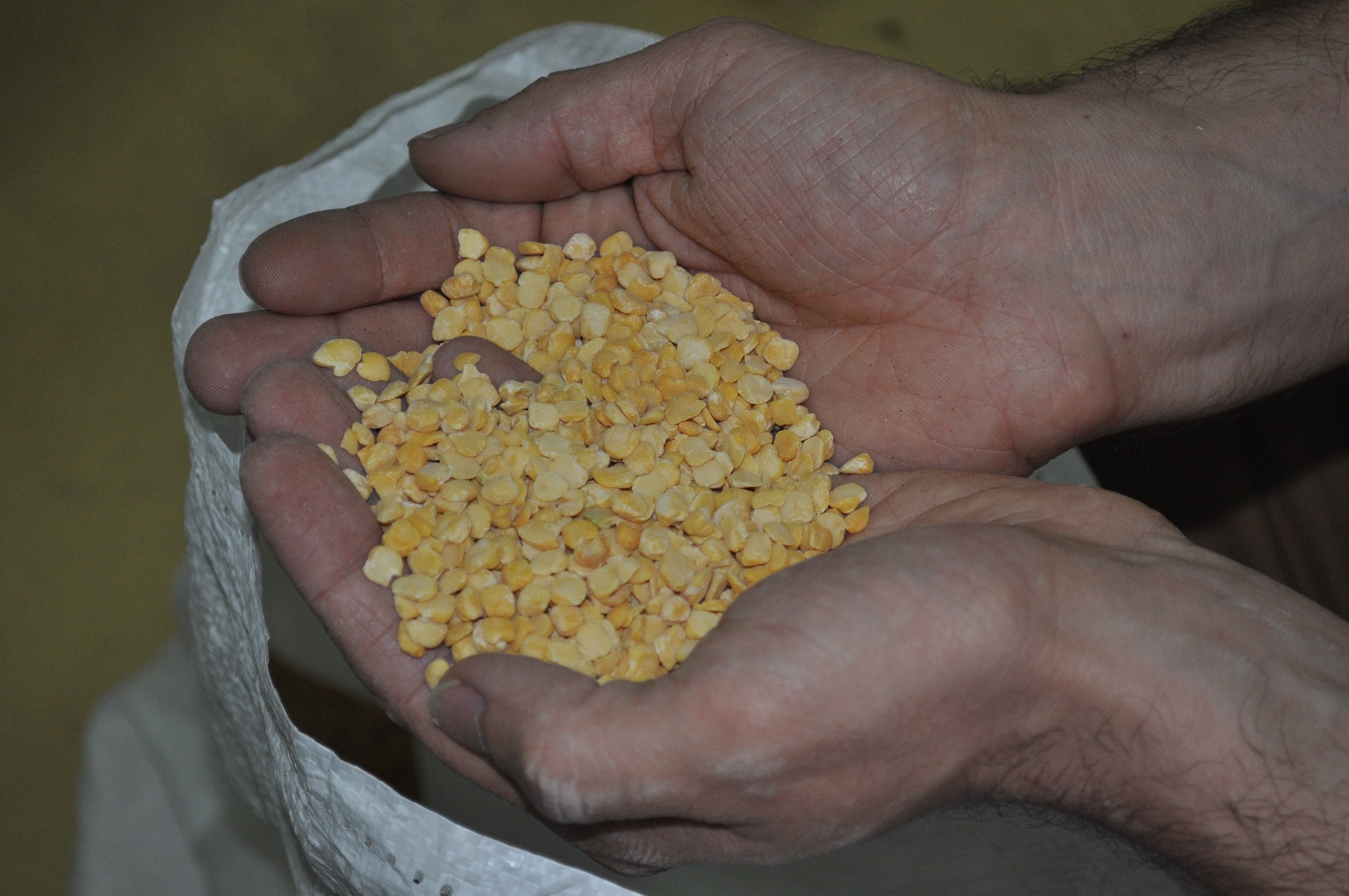
The brewery currently produces four beers, all top fermented, non-pasteurised, unfiltered and bottle conditioned. Cotta 21 is a blonde, made with farro, an ancient strain of wheat grown in Umbria for centuries. Cotta 37 is an amber ale made with roasted caramel malts and cicerchia (chickling vetch, grass pea; Lathyrus sativus); Cotta 74 is a doubled malted dark ale made with 15% lentils; and Cotta 68, which is also double malted, but is a paler, strong ale (7.5% – which isn’t actually that strong for an Italian beer). All of which are delicious.

Cicerchia, aka chickling vedge or grass peas, used in Mastri Birrai Umbri's Cotta 37 amber ale

The use of these atypical ingredients brings about some interesting challenges. A special mashing process, for example, is required to break down the proteins in the legumes. (Michele explained barley is about 10.5-11% protein, the legumes more like 18-19%.)

It’s certainly a very impressive brewery, with state-of-the-art German equipment and even facilities to automate the first brew of the day, which starts at 1am. Indeed, the whole impression is a more industrial operation, though perhaps that’s a misconception. We assume craft breweries are based in rough sheds with rudimentary equipment and labels stuck on by hand, but there’s clearly a broad spectrum. Especially in Italy, where there’s currently no legal definition of a “craft brewery” or “microbrewery”. This is an interesting question that Jeremy’s podcast gets into and something I talk about more in the following post.

The fancy German-made mash tun at Mastri Birrai Umbri

Michele says they produce 100,000 hectolitres a year, that is 1 million litres. Or if you prefer that’s equivalent to about 6,097 UK barrels (36 imperial gallons, 43 US gallons, 164l) or 8,547 US barrels (26 imperial gallons, 31 US gallons,  117l). He says they’re the “biggest craft brewery in Italy, currently”. As a comparison, Baladin, the brewery that really started the whole craft brewing scene in Italy in the 1990s, produces 12,000hl a year. Dogfish Head in the US, meanwhile, apparently produced 75,000 US barrels in 2008: 877,500hl. How about that for a serious spread in what can be considered a craft brewery, or even microbrewery?

For Mastri Birrai Umbri and Michele, it’s not about legal definitions, though, it’s about quality of ingredients; quality of production process (where time is perhaps the most important factor; not rushing the brew); quality and consistency of product; and a product that’s distinctive. He questions why you’d even want to create a legal definition for “craft beer” or “microbrewery”, as that could “put some borders” on your process, constrain your creativity.

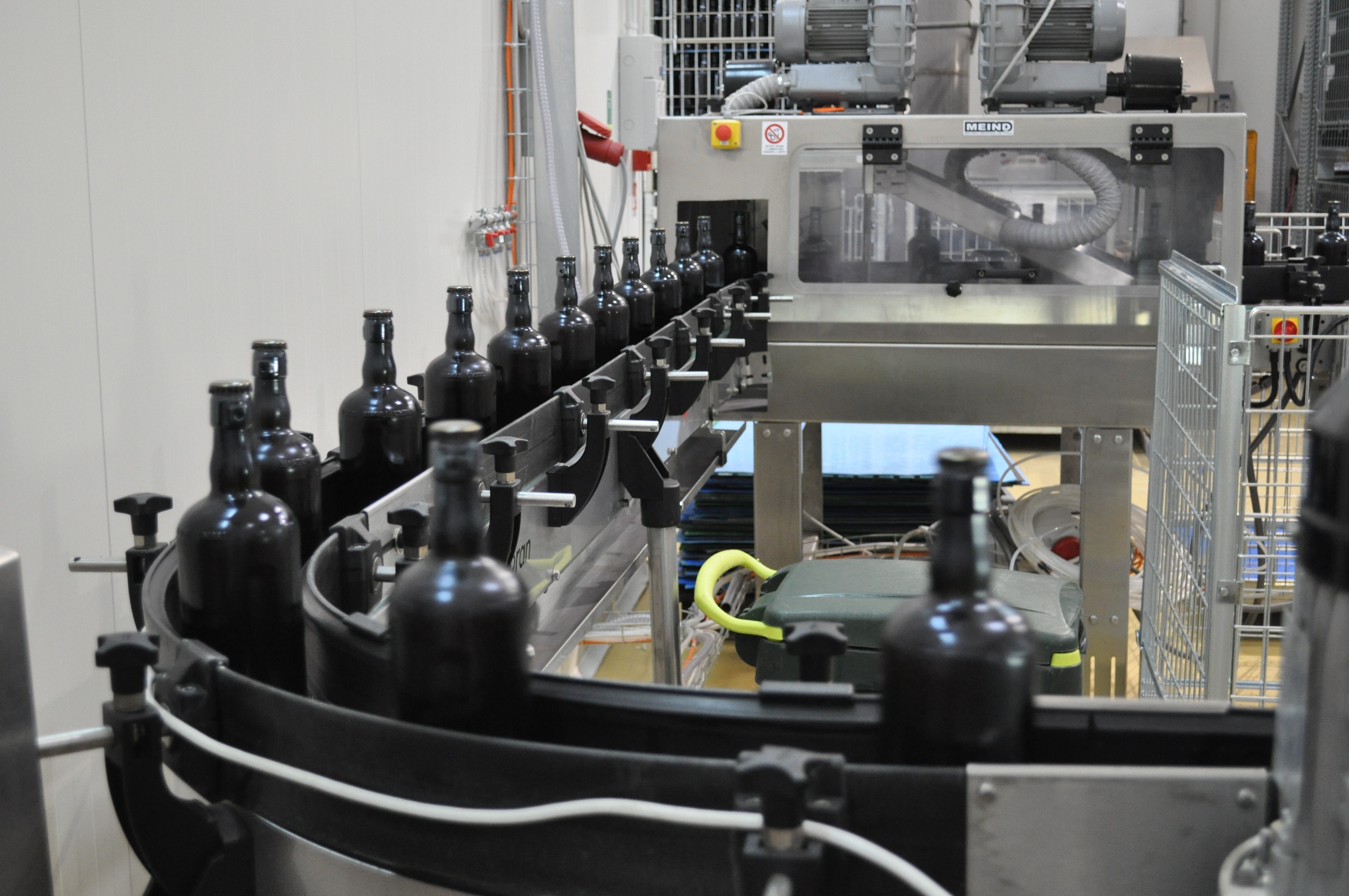
Bottling conveyor at Mastri Birrai Umbri

So ultimately, Mastri Birrai Umbri might be fairly large scale, but with Michele as master brewer and the similarly proud Umbrian Marco Farchioni as his boss, its ideology remains firmly based on producing a quality product with passion, both for the brew itself and for traditional local ingredients used in the beers. All questions of craft beer, scale and strange ingredients aside, Michele simply says “We want to be a quality beer for every day.” They’re certainly making an impact, though if you want to try the beer in the UK, it’s currently available at Vasco & Piero’s Pavilion, an Umbrian restaurant in London.

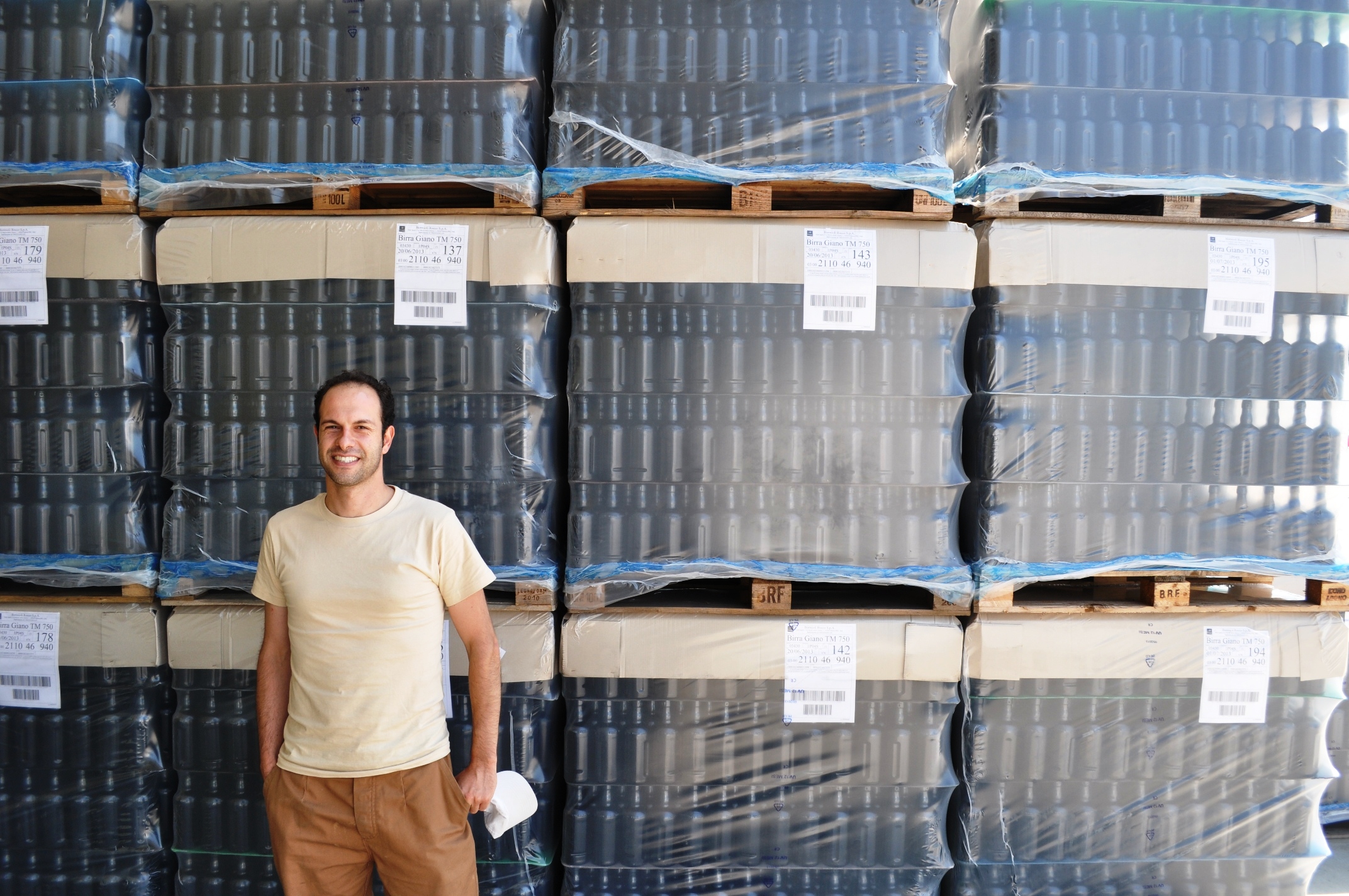
Master brewer Michele Sensidoni at Mastri Birrai Umbri

To hear Michele giving us a tour of the brewery and further discussion of the concept of craft beer in relation to his product, check out Jeremy Cherfas’s Eat This Podcast.

* For fellow etymology geeks, these words may have their origins in viz + cerere, with viz the Latin for “force”, “strength”, and cerere related to our word “cereal” and the goddess of the harvest, Ceres (aka Demeter to the Greeks). So: drinks that contain the strength of cereal grains. There’s an Italian etymological explanation here.

Leave a comment

Filed under Ale, beer, Breweries, Italian beer

Dartmoor Brewery’s Legend at The Castle restaurant, Bude, Cornwall

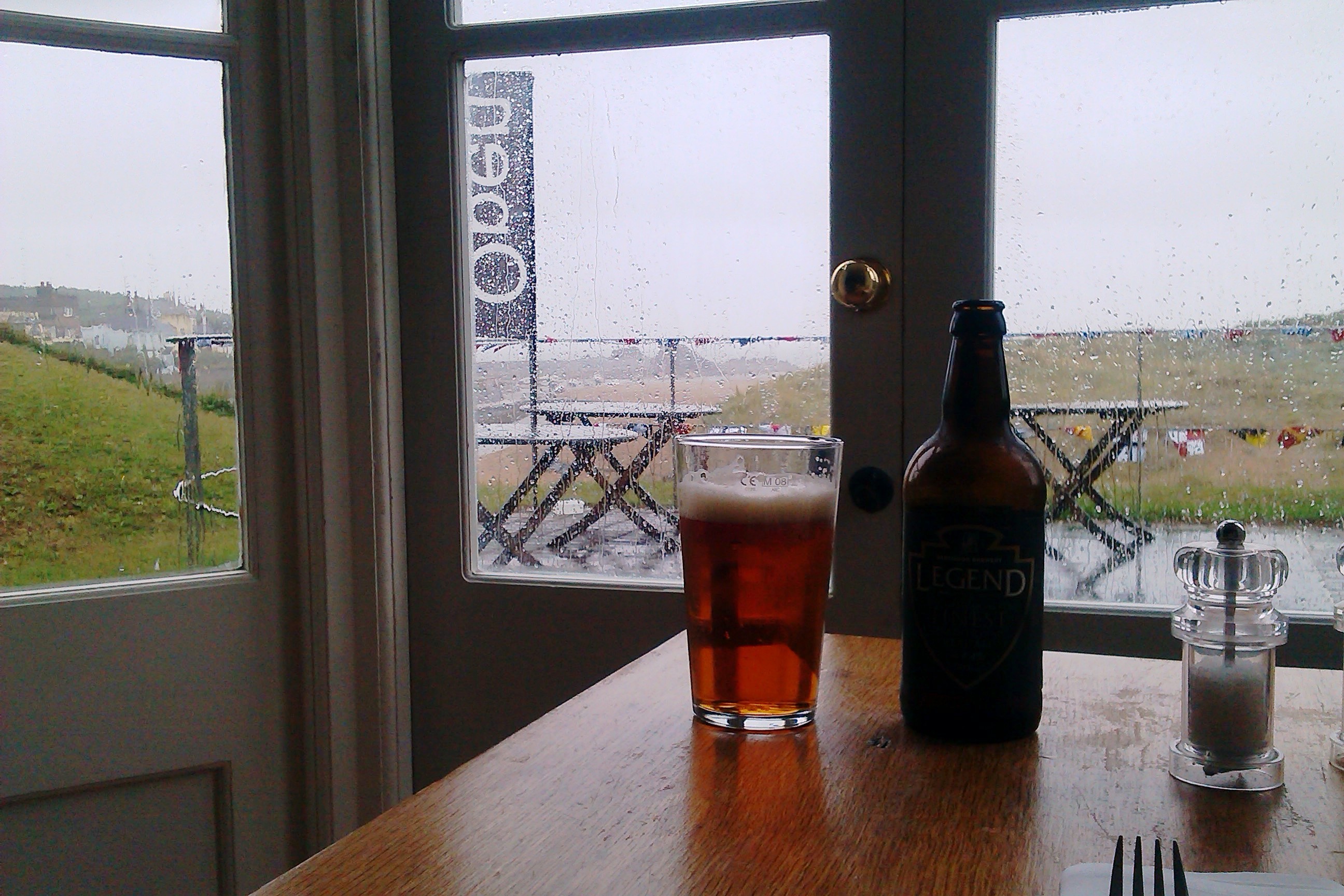
Dartmoor Brewery's Legend at The Castle Restaurant, Bude, Cornwall

Right. Here’s my last write-up from my recent visit to England. Really must get back the matter at hand – ie Italian stuff, notably Italian beers. And baking. More baking to follow.

I had this ale in the old-fashioned English seaside town of Bude at The Castle restaurant. The Castle isn’t actually a castle – it’s the former house of a local chap who went by the stupendous Dickensian name of Goldsworthy Gurney. Brits can be so dull with their naming conventions these days. I don’t know anyone called Goldsworthy. I don’t even know anyone with a pet called Goldsworthy. Fy, for shame.

Gurney was a remarkable figure – one of those enterprising, inquiring inventors and engineers who helped shape Victorian Britain. Not only did he build himself a bunker-like miniature castle on the dunes where the River Neet (aka the River Strat) empties into the Atlantic, alongside the mouth of the canal (itself another great bit of Victorian engineering), he even invented one of the first horseless carriages. This was basically a somewhat volatile steam engine bolted onto a traditional coach. He also invented an efficient heating stove, which is still in use today in a few locations. His most successful accomplishment was a gas injection lighting system that was used in the House of Commons for 60 years.

We went to the Castle on a typical north Cornwall summer’s day, dashing indoors in heavy rain, and passing a Gurney Stove (sadly out of commission). The Castle restaurant is one the area’s best eateries, though I was disappointed the waiter couldn’t actually give me the provenance of the fish on the menu. Still, at least they had a couple of decent bottled beers. I had Legend from Dartmoor Brewery.

Dartmoor Brewery’s blurb says “Situated in the very heart of Dartmoor National Park at 1400 feet [427m in new money] above sea level we are the highest brewery in England and we believe the best!” Modest. The brewery focuses on three types of beer from a purpose-built brewery opened in 2005 with a capacity of “300 brewer’s barrels (1200 nine gallon casks) per week.”

Honestly, the UK might have managed a bit more metrication than, say, the US of A, but the brewing industry still adores old-fashionedy weights and measures. As much of the world is (very sensibly, logically and practically) metricated, and much international brewing talks in hectolitres (hl; 1hl = 100 litres), I’m going to try and always include an hl measure.

So 300 UK barrels is about 49,000l, or 492hl.

So a little bigger than the previous brewery I was talking about, Holsworthy Ales, but then Dartmoor Brewery is a bit longer established, having been opened in 1994.

Their three products are: Jail Ale, “a full bodied mid-brown beer with a well rounded flavour and a sweet Moorish aftertaste” (Do Moors drink beer? Surely they mean moreish? Or is it a pun on Dartomoor? [thanks for pointing that out Fran]); Dartmoor IPA, “a highly drinkable amber coloured beer. It has a deliciously smooth thirst quenching taste and subtle hop aroma”; and the Legend, “a classic cask conditioned beer smooth full flavoured and balanced with a delicious crispy malt fruit finish.”

Dartmoor Brewery's Legend at The Castle Restaurant, Bude, Cornwall

Mine was bottle conditioned, though it was indeed smooth and balanced, a kind of easy-going bitter, with some fruitiness and some biscuity, fresh-baked-fresh malt. It was an amenable beer to wash down my fish and wedges (the menu lies – it says chips, but they are wedges; always a disappointment when you want chips) but, I dunno, considering it’s made with Dartmoor water, Devon malts and English hops I really wanted to like it more. It was pleasant but just a bit… generic. Maybe I’ve been drinking too many nice, easy balanced golden ales and mellow bitters of late. Time for a trip to Ma Che Siete Venuti a Fà? for some challenging Kriek or suchlike methinks.

Still, eating it in Goldsworthy’s old withdrawing room (or whatever), replete with the same wallpaper we used to have in our old house in London, with the rain lashing the windows and the Atlantic surf churning a few hundred metres away, it was part of a dining experience that was, overall, very satisfying.

Info:
The Castle Restaurant, The Castle, The Wharf, Bude, Cornwall EX23 8LG
thecastlerestaurantbude.co.uk | enquiries@thecastlerestaurantbude.co.uk |+44 (0)1288 350543

Dartmoor Brewery Ltd, Station Road, Princetown, Devon PL20 6QX
dartmoorbrewery.co.uk |ale@dartmoorbrewery.co.uk |+44 (0) 1822 890789

Leave a comment

Filed under Ale, beer, Bars, pubs etc

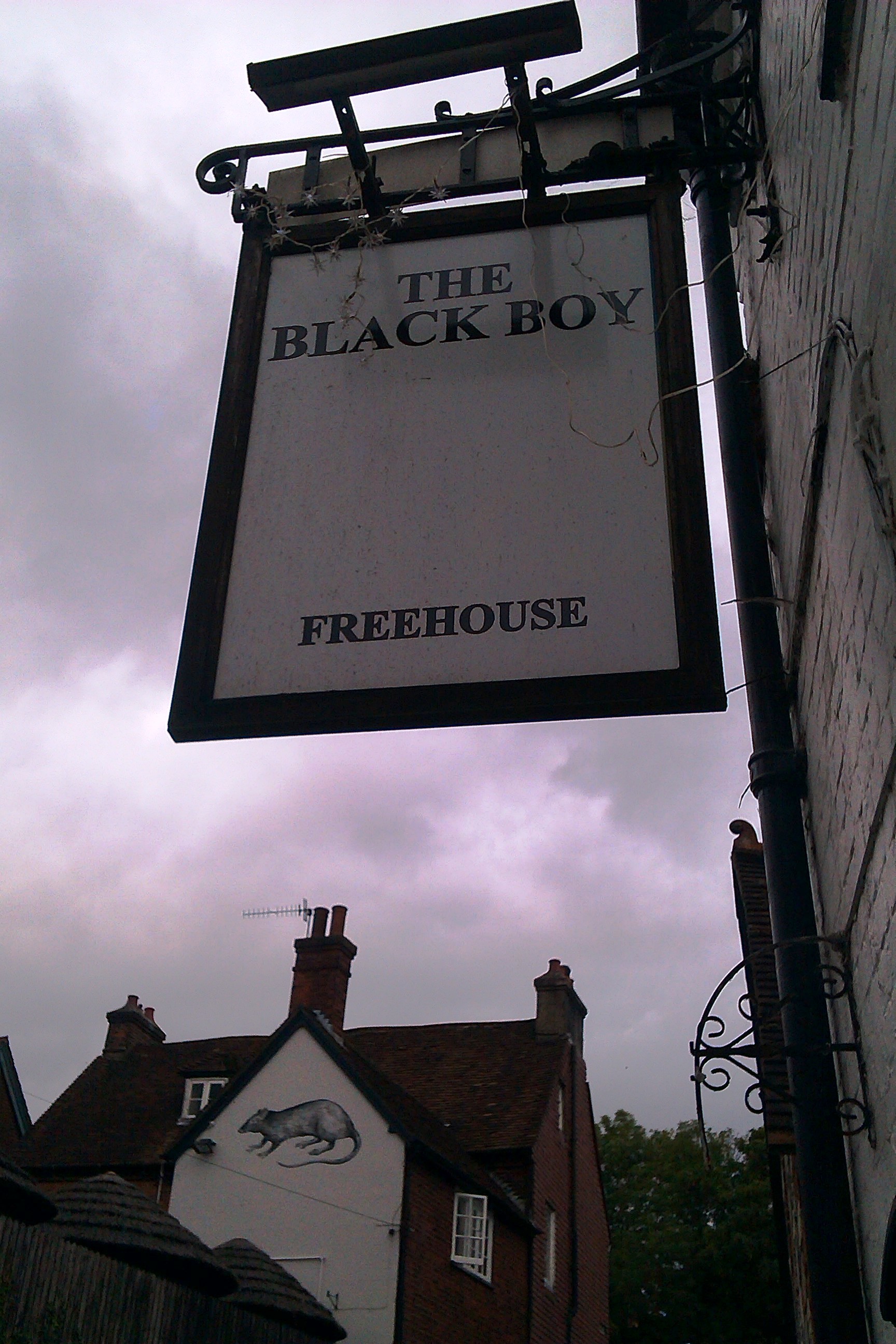
Ruddy Darter at The Black Boy, Winchester

Ruddy Darter at The Black Boy, Winchester

My hometown is Winchester, in Hampshire, an hour southwest of London out of Waterloo railway station. Although small, it’s technically a city, the ancient capital of England, boasting a cathedral – with the longest nave of any Gothic cathedral in Europe, apparently. My mother says she often overhears tour guides saying the high street is the oldest in Europe too, but I’m not sure how that’d be qualified. (When it was a Roman city, the main drag was in the same position, if that’s any help.) It’s got an Iron Age hillfort, King Arthur’s Round Table (honest), some bits of medieval city wall, and even a few city gates, despite the Victorians’ best efforts to destroy the historical infrastructure.

It’s also got a lot of pubs, though many of them are pretty mediocre. Among the not-mediocre Winchester pubs is my old local, The Black Boy. (My old old local, The Mash Tun, died the death and now seems to be a tapas bar.)

I’ve been going to The Black Boy for, well, probably decades. It’s a great little pub, in a low-ceilinged old building, replete with plenty of novelty clutter (taxidermied beasts, eviscerated books), fireplaces (that are actually used in the winter), and plenty of nooks and crannies. More importantly, however, there’s also a decent selection of real beers. Not only that, they have a policy to stock local real beers, so expect stuff from breweries and Hampshire (mostly) and other parts of ye olde Kingdom of Wessex, like adjacent Wiltshire. Oh, and it’s friendly too – not something you always experience in British boozers.

The Black Boy, Winchester

The Black Boy always seems to carry Flowerpots Bitter from The Flowerpots Brewery in Cheriton, a few miles away from Winchester. I often choose their 3.8% bitter (so mild-mannered after all the strong Italian beers I’ve been drinking lately!), but for this visit to The Black Boy I sampled some of the other ales they had on and chose Ruddy Darter.

Although it’s classified as an English bitter by Beer Advocate and a Premium Bitter/ESB by Ratebeer, more specifically I’d call Ruddy Darter an amber ale, with its deep coppery-red colour. Andwell, the Hampshire brewery that makes Ruddy Darter, refer to it as a Ruby Ale, in a Premium Ale style. (Andwell, by the way, was founded in 2008; Ruddy Darter is their most recent beer.)

However you define it, Ruddy Darter is delicious. It’s got a fruity smell, which continues into the taste, which is also warmly malty, with a good sweet caramel flavour and mellow hoppiness. My pint was hand-pumped, with low carbonation, though I suspect the bottled version would be bubblier. (Something I experimented on a few days later with some beers from Holsworthy Ales, in Devon. Will write that up shortly.). Oh, and it’s named after a dragonfly, which is pretty cool. All in all, a very pleasant quick visit to an old haunt.

[Usual apology for quality of photos. One of my reasons for visiting Winchester was to get a new phone with a good camera, but I couldn’t quite bring myself to sign up for another 24 month contract or whatever.]

Leave a comment

Filed under Ale, beer, Bars, pubs etc