Monthly Archives: August 2013

Real beer, real bread, and how to define “craft” foods

Bottled beer conditioning at Mastri Birrai Umbri

(I know long-form blogging isn’t popular these days, but think of this more as an essay. Hell, it’s no longer than an article in the paper.)

Visiting Mastri Birrai Umbri (MBU) and talking with MBU’s master brewer Michele Sensidoni and science and food communicator Jeremy Cherfas, who did a podcast about the visit here, really got me thinking about the whole question of craft foods. Especially beer and bread, as they’re my obsessions and they’re siblings born together at the start of human civilisation. Specifically, it got me thinking more about how one defines such craft foods. If you’re a baker, brewer or beer enthusiast, this is something you probably think about too.

I’ve visited MBU before, last year, and one thing that struck me then, and on the second visit with Jeremy, was the sense that the brewery was a place of industry and science. Of course it is, in literal terms – with industry meaning diligently creating something, and brewing (like baking) being a process that involves a sophisticated balance of biological processes. But also, it seemed industrial in the more technological sense, of large-scale metal equipment, and a small scale human presence. The fact that MBU is currently Italy’s biggest craft brewery, producing 1 million litres of beer a year, would seem to confirm this. And yet it is still a craft brewery.

Putting it perspective
Of course “Craft brewery” and “microbrewery” are difficult terms. Different countries have various legal or tax-related definitions of them, different organisation or beer writers have varying semantic interpretations of them.

In the broadest sense, though, a craft brewery is small, independent and uses traditional techniques. The Brewers Association in the US indeed includes these parameters in its definition, but then it goes on to define the production limit as “6 million [US] barrels or less” that is around 700 million litres or 7 million hectolitres (hl). Which is a helluva lot bigger than MBU, and doesn’t sound that small. But compared to the mega-brewery conglomerates it is. This 2010 Reuters article says Anheuser-Busch InBev (producer of the US Budweiser, amongst other brands) produced 350 million hl in 2009, and SABMiller (which owns innumerable brands including the nominally Italian Peroni Nastro Azzuro), just less than 250 million hl.

Which does put into perspective.

That perspective goes even more squiffy, however, when you consider that in the UK a craft brewery, or microbrewery, is generally considered to be one producing less than 500,000 litres (5,000 hl).

This definition of sorts came about because of the Progressive Beer Duty, a system introduced in the UK in 2002 to help encourage small, local breweries, with lower taxation based on the scale of the operation. The system originated in Germany and although it has its critics, it has been credited as one of the key factors in the rapid expansion of the small brewery scene in the UK and elsewhere.

Progressive Beer Duty was adopted throughout the EU and was potentially a factor in the expansion of the Italian craft beer scene too. There are currently around 500 craft breweries in Italy. A threshold for their production is 10,000hl per year, though the country has no other, specific legal definition of craft brewery. Indeed, in Jeremy’s interview, Michele discusses how introducing a legal definition in Italy could have a negative impact, as there’s so much variation in the Italian craft brewery scene it could impose restrictions on creativity. (And have no tangible effect on quality.)

Honest beer
For Michele, craft brewing is more about the ingredients and how you use them, about innovation, and about how much you care about the quality of the product. He also believes that although large-scale breweries could produce quality craft beers, instead they compromise. They rush. So whereas a brewery like MBU might condition their brews for months, a large scale industrial brewer might rush the process in 12 days or so. This rush, he said, “is not the best for the beer, but it’s the best for your distribution chain, it’s the best for your sales manager, it’s the best for your volume production.”

Jeremy mooted a potential definition of MBU’s beer as not craft or artisanal or industrial, but “honest” – where there’s total clarity, indeed pride, about the ingredients. But this notion of large scale industrial beer being rushed also immediately made me think of bread. Or more specifically the principle problem with rushed, large-scale industrial wheat-based products. From the spongy, plastic wrapped products made with Chorleywood Bread Process (CBP) that dominate the UK to Italy’s comparable crime against nutrition, tradition, and taste, pancarré.

A few years ago, when I was still living in the UK, I became a supporter of the Real Bread Campaign (RBC). This was founded in 2008 under the aegis of Sustain, “the alliance for better food and farming” and its rise in prominence has paralleled the renaissance in interest in real baking. In some ways, the Real Bread Campaign is a cousin to CAMRA, the UK-Irish Campaign for Real Ale that was founded in 1971 to counter the rising tide of bad industrial beer that was then starting to dominate bars. Likewise, the RBC was started, in part, to counter the white sliced crap and encourage people to demand the real deal.

I’m not a CAMRA member, but I enjoy visiting pubs they’ve endorse and respect their goals, specifically to protect the production of real ale, and educate about it. They have specific definitions of what qualifies as “real ale”, a term they coined. The full definition can be found here, but it starts by saying “Real ale is a beer brewed from traditional ingredients (malted barley, hops water and yeast), matured by secondary fermentation in the container from which it is dispensed, and served without the use of extraneous carbon dioxide.”

The Real Bread Campaign has not dissimilar definitions. After all, both bread and beer depend on the naturally occurring, unrushed action of living yeast (and bacteria) for fermentation: the process that transforms grains into digestible and delicious products. Of course, the key difference between the siblings is that baking kills the yeast, so the ultimate bread product is not a living thing like real ale, where the process is ongoing (until your stomach kills the yeasts).

The Real Bread Campaign’s definitions are here but the crux is: “Real Bread is that made without the use of processing aids or any other artificial additives.” It continues, “Technically, the only ingredients essential for making bread are flour and water. With these two things you can make flatbreads and sourdoughs. That said, without a little pinch of salt bread can be a tad bland, and you might prefer to let someone else culture the yeast, rather than do it yourself. So, for plain Real Bread that gives us at most: flour, water, yeast, salt. Anything else is, by definition, unnecessary.”

They do say “plain Real Bread” and allow that you can add other ingredients “as long as they are natural” (eg seeds, milk etc). I like this about the Real Bread Campaign, it’s clear and passionate, but not unrealistic. I have the sense that CAMRA, for example, wouldn’t have liked the beer I was drinking last night as it contained spices and jasmine blossom; even though it was top fermented, bottle conditioned and these added ingredients were natural.

Anyway, according to RBC definitions CBP products simply are not bread; they have too many dubious additives, they’re made in too much of a rush.

Keepin’ it real

So for me, rather than talking about real ale, or craft beer, or microbrewery beer, or honest beer, I’d rather just talk about real beer. It’s a term that’s come from these discourses about real ale and real bread. I feel  I can’t use the term “real ale” unless the beer in question stricly conforms to CAMRA’s definition: and that would exclude much of Italy’s wonderful birre artigianale (artisan beer). Indeed, there’s arguably a danger than CAMRA can be overly dogmatic in its perception of tradition, and traditional beer.

Respect for tradition is essential for craft food production, but there’s a danger of being reactionary, which isn’t.

One thing I love about the Italian birre artigianale scene is how dynamic it is, how open to ideas. So much of Italy food culture is mired in tradition, and as such can be hidebound. Just read John Dickie’s great book Delizia and the chapter about what qualifies as pesto, for example. It’s absurd. Likewise, viniculture here is effectively strictly regulated by tradition, with very little room for creativity.

As I said in my previous post, there’s been beer in Italy for millennia, but as it’s never been a dominant drink, it never got so mired in tradition. So now, all these craft breweries are able to take inspiration from all over the world, notably from the dynamic US craft beer scene, but also from Britain, Belgium, and beyond.

Plus, they can also dip into local tradition, to give their products distinctive, like MBU using local legumes in the brew for example. Or they can dip into classical history, for things like the Etrusca experiment co-ordinated between Italy’s great craft breweries Baladin and Birra del Borgo and the US big name craft brewer Dogfish Head, which involved working with a biomolecular archaeologist to create a beer made with ingredients consumed by the Etruscans two and a half millennia-plus ago.

Time – too important to rush
Quality beer is the result of respecting proper fermentation and conditioning times. Likewise, quality bread is the result of respecting proper fermentation times. Proper fermentation means waiting.

The Real Bread Campaign says, “Real Bread is a natural product and just as with fruit or cheese it takes time for it to ripen. Although research so far has been limited, there is growing evidence that leaving dough to rise for longer periods can have a range of benefits to the consumer.” Benefits to the point of being more digestible, or even being able to help reduce disorders such as coeliac. One such piece of evidence comes from scientists in Italy who concluded “a 60-day diet of baked goods made from hydrolyzed wheat flour, manufactured with sourdough lactobacilli and fungal proteases, was not toxic to patients with celiac disease.”

This is the main problem with the Chorleywood Bread Process.* Throughout history, bread has been made by slowly fermenting wheat flour, then the CBP was developed in the 1960s, millennia-old fermentation times were thrown out and since then more and more people have reported digestive problems from eating CBP products.

Fermentation time is just too import to neglect or reject. Time is just too important to rush. Time is the defining ingredient for craft bread or craft beer, or as I’d prefer to call them, real bread and real beer.

A definition of real bread and real beer
So my definition of real beer, or real bread, would be a product that’s made with the proper respect for time. (Indeed, all good produce requires time – hence the Slow Food movement’s name.) Time, quality natural ingredients, a passion for the product.

It doesn’t matter if the brewery or bakery in question is all shiny stainless steel or a more rudimentary shed. What matters are time, quality natural ingredients and passion.

I’d even add that it requires a respect for and knowledge of tradition, but not a dogmatic adherence to it. Like Italy’s craft brewers, free from being mired in tradition. Not all their beers are necessarily great, but I at least admire their willingness to experiment, to enjoy their craft – and to relish taking the time to try make great real beer.

* I know the CBP was developed to enable British bakers to use lower-protein British flours, to reduce UK dependence on imported, higher protein (14-15%) flours, but that’s a whole other argument. Indeed, as far as I can tell, many Italian bakers still make stupendous traditional breads without recourse to Manitoba (ie Canadian strong flour), instead relying on traditional Italian flours with lower protein (11-12%).

3 Comments

Filed under Ale, beer, Breads, Discussion

Mastri Birrai Umbri brewery visit

Light malt at Mastri Birra Umbri

Mastri Birrai Umbri’s beers have featured on this blog several times (eg here and here). When I first moved to Rome a few years ago, I didn’t know anything about Italian birra artigianale (craft beer), but that soon changed: in part because I discovered beer bars Ma Che Siete Venuti a Fà? and Open Baladin and in part because it turned out the boyfriend of a London friend was actually a brewer in Umbria. This was Michele Sensidoni, master brewer of Mastri Birrai Umbri, whose beers don’t feature on the menus of the birrerie (beer bars), but were to be found on the shelves of my local supermarket.

Last month, Jeremy Cherfas and I paid a visit to Michele at the brewery, located in the charmingly named village of Bastardo in central Umbria. Over at Eat This Podcast, Jeremy’s done a comprehensive podcast about the visit, but I want to add a few more things here, along with some more photos.

The brewery, whose name means “master brewers of Umbria” or “Umbrian master brewers”, was founded by the Farchioni family: one of biggest names in olive oil in Italy. The Farchioni family has been farming and producing foodstuffs for centuries. Although they weren’t previously involved in brewing, Umbria has a beer history, with a brewery, Fabrica della Birra Perugia, that closed in 1929. Indeed, Italy itself has an ancient association with beer. Cervisia or cerevisia, as it was known in Latin (and the clear root word for the Spanish word cerveza and even the uncommon Italian word cervogia*), was used as payment for troops in ancient Rome, and was a common drink among the poorer members of society.

Obviously, wine was more important as the viniculture became more dominant, though barley (orzo) has long been grown in Italy, and experiments into hop-growing were done in Perugia at the start of the 20th century (check out this archived newspaper story, in English, from 1912). They’re even starting again now – and why not? If you look at this interesting conjectural map from 1919, the north of New Zealand’s South Island, a major hop-growing area, is similarly located to central Italy in terms of longitude. Mastri Birrai Umbri hope to eventually locally source all their ingredients, though hops may be last.

The sala cottura, or brewhouse, at Mastri Birrai Umbri

Michele has a doctorate in food science and technology from the University of Perugia, he was head brewer at the pilot plant of CERB (Centre di Excellenza per la Ricerca sulla Birra; the Italian Brewing Research Centre), he did an internship at Campden BRI (the beer research institute in Surrey, UK) and he has a background in homebrewing. He’s also a proud Umbrian and as such was the ideal candidate to run the purpose-built brewery for the Farchionis and pursue a remit to make brews featuring typical local ingredients. He started experimenting with brews in 2010.

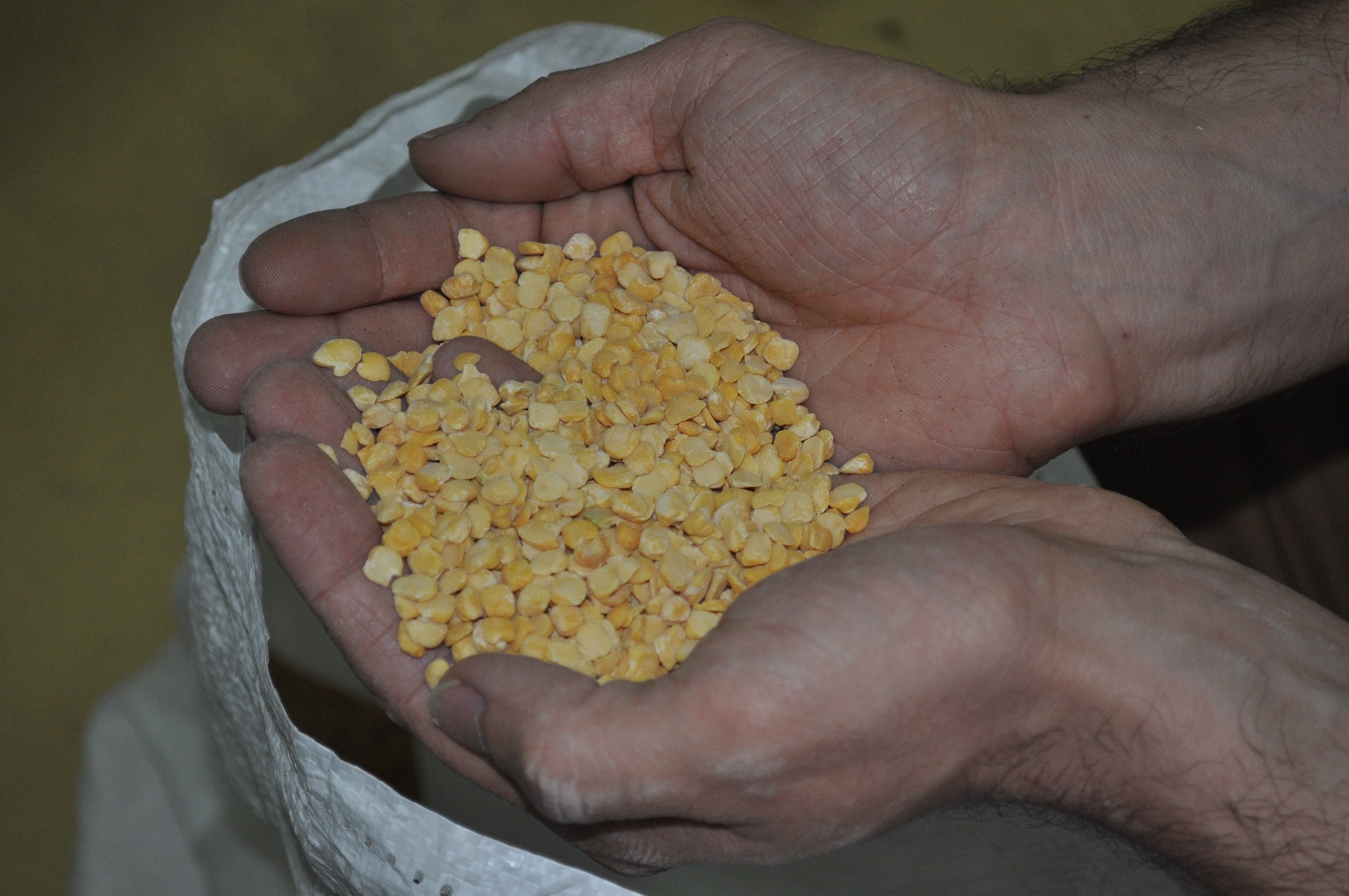
The brewery currently produces four beers, all top fermented, non-pasteurised, unfiltered and bottle conditioned. Cotta 21 is a blonde, made with farro, an ancient strain of wheat grown in Umbria for centuries. Cotta 37 is an amber ale made with roasted caramel malts and cicerchia (chickling vetch, grass pea; Lathyrus sativus); Cotta 74 is a doubled malted dark ale made with 15% lentils; and Cotta 68, which is also double malted, but is a paler, strong ale (7.5% – which isn’t actually that strong for an Italian beer). All of which are delicious.

Cicerchia, aka chickling vedge or grass peas, used in Mastri Birrai Umbri's Cotta 37 amber ale

The use of these atypical ingredients brings about some interesting challenges. A special mashing process, for example, is required to break down the proteins in the legumes. (Michele explained barley is about 10.5-11% protein, the legumes more like 18-19%.)

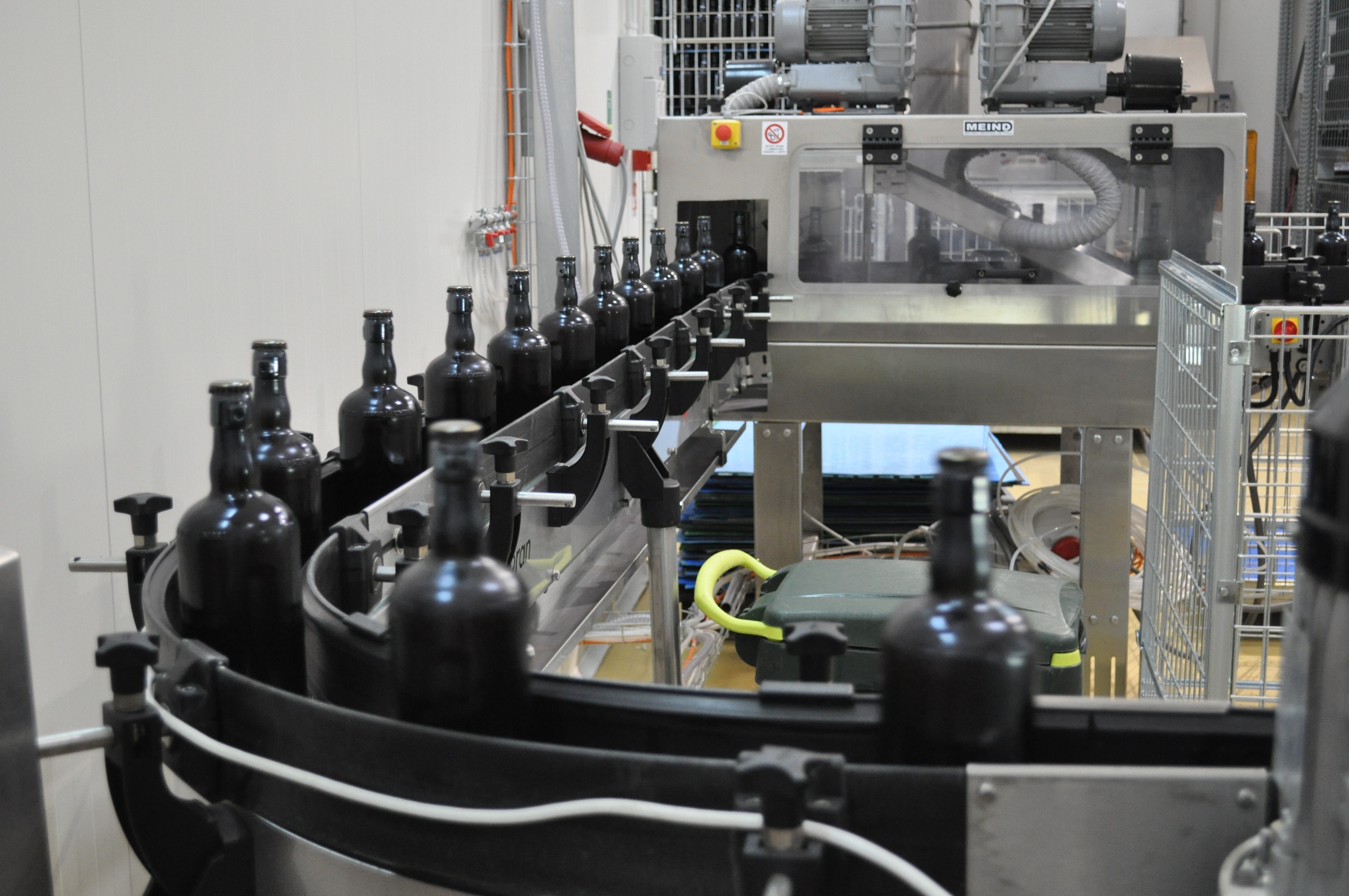
It’s certainly a very impressive brewery, with state-of-the-art German equipment and even facilities to automate the first brew of the day, which starts at 1am. Indeed, the whole impression is a more industrial operation, though perhaps that’s a misconception. We assume craft breweries are based in rough sheds with rudimentary equipment and labels stuck on by hand, but there’s clearly a broad spectrum. Especially in Italy, where there’s currently no legal definition of a “craft brewery” or “microbrewery”. This is an interesting question that Jeremy’s podcast gets into and something I talk about more in the following post.

The fancy German-made mash tun at Mastri Birrai Umbri

Michele says they produce 100,000 hectolitres a year, that is 1 million litres. Or if you prefer that’s equivalent to about 6,097 UK barrels (36 imperial gallons, 43 US gallons, 164l) or 8,547 US barrels (26 imperial gallons, 31 US gallons,  117l). He says they’re the “biggest craft brewery in Italy, currently”. As a comparison, Baladin, the brewery that really started the whole craft brewing scene in Italy in the 1990s, produces 12,000hl a year. Dogfish Head in the US, meanwhile, apparently produced 75,000 US barrels in 2008: 877,500hl. How about that for a serious spread in what can be considered a craft brewery, or even microbrewery?

For Mastri Birrai Umbri and Michele, it’s not about legal definitions, though, it’s about quality of ingredients; quality of production process (where time is perhaps the most important factor; not rushing the brew); quality and consistency of product; and a product that’s distinctive. He questions why you’d even want to create a legal definition for “craft beer” or “microbrewery”, as that could “put some borders” on your process, constrain your creativity.

Bottling conveyor at Mastri Birrai Umbri

So ultimately, Mastri Birrai Umbri might be fairly large scale, but with Michele as master brewer and the similarly proud Umbrian Marco Farchioni as his boss, its ideology remains firmly based on producing a quality product with passion, both for the brew itself and for traditional local ingredients used in the beers. All questions of craft beer, scale and strange ingredients aside, Michele simply says “We want to be a quality beer for every day.” They’re certainly making an impact, though if you want to try the beer in the UK, it’s currently available at Vasco & Piero’s Pavilion, an Umbrian restaurant in London.

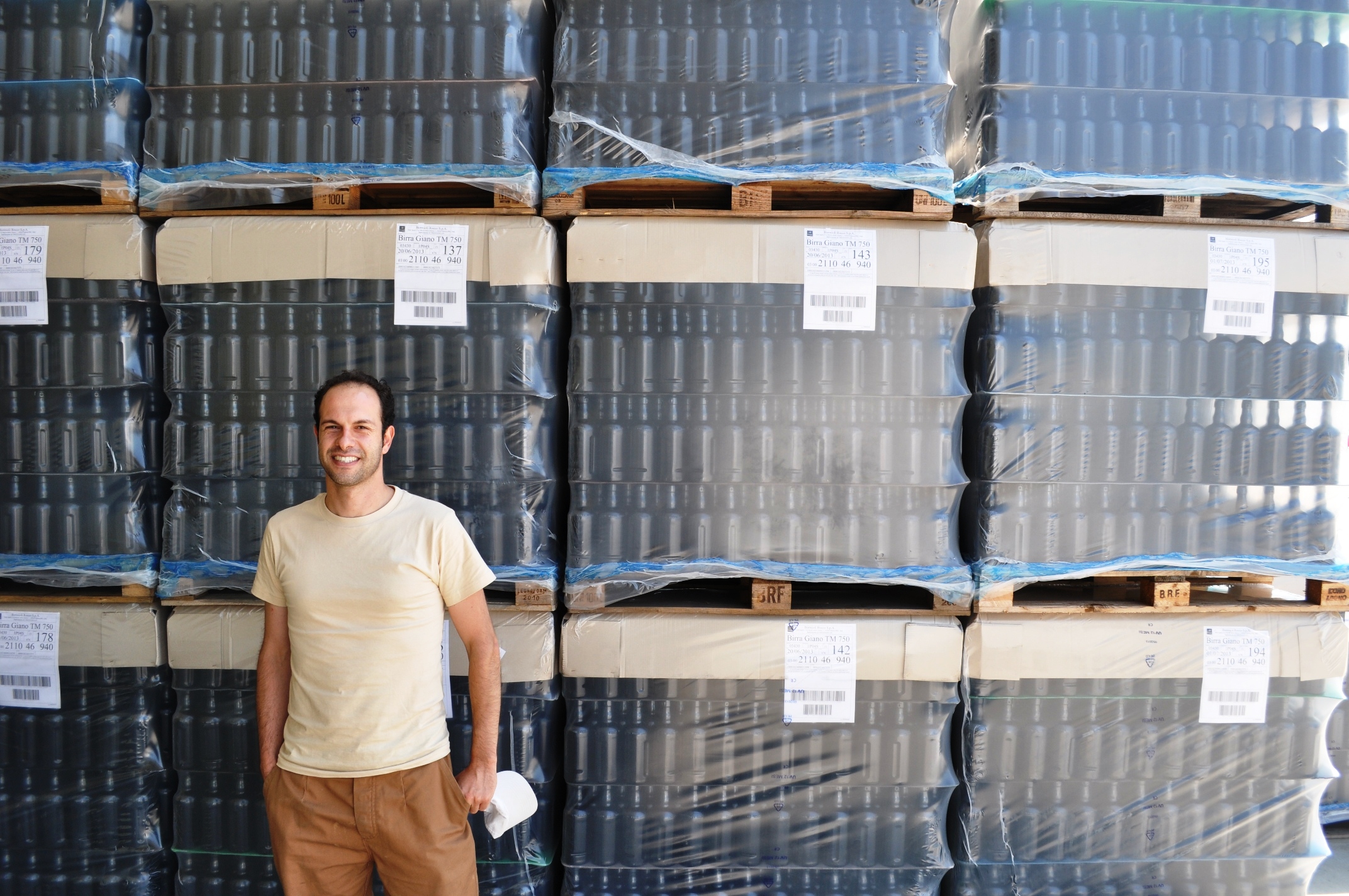
Master brewer Michele Sensidoni at Mastri Birrai Umbri

To hear Michele giving us a tour of the brewery and further discussion of the concept of craft beer in relation to his product, check out Jeremy Cherfas’s Eat This Podcast.

* For fellow etymology geeks, these words may have their origins in viz + cerere, with viz the Latin for “force”, “strength”, and cerere related to our word “cereal” and the goddess of the harvest, Ceres (aka Demeter to the Greeks). So: drinks that contain the strength of cereal grains. There’s an Italian etymological explanation here.

Leave a comment

Filed under Ale, beer, Breweries, Italian beer

Splits, clotted cream and a Roman summer afternoon tea

Devon splits, Cornwall splits

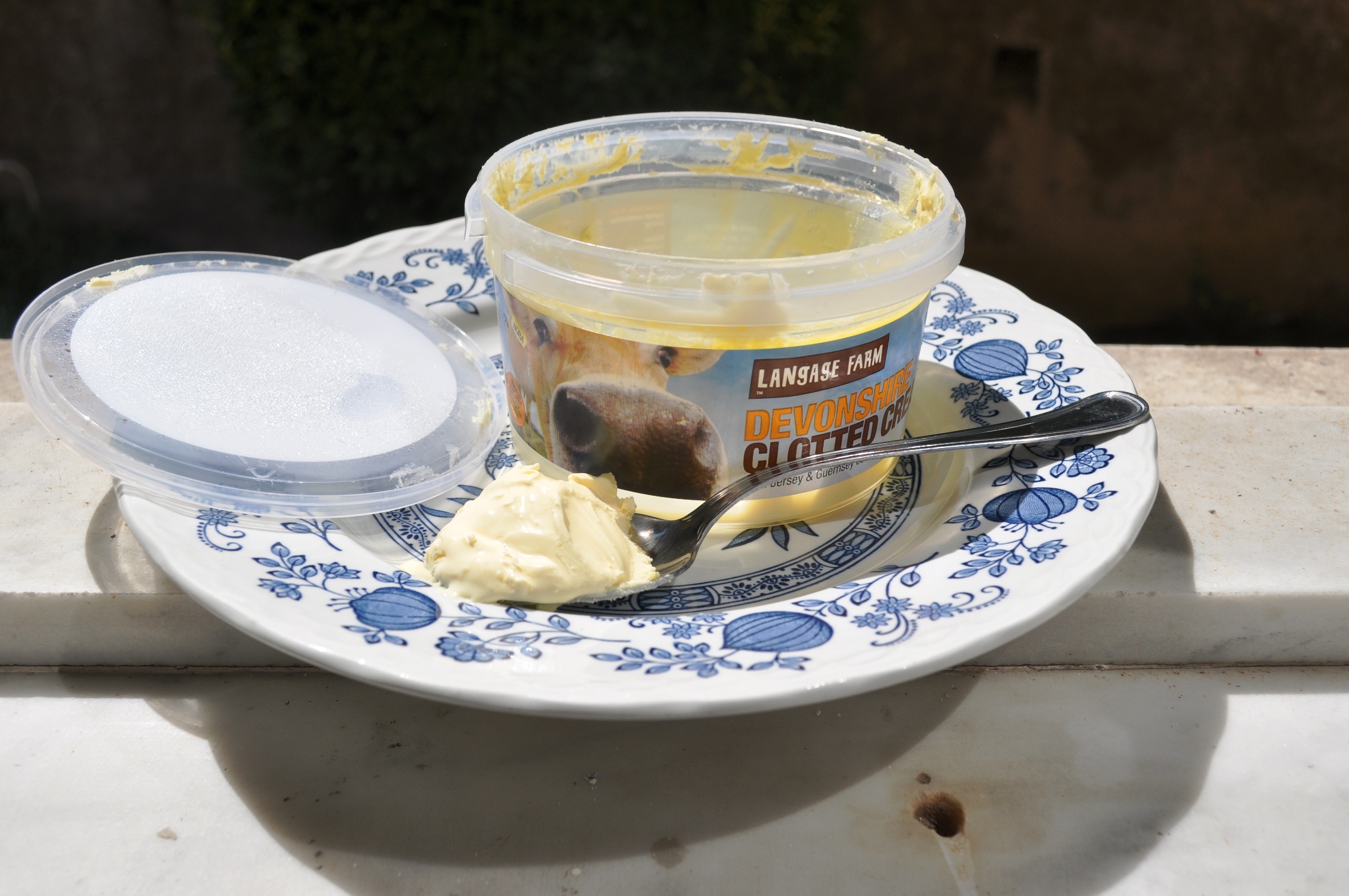
Among the few things we crave but are just impossible to source in Rome are halloumi cheese and clotted cream. For those who don’t know, the latter is a nectar-like dairy product that comes from the Southwest of England. Fran’s from the southwest and I have strong connections, so we both have clotted cream in the blood. So to speak. It’s an essential component of a proper cream tea.

I’ve always used clotted cream with scones, but it’s also used with a less well known variation the cream tea: with splits. When I smuggled a massive tub of clotted cream back home from Blighty last week, I resolved to make splits, and do a bit of a comparison with scones.

A large - nearly empty - ot of Langage clotted cream

What is a split anyway? Well, it’s basically just a cream bun, made with a basic enriched dough, split and smeared with jam and clotted cream. (Messily smeared in our case – I’m a little ashamed we didn’t do it a bit more neatly, but then I’m no food stylist and we just wanted to scoff them!). As Rachel pointed out when we were doing just that yesterday, as it’s really not unlike a maritozzo con la panna. Though with slightly more demure amounts of cream. Sort of – clotted cream is cooked, so it’s denser and richer than whipped cream.

A split and a scone

The next question involves their origins. Are they Cornish splits? Can they be Devonshire splits? Or is the Devon cream tea always based on the split’s easier-to-make cousin the scone? I’ve always assumed splits are actually “Cornish splits”, but then I started encountering recipes for “Devonshire splits”. What you call them probably just depends your loyalties. The white cross on black or the white cross on dark green? (Something that’s almost entirely irrelevant to people outside the spatting ground of southwestern England.)

And is there a difference between a Devon and a Cornwall version? Discussing splits, and Elizabeth David’s recipe, here Nigel Slater suggests Devon splits are smaller, though the recipe I based mine on was called “Devonshire splits” – and they’re quite big.

Initial dough mixture for Cornish split, or Devon split - flour, sugar, butter, milk, yeast

And why do these two counties get their knickers in such a twist anyway? After all, surely pasties and cream teas are from the West Country, not from either county in particular? Hey, I just love the West Country in general; I’ve been going there all my life and my mother’s mother’s family is from border country in northeast Cornwall/northwest Devon. Although there are cultural differences between Devon and Cornwall, there are plenty of cultural similarities too: clotted cream for starters.

This delicious treat is, frankly, from the West Country in general and neither county in particular. Especially not now in our industrial age when clotted cream is no longer produced by local farms and dairies but instead comes from larger producers like Langage (Devon) and Rodda’s (Cornwall) – both of which are available in supermarkets in both counties and beyond.

Kneading Devonshire split dough

Anyway, I’ve made scones all my life and I even did a very scientific experiment to address the important question of whether cream or jam goes on first (includes recipe). This is my first go at splits though. They were very nice, but I’m not sure they’ll dethrone scones from my tea-time repertoire. For starters, scones are easier to make (just don’t overwork the dough!) and have a satisfying crunchy crust and crumby interior, which I found preferable to the more bread-like consistency of the splits.

Anyway. Here’s the recipe:

Makes 12 splits.

25g fresh yeast (aka lievito di birra)
300g full-fat milk
25g unsalted butter
500g strong (high protein) white bread flour (farina di Manitoba in Italy)
3g fine sea salt
25g caster sugar

Shaping balls of dough for Devonshire splits. Or Cornish splits

1. Warm the milk and butter, melting the latter and bring the liquid to around body temperature.
2. Crumble the yeast into the liquid, and give it a whisk.
3. Put the flour, salt and sugar in a large bowl and stir to combine. (If you want to use easyblend yeast, add 10g now instead).
4. Add the liquid to the flour mix, and bring together.
5. Turn out and make a dough, kneading until smooth.
6. Put the dough in a clean bowl, and cover with clingfilm/plastic wrap.
7. Leave to ferment and prove until doubled in size.
8. Turn out, gently deflate and divide into 12 pieces – they should each weigh around 68-70g.
9. Form the pieces into balls, keeping them covered with a cloth.
10. Place the balls on a baking sheet, and again, keep them covered.
11. Let them prove again, for about 20 minutes, until they’re soft to the touch. (Time will vary depending on the temperature.)
12. Preheat the oven to 200C.
13. Bake the balls for about 15 minutes. Again, time will vary depending on your oven. You want them to start browning nicely on top.
14. Remove from the oven and cool completely on a rack.
15. When cool, slice the buns on a diagonal. Into this split (hence the name) add jam of choice and clotted cream.
16. Serve dusted with icing sugar.
17. Eat, messily. Whether you’re nearly two or 42.

Balls of dough, pre-bake, for Devonshire splits. Or Cornish splits

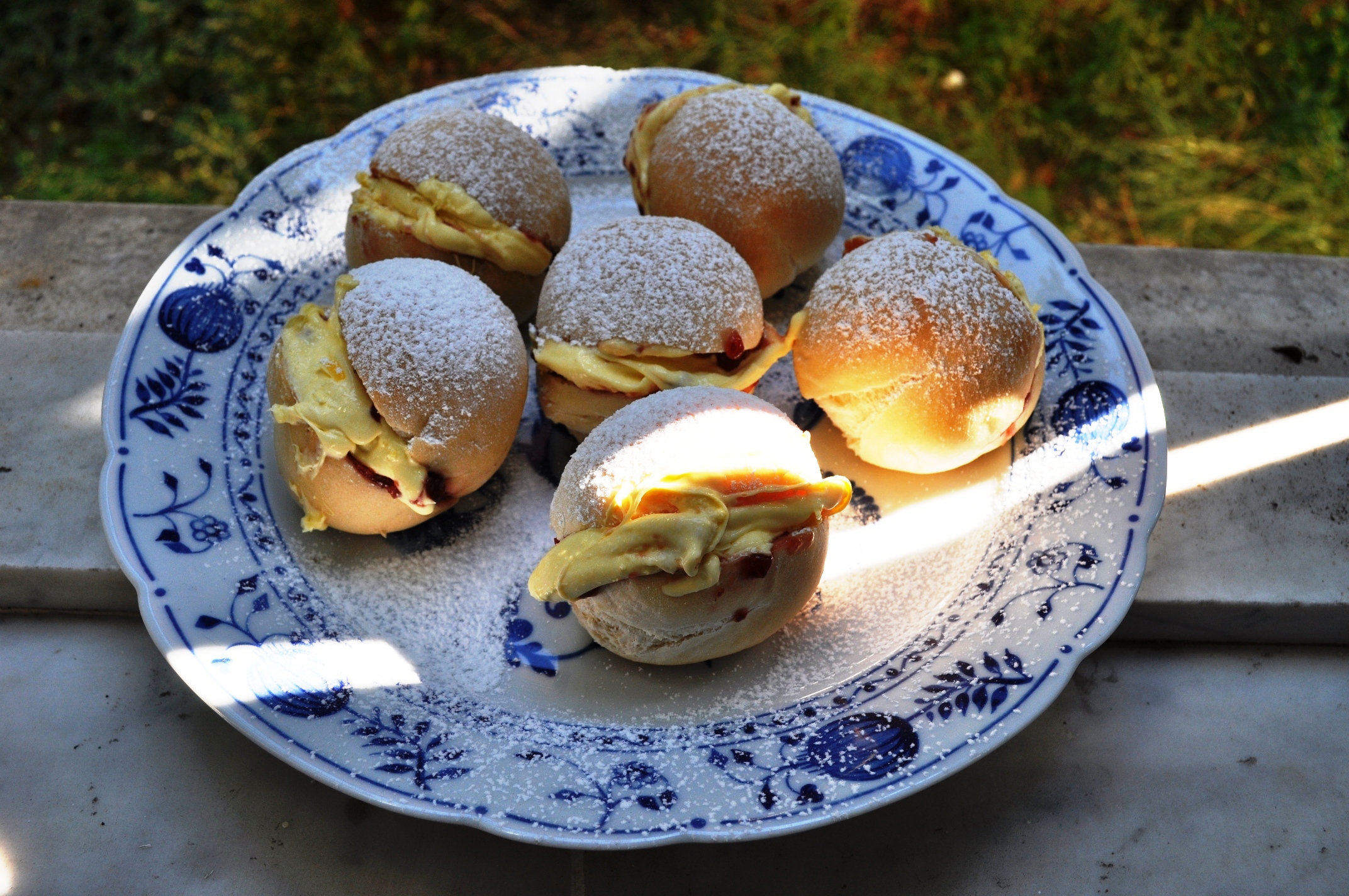
I clearly lied in my last post about getting back to talking about Italian and Roman beer and baked goods didn’t I? Oh well – if it’s any consolation, we were sitting in a Roman garden, drinking prosecco, getting eaten by mosquitoes and being glowered at my our oddball neighbours when we ate these.

Freshly baked  Devonshire split buns

So it was a kind of English-Roman hybrid cream tea. But probably the best cream tea consumed in Rome for a while. I don’t make any bones about saying my scones are excellent, and good clotted cream is always awesome. Plus, well, Babington’s, the famous “English” tea room by the Spanish Steps, serve their cream with whipped cream not clotted cream – which is frankly just an abomination. No contest.

11 Comments

Filed under Breads, Cakes, Recipes, Uncategorized

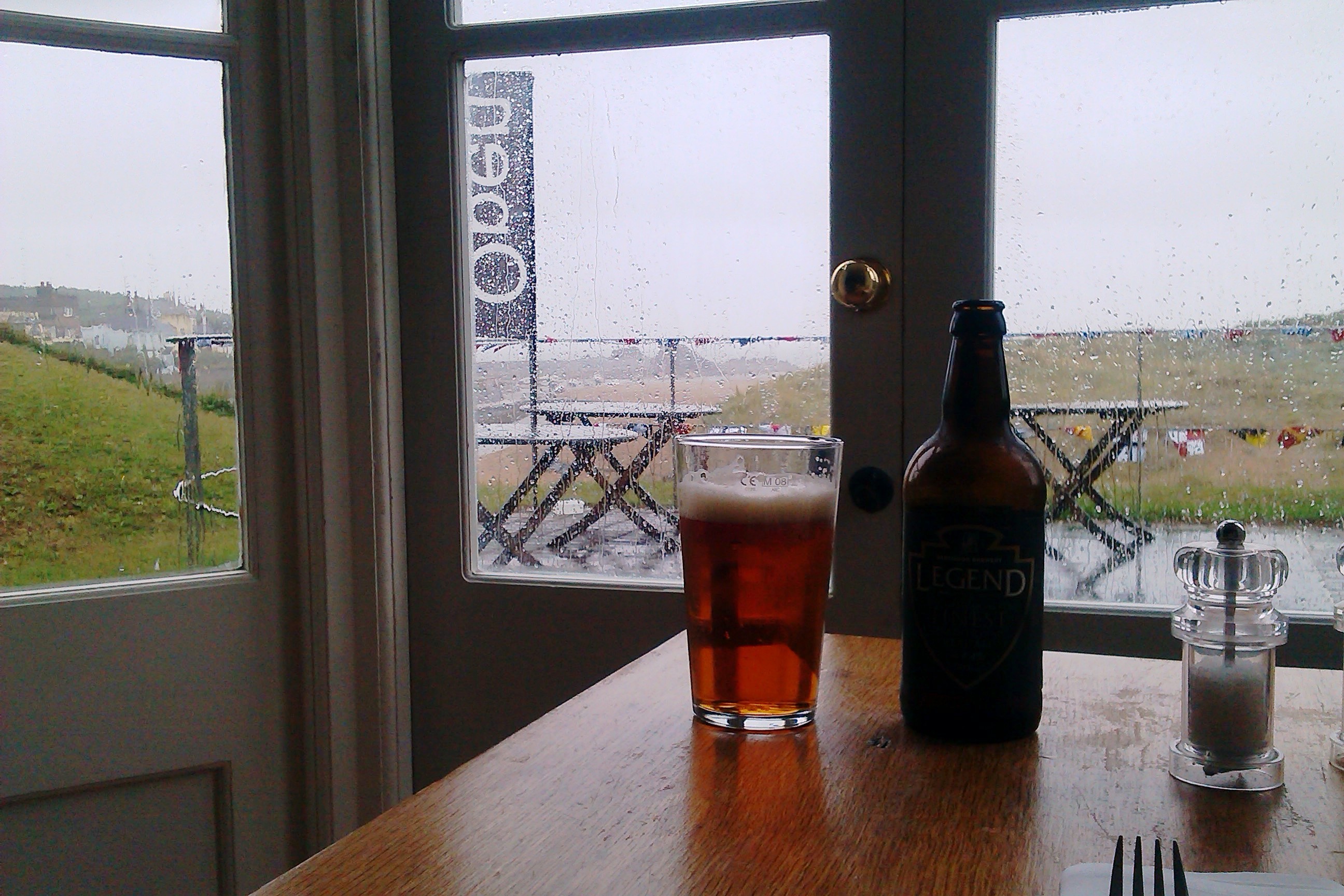
Dartmoor Brewery’s Legend at The Castle restaurant, Bude, Cornwall

Dartmoor Brewery's Legend at The Castle Restaurant, Bude, Cornwall

Right. Here’s my last write-up from my recent visit to England. Really must get back the matter at hand – ie Italian stuff, notably Italian beers. And baking. More baking to follow.

I had this ale in the old-fashioned English seaside town of Bude at The Castle restaurant. The Castle isn’t actually a castle – it’s the former house of a local chap who went by the stupendous Dickensian name of Goldsworthy Gurney. Brits can be so dull with their naming conventions these days. I don’t know anyone called Goldsworthy. I don’t even know anyone with a pet called Goldsworthy. Fy, for shame.

Gurney was a remarkable figure – one of those enterprising, inquiring inventors and engineers who helped shape Victorian Britain. Not only did he build himself a bunker-like miniature castle on the dunes where the River Neet (aka the River Strat) empties into the Atlantic, alongside the mouth of the canal (itself another great bit of Victorian engineering), he even invented one of the first horseless carriages. This was basically a somewhat volatile steam engine bolted onto a traditional coach. He also invented an efficient heating stove, which is still in use today in a few locations. His most successful accomplishment was a gas injection lighting system that was used in the House of Commons for 60 years.

We went to the Castle on a typical north Cornwall summer’s day, dashing indoors in heavy rain, and passing a Gurney Stove (sadly out of commission). The Castle restaurant is one the area’s best eateries, though I was disappointed the waiter couldn’t actually give me the provenance of the fish on the menu. Still, at least they had a couple of decent bottled beers. I had Legend from Dartmoor Brewery.

Dartmoor Brewery’s blurb says “Situated in the very heart of Dartmoor National Park at 1400 feet [427m in new money] above sea level we are the highest brewery in England and we believe the best!” Modest. The brewery focuses on three types of beer from a purpose-built brewery opened in 2005 with a capacity of “300 brewer’s barrels (1200 nine gallon casks) per week.”

Honestly, the UK might have managed a bit more metrication than, say, the US of A, but the brewing industry still adores old-fashionedy weights and measures. As much of the world is (very sensibly, logically and practically) metricated, and much international brewing talks in hectolitres (hl; 1hl = 100 litres), I’m going to try and always include an hl measure.

So 300 UK barrels is about 49,000l, or 492hl.

So a little bigger than the previous brewery I was talking about, Holsworthy Ales, but then Dartmoor Brewery is a bit longer established, having been opened in 1994.

Their three products are: Jail Ale, “a full bodied mid-brown beer with a well rounded flavour and a sweet Moorish aftertaste” (Do Moors drink beer? Surely they mean moreish? Or is it a pun on Dartomoor? [thanks for pointing that out Fran]); Dartmoor IPA, “a highly drinkable amber coloured beer. It has a deliciously smooth thirst quenching taste and subtle hop aroma”; and the Legend, “a classic cask conditioned beer smooth full flavoured and balanced with a delicious crispy malt fruit finish.”

Dartmoor Brewery's Legend at The Castle Restaurant, Bude, Cornwall

Mine was bottle conditioned, though it was indeed smooth and balanced, a kind of easy-going bitter, with some fruitiness and some biscuity, fresh-baked-fresh malt. It was an amenable beer to wash down my fish and wedges (the menu lies – it says chips, but they are wedges; always a disappointment when you want chips) but, I dunno, considering it’s made with Dartmoor water, Devon malts and English hops I really wanted to like it more. It was pleasant but just a bit… generic. Maybe I’ve been drinking too many nice, easy balanced golden ales and mellow bitters of late. Time for a trip to Ma Che Siete Venuti a Fà? for some challenging Kriek or suchlike methinks.

Still, eating it in Goldsworthy’s old withdrawing room (or whatever), replete with the same wallpaper we used to have in our old house in London, with the rain lashing the windows and the Atlantic surf churning a few hundred metres away, it was part of a dining experience that was, overall, very satisfying.

Info:
The Castle Restaurant, The Castle, The Wharf, Bude, Cornwall EX23 8LG
thecastlerestaurantbude.co.uk | enquiries@thecastlerestaurantbude.co.uk |+44 (0)1288 350543

Dartmoor Brewery Ltd, Station Road, Princetown, Devon PL20 6QX
dartmoorbrewery.co.uk |ale@dartmoorbrewery.co.uk |+44 (0) 1822 890789

Leave a comment

Filed under Ale, beer, Bars, pubs etc

Ale in Holsworthy and Holsworthy Ales, Devon

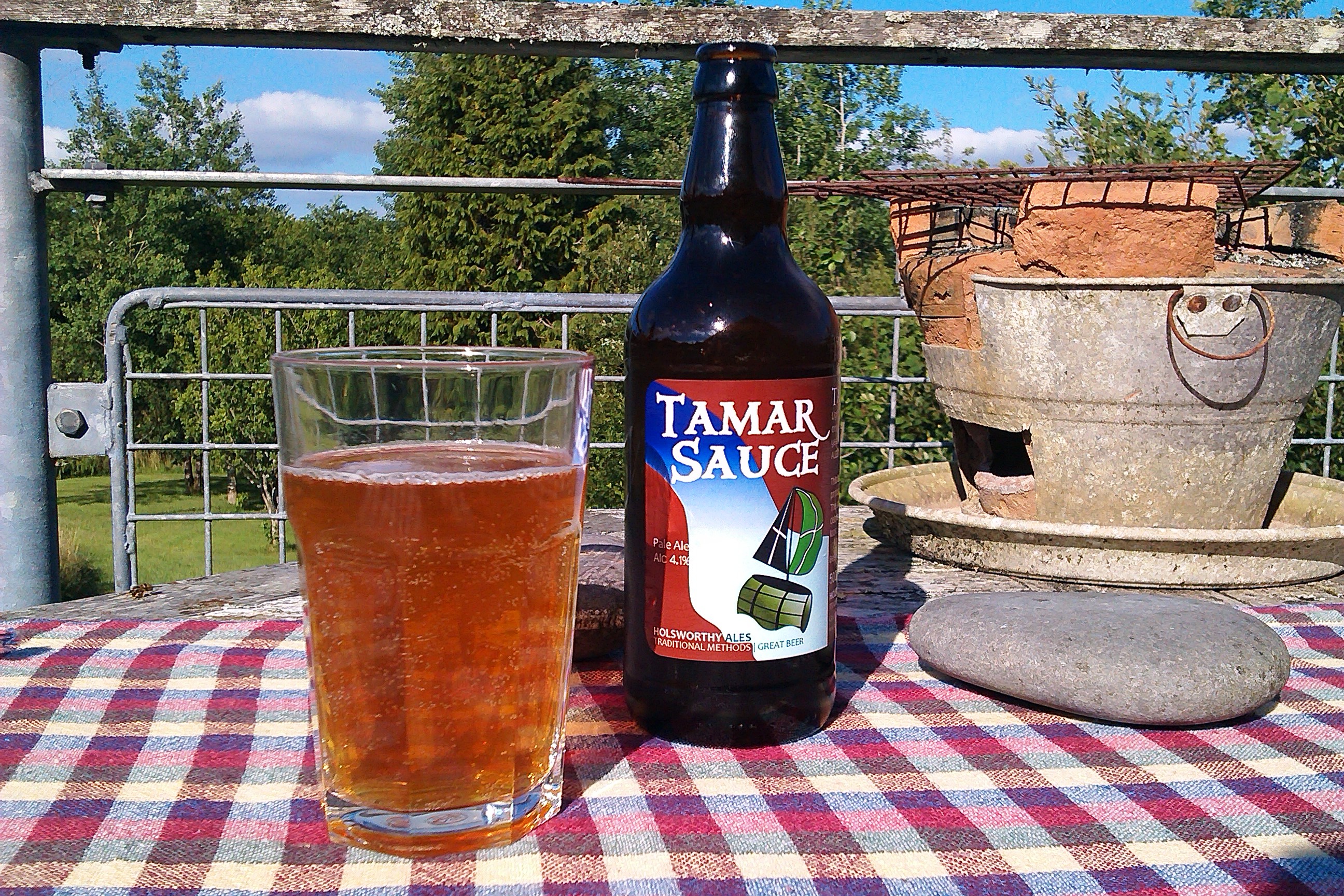
Holsworthy Ales' Tamar Sauce, enjoyed in the Devon sun

Holsworthy, in northwest Devon, is a quiet little agricultural town, largely bypassed by the tourist hordes frequenting the coast 10 miles away. In days of yore, it was a significant market town, having been designated a “port” in the early middle ages. This is slightly confusing for an inland town, but in this older, Saxon sense port meant a safe place to trade.

Holsworthy had a railway line until 1966, when it was closed as part of the Beeching cuts. Some remnants of the railway route are in part being used today for Sustrans traffic-free routes, including the very handsome Derriton Viaduct. The Viaduct is one of the town’s key attractions. The other – for ale enthusiasts – is the beer scene, which is surprisingly vibrant for a town with a population of 2500-ish. Indeed, it’s one of those remarkable British towns with a pub every five yards.

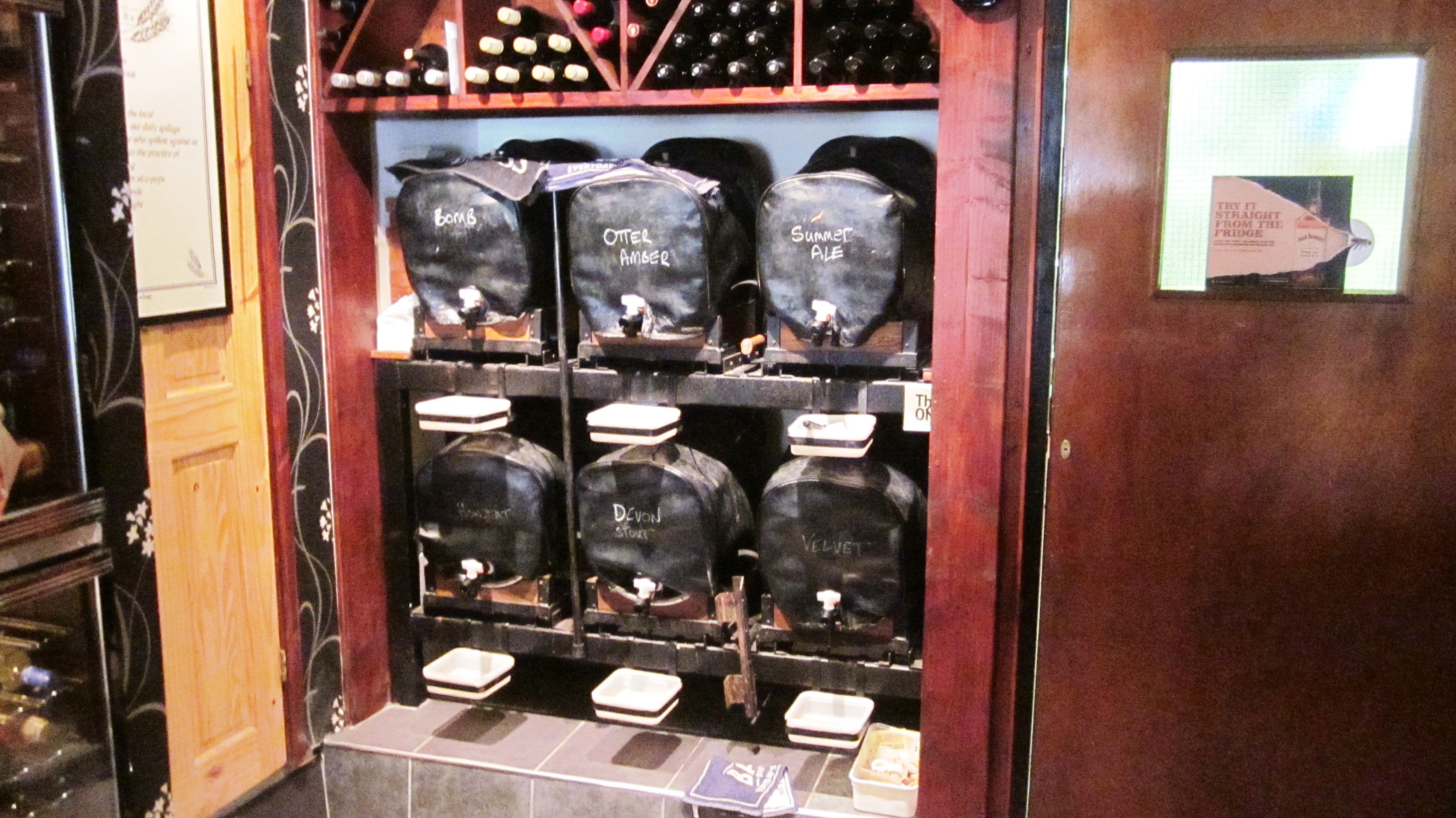
The best beer pub is the Old Market Inn (or Olde Market). Lee, the publican, is welcoming, helpful and knowledgeable. He made a point of installing several handpumps and casks when he took over the pub several years ago, despite naysayers telling him he wouldn’t be able to sell real beer there.

Casks, Old Market Inn, Holsworthy, Devon

The Old Market went on to become North Devon CAMRA’s Pub of the Year 2010 to 2012 (it’s been pipped by the Ship and Pilot, Ilfracombe for the 2013 title). Lee also told me that he was chosen from among thousands to be accredited as one of the top 50 Guinness pubs in the UK although he says “I’m just doing what I’ve always done” – that is, keeping his beers properly. He even does his own beer call BOMB (“Best Old Market Bitter”), which he makes by dry hopping a beer supplied by a local brewery. He couldn’t say which though! He’s also started trying to further the beer education of his punters by stocking a fridge with bottled “Beers of the World”.

When I’m in the Old Market, however, I tend to stick with the most local option possible: which means brews from Holsworthy Ales. On this trip I made a point of sampling more of its spring and summer products, brewed just outside Holsworthy in Clawton. The microbrewery was founded in 2011 Dave Slocombe, who was a home brewer and solicitor who worked in London and Bristol before relocating to Devon. He has a smallholding nearby where he’s planted a vineyard; he says, “We do plan to make wine commercially but it is still some years away.”

Dave says he makes about 11 barrels a week in the summer – that’s 164l UK barrels, so 18 hectolitres. Although he started out using a commercial yeast, he now crops the barm, maintaining his own, unique yeast culture – to give his brews some added distinction. He says his beers are regularly in about eight pubs, adding that they’ve been in about 85 since he started producing in 2011.

A pint of Make me Hoppy at the Old Market Inn, Holsworthy, Devon

I had a pint of Dave’s Make Me Hoppy at the Old Market Inn. It’s his latest beer, a seasonal brew for Spring 2013. A 4.7% ABV beer, it is, as you’d expect, all about the hops – and is made with a blend of three, Green Bullet, Perle and Hersbrucke Hallertau. He says, “I wanted a floral, fairly Germanic beer, as a contrast to the fruitiness of Tamar Sauce, its predecessor.” And it is just that: crisp and floral.

My dad got a load of Holsworthy Ales in at their house, and I also tried the bottled version, which was slightly more carbonated than the cask version. This is natural, but especially so in the summer. Dave explains, “Bottled beers will nearly always be more carbonated, although I bottle out of the fermenter and (usually) at the same time as I cask up.  It is down to two factors: (1) the beer will often have more time in the bottle and kept in warmer conditions so has more time to have (relatively) vigorous secondary fermentation and (2) cask beer is generally kept in cellar conditions slowing down secondary fermentation and in a hand pull situation a lot of the CO2 is forced out of the beer in the pumping process, especially if the pump has a sparkler on it.”

Holsworthy Ales, brewery, Clawton, near Holsworthy, Devon

Holsworthy Ales currently does eight different beers. I wrote about the Autumnal Conker King here. This time round I also had Tamar Sauce, a pale ale with reasonable carbonation (in the bottled version), minimal head and a fairly thin body. It’s made in the summer and is a suitably refreshing floral and fruity drink for a warm weather (yes, the sun was out when I had mine, as you can see from the pic). It’s “hopped with New Zealand Cascade hops. This gives strong fruity notes which are balanced by bitterness from Green Bullet hops.”

Sun Shine (ABV 4%) is another nice summer drink, again with a fairly thin, well-carbonated body and a crisp, dry flavour and finish. It’s not unlike the (bottled) Make Me Hoppy, but is fruitier and less bitter.

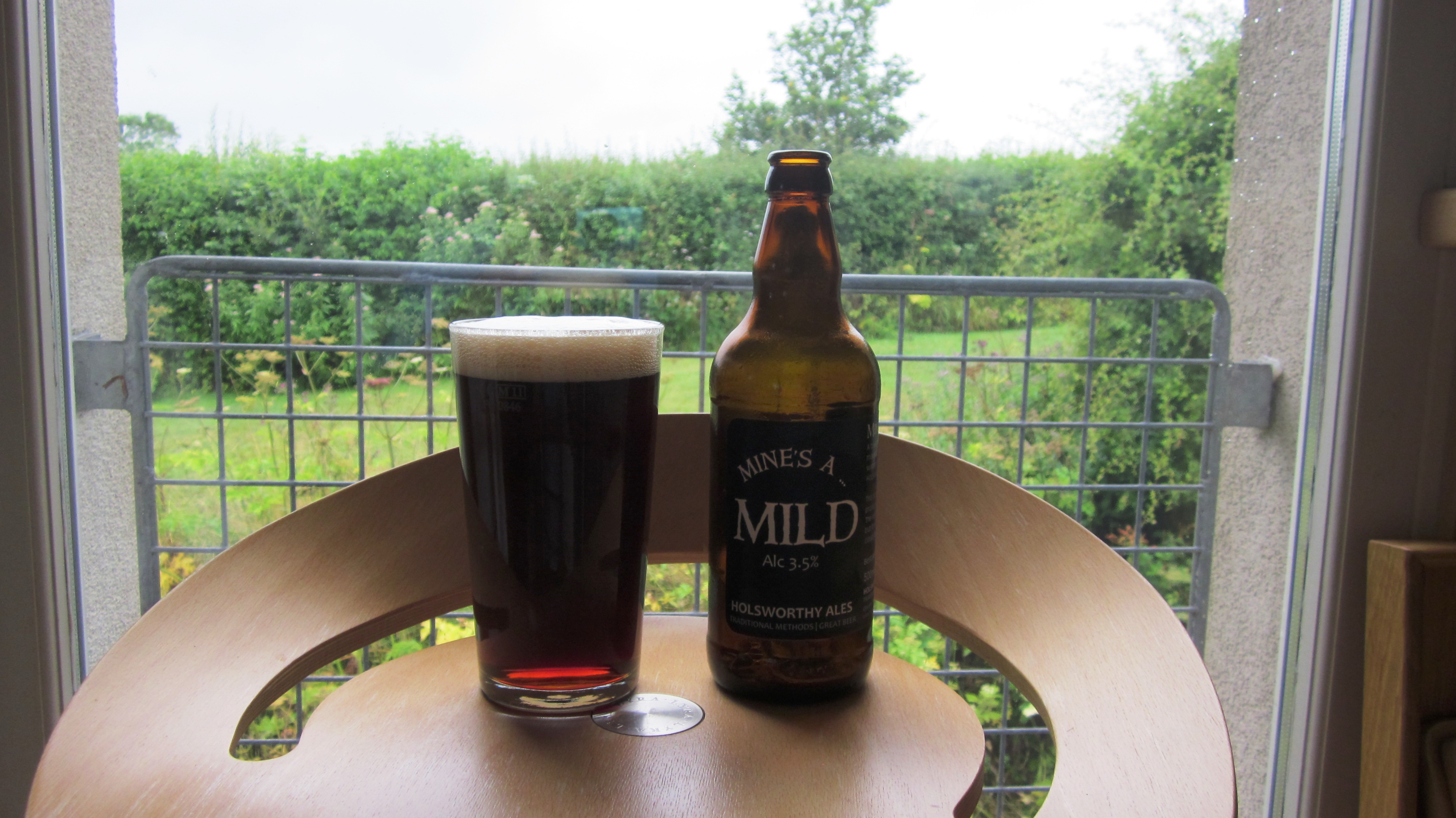
My favourite of his beers in this sampling though was Mine’s a Mild. It’s a delicious low alcohol (3.7%) brew that’s great for a refreshing lunchtime drink, just right for when I had to keep my wits about me to go scrumping firewood after lunch in the gloomy, tangled woods nearby. It’s medium bodied, smooth and very malty, with a toastiness I found almost smoky.

Holsworthy Ales' Mine's a Mild

Holsworthy’s changed a fair bit in the 14-ish years I’ve been visiting. The one decent pasty shop closed down years ago, and the town acquired a supermarket – though some good independent shops manage to survive, like a nice little cheese shop and a great cook shop nextdoor. Oh, and Bergerac/Ispettore Barnaby himself has moved in nearby too. Best of all though, the beer scene really has gone from strength to strength thanks to the likes of Lee and Dave (whose next brew is a “Belgian style beer” specifically a “Chimay/Kwak type beer”). Not bad for the middle of nowhere in perennially soggy northwest Devon.

Old Market Inn
Chapel Street, Holsworthy, Devon EX22 6AY
oldmarketinn.co.uk | info@oldmarketinn.co.uk |+44 (0)1409 253941

Holsworthy Ales
Unit 5, Circuit Business Park, Clawton, Holsworthy, Devon EX22 6RR
holsworthyales.co.uk |dave@holsworthyales.co.uk | +44 (0)7879 401073

2 Comments

Filed under Ale, beer, Bars, pubs etc

Malted wheat bread

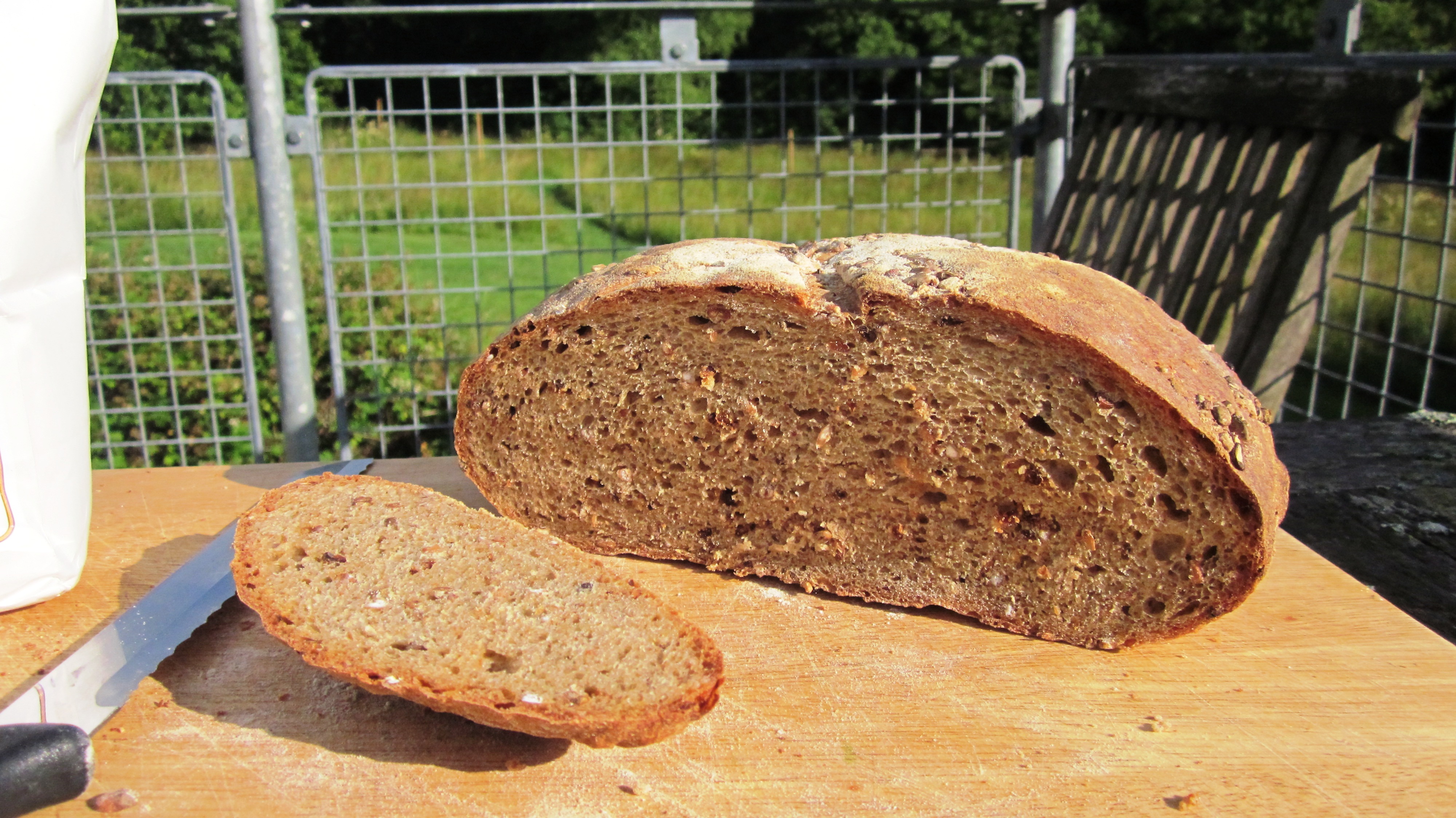
Malted wheat bread made with Wessex Cobber flour

After my recent problems with bread-making at home in Rome, I was keen to try and make some bread during my visit to England last week. Although everyone kept telling me they’d just had three weeks of sun and 30C+ temperatures, when I arrived the British weather returned to form. I left the heat of Rome and was met by rain and grey at Gatwick. (There was one day when it was hot and sunny again, but I spent most of it in transit: on a train, then waiting for a very late-running bus, then waiting on the roadside in a village in the middle of nowhere in Devon when said very late bus broke down. Overheated.)

Eventually I made it to my folks’ place in the middle of nowhere in another part of the Devon countryside. I visited the local town, Holsworthy, bought some flour and yeast, then made some bread. That day, the weather was mixed and barely more than 20C. So nice and familiar and manageable, unlike the 40C ish Roman inferno.

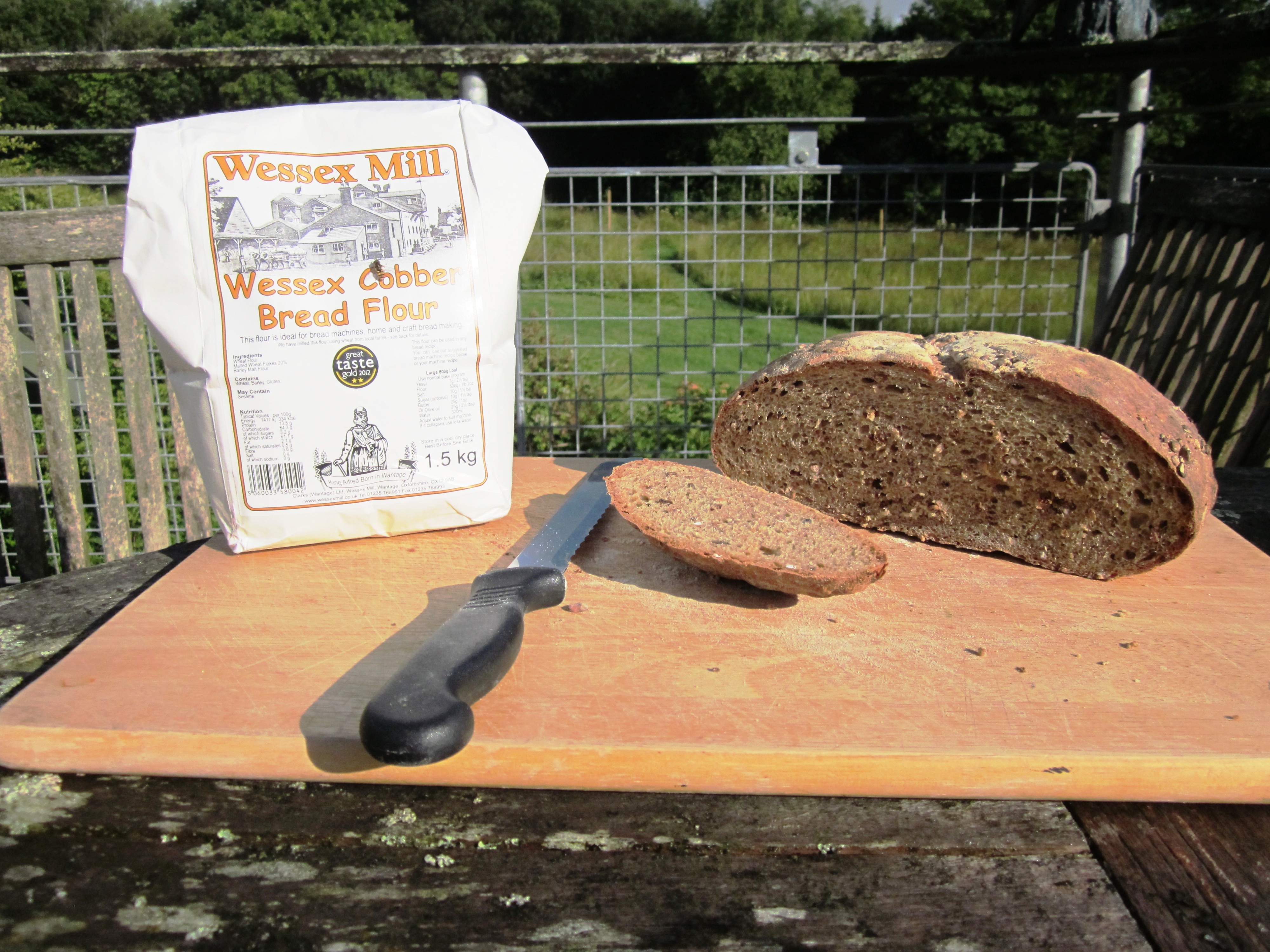
The flour I bought was Wessex Cobber Bread Flour from Wessex Mill. Now, for those without even a passing knowledge of English history (or the literature of Thomas Hardy), Wessex is an ancient English kingdom, where the West Saxons (Wes-sax – geddit?) not only conquered neighbouring Anglo-Saxon tribes, but also fought the Vikings to a standstill under Alfred the Great, effectively creating the first version of an English nation in the 9th century. Or at least that’s my précis. Proper historians who would probably tell it differently, but I have Wessex campanilismo. Either way, Wessex, unlike Essex and two Sussexes, no longer exists as a county. Though at its height, it did dominate much of Devon, a region then mostly still inhabited by Britain’s older, “Celtic” inhabitants. Anyway, the point I’m making is that although it wasn’t a local flour brand, it wasn’t that far away from being local.

Except that when I read the packet more closely it said that because of Britain’s poor cereal yields in 2012 (ruined by the non-summer), the flour was instead milled from Canadian grain. D’oh. Seriously, when I leave Italy and return to tediously supermarket dominated and tragically climate-change-ravaged England locavorism is going to be an interesting challenge. Here in Rome I can buy numerous flours ground from grains grown in neighbouring regions.

*Sigh*

I went ahead and made some bread anyway. Wessex Cobber Bread Flour is a roller-milled wheat flour, containing some barley malt flour and malted wheat grains. The type of bread it makes is more commonly known in the UK as “Granary”, but Granary is in fact a trademarked malted flour owned by Premier Foods, owner of the Hovis brand. So much like you can’t call a Kölsch-style beer “Kölsch” unless it’s made in Cologne the right way, you can’t technically call a Granary loaf “Granary” unless it’s actually made with Rank Hovis flour.

For this bread I used the reliable proportions of 1000g flour / 700g water / 20g fresh yeast / 20g fine salt, ie 70% hydration, though I tend to halve that for a smaller loaf. And I just did a basic bulk fermentation, proving twice until doubled in size. No flies were included in the mix.

Wessex Cobber flour, with fly, and bread

The results were a bit dense, but it was moist and chewy, and after a few days I didn’t get any of the problems I’ve had recently in Rome with the centre of the loaf damply disintegrating. Although that still doesn’t help me diagnose said problems.

Hi ho.

Oh and I’m not entirely sure what a cobber is. I’m guessing it’s a dialect variation on cob, the more common British English name for a round loaf, equivalent to the French boule. It rings a bell. Though the main usage of cobber that springs to mind is the Australian English for “mate, buddy, chum”.

3 Comments

Filed under Breads

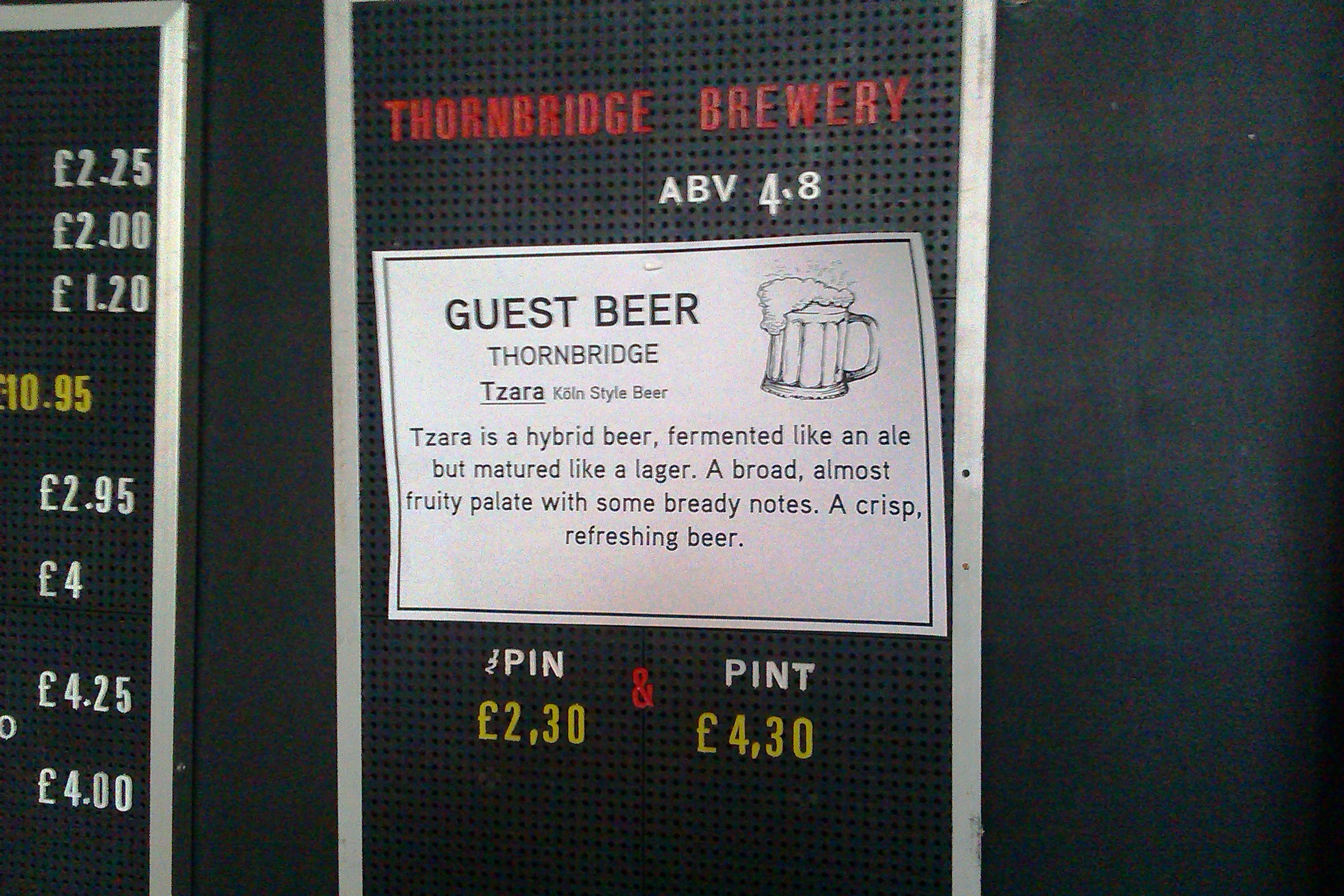
Thornbridge Tzara at the Cut Bar, London

Thornbridge Tzara at the Cut Bar, London

Yes, yes, I know Bread, Cakes and Ale seems to be focussing more on ale at the moment, but, well, I just spent a week back home in England and it’s a lot easier to booze than it is to bake when you’re on the road (figuratively speaking. Don’t drink and drive kids!). Meanwhile, back in Roma, it’s too darned hot to really embrace the baking. I’ve only been back since Tuesday, but it’s been reaching about 40C every day, or 104F is you’re an adherent of ye olde Fahrenheit and enjoy the drama of saying “It’s over 100 degrees today!!”.

Anyway. To continue my coverage of beers sampled and pubs (etc) visited while in Britain, on my one evening in London I wanted to go somewhere near Waterloo railway station, so my sis could get home easily on the train. Google told me the Cut Bar had some real beer, alongside sparkling wine and fruit-based drinks for the ladies, so the Cut Bar it was.

The Cut Bar is a fairly cavernous, gloomy boozeria that’s part of the Young Vic theatre. Hence, you may or may not see the stars of the current production (see below). It was pretty busy when I arrived and met friends around 6pm. As I’ve said before in my coverage of Roman boozing, Brits like to go straight out after work, unlike Romans who have their aperitivi a little later (frustrating my programming). Sadly the nice-looking balcony was already full so we perched on stools.

It’s not a specialist beer bar, but at least it tries to cater to beer drinkers with three taps and some bottled brews. I just cut to the chase and went with the guest beer, which was Tzara from Thornbridge. This is a brewery located in Derbyshire. It began producing beer under the Thornbridge brand in 2005 in a shed at Thornbridge Hall, a private stately home. In 2009, they opened a new “state of the art” brewery called Riverside.

Both facilities still brew, the Hall site, with a 10 UK barrel (16 hl) capacity, focussing on the “traditional infusion mash ale system”, while the 30 UK barrel (50 hl) Riverside site “highlights our ability to innovate through technology”. Which sounds great. I’m not into fusty dogmatic adherence to tradition – I’m more keen on a knowledge of and respect for tradition seasoned with an openness to experimentation and new ideas. This seems to be Thornbridge’s attitude too – their motto is “Innovation Passion Knowledge”.

Thornbridge call Tzara a 4.8% ABV keg beer that’s described as “a hybrid beer, fermented like an ale but matured like a lager. A broad, almost fruity palate with some bready notes. A crisp, refreshing beer.” I was intrigued. Did it mean it’s top fermented then conditioned at cold temperatures? A visit to Thornbridge’s blog tells me Tzara is a Kölsch-style product. Kölsch is a type of beer specifically from Cologne (Köln) in Germany. And my guess was right: it is indeed an a top-fermented beer, and it is fermented and lagered at a lower temperature.

The Thornbridge blog gives all the details of what defines a Kölsch and what they’ve used to make Tzara: Pilsner malt and wheat malt – both sourced in Germany. Likewise the hops. They also explain that while an authentic Kölsch is filtered, Tzara isn’t – instead, it’s centrifuged which “allows us to clarify the beer without stealing those delicate flavours we put into the beer in the first place.”.

It was another very pleasant summer beer, like the Pacifica Pale I’d drunk at lunchtime at the Cask. Indeed, it tastes similar to a classic golden ale, light, crisp and subtly fruity with well balanced sweetness and mellow hoppiness – but it’s not an ale. The Thornbridge blogger says “It does ferment at near ale temperatures, but one has to consider how the Germans themselves classify Kölsch – ‘Obergäriges Lagerbier’ – top-fermenting lager beer. Calling all top-fermenting beers ‘ales’ is simply misusing the name.”

I’m glad we’ve cleared that up.

Oh, and just to finish, in case Chiwetel Ejiofor, of Children Of Men, 2012, Serenity,  American Gangster etc fame and one of the best British actors of his generation, happens to chance upon this blog: I wasn’t trying to take a picture of you, honest. I was taking a picture of the guest beer sign on the wall and you walked into frame.

The Cut Bar, The Young Vic Theatre, The Cut, London SE1 8LZ
info@thecutbar.com | +44 (0)20 7928 4400 / +44 (0)20 7922 2906


Thornbridge Brewery
, Riverside Brewery, Buxton Road, Bakewell DE45 1GS
info@thornbridgebrewery.co.uk | + 44 (0)1629 641000

2 Comments

Filed under Ale, beer, Bars, pubs etc

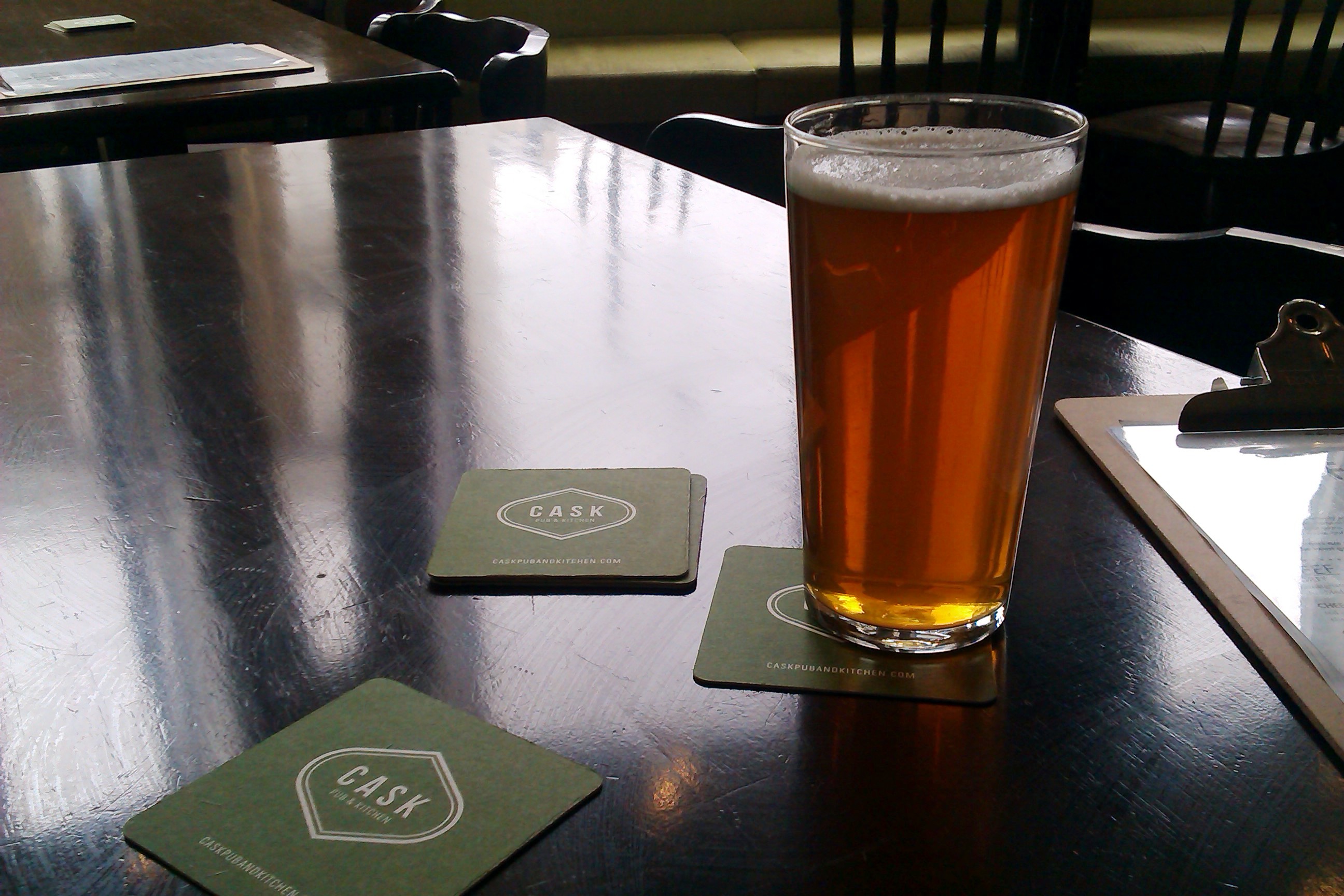
Tyne Bank Pacifica Pale at Cask Pub & Kitchen, Pimlico, London

Tyne Bank Brewery's Pacifica Pale at the Cask, Pimlico, London

The reason I went to Britain last week was the get a new passport. The UK embassy in Rome no longer has passport renewal facilities (though they do quite a pleasant Guy Fawkes party) and there was no way I could get it in the post as I don’t have any official documents for my address in Rome. Ergo, I did my bit for climate change and joined the budget airline masses.

The passport offices are located just near Victoria station in London. As I assumed some hanging about would be involved, I hunted about online for a suitable place to get some lunch – and have some real beer. A search presented me with the Cask Pub & Kitchen in Pimlico, a five minute walk from the passport office.

Although I lived in London for around 15 years, I left a few years ago. It’s amazing how fast things change there. Not only is there now an acre-wide hole in the ground right beside Victoria, but there are several new breweries and real beer joints too. Although the Cask opened back in 2009, this was my first visit.

Despite being surrounded by handsome Victorian housing stock, the pub itself stands out as it’s located in a 1970s red brick building on a corner. Inside, it’s fairly spacious and uncluttered, with a long bar and several fridges. It’s the sort of place that can cater to all beer requirements, having bottled beers, keg beers and hand-pumped cask beers.

When I visited several of the taps were dedicated to Tyne Bank Brewery, which is located… on the banks of the Tyne, no less, in Newcastle. The friendly, helpful barman said they do “meet the brewer” events, and where many pubs have a guest beer, the Cask has guest breweries. Tyne Bank is a microbrewery producing “60 barrels or 17,000 pints per week”.1

The Cask Pub & Kitchen, Pimlico, London

The Cask site says “All our hand pumps serve nothing but the absolute best ale available from the UK’s top micro-breweries.” The keg taps, meanwhile, offer a more international selection; ditto the bottled beer, with the site modestly claiming “We have a staggering collection unrivalled anywhere else in the UK.” They didn’t have any Italian craft beers at the time though! Not that I wanted to drink any. I’m always keen to eat and drinklocal produce as much as possible, though in this case I was keen to sample Tyne Bank’s wares. It may not be local to London, but I used to live in Newcastle so it at least had a personal connection.

My beer tastes are pretty broad so I tried a few things, and discussed the (innumerable) options with the barman. It was a fairly warm-ish summer-ish day, so I went for the Pacifica Pale, a golden ale.

Tyne Bank beers at the Cask, Pimlico, London

This was one of those very unchallenging beers. I probably should have gone for something a little more interesting, but as I was having a burger too I guess an uncomplicated golden ale was a nice accompaniment. The beer had a fruity, honey-ish smell, minimal head and low carbonation. The colour was dark gold, and slightly misty. The taste itself was easy and even, an undemanding mix of sweetness and mellow hoppiness. Tyne Bank’s site says it uses four different hops, but I can’t say it made it especially distinctive. Pleasant, but not distinctive.

After I’d eaten and finished the pint, I chatted some more the barman and tried a few one. Certainly more distinctive was another Tyne Bank brew – Tropical Haze. This one’s a festival wheat beer – made with mango puree. This gives it a notable sharpness. Which probably wouldn’t have gone as well with my burger.

All in all, I really liked the Cask, it was friendly, practical and unpretentious. Though next time I might ask them for a more challenging pint. And a fork. They don’t seem to serve their food with forks. What’s that about? Some kind of phobia?

Cask Pub & Kitchen, 6 Charlwood Street, Pimlico, London SW1V 2EE ‎

Tyne Bank Brewery, Unit 11, Hawick Crescent, St Lawrence Road, Newcastle Upon Tyne NE6 1AS
enquiries@tynebankbrewery.co.uk | +44 (0)191 265 28 28

Footnote:
1. One UK barrel is 36 imperial gallons or 164 litres. So 60 barrels is nearly 9840 litres or 98.4 hectolitres [hl] a week. Slightly confusingly, 17,000 pints is 9660 litres or 96.6hl. Either way, they have the capacity to produce around 5,000hl a year. 5,000hl is the progressive beer duty threshold for a brewery in the UK and as such, since the policy was introduced in 2002, has been a form of definition for “microbrewery” in the UK.

Leave a comment

Filed under Ale, beer, Bars, pubs etc

Ruddy Darter at The Black Boy, Winchester

Ruddy Darter at The Black Boy, Winchester

My hometown is Winchester, in Hampshire, an hour southwest of London out of Waterloo railway station. Although small, it’s technically a city, the ancient capital of England, boasting a cathedral – with the longest nave of any Gothic cathedral in Europe, apparently. My mother says she often overhears tour guides saying the high street is the oldest in Europe too, but I’m not sure how that’d be qualified. (When it was a Roman city, the main drag was in the same position, if that’s any help.) It’s got an Iron Age hillfort, King Arthur’s Round Table (honest), some bits of medieval city wall, and even a few city gates, despite the Victorians’ best efforts to destroy the historical infrastructure.

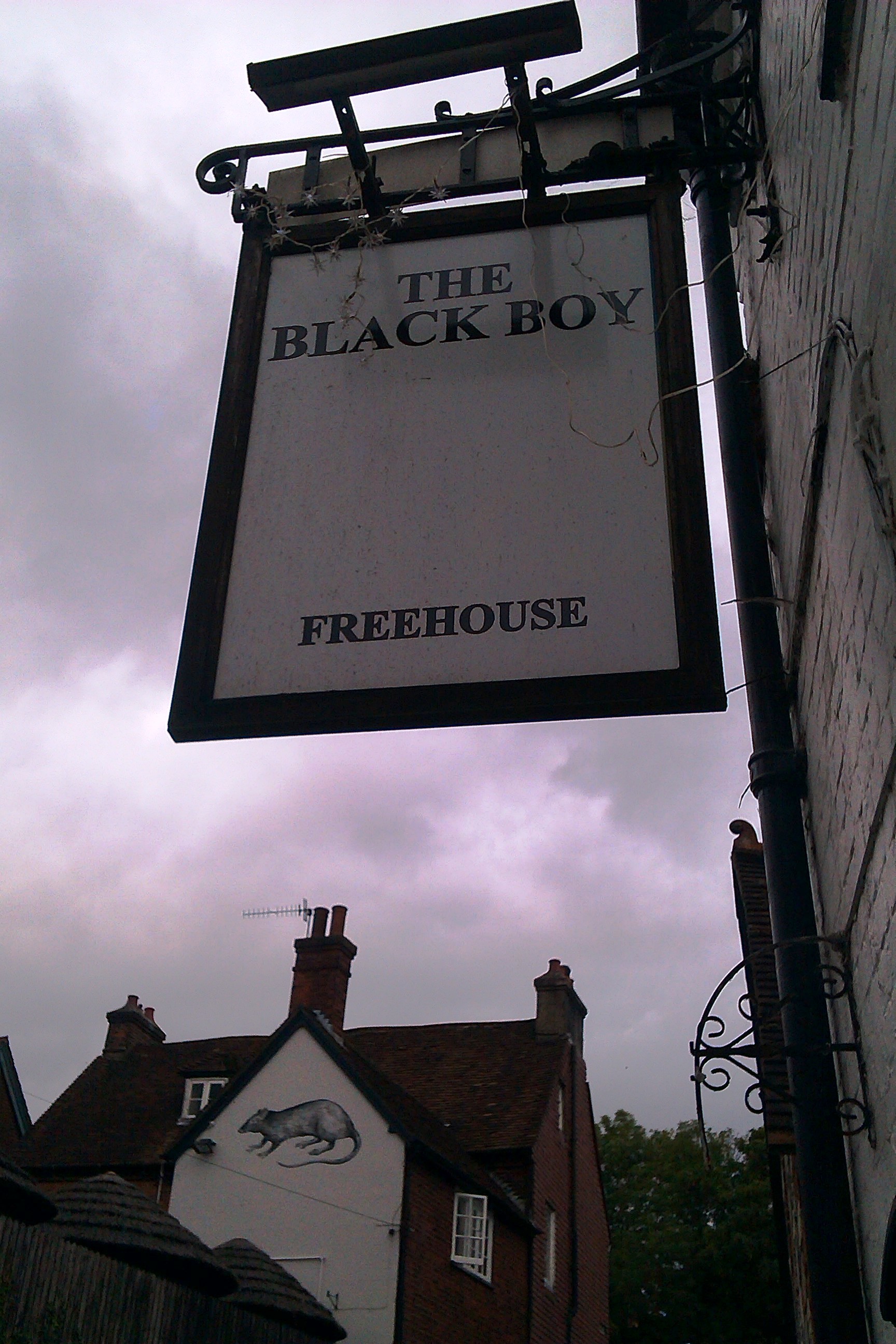
It’s also got a lot of pubs, though many of them are pretty mediocre. Among the not-mediocre Winchester pubs is my old local, The Black Boy. (My old old local, The Mash Tun, died the death and now seems to be a tapas bar.)

I’ve been going to The Black Boy for, well, probably decades. It’s a great little pub, in a low-ceilinged old building, replete with plenty of novelty clutter (taxidermied beasts, eviscerated books), fireplaces (that are actually used in the winter), and plenty of nooks and crannies. More importantly, however, there’s also a decent selection of real beers. Not only that, they have a policy to stock local real beers, so expect stuff from breweries and Hampshire (mostly) and other parts of ye olde Kingdom of Wessex, like adjacent Wiltshire. Oh, and it’s friendly too – not something you always experience in British boozers.

The Black Boy, Winchester

The Black Boy always seems to carry Flowerpots Bitter from The Flowerpots Brewery in Cheriton, a few miles away from Winchester. I often choose their 3.8% bitter (so mild-mannered after all the strong Italian beers I’ve been drinking lately!), but for this visit to The Black Boy I sampled some of the other ales they had on and chose Ruddy Darter.

Although it’s classified as an English bitter by Beer Advocate and a Premium Bitter/ESB by Ratebeer, more specifically I’d call Ruddy Darter an amber ale, with its deep coppery-red colour. Andwell, the Hampshire brewery that makes Ruddy Darter, refer to it as a Ruby Ale, in a Premium Ale style. (Andwell, by the way, was founded in 2008; Ruddy Darter is their most recent beer.)

However you define it, Ruddy Darter is delicious. It’s got a fruity smell, which continues into the taste, which is also warmly malty, with a good sweet caramel flavour and mellow hoppiness. My pint was hand-pumped, with low carbonation, though I suspect the bottled version would be bubblier. (Something I experimented on a few days later with some beers from Holsworthy Ales, in Devon. Will write that up shortly.). Oh, and it’s named after a dragonfly, which is pretty cool. All in all, a very pleasant quick visit to an old haunt.

[Usual apology for quality of photos. One of my reasons for visiting Winchester was to get a new phone with a good camera, but I couldn’t quite bring myself to sign up for another 24 month contract or whatever.]

Leave a comment

Filed under Ale, beer, Bars, pubs etc