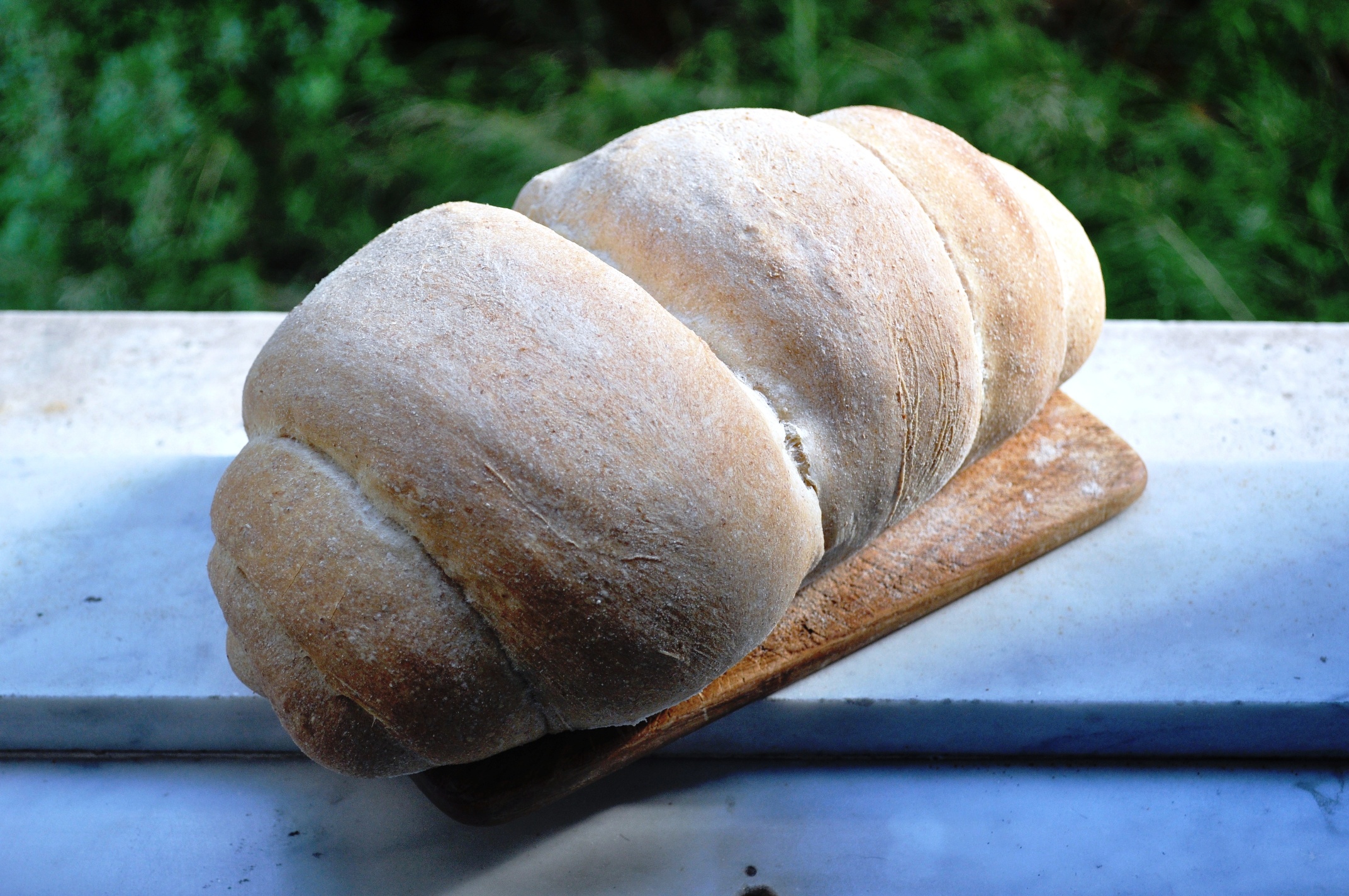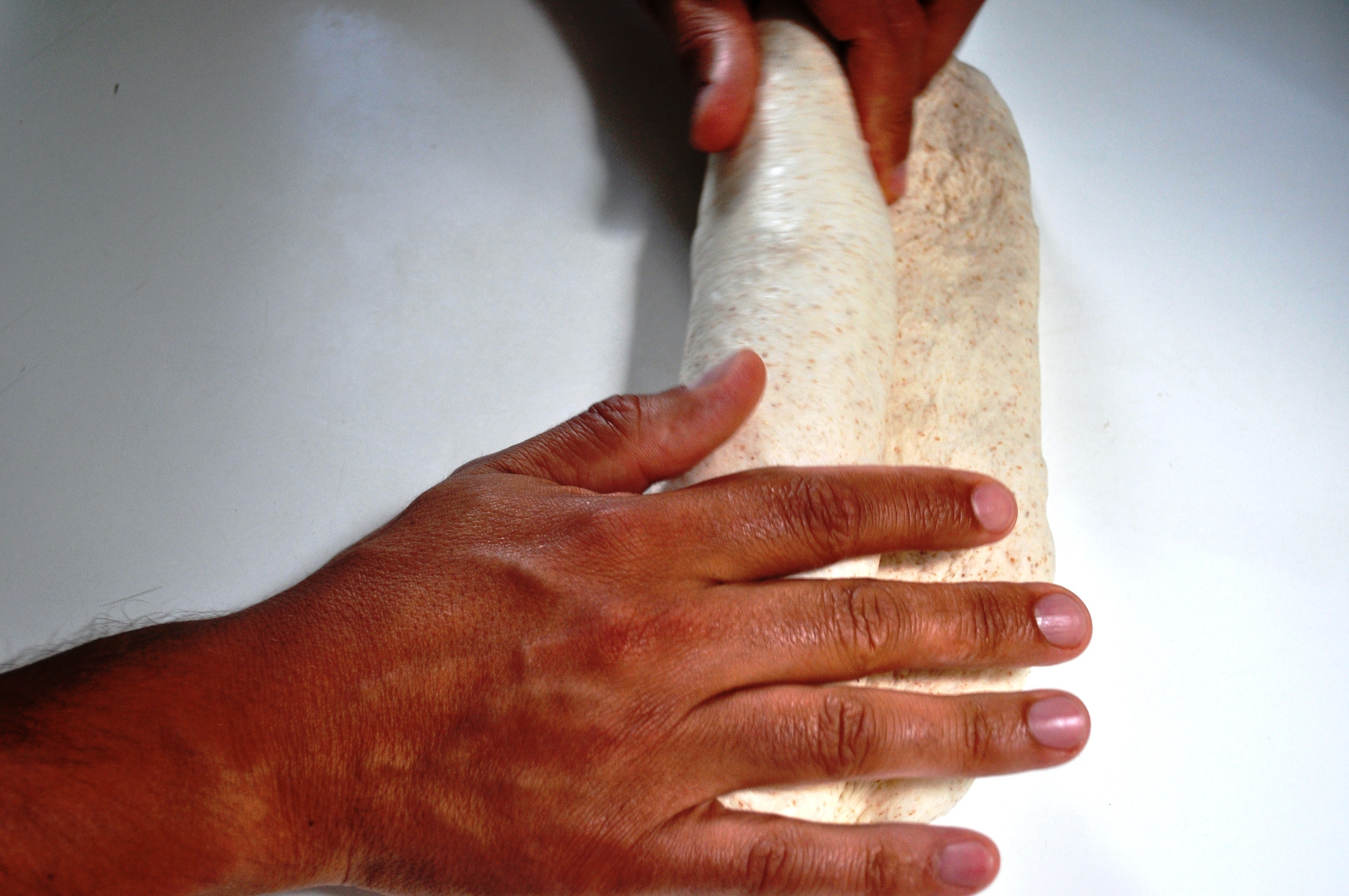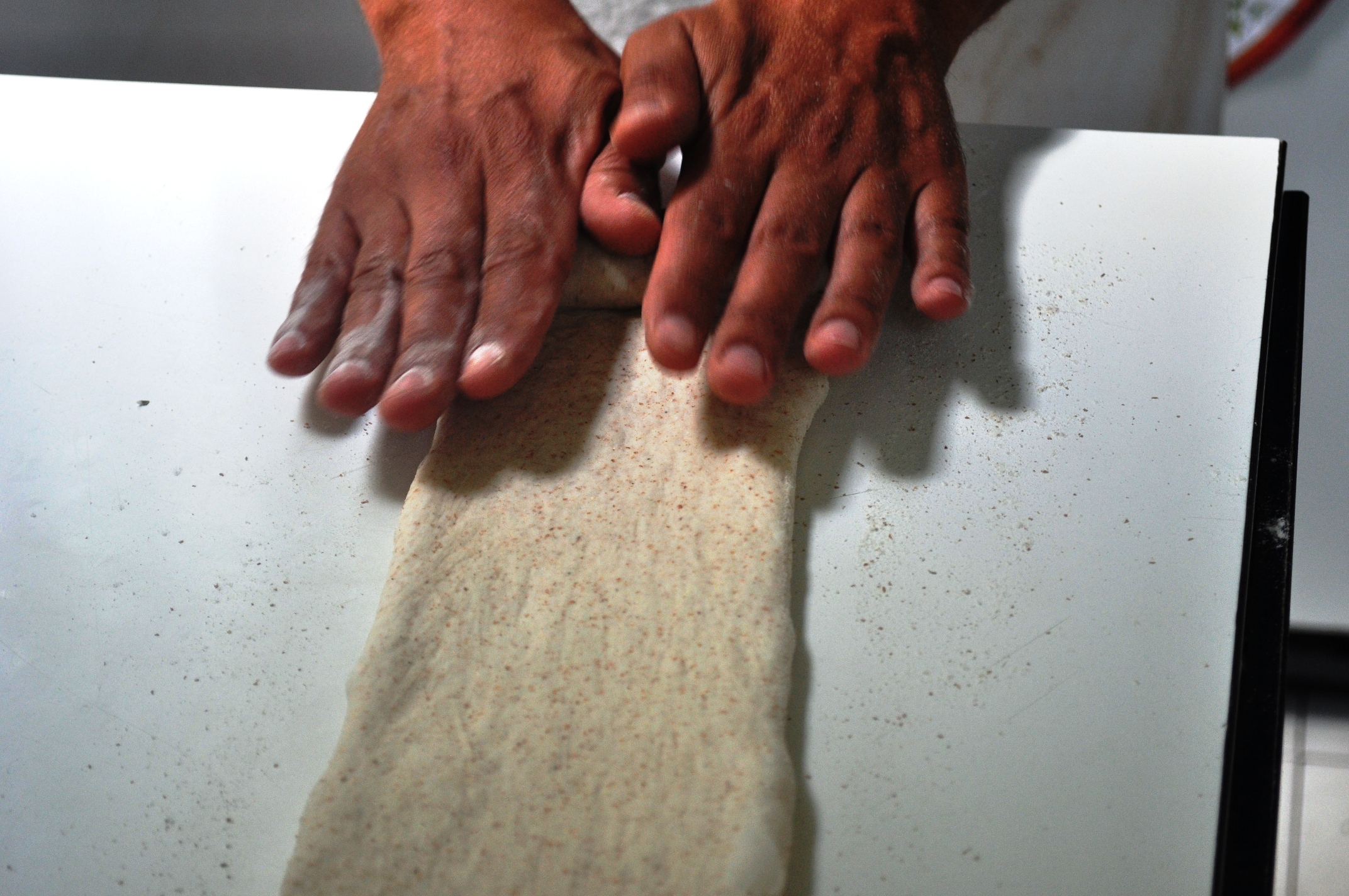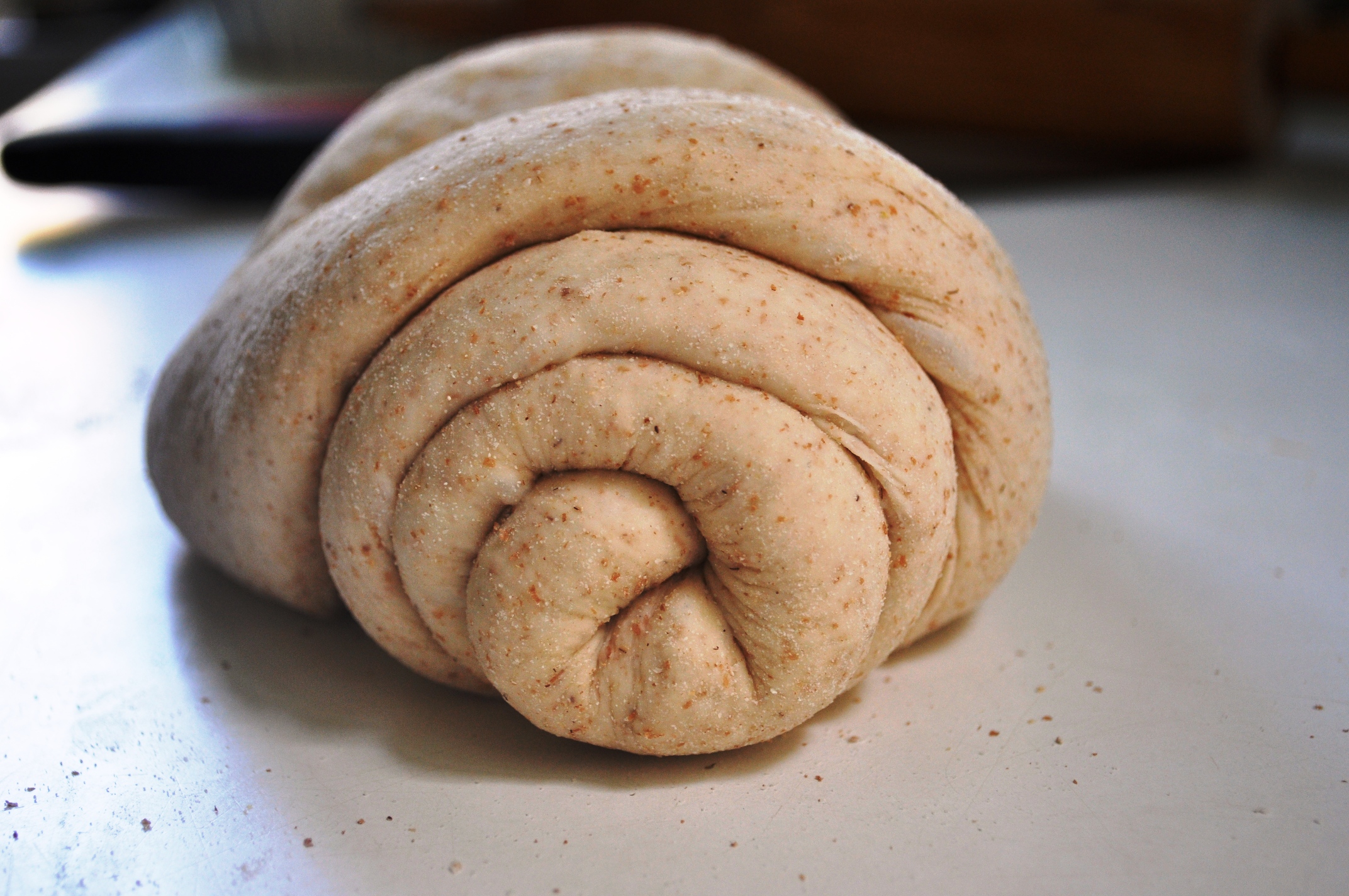
Black beer bread

Black beer bread

Readers of this blog may have already spotted that we’re ‘Game of Thrones’ fans. ‘Game of Thrones’ is not only the name of HBO’s excellent TV series, it’s also the title of the first book in George RR Martin’s A Song of Fire and Ice cycle of books and it made a cameo appearance in this post, where we were lolling around in the park drinking Birra del Borgo’s Rubus, reading and enjoying the sun.

I can’t remember what hyperlinked amble took me there, but Inn At The Crossroads is the officially recognised blog for recipes based on foods found in A Song of Fire and Ice. Being a baker, my attention was immediately grabbed by their bread recipes. Specifically black bread – something that’s mentioned in the books as common fare of the people of Winterfell and the North.

Here is Inn At The Crossroads’ first Black bread, and here is their Black bread redux, aka Black beer bread. I wanted to try something similar, but not using commercial yeast – as this didn’t seem to fit into the whole quasi-Medieval vibe of Martin’s world. Instead, I wanted to use beer barm, a byproduct of fermentation.

My first experiment with a real barm bread was pretty successful, though I didn’t use any actual beer or dark flours to make it, so it wasn’t really a black bread or a black beer bread. This, however, is.

Again, I used Mulino Marino Pan di Sempre, a stoneground organic white flour that is made with a blend of Triticum aestivum (that is, common bread wheat), Triticum spelta (spelt wheat) and Triticum monococcum (einkorn wheat), but I also added some wholewheat flour.

I made a leaven with the same barm as before, feeding it up with flour over a few days, then I made up a dough, using beer as the only other liquid, not water.

Now, I mentioned that Dan Lepard’s ‘The Handmade Loaf’ has a recipe he calls “Barm bread”, though he makes it without actual barm, just beer and a leaven. He also heats the beer, killing the yeasts, but retaining the flavour. I wanted to retain the live yeasts from a bottle-conditioned beer, so didn’t heat it.

Flour, dark ale and barm leaven for my Winterfell black bread

The beer I used was Birrificio Math’s La 27, a 4.8% dark beer from the brewery near Florence. They call it a stout, but stout, traditionally, meant strong, and more recently has come to be associated with more full-bodied creamy porters. It’s neither.

The La 27 has a solid fruity smell: specifically black berries like blackberries (!), elderberries and blackcurrants, with a touch of smokiness and a little chocolate, but taste-wise it’s dull, a little charcoal, but not much more depth of flavour. The body was thin and watery, and over-carbonated. The aftertaste was oddly bitter. It was black though, or black enough for a black beer bread.

So anyway, here’s the recipe. If you try it, don’t be afraid to adjust the quantities, as I was very much experimenting when I made it.

I made my beer barm leaven with barm, flour and some cooking water from farro grain; I’d say it was about 80% hydration, effectively. If you can’t get hold of a beer barm, a normal leaven/sourdough starter will suffice, though it won’t be quite as fun.

For the beer, use a non-pasteurised, non-filtered, bottle-conditioned dark ale, stout or porter (not Guinness).

280g beer barm leaven
400g flour (a mixture of white and wholegrain)
10g salt
250g dark ale, stout or porter

1. Combine the salt and flours.
2. Combine the leaven and beer, stirring well.

Winterfell black bread
3. Pour the liquidy gloop into the flour.
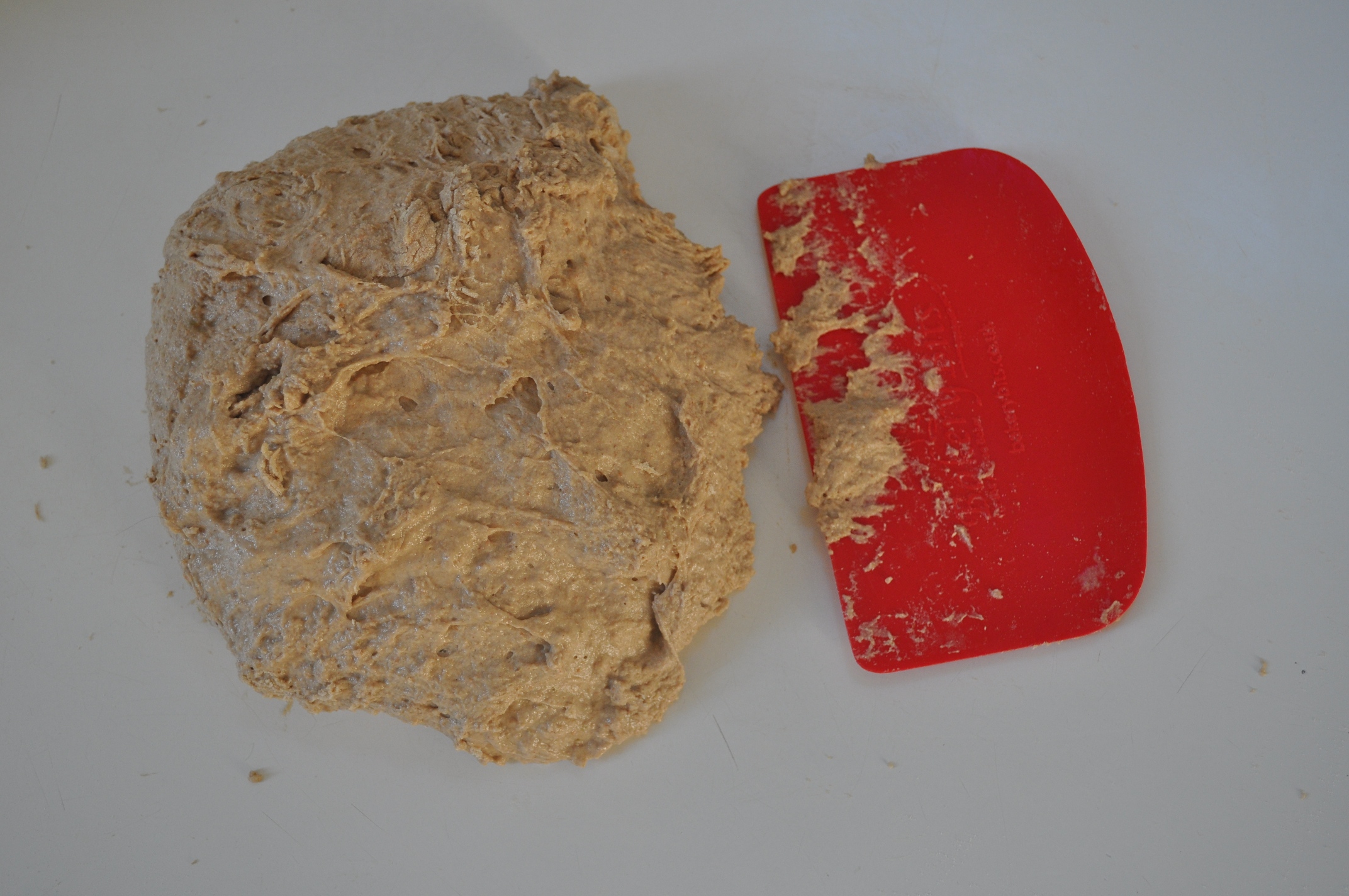
4. Bring together the dough. It’ll be pretty sticky. Which is good, albeit tricky to handle. Don’t agonise.
Winterfell black bread

5. Form a ball with the dough, put it in a bowl or plastic container, cover with plastic or a lid, then put in the fridge.
6. Leave in the fridge for around 14 hours.

Winterfell black bread
7. Take the dough out of the fridge and allow to come to room temperature (around 20C ideally).
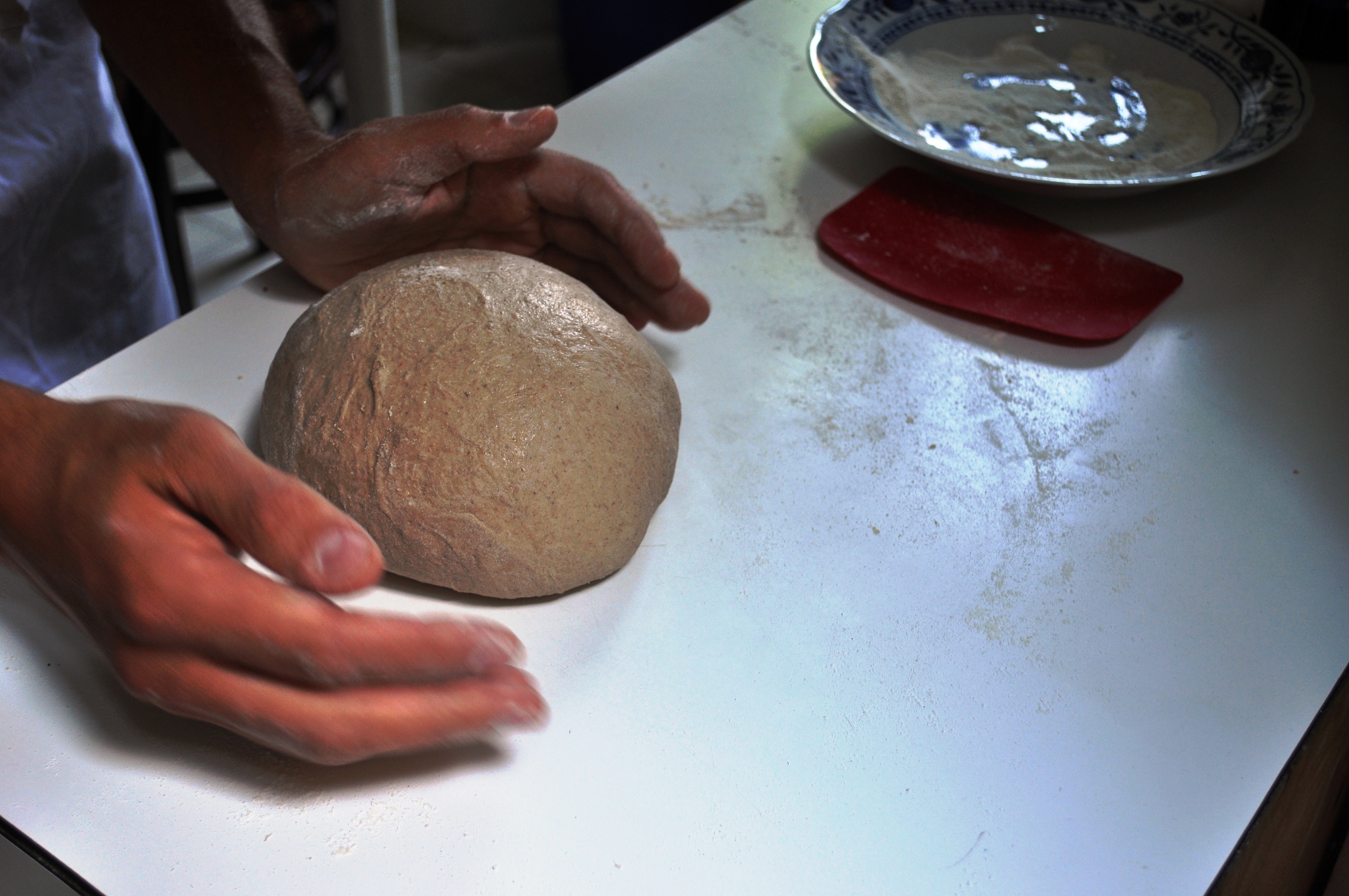
Winterfell black bread
8. Form a ball, then put it – smooth-side down – in a bowl or proving basket lined with a floured cloth.

Winterfell black bread
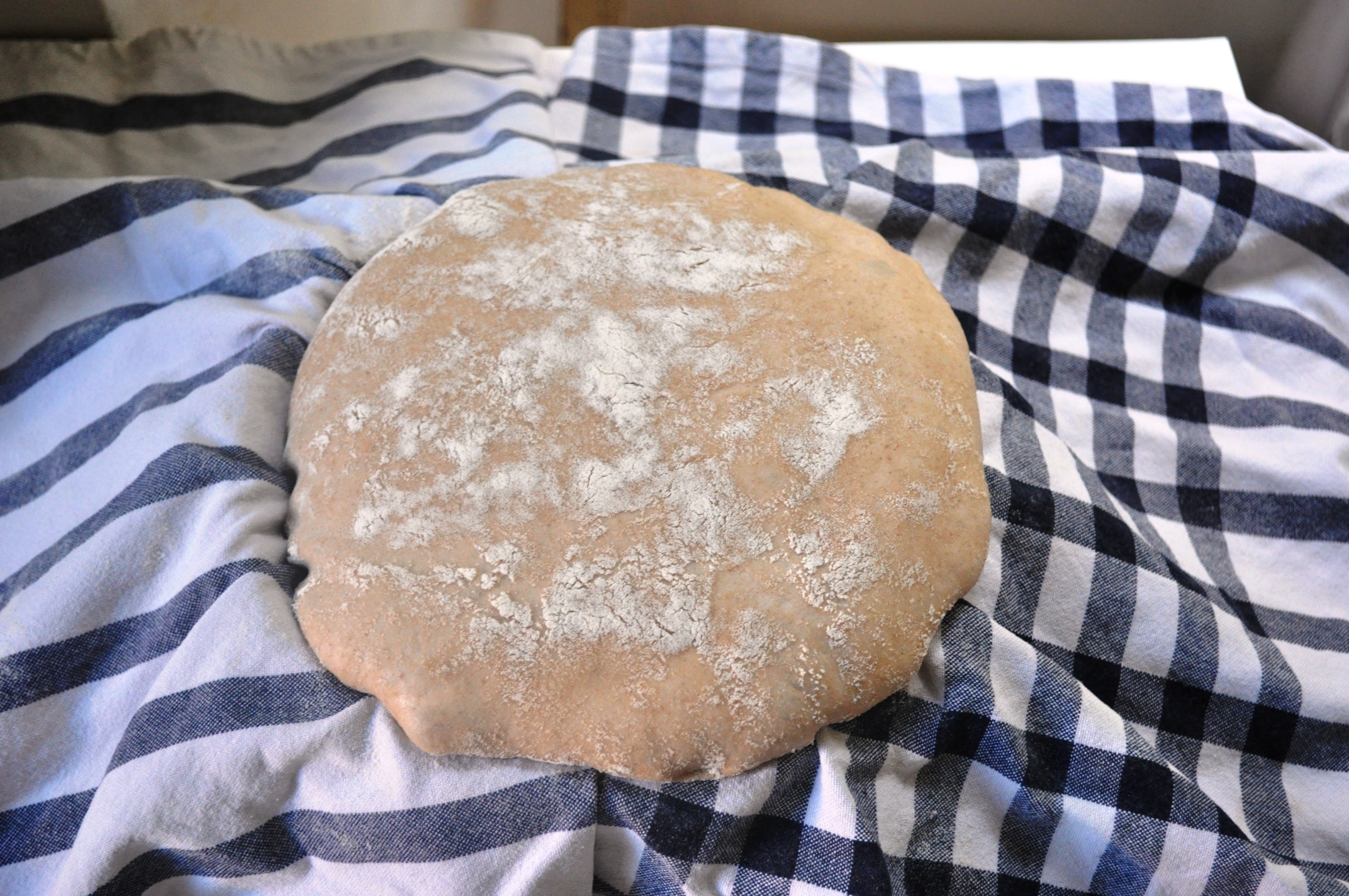
9. Prove again for about 5-8 hours more. This will depend on the temperature of your room, the liveliness of the yeasts, etc. You want to leave it until it’s doubled in size and is soft to the touch, nicely aerated.
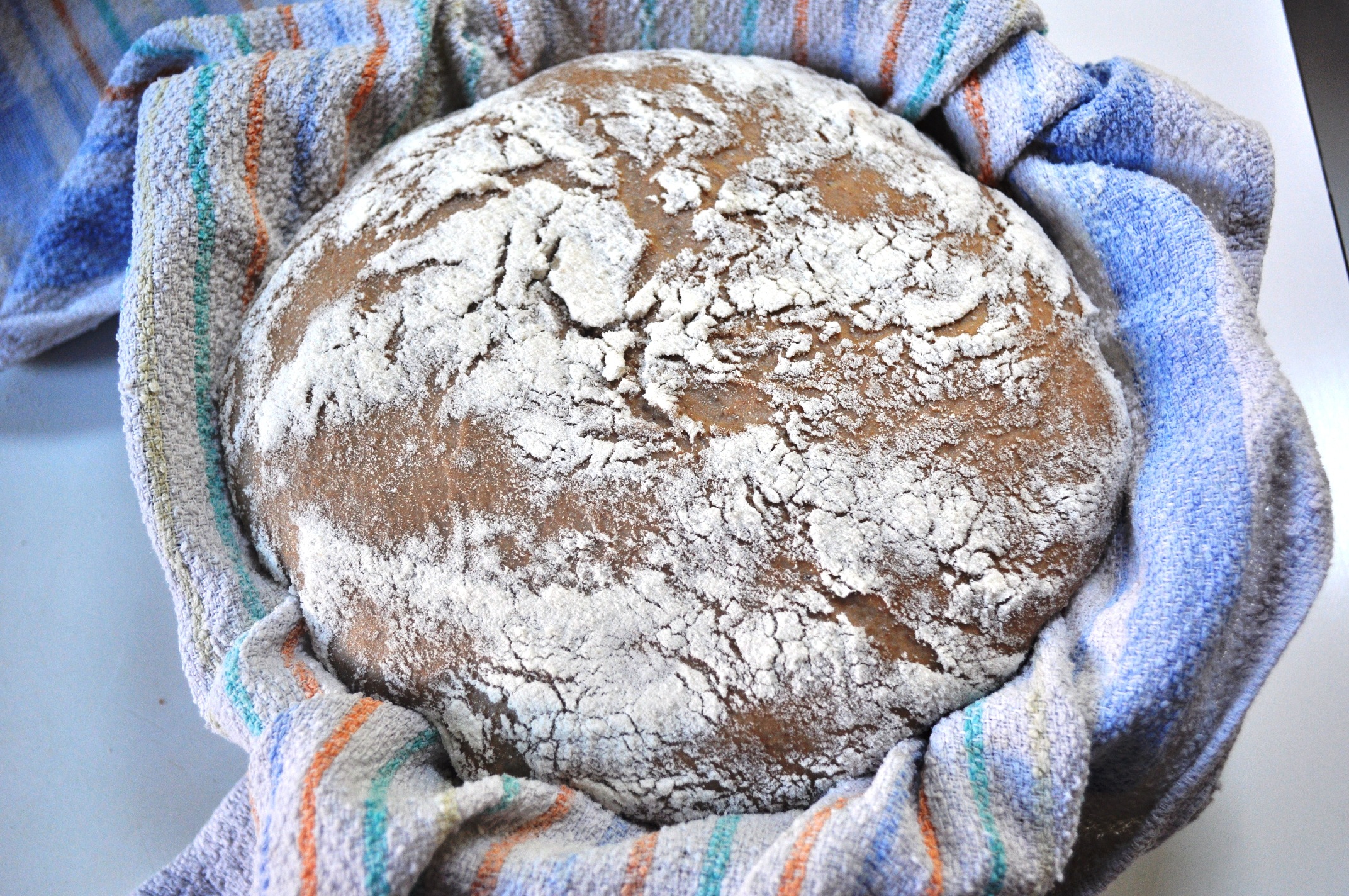
Winterfell black bread, final prove
10. Preheat your oven to 240C.
11. Upturn the ball onto a baking sheet (so the smooth-side is up), slash, then bake for 20 minutes.
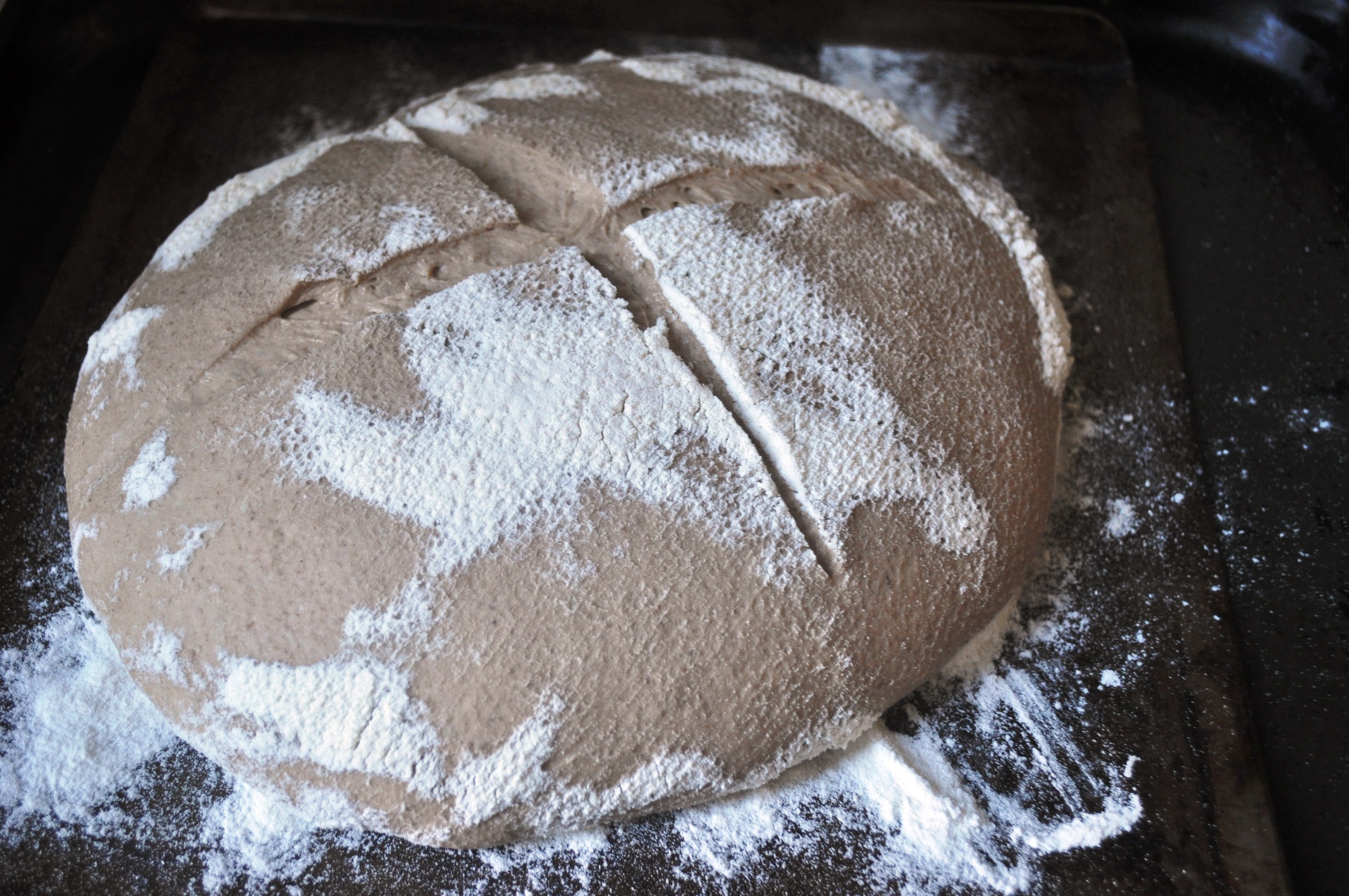
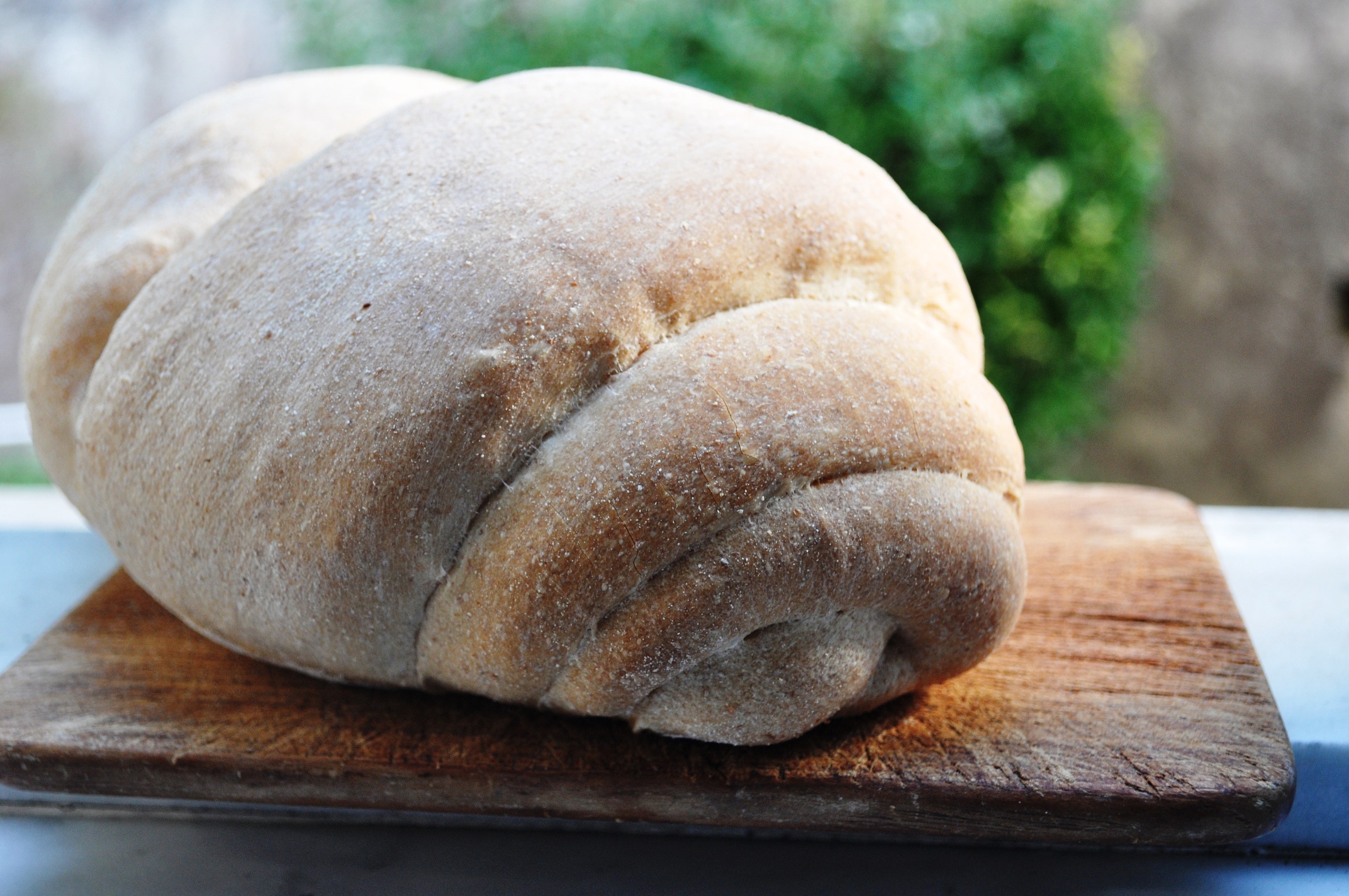
Black bread
12. Turn down the oven to 200C and bake for a further 20 minutes, or until the bread is done. This can be tricky to judge, but you want it to feel lighter, and sound hollow when tapped on the bottom.
13. Cool on a wire rack.

Black bread

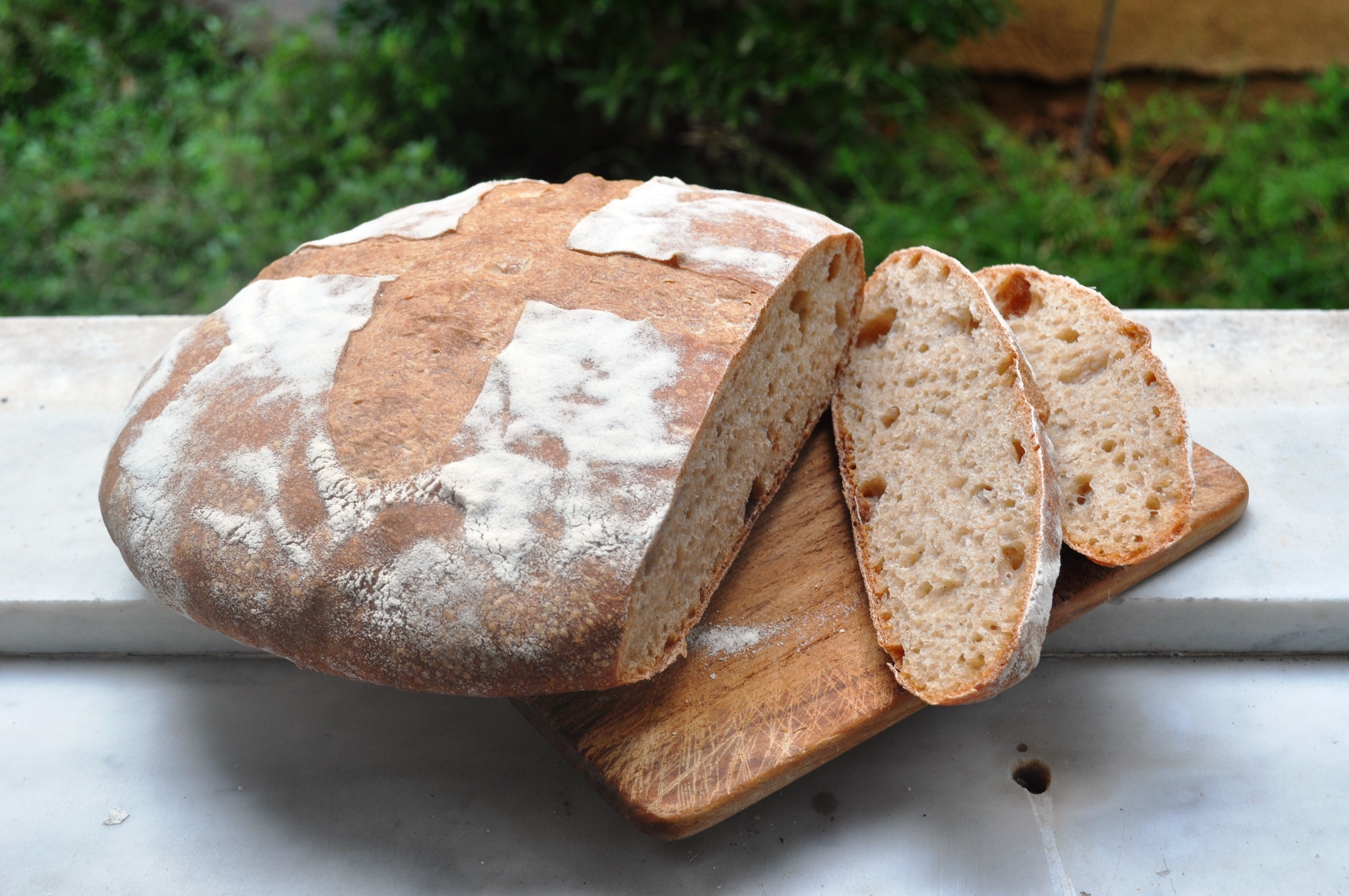
Now, the finished loaf looked rather pleasing, and had a lovely smell of chocolate, a scent that you get with certain stouts. Oddly, this smell wasn’t strong with the beer itself, but it’s come through with the baking.
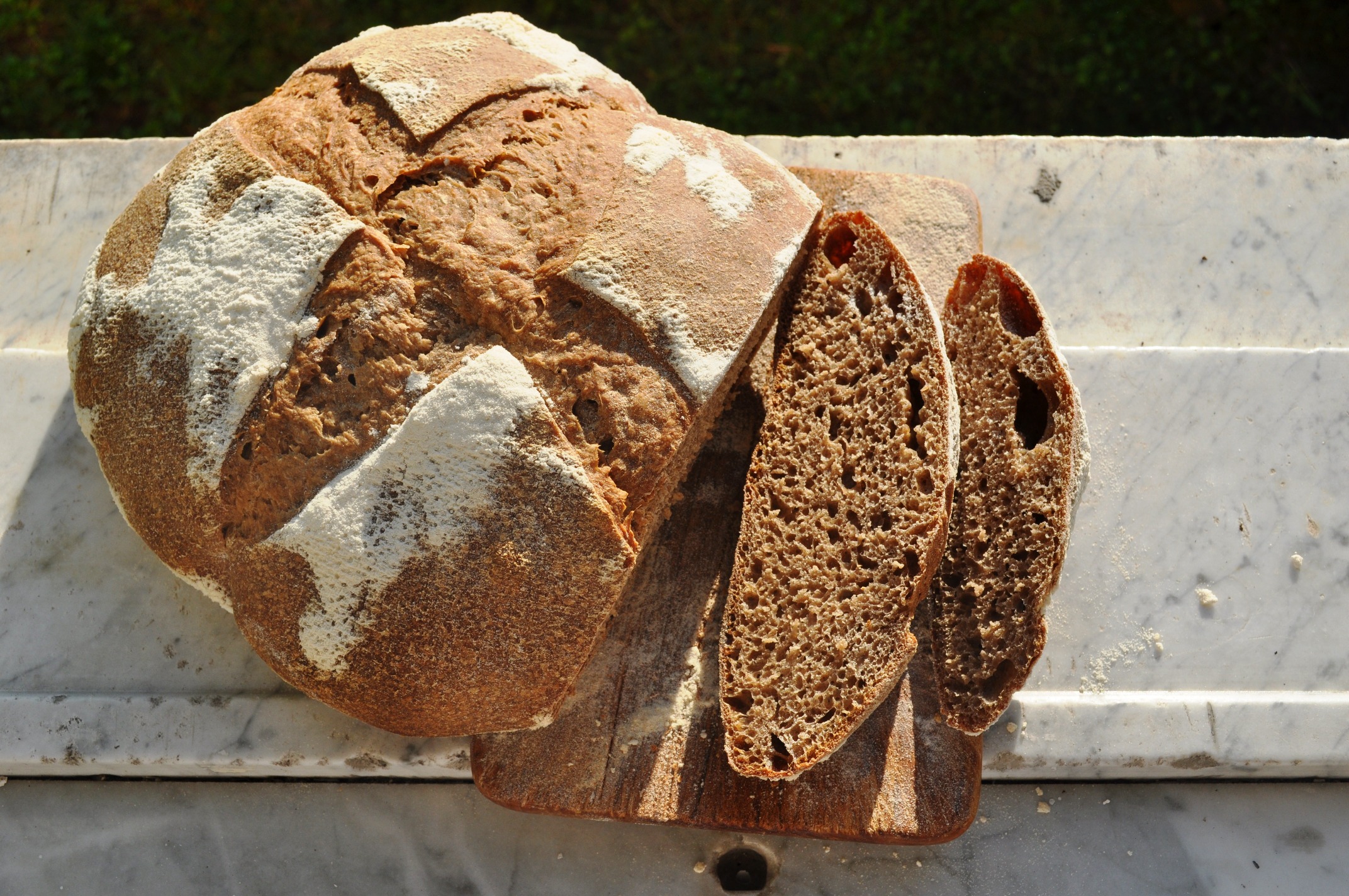
Winterfell black bread

Taste-wise, it’s certainly pretty rustic but is oddly bitter-sweet. I’m not a chemist, but I wonder if the bitterness is related to the alcohod.

I’m sure it would have served very nicely for the hungry Brothers of the Night’s Watch, freezing their behinds off on the Wall. We, on the other hand, enjoyed it for breakfast on a mild late-summer Roman morning slathered with honey. Then for lunch with a lovely crunchy, sharp medium aged pecorino.

Follow my blog with Bloglovinʼ

3 Comments

Filed under Ale, beer, Breads

Garbatella Farmers’ Market and the new Ponte della Scienza

Ponte della scienza and gasometer, Rome

Rome hosts two large-scale weekend farmers’ markets: one near Circo Massimo (Via di San Teodoro 74) and one that used to be in the Ex-Mattatoio (former slaughterhouse) in Testaccio. In April 2013, however, the latter was relocated further south, away from the centre, to Via Francesco Passino in Garbatella.

We were kinda gutted when this happened, as going to the Ex-Mattatoio market had become a weekend routine. Garbatella, however, is just too far away to be practical when we do everything on foot or by bike. There is still a market and organic shop at the Ex-Mattatoio, with its Città dell’Altra Economia (“Alternative economy city”) so we continued going there, as it’s a great spot. Though it lacks the range now.

This weekend, however, we decided to venture down to Garbatella, to check out the new market and see what baked goods, etc, are available. En route, we wanted to check out the Ponte della Scienza, a new pedestrian and bike bridge that’s been built across the Tiber here. Last time we tried to check it out, it looked finished, but wasn’t open. Now it’s finally open: but it doesn’t really go anywhere or connect to anything.

Ex-industry 2

It took them five years to built it, but, in classic Roman fashion where bickering extremist politicians, corruption, and piss-poor-to-non-existent communication between departments seem to be the norm, there just isn’t any infrastructure on the east side, and there’s very little on the west. There’s no promotion, no information, no signage, and just the usual Roman garbage building up-on the new stairways. Great job, Comune di Roma!

Yet, the bridge is still a great opportunity. You can access it from the foot and bike track along the west bank of the river, and it takes you across to the wonderful old industrial area that includes gasometers, hoppers, water towers and, best of all, Rome’s finest museum. This is the Centrale Montemartini, an annex to the Capitoline museums where ancient statuary is sited among turn of the 19th century turbines and generators in a very handsome art nouveau power station.

Gasometro

We were very bemused when we crossed the bridge, turned right (south) down a promising new stretch of asphalt, thinking it would take us towards the museum, but instead met another cyclist who said “It’s blocked”. So we turned around, went north, and found ourselves leaving the small stretch of new road, cycling through a building site, and emerging onto Via del Porto Fluviale. This is the location of the kinda-cool, kinda hit-and-miss Porto Fluviale, a beer bar and pizzeria that exemplifies the redevelopment going on in this area of Ostiense.

It looks like the Ponte della Scienza work isn’t quite finished yet, but I’m not holding my breath for any rapid progress.

Still, we crossed Via Ostiense, passed Eataly, and headed on into the charismatic Garbatella. This is a very distinctive quartiere, developed in the 1920s and in part inspired the garden city movement: the late 19th century urban planning philosophy based on creating environments that nurtured community through open spaces, greenery and self-sufficiency.

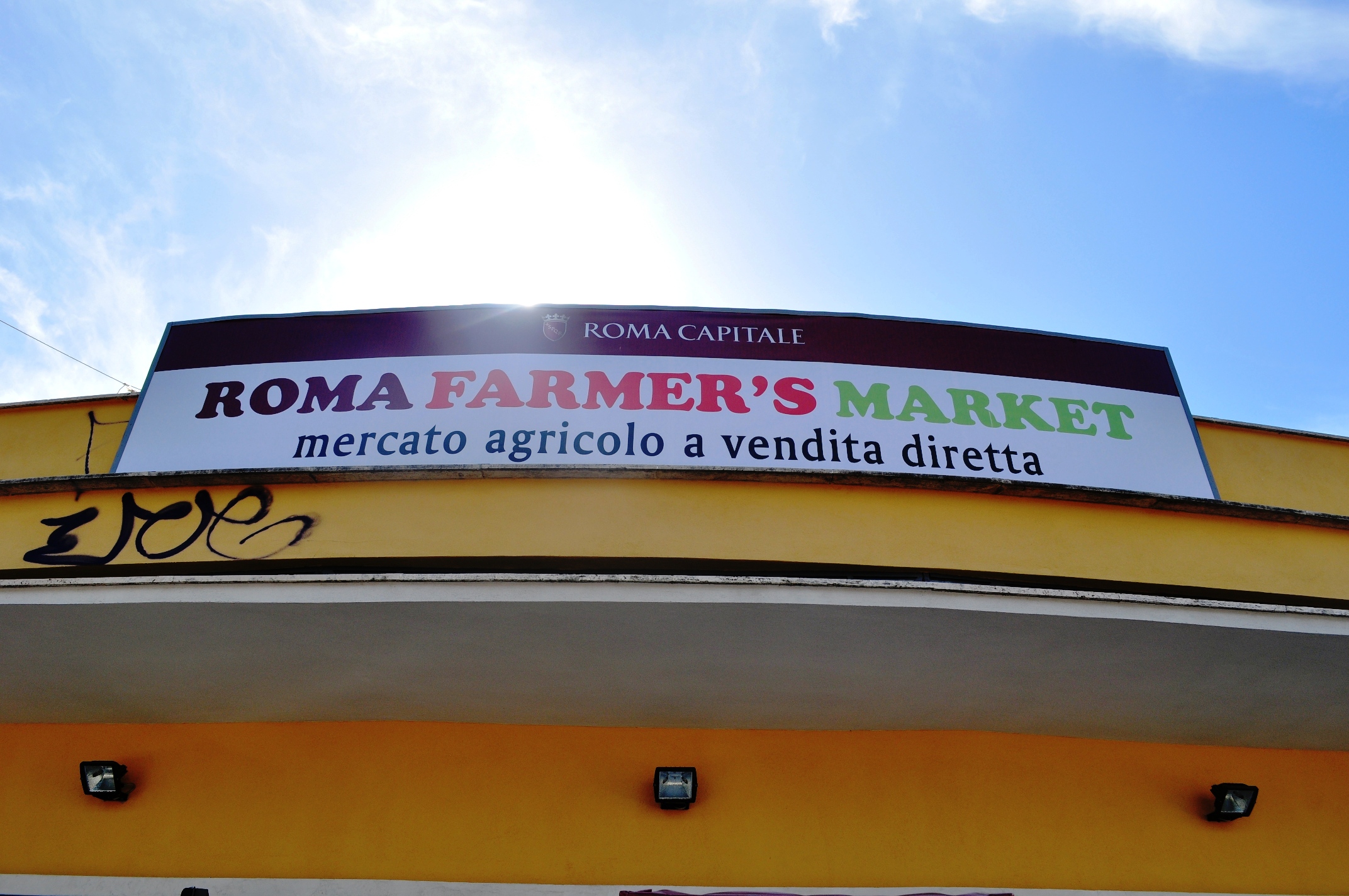
Garbatella Farmers' Market

The farmers’ market is now located in the building previously occupied by the daily market. As well as spending a load on a new bridge that doesn’t go anywhere, Rome’s planners seem to enjoy moving markets around too (cf Testaccio; Piazza Vittorio/Esquilino). It’s a handsome building, though I can’t find any historical info about it. I’d guess it was either 1930s or 1950s, but the interior’s been renovated.

Garbatella Farmers' Market - interior of building Garbatella Farmers' Market - interior of building

Anyway, it’s not a bad site, with each stall having more space. And compared to the Ex-Mattatoio, there are no low-level metal beams or hooks for us tall types to brain ourselves on.

Most importantly, however, it’s packed with good quality, locally produced food. If you’re at all interested in, you know, a viable future for human civilisation, find your local farmers’ market! There you can buy food with a smaller carbon footprint than the contents of your local supermarket, which will mostly have been driven, shipped or flown hundreds or thousands of miles, so every mouthful comes with a climate-change puff of burned hydrocarbons.

Some food then

Pictures of mostly bread, cakes, biscuits. They do sell veg, fruit, dairy products and meat here too, but hey, this is Bread, Cakes and Ale.

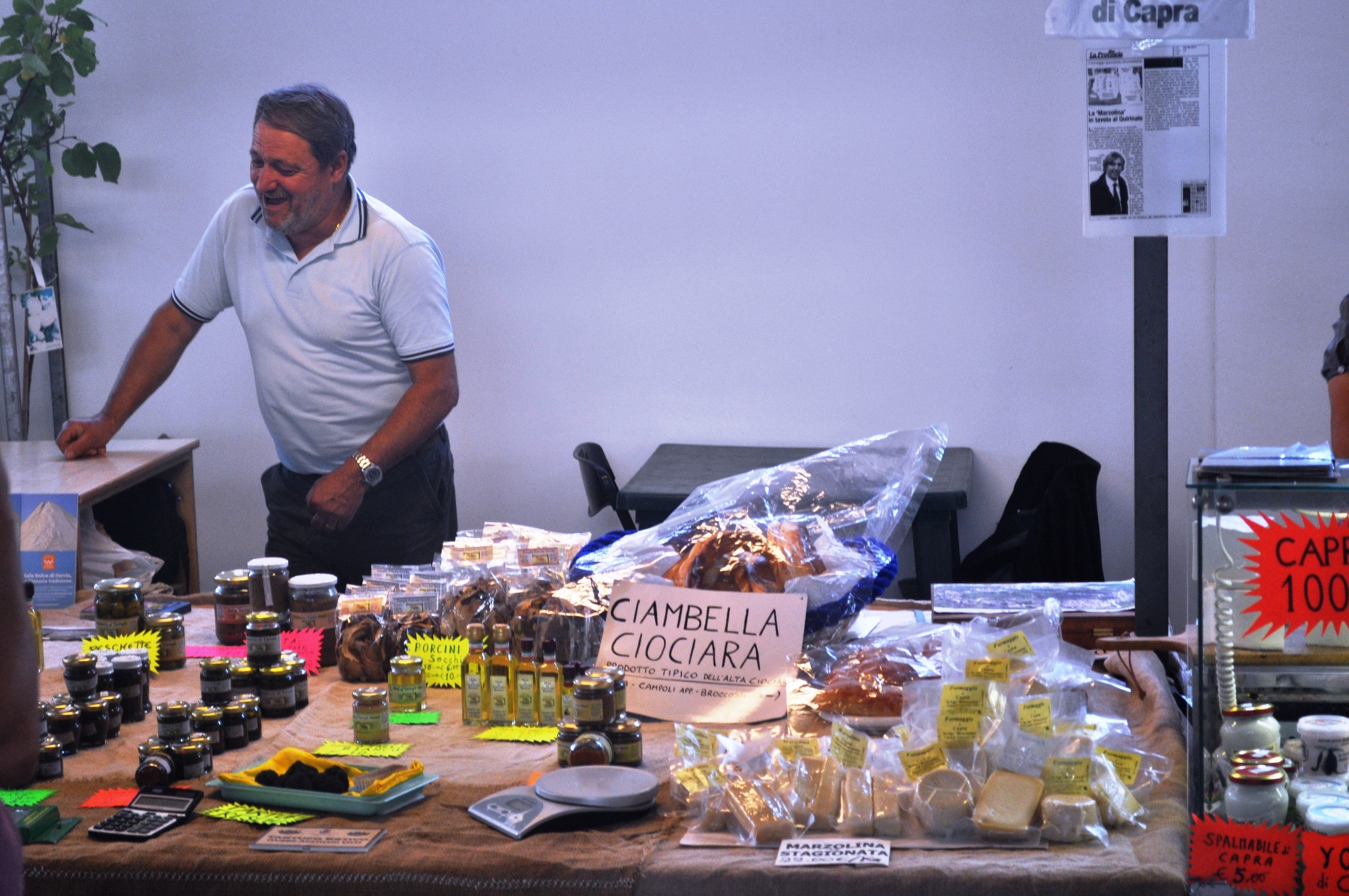
Garbatella Farmers' Market

A ciambella is a ring-shaped cake or bun. Ciociara is a region of central Italy. No idea what’s entertaining the geezer though.

Boh

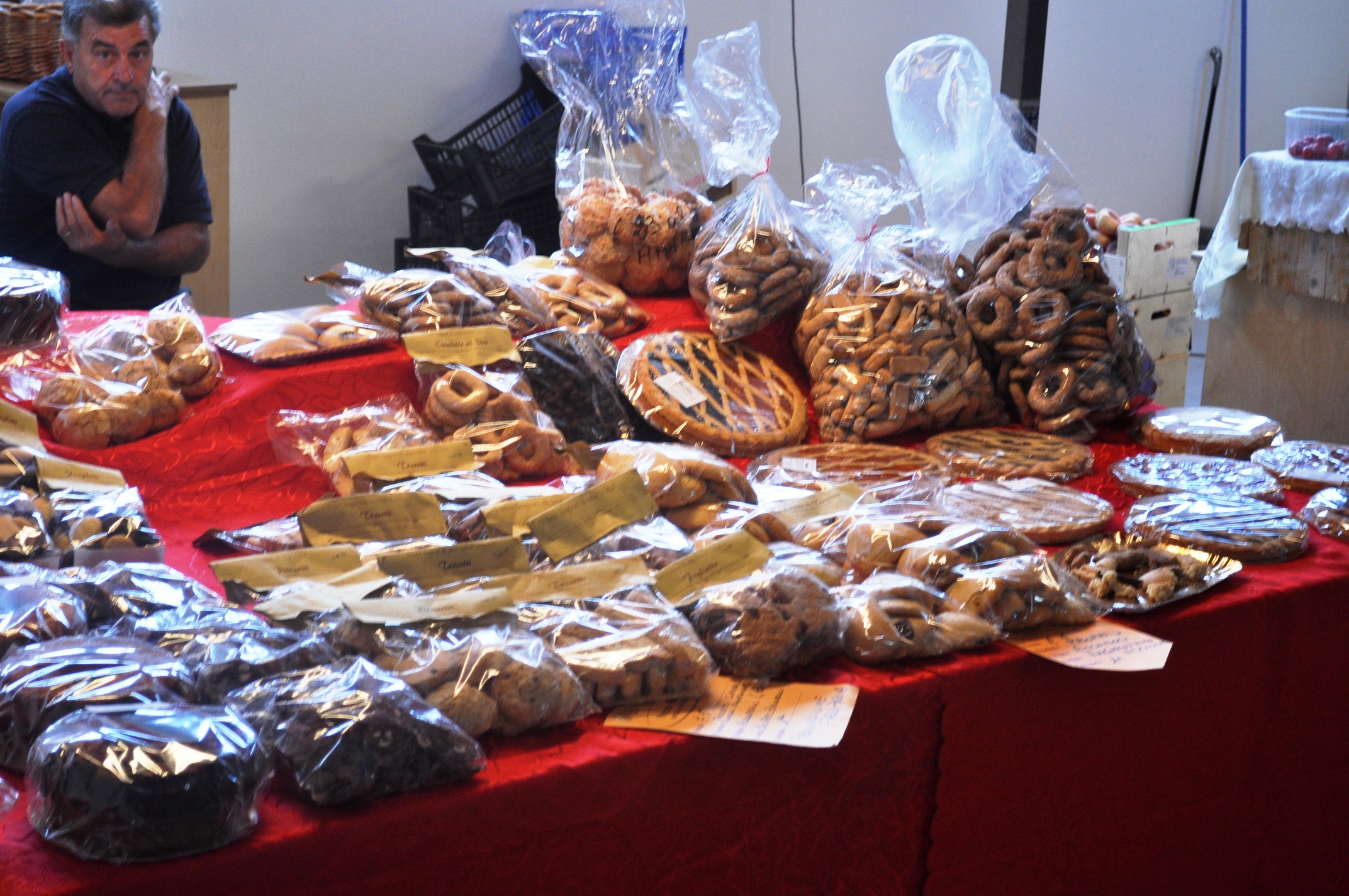
Not such a jolly guy. Selling, among other things, ciambelline – ring-shaped cookies. Bigger than those in my previous recipe.

Garbatella Farmers' Market

Some great looking bread. Love the giant loaf to the right of the insanely cheery looking cartoon chap.

Giant maritozzi at Garbatella Farmers' Market

The biggest maritozzi con la panna I’ve ever seen. These bad boys are least twice the size of the ones you normally see.

Our transportation

Transportation, Brompton folding bikes

Our transportation: the Brompton folding bike, which exerts a fair amount of fascinating in Rome, despite them not being uncommon here.

Info
Garbatella Farmers’ Market, Via Francesco Passino, 00154 Rome
Metro: line B, Garbatella; bus: 673 (Rho)

4 Comments

Filed under Breads, Misc, Other food

Birrificio Italiano Bibock at Antica Focacceria San Francesco, Trastevere, Rome

Bibock from Birrificio Italiano at Antica Foccaceria di San Francesco, Trastevere, Rome

Unless it’s a curry or a kebab, we don’t normally eat in Trastevere. If you want Italian, or more specifically Roman food, it’s about the worst neighbourhood, as so many of the dense thicket of restaurants – in our experience – are lazy and mediocre. However, a friend drew our attention to the Antica Focacceria San Francesco, part of a Sicilian micro-chain whose management has apparently taken a stand against the Mafia.

As much as I’m aware of the big corporations of the (Sicilian) Mafia aka Cosa Nostra, (Calabrese) ʼNdrangheta and (Neopolitan) Camorra, as well as the other immigrant mafias that operate in Italy (Filipino, Chinese, etc), I naively assumed that the touristy Roman restaurant scene would be better protected. Ho ho. Another friend who’s lived in Italy for decades says most places – cafés, restaurants, shops – have to pay the pizzo (protection money), which is what makes Antica Focacceria San Francesco’s stand notable: they said no. The New York Times gives more of the story here (though it gets the address wrong, which makes me question its fact-checking slightly).

So anyway, we headed down to the Trastevere branch on a Friday evening. It’s set in one of this cute quartiere‘s cute piazze, just round the corner from Ma Che Siete Venuti A Fà? and the strip of boozers that’s generally heaving on a summer weekend evening.

When our group all assembled and some menus arrived, I was pleased to see the Slow Food symbol. I was also pleased to see the wine menu had two pages dedicated to Italian birre artigianali (craft beers).

So while we ordered a tonne of Sicilian snacks (schiticchi), antipasti and secondi, I also ordered a beer. I got a Bibock from Birrificio Italiano, a brewery located in Lombardia, south of Lake Como. What a name – they’re just called “Italian Brewery”. Though they probably have a right to wield such a grand name: the brewery was founded in 1996, the same year as the renowned Baladin, and as such can be considered, in the words of the Guide alle birre d’Italia 2013, “one of the principle players in the affirmation of the craft beer scene in our country”.

The warmly copper-brown Bibock smells of raspberries, toffee, rose. It’s got a reasonably frothy head. Its taste also has notes of caramel and toffee, along with a very nicely balanced cereal-maltiness and bitter-hoppiness and a fairly dry mouthfeel. It’s bottom-fermented (as befits its roots in German, bock brewing), 6.2% ABV and has a medium body. Very nice.

I’ve no idea if it was a good choice to accompany the food though. I really, really need to learn more about food and beer matching. I’m sorry. But I’ve never made any bones about my beer blogging here being anything but a learning process.

Antica Foccaceria San Franciso, Trastevere, Rome

As for said food, it was pretty good. The Sicilian street food pre-antipasti nibbles were tasty, especially the chickpea fritters (panelle). And the sardines balls were pleasant too. Who’d have thunk it? One flaw in the experience, though, was that pretty much everyone seemed to involve caponata.

Now I love this slightly sour Sicilian dish made with aubergines (/eggplant/ melanzane), tomatoes, capers etc. I like it so much I’d made it the day previously at home, and had it for two days running. Now I found myself eating more; it was getting to the point of OD. The Antica Focacceria must have had a giant cauldron of the stuff in their kitchen.

The only other flaw with the meal came later on when the very sweet and entertaining waitress tried to sell us some desserts. We were already pretty full (of caponata) so had our doubts, but when she said they were sent in every day from Palermo I had even more. She was so excited to tell us this (“And the fish!”) but for me it was like a red rag to a bull. Sent in? “In aero?” I asked. “In a plane?” Really? Really?

How in the blazes does this carbon puddingprint fit in with the place’s nominal Slow Food ethos, of local and sustainable? Even a short hop flight is toxic, particularly as in aviation a lot of the fuel is used getting the beast off the ground in the first place.

If you want Sicilian pastries in Rome, have a Sicilian pastry chef make them on site in Rome. The products won’t just be fresher and better as they’ll only travel a few metres, the whole package will also be more credible in sustainability and environment terms.

The beer was good, the food was good, even the caponata was good (albeit excessive) but I’m sorry, flying in your desserts is just fucking insane. Especially if your menu is plastered with the Slow Food snail symbol. Reality check please!

Info
Antica Focacceria San Francesco, Piazza di San Giovanni della Malva 14, Trastevere, Rome
(+39) 06 581 9503 | roma.lamalva@afsf.it | afsf.it

Birrificio Italiano
(+39) 031 895 450 | info@birrificio.it | birrificio.it

4 Comments

Filed under Ale, beer, Italian beer, Other food, Restaurants etc

Red wine and chocolate ring cookies, or Ciambelline al vino rosso e cioccolato

Red wine and chocolate ciambelline, Ciambelline al vino rosso e cioccolato

These are a long way from authentic ciambelline al vino – ring cookies that are normally made plain or flavoured with fennel or anise seeds. But hey, I love chocolate. Chocolate doesn’t seem to play a big role in Italian biscotti etc, but as we’re moving house soon, and I have a large pot of cocoa in the cupboard that needs using up, I thought I’d try chocolate ciambelline.

Plus, we had a bottle of red wine that also needed using up. This cost us the princely sum of €1.50 so was clearly seriously and definitely hardcore cooking wine; or very desperate-at-the-end-of-an-evening-wine; or Withnail wine (“This is a far superior drink to meths!”).

We also had a bar of chocolate and did chop it up and add it to the mix, but it caused problems with the rolling: the chips kept severing the dough. So if you do it, I’d recommend either chopping the chocolate up into small pieces (I’m talking chips of a just a few mm) or leaving it out completely. Ditto, some slithers of almond would be nice, but they’d have to be small or they’ll compromise the structural integrity. You don’t want a hull breach. (Sorry, going a bit Star Trek.)

Kitchen

Anyway, ciambelline are classic Italian cookies that are often served with a digestivo after a meal. They’re related to taralli, which are almost like hard-baked bagels (and, indeed, they’re boiled in water before baking), and tarallini, which are smaller versions thereof. I’ve generally encountered savoury taralli and tarallini, but in one seafood restaurant we like in central Rome, they serve you a Vin Santo desert wine with a few small, fennel-seed flavoured sweet ring biscuits that they call tarallucci.

So, as with so many Italian nouns relating to food, usage is fairly mutable! (Depending on region, slang, dialect, inclination, family etc.)

So anyway. Here’s my recipe. Bear in mind, these sorts of recipes are traditionally made with the whole qb approach: quanto basta, “how much is enough”. I always prefer to use grams but if you do make these, and you feel your dough isn’t quite right, just follow your instincts and adjust the amount of liquid or flour.

360g flour
50g cocoa
150g sugar
160g extra virgin olive oil
160g red wine
(Optional: 50g dark choc, cut in small pieces, or some small slithers of nut)

Red wine and chocolate ring cookies, or Ciambelline al vino con il cioccolato mix

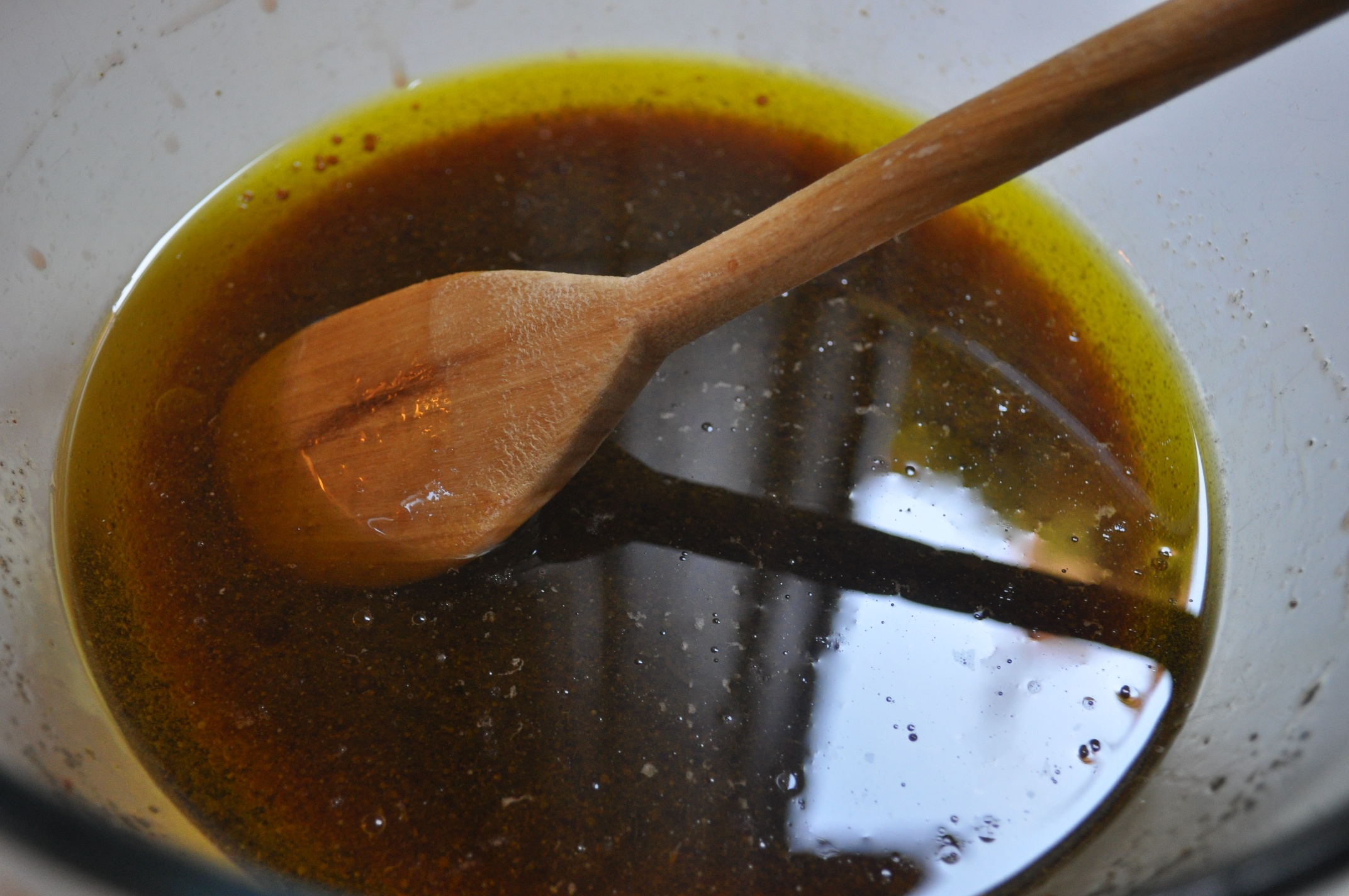
1. Combine the wine, oil and sugar.
2. Sieve in the flour and cocoa, stirring.

Red wine and chocolate ciambelline, Ciambelline al vino rosso e cioccolato
3. Form a dough. Add more flour if it’s too wet, more oil or wine if it’s too dry.
4. Rest the dough, for about half an hour, to let it relax.

Red wine and chocolate ciambelline, Ciambelline al vino rosso e cioccolato
5. Preheat the oven to 180C.
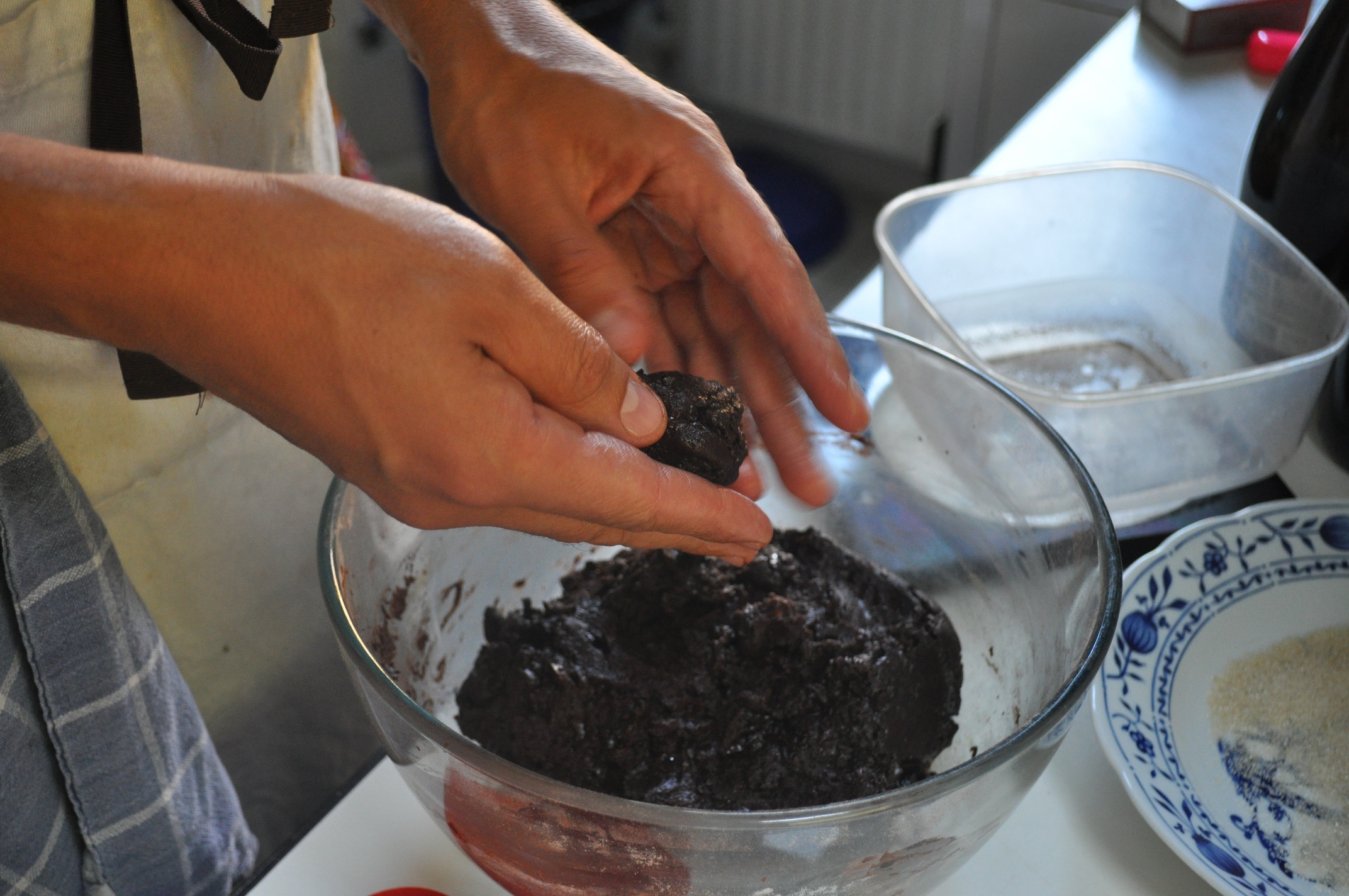
6. Form balls, about the size of a walnut. I went for a scaling weight of 30g, but ciambelline are often bigger, so you could go for 60-80g. Whatever you prefer.

Red wine and chocolate ciambelline, Ciambelline al vino rosso e cioccolato
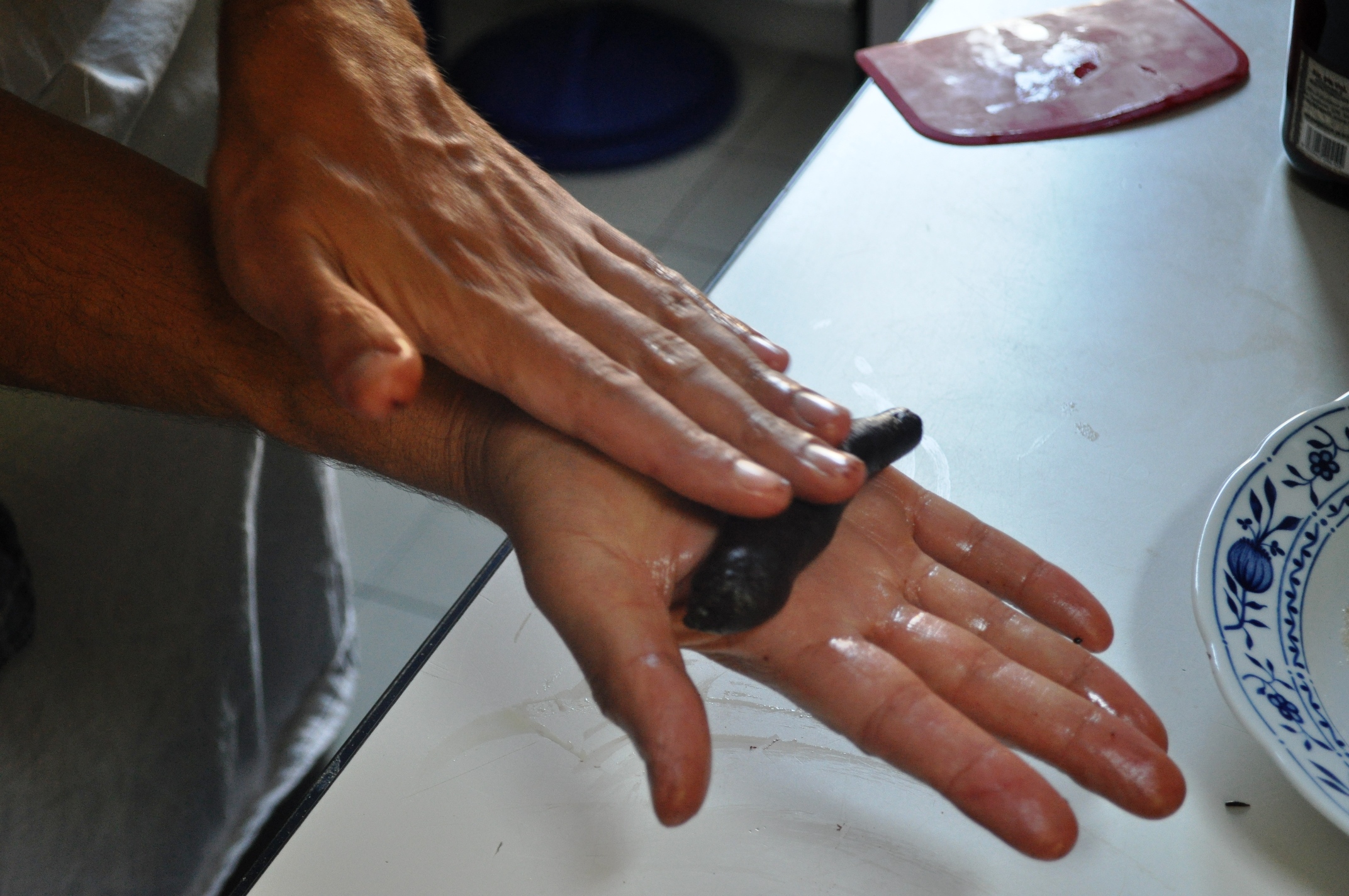
7. Roll the balls into sausages.
8. Form the sausages into rings, pinching together the ends.
9. Dip the top in granulated sugar.

Red wine and chocolate ciambelline, Ciambelline al vino rosso e cioccolato
10. Place on a baking sheet, lined with parchment.
11. Bake for about 20 minutes, depending on your oven.

Red wine and chocolate ciambelline, Ciambelline al vino rosso e cioccolato
12. You can crisp / harden them more by leaving them in the oven, switched off, while it cools. Though these harder ones may need stronger teeth / liquids for dipping and dunking.

Now of course, there’s something else about these ciambelline that’s so far going unsaid. It’s the elephant in the room of this recipe. If you don’t have appreciate scatological humour, browse away now! If you’re not easily fazed, scroll down and highlight the black.

Oh dear. Oh dear oh dear oh dear.
So yes, they look like poo. Especially when I was making them. All that cocoa and glistening olive oil – poo, or at least joke-shop plastic turds. And when I rolled them in the sugar, I couldn’t help thinking of the saying “You can’t polish a turd… but you can roll it in glitter.” But then, thought I, worry not: what could be more perfect in Rome, a city that’s totally and utterly and liberally decorated with dog mess, than a ciambelline of that resembles these pavement obstacles? (Our v borghese neighbourhood is especially bad – worse than Paris in the 1980s, and that’s saying something.)
Sorry.

1 Comment

Filed under Biscuits, cookies, Recipes

Croce di Malto Temporis at Le Café Vert, Monteverde Vecchio, Rome

Croce di Malto Temporis at Cafe Verte

Le Café Vert is a small place that opened near us in our Rome neighbourhood of Monteverde Vecchio a year or so ago. It’s something of a gem actually, as it manages to be cool for breakfast, a reasonably priced snacky lunch, and for an aperitivo in the evening. They’re into KM0 too – that is, food that’s not travelled too far – and they stock a decent selection of real bottled beers.

The latter is important to me, of course, but it also indicates they’re taking their principles seriously, and extending them to not just the coffee, or the milk they use (organic), or the food, or the wine, but also to the beer. This morning we went for a coffee at the café in Villa Doria Pamphili Park, Vivi Bistrot, and while it also seems to be into natural and organic foods, it frustrates me that they don’t extend their principles as far as the beer. Their fridges are still stocked with all the generic industrial lagers favoured by Italian beer drinkers in less enlightened places (Ceres, Becks, Peroni, Tenants and whathaveyou).

I did an excellent wine-tasting last night, and talked with the sommelier, Hande Leimer, about why Italians drink so much of these acrid, metallic lagers. Sure, it’s partly marketing and mindwashing, as it was in the UK when industrial lager took over in the 70s and 80s, but here, Hande suggests, it’s also because these tastes are preferred when having a drink without eating. Italians always drink wine, on the other hand, to accompany and complement food, where the relationship calls on differing qualities of drink depending on what is being eaten. Something that tempts me to write “of course”, but many Brits just aren’t aware of this, as we don’t have a strong, traditional viniculture, and beer, on the other hand, was traditionally “liquid bread” and safer to drink than water. A practical drink.

Okay, chiaro, but there are also now Italian craft beers that can fill this niche, of something to be drunk without food: there are plenty of crisp, light options, particularly the summer golden ales (eg Baladin’s Gold One, or Birra del Borgo’s Cortigiana, or Lambrata’s Ortiga). These are in some ways akin to lagers. Except they’re generally better: they taste better and more interesting, they’re more naturally produced, not pasteurised, not filtered and, most importantly, they’re not rushed. They’re real beers.

So come on Vivi Bistrot – make that leap, be more holistic with your principles, and support your local craft brewers! (Such as Birra del Borgo, or Birradamare/ʼNa Birretta, or Turan, or Free Lions, all in Lazio.)

Le Cafe Vert, Monteverde Vecchio, Rome

Anyway, we stopped by Le Café Vert again the other night for an aperitivo. It’s just two blocks from our place, and not only that, their tabletops are decorated with a map of the neighbourhood. And not only that, when we sat down, I noticed that our very street was located just under my elbow. We’re leaving Rome in about three weeks, so this was a slightly emotive bit of synchronicity.

Le Café Vert seems to rotate its beers, after a fashion, and this time they had a whole shelf filled with bottles from Croce di Malto. I’d had one Croce di Malto beer, the English bitter-like Acerbus, at Fermentazioni 2013 the other day and was keen to try more. They’re not a local, Lazio brewery though – they’re in Piemonte*, west of Milan. Indeed, Piemonte is the Italian region with the highest proportion of craft breweries, all radiating out from Baladin, the mothership of the Italian craft beer scene.

Croce di Malto Temporis at Cafe Verte

I chose a Croce di Malto Temporalis, 6% ABV. It was straight from the fridge, so a little bit cold, but I was too impatient to leave it in my armpit warming. (Hande scolded me at the wine-tasting for holding my glass by the bowl, but I’m constantly trying to warm up beers to the right temperature, in this case 8-10C, which has resulted in bad wine-tasting habits.)

Considering it’s the end of summer  at the moment, it was perhaps not the best choice as apparently this is a beer “dedicata per la primavera” – dedicated to spring. It’s certainly a fresh, lively beer – even when drunk a little too cold. The scent is floral and orangey, while the taste is crisp and citrussy, sweetly malty, slightly herby. It’s got a medium body. It’s a bright, orange-straw colour, with some mistiness and a nicely foaming head.

Although it’s a saison, it’s at the more drinkable, accessible end of that spectrum – complex, but subtly so. As one critic says on Beeradvocate, it’s “lacking in saisony funk” – but that’s fine by me; there are plenty of other more challenging saisons, and this was a perfect accompaniment to Le Café Vert’s delicious aperitivo snacks. Blimey, their panelle (Sicilian fried chickpea pancake) is good. One of the many things I’m going to miss about Rome. Fried chickpea goodness and a crisp saison two blocks from home.

Addendum:
Went back again the other night and tried another Croce di Malto beer. This was Triplexxx (7.8% ABV), a slightly unfortunate name with connotations of dodgy Australian lager and, well, porn.

It was a slightly strange beer too.

I was intrigued as the three Xs refer to its use of barley, oats and wheat, as well as “spices” and zucchero candito (“candied sugar”, presumably candi sugar) but overall the abiding smell and taste is banana. Isn’t chemistry bonkers? How can those incredients, when combined and brewed, produce molecules that give such a strong flavour of a totally unconnected fruit? Though I’d say the smell also had some bubble gum too, and the taste some toffee: so maybe it’s bubble-gum-banoffee-pie beer. Strange.

Info:
Via Anton Giulio Barrili 47-47/a, Monteverde Vecchio, Rome
+39 06 588 0065 | lecafevert.it | info@lecafevert.it

Croce di Malto brewery
Coros di Roma 51A, Trecate, Piemonte
+39 0321 185 6101 | crocedimalto.iti | info@crocedimalto.it

* Why do we anglicise this as Piedmont? Are anglophones so lazy we can’t say “pee-ah-mon-tay”? Is saying “pee-ed-mont” really any easier?

3 Comments

Filed under Ale, beer, Bars, pubs etc

Real beer barm bread

Beer barm bread

Once Upon A Time
Once upon a time, breweries and bakeries lived side-by-side harmoniously. Brewers merrily went about their noble work, mashing, sparging, fermenting. One blessed by-product of the process was a foam that frothily formed on top of the fermenting liquor. The dusty baker from next door would welcome consignments of this malty foam – barm – and use its natural yeastiness to leaven his dough.

And so it went for long ages.

Until some learned men in the late 18th and 19th centuries improved humankind’s understanding of bacteria and yeasts. By the late 19th century, yeast specifically cultivated for bread-making had become commercially available in block, then in dry, granulated form. And slowly, sadly, the close bond between breweries and bakeries faded away.

This idea of bread being made with brewery by-products has intrigued me for ages, but not having had a ready supply of barm, I’ve never actually tried it before.

A Dan Lepard beer bread

Beer breads
Dan Lepard in ‘The Handmade Loafʼ does a loaf he calls “Barm bread”, but it’s made using a bottle conditioned beer, that is then heated. This seems counter-intuitive, as it kills the yeasts in the beer, but apparently it’s to cook off some of the alcohol, which retards the action of any yeast in the mix. Lepard was effectively using the beer as a flavouring, and then re-introducing yeasts, I believe; so however lovely the results were, it wasn’t a genuine barm bread. (One of my attempts using his method a few years ago is picture above.)

My recent enjoyment of Game of Thrones and the Song of Fire and Ice novels, the source for his great HBO TV series, lead me to the Inn At The Crossroads. This inspired blog features involves real-world interpretations of the fantasy world foods mentioned by George RR Martin in his books, and it got me thinking again about pre-industrial yeast bread-making.

Westeros’ finest
Specifically, I was checking out The Inn At The Crossroads’ bread recipes. They have a few for Martin’s black bread, with the second version made using dark ale, stout or porter. Okay, thought I, that looks fun. But I had one criticism. Surely in Martin’s quasi-Medieval world, they wouldn’t have had “1 packet yeast”; bread would surely have been made with the barm method.

I made a comment along these lines, and one of the site’s creators, Chelsea Monroe-Cassel replied, saying “I agree that this would be the very best way to make this bread!” She also said, “I’ve made several trub breads, with great success.” I’d not heard of trub bread too, but this one is made using the sediment from the fermenter.

Beer barm

My project slightly moved away from the black bread theme, though, as initially I just wanted to make a bread with barm, and with flour with older grain – ie arguably more medieval – varieties.

I bought some Mulino Marino Pan di Sempre, a stoneground organic flour that is made with a blend of Triticum aestivum (that is, common bread wheat), Triticum spelta (spelt wheat) and Triticum monococcum (einkorn wheat).

My friend Michele Sensidoni, a brewer, kindly furnished me with a bottle of barm. It wasn’t very prepossessing stuff: gloopy, brown and malty, separating slightly, but it was exciting to finally get my hands on the stuff.

Beer barm and Mulino Marino Pan di Sempre flour

So:
100g barm
100g flour
Mixed and left overnight. My kitchen was at around 23C. The next day this was clearly alive, and reasonably vigorous. Here’s the before and after shots:

Beer barm leaven Beer barm leaven

I formed a dough with:
200g barm leaven (ie, all of the above)
500g flour
10g salt
300g water

Adjust the water if necessary; you want a nice moist dough.

Beer barm bread, dough

I then put all this in a container and left it in the fridge for 24 hours.

I then took it out of the fridge, and let it come back to RT (again, around 23C).

Beer barm bread dough, before final prove

After a few hours, I formed a ball, and put it in a proving basket lined with a floured cloth.

I let it prove again at RT for around 9 hours.

Beer barm bread dough, proved

I preheated the oven to 230C.

Beer barm bread, pre-bake

When the dough was nice and swollen and soft, I baked it for 20 minutes, then turned down the oven to 210C and baked for another 20 minutes.

Beer barm bread, fresh from oven

The results are very pleasing. It’s got a chewy crust, a reasonably open crumb and a taste that’s subtly sour. Yay.

Crumb CU

Oh, and for etymology geeks (like me), the British English word barmy, meaning a bit bonkers, crazy, comes from barm. As a barm is the foamy scum that results from fermentation, someone who is barmy is a bit bubbly, excitable, unpredictable and possibly even frothing at the mouth. Don’t worry though, making and eating this bread won’t have that effect on you. [insert suitable smiley here to compensate for lame attempt at humour]

29 Comments

Filed under Ale, beer, Breads, Recipes

Fermentazioni 2013 beer festival, Rome

Cheers, sampling ales at Fermentazioni 2013

Saturday it was summer in Rome, with blazing sunshine, Sunday it was winter, with pouring rain. This kind of weather is probably helpful for us, as we’re leaving soon, and will be back living in England in a few months: where this kind of schizo weather is the norm.

Luckily, it was also warm and dry on Friday evening, when we went along to the first day of the first ever Fermentazioni Festival delle birre artigianali (“Craft beer festival”).

This event has been set up by Andrea Turco, beer expert and author of Italy’s principle beer blog, Cronache di Birra. Turco is a Roman who has been working to spread his passion for birre artigianale in and beyond the region for the past decade-ish. He founded Cronache di Birra in 2008 as “una sorta di aggregatore di notizie e opinioni birrarie in forma di blog” (“a sort of aggregator for news and opinions in the form of a blog”).

Although we only had one evening at the event, it seemed to (largely) go well. Around 30 (I didn’t write them all down1) of Italy’s most exciting craft beer producers were invited along, and set up in two compact rows in the confines of Officine Farneto, a handsome modernist building that’s been repurposed as a conference and events centre.

Despite the place’s post-industrial charms, some shortcomings of the venue became immediately obvious. It’s tucked up behind the Olimpic Stadium in northwest Rome, and neither the event’s nor the venue’s website gave any information about how to get there on public transport. That’s typically Roman; they’re mad for cars. Except there wasn’t really any parking either.

Cambi gettoni, "Token exchange", Fermentazioni 2013

No matter, we made it in the end, got in (€8) and managed to exchange cash for gettoni (tokens). Each €1 token was good for one 10cl2 beer sample. There was food too: six tokens got you a Gabriele Bonci burger, €5 got you a small Stefano Callegari trappizzino3.

Unfortunately, we didn’t exchange enough cash initially, and later on the queue for the gettoni was enormous and very slow. And of course it was an Italian queue, something that can be something stressful if you’re British. We’re expert queuers; we take our queues very seriously.

I don’t think I can go through all the beers I tried (quite a few, between 8.30pm and 1am), partly as my notes, in retrospect, aren’t very ordered, but among those I enjoyed were:

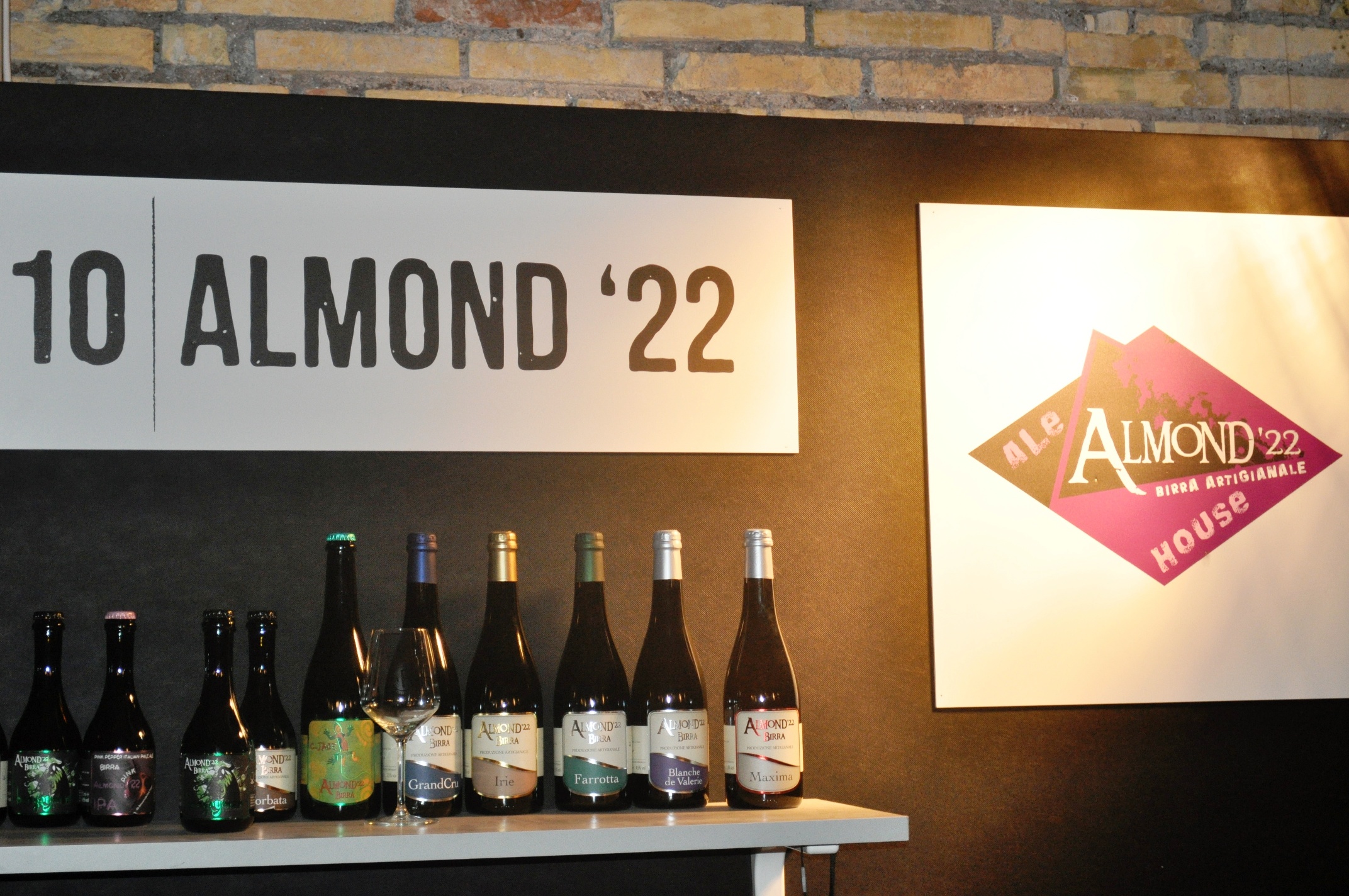
Almond ʼ22ʼs Pink IPA which smelt of sour fruit but was very sweet and velvety smooth to taste. It’s made with, among other things, pink peppercorns.
• Almond ʼ22ʼs Torbata, a barley wine that was smooth to drink, with notes of nuts, dried fruit.
• Almond ʼ22ʼs Farrotta, which also had a similar combination of sharply fruit smell and smooth to drink. Made with farro – Italian’s multipurpose name for three older varieties of wheat, so, yes, it’s effectively a kind of wheat beer.

Almond '22 at Fermentazioni 2013

Amitaʼs Marsilia (??), a beer that’s salty yet refreshing, fruity and smooth.
Croce di Maltoʼs Acerbus (I think), which was the closest I’ve experienced to a certain type of strong English bitter from an Italian craft brewery. Hand-pumped, lean head, brown colour, balanced flavour.
Eremoʼs Magnifica amber ale. This was yummy. Really nicely balance and easy, but also full-bodied. Orange, caramel, apple scents and flavours. (Oh, and if you do visit the site,  the landing page has a video of a modelly girl looking really harried working in the beer bar, presumably in Assisi, where the brewery is based. It’s a bit of a strange message: you enjoy the beer while she suffers.)
Karmaʼs Sumera, a spiced golden ale with bergamot with notes of toffee, banana and, yes, Earl Grey.
• Karmaʼs Radica, which is made with gentian roots but rather than being bitter like the digestivo amaro di genziana (gentian bitters), was surprisingly sweet, maybe because it’s also made with liquorice and ginger roots. Scent like fresh laundry.

Lambrate at Fermentazioni 2013

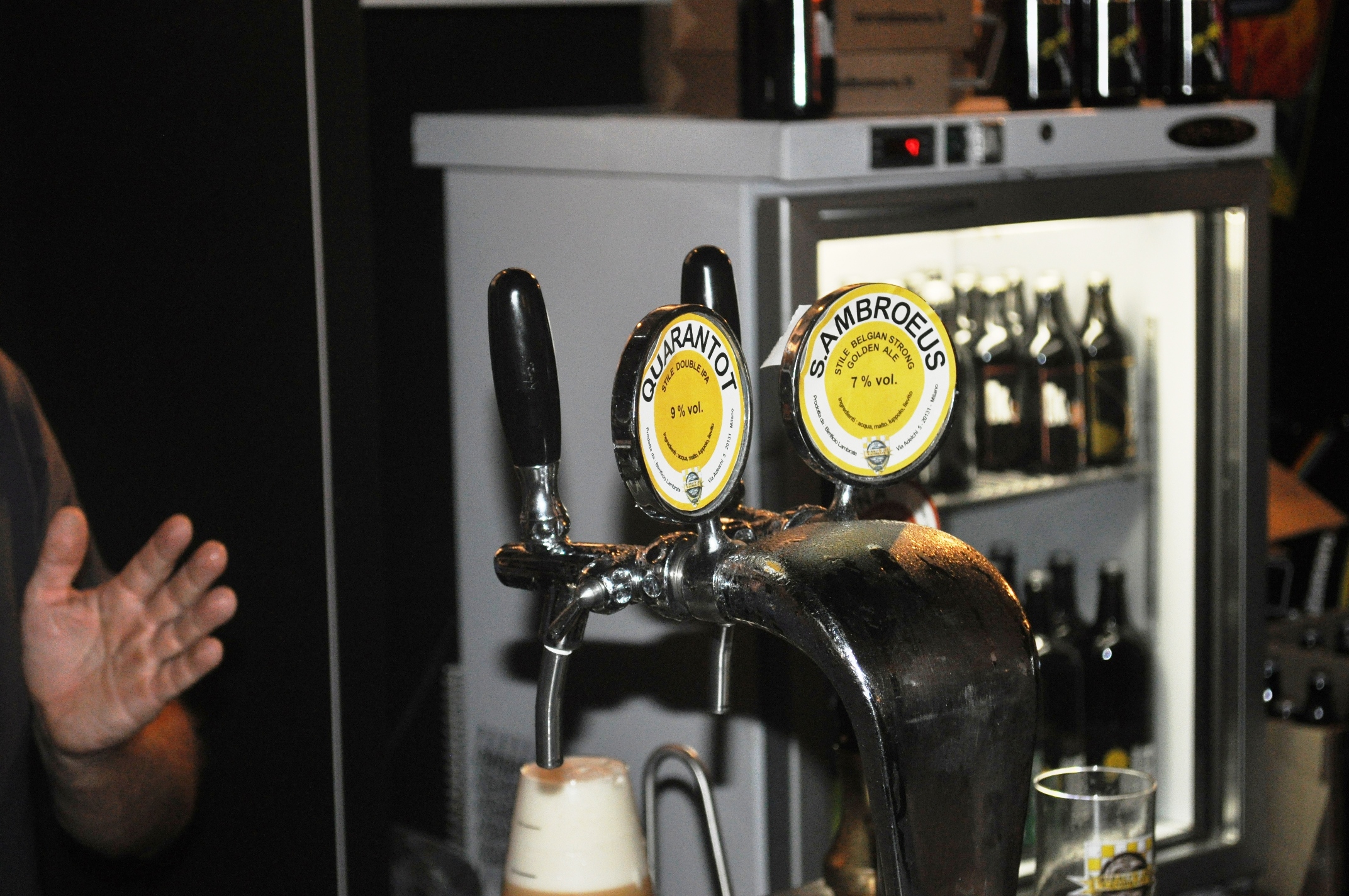
Lambrateʼs Quarantot, a double IPA that had a slightly sweaty smell, but is sharp, tart, very bitter, dry and crisp but also smooth and gently sweet. Our friend Nora said it was like a Vin Santo beer, which was spot-on.
Piccolo Birrificio Clandestinoʼs Montinera imperial stout. Full-bodied and seriously red meaty, with liquorice notes.
• Piccolo Birrificio Clandestinoʼs Villa Serena blonde ale, floral perume, very fresh and light to drink. Cute name for the outfit too – “Little Clandestine Brewery”.

Toccalmatto at Fermentazioni 2013

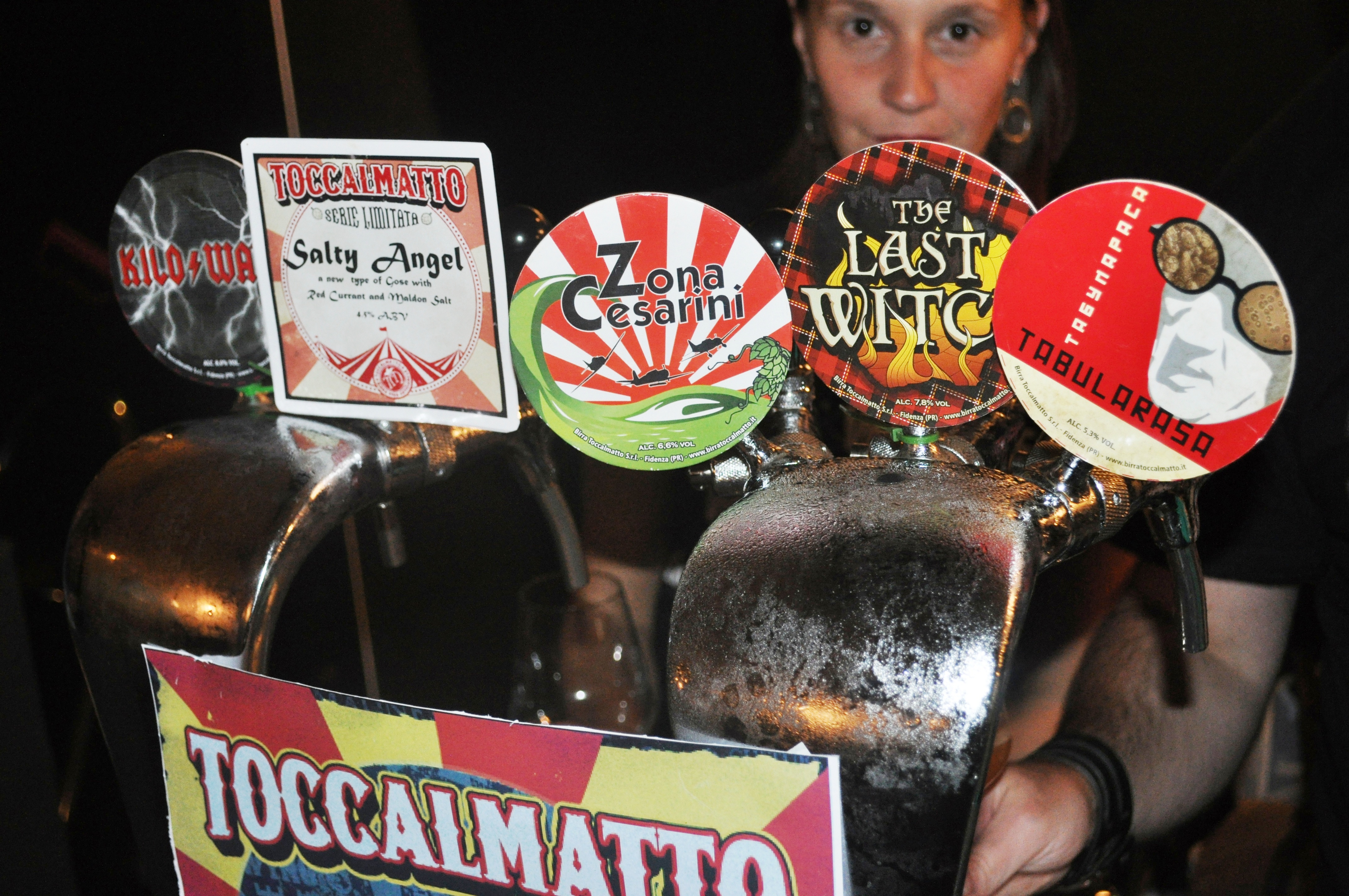
Toccalmattoʼs Salty Angel. An even weirder salt ale – made with red currants and Maldon sea salt. When I asked why they used this salt from Essex, England, not an Italian sea-salt, I don’t think he heard me as his answer was like a politician’s, ie unrelated to the question. (It was later on and the music really was too flippin’ loud.) Either it’s an interesting challenge or the flavours are fighting each other. I’d like to try it again.
Turanʼs Sfumatura Imperial Stout, on a hand pump. I thought this would be my wife Fran’s best ever beer as she’s a stout drinker, and she loves bacon, and even yucky “bacon flavoured” crisps. This stout has a massive smoky bacon hit, a suggestion the guy serving didn’t seem to like.

Mostly, I was drawn to the weirder or more innovative stuff. I’m increasingly enjoying beers I find a bit challenging, so by later on this is what I was asking for. I even took one away, Noa from Almond ’22, on the recommendation of Hande Leimer, sommelier and founder of VinoRoma. It sounds like an interesting and exciting beer, but I haven’t opened my bottle yet. (Think I’m going to do a weird-and-wonderful-beers tasting session one evening soon).

As the evening wore on, the DJs, playing rock, pop, grunge and whatnot, started cranking up the volume. This gave the event a more studenty/club atmosphere, which might have suited the young, and surprisingly gender-mixed, crowd, but it kinda inhibited talking to the brewery representatives or discussing the beers. Overall though, the beers were great. Indeed, my friend Michele Sensidoni, master brewer at Umbrian brewery Mastri Birrai Umbri, said it was the best selection of Italian craft beers he’s experienced, and he really knows the scene inside out.

Fermentazioni 2013 glass pouch

Footnotes
1 The website lists 30. Apparently there are 586 craft breweries operating in Italy at present, Sept 2013.
2 That is, 100ml, or just under a fifth of a pint (imperial), or 3.5 imperial fluid oz, or 3.4 US fluid oz.
3 So a tad pricier than actually visiting the hole-in-the-wall outlet for this filled triangular pizza pocket – 00100 Pizza in Testaccio, Rome.

13 Comments

Filed under Ale, beer, Breweries, Events, Italian beer

The Baule: an Italian loaf shape, apparently

Baule bread loaf

Much of the time I’ve been in Italy, I’ve been looking for the definitive book on Italian bread and baking. Every time I visit Eataly or larger book shops, I pick up and put back down sundry tomes. It’s baffling though: many are rudimentary and some of them are even written and published in English and translated into Italian. The book I’m looking for may exist, but I haven’t found it yet.

I’ve not seen the revised edition of (American) Carol Field’s ‘The Italian Baker’ yet, though from my memories of the original, that’s not the definitive book either*.

If I lived in Italy for 20 more years, and worked in Italian bakeries, maybe I could write it… but that ain’t looking likely at the moment.

So in the meantime, I pick up the occasional book to tide me over. The latest one I bought is the Slow Food Editore (the movement’s own imprint) ‘Pane, pizze e focacce’ – “Breads, pizzas and flatbreads” if you want a semi-bodged, largely gratuitous translation.

This isn’t a classic book by any means, but it does have some good stuff about types of lievito madre (“mother leaven”, ie natural leaven or sourdough starter), about grains and ingredients, and about various forms and shapes of breads. Some of the latter – with names like montasù and mafalda – struck my eye.

So that’s been my starting point with this book: trying some new shapes.

Baule

This is about something the book calls a baule. The word means “chest”, “trunk” or “boot” (as in storage area of a car) but I can’t find other evidence on t’interweb for this style of loaf, with this name. I’ve said before, though, much of Italy’s food tradition probably doesn’t exist in digital form yet.

Confusingly, a bauletto (“little chest”) is a term that does seem to be used for this shape of loaf, from Ferrara in Emilia-Romagna, but name is also more commonly used to refer to a white tin loaf, often sliced.

I’ll just have to give ‘Pane, pizze e foccacce’ authors Davide Longoni and Marcella Cigognetti the benefit of the dough…t (hm, that doesn’t quite work does it?) about baule.

This isn’t a recipe, it’s just a record of trying a new shape. For the dough I just used the classic 10g fresh yeast, 10g salt, 350g water, 500g flour, with a mix of strong white and wholegrain.

So basically, you make your dough, and give it a first prove.

Then you deflate it slightly, form a ball and give it a rest.

Shaping ball

Then you stretch out that ball to form a rectangle, which you roll up tightly to form a cylinder or sausage shape.

Rolling up

Roll and stretch this sausage to elongate it.

Elongating the sausage

Once you have a nice long sausage, flatten it with a rolling pin.

Flattening the sausage

Once you have a nice long flat rectangle, roll this up, keeping it as tight as possible.

Rolling up the flattened sausage

You’ll get a nice sort of baton shape.

Rolled up

I love the spiral ends.

Rolled, spiral end

You then get a knife. The book says use the blunt edge, so you could also use a pastry scraper. Make a deep cut into – but not all the way through – the baton.

Cutting the form

Move this to a baking sheet.

Pre-final prove

Cover with a cloth, then leave to prove again, until it’s doubled in size.

After final prove

Bake. I did my usual time and temp for a loaf this size – 20 minutes at 220C, 20 minutes at 200C.

When baked, remove and cool on a wire rack.

Fresh from oven

It looks rather nice, and you can tear it down the centre to share during a meal.

Tearing baule in half

But I’d still love to see one of these things in a real Italian bakery. If anyone has every encountered this shape of loaf in Italy, please do let me know! I’m intrigued.


* I did originally include links to Amazon here, but this excellent piece by Russell Brand reminded me they’re still corporate tax-dodgers with  questionably “cosy relationships with members of our government”.


3 Comments

Filed under Breads

Back to the scene of the crime: some beer and snacks in Naples

Naples street food

Last time we went to Naples we enjoyed the pastiera and didn’t so much enjoy the pickpocketing. This time round there was, thankfully, none of the latter. Though because of the earlier experience we didn’t take a camera, and I kept neglecting to take photographs with my (crappy replacement-for-stolen) phone. Hence this one isn’t very well illustrated. Sorry – I realise food blogging needs fancy photography but, well…. Boh. È già.

Street food
Naples is a great city if you like stodge. Sure, it has amazing restaurants too, but the most tangible food, the food you’ll probably notice first – especially if you’re visiting the centro storico – is the street food.

Along Spaccanapoli and Via Tribunali are dozens of places selling, basically, deep-fried stodge. Who says Glaswegians invented deep-fried pizza? Apparently, there’s been stodgy, fried street-food in this ancient Greek then Roman town for millennia.

We tried a bread-crumbed, deep-fried pasta patty, a crochetta (potato croquette, with bits of mystery meat), and a sausage (with provolone in it) wrapped in dough and… deep-fried (possibly called “wurstel in camicia” – “vienna sausage in a shirt”). I love stodge and deep-fried food, but even I felt a bit wobbly after these items. (I would have been even wobblier if I’d been forced to try the tripe and lemon juice we saw for sale from a cart down by Castel dell’Ovo on the seafront.)

Naples street food

Ale
Later on, I fancied some beer (ofc). I’d tried looking up real beer places in Napoli, but I couldn’t really find any in the centro storico. Then we wandered past La Stanza del Gusto on Via Santa Maria di Costantinopoli. It’s basically in Piazza Bellini, which is a great spot for an evening drink, amid the dilapidated, graffitied, litter-strewn grandeur. Most of the other bars there, however, only serve industrial beers, which gave La Stanza the edge for us as it had a good selection of international real beer.

I always prefer to eat and drink local, though it’s especially nice to be able to do this with beer. When we asked for something Italian, and local, the helpful guy went behind the bar as if he was digging into a special stash and gave us a slightly strange sales pitch. Fran had a Lemonale, which he referred to as a bit “gay” (so not exactly PC).

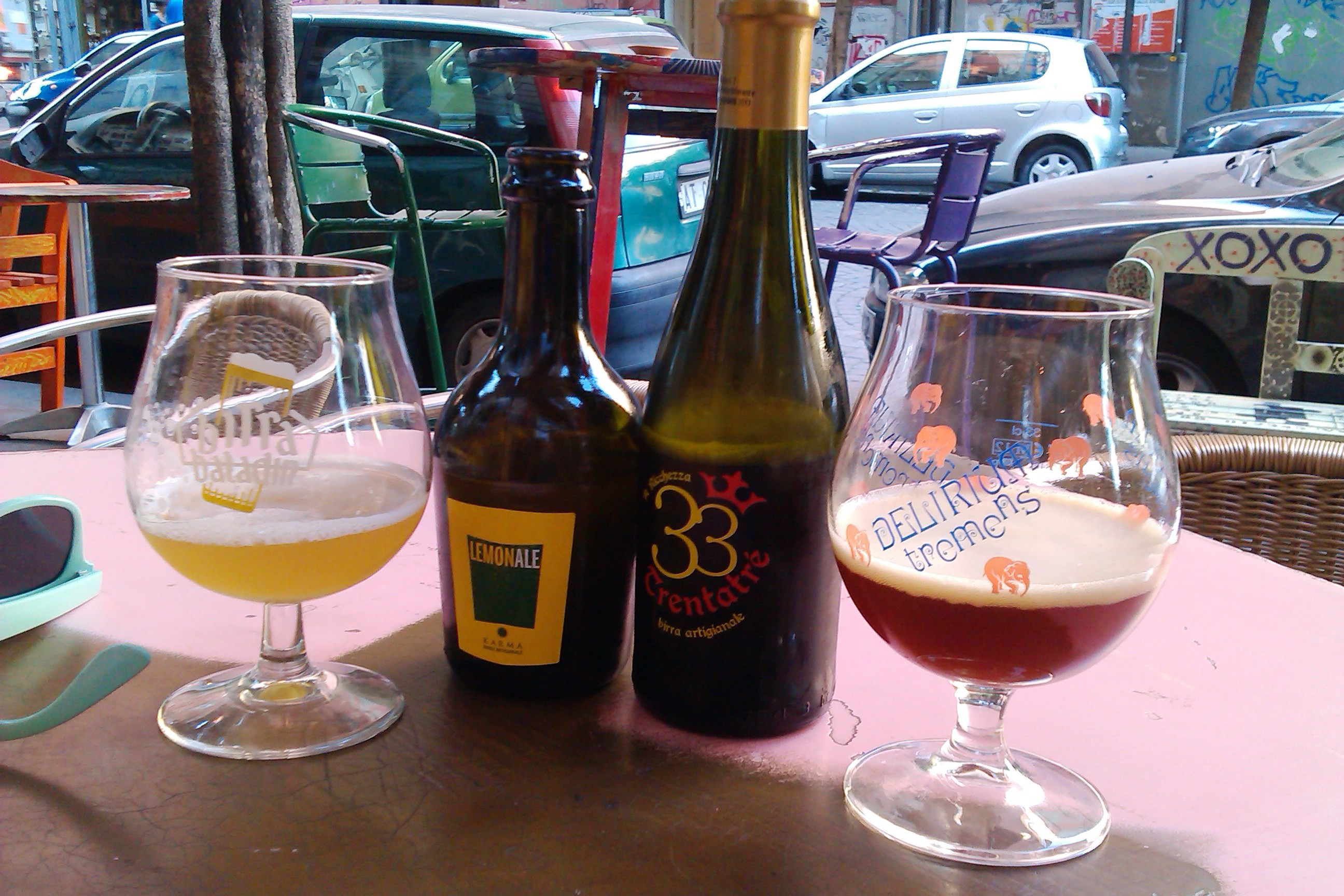
Lemonale and Trentatre at La Stanza del Gusto, Naples

This is a top fermented beer from Birra Karma brewery, which is based in Alvignano, 45km north of Napoli. It’s a 5.5% ABV beer that’s made with water, malted barley, rye, organic honey, Fair Trade cane sugar, hops, spices and yeast: but no actual lemon. Despite this, it was very citrusy, a little sweet, with a smooth, even body and some coriander. Karma’s own site says it’s in the style of Belgian blanche. Very refreshing.

I had a Trentatré (33) Ambrate from AF Birra/Aeffe – another local Campania brewery, this time based near Salerno. Aeffe’s site describes it as a “Scottisch Ale” while the good old Guida alle birre d’Italian 2013 says it’s 6% ABV and made with Maris Otter barley malt, and refers to it being a beer “inspired by the English tradition”. Italians really aren’t very good when it comes to the whole English-British thing, with many using the former as a synonym for the latter (I’m constantly telling a highly educated historian friend there was no “English army” in WW2, it’s the “British army”).

Anyway, Trentatré  Ambrate has a rich amber colour, with a nicely balanced, deep, slightly fruity flavour of malts and bitter hops. Just to continue his un-PC strain of jovial chat, the waiter said this was a better beer to “picchiare la moglie” (ie, he was calling it “wife-beater” – a name used in England for Stella Artois, for some reason).

Just to get the most out of our aperitivo, we tried Karma’s own amber ale, called Amber Doll. This wasn’t quite as full-bodied as the Trentatré  and had a distinctly coppery flavour, with touches of chestnut.

Karma brewery's Amber Doll

Pizza
The following day, we met some friends. They live in Rome, but have local family, and they took us for a pizza for lunch. This was at Pizzeria Capasso Vincenzo, which is located by the old gate Porta San Gennaro on Via Foria, a large road to the north of the centro storico and one of the many places one can see the city’s famed modern art installations that look just like massive piles of garbage. They’re uncannily realistic.

The pizzeria itself is one of the many where you’ll see a sign saying “Vera Pizza Napoletana” – Real Neopolitan Pizza – with a picture of the city’s famed folk figure Pulcinella. This guy, with his clown-like white garb and black mask, is the predecessor of Britain’s children’s entertainment psychopath Mr Punch, with his proclivity for killing (his wife, their baby, the arresting police officer). Encouraging you to eat pizza is certainly a more benign activity. The signs are organised by the AVPN, a not-for-profit founded in Naples in 1984.

Vera Pizza Napoletana sign

Our friends said there were only really three genuinely Neopolitan pizzas on the menu: notably the Margherita, which legend says was created for Margherita of Savoy, queen consort of Italy’s King Umberto I, during a visit to Naples in 1889. Another was a calzone made with ricotta and prosciutto, which Fran had. She says “It was delicious and surprisingly light.”

Not so light, apparently, is the deep-fried version, which our friends warned us off – and indeed it looked massive, and coronary-inducing, when some other punters ordered them. I had another calzone, but this time with provolone, black olives and scarola (that is Cichorium endivia, curly endive, a form of chicory). Very nice it was too – with the olives providing a sharpness to contrast with the cheese and wilted greens.

Calzone at Cessano, Naples

Pastry
The following morning, we tried just one more local speciality before we moved on down the coast to get a bit of sun and reprieve from the urban madness. This involved going to Giovanni Scaturchio, a famed historical (“since 1905”) pasticceria (pastry shop) in the head of the centro storico, on Piazza San Domenico Maggiore.

Our friends insisted we have sfogliatelle. These pastries come in a few forms, though the most famous in Naples is the sfogliatella riccia, a name that literally means “curly many-leaves/layers”. And indeed the pastry is not unlike say filo, in that it’s been rolled and stretched very thinly, before being layered and rolled, and filled with a mixture of ricotta, almond paste and candied peel. We had one riccia and one made with pasta frolla – shortcrust pastry. The latter, at first glance, looks more like a brioche bun, but when eaten is clearly pastry not enriched bread dough, and is also filled with ricotta and peel.

We were so busy talking about it all, then trying to get the waiter to bring a knife, then cutting them up, that by the time I thought about taking a photo there wasn’t much left. So instead, here’s the picture from Scaturchio’s site:

Sfogliatelle from Pasticceria Giovanni Scaturchio

If you’re only in Naples for a few days, and fancy trying a distinctive local snack, I’d really recommend a good sfogliatella, or two. Slightly more refined than the deep-fried pizza sold on the street stalls. I’m saving that treat for next time we run the gauntlet of this astonishing city.

Info
La Stanza del Gusto, Via Santa Maria di Costantinopoli 100, 80138 Naples, Italy
+39 081 401 578 | lastanzadelgusto.com

Birra Karma brewery
+39 0823 869 117 | info@birrakarma.com | birrakarma.com

AF Birra/Aeffe brewery
+39 081 516 2434 | info@afbirra.com | afbirra.com

Pizzeria Capasso Vincenzo, Via Porta San Gennaro 2, 80138 Naples, Italy‎
+39 081 456 421

Pasticceria Giovanni Scaturchio, Piazza San Domenico Maggiore 19, 80134 Naples, Italy
+39 081 551 7031 | info@scaturchio.it | scaturchio.it

5 Comments

Filed under Ale, beer, Bakeries, Misc, Pizza

Pizza and beer at La Gatta Mangiona, Monteverde Nuovo, Rome

Tscho! beer at La Gatta Mangiona

When, just over two years ago, we moved to Rome, and specifically just-outside-the-city-walls west Rome, we soon heard about La Gatta Mangiona. This pizzeria in Monteverde Nuovo (Gianicolense), the neighbourhood adjactent to our Monteverde Vecchio, was recommended as one of Rome’s best.

So we went. And were kinda disappointed.

Despite the inventive toppings (alongside classics) created by the renowned owner Giancarlo Casa (at it since 1973) and his staff, and the dough reportedly made with a lievito madre (sourdough starter) and long-fermentation, the pizza was flabby, the service somewhat indifferent. The experts over at The Rome Digest did, earlier this year, highlight the issue of the place’s inconsistency. Then another Rome food expert, Rachel Roddy, went recently and told us that not only was the food good, but there was also an excellent beer menu. I don’t remember the latter from our previous visit – so either it didn’t exist, or you had to be sufficiently in the know to ask specially to see if.

This time, we were in the know, and went with some other beer enthusiast friends. And overall, the experience was much better.

I wouldn’t say it was the best pizza I’ve had, but it was still delicious, the beer menu is indeed great, and the suppli were among the best I’ve tried in Rome.

Suppli at La Gatta Mangiona

I love suppli, Rome’s delectable deep-fried rice-and-mozzarella balls, but many are pretty average, and probably not even made on premises. La Gatta Mangiona’s, however, were clearly hand-made, clearly freshly made, and they even do suppli-of-the-day. Though they don’t exactly seem to be seasonal. We went in September, way outside spring’s asparagus season, but they had suppli made with them and saffron. The other suppli-of-the-day was sausage and cream; Fran says “Mmmm, it was delicious.”

I just had a classic suppli, made with tomato risotto. It was a decent size, slightly wonky, crisp, well-seasoned and perfectly cooked, with the mozzarella inside forming strings as it should. Yum. My pizza, meanwhile, was one of their specials, and was called “Four Onions”. Along with the onion frenzy, it also featured tomato, vaguely picante sardines, olives and flakes of salty pecorino.

Generally I’m from the school of thought that simplest, least cluttered pizzas are the best (and indeed we’ve got Italian friends who only ever eat Margherita), but this was great. Not as good as the suppli, but still great. Clearly, I was so excited to get started on it I failed to take even one in-focus photograph. Doh. (Check out Gillian’s Lists here for some excellent photos of Gatta Mangiona’s wares.)
4 cipolle pizza

Now, the beer. Being out with two Italians, one other Englishman and one Canadese, we didn’t demolish beer after beer as we might have done had we been out with solely boozy Brits, but we did try a couple from the menu. This menu is indeed extensive and far better than any other pizza place. Even Trastevere’s entertaining but kinda overrated Bir & Fud (geddit?) doesn’t have much beer by comparison, though they do have taps. Most pizzerie, including the great, bargain options Da Remo (Testaccio) and Ai Marmi (Trastevere) meanwhile, just offer wine or crappy industrial lager.

You can find La Gatta Mangiona’s beer and whisky menu from their site (click ‘Carta delle birre e dei distillati’ – a PDF; not entirely the same as the photocopy they gave us). The beers are divided into wheat beers, then light and dark beers of low, medium and high ABV (from 3.5 to 10.8). Clearly La Gatta Mangiona takes its beer very seriously.

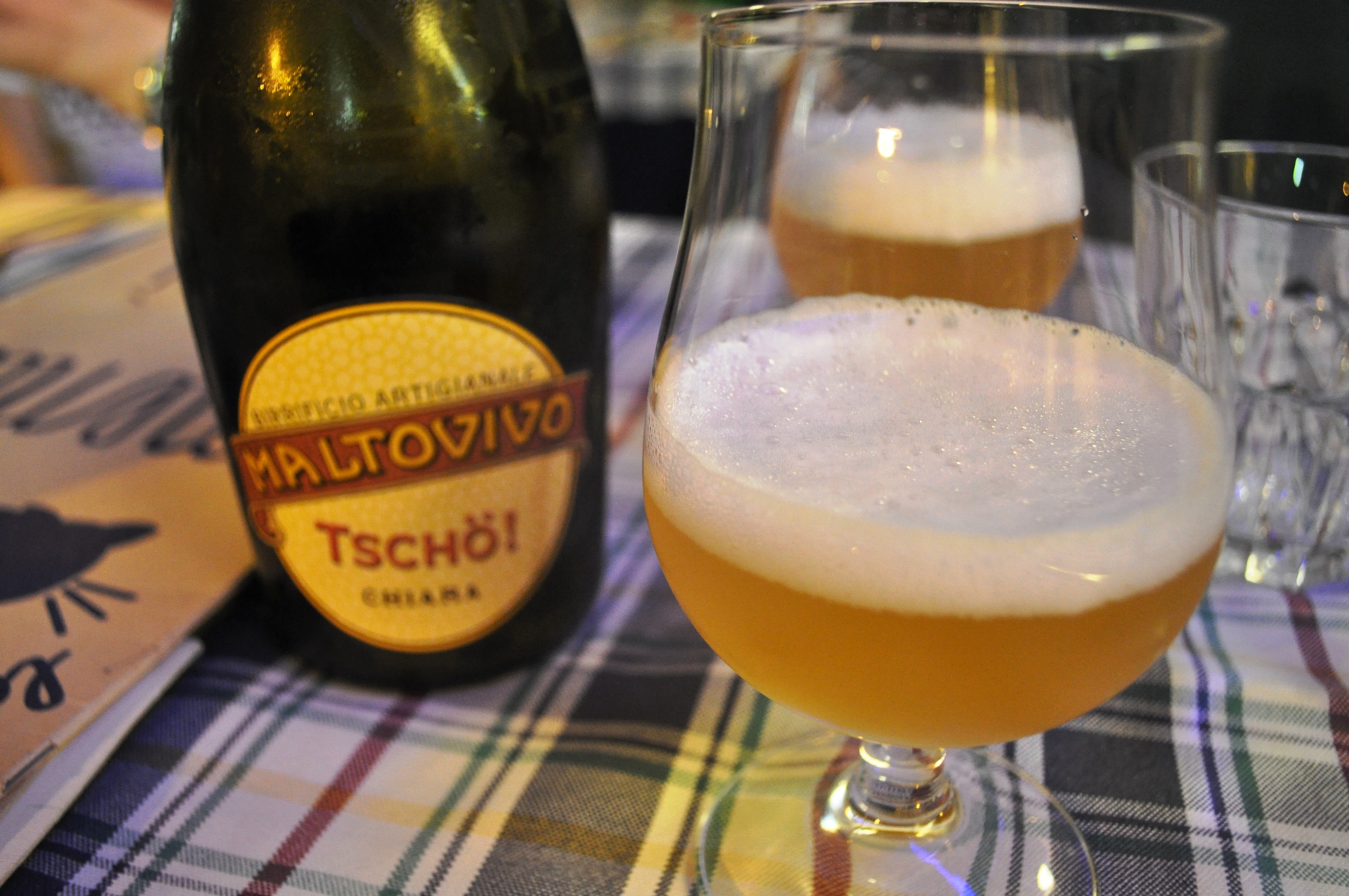
As I’d previously written about Calibro 5, a beer made with Kölsch that is designed to go well with pizza, it seemed suitable to have another beer made with the same yeast and in a similar style. This was the unpronounceable Tschö! from Maltovio brewery in Campania –that is, the region with Naples as its capital. (I’ll be talking about Naples again in the next post, as we’ve just been there.) Maltovio’s site can be found here. I really hope the photos are tongue-in-cheek. They remind me of comedy duo Armstrong and Miller‘s sketches about catalogue models in their natural habitat (sadly, I cannot find video snippets online).

This was a very straightforward beer, with some aroma of grass and hay, a blonde, murky body and a simple taste, with some slight citrus touches and a dry mouth-feel. Indeed, it probably would have been a perfect accompaniment to pizza, but between the six of us we finished it quickly while we were eating our antipasti.

Grado Plato's Spoon River at La Gatta Mangiona

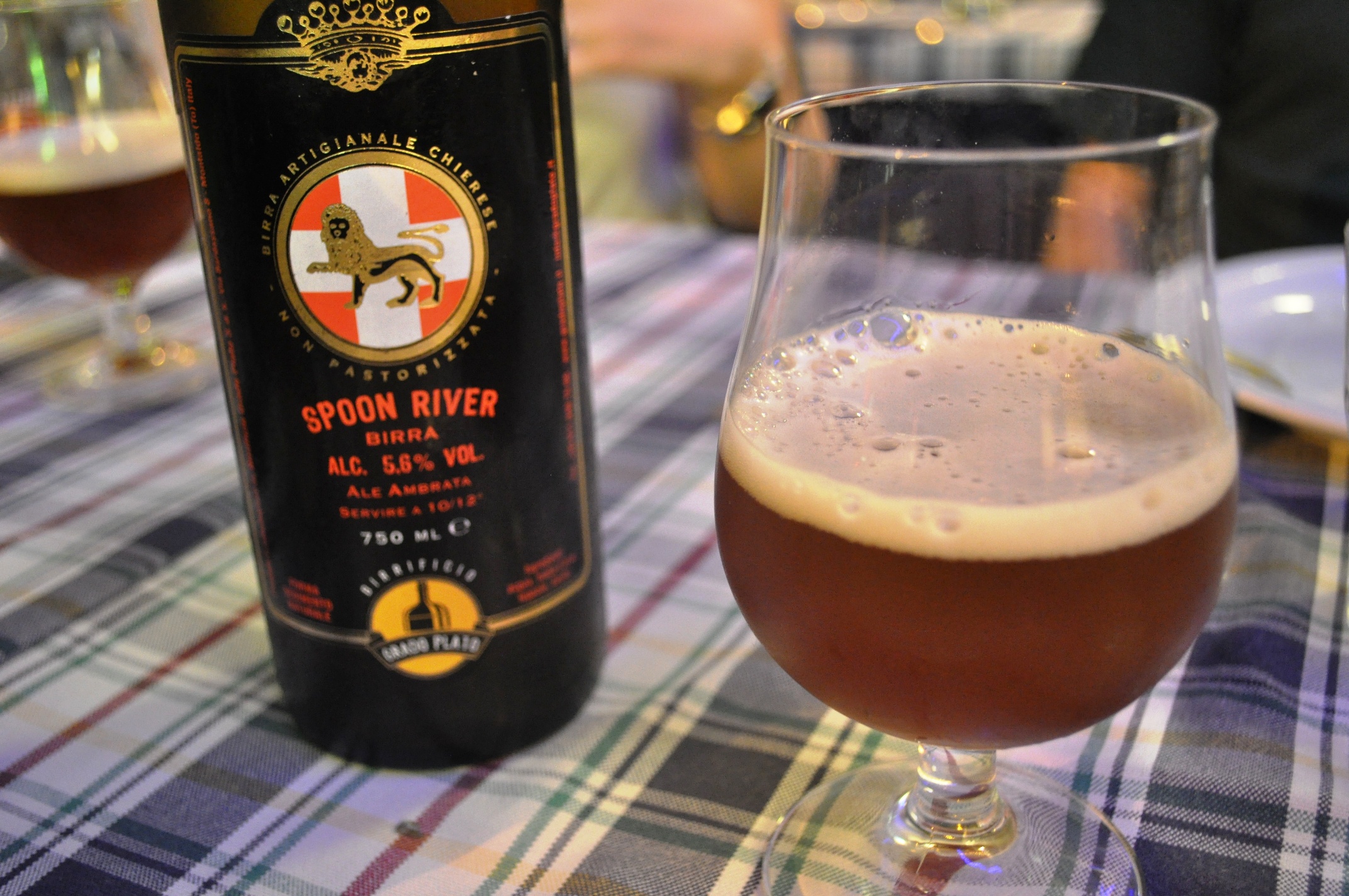
The second beer we had was Spoon River from Grado Plato brewery in the Piemont (Piedmont) region of northwestern Italy. The fact that it’s called Spoon River and not Fiume di cucchiaio fits in with this being in the style of a English bitter, or at least that’s what the Guida alle birre d’Italia 2013 (Italian Beer Guide 2013) says. Spoon River’s own site says it’s an amber ale that’s also (like Kölsch beers) good to “accompagnare a tutto pasto i piatti più svariati dai primi alle carni” – “accompany all meals, everything from primi (pasta, risotto etc) to meats.”

Its smell brought to mind toffee apples – so caramel malt and fruity. It’s got a medium body and yes, a very malty taste too, with some lasting bitterness.

I wish we’d tried more, but that’ll have to wait until next time.

Oh, and if you’re wondering about the name, a gatta is a female cat, and a mangiona is a glutton. So the Greedy Lady Cat. For want of a better word for a female cat. Why don’t we have a name for a female cat in English? If a male is a Tom (well, an intact male), what’s the equivalent? Some suggestions are a Queen, or a Molly, or a Dam, though these terms aren’t in common usage, especially for non-pedigrees. The Gluttonous Dam sounds nice though.

Info
Via Federico Ozanam 30-32, 00152 Rome, Italy
+39 06 534 6702 | lagattamangiona.com
Open from 19.45 to 23.30; closed Monday

Maltovio brewery
maltovivo.it

Grado Plato brewery
gradoplato.it

6 Comments

Filed under Ale, beer, Pizza, Restaurants etc