Great British Beer Festival 2015. Some thoughts – a lot of them critical

Great British Beer Festival glass

The festival guide cover says, “The Campaign for Real Ale proudly presents…”. But one of my strongest memories from the the Great British Beer Festival yesterday isn’t of a standout ale, but of standing near the Harveys bar and handsome delivery van, chatting with Edmund Jenner (of said brewery). Beside us stood a row of an industrial-size wheelie bins. Their contents: a suppurating mix of packaging, food and dregs. There are no specific receptacles for dregs; no water for rinsing or moderating the flow either. No lids for the bins. No recycling.

Now, I’m not relishing being critical, nay negative, here and I’m very thankful to Ed for offering me a ticket to the trade day. I do wonder, however, if CAMRA needs to raise its game a bit for this festival, held annually at the fine Olympia, Kensington, west London. Oozing dumpsters, centre stage of a drink and food event: is this really the best we can do to celebrate our national drink?

Now, some commentators are suggesting that the event, and CAMRA itself, are changing fast, but I’m not sure I got a great sense of that. Sure there were some beers showing the influence of more experimental “craft” brewing (in-your-face hops, apricot juice, US beers in casks etc) but overall the vibe was somewhat tired, staid, mired in convention. Not a showcase of the best of our brewing tradition. And it’s all still very male, very middle-aged, very white to boot.

CAMRA meets US "craft" in casks

Time to move on
This becomes a thorny issue, however, as any discussion of younger beer-drinking demographics brings us to so-called “craft beer”, which the younger, or new-to-real-beer, demographics favour. The purists will dismiss “craft beer” as the product of upstart breweries that most likely keg their beers, and may even pasteurise them. The purists themselves preferring the CAMRA-sanctified virtues of live cask beers.

The Harveys bar under Olympia's fine vaulted roof

This is troubling for someone like me. I do naturally tend towards cask, most frequently drink Harveys, but I’m open to any decent beer that’s made with knowledge, passion and skill – any well-crafted beer. CAMRA’s narrow focus is depressing – especially now.

British beer culture, frankly, is in a bit of a muddle. For people like me – forty-something, neither young craft beer hipster nor aging CAMRA member – the disjunction between “real ale” and “craft beer” is largely irrelevant; for others just dipping their toe into the waters of real beer, it’s probably just confusing. CAMRA saved real beer in the dark times of the 70s and 80s; but it can move on now, surely? Great British Beer Festival should be about all great British beers*. And represent a wider spread of the populace who enjoy real beer.

National pride
As Spain, France or Italy are enormously proud of their wine culture and heritage, Britain should be of its beer.

It’s our national drink, it fed and watered centuries of British artisans and farmers, workers and traders; it was one of the key fuels of Britain as it rampaged around the globe; it was something we took to colonies and conquered countries. The latter has difficult imperialist connotations, but the point is that Britons were among the key migrants to take the craft and skill of brewing overseas: notably to America. And yet many young British brewers today look to the US “craft beer” scene for inspiration over their own extraordinary British beer heritage.

While the results can be brilliant – The Kernel, Beavertown etc – they can also be crude, with brews overly laden with high alpha hops, resulting in concoctions that are reminiscent of toilet cleaning products. Compare such a thing with the subtle, nuanced blending of British hops and malts in a Harveys ale, for example, and it can be quite shocking.

The splendid new-old Harveys van

Straddling the divide
I live in hope of encountering more British beer that straddles the gap, connects the disjointed cultures – a beer that truly balances and combines assertive hoppiness with full-bodied, warming maltiness. Oddly, I’d say I drank a few beers that fitted this description better while living in Italy – a country whose new generation of brewers happily take inspiration from the US and Britain, or Belgian, or Germany.

Yesterday, I sampled several beers from the hundreds on offer. None of them really straddled the great divide. I wish I could have sampled more, but it’d take days to drink through more, especially as the event also adheres to another frustrating convention. At the GBBF you can only order in pint, half or third measures – that is, 568, 284 or 189ml. Even the latter is a big measure if you’re not sure if you’ll like the beer in question or if you’re a drinker who wants to sample as much as possible but stay sensible and compos mentis.
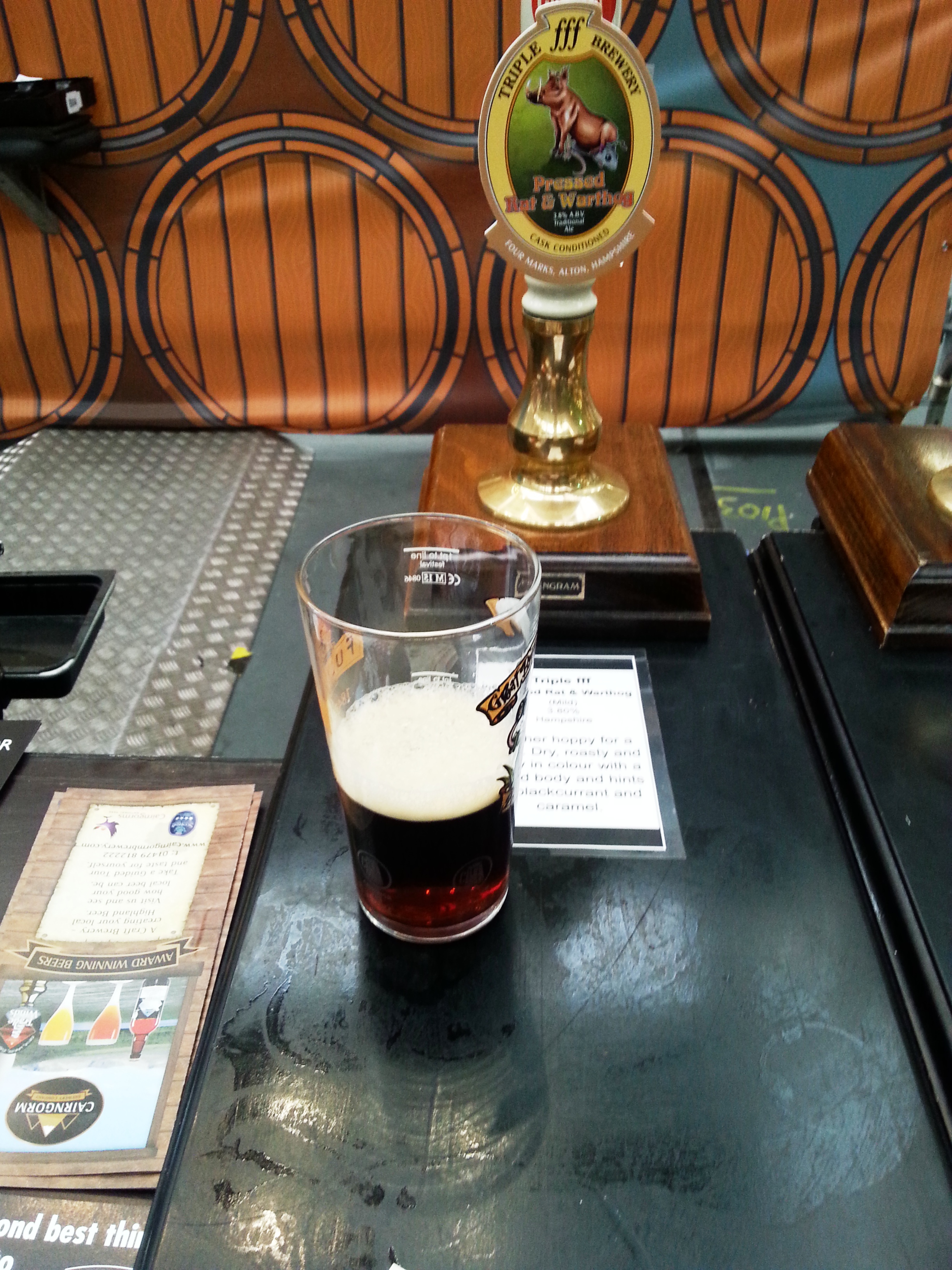
Triple FFF Brewery's Pressed Rat and Warthog

A few days ago Fran managed to – boo-hoo – break one of our two glasses from the inaugural Fermentazioni beer festival, which we attended in Rome in 2013. The remaining glass is marked in 10, 20 and 30cl measures – 100, 200 and 300ml. Now, sure, a Brit may want a full pint if he or she has found a desirable drink, but I do appreciate the 100ml measure – enough to get a whiff and a taste when there are hundreds more beers on offer. What about introducing a quarter pint (about 140ml)? It’d be especially useful for those beers at 6% plus.

Sample sizes are just one of the ways that CAMRA could revise and, dare I say it, modernise the festival. As far as I’m concerned, the ideal route would be somehow overcoming the differences and enlarging the Great British Beer Festival to include not just cask beers that tick the CAMRA boxes but also the newer wave of “craft beer”. It just seems silly to have separate entities in the form of CAMRA’s GBBF and, a few days later, the London Craft Beer Festival. Surely, they’re all craft beers? I mean, what’s a traditional British brewer doing if not using his (or her) craft? I do not like the distinction.

A bit dusty, not as aromatic as hoped from the Elder Ale, by Flowerpots, from near my home town of Winchester

Sorry but…
I do not like the filthy bins. I do like lack of a small sample measure. I do not like the divided demographics: GBBF I would say was about 70/30 male; Fermentazioni was about 50/50. A wine festival I attended in Italy, meanwhile, was also very mixed age-wise – from youths to oldies, male and female equally. If Italians celebrate their wine that broadly, why don’t we do so with our beer?

Craft beerists – you need to look more to your own country’s heritage. CAMRA – you need to recognise all real beer. Enough of this absurd division! Put them all under one roof, and us consumers can pick and choose as we like. And many might even learn something, overcome their prejudices. And proudly celebrate all our brewing culture, traditional and modern, with more open arms. Oh, and please, sort out the bloody vile dumpsters!

Dumpster

* Real beers that is. Not generic industrial lager etc from semi-British owned multinationals and whatnot.

11 Comments

Filed under Ale, beer, Discussion, Events

Neolithic bread

Back in 1999, an archaeological dig in Yarnton, Oxfordshire, “unearthed two 5,000-year-old pieces of bread – the earliest fragments of bread to be recovered in the British Isles”.

Despite my enthusiasm for history, British food history and bread in general, I’d not heard about this before, so thanks to Jeremy Cherfas and his Newsletter from Eat This Podcast.
It’s a wonderful story. Not only is it amazing to have such fragments, which survived as they were charred and have been carbon dated as from “between 3,620 and 3,350 BC”, but also, in this era of blanket demonisation of bread, it’s a salient reminder of how long humanity has had an important relationship with grain-based foods. Even here in Britain, which was, a long way from the civilisations of the Middle East, central Asia, China etc.

At the time of the announcement, they had identified one of the grains as barley. I wonder if they managed to identify any more of the ingredients and if anyone had a go at re-creating the ancient loaf? It sounds like an interesting challenge, but one would need not only true ancient grain varieties, but also a quern-stones to mill them. That’s not something that’s part of my kitchen kit at this point.

There’s a little more on this 1999 discovery here and here, but I can’t find anything subsequent.


Leave a comment

Filed under Baking, Misc

Torta de Santiago for St James’s Day

Torta de Santiago, Tarta de Santiago

In Christianity, St James, son of Zebedee, was one of Jesus’ Twelve Apostles. Western Christianity celebrates his feast day on 25 July.

Although it’s spread across the globe now, in part thanks to tourists and pilgrims walking the Camino de Santiago, the chief dish for celebrating the Feast of St James is the torta de Santiago, from Galicia, northwest Spain.

Legend has it that St James’s remains are at the cathedral of Santiago de Campostela in Galicia. Iago is one of many Iberian variations on the name James, which is itself the English version of the Hebrew Jacob, Yaʿqob. In ancient Greek it became Iakobos, which was Latinised as Iacomus, which came Iacobu in Vulgar Latin, which in turn evolved into the Galician Iago – hence Santo Iago, Santiago.

Cake or tart?
Although torta (Galician, also the same in Italian), tarta (Spanish), tarte (French), torte (German) are related to the English word “tart”, in the sense of open-top fruit pies, they all derive from the Late Latin torta, possibly meaning a small bread. By Medieval Latin the word had come to mean a cake or a pie/tart. The full etymology isn’t certain, lost in the mists of time and the convolutions of Latin evolving into various different European languages. It’s salient in the case of torta de Santiago though, as it’s a product that breaks down those pie/tart/cake distinctions: it can be made with or without a pastry case.

The defining characteristic of the torta is a slightly citrusy mix of ground almond, egg and sugar. And, if you’re going for a bit of decorative iconography, a cross of St James on the top in icing sugar.

Jewish or Christian?
Claudia Roden posits the torta may have its origins in Jewish food, writing: “The Galician city of A Coruña is on the Jewish tourist route. There is a synagogue and an old Jewish quarter there. Jews from Andalusia, fleeing the Berber Almohads’ attempts to convert them, came to Galicia in the 12th and 13th centuries.”

Something related to the modern torta de Santiago may have emerged in Christian 16th century Galicia with the torta real (“royal tart”) or bizcocho de almendras (“almond cake”). A more recognisable modern incarnation is generally traced to an 1838 book by one Luis Bartolomé de Leybar, as a tarta de almendra.

The bottom line, as ever, is to take the notion of ancient traditions with a pinch of salt – so many things we like to imagine were practised fully-formed in the middle ages were instead more likely invented or at least consolidated in the 19th century.

Some versions include grape marc, aka grape pomace – ie the leftovers from pressing – which is interesting and makes sense if you have a vineyard. I don’t. The version in the Moro cookbook, meanwhile, adds membrillo (quince paste); I don’t have a quince tree either. Almonds and citrus is enough for me.

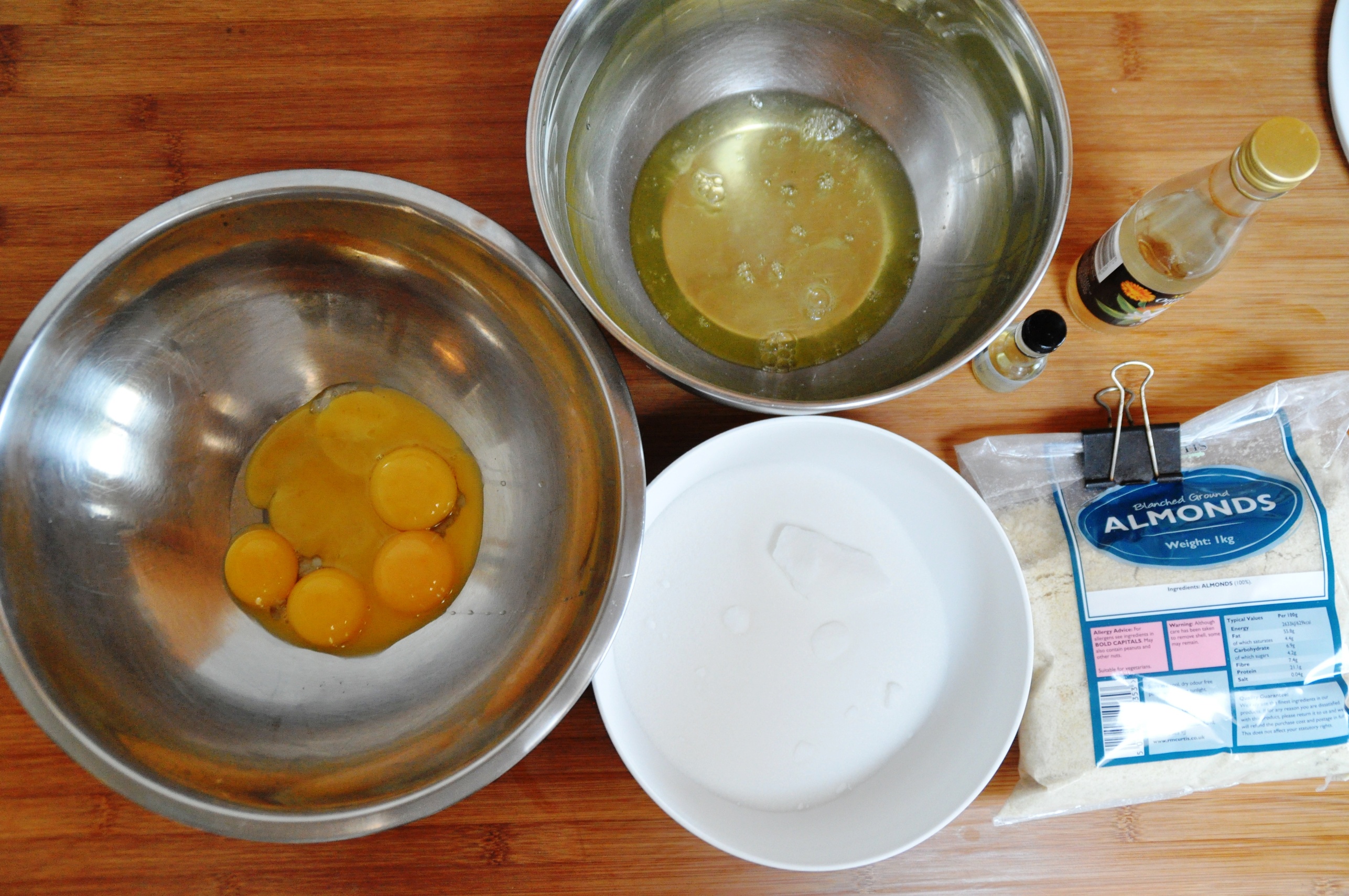
6 eggs, separated
250g caster sugar
1 lemon, zested
1 tsp orange blossom water
Almond extract, a few drops
250g ground almonds (either pre-ground or grind blanched almonds in a food processor)

Plus
Butter, for greasing
Icing sugar, for dusting cake

Torta de Santiago ingredientsZest of one lemon1. Preheat oven to 180C.
2. Grease a 25cm loose-bottom tin with butter and line with baking parchment.

Beat the egg yok and sugar until pale and creamyAdd the ground almonds

3. Beat the egg yolks with the sugar to a thick pale cream, ideally in a mixer or with handheld beaters.
4. Beat in the zest, orange blossom water and almond extract.
5. Beat in the ground almonds.
6. Whisk the egg whites to stiff peaks. Note – if you’re using the same beater attachments them spotlessly, as any fat will stop the whites beating properly!
7. Add a blob of the egg whites to the almond batter and beat it in. It’s a thick mixture so this is to lighten it up slightly to make it easier to add the rest of the egg whites.

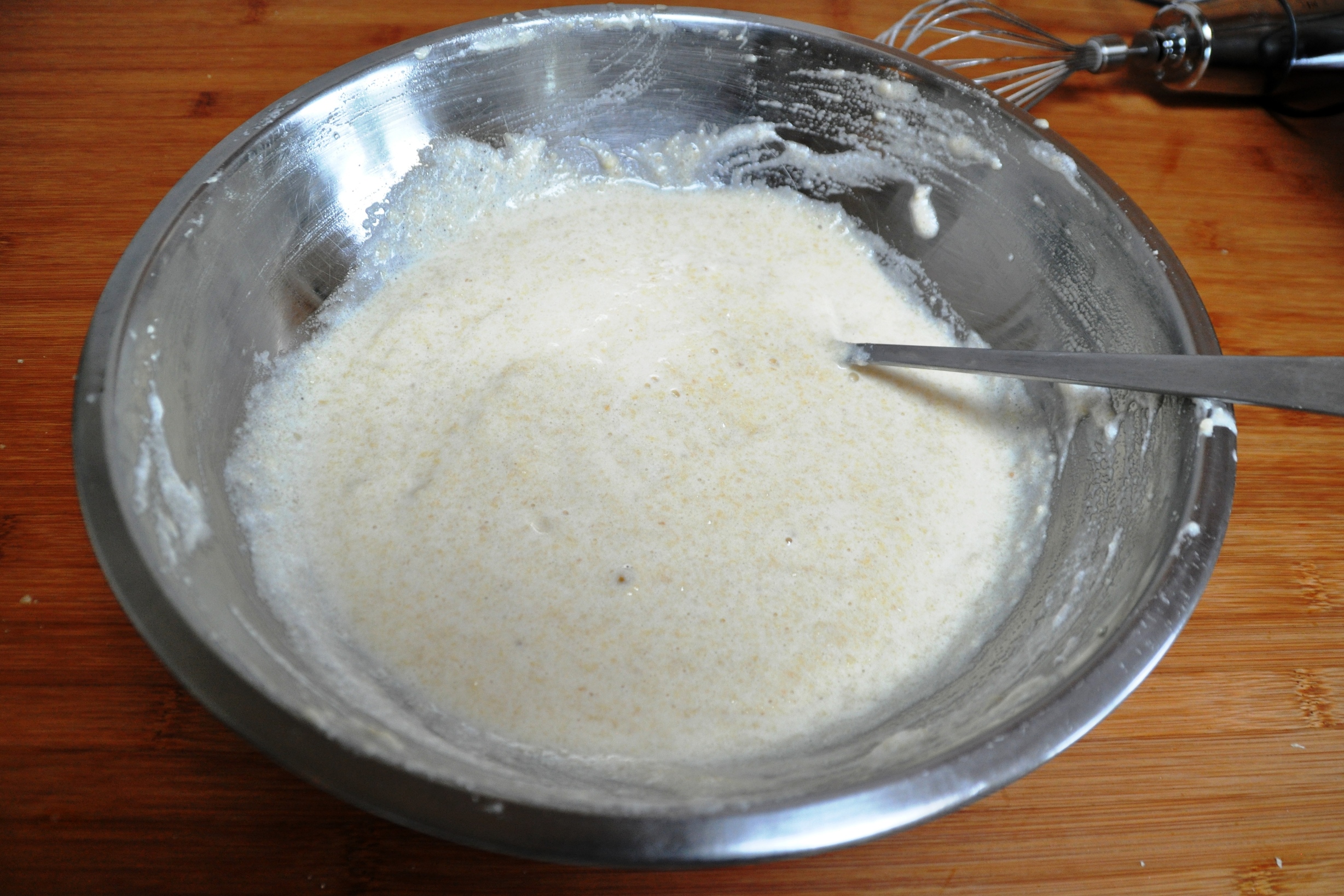
Add the egg whitesTorta de Santiago batter

8. Add the rest of the egg whites and fold in. Don’t beat! You want to retain the airiness.
9. Pour the mixture into the prepared tin.

Ready to bakeBaked
10. Bake for about 35-45 minutes, until the cake feels firm.
11. Let it cool in the tin then turn out.
12. Before serving, dust with icing sugar. You can cut out a cross of St James/Santiago to decorate the top. Have a look online for a shape to give you a template.

Torta de Santiago template, dusted with icing sugar

3 Comments

Filed under Cakes, Feasts, Pies & tarts, Recipes

Kubaneh – Yemeni Jewish breakfast bread

Kubaneh

The latest addition to my cookbook library is Honey & Co’s The Baking Book, by Sarit Packer and Itomar Srulovich. It has the same UK publisher as my friend Rachel’s Five Quarters (which boasts a couple of my recipes), so I went along to the launch event a few weeks ago, bought a copy, got it signed and have been trying out the recipes since.

I love enriched doughs, so I was drawn to the recipe for kubaneh. Sarit’s family has Egyptian and Yemeni connections, and this bread is from the latter culture, specifically it’s a Yemenite-Jewish Sabbath breakfast bread. Reading more about it now, it’s traditionally baked overnight in a sealed tin. While Sarit’s version bakes for a fairly long time, it’s not overnight.

Some versions include whole eggs, and can be eaten as more savoury affair, with tomatoes or a tomato dip, or skhug, Yemeni hot sauce*. This one is sweeter. It’s rich in butter (or smen/semneh fermented sheep or goat milk butter; or margarine, depending on your dietary restrictions and inclinations and shopping options) and drizzled with honey, which caramelises together slightly.

Why haven’t I heard of this before?! Just my kind of thing.

Notes
I’ve tweaked the process slightly and given the ingredients in a more consistent format, so as to also include bakers’ percentages (below).

It’s a fairly moist dough – the original recipe says 300-350ml water, but I split the difference at 325ml: 325g. That works out at about 65% hydration, so quite wet and sticky. Check out my post on handling sticky doughs.

For this baking vessel, they use a “traditional lidded aluminium pot” but say you can also use a 20cm fixed bottom round cake tin, with a “lid” made of foil.

I used fresh yeast. You could use 10g active dry/granular yeast instead. If you only have instant/powdered yeast, you don’t need to mix it with liquid first – just combine it with the flour.

The dough
60g light soft brown sugar
15g fresh yeast
325g water, at about body temperature
250g strong white bread flour
250g plain (all-purpose) white flour
6g fine salt

Plus
Vegetable oil
Unsalted butter, softened (or margarine or smen, if you can get it. Very unlikely here in England!)
Runny honey

Here is it in bakers’ percentages (rounded):

Ingredient Quantity Percentage
Light soft brown sugar 60g 12%
Fresh yeast 15g 3%
Water 325g 65%
Strong white flour 250g 50%
Plain white flour 250g 50%
Salt 6g 2.5%

1. Mix together the water, sugar and yeast. Stir to dissolve the yeast.
2. Weigh out the flours into a large bowl and add the salt.
3. Add the yeast mixture to the flour and bring together a dough. I don’t have a mixer, so my instructions are for doing it by hand. If you do, just mix until well combined and smooth.

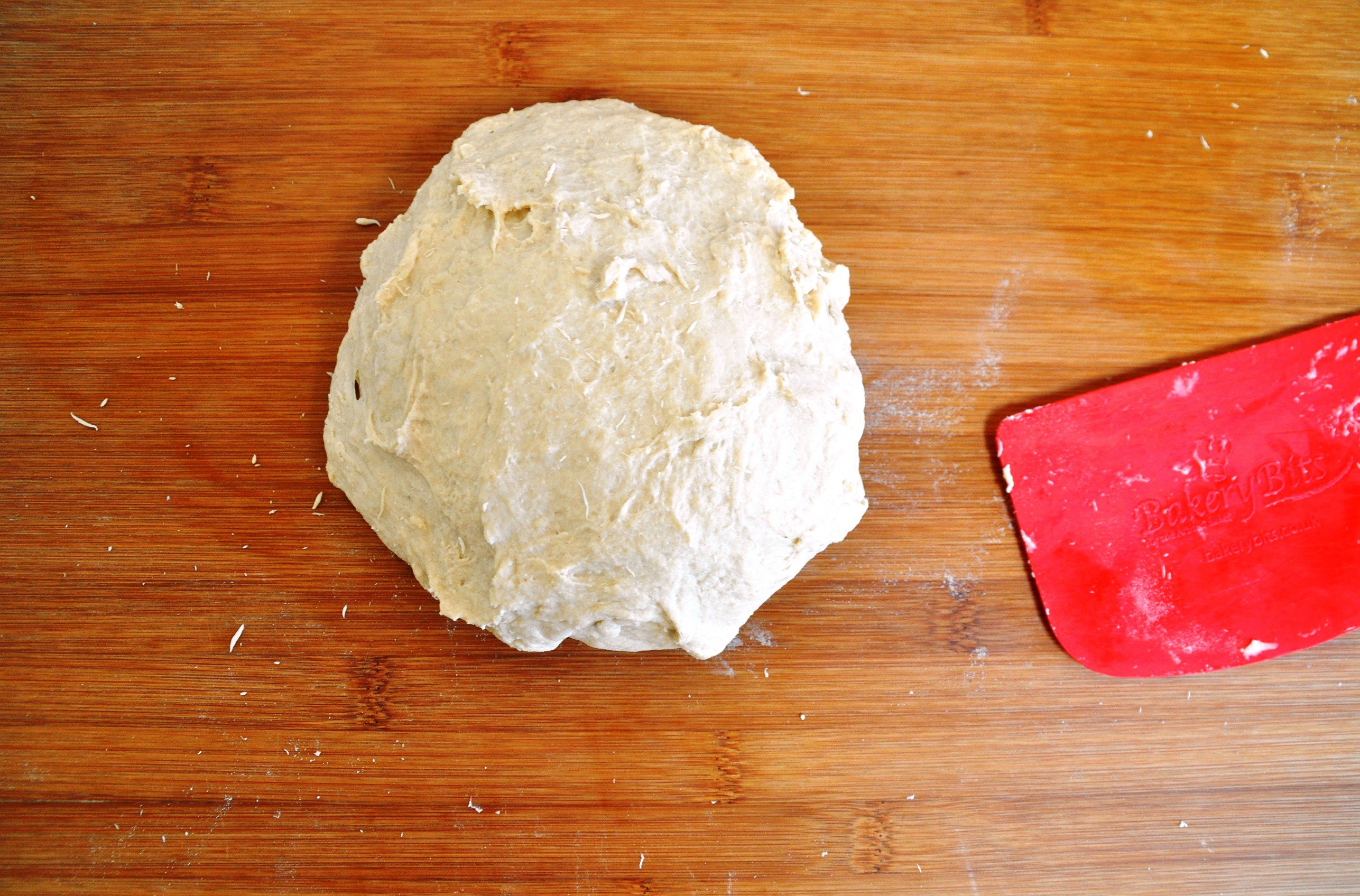
Kubaneh shaggy doughKubaneh - kneading doughKubaneh - smooth dough
4. Turn out the shaggy mixture onto a lightly oiled work surface and knead. I used the Dan Lepard technique of not kneading too much, then returning the dough to the bowl, cleaned and oiled, leaving for 10 minutes, then kneading briefly again. Repeat this twice more, then return to the cleaned, lightly oiled bowl.
5. Cover with plastic or a clean, damp tea towel and leave to prove for a couple of hours, or until doubled in size. The time will depend on the ambient temperature. It’s about 20C in my kitchen on a mild English summer’s day, and it took about two and a half hours.

Kubaneh dough - proved
6. While it’s proving, liberally grease the cake tin with butter, and grease the underside of the foil lid too. If you have a lidded pot, grease that similarly.

Kubaneh dough - slapped around
7. Sarit describes the next step as “the strange bit” – you moisten your hands then “flip the dough about in the bowl to knock it back”. Do it three times, keeping your hands moist.

Kubaneh dough - pieces
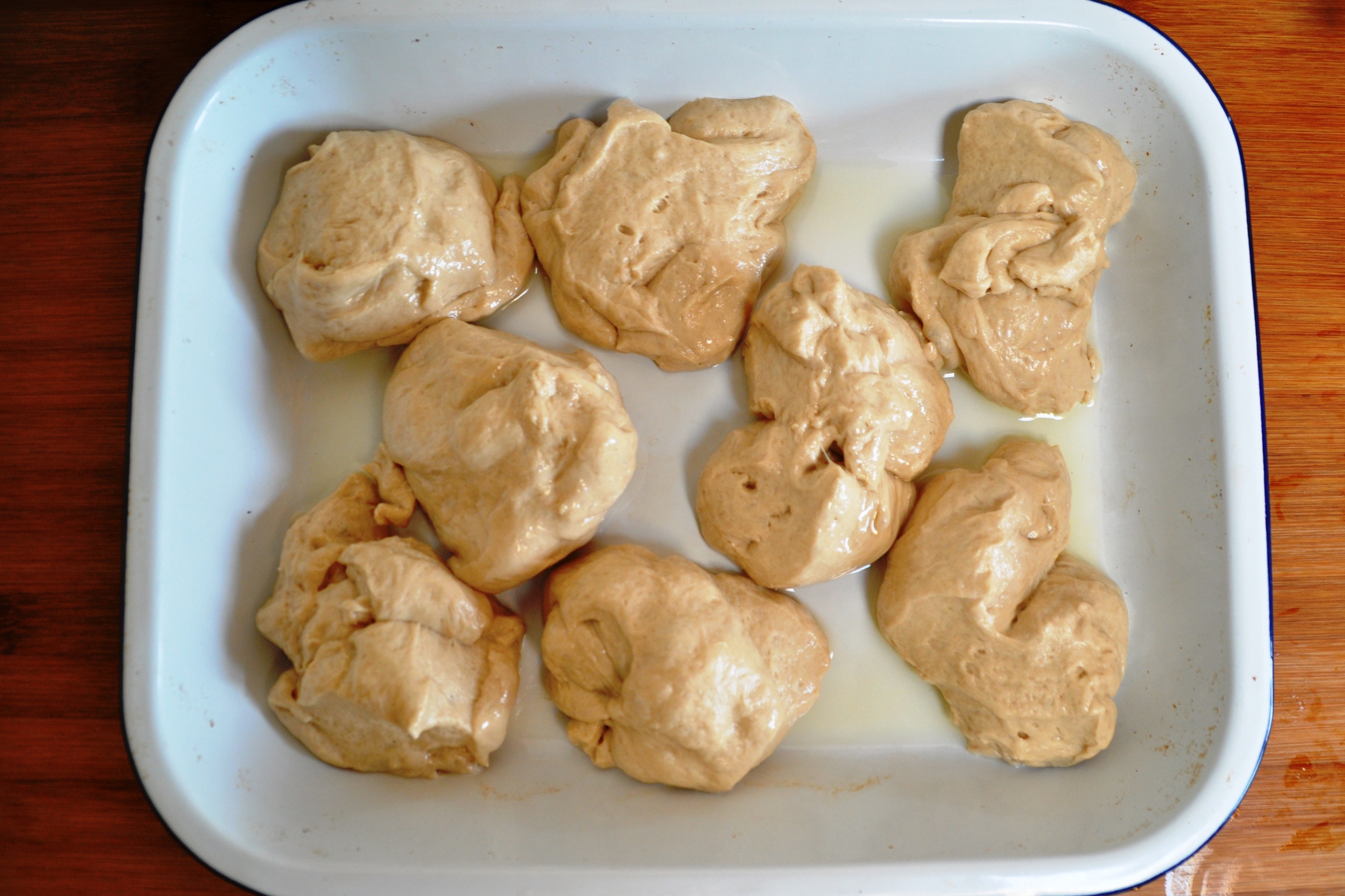
8. Oil a tray, then divide the dough up into eight pieces and place them on the tray. The dough weighs 900g, so eight pieces at around 112g.
9. Oil your hands a bit then take each piece, stretch it slightly, and put a blob of butter in the middle. I used pieces at about 10g, half a walnut size.
10. Smear the butter a bit then wrap the dough around it to form rough balls.

Kubaneh dough pieces in tin
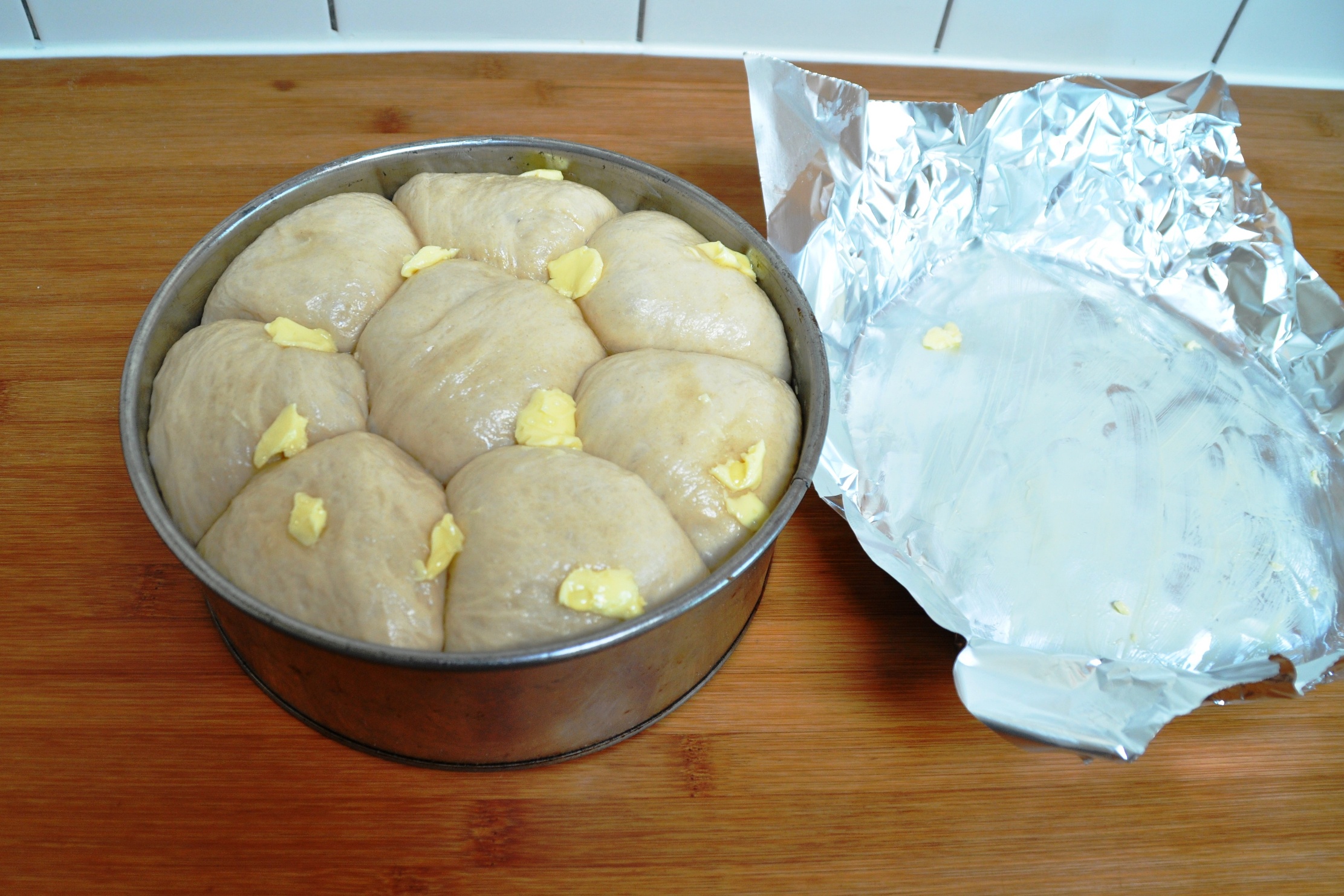
11. Put the balls in the prepared tin, one in the middle, the rest equally spaced around it.
12. Put some more flecks of butter on top, drizzle with honey then cover and prove again until the dough “almost reaches the top” – too high and it’ll “overflow when baked.” I drizzled a bit more honey and added a bit more butter before baking.

Kubaneh dough ready for baking
13. Preheat the oven to 220C.
14. Put the tin, with its lid, in the oven and bake for half an hour.
15. Reduce the heat to 200C and continue baking for another half an hour.
16. Reduce the heat again to 180C and continue baking for another half an hour.
17. Turn the oven off and leave in the oven “for at least an hour”.
18. It’s best served warm, so if you’re an insomniac and have been doing this all night, or proved it overnight in the fridge and baked it early, enjoy it thus.

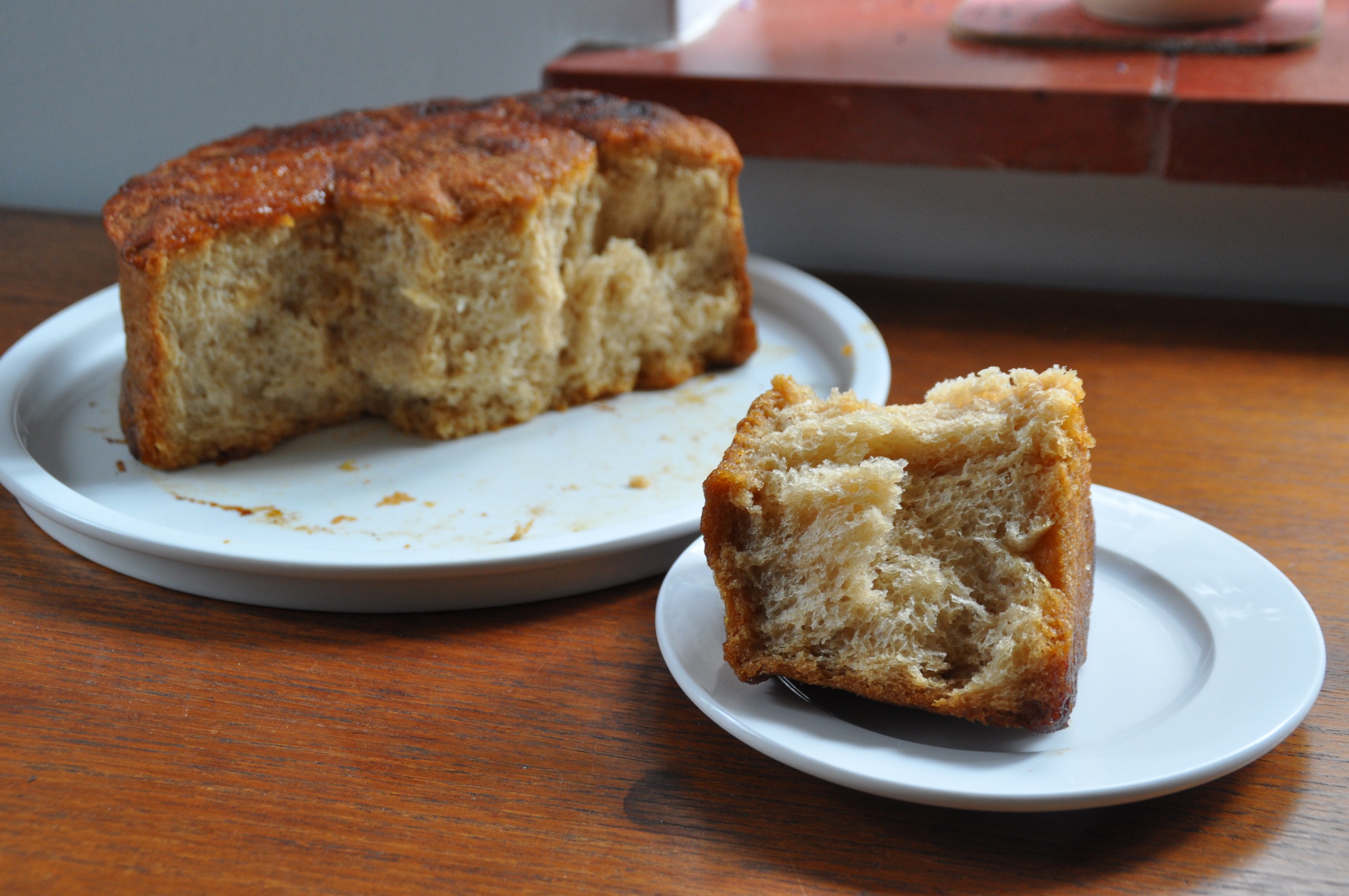
It’s surprisingly soft and chewy, and if you’re lucky, you’ll get nice caramelised bits. I won’t be doing it every week, but it’s a great addition to my enriched breads & breakfast bakes armoury. It’s also reminiscent of English lardy cakes, particularly the fruit-free versions from my part of the country, Hampshire and Sussex. Though obviously the fats used are a bit different for that gentile bake.

It’s also got me thinking about that most indulgent of fatty-sugary-doughy caramelised concoctions, the Breton kouign amann, which is more a pastry than a bread. Still, I might have to revisit that soon.

* Aka zhug, zehug; the Honey & Co The Baking Book also has a recipe for this, to accompany their lahooh, Yemeni pancakes.

5 Comments

Filed under Baking, Breads, Cakes (yeasted), Recipes

Toxins in our bread

An email from the Soil Association arrived in my inbox yesterday. It’s a petition…. no, no, don’t stop reading! This is important, especially if you eat grain-based foods* and, you know, don’t want to completely kill the environment and poison the food chain. It involves bread, and poisons therein.

For those who don’t know, the Soil Association is a UK charity that campaigns to promote organic farming as well as providing certification to farmers. Now, I broadly support organic practises for the common sense reason that using chemicals designed to kill living things in farming cannot be healthy for consumers – we are, after all, living things ourselves.

But nor do I completely reject non-organic farming, for a few key reasons. Firstly, people may be farming in a more traditional way but not want the strict restrictions that accompany certified organic farming. Secondly, I’m dubious about large-scale certified organic farming: it doesn’t seem dissimilar to non-organic industrial farming in its heavy use of fossil fuels, food miles etc. Thirdly, strictly organic systems may not be viable for feeding a global population of seven, eight, nine, ten billion.

Weedkillers in food
I’m not getting into these arguments now though as they’re complex. Instead, I want to promote is an awareness of this current Soil Association campaign. The email I received had a title “Not in our bread” with a subtitle that says, “Government tests show nearly 1/3rd of UK’s bread can contain weedkiller”. This figure is credited to a 2013 Department for Environment, Food and Rural Affairs (Defra) Pesticide Residues in Food (PRiF) report. After the same report, a news story last year said “63% of the loaves analysed in 2013 contained traces of at least one pesticide and that contamination has run at these levels for at least a decade.”

That’s shocking by any reckoning. Shocking, though probably not surprising. Since the two world wars, those of us in industrialised countries, then since the so-called “Green Revolution” those in developing countries, have embraced industrial farming methods that rely heavily on chemical inputs. We’ve known for a long while that such things are toxic, and such toxics are having an effect on the environment – getting into the water table, changing (damaging) the ecology of waterways, effecting animal and insect populations**. But we’ve been complacent about the effects, as if increasing crop yields and pushing down food prices are the only things that matter. Well, sure they matter – but poisoning ourselves and our environment matters too. Just a bit.

Is cheap, plentiful food worth it at the cost of our health and that our the environment?

Damaging our genes
The problem being addressed by this petition relates to glyphosate, a weedkiller. The chemical was discovered in the 1950s then Monsanto recognised it as a weedkiller in 1970. (A great way to commemorate the year of my birth; thanks Monsanto.) It was considered to have a comparatively low toxicity to animals, and became the key ingredient of commercially available weedkillers, most notably in Monsanto’s proprietary weedkiller Roundup.

Now, I never eat shitty industrial faux-bread and wheat-based products and I try to buy organic flour for my bread, but when I’m skint, I do resort to cheaper flours. And these will almost certainly have come from wheat crops nuked with such toxins. It’s a worrying thought.

The Soil Association says, “Government figures show its [glyphosate’s] use in UK farming has increased by a shocking 400% in the last 20 years. Nearly a third of UK cereal crops (over 1 million hectares) were sprayed with glyphosate in 2013.” It’s used on crops too, as well as in parks and gardens.

The Soil Association email also says, “Farmers spray the weedkiller pre-harvest, in order to kill and dry the crop and reduce weeds for easier harvesting. But, The International Agency for Research on Cancer [IARC] – part of the World Health Organisation – has recently identified glyphosate as a probable carcinogen.”

Professor Christopher Portier of the IARC says, “Glyphosate is definitely genotoxic.” That is, it damages your DNA. Furthermore, proprietary weedkiller mixes may be even worse. Dr Robin Mesnage of the Department of Medical and Molecular Genetics at Kings College, London, said at a Westminster briefing, “We know Roundup… contains many other chemicals, which when mixed together are 1,000 times more toxic than glyphosate on its own.”

It sounds like most of us will already be consuming products containing these toxics, and it’s unlikely that’ll stop any time soon. Some nations have already moved to ban glyphosate products, though in the UK, the Soil Association is initially just trying to exert pressure to stop the pre-harvest spraying, which would be a step in the right direction. If you would prefer to reduce the amount of toxins and carcinogens in your food supply, sign the petition.


* Like any sane, non-coeliac, person should.
** Insects that are food for other animals and insects that are pollinators. Such side-effects of large-scale industrial farming are quiet catastrophes that are already proving to have consequences. Another group of toxic chemicals used in agriculture, neonicotinoid insecticides, has been connected with the severe decline of bees recently. No bees to pollinate = no crops such as fruits, brassicas (from broccoli and cabbage to mustard and oilseed rape), coffee, onion, sunflowers, various beans/peas/legumes etc etc etc etc. Check out a comprehensive list here.

Just as I wrote this, we had some (more) terrible anti-sustainability news here in the UK: the government has ignored scientific advice and softened rules on neonicotinoid use. They’ve granted a derogation, allowing farmers to spray it on oilseed rape crops. More info here. It’s a difficult one as farmers have got used to this chemical-industrial approach to cultivation, and struggle when they’re banned, but such toxins aren’t the answer. Surely with a combination of traditional knowledge garnered from millennia of farming and modern science we can find sustainable solutions?

1 Comment

Filed under Breads, Discussion, Misc

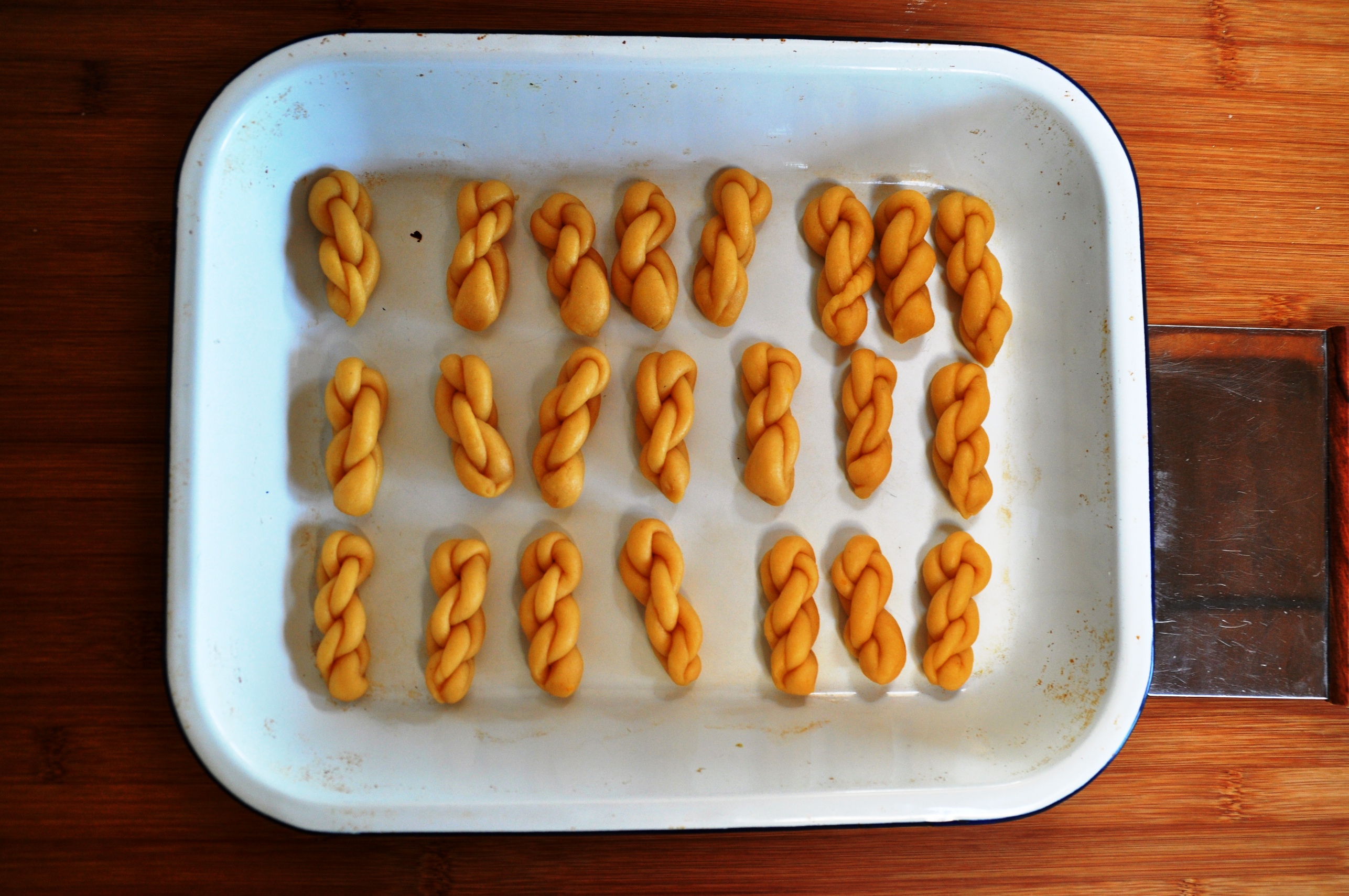
Acciuleddi – Sardinian deep-fried sweet pasta

Acciuleddi, drizzled with honey

We first encountered acciuleddi on our holiday in Sardinia a few weeks ago. They’re a form of sweet, deep-fried pasta and as such are a cousin to frappe, which are found on the Italian mainland. I ate a lot of frappe in Rome, when they would appear in shops for Carnevale – the blow-out before the fasting period of Lent, the run-up to Easter in the Christian calendar.

Pasta, deep-fried then sweetened? What’s not to like? Well, perhaps such things aren’t brilliant for your arteries so it’s good they’re just eaten for Carnevale. Except of course it wasn’t Carnevale in June for our holiday, so I think the proprietress of the Gallurese (northern Sardinian) bakery we bought them, La Panetteria del Porto in La Maddalena, from was bending the rules slightly.

If she can do it, so can I. Though I wouldn’t normally endorse eating celebratory seasonal or feast-day foods at the wrong time of year. It’s as obnoxious as British supermarkets stocking hot cross buns all year round. They cease to be special if they’re on the shelves all the time.

Sweet pasta
The very concept of sweet pasta may be a bit weird for staid Brits, but I just couldn’t resist a crack at these, given my love of frappe.

Looking at Italian – and Sardi – recipes, the pasta generally seems to be made with semola rimacinata di grano duro – that is fine, “re-milled” semolina (Triticum durum) flour. That’s not something it’s terribly easy to source here in the UK, so I went for a mixture of 00 flour for the fineness, and normal (ie medium milled) semolina for some robustness.

Also, the pasta does seem to have been traditionally made with strutto – lard. Now, I don’t have a problem with lard in principle, as I do eat some meat and as it was a key ingredient for older, traditional British baking (such lardy johns, or the more well-known lardy cake). The thing is, I try to only eat meat where I know the provenance, and generally that means from people we trust who have a farm nearby. I hoped they’d do some lard, but they just don’t have the demand. Instead, the only readily available lard in small-town England is foul crap spat out by the grotesque industrial meat machine, and I don’t want to use that. Instead, I’m going for all eggs, which some of the Italian recipes I researched also did.

So really, it’s just a pretty basic egg pasta – with the familiar ratio of 1 egg to 100g flour. Though with a little added sugar and some lemon zest.

Then deep-fried.

Surface & tension
The best surface for making fresh pasta is marble, the next best is stainless steel. I don’t have either, so I just used my bamboo worktop, rubbed with a bit of oil, as I do when making bread. It worked fine.

150g 00 flour
50g semolina
20g icing sugar (or caster)
Pinch salt
Zest of half a lemon (optional), finely chopped
2 medium eggs (about 110g total yolk & white)
Extra water, or egg, if mixture is too dry
Oil for frying

1. Sieve together the flours and icing sugar, add the pinch of salt and lemon zest.
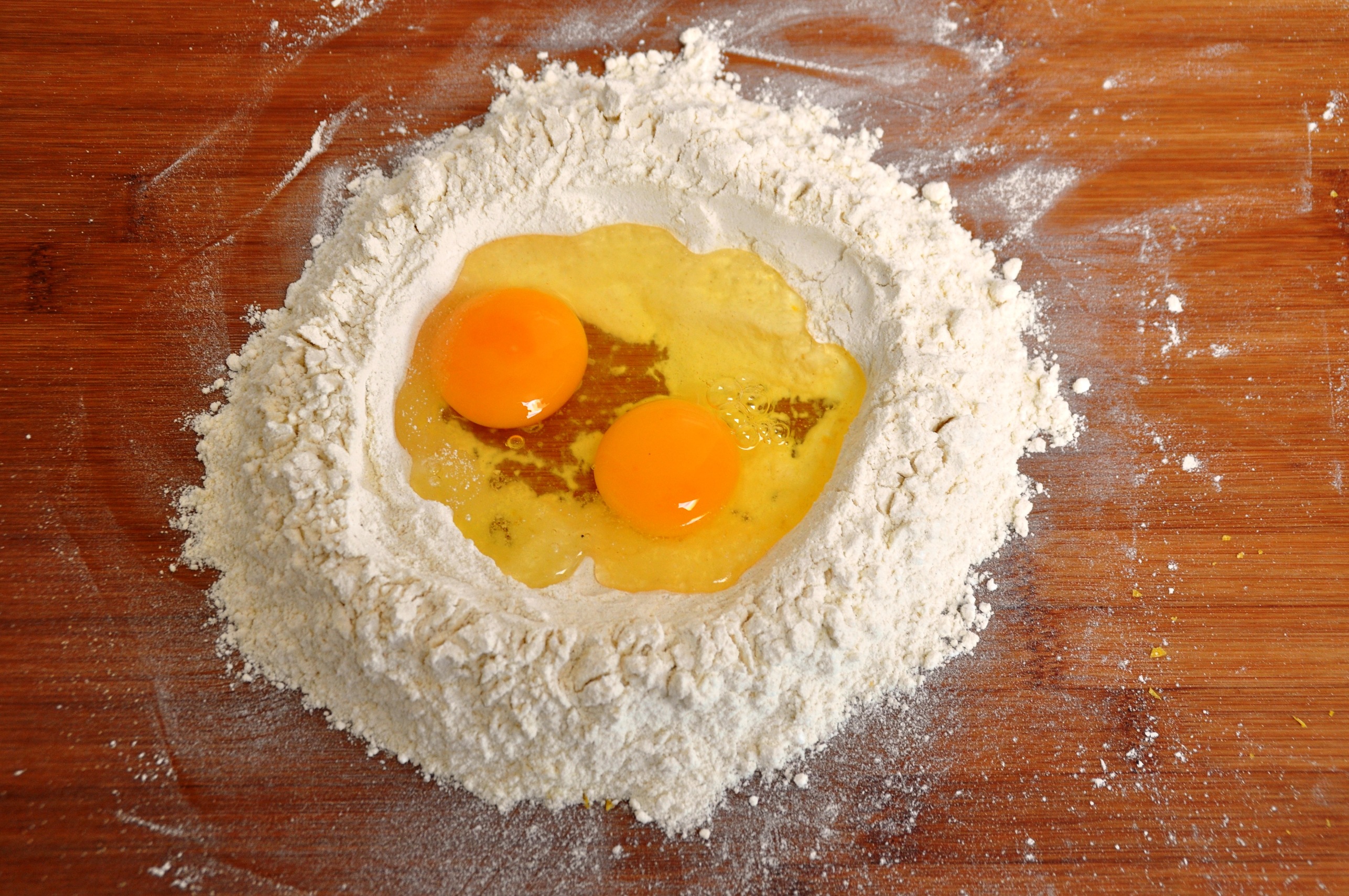
2. Form a mound on your work surface.
3. Create a hole in the middle of the mound, much like the gaping mouth of a miniature volcano. Or like when you’re making concrete by hand.
4. Crack the eggs and put in the hole. You can of course do all this in a bowl, but there’s something very satisfying about eggs in a mound of flour..

Making acciuleddi pasta 1Making acciuleddi pasta 2
5. Using a fork, whisk up the egg, then starting combining the flour. Try to keep that wall around the edge intact, and add the flour bit by bit.
6. When the dough is starting to get quite thick, bring the rest of the flour into it by hand.

Making acciuleddi pasta 3Making acciuleddi pasta 4

7. Knead the dough until smooth, then form a ball, wrap in plastic and rest in the fridge for about half an hour.
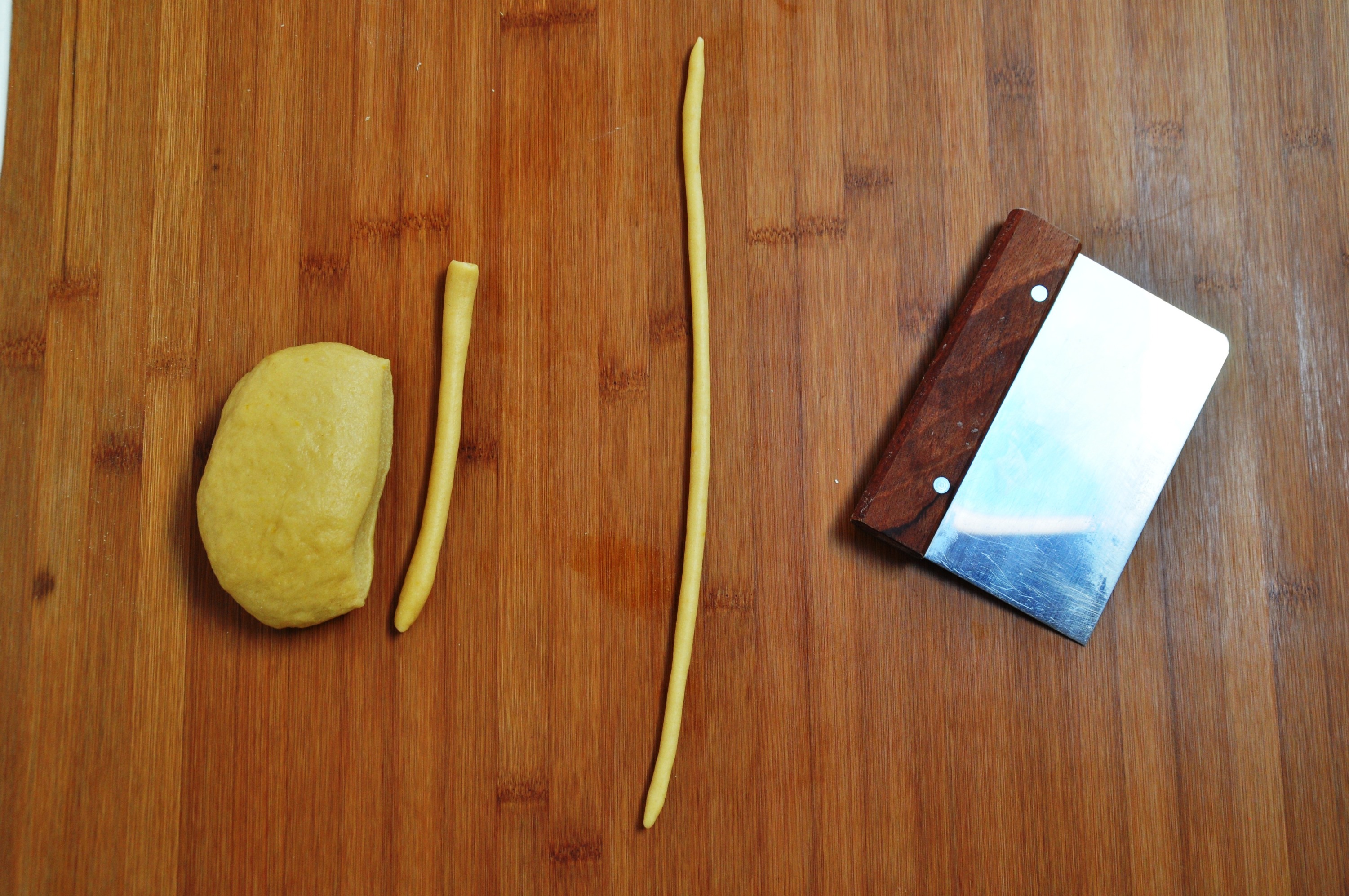
8. Take the dough out and cut off small pieces. Mine weighed in at about 15g.

Acciuleddi pasta ballAcciuleddi cutting pasta
9. Take a piece and roll it out to form a long snake. Mine were about 300mm long, 5mm wide.

Acciuleddi, roll outAcciuleddi, roll out
Shaping acciuleddi 2Shaping acciuleddi 3

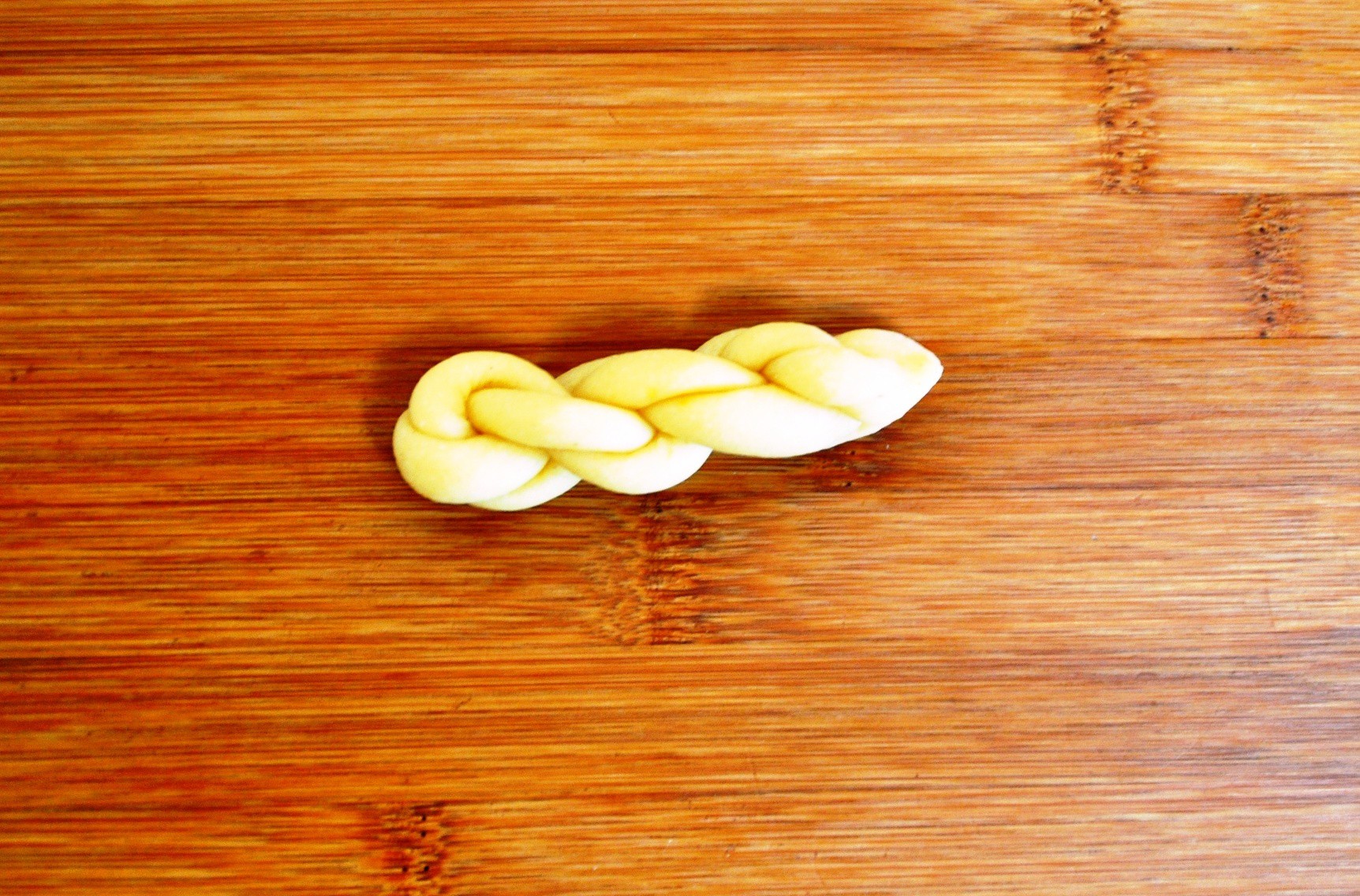
10. This is the tricky bit, so I’ve also made a video. It’s my first video and it’s not exactly slick, focus is an issue, going out of frame is an issue, and it is entirely un-edited, sorry. But it might help.


11. Anyway, you take the snake and join the two ends together.
12. Gently roll one end, while holding the other end still, to form a spiral. There will be some tension in the spiral – retain it.
13. Now, join the ends together again and that tension should cause it to spiral around itself again – creating a kind of double helix. Help it on its way as needs be.
14. Squeeze together the join.

Acciuleddi ready for frying
15. Put the acciuleddi on a tray or plate, lightly dusted with flour or semolina, and cover while you make the rest so they don’t dry out.
16. Heat oil for frying. I used sunflower oil, though I imagine the most authentic, original ones were fried in lard too. You want it at 180C or thereabouts, if you have a thermometer or fryer with a dial. If not, throw a small piece of dough in. If it bubbles, bobs to the surface and browns within a few minutes, you’re good to go.
17. Fry the acciuleddi in batches until browned.
18. Drain and put on some absorbent paper.

Acciuleddi, drizzle with honey
19. While they’re still warm, pile them up and drizzle them liberally with honey. I used some from our friends’ hives, from when they were in south London. I’ve been saving it for a special occasion. This seemed like one.

The results were good. Sweet, crunchy and simultaneously indulgent and undemonstrative. They were a bit chunkier than the ones we bought from La Panetteria del Porto, so if you want to make more refined, smaller ones, use pieces of dough weighing about 10g and roll that snake even thinner!

I want to go back to Sardinia now.

6 Comments

Filed under Feasts, Misc, Other food, Recipes

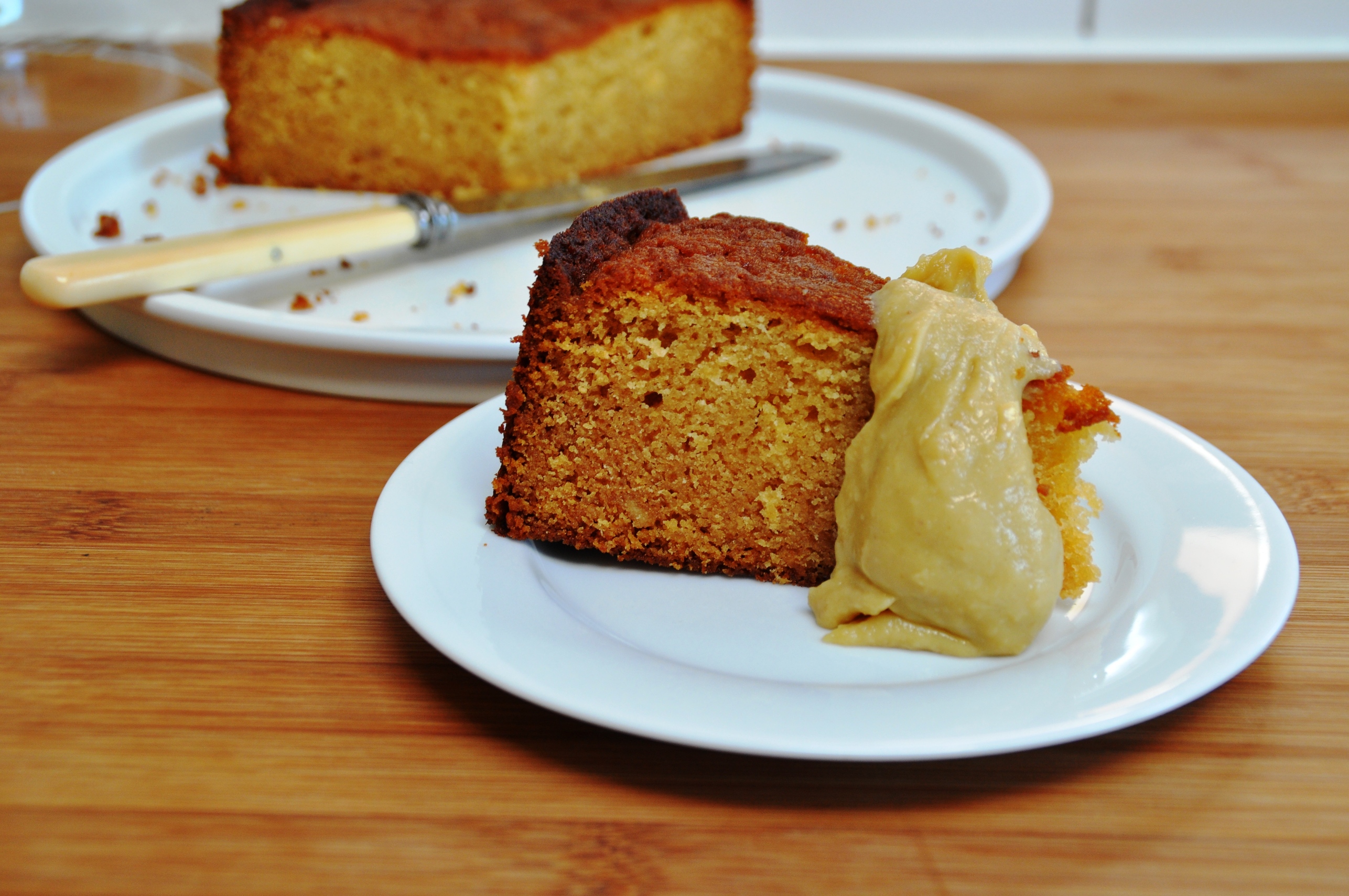
Triple ginger cake

Triple ginger cake

Last week, I made a batch of khobz for my friend Alex, who has started up a market stall. His operation (Kabak, named after a place he loves in Turkey) specialises in Eastern Mediterranean, Middle Eastern and North Africa inspired foods and very fine they are too. In you’re in Lewes, look out for him Friday mornings at the market.

Coming home from helping Alex break-down the stall, I got to thinking about sweets inspired by similar cuisine. The classics are baklava and suchlike pastries, as well as cakes like the syrupy basbousa/revani. But I wanted to try something new, so reached for the cookbooks.

Arabesque* by Melbourne-based Greg and Lucy Malouf is subtitled “Modern Middle Eastern Food”, which is a good way of saying it’s not trying to be slavishly traditional or authentic. I’m not sure if his sticky ginger cake relates to any specific sweet the Middle East at all, but it’s a pleasing concoction that uses both powdered and fresh ginger. I like crystallised/candied ginger, so I added some of that too, hence the name.

Golden syrup

Golden age
It also uses golden syrup, arguably a quintessentially British ingredient and one I love, from a childhood of ginger biscuits and steamed syrup puddings.

It was invented in the late 19th century as a by-product of sugar refining. In Britain, we still mostly use the Lyle’s brand in the green and gold tin. The tin still bears an image of a (dead) lion and a swarm of bees, with the Biblical slogan “Out of the strong came forth sweetness”, as it did when it was first marketed in 1885. (See Judges 14 for the full peculiar, gruesome yarn.)

Lyle’s golden syrup became a popular product in early 20th century Britain. This is in large part, I suspect, as with two world wars and food shortages it was a cheaper, more available alternative to refined sugar and a sweeter, less bitter alternative to molasses and black treacle.

So golden syrup isn’t a terribly Middle Eastern ingredient, but I suspect Greg Malouf uses it as a way of emulating or echoing the stickiness many more traditional sweets from that area achieve with a syrup poured on after baking.

220g golden syrup
170g sour cream, or yogurt (I used a half-half mix of double cream and yogurt)
2 eggs
100g soft brown sugar
About 50mm of fresh ginger, finely grated
80g crystallised ginger, roughly chopped
Zest of one lemon
280g unsalted butter
130g plain (all-purpose) flour
130g self-raising flour
1 tsp baking powder
1/2 tsp fine sea salt
2 tsp powdered ginger

1. Grease and base line a 20cm tin, ideally spring-form.
2. Preheat the oven to 180C.
3. Warm together the butter and golden syrup until the former is melted then beat this with the cream or yogurt, sugar, eggs, grated ginger, crystallised ginger and lemon zest.
4. Sieve together the flours, baking powder and powdered ginger then sieve again, into the mix, and fold to combine. Try to mix in any lumps of flour but don’t beat it.
5. Pour the mixture into the prepared tin and bake for about minutes. Test to see if it’s baked with a skewer – does it come out clean? If not, return to the oven for a bit longer. If it’s starting to get too brown on top, cover with foil.
6. Remove from the oven and allow to cool in the tin, then turn onto a rack to continue cooling.

Arabesque suggests serving it with what they call ginger cream – which is really a ginger custard. It doesn’t look that appetizing in the pic, but – it’s custard! With ginger!

About 30mm section of fresh ginger, finely grated
150g double cream
1/2 tsp powdered ginger
40g soft brown sugar
2 egg yolks

1. Whisk together the egg yolks and brown sugar.
2. Warm up the cream and gingers in a saucepan, and heat to scald – ie just as bubbles appear, but don’t boil.
3. Pour the cream over the egg and sugar mix, whisking.
4. Put the mixture back in the pan and continue whisking, over a low heat, until it thickens.
5. Put in a clean bowl and allow to cool.
6. When ready to serve, whisk (or indeed whip) to increase the volume a bit.

Serve with the custard. It’s also very nice with clotted cream. But then everything is.

Anyway, this was good, but when it comes to Middle Eastern and Middle Eastern-inspired baking and sweets, what I really need on my bookshelf is the new The Baking Book from Honey and Co. Hopefully it will be there soon.


* Not to be confused with Claudia Roden’s book with the same title and similar theme.

7 Comments

Filed under Baking, Cakes

Sardinian holiday – dinners and despair

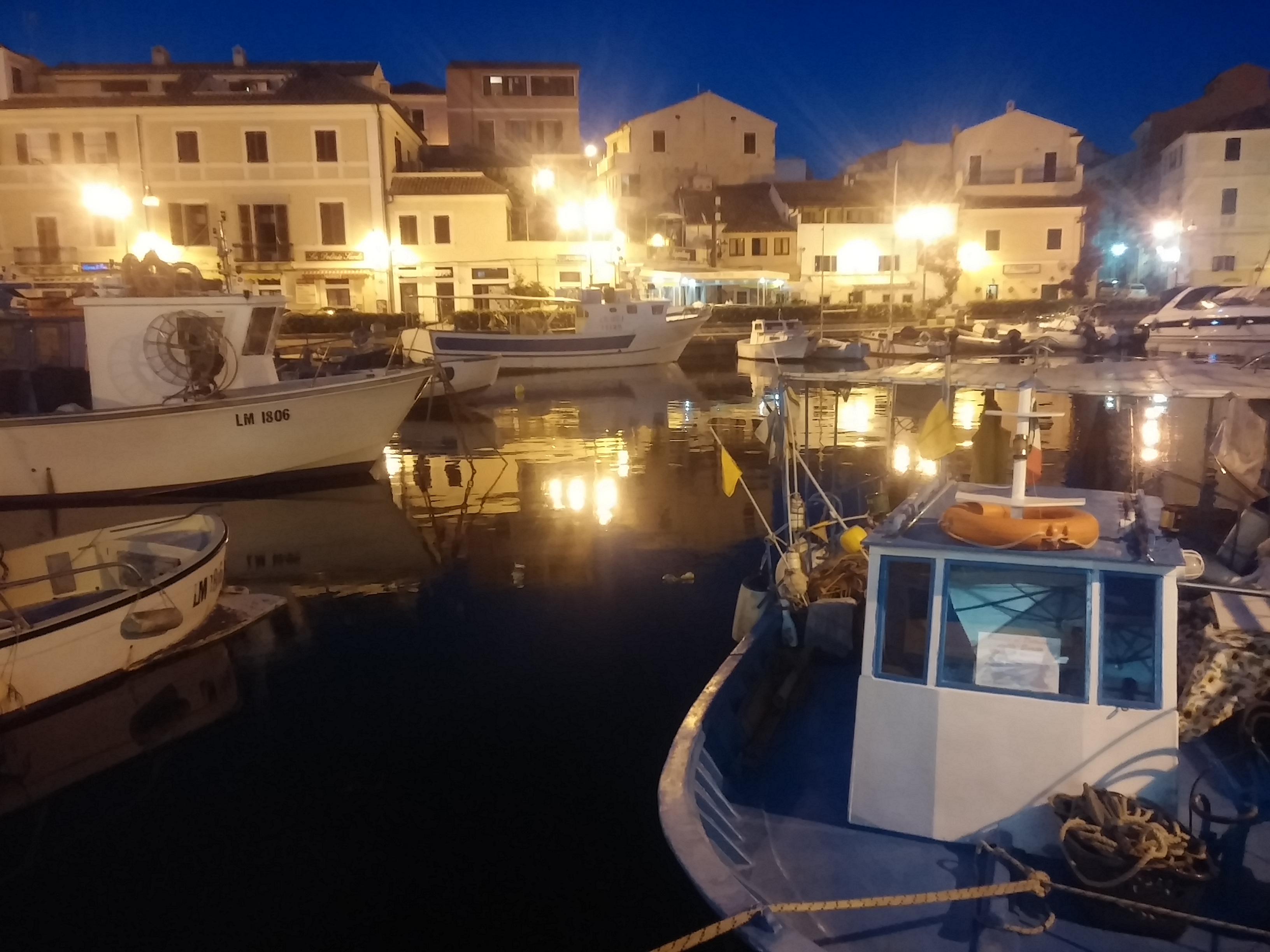
Fishing boats and Il Ghiottone (centre rear), La Maddalena

Talking about the evening meals we had on our holiday in La Maddalena, Sardinia, probably isn’t quite in the bread, cakes, ale purview, but it connects with something that troubles me deeply. And, well, we did eat bread. There’s always bread with Italian meals.

Whenever we go to Italy, I despair somewhat getting home and looking at our eating scene here in England. Now, I’m in small-town England, but it is a fairly affluent small town, not far from London – yet even here it’s hard to eat well at a reasonable price.

I’m not suggesting that Italy doesn’t have bad food. There are plenty of terrible restaurants in Rome, plenty of junk ready meals in the supermarket, plenty of engagement with the pervasive corporate-industrial food complex. But on our trip to Sardinia we were able to stay in a small town and still find places serving real food, made with fresh, local ingredients, at a reasonable price.

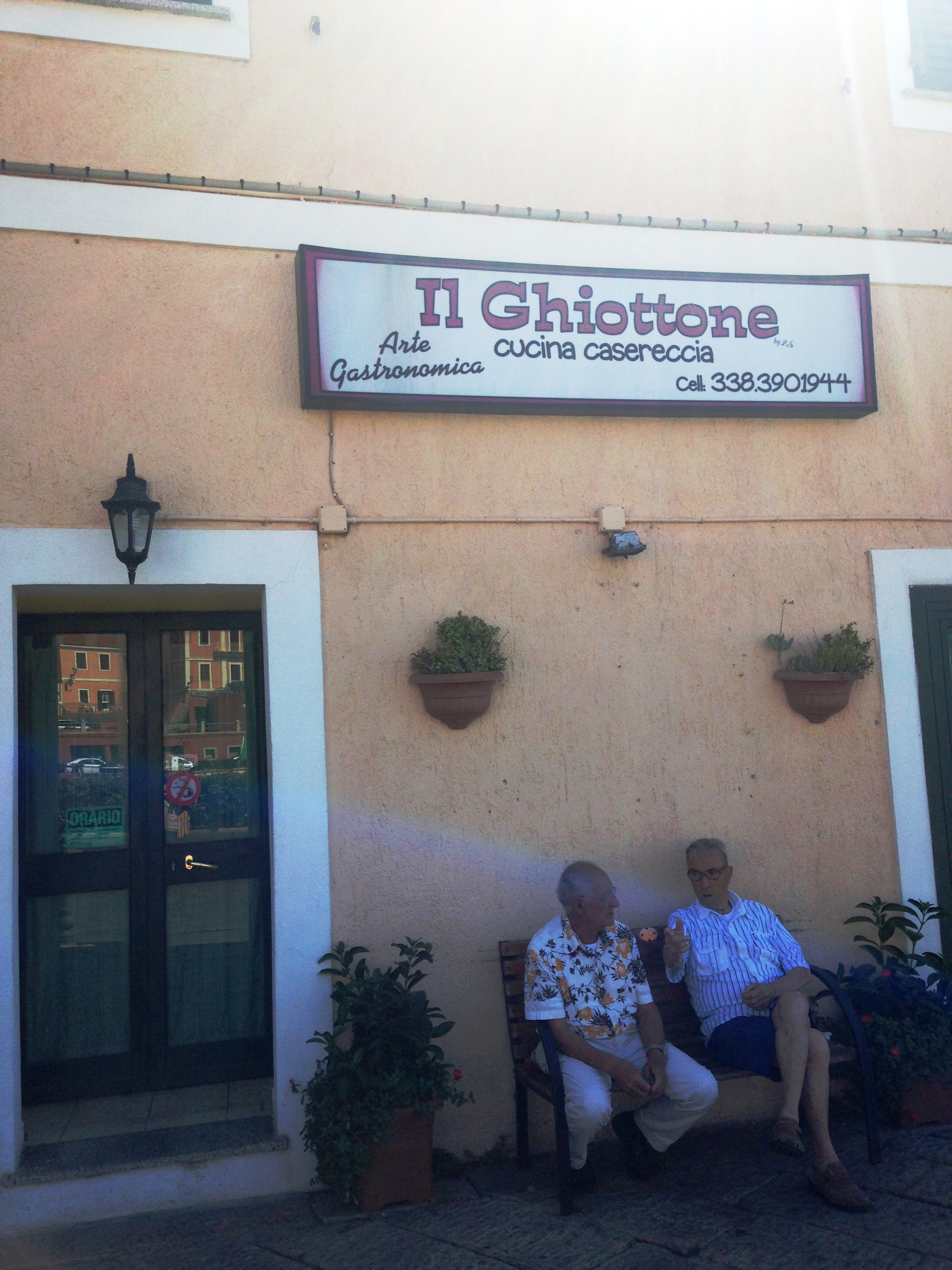
Geezers outside Il Ghiottone

The big gourmand
We had a few average meals in Sardinia, but we also had three excellent ones, two in the same place. This was Il Ghiottone, a tiny bunker of a restaurant with just 15 seats, on Via Guglielmo Oberdan, the quayside. You almost certainly have to book.

The name, I believe, means the “The big gourmand”, and it’s definitely a place for people who enjoy food – real food. The main emphasis, understandably, is on seafood. The restaurant faces the harbour, and Giorgio the co-owner with chef Paola, even offered to point out the fishing boat that supplied them, a small vessel moored about 10 metres away from where we were eating.

Giving thanks to the gods of food

The first time we stuck with antipasti (starters) and secondi (main, “meat”, courses), the second time we went for the primi (pasta or stodge courses – Italians generally don’t like their meat and potatoes on the same plate). We had a brilliant mixed seafood starter, the highlight of which was probably mussels served with a small amount of pickled or macerated red onion on top. Now, normally, we both dislike mussels, but these were great. I also had paranza – deep-friend whole small-medium fish. The sort of fish that in many places (eg here) would be by-catch, thrown back into the sea dead. It was great. The tails were the best bit.

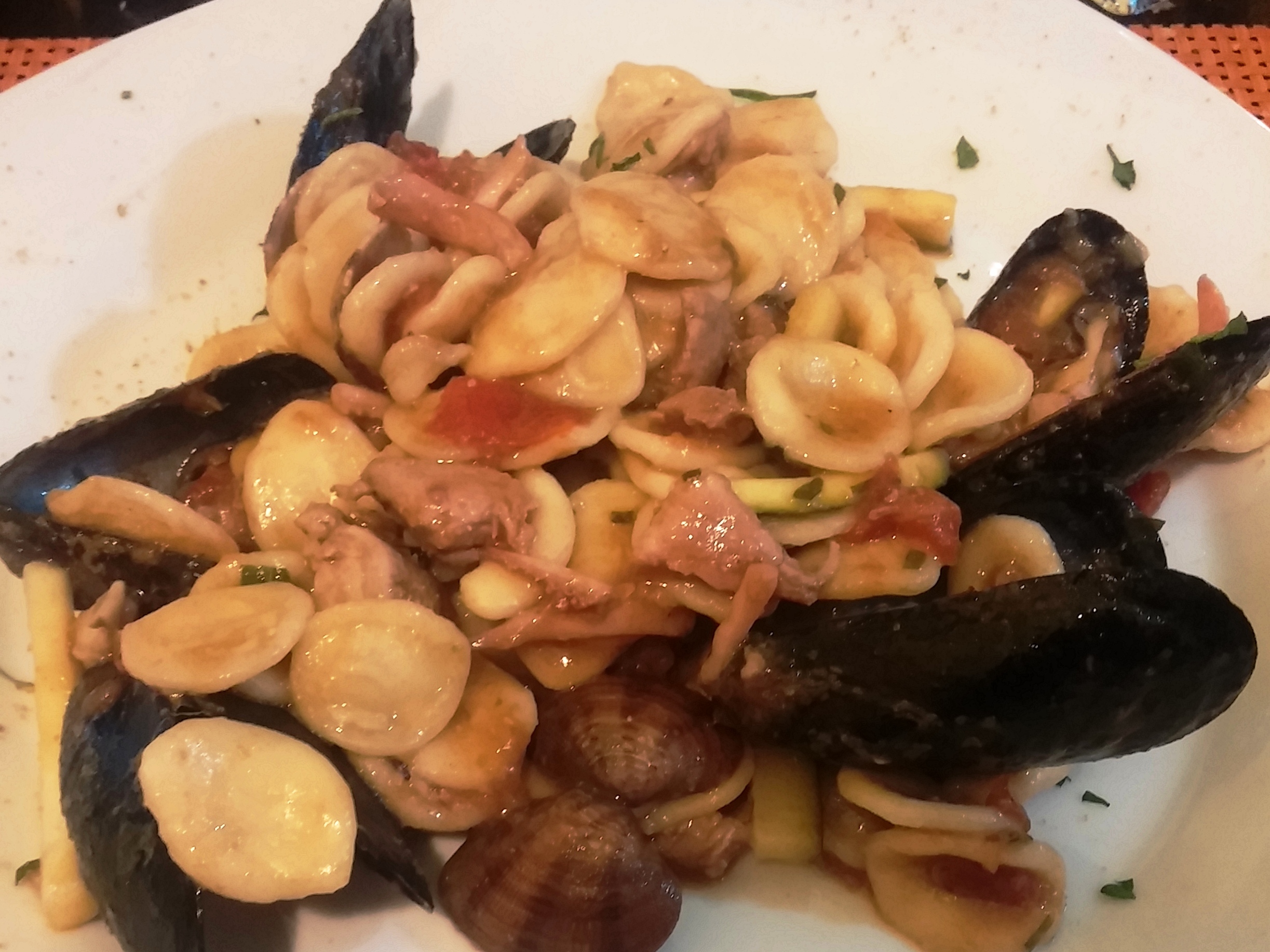
The second visit we had their pasta. They called it manccaroni, a word that’s presumably avariation on macaroni. To most Anglophones, this just refers to small tubular pasta shapes used for macaroni cheese (aka mac ’n’ cheese). I’m not going to go there with the etymology of the word (see Wikipedia if you’re interested), but historically it was used more generally for various pasta shapes. In the essential book on Italian food history Delizia, John Dickie says, “Maccheroni, spelled in a variety of ways, was the most popular medieval pasta term.” In this case the freah, pasta was in little ear shapes – orechiette. These were freshly made and served with mixed seafood. It was stupendous. I want more right now. I’m suffering as that’s not possible. The crappy phone photo doesn’t even come close to doing it justice.

Il Ghiottone pasta

We also tried our first seadas at Il Ghiottone. I’d not encountered this Sardinian dessert pastry fritter, or fried sweet pasta, before. It’s a palm-sized concoction, with a crimped edge, citrusy cheese filling and honey drizzle. It’s good. Not sure I could eat it every day, but I’d definitely eat it again. In fact, I did, a few days later at an otherwise very inferior meal in Olbia.

Looking up seadas now, many recipes use “pecorino” for the filling, but this is such a broad family of sheep milk cheeses – not just the salty parmesan equivalent you get here. I asked Giorgio about the cheese and he said “vaccina” – cow’s milk cheese, more specifically a young, unsalted curd type cheese. I had this corroborated later on an ingredients list on a packet in the surprisingly good airport shop – cagliata vaccina, cow’s milk curd cheese. I’ll have to scratch my head about sourcing that before I try making it at home.

Seadas

The pleasure of these meals was completed by being given a digestivo on both occasions – firstly mirto, then what Giorgio called “acqua sarda” – literally “Sardinian water”, but used in the same sense as eau de vie, the potent French “water of life”, or the Latin aqua vitae. Serious xenomorph blood, like grappa. Yowza.

Street barbeque
The other great meal we had was just round the corner. We’d walked past Da Ninì, Via Vittorio Emmanuele, several times and I’d been intrigued. I was particularly drawn by the brief whiff of a menu – a few scribblings on a board on the roadside, another on the frontage.

A small menu is generally a very good sign. A long, long menu can be the exact opposite – indicating no consideration, no variation and a dubious relationship with the industrialised food chain. With the implications of the latter a prioritising of cheap-as-possible over quality or seasonality.

Basically they were just serving fish, caught a few miles away, unloaded down the road, and cooked on barbeque set up on the road-side. The best seafood I’ve eaten in my life has had this sort of immediacy – mackerel we caught ourselves in Devon as kids; prawns in a Hong Kong night market that we alive moments before; the first tuna steak I ever ate in Bali; mussels straight from the rocks in New Zealand. OK, maybe not the latter. We weren’t experts and, well, see above.

Barbeque and Fran at Nini'

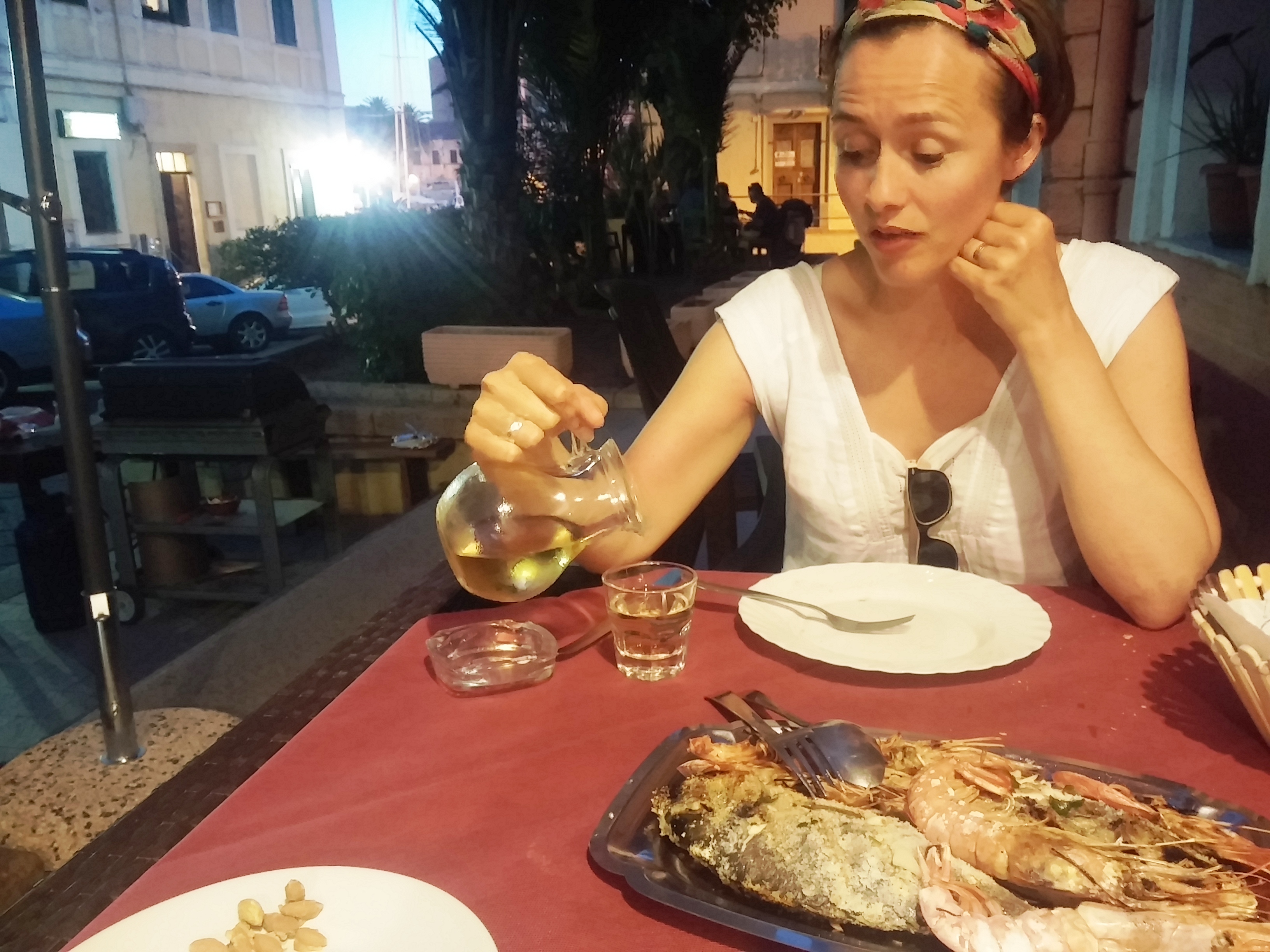
We had orata (bream; Sparus aurata) and spigola (seabass; Dicentrarchus labrax).* They had a salt crust and, well, that’s it. Fresh, simple, delicious. We also had some large prawns, which I doubt were local or sustainable. They’re among my fave foods, but I try not to eat prawns too much as they’re probably the most environmentally problematic seafood. Never mind the recent reports of slavery in the trade. I wish I’d asked, but it’s done now.**

These three meals were all excellent and frankly the ethical issue of a few prawns at Ninì is arguably minor in comparison to the ethical issues related to the large scale industrial food supply chain that most British restaurants and pubs engage with. I was about to rant about this issue more here, but I don’t want to sully my holiday memories, so I’ll save it for a later post.


(Check out my first two posts about this Sardinian experience: first and second.)


* If you’re on holiday in Italy and want to know what fish you’re eating, check out my list here.
** I won’t go into my attitudes to seafood here. I’ve done that before: here.

4 Comments

Filed under Discussion, Travelling

Sardinian holiday – snacks and sweets

Picnic with durum roll

Considering we only had about five days on this holiday, we did manage to do a pretty impressive amount of eating, drinking, sampling and culinary exploration.

I didn’t really know what to expect food-wise of not just Sardinia, which is culturally distinct from the mainland regions of Italy, but also the small port town of La Maddalena, on the island of the same name, off the northeast coast. But as I was very gratified to find some Sardinian craft beers, I was also very pleased to encounter some snacks and treats I’d never even heard of before.

La Maddalena is a town of about 20,000 people, yet it had at least half a dozen bakeries and pasticcierie. Compare that to a British town of a similar size – it might have one dreadful chain bakery stinking of powdered cheese and onion mix, and perhaps a fake bakery (where pre-made dough is simply baked off) inside a supermarket.

Needing picnics for our days at the beach, we went to the small market and stocked up on local salami and pecorino Sardo (various local variations on sheep’s milk cheese) then bought breads and biscuits from a bakery on Via Vittorio Emanuele, down by the port. Called La Panetteria del Porto. (Love the Street View here, with a dog wandering around in the middle of the road.)

Biscuits

It was a small, gloomy bakery with a padrona who seemed determined to sell us more than we asked for or needed. But hey, I’m a glutton for baked goods, so was an easy mark. There was a display cabinet packed with biscuits, sold by weight, and breads in niches against the back wall. We bought rolls – notably yellowy ones made with grano duro (durum wheat, semolina) and dark, grainy ones she simply called pane nero (black bread). Our picnics, tweaked slightly every day, were completed by Sardinian-grown melon.

Acciuleddi

From the biscuits, I chose the twisty ones – unfamiliar looking, unfamiliar sounding. These were acciuleddi – a word with that distinctive “dd”, which seems to be not just Sardinian, but even specifically gallurese, a language spoken in the north of Sardinia and the south of Corsica. Eating them, I discovered they’re not unlike frappe, the deep-fried sweet pasta I gorge on during Carnevale in Rome, but with the added bonus of being drizzled in honey. I will make some at home at some stage, as there are recipes available.

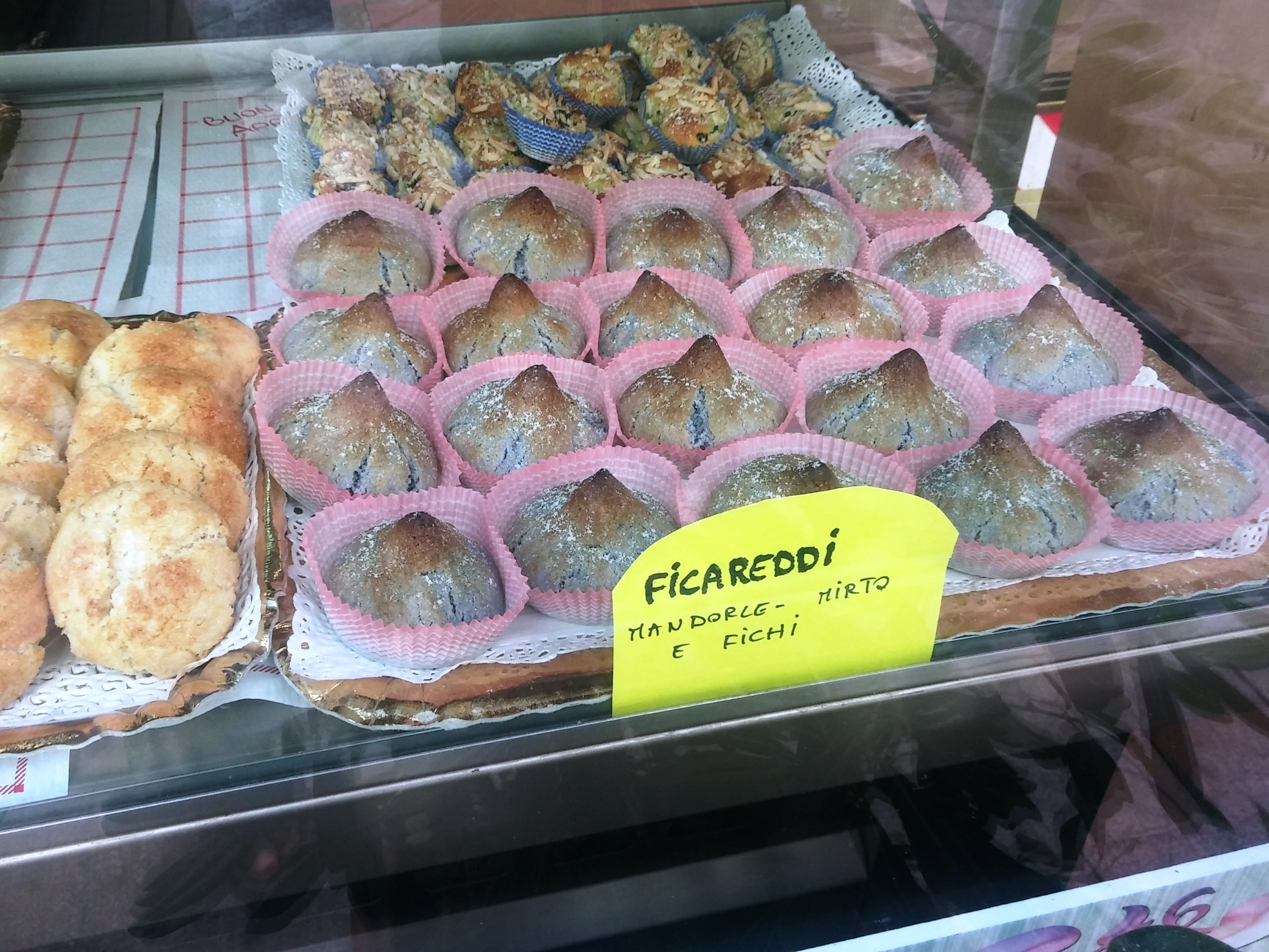
Ficareddi in window

Another biscuit-type treat we bought from another bakery, doesn’t seem to have any online traces. So it may not just be specific to this part of Sardinia, it may be a speciality of this one pasticceria, Abat Jour on the pedestrian-only Via Giuseppe Garibaldi. These were ficareddi – a kind of figgy macaron concoction with a peaked form. They’re made with ground almonds and liquore di mirto, the quintessential Sardinian digestivo made from the berries of common myrtle (Myrtus communis), a shrub we’d passed regularly on our walks in the macchia scrub.

Ficareddu bite

We also bought some bastone di cardinale (“cardinal’s staff” or “cardinal’s stick”), a kind of sweet salami made with dried and candied fruits and nuts. It’s a gift for our friend who looked after our cats and tomatoes so the padrona wrapped it up beautifully. Again – compare this with the experience you’d have in your local Greggs. It makes me weep for our impoverished food culture and culinary self-respect here in England.

Bastone di cardinale

The morning we were catching the ferry back to the mainland, we thought we’d better get a snack for the journey, so went to Paposceria L’ Isola che non c’é on Piazza XXIII Febbraio. No, I’d not heard of a paposceria either, and I get the impression I’m not the only one as they have a big sign outside explaining the meaning of the word paposcia. Basically, they’re another variation on the theme of snack flatbreads, related to pizza. The paposcia was the piece of dough used to test if a wood-fired oven was hot enough to start baking the bread. If the oven was ready, the paposcia would rise and bake well. “Per non sprecare nulla” – to not waste anything – it was then used to make a sandwich.

Paposcia

It’s not specifically Sardo, but neither is it something I’d ever encountered in Rome. Indeed, I’m not even sure where the word paposcia is from, possibly Puglia or Naples. It may well be a dialect version of babbuccia (babouche in French) and, like ciabatta, also means slipper, for obvious reasons.

It was only 11am when we went in, and L’isola che non c’é (“the island that isn’t”) was pretty quiet, but the guys were friendly and the mozzarella and tomato toasty served us well, sitting on deck in the sunshine as we made the short crossing back to Palau on mainland Sardinia.


(I’ve written two most posts about this holiday: first one and third one. I’ve also done a recipe for acciuleddi.)

Leave a comment

Filed under Bakeries, Biscuits, cookies, Travelling

Sardinian holiday – sun, scrub and craft beer

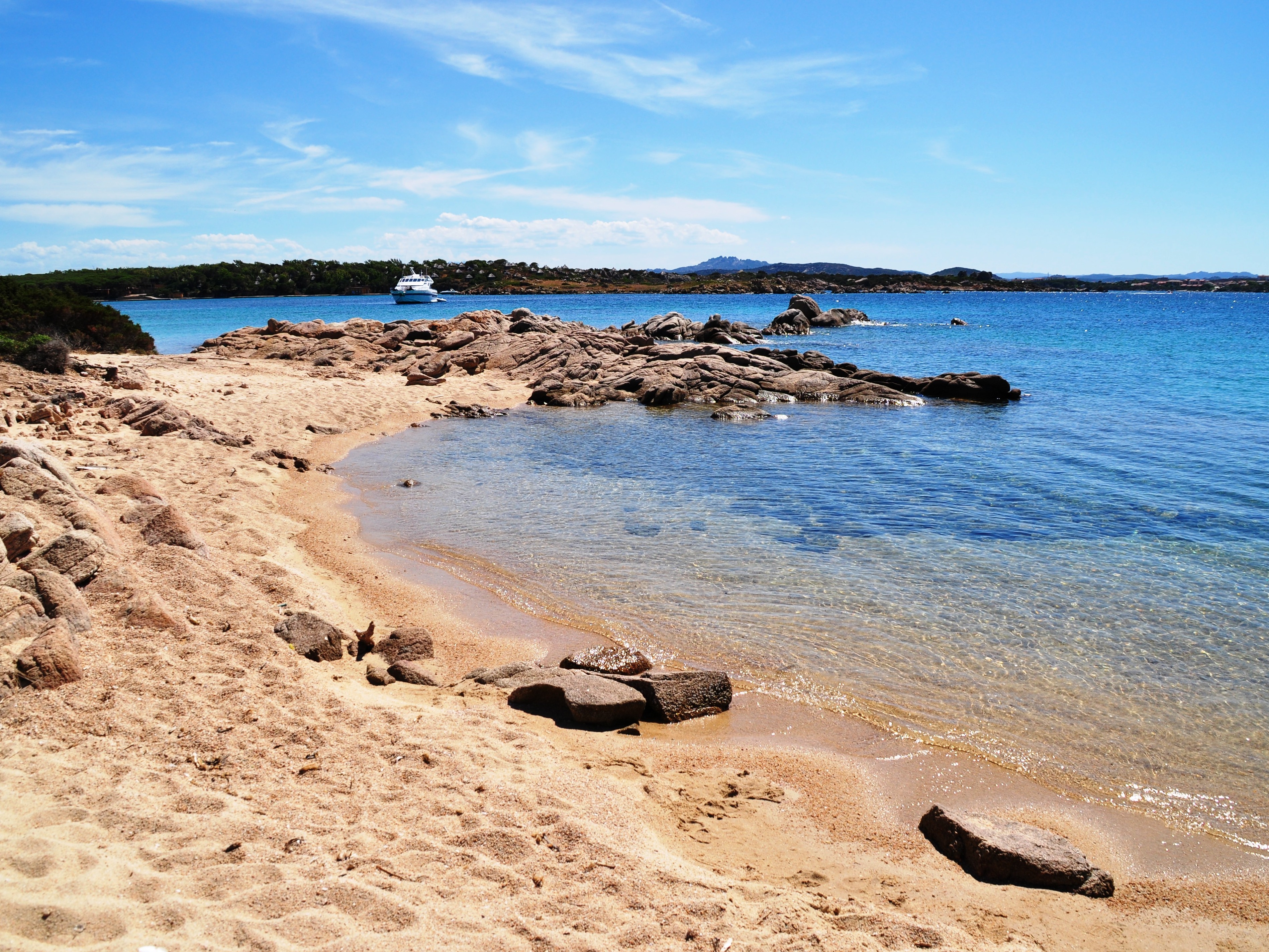
A beach on Isola Caprera, Sardinia. Pic: Fran Hortop

Last week we went to Sardinia for a holiday. During our two years in Rome we tried to explore Italy, but it’s a disparate, varied and not always easily connected country so we left with a long list of places we’d failed to reach. Sardinia was high on that list.

Our friend Annely recommended Maddalena archipelago in northeastern Sardinia. We plumped for it without too much agonising as it seemed to fit the bill for us – beach, some wilds, and a fairly easy journey.

The islands have a long historical association with the Italian navy, and even NATO (a US nuclear sub ran aground there in 2003; oops). There is still a navy presence there, but mostly the archipelago is defined by being a national park, and a destination for people who like to play about in boats. We don’t do the latter – instead we stuck with buses and hiking on Caprera, a largely unpopulated island to the east of La Maddalena island itself. Giuseppe Garibaldi, the great unifier, had a house there, and indeed we saw his deathbed on a tour. I was more interested in seeing his windmill and forno (oven), both perched on a rocky hilltop.

Garibaldi's forno (under tree on right) and mill (left,without sails)

Pleasant surprises
After our days wandering the scrubby, aromatic macchia*, with its thickets of wild lavender, helichrysum, juniper, myrtle and cork oak and lying around reading by turquoise seas, we went back to La Maddalena port. There, we were very happy to find that one bar had beers from a couple of Sardinian craft breweries. Funny really, as this place – Bar Fiume di Serra Francesco – looked very ordinary but had the interesting beers, while a hip bar a stone’s throw away just had industrial crap beer.

One of these is Ichnusa – a lager that pertains to be Sardinian, and brewed since 1912. Thing is, these days it’s owned by Heineken, and I’d challenge anyone to really distinguish between the two, or a dozen other best-selling industrial lagers, in a blind tasting.

Macchia scrub on Isola Caprera. Pic: Fran Hortop

Real Sardo beer
The real beers we tried were from Marduk Brewery and P3 Brewing Company. All the ones we tried were excellent, and a great reminder of how exciting Italian craft beer is.

I’m enjoying being back in Britain, and having access to our dual cultures of traditional, CAMRA-endorsed, cask-dispensed real ale and lively US-influenced craft beer, but I really miss Italian craft beer. It’s such a dynamic scene, partly influenced by Italy’s food and drink great traditions, partly free of them and able to be experimental.

I love how I can drink something like P3’s 50 Nodi (“50 knots”) and not only get a whiff of the heady juniper macchia we’ve just been walking in but also get a whole long trail of heritage. It’s an Italian beer that’s called an India Pale Ale, but really it’s an IPA in part inspired by US IPAs, which have themselves evolved from the less intense older British IPAs.

The spiel on these beers is such fun too. This one says it has “high notes of caramel and intense floral, citrus and exotic fruit perfumes”. Me and Fran got pineapple and Parma Violets, among other things. Furthermore, “Il suo carattere forte deriva da una miscela di luppoli inglesi, americani e neozelandesi che vi accompagneranno in un viaggio sensoriale ineguagliabile” – “It’s strong character derives from a mix of English, America and New Zealand hops that accompany you on an incomparable sensory voyage”! Love it. (Those hops are Simcoe, Pacific Jade, Citra, Goldings.)

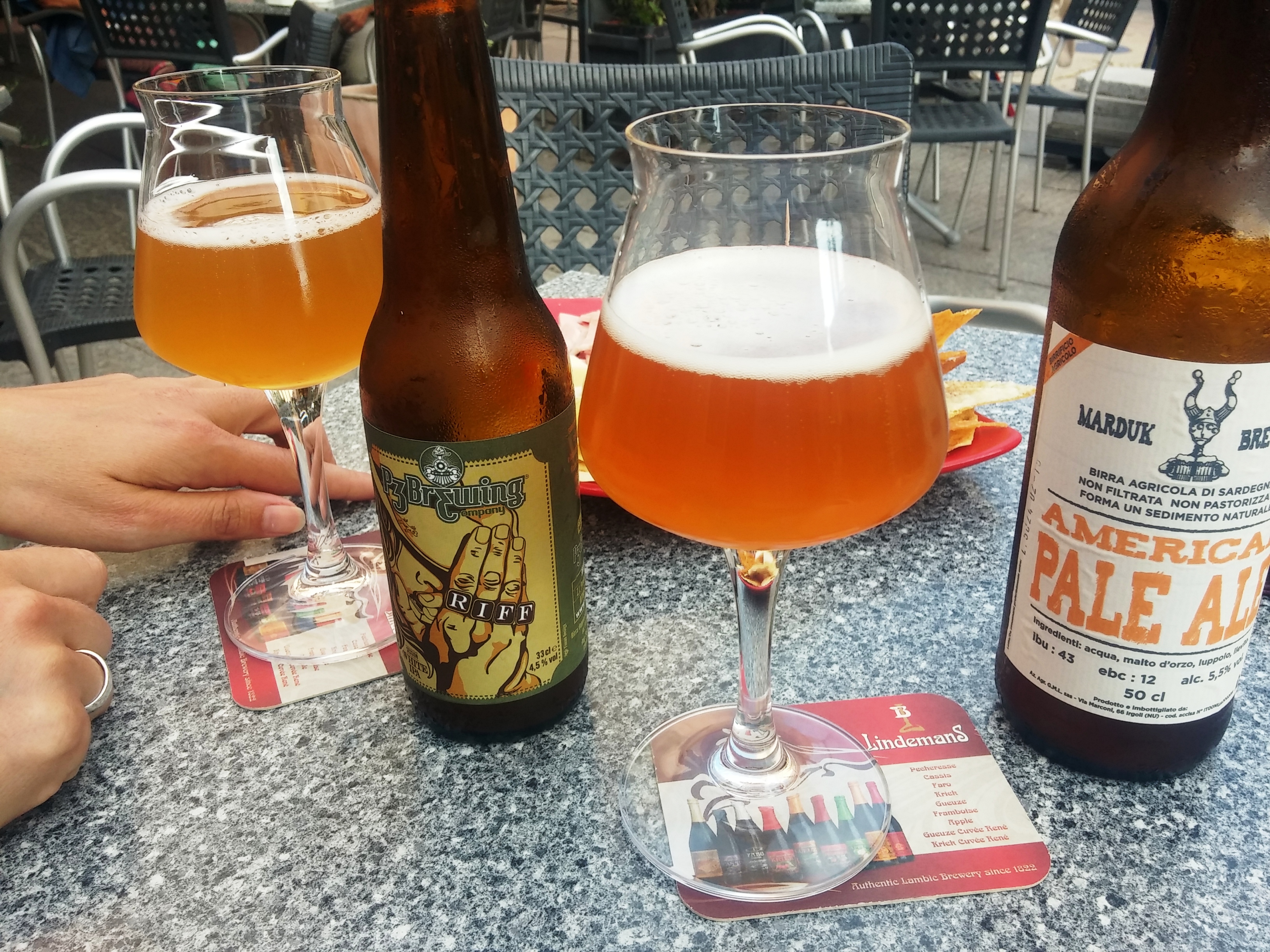
P3 Riff and Marduk American Pale Ale

We also enjoyed P3’s Riff, which they call a “Session White IPA” and, along with two (barley) malts also contains wheat malt, wheat flakes and oat flakes, along with four hops of US and English origin: Fuggle, Styrian Golding, Willamette and Citra. And coriander. And orange zest. All of which makes its presence felt, but in a neatly balanced mix.

Grow your own
While P3 is in Sassari, Sardinia’s second-largest city, located in the northwest, Marduk, meanwhile, is in Irgoli, in the east. Their tagline says they’re a Birrificio agricolo – a farm-brewery, or words to that effect. Another blurb in Il Fiume’s menu about Marduk says, “Le nostre birre nascono da un’accurata selezione delle materie prime che produciamo direttamente in azienda” – that is, “Our beers are born from a careful selection of ingredients produced directly within the farm/business.”

Marduk label

They grow their own barley and “diverse varietà di luppolo” (“various types of hop”) to maintain a close control on the process – and food miles. I mean, we were about 60 miles (92km) away but it was the closest craft brewery. We tried their American Pale Ale and American IPA, which were both great, though surely an APA segues into an AIPA? And surely these are uniquely Italian pale ales now anyway?

My local brewery here in Lewes, Harveys, similarly sources its ingredients locally, but this is something fairly new in Italian brewing, as hops weren’t grown there. When we left La Maddalena we had one night in Olbia, and found a bar that claimed online to sell local craft beers. They didn’t, but they did have a bottle of Nazionale from Baladin.

Baladin is the brewery that both started the Italian craft brewing scene, and the owner of the bar in Rome that introduced me to it, so it was nice to have a Nazionale – which Baladin developed to be the “first 100% Italian beer made with Italian ingredients.”

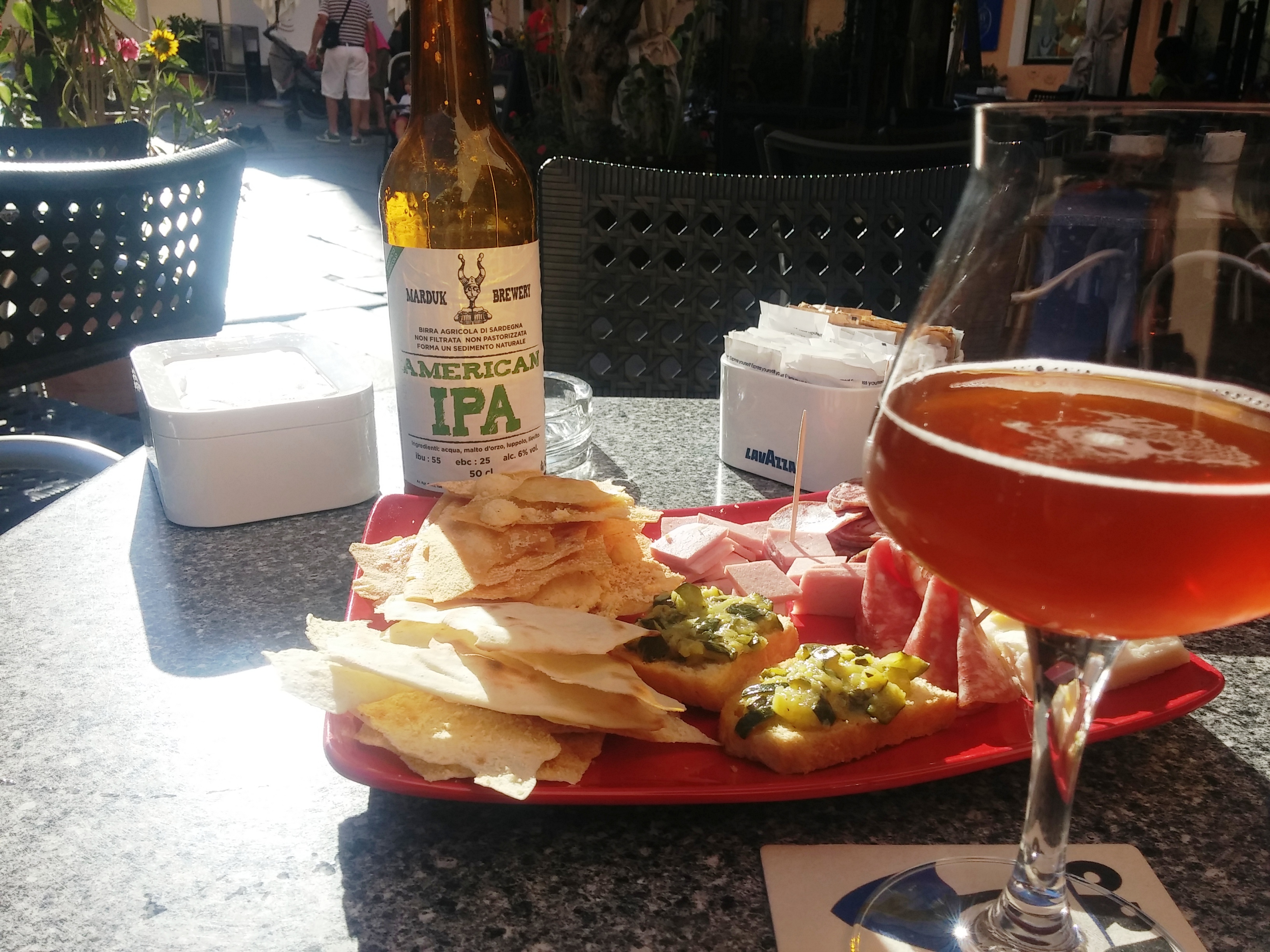
Marduk American IPA aperitivo snack

So all in all, very pleasing beer drinking on holiday. Even more so as we were back in the land of the aperitivo snack. Now back in England, we went out for a few drinks for Fran’s birthday yesterday at the Brighton Beer Dispensary and while the beers were great, the table did seem a bit bare without a plate of cheeses, salumi and breads. While Fran loved the cured meat products, I enjoyed the local Sardinian crispbread, pane carasau, sprinkled with Sardinian pecorino and melted. So civilised.

(I’ve written two more posts about this holiday: second and third.)


* In English, we use the related French word maquis for this kind of scrub. Not much point us having a word for it I suppose, as we don’t have any – it’s specifically a Mediterranean environment.

Leave a comment

Filed under Ale, beer, Travelling