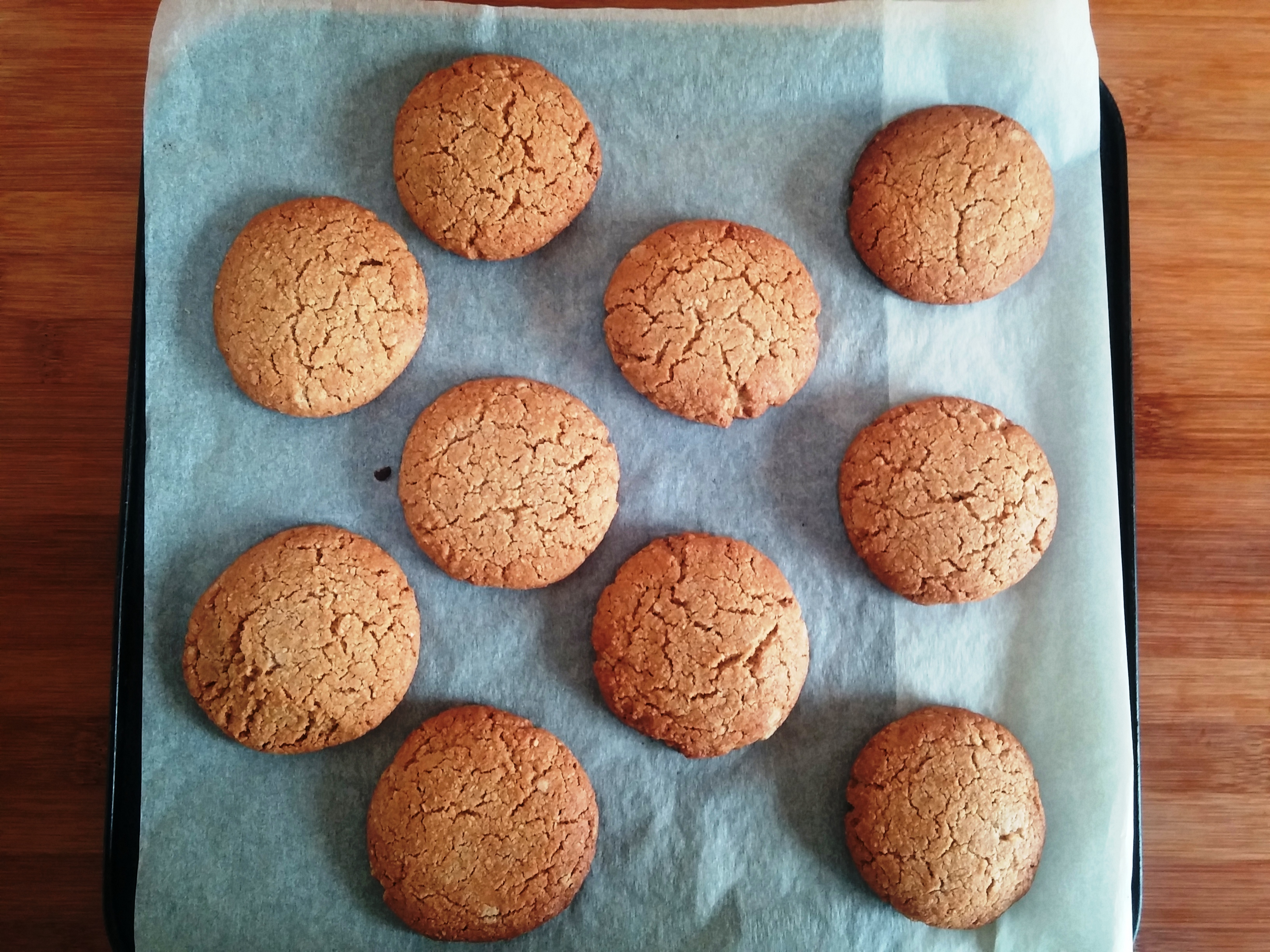
Sussex wassail apple cake

Sompting wassail cake
We live in a somewhat charmless 1950s-1960s neighbourhood, but we have a decent-sized garden and are close to some beautiful countryside. That garden contains, among other things, two old apple trees. A neighbour who’s lived here since the estate was built says much of it was an orchard beforehand. So those veteran apple trees, gnarled and neglected, deserve some respect as survivors.

One way we in southern Britain, particularly the southwest and southeast of England, traditionally paid our respects to our apple trees was by wassailing. To wassail is to salute, to wish good health, with the ail part of this Old English/Old Norse word equivalent to the modern English hale, as in “hale and hearty”, whole and in good health.

The word also refers to a drink drunk when wassailing, from a wooden “wassail bowl”. I must admit I didn’t make the drink this time, as the recipes I found on this fascinating site are types of punch-like concoction involving mulled cider, mulled ale, mulled cider and ale mixed, mulled cider and ale and fortified wine mixed, all often also mixed with whipped egg and garnished with toast. For toasting your apple trees, your neighbours, your community, in the hope of winning over apple tree spirits and guaranteeing a good harvest – and plenty more cider the following year. As a teenager I drank far too much snakebite – half-half beer and cider – and it made me so sick it put me off alcohol for years. So although I love tradition, I’m wary of cider-ale combinations.

Wassailing is traditionally carried out on Twelfth Night – that is, 5 January, the night before Epiphany. However, there’s also a tradition that favours Old Twelvey Night – the night of 17 January, the eve of the Epiphany according to the Julian calendar, which was replaced by the Gregorian calendar for most Westerners and Christians in 1582. This is – or was – favoured in the southwest of England, where Fran’s from, and my mother’s mother was from.

Anyway, after a few ciders – both local and from Normandy, another gift from some family friends – Fran and my mother, Helen, started singing a wassailing song, that goes (oddly, considering most the trees are bare of leaves):

“Here we come a-wassailing
Among the leaves so green;
Here we come a-wand’ring
So fair to be seen.”

The song is probably Victorian. Indeed, although these traditions may well be ancient, possibly with pre-Christian origins, as we so much British folk culture, the form we know today was likely largely shaped by the Victorians.

While they tried to remember the song, I made an apple cake. This recipe is from Sompting, a Sussex village about 16 miles (25km) away from where we live in Lewes. The original recipe makes for a fairly substantial foot-square cake, a little large for my family gathering.

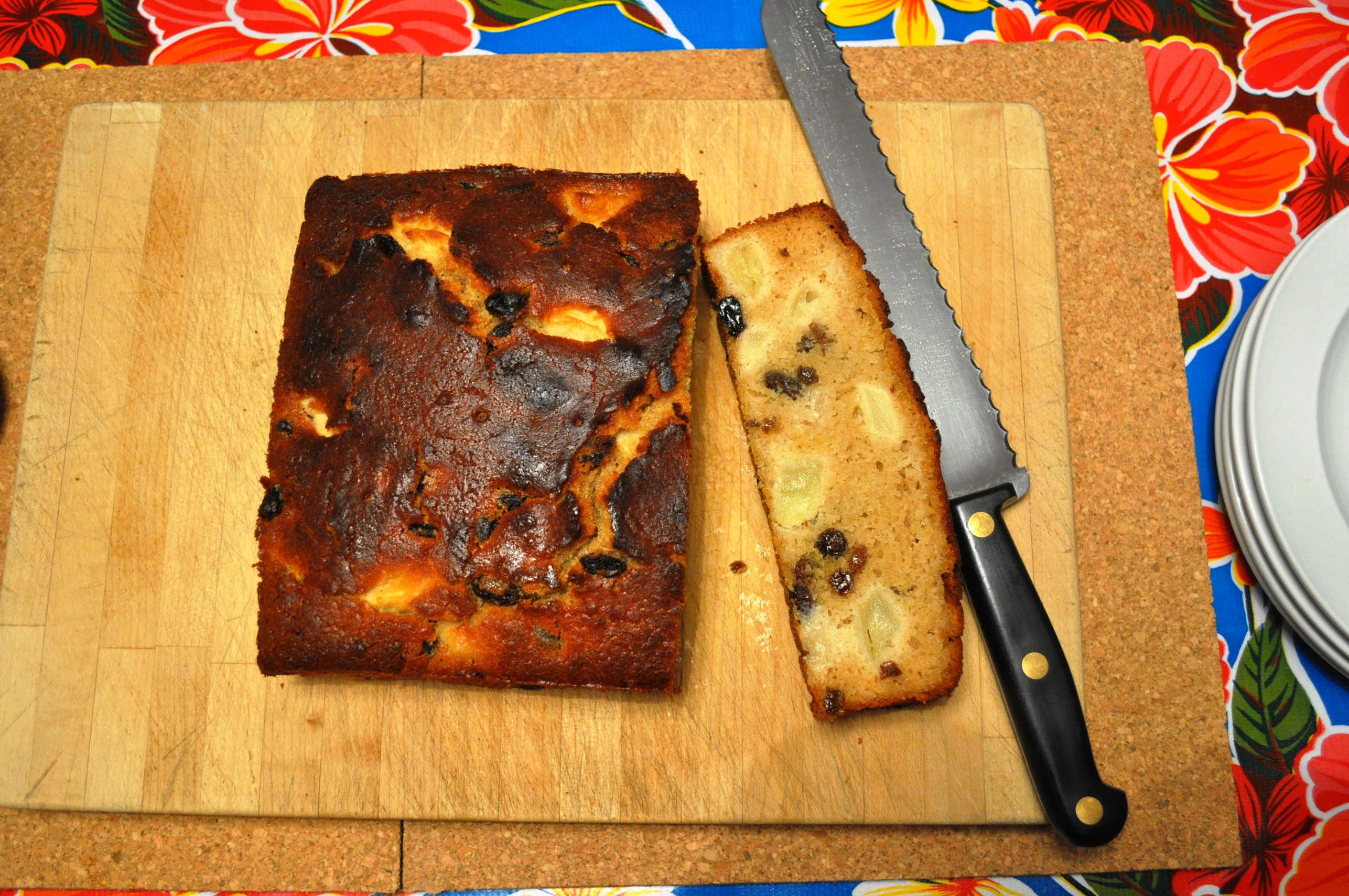
The woman who provided the recipe, one Marjorie Clarke said of the cake tin, “We use a special one with a hole in the base, so that the cake can be carried on the end of a spear in the procession.” That’s probably not the sort of cooking kit you have. I certainly don’t, and don’t really fancy drilling a hole in one of my tins. So I think a standard square, or similarly proportioned rectangular one should do. I reduced the quantities and tweaked it slightly. Then burned the top a bit in my new oven. But no matter, that felt suitably rustic and the cake was lovely and moist, the raisins fattened with very natural Wobblegate Sussex Scrumpy I used.

Local ingredients

225g eating apples
110g raisins
225g cider
170g butter
100g (4 tbsp) honey
4 medium eggs (approx 190g egg white & yolk)
200g self-raising flour
2 tsp baking powder

1. Grease and line an 18cm square baking tin, or similar.
2. Preheat the oven to 180C.
3. Put the raisins in a saucepan, cover with the cider, bring to the boil then remove from the heat.
Apple, raisins, cider
4. Add the apple pieces to the cider and raisins, and allow to cool while you continue.
5. Cream the butter and honey then gradually add the beaten egg. If it starts to curdle, add a little of the flour.
6. Sieve together the flour and baking powder.
7. Add half the flour to the batter, and combine.
8. Add half the cider mixture to the batter, and combine.
9. Add the other half of the flour and fold in.
10. Add the rest of the cider mix and carefully combine, until the mixture is uniformly mixed, but not over-mixed.
11. Pour the mix into the tin.
12. Bake for about an hour, or until risen and firm.

We didn’t visit neighbours and sing to them and their apple trees. Instead we stayed indoors and ate cake and raised our glasses of cider in the direction of our apple trees – the old ones augmented by a crabapple I planted last year and a dwarf apple I planted three years ago, which was a wedding present from my cousin and her husband. Here’s to a good fruit-bearing year! Wassail!*


* Yes, I know I should have posted this on Saturday, but there’s always next year.

5 Comments

Filed under Baking, Cakes, Feasts, Recipes

Puff pastry, three recipes compared

Dan Lepard puff pastry baked

The past week or so I’ve been playing around with puff pastry. The first recipe I made was from Ginette Mathiot’s The Art of French Baking. I used this for my galette des rois Epiphany tart, but wasn’t entirely satisfied with it, so I started reading up and decided to compare some different recipes.

I’ve made puff pastry in the past, but like most home cooks I’ll either do rough puff or just buy ready-made. It always just seemed a bit of a faff to do at home, especially after I’d done it at college on a pastry break, aka dough sheeter, aka laminating table – a kind of conveyor belt with adjustable rollers that makes it so much easier and quicker to make laminated dough or pastry.

That’s what puff pastry is – it’s laminated, it consists of layers, lots of layers. Although croissants or cornetti are also laminated, they use a yeasted dough. Puff pastry doesn’t contain any leaven or raising agent, and lift mostly relies on the lamination, with layers of butter trapped between layers of a simple dough. When it’s baked, the water in the mixture turns to steam, tries to expand and pushes upwards. The fat layers trap it, opening up the product.

In French, classic puff pastry is called pâte feuilletée*. The whole art of making it and using it is called feuilletage, which can also be translated as lamination. The basic technique involves creating a simple paste that’s predomiantly flour and water, called the détrempe, and laminating into it butter (or other fat), called the beurrage.

Puff pastry/Pâte feuilletée from The Art of French Baking by Ginette Mathiot

This book was originally published in 1932. If you look at older recipe books, there’s often quite a lot assumed on the part of the writer and the recipe can seem cursory to modern readers. Such is the case here, when you compare it to books – or indeed blogs – with lots of helpful pics.

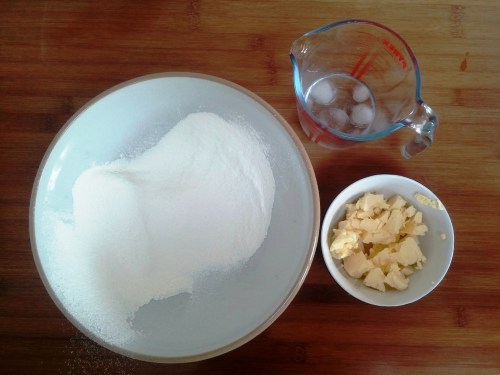
200g plain flour
Pinch of salt
100g ice cold water
100g butter, diced and softened
GM1

1. Sieve the flour and salt into a bowl and add most of the water to create “a smooth, elastic dough adding the rest of the water if necessary.”

GM3
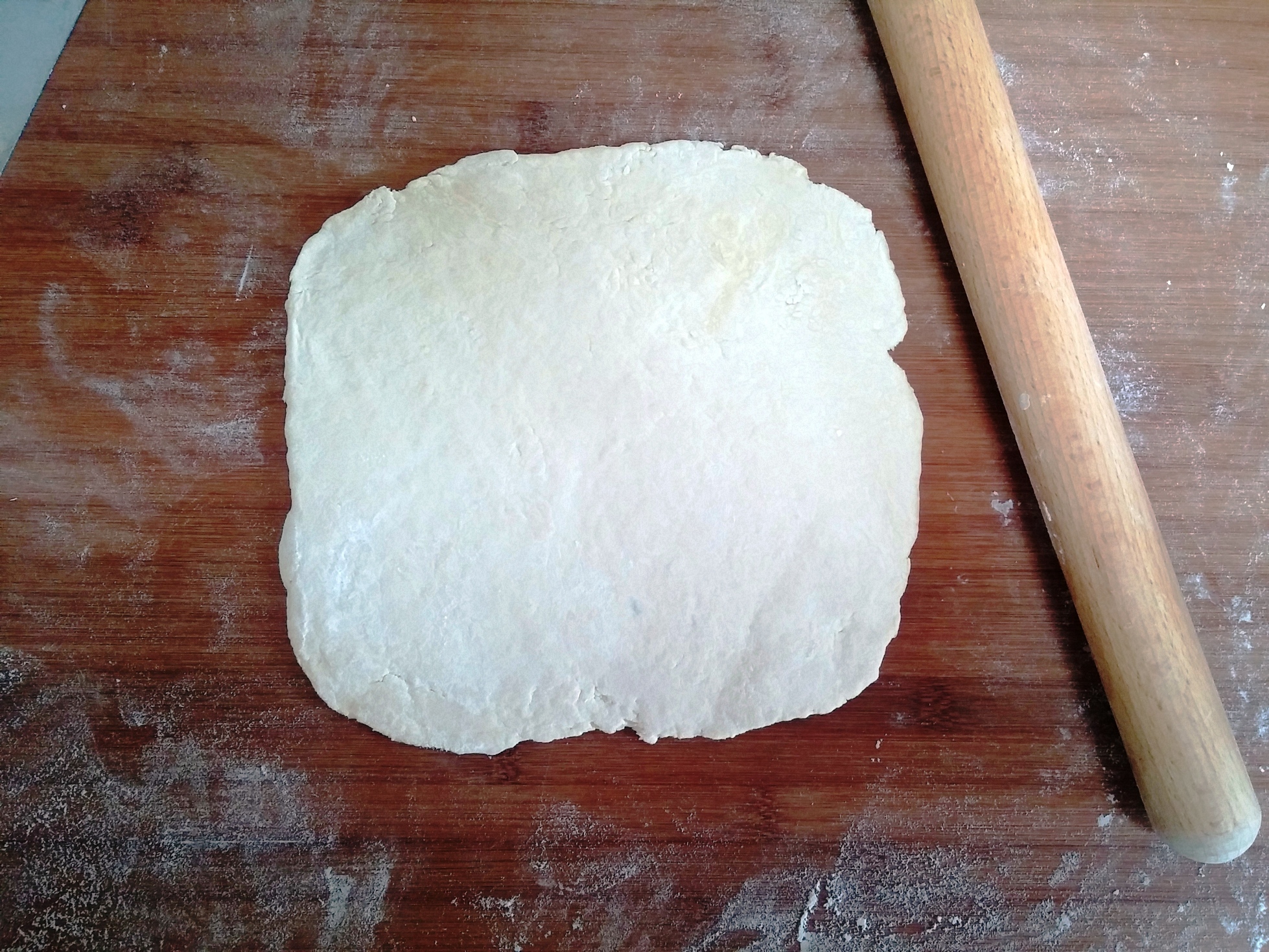
2. On a lightly floured work surface, roll it out. She says 15mm thick, which seems a bit thick considering the quantities. She doesn’t give any guidelines for how big a sheet of pastry you’re aiming for.

GM4
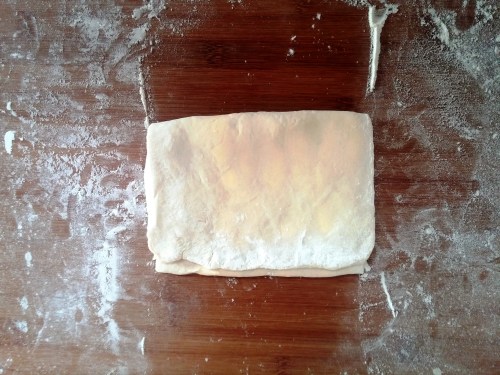
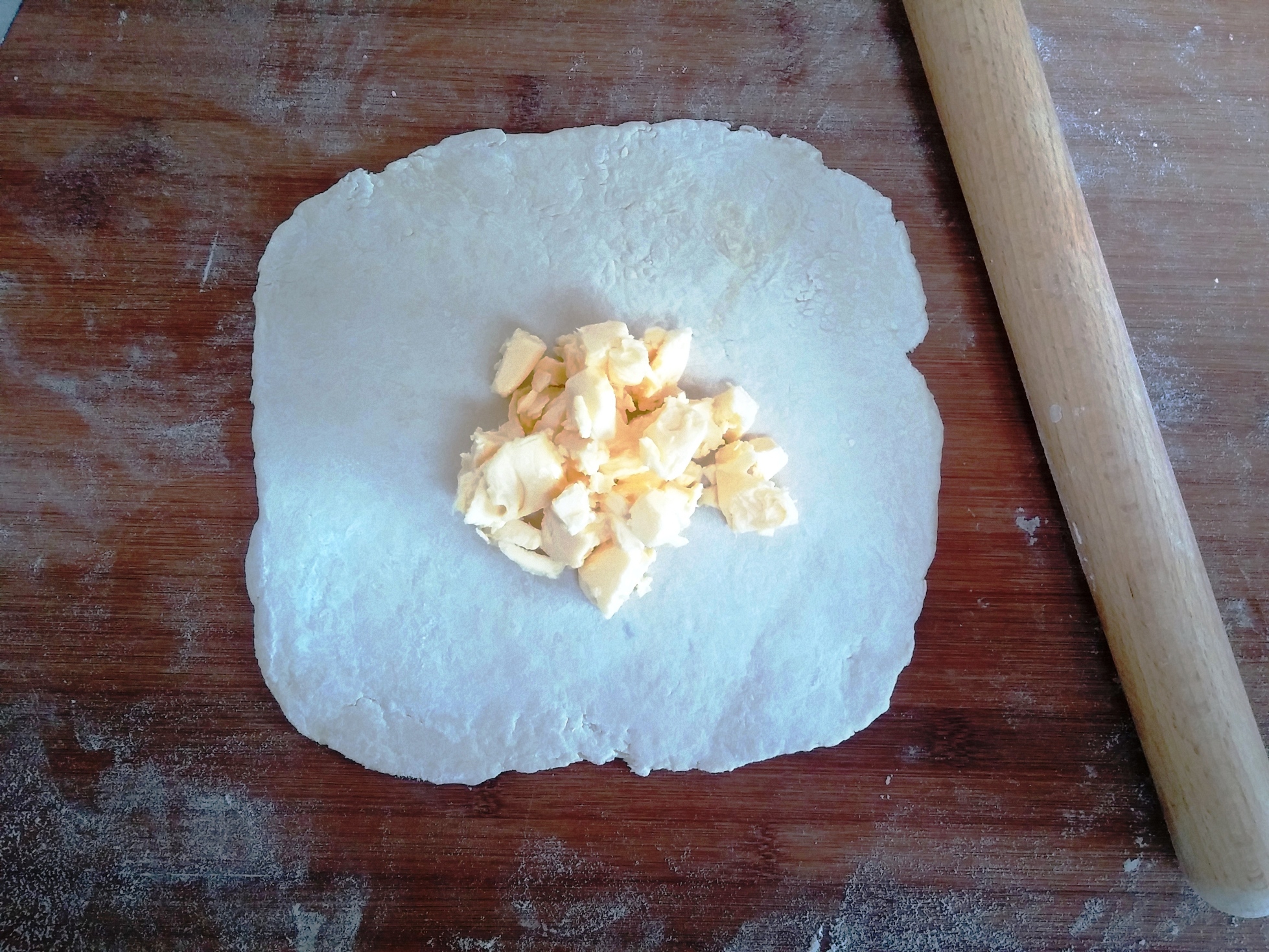
3. Add the butter to middle of the sheet “and fold over the flour corners” to enclose.

GM6
4. Wrap and chill for 10 minutes in the fridge.
5. Roll out again, this time to a “long rectangle 5mm thick”.

GM7
GM8
GM9

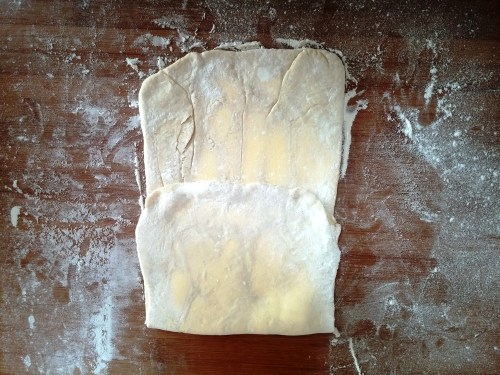
6. “Fold the short ends to overlap in the centre, like a business letter, to make a smaller rectangle with 3 layers.”
7. Chill 15 minutes.
8. Roll out again and repeat.
9. Chill 15 minutes and “Do this six more times”, this is called six more turns.
10. “After the sixth turn the pastry is ready but the more turns you do, the more layers the pastry will have.”

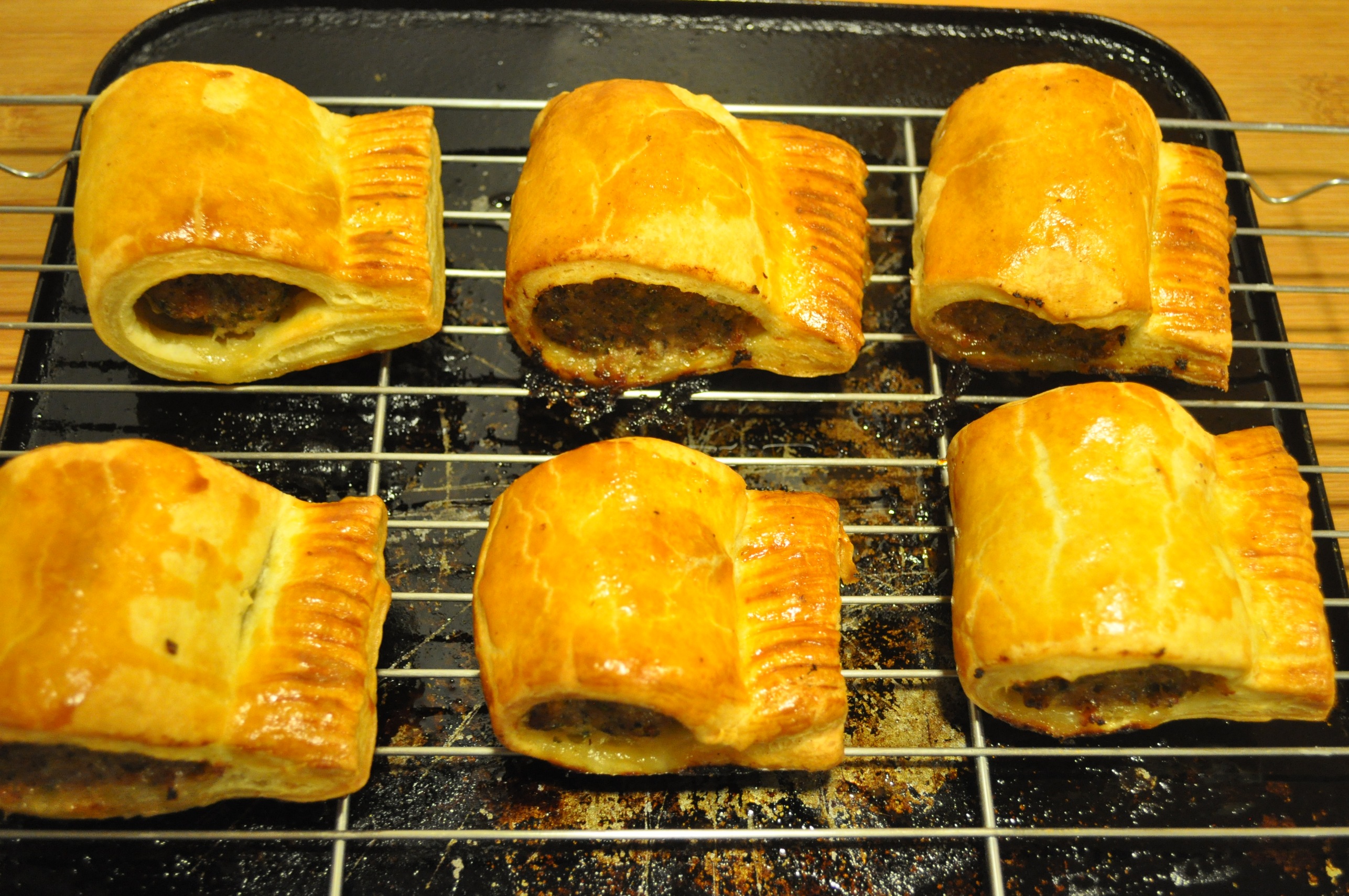
This is the most basic recipe in terms of a straight détrempe and beurrage. I found it didn’t puff up that well but that may have been partly to do with my learning curve, as you can see from the pics this wasn’t the most refined batch. I did it again, more neatly but it still didn’t puff up that well, though it made for some delicious sausage rolls.
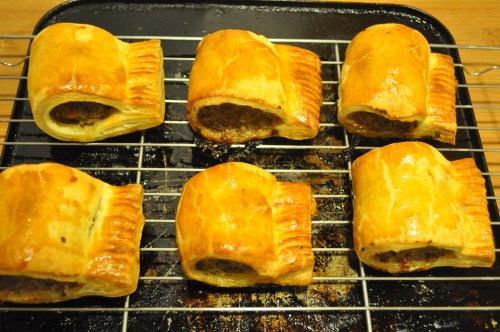
Sausage rolls

All-butter English puff pastry from Short & Sweet by Dan Lepard

Short & Sweet collects Dan Lepard’s essential recipes from his run in The Guardian. You can find a version of this recipe here, though I highly recommend the book, which includes a tweaked version containing egg.

Dan L writes “this recipe is based on an old English method from the late 1800s that varies from the French puff pastry recipes from that era, in that it adds more of the butter when mixing to the dough.” He says this makes it easier to roll, and “very delicate and tender” once baked. What interested me here was a Britain-based Australian baker doing an old English recipe from probably only a few decades before the French Mathiot recipe.

Dan L puff 1

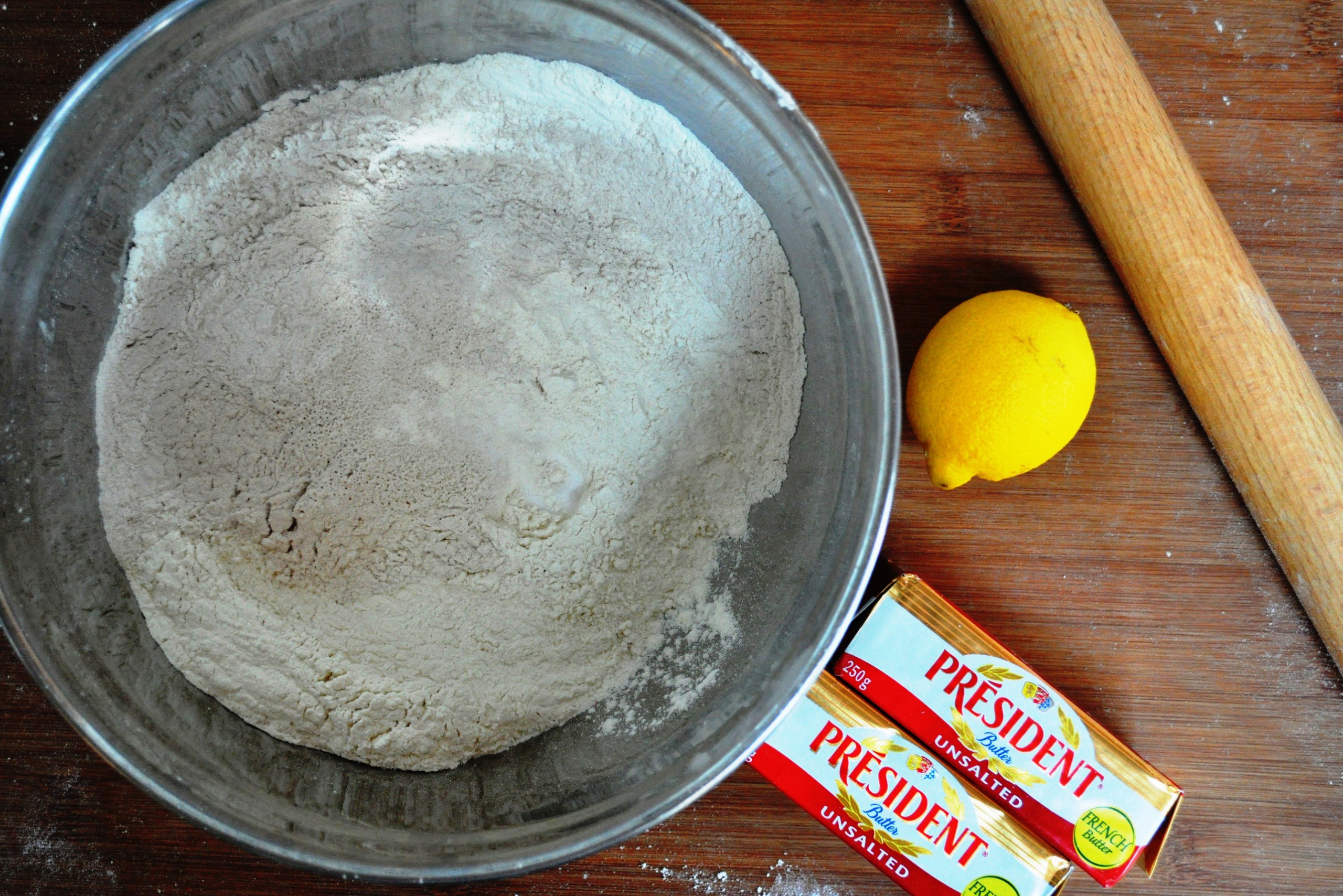
275g plain flour
275g strong white flour
1 tsp fine salt
550g butter, “cold but pliable”
2 tsp lemon juice
1 egg yolk
175g cold water

Dan L puff 2
Dan L puff 3

1. Sieve the flour and salt into a bowl and add 125g of the butter, cut into small pieces and rub in fully.
2. Beat together the water, lemon juice and egg yolk then add this to the flour and “knead to form a consistent dough.”
3. Wrap and chill for 30 minutes.
4. Roll out to about 50x30cm.
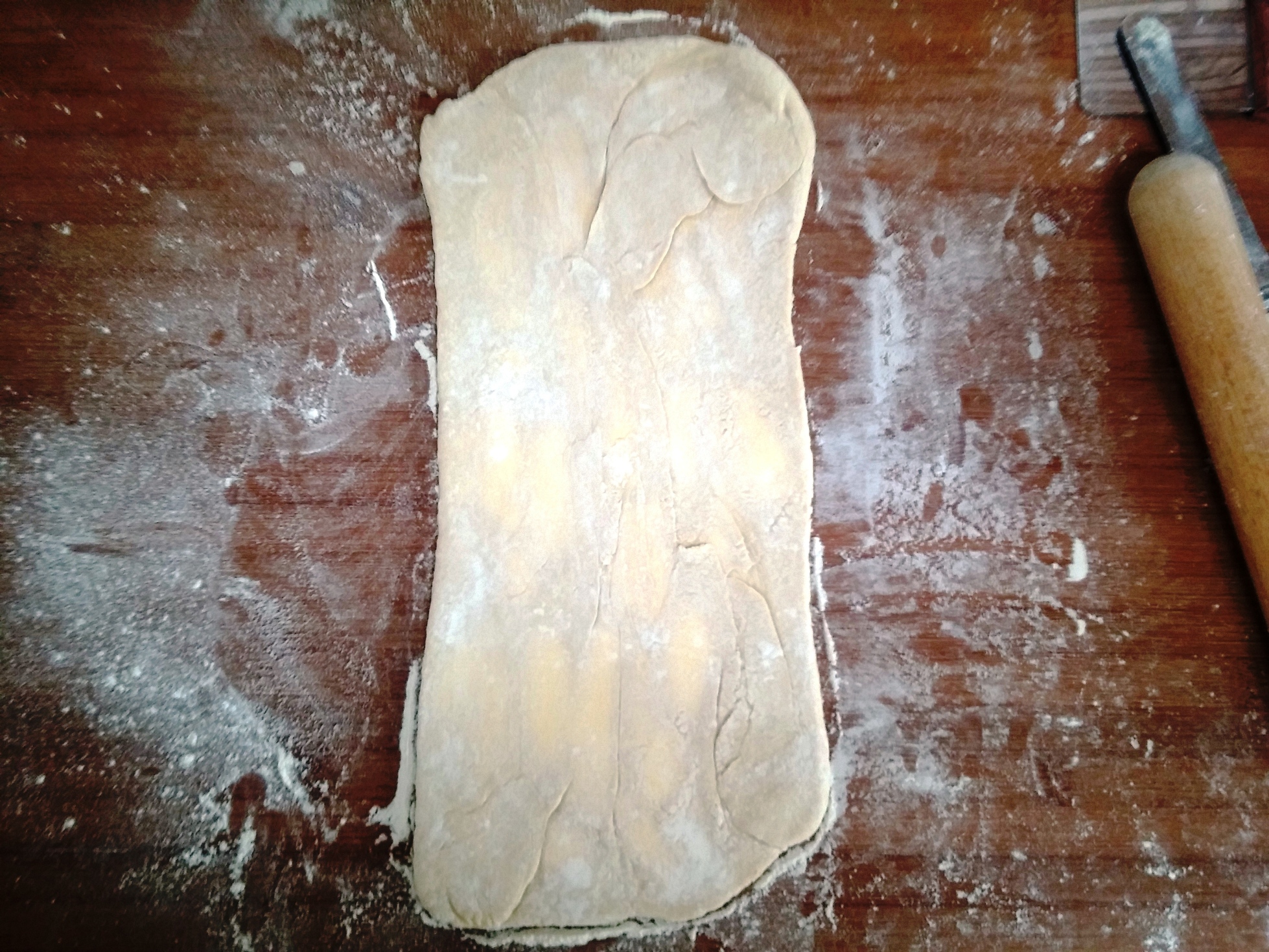
5. Slice the butter and lay this over two-thirds of the dough. Fold down the unbuttered third, then fold up the buttered third at the opposite end. So you are doing a single book fold again, just adding the butter in a different fashion.
6. Roll the top slightly to press out any air bubbles.
7. “Seal the edges with a sharp thwack of the pin” then wrap and chill for 30 minutes.
8. Roll out again to 60x20cm and fold the thirds again, so the parcel is about 20x20cm
9. Cover and chill again.
10. Roll out again, repeat. Chill, repeat – giving four more “turns”, resting between each.

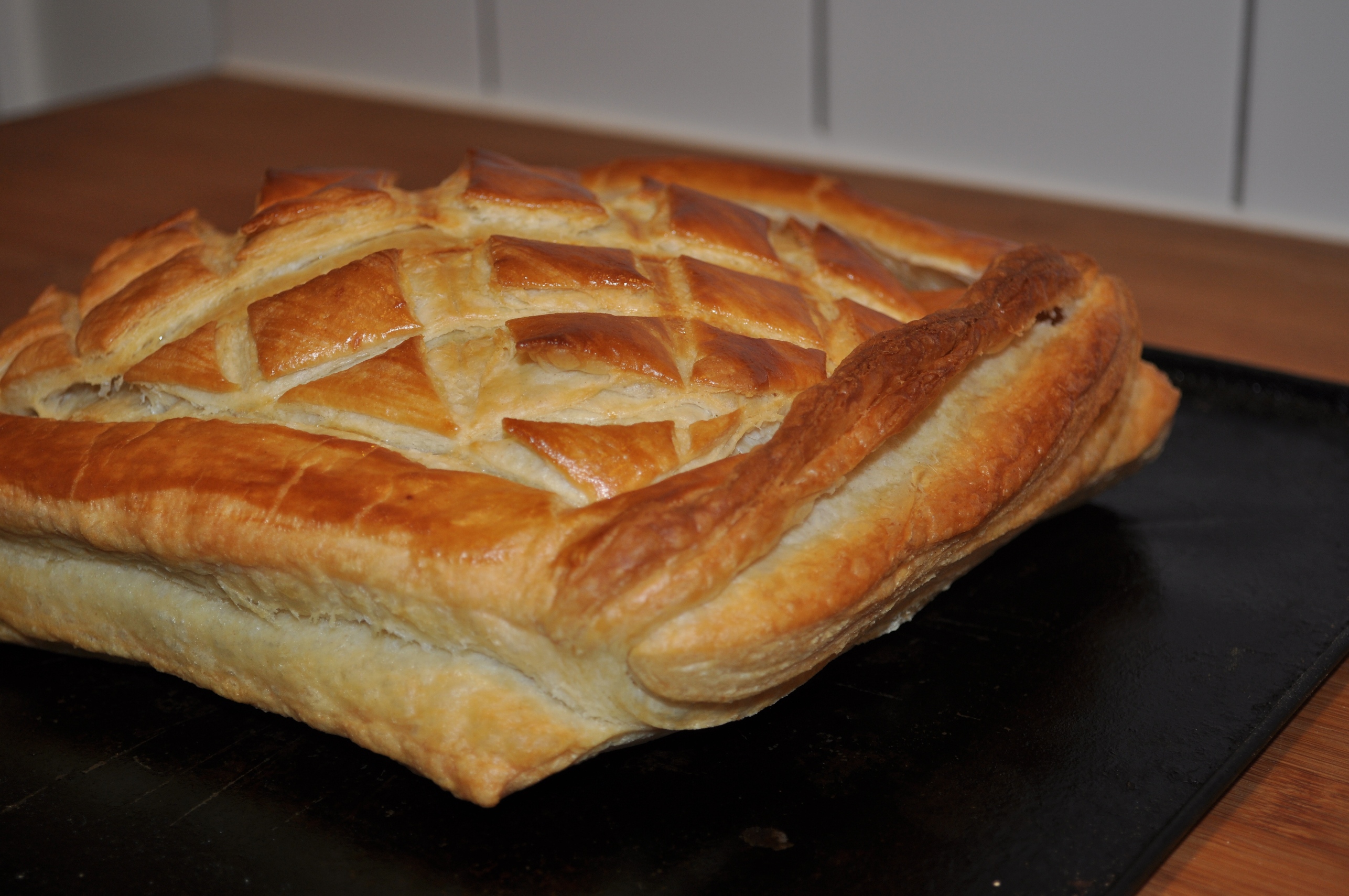
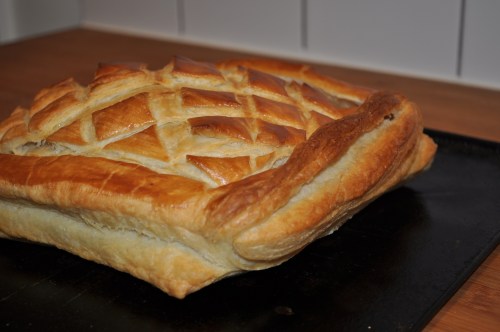
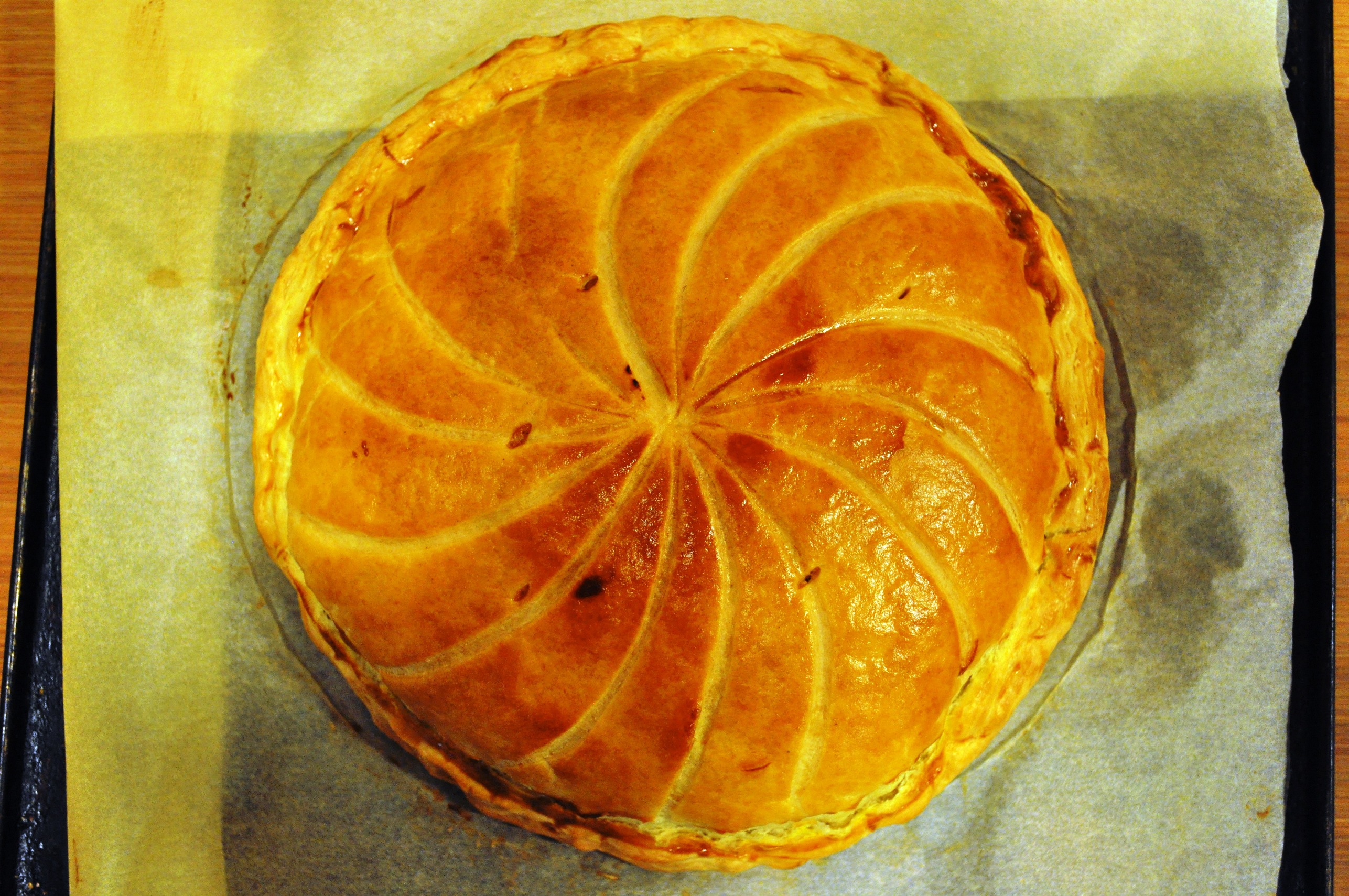
As with so many Dan Lepard recipes, this one just works. There’s enough detail to explain, but not so much you get boggled. I used some to make a pie (main pic, above) and it puffed wonderfully.

Feuilletage Jean Millet from The Roux Brothers on Patisserie

The essential text The Roux Brothers on Patisserie was published in 1986, reprinted in 1991 and given to me as a Christmas present by my parents in 1995. I’ve enjoyed a lot of challenges from it over the years, and plenty of delicious results. I’d not tried their puff before though. They credit it to “our friend Jean Millet, the president of the Confédération de la Pâtisserie, Confiserie, Glacerie de France and MOF in patisserie,” which isn’t intimidating at all.

500g flour
200g water
12g / 1.5 tsp salt
25g white wine vinegar
50g butter, melted
400g butter, well chilled

Roux 1

1. They combine the liquid into the flour working it on a work surface. I just used a bowl – flour, salt, then add the water, vinegar and the butter (which I allowed to cool a bit after melting). “When all the ingredients are well mixed, work the dough with the palm of your hand until it is completely homogenous, but not too firm.”
Roux 2
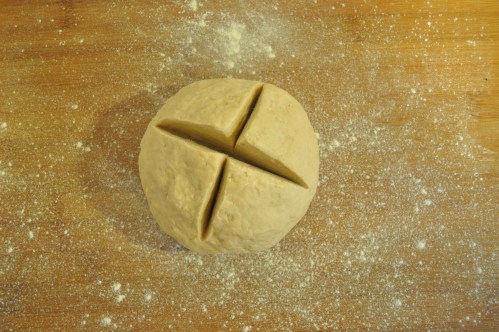
2. Form a ball and cut a cross in the top.
3. Wrap and chill for 2-3 hours.
Roux 3
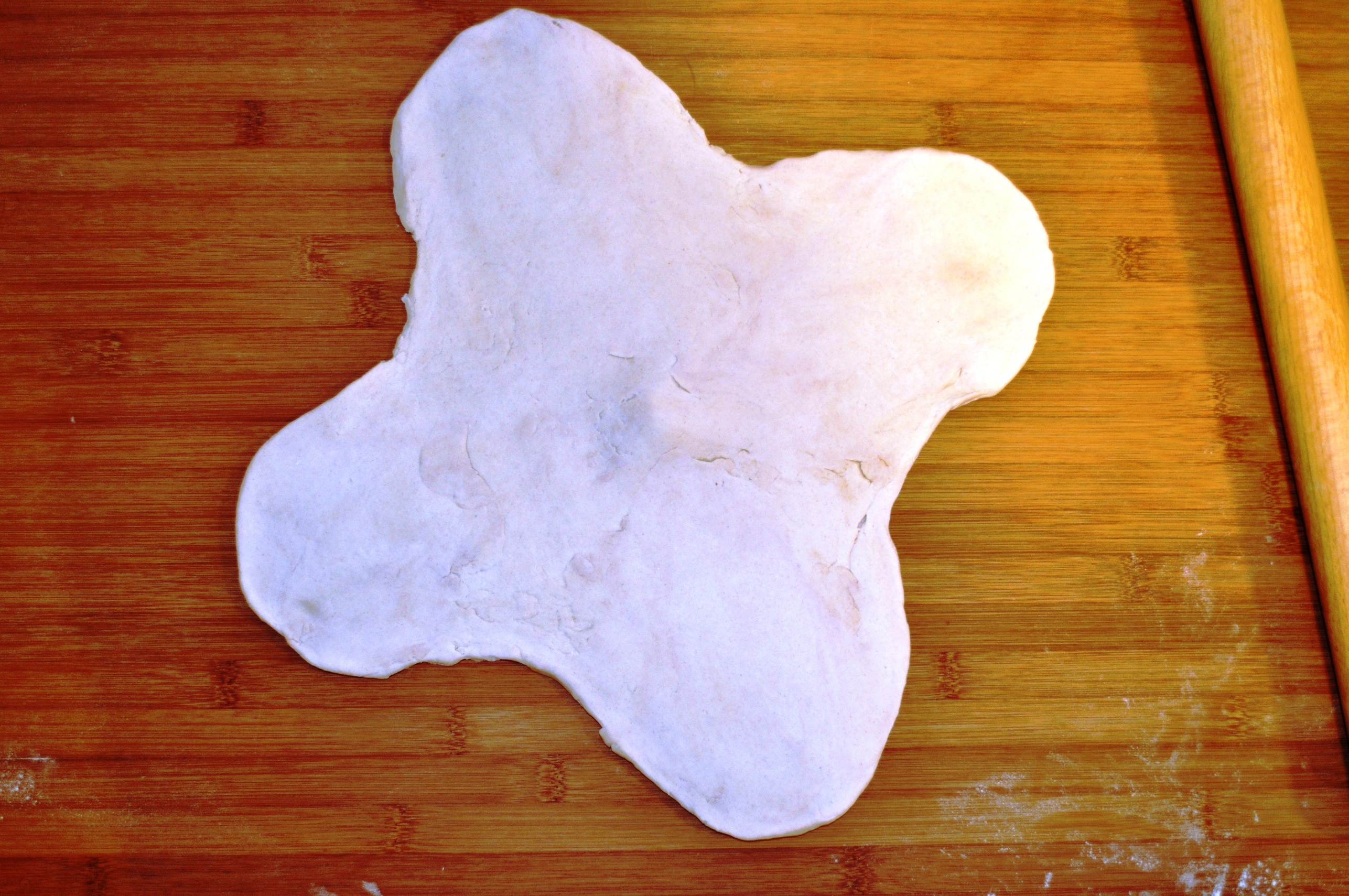
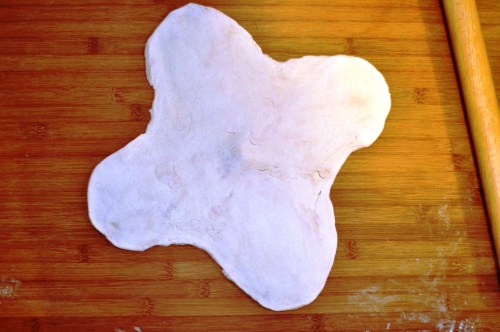
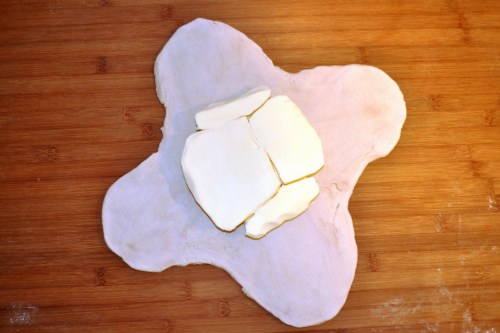
4. On a lightly floured surface, roll out – extending the quarters formed by the cut to create four ears, with a small mound in the middle.
Roux 5
5. Put the chilled butter between two sheets of parchment or plastic and hit with the pin, “so that it is supple but still firm and very cold.”

Roux 6
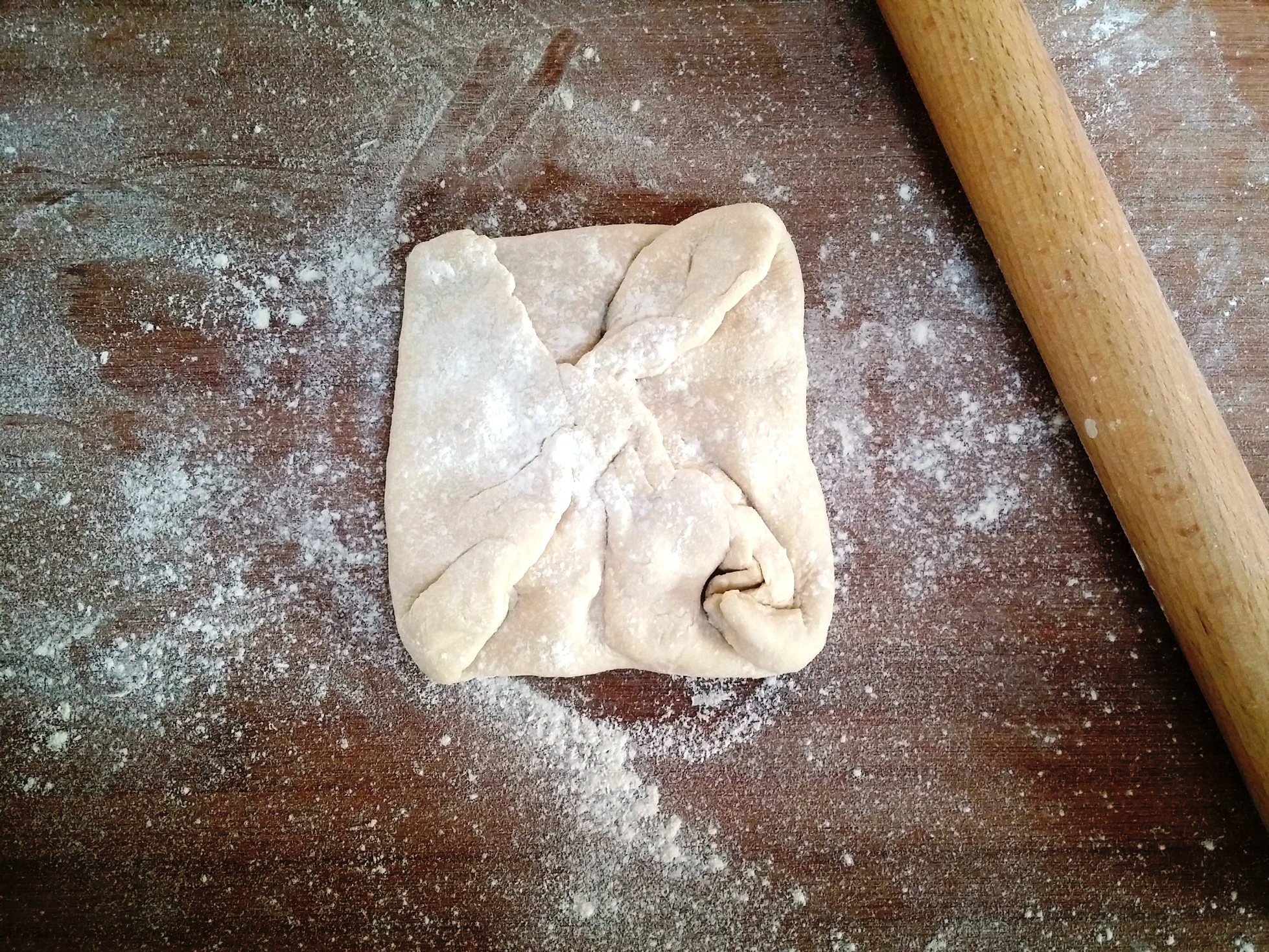
6. Place the flattened butter in the middle of the dough then fold over the ears to enclose it.Roux 8
7. Wrap and chill for 30 minutes “to bring the butter and dough to the same temperature.”

Roux 9
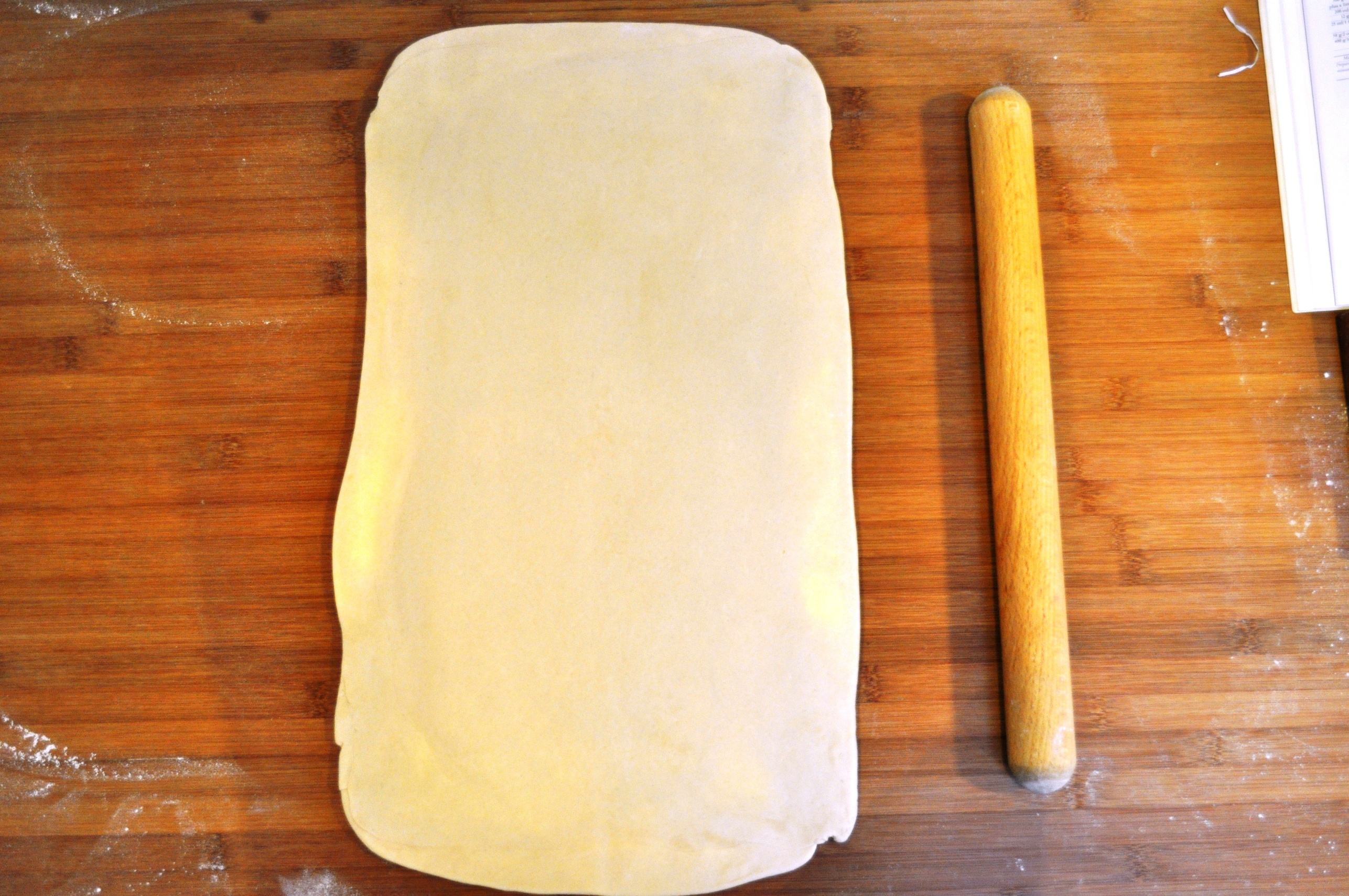
8. Roll out to about 70x40cm. “Fold over the ends to make 3 layers. This is the first turn.” Ie, you’re doing another single book fold.
9. Roll out and fold again. “This is the second turn.”
10. Wrap and chill 30 minutes.
12. “Make 2 more turns” then rest for 30 minutes to hour in the fridge.
13. “Make 2 more turns bring the total to 6.”

This worked well too. As with Dan L’s, you incorporate some of the fat into the détrempe, making it easier to handle. As with Dan L’s it also makes quite a lot – about 1.2kg. So you can cut it into portions and freeze them.

Roux 10

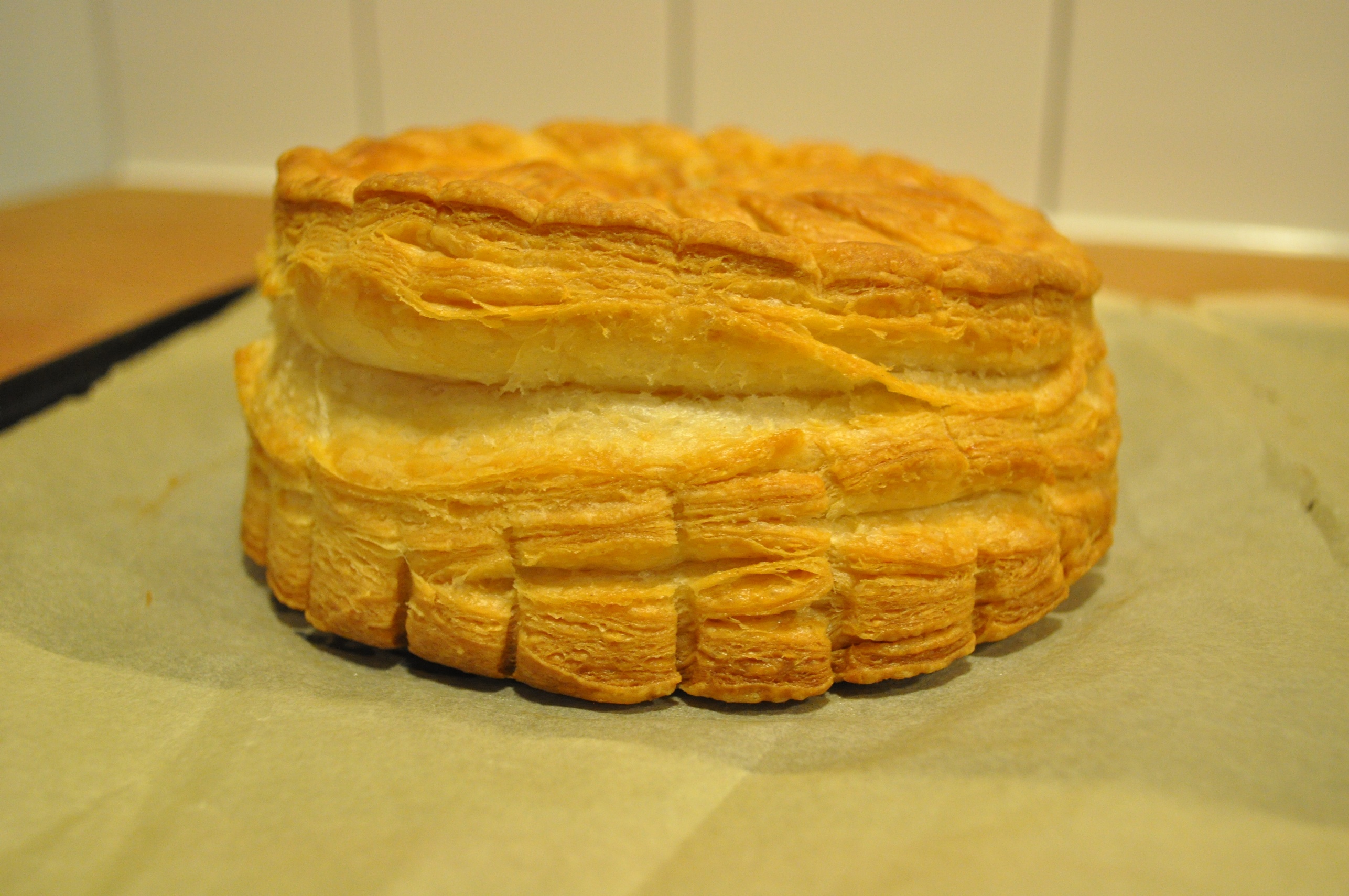
This is the batch I used to make my pithivier. I’ll include this pic again, as it show very clearly some great puffing action.

Baked, sugar, side

Observations and tips

Flour – Mathiot stipulates plain flour (equivalent to all-purpose in the US), while Dan L uses a mixture of plain and strong, and the Roux brothers don’t specify. My old teacher said to use all strong flour. Stron (higher protein) flour is more resilient to all the manhandling and manipulation involved and will also give more lift in the oven. Plain (lower protein) flour will give a shorter texture, so will aid the melt-in-the-mouth quality. Always one to try and find an amenable middle ground, I’d recommend Dan L’s half-half approach.

Fat – proper puff pastry needs butter. This can be problematic for people on certain diets, but personally I don’t want to eat “pastry fat” – which is made from hydrogenated vegetable oils. The body simply cannot metabolise hydrogenated fats. Plus, butter simply tastes better, and doesn’t leave the iffy dry mouth-feel of some more processed fats.

Always make sure the fat you’re using is at a similar temperate to the paste, the détrempe. This means cold but pliable. As for the type of butter, Dan L says “You get the lightest pastry using a butter with a low moisture content, like Lurpak or Président” (ie Danish or French) but as I prefer to use local produce, I wanted to at least use English butter; Yeo Valley organic seemed to work well too. Oh, and generally unsalted makes most sense, as it’s more versatile for sweet or savoury products.

Combining – cutting the cross and making the ears is known as the French method. Slicing up the butter and laying it on two thirds of the rectangle is known as the English method. I found it easiest to handle the butter, and start the folding, when it was beaten with the rolling pin, as opposed to cubed or sliced, which seemed more likely to cause breaches. So when I tried Dan L’s I smeared the slices a bit to take off any sharp edges.

Acid – as these three recipes have shown, some call for lemon juice, others vinegar, while Mathiot’s contains neither. My online travels showed me that Richard Bertinet, Anna Olsen and Joe Pastry, among others, include lemon juice. Paul Hollywood doesn’t include any acid. The only explanation of the acid I can find is that helps prevent the pastry from oxidising and turning grey and helps tenderize it. In my case, I tend to use stoneground flours, rather than shiny bleached flours, so my doughs are always off-white anyway. Once baked, I don’t think it makes much difference with pastry, especially if you glaze it.

Resting and temperature – you have to rest the dough when you handle it a lot. This is for two reasons. Firstly, you don’t want to melt the butter or it’ll just blend with the paste, destroying the layers, so it’s always best to keep it below about 16C. Secondly, if you overwork the paste or dough, it’ll toughen up; resting it allows the gluten to relax and stay pliable. Resting times really seem to vary in these recipes, but I found Mathiot’s too short and more than 30 minutes potentially tricky, as if you fridge is at 4C, it’ll get too cold, reducing that pliability again, meaning you’ll probably need to let it warm up again before pinning it out. If it’s too cold, the butter can break through the layers of paste. That said, you may need to leave it in the fridge longer to fit in with your other commitments!

Folds and turns – when you roll it out and fold it up, that’s a turn. There are different techniques. I just stuck with the technique of folding the rectangle in thirds. You can also quarter the rectangle, folding both ends in towards the centre, then folding again in the centre, as if it’s the spine of a book. This immediately creates more layers. There seems to be some confusion over the names of these techqniques. Some call the former a half-turn or single book turn, while others called the latter a book turn or a double book turn. I’m not going to try and authoritatively name either.

Pinning out – when you pin it out, make sure you have the open ends of the parcel in the direction you’re rolling. Try to keep your piece of pastry in a rectangular shape, with straight-ish edges and square-ish corners. This takes a little practice, you can straighten up the edges with your rolling pin and stretch or pin out the corners. Also, when you fold it, take care with any air bubbles. You can press these out, or even jab then with the point of a knife, though this isn’t ideal. You’re trying to build up consistent layers.

Using it – it keeps well in the freezer, or for up to about 3 days in the fridge. When you’re using it for pastries, or pies, or tarts, it always benefits from being washed with whole egg or yolk, but when you do try to avoid any edges or it’ll seal them up and stop it rising and puffing nicely. Before baking, let it rest again, for more than 20 minutes and even overnight, as this will prevent it from  distorting when it’s put in the oven. Dan L even freezes his again before using, once it’s pinned out. Bake it at a hot temperature, 200C plus.

Conclusion
Unless you’re some kind of pastry purist, I’d recommend a recipe that incorporates a bit of the total fat into the détrempe. I’ve even seen recipes that incorporate a bit of the flour into the beurrage but I’m not sure that’s really necessary. I’d also recommend the recipes with a higher fat: flour ratio. The Mathiot recipe seems a bit meagre and modest with, in baker’s percentages 100% flour to 50% fat, when the Dan L is 100% fat and the Roux-Millet is 90% fat. Technically the Mathiot can be called a “half-puff” while Dan L’s is “full-puff”. As many chefs will tell you, fat is flavour, and good butter is delicious, never mind how it helps give that wonderful flaky, delicate, melty texture to the pastry.

I realise this is probably the longest post on this blog, but I hope a few get to the end and find it useful. I haven’t got into any maths [l = (f + 1)n] or mentioned the “Dutch or Scottish method”, but maybe I’ll talk about that in another post on rough puffs at some stage.
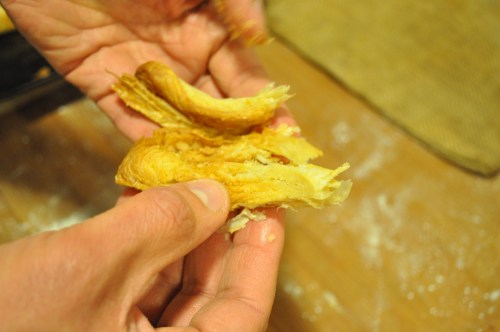
Baked crumbly puff pastry


* The French word pâte is related to the English words paste and pastry and the Italian words pasta, impasto, pastella etc, and they all come from the Greek for stewed barley, via the Latin. Feuille means leaf or sheet, and like the English folio or Italian foglia and foglio comes from the Latin.

13 Comments

Filed under Baking, Pastry, Recipes

A Pithivier

Baked, sugar, side

In my last post about galette des rois, I mentioned that this French Epiphany pie is basically a form of Pithivier. These are puff pastry pies that may well originate in the town of Pithiviers in central France. Indeed, in French the pies are known as Pithiviers, but us foreigners lop off the final s. Don’t ask me why.

Unlike the galette des rois with its sweet frangipane filling, Pithiviers can be sweet or savoury. As I had some more frangipane, and have been making a lot of puff pastry lately, I thought I’d make a Pithivier – a sweet one that was basically a mini galette des rois without the requirement for it to be eaten on a feast day.

I also wasn’t happy with how I’d bodged the edge of my galettes des rois, crimping it like a pasty rather than leaving it free to expand. So I was determined to finish this one more neatly.

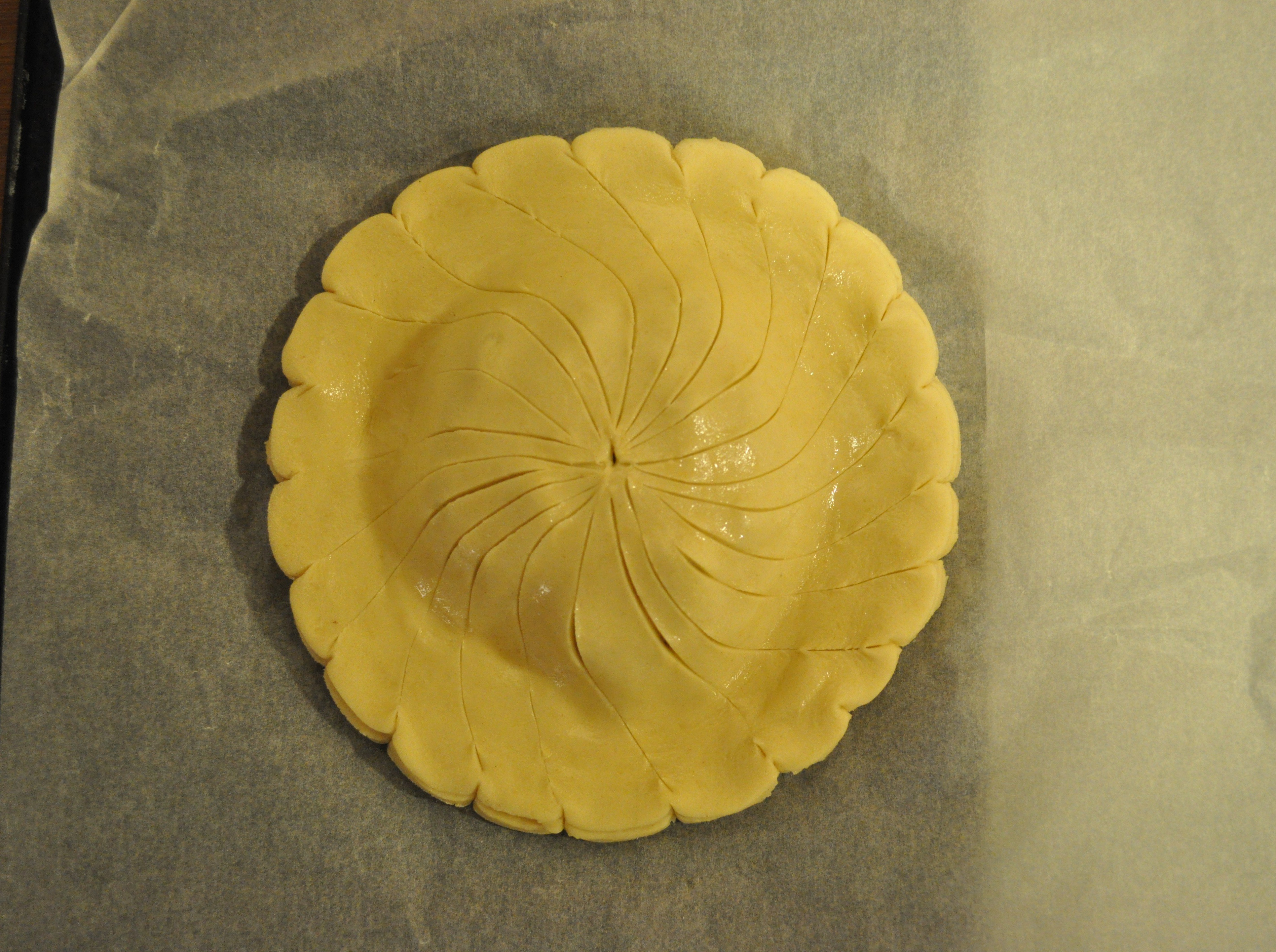
Traditionally both the galette des rois and Pithiviers have a kind of scalloped edge, like the petals of flower petals. This can be achieved by using a semi-circular cutting edge, for larger scallops, or by simply cutting into the edge slightly with the blade of a knife, or indeed the back of the blade of a knife, which is what I did.

So, as with the galettes des rois, I rolled out some puff pastry (about 300g in this case), and cut two discs (in this case I used a 16cm diameter side plate). I then put the frangipane in the middle of the bottom disc, leaving a rim of about 25mm, which I brushed with egg wash. I then put the top disc on, and pushed it down firmly to seal.

Pithivier, unbakedPithivier, baked

I then egg-washed the whole thing, scalloped the edge as described above and cut curved lines in the top, radiating out from the centre. I baked it at 200C for about 25 minutes. After baking, I dusted it with icing sugar and put it under a hot grill to caramelise slightly (top pic, above).

In this case, the edge puffed up very satisfactorily.

Baked, side

My next post will be all about my puff pastry experiments. I’ve been obsessing slightly as you may be able to tell if you follow my Instagram


5 Comments

Filed under Baking, Pastry, Pies & tarts

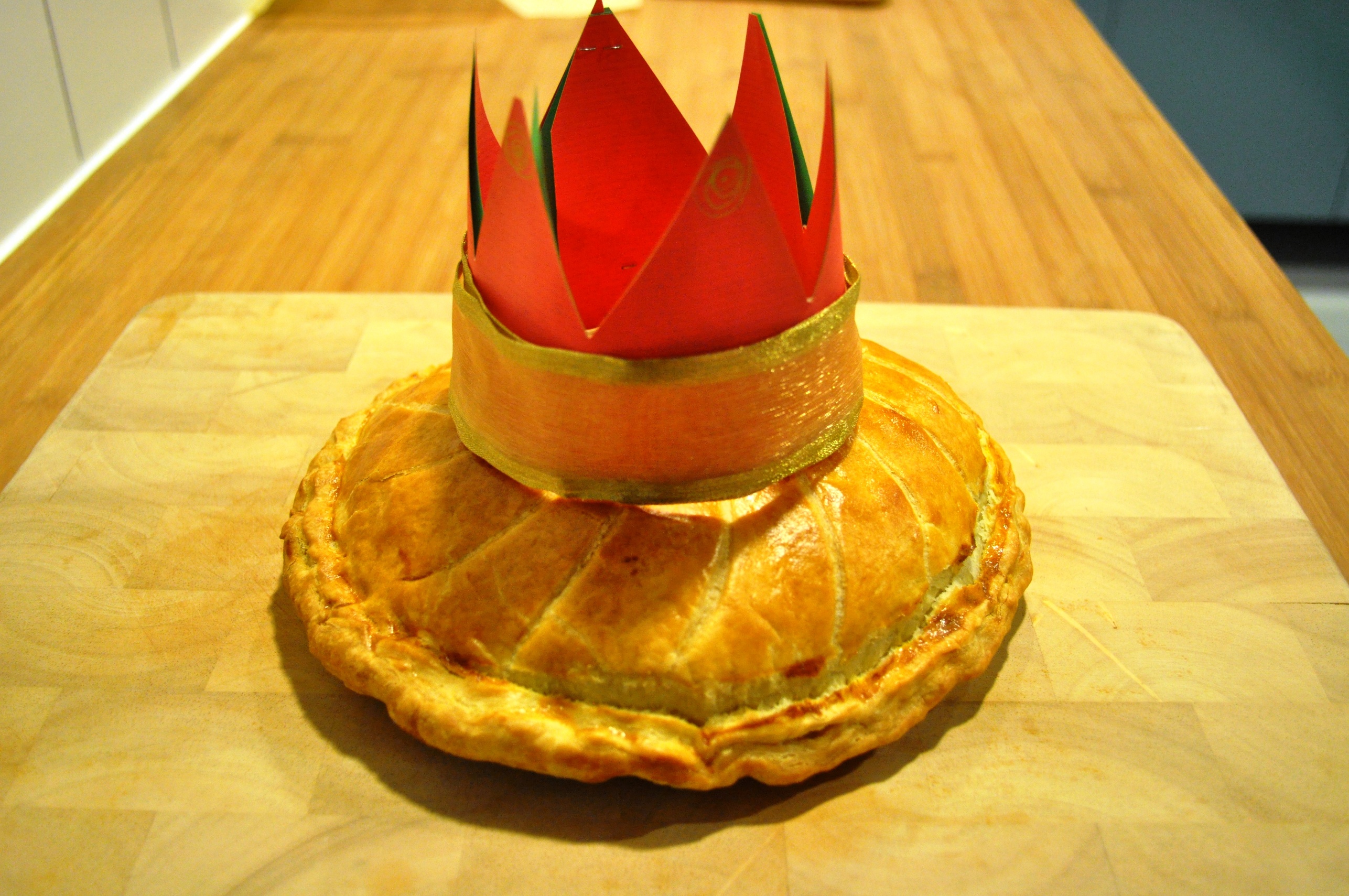
Galette des rois and celebrating the end of Christmas with Epiphany

Crowned galette des rois

I love the Christmas season, but one thing I loathe about its modern British incarnation is how it begins in the middle of October. People start stressing, hurry to put up their trees at the start of December, then run out of steam by about Boxing Day, with some even taking down their decorations. Yet Boxing Day, the 26th, is only the Second Day of Christmas.1

We all know the song that starts “On the first day of Christmas my true love gave to me…” but miss the significance. Formerly, Christmas was celebrated from Christmas Eve and Christmas Day itself, when the feasting started and was sustained until Twelfth Night, 5 January, the eve of Epiphany. This ending of the season on 6 January is still celebrated in some cultures with king cakes, or kings cake. The kings in question? Why that would be the Three Kings, the Magi.

This is all perhaps a bit confusing for those who grew up with formalised Nativity plays and scenes that pack in the whole cast of characters – holy family, kings, shepherds, sheep, oxen, camels – for the actual birth of Christ. But alternative names for Epiphany are Three Kings Day, or simply the Day of the Kings, as it’s when they arrive at the famed Bethlehem farm outbuilding and give their gifts. Indeed, some cultures still do their main gift-giving on Epiphany. It’s an important Christian feast day, hence the feast foods: the king cakes.

The end of Christmas
Not only are variations on king cakes served on Epiphany, they can be served repeatedly through Carnival season right up until Lent, with the New Orleans version, for example, being essential for Mardi Gras, Fat Tuesday.

The northern French king cake – galette des rois – isn’t the richest concoction, but I still love how this tradition is one in the eye for all the hackneyed dogma that gets trotted out with the British New Year celebrations about how you have to stop indulging and embrace self-denial. Indeed, one of the things I loved during our two years living in Rome was how Carnevale brought with it uniquely indulgent seasonal sweets soon after New Year.

Before our time in Italy, the biggest connection to another European country and culture in our household came with Fran’s Francophilia. She’d made a connection with France when she was young, studied French, and spent several years living in Brittany and Paris when she was in her late teens and twenties. It was Fran who first told me about the galette des rois five years ago.

While southern French, parts of the US South and some Spanish and Latin cultures do a more cake-like king cake made with enriched dough, and decorated with coloured icings and candied fruits2, the northern French galette des rois is a more modest concoction. It’s a sweet pie, made with puff pastry (pâtes feuilletées) and filled with almond paste, frangipane; essentially a pithivier.

Slice

Cake, round and flat
What is a galette? Well, it’s defined as an “espèce de gâteau rond et plat” – “a type of cake, round and flat”. From what we can work out, it’s the diminutive of gale, again meaning a round, flat cake but also used to describe a small round stone, worn flat by water3. Alan Davidson says, “the word being derived from galet, a pebble perfect for skipping”. The word is perhaps best known from galettes brettonne, Breton galettes – pancakes made with buckwheat flour found in that region of northwest France. It also refers to certain types of biscuits and cookies, also round and flat.

Charming
Anyway, as well as being a modest treat, the fun thing about galette des rois is the inclusion of a fève – literally a dried bean (like the Italian word fava, broad bean). This is hidden in the frangipane mixture and bestows good luck on the person who finds it in their portion. This is not unlike the old British tradition of hiding a coin in Christmas pudding, and indeed lots of cultures have festive baked goods that include a charm of some form: it’s common to other king cakes, the Bulgarian banitsa contains a kusmeti charm, etc.

The modern form of the fève is a small ceramic or plastic figure of the baby Jesus. Last time I made one, I debated using a Monopoly piece but opted instead for a marble. This time, however, I decided to use something edible, so chose half a walnut. No danger of choking! The French tradition is for the youngest child of the gathering to sit under the table and call our names as the slices are served, for an added layer of chance. Whoever wins the fève gets to wear the paper crown you place on top of the galette des rois when you serve it and be the family king or queen for the rest of the day. Or nominate someone else if they’re not feeling the lure of such absolute authority.

The inclusion of a bean is likely a pre-Christian Roman tradition, when for one day in winter slaves and masters would eat together, and even the slave could be king of the feast, or at least the magister bibendum, “master of the drinks” or toastmaster. As Davidson points out, when the pagan Roman empire was Christianised, it made sense to declare 25 December Christ’s birthday, “co-opting these immensely popular holidays” and midwinter ceremonies, notably Saturnalia.

Recipe
This time round I also made my own puff pastry, using a recipe from the new 2011 translation of Ginette Mathiot’s The Art of French Baking (originally Je Sai Faire La Patisserie, “I Know How to Make Pastries”, 1932). It was okay, not great. Partly it didn’t puff well as I messed up the edge of the galette; that’s a tricky bit, as you need to seal it well to contain the frangipane, but not to the point of preventing any rising and puffing of the pastry. Anyway, most people will probably prefer to just use bought puff pastry – if so, make sure it’s all-butter as the richness and flavour is essential.

400-500g all butter puff pastry

Frangipane filling:
85g ground almonds
85g caster sugar
Pinch salt
85g unsalted butter, softened butter
2 medium eggs, beaten (that is, about 100g of beaten egg)
A dash of rum (optional)
One fève charm (optional)

Wash:
1 egg yolk
1 tsp milk

1. First make the frangipane. Combine the almonds, sugar and pinch of salt.

Add butter
2. Add the softened butter and squash it in, then cream it in fully. Keep creaming until the mixture becomes a paler colour.

Cream
3. Add the beaten egg, a little at a time, and the rum (if using) and beat to combine. Cover and put in the fridge while you prepare the pastry.

Beat till pale
4. Line a baking sheet with parchment.
5. Roll out the pastry then, using something round that fits your baking sheet, cut two discs. Mine were 230mm (9 inches) in diameter.

Cut out discs
6. Put both circles on the baking sheet with another piece of parchment in between, cover with plastic to stop them drying out and rest (them, not you) in the fridge.
7. Whisk together the egg yolk and milk for the wash.
8. Take the pastry and filling out of the fridge again and separate the discs.
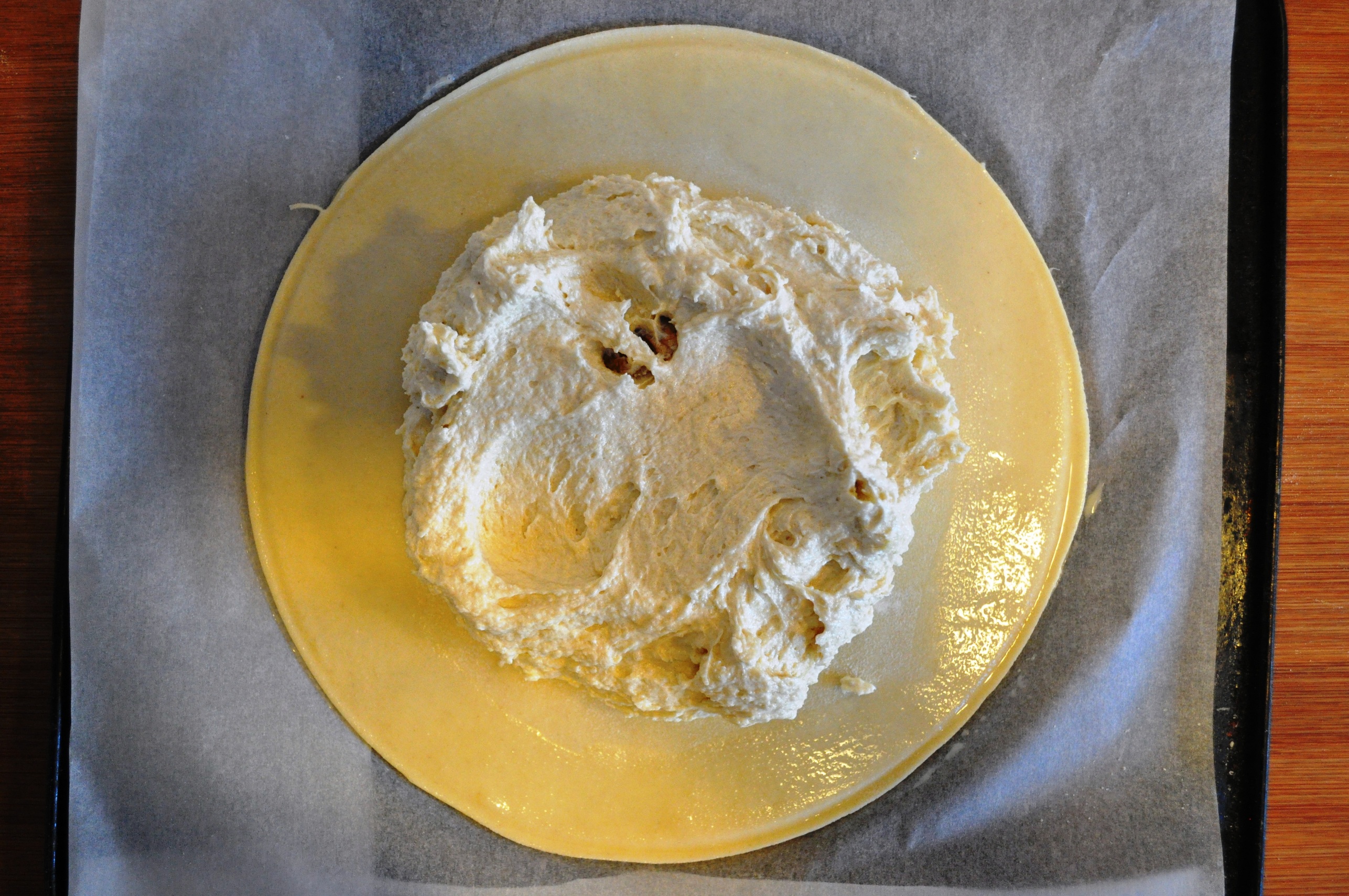
9. Put the almond filling in the middle of the bottom piece of pastry, leaving about 25mm all the way around the edge.

Add filling
10. Put a fève in the mix, making sure no one sees where it’s hidden.
11. Brush the exposed edge of pastry with water, put the other disc of pastry on the top then seal together tightly.
12. You can chill again now, leaving it until ready, even overnight. Again, cover or put in a plastic bag to stop it drying out.
13. Preheat the oven to 200C.
14. Brush the glaze all over the top.

Glaze and incise top
15. With a sharp paring knife, cut a pattern on the top. Traditionally, this involves diagonal lines or curving sunrays, but you can be as creative as you want. Stab a few holes too, to allow steam to escape. You can scallop or crimp the edge too, but see the above note.
16. Bake for about 30 minutes or until crisp and golden. (As soon as it’s out of the oven, you can also give it an extra glaze with sugar syrup.)

Baked 1
17. Serve warm or at room temperature, topped with the paper crown.

And forget about those silly New Year’s pronouncements to punish yourself for overeating over Christmas. Just moderate! So, for example, don’t eat an entire galette des rois on your own, greedily trying to win that crown. Fran got it – or half of it at least, a flaw in the plan of using a walnut – in her first slice.

Fran as the Epiphany galette des rois queen


1 Most count Christmas Day as the First Day of Christmas, though some start with 26th December, St Stephen’s Day, the British Boxing Day. If you follow the Julian calendar, you have to wait until 6 January to start the Twelve Days of Christmas. Thanks Alex and Nick for informing me of that with your Ukrainian Christmas celebrations on our Epiphany, yesterday.

2 Called variously gâteau des rois or royaume or reiaume, roscón de reyes or rosca de reyes, corona dels reis, tortell de reis and bolo de reis.

3 Fran also conjectures that the word relates to the Gaelic gall, which means “stranger”, but also “rock, stone” but it all gets a bit confusing when you learn the Breton language name for Breton galettes is Krampouezhenn gwinizh du.


Addendum

My folks visited at the weekend, and brought with them something given to them by some friends who live in Normandy, who bought it in their local patisserie – it’s a brioche des rois, another variation on the kings cake theme. None of us were sure what the red slices of candied fruit were – apple perhaps?

Brioche des rois


12 Comments

Filed under Baking, Discussion, Feasts, Pies & tarts, Recipes

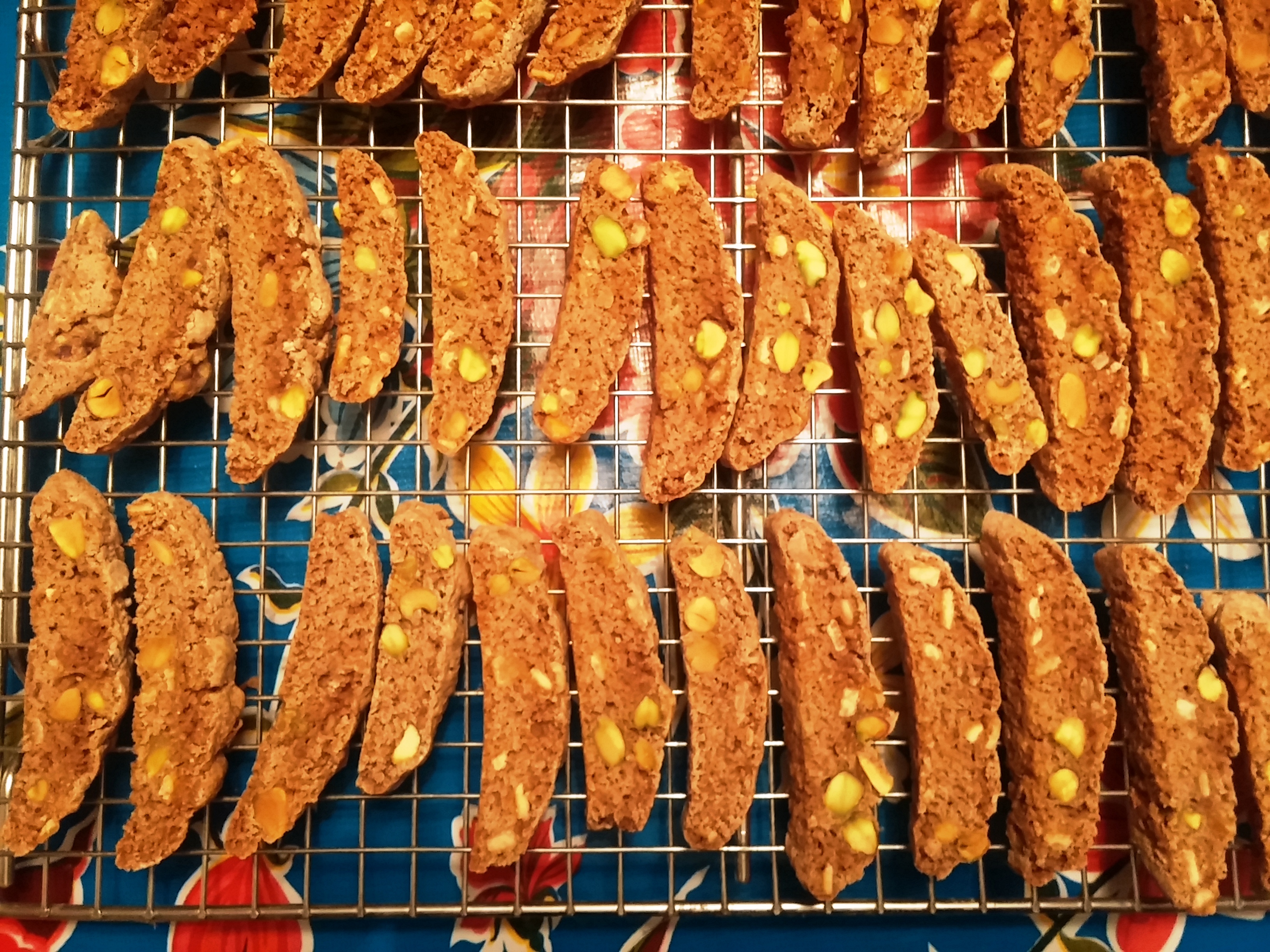
Christmas biscotti

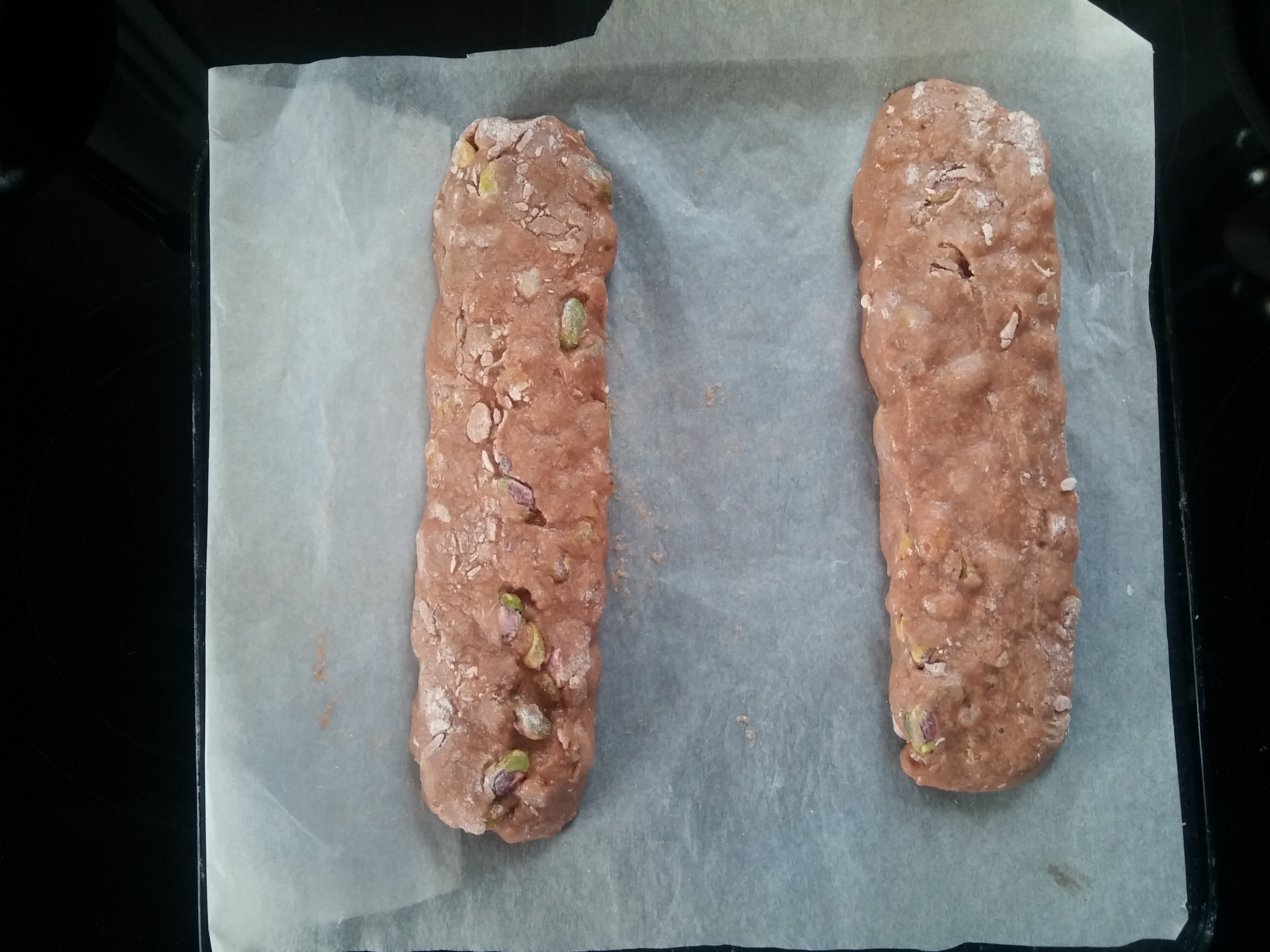
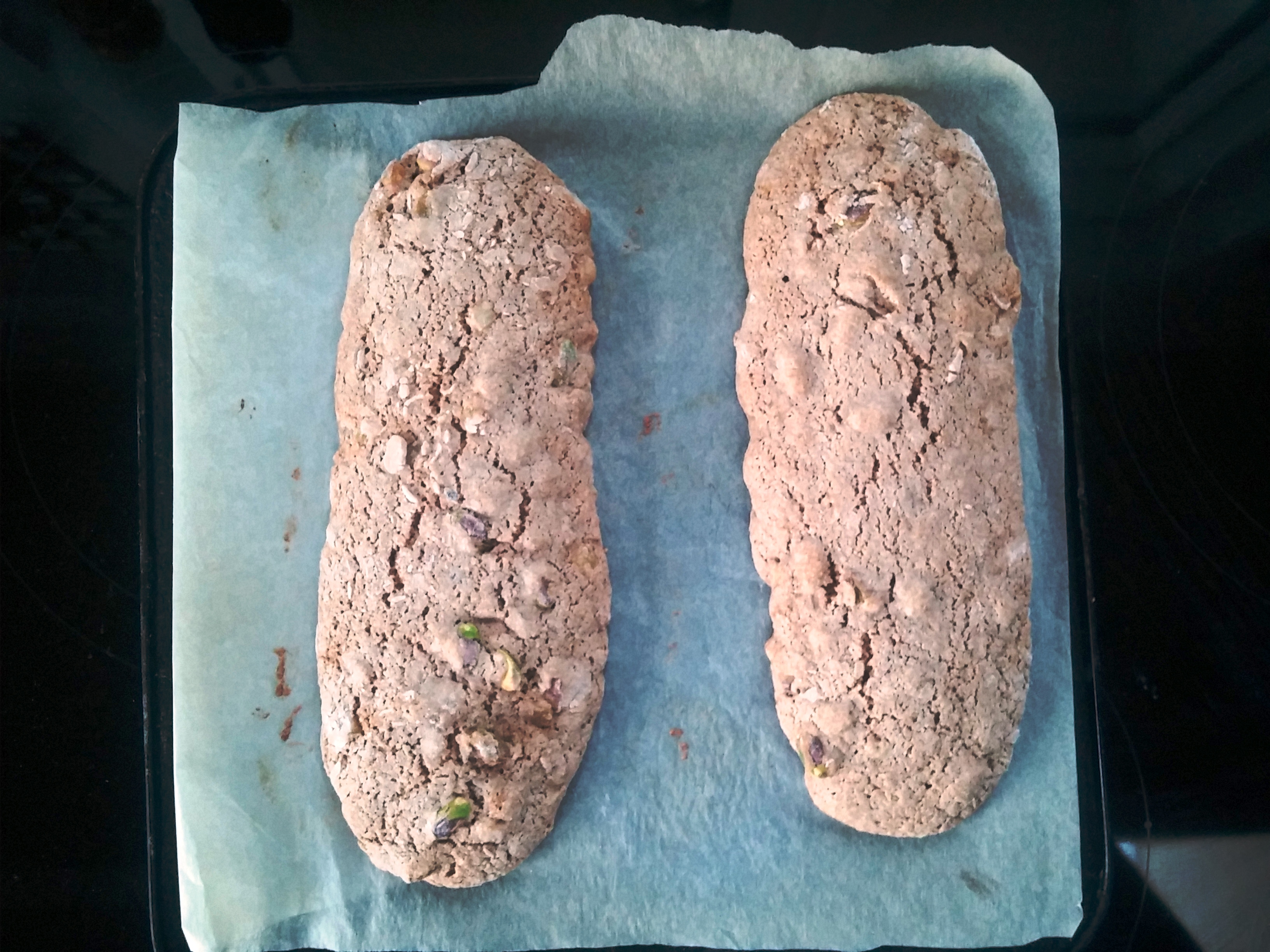
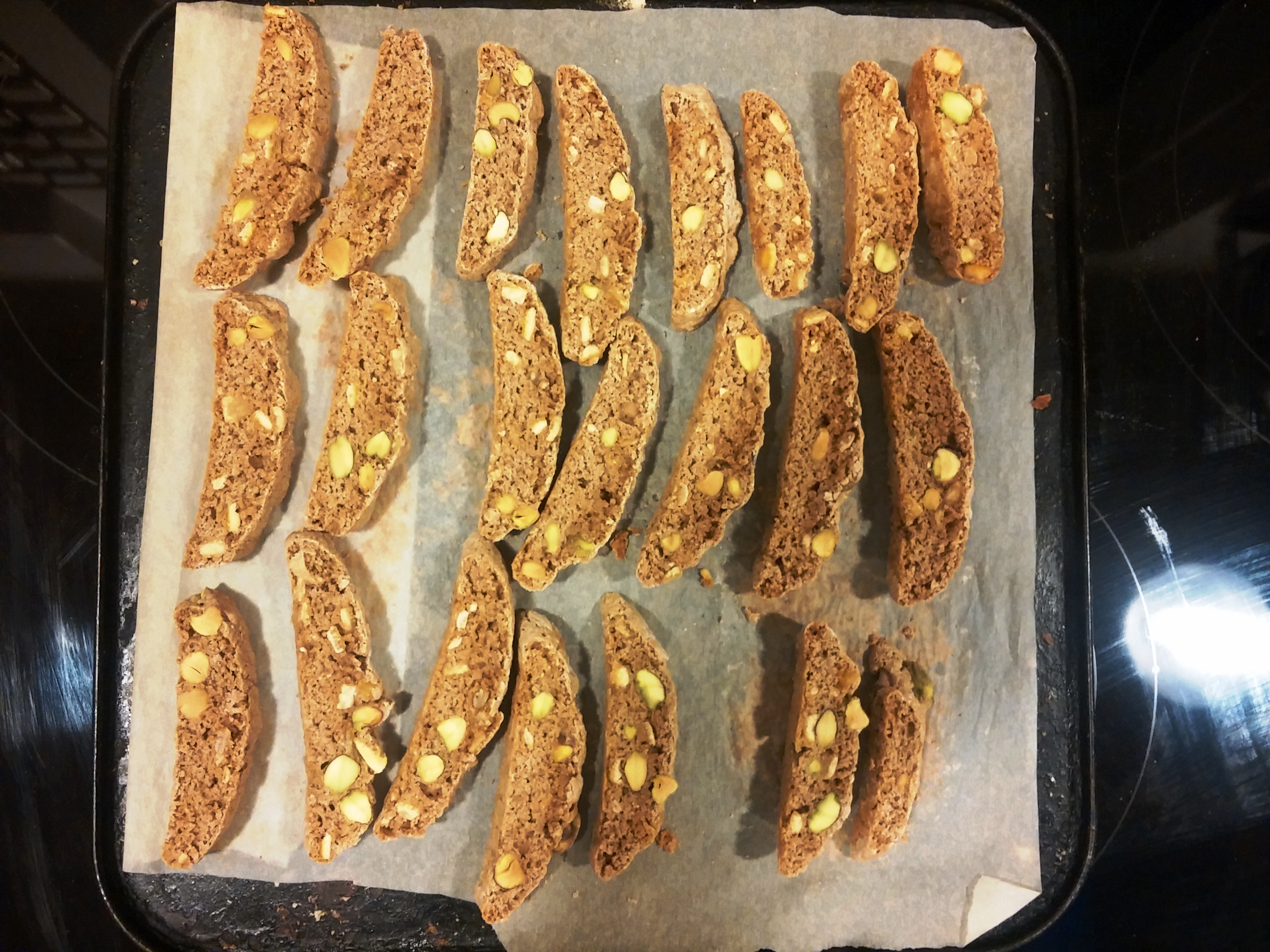
Christmas biscotti

So I wanted to create an all-purpose biscotti recipe, an equivalent to this eminently useful customised cookie recipe where you just make a basic dough then chuck in whatever else you feel like. The plan was to have a recipe that I could adapt to utilise some Christmas flavours, some spices, some peel – and use up some pistachios that were sitting in storage while we didn’t have a kitchen during our 12 weeks-became-24 weeks building project.

Here’s the Christmas version. I’ll post the all-purpose version when I’ve tried a few more variables.

3 cardamom pods
3 cloves
nutmeg
1/2 tsp cinnamon
250g plain flour
200g sugar (caster or granulated)
1 tsp baking powder
(30g raw cacao powder, optional – I just had some)
pinch salt
3 medium eggs, beaten (QB, see below)
100g pistachio nuts
85g candied peel

1. Preheat the oven to 180C.
2. Line some baking sheets with parchment.
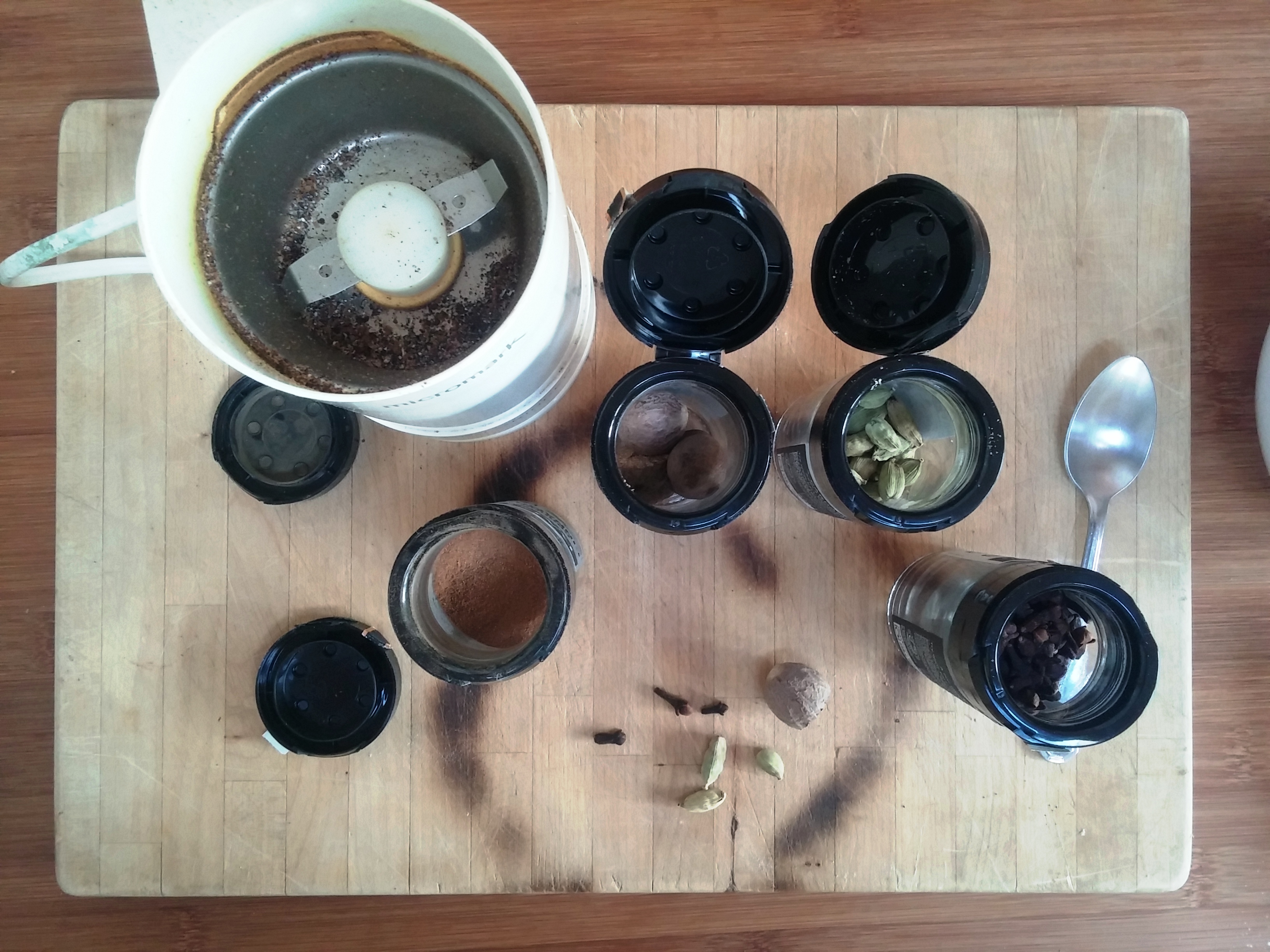
Christmas biscotti, spices

3. Prepare the spices: crack open the cardamom pods and take out the seeds then grind them up, along with the cloves. I use a mini electric grinder, but you could use a pestle and mortar (can’t find mine). Mix these spices with the cinnamon and a few grates of fresh nutmeg. Again, the spice mix is up to you really – all these spices are wonderfully evocative of mid-winter feasting to me, but if you don’t like or don’t have cardamom, for example, don’t worry.
4. Sieve together the flour, cacao powder if using, baking powder and spices and add the salt.
5. Make a dough by adding the beaten egg, a little at a time. You may not need to use it all. For example, my 3 medium eggs produced 170g of beaten egg, but I only needed 160g to make a dough that was malleable, not too dry, not too sticky. That’s QB – which is found in Italian recipes, is short for quanto basta, and means, “how much is enough”. In this case 160g was enough.

Christmas biscotti, dough
6. Add the nuts and peel and combine. Don’t knead it, it’s not bread, mix it just enough to homogenise.

Christmas biscotti, logs, unbaked
7. Form the dough into three slightly flattened logs, about 40-50mm wide, and place these on the baking sheets, sufficiently spaced for some spread.
8. Bake for about 20-25 minutes. You want the logs baked but not dried out, not still gooey. If they’re too gooey inside still, they’re hard to slice for the next stage and the second bake.

Christmas biscotti, logs, baked
9. Allow the logs to cool slightly then, with a serrated bread knife, slice, on a slight angle, into pieces about 10mm thick.
10. Return the biscuits to the baking sheets and bake again, for about 10-15 minutes. Take them out, turn them over, then bake again, to crisp up.

Christmas biscotti, sliced
11. Cool on a wire rack.

As they’re baked twice – biscotto literally means “twice baked” in Italian, from the Latin – they’ll be crisp and hard. They keep well in an airtight container and are suitable for dipping in a glass of desert wine, or a digestivo, or a hot drink if you’re being abstemious. It’s the season for abstemiousness right?

1 Comment

Filed under Baking, Biscuits, cookies, Recipes

Kladdkaka – gooey Swedish chocolate cake

Kladdkaka sliced

So this isn’t very Christmassy, but I’ve wanted to try making a kladdkaka for a while. I really must get a Swedish or Scandinavian baking book as I’m enjoying everthing I try making from recipes from that part of the world.

Kladdkaka is a kind of gooey chocolate cake. It’s unleavened – no baking powder, no soda, no yeast, so it’s not intended to be light and airy. Instead, the aim seems to be to basically leave the inside somewhat unbaked, so it’s moist to the point of runny, so it’s not unrelated to things like chocolate fondant and brownie.

In English, it can be called mud cake, but from what I can tell from online dictionaries, kladd means either draft, or rough, or daub, something a bit messy and unfinished, or goo, gunk. A Swedish-speaking friend meanwhile (he’s Finnish but is one of those annoying types who speaks multiple languages perfectly) says that “If something is ‘kladdigt’ it’s sticky, gooey, doughy, maybe even messy.” Thanks. Tom.

135g butter
55g cocoa powder
110g plain flour
320g granulated sugar
1 tsp vanilla essence
3 eggs
icing sugar, for dusting

1. Preheat the oven to 180C.
2. Grease and line a round tin, ideally 18cm or 20cm (7 or 8 inch).
3. Melt the butter then remove from the heat.
4. Sieve the cocoa and plain flour into mixing bowl.
5. Beat together the eggs and vanilla.
6. Pour the butter and egg mix into the flour, and beat together with the sugar until the mixture is combined.
7. Pour the mixture into the tin then bake for around 20-30 minutes. This is the important bit and will vary depending on the character of your oven. You want it to start pulling away from the edges of the tin, but not be baked dry in the middle.
8. Cool in the tin for about 20 minutes, then turn out.
9. Dust with icing sugar.

Kladkakka dusted

You can eat it warm, with ice cream or whipped cream. I had mine with custard, though I doubt Swedes do this; we just had some fresh custard in the fridge that needed me to nobly step in to finish it. It’s also very nice cooled completely, to a more truffle-like texture, and eaten with a cuppa.

7 Comments

Filed under Baking, Cakes, Recipes

Lebkuchen in my new kitchen

Lebkuchen

So we’re in week 22 or 23 of our 12 week building project now, with the few final jobs dragging on and on. But the good news is that we got a kitchen back in the past few weeks. We’ve now got it in pretty usable order.

It’s a fairly slow process getting used to a new kitchen: the layout, your workflow in the space, the new equipment. In this case, the only new kit we got was an oven. As a baker, this is obvious the most important thing. Especially as, suddenly, we seem to be poised on the verge of that annual blow-out that is Christmas.

Now, I love seasonal and festival specialities, and over the years I’ve enjoyed trying various international seasonal baked goods like stollen, panettone and kringle. I did the latter, a Scandinavian sweet bread, while living in Italy, and the panettone, the classic Italian sweet seasonal bread, while living in England. I’m in the process of revising my panettone recipe but in the meantime, I wanted to try another classic European Christmas baked treat – lebkuchen, the traditional German biscuit or small cake that’s related to other European sweets like British gingerbread biscuits and cakes, Danish honning hjerter (honey hearts), Polish Toruń pierniki, and various international spice and honey cakes.

As biscuits, these were considerably less of a challenge than an enriched dough when trying to get used to a new oven.*

Lebkuchen were a big part of our Christmas eating when I was younger – perhaps strangely as we’re thoroughly English. But my dad had business partners in Switzerland and Germany and the latter would send us a bag or tin of these spicy, soft German biscuits every year, possibly starting in 1979. Indeed, one large tin, decorated with seasonal scenes, is still in use by my parents as a biscuit tin 15 or so years after it was gifted to them.

Despite enjoying them over the years, I’d never tried to make them. So it was nice to see a recipe in The Guardian’s Cook section last week, from 2013 Great British Bake Off contestant and now newspaper food writer Ruby Tandoh. This was the first of Tandoh’s recipes I’d tried, if memory serves, and it worked well. I tweaked a few things though, partly as I like a tad more spice than she was suggesting, and as I’m pretty sure lebkuchen need honey in them.

I would also say the spice mix is up to you. Yes, they need ginger, but you can mix up the other spices to taste: basically you’re going for that medieval winter feast vibe, and traditionally lebkuchen can involve aniseed, allspice, cinnamon, cloves. As fresh spices are always more alive with flavour, if you have a small spice grinder or pestle and mortar, that’s great.

Here’s the original recipe on The Guardian’s site, and here’s my tweaked version:

120g unsalted butter, cut into small cubes
160g plain flour
1 t baking powder
5 t ground ginger
1/2 t cinnamon
6 whole cloves
2 cardamom pods
1/2 t aniseeds
100g ground almonds
80g soft light brown sugar
A pinch of salt
2 large egg yolks
60g runny honey

To glaze
20g water
100g icing sugar

1. Preheat your oven to 180C (fan oven)
2. Grind any fresh spices you’re using.
3. Sieve together the flour, baking powder and all the spices into a large bowl, discarding any big bits of cardamom pod etc.
4. Rub in the butter, until it resembles crumbs.
5. Add the ground almonds, sugar and salt to the flour and spice mix.
6. In a separate bowl, beat together the honey and egg yolks.

Lebkuchen 1

7. Pour the egg and honey mix into the dry mix and bring together with a fork or spatula to create a soft, moist dough.

Lebkuchen 2

8. Take lumps of the dough and roll into a ball. Ruby said “conker-sized” pieces, but as any British schoolchild of a certain age will know, conkers can seriously vary in size so I scaled mine at 30g. This resulted in 19 perfectly sized biscuits. Or go smaller, scaling them at 20g.

Lebkuchen 3

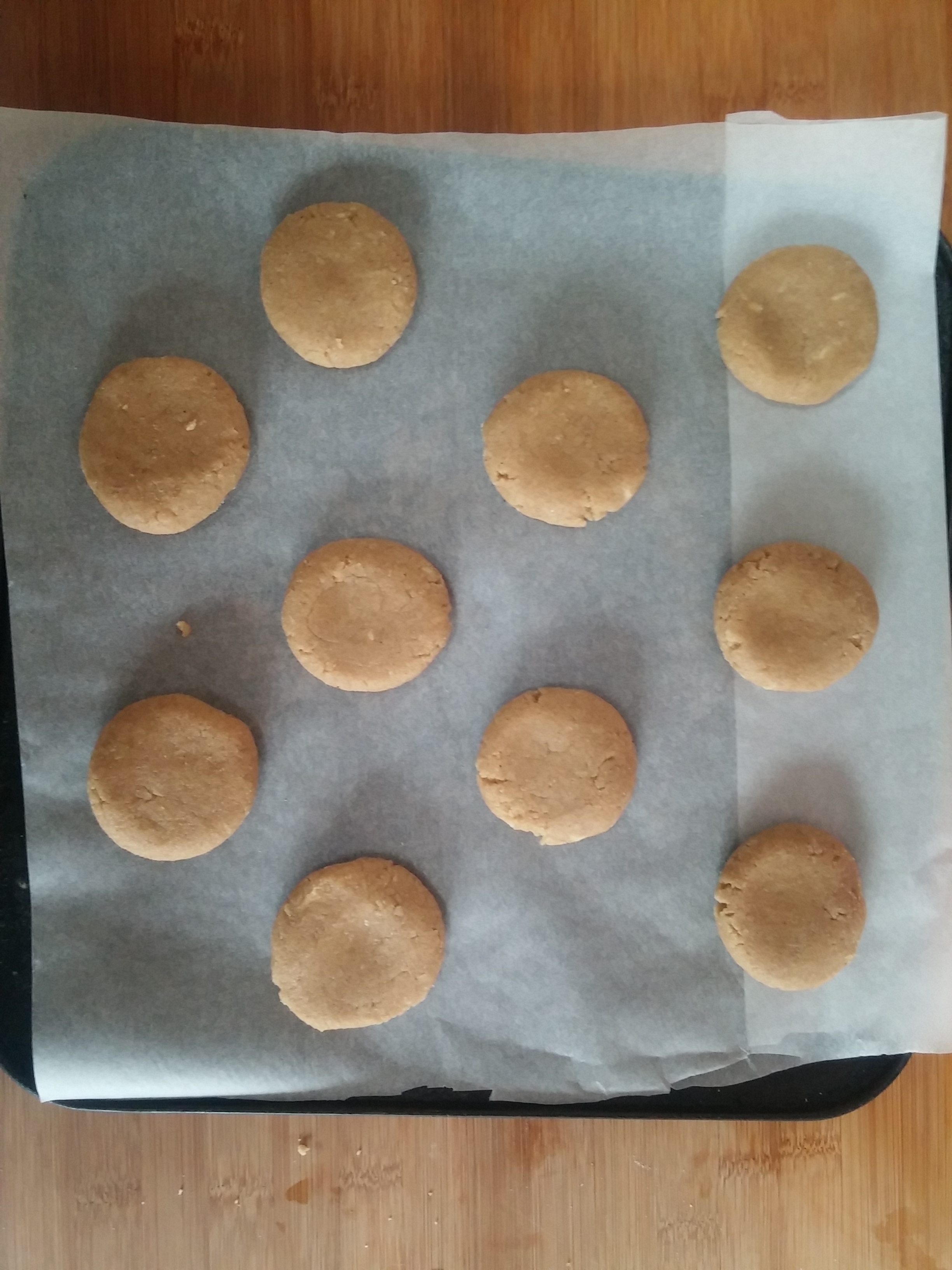
9. Squash the balls with your palms, flattening them out on lined baking sheets leaving some space between for expansion.
10. Bake for about 8 minutes then swap the trays around on the shelves so they bake evenly.
11. Bake for another 8 minutes or so – you want them nicely coloured, but not too dark. This will depend on the fierceness of your oven.

Lebkuchen 4

12. While they’re still baking, sieve the icing sugar into a small bowl then add a small dribble of water, about 20g, or 2 or 2 T. You want a runny, but not too runny, icing.
13. When the biscuits are baked, leave them on their trays and glaze by brushing on the icing “liberally” while still hot.

Lebkuchen 5

14. Leave to cool on the tray.

* A Rangemaster Professional + 110 Induction. My first impression is, sadly, that the ovens heat up slowly and are a good 10C less hot than it says on the dial. I should do a proper review at some stage as it’s not like you buy new cookers often, and it’s not like you can try before you buy.

2 Comments

Filed under Baking, Biscuits, cookies, Feasts, Recipes

64 Degrees, Brighton: great flavours, portion issues

64 Degrees, Brighton

We booked a table at 64 Degrees in Brighton ages ago. This 27-seat resturant opened in October 2013, but it’s taken us a while to get there. When we did, it started pretty well. They had a couple of beers from the innovative Wild Beer Co and I ordered their Madness IPA, thinking its hoppiness would be a good way of cleansing the palette between dishes. It was. It was so hoppy, and frankly American in style, I’d call it an APA. So while it’s not Wild Beer Co’s most interesting, it was a perfect accompaniment to what followed. Dishes. A lot of dishes.

Wild Beer Madness

The music is loud, the place is cramped, and I couldn’t quite hear the waitress. I beleive she suggested we should order three or four of the plates each as they’re small. Some are small – like the superb, delicate scallops with lemongrass and seaweed kale – but others are pretty substantial. The anchovies – crisp giants offset by gochujang – came by the dozen, while the venison balls were the size of golf balls, pretty dense and served on brioche, making for a hefty dish.

Venison balls, slaw, ricotta, on brioche

The result – we ordered too much and it slightly marred the experience. It also meant I couldn’t justify ordered the “Chocolate, hazelnut, hot & cold” for dessert, dammit! Never mind the fact that, along with Silo, 64 Degrees seems to be the most interesting food place in Brighton at the moment.

Anway, I cannot stand wasting food – I’d go so far as to say it was criminal. It takes a lot of energy to cultivate, transport and process fruit, vegetables, grain and particularly meat and fish, even when, as with 64 Degrees, the emphasis is on local produce. And we in an era when climate change having a significant impact on our civilisation, we need to think carefully about energy use.

Every time you throw food away you really should consider the repucussions: ethical, environmental and even financial (it costs a lot to shift stuff to the landfill. Never mind the fact that you’ve paid for the meal anyway).

So there I was trying to hoover up anything left by my companions. And I ate too much, and I felt a bit ill –  both inbody and in conscience. Which isn’t a great way to end a meal, especially an expensive meal I’d been looking forward to.

64 Degrees menu 20 November 2014

So I want to return to 64 Degrees: I like their menu, I just need to order more carefully. In the meantime, I think they need to do a bit of calibration of their portions, and when the waiting staff are talking you through the menu, they need to be honest about the difference between a fairly small plate of mackerel and a massive pile of potato knödel. These dishes are not tapas. I didn’t get the impression you could order as you go along. So if you’re going to order it all at the start, it’d be good know how much is enough.

Rare mackerel, with peanut crisps and a tomato foam

Info:

53 Meeting House Ln, Brighton BN1 1HB
64degrees.co.uk  | twitter.com/chef64degrees
info@64degrees.co.uk | 01273 770115

2 Comments

Filed under Ale, beer, Restaurants etc

Silo, Brighton: ardent principles and excellent food

Silo entrance crop

Not living in Brighton, I’m sometimes a little late to the party when new venues open. Not too late though – Silo opened in early October and I made it there yesterday. Apparently Fran was going to send me this Guardian article a while back, but forgot. So thanks to Rosie Swaffer for a reminder via her blog.

This is really my kind of place, but perhaps because it’s so in line with the sorts of food issues I’m interested in – such as non-industrial food, which they call “pre-industrial” – it makes me particularly critical. When I sat waiting for my food, which was slow-ish for an urban weekday lunchtime, I nitpicked. But most of the nitpicking in my notepad feels irrelevant now. The main criticism that lingers is how they use jars for drinks. Jars are for storage, they have lips and awkward necks. For drinks you need glasses and cups. I don’t think providing the right piece of kit for activity in question is a big compromise to the venue’s ardent principles. After all, they do give you knives and forks, not twigs or bits of pipe.

Flipping jars

But yes, Silo is a very principled place. Its founder and chef, Douglas McMaster, has tried to create a venue that overcomes much of that most monstrous of crimes in modern life: our wastefulness.

We are a shocking species. The garbage, much of it plastics, we produce and liberally sprinkle all over the environment is shameful. Last night was Bonfire Night here in Lewes, and while it was spectacular, and a wonderful traditional celebration, early this morning the town looked like a landfill site, thick with single use food and drink packaging. It’s truly horrible. How many tonnes of crap did the fiery party produce?

Modern society squanders resources like they’re going out of fashion, and restaurants are no exception. Indeed, they’re particularly bad, with food generally a commodity that’s both over-packaged and overly energy reliant. So it’s not just physical waste, food involves vast amounts of wasted energy too. McMaster is trying to tackle all this head on. Interestingly, a photographic exhibition in Lewes railway station features another café-restaurant that has a zero-waste policy – but it’s in the US. Silo may well be Britain’s first. Bravo.

Silo’s intentions greet you as you enter in a chalked up “mission statement”. As much as I dislike this kind of American corporate terminology, I wholehearted agree with the message of this one.

Mision statement

Of course, good intentions are all very well, but a restaurant is always going to be about the food, and the taste. Luckily, Silo comes through ably on this front, or at least it did on the strength of the lunch I had.

I really like the menu – it’s not overlong, indicating an emphasis on what’s in season, or available locally, or available at a reasonable energy cost. McMaster makes a point of serving the food and engaging with clients, and as I had both a chunk of their delicious bread, made from grain ground on site, and a risotto, I asked him about the source of their grains, as rice isn’t exactly a British crop.

Bread, recycled plastic trencher

He says that while utilising local produce as much as possible is important, it’s not the only deciding factor: they weigh things up and have to be realistic. A risotto needs rice. Orzotto is all well and good, but barley (which does grow in Britain) doesn’t cut it when you want the qualities of rice. He also made the point that while you could source an orange grown in Cornwall, it may well have required a higher energy footprint to grow and transport than one grown in the more suitable climate of southern Spain.

Risotto

As for that risotto, it was made with brown rice, and featured mushrooms that, McMaster said, were fruited on premises, downstairs (presumably a cellar). Its earthy, meaty flavours were offset with a tart salsa verde (featuring what the waitress called cilantro – that’s coriander in British English) and a blob of curd cheese. The umami was intense, perhaps because this was a fermented rice risotto. McMaster explained the rice was soaked then a locally made miso-type paste  was added. I said the maker of the paste sounded like a local version of Sandor Ellix Katz, the American fermented foods guru, and McMaster concurred, and also said they hoped to get Katz in for an event.

Fermentation is a time-honoured means of both preserving foods and making them more digestible and it’s something McMaster is clearly keen on as the menu, which is broken down into daily dishes in six categories (salad, “Plant”, “Dairy”, “Fish”, “Meat” and “Wild”) also featured fermented ramson (wild garlic) which, in an amusing twist of syntax “may contain shot”. I think they meant the partridge it was served with.

While the food was brilliant the language on the menu was a tad iffy, even containing a dreaded grocer’s apostrophe. Another minor criticism – when I asked the very friendly and attentive waitress a few questions about where ingredients came from, she wasn’t sure. I would say that a venue where provenance is so important should brief the waiting staff a bit better.

Silo bread

Overall, this really was one of the best meals I’ve had in a long time. I despair sometimes, having lived in Rome then returned to small-town England. Getting great food in the former was easy, getting it in the latter is a challenge. Lewes is pretty rubbish for eating out but hopefully I can get to Silo whenever we visit Brighton. Tomorrow, perhaps. So much more to try on the menu, especially as it changes daily, depending on what’s readily available.
Talking of which, I drank  apple juice, made not just with English apples but apples from Stanmer Park, on the edge of Brighton. Earlier in the day I’d been in the supermarket trying to find apple juice made with English apples, which have been cascading off the trees here the past few months. There was none. I truly hope Silo succeeds, and also succeeds in taking its place in the dialogue that encourages a move away from this kind of absurdity, and a move away from the over-packaged, energy squandering, largely industrial, frequently toxic “food” we seem all too happy to accept in Britain.

Silo interior

Info:
39 Upper Gardner Street, Brighton BN1 4AN
silobrighton.com | twitter.com/Silo_Brighton | instagram.com/silobrighton
contact@silobrighton.com | 0330 3352368

3 Comments

Filed under Restaurants etc

Harveys Bonfire Boy Strong Ale 2014

Bonfire Boy 4

It’s been a busy week here on the building site, so escaping the frenzied activity of plasterers, plumbers, window fitters and carpenters this morning I went into town – and had to visit the Harveys brewery shop, as their famed Bonfire Boy had just appeared. In fact it was bottled just this morning, the batch prepared to accompany the annual Bonfire Night, aka Guy Fawkes Night, celebrations, 5th November. They didn’t even have a button set up on their till, so I reckon I was the first customer to buy it.

Since I was a kid in the 1970s, when we used to run through the embers of the massive fire on the site of Oram’s Arbor in Winchester, Bonfire Night has become a sorry, much diminished thing in many parts of the country, local council regulations banning the actual bonfire in many places. It’s pathetic. What’s Bonfire Night without a bonfire? Luckily, Lewes is the world capital of Bonfire Night. It’s a very, very serious business here, with neighbourhood Bonfire Societies, dressed in colour-coded striped Guernseys, white trousers and various themed costumes, holding their own processions, burning barrel races, fireworks displays and bonfires in a continuation of traditions that date back to the 17th century, or earlier.

The Lewes Bonfire historian – with whom I share a surname – Jim Etherington says “Any account of what form 5th November celebrations in Lewes took in the years immediately following the discovery of the Gunpowder Plot in 1605 remains conjecture” but writes about solid accounts from the year 1679. “The rolling of blazing tar barrels through the High Street is recorded for the first time” in 1832. Years of tension between the Bonfire Boys and local authorities continued until the Bonfire Societies began to form in the late 1840s, giving the anarchy some organisational tethers. As with many British folk traditions, consolidation and honing took place in the Victorian era, and over the intervening decades the events have become world famous – with a reported 80,000 people sometimes packing the town, which normally has a population of around 15,000.

Bonfire Boy 2

Harveys first brewed Bonfire Boy in 1996. It was then called Firecracker, and commemorated the work of the fire brigade and their work fighting a blaze at the brewery in July of that year, but it subsequently became the annual Bonfire Night brew.

It’s a delicious beer, a dark amber colour, very little head and an aroma of apples and toffee – appropriately enough, given that toffee apples (aka candy apples in American) are for many Brits a treat closely associated with Halloween and Bonfire Night, both arguably modern incarnations of the Celtic Samhain. The beer also has a taste of apple and toffee, along with a deep maltiness, like well-baked bread or warming porridge with golden syrup, and hints of Prunus genus fruits like cherry and plum. It’s a smooth, full-bodied beer, confident in its 5.8% strength. It’s one of those beers that feels really substantial when you roll it around in your mouth, almost like eating an autumnal stew followed by a hot fruit pudding.

I’m looking forward to having a few more come The Glorious Fifth.

Bonfire Boy 3

6 Comments

Filed under Ale, beer, Misc