Monthly Archives: July 2013

Baladin and del Borgo beers at No.Au bistrot, Rome

Baladin Nazionale, Bira del Borgo Keto Reporter at no.au

Just to the northwest of the faintly grotesque tourist nexus that is Piazza Navona, Rome’s Centro Storico (“historic centre”) offers a maze of streets, alleyways and piazzette. There, it’s possible to wander, get lost, find yourself again, elude the tourists mobs, bump into them again, and even find filming locations from Eat Pray Love (ugh). Among the cobbles and crumbling apartment blocks are numerous bars, restaurants and gelaterie. Our destination last night was No.Au, a bar/restaurant located between the handsome Chiostro del Bramante and the somewhat chichi Via dei Coronari (which even boasts one of Rome’s few cupcake shops these days. Bloody cupcakes).

No.Au, which opened in summer 2012, is a collaboration between several big names in Italy’s craft brewing and food scene who wanted to “recreate the atmosphere of a Parisian bistro, with quality products and good company, in the centre of Rome.” You’ll find the whole spiel (in English), and an explanation of the name of the place, here on the Baladin site. Why is it on the Baladin site? Because one of those (five) big names is Teo Musso, the founder and master brewer of Baladin, Italy’s biggest craft brewer.The bar and taps at No.Au Rome

So key is Musso in the Italian craft brewery scene, a biography has even recently been published. It’s called ‘La birra artigianale è tutta colpa di Teo’ (“Baladin. Craft beer is Teo’s fault” – ie Musso is to blame, ie responsible, for the whole craft beer scene in Italy.) Presumably the title is slightly tongue-in-cheek, but certainly Musso is among the most influential of Italy’s craft brewers. His collaborators here are Luca Tosato (also of Baladin), Leonardo di Vincenzo (master brewer of Birra del Borgo), Paolo Bertani (also of Borgo, and previously Baladin) and Gabriele Bonci (renowned pizzaiolo and TV regular whose company produces the breads for Open Baladin bar. We did a pizza course with him last year).

It’s no surprise, then, that at No.Au, the main beers you’ll find on tap are from Baladin and del Borgo, but they also have others, in bottles, both Italian and international. Beside where we sat was an old box of US brewer Dogfish Head’s intriguing/strange Midas Touch. I stayed with Baladin for my first choice. As I’d tried a lot of the offerings on tap, I went for a Nazionale (6.5% ABV), which the friendly, helpful waitress described as a “simple” beer. It’s described as an Italian Ale – as it’s top fermented and also because it’s made with entirely Italian ingredients. This includes the hops – which was a pleasant surprise, as so many Italian craft beers seem to depend on international hops.
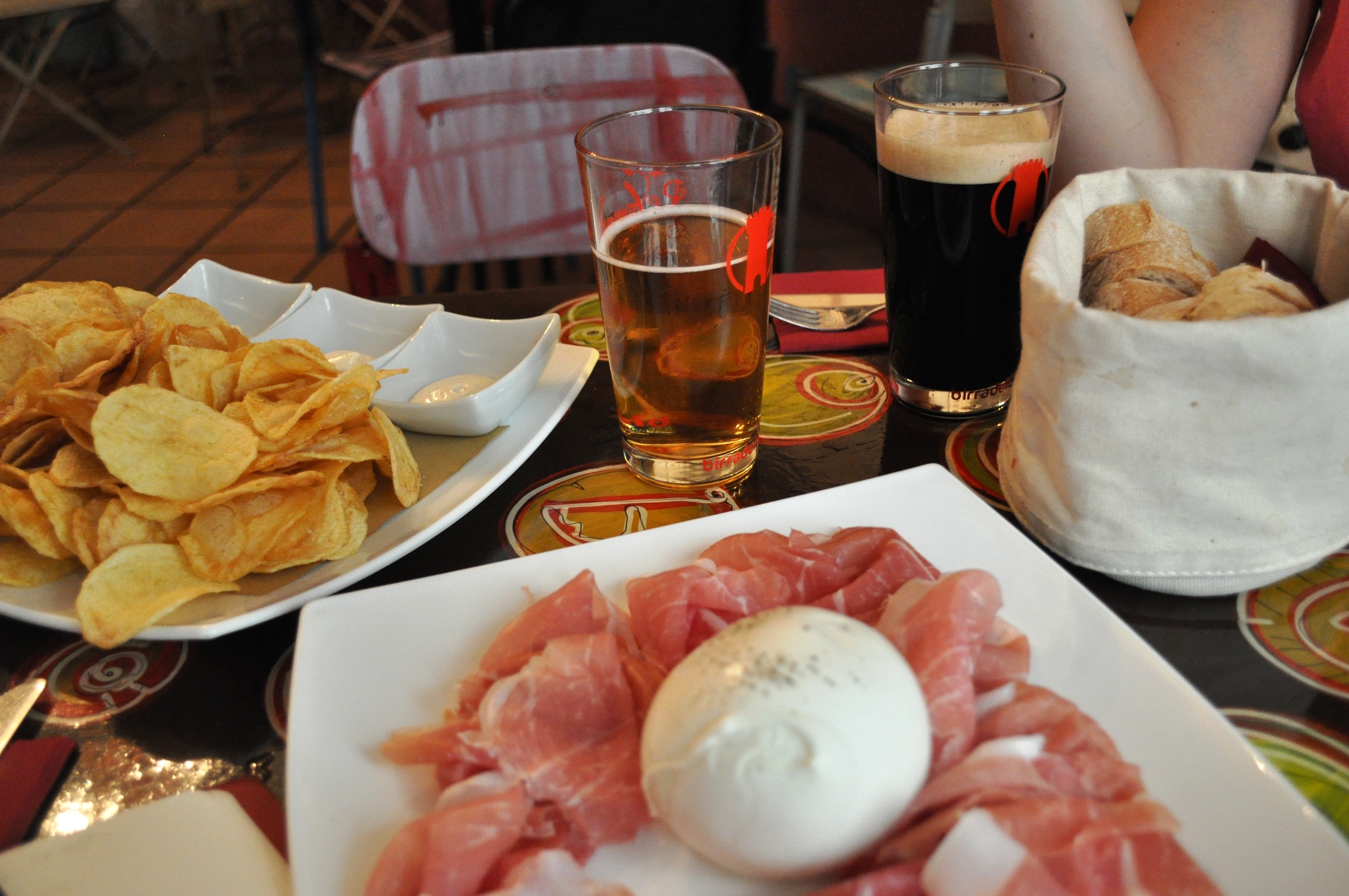
No.Au Rome snacks

This really was a pleasing beer, perfect to accompany the antipasti we’d ordered:  a plate of bufala e prosciutto and some very fine freshly cooked potato crisps/chips accompanied by three flavours of mayo. As the waitress said, it was simple – a golden yellow, with a quickly subsiding soft head, very subtle aroma of ginger and lemon, and a fairly sweet, mildly hoppy smooth taste (27 IBU). Molto beverina.

Fran’s first beer was Keto RePorter (5.2% ABV) from Birra del Borgo. This porter is made with the addition of Kentucky tobacco leaves, but it was also very mild from the few sips I had.

As the beers were served in half-pints, and we’d finished the antipasti, I fancied trying something a little more interesting, so the waitress recommended Baladin’s Open Rolling Stone, which they described as an Italian APA on their blackboard, but as an IPA on Ratebeer. Either way, this beer, branded for the magazine of the same name, is very tasty. It’s relatively strong, at 7.5%, and had a slight perfume of camomile and a reasonable head. At first taste it was soft and sweet, but this gave way to a drier, slightly hoppy flavour (it’s still only a fairly moderate 36 IBU though, according to Baladin’s site). I was enjoying this one, but about half-way through my half-pint it started getting a bit detergenty, losing its crispness.

Wine, food, beer at No.Au Rome

Fran’s second one was a Genziana from del Borgo. I’ve had this before, though didn’t try it last night. It’s a really interesting beer made with bitter gentian flowers.

When some friends arrived, we ordered some more food. The emphasis here is on snacks and food that’s either stirato (“ironed” ) or crudo (“raw”). The ironing takes place on a piastra (flat top grill).  I was slightly surprised to see a lot meat available (such as sandwiches made with burger buns and sliced roast beef), as over at Katie Parla’s site she reports how Bonci’s places are going vegetarian for a month to protest Rome’s lack of appreciation of Lazio’s farmers and producers. I asked the waitress, and she said the menu was in transition. So if you visit any time in late July, there may be more vegetarian food.  I had seppia (cuttlefish), which had been ironed in a folded sheet of parchment, with zucchini. Served with an ink mayo, it wasn’t bad, but I would say this place is more about the drinks and antipasti, more a place for aperitivi or after-dinner drinks.

Talking of after-dinner drinks, when we’d eaten, I ordered one more (hey, that still makes just one and a half pints).  I got Baladin’s Isaac, a 5% blanche made with orange zest and coriander and it was a perfect palette cleanser.

No.Au exterior, note like of sign

All in all, a very pleasant evening. Although the place only started to fill up, and the lights went down, around 8.30-9.00pm, it’s definitely a good place to visit for quality Italian craft beers. And plates of cheese. And maybe even some wine. Oh, and the music was pretty good too. All this within a stone’s throw of Piazza Navona and its thoroughly-worth-avoiding eating and drinking options.

Info
No.Au, Piazza di Montevecchio 16A, 00186, Rome
No.Au blog / noauroma@gmail.com / 06 45 65 27 70

Baladin brewery (English site)

Birra del Borgo brewery (English site)
4 Comments

Filed under Ale, beer, Bars, pubs etc, Breweries, Restaurants etc

Maritozzi at Regoli Pasticceria, Rome

Pasticceria Regoli, Rome

We – me, Rachel, and Luca, 22 months – went on a field trip this morning. To do research. Honest. Serious research. Which involved eating serious cream cakes. Specifically maritozzi con la panna (maritozzi “with cream”). Specfically at Pasticceria Regoli.

This is what I wrote about maritozzi some time in 2012:

“Typical to Lazio, or even more specifically, Rome, this is a vaguely more exotic cousin to a British cream bun, in that it’s a bun made with a sweet yeasted dough, which it split after its baked and cooled and filled with cream. Go on, Google both and the pics will look remarkably similar. The only major difference is that the maritozzo dough may contain raisins or sultanas, candied peel and pine nuts.

Pasticceria Regoli, Rome

According to Italian Wikipedia they (or an older sweet bun) were given to people getting married and the name relates to that – possibly in Romanesco. (In standard Italian marito means husband.)”

I can clarify that a little more now, after a visit to Regoli, and a few hours to come down off the semi-delirium induced by consuming about a litre of whipped cream slathered on a sweet bun and a hot journey across Rome. Regoli is a renowned pasticceria and came highly recommended by Rachel and her knowledgeable foodie contacts.

We headed across town on the number 8 tram. It’s too hot to walk in Rome now without getting horrendously sweaty, and the tram is a far more civilised way to travel than the bus. Regoli is in Esquilino neighbourhood, roughly between the Basilica of Santa Maria Maggiore and Piazza Vittorio Emmanuele II, location of the intriguing but easy-to-miss-among-the-snoozing-drunks Porta Alchemical. Oh, and MAS, the most bonkers shop in Rome. But that’s another story.

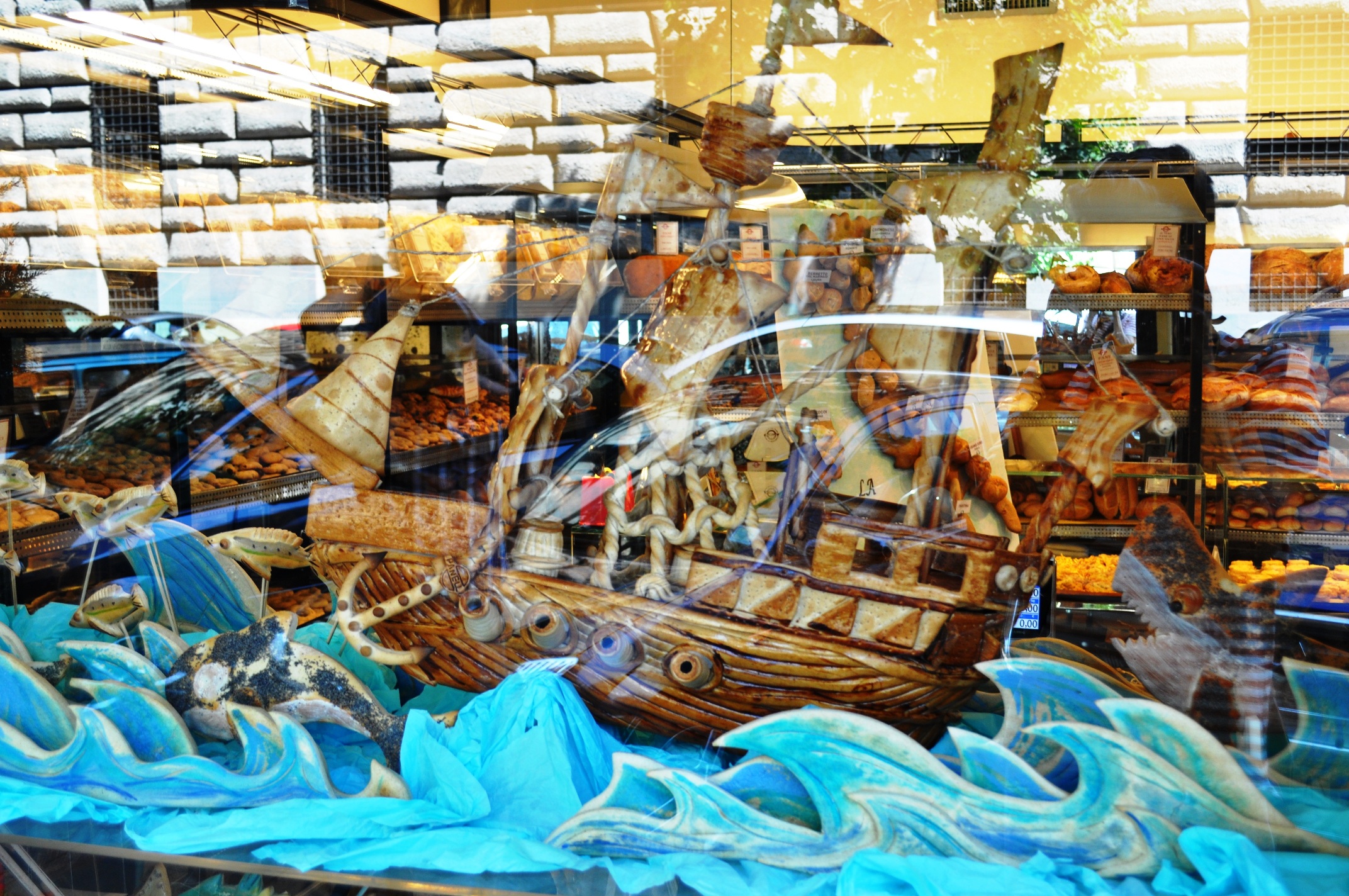
Panella window display

It’s just around the corner from Panella bakery, which has some impressive bread sculptures in the window, but that’s another story too. (Panella’s website – beware un-turn-offable audio spam.)

Regoli (“dal 1916”) itself is a modest-looking establishment, its window display its wares. And those wares – including the baked goods inside – consist entirely of pastries and biscuits, with a choice of perhaps a few dozen. Now, I find this reassuring for any establishment – a degree of focus. Do just a few things, and do them well.

Serious maritozzi at Regoli, Rome

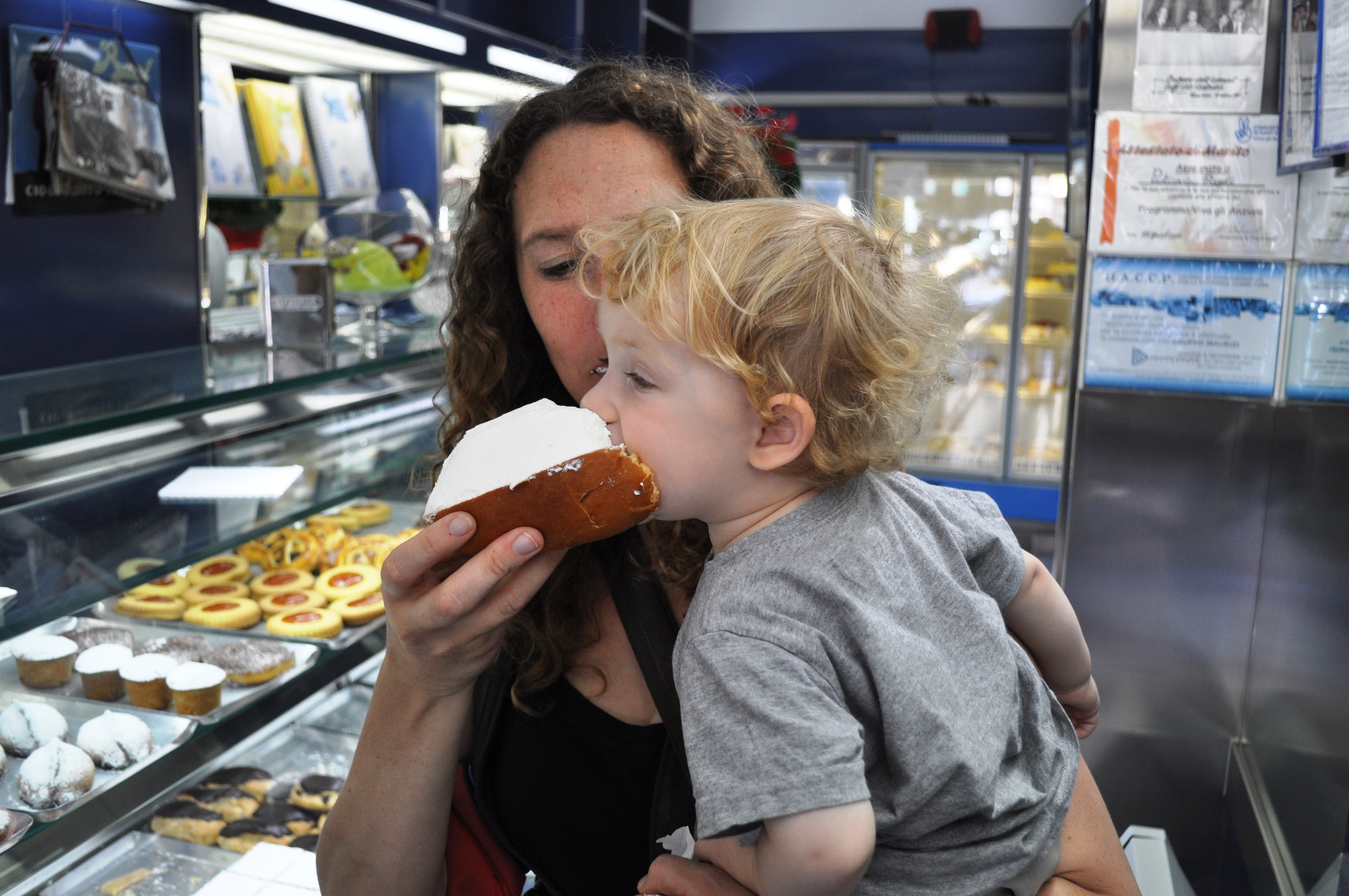
I must admit I found Regoli’s maritozzi con la panna slightly intimidating. Whereas many of the maritozzi seen in Rome are a finger bun with a modest split along the top filled with smoothed-off whipped cream, Regoli’s version were split in two, folded outwards and totally covered in a thick layer of whipped cream. By weight, I’d imagine each bun was equal parts dough and cream. I like cream, but, well, I couldn’t even imagine how to eat it, at least not in a civilised manner.

Rachel didn’t seem to have any reservations though, and leapt in to make the purchase. Luca didn’t have any reservations either and dived into all the creamy goodness face-first.

Luca dives in

I struggled with my wife’s DSLR in one hand and the massive treat in the other. Cream escaped. It wasn’t pretty. But boy was it tasty. Sure, it was very like a British cream bun, but it just felt like such a treat, such an epic indulgence, guzzling all that cream.

We chatted a bit with the staff, and it does sound their maritozzi are made with a fairly standard enriched bread dough. They also sold maritozzi quaresimali – Lenten buns. Even though it’s July. These differ in that they don’t involve whipped cream, but instead the dough contains dried fruit (sultanas or raisins), candied peel (probably cedroCitrus medica), zest and even pine nuts. As such, they’re not dissimilar to something like a hot cross bun, but in a finger roll form. Regoli’s combination of dried fruit and citrus flavours give them a delicious tang.

maritozzi quaresimali, Regoli, Rome

So all in all, a good field trip. Hard work though. Despite how much of a glutton I am, I don’t think I could handle a Regoli maritozzo con la panna more than a few times a year, given the truly epic amount of whipped cream involved!

My maritozzi con la panna recipe can be found here.

12 Comments

Filed under Bakeries, Cakes, Cakes (yeasted)

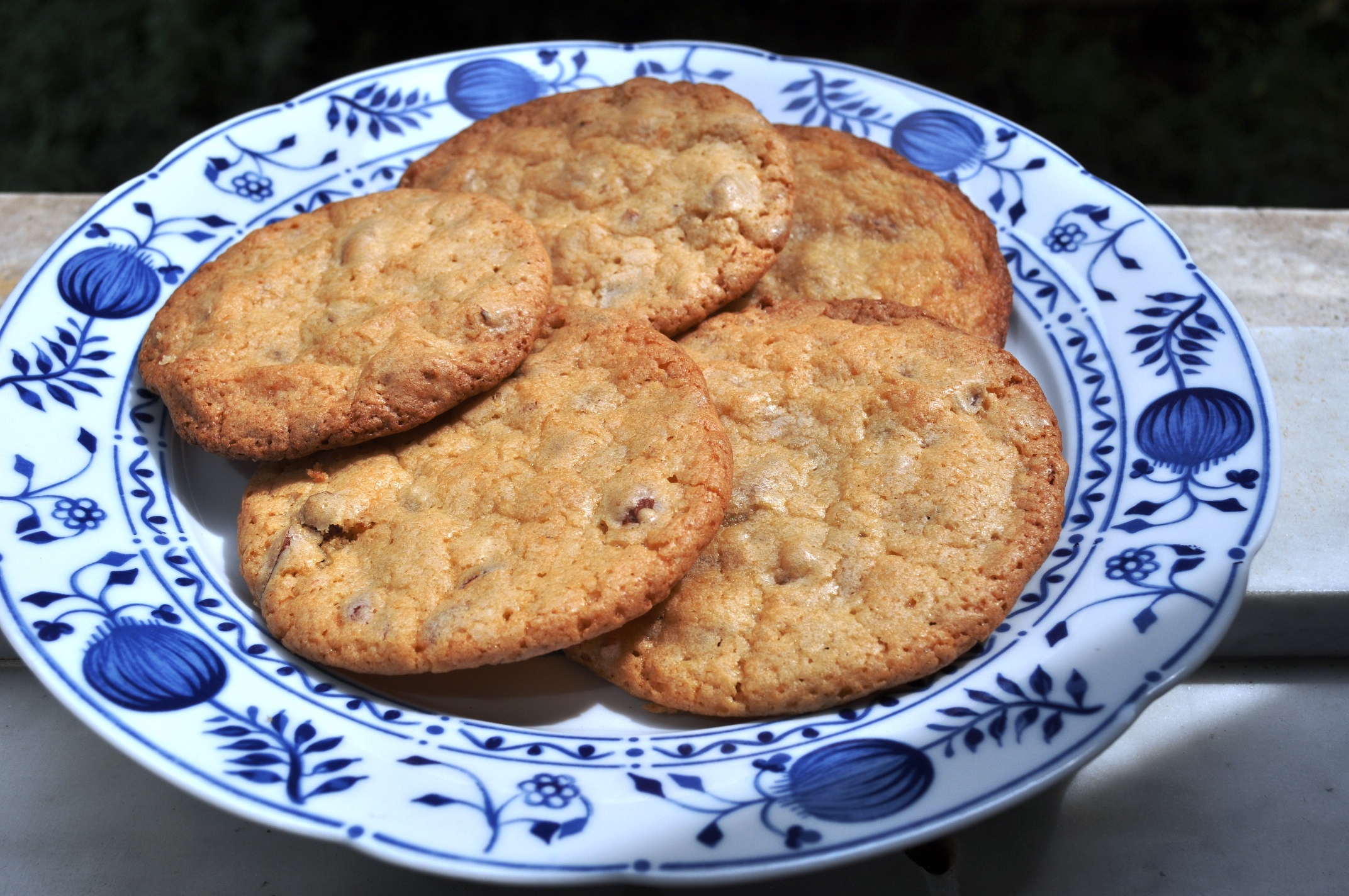
Almond and candied peel cookies

Almond and peel cookies

A few weeks ago, I made some cookies using almonds and candied peel (ideally homemade, or at least handmade). The flavour was great, but the cookie wasn’t quite right. So I thought I’d try similar flavourings again, but with a much more basic cookie recipe. It’s v simple.

So here it is.

125g butter
100g caster sugar
75g soft brown or demerara sugar
1 egg (with the white and yolk weighing about 50g)
1 t vanilla essence
1 t almond essence
100g plain flour
80g ground almonds
1/2 t baking powder
1 t cinnamon powder
50g candied peel, roughly chopped
50g plain almonds, roughly chopped

1. Preheat the oven to 190C.
2. Melt the butter, then combine with the sugar in a bowl.
3. Add the egg and essences and beat.
4. Sieve in the flour, ground almonds, cinnamon and baking powder. The ground almonds probably won’t go through the sieve entirely – don’t worry, just dunk the rest into the mix.
5. Add the chopped peel and nuts, and combine to form a fairly loose cookie dough.
6. Put desertspoonfuls on baking sheets lined with parchment.
7. Bake the cookies for around 10-12 minutes, until browning nicely.
8. Cool on a wire rack.
9. Enjoy.

1 Comment

Filed under Biscuits, cookies, Recipes

Revelation Cat beers at Brasserie 4:20, Rome

Brasserie 4:20 Rome, the bar

Brasserie 4:20 is not in a prepossessing location. Sure it’s located not far from Porta Portese, a 17th century gate in Rome’s 3rd century Aurelian Wall. And sure the actual street, Via Potuense, is historical, constructed in the 1st century AD to connect the city to Portus at the mouth of the Tiber. And sure the section where Brasserie 4:20 is located comes alive on Sundays for the Porta Portese market, a kilometre-plus of stalls selling tat clothes, cheap electricals and bric-a-brac. It’s even the place to go in Rome to buy bikes or scooters of occasionally dubious provenance. (Porta Portese is one of the locations of Antonio’s desperate search in Vittorio De Sica’s unbearably heartwrenching neorealist classic Bicycle Thieves [Ladri di biciclette, 1948]: go to 9:52 here.)

But, frankly, this stretch of Via Portuense is a scruffy rat-run.

At rush hour, it’s an untrammelled racetrack for Rome’s horrendous car population, and not a great place to tackle on foot – there are no pavements, just potholed gutters. One side of the road is given over to semi-derelict buildings, wasteland and one restaurant overlooking the Tiber. The other side, where 4:20 is located, consists of a large, graffitied wall punctuated with arches. Even when 4:20 is open, it doesn’t exactly look inviting – a dark entrance in the wall, a few smokers outside.

So I’ve walked past dozens of times, without even quite making it inside. Shame on me really, as it’s a) not that far from where I live and b) one of Rome’s most significant birrerie (beer bars).

We resolved to finally visit on Saturday, meeting several Italian friends, many of them counfounding stereotypes by enjoying good beer as much as wine.

Fortunately, at 5.45pm on a Saturday the stretch of Via Portuense was quiet, Brasserie 4:20 safe to approach on foot. The bar was quiet too as although the sun is well and truly over the yardarm as far as we (and other Brits) are concerned, 6-ish is a freaky time to have a drink for Italians, as one of our friends commented straight away on their arrival. Still, at least it meant we had our choice of seating.

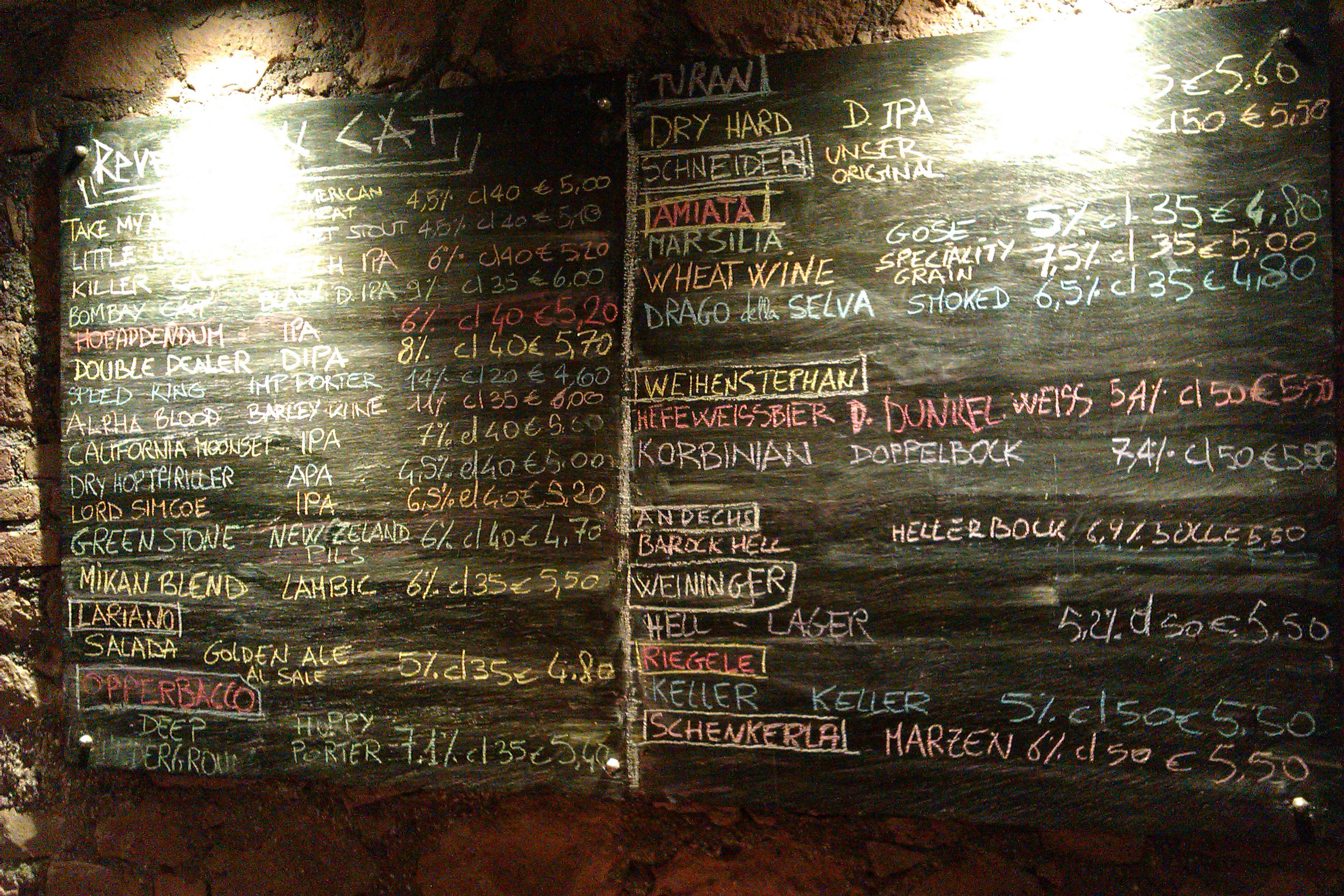
Some of the beers available at Brasserie 4:20 Rome

Downstairs is an atmospherically gloomy cavern of bare brick walls, a long bar featuring a barricade of taps, and seating that includes a couple of inviting (though tight) horseshoe-shaped booths. We settled into one of these, not realising there was also an upstairs terrace, with awnings. This was handy as we’d just had a massive thunderstorm, which had given way to blazing sunshine. After ordering our first beers, we relocated upstairs to enjoy the space and partake of an aperitivo buffet. It was basic – some couscous, some pasta salad, bread, a few dips – but included in the price of the drinks at that time of the evening.

As for the drinks, 4:20 only has beer, whiskey and water. Downstairs, there are apparently 47 taps, including 12 hand pumps, though I didn’t count them. Upstairs, there’s a more limited selection, with six taps, but hey, it’s hardly a long schlep back, down some stairs and past a mound of containers of fry oil. Yes, there’s also food. In this case, that means burgers (mostly), the smell of which was filling the air on the terrace. They use beer a lot in the preparation of the food, though we didn’t sample anything beyond the buffet.

Some more of the beers available at Brasserie 4:20 Rome

Beer-wise, there are menus on blackboards on the wall. We weren’t offered an actual menu, though they may exist, especially as they have a selection of bottled beers. These are the only refrigerated beers, as the tap beers are kept in a cellar and served at ambient temperature – important for the “organoleptic quality” according to their site. What this means is that the precise qualities of a bar are better experienced – by smell, taste etc – at ambient temperature. (Ice cold beer is of course nice on a hot day but that’s another argument.)

The beer comes from a variety of craft breweries, some Italian, but also a lot of Belgian, British etc. Among the Italian breweries, a major presence here is Revelation Cat (English site) – a Rome-based outfit whose products are distributed by Impex, which owns 4:20 as far as I can tell. So Revelation Cat is effectively the house brewery.
When we visited, there were 13 Revelation Cat beers available. Fran chose their Little Lover, a 4.5% ABV stout so chocolaty it could almost have been mistaken for a milkshake in a blind tasting. Okay, not really, but it was very pleasant, in a sweet, mild, creamy kind of way.

I’m still on a quest to find a perfect golden summer ale, so I was torn between Salada from Lariano brewery, in Lombardy – a golden ale al sale, “with salt” – and Magical Mystery Gold from Free Lions, a brewery I talked about over here. I got the latter as it was from a little closer to home, Tuscania, northwest of Rome. I’ve still not found my ultimate golden ale, but Magical Mystery Gold wasn’t bad. I seem to be drinking a lot of citrussy beers at the moment, and this was no exception with an aroma of grapefruit. Taste-wise, it was strongly hopped, dry and crisp.

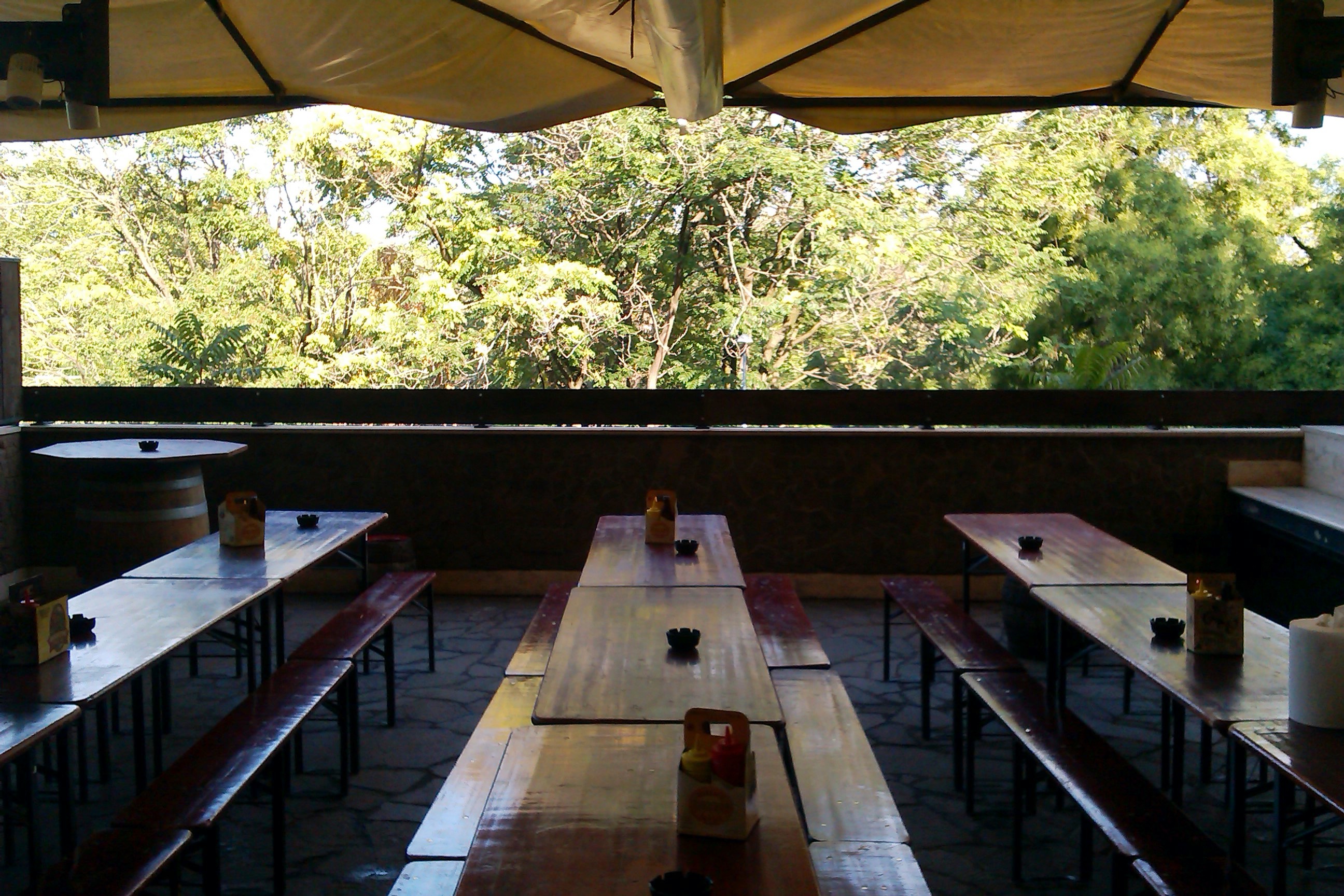
Brasserie 4:20 Rome, the roof terrace, July 2013

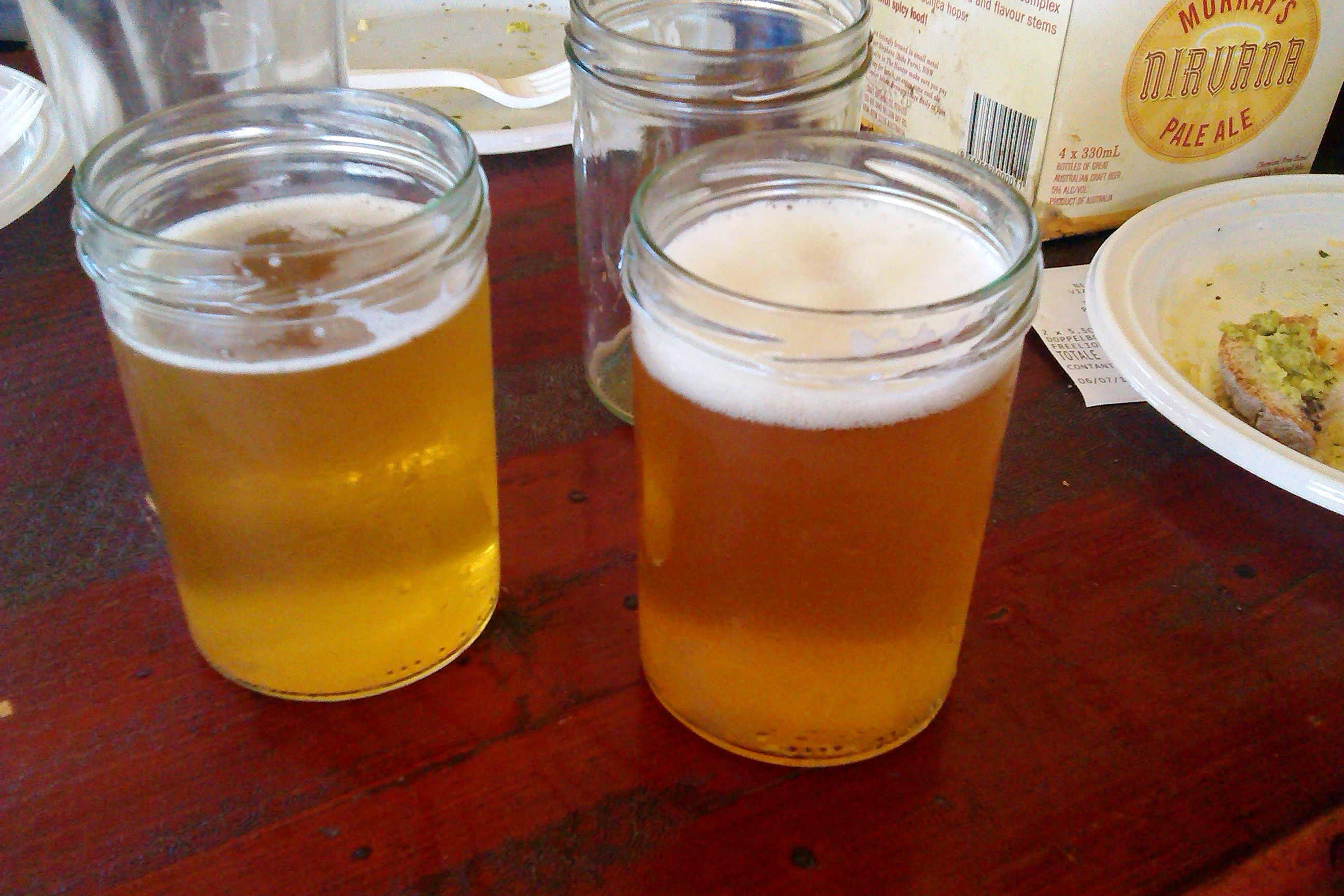
We managed to get in a couple more after this, from the small selection on the terrace. These were California Moonset and Take My Adweisse. We had to order the latter on the strength of the terrible pun alone. Both are from Revelation Cat. These were served in jars. This seems like a strange affectation; I’d rather drink from something that doesn’t have a thread on the lip. The beers were both interesting though.

Take My Adweisse is a 4.5% hoppy American wheat ale. It’s not terribly bitter, but instead is crisp, fairly floral (elder, etc), and refreshing. California Moonset, on the other hand, was fairly odd. It’s nominally a 7% IPA, but I found it pretty challenging, with a pungent odour of, well…. rot? Cat pee? I’d need to drink it again to really nail the description, but I found the smell almost off-putting. Taste-wise it was pretty hoppy, with some serious clashing flavours – resin, citrus, malt. I’m not sure whether it was interesting or unrefined.

Take My Adweisse (left) and California Moonset (right) from Revelation Cat. In jars.

Anyway, after all that we had to go – as we had a birthday to attend at Open Baladin, perhaps Rome’s best known beer bar. This experience of two key beer Roman birrerie in one day was telling. Although we had a good time at 4:20, and I’ll definitely go again, I found our welcome a bit unfriendly there, with three staff just giving us a cool stare when we first arrived. Baladin, on the other hand, I’ve always found more friendly, and the staff ready with advice.

Also, I had my most interesting beer of the evening at Baladin. I asked a friend who works there what she thought was their best beer at the moment, and she recommended a Wallonie saison beer, from Extraomnes, another Lombardy brewery. I’m increasingly getting into saisons as they seem to be challenging without the confusion of a beer like California Moonset. This 6.7% beer was golden-orange in colour, with a serious head and an inviting perfume of herbs and spice. Flavour-wise it balanced a slight peppery piquancy with notable, but not overly bitter, hoppiness and a broad fruitiness, tending finally to crisp and dry. In my notes I wrote “fermenting fruit, bubblegum”. Hm.

All in all, a great evening of socialising and beer sampling. And I’m definitely keen to get back to 4:20, see if I can warm them up a bit asking for recommendations, as it’s certainly a serious beer joint, for fans of real beer.

Infodump:
Brasserie 4:20, Via Portuense 82, 00153 Rome
Impexbeer.com 4:20 site (English)
Open Mon-Sat from 5pm, Sun from 7pm.

Revelation Cat brewery

2 Comments

Filed under Ale, beer, Bars, pubs etc, Breweries

Biga 2: making a loaf

freshly cut biga loaf

After visiting Il Vecchio Forno in Pescasseroli, Abruzzo, and getting advice from the master baker, I had to try making bread using a biga.

Although I’ve experimented a lot with natural leavens (sourdough), sponge and dough techniques and long fermentations of the finished dough (such as overnight in the fridge), I’ve never actually tried to make bread based specifically on the biga technique, that is using a low-hydration Italian style pre-ferment. This is still experimental though, as I’ve not made a strict biga – I had a healthy batch of leaven around, so I’ve added some of that. Also, I didn’t have enough of one type of flour, so I’ve done a mixture.

The flour types I used were a 0 grano tenero, at 11.5% protein, and a 0 Manitoba at 15.5% protein, W360-400. For an explanation of Italian flour types, see here. For a description of what the heck “W” means in this context, see my previous post.

mixing the biga

Biga

500g flour (370g grano tenero, 130g Manitoba)
250g water (cold, you don’t need to rush the yeast)
5g fresh yeast
30g leaven (at 80% hydration)

biga, before fermentation

1 Dissolve the yeast and leaven in the cold water, giving it a whisk.
2 Add the liquid to the flour in a roomy bowl, and combine.
3 Turn out the mixture onto a lightly oiled surface and bring the dough together. It’ll be quite firm, as it’s only 50% (give or take) hydration at this point
4 Put the biga in a container with a lid.
5 I left mine at room temperature to ferment for half an hour then put it in the fridge… because a) it’s warm here, around 25C (77F) and b) because I had to go out (to a gig).
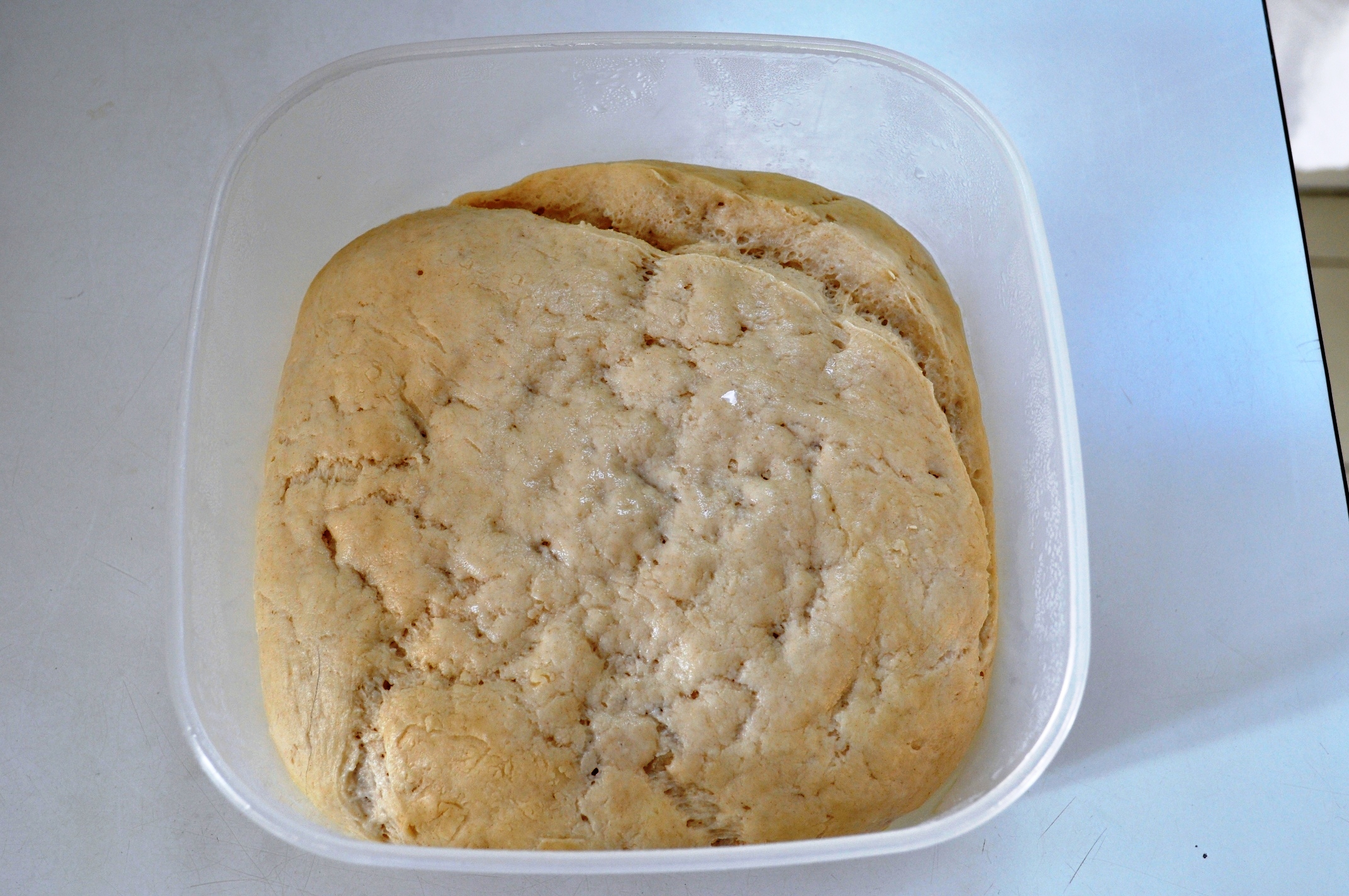
6 Leave the biga in the fridge for 10-14 hours, until it is soft and relatively lively. It won’t be lively like a liquid leaven as it’s effectively a fairly dry dough.

biga, after fermentation

Bread dough

200g more flour (Manitoba/strong white bread flour)
200g water
10g salt

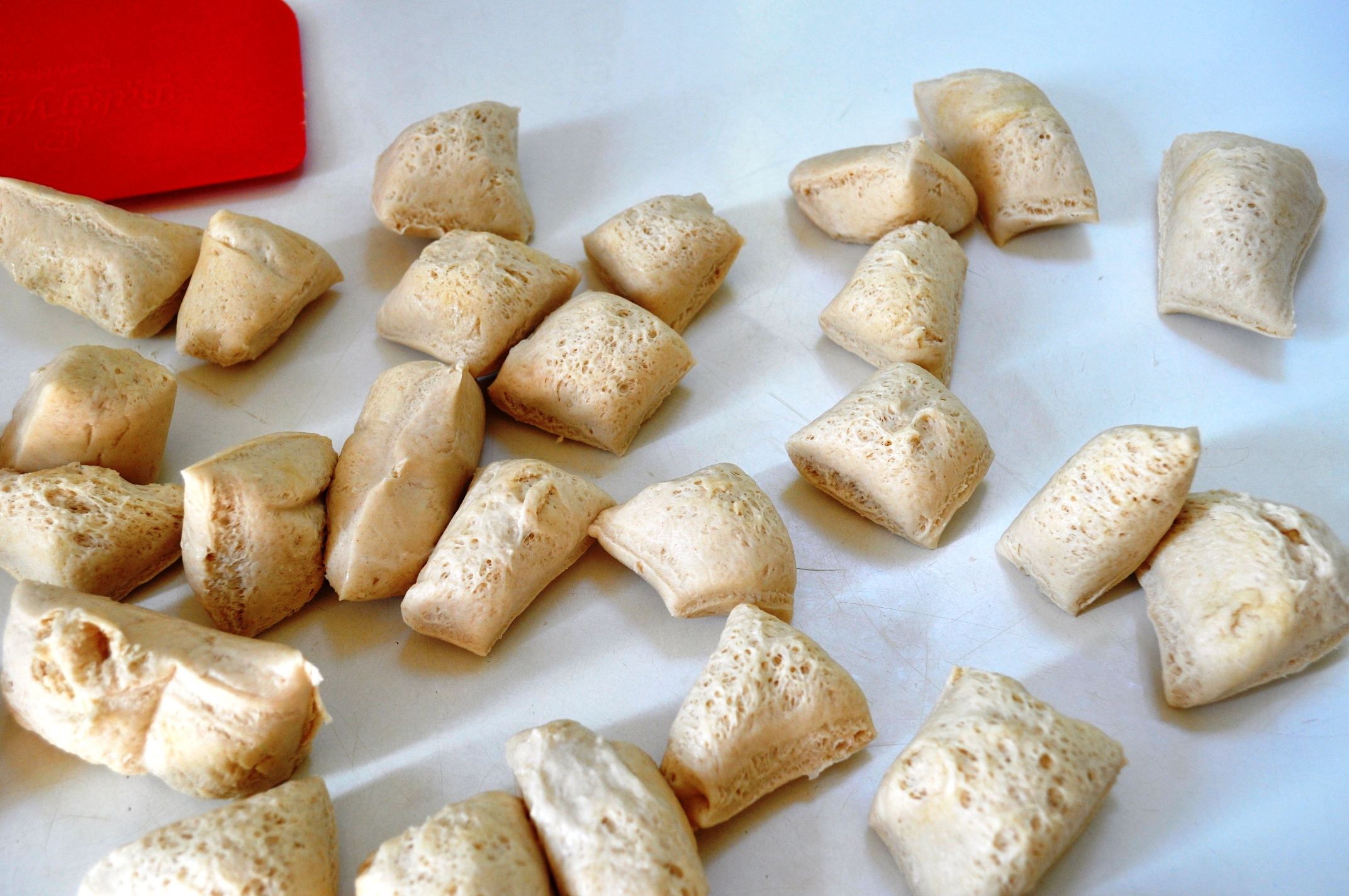
pieces of biga

1 Take the biga out of the fridge. You can leave it as is, but one site I read suggested cutting into pieces, which seemed like a good idea. Why? Because it’ll warm up more evenly that way and it’ll be easier to combine into the final dough.
2 Cover the pieces and leave to come up to room temperature for an hour or so.
3 In a roomy bowl, combine 200g flour, 200g water and 10g salt, making a pasty mixture.
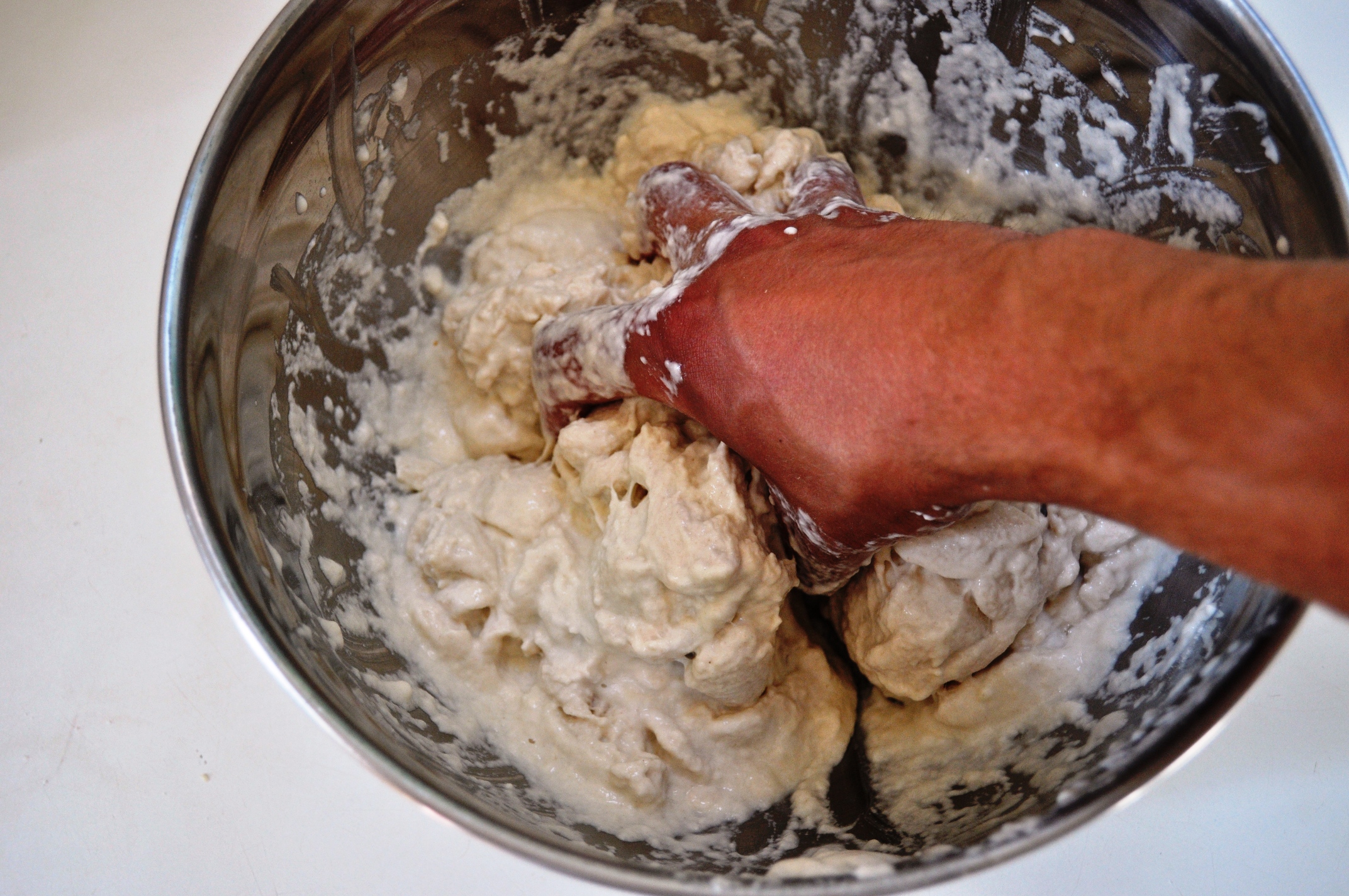
4 Add all the biga pieces, and mix well, with a spatula and your hands. Really get in there and squeeze it all together, to help form one uniform dough.

making a biga dough
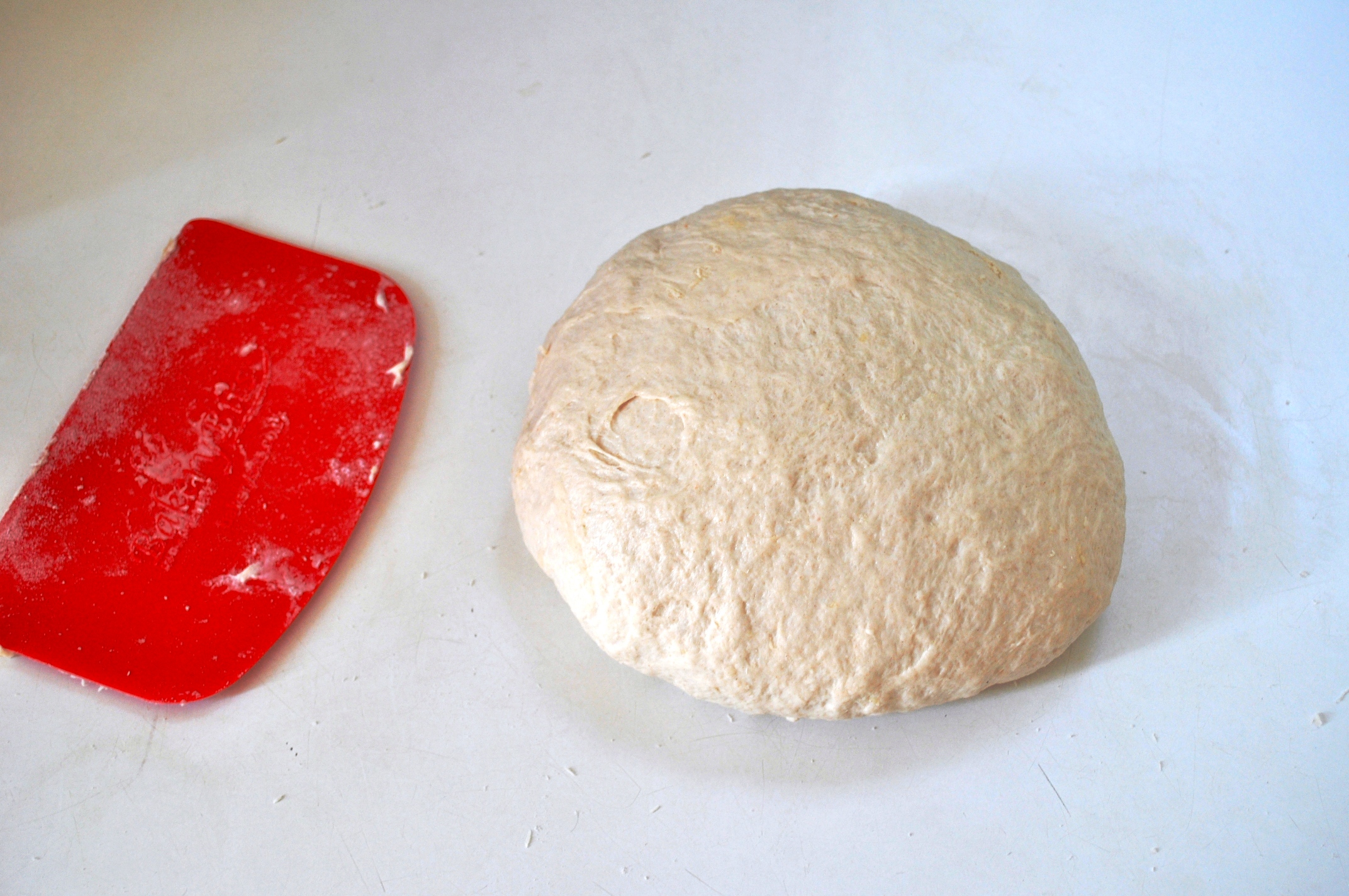
5 Turn the mixture out of the bowl onto a lightly oiled surface and bring together the dough. At this point, it’s around 65% hydration, so it should be moist without being totally sticky and awkward to handle.
6 Form a ball and return to the roomy bowl (lightly oiled).

dough, ball
7 Cover (I used a shower cap), and leave to prove until it’s doubled in size and soft. Time will vary but it took 1 1/2 hours for me. My kitchen was warm, up to 26C (79F).

dough, end of first prove
8 Turn out the dough. It should weigh around 1.2kg, so you could make two smaller loaves, but I wanted to make one large-ish loaf. Form a ball, then leave to rest for about 10 minutes.
9 Form a baton, then place, seam-side up, in a proving basket lined with a floured cloth.

baton
10 Prove again. I left mine for half an hour in the warm kitchen, and it was nice and soft (morbido). I probably could have left it a bit longer – you want it soft and springy.

final prove
11 Turn the dough out onto a baking sheet lined with parchment (I sprinkled mine with coarse cornmeal). Slash the top in your preferred manner.

ready to bake
12 Put a dish of boiling water in the bottom of the oven to fill the oven with steam, preheated to 220C. My oven takes ages to come to temperature but you might have a new-fangled type that heats in 10 minutes. Lucky you.
13 Bake for 25 minutes, then turn the heat down to 200C and keep baking for another 20 minutes. I left mine another 10 minutes, trying to get some colour on top.

Results

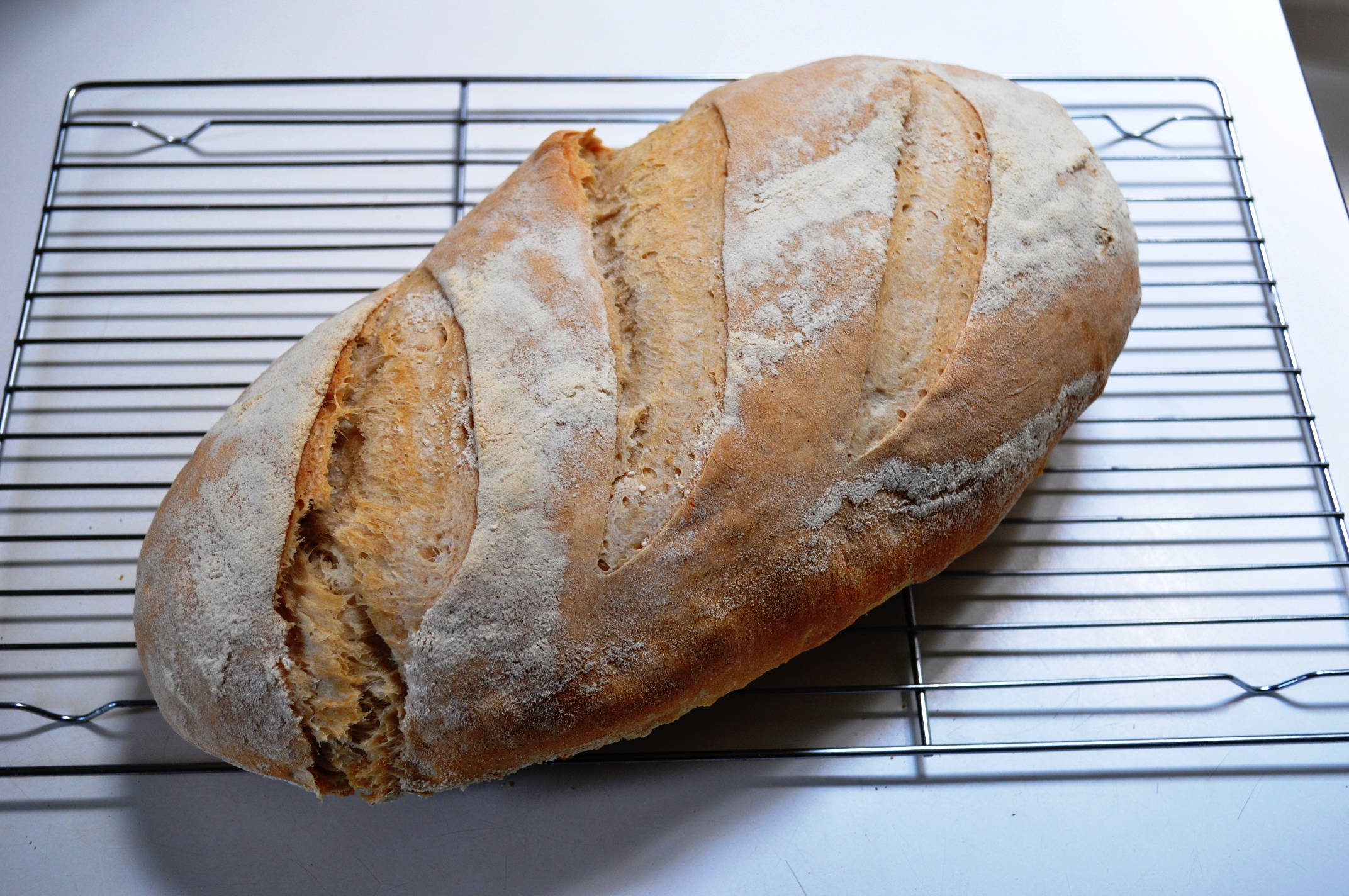
All in all, this is one of the better loaves I’ve made recently. Despite our oven not really having any top heat to colour the crust, the rudimentary steam system (domestically, I prefer to use a mister spray, but I ain’t got one at the moment) gave the crust a reasonable crisp crunchiness. The crumb isn’t particularly open, but it’s soft.

Best of all, I got a decent oven spring! I’ve been struggling with the form of my loaves recently. I doubt this decent shape is the result of the biga per se, it may well be more because the dough was a lower hydration than other doughs I’ve made recently (more usually 70% hydration) and because the Manitoba is easier to handle and glutinous then the farro flours and whatnot I’ve been playing with.

I’m not sure my loaf is really a genuine rustic Italian style bread: with its fairly close and soft crumb, it’s more like a classic British bloomer. But hey, I’m happy with that for a first try.

Oh, and yes, from the cracking it was clearly a little underproved, but not radically so.

fresh from oven

Bakers’ percentages

If you’re not familiar with bakers’ percentages, they’re just a way of expressing the proportion of ingredients as a percentage of the flour – or more precisely a percentage of the flour weight. This blog provides a good explanation, if you’re in the mood for some maths.

So, the total ingredients here, including both the biga and the final dough are:

700g flour
450g water
30g leaven
5g yeast (fresh yeast, aka lievito di birra)
10g salt

However, if I break down the leaven, more accurately this means:
717g flour
463g water
5g yeast
10g salt

As bakers’ percentages this is:
100% flour
65% water
0.7% yeast
1.4% salt

Having said all that, I’m sure I’ll keep playing with this technique, and experiment more with quantities – playing with the qb, or quantobasta. This is the “how much is enough”, the quantities that, more intuitively, feel right. (Something that’s discussed by Rachel over here). For starters I think the biga I made was too low hydration, despite the maestro’s advice. So I’ll increase the water, or, if I’m using more of my high hydration leaven (to make a semi-biga, semi-madre), add more of that. Vediamo!

6 Comments

Filed under Breads, Recipes

Biga 1: Advice from the maestro at Il Vecchio Forno, Pescasseroli

Il Vecchio Forno, Pescasseroli, Abruzzo

After our wonderful hiking in Abruzzo, we had a delicious dinner at Plistia restaurant in Pescasseroli. As I asked a lot of questions, particularly about the bread, the host, Cicitto, offered to take me to the bakery where his brother-in-law (sibling of Cicitto’s chef wife, Laura) is the master baker. Aside from how just plain lovely this small town dynamic seems to someone like me, who grew up in Britain at a time where traditional food trade was being killed off by supermarkets, it was also just a wonderful opportunity. Cicitto was offering to get me some lievito madre (natural leaven starter), but the jaunt actually turned into a handy lesson.

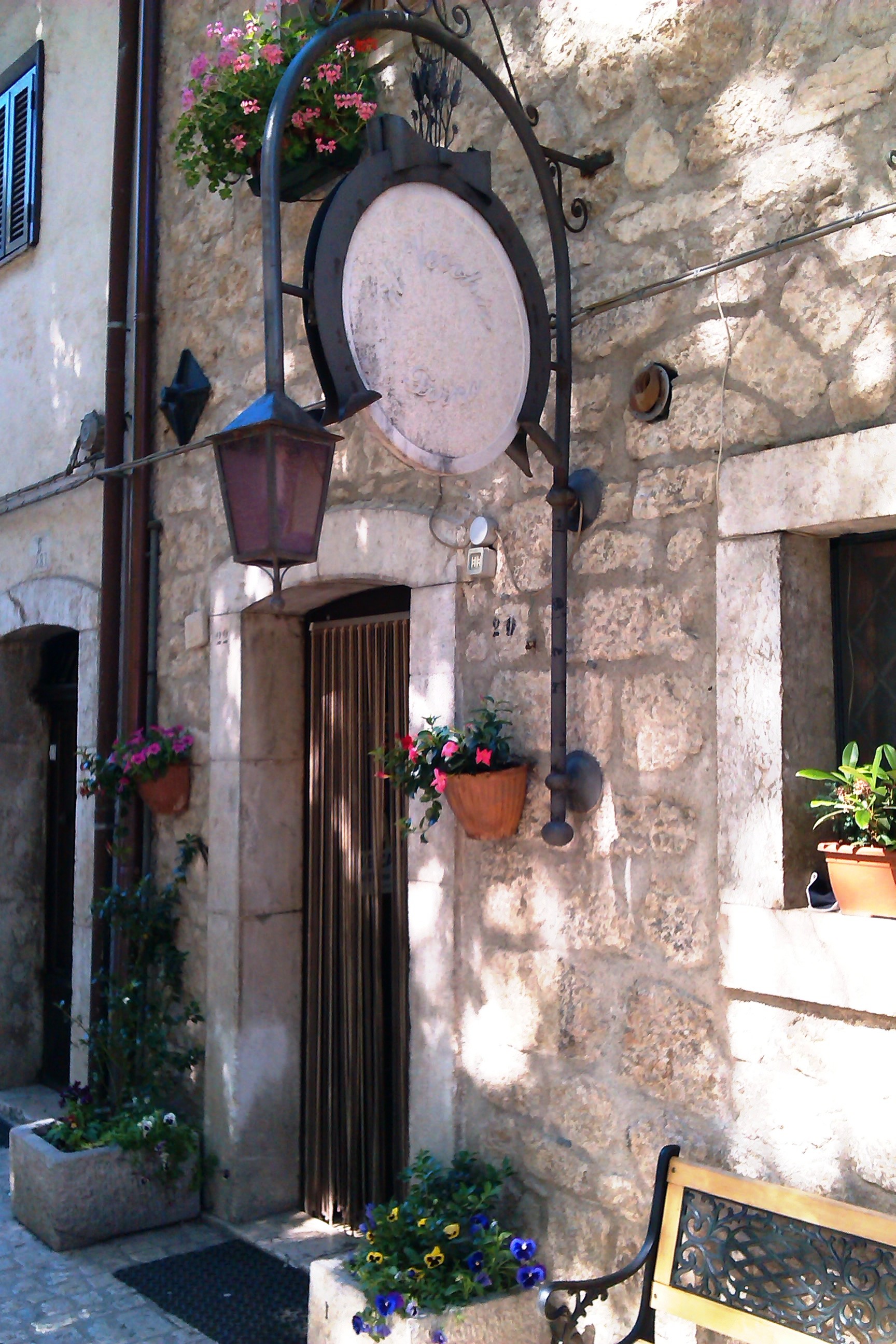
Il Vecchio Forno (The Old Bakery, or The Old Oven),  is located in the centre of Pescasseroli, in a row of old stone buildings. Its shop sign is barely legible, there’s no window showing the wares and a ribbon curtain covers the doorway, so it’d be easy to walk past – were it not for the intoxicating smell of freshly baked bread emerging. We entered down a side entrance, and wandered into the bake-house at the back.

My old teachers at the NBS in London have conditioned me well, as I felt self-conscious about my street clothes, but hygiene legislation clearly wasn’t exactly a priority as there were at least a couple of lit cigarettes in there. Boggling! Still, the loaves being turned out from the large deck oven looked great, as did some plump pizza bianca (an olive-oily flat-ish bread that looks more like what we’d call focaccia in the UK, though actually that’s Ligurian focaccia; in Rome, the name focaccia is used for a flatter, crisp and crunchy bread).

The maestro kindly gave us half an hour of his time, first introducing us to his mother. His lievito madre – mother yeast or leaven – that is. What surprised me about this was how much it just resembled a dough, unlike the more liquid, ie higher hydration, sourdough cultures I’d previously learned about and been using. The madre is about 50 per cent hydration, where recently I’ve been keeping my leaven at around 100 per cent.

Bread at Il Vecchio Forno, Pescasseroli, Abruzzo

We chatted about the issues I’d been having with my naturally leavened breads, and he did some diagnosis. I was fermenting the dough for too long he said, resulting in too sour a flavour – though arguably, a sour sourdough is more in line with certain northern European breads than Italian naturally leavened breads, where the flavours are generally milder, nutty but not sour.

His biggest piece of advice to me, as a home baker making bread once a week, was actually to not worry about using a lievito madre at all. So no sample of their venerable madre for me. Instead, he recommended using a biga.

A biga is an Italian pre-ferment, not unlike a British sponge or French poolish. Unlike those pre-ferments, however, it’s much lower hydration – again, like his madre, more lively dough than bubbling gloop. The maestro went on to give me a recipe for a biga. He recommended using a 00 (ie a fine grade) flour, then got a bit technical for me – saying to use a flour with a P/L grade of 0.55 and a W…. To be honest, with my bad Italian, and terrible handwriting, my note-taking abilities failed me. My notes either say a W of 240 or 400.

But just what are P/L and W? Well, some research  tells me the former is an elasticity rating, the latter the forza della farina (“strength, force of the flour”). Italian Wikipedia calls it the fattore di panificabilità, which you could translate as the “breadability of the flour”.

Although this is in Italian, and fairly technical, it includes a good table. Which I’ve borrowed, as the blogger himself seems to have borrowed it from Professor Franco Antoniazzi of the University of Parma.

W P/L Proteine Utilizzo
90/130 0,4/0,5 9/10,5 Biscotti ad impasto diretto
130/200 0,4/0,5 10/11 Grissini, Crackers
170/200 0,45 10,5/11,5 Pane comune, Ciabatte, impasto diretto, pancarré, pizze, focacce, fette biscottate
220/240 0,45/0,5 12/12,5 Baguettes, pane comune con impasto diretto, maggiolini, ciabatte a impasto diretto e biga di 5/6 ore
300/310 0,55 13 Pane lavorato, pasticceria lievitata con biga di 15 ore e impasto diretto
340/400 0,55/0,6 13,5/15 Pane soffiato, pandoro, panettone, lievitati a lunga fermentazione, pasticceria lievitata con biga oltre le 15 ore, pane per Hamburgher


Basically, it says that the higher the W, generally the higher the P/L, and the higher the protein. To translate that into familiar products, a flour with a lower W and P/L (used for biscuits/cookies etc) is akin to a plain or all-purpose flour, while a flour with a higher W and P/L (used for enriched breads with long fermentations like panettone) is akin to a strong white bread flour. So really not that technical after all. Ahem.

Phew.

Not that domestically purchased packs of flour generally include this grading information, but it’s good to know. All part of my baking education.

So anyway, armed with this knowledge, straight from the maestro a cool old bakery in pleasant little Italian mountain town, I embarked on my first biga experiments… Coming soon!

Infodump:
Il Vecchio Forno, Piazza Vittorio Emanuele III 20, 67032 Pescasseroli, Abruzzo

5 Comments

Filed under Bakeries, Breads

Specchia White Night amber ale at Tree Bar

Last night, we had tickets to go and see Neneh Cherry and Fat Freddy’s Drop at the Cavea of the Auditorium Parco della Musica, in the Flaminio district of Rome. This is the area to the north of Piazza del Popolo,  the popular spot for tourists, shoppers and manifestazioni at the top of Via Del Corso, central Rome’s main consumer strip and sometime location of yacht races *.

We’d never been far into Flaminio, so were keen to check out a spot called the Tree Bar, and the Auditorium itself. The Auditorium was designed by Renzo Piano, who has more recently radically altered London’s skyline with the Shard, and was inaugurated in 2002. The complex consists of three beetle-roofed concert halls with the Cavea in between – a fourth, open air auditorium. This is where we were headed. But first, a beer.

The central Roman section of Via Flaminia (one of the city’s ancient routes, heading north) is canonically long and straight, and plied by trams. It’s lined with handsome mid-20th century apartment blocks and collection of tired looking markets, workshops and older, more historical buildings, along with a couple of stretches of open park. Tree Bar, a former kiosk, nestles in one of these.

Inside, it has has light, Scandinavian style wood fittings, outside there’s a terrace area that spills into the park. Some kids’ football kept escaping from their game – inside a dry fountain – and flying past us while we drank.

With its emphasis on aperitivo drinking, Tree Bar has a long menu of sparkling wines and cocktails, but thankfully there were also a few craft beers tucked in there too, with three bottled beers in a section marked “Birre Artigianale”. I didn’t know any of them, so asked the waiter what one, from a brewery in called B94 in Lecce, Puglia, was. He said it was a birra artigianale. Yes, but what type, I persisted, and he managed to come up with the fact that it was an amber ale. Okay, fine, that’s enough for me. He also said it was enough for two (a 75ml bottle), but Fran wanted a cocktail.

B94 Specchia White Night, plus snacks, Tree Bar, Rome

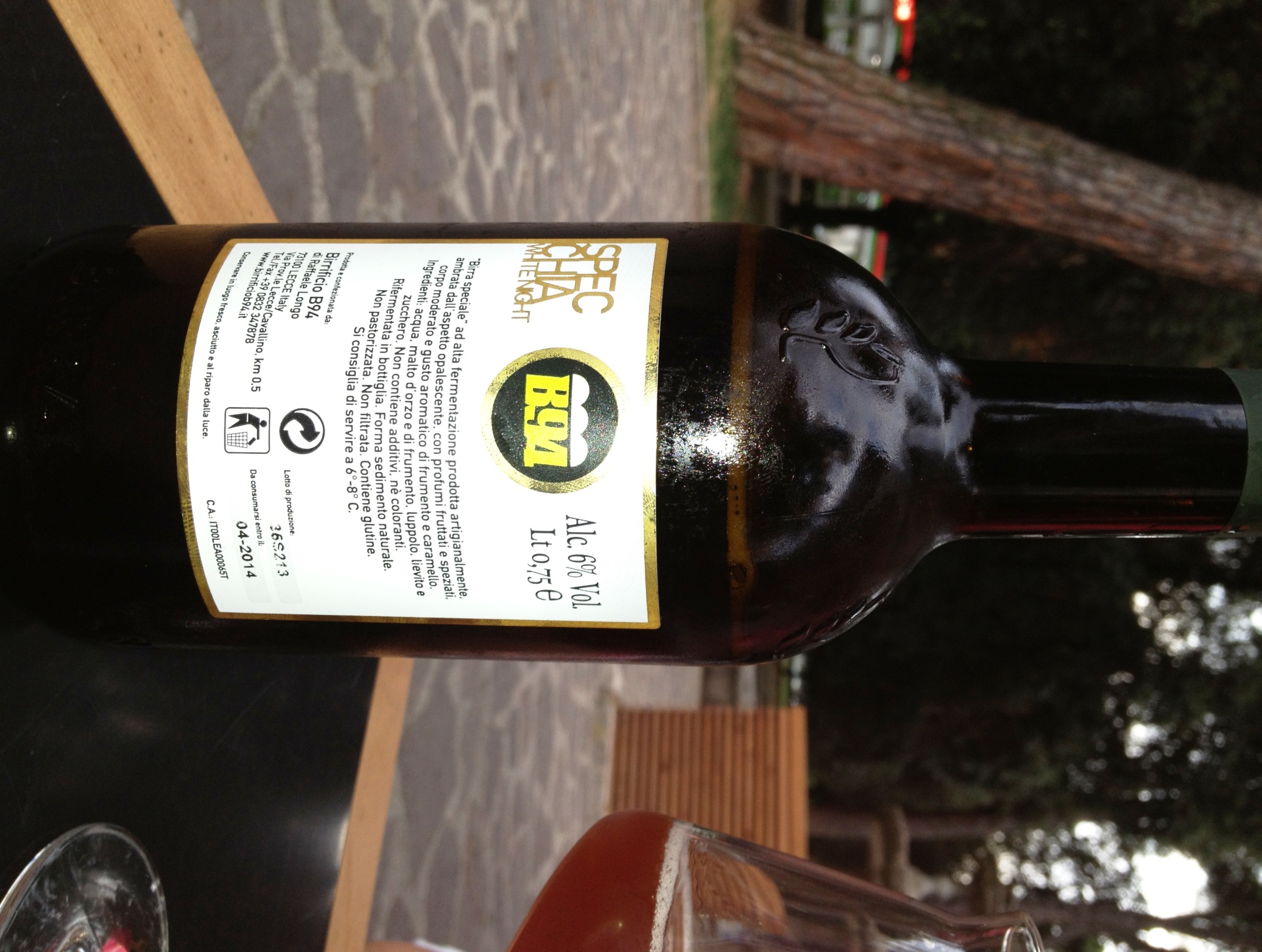
When it arrived, a black bottle with a slightly muddle label design and the apparent name “Specchia White Night”, I told him not to worry, it’s not too much for one person – as I’m British. Nothing like reinforcing stereotypes.

Anyway, he poured and inch of so, and there wasn’t much head, and the liquid was a murky amber-brown. I poured more, a bit more vigorously, and got a better head. Head, or schiuma, is very important in the appreciation of Italian craft beers – all the descriptions mention it. My Guida alle Birre d’Italia 2013 says it’s a beer with colore ambra intenso con schiuma di buona persistenza. Which I’d have to disagree with – the head wasn’t very persistent.

I didn’t get much in the way of strong scents coming off it, bar malt and some melon, or apple. Which made a nice contrast to the more citrusy beers I’ve been drinking a lot lately. Taste-wise, the maltiness (from both malted barley and wheat) was combined with a fairly strong bitter hoppiness and yeastiness, along with some spice (cloves), caramel and even a soapiness. It was a reasonably drinkable beer, with a medium body, low-middling carbonisation and 6% strength, though perhaps slightly heavy for my tastes for a warm summer evening. Plus, well, another aspect of my Britishness – the name and label brought disconcerting flashes of White Lightning, a trashy cider from the early 1990s. An unfortunate association.

B94 Specchia White Night's label, at Tree Bar, Rome

Still, it’s always good to try something new, from a brewery I’d not heard of before. Apparently B94 was founded in 1994 by Raffaele Longo to make beers for his friend. It’s that step from home-brewing to commerce that’s the familiar narrative for many micro-breweries.

Having quickly consumed Tree Bar’s stuzzichini (a plate of appetizers/snacks often served at aperitivo time), we had a pizza too. The food wasn’t bad – the stuzzicini included some pieces of particularly nice frittata and they seem to use some wholegrain flours in their doughs. Thus fuelled, we dashed on up the road to get to the venue.

Neneh Cherry had, disappointingly, bailed (with no reason or excuse forthcoming online), and the support act were pretty noodly, but the Cavea is a great location, the overcast weather didn’t give way to rain, and Fat Freddy’s Drop – New Zeeland’s finest reggae-dub-soul-rave combo – were energetic and entertaining, taking us through their new album, Black Bird, and including a few old favourites. Though they didn’t do an encore. What’s up guys? Grumpy? Tired from the world tour?

Fat Freddy's Drop, Auditorium Parco della Musica, Rome, 3 July 2013

Infodump
Via Flaminia 226, 00196 Roma
treebar.it

* “In December 1878 [the Tiber’s] floodwaters in the Via del Corso were so deep that a sailing race was held held there…” (p114, Whispering City, RJB Bosworth)

1 Comment

Filed under Ale, beer, Bars, pubs etc

Dinner at Plistia restaurant, Pescasseroli, Abruzzo

This post does not feature beer. But it does feature some bread, as well as as soup containing grains. And a little cake. Some of which is photographed with my rubbish phone’s rubbish camera.

I know, I know, quality blogging is all about quality photography, especially when food is involved, but generally we’re not lugging the DSLR around with us when we eat and drink. I really need to get a decent phone with a decent camera, or even a new compact camera.

In my defence, I’d say I was more of a writer than a photographer, so hopefully I can describe these dishes through the medium of the English language, to compensate for the blurry pics.

So, the weekend of Saturday 29 June 2013, we headed out of Rome to get some mountain air in Abruzzo. We stayed in the town of Pescasseroli, at the heart of Abruzzo National Park. I’ve written about our hikes here; at the end of our second, long hike, we had a restaurant booked for Fran’s birthday dinner. This was Plistia, a restaurant and albergo located on the main road through the small town.

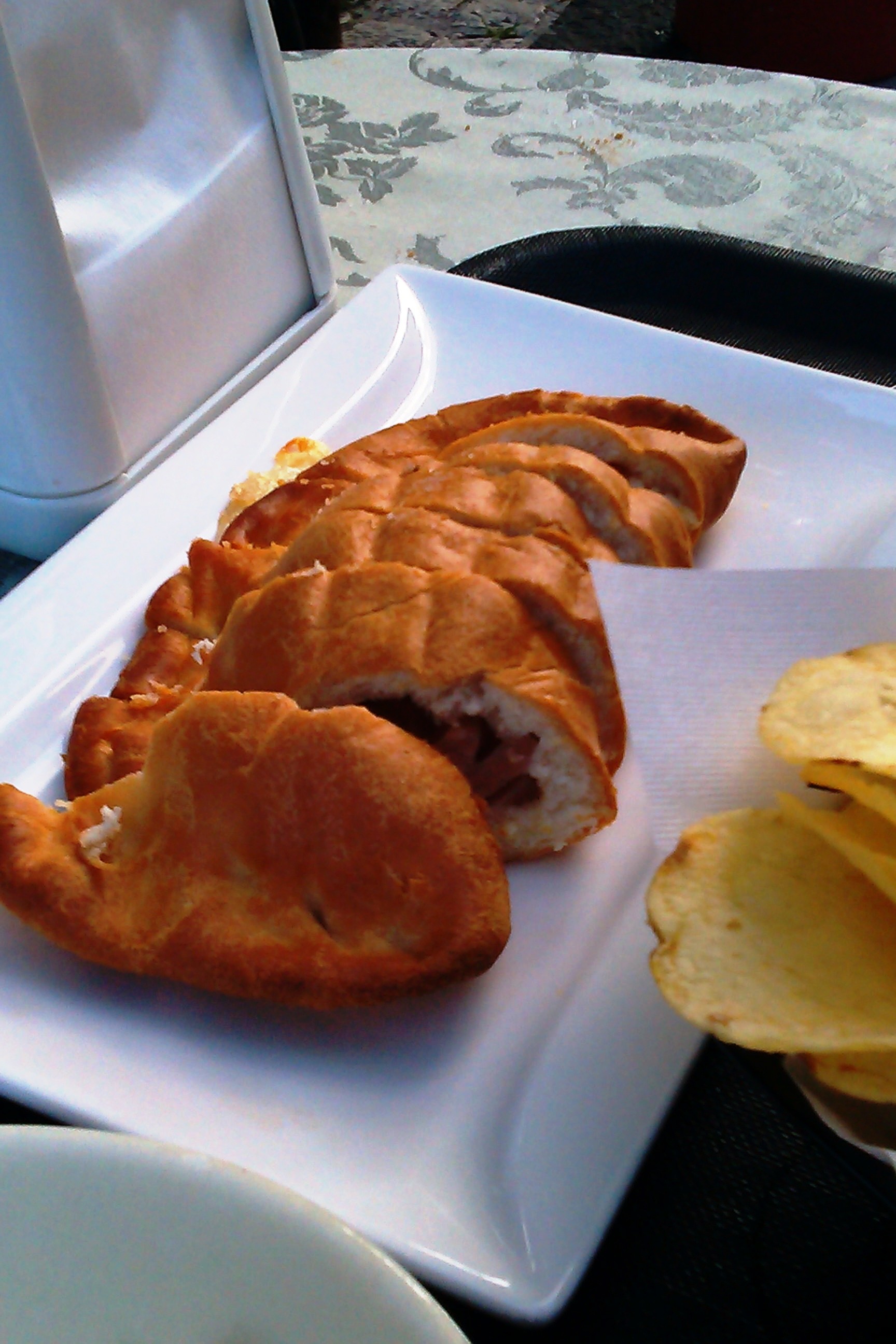
A kind of pasty - ok, a calzone - in Pescasseroli, Abruzzo

First, however, we had an aperitivo in a bar on the nearby piazza. The snacks included this Abruzzo “pasty” (probably actually a type of calzone, but they’re all related right?), and some sparkling Pecorino.

Many people don’t realise it, but Pecorino isn’t just the name of sheep’s milk cheese, it’s also a very good white wine from Abruzzo and adjoining regions, or more specifically a grape variety. Since we moved to Italy and started learning more about the vast number of Italian wines that don’t make an impression in the export market, it’s become our go-to white wine. Although Pecorinos (Pecorini?) vary, they’re generally slightly foral wines with some body – and as such a very nice versatile alternative to something like a Sauvignon Blanc or Pinot Grigio. When we moved on to Plistia, the host, Cicitto, settled us in and filled our glasses with more Pecorino.

No menus were offered, but we were absotuly happy with his. He just said, “We’re going to feed you, lots of food, take it slowly”. Considering you enter the restaurant via a dogleg hallway with a view straight into the open kitchen, they’re clearly confident about their food. Fran had researched the place more than me, but I was also reassured by this confidence, and years of Slow Food certificates on the wall.

On our honeymoon, in Croatia and Italy, Fran and I had agreed that for a couple of taster menus we had arranged, we would eat everything, despite our personal preferences (hers: red meat; mine: very little red meat). When Cicitto went to get the first dish, Fran and I shook on “Croatia rules”. Of course, this being inland Italy, where the food is hearty and the red meat ready and bleeding, that was always going to be more in her favour, but hey – it was her birthday!

The first course was a cheese plate. Cicitto said four of the seven cheeses were world champions. I don’t know anything about cheese world championships (it doesn’t really get the TV coverage of the World Cup, say), but they were delicious: five sheeps’ milk and one goats’ milk, of varying characteristics: young and sweet, mature and crunchy. The two harder, more mature ones we were instructed to eat with a strawberry sauce with balsamic, and a very nice combination it was too.

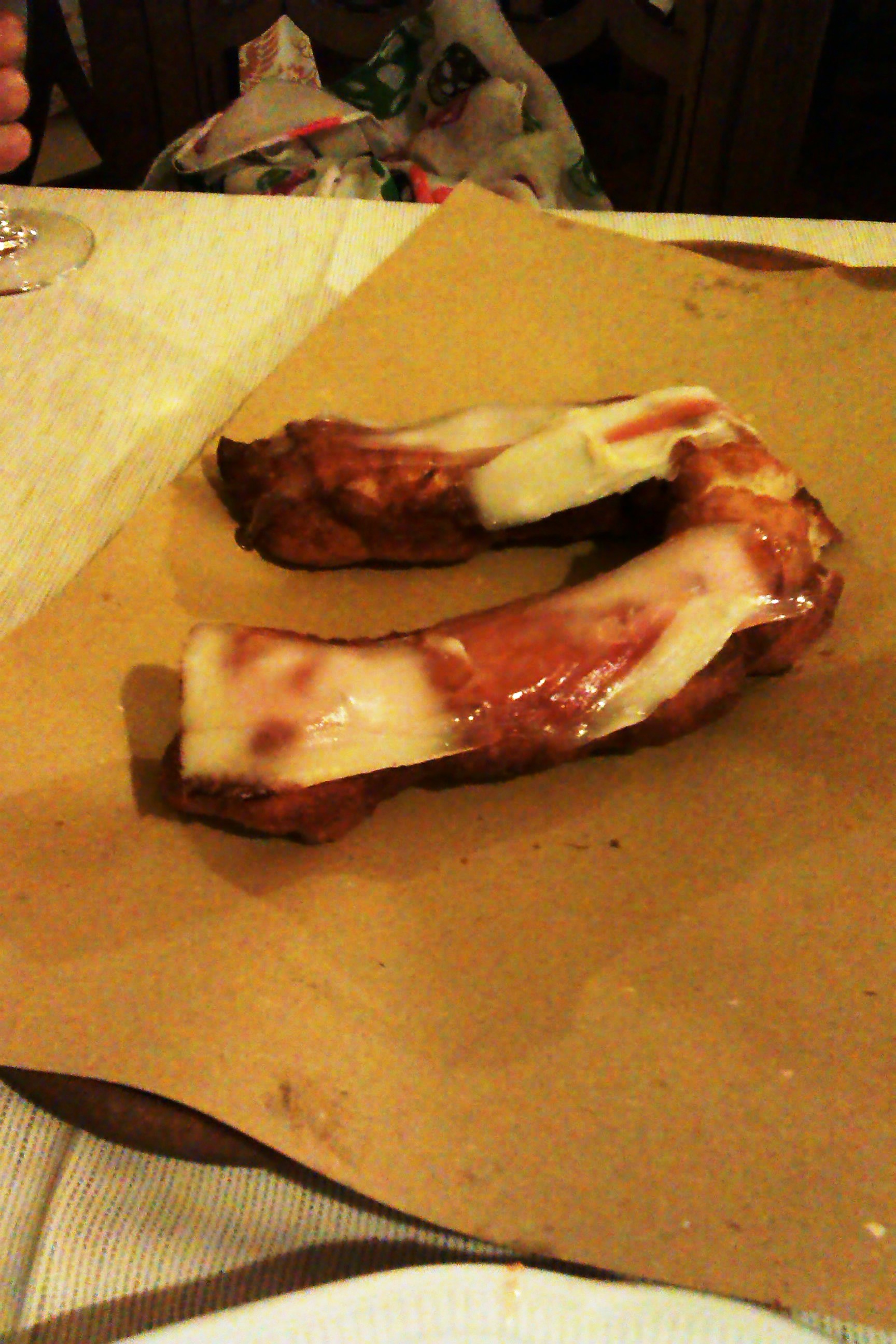
lardo bread

Next up we had something that was apparently an invention of the chef, Laura, Cicitto’s wife, rather than a traditional Abruzzo item with a name… I think. I could be wrong. Anyway, it was basically like a savoury doughnut, swathed in lardo. People assume lardo is just Italian for lard, but it’s a false friend. Lard is actually struzzo. Lardo is in fact a cured meat, like prosciutto crudo but with an emphasis on the fat. Racheleats discusses of the differences between several types of salumipancetta, guanciale and lardo – and has a good photo to illustrate it:

pancetta, guanciale, lardo from Racheleats

Again, despite the crapness of my photo it was delicious. The bread, made with a lievito madre (natural leaven), was white and soft inside, and the crust was crunchy and fatty, from the cooking oil and from the flavoursome melting lardo. It’s exactly the sort of thing I’d never naturally be inclined to try, but loved when I did.

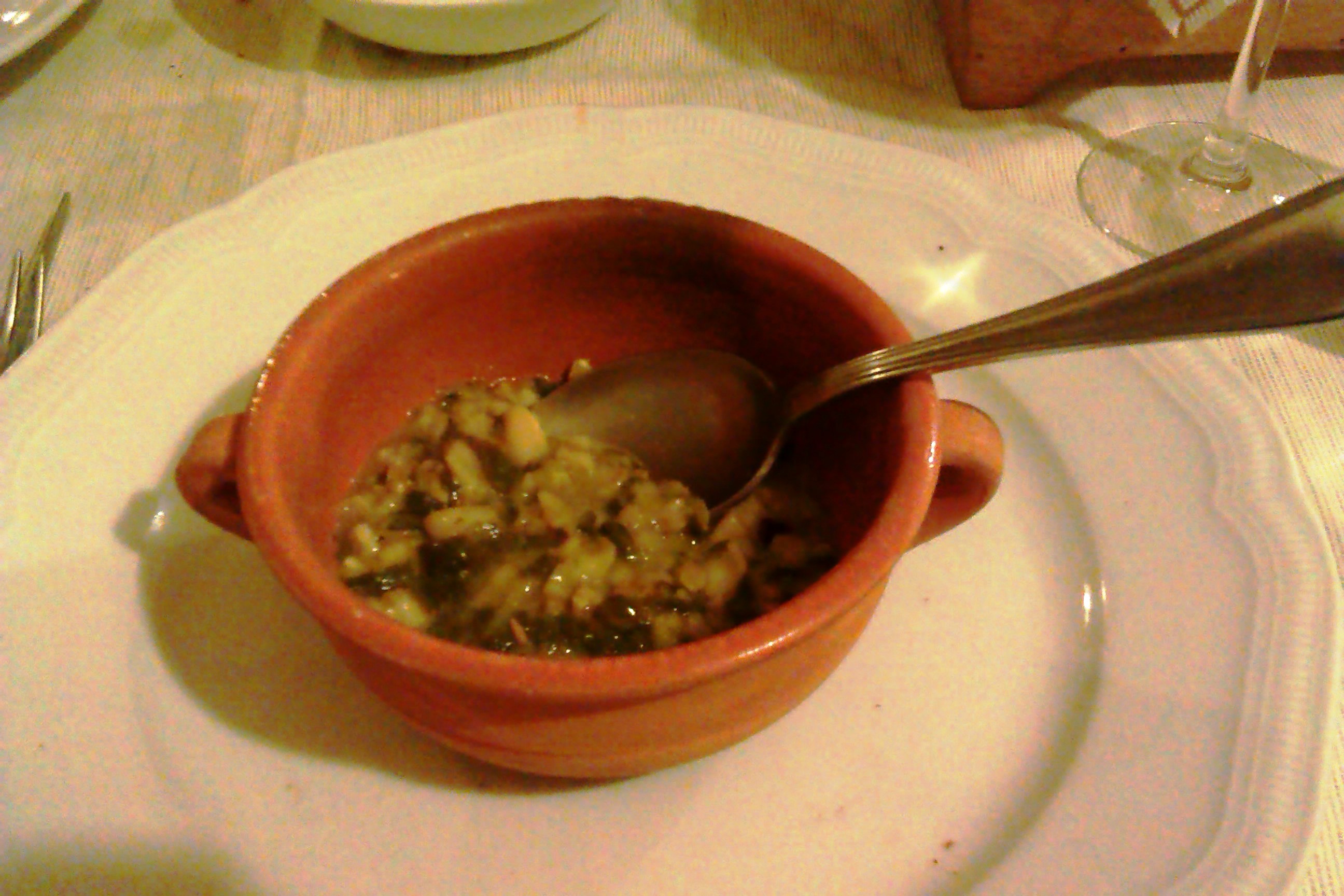
Next up was a soup. This was exactly the sort of thing I would naturally want to eat: a thoroughly rustic minestra. This one was made with grains, beans and greens. The grains were farro decorticato, or more specifically they were husked emmer. The beans were cannellini, or similar. The greens were an Abruzzo spinach. It was one of those soups that had such depth of flavour you wonder how it was achieved with such simple ingredients. It wasn’t even made with a meat stock, apparently. Fab. As much as I enjoyed the whole meal, the soup alone would have made me happy.

Soup at Plistia, Pescasseroli

After the soup we had not one but two pasta primi. The first was caramelle, that is filled pasta shapes that resemble wrapped hard sweets, or like ravioli that have had their ends twisted. The filling here was faraona – guinea fowl – and they had a buttery sauce with juniper berries. The latter are an important part of Abruzzo cuisine it seems.

Caramelle at Plistia, Pescasseroli

The second pasta was made with short, flat noodle pieces (possibly maltagliata – “badly cut”) that had parsley and pecorino cheese in the dough. It was served with a sauce with a little guanciale, saffron and some thin so-called wild asparagus. This was one of the meal’s weaker courses as it was a little salty and the asparagus was a bit woody. I’m surprised they had it, as over in Lazio we’re way past asparagus season. Sure there’s a different climate in the mountains of Abruzzo, but asparagus is a spring vegetable, and it was 30 June.

After all this, we were pieno come le uova (“full like eggs”), but meataholic Fran could hardly resist the offer of a steak. I don’t really eat steak, so we had one between us and she had the lion’s share. It was tender and bloody, and came in a deglazing sauce of red wine with black peppercorns and more juniper.

We were officially full by this point, but it seemed almost rude to deflect the offer of a desert. We had one plate, with a meringue and a kind of light custard, a ricotto cake and a chocolate form filled with more of the custard. These provided a sugary hit, but didn’t really compare with the flavoursome savoury courses.

Overall though, a suberb meal, and one of the best I’ve had in Italy. Furthermore, it cost about €40 a head – a price you could easily pay in Rome for just two mediocre courses and a few glasses of wine. Most certainly a meal with buon rapporto qualità-prezzo. So if you find yourself in Abruzzo, perhaps doing some hiking in the beautiful mountains, we heartily recommend a visit to Cicitto and Laura at Plistia’s restaurant.

Infodump:
Plistia, Via Principe di Napoli 28, 67032 Pescasseroli, Abruzzo
albergoristoranteplistia.it / info@albergoristoranteplistia.it / +39 (0) 863 910 732

3 Comments

Filed under Misc, Other food, Restaurants etc

Flapjack action photos

Not really. A certain amount of inaction actually, but here are the flapjacks I blogged about before, being eaten in the mountains around Pescasseroli, in Abruzzo National Park.

Flapjack break, near the ruins of Castel Mancino, above Pescasseroli

Flapjack break, near the ruins of Castel Mancino, above Pescasseroli

Flapjack and wild thyme, etc

Flapjack with wild thyme and other flowers

Flapjack at Rifugio di Lorio

Flapjack at Rifugio di Lorio (1830m), Rocca Ridge, west of Pescasseroli, Abruzzo

If you’re interested in hiking in Abruzzo and the Apennines, I’ve done another post here, on my other, not-specifically-foodie-blog.

2 Comments

Filed under Discussion, Misc, Other food

Two days of hiking in Abruzzo National Park

We’ve just done a couple of days of hiking in Abruzzo National Park, in the central Apennines of Italy. We stayed at the small town of Pescasseroli, a very friendly place located in the centre of the park and at an elevation of around 1150m.

We followed a couple of routes from the Lonely Planet book Hiking in Italy by Brendan Sainsbury. We caught a bus direct from Rome to Pescasseroli, then just started our walks in the town.

Day 1 – short walk above Pescasseroli

We headed out of the town into a valley to the west. This is path B3, which climbs from pasture and into pine forest on the hillside. On the map we used, the hill and ridge are called Bocca di Forno – “The Oven’s Mouth”.

The path curved around the hillside, continuing through pine forest, with some clearings that were full of flowers and butterflies.

The path then descended into the ruins of Castel Mancino, a mysterious 10th-11th century fortress that fell into disuse then became a source of building stones for the village below. Seeing the first ruined tower among the pine trees was like something out of Skyrim. Fab.

And here’s Fran.

Day 2 – Rocca Ridge

This was our main walk. Sainsbury gives his route at 19.5km, but we finished it by looping back onto part of the path we followed yesterday, heading for a bar by a more scenic route, so we did around 22km (about 13.5 miles).

We headed up a valley due south of Pescasseroli, onto path C1, then, leaving behind a farm, onto path C3. The whole landscape here is shaped by transhumance, and we immediately encounterd a herd of white cows grazing among the beech trees by Rifugio della Difesa. There were guarded by a very professional Maremmano who barked at us until we were a decent distance beyong the herd.

Path C3 takes you up through beatiful beech forest, which reminded me of the Amon Hen woodland where Frodo separates himself from the Fellowship in the denouement the first film in the Lord of the Rings trilogy. New Zealand beech (Nothofagus) is in an entirely different botanical family to European beech (Fagus) though.

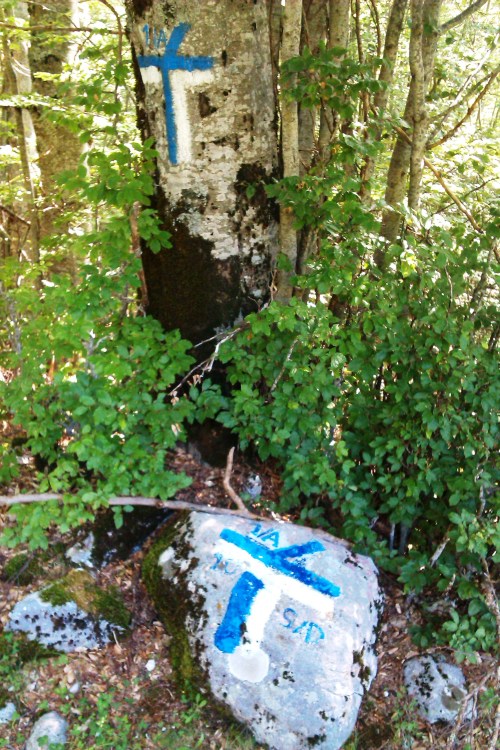
Although most of these trails are fairly well blazed, especially in the woods, occasionally the markings can be baffling, never mind the fact that the colour coding changes and the route names seem to be being revised. (This pic is probably out of order, can’t remember specifically where it was.)

We continued on, past the slightly sorry church of Santa Maria di Monte Tranquillo (at around 1600m), then up to a high pasture at the fairly derelict, private Rifugio (shelter) di Monte Tranquillo. There, four people on horses passed us, with the leader going all cowboy and chasing a grazing herd higher up the mountainside.

Although it’s hard to capture with a photograph, things got a bit steeper here as we climbed up around Monte Pietroso (1876m).

Fran, who has a kind of steep-slopes-vertigo, suddenly found herself facing one of her worst fears. Even though she’d chosen the route… clearly named “Rocca Ridge” in the book. (Another of her worst fears is formidable dogs. She’s even quite nervous around cows. So, so far, the walk was going well, challenging her fears and phobias!). The path up round Pietroso isn’t clear, but soon you reach the ridge itself.

Shortly after we got up to the highest point of the walk, La Rocca itself, with the 1924m summit marked by a cairn.

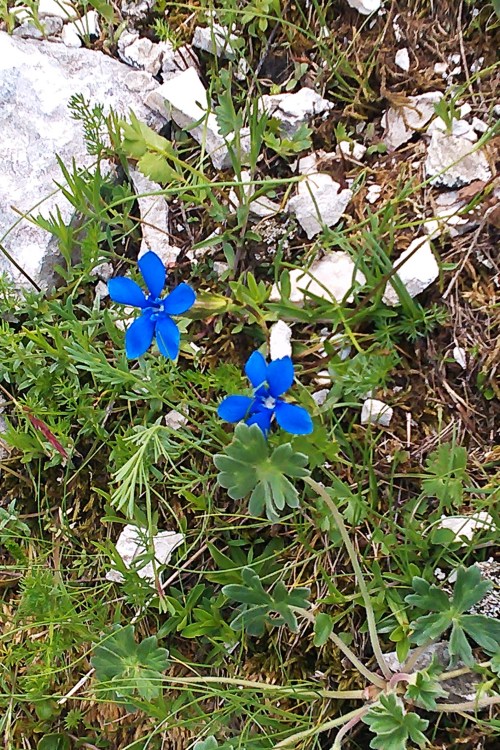
We continued along the ridge, heading north along path C5. Fran pushed the pace here as she wanted off. Steep slopes on both sides weren’t an ideal birthday present. (I won’t even mention her anxiety about thunder storms.) It was a fabulous walk though, with flowers everywhere,  including several types of geranium, greater celandine, wild thymes, several types of euphorbia, viper’s bugloss (love that name; it’s great in Italian too – viperina azzurra. Nicer thatn Echium vulgare) and many many others, like wild chives. I never realised chives liked mountaintops that are covered in snow and ice for several months of the year.

And gentians. Such an amazing colour.

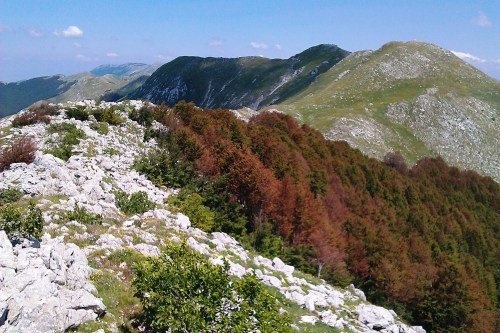
There were even the remants of some snow. If you look at one of the pics above, the beech forest seems to be tinged in Autumnal red, but this is actually withered and dying leaves – I suspect the spring growth was hit by some late snow-fall.

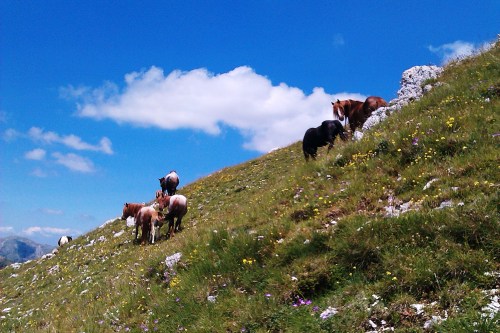
And some more rugged mountain horses. I’ve never seen horses as sure-footed and mountain goat-like as these.

Although there are a few dozen brown bears left in the area, wolves, golden eagles, and allegedly even lynx, our wildlife encounters included some raptors (possibly Buteo buteo, the common buzzard), innumerable butterflies and other insects enjoying the flowers, and swifts whistling around our ears on the ridge. Best of all, however, was thisVulpes vulpes specimen, who came jogging along the the ridge path from the other direction.

We thought he’d run off when saw us, but he kept getting closer, until he stopped at our feet, like a pet dog expecting a treat. I suspect hikers do feed the foxes, hence the behaviour, but it was still a wonderful moment, as foxes are among my favourite animals. I even thought about patting him like a dog until the word “rabies” popped into my mind. He was a very healthy looking specimen though, so it was probably just my turn to be paranoid.

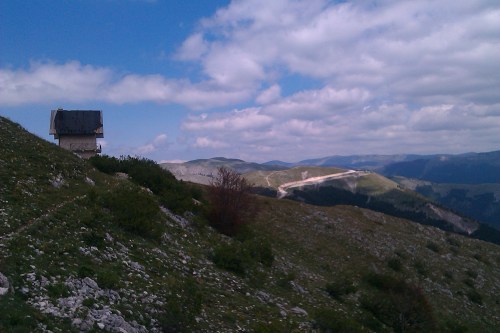
We eventually left the ridge at Rifugio di Lorio (padlocked – apparently you have to get the keys from the park authorities. Which seems pretty silly, to have a shelter you can’t access if you’re caught in a storm). I had a flapjack break, then we started the descent.

Path B4, dropped to the east, took us back into the beech forest and onto path B1, though this seemed to be called something else on the blazes (R7?), just to confuse things.

We even subsequently saw a small, weathered sign pinned to a tree that said we weren’t even supposed to have walked C5, the ridge route, without a guide, as part of the bear conservation programme. Maybe having some info on the park website, pinning the signs at both ends of the park, and, oh, opening the tourist office, might have been a better way to disseminate this info. Presumably none of the other half-dozen hikers we’d seen on the path had received this info either. So Italian.

We descended through the forest, past some ski facilities (absurd looking without snow), then back onto part of the path we’d done yesterday, under the castle ruins. I was craving a beer, but when we finally made it to Pescasseroli’s only birreria they only had foreign muck and industrial beer, so I forwent that essential part of any hike and settled instead for an aperitivo later.

We were joined by another Marammano, presumably retired. These guys are ubiquitious in Pescasseroli, wandering to the streets blagging stuzzichini (aperitivo snacks).

All in all, a great walk. Despite Fran’s uncertainties. Soon forgotten, after a glass and a half of prosecco. (Only a half – a big dog barged the table, smashing the glasss, before Fran could finish her second one.)

We concluded the day with one of the best meals we’ve had in Italy.

(Apologies – the pics are mostly taken on my rubbish phone’s 5MP camera I’m afraid. Fran is the real photographer with the proper DSLR. Maybe she’ll put some on Flickr at some point, and I can link to them.)

13 Comments

Filed under Italy, Main thread