Once Upon A Time
Once upon a time, breweries and bakeries lived side-by-side harmoniously. Brewers merrily went about their noble work, mashing, sparging, fermenting. One blessed by-product of the process was a foam that frothily formed on top of the fermenting liquor. The dusty baker from next door would welcome consignments of this malty foam – barm – and use its natural yeastiness to leaven his dough.
And so it went for long ages.
Until some learned men in the late 18th and 19th centuries improved humankind’s understanding of bacteria and yeasts. By the late 19th century, yeast specifically cultivated for bread-making had become commercially available in block, then in dry, granulated form. And slowly, sadly, the close bond between breweries and bakeries faded away.
This idea of bread being made with brewery by-products has intrigued me for ages, but not having had a ready supply of barm, I’ve never actually tried it before.

Beer breads
Dan Lepard in ‘The Handmade Loafʼ does a loaf he calls “Barm bread”, but it’s made using a bottle conditioned beer, that is then heated. This seems counter-intuitive, as it kills the yeasts in the beer, but apparently it’s to cook off some of the alcohol, which retards the action of any yeast in the mix. Lepard was effectively using the beer as a flavouring, and then re-introducing yeasts, I believe; so however lovely the results were, it wasn’t a genuine barm bread. (One of my attempts using his method a few years ago is picture above.)
My recent enjoyment of Game of Thrones and the Song of Fire and Ice novels, the source for his great HBO TV series, lead me to the Inn At The Crossroads. This inspired blog features involves real-world interpretations of the fantasy world foods mentioned by George RR Martin in his books, and it got me thinking again about pre-industrial yeast bread-making.
Westeros’ finest
Specifically, I was checking out The Inn At The Crossroads’ bread recipes. They have a few for Martin’s black bread, with the second version made using dark ale, stout or porter. Okay, thought I, that looks fun. But I had one criticism. Surely in Martin’s quasi-Medieval world, they wouldn’t have had “1 packet yeast”; bread would surely have been made with the barm method.
I made a comment along these lines, and one of the site’s creators, Chelsea Monroe-Cassel replied, saying “I agree that this would be the very best way to make this bread!” She also said, “I’ve made several trub breads, with great success.” I’d not heard of trub bread too, but this one is made using the sediment from the fermenter.

My project slightly moved away from the black bread theme, though, as initially I just wanted to make a bread with barm, and with flour with older grain – ie arguably more medieval – varieties.
I bought some Mulino Marino Pan di Sempre, a stoneground organic flour that is made with a blend of Triticum aestivum (that is, common bread wheat), Triticum spelta (spelt wheat) and Triticum monococcum (einkorn wheat).
My friend Michele Sensidoni, a brewer, kindly furnished me with a bottle of barm. It wasn’t very prepossessing stuff: gloopy, brown and malty, separating slightly, but it was exciting to finally get my hands on the stuff.

So:
100g barm
100g flour
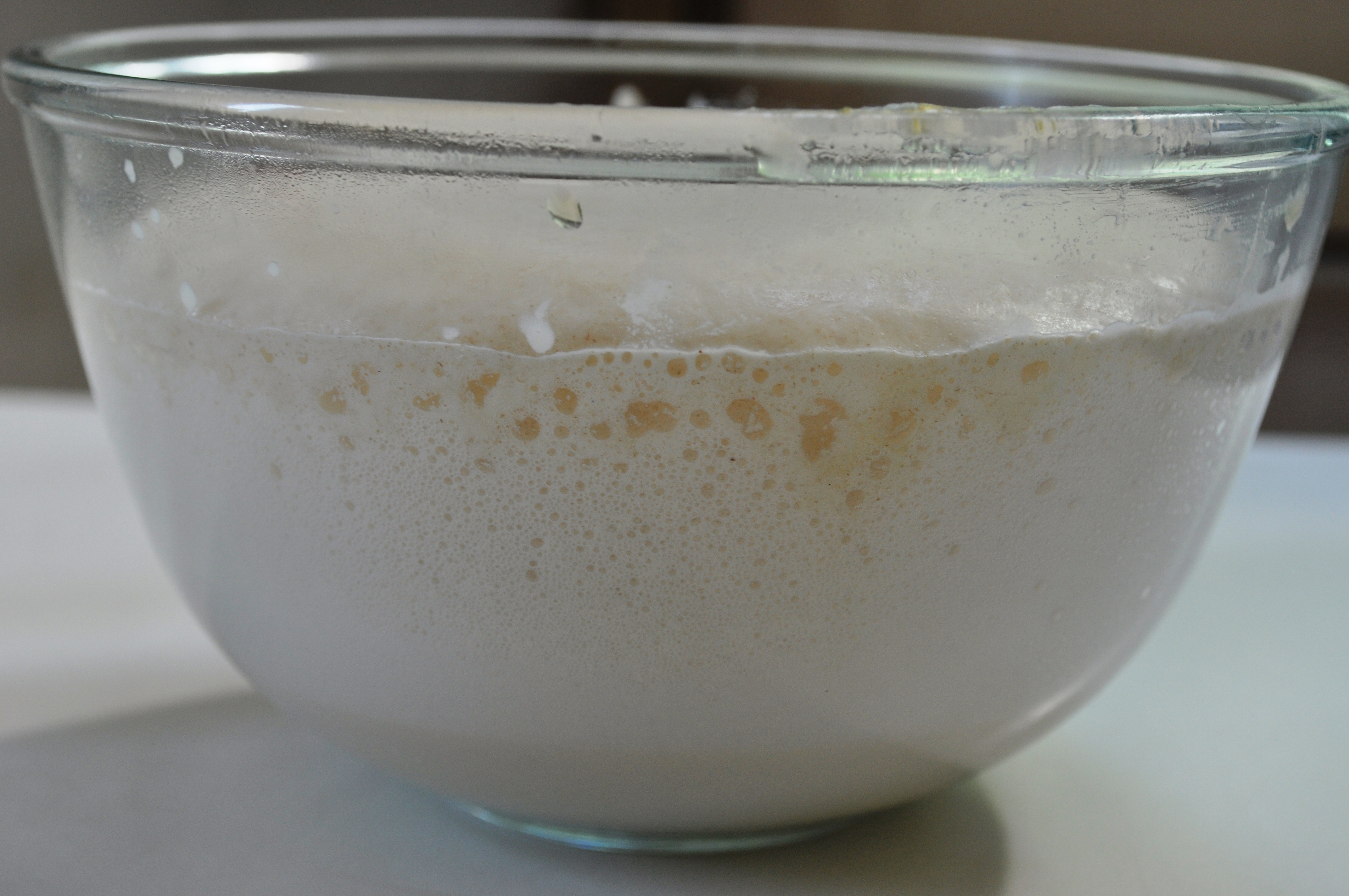
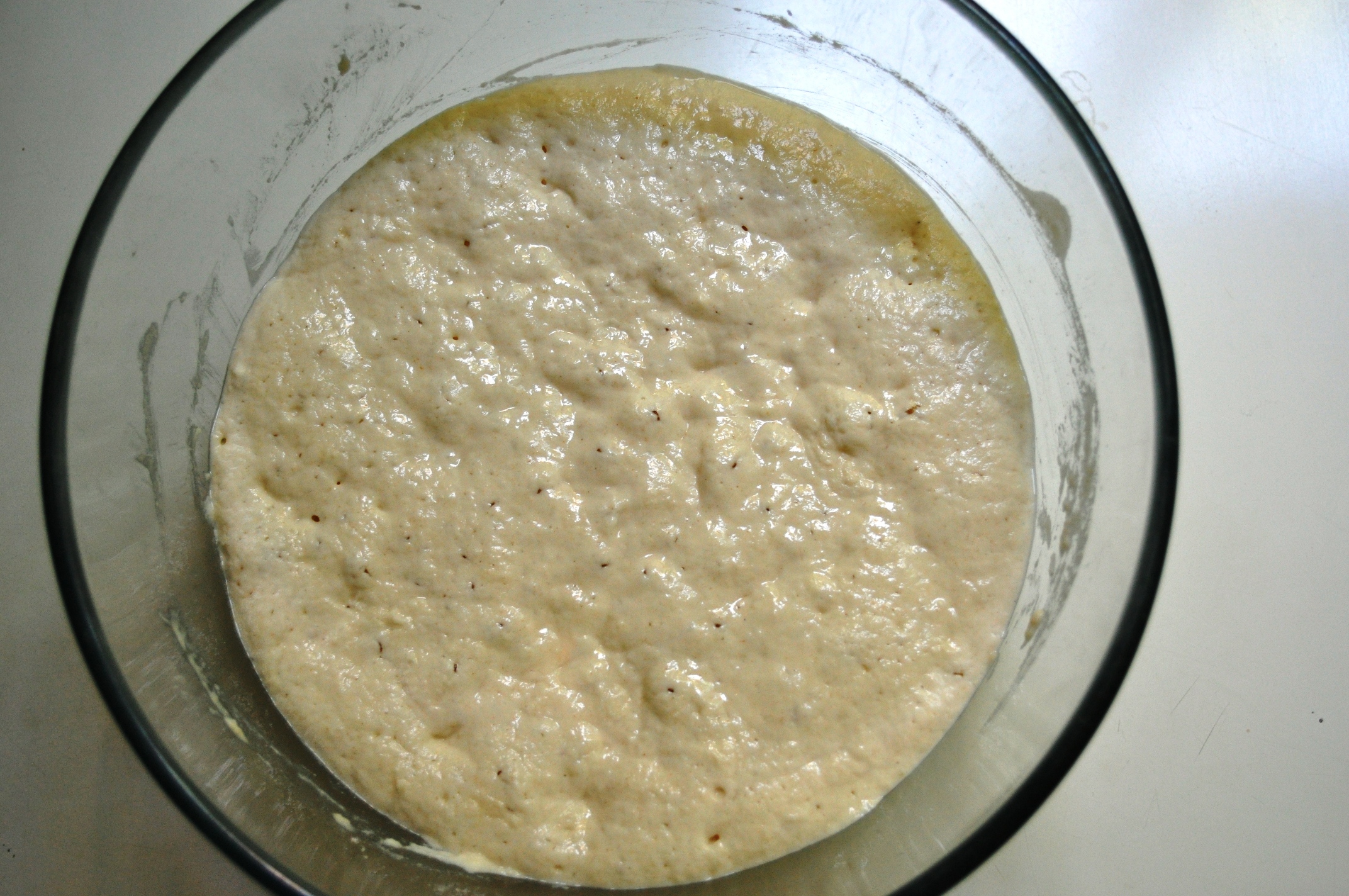
Mixed and left overnight. My kitchen was at around 23C. The next day this was clearly alive, and reasonably vigorous. Here’s the before and after shots:


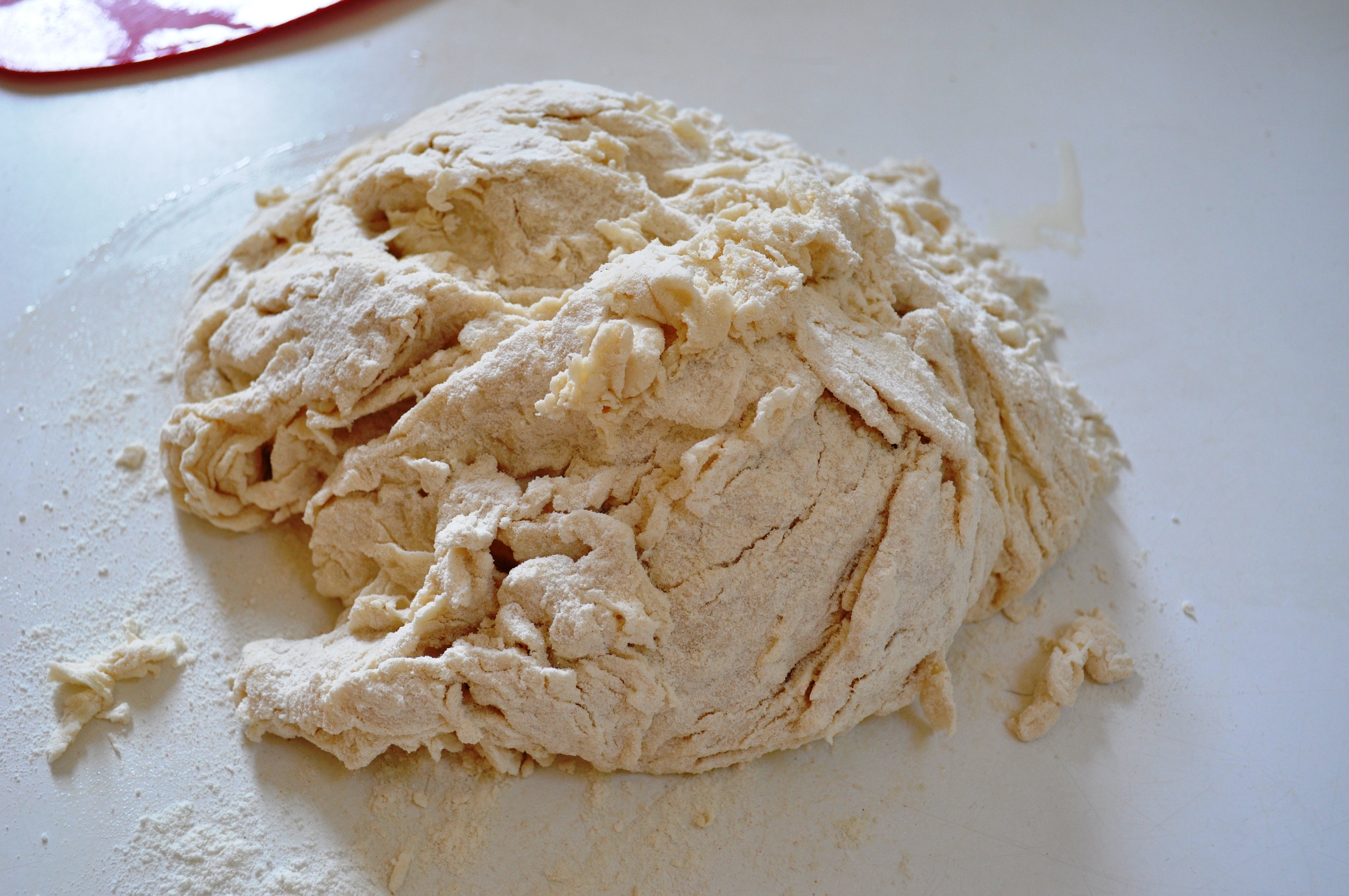
I formed a dough with:
200g barm leaven (ie, all of the above)
500g flour
10g salt
300g water
Adjust the water if necessary; you want a nice moist dough.

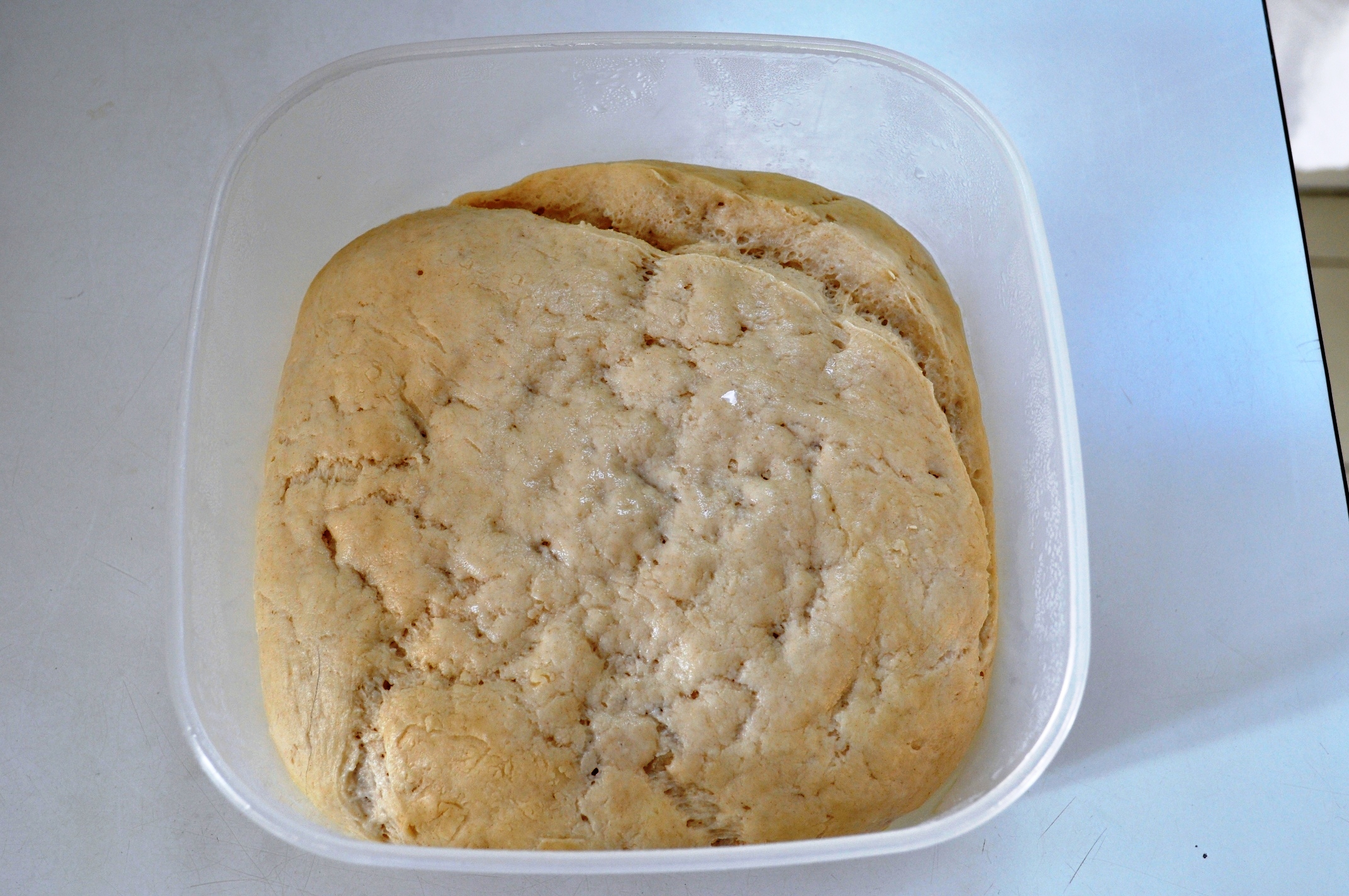
I then put all this in a container and left it in the fridge for 24 hours.
I then took it out of the fridge, and let it come back to RT (again, around 23C).

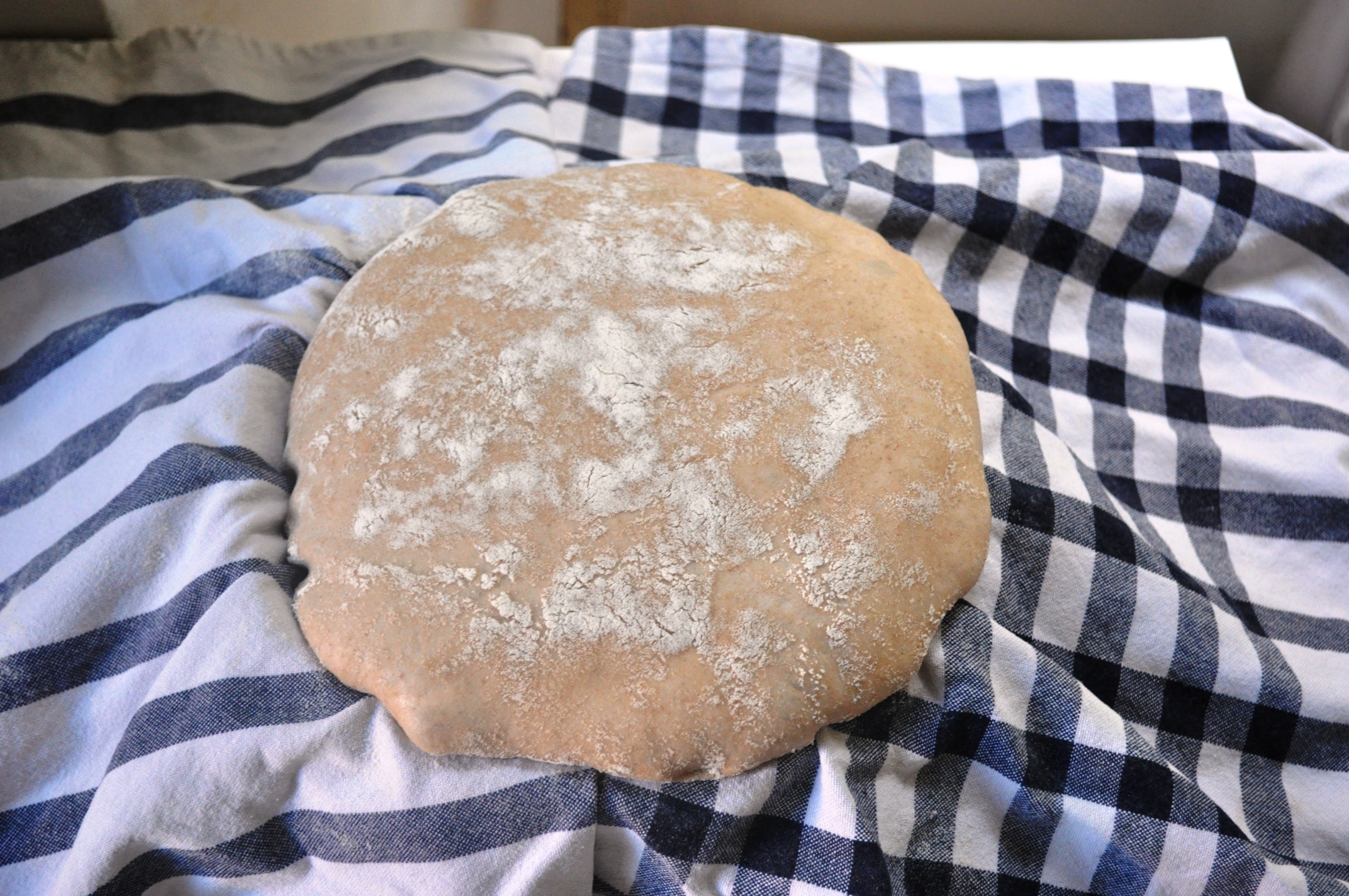
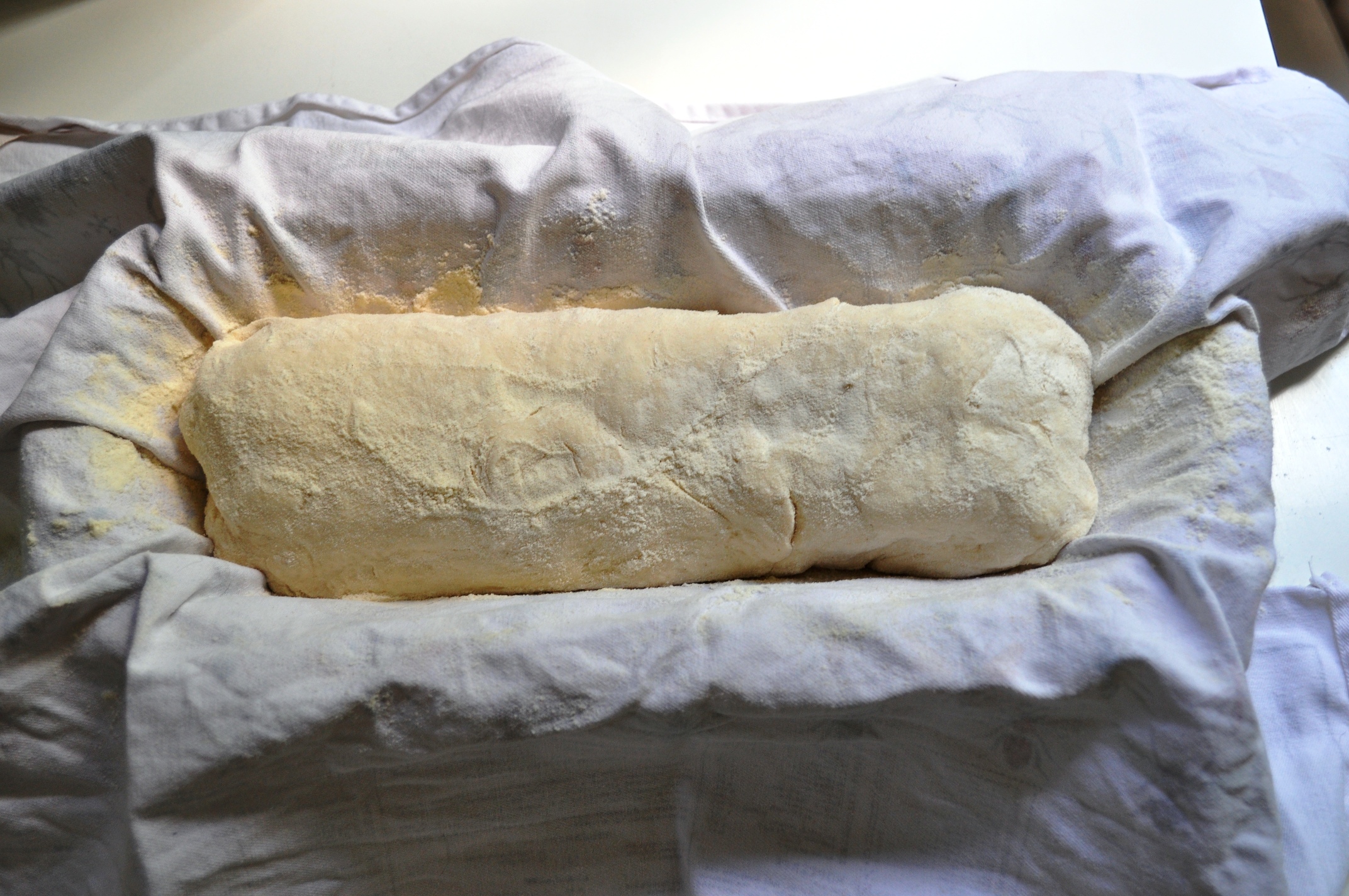
After a few hours, I formed a ball, and put it in a proving basket lined with a floured cloth.
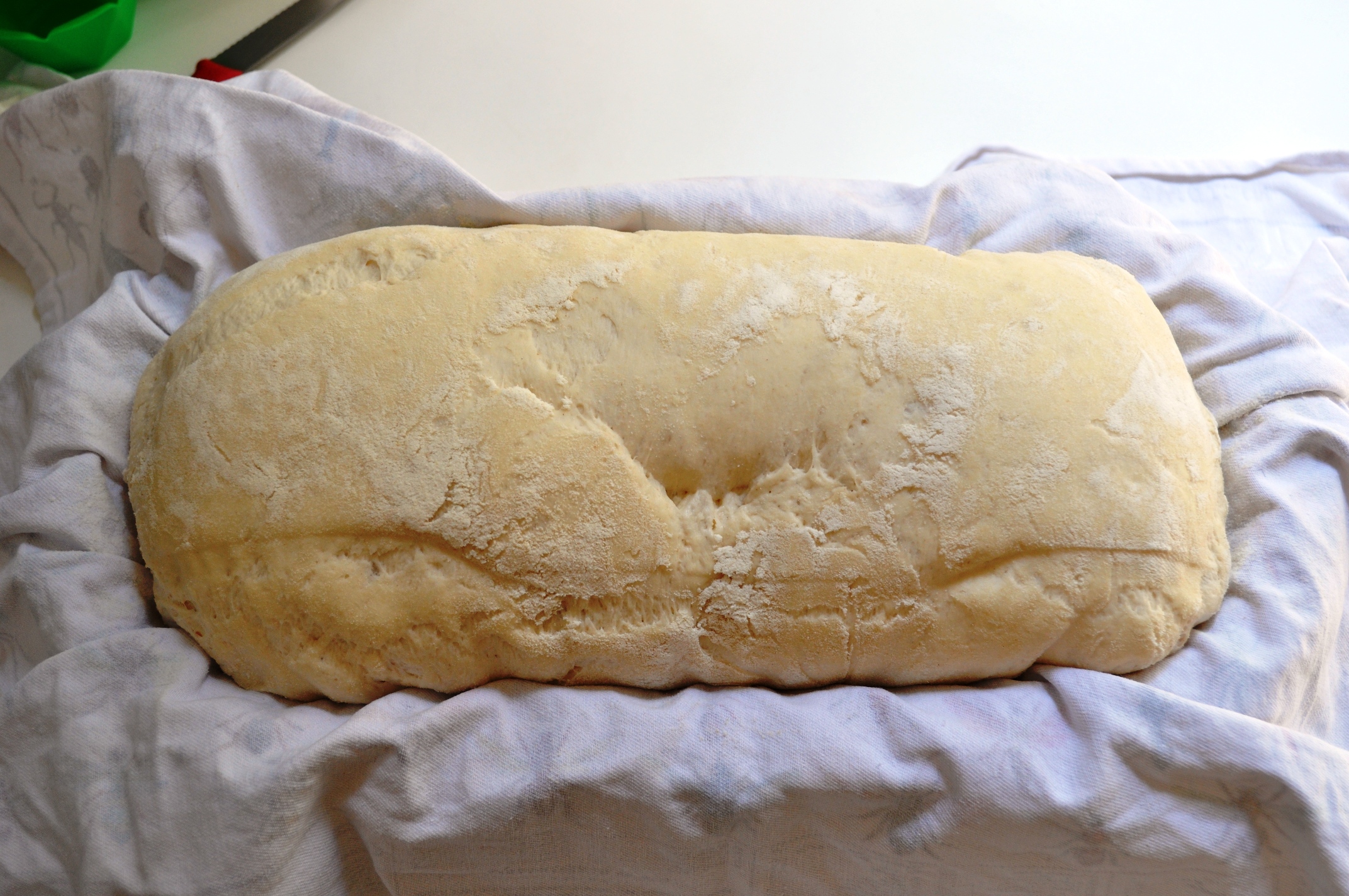
I let it prove again at RT for around 9 hours.
I preheated the oven to 230C.

When the dough was nice and swollen and soft, I baked it for 20 minutes, then turned down the oven to 210C and baked for another 20 minutes.

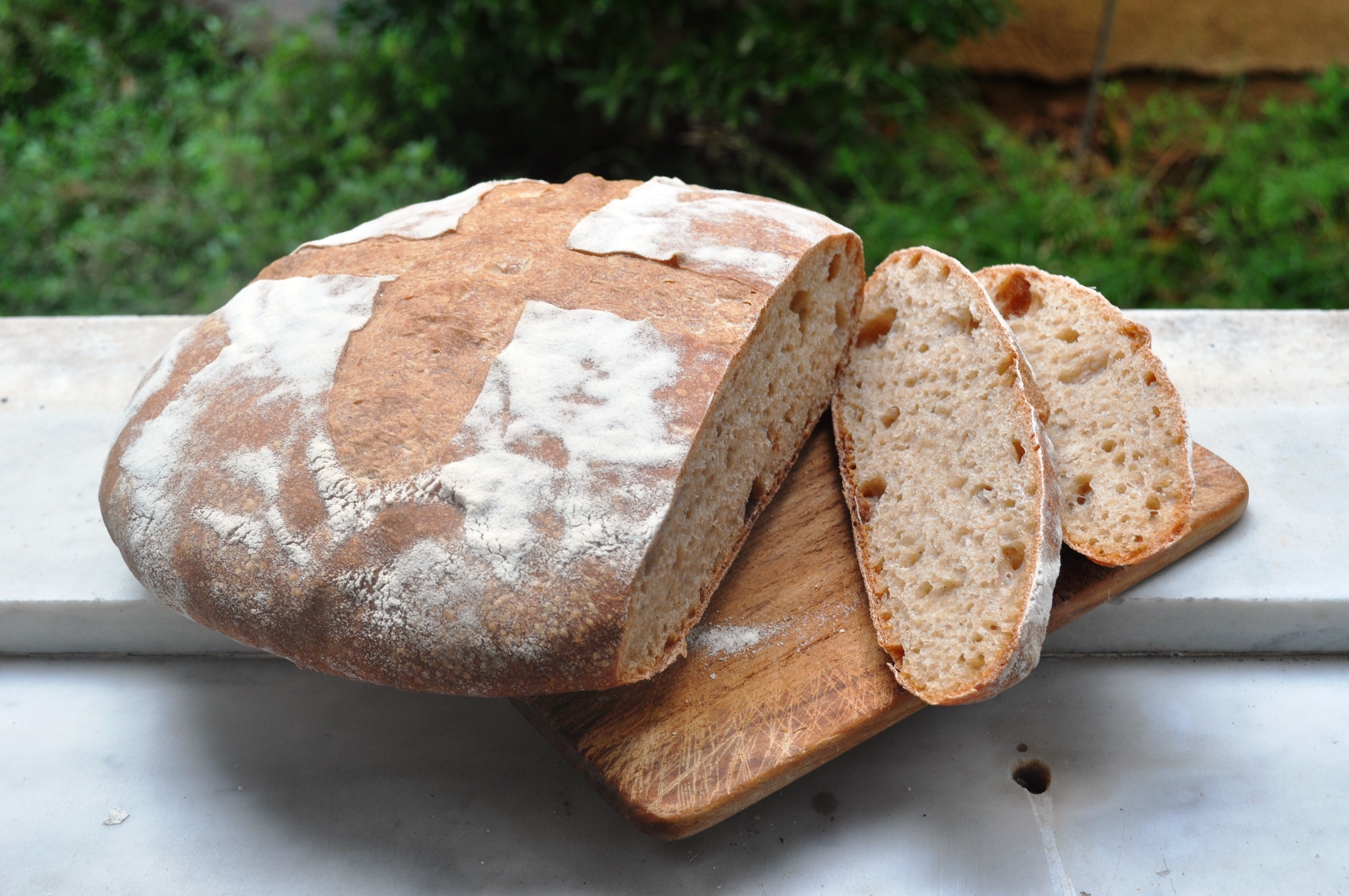
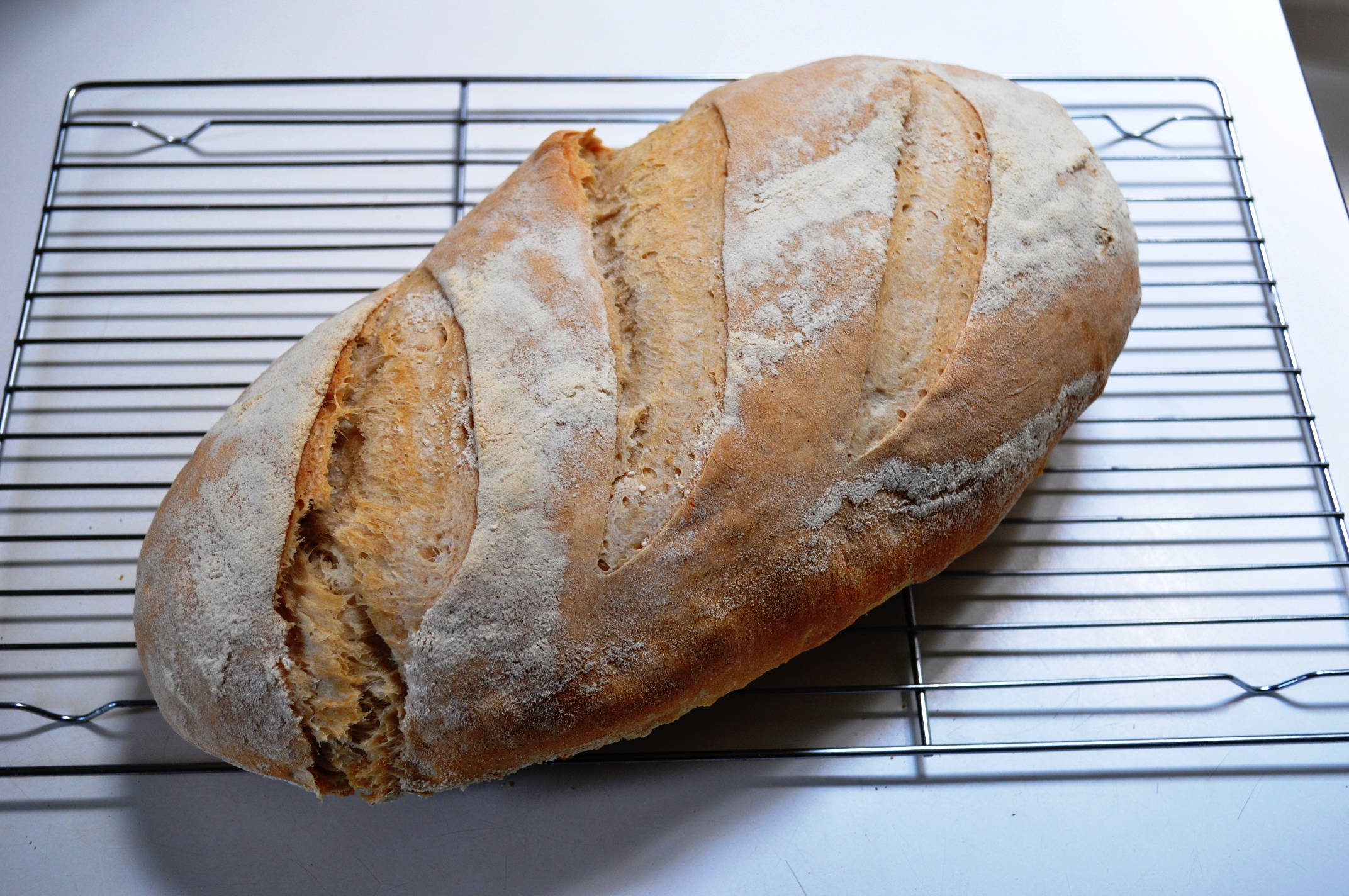
The results are very pleasing. It’s got a chewy crust, a reasonably open crumb and a taste that’s subtly sour. Yay.

Oh, and for etymology geeks (like me), the British English word barmy, meaning a bit bonkers, crazy, comes from barm. As a barm is the foamy scum that results from fermentation, someone who is barmy is a bit bubbly, excitable, unpredictable and possibly even frothing at the mouth. Don’t worry though, making and eating this bread won’t have that effect on you. [insert suitable smiley here to compensate for lame attempt at humour]





















 Bread, Cakes And Ale