Category Archives: Discussion

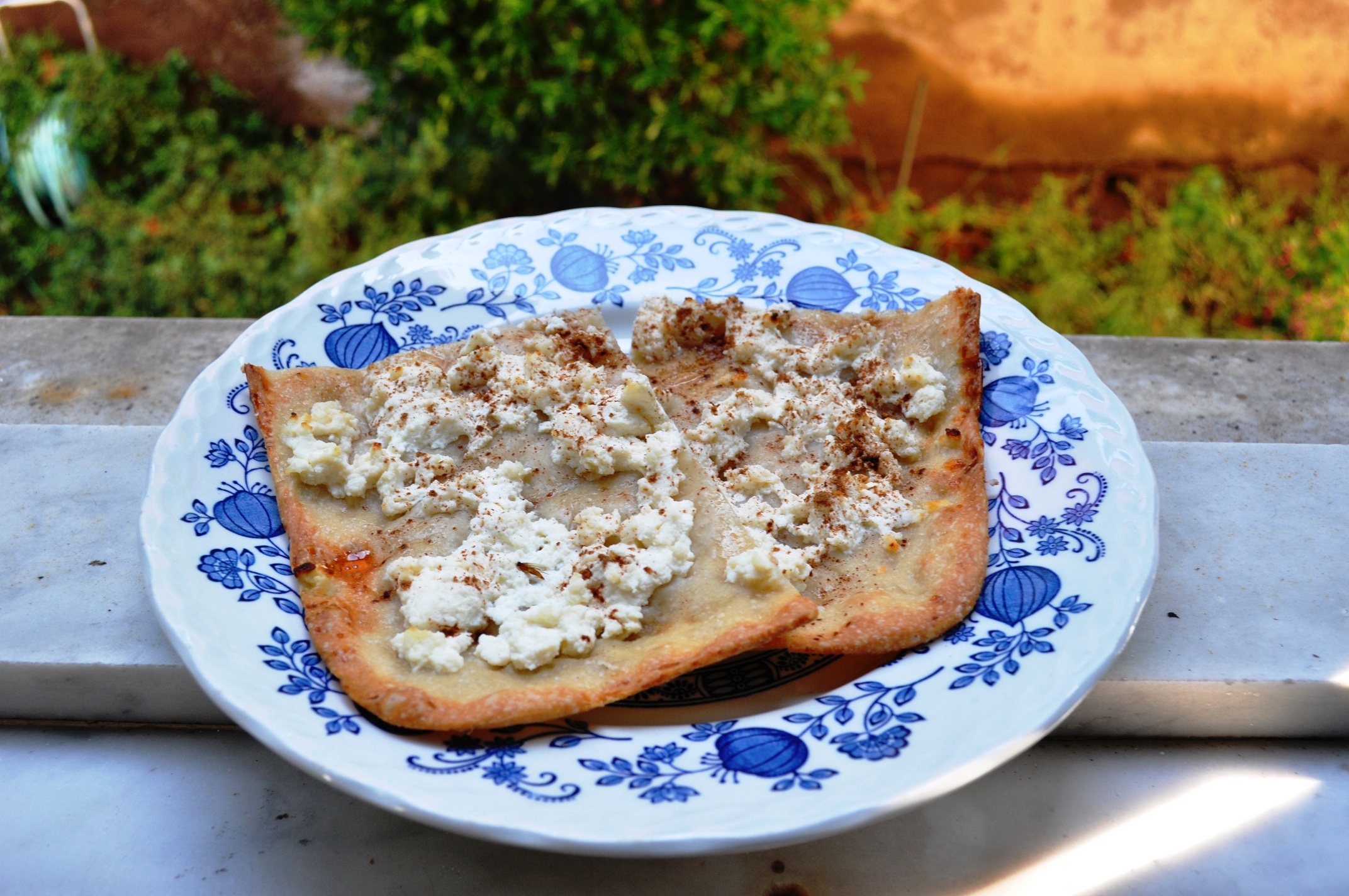
Ricotta and cinnamon pizza

Cinnamon and ricotta pizza

Ricotta. Generally, I don’t know what to do with this classic Italian “recooked” whey cheese. I’ve used it in cheesecakes before, and it is delicious eaten for breakfast with a drizzle of honey. But the sheer scale of its presence in Rome, where fresh stuff arrives by the tonne every day, indicates it’s used very widely indeed.

Shops like the likeable Antica Caciara in Trastevere have an entire window dedicated to baskets of the stuff. Farmers markets’ also tend to have several stalls selling bucketloads of the stuff. Since our farmers’ market was shifted out of Testaccio, and as it’s August and most of Rome’s markets are closed anyway, we’ve been frequenting our new Punta Vendita Aziendale (direct-from-farm shop) near Ponte Testaccio. (Actually, it’s three outlets in one venue. See Info, below). They have a lot too, and on a couple of occasions when we’ve been stocking up on other goodies, they’ve given us some. It’s all about the freshness with Roman ricotta, so I suppose they just don’t want it hanging about – and they want to encourage our loyalty.

So what else do people do with the stuff? Well, I’m slowly discovering.
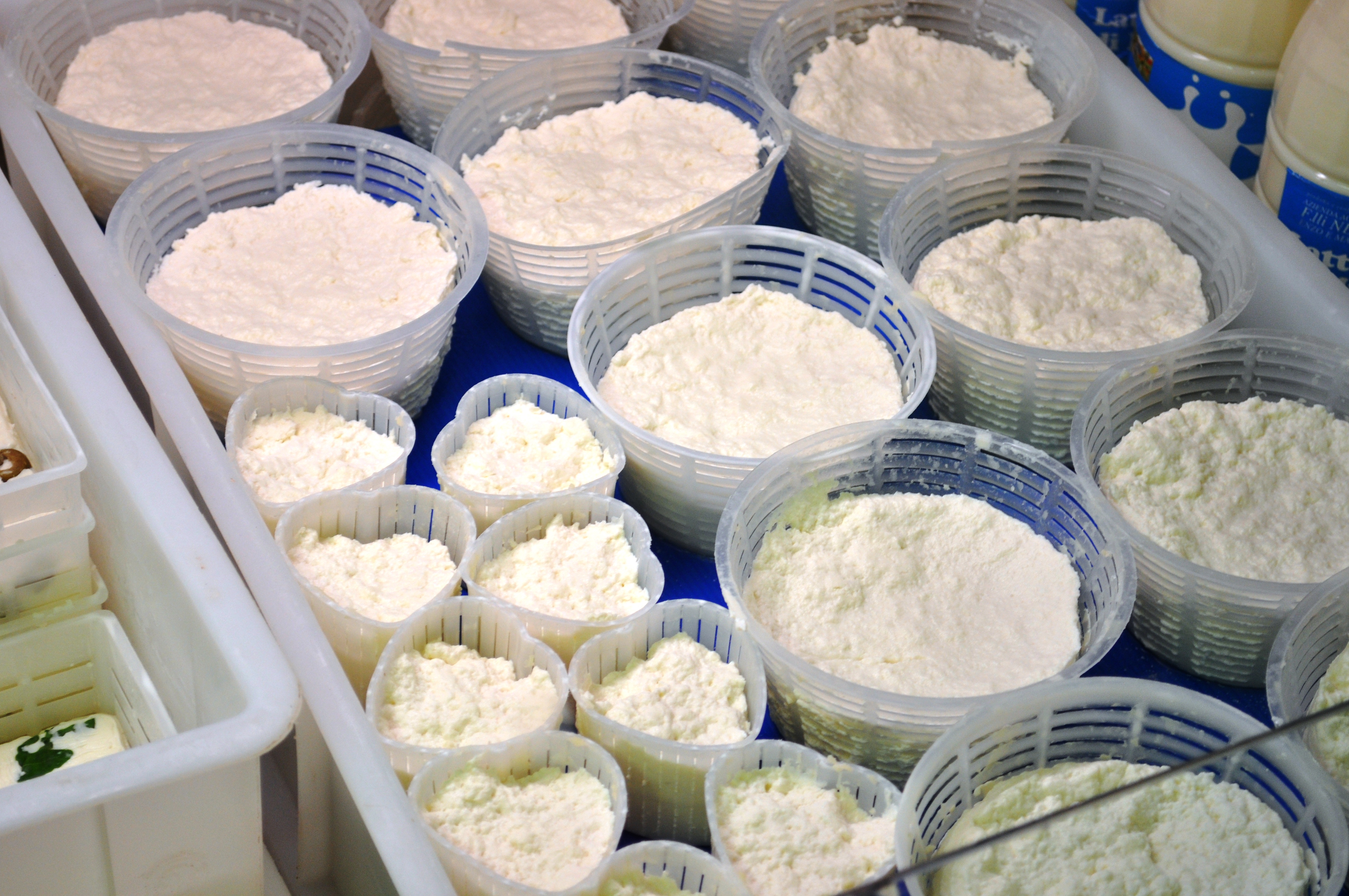
Fresh ricotta

It’s used in a few classic, simple pasta dishes, but to be honest, I don’t much like them; even with excellent quality ricotta such dishes seem oddly bitter to me. There’s a kind of cappuccino di ricotta according to ‘Cucina Romana’ by Sara Manuelli1, but I’ve never seen that. Manuelli also gives a recipe for ricotta condita that just involves the cheese, egg, sugar, cocoa and some booze. It sounds like a kind of trifle or tiramisu, but without any sponge. Other versions, such as in Oretta Zanini di Vita’s ‘The Food of Rome and Lazio’2 use finely ground coffee instead of cocoa.

When I got the cookbook ‘La cucina di Roma e del Lazio’3, one thing that caught my eye straight away was the budino di ricotta (ricotta pudding, or ricotta cake), which they make in a handsome ring form. So I gave it a go. It seemed simple – just ricotta, sugar, lemon zest, a little booze and some eggs, some separated, with the whites whisked to give the pudding some lightness.

Ingredients for ricotta and cinnamon pizza. Ricotta, sugar, cinnamon, dough. Basta.

It all seemed to go well. Until I turned it out of the tin. It deflated a bit. Okay, fine. But then I ate some. Really not my bag. I’m sorry to say I found it oddly nauseating, just unpleasantly whey-y, so I won’t be repeating the recipe here. I should have known really, as I’d made a baked ricotta pudding before, using ‘Cooking Apicius’ – recipes based on a collection from the late classical period4. That one involved lots of bay leaves and at first bite was amazing, but at second bite was exotically disgusting.

So I was back to square one with my slightly vexed question of what to do with ricotta.
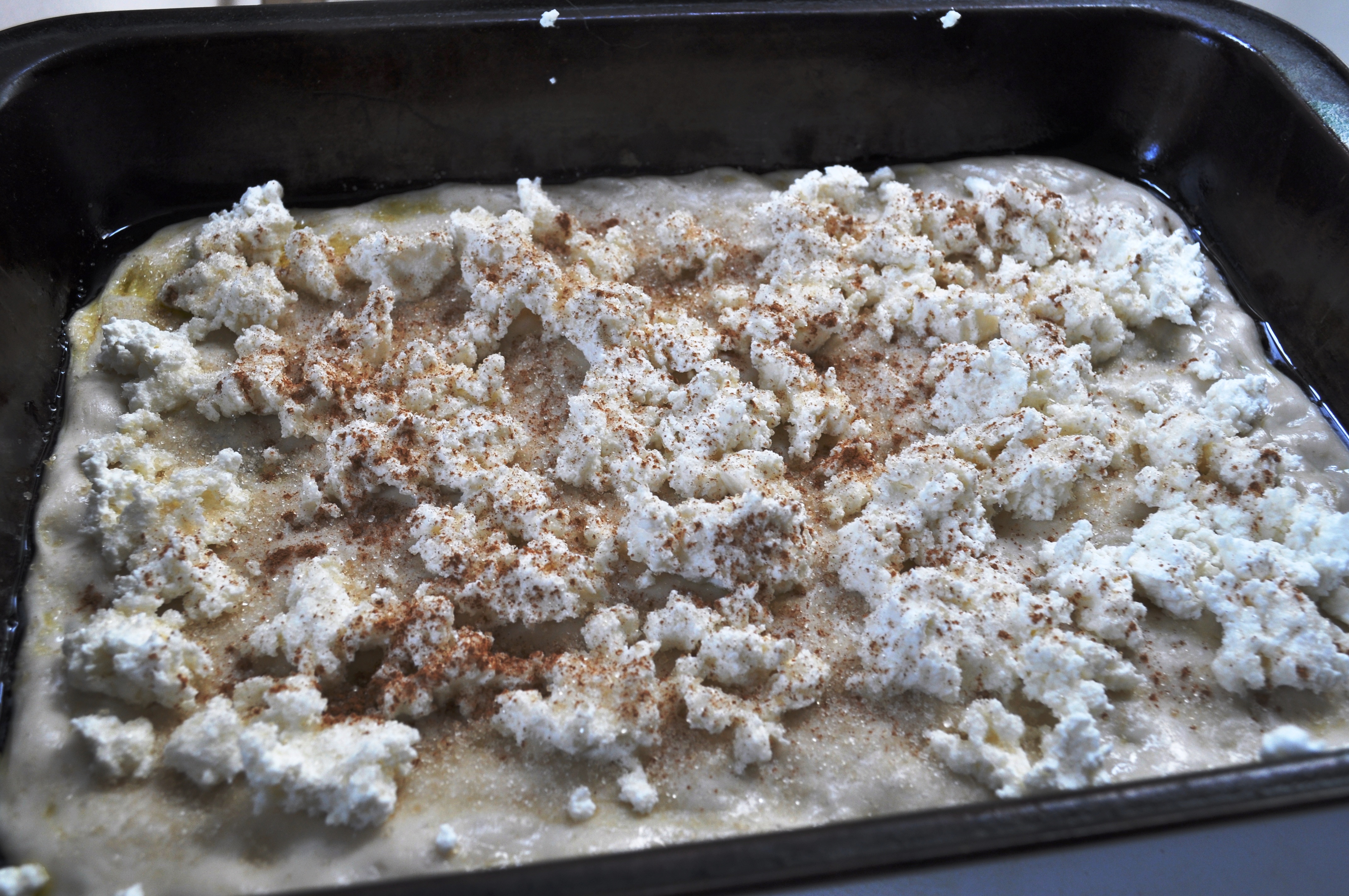
Ricotta and cinnamon pizza, before baking

And then Azienda Agricola Fratelli Nesta, one of the abovementioned three outlets, went and gave us another couple of etti5 of ricotta.

Luckily, ‘La Cucina di Roma e del Lazio’ has several other ricotta-based recipes. One of which is so absurdly simple I had to give it a try. It’s a sweet pizza, and would you know, I had some spare pizza dough.

According to authors Marie Teresa di Marco and Marie Cécile Ferré this is a “super-simple sweet that you can often find in the bakeries of Tuscia”. Tuscia is the historical region of the Etruscans (the Tusci in Latin), a large area of central and western Italy that now corresponds with most of Tuscany, northern Lazio and parts of Umbria. The recipe in is specifically called “Pizza ricotta e cannella di Tarquinia”. Tarquinia is an ancient Etruscan town near Viterbo, north of Rome.

I can’t find any mention of a ricotta and cinnamon pizza from Tarquinia or Tuscia,  or anywhere for that matter, online, but then, Italy hasn’t poured all of its vast and varied (food) culture onto the internet. So I’ll just give the two Maries the benefit of the doubt.

Anyway, I’m not going to mess about trying to put it in grams or whatever as it really is simple and flexible. It’s all about the “qb”, the quanta basta, the “how much is enough”. That is, the right amount according to your intuition and inclination.

You just need to make some basic white bread or pizza dough; I won’t give a recipe here, as there are numerous recipes in other sources. Just find one that suits you. I’d recommend one with a nice long fermentation.
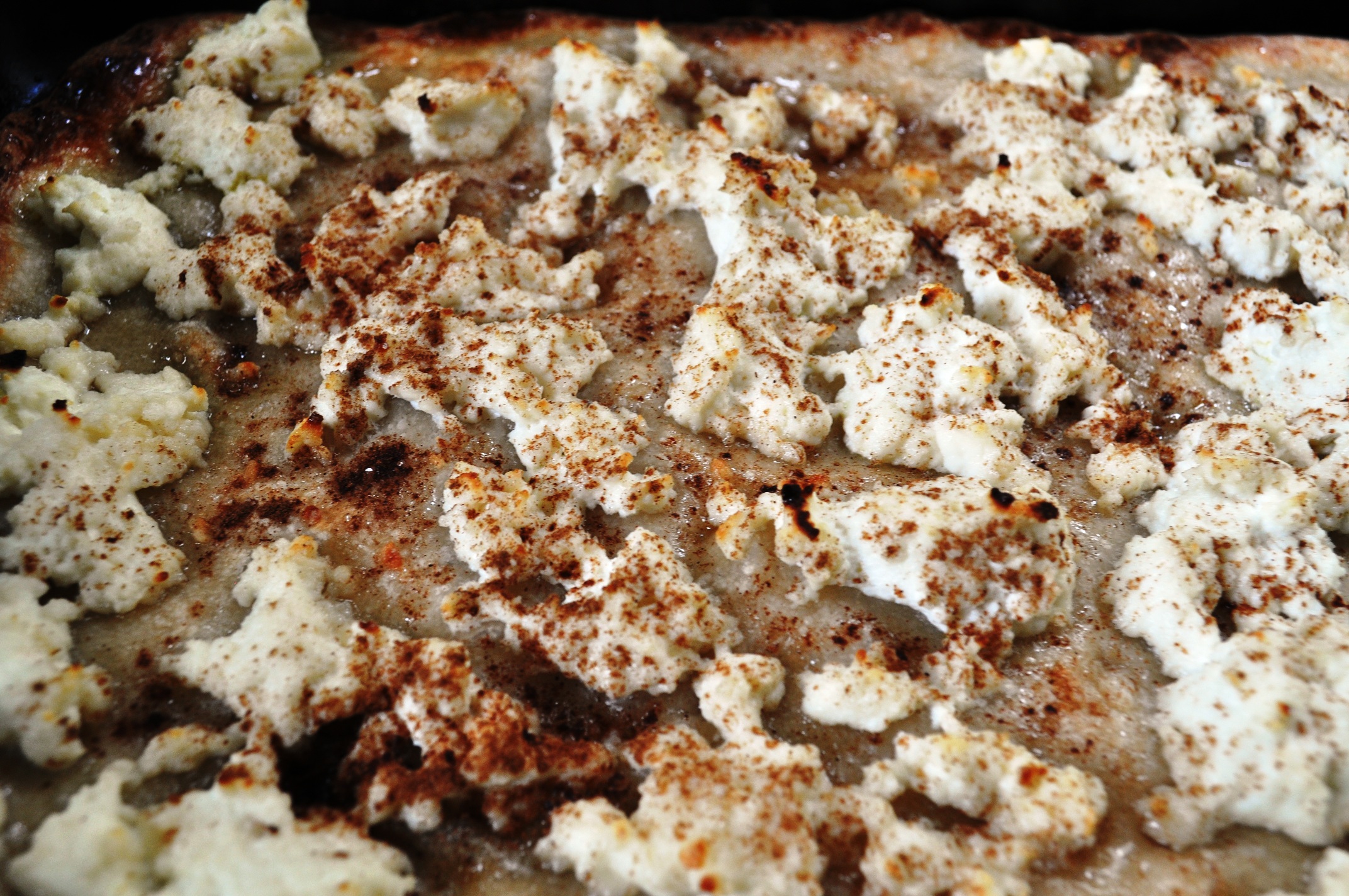
Ricotta and cinnamon pizza

The ricotta and cinnamon pizza recipe isn’t even a recipe per se, it just says:

Bread dough
Ricotta
Sugar and cinnamon
Extra virgin olive oil

Then mentions the bakeries of Tuscia, where “the bread dough often comes in a thin form, covered with ricotta, sprinkled with sugar and cinnamon, then drizzled with extra virgin olive oil. You bake it in a hot oven for about 20 minutes.”

And you know what? It’s delicious. I especially like the way the oily, sugary mix caramellises on the crust. Sure, it’s an example of those Medieval flavour mixes of sweet, spice and savoury that us Brits don’t use so much these days and, sure, perhaps it’s slightly confusing quite when you might want to eat it. Is it a main course, is it a dessert, is it for afternoon tea, or even a breakfast snack? But frankly, it’s so simple and satisfying, you can eat it whenever you want. I scoffed most of mine at 5.15pm as the hangry hour was approaching.

Info
Punta Vendita Aziendale (direct-from-farm shop), Via Bernadino Passeri 8, 00154 Rome.
Open Tues, Wed, Fri and Sat 8.00-19.00,  Sun 8.00-14.00

Footnotes and stuff
1 ‘Cucina Romana’ by Sara Manuelli appears to be out of print. The copy I’m referring to was published in 2005 by Conran Octopus, ISBN 1 84091 407 6.
2 ‘The Food of Rome and Lazio’ by Oretta Zanini di Vita also appears to be out of print. The book I’m referring to is translatedby Maureen B Fant, and is listed on her website. First published 1993 by Alphabyte di Maureen Brown SAS, ISBN 88 86128 02 9. I’m not sure, but it may have been reprinted in 2003 by the University of California Press as ‘Popes, Peasants, and Shepherds: Recipes and Lore from Rome and Lazio’.
3 ‘La cucina di Roma e del Lazio’ (“The cooking/cuisine of Rome and Lazio”) by Marie Teresa di Marco and Marie Cécile Ferré is, so far, only available in Italian. Published 2012 by Guido Tommasi Editore-Datanova, ISBN 978 88 96621 844.
4 ‘Cooking Apicius: Roman Recipes for Today’ by Sally Grainger. More information here from the publisher, Prospect Books, along with a PDF download with ” the preliminary matter, the introduction, the list of recipes and the opening historical discussion of Cooking Apicius”.
5 An etto (plural: etti), or ettogrammo is a commonly used measure in Italy, especially for buying market produce. It’s a hectogram/hectogramme – that is 100g, 0.1kg, or about 3 and a half ounces.

Leave a comment

Filed under Discussion, Misc, Other food, Pizza, Recipes

Italian breakfast, and why a cornetto isn’t a croissant

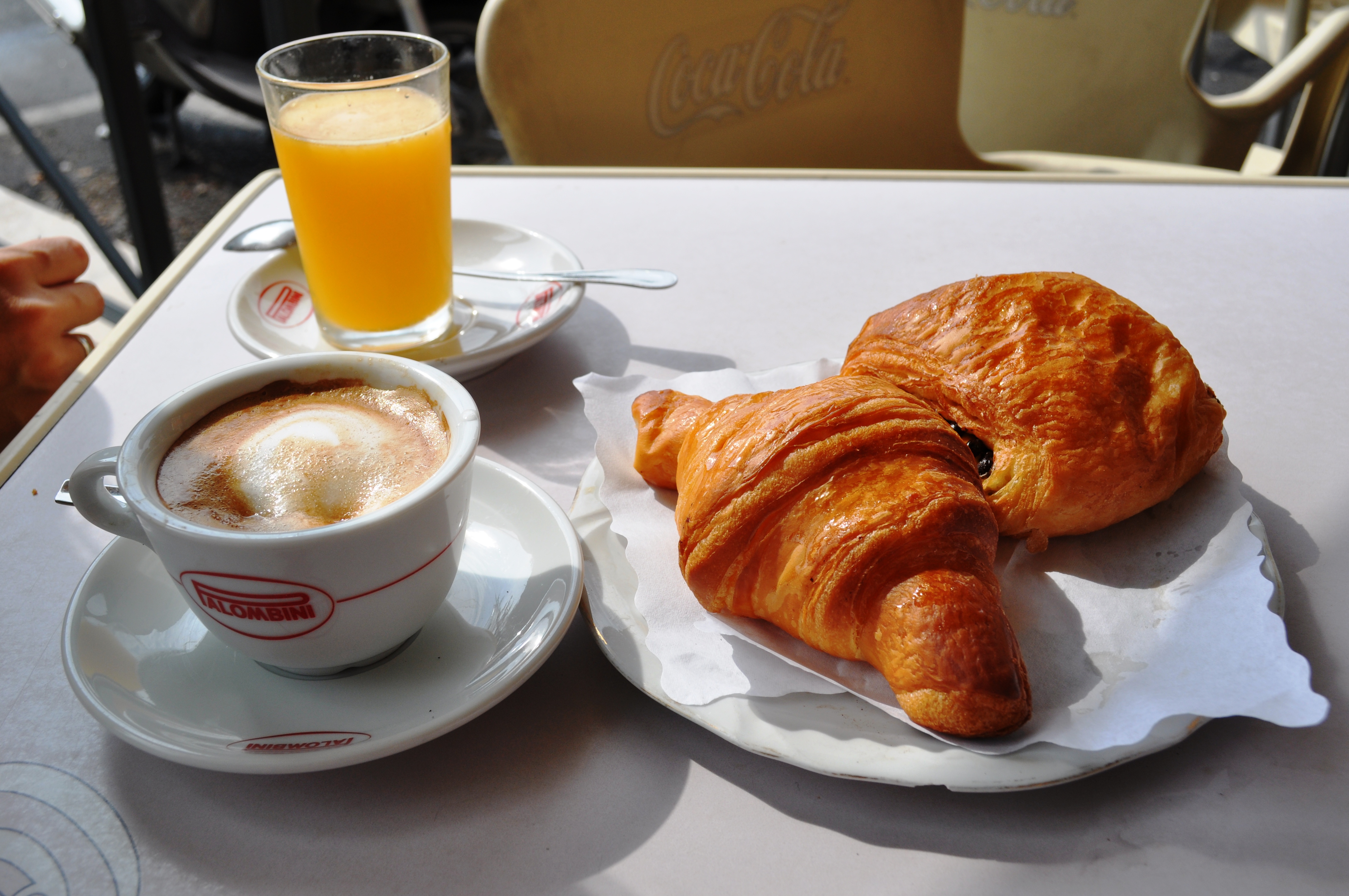
Cornetto, saccottino and cappucino at Baylon Cafe, Trastevere, Rome

Let the Games Begin (Che la festa cominci) is the latest novel by Italian writer Niccolò Ammaniti. He’s probably best known for Io non ho paura (I’m Not Scared), the 2001 novel that became a film in 2003.

A pretty broad satire of contemporary Roman society, Let the Games Begin is passingly entertaining, but it suffers from less-than-perfect translation and editing. As well as some fairly rudimentary editorial errors, the idiomatic translation doesn’t feel quite right. It’s also quite haphazard with its translation of Italian food names. While it’s content to refer to supplì as supplì, it seems to determinedly translate cornetto as croissant.

A cornetto (“little horn”) is not a croissant (French for “crescent”). Nor is it an ice-cream. It’s an Italian relative of the croissant, likely with the same origins, but today a distinct product. Sure they look similar, but they’re slightly different. Read on.

No one is in agreement about the origins of the crescent-shaped pastry, but one abiding story (or myth) is that it was invented in Austria to commemorate the defeat of the Ottomans, who besieged the city in 1683. Wikipedia gives more background. Whatever the origins of the pastry (other variables include chiffel and kipfel), since its birth the regional and national versions have diverged.

Breakfast pastries
Both the croissant and the cornetto are breakfast pastries. The quintessential breakfast I witness being consumed day-in day-out in Rome is a coffee – either a simple caffè (espresso) or cappucino (often just called cappuccio in Rome) – with a cornetto, normally just a cornetto semplice (“simple”, ie plain).

Many cafés offer a large selection of different breakfast pastries, or lieviti (literally “yeasteds” or “risens”, meaning pastries made with a yeasted dough) and if possible I get a saccottino al cioccolato. In Italian, a sacco is a sack, so this literally is a “little sack with chocolate”. And yes, it closely resembles another French – or Viennese – pastry: the pain au chocolat, known by many ignoramuses as a “chocolate croissant” . Guys, it’s not a crescent-shape, so how can it be a croissant?

The cornetto semplice is also apparently also known as the cornetto vuoto (“empty”), to contrast it with various types of cornetti ripieni (“filled”). These include cornetto alla crema (with custard), alla marmellata (with jam, marmalade or other conserve), al miele (with honey; this is often made with an integrale, wholewheat, dough), and cornetto al cioccolato. The latter is an actual cornetto that is usually filled with that vile brown vegetable-oil product beloved of Italians, Nutella.

Choice of pastries at Baylon Cafe, Trastevere, Rome

The (subtle) difference
The French really don’t go in for all these filled variables, beyond ones with almond paste, but the biggest difference between cornetti and croissant is the lamination.

A proper croissant must be made with butter, and must be repeatedly folded and rolled, to achieve a lamination wherein the rolled dough contains several thin layers of the fat. When the croissant is baked, water in the dough is turned to steam, but this is trapped by the fat, causing pressure and rising between the layers. The resulting pastry, when done right, should be crisp and flaky, with a taste of butter but no greasiness.

A cornetto on the other hand isn’t so assiduously laminated, and can even be made with lard, not butter. The dough also contains more sugar. The result is a pastry that is just a lot sweeter than a proper French croissant, and can have a more enriched bread or cake-like texture, more like a French brioche. Some cornetti are very flaky and like croissants, but many others are more cakey; there’s a lot of variation.

Indeed, cornetti are sometimes called brioche in some northern parts of Italy, though in Naples, Sicily and parts of south with a historical French influence, the name brioche is used for a pastry more like the Gallic version. But that’s another story.

Cappuccio, spremuta, pastries at Caffe Arabo, Trastevere, Rome

A couple of cafés
Our lifestyle at the moment takes us to two cafes regularly for weekend morning cornetti. I’m not saying these have the best cornetti in Rome – how could I, without sampling cornetti in every single one of the thousands of cafés and pasticcerie in Rome? – but they’re places we enjoy.

The first is Baylon, which we started frequenting because… well, I can’t really remember. They’re so grumpy and resolutely unfriendly that even after we’ve been going there two years only one of the staff actually acknowledges us. The Ricardo Darin-lookalike is a particular sourpuss. Unlike many more traditional Roman cafés, however, it has space to hang out, and Wi-Fi. Plus, unlike many places in the tourist nexus of Trastevere, they don’t charge stupid prices.

So we keep on going back – partly for the space, partly as we can get our Saturday morning weekly English language paper nearby, and partly because they it has great selection of lieviti. Apparently it used to be a local landmark pasticceria (pastry bakery), so at least they have their own kitchens for the baking.

Our Sunday routine, on the other hand, developed as we used to go down to the farmers’ market in Testaccio’s Ex-Mattatoio every week. Although that’s now sadly been shunted further out of town, at least a direct-from-farm shop has opened near Ponte Testaccio, on the Trastevere Station side of the river, where we can get many of the same quality fresh products. There’s also Porta Portese market every Sunday, with its enormous selection of tat, junk and bric-a-brac.

Case of pastries at Caffe Arabo, Trastevere, Rome

On our route down the hill from our house, via the massively grand 19th century, weed-infested, broken-glass strewn, graffitied Ugo Bassi steps, we go to Caffè Arabo on Viale di Trastevere. This is a more traditional Roman café, no Wi-Fi or anything of that poncy nonsense, but it’s still kinda idiosyncratic. Plus, a couple of the staff not only recognise us but are friendly, even amiably laughing at my ordering a (hot) tea on a hot day. “The British drink tea in every season, every weather,” I shrugged.

They don’t have a kitchen, so their cornetti are bought-in, but they’re not bad. And occasionally they even have saccottini al cioccolato to satisfy my chocolate cravings.

Neither places, however, has croissant. A few Roman cafés do apparently do French-style croissant, but I’ve yet to sample them.

Of course, not everyone has a coffee and cornetto for breakfast or elevenses here in Rome. We sat down at Arabo last Sunday, Fran ordered a cappucino and cornetto, I ordered a spremuta d’arancia (freshly sqeezed orange juice) and a saccattino al cioccolato – then two guys sad down beside us and ordered beers. It was 10.30am.

Info
Baylon Café
Via San Francesco A Ripa 151, 00153 Rome
bayloncafe.com

Caffè Arabo
Viale di Trastevere 20, 00152 Rome

48 Comments

Filed under Cakes (yeasted), Discussion, Other food, Restaurants etc

Real beer, real bread, and how to define “craft” foods

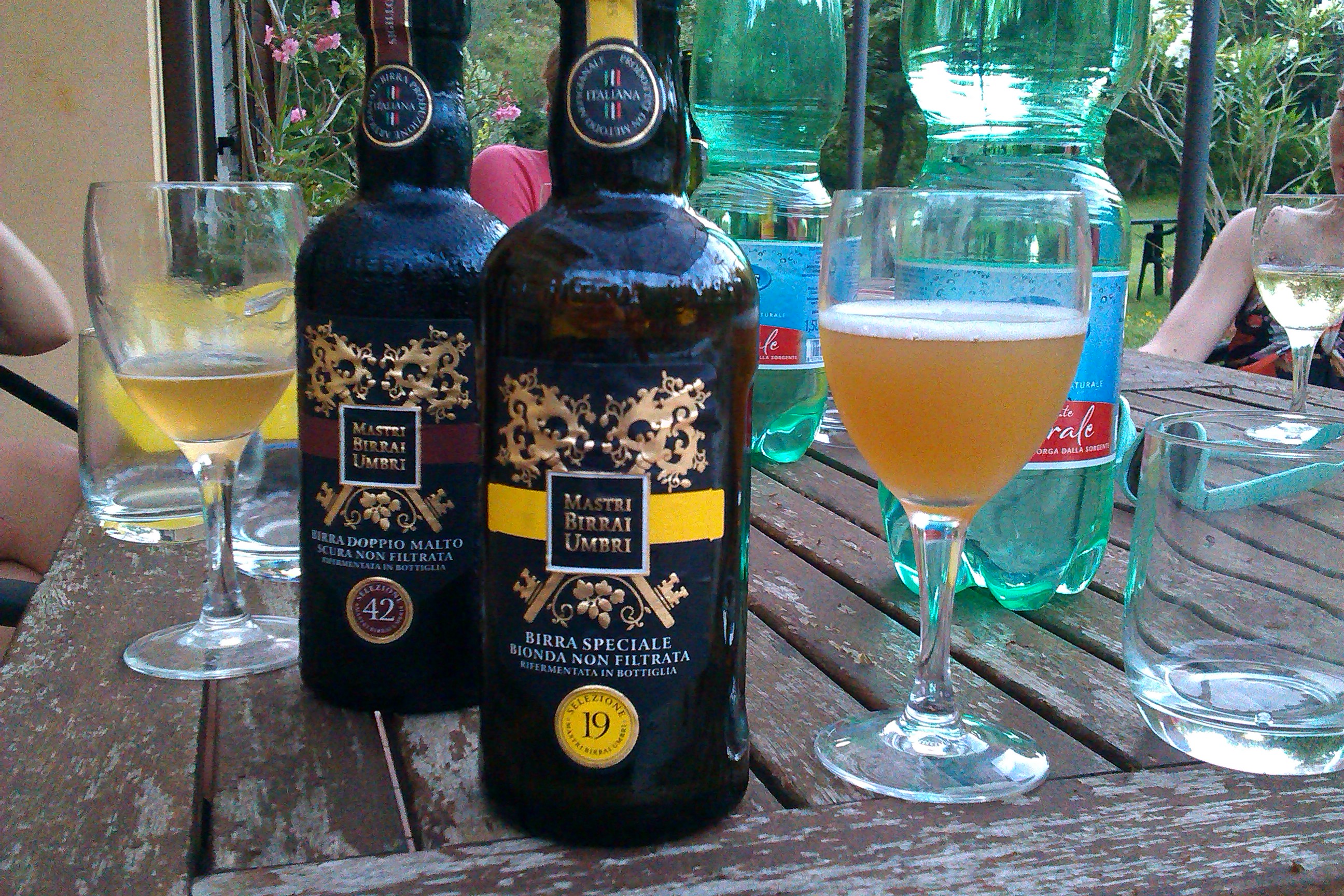
Bottled beer conditioning at Mastri Birrai Umbri

(I know long-form blogging isn’t popular these days, but think of this more as an essay. Hell, it’s no longer than an article in the paper.)

Visiting Mastri Birrai Umbri (MBU) and talking with MBU’s master brewer Michele Sensidoni and science and food communicator Jeremy Cherfas, who did a podcast about the visit here, really got me thinking about the whole question of craft foods. Especially beer and bread, as they’re my obsessions and they’re siblings born together at the start of human civilisation. Specifically, it got me thinking more about how one defines such craft foods. If you’re a baker, brewer or beer enthusiast, this is something you probably think about too.

I’ve visited MBU before, last year, and one thing that struck me then, and on the second visit with Jeremy, was the sense that the brewery was a place of industry and science. Of course it is, in literal terms – with industry meaning diligently creating something, and brewing (like baking) being a process that involves a sophisticated balance of biological processes. But also, it seemed industrial in the more technological sense, of large-scale metal equipment, and a small scale human presence. The fact that MBU is currently Italy’s biggest craft brewery, producing 1 million litres of beer a year, would seem to confirm this. And yet it is still a craft brewery.

Putting it perspective
Of course “Craft brewery” and “microbrewery” are difficult terms. Different countries have various legal or tax-related definitions of them, different organisation or beer writers have varying semantic interpretations of them.

In the broadest sense, though, a craft brewery is small, independent and uses traditional techniques. The Brewers Association in the US indeed includes these parameters in its definition, but then it goes on to define the production limit as “6 million [US] barrels or less” that is around 700 million litres or 7 million hectolitres (hl). Which is a helluva lot bigger than MBU, and doesn’t sound that small. But compared to the mega-brewery conglomerates it is. This 2010 Reuters article says Anheuser-Busch InBev (producer of the US Budweiser, amongst other brands) produced 350 million hl in 2009, and SABMiller (which owns innumerable brands including the nominally Italian Peroni Nastro Azzuro), just less than 250 million hl.

Which does put into perspective.

That perspective goes even more squiffy, however, when you consider that in the UK a craft brewery, or microbrewery, is generally considered to be one producing less than 500,000 litres (5,000 hl).

This definition of sorts came about because of the Progressive Beer Duty, a system introduced in the UK in 2002 to help encourage small, local breweries, with lower taxation based on the scale of the operation. The system originated in Germany and although it has its critics, it has been credited as one of the key factors in the rapid expansion of the small brewery scene in the UK and elsewhere.

Progressive Beer Duty was adopted throughout the EU and was potentially a factor in the expansion of the Italian craft beer scene too. There are currently around 500 craft breweries in Italy. A threshold for their production is 10,000hl per year, though the country has no other, specific legal definition of craft brewery. Indeed, in Jeremy’s interview, Michele discusses how introducing a legal definition in Italy could have a negative impact, as there’s so much variation in the Italian craft brewery scene it could impose restrictions on creativity. (And have no tangible effect on quality.)

Honest beer
For Michele, craft brewing is more about the ingredients and how you use them, about innovation, and about how much you care about the quality of the product. He also believes that although large-scale breweries could produce quality craft beers, instead they compromise. They rush. So whereas a brewery like MBU might condition their brews for months, a large scale industrial brewer might rush the process in 12 days or so. This rush, he said, “is not the best for the beer, but it’s the best for your distribution chain, it’s the best for your sales manager, it’s the best for your volume production.”

Jeremy mooted a potential definition of MBU’s beer as not craft or artisanal or industrial, but “honest” – where there’s total clarity, indeed pride, about the ingredients. But this notion of large scale industrial beer being rushed also immediately made me think of bread. Or more specifically the principle problem with rushed, large-scale industrial wheat-based products. From the spongy, plastic wrapped products made with Chorleywood Bread Process (CBP) that dominate the UK to Italy’s comparable crime against nutrition, tradition, and taste, pancarré.

A few years ago, when I was still living in the UK, I became a supporter of the Real Bread Campaign (RBC). This was founded in 2008 under the aegis of Sustain, “the alliance for better food and farming” and its rise in prominence has paralleled the renaissance in interest in real baking. In some ways, the Real Bread Campaign is a cousin to CAMRA, the UK-Irish Campaign for Real Ale that was founded in 1971 to counter the rising tide of bad industrial beer that was then starting to dominate bars. Likewise, the RBC was started, in part, to counter the white sliced crap and encourage people to demand the real deal.

I’m not a CAMRA member, but I enjoy visiting pubs they’ve endorse and respect their goals, specifically to protect the production of real ale, and educate about it. They have specific definitions of what qualifies as “real ale”, a term they coined. The full definition can be found here, but it starts by saying “Real ale is a beer brewed from traditional ingredients (malted barley, hops water and yeast), matured by secondary fermentation in the container from which it is dispensed, and served without the use of extraneous carbon dioxide.”

The Real Bread Campaign has not dissimilar definitions. After all, both bread and beer depend on the naturally occurring, unrushed action of living yeast (and bacteria) for fermentation: the process that transforms grains into digestible and delicious products. Of course, the key difference between the siblings is that baking kills the yeast, so the ultimate bread product is not a living thing like real ale, where the process is ongoing (until your stomach kills the yeasts).

The Real Bread Campaign’s definitions are here but the crux is: “Real Bread is that made without the use of processing aids or any other artificial additives.” It continues, “Technically, the only ingredients essential for making bread are flour and water. With these two things you can make flatbreads and sourdoughs. That said, without a little pinch of salt bread can be a tad bland, and you might prefer to let someone else culture the yeast, rather than do it yourself. So, for plain Real Bread that gives us at most: flour, water, yeast, salt. Anything else is, by definition, unnecessary.”

They do say “plain Real Bread” and allow that you can add other ingredients “as long as they are natural” (eg seeds, milk etc). I like this about the Real Bread Campaign, it’s clear and passionate, but not unrealistic. I have the sense that CAMRA, for example, wouldn’t have liked the beer I was drinking last night as it contained spices and jasmine blossom; even though it was top fermented, bottle conditioned and these added ingredients were natural.

Anyway, according to RBC definitions CBP products simply are not bread; they have too many dubious additives, they’re made in too much of a rush.

Keepin’ it real

So for me, rather than talking about real ale, or craft beer, or microbrewery beer, or honest beer, I’d rather just talk about real beer. It’s a term that’s come from these discourses about real ale and real bread. I feel  I can’t use the term “real ale” unless the beer in question stricly conforms to CAMRA’s definition: and that would exclude much of Italy’s wonderful birre artigianale (artisan beer). Indeed, there’s arguably a danger than CAMRA can be overly dogmatic in its perception of tradition, and traditional beer.

Respect for tradition is essential for craft food production, but there’s a danger of being reactionary, which isn’t.

One thing I love about the Italian birre artigianale scene is how dynamic it is, how open to ideas. So much of Italy food culture is mired in tradition, and as such can be hidebound. Just read John Dickie’s great book Delizia and the chapter about what qualifies as pesto, for example. It’s absurd. Likewise, viniculture here is effectively strictly regulated by tradition, with very little room for creativity.

As I said in my previous post, there’s been beer in Italy for millennia, but as it’s never been a dominant drink, it never got so mired in tradition. So now, all these craft breweries are able to take inspiration from all over the world, notably from the dynamic US craft beer scene, but also from Britain, Belgium, and beyond.

Plus, they can also dip into local tradition, to give their products distinctive, like MBU using local legumes in the brew for example. Or they can dip into classical history, for things like the Etrusca experiment co-ordinated between Italy’s great craft breweries Baladin and Birra del Borgo and the US big name craft brewer Dogfish Head, which involved working with a biomolecular archaeologist to create a beer made with ingredients consumed by the Etruscans two and a half millennia-plus ago.

Time – too important to rush
Quality beer is the result of respecting proper fermentation and conditioning times. Likewise, quality bread is the result of respecting proper fermentation times. Proper fermentation means waiting.

The Real Bread Campaign says, “Real Bread is a natural product and just as with fruit or cheese it takes time for it to ripen. Although research so far has been limited, there is growing evidence that leaving dough to rise for longer periods can have a range of benefits to the consumer.” Benefits to the point of being more digestible, or even being able to help reduce disorders such as coeliac. One such piece of evidence comes from scientists in Italy who concluded “a 60-day diet of baked goods made from hydrolyzed wheat flour, manufactured with sourdough lactobacilli and fungal proteases, was not toxic to patients with celiac disease.”

This is the main problem with the Chorleywood Bread Process.* Throughout history, bread has been made by slowly fermenting wheat flour, then the CBP was developed in the 1960s, millennia-old fermentation times were thrown out and since then more and more people have reported digestive problems from eating CBP products.

Fermentation time is just too import to neglect or reject. Time is just too important to rush. Time is the defining ingredient for craft bread or craft beer, or as I’d prefer to call them, real bread and real beer.

A definition of real bread and real beer
So my definition of real beer, or real bread, would be a product that’s made with the proper respect for time. (Indeed, all good produce requires time – hence the Slow Food movement’s name.) Time, quality natural ingredients, a passion for the product.

It doesn’t matter if the brewery or bakery in question is all shiny stainless steel or a more rudimentary shed. What matters are time, quality natural ingredients and passion.

I’d even add that it requires a respect for and knowledge of tradition, but not a dogmatic adherence to it. Like Italy’s craft brewers, free from being mired in tradition. Not all their beers are necessarily great, but I at least admire their willingness to experiment, to enjoy their craft – and to relish taking the time to try make great real beer.

* I know the CBP was developed to enable British bakers to use lower-protein British flours, to reduce UK dependence on imported, higher protein (14-15%) flours, but that’s a whole other argument. Indeed, as far as I can tell, many Italian bakers still make stupendous traditional breads without recourse to Manitoba (ie Canadian strong flour), instead relying on traditional Italian flours with lower protein (11-12%).

3 Comments

Filed under Ale, beer, Breads, Discussion

Bread malfunction!

In my last post about bread-making, I mentioned that the previous two loaves I’d made had started out seeming fine but after a few days they went bad. The crumb, which had previously been firm and at that sweet-spot between dry and moist, started to collapse, becoming dense and damp in the centre. It wasn’t a problem I’d had before so I started wondering what was causing it: under-proving,  over-baking, some dodgy flour?

Or the heat.

Surely it was something to do with the heat? Although I baked with decent results last summer, when July and August similiarly peaked at around 40C  (100-plus in ye olde Fahrenheit), this year my bread seems to be suffering.

Even the nice durum wheat-strong bread flour loaf I baked last Thursday. Although it was great on Thursday and Friday, by Saturday morning, when we headed out of town for a night, it was suffering from the same problems. We got back last night, and the crust that was left was in a very sorry state.

So this is how it looked after it had cooled on the day of bake:

CU

And this is how it looked after three and a half days.

bread gone wrong

Sure it was a few days old, and getting stale (particularly around the edges, near the crust), but the core has gone all damp and dank, fizzy and yeasty. Not pleasant.

This yeastiness got me thinking: has it started fermenting again? The yeasts used in the dough were killed by the oven of course – the bread was baked at around 230C, and yeasts die at around 60C.  So are there wild yeasts in my bread bin for example? I mooted this question with my friend Michele. He’s not a baker, though he is a master brewer (at Mastri Birrai Umbri, whose wares we were enjoying Saturday night), so he knows his yeasts.

2013-07-27 20.29.52

He asked if I had fruit near where I stored the bread. Yes, I said, there’s a fruit bowl near the bread bin. It’s a great time of the year for seasonal fruit here in Roma – the region is cranking out apricots, plums, peaches, Coscia pears, figs, etc etc etc. Even someone like me who doesn’t much like fruit is enjoying this bounty.

But maybe it’s messing up my bread. Fruit, even when rinsed, has abundant wild yeast cultures on its skin.  Just think of advice you might have read about starting a natural leaven/sourdough: use some grapes, or raisins, or a some rhubarb (not strictly fruit, but close enough). These wild yeasts will be thriving at the moment, as the weather is humid and hot, as Rome heads for high summer. Even now, without the oven cranking at 240C, the kitchen is 30C. A pretty nice temperature for yeasts, moulds and bacteria.

So maybe the wild yeasts are finding my bread and starting to feed on it.  Which might indicate that I’ve not proved long enough, not leaving the yeast I’ve used in the bake long enough to cosume all the natural sugars in the flour. I’m not sure.

Fellow bakers – any thoughts?

4 Comments

Filed under Breads, Discussion, Flour & grain

Flapjack action photos

Not really. A certain amount of inaction actually, but here are the flapjacks I blogged about before, being eaten in the mountains around Pescasseroli, in Abruzzo National Park.

Flapjack break, near the ruins of Castel Mancino, above Pescasseroli

Flapjack break, near the ruins of Castel Mancino, above Pescasseroli

Flapjack and wild thyme, etc

Flapjack with wild thyme and other flowers

Flapjack at Rifugio di Lorio

Flapjack at Rifugio di Lorio (1830m), Rocca Ridge, west of Pescasseroli, Abruzzo

If you’re interested in hiking in Abruzzo and the Apennines, I’ve done another post here, on my other, not-specifically-foodie-blog.

2 Comments

Filed under Discussion, Misc, Other food

Italian flour: types and terminology

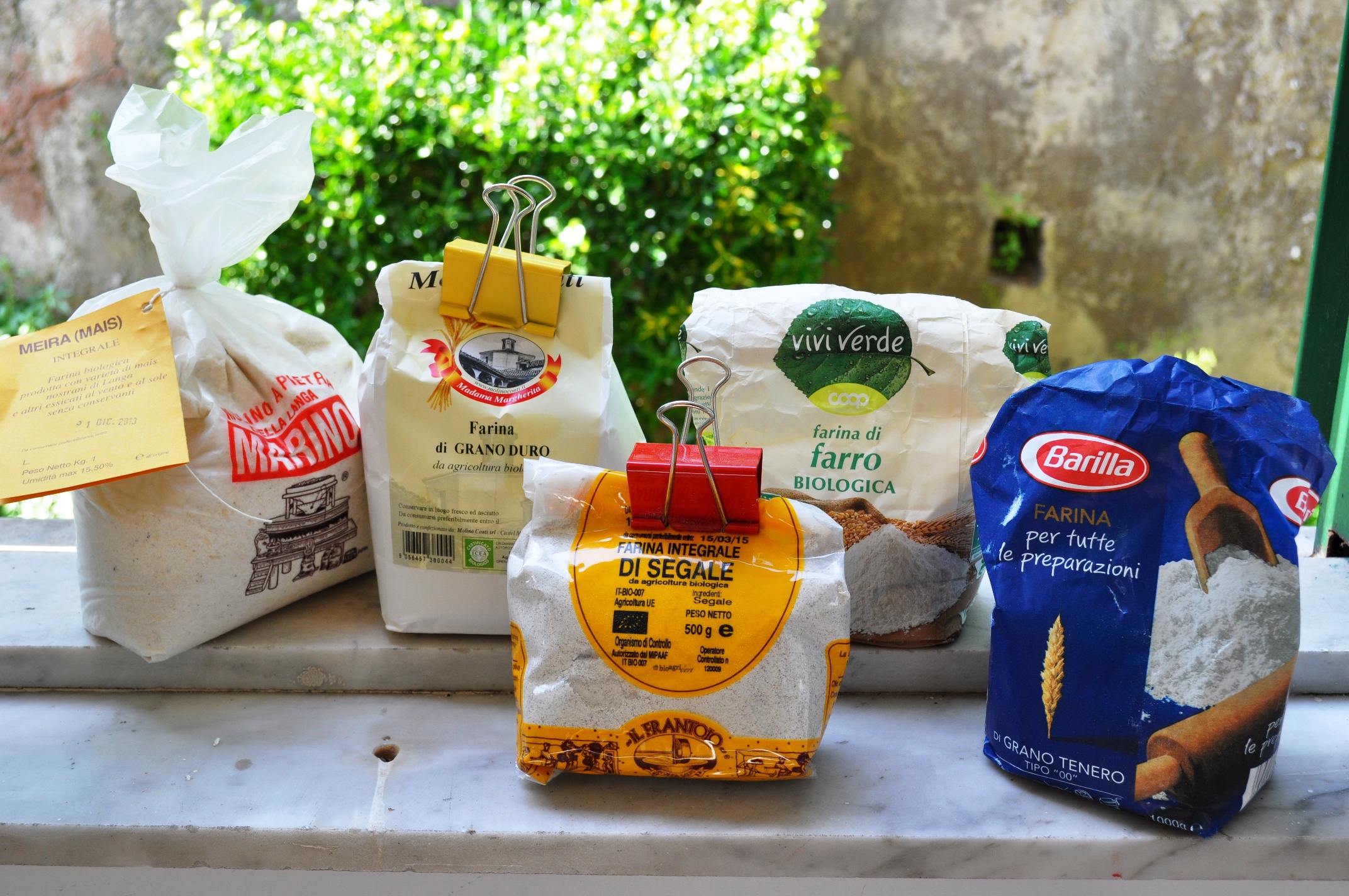
A selection of flours

Today’s bread is being made with farina di farro biologica from the Coop supermarket’s own brand, farina integrale di segale di agricoltura biologica from the Il Frantoio brand, and “Setaccio” farina semi-integrale di grano tenero from Mulino Marino. There really is no shortage of types of flour (farina) to experiment with here in Italy, if you’re into baking and bread-making. In fact, there so many flour varieties and variables it can be boggling.

Over the 20 months or so I’ve lived in Italy I’ve used many of them, but I still get confused. Previously, for example, I wrote about the various types of grain (and flour) known as farro to try and clarify what they were – as they’re often, erroneously, just translated into English as “spelt”. Here I hope to clarify a little more the other types of grain and flour you might encounter in Italy, or be able to buy as imports in other parts of the world.

Anyway.

Italian words for grains and more

A caveat – these are standard Italian words. There are doubtless a gazillion local dialect words as well, but let’s stay on target.

The wheat family:

The word grano (plural grani) means grain, though it’s frequently used as a synonym for wheat.
Frumento is the more specific word for wheat. In the modern world, wheat generally means bread wheat (Triticum aestivum), which accounts for 95% of global production.
Farro is name given to three, older members of the wheat family, “heritage grains”. Briefly it can refer to:
Farro piccolo (“small”) or farro monococco (Triticum monococcum) – that is, domesticated einkorn wheat, also known as enkir.
Farro medio (“medium”) or farro dicocco (Triticum dicoccum, aka Triticum turgidum var. dicoccon) – that is, emmer.
Farro grande (“large”) or farro spelta (Triticum spelta, aka Triticum aestivum var. spelta ) – that is, spelt. (Also known as dinkel.)

Grano turanicum – a name for Khorosan wheat (Triticum turanicum), another ancient grain type.
Kamut – the trade name for Khorasan wheat (Triticum turanicum).
Manitoba – the Italian name for bread flours with a higher percentage of protein, like what we’d call strong bread flour in the UK. It may or may not be from Manitoba province in Canada. Indeed, according to a blurb on a pack of Ecor brand flour, Manitoba flour is also known as farina americana.
Saragolla – another one I’ve encountered, which is proving tricky to identify with any real certainty. One Italian source says it’s similar Khorasan wheat (Triticum turanicum, but refers to it as Triticum polonicum, Polish wheat.

I’ve also seen things labelled with grano antico, which isn’t very helpful, as it could refer to any one of these ancient wheat species.

two old grains

Non-wheat cereals:
Avena is oats. Fiocchi di avena are oatflakes, or porridge oats.
Orzo is barley.
Miglio is millet.
Riso is rice.
Segale is rye.

Wholegrain rye flour

And not forgetting the that poster boy of industrialised, ecosystem-destroying, logical-economics-manipulating monocrop agriculture: maize (Zea mays), or corn: mais in Italian, also granone (“big grain”), granturco, granoturco and various other dialect names.

Polenta is, of course, made from maize, which arrived in Europe from the Americas in the 15th century, replacing earlier gruels made of orzo or emmer. Polenta (cornmeal) comes in various degrees of coarseness, some quite gritty, some more floury. You can also buy amido di mais, which what we’d call cornflour in the UK, or (more descriptively) corn starch in the US.

Other non-cereal flours you may encounter could be made from:
Amaranto – amaranth (Amaranthus caudatus).
Castagna – chestnut (used for Pane di San Martino).
Saraceno – buckwheat (Fagopyrum esculentum). Buckwheat isn’t a member of the grass family like the above grains. Instead, it’s a member of the Polygonaceae family and related to things like rhubarb.

There are see flours made from legumes such as:
Ceci – chickpea (Cicer arietinum).
Lenticchia – lentil (Lens culinaris).
Soia – soya, soybean (Glycine max).

Marino closer

Other useful terms:
amido – starch.
biga – type of low hydration, firm preferment, which can made with a sourdough starter or commercial yeast.
biologico – organic, organically farmed or produced.
chicco – grain (also bean, pellet, bead), eg chicco di grano, grain of wheat
crusca – bran.
germe – germ, eg germe di grano.
glutine – gluten.
integrale – wholegrain, eg farina di segale integrale.
lievito – yeast, raising agent.
lievito madre – “mother yeast”, meaning a natural leaven or sourdough culture.
lievitare – to rise, to raise, to grow (with a raising agent).
lievito naturale – natural leaven or sourdough.
macinata a pietra – stoneground. Always good, as it doesn’t damage the grain as much as modern milling with massive steel rollers, as such maintaining more nutrients and more flavour.
macinare – to mill (flour).
mulino – mill, eg uno mulino a vento is a windmill.
pagnotta – loaf.
pane – bread.
semi-integrale – semi-wholegrain. I’m not entirely sure what the preparation of such a flour involves – more sieving? Or blending?

Hard and soft

You’ll often see farina di grano duro and farina di grano tenero on packets of Italian flours. These translate as “hard wheat flour” and “soft wheat flour” (or, more literally, as “hard grain flour” and “tender grain flour”), but shouldn’t be confused with what we consider “hard” wheat in English, which is generally a higher protein bread flour.

Farina di grano duro is flour milled from the wheat species Triticum durum (aka Triticum turgidum var. durum), with durum and duro meaning “hard” in Latin and standard Italian respectively. Triticum durum is most commonly used for making pasta. It is the second most significant type of wheat grown globally, accounting for about 5% of production. It is ground into products of varying coarseness:
Farina di grano duro – the finest, most floury
Farina di semola – a slightly coarser flour
Semolina – the coarser middlings and yes, the stuff used for old-fashioned British puddings, (though the term is also used generically to refer to other wheat middlings).

Farina di grano tenero is flour milled from a subspecies of the wheat species Triticum aestivum, the most commonly cultivated strain of this useful grass. Also known as bread wheat. In Italy, it generally has a medium protein percentage, around 12%, though it can vary greatly. As with farina di grano duro, it is milled into products of varying degrees of coarseness, which is where the whole “00” thing comes into play. Read on…

Mulino Marino 00

Licensed to bake: the “00” system

When you see a flour graded as 00, it’s not a reference to a particular type of grain or species of wheat, it’s simply a reference to how finely the flour has been milled, and how much bran and germ has sieved out, and what sort of colour the flour is as a result.

The various types are: 00 (doppio zero, the finest grade), 0, 1, 2 (the coarsest grade, more akin to a meal). The coarsest grain is effectively integrale, that is, wholegrain.

Although 0 and 00 are commonly used for bread-baking, both are loosely interchangeable with British plain flour or US all-purpose flour. Indeed, if you look at the dark blue packet in the photo at the top of this page, the Barilla brand flour is labelled per tutte le preparazioni, which could be translated as “all-purpose”, and it’s a grano tenero 00.

The blurb on the side of a pack of ‘Ecor’ flour I mentioned above, also explains that il grado di raffinazione indica la quantità di farina ottenuta macinando 100kg di chicchi. Tanto più alto è questo indice tanto più grezza è la farina: the grade of refining indicates the quantity of flour obtained from grinding 100kg of grain. The higher the grade, the coarser the flour.”

Also, as the first table on this rather technical page indicates, the higher the grade, the higher the ash content and protein of the flour. Though these Italian flours are all still fairly low protein, between 9% and 12%, and different grains would give different results – that is, this table’s data has to be taken with a pinch of salt.

And the rest

I’ve probably missed all sorts of pertinent things, but can add them as and when I encounter them. For specific types of Italian bread and baked goods, I may mention them elsewhere on the site. In the meantime, if, like me, you’re into baking and an English-speaking learning Italian (there must be a few of us in that demographic out there), I hope this has been useful.

Pandi Sempre

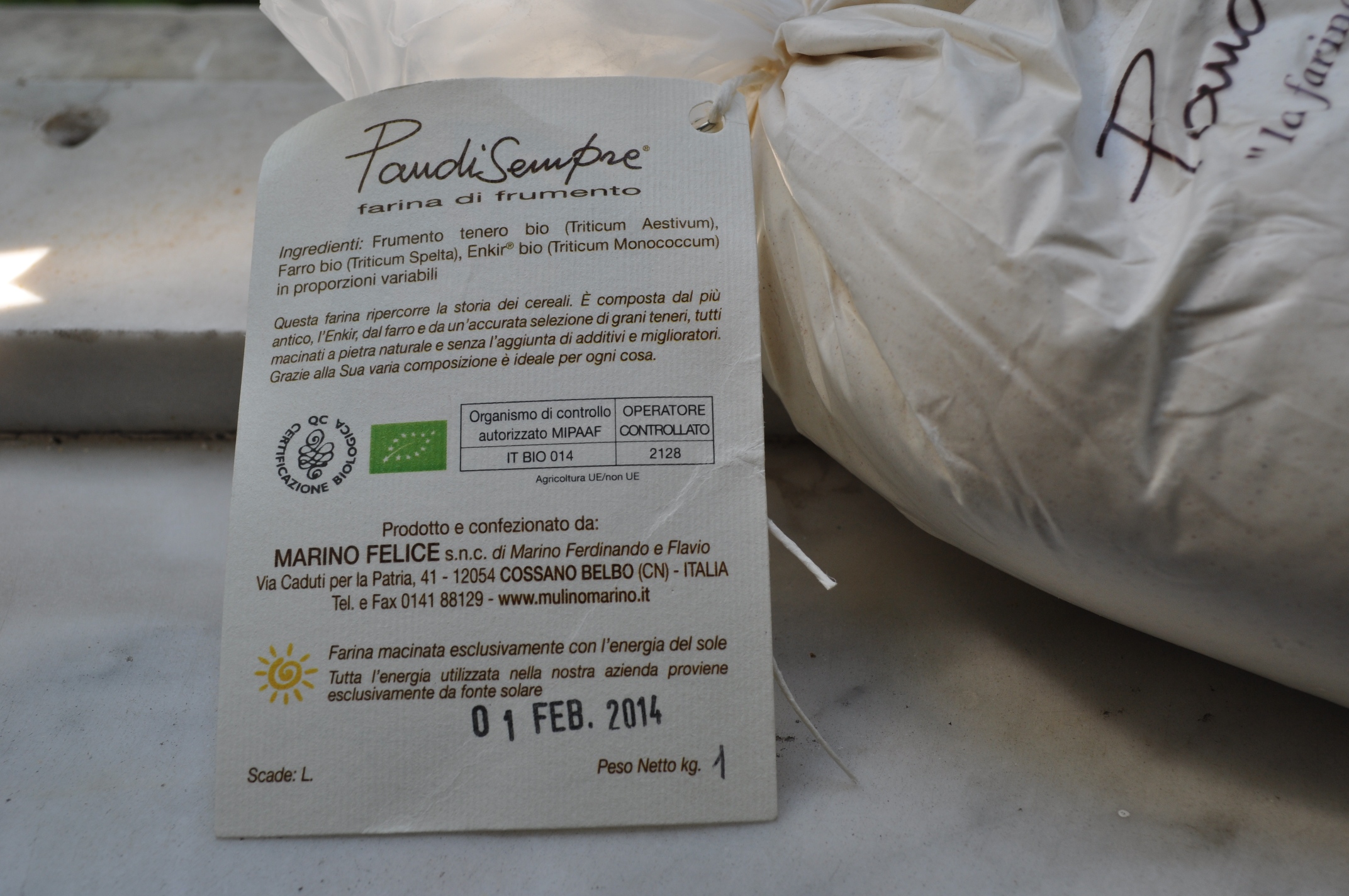
Love this spiel “This flour recounts the (his)story of cereal crops. It’s composed of the most ancient grain, Enkir, of farro, and of a careful selection of soft wheats, all naturally stone-ground without the addition of additives or ‘improvers’. Thanks to its varied composition, it’s ideal for every use.”

84 Comments

Filed under Discussion, Flour & grain

Fish. Not bread. Not cakes. Not ale. Seafood.

One of the reasons I’ve not been blogging many breads or cakes this past week or so is because I’ve been busy working on another project. Involving trying to identify what species of fish the Roman common names I see on the market and on menus refer to, and relate said names to English common names.

It really doesn’t relate to bread, cakes or ale by any stretch of the imagination. I could have come up with some twaddle about loaves and fishes, about eating bread along with fish, but I couldn’t quite bring myself to it. So I’ve writtten it up on my other, more general blog.

If you’re an Anglophone living in Italy, or an Anglophone on holiday here, or even an Italian speaker who wants to check the English names of fish, please do head on over here:

Dan’s Giant List of Italian Fish and Seafood Names. With Thrilling Colour Photographs!

Leave a comment

Filed under Discussion, Uncategorized

Carnival and castagnole 2013

We don’t really do Carnival in England or the rest of the UK. Or at least, as Wikipedia says, “Carnival is traditionally held in areas with a large Catholic… makeup. Protestant areas usually do not have Carnival celebrations or have modified traditions, such as the Danish Carnival or other Shrove Tuesday events.”

Although I was raised a Catholic, we didn’t do anything like Carnival in my home – it was just Shrove Tuesday, aka Pancake Day (a blowout on pancakes, lemon and sugar that even heathens enjoy), then Lent (restraint for Catholics), then Easter (a blowout on highly religious chocolate eggs…). So Carnival here surprises me. The Romans once more express their love of  fireworks and a snow of confetti is added to the general mess in the streets.

(As an aside – confetti is clearly an Italian loanword in English. Though confusingly, it’s not the Italian for confetti – ie the stuff you throw at the happy couple at weddings. Rice and small paper thrown at weddings, or used to celebrate Carnival, is called coriandoli in Italian – the plural of the herb/spice coriander. Confetto [plural confetti] instead means both a pill or a sugared almond.)

More cheery than the garbage are  the seasonal edible goodies. Last year, we discovered castagnole and frappe, treats sold specifically at Carnival. I wrote these treats last year (here and here), their characteristics, the other regional names used in Italy, etc then so I’ll try not to go on too much now.

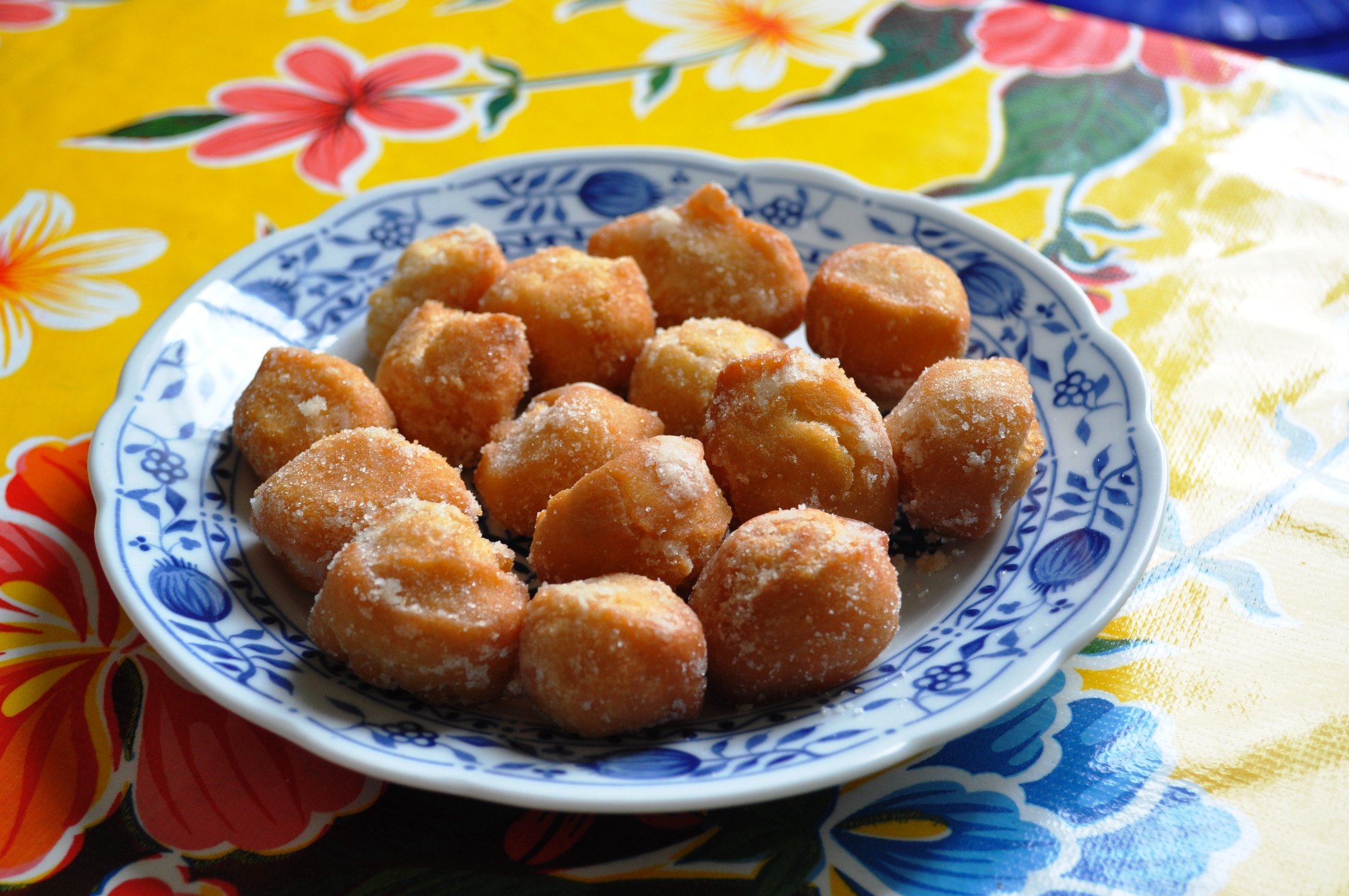
This year we’ve been eschewing the crunchy delights of frappe, deep-fried sweet pasta shreds, dusted with icing sugar. Instead, we’ve mostly been focussing on castagnole, smallish balls of deep-fried dough that may or may not be filled with custards or ricotta. We’ve been favouring the non-filled, castagnole semplici this year. They’re basically dough-balls, very similar in taste and texture to a British doughnut – sweet dough, deep-fried, rolled or coated in sugar. You can watch some being made here, with the recipe (in Italian or English). TBH, I walk past so many pasticcerie on a daily basis that are brimming with castagnole I don’t feel the need to make them. But if I do, I will of course report back.

Since Christmas I’ve been vowing to ease off on the making and scoffing of cakes, ease off on the purchasing and scoffing of pasticceria wares. But hey, it’s still winter, it’s cold, and I think we can justify the intensive regime of carbs for a few more weeks. At least until Shrove Tuesday, then we should really stop for Lent (Quaresima). Oh, hang on, that’s tomorrow. Oh, hang on again though – we’re not religious, so it’s okay. I’m not sure about the rest of the population of good Catholics here though: the pasticcerie don’t suddenly stop selling castagnole and frappe for Quaresima, so somebody’s still busy eating them, all the way to Easter. So not really observing Lent very assiduously. Vergogna! For shame!

2 Comments

Filed under Cakes, Discussion

Spelt experiments, or When bread goes wrong, and the dilemma of blogging the failures

So I was feeling experimental this week. I’d been both looking at old photos of breads I’ve made the past few years and browsing my favourite baking book, looking for inspiration. One of the breads I liked but haven’t tried too often is a 100 percent sourdough with some potato in the mix. I’d had great results once – a bread with a great, irregular crumb, which is something of a holy grail for bakers like me. It requires a high hydration dough and, generally, a natural leaven. It’s not something I’ve had much luck with lately, but I had done back in Blighty with a better kitchen and more familiar ingredients. I can’t find a photo of the bread in question, but here’s one with the kind of crumb I mean.

Okay, thought I, I’ll try that again – but with farro flour. Indeed, I’m going through a bit of a phase trying to use farro bianco all over the place, where, if I was still living in the UK, I’d use strong white or even plain flour.

I revived my leaven over a few days, then got stuck in. Feeling optimistic, taking photos to record the process, thinking I could proudly blog the results, imagining cutting open a loaf with a crunchy crust and finding that wonderful irregular crumb structure again.

Except it didn’t go well. The bread is borderline terrible. Dense, heavy, and clearly lacking in life, with no oven spring. It tastes strangely like a teabread.

This left me with a dilemma. It’s one that’s probably faced by anyone who likes to make food and blog about it. If you make something, and it’s crap, should you blog about it? You of course want you food to look marvellous when you shove it out here on the interweb. But then I thought, Hang-on, this isn’t a glossy magazine or a recipe book, it’s a blog. It’s record of my endeavours, and not just the successes. So why shouldn’t I blog the failures? Or at least talk about the agonies of deciding whether to go public with the failures. And if by some miracle this is read by experts, perhaps that can give advice. (Yeah, right. Ed.)

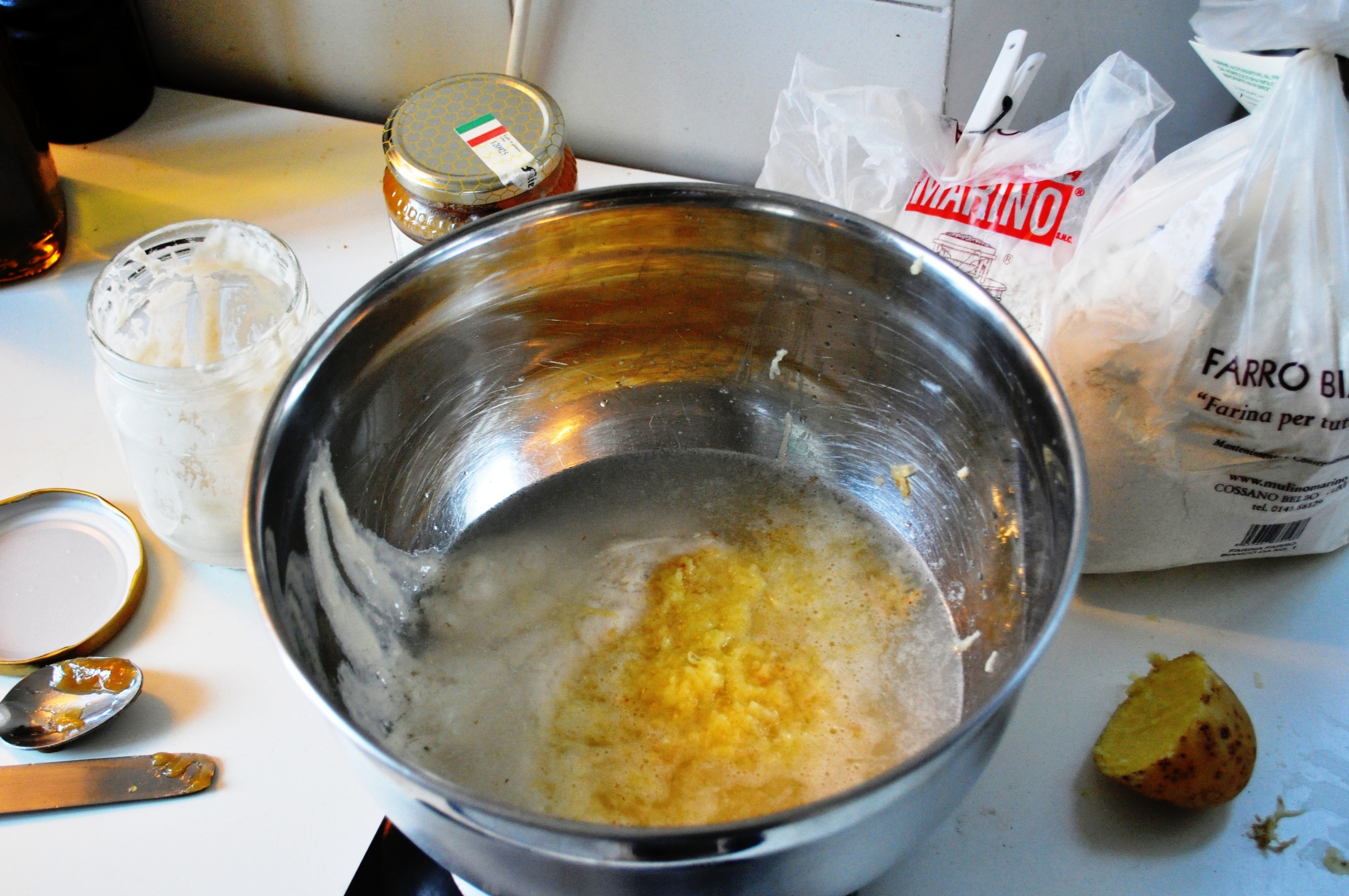
So anyway, this is the recipe I used, a variation on Dan Lepard’s Crusty potato bread
250g leaven (mine was fed with farro, 80% hydration)
280g water
25g honey
75g unpeeled potato, scrubbed and grated
500g farro bianco flour
10g fine sea salt

1 Combine the leaven, water, honey and potato.
2 Add the flour and salt and blend to create a wet, sticky dough.
3 Rest for 10-15 minutes.
4 Turn out onto a lightly oiled work surface and give it a brief knead.
5 Return to a lightly oiled bowl and rest for around 10-15 minutes.
6 Repeat this process (it’s Dan L’s process, developed while he worked in a busy kitchen. In some ways it’s irritating – kneading, cleaning up, waiting, kneading, cleaning up, waiting – but in others it’s great. It seems particularly good for handling wetter doughs).
7 Repeat again 2-3 more times, then leave the dough covered for half an hour. Give the dough a fold if you like.
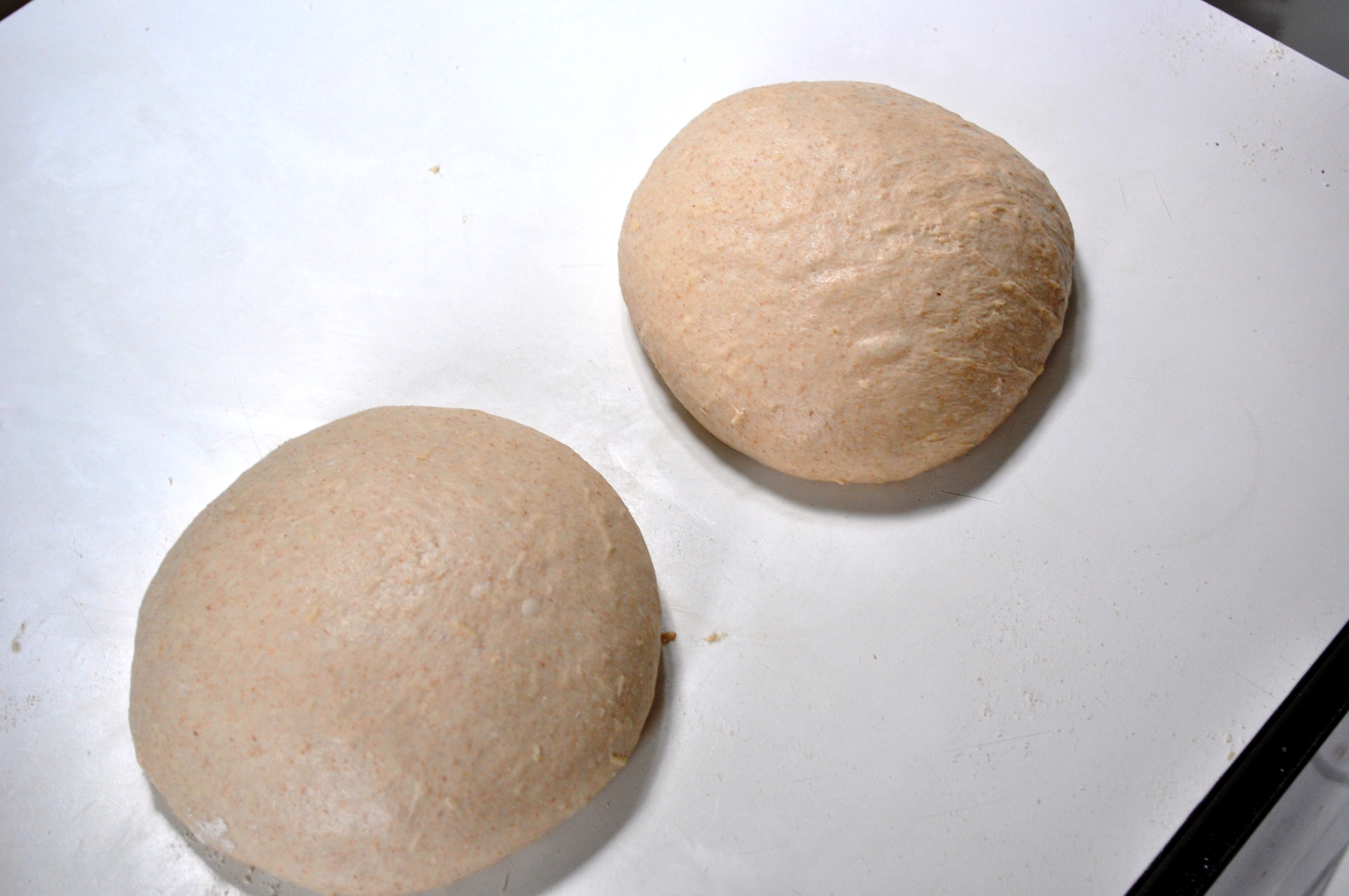
8 Divide the dough into two equal pieces and shape each into a ball.
9 Rest the balls, again covered, for about 10-15 minutes.
10 Shape batons, then place then in proving baskets lined with floured clothes, or if you ain’t gone none, place side my side on floured clothes, covered.
11 Leave again until doubled in size. This will vary according to the temperature of your room, but if it’s warm (around 20C) it’ll be around 4-5 hours.
12 Heat oven to 220C.
13 Turn out the loaves onto a baking sheet lined with parchment and dusted with semolina.
14 Bake for 20 minutes, then turn down the oven to 200C and bake for another 20 minutes.

So anyway, after all that, mine didn’t work. But if you use strong white flour instead, there’s a chance yours could. And if they do, it’s a lovely lovely bread.

Now for some diagnosis, some thoughts about why my bread didn’t work
1 The recipe really doesn’t like spelt flour. Although spelt has a not dissimilar proportion of protein to a strong white bread flour (around 14-15%), it has different proteins, which some sources refer to as “extremely fragile”. Compared to modern wheat varieties, it has less gluten, particularly gliadin, the protein that is integral to making easy stretchy white doughs. I’ve made plenty of decent loaves with spelt in the mix recently (like this one), but I think this is my first 100 percent spelt, 100 percent naturally leavened.
Which leads me to…
2 The leaven wasn’t sufficiently active. I perhaps should have fed and refreshed it over a few more days. Or maybe its current residents just aren’t happy with their conditions. It is Rome after all – so maybe it’s some kind of yeasty sciopero.
3 Or if I didn’t refresh it enough, I should have at least left the dough fermenting longer. It’s the winter, and our kitchen isn’t that warm, probably only around 15C (until I put the oven on). So yes, if it’s cold, it’ll take longer to ferment.
4 Except I also worry that if I left it fermenting too long, the yeasts would finish gorging themselves and any rise achieved would collapse back in on itself.
5 Some sources also talk about how you have to adjust the water. Well, I reduced it slightly from Dan L’s original recipe, and the dough did feel pretty good while I was working it. I dunno though , this place says “Too much [water], and the dough is sticky and weak and will not be able to hold the gasses that are produced during the fermentation process.”
6 Some other random factor. Like some unprecedented chemical reaction between the spud and the spelt. I know not.

Anyway, if you are a baker, and have any thoughts about what might have gone wrong here, please share!

In the meantime, I have to decide whether to continue my spelt experiments (I also used them in some brownies yesterday) or retreat to the comfort of strong white bread flour, or Manitoba as it’s known here in Italy, with its reliable if dietarily dubious gliadin and glutenin content.

Addendum

Here’s the recipe as baker’s percentages. I’m doing this partly because I’m getting out of practice and partly in response to talking to Jeremy.

250/500 = 0.5 x 100 = 50% leaven
280/500 = 0.56 x 100 = 56% water
25/500 = 0.05 x 100= 5% honey
75/500 = 0.15 x 100= 15% potato
500/500 = 1 x 100 = 100% flour
10/500 = 0.02 x 100 = 2% salt

Or if we’re getting serious (and it looks like we are), and factoring in the leaven… 250g leaven at 80% hydration = 112g water + 138g flour (rounded), so the total water is actually
392g, and the total flour is 638g.

392/638 = 0.61 x 100 = 61% water
25/638 = 0.039 x 100 = 3.9% honey
75/638 = 0.118 x 100 = 11.8% potato
638/638 = 1 x 100 = 100% flour
10/638 = 0.015 x 100 = 1.6% salt

12 Comments

Filed under Breads, Discussion, Flour & grain, Recipes

What is “farro”? Wheat names in English and Italian

100% spelt loaf, sliced

This is my latest loaf. It’s made with 100 per cent farro biano flour. Farro is the Italian word for spelt. Or is it? This is something that’s been nagging me for a while.

Farro is a big part of various Italian regional cuisines. So, for example, there’s the classic Tuscan zuppa di farro e fagioli – spelt grain and bean soup. When I first tried to make zuppa di farro e fagioli, back when my poor Italian was even worse, it inevitably involved trying to work out what specific grain to buy. As well as having to try and work out the difference between farro perlato and farro decorticato (more on which later). This also led me to double-checking the assumption that farro is literally translatable as “spelt”.

I knew spelt was an ancient strain of wheat, that is a member of the Triticum genus of the Poaceae (or Gramineae) family of grasses, but it’s also known as dinkel wheat, and its proper scientific name is Triticum spelta. Okay, “Spelt wheat”, check. But when I checked “farro” on Italian Wikipedia it informed me that Italian uses the word to describe three species of wheat.

These are:
1 farro piccolo or farro monococco
2 farro medio or farro dicocco
3 farro grande or farro spelta

Oh dear. How confusing.

Now, I’m not a scientist, but I am interested in taxonomy and how it aids clarity and accuracy when, for example, discussing the production of a type of bread. When I first encountered these Latin names, I was mildly exasperated that when I buy the packets of farro flour, the packaging blurb doesn’t include the specific species. Normally, I like to buy stoneground organic flours from renowned or local producers. I have, for example, been buying my flour from Mulino Marino (though, yes, they’re in Piedmont, so not exactly local to Roma. I must find a supply of Lazio grains milled in Lazio) and their packets just say Farro bianco etc. Today, however, I noticed the Coop supermarket’s organic farro flour is labelled with “Farro spelta”, so I think it would be fair to assume that is Triticum spelta.

A little more investigation, meanwhile, reveals that farro piccolo, aka small farro, aka farro monococco, aka Triticum monococcum is the ancient wheat species we know in English as einkorn. Though, to add to the confusion, in English Einkorn can also refer to its wild cousin, Triticum boeoticum.

Checking Triticum dicoccum, meanwhile, reveals that Farro medio, aka medium farro, aka farro dicocco, is what we know in English as emmer (the name is related to the Hebrew for “mother”). Oh, and according to the Slow Food book ‘Pane, pizze e focacce’, it’s also known as spelta, just to add to the confusion, while Triticum spelta is also known as spelta maggiore. It’s an awned wheat, that is with most bristles on the ear. Apparently, when Italians refer to farro, it’s most commonly used to mean this grain. So it’s likely that in the abovementioned soup, for example, the grain will be Triticum dicoccum, emmer.

Oh, and while I’m at it with the ancient wheat species, another flour I encounter in Italy is KAMUT. This is a trade name for Khorasan wheat, aka Triticum turanicum. Khorosan is the name of a region in northeast Iran, just to the east of the ancient Fertile Crescent where so many of today’s most common food crops were first cultivated, notably grains.

Just when I think I’m achieving some clarity with this issue though, I have to return to the question of perlato and decorticato. Perlato literally means “pearly” and as such relates to pearl barley, a traditional ingredient in British cuisine, such as the lamb knuckle stews I hated so much as a kid. Pearled grain has in fact not just been hulled, or husked (that is de-hulled, de-husked), it’s also been polished to remove the bran. Farro perlato cooks down to fairly mushy in about 20 minutes. According to the handy glossary in Zuppe, the soup book from the Rome Sustainable Food Project, farro perlato is emmer.

Decortico literally means husked too, and English does have an equivalent word, decorticated. But the difference here is that it’s not been polished, and when farro decorticato is cooked, it takes longer to soften, and indeed retains more bite even after about 45 minutes. In Britain, we’d make the distinction between pearl barley and hulled barley. The other English name for these hulled grains is groats.

Phew.

Meanwhile, as wheat is the third biggest stable crop in the world, after maize and rice, I just want to mention a few more species.

The most commonly cultivated wheat is Triticum aestivum, known, unsurprisingly, as bread wheat or common wheat. It was first cultivated in the prehistoric period, though it’s been bred rapidly since the 1960s to increase the amount of endosperm, the starchy part of the grain, for white flours. Another major wheat species is Triticum durum, durum wheat, a descendent of emmer that is used for dried pasta, semolina and couscous. You can buy both semolina and durum flour here; the latter is what’s known as farina di grano duro: hard grain (wheat) flour. The hard here is not used in the same sense as in English: when we describe a flour as hard, we mean it’s high protein, high in gluten.

Right. That’s quite enough of all that. I’m not even going to touch the question of hexaploid, tetraploid and duploid wheats, or the matter of seasonable wheats. I’ll save those subjects of another day. Plus, I’ll also save a discussion of why I’m making the transition away from modern baking with modern wheat varieties for another post.

At least now I’m fairly confident that when I buy farro flour, it is indeed spelt: Triticum spelta. Though when I buy farro perlato, it’s quite likely to be emmer: Triticum dicoccum. Maybe.

Just to reiterate:
1 farro piccolo or farro monococco = einkorn (Triticum monococcum)
2 farro medio or farro dicocco or spelta = emmer (Triticum dicoccum, or Triticum turgidum var dicoccon)
3 farro grande or granfarro or farro spelta or spelta maggiore = spelt (Triticum spelta or Triticum aestivum var spelta)

13 Comments

Filed under Breads, Discussion, Flour & grain