Category Archives: Baking

Baking – Daniel Etherington’s bread experiements

Local grain, local bread

Bread with Sussex landrace flour

Once upon on a time in Britain, we grew our own grain, milled it locally, and used the flour to make bread in bakeries and village ovens across the land. These days, most of the flour we use for real bread* comes from North America and Central Asia. I’ve made bread with more locally grown flour before but never with locally grown flour made from landrace heritage wheat. So I was interested to hear from Michael Hanson of The Hearth pizzeria and bakehouse in Lewes, East Sussex (which recently featured in Dan Saladino’s Food Programme show about pizza) that he was using locally grown grain to make flour for their products.

Michael has been using heritage grains in Hearth products for a while now. He’s friends with John Letts, a Canadian archaeobotanist and key figure in a movement to try and restore a diverse bank of British landrace grain varieties. Letts looked at the grains found in thatched roofs to learn what varieties were farmed around Britain, as the straw used in places dated back to Norman times. Michael now has a small crop of about 20 acres (8 hectares) of wheat, rye and barley at South Farm at Rodmell, just outside Lewes, utilising seed from Letts and the farming expertise of the owners, the Wetterns.

Hearth Lewes

Ancient locals and micro-malting
Michael refers to the crop as a Sussex landrace mix including “maybe 40 or so varieties [of wheat], ditto the barley and rye, ancient varieties.” Michael’s also hoping to start a “micro-malting” operation from his base in the old Lewes bus depot. It’s certainly exciting – at least for people like me who are bakers, and into food provenance and history. Michael says they’re now using flour ground from the grain for the bread they sell in the Hearth bakehouse, as well as combining it with strong white flour to make the dough for the pizzeria. There can’t be many bakeries or pizzerias in Britain that can say that.

It’s not exactly milled locally, being transported to Offley Watermill in Staffordshire. There are several working wind and watermills more local to Lewes, such as Ashcombe Mill near Kingston, or the watermill at Michelham Priory, or even the mill at Jimmy Page’s old house, Plumpton Place, but Offley offers expertise from the Howells, who have been milling in Stafford since 1840 and at this location since 1943. Michael said they’re “seventh generation millers”. He’s yet to find anyone with such qualifications locally. Incredible really, considering, again, about 150 years ago, every town and village had numerous mills.
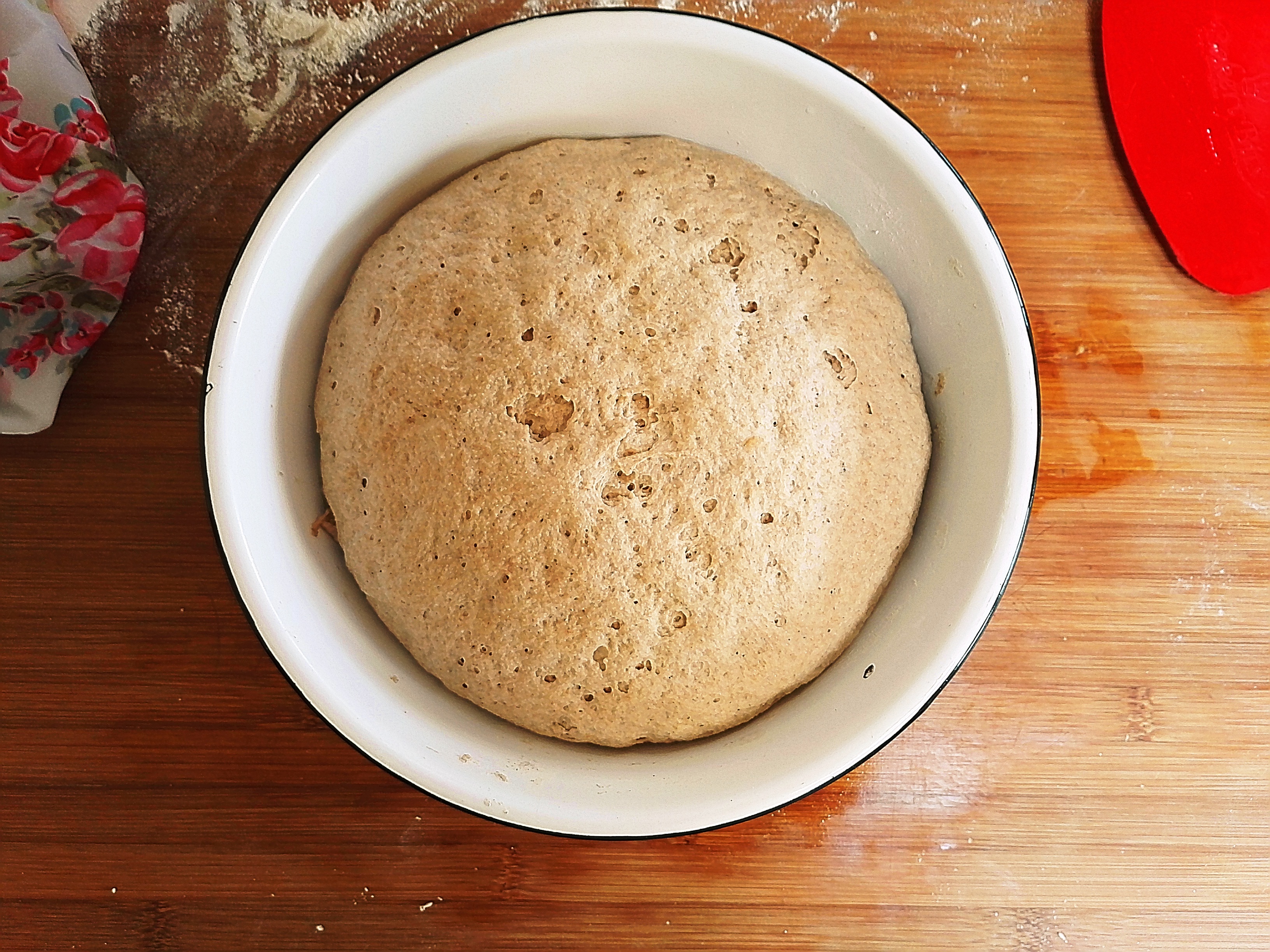
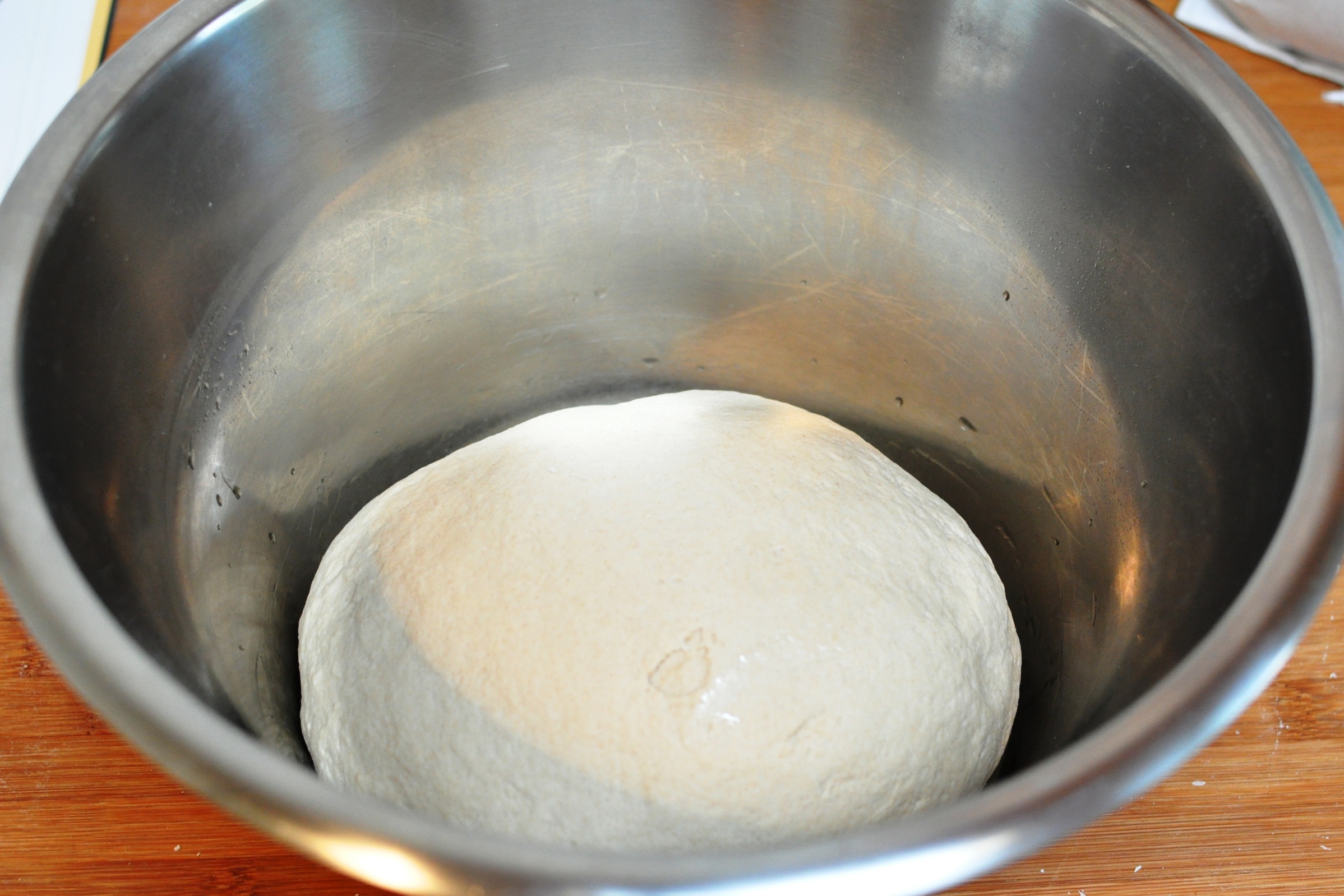
End of first prove on 100% Sussex landrace wheat flour bread

Low protein challenge
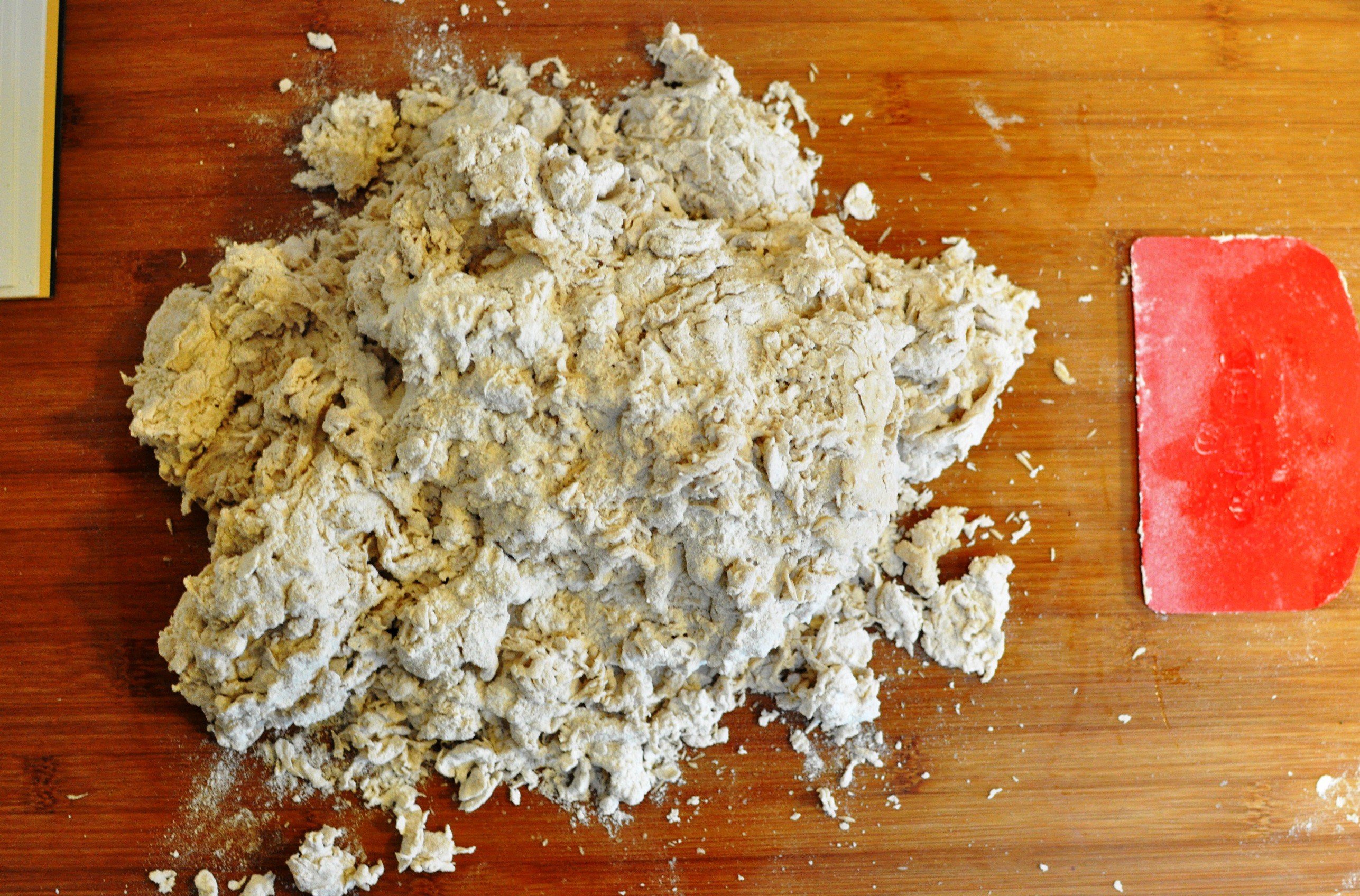
But what is the flour – stoneground, about 80% extraction – like to work with? Well, I must admit, I found it challenging. Some of today’s most respected bakers, like Chad Robertson of Tartine in San Francisco say, work wonders with ancient grains. But this whole question of making light, open-crust breads with low protein flours is tricky. As we’ve been getting much of our bread wheat in Britain from North American and Central Asia the past 150 years or so, our baking tradition has markedly changed. Due to climactic factors, wheats grown in Britain generally produced lower protein flours, “soft”. These foreign flours we’ve been using are from higher protein, “hard” wheat, and our baking has become dependent on it, has been shaped by it.

When we learn to bake in Britain these days we’re told you need the high protein flours, so you can develop the gluten (gliadin and glutenin proteins) to give it structure. High protein flours can contain as much 15%, whereas lower protein flours (plain or all-purpose) generally contain around 10%. Tom, the baker at the Hearth bakehouse, reckons the Rodmell flour could be as low as 8% protein.

Sussex landrace flour

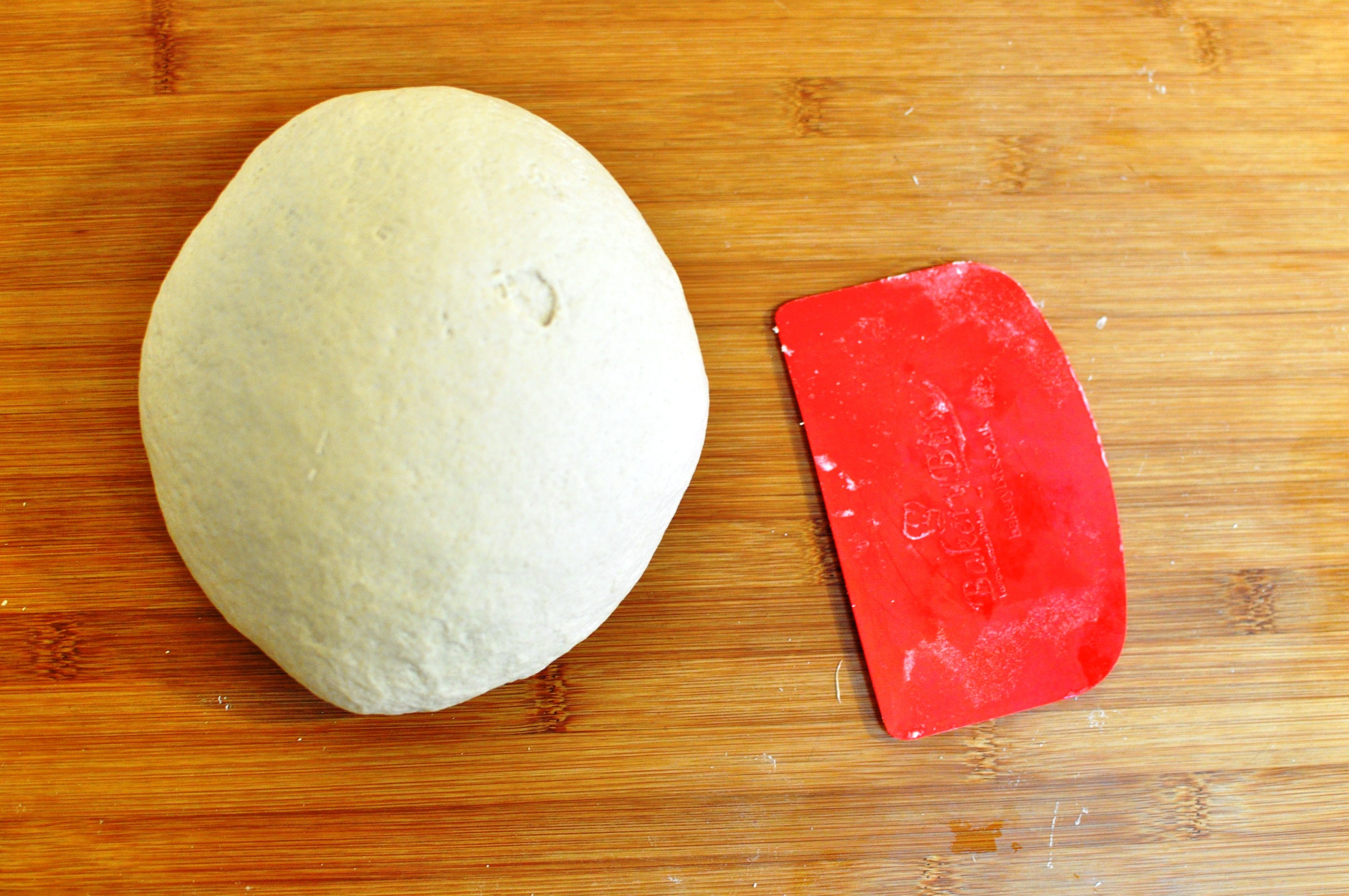
Other countries, such as Italy, haven’t become so dependent on high protein flours. During my years in Rome I’d buy various farro flours from the farmers markets and made some very tasty breads with them, but they were mostly dense affairs. These days I do mostly use a mix of strong white, likely grown in Central Asia but stoneground in Dorset by Stoates, and spelt flours. Using Michael’s flour reminded me of my experiments in Italy with farro flours grown by umpteenth generation contadini (loosely, “peasants”) in the hills of Lazio. The 100% Rodmell flour bread I made (65% hydration, basic bulk fermentation) was very tasty, with a sweet, nutty flavour, but it was a dense proposition. The kids didn’t turn their noses up, but it was a hearty meal in itself (a valuable quality for peasants of old).

My second attempt used 40% Michael’s flour, 60% Stoates strong white, and it’s great. Relatively open but even grain. This is perfect for the kids’ toast. Much as I love the wildly uneven, massively open grain you find in hip “artisan” breads and ciabatta say (ie high hydration dough breads), it’s not ideal for toast! Anyway, I reckon I could increase the mix to 50/50 with Michael’s flour. That’ll be my next test.

In the meantime, it’s been wonderful to be part of this experiment to restore some Sussex landrace grain. Anyone else who fancies trying it, visit The Hearth in Lewes! Or if you’re a landowner, get in touch about growing your own grain!

40% Sussex landrace flour loaves


* That used in industrial pap is different matter. It’s an interesting story I’ve touched on before, but as pap – indigestible pseudo-bread made with the Chorleywood process – is such an execrable product I’m not talking about it again here.

20 Comments

Filed under Baking, Flour & grain

Brioche: not just a buttery French breakfast

Sicilian brioche

One of the projects I set myself last year was to perfect brioche. Specifically, I wanted a recipe where I could give a final prove overnight then bake in the morning to have for breakfast. I haven’t achieved that yet as the research is proving seemingly endless.

In many ways, brioche is the classic enriched dough. An enriched dough is a standard bread dough – yeast, water, flour, salt, time – that’s been made into something more indulgent by the addition of sugar, eggs, butter etc. Indeed, I always thought butter was pretty essential. But when I started looking at recipes, I realised there was enormous variation.

I already knew it was a bread that came in many forms – personally I’ve done tin braids, freeform braids (like challah), rings, and the classic Brioche à tête or parisienne, with the smaller ball on top of a large ball, usually baked in fluted tins. The variation, however, goes beyond the shape. I’ve got a list of 20-plus recipes, with the first eight alone coming from the 2011 Phaidon English version of Ginette Mathiot’s The Art of French baking, first published in the 1930s in France as Je sais faire le pâtisserie (“I know how to make patisserie”). There’s classic brioche, rich brioche (lots of eggs and butter), poor man’s brioche (very little butter and egg), brioche with no butter but crème fraîche instead, a brioche leavened with baking powder not yeast (and therefore more cake than bread) and even a Norwegian brioche (no eggs; peel and dried fruit).

The recipe I’m doing here, however, is another variation, from Sicily. Naples and Sicily have historical connections to France – not only did Normans invate Sicily around they same time they conquered England (what an incredible logistic achievement), but there was a 15th century invasion and claim to the throne, and a Napoleonic Kingdom in the 19th century – which in part explains a French influence in their baking traditions. Notably in the presence of brioche. I don’t know these parts of Italy, but I’m aware of the stupendous idea of eating small brioche as a kind of gelato sandwich, or with granita.

Interestingly, this brioche, based on the version in La cuccina Siciliana by Maria Teresa di Marco and Marie Cécile Ferré, doesn’t even contain butter. It’s instead made with lard, strutto. It’s called “Brioche con il tuppo di Nonna Adele”. So many Italian recipes seem to originate with someone’s nonna (grandmother).

A tuppo is a chignon, though it may also be related to tappo – plug, cork, stopper. Di Marco and Ferr also give the dialect variation tuppitieddu, which may be Catanese – from the port of Catania. Which is all getting a bit much for me with my basic linguistic skills.

250g strong white flour
250g plain flour
200g milk, tepid
80g caster sugar
75g lard, softened (or butter, see below)
2 eggs, about 110g beaten egg
15g fresh yeast (or about 8g active dried yeast)
3g fine sea salt
5g vanilla essence, or to taste
1 more egg, lightly beaten, for the glaze

1. Combine the flour, sugar and salt in a bowl.
2. Dissolve the yeast in the milk, then add this to the flour.
3. Add the vanilla and the salt and blend.
4. Add the softened lard and keep blending.
5. Keep working to achieve an elastic dough.
6. Rest the dough in the fridge, covered in plastic, for at least 6 hours, up to about 10.
7. Take the dough out of the fridge. The total dough weight should be about 1kg. Divide into 10 pieces, each scaled at about 100g.

Form bigger and smaller balls

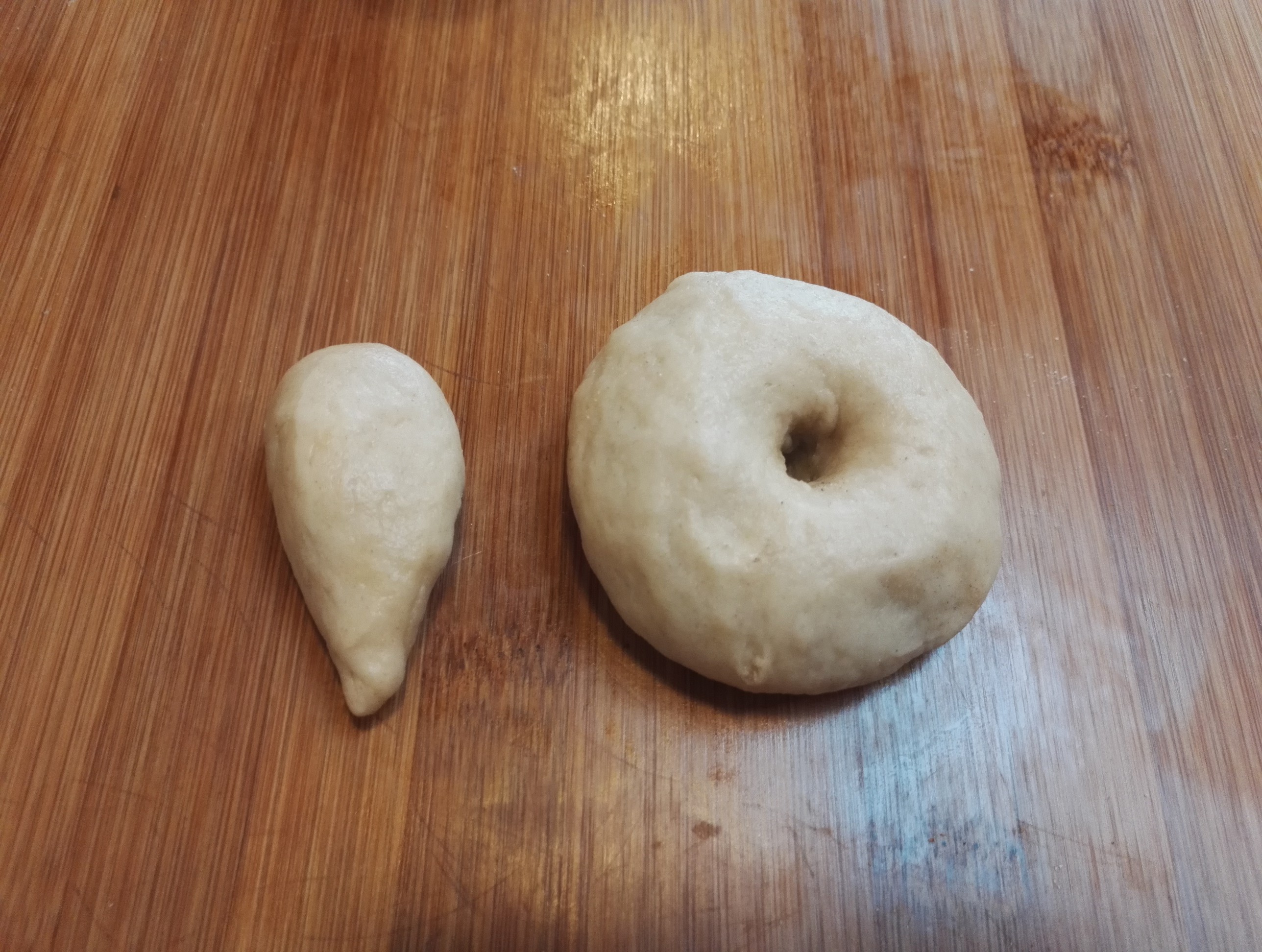
8. Take pieces, about 20g, off each ball to form “u tuppitieddu”. Form small balls.

9. Tighten up the balls. Then roll the smaller ones into a teardrop shape.

Form teardop shape and poke a hole in larger ball

10. Form a hole in the top of each of the bigger balls with your finger then insert the teardrops, pointy bit first. Make sure they’re well attached or they can fall off.
11. Put on baking sheets, cover with a cloth and leave to rise until doubled in volume, around an hour, hour and a half in a warm-ish kitchen.
12. Preheat oven to 180C.

Prove up and brush with beaten egg

13. Brush the buns with beaten egg then bake for about 15 minutes.

Now, I must say, I like these little brioche, the shape is fun, and I can imagine they’d work well with gelato or granita. As a breakfast bun, however, the lard quality isn’t half so nice as buttery brioche. It just feels like something’s missing.

Historically, poorer people may have had a pig, and therefore pig fat, as they can be kept in small spaces and eat almost anything. Dairy fats, on the other hand, require grazing – and land ownership was the preserve of the wealthier. So I can see how a lardy brioche might have evolved among Nonna Adele’s ancestors and their demographic peers. But these days, when we can easily buy butter, frankly, I’d use that instead. Unless you particularly like lard.

Oh, and apologies if my blog updating is a little haphazard these days. Not only did my computer just die an unfortunate death, forcing me to try and cope with Fran’s aged, badly maintained old laptop, but we’re also in the process of expanding our family. Big changes afoot.

13 Comments

Filed under Baking, Breads, Recipes

Sabbiosa, a cake from Lombarby

Sabbiosa cake

It’s taken me a long time to make this cake from Lombardy in northern Italy, whose name roughly means “sandy” – perhaps a reference to both its colour and its texture. I first saved a page out of the Independent newspaper back in 1999, with a recipe from Simon Hopkinson. He explained how he’d first eaten sabbiosa in 1984 but when he’d first tried to make it there had been some confusion about the type of flour used.

Via an erroneous translation, he laboured under the impression that the flour was corn starch, or what we know in British English as cornflour. Instead, however, it’s a potato flour. In Italian this is fecola di patate, which is translated on Wordreference as both “potato starch” and “cornstarch”. Given that patate is potato, it’s clearly not corn (ie maize) starch – which in Italian is amido di mais.

Adding to the confusion, Hopkinson gives his ingredient as “potato flour” – which some sources, such as this site, say is an entirely different ingredient to potato starch. There’s some logic to this, but Italian sources tend to just refer use fecola as a synonym for farina di patate, potato flour. Italian Wikipedia saysLa fecola di patate is a flour obtained from the dehydration and subsequent grinding of potato.”

Potato or wheat?
Furthermore, a lot of the Italian recipes I’ve seen for sabbiosa are simply made with wheat flour. I’ve had Hopkinson’s version filed for 17 years, so I wanted to stick with potato. I’m not going gluten-free or anything, heaven forefend, gluten is such a marvellous, useful protein* when treated right. But during a visit to Roma last week, I saw some fecola di patate in the shop at the Città dell’Altra Economia, which forms part of the Ex-Mattatoio, the handsome, sadly neglected 19th century former slaughterhouse, so I had to get it. In UK health food shops, the equivalent does seem to be called simply potato starch.

The other distinctive Italian ingredient I’ve used here is Lievito Pane degli Angeli (“Bread of the Angels leaven”!). This is just a brand of baking powder – a chemical blend of difosfato disodico (disodium diphosphate) and carbonato acido di sodio (sodium bicarbonate), much the same as my UK baking powder. Though the degli Angeli brand has a punch of aromi – flavourings. Rachel, who we saw last week, loves this stuff, and was enthusing about its miraculous qualities, but I find the aromi a bit pungently vanilla, and I’m suspicious whether it’s even real vanilla or some synthetic flavouring. Either way, if you’re using non-flavoured raising agent, you can add say a teaspoon or two (to taste) of real vanilla extract if you like.

The cake recipe also contains booze, which is similarly optional. Also optional is a mascarpone crema, made with raw eggs, much like that used in many tiramisu recipes. If you’re scared of raw egg, serve with cream, custard or even crème fraîche. Or nothing, for a weary nod towards tedious New Year dietary abstention.

The recipe

Ingredients for sabbiosa

400g unsalted butter, softened
400g caster sugar
400g potato starch, aka potato flour, aka fecola di patate
10g baking powder
Pinch salt
4 large eggs, beaten, about 225g
35g brandy (optional)

1. Preheat the oven to 180C.
2. Grease and line the base of a 25cm tin.
3. Beat together the butter and sugar until light and very fluffy.
4. Combine the beaten egg with the brandy (if using).
5. Beat the egg into the creamed mixture, adding a little of the potato starch if it starts to curdle.
6. When the egg is all combined with the creamed mixture, sieve in the potato starch and baking powder, and add the pinch of salt.

Making sabbiosa with potato starch
7. Fold the fecola through the batter until well combined.
8. Pour the mixture into the prepared tin.
9. Put in the oven and bake for about 45 minutes then, carefully, check the cake to see if the top is browning. If it is, cover with foil, then return to the oven.
10. Continue baking for until a skewer comes out clean, for another half hour or thereabouts.

Sabbiosa - leave to cool in the tin
11. Leave to cool in the tin then turn out onto a rack and cool completely.
12. Prepare the accompanying cream.

Mascarpone cream (crema di mascarpone):

2 eggs
250g mascarpone
70g caster sugar
20g rum or brandy, to taste (optional. Either leave our use some other booze. I used some bourbon as it smelled like it’d be nice… and it was!)

1. Separate the eggs.
2. Beat the yolks with the sugar until pale and creamy.
3. Beat in the mascarpone and booze (if using)
4. In another bowl, whisk the egg whites to stiff peaks.
5. Fold in the egg whites until you have a smooth mixture.

Dust the cake with icing sugar and serve slices with a good pour of the crema. Muse about the potatoes. Ignore new year diets.

Sabbiosa with mascarpone crema


* Or more accurately, combination of proteins: gliadin and glutenin.

13 Comments

Filed under Baking, Cakes, Recipes

Papassini biscuits – and lard

Papassini biscuits

Let’s be honest: lard isn’t a popular ingredient. It’s not fashionable, even in this era of nose-to-tail eating. Even when the media, from Britain’s Daily Bile Mail to the US Huffington Post, is running articles on lard’s virtues. It’s still got an image problem.

And yet, it’s a fat we cooked with for centuries, especially here in northern Europe, where we can’t grow olive groves and peasants may have had a pig but were less likely to have had dairy. Look at any collection of older – say pre-WW2 – British recipes and lard is ubiquitous. Not just as a fat for frying, but also as the main fat for making pastries and baked goods. The only legacy of this tradition most Brits are aware of these days is lardy cake. I talked about this subject back in April 2014, when making lardy johns, an ostensibly old Sussex recipe that’s a cousin to the scone.

Back then, I couldn’t get my hands on any decent lard. As Marwood Yeatman says in The Last Food of England, “A modern porker has little fat and therefore little lard, so most of it is imported”. The only stuff I could get hold of was from Ireland. Last week on a Sunday market here in Lewes, I was pleased to see Beal’s Farm, our favourite supplier of locally produced charcuterie and salumi, whose pancetta was a joyful discovery when we moved home from Rome, has started selling their own lard. Indeed, I wasn’t just pleased, I was excited! Quality lard! I’d been making a lot of game pies with a hot water crust, and this pastry is best made with lard.

Yes, even in the Mediterranean diet
It’s not just northern European foods that are traditionally made with lard though. The past month or so I’ve been researching and developing products for my Italian-oriented biscuit stall. I wanted to focus on Christmas and festive products last week, and one product I made was papassini.

Also called pabassini, pabassinas, pabassinos and papassinos in various Sardinian dialects, these are biscuits made for not just Christmas but also Ognissanti (All Saints, 1 November) and that other principal Christian festival, Easter. Pretty much all the Italian (nay Sardinian) recipes I read used strutto – lard. Only a few used butter.

I made my first batch with Beal’s lard, and they were great. The mix is pretty much a pastry, enriched with fat, sugar, spices and some fruit – sultanas or raisins. The name papassino, according to Italian Wikipedia, comes from papassa or pabassa, Sardinian for uva sultanina, a type of grape, that is dried to become sultanas1 . The lard gave them a nice fairly delicate crumb. I also made them using Trex, hardened vegetable oil. Where vegetable means palm.

This is the sort of ethical conundrum we face in modern life – eat a meat byproduct from local, well-husbanded pigs or eat a veggie alternative made from an ingredient that’s most likely grown in a corporate plantation that required the destruction of rainforest. The results weren’t as good either.

So I experimented with butter versions too, notably for the market, where I didn’t want to have to worry about repeatedly explaining why certain products weren’t vegetarian. Which seems faintly daft, but we live in complex times for food. In many ways, industrialisation and intensification have thoroughly messed up our relationship with food, resulting in innumerable dietary inclinations, phobias, rampant orthorexia nervosa, intolerances, allergies and imagined allergies. A whole slew of first world worries.

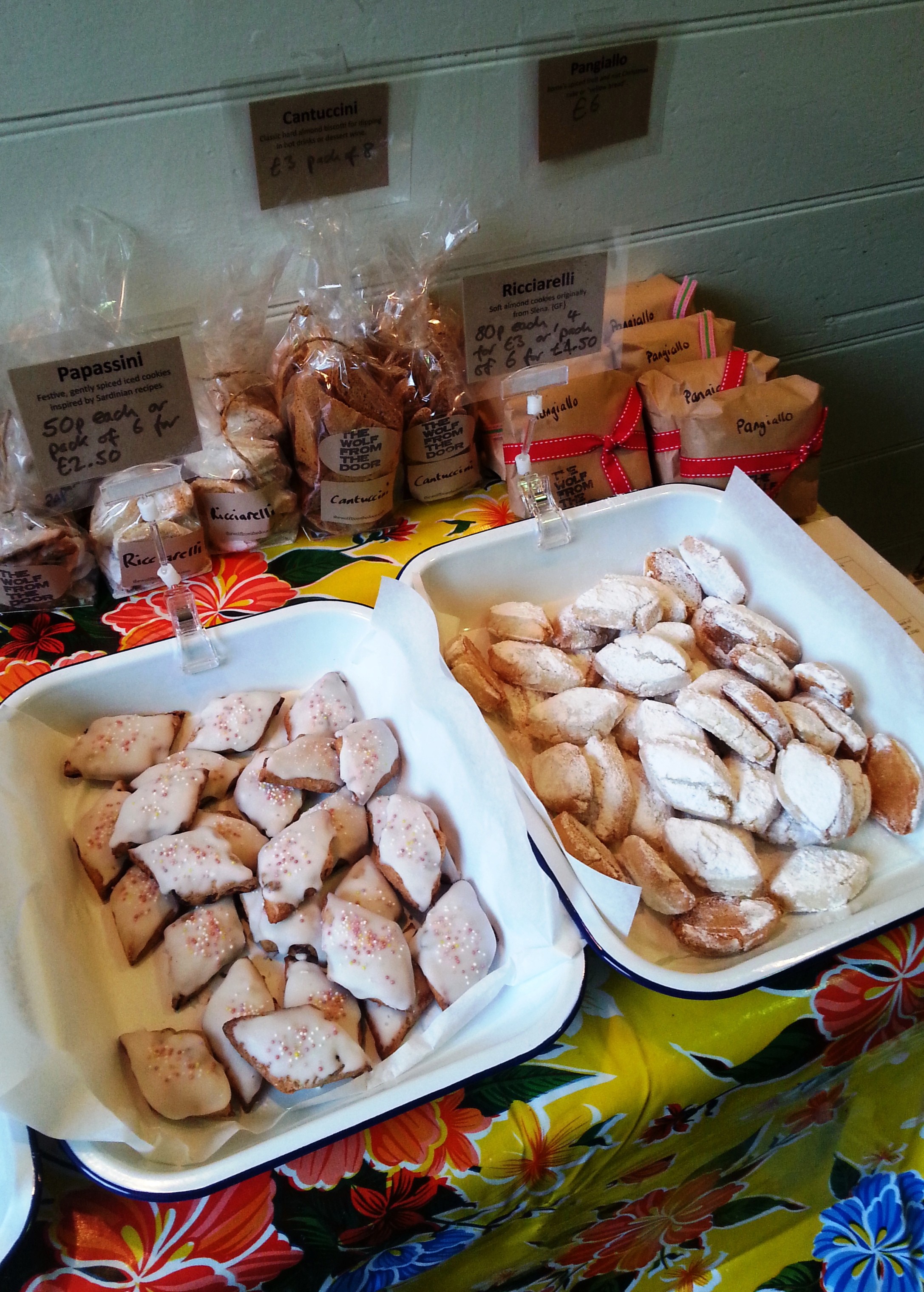
Papassini on my market stall, along with riciarelli, pangiallo and others

Anyway, butter was pretty good too. I mean, I love butter. I would say the result was similarly crumbly, slightly sweeter. But then all the biscuits were sweet once I’d iced them. I just iced them with a basic water or glacé icing – that is, icing sugar2 and water, or lemon juice. More “authentic” recipes would be topped with an Italian meringue glaze, but that wasn’t entirely practical for me.

Another note on “authenticity” – the grapiness of these biscuits would also have been enhanced with sapa/saba. This is a kind of grape syrup, also known as vino cotto (“cooked wine”) and mosto cotto (“cooked grape must“). It’s an ingredient that has been made for millennia. Imagine a grape cordial, or a kind of sweet cousin to balsamic vinegar. You can produce a semblance by simmering grape juice to thicken it, but frankly almost none of the papassini recipes I researched used it so I didn’t bother.

So yes, these are in no way authentic, but I’m not Sardinian. That said, as with any Italian recipe, every family or baker or pasticcere would have differences of opinion and ingredients, so I would like to think mine are just another variation on a theme. Ideally made with quality Sussex lard.

250g plain flour
6g baking powder
80g ground almonds
100g caster sugar
120g lard or butter
50g walnuts, chopped fairly finely
80g sultanas or raisins
Zest of half a lemon
Zest of half an orange
2 eggs, lightly beaten, QB3 (about 120g)
4g cinnamon
4g fennel seeds

Icing
Icing sugar, sieved
Water or lemon juice
Hundreds-and-thousands, sprinkles

1. Soak the sultanas or raisins in hot water for about 10 minutes then drain and squeeze out any excess water.
2. Sieve together the flour and BP.
3. Dice the fat and rub it into the flour, or blitz in a food processor, until the mixture is crumb-like.

Papassini mixture
4. Add the ground almonds, sugar, walnuts, sultanas and zest.
5. Add the egg and bring the mixture a dough. If it’s too dry, add a little more egg or some milk.
6. Form into a disc or slab then wrap in plastic and leave to rest for at least half an hour.
7. Preheat the oven to 180C.

Cutting papassini dough into diamonds
8. Roll out the dough to about 10mm thick.
9. Cut diamond shapes.
10. Reform the offcuts and keep cutting more diamonds.
11. Bake for about 10-12 minutes.
12. Cool on a rack, then ice. If you’re doing the easy option like me, just sieve icing sugar and add a little water or icing sugar to form a smooth mixture, not too runny. Dip each biscuit in the icing, then sprinkle with hundreds and thousands.


Notes
1. I think; I never really got my head around English-Italian translations for sultana, raisin, etc. I believe a raisin is uva passa – literally “past” or “spent” grape. I’m more confused by uva sultanina, which may be both the grape and the sultana. I’m not sure, and I can’t go to an Italian dry goods store or supermarket or market to check very easily from here in Lewes. Hope to get back to Roma after Christmas, so I’ll have to try and remember to see if I can work it out then. Heck, all this confuses me, even in English. Until embarrassingly recently, I though currants were dried black- or red-currants, when they’re actually also dried grapes too. I suspect the Italian words are often fairly generic – so uvetta (literally “little grape”) can be used for currant or raisin, or people use different words in different regions.
2. Powdered sugar, confectioner’s sugar, zucchero a velo.
3. Quanto basta, “how much is enough”. Ie you may not need all of it, just enough to achieve the desired consistency.

8 Comments

Filed under Baking, Biscuits, cookies, Feasts, Recipes

Pangiallo, primitive cakes and winter festivals

Pangiallo

Pangiallo is a cake I encountered in Rome, and indeed one of the last posts I wrote before leaving there in October 2013 mentioned it. But I’ve only recently started to make it, and discovered a quite a lot variation in recipes. Which might seem quite surprising, until you consider it’s a cake that purportedly has roots in Ancient Rome.

Pangiallo, or pancialle, is a Roman, or Lazio, cousin to panforte, “hard bread”, the better-known dense fruit and nut cake of Sienna, and panpepato (“pepper bread”). All three can be arguably be classified as “primitive cakes”. It’s easy to imagine the first cakes were compressed discs of nuts, seeds and dried fruit bound and sweetened with honey.  Although food historians suggest pangiallo’s origins are ancient Roman, and panforte is comparatively recent, possibly from the 13th century, people have probably been making these kinds of things for millennia.

Spice trails
There’s debate about what spices the ancient Romans had, but they almost certainly used cardamom, cloves, coriander, black pepper, ginger and nutmeg, and possibly cinnamon too. Such spices, many of which arrived in Europe via the Silk Road, maintained a role as important for feast day foods through the “Dark” and Middle Ages. As they had travelled so far they were expensive, so were used only for special foods on special days.

Britain, of course, has a very similar tradition of rich, spiced fruit cakes for midwinter celebrations in the form of our Christmas cake and Christmas pudding. Their characteristics have similarly ancient origins, though spices were even more scarce and valuable in northern Europe, compared to Italy. Ports such as Genoa and notably Venice were the western extremes of the maritime Silk Route, the dropping-off points for such valuable cargo; spices still had a long way to go before they reached Britain.

Pangiallo spice mix

Festival of light
Today, Pangiallo is eaten to celebrate the feast day of Santa Lucia, St Lucy, and also for Christmas. Both of these Christian feasts are associated with older winter solstice celebrations. The ancient Romans had Saturnalia, when the ancestor of pangiallo may well have been eaten. When Rome took Christianity as its official religion, many of the pagan festivals were Christianised too, and the consumption of special spiced cakes continued.

The calendar change of 1582 has confused things somewhat as St Lucy’s Day is now celebrated on 13 December in the Gregorian calendar, with Christmas Day closer to the solstice of 21-22 December. In the earlier, Julian calendar, however, St Lucy’s Day would have been closer to the solstice, the day when the night is at its longest. To dispel the darkness, it’s a festival of light, and indeed the very names Lucy and Lucia derive from lux, lucis, the Latin for light.

One Roman blogger suggests the yellow, saffron-tinted glaze of pangiallo is symbolic, looking forward to the new light of spring. The only problem with this theory is that pangiallo doesn’t always feature a yellow glaze. Many versions don’t seem yellow at all, but instead more brown from the dried fruits, caramelised sugar and honey, and even cocoa and chocolate.

Testing times
At the weekend I made the version in Rachel’s book Five Quarter’s: Recipes and Notes from a Kitchen in Rome. It’s closer to the version by the blogger mentioned above and does feature a rich glaze, coloured with saffron and egg yolks. Although they all contain flour, Rachel’s version is not leavened, with yeast or chemicals. So I was intrigued when I read the recipe in Oretta Zanini de Vita’s The Food of Rome and Lazio. Hers features a yeasted bread dough. That said, the dough only forms about 20 per cent of the total mass: which is predominantly raisins. Her original recipe is huge, with “1.8kg (about 4lb) zibibbo (seed raisins)”, with the whole formed into a loaf and proved for 12 hours.

For my testing process, I can’t really do such enormous bakes, so I halved the recipe and tweaked it. Hers included pine nuts too, for example; I love them, but they’re so expensive and the ones in the shops here have all travelled from China, which seems crazy. I’ve also favoured the disc-shaped form. Half quantities still produced four cakes, each scaled with 400g of dough. So I’ve halved it again here.

Pangiallo ingredients

5g fresh yeast, or 4g active dry yeast
50g plain flour
50g strong white flour
35g caster sugar
100g water, warm
20g olive oil
2g fine sea salt
250g seedless raisins
100g dried figs, quartered
120g whole or blanched almonds
20g candied peel
Spices: a mixture of ground cinnamon, coriander, black pepper, nutmeg, cardamom to total about 8g, to taste

1. Dissolve the sugar in the water.
2. Make a preferment with some of this sugar-water, the yeast and about 25g of the flour.
3. Leave to get bubbly.
4. Put the rest of the flour in a roomy bowl.
5. Add the preferment, the rest of the sugar water, the olive oil and salt.

Pangiallo mixture
6. Form a dough, adding more water if necessary, then turn out onto a lightly oiled surface and knead until smooth.
7. Rest 10 minutes, then add the spices, nuts, raisins and peel.
8. Combine. I can’t really say “knead” as it’s all fruit and nuts. It’s more a case of getting your hands in there and squishing it all together.
9. Cover and rest again, for about 6 hours.
10. Form the desire shapes. I recommend a couple of equal balls.
11. Put the balls onto baking sheets lined with parchment or silicone, and squash them down into discs, about 25mm high. If it’s too sticky, flour your hands a bit as you form the discs.
12. Cover and leave again, for about 4-6 hours. Less if it’s warm, more if it’s cold.
13. Heat the oven to 180C .

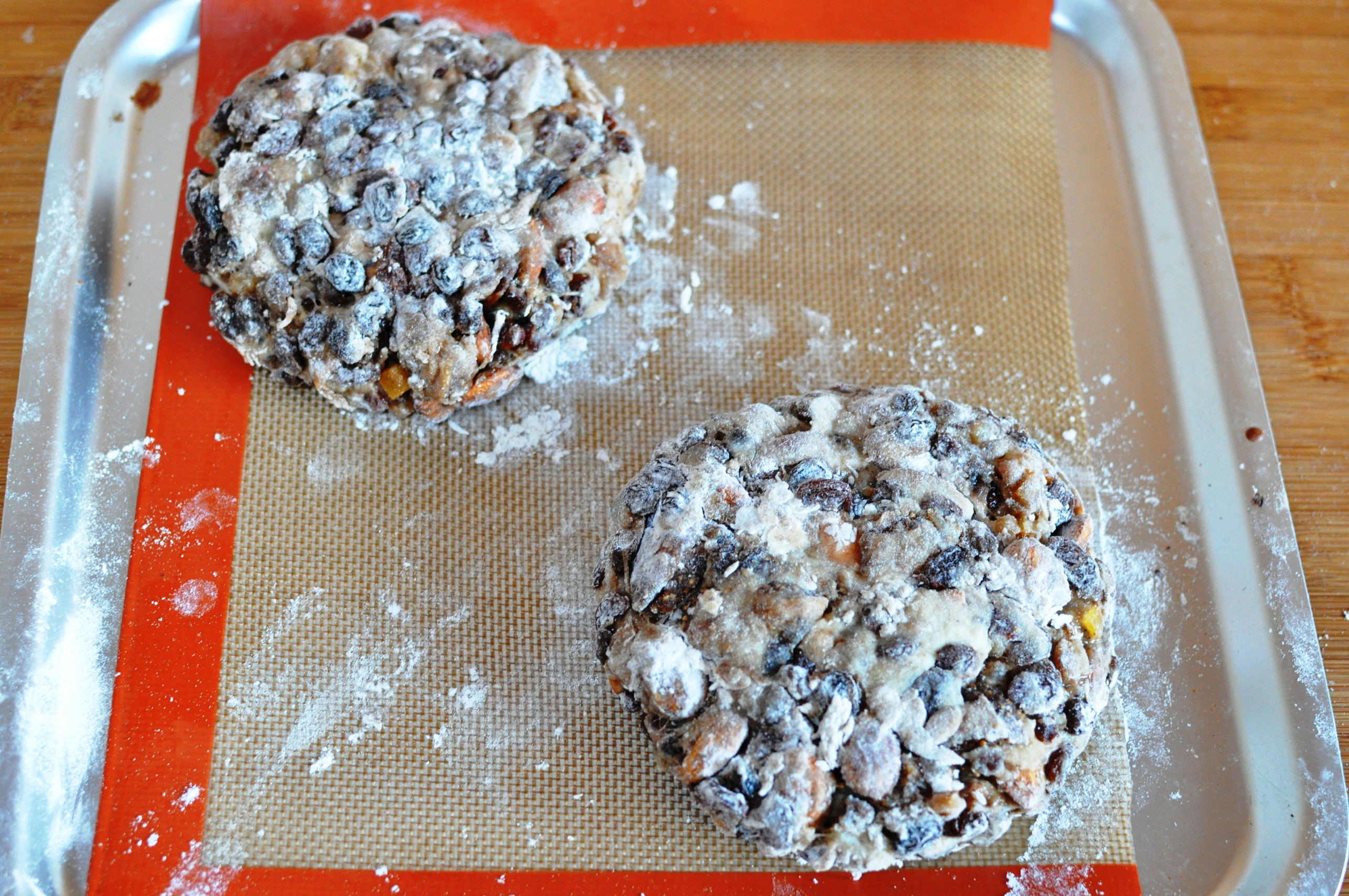
Unbaked pangiallo
14. Make a batter with 15g flour, 15g water, 15g oil and 15g sugar. De Vita’s glaze wasn’t coloured yellow, but if you want to, you can add some saffron to the (warm) water and leave it to infuse for half an hour or so. Or cheat and sprinkle in a little turmeric, a spice that’s only mildly flavoured and is more used for colouring.

Unbaked pangiallo, with saffron glaze
15. Brush the glaze onto the loaves.
16. Bake for about 30 minutes, until coloured, but without burning too many raisins.

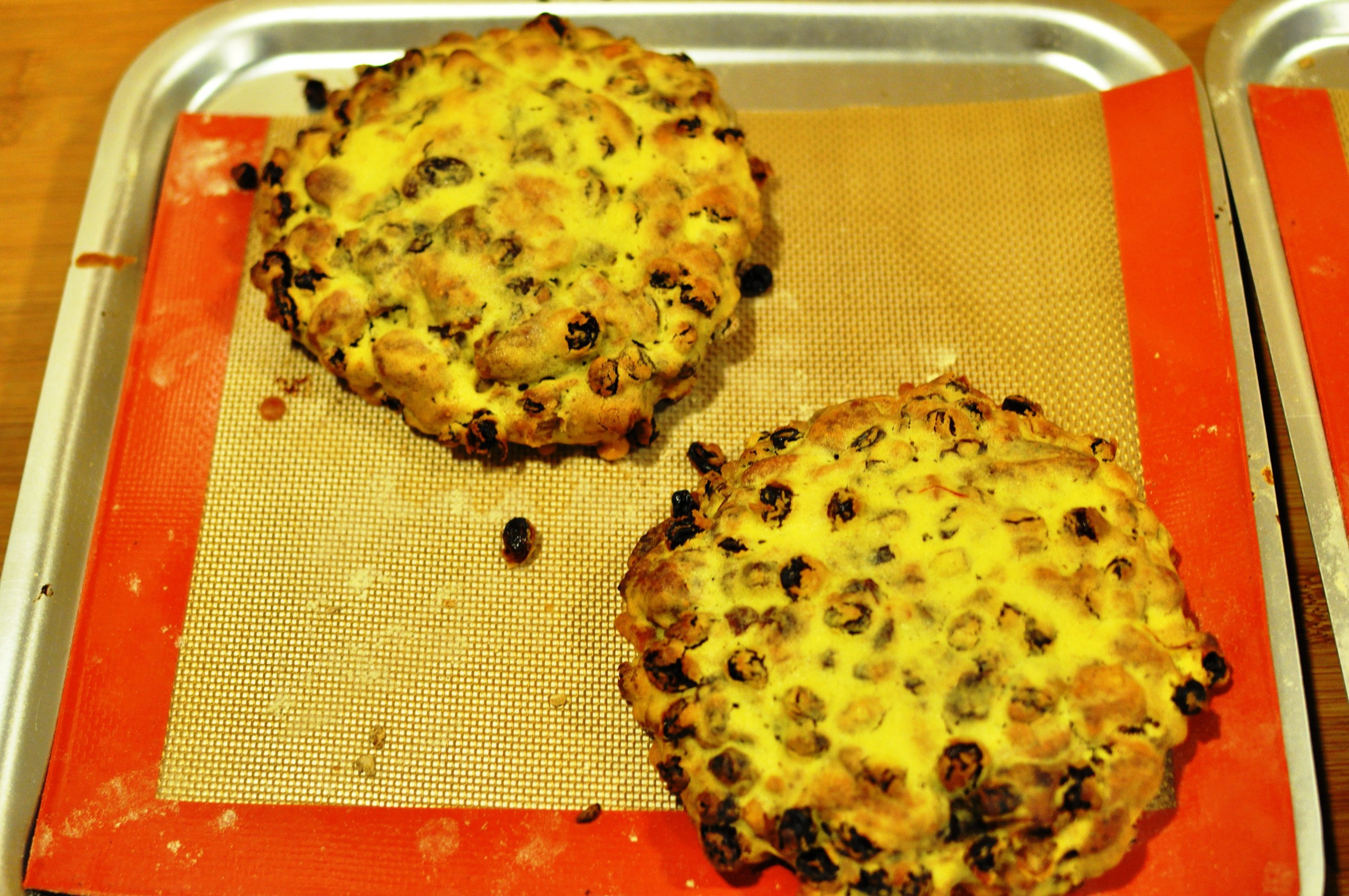
Pangiallo, baked
17. Allow to firm up on the trays for 20 minutes or so, then transfer to wire racks to cool completely.

Two pangialli

Comparisons
Considering pangiallo is defined by spices, raisins, figs and nuts, the two recipes I tried this week are remarkably different. De Vita sweetens hers only with the fruit and some sugar. Rachel’s uses honey.

I’m struggling a bit at the moment as I keep wondering about vegan stuff for my stall, and honey is a ahem sticking point. Many vegans are staunchly anti-honey. I love the stuff, and beekeeping friends have explained to me it’s a more symbiotic relationship with the bees, not the wholly exploitative one Donald Watson suggested in his 1944 edicts on the founding of the Vegan Society.

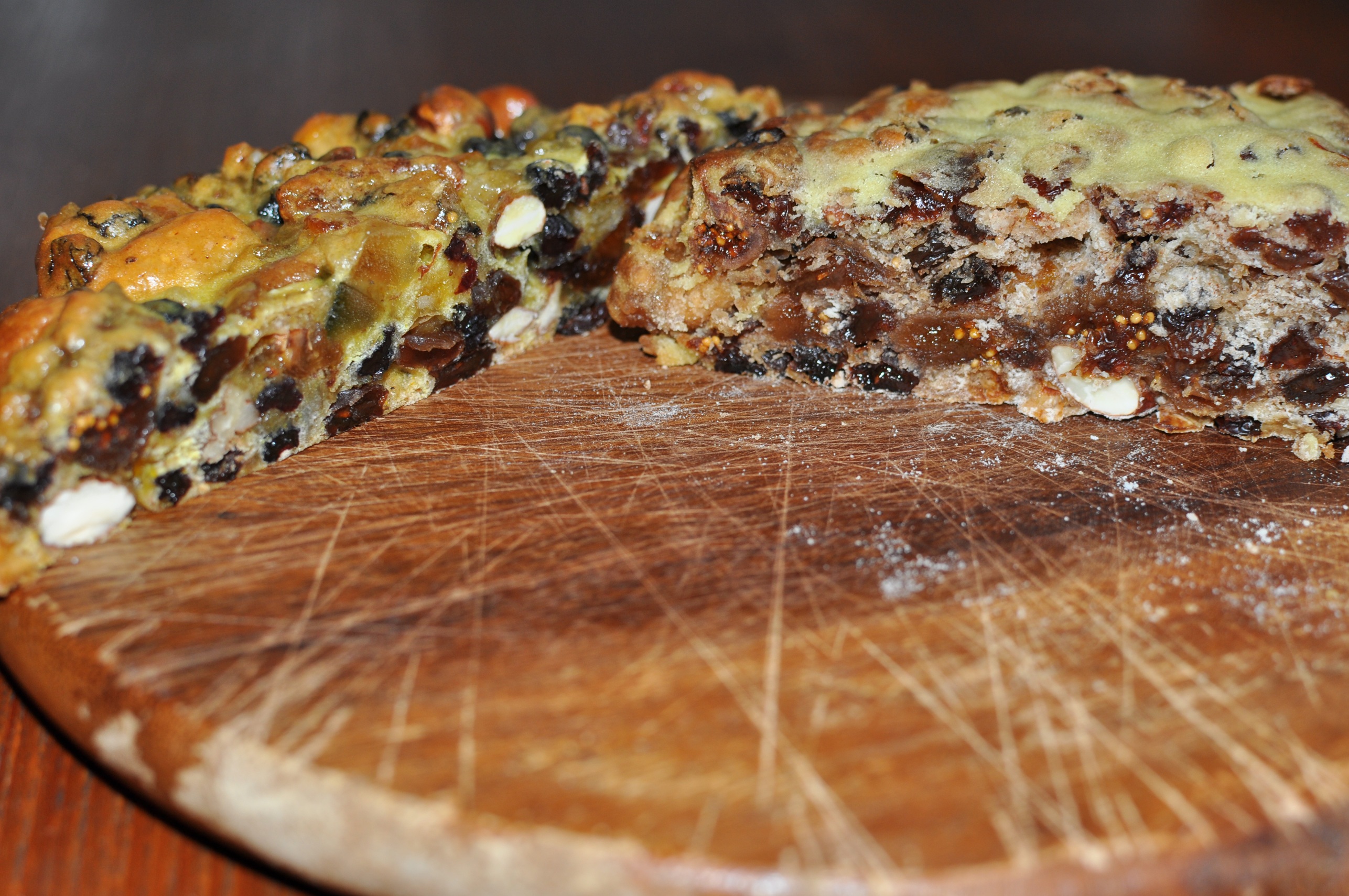
Anyway, Rachel’s (on the left in pic above), which uses mixed nuts and more candied peel alongside the honey, has a more pleasing texture. She describes it as like a “soft, chewy, heavily spiced nougat with a whisper of cake”. Which is spot on. De Vita’s, on the other hand, is surprisingly bready, considering the yeasted dough forms such a small proportion of the whole. It’s like a dense, more traditional, fruit cake, even one we’d recognise here in Britain. It’s good, but not as good. So I’m going with honey, more peel, more varied nuts. No yeast. And possibly even egg yolks in the glaze. Though whether it really needs to be quite so yellow is something I’m still undecided about. I need another research trip to Rome!

11 Comments

Filed under Baking, Breads, Cakes, Cakes (yeasted), Discussion, Feasts

Parkin for Bonfire Night 2015

Parkin

Parkin is one of those quintessential historic British cakes. Specifically northern English, as it’s most associated with Yorkshire and Lancashire. It’s related to ginger cake, in that it usually contains some ground ginger and cinnamon, popular but expensive spices for much of British history, often reserved for Autumn and winter cakes made for feast days. Parkin is also associated with Bonfire Night, Guy Fawkes, 5 November.

Yes, I realise Halloween has come and gone and I didn’t post anything, but on that count I would say that firstly, when I was a kid, Bonfire was always a much bigger event in England, and it still is here in Lewes, “Bonfire Capital of the World”, and, secondly, I did make a lot of stuff over Halloween weekend, but none of it was exactly suitable for publication. I had my first go an Mexican pan de muerto (“bread of the dead”) and while it all looked relatively OK going into the oven, when it came out the skull and crossbones decorations had slipped and it looked more like pan de tortuga, er, tortoise bread. So I’ll be practising that more for next Halloween.

Anyway, back to parkin and Bonfire Night. Unlike classic ginger cakes, parkin is made with oatmeal, or a mix of oatmeal and wheat flour. For centuries in Britain, oats and barley were staples of the poor, over the more expensive wheat, and this cake is a record of that legacy.

This is another one of those recipes where I can’t remember the source, beyond it being something I wrote down in a notepad while living at Old Man Mountain in New Zealand, this time during a 1997 visit. It’s pretty similar to other recipes you may encounter, such as this one from Dan Lepard in the Guardian, which he reports dates from 1907, this one on the BBC site, and this one at Deliaonline. I’d ignore this one on the Beeb though, as there’s no sign of oats – very inauthentic!

Talking of authenticity, older recipes would also have been made with lard instead of butter, though lard isn’t that popular these days, so it’s up to you really. Reading the moaning and trolling on the BBC site, some find eggs contentious too, but hey, there’s only so far you’ll want to go to recreate that 18th century peasant experience right? Oh, and if you’re in a part of the world where you can’t get golden syrup or treacle, you could try substituting honey for the former and the latter is just a type of molasses.

Black treacle and golden syrup

Ideally, this is made at least a day in advance. Parkin has a pretty dry crumb but becomes moister over time.

Happy Bonfire! I’ll be enjoying this with some Harveys Bonfire Boy ale.

225g plain flour
1/2 tsp bicarb soda
1/2 tsp salt
1 tsp cinnnamon
1 tsp mixed spice
1 tsp ground ginger
200g medium oatmeal
140g lard or butter
110g soft brown sugar
110g golden syrup
110g black treacle
1 egg
140g milk

1. Grease and line a square tin, 20 or 23cm square (8-9 inch) or similar.
2. Heat oven to 160C.

Parkin, sieve flour and spices

3. Sift together the flour and spices into a bowl and toss in the oatmeal.

Combine dry and wet

4. Melt together the fat, sugar, syrup and treacle.
5. Add buttery mix to dry mix then beat in egg and milk.

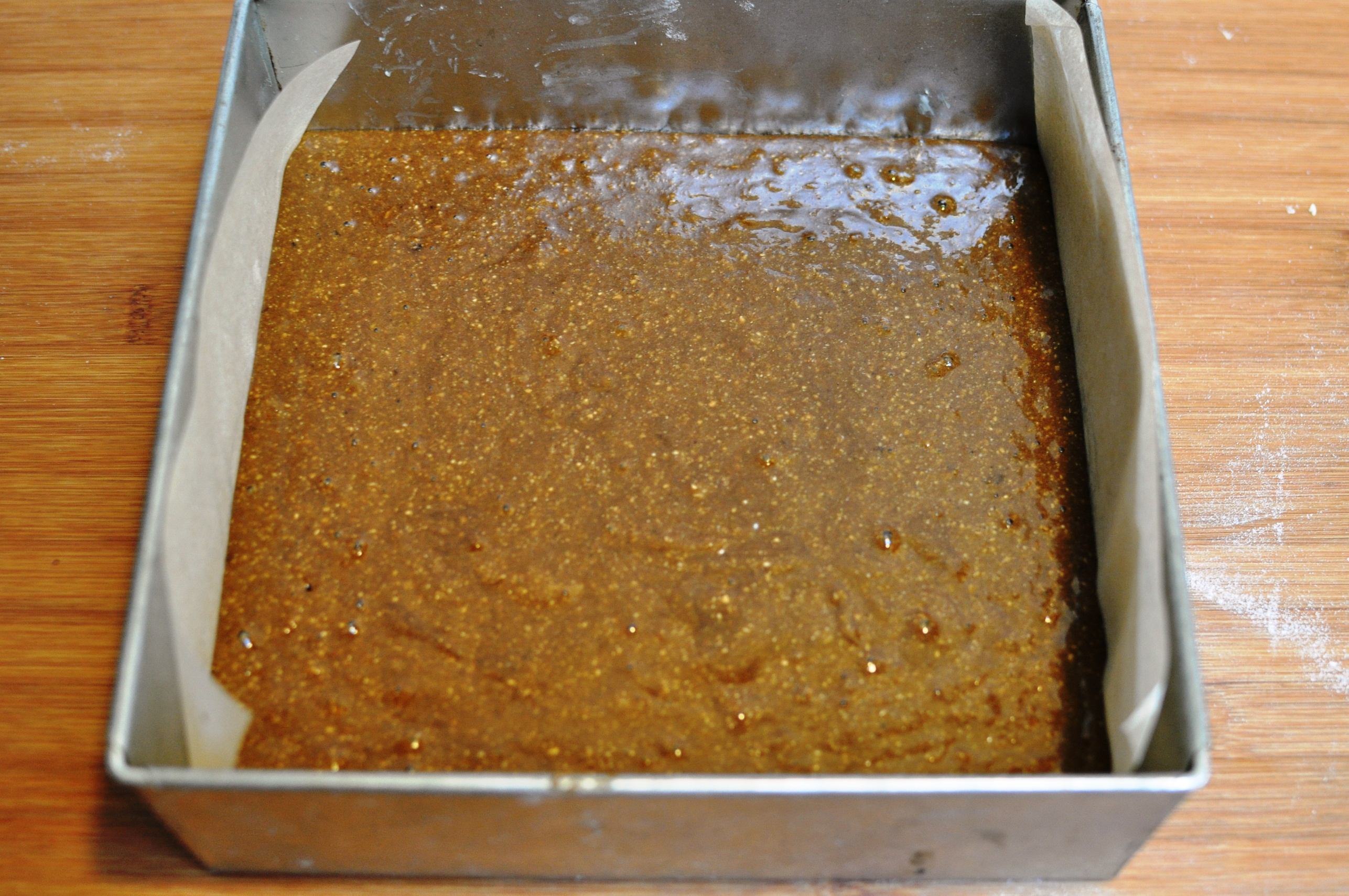
Pour into tinBaked
6. Pour the batter into the tin and bake for about an hour or more, until firm and a skewer comes out clean. Cover with foil if top browning too much.
7. Leave to cool.
8. Store in an airtight container for 1 day before cutting and serving.


5 Comments

Filed under Baking, Cakes, Recipes

Pistachio-cinnamon pastries and memories of Nadia

Cinnamon-pistachio pastries with Maghrebi type tea

This time last year, my wonderful old friend Nadia was hospitalised. A few days later she died, surrounded by her family. It was her birthday too, so the end of October is double memorial to Nadia. She is much-missed and I think of her often, especially when I’m cooking.

I lived with Nadia and her family in the mid-1990s, in a kind of long-term WWOOFer role on a farm called Old Man Mountain in the verdant, wild Buller Gorge on New Zealand’s South Island. Although I worked on the farm for its owner, Susie, I spent a lot of time with Nadia in the kitchen of her yellow house, talking about and making food. She was one of the key cookery mentors in my life.

During my year there, Nadia and I went through phases. We obsessed over French patisserie, and I made my first croissants in her oven. We made samosas and curries and south Asian feasts; Nadia was part-Indian, but hadn’t travelled, so my experience of growing up in a country with a huge South Asian food scene were a useful source of information for her. Then we obsessed over Middle Eastern food. I’ve always been more inclined to sweets, cakes and pastries, so I dug out recipes along those lines. Some made it into my journals.

After Nadia’s death, I revisited those journals and transcribed more of the recipes. This is one of them. It’s called cinnamon pistachio crescents in my notes and it says it’s of Middle Eastern origin. I’ve no idea if it is a genuinely Middle Eastern recipe either, or the Arabic name of these pastries. They may well be related to croissants though, given the shape and the high butter content, so perhaps they’re a hybrid of Arabic food heritage and French imperialism. A terrible lack of information, I know. All I know is that they’re a bit like croissants, but there’s no lamination here, so they’re a lot easier to master. Perhaps they’re related to the Jewish rugelach. If anyone does know the name of Arabic pastries like this, please do enlighten me!*

The recipe, now somewhat tweaked by me, may well be from a Middle Eastern cookbook my mother sent out to me in 1994. I saw it last, in October 2013, just after we’d left Rome and had gone travelling to see international friends and family: on a shelf in Nadia’s house in the Marlborough Sounds. Perhaps it’s still there. One day I may be able to check it, when we next visit NZ. Who knows? With the recent eleventh hour failure of our adoption match, I don’t really know what life holds next. While we nurse our bruised dreams I know at least there will be more baking.
Baking of things like these. I’m making them thinking of Nadia, bustling around her kitchen at Old Man Mountain, twenty years ago. I wish I could email her to ask her to look in that old recipe book. It’d take her a week to find the time away from her precious, precarious garden and connect to her agonisingly slow dial-up, but I miss her communiqués, her snatches of life, her ardent discussion of food.

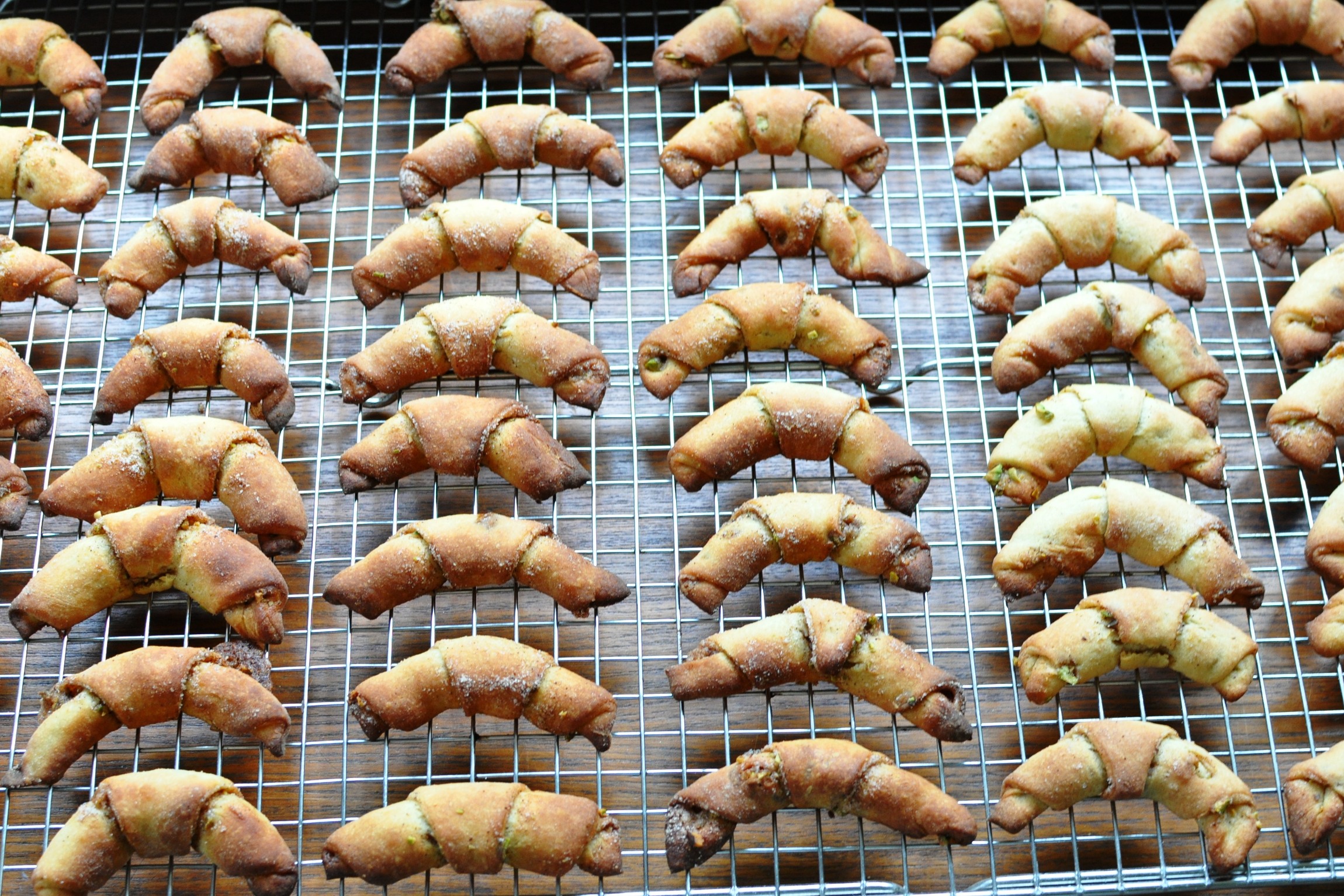
48 cinnamon pistachio pastries, with Nadia

Dough
10g active dried yeast or 15g fresh yeast
60g water
25g caster sugar
125g strong white flour
125g plain flour
4g fine sea salt
200g unsalted butter, melted
2 eggs, beaten (that is, 120g beaten egg)

Filling
6-8g cinnamon (to taste)
80g caster sugar
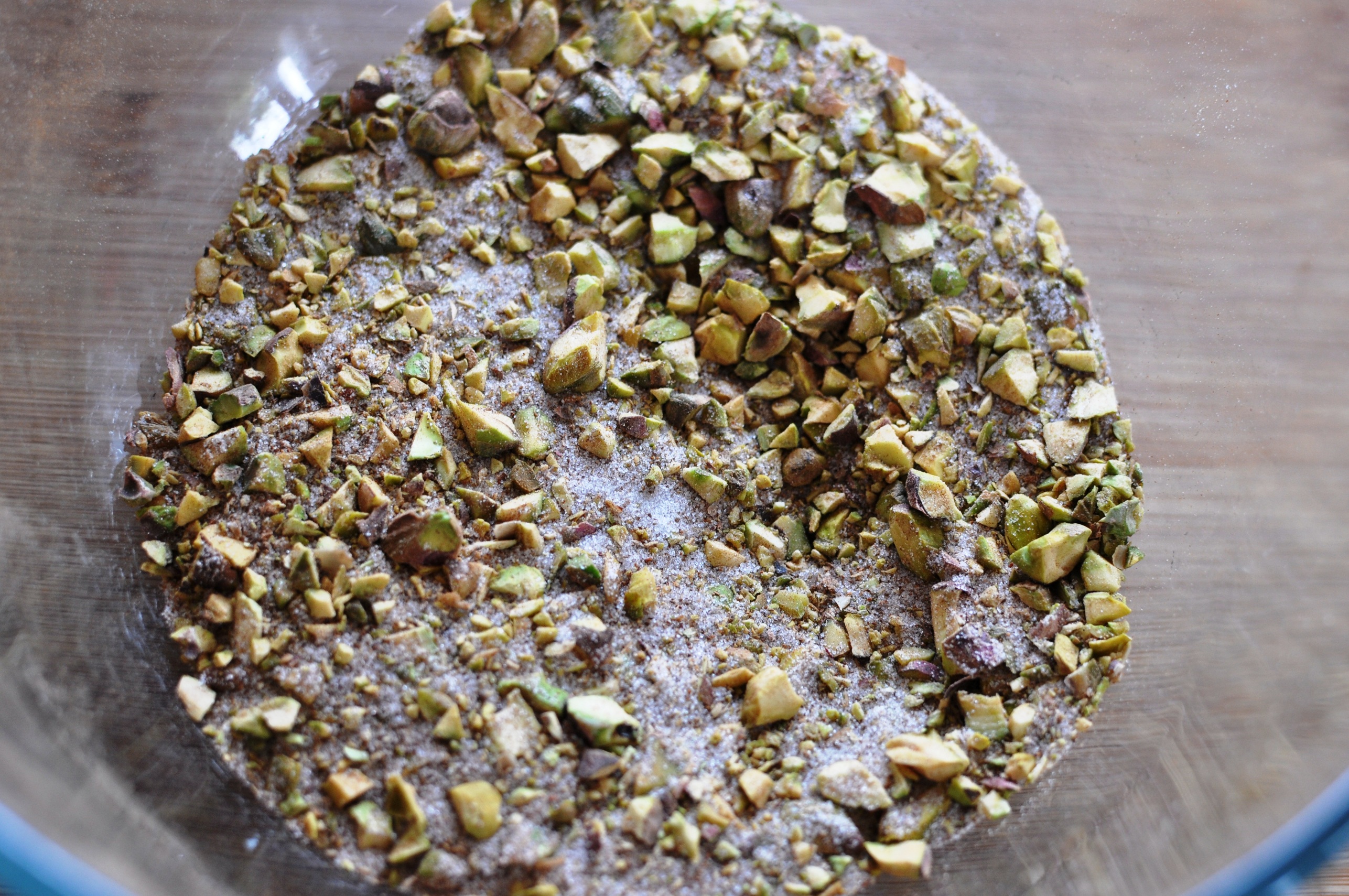
50g pistachios, roughly chopped or quickly broken up in food processor.

Roughly chop pistachios

Makes 48

1. Mix the yeast with the water. You can use tepid water to get the yeast going if you like, but as these have a long prove in the fridge it doesn’t really matter.
2. Stir in sugar.
3. Combine the flours in a bowl, add the salt, then mix in yeasty water, melted butter and egg.

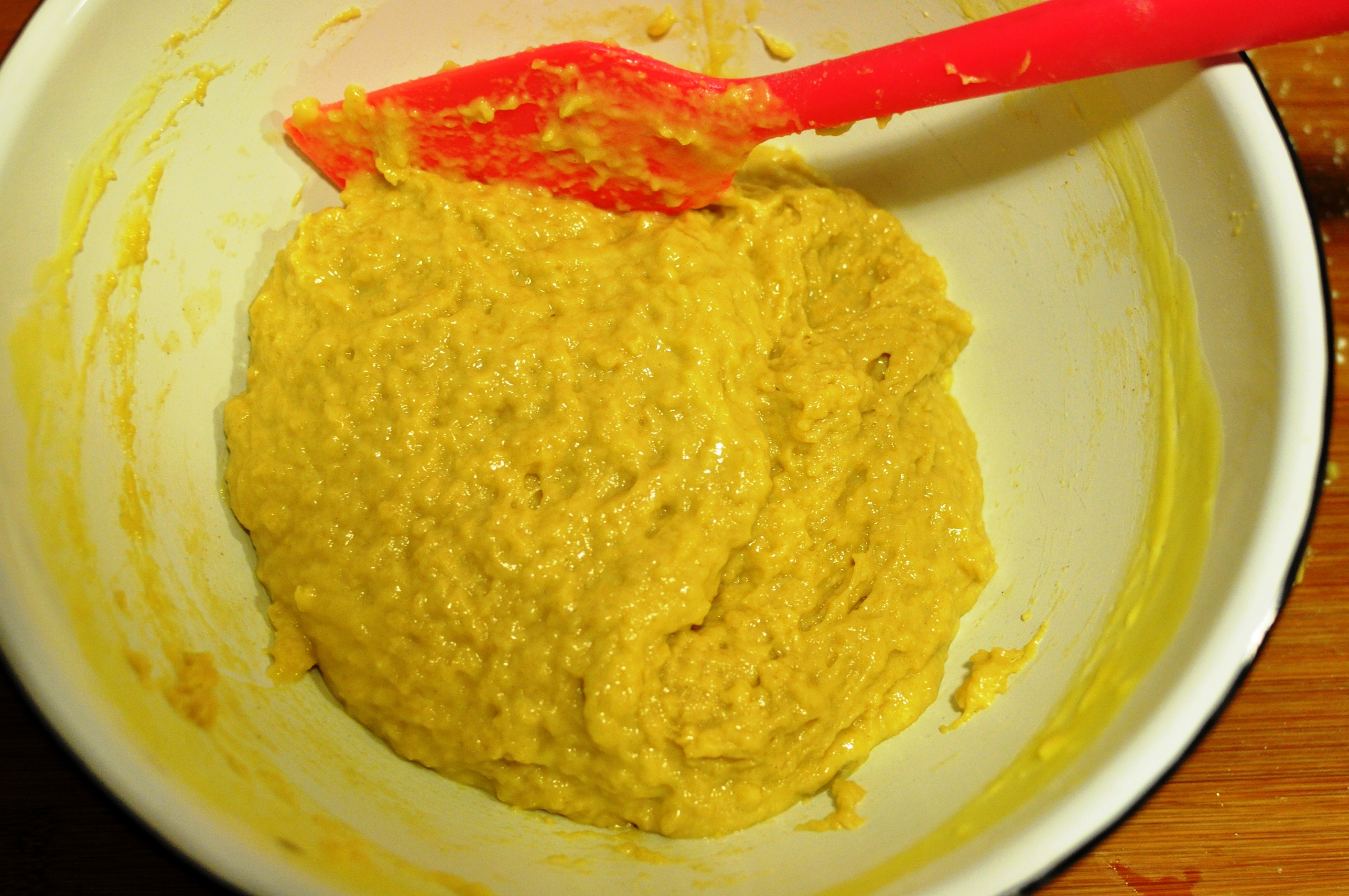
Mix the damp doughFirm up the dough in fridge
4. Mix up to a dough. It’s very moist from all the egg and melted butter so it really is a case of mixing, with a spatula. Cool the dough in the fridge a bit to firm up the butter then you can give it a knead, just to make sure everything is nicely homogenised.
5. Return the dough to a clean bowl, greased with a little oil, cover, then put in the fridge and leave for at least three hours, or even overnight.
6. Take the dough out of the fridge and allow it to come back to room temperature. (The butter will have set hard again, so it’ll be difficult to handle until it’s warmed up a bit again.)
Cinnamon and pistachio filling mix
7. Combine the cinnamon, sugar and chopped pistachios to make the filling.
8. Preheat the oven to 180C and prepare several baking sheets, lining them with parchment or silicone sheets.
Cut the dough into 6 piecesForm 6 balls
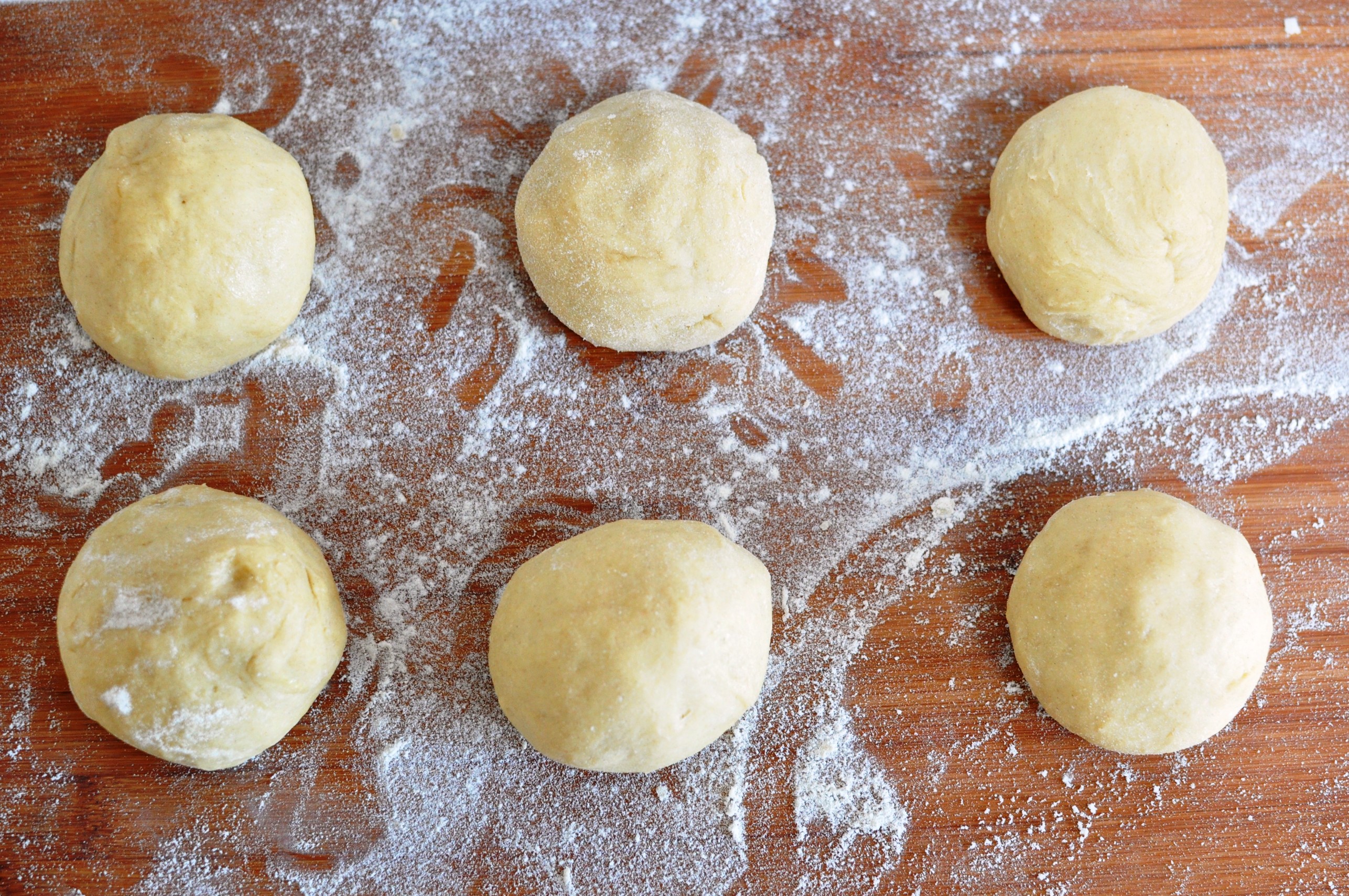
9. Divide the dough into six balls, each weight about 111g, then cover and let them rest for 10 minutes.
Disc 20cm in diameterSprinkle filling
10. On a lightly floured surface, roll out each ball into a disc, keeping them moving to avoid sticking. Roll to about 20cm in diameter.
Divide into 8 segmentsRoll up the segments and form crescents
11. Sprinkle the filling onto the discs, then cut each one into eight segments.
12. Roll up the wedges, starting from the wide end, and shape into crescents.
Place on lined traysBake until browned
13. Place on baking sheets, cover and prove for about 20 minutes until slightly risen.
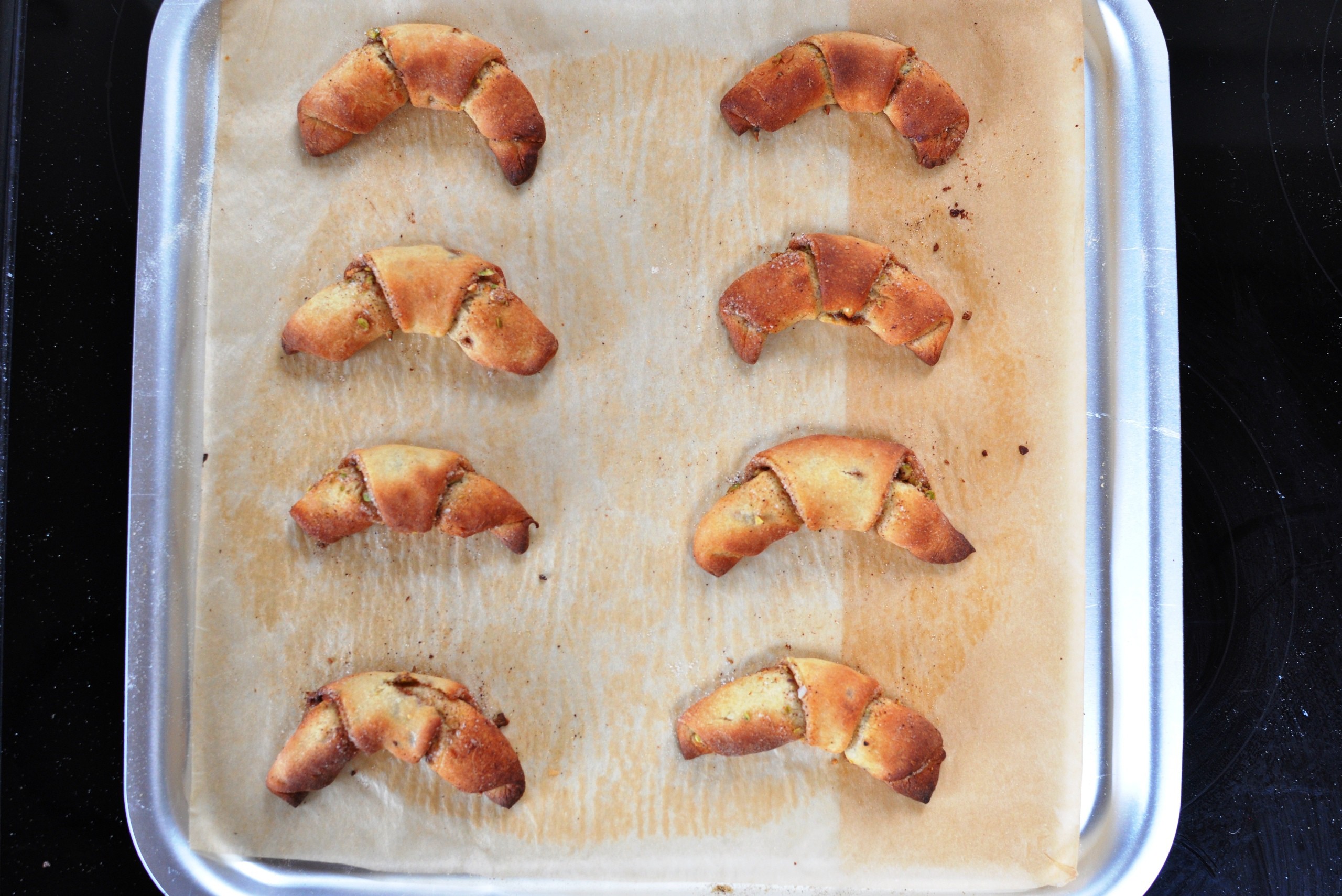
14. Bake for around 12 minutes, until nicely browned.
15. Cool on a wire rack.

Pistachio cinnamon crescents

I imagine these would go very well with a nice strong, short cup of coffee, but as I don’t drink it, I can’t say! I can say they also go nicely with tea, black or green. But the ideal drink to have them with would be that sweetened blend of black and mint tea, served in glasses, as drunk in Arabic world, especially the Maghreb. I like to think that when I first made them at Old Man Mountain in 1994, me and Nadia sat down to try them with a with a cuppa, critiquing them. Nadia probably said they were good, but she preferred savouries.


* Since writing this, I’ve done a little more research. In Arabic countries, such a pastry might be referred to as a sanbusaj, sambusak, sambosak. It’s the same in Hebrew. And similar in many other languages across the Middle East, western and southern Asia. Indeed, they’re probably all from the same Persian root word: sanbosag. A more familiar related word here in the UK is the Indian Subcontinent samosa.

But, you may be wondering, what’s a usually savoury, deep-fried parcel got in common with a crescent, yeasted dough, buttery pastry? Well, broadly, there’s all just variation on a theme of filled pastries. This recipe, for example, is savoury, but uses a similar technique to mine here, and as such nicely bridges the gap.


15 Comments

Filed under Baking, Pastry, Recipes

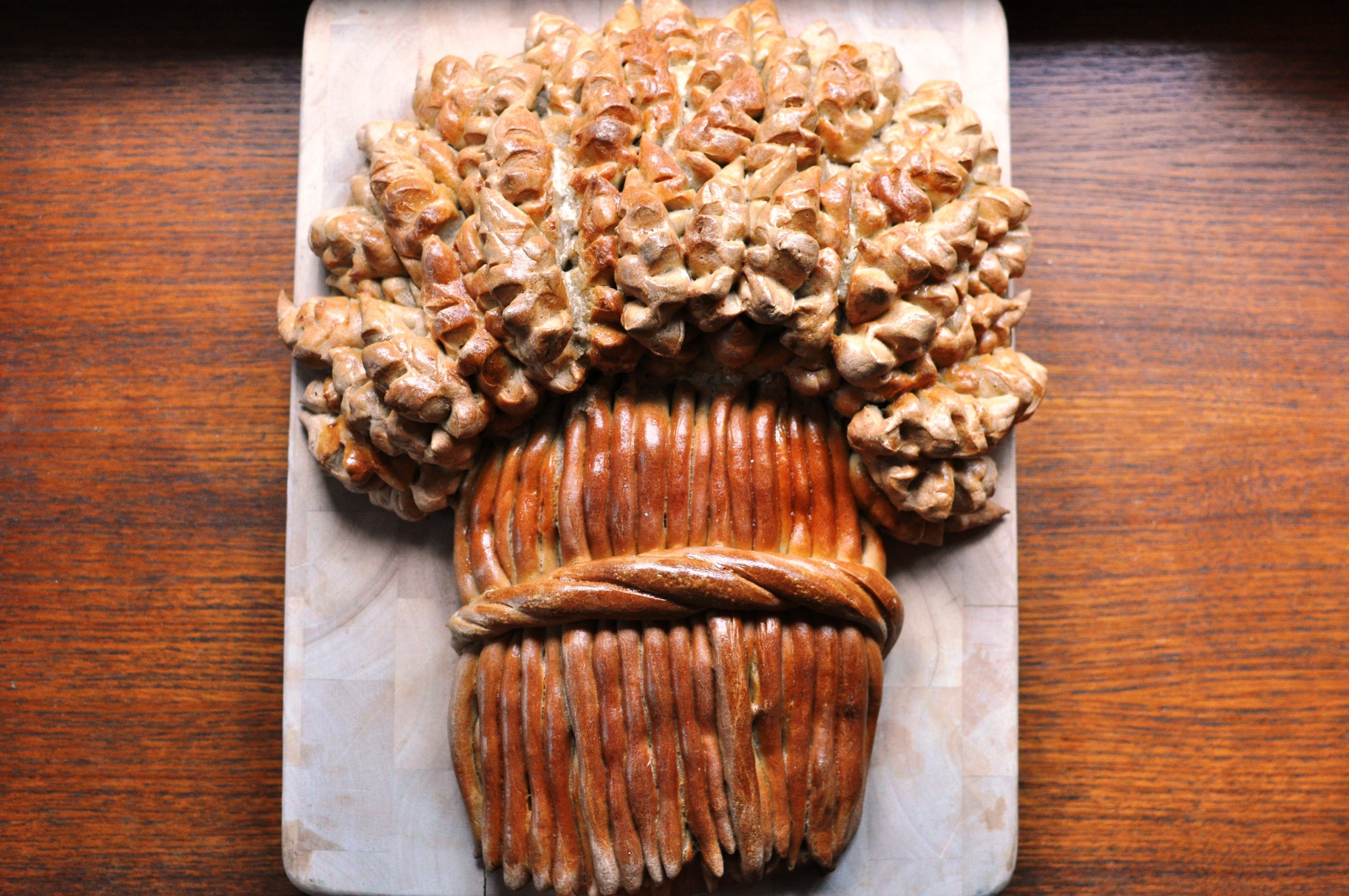
Harvest festival wheat sheaf loaf

A bread wheat sheaf for a harvest festival

Beside my primary school was a church, St Stephen’s. In the summer, house martins built their nests under its eaves and whizzed over our heads as we came and went or played in the yard on wet days. Just as the house martins were leaving at the end of the summer, the autumn term started. Soon after, we had a harvest festival.

The abiding notion in Britain is that school summer holidays freed up children to help with the harvest. This may be a myth, but certainly the biggest grain harvests start happening here in the middle of school holidays, around the festival of Lammas, 1 August.

Harvest festivals continue through late summer and autumn, notably occurring around the time of the nearest full moon to the autumnal equinox. This year, the equinox is today, 23 September, the full moon 28 September. Though our local primary school is doing its harvest festival on 16 October. I’ve not seen how they do it yet, but I’ve got strong memories from a couple (several) decades ago of the festivals at St Stephen’s, with the altar piled high with foods, to give thanks and for charity. There were tinned foods, but there was also fresh autumn produce, and possibly even a wheat sheaf: real or made of dough.

Stalks and symbolism
A sheaf is a tied bunch of grain stalks after they have been harvested. It was a common sight at this time of year during the centuries when harvests were done by hand with scythes. I did it this way when I lived on a small farm in New Zealand in 1990, and I know people these days growing heritage grain varieties that still do in England, but mostly harvesting is done now with combines: so no more sheaves.

An old "wheatsheaf" pub sign in Dorset

It’s a shame really, as they’re an ancient symbol and one that you’re more likely to encounter now in pub names. Symbolically, however, the wheat sheaf represents plenty, a good harvest, fertility and even resurrection, as the cycle of seasons has once more given grain for bread. Indeed, the sheaf infers bread, and bread is of course a quintessentially important symbolic food in some religions. The heart of Christianity is the eucharist: the eating of bread to reiterate the Last Supper, where Jesus prepared for his sacrifice by shared bread, saying, “This is my body, which is given for you. Do this in remembrance of me.” (Luke 22:20).

Back to school
Although I’m not religious, I enjoy the symbolism and stories, and most of all appreciate the tradition, so I thought it was about time I had a go at a bread wheat sheaf.

It’s based on the recipe in The Bread Book by Linda Collister (1993) which is in turn based on a recipe in The Modern Baker, Confectioner and Caterer (1907) by John Kirkland, a former head of The National Bakery School (founded 1894), then at Borough Polytechnic and now part of London South Bank University. I did a diploma there in 2010, but we didn’t make anything quite this ornate.

This is slightly tricky to do in a domestic oven as it won’t be as capacious as a commercial oven. Mine can cope with baking sheets 35cm wide. It’ll mean your sheaf isn’t as grand as those professionals might make for harvest festivals, but even the comparatively stumpy results can still be very pleasing.

It’s a fairly time-consuming project. Not only do you have to make the dough and wait for it to prove, you also have to shape a lot of small pieces of dough. Notably to make the ears of corn. (And when I say corn, I’m using it in the Old English sense meaning any edible grain, though particularly wheat grain, not the modern American sense – which is taking over here in Britain – meaning maize.)

1350g strong white bread flour
20g salt
8g caster sugar
15g fresh yeast
750g tepid water (approximately, see below)

Glaze
1 egg
Pinch salt

1. Combine the yeast and most of the water. Hold say 100g back.
2. Put the flour, sugar and salt in a large bowl and mix to combine.
3. Add the yeast mixture and bring to a dough.
4. It will be quite a tight, firm dough as you want it for sculpting, however if it feels too dry add a little more of the water. How dry your dough feels will depend on how absorbent your flour is. As I’m using a stoneground flour, which contains more bran than an industrial steel roller-milled flour, it’s quite absorbent.

Turn out the doughKnead to a smooth dough
5. Turn the mixture out onto a lightly oiled surface and knead until smooth and well combined. These days I rarely do long manual kneads, but as this is quite old-school, go with it. I added water to a total of about 750g – meaning the dough is 55% hydration.

Before provingDoubled in size

6. Return the ball of dough to the bowl (cleaned and lightly oiled), cover or put in a plastic bag, then leave to prove until doubled in size. At an ambient temperature of about 18C this too about two and half hours.
7. When doubled, turn out. My total dough weighed approximately 2150g.

Deflate the dough
8. Give the dough another short knead to deflate and redistribute the gases. Again, this isn’t a loaf where we’re after a nice pleasing crumb, it’s a medium for sculpting.
9. Divide the dough up into pieces: two at 320g, one at 400g and the rest, about 1110g. Don’t worry too much about total accuracy – you’re making a wheat sheaf, an organic thing, not something geometric.
10. As this is quite a protracted process, you might want to keep the pieces you’re not working on in the fridge, so they don’t keep proving and swelling too much. Too much proving and the resulting shape may crack where you don’t want it to.

Wheat sheaf base layer
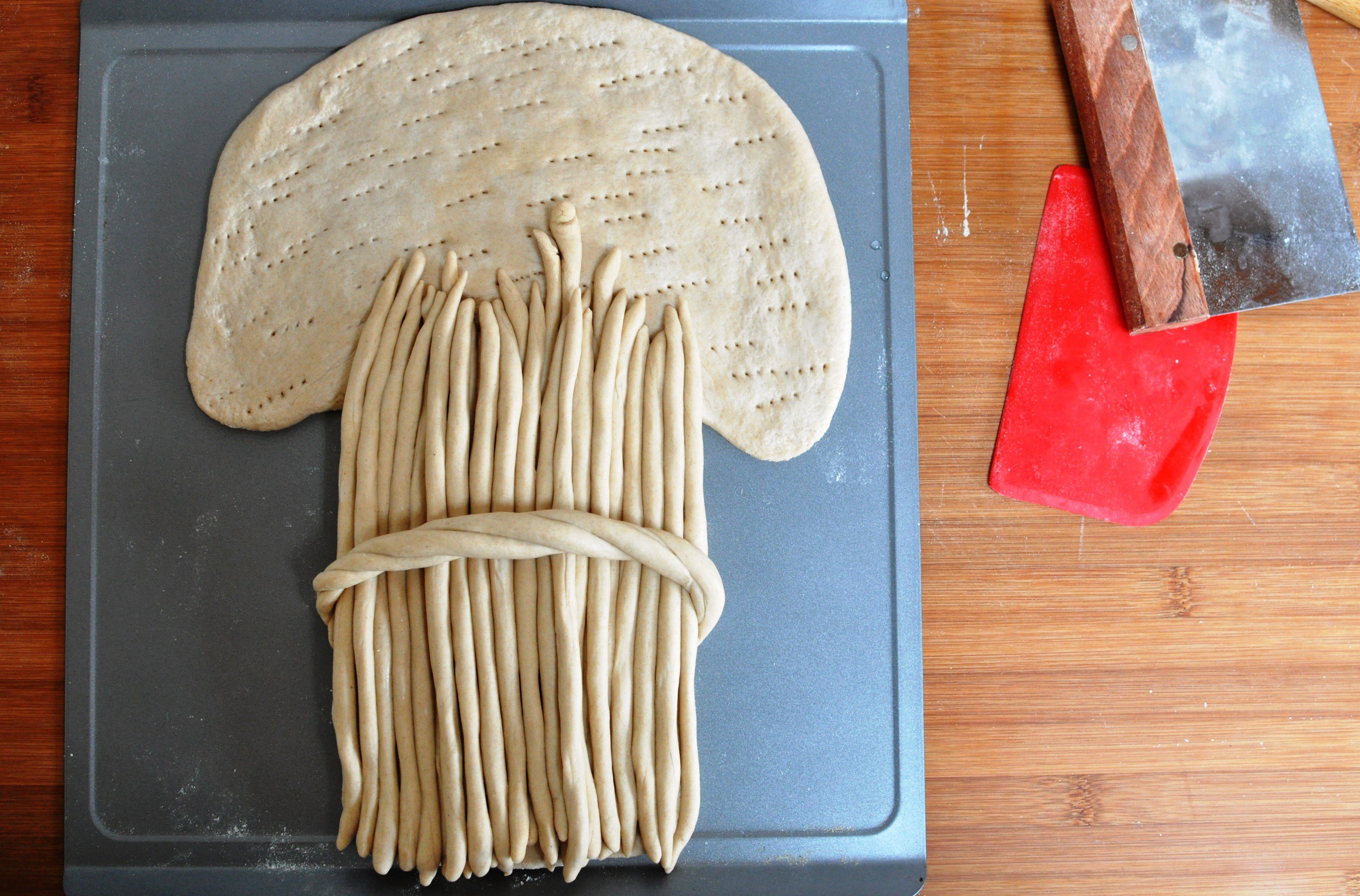
11. Take the two 320g pieces and form two rough rectangles, approximately 22x13cm. Use one to form the trunk of the sheaf, the other the top. Place both pieces on the largest baking sheet you have (that’ll fit in your oven of course). Stretch the head out slightly. You want a kind of cartoon tree or mushroom shape. Prick all over with a fork and brush with water to stop a crust forming. Cover with a damp cloth while you do the next bit.

30 pieces30 pieces into sausages
30 pieces as stalks

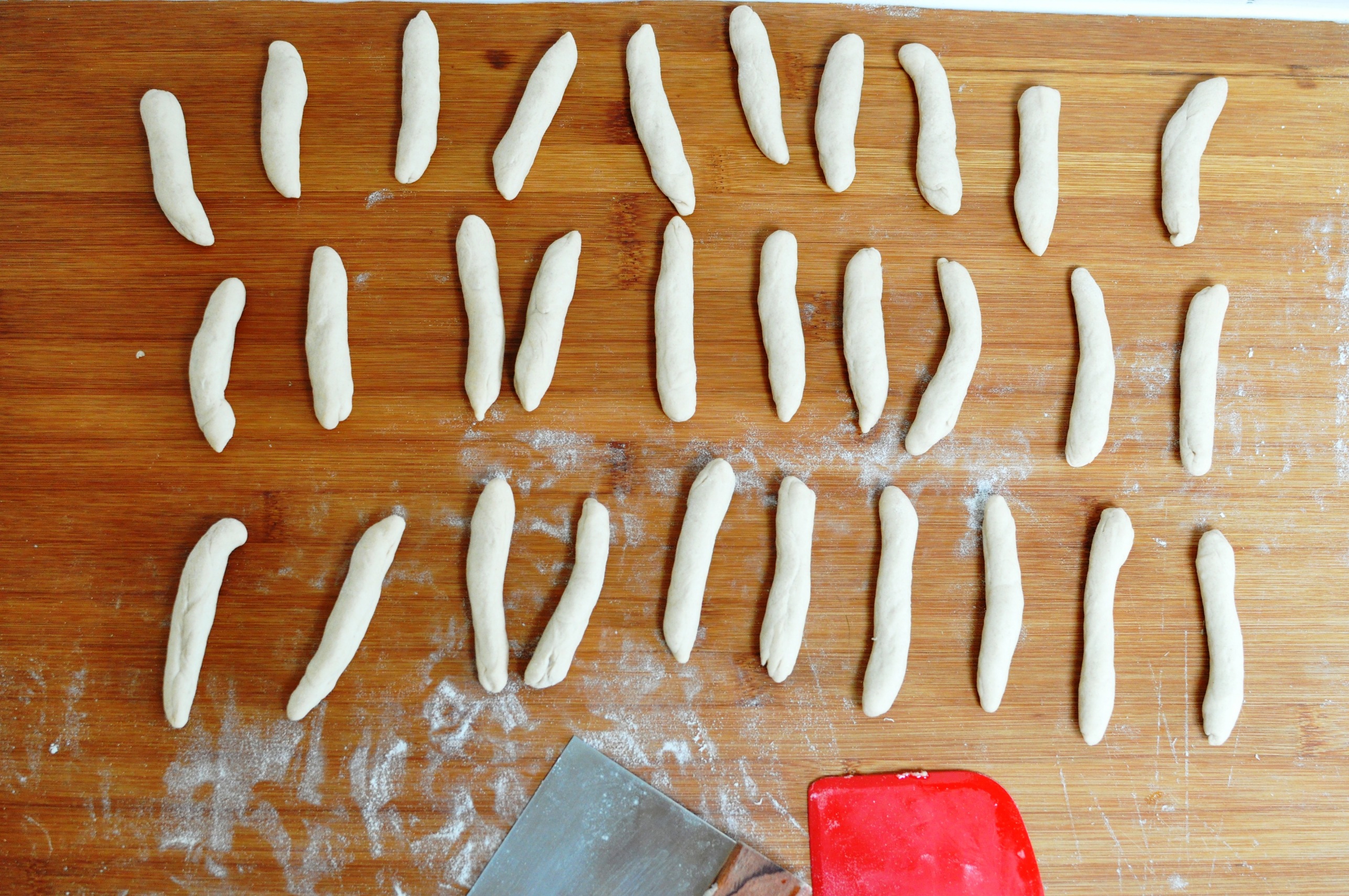
12. Take the 400g piece and divide it into 30 pieces, each scaled at around 13g.
13. Roll these pieces into snakes, again about 22cm long.

Add the stalks
14. Place 27 of the snakes on the base, making the wheat stalks. Twist or braid the remaining three to form a sheaf band, tucking its ends underneath on each side.
15. Cover or bag this and place it in the fridge as the next bit is the most time-consuming.
16. Take the large, remaining piece of dough. This is to create to ears. Divide it up into about 70 pieces, each scaled at 16g-ish. Do more, smaller pieces if you want daintier ears.

Make the ears
17. Roll each piece into a ball, then roll out, rolling one end to a point.
18. With a pair of sharp-pointed scissors, make snips in the small piece of dough, three or four, on three sides. Cut down and inwards towards the rounded base. It’s a bit like making dozens of mini versions of the French pain d’épi – meaning ear or cob bread.
19. You could make all of them in advance, but I got the main part out of the fridge again, and started positioning them on the top. Place them loosely to give a sense of them having grown out of the stalks.
20. While you’re doing this, preheat your oven to 220C.
21. Keep adding the ears, layering slightly, with the thickest point in the middle.

Position all the ears
23. Beat the one egg with the pinch of salt and use it to – carefully and lightly – glaze the sheaf.
23. Bake for 20 minutes, take out of the oven and brush with more egg glaze.
24. Turn the heat down to 170C and bake for another 40 minutes or so until nicely browned.

Baked

At this point, you can decide whether you want to eat it – it’s a perfectly serviceable, albeit low hydration, bread – or use it as a decoration. If you want it for the latter, turn your oven down to 140C or 130C and leave it in for a few hours longer to completely dry it out. Collister says six hours and if you have a wood or oil range, maybe you could just leave it in, but using electricity this seems a bit excessive in terms of energy consumption.

Collister decorates hers with a blobby little mouse on the stalks. If I’d been doing this with children in the house I might have been tempted, but as our adoption process continues to drag us along on its emotional roller-coaster, and we still haven’t been able to expand our family, I wasn’t inclined.

It’s easy to make a mouse though – just save 30g or so of the dough used for the wheat ears, make it into an eggy shape, snip a few ears, skewer a few eyes and add a snaky tail. I don’t think the mouse has any particular symbolism, though I could be wrong. Maybe it today it could symbolism how biodiversity is so tragically compromised by modern industrial farming techniques.

Wheatsheaf, detail

Addendum
So I dried out the wheat sheaf loaf – every time I used to oven for other things, then turned it off, I put the loaf back in to dry while it cooled.

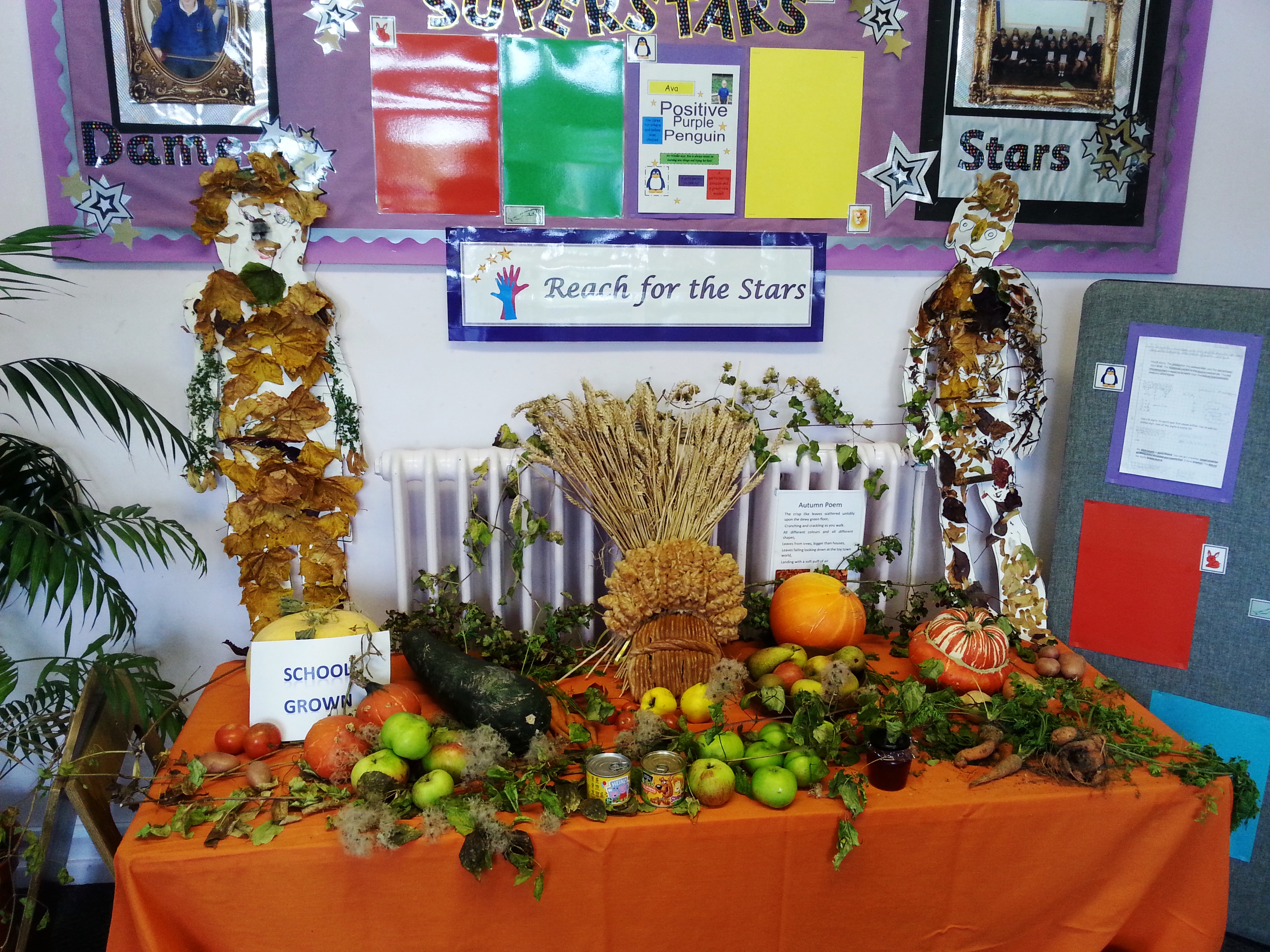
I gave it to the local primary school, where I volunteer, and they used it as part of their harvest festival display. It’s a nice echo of my own memories of harvest festival at my primary school, all those years ago.

School harvest festival display


A few notes
1. Here’s a film of a British master baker making a wheat sheaf in 1957. His wheat ears are a bit finer than mine!
2. Out of interest, Fran, my wife, works at Kew Foundation, at Kew Gardens in London. As I was doing this, she was working on a document that contained this remarkable statistic. While the human genome contains 3 billion letters, that of bread wheat (Triticum aestivum L. ) contains 17 billion. I’m not a scientist – clearly – but that’s boggling. The human sense of superiority leads one to imagine a sophisticated, sentient animal organism like us would be that much more genetically complicated.


26 Comments

Filed under Baking, Breads, Discussion, Feasts, Recipes

Nut and cocoa nib cookies

Nut and cocoa nib cookies

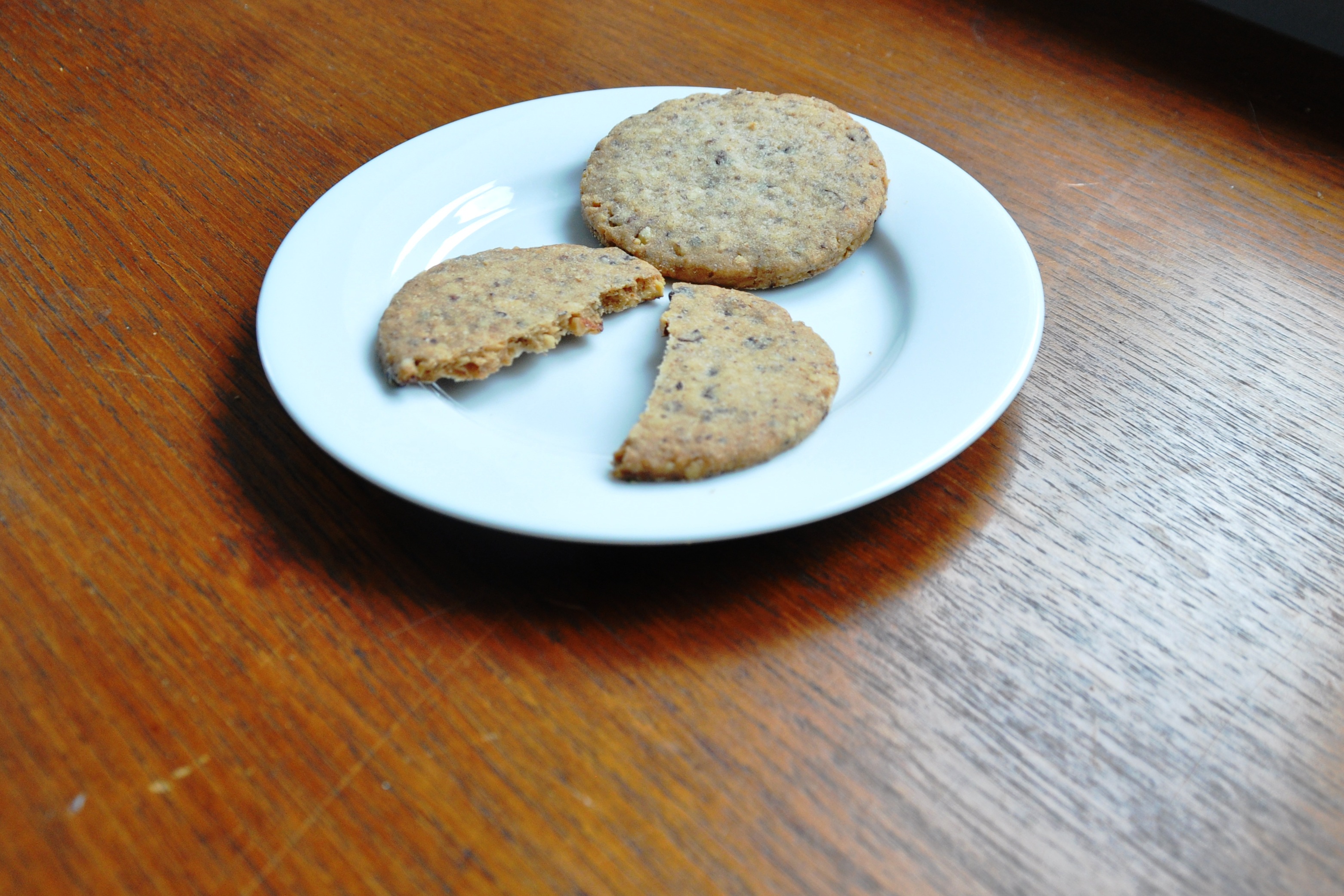
I’m the kind of guy who always has to have some homemade biscuits or cookies waiting in a tin at home. Just in case of visitors, or in case of the munchies. So I’m always on the lookout for good recipes. I particularly like versatile recipes that can be tweaked depending on what you have in your store cupboards. I’m also enjoying adding cocoa nibs to things; see, for example, my crystallized ginger and cocoa nib cookies.

This one is based on a recipe for a biscuit Justin Gellatly calls “The nutter” in his book Bread, Cakes, Doughnut and Pudding. His recipe uses blanched almonds, blanched hazelnuts, walnuts, Brazil nuts and macadamia nuts, but he does say you can use whatever nuts you’ve got; I’ve done various versions, and they’ve all been great, with a nice crunch and warm nuttiness (unsurprisingly). You can even use nuts that aren’t technically nuts, like peanuts, which are actually the seeds of legumes.*

200g nuts, unsalted, mixed
50g cocoa nibs (or indeed cacao nibs)
125g butter, soft
125g caster sugar (you could also use soft brown, for a more caramelly flavour)
1 egg
150g plain flour
Pinch of salt

1. Heat the oven to 180C.
2. Put the nuts on a tray and roast for about 12 minutes, until lightly browned. Turn off the oven.
3. Put the toasted nuts in a food processor and whizz to a rough consistency – I like it a bit powdery, and bit chunky for crunch.

Grind the nuts and nibs
4. Add the cocoa needs and give it one last whizz, to break them a bit.
5. Beat together the butter and sugar until light. Beat in the egg. If it starts to curdle, add a little flour.

Form a dough
6. Add the flour and nuts and bring to a dough. It’ll be pretty sticky. Flour your hands a bit if it helps, and form a ball or disc.

Wrap in plastic and rest
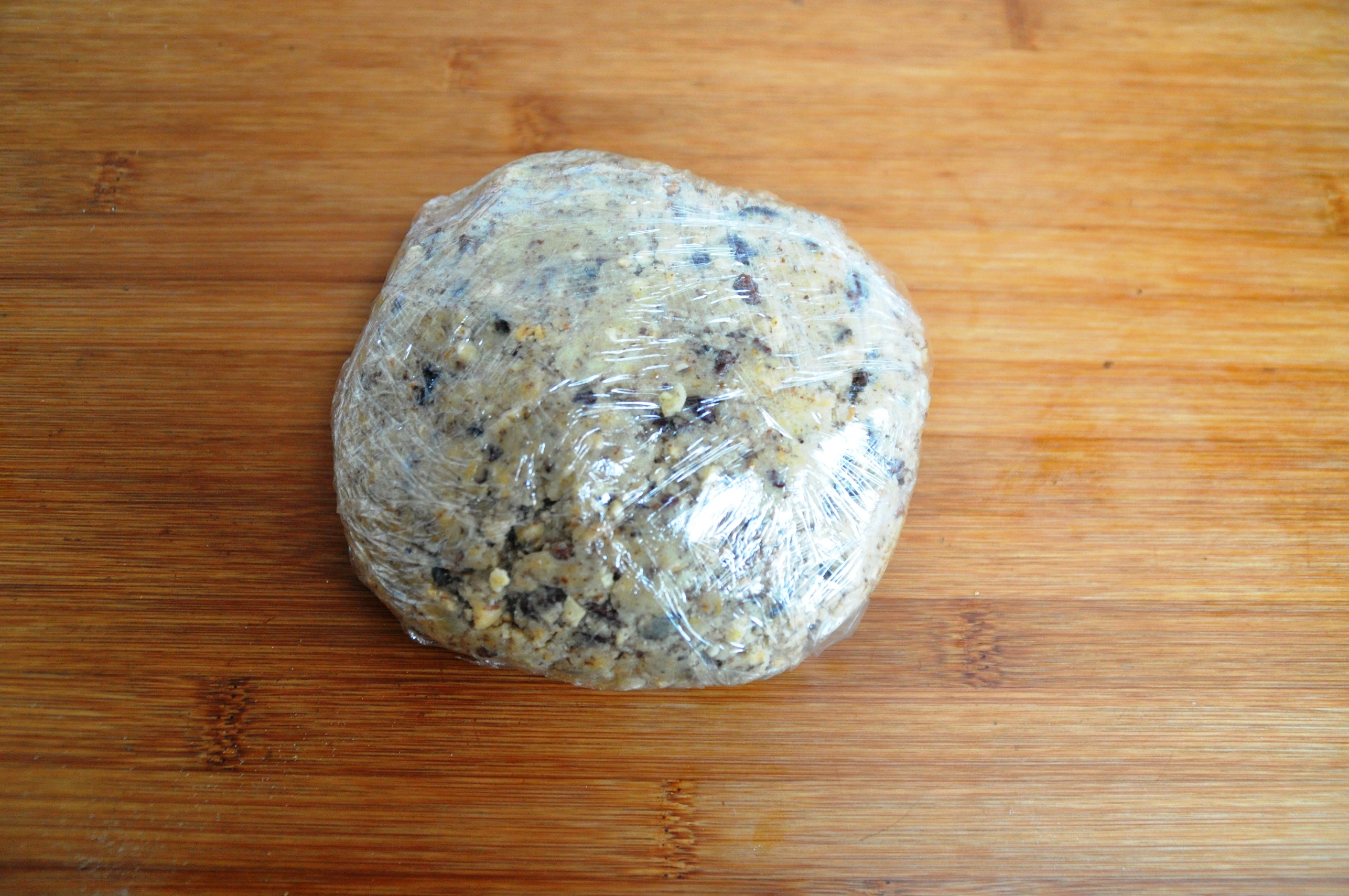
7. Wrap in clingfilm and rest in the fridge for a few hours.
8. Preheat the oven again, to 170C.
9. Flour a work surface then roll out the dough to about 5mm thick. It’s quite a sticky dough, so be relatively liberal with the dusting if needs be.

Roll out and cut
10. Cut out biscuits with a cutter. I use a round 65mm one, but it’s up to you – and again, depends on what you’ve got.
11. Gather any scraps, squidge together and roll out again.
12. Put the biscuits on baking sheets, lined with parchment or silicon mats.
13. Bake for about 12-15 minutes until nicely browned.
14. Cool on wire racks.

Enjoy with a cuppa or coffee. We have hot chocolates most evenings in the winter. As the English summer seems to have given up, we seem to be starting to do that again already, and the cookies go well with that too. It’s a bit different to this time last year when we walked the South Downs Way in warm, rain-free weather.

Nut and cocoa nib cookies

* Peanuts are basically beans, but even weirder, unlike other beans, the pods grow underground. Anyway, if we’re being pedantic about nuts, in botanical terms, they are defined as dry fruits with one, or possibly two, seeds.

By this definition, most things we call nuts in English are technically not nuts: Brazil nuts, almonds, walnuts, pecans, cashews, cashews, and as mentioned, definitely not peanuts. However, when we say “nut”, we’re usually defining it in culinary, not scientific, terms, and can therefore include all these. In fact, the only nuts that seem to qualify both botanically and culinarily are hazels.

Many of the culinary nuts are actually the seeds of drupes – but who’s heard that word before, besides botanists and specialists??

6 Comments

Filed under Baking, Biscuits, cookies, Recipes

Michette di Liguria: sweet buns, strange legend

Michetta, michette di liguria, Dolceacqua

After a slice of my torta di Santiago, a friend of my brother’s asked if I knew of any cakes that are traditionally eaten for the Christian feast day of the Assumption of Mary, celebrated on 15 August. I didn’t.

My native England has lost so much of its traditional festival foods, and I hadn’t encountered any Assumption baked goods while living in Italy. So some research was undertaken. The Feast Day Cookbook suggested veal cutlets and shrimps in béchamel. Neither of which satisfies the cake remit. Digging around more though, I came across a sweet bun from Liguria, northwest Italy. Specifically they’re from the town of Dolceacqua.

They’re called michette. Michetta is a term that’s more commonly used in Italy to refer to a type of hollow bread roll, originating from Lombardia; I knew it in Rome as a rosetta. The Dolceacqua michetta is a little different though: it’s a small, enriched bun. It also comes with such a striking, disturbing folkloric origin story.

Once upon a time…
Here’s the story, or an interpretation thereof based on me plodding through various Italian sources and a couple in bad English.

In the 14th century, a Dolceacqua baker had a beautiful 19-year-old daughter called Lucrezia. She was set to marry a young lad called Basso. Unfortunately, Marquis Doria, the ruler of Dolceacqua, enjoyed his droit de seigneur, or lus primae noctis: the supposed right of the feudal ruler to claim peasant brides on their wedding nights. With claim basically meaning rape. Remember the scene in Braveheart? (Fictitious. Apparently droit de seigneur is fictitious too, or at least historians agree there’s no conclusive evidence for it happening in the Middle Ages in Europe.)

Understandably, Lucrezia and Basso were not happy about this and tried to hide. Doria, however, had had his eye on Lucrezia and tracked her down, taking her back to his castle. Desperate, she tried to throw herself from the window of a castle tower. The Marquis stopped her, and to subdue her, locked her in a hot, damp dungeon. She remained steadfast though, and died there of hunger and thirst.

Hearing of the death of the popular girl, the locals had had enough and approached the castle. Basso was able to sneak in and, at knife point, forced the Marquis to abolish the lus primae noctis.

To celebrate – and commemorate – local bakers like Lucrezia’s dad started to make a small, sweet bun – michette.

I’m a bit confused at this point, but some of the sources say the bun was supposed to resemble female genitals – it was like an offering to the feudal lord, an alternative to the rape. It’s the sort of thing that sounds like it has its origins in older, even weirder, stories, but I’m not sure. Some of the source even had quotes in Ligurian language, which really threw me.

Anyway, the day after the Marquis relented was the Feast of the Assumption, which in Dolceacqua also became the Festa della michetta. Since then, “the word ‘michetta’ is still used to define the virginity and the female womb”, apparently. I suspect locals could explain it all better.

Not many sweet buns come with such heavy historical and cultural associations though. Take the Chelsea bun – it’s a sweet bun, which was first made in Chelsea. That’s its story.

Michetta, michette di liguria, Dolceacqua

Shapes and notes
The most common shape for the michette seems to be a small elliptical bun. Then on this video (at 1.00 minute) you can see a baker making a version with snakes of dough rolled into three ball shapes. I’ve given instructions for forms. I’ve also read of the existence of a cross form, the crocetta, but I haven’t done these.

Note, this is a very yeasty dough – it’s not a nice healthy long fermentation bread, it’s an indulgent, feast-day bun. Even if you can buy them all year round now in Dolceacqua. It’s also a very rich dough – as befitting a feast-day sweet – containing sugar, eggs, butter and olive oil.

Butter in doughs can be problematic if it gets too warm, it’ll become greasy and ooze. If your dough is getting too greasy, cool it off in the fridge, to firm up the butter a bit.

Also note that Italians may well make the dough volcano-style, that is with the flour piled up on the work surface, a crater in the middle and the liquid ingredients added. I do this for pasta, but I find it easier to use a bowl for bread doughs, as it’s more familiar and gives me a better sense of how it’s feeling.

Recipe
500g flour – 300g strong white, 200g white plain (all-purpose)
40g fresh yeast (or 25g active dried yeast)
100g water, tepid + about 80g more
100g unsalted butter, not warm
2 eggs (about 100g, without shells), lightly beaten
120g caster sugar
2g fine sea salt
Zest of one lemon
40g extra virgin olive oil
Water
Extra caster sugar

1. Mix the yeast with about 100g of the water.
2. Put the flour in a bowl and rub in the butter until it resembles fine breadcrumbs.
3. Stir in the sugar, salt and lemon zest.
4. Add the yeast mix, eggs and oil.
5. Bring to a dough. Add more water if it feels tight. I ended up adding about 80g more, so about 180g total.
6. Turn out the dough and knead. You want it quite moist and sticky – but manageable. Don’t overwork it, or the butter will get to oily. The best way to handle this is a few more short kneads over half an hour.
7. Clean out the bowl, oil it slightly, then put the dough back in and cover. Leave 10 minutes then give it a short knead. Return to bowl, cover, leave 10 minutes then give it another short knead.

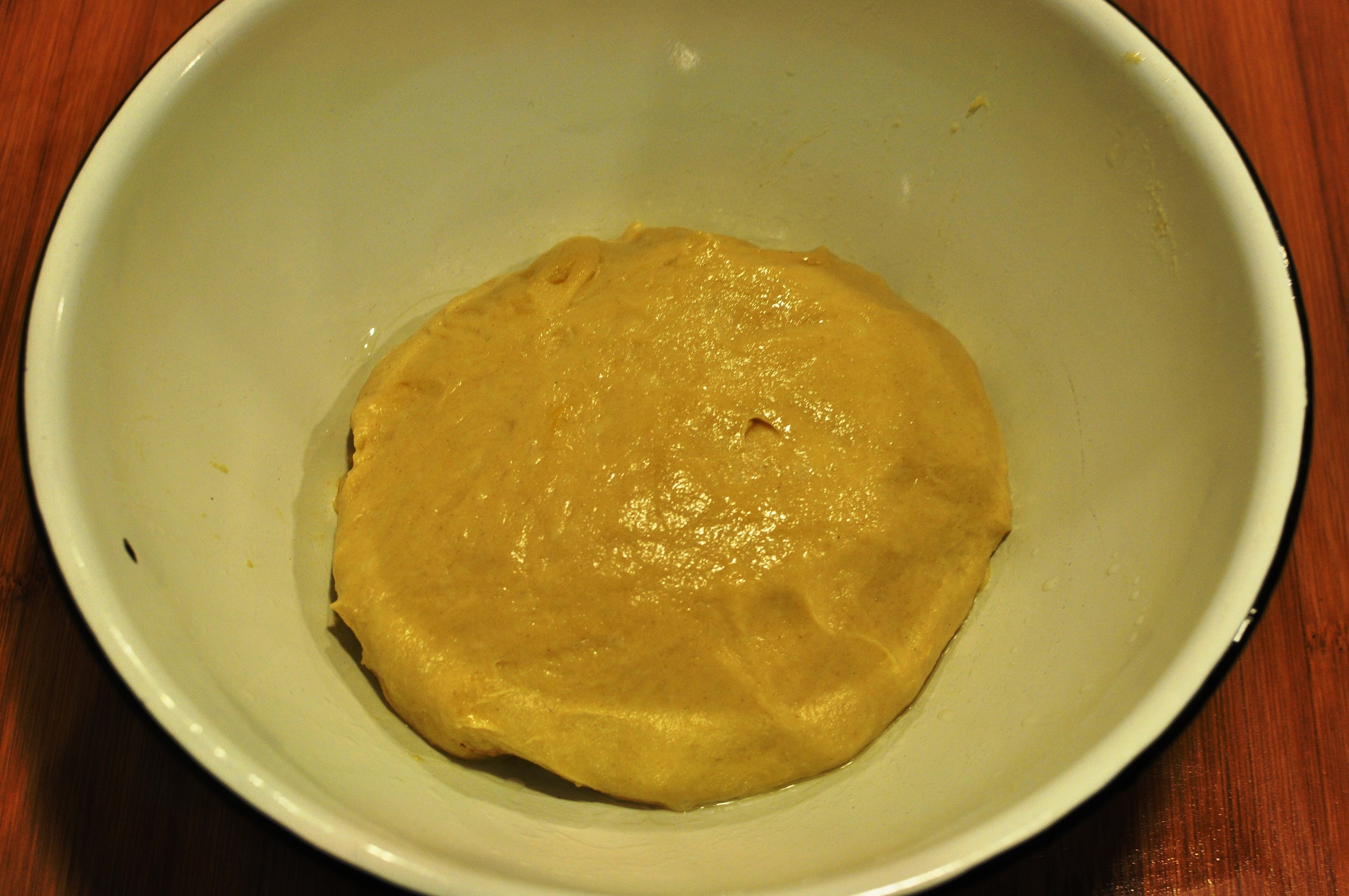
Michetta dough, first proveMichetta dough, first prove, doubled

8. Put the ball of dough back in the bowl, cover and leave to prove until doubled in volume. As there’s so much yeast in this mix, it’ll be quite quick, especially if the room temperature is warm.
9. Turn out the dough onto a lightly floured surface and gently deflate to redistribute the gases.
10. Divide the dough into pieces, scaled at 60g if you’re being accurate.

Michetta dough, scaled at 60gMichetta dough, form balls

11. Form the pieces into balls.
12. Form the balls into the final shapes, as mentioned above, there seem to be two variables. For the basic buns, they’re small ellipses, so just squash and stretch the ball slightly. For the longer form, roll out the ball slightly, then using the karate chop side of your hand, roll slightly to make two indentations all around the circumference of the cylinder (see pic below).
13. Place the michette on baking sheets and allow to prove up again.
14. Preheat the oven to 200C.
15. Bake for about 12 minutes, until lightly browned.

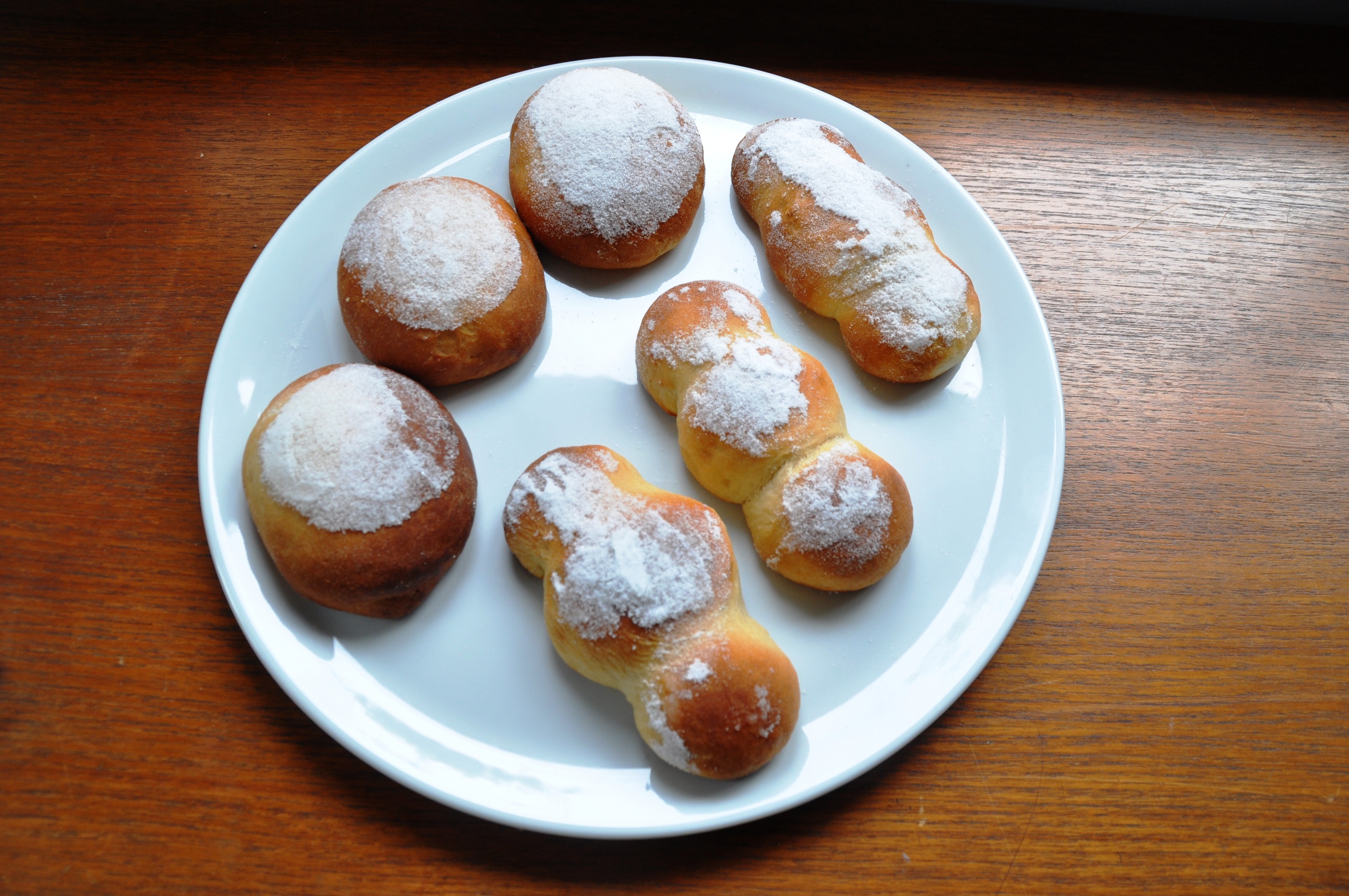
Michette - two shapesMichette, baked, caster sugar

16. While still warm, brush the top with water and sprinkle with (or roll in) caster sugar.

Enjoy as a breakfast bun or for afternoon tea.

9 Comments

Filed under Baking, Cakes (yeasted), Feasts, Recipes