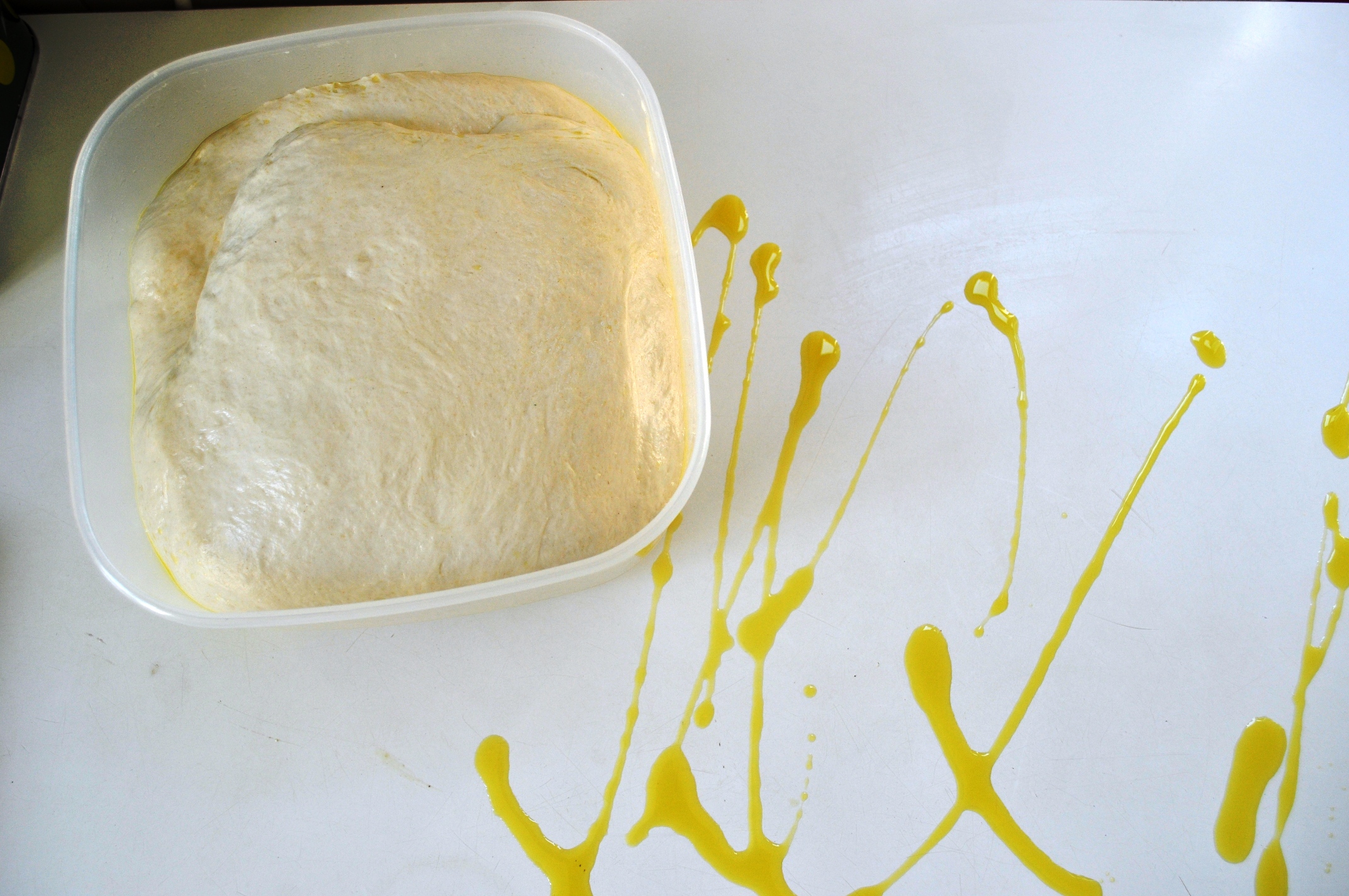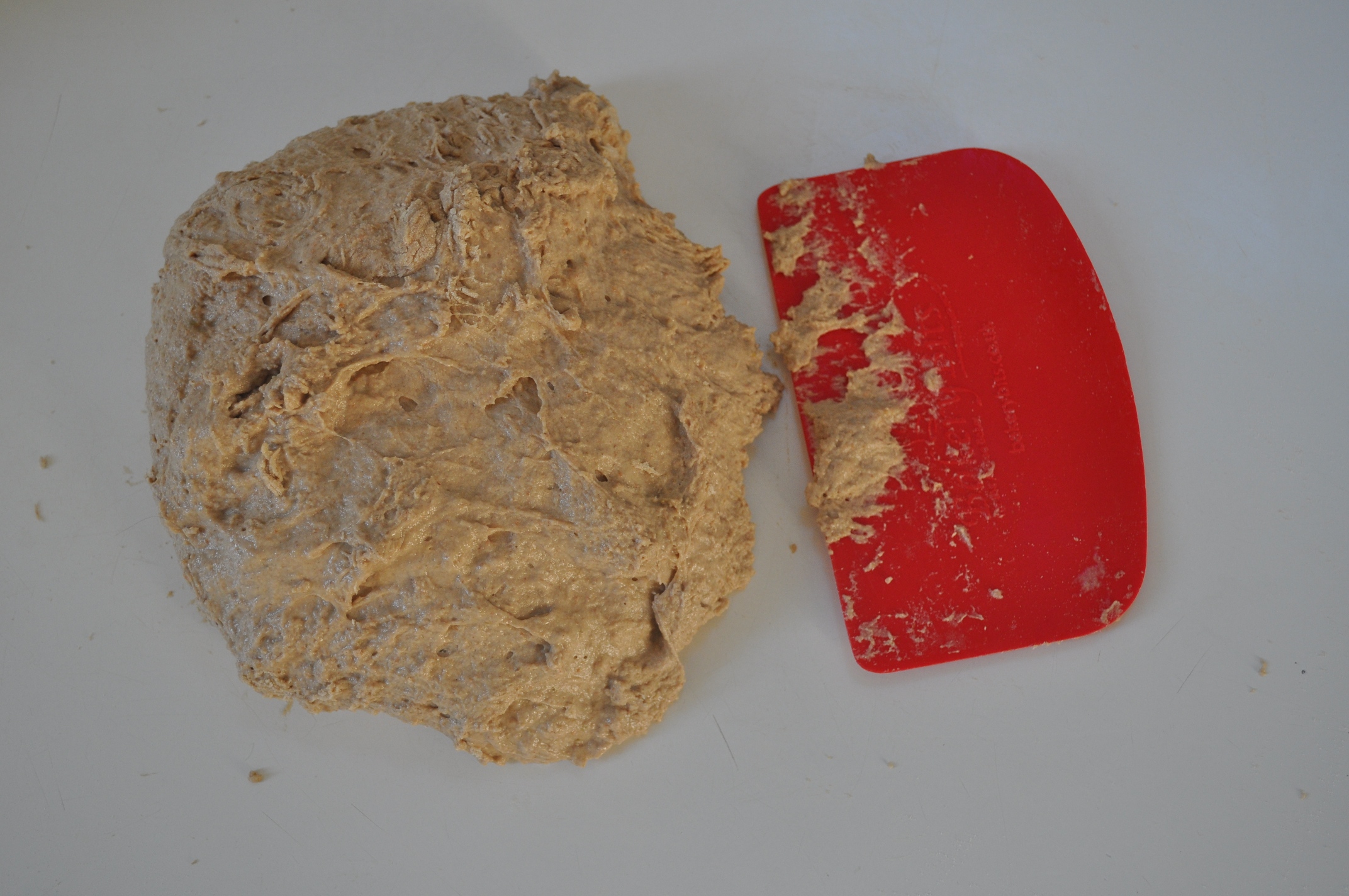
Category Archives: Breads

Burger buns with a twist

Beanburger with carrot and cumin bun

Over the past few years, the UK street food scene has improved markedly. Artisan producers, in part inspired by the US street food scene, have started producing real food from food trucks – a world away from the mechanically separated burgers, listeria buffets and industrial crap that has dominated here for so long.

The other day I was in Brighton and went to the Street Diner, a Friday street food market in Brighthelm Gardens, Queen Street, BN1. It started up exactly a year ago and is now operating Saturdays too I believe.

As well as various Asian and Middle Eastern-inspired food stalls, there was enough pulled pork, brisket and burgers to satisfy my carnaholic wife Fran and brother-in-law Al. No street food scene is complete without burgers of course. As much as I adore the form factor of a burger in a bun, I’m not a carnaholic, so went for something Middle Eastern. But the next day, back in Brighton to meet Fran, I thought she might be craving burger, so did some investigation into Brighton’s best.

Burgers in Brighton
This seems to be such an important subject, there’s even an entire blog dedicated to it (here). So yes, we couldn’t possibly hope to get to the bottom of the Brighton burger scene straight away, so just plumped for Troll’s Pantry. They’re one of the most established of Brighton’s burger outfits, emphasising a use of local ingredients and operating out of the Hobgoblin pub. Which is all well and good, but on a Saturday evening, the latter wasn’t exactly a joy. It felt just like some dodgy student pub from my uni years in the 1990s, stuck in grubby aspect. And even though they have half a dozen or so handpumps, most of them were off. Don’t they have any actually trained to change cask on their busiest night?

The burgers themselves were excellent though. They’re served, US-style, in a plastic basket and a brioche-style bun. Chips – or fries, if you must – extra. I had a veggie one, Gaea’s Bounty, that was tasty, and Fran said her beef job, the Imperial Swine, was excellent.

“All beef comes from Sussex conservation project, where the English Longhorn cattle lead a wholly natural lifestyle,” says the blurb on their site. “The beef is aged for 35 days before being ground into 100% steak patties.” So that at least compensated for the lame pub. Pity Troll’s Pantry can’t find a better place to ally with.

Brioche for breakfast not burgers
Anyway. The brioche thing. It’s had me scratching my head since I first encountered it in Rome, in a venue doing US-inspired burgers. I just can’t quite reconcile the use of brioche buns for burgers.

For me, brioche is quintessentially a breakfast bread. Enriched with egg, dairy and sugar, it lends itself to eating with jam, Nutella (god forbid), coffee and hot chocolate. I don’t get how it’s considered an appropriate partner for the salty, savoury experience that is burger patty and chips.

So when I wanted to make some bean burgers at home, I didn’t want to make brioche buns. I’ll save that for a weekend breakfast, thanks.

Good old Dan Lepard had a good option, a recipe in Short and Sweet, the book that collects his wonderful recipes from the Guardian. His burger bun involves carrot and cumin. And onion. And paprika. In the dough. Yes. Quite odd, perhaps, but it worked well.

In fact, the buns are, like brioche, made with dough enriched with milk, butter and egg. But rather than taking the dough into sweet, breakfast-appropriate territory, Dan takes it into savoury, burger-appropriate territory. With the addition of veg and spices.

If the addition of carrot sounds strange, just think how it helps make for delicious moist cakes. Dan, meanwhile, says, “The grated carrot and corn flour keeps these buns bouncy, soft and moist, helped by the hot oven and a short baking time.”

The original recipe can be found recipe here. The version in Short and Sweet is slightly differnt. Here’s my version,a tad tweaked.

100g milk
120g boiling water
15g fresh yeast
50g unsalted butter, melted
1 egg
100g carrot, finely grated
50g onion (ie a small-medium one), finely grated
500g strong white bread flour
50g cornflour (that’s cornstarch in American)
12g fine sea salt
1 t ground cumin
1 t paprika (I used smoked)
Water and sesame seeds to finish

Ingredients

1. Combine the boiling water and milk in a jug. You don’t want it too hot – if you have a thermometer, no more than body temp, or 37C.
2. Once it’s at a suitable temperature, crumble in the yeast.
3. Whisk the butter and egg into the liquid too.
4. Combine the flour, cornflour, salt and spices in a large bowl.
5. Add the liquid to the powders and bring to a dough.
6. Knead for a few minutes to clear (that is, bring it all together nicely), then leave, covered, for 10 minutes.
7. Give the dough another short knead, then leave for another 10 minutes and repeat. Do this once more.

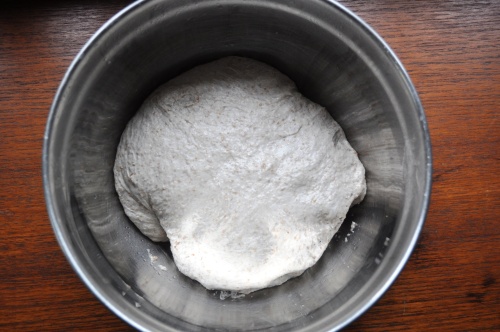
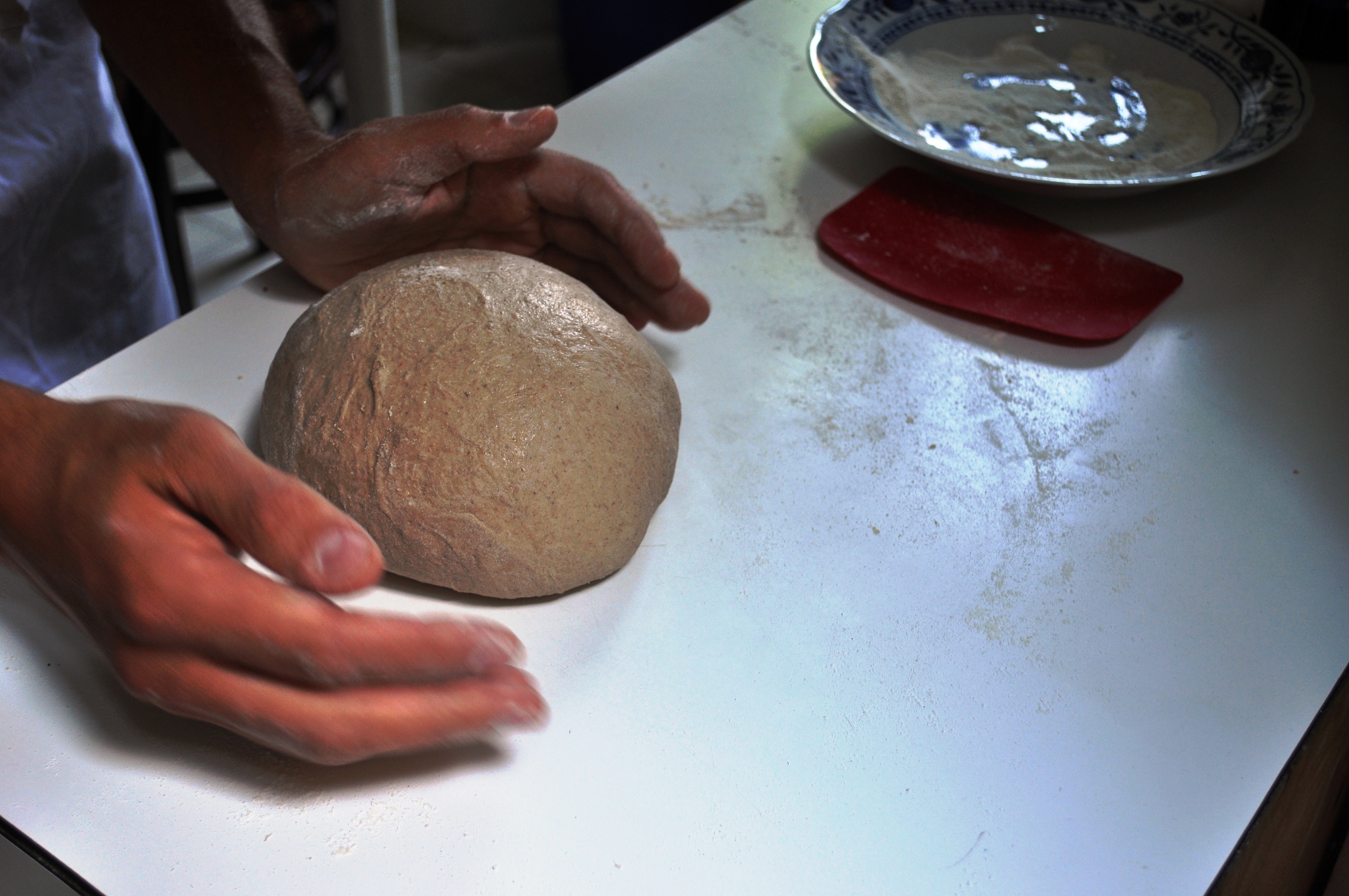
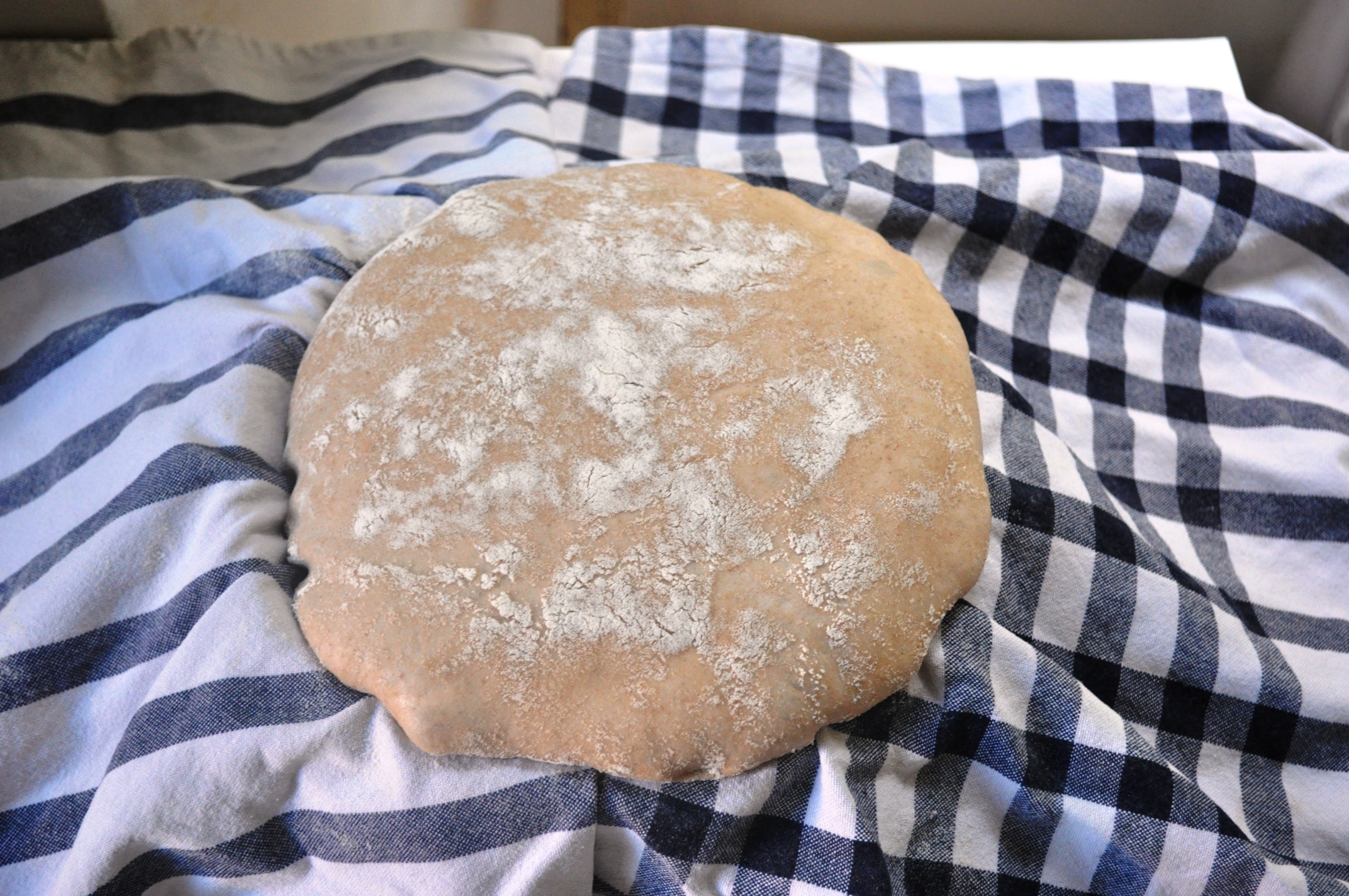
Dough before proving
8. Form a ball then leave to prove in a covered bowl in a draught-free spot.

Dough after proving
9. When the dough has doubled in size – how long this takes will depend on the temperature of where you leave it – take it out of the bowl.
10. Divide into six pieces. My dough weighed just over a kilo, so each ball weighed about 184g. You could make bigger or small balls depending on what you’re doing with the buns – are you making massive burgers or small ones?
11. Form the pieces into balls, put them on a baking sheet lined with parchment, and leave to prove up again.

Buns before baking
12. Preheat your oven to 220C (200C fan).
13. When the balls are plumped up – the original recipe says “until risen by half” – brush the tops with water and sprinkle with seeds.
14. Bake for about 25 minutes, until nicely browned.

Buns after baking
15. Leave to cool completely.

We had ours with some bean burgers. I like making bean burgers – you can basically just chuck beans and some stodge and whatever flavours and leftovers you have into a food processor. I used butterbeans, some soffritoed onion and garlic, some bread, a bit of mashed potato, some of the wild garlic and nettle pesto I made a massive batch of after a foraging walk on Sunday.

I’m not going to get into veggie vs meat argument here, as obviously a bean burger is a very different proposition to a real meat burger, lacking that juicy, bloody fattiness. But, like a meat patty, bean burgers can exploit the same satisfying format of condiments (in this case mustardy mayo) and additons (cheese, gerkins) all combined inside a bun. The chips here were actually just made from roasting raw potatoes.
3 Comments

Filed under Baking, Breads, Recipes

Le Creuset-baked sourdough

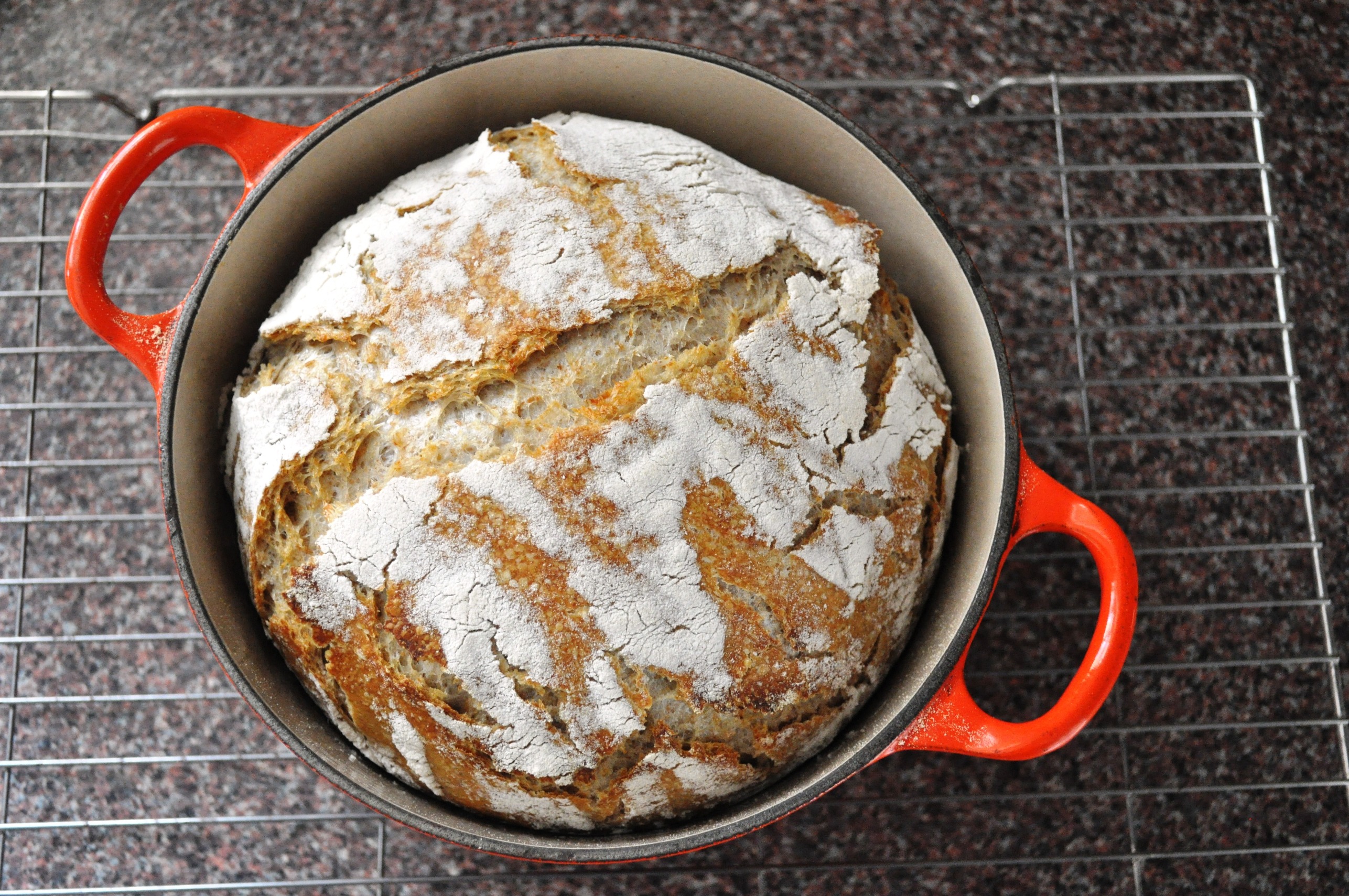
Sourdough baked in Le Creset, straight out of the oven

This is a technique I’ve been wanting to try for ages. Since last year, in fact, when still living in Rome. There, I encountered the blog of another ex-pat baking enthusiast, Krumkaker. She made several of her loaves in a casserole dish. It’s also a technique demonstrated by the ever-enthusiastic Vincent Talleu here.

I didn’t have my Le Creuset, or similar, with me while living in Rome, but now I’m home, I’ve found it. (Though we’ve lost a load of other baking kit in our double move. Particularly sad is the loss of an Eiffel Tower-shaped cake mould Fran bought in Paris with our dearly missed late friend Sara.)

Anyway. I’m not sure baking in a cast iron casserole, or Dutch oven, or Le Creuset, is a Scandinavian technique. It’s likely something that just evolved before Europeans had ovens, and would bake in pots, initially earthenware.

Cracks

On the road
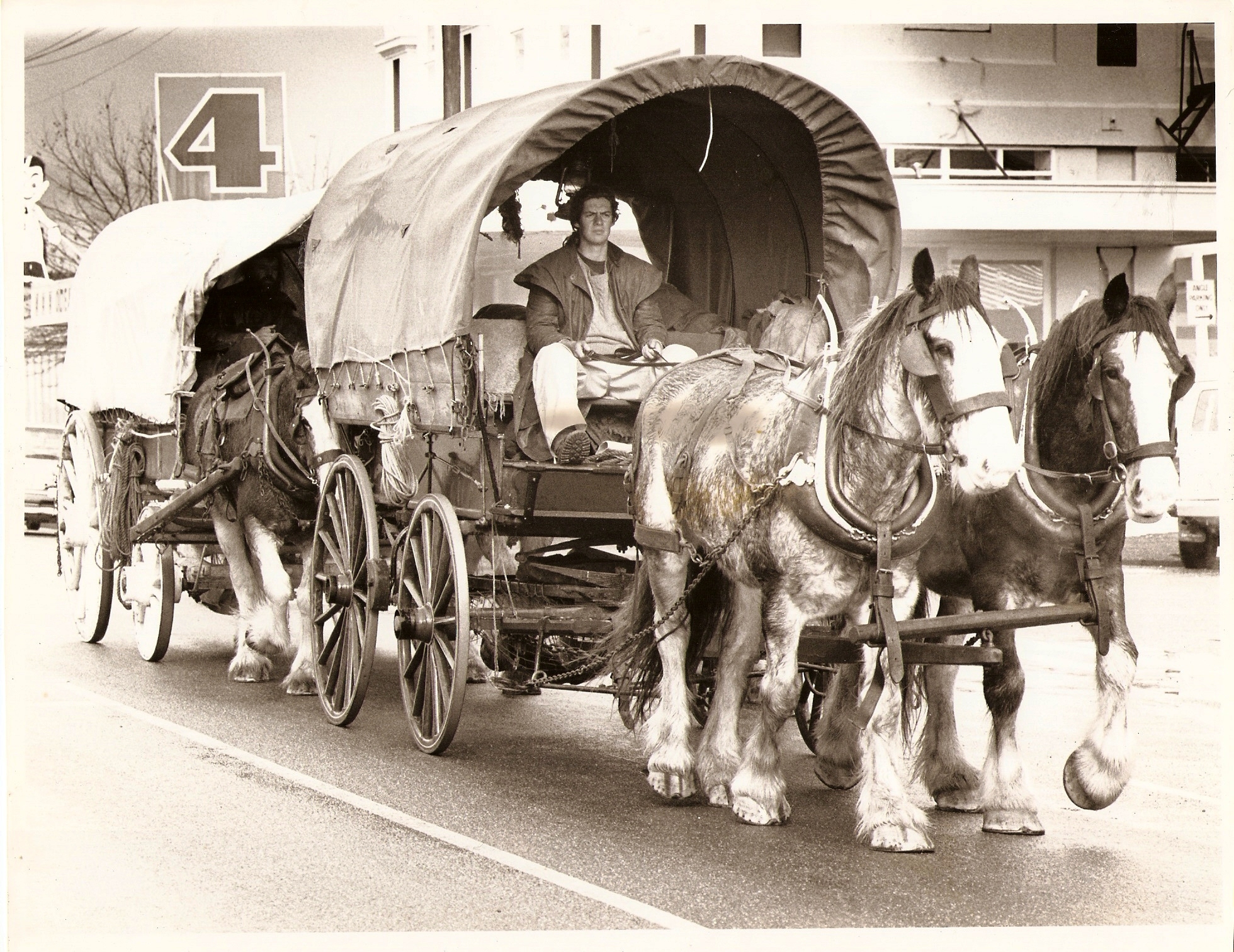
The only other time I baked in a Dutch oven was in New Zealand, 1989, when I was on the road with my old friend Stephen McGrath, his Clydesdale horses and an elaborate caravan of wagons and carts. I made an enormous, heavy-duty loaf in a massive Dutch oven, baking it in the embers of our campfire.

Me driving wagon through Westport, New Zealand, 1989

The logic of baking in a casserole dish is that the cast iron is not only nice and hot – you preheat it – it also traps the moisture of the dough, effectively steaming the bread as it bakes.

Steam is how you get a crisp crust on bread, and can be difficult to create in a domestic oven. Professional baking ovens have steam injectors, but domestic techniques using misting sprays or trays of water are never quite as good. I can’t remember the qualities of my campfire loaf all those years ago (25!!!), but certainly this loaf has a lovely crust – though it wasn’t the crispest I’ve managed over the years in a domestic oven.

It also has a very satisfying shape, and the dish constrains any dough flow if I hadn’t moulded the ball well enough. (I hate it when I make a round free-form loaf, forming the dough into a ball, then it flows out into a discuss shape when it take it out of the proving basket; shaping nice tight balls can be surprisingly tricky.)

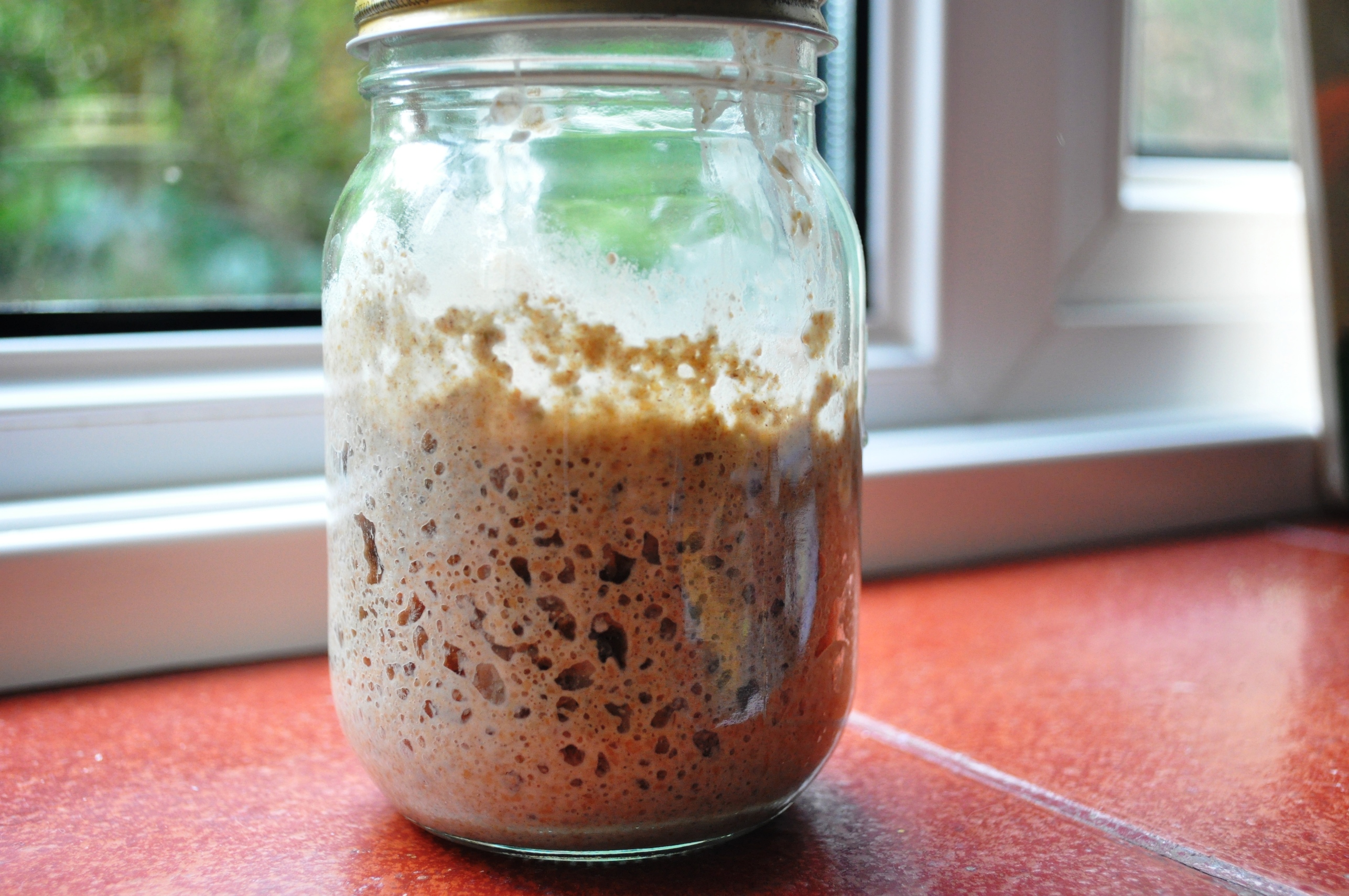
My leaven / sourdough starter, healthy again

Rude health
This loaf is also my first sourdough for a while. Although I’ve been making most of my own bread since we got back to England at Christmas, I’ve been neglecting my leaven somewhat.

Now about five years old, my leaven is well-travelled and much changed. It was born in London, then moved to Sussex, then it moved to Italy with us. There, it was fed on many and varied Italian flours – wheat, rye and various things referred to by the much misunderstood term farro.

Then it moved back to Britain. And I abandoned it for a few months. While we visited friends and family in the US and NZ, the sourdough lodged with my mother. Who’s a great cook, but not a bread-maker – she’s doesn’t make bread with easy yeast, let alone have any experience with sourdough.

So the past few months I’ve been nursing it back to health. I fed it rye, and local stoneground wheat flour, and filtered water. Finally I introduced some other leaven, from third generation baker Michael Hanson of The Hearth in Lewes. This could be seen as cheating, but I see it more like a kind of marriage. The yeasts and bacteria in my (puny) leaven mixing with those in Michael’s leaven. And after weeks of TLC, it’s finally back in rude health.

Mad science
As with much of my bread-making, this is kinda experimental, not a recipe as such.

I made a sponge with:
300g water
80g wholewheat leaven (at 100% hydration)
200g strong white bread flour
All mixed together, and left, covered with a shower cap – another technique I learned from Krumkaker.

I left it all day, for about seven hours, while I went off and worked in The Hearth.

In the evening, I made up a dough, with a further:
100g white bread flour
150g wholemeal wheat flour
10g salt.

I gave it a short knead, formed a ball, then let it rest for about 10 minutes. I then gave it another short knead, another 10 minute rest, and repeated this a few more times. I then left it an hour, at room temp (about 18C). I then gave it a fold then put it back in the bowl, covered it, and left it in the fridge overnight (4C).

Dough

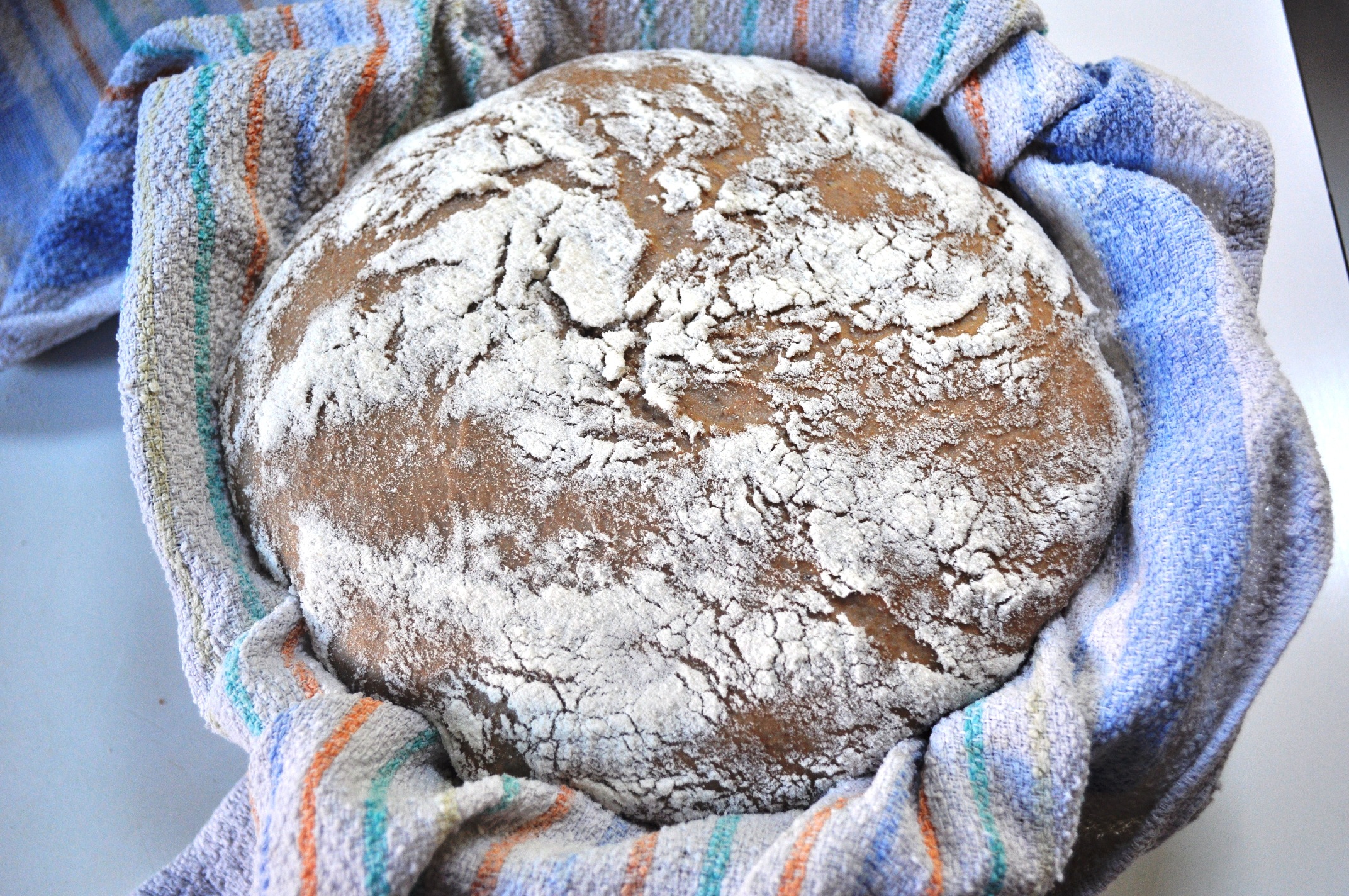
In the morning, I gave it another fold, resting it at room temp for another hour, then formed a ball, rested it 10 minutes, tightened up the ball, then put it in a basked and gave it a final prove in the airing cupboard (about 24C).

Final prove

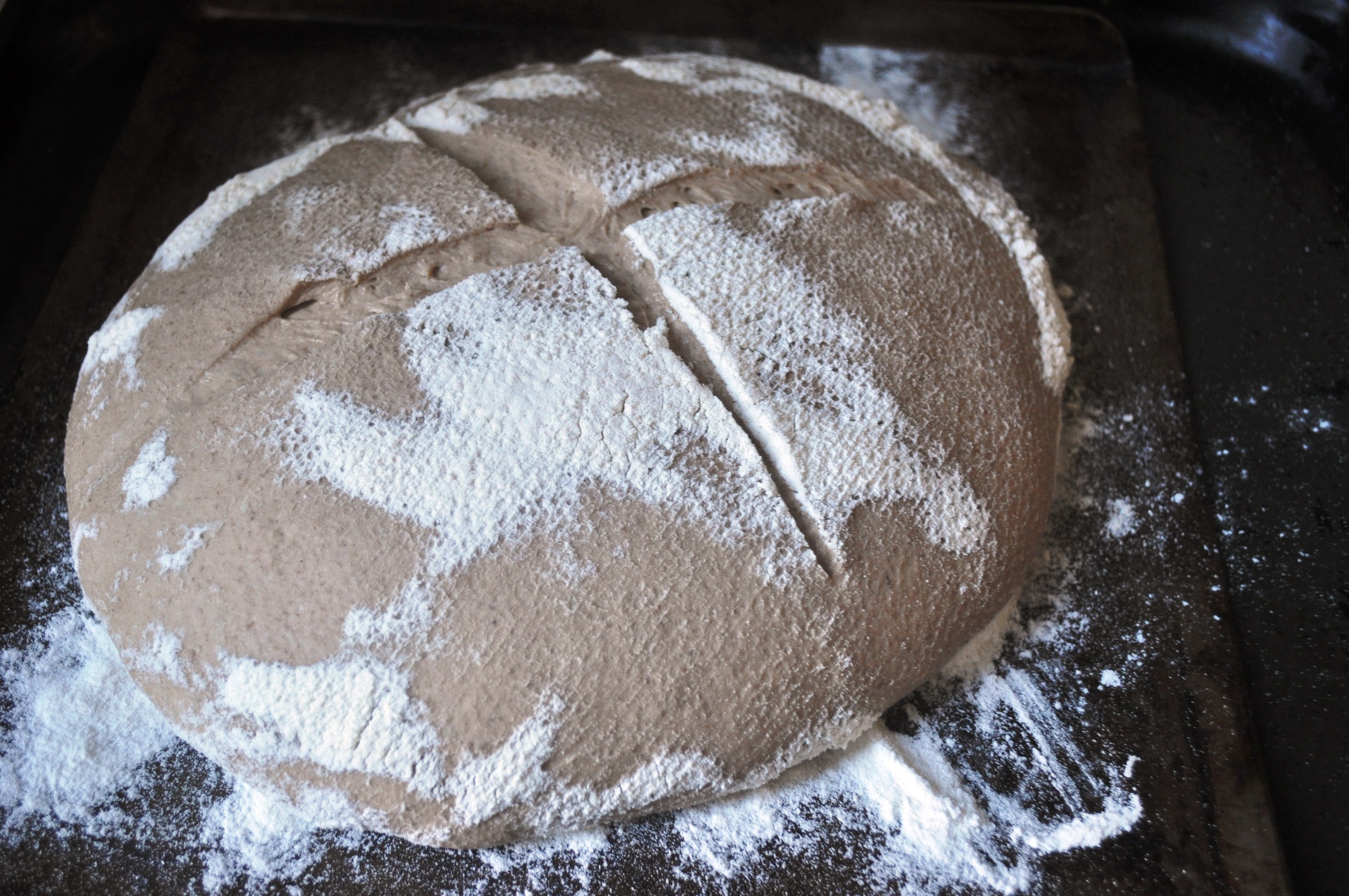
I then preheated the oven to 250C, with the Le Creuset inside. After about 20 minutes, with the oven at heat, I turned the well-floured dough out of the proving basket and dropped it into the hot dish – taking care not to roast my knuckles. I didn’t slash the top –  because I wanted to see how it cracked. Or because I forgot.

Before baking

The lid went back on and I baked it for about 25 minutes at 220C. I then took off the lid, dropped the temperature again to 200C, and baked for another 20 minutes or so.

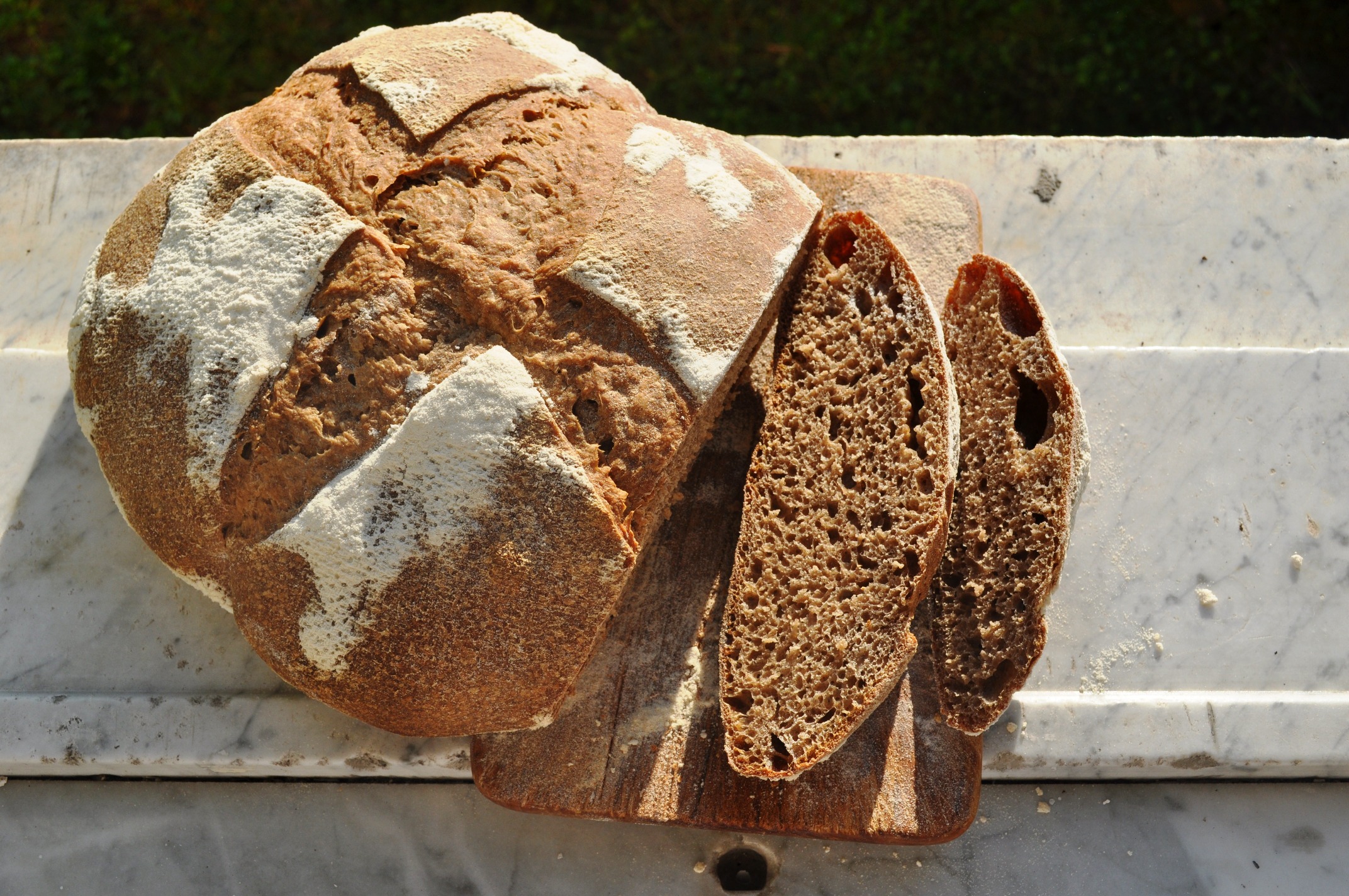
Cut

The results were good. The crust is more chewy than crisp, the crumb soft and moist. We had some for dinner, when I did wood pigeon breasts with a pancetta, thyme and juniper berry red wine sauce. We didn’t eat all the meat, so Fran used the leftovers for a sandwich for work, with a smear of wild garlic sauce. I bet no one else had that posh flavour combo sarnie* for their work lunch today.

Sandwich


* Any US readers, “sarnie” is British English – possibly even English English – slang for sandwich.


27 Comments

Filed under Baking, Breads, Flour & grain, Recipes

Wholesome, wholegrain Magister and einkorn bread

With Sussex Hops

One of the things I enjoyed in my bread-making experiments in Italy was trying different flours, many of them traditional or what’s called “heritage grains”. This is a slightly vague term, muddled up with food fads, but basically it just means grains that are older strains. In the case of wheat*, they can either be alternative varieties to common/bread wheat (Triticum aestivum), or local variables, cultivated over generations to suit a particular terroir.

When I was trying to get my head around the Italian names for grains and flours – particularly the vexed question of what’s meant by “farro” – I wrote a few posts (here and here), where I started learning about some of the different strains and varieties of wheat.

Key heritage wheats that have survived the 20th century’s industrialisation and intensification of agriculture are einkorn, emmer and spelt, or to use their scientific names: Triticum monococcum, Triticum dicoccum and Triticum spelta. As with a lot of taxonomy, things are constantly being revised or bickered about; spelt is interesting, as it’s either Triticum spelta, or classified as Triticum aestivum var spelta, ie a variety of common wheat.

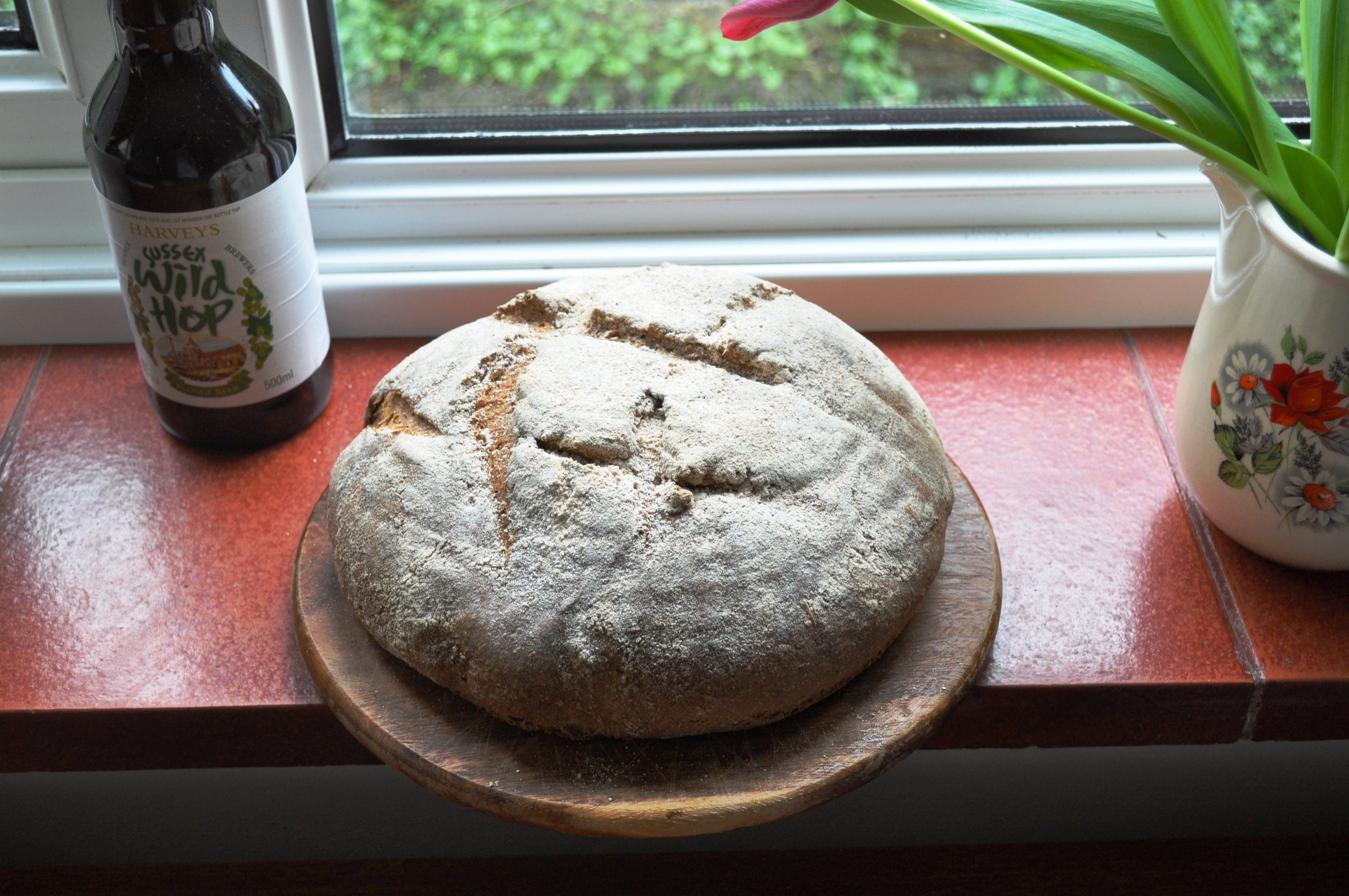
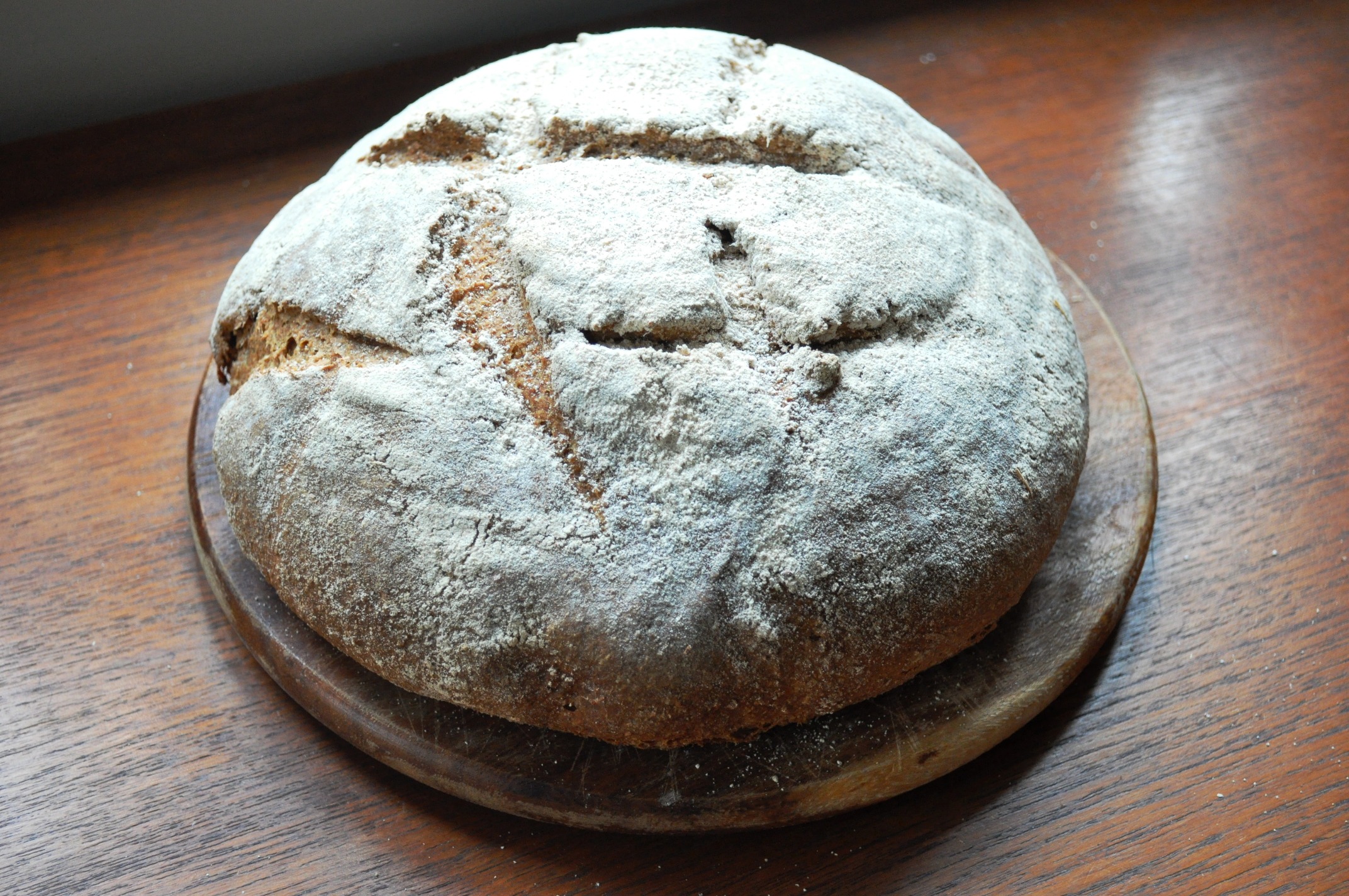
Whole loaf

Olde English
Since coming home to England at Christmas, after our two years in Italy and two months travelling in the US and NZ, it’s taken me a while to get back into the bread-making.

This is partly as we have a rubbish oven, partly as I forgot to pick up my leaven from my mother, who had been looking after it, and partly because Lewes now has a couple of great places to buy real bread these days: Flint Owl and The Hearth, which also has the town’s only proper pizza, made by master baker Michael Hanson and pizzaiolo and in his wood-fired oven.

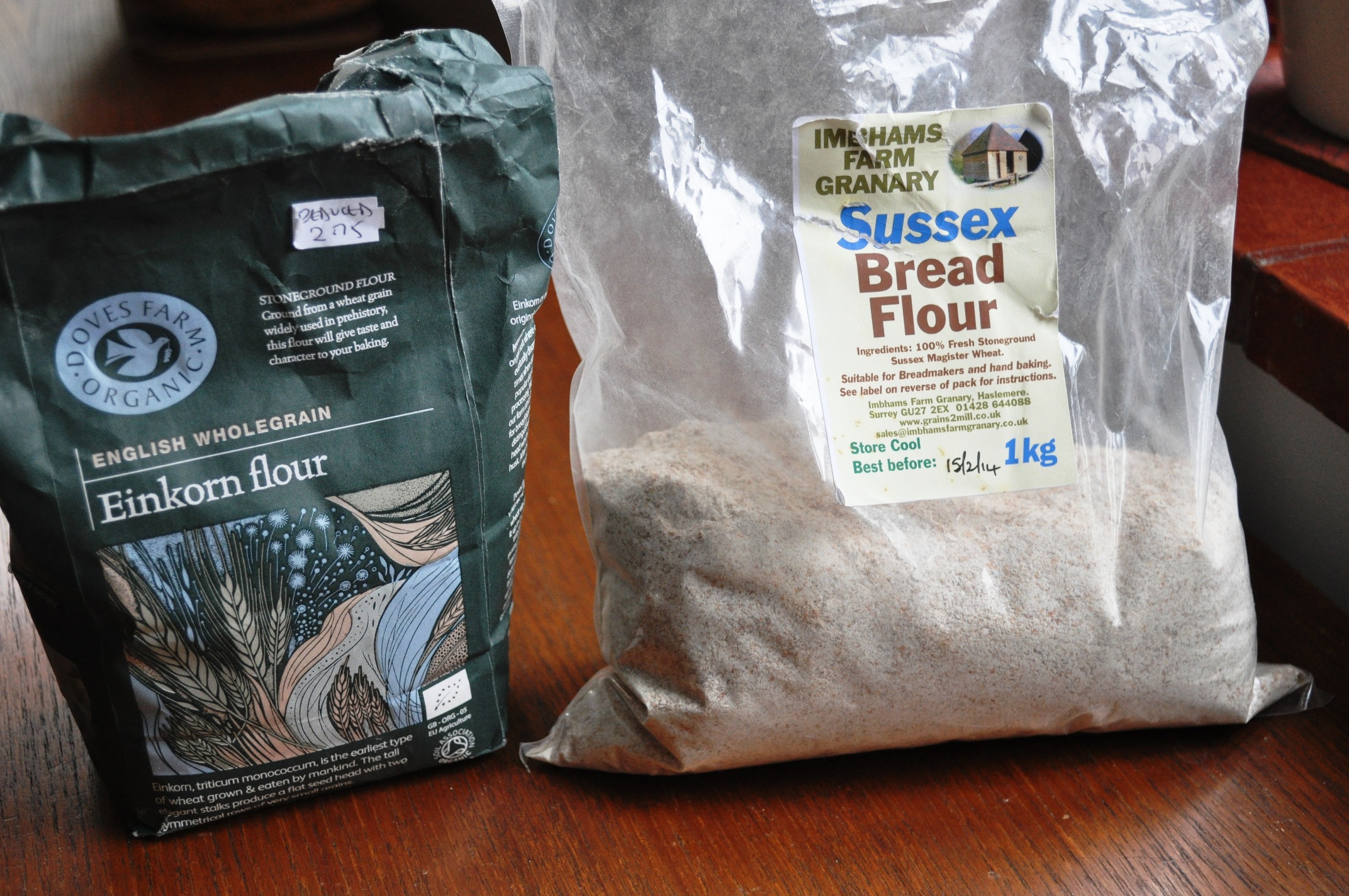
Yesterday, however, I dived back in to the bread-making. I’ve been buying flours, and some of it needed using – particularly the Dove’s Farm wholegrain einkorn I bought that had a “Best before” date of July 2013. Ooops. Best before dates are, as sane people know, just a guideline, but flour does get a bit stale and loses its verve.

Still, at least it’s flour with form. The packet says Dove’s, one of Britain’s bigger organic flour brands, has been growing it on their farm on the Wiltshire/Berkshire border since 2008, and that the einkorn itself “was the original wheat, developed over 20,000 years ago”, and that it’s “the earliest type of wheat grown & eaten by mankind.” As such it can be seen as the crop that symbolises the human transition from wandering hunter-gatherers to settled farmers. You could say it’s the foodstuff that represents the founding of human civilisation, in Eurasia at least.

Einkorn, Sussex

So that had to go in. As did some lovely Sussex Bread Flour from Inbhams Farm Granary. These guys are a small operation, based in Surrey, the county to the north of Sussex. They sell a range of British grains and flours, as well as home milling equipment. Their emphasise the importance of freshness in grain products. Ironic considering the potentially state of the einkorn flour I had.

Still, the Sussex Bread Flour is not only relatively fresh, and thoroughly local, it was also a nice variety – Magister wheat, which Imbhams describe as “an older two row** variety” that “is a strong (high protein) grain”. It’s a winter wheat, and a variety of Triticum aestivum. I asked about the flour, and James Halfhide of Inbham’s explained that “Magister is a modern 21st century grain introduced from Germany and a ‘2 row’ variety – so an ‘older style’ of grain not unlike spelt or naked barley. So you could say it will carry some older characteristics – one we liked was the flavour. More modern breeding has lead to the ‘4 row’ varieties so they look ‘square’ and usually shorter straw stems.”

Between the two flours, both wholemeal, it made for a seriously wholesome dough, with only minimal elasticity. The einkorn has a protein level of 10.6% and while the Magister might be higher protein (around 12.5%), it’s stoneground and very branny. The resulting loaf has a close, slightly crumbly crumb. Very tasty though. And great with my favourite peanut butter brand.

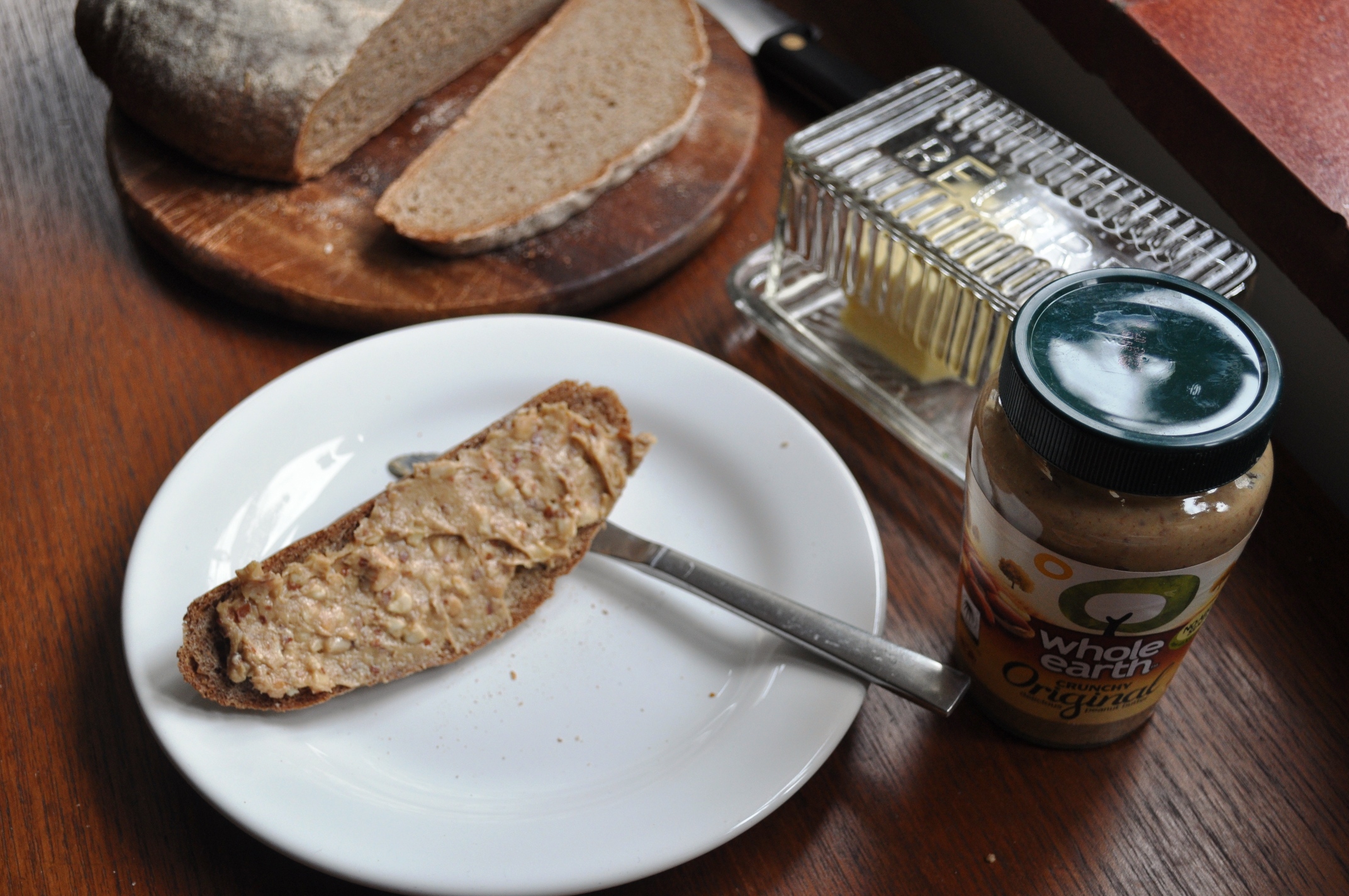
Being back home in southern England, with its ongoing wind-wracked soggy apocalypse, might be miserable in some senses compared to poncing around the NZ summer or living in Roma, but at least I can get my Whole Earth Crunchy Original – a delicious type of peanut butter made with the peanut skin left on and one of the few foodstuffs I was transporting back to Italy after trips to England.

Sorry, it’s just better than any of those US Peanut Butter & Co varieties I’ve tried, despite that brand’s success (and hip excursions into film and TV; I first spotted it on screen a year or so ago in Girls) and even better than Pic’s Really Good, which I enjoyed a lot in NZ, as it’s from Nelson, a town I’ve got a lot of affection for. Those skins in tandem with butter – yes, butter, I like animal fat with my peanut fat – and this wholesome bread made for a cracking elevenses snack on this filthy morning.

Whole Earth

Not really a recipe

For one medium loaf I used:
500g wholegrain einkorn flour
250g Sussex Bread Flour
525g water
12g fine salt
10g fresh yeast

I’m using these same flours to feed up my leaven, but that’s not really ready for baking yet, so fresh yeast it was.

I also used water from our Brita filter. The tap water here in Lewes is pretty hard, and full of god knows what chemicals. I’m not sure the Brita existing makes it as pleasing as water bubbling from the ground in a mountain meadow in spring time, but hey, it’s got to be slightly better.

I just crumbed the yeast into half flour, then added the water and made a sponge. Then I added the salt and the rest of the flour.

I gave the dough a few short kneads over about an hour, then formed a ball.

Then I left in a cold place (about 10C; cold crappy 1950s construction house, basically) for about eight hours.

I gave it a quick shape into a ball, then a final prove in a warm place (about 20C; old-school airing cupboard) for a couple of hours, until it had doubled in size.

Baked at 230C for 20 minutes, then another half an hour at 200C.

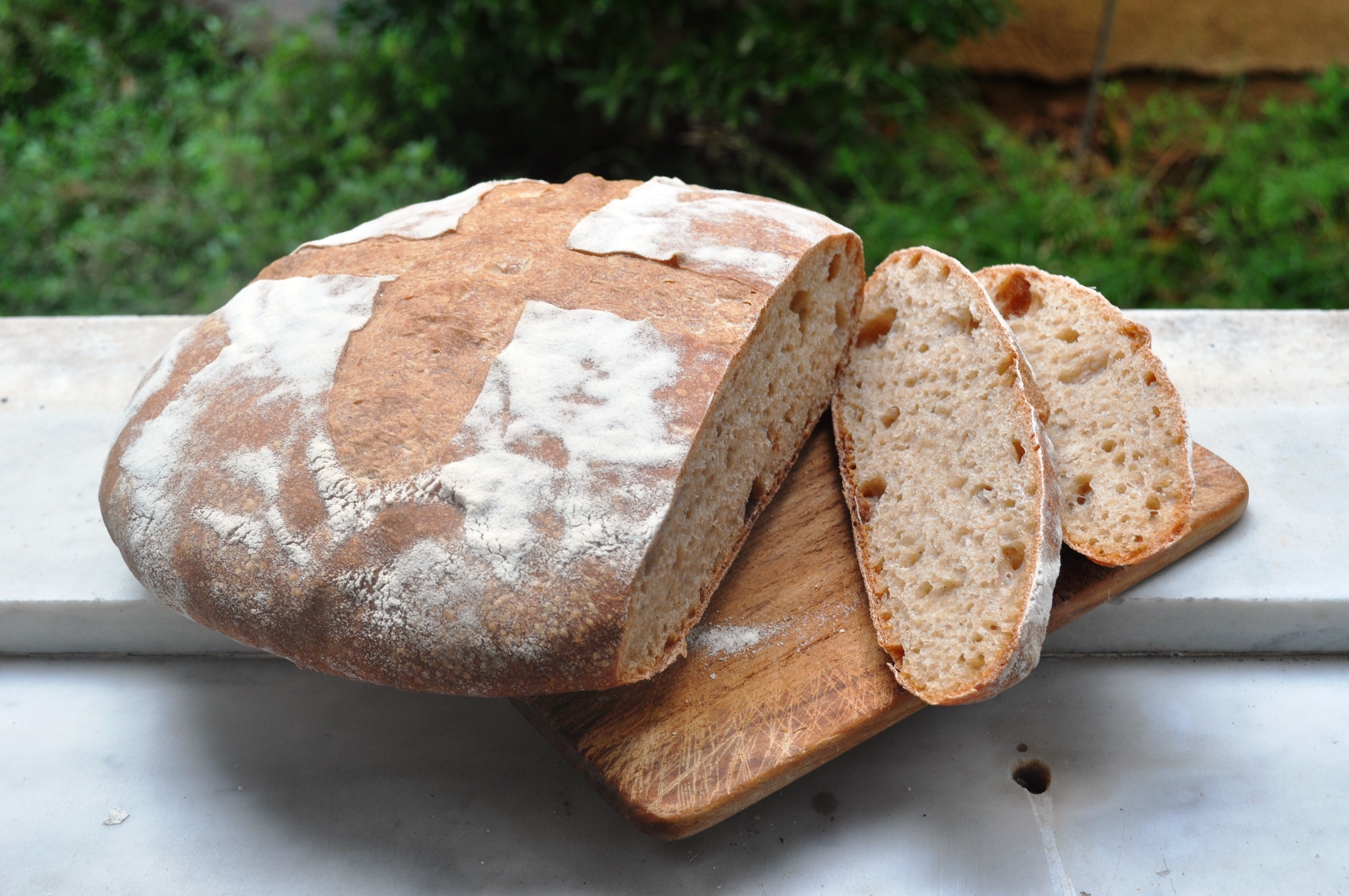
Wholesome, historic and local.

Magister einkorn cut

* “Wheat” isn’t just one member of the grass family (Poaceae or Gramineae), it’s several, including many strains that have had ooh, ten-plus millennia of crossing and selective breeding.
** As I understand it, when talking about grains as 2-row, 4-row, 6-row, it’s a reference to the number of rows of kernels on the ear.

7 Comments

Filed under Baking, Breads, Recipes

Back on the Mainland

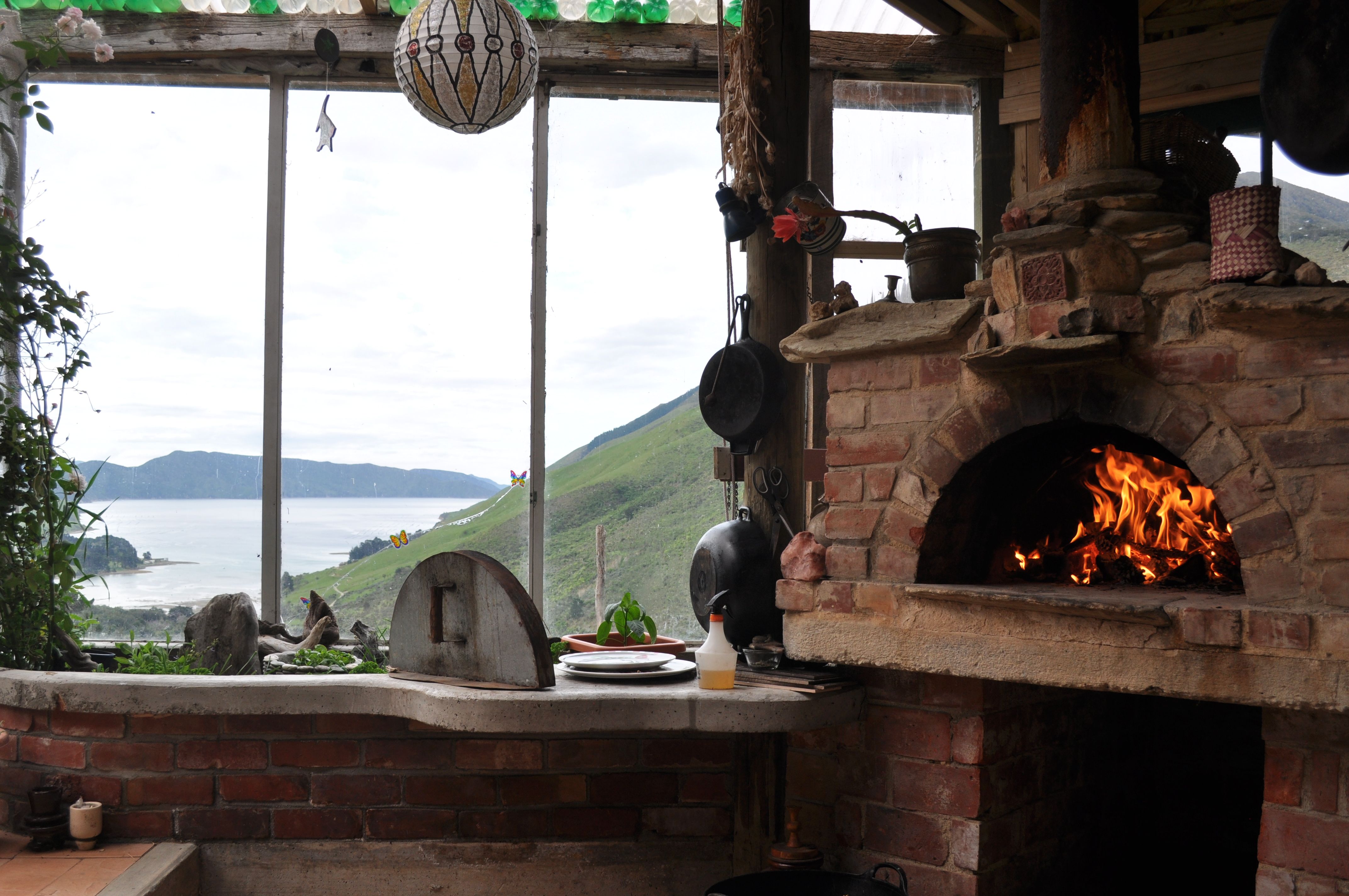
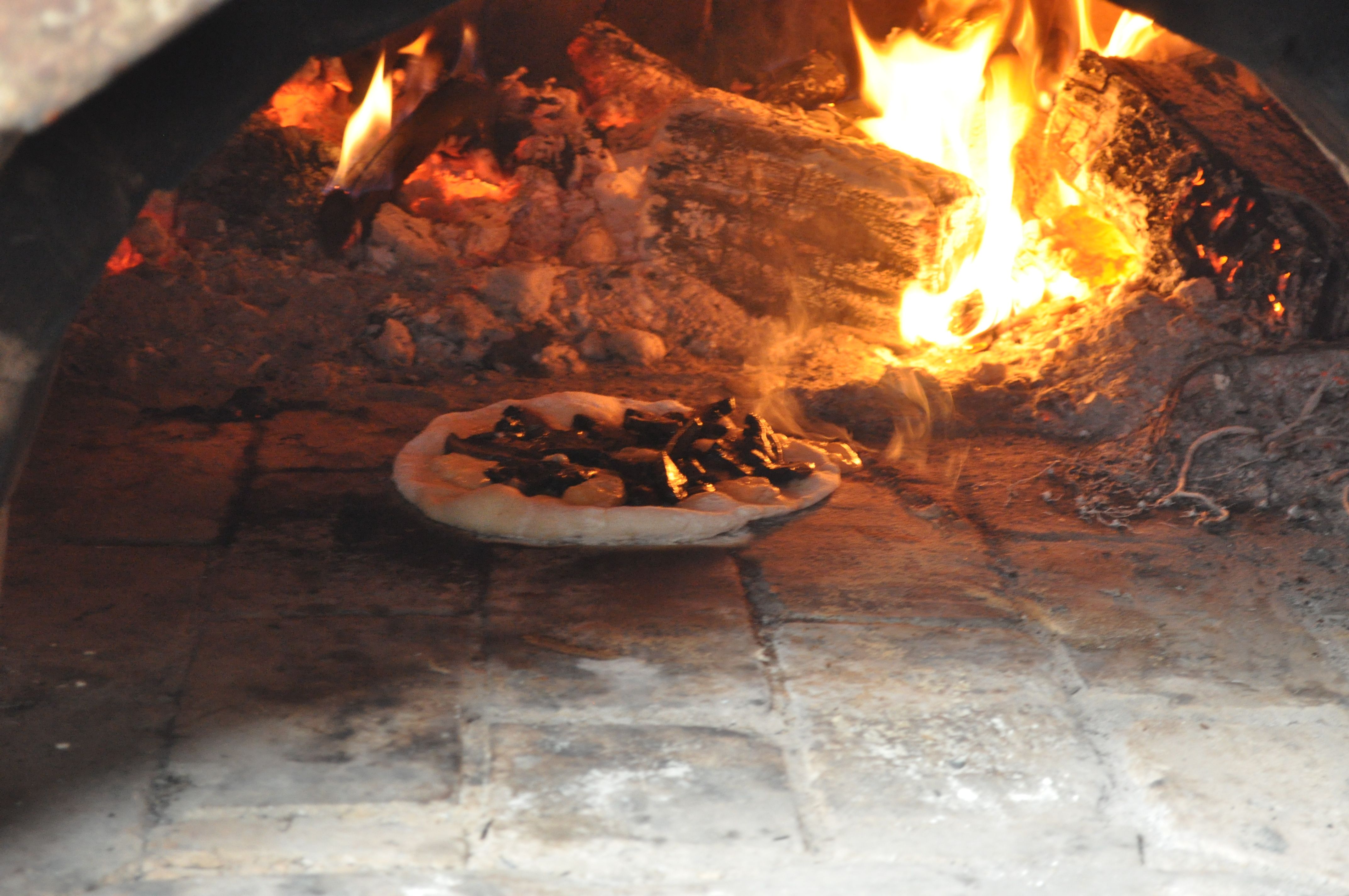
Woodfired oven, Marlborough Sounds

Historically, the South Island of New Zealand has been called the Middle Island (when the southerly Stewart Island was factored in), or more commonly the Mainland (when Christchurch was the country’s main city). I like the latter nomenclature, as the South Island’s always been my main New Zealand destination, my on-and-off home.

It’s also proving to be a place with less-than-modern notions of internet access though. We’ve been down here a while now, and only now am I getting a chance to sit down with some semi-functional WiFi.

When we came over from Wellington a week or so ago, we immediately caught another boat and went deep into the Marlborough Sounds to catch up with my old friend Nadia. She’s living on the side of Mount Stokes, with a woodfired oven and a mighty fine view.

Pizza in oven

She’d made dough, and when we reached her place we had a good session sliding pizza into the oven and chowing down on the results mere minutes later. Gotta love 400-ish-C of woodfired oven.

Nadia cutting pizza

Much of our visit involved working on her precariously tiered hillside garden, and chasing away a weka (a tenacious flightless NZ bird that is the bane of many people who try to have a veg garden in areas with nearby bush), but we did find time to ardently discuss Italian food, cook up some carciofi alla romana (Roman style artichokes), and even attempt a kind of ciabatta. For this, I used the remains of Nadia’s pizza dough as a kind of biga.

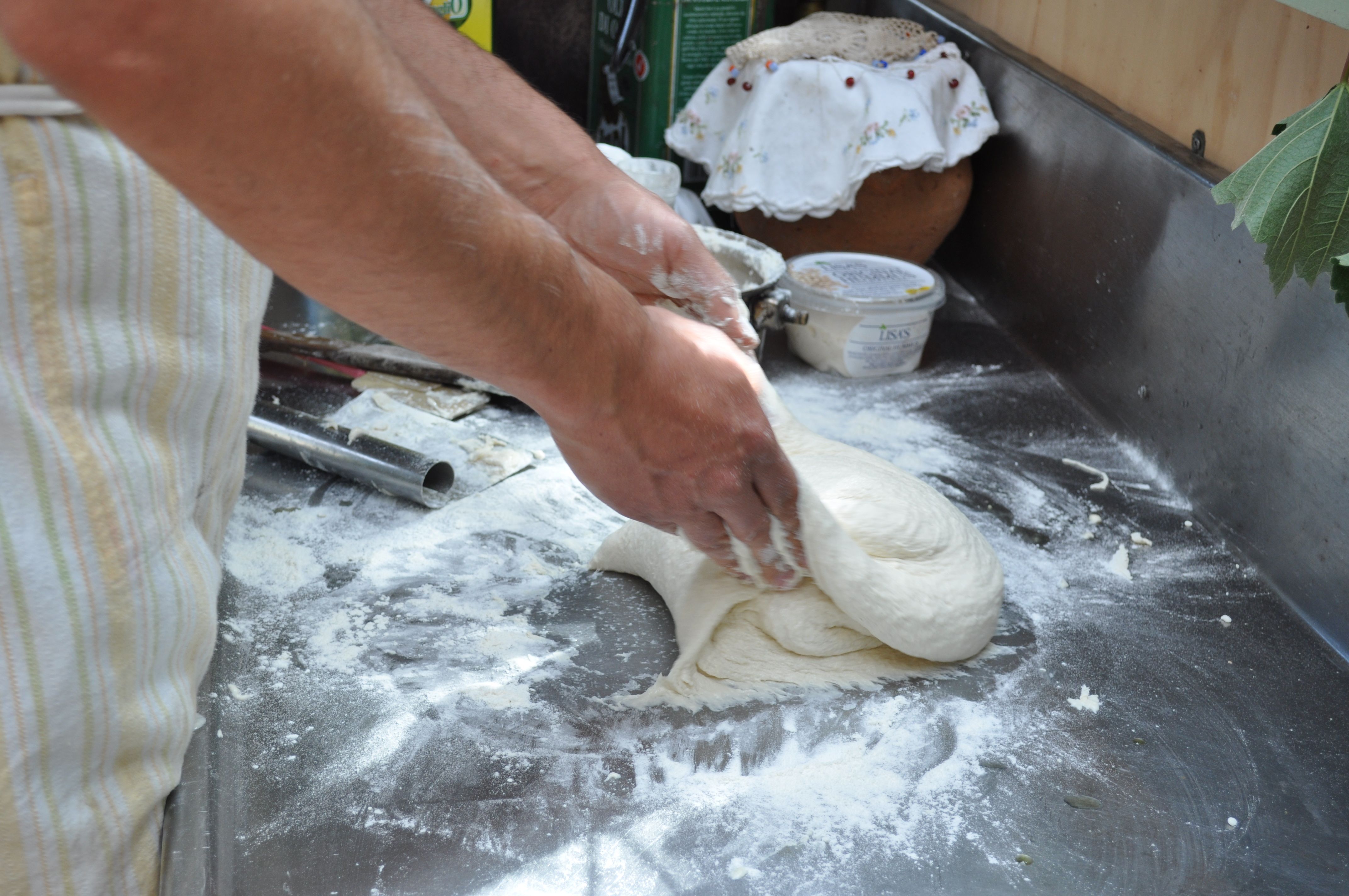
Folding dough for ciabatta

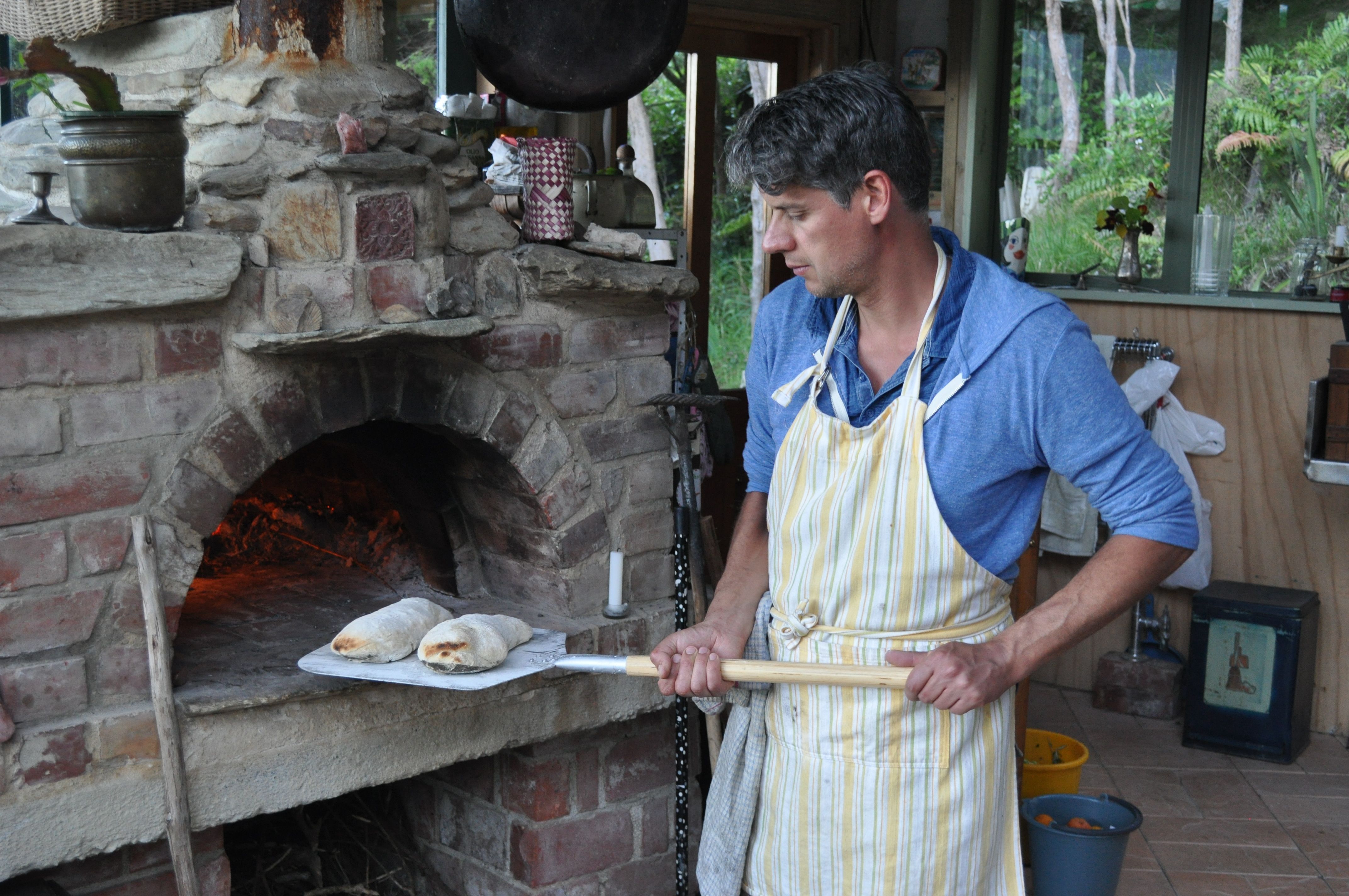
I mixed up a new dough, left it to ferment for a day, then stretched it and slid it into the oven. I hadn’t got the oven quite hot enough (hey, it’s my first time), so the spring wasn’t good, but it was still a pleasing exercise.

Taking out ciabatta

… Other than when I tried to make another variant, it got stuck on the peel, and I ended up losing the loaf to the embers. Hi ho. Live and learn.

Oops

Now we’re heading further south on the Mainland, after visiting another old friend, Susie, in the Buller Gorge, catching up with loads of other young old friends (some of whom I’ve know since their infancy – it’s disconcerting to go away for 10 years and come back and find all these adults).

We even managed to fit in a fairly intense tramp/hike/mountaineering scramble in the mountains of Nelson Lakes National Park. It was a route I’d wanted to do for years, but after weeks of summer, the weather turned back into winter and we found ourselves on a very exposed ridge, all rocks and scree, in thick cloud, horizontal rain and cold winds. Fran, who has a kind of mountain-ridges-vertigo, looked like she was about to file for divorce there and then.

We’re still married though, thankfully, and even survived a seven hour jaunt by car today, the start of a Mainland road trip. Which has even involved some slightly frustrating (I’m always designated driver as Fran doesn’t have a license) visits to several breweries, which I’ll write up at some stage.

3 Comments

Filed under Breads, Pizza

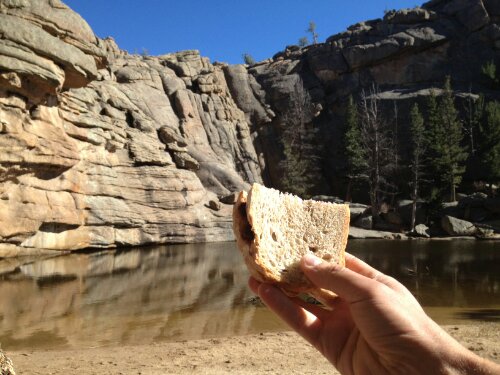
Gem Lake, with sandwich

image

My second loaf of bread in the US. Stood us in good stead for a picnic lunch at Gem Lake, near Estes Park in Rocky Mountain National Park.

1 Comment

Filed under Breads, Travelling

Pizza bianca – the quintessential Roman street food

Pizza bianca, sliced

Pizza bianca is ubiquitous in Rome. Although Romans don’t by and large like eating on the move, chances are you will see people wandering along clutching bready packages and chances are, they’ll be folded pieces of pizza bianca, either plain or filled (farcita).

Pizza bianca – “white pizza” – is effectively plain pizza, simply sprinkled with coarse salt. It can be fairly thin, or it can be fairly puffy – more akin to what we’d called focaccia in the UK. There are fine lines between different types of flat bread, but what we call focaccia (literally “hearth bread”, from the word focus – Latin for hearth) is probably more akin specifically to the focaccia Genovese. Usage of the words “pizza” and “focaccia” vary a lot around Italy; for example, in our local Sardinian restaurant here in Rome, they serve discs of crisp flatbread that they call… focaccia.

This is my second attempt at pizza bianca. I made some in February 2012, but my oven has such fierce bottom heat, I struggled to get the top golden without over-baking the bottom.

Pizza bianca

Plus, well, as pizza bianca can be found in every bakery and pizza takeaway place in Rome, it seemed almost silly to persist in trying to master it. Except recently, when we’d decided to leave, it seemed I really ought to. Then last week I stopped by Rachel’s place while she was making it, and it galvanised me to revisit the document that’s been sitting on the my desktop the past few month called “Pizza bianca recipes”.

The most important factors
Pizza bianca is made with a fairly basic white bread dough, but there are several important things to consider:
You want a a nice moist dough.
You want to give it some folds.
You have to give it time to ferment.
You need to be gentle with it.
And ideally you want decent extensibility, as with any pizza dough.

Mine fell down slightly on the final factor: perhaps an autolyse process at the start would help, but this didn’t seem to be traditional. Or I could have tried to increase the hydration.

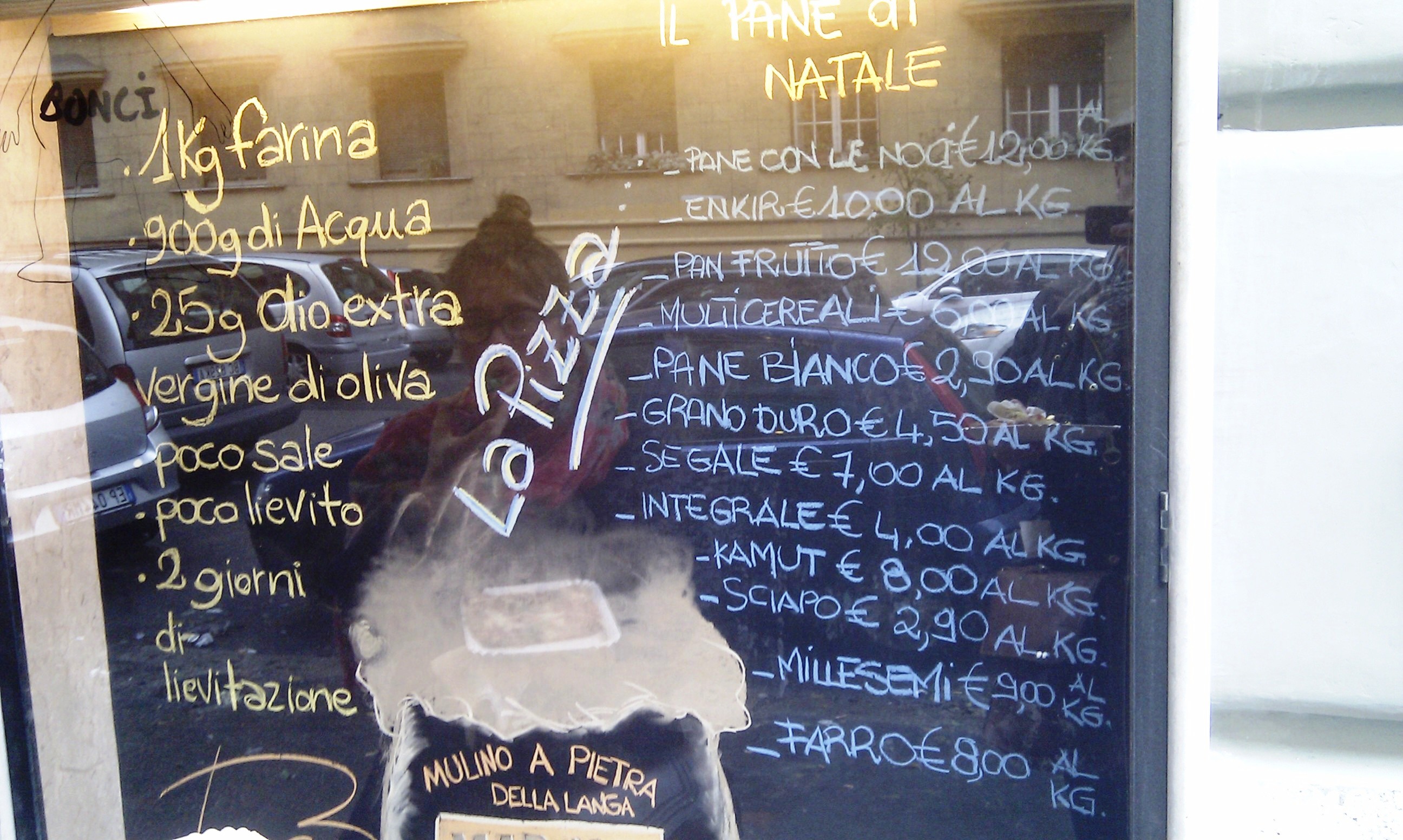
Rachel used the recipe from Gabriele Bonci’s book (so far only available in Italian), which was 70% hydration (ie 700g water to 1kg flour), but last December we saw this recipe in the window of Bonci’s bakery in Prati. Ninety flippin’ percent hydration and two days of leavening. I was just discussing the challenge of high,70%+ hydration ciabatta dough yesterday with Jeremy; that’s tricky enough. I’d love to see Bonci handling his 90% dough.

Recipe in the window of Bonci bakery, Dec 2012

Otherwise my first effort was okay; I would have liked to get a nicer golden colour on top, but couldn’t manage that with my pesky oven…. which will only be my pesky oven for another 10 days, before we leave our home of the last two years and head back to Blighty, then on to a bit of a trip to see friends and family in the US and NZ. So all very bittersweet. Yay to visiting friends and family in the US and NZ, boo to leaving Roma friends and infuriating, wonderful Roma.

Variation and experimentation
As usual with my recipes, I’m experimenting as I go along. You can just make this with commercial yeast, but I did a mixture of fresh yeast and my leaven/sourdough. If you don’t use leaven, increase the yeast to 12g.

A note on the flour too. All the Italian recipes that I’ve seen specify using a grano tenero flour – that is “soft grain”, not a high protein wheat flour. I used Mulino Marino’s organic 0 grano tenero. (00, 0 etc refer to the fineness of the milling; see here for more discussion of Italian flour terminology). This is now available in the UK, but frankly, it’s always better to use local produce as food transportation is a massive contributor to climate change. So see if you can find a medium protein (12-13%) fairly fine flour from your most local mill.

Some recipes also use other ingredients like milk, sugar and even “strutto di maiale” (lard), but at its purest pizza bianca is just flour, water, yeast, salt. And olive oil. But then, what’s any Italian food without some olive oil?* Though the oil here is a classic qb element.

Pizza bianca recipe

The recipe
So here’s my recipe. It makes quite a lot – two fairly large, squarish pizzas – so you’ll need some room in your fridge. Or do half quantities.

The process seems quite convoluted, but mostly it’s about time and gentleness.

1000g flour
700g water
5g fresh yeast (or 3g active dried yeast)
50g white leaven (100% hydration)
20g fine sea salt
30g extra virgin olive oil… or qb.

1. Combine the water, yeast and leaven.
2. Put the flour and salt in a bowl and mix together quickly.
3. Pour the liquid into the flour and mix, along with a sloosh of olive oil. Use your hands or a rubber spatula.

Pizza bianca
4. Turn the rough dough out onto a work surface and knead. Try to stretch the dough and fold it over, to incorporate air.

Pizza bianca recipe, kneading sticky dough
5. It will be sticky. Don’t keep adding more flour. When you’ve got it nicely combined, clean off your hands with some flour, rubbing it between your fingers like soap.

Pizza bianca recipe
6. Put the ball of dough in a bowl, cover with film or a cloth or a shower cap and leave to rest at room temperature.
7. Put a drop of olive oil on the work surface and rub. This won’t stop it sticking, but it can help a little…

Pizza bianca recipe
8. Turn out the dough, and stretch it to form a rough rectangle. Be gentle.

Pizza bianca, folding

9. This next bit is important. It’s called stretching and folding, and it’s a gentle way of redistributing the gases building up in the dough and helping develop the structure, aligning the proteins, while avoiding any of that old-school British violent mistreatment of the dough.

Pizz bianca, folding
10. Once you have a rough rectangle, fold one third inwards, then fold over the opposite end, to form a kind of envelope. A dough scraper, or tarocco (“tarot card”), is essential here.
Pizza bianca recipe

11. Fold this envelope in half again in the centre of the long rectangle, to make a more cube-type shape (sorry, no photo). Put it back in the bowl and cover again.
12. Repeat this process two or three more times at 20 minute intervals.
13. Clean your bowl, or use a fresh container, oil it, then put the dough back. Cover with film or a lid, and put it in the fridge.
14. Leave the dough to quietly, slowly ferment for about 20-24 hours.
15. Remove the dough from the fridge.
16. Depending on how big you want your pizzas to be, divide up the dough. I’ve got an oven sheet that’s 40x40cm (about 16”), so I did divided the dough in two.

Pizza bianca recipe
17. Give the dough another gentle fold, form a loose ball, then leave to rest again, bringing it back to room temperature.
18. Preheat your oven – ideally about 250C, or as hot as it’ll go. Baking any pizza, the hotter the oven, the better. (A good wood-fired oven can top 500C.)

Pizza bianca recipe
19. Take your ball of dough and gently extend it into a square or rectangle to fill your baking sheet or pan. Do this gently, as you want to retain the nice gassy structure. You can either do this on a flour or oiled work surface and transfer it, or it directly on your baking sheet/pan. The more you push your fingers into the dough, the thinner your pizza will be.
20. Drizzle with a bit more olive oil. You can also sprinkle it with coarse sea salt before baking.
21. Then bake for about 12-18 minutes. You want a nice golden finish, something that eludes me…

Pizza bianca
22. Once it’s baked you, drizzle with a bit more oil, so it’ll be absorbed while the pizza is still warm. If you didn’t sprinkle it with salt beforehand, you can do it now instead.

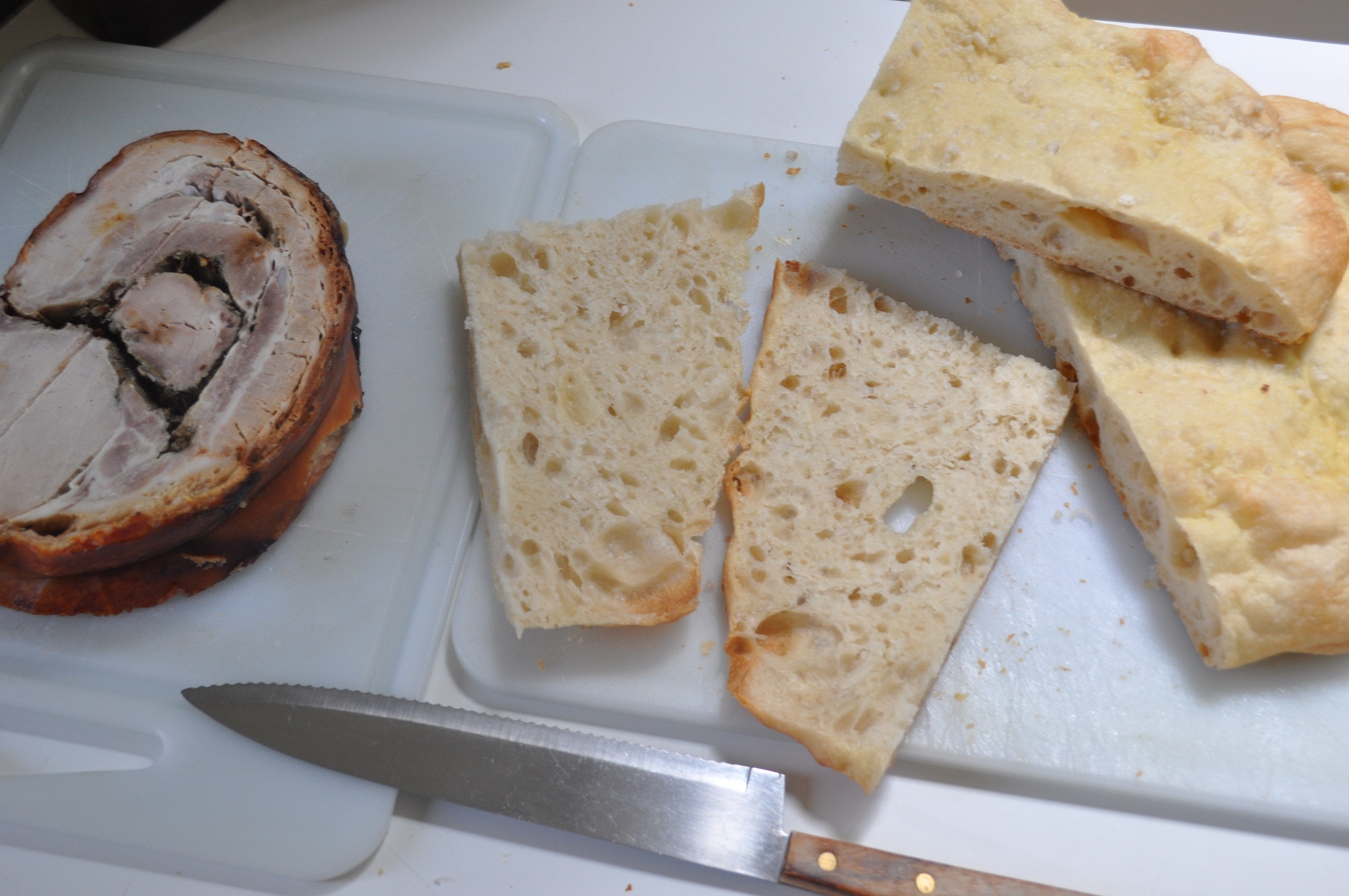
Pizza bianca, and porchetta

The results
The result should be a delicious salty, slightly crunchy bread with an open, irregular structure.

You can vary it by adding olives or rosemary beforehand, but this really is entering focaccia territory, and a true Roman pizza bianca is plain.

We split ours open and filled it with porchetta, a speciality from the Rome area that’s a rolled pork roast with layers of stuffing made with garlic, rosemary and other herbs and has, ideally, some serious crackling to boot.

I’m not a meataholic like Fran,  but this made for a cracking sarnie. We served finger-food sized pieces last night at our farewell-please-take-our-stuff-while-drinking-Italian-craft-beer party. Boy oh boy, what a great selection of beers we had.

Pizza bianca with porchetta

* Of course, this was a flippant comment. Reading about Marcella Hazan, who died 29 Sept 2013, I feel quite dumb to have even made this off-hand comment, as, of course, some things are better fried in butter or types of vegetable oil, even in Italian cuisine. Frying fritti, for example, in extra virgin olive oil would be a total waste, plus, inversely, EV olive oil can be just too strong a taste for more delicate dishes.

18 Comments

Filed under Breads, Pizza

Black beer bread

Black beer bread

Readers of this blog may have already spotted that we’re ‘Game of Thrones’ fans. ‘Game of Thrones’ is not only the name of HBO’s excellent TV series, it’s also the title of the first book in George RR Martin’s A Song of Fire and Ice cycle of books and it made a cameo appearance in this post, where we were lolling around in the park drinking Birra del Borgo’s Rubus, reading and enjoying the sun.

I can’t remember what hyperlinked amble took me there, but Inn At The Crossroads is the officially recognised blog for recipes based on foods found in A Song of Fire and Ice. Being a baker, my attention was immediately grabbed by their bread recipes. Specifically black bread – something that’s mentioned in the books as common fare of the people of Winterfell and the North.

Here is Inn At The Crossroads’ first Black bread, and here is their Black bread redux, aka Black beer bread. I wanted to try something similar, but not using commercial yeast – as this didn’t seem to fit into the whole quasi-Medieval vibe of Martin’s world. Instead, I wanted to use beer barm, a byproduct of fermentation.

My first experiment with a real barm bread was pretty successful, though I didn’t use any actual beer or dark flours to make it, so it wasn’t really a black bread or a black beer bread. This, however, is.

Again, I used Mulino Marino Pan di Sempre, a stoneground organic white flour that is made with a blend of Triticum aestivum (that is, common bread wheat), Triticum spelta (spelt wheat) and Triticum monococcum (einkorn wheat), but I also added some wholewheat flour.

I made a leaven with the same barm as before, feeding it up with flour over a few days, then I made up a dough, using beer as the only other liquid, not water.

Now, I mentioned that Dan Lepard’s ‘The Handmade Loaf’ has a recipe he calls “Barm bread”, though he makes it without actual barm, just beer and a leaven. He also heats the beer, killing the yeasts, but retaining the flavour. I wanted to retain the live yeasts from a bottle-conditioned beer, so didn’t heat it.

Flour, dark ale and barm leaven for my Winterfell black bread

The beer I used was Birrificio Math’s La 27, a 4.8% dark beer from the brewery near Florence. They call it a stout, but stout, traditionally, meant strong, and more recently has come to be associated with more full-bodied creamy porters. It’s neither.

The La 27 has a solid fruity smell: specifically black berries like blackberries (!), elderberries and blackcurrants, with a touch of smokiness and a little chocolate, but taste-wise it’s dull, a little charcoal, but not much more depth of flavour. The body was thin and watery, and over-carbonated. The aftertaste was oddly bitter. It was black though, or black enough for a black beer bread.

So anyway, here’s the recipe. If you try it, don’t be afraid to adjust the quantities, as I was very much experimenting when I made it.

I made my beer barm leaven with barm, flour and some cooking water from farro grain; I’d say it was about 80% hydration, effectively. If you can’t get hold of a beer barm, a normal leaven/sourdough starter will suffice, though it won’t be quite as fun.

For the beer, use a non-pasteurised, non-filtered, bottle-conditioned dark ale, stout or porter (not Guinness).

280g beer barm leaven
400g flour (a mixture of white and wholegrain)
10g salt
250g dark ale, stout or porter

1. Combine the salt and flours.
2. Combine the leaven and beer, stirring well.

Winterfell black bread
3. Pour the liquidy gloop into the flour.
4. Bring together the dough. It’ll be pretty sticky. Which is good, albeit tricky to handle. Don’t agonise.
Winterfell black bread

5. Form a ball with the dough, put it in a bowl or plastic container, cover with plastic or a lid, then put in the fridge.
6. Leave in the fridge for around 14 hours.

Winterfell black bread
7. Take the dough out of the fridge and allow to come to room temperature (around 20C ideally).

Winterfell black bread
8. Form a ball, then put it – smooth-side down – in a bowl or proving basket lined with a floured cloth.

Winterfell black bread
9. Prove again for about 5-8 hours more. This will depend on the temperature of your room, the liveliness of the yeasts, etc. You want to leave it until it’s doubled in size and is soft to the touch, nicely aerated.

Winterfell black bread, final prove
10. Preheat your oven to 240C.
11. Upturn the ball onto a baking sheet (so the smooth-side is up), slash, then bake for 20 minutes.

Black bread
12. Turn down the oven to 200C and bake for a further 20 minutes, or until the bread is done. This can be tricky to judge, but you want it to feel lighter, and sound hollow when tapped on the bottom.
13. Cool on a wire rack.

Black bread

Now, the finished loaf looked rather pleasing, and had a lovely smell of chocolate, a scent that you get with certain stouts. Oddly, this smell wasn’t strong with the beer itself, but it’s come through with the baking.

Winterfell black bread

Taste-wise, it’s certainly pretty rustic but is oddly bitter-sweet. I’m not a chemist, but I wonder if the bitterness is related to the alcohod.

I’m sure it would have served very nicely for the hungry Brothers of the Night’s Watch, freezing their behinds off on the Wall. We, on the other hand, enjoyed it for breakfast on a mild late-summer Roman morning slathered with honey. Then for lunch with a lovely crunchy, sharp medium aged pecorino.

Follow my blog with Bloglovinʼ

3 Comments

Filed under Ale, beer, Breads

Garbatella Farmers’ Market and the new Ponte della Scienza

Ponte della scienza and gasometer, Rome

Rome hosts two large-scale weekend farmers’ markets: one near Circo Massimo (Via di San Teodoro 74) and one that used to be in the Ex-Mattatoio (former slaughterhouse) in Testaccio. In April 2013, however, the latter was relocated further south, away from the centre, to Via Francesco Passino in Garbatella.

We were kinda gutted when this happened, as going to the Ex-Mattatoio market had become a weekend routine. Garbatella, however, is just too far away to be practical when we do everything on foot or by bike. There is still a market and organic shop at the Ex-Mattatoio, with its Città dell’Altra Economia (“Alternative economy city”) so we continued going there, as it’s a great spot. Though it lacks the range now.

This weekend, however, we decided to venture down to Garbatella, to check out the new market and see what baked goods, etc, are available. En route, we wanted to check out the Ponte della Scienza, a new pedestrian and bike bridge that’s been built across the Tiber here. Last time we tried to check it out, it looked finished, but wasn’t open. Now it’s finally open: but it doesn’t really go anywhere or connect to anything.

Ex-industry 2

It took them five years to built it, but, in classic Roman fashion where bickering extremist politicians, corruption, and piss-poor-to-non-existent communication between departments seem to be the norm, there just isn’t any infrastructure on the east side, and there’s very little on the west. There’s no promotion, no information, no signage, and just the usual Roman garbage building up-on the new stairways. Great job, Comune di Roma!

Yet, the bridge is still a great opportunity. You can access it from the foot and bike track along the west bank of the river, and it takes you across to the wonderful old industrial area that includes gasometers, hoppers, water towers and, best of all, Rome’s finest museum. This is the Centrale Montemartini, an annex to the Capitoline museums where ancient statuary is sited among turn of the 19th century turbines and generators in a very handsome art nouveau power station.

Gasometro

We were very bemused when we crossed the bridge, turned right (south) down a promising new stretch of asphalt, thinking it would take us towards the museum, but instead met another cyclist who said “It’s blocked”. So we turned around, went north, and found ourselves leaving the small stretch of new road, cycling through a building site, and emerging onto Via del Porto Fluviale. This is the location of the kinda-cool, kinda hit-and-miss Porto Fluviale, a beer bar and pizzeria that exemplifies the redevelopment going on in this area of Ostiense.

It looks like the Ponte della Scienza work isn’t quite finished yet, but I’m not holding my breath for any rapid progress.

Still, we crossed Via Ostiense, passed Eataly, and headed on into the charismatic Garbatella. This is a very distinctive quartiere, developed in the 1920s and in part inspired the garden city movement: the late 19th century urban planning philosophy based on creating environments that nurtured community through open spaces, greenery and self-sufficiency.

Garbatella Farmers' Market

The farmers’ market is now located in the building previously occupied by the daily market. As well as spending a load on a new bridge that doesn’t go anywhere, Rome’s planners seem to enjoy moving markets around too (cf Testaccio; Piazza Vittorio/Esquilino). It’s a handsome building, though I can’t find any historical info about it. I’d guess it was either 1930s or 1950s, but the interior’s been renovated.

Garbatella Farmers' Market - interior of building Garbatella Farmers' Market - interior of building

Anyway, it’s not a bad site, with each stall having more space. And compared to the Ex-Mattatoio, there are no low-level metal beams or hooks for us tall types to brain ourselves on.

Most importantly, however, it’s packed with good quality, locally produced food. If you’re at all interested in, you know, a viable future for human civilisation, find your local farmers’ market! There you can buy food with a smaller carbon footprint than the contents of your local supermarket, which will mostly have been driven, shipped or flown hundreds or thousands of miles, so every mouthful comes with a climate-change puff of burned hydrocarbons.

Some food then

Pictures of mostly bread, cakes, biscuits. They do sell veg, fruit, dairy products and meat here too, but hey, this is Bread, Cakes and Ale.

Garbatella Farmers' Market

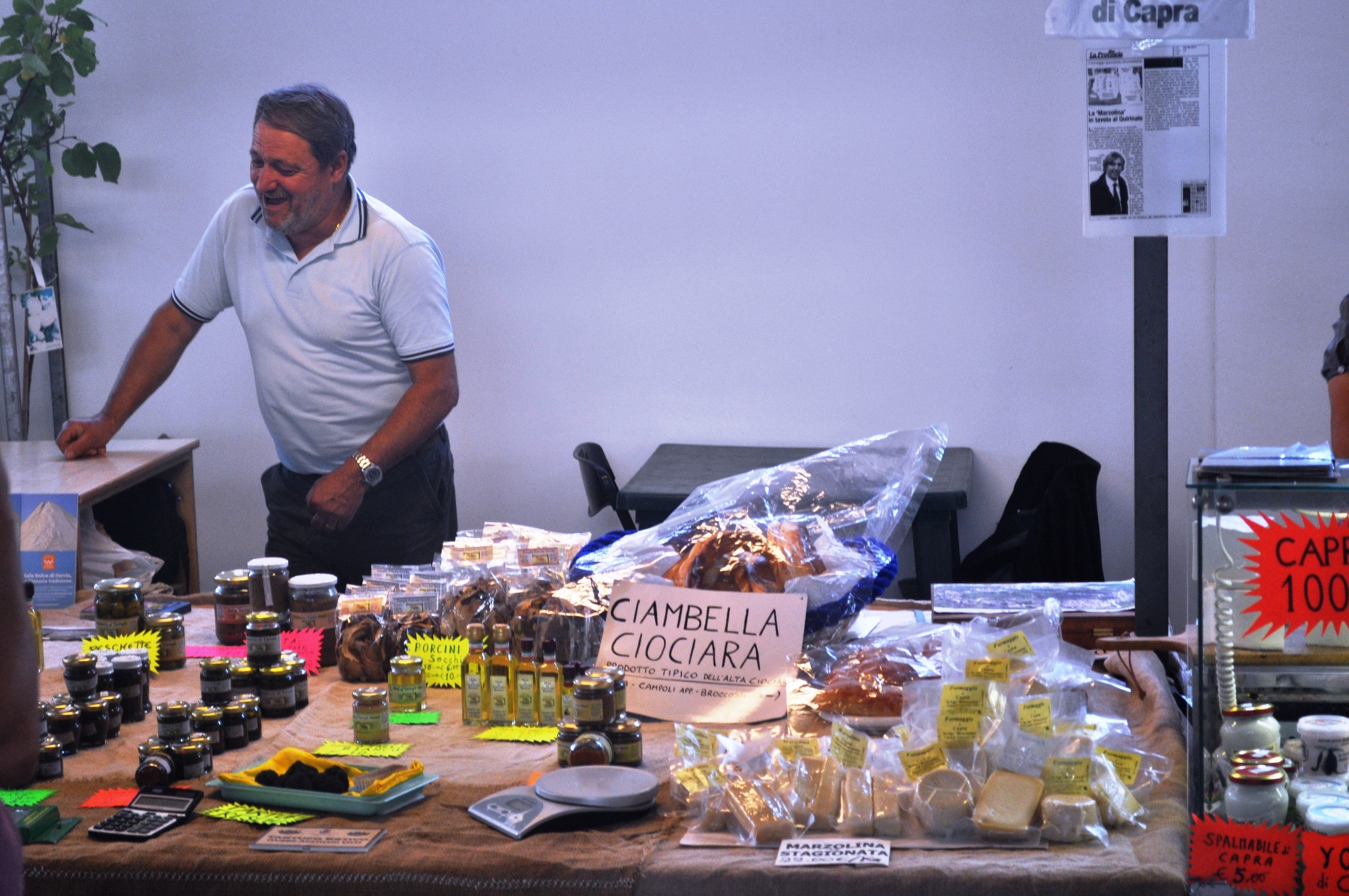
A ciambella is a ring-shaped cake or bun. Ciociara is a region of central Italy. No idea what’s entertaining the geezer though.

Boh

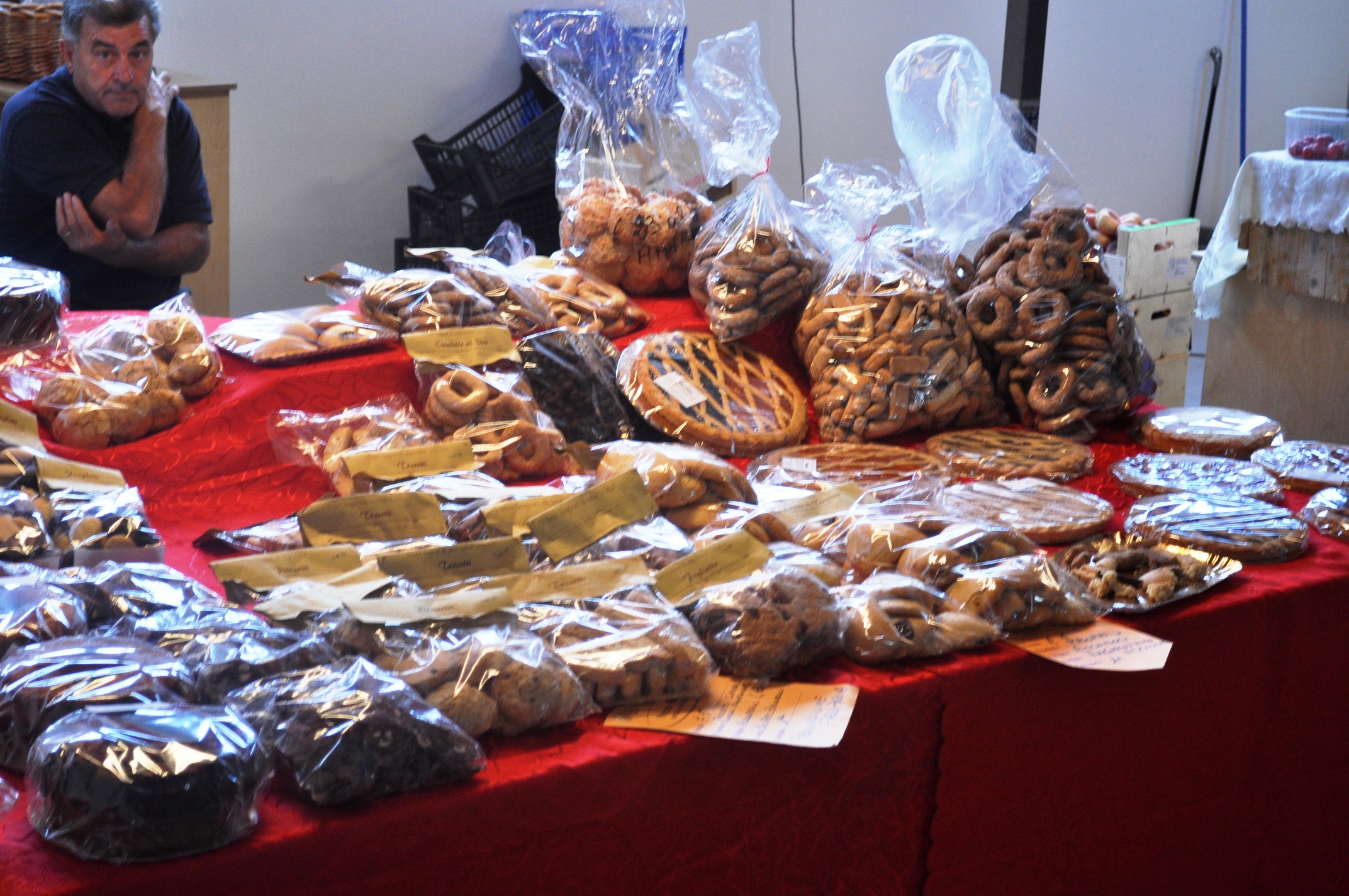
Not such a jolly guy. Selling, among other things, ciambelline – ring-shaped cookies. Bigger than those in my previous recipe.

Garbatella Farmers' Market

Some great looking bread. Love the giant loaf to the right of the insanely cheery looking cartoon chap.

Giant maritozzi at Garbatella Farmers' Market

The biggest maritozzi con la panna I’ve ever seen. These bad boys are least twice the size of the ones you normally see.

Our transportation

Transportation, Brompton folding bikes

Our transportation: the Brompton folding bike, which exerts a fair amount of fascinating in Rome, despite them not being uncommon here.

Info
Garbatella Farmers’ Market, Via Francesco Passino, 00154 Rome
Metro: line B, Garbatella; bus: 673 (Rho)

4 Comments

Filed under Breads, Misc, Other food

Real beer barm bread

Beer barm bread

Once Upon A Time
Once upon a time, breweries and bakeries lived side-by-side harmoniously. Brewers merrily went about their noble work, mashing, sparging, fermenting. One blessed by-product of the process was a foam that frothily formed on top of the fermenting liquor. The dusty baker from next door would welcome consignments of this malty foam – barm – and use its natural yeastiness to leaven his dough.

And so it went for long ages.

Until some learned men in the late 18th and 19th centuries improved humankind’s understanding of bacteria and yeasts. By the late 19th century, yeast specifically cultivated for bread-making had become commercially available in block, then in dry, granulated form. And slowly, sadly, the close bond between breweries and bakeries faded away.

This idea of bread being made with brewery by-products has intrigued me for ages, but not having had a ready supply of barm, I’ve never actually tried it before.

A Dan Lepard beer bread

Beer breads
Dan Lepard in ‘The Handmade Loafʼ does a loaf he calls “Barm bread”, but it’s made using a bottle conditioned beer, that is then heated. This seems counter-intuitive, as it kills the yeasts in the beer, but apparently it’s to cook off some of the alcohol, which retards the action of any yeast in the mix. Lepard was effectively using the beer as a flavouring, and then re-introducing yeasts, I believe; so however lovely the results were, it wasn’t a genuine barm bread. (One of my attempts using his method a few years ago is picture above.)

My recent enjoyment of Game of Thrones and the Song of Fire and Ice novels, the source for his great HBO TV series, lead me to the Inn At The Crossroads. This inspired blog features involves real-world interpretations of the fantasy world foods mentioned by George RR Martin in his books, and it got me thinking again about pre-industrial yeast bread-making.

Westeros’ finest
Specifically, I was checking out The Inn At The Crossroads’ bread recipes. They have a few for Martin’s black bread, with the second version made using dark ale, stout or porter. Okay, thought I, that looks fun. But I had one criticism. Surely in Martin’s quasi-Medieval world, they wouldn’t have had “1 packet yeast”; bread would surely have been made with the barm method.

I made a comment along these lines, and one of the site’s creators, Chelsea Monroe-Cassel replied, saying “I agree that this would be the very best way to make this bread!” She also said, “I’ve made several trub breads, with great success.” I’d not heard of trub bread too, but this one is made using the sediment from the fermenter.

Beer barm

My project slightly moved away from the black bread theme, though, as initially I just wanted to make a bread with barm, and with flour with older grain – ie arguably more medieval – varieties.

I bought some Mulino Marino Pan di Sempre, a stoneground organic flour that is made with a blend of Triticum aestivum (that is, common bread wheat), Triticum spelta (spelt wheat) and Triticum monococcum (einkorn wheat).

My friend Michele Sensidoni, a brewer, kindly furnished me with a bottle of barm. It wasn’t very prepossessing stuff: gloopy, brown and malty, separating slightly, but it was exciting to finally get my hands on the stuff.

Beer barm and Mulino Marino Pan di Sempre flour

So:
100g barm
100g flour
Mixed and left overnight. My kitchen was at around 23C. The next day this was clearly alive, and reasonably vigorous. Here’s the before and after shots:

Beer barm leaven Beer barm leaven

I formed a dough with:
200g barm leaven (ie, all of the above)
500g flour
10g salt
300g water

Adjust the water if necessary; you want a nice moist dough.

Beer barm bread, dough

I then put all this in a container and left it in the fridge for 24 hours.

I then took it out of the fridge, and let it come back to RT (again, around 23C).

Beer barm bread dough, before final prove

After a few hours, I formed a ball, and put it in a proving basket lined with a floured cloth.

I let it prove again at RT for around 9 hours.

Beer barm bread dough, proved

I preheated the oven to 230C.

Beer barm bread, pre-bake

When the dough was nice and swollen and soft, I baked it for 20 minutes, then turned down the oven to 210C and baked for another 20 minutes.

Beer barm bread, fresh from oven

The results are very pleasing. It’s got a chewy crust, a reasonably open crumb and a taste that’s subtly sour. Yay.

Crumb CU

Oh, and for etymology geeks (like me), the British English word barmy, meaning a bit bonkers, crazy, comes from barm. As a barm is the foamy scum that results from fermentation, someone who is barmy is a bit bubbly, excitable, unpredictable and possibly even frothing at the mouth. Don’t worry though, making and eating this bread won’t have that effect on you. [insert suitable smiley here to compensate for lame attempt at humour]

29 Comments

Filed under Ale, beer, Breads, Recipes

The Baule: an Italian loaf shape, apparently

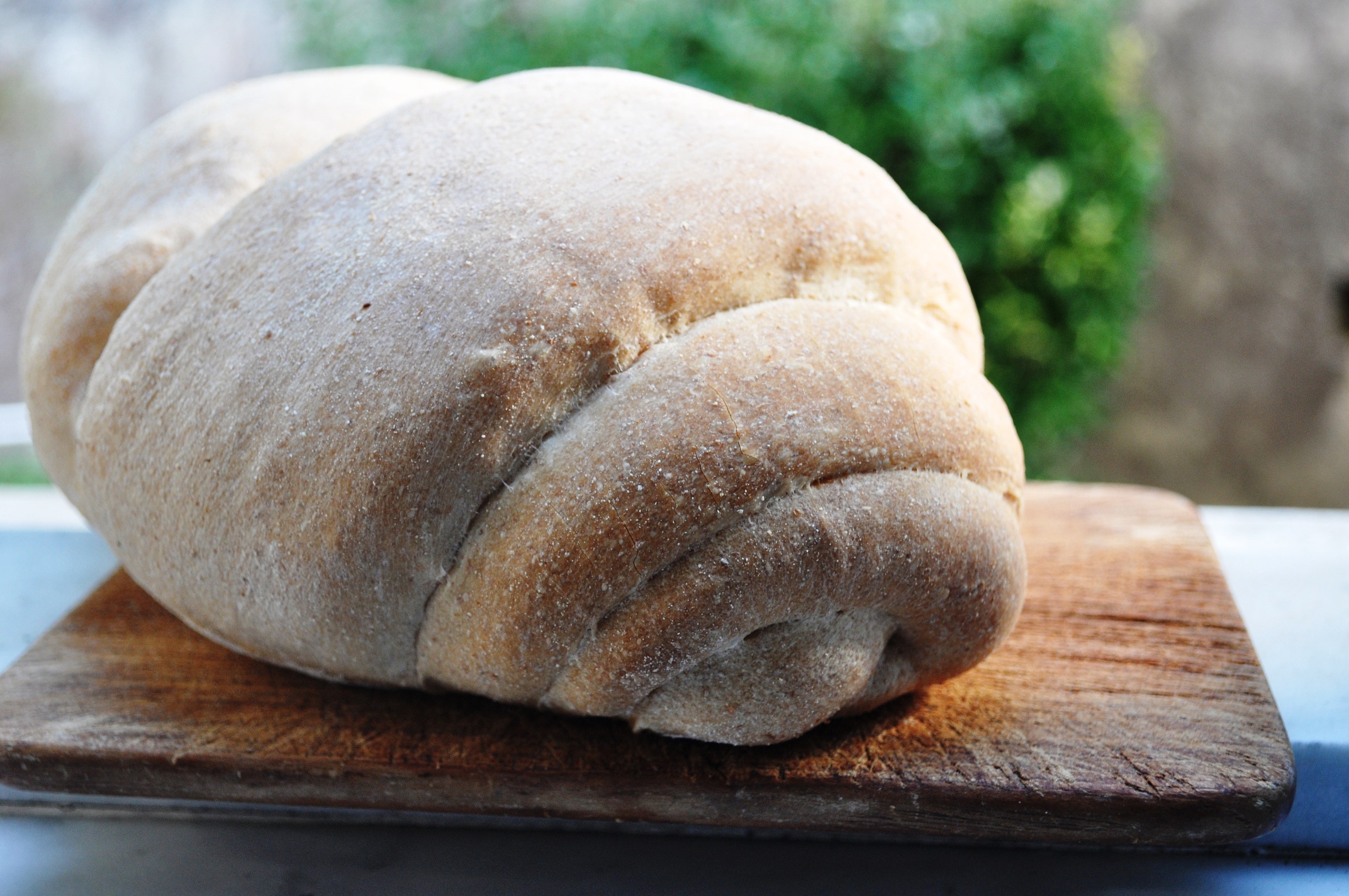
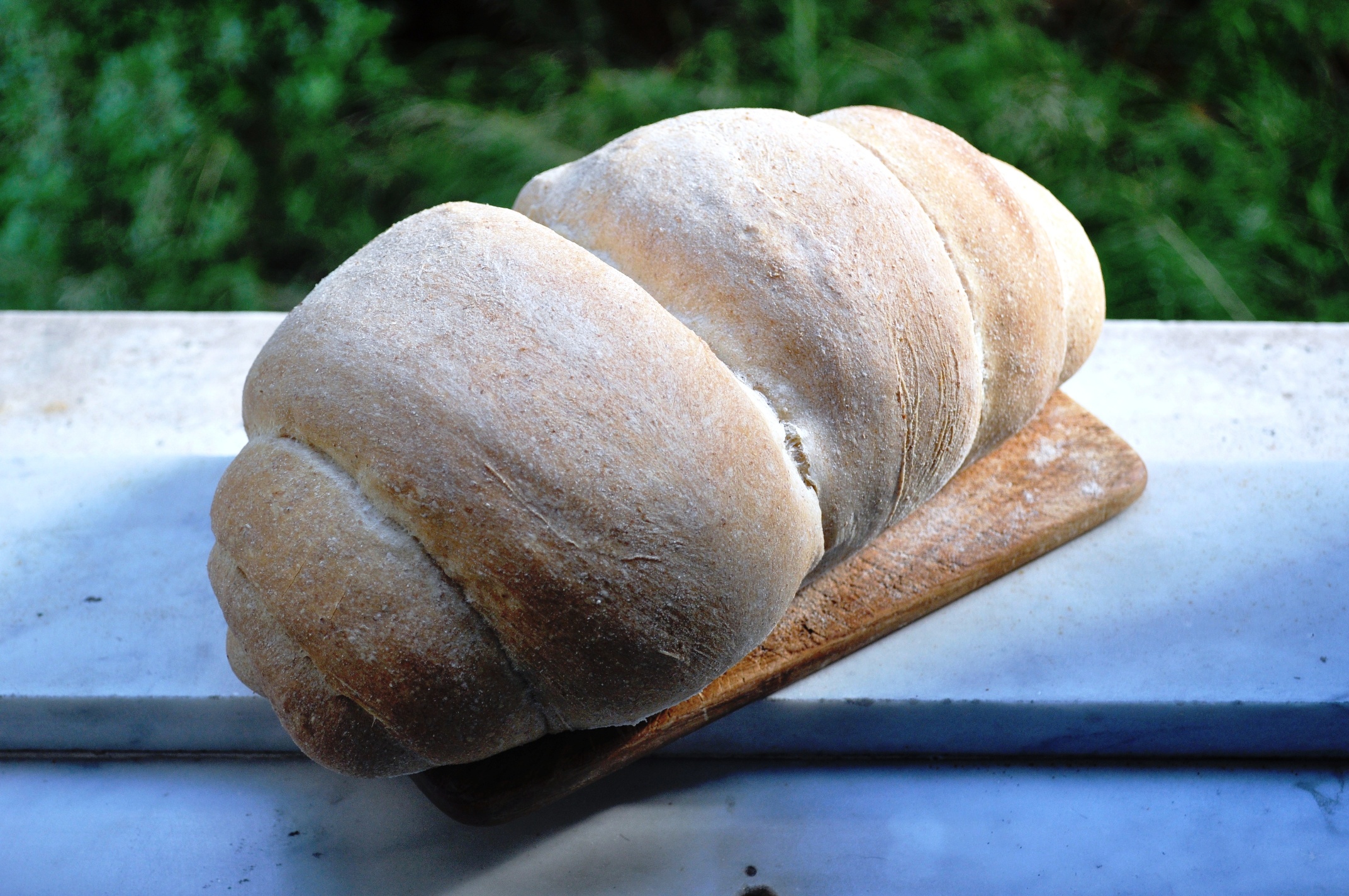
Baule bread loaf

Much of the time I’ve been in Italy, I’ve been looking for the definitive book on Italian bread and baking. Every time I visit Eataly or larger book shops, I pick up and put back down sundry tomes. It’s baffling though: many are rudimentary and some of them are even written and published in English and translated into Italian. The book I’m looking for may exist, but I haven’t found it yet.

I’ve not seen the revised edition of (American) Carol Field’s ‘The Italian Baker’ yet, though from my memories of the original, that’s not the definitive book either*.

If I lived in Italy for 20 more years, and worked in Italian bakeries, maybe I could write it… but that ain’t looking likely at the moment.

So in the meantime, I pick up the occasional book to tide me over. The latest one I bought is the Slow Food Editore (the movement’s own imprint) ‘Pane, pizze e focacce’ – “Breads, pizzas and flatbreads” if you want a semi-bodged, largely gratuitous translation.

This isn’t a classic book by any means, but it does have some good stuff about types of lievito madre (“mother leaven”, ie natural leaven or sourdough starter), about grains and ingredients, and about various forms and shapes of breads. Some of the latter – with names like montasù and mafalda – struck my eye.

So that’s been my starting point with this book: trying some new shapes.

Baule

This is about something the book calls a baule. The word means “chest”, “trunk” or “boot” (as in storage area of a car) but I can’t find other evidence on t’interweb for this style of loaf, with this name. I’ve said before, though, much of Italy’s food tradition probably doesn’t exist in digital form yet.

Confusingly, a bauletto (“little chest”) is a term that does seem to be used for this shape of loaf, from Ferrara in Emilia-Romagna, but name is also more commonly used to refer to a white tin loaf, often sliced.

I’ll just have to give ‘Pane, pizze e foccacce’ authors Davide Longoni and Marcella Cigognetti the benefit of the dough…t (hm, that doesn’t quite work does it?) about baule.

This isn’t a recipe, it’s just a record of trying a new shape. For the dough I just used the classic 10g fresh yeast, 10g salt, 350g water, 500g flour, with a mix of strong white and wholegrain.

So basically, you make your dough, and give it a first prove.

Then you deflate it slightly, form a ball and give it a rest.

Shaping ball

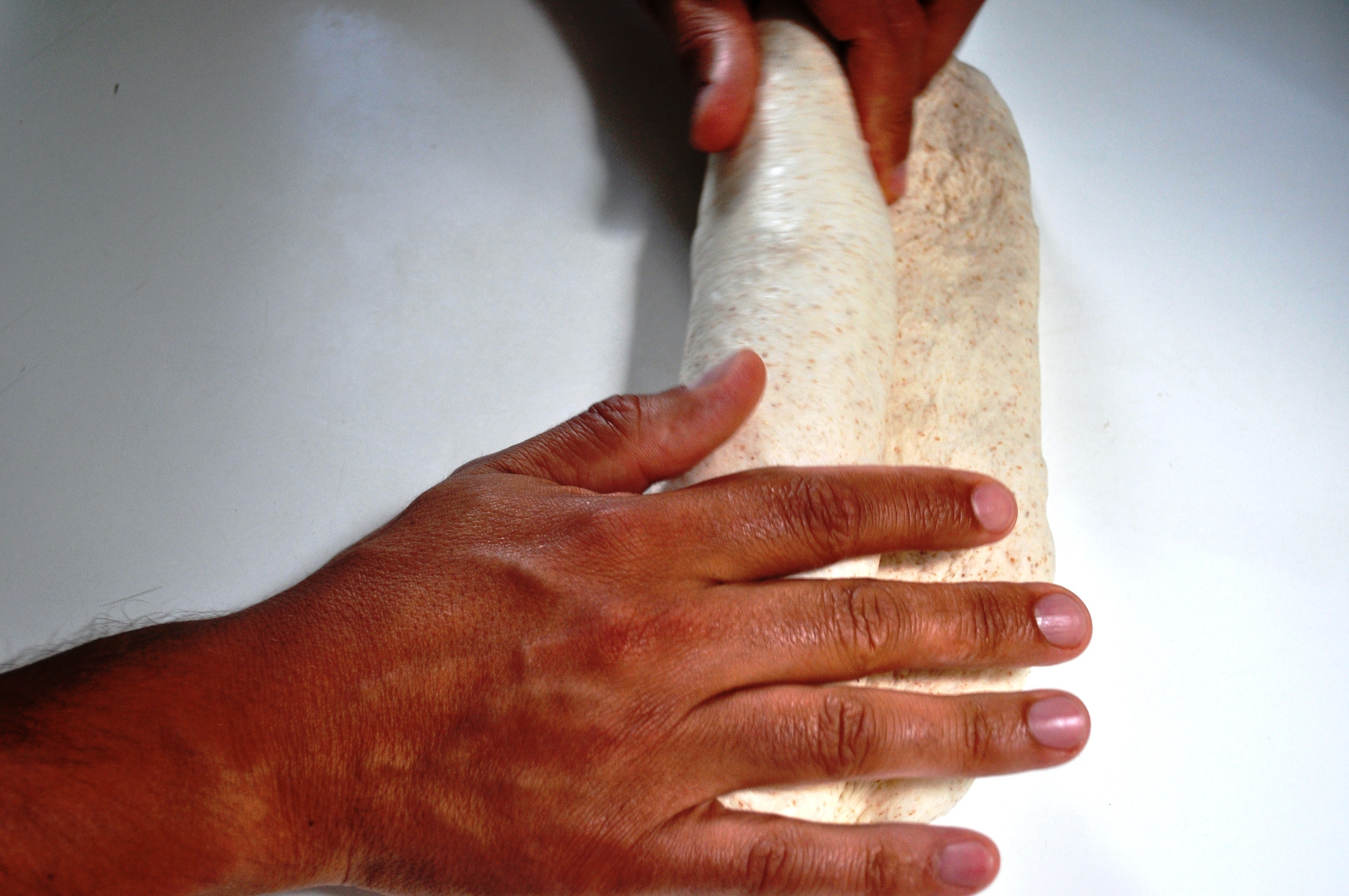
Then you stretch out that ball to form a rectangle, which you roll up tightly to form a cylinder or sausage shape.

Rolling up

Roll and stretch this sausage to elongate it.

Elongating the sausage

Once you have a nice long sausage, flatten it with a rolling pin.

Flattening the sausage

Once you have a nice long flat rectangle, roll this up, keeping it as tight as possible.

Rolling up the flattened sausage

You’ll get a nice sort of baton shape.

Rolled up

I love the spiral ends.

Rolled, spiral end

You then get a knife. The book says use the blunt edge, so you could also use a pastry scraper. Make a deep cut into – but not all the way through – the baton.

Cutting the form

Move this to a baking sheet.

Pre-final prove

Cover with a cloth, then leave to prove again, until it’s doubled in size.

After final prove

Bake. I did my usual time and temp for a loaf this size – 20 minutes at 220C, 20 minutes at 200C.

When baked, remove and cool on a wire rack.

Fresh from oven

It looks rather nice, and you can tear it down the centre to share during a meal.

Tearing baule in half

But I’d still love to see one of these things in a real Italian bakery. If anyone has every encountered this shape of loaf in Italy, please do let me know! I’m intrigued.


* I did originally include links to Amazon here, but this excellent piece by Russell Brand reminded me they’re still corporate tax-dodgers with  questionably “cosy relationships with members of our government”.


3 Comments

Filed under Breads