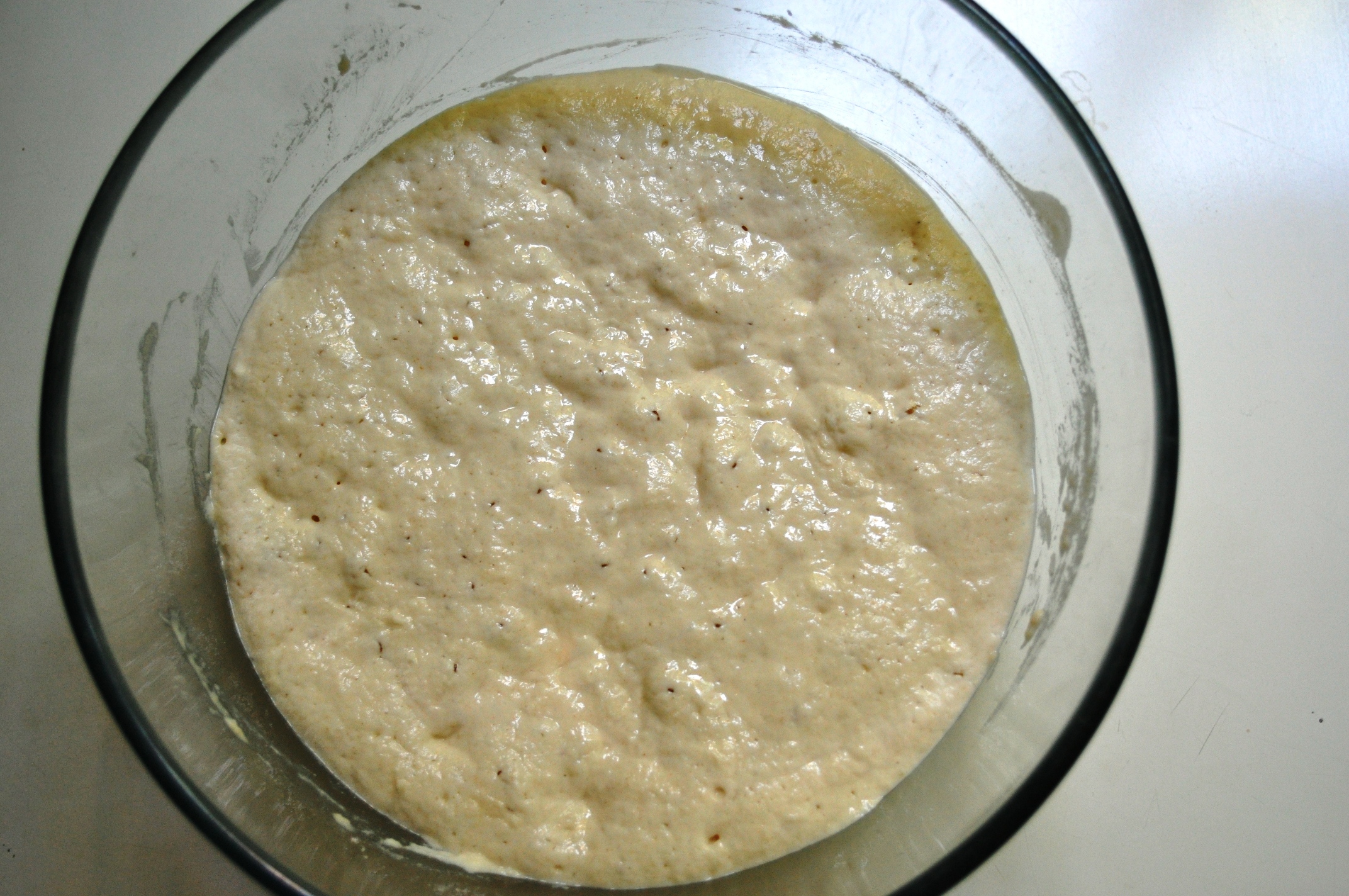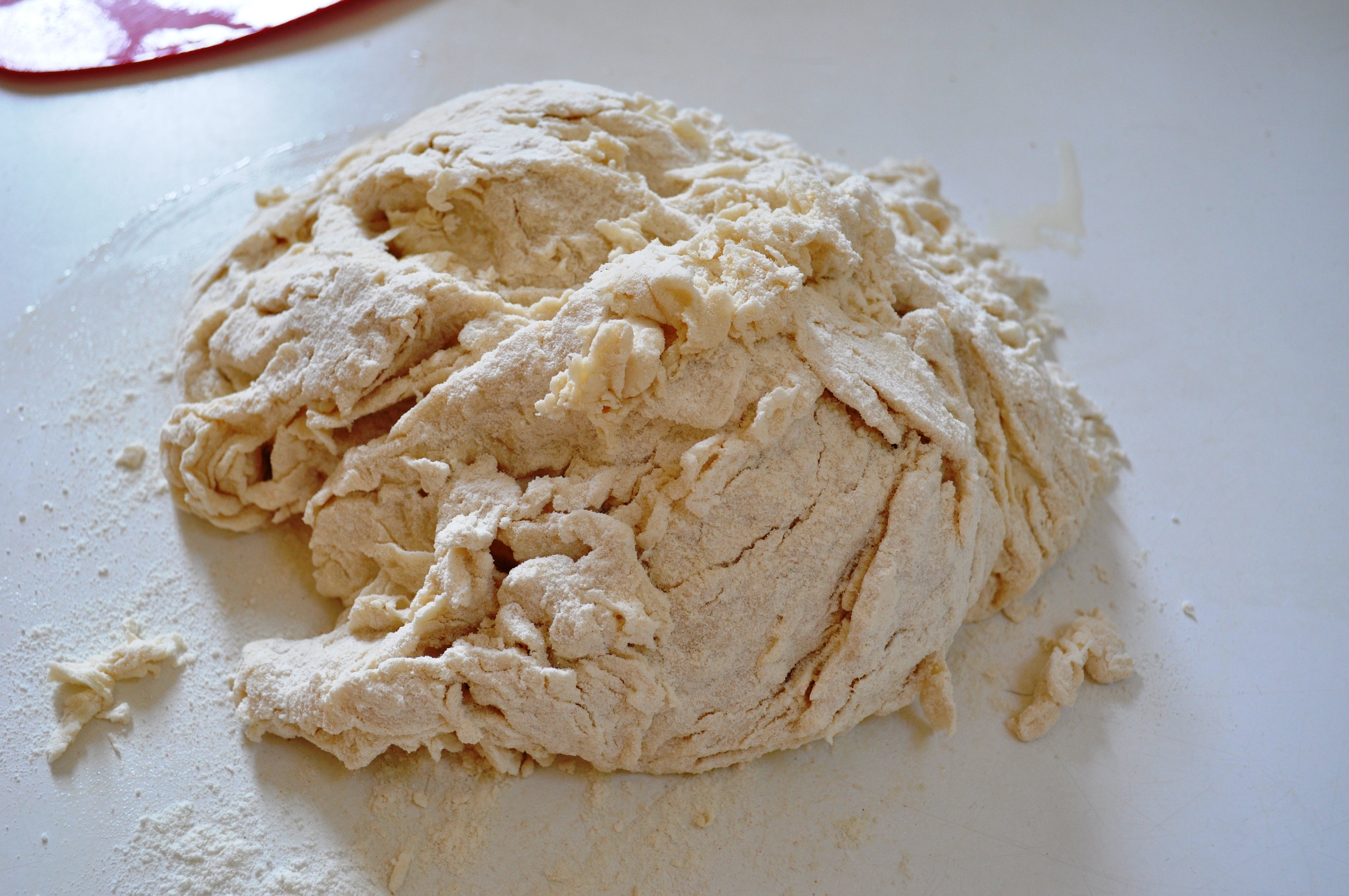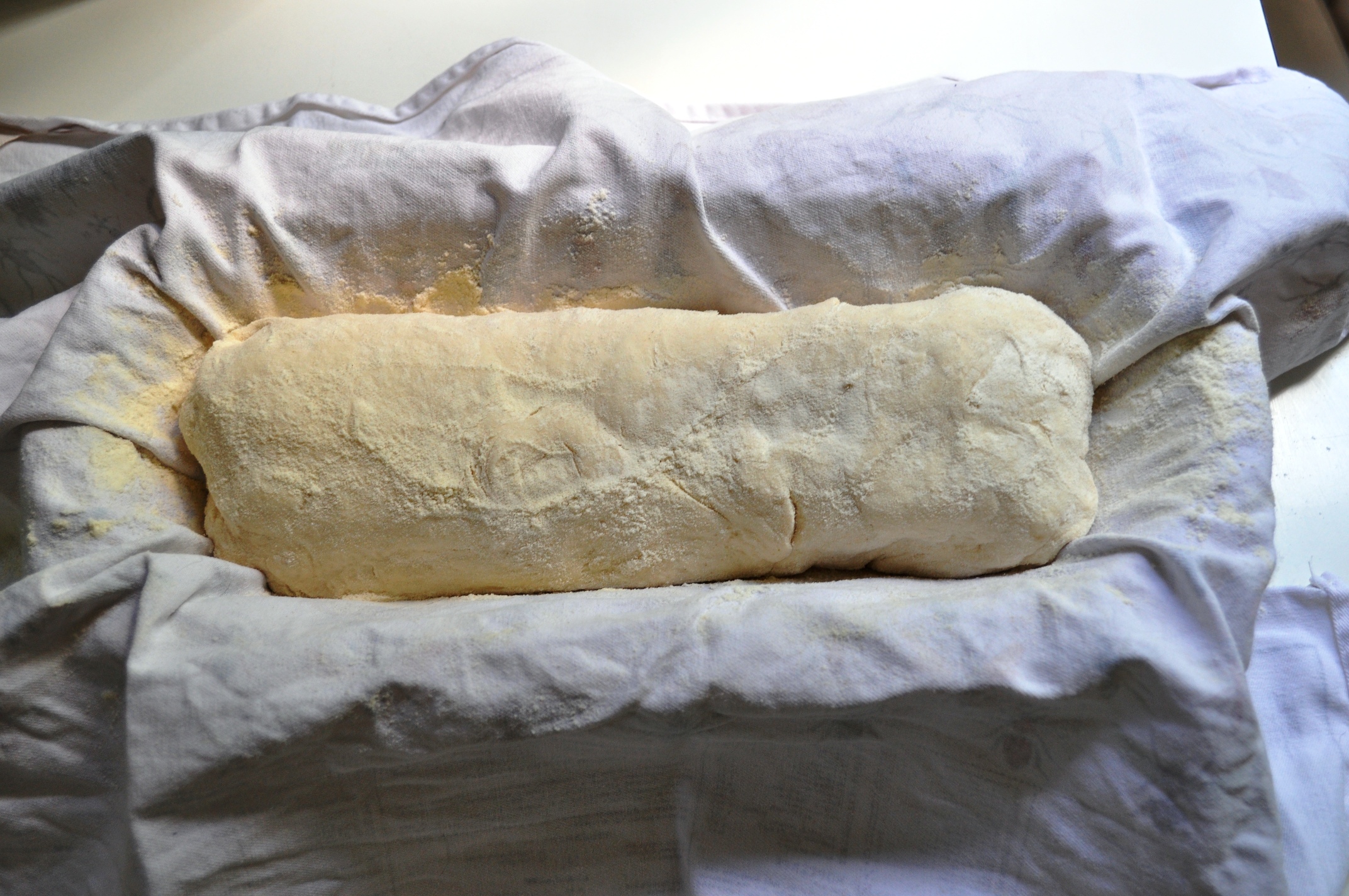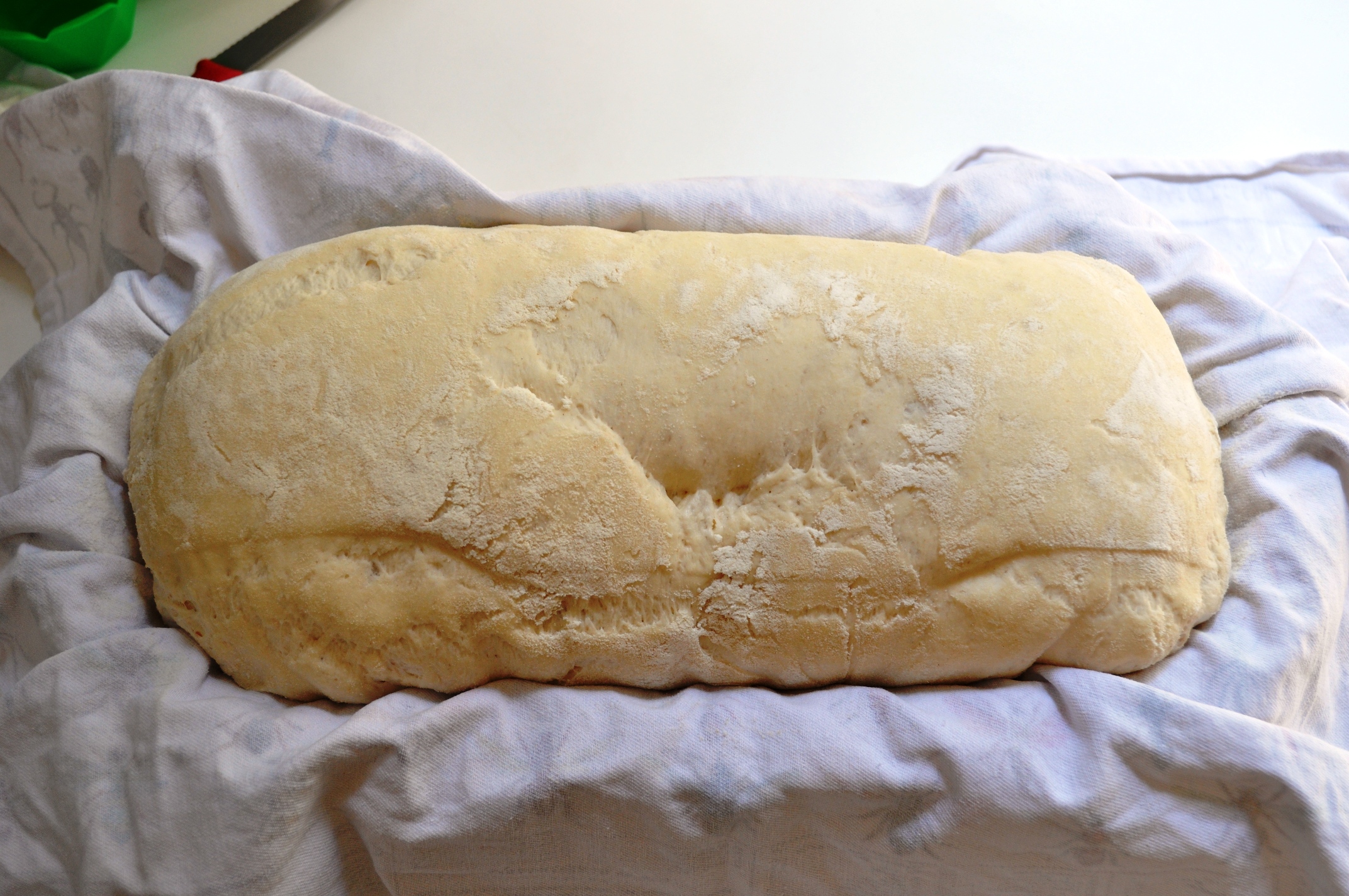
Category Archives: Breads

Real beer, real bread, and how to define “craft” foods

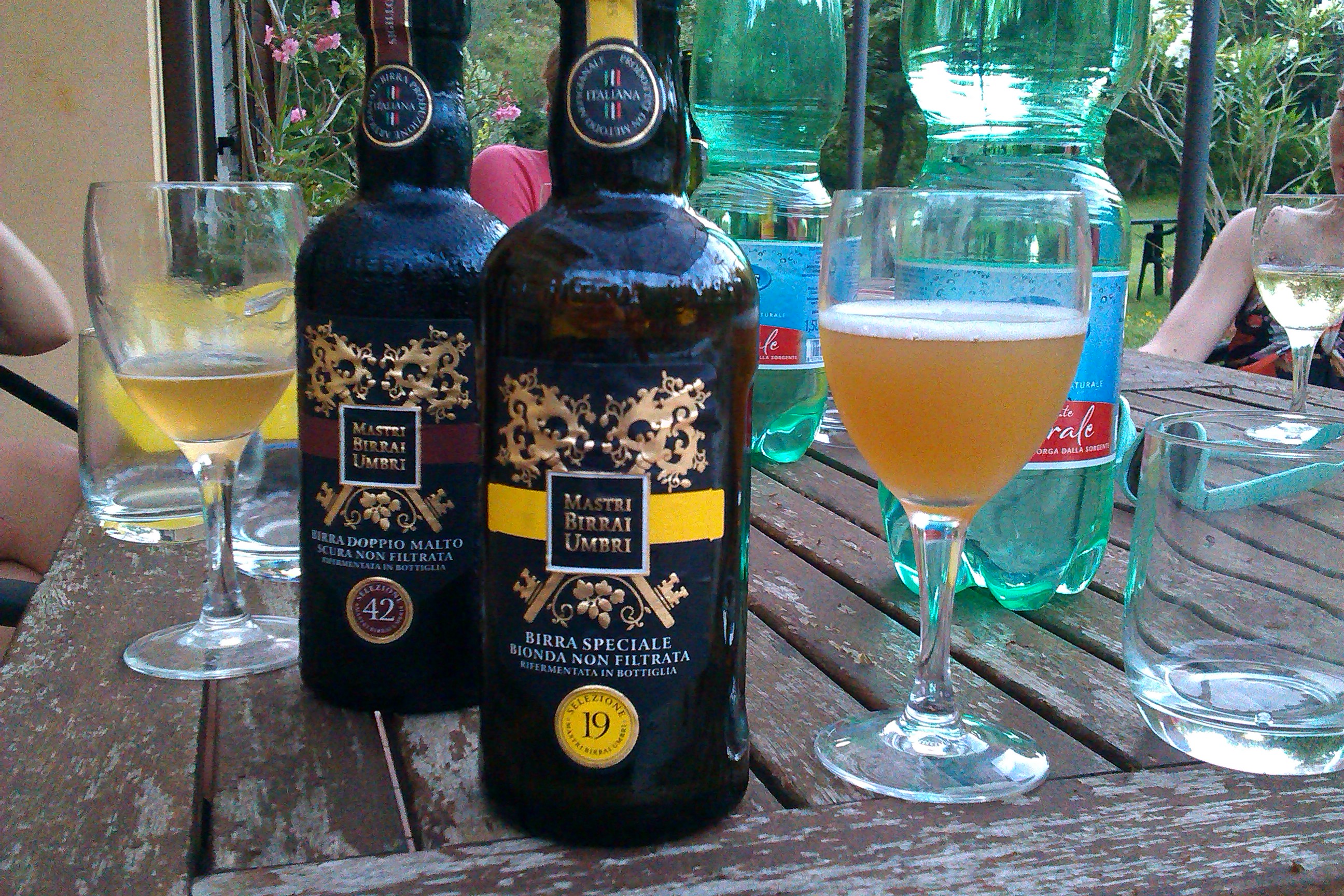
Bottled beer conditioning at Mastri Birrai Umbri

(I know long-form blogging isn’t popular these days, but think of this more as an essay. Hell, it’s no longer than an article in the paper.)

Visiting Mastri Birrai Umbri (MBU) and talking with MBU’s master brewer Michele Sensidoni and science and food communicator Jeremy Cherfas, who did a podcast about the visit here, really got me thinking about the whole question of craft foods. Especially beer and bread, as they’re my obsessions and they’re siblings born together at the start of human civilisation. Specifically, it got me thinking more about how one defines such craft foods. If you’re a baker, brewer or beer enthusiast, this is something you probably think about too.

I’ve visited MBU before, last year, and one thing that struck me then, and on the second visit with Jeremy, was the sense that the brewery was a place of industry and science. Of course it is, in literal terms – with industry meaning diligently creating something, and brewing (like baking) being a process that involves a sophisticated balance of biological processes. But also, it seemed industrial in the more technological sense, of large-scale metal equipment, and a small scale human presence. The fact that MBU is currently Italy’s biggest craft brewery, producing 1 million litres of beer a year, would seem to confirm this. And yet it is still a craft brewery.

Putting it perspective
Of course “Craft brewery” and “microbrewery” are difficult terms. Different countries have various legal or tax-related definitions of them, different organisation or beer writers have varying semantic interpretations of them.

In the broadest sense, though, a craft brewery is small, independent and uses traditional techniques. The Brewers Association in the US indeed includes these parameters in its definition, but then it goes on to define the production limit as “6 million [US] barrels or less” that is around 700 million litres or 7 million hectolitres (hl). Which is a helluva lot bigger than MBU, and doesn’t sound that small. But compared to the mega-brewery conglomerates it is. This 2010 Reuters article says Anheuser-Busch InBev (producer of the US Budweiser, amongst other brands) produced 350 million hl in 2009, and SABMiller (which owns innumerable brands including the nominally Italian Peroni Nastro Azzuro), just less than 250 million hl.

Which does put into perspective.

That perspective goes even more squiffy, however, when you consider that in the UK a craft brewery, or microbrewery, is generally considered to be one producing less than 500,000 litres (5,000 hl).

This definition of sorts came about because of the Progressive Beer Duty, a system introduced in the UK in 2002 to help encourage small, local breweries, with lower taxation based on the scale of the operation. The system originated in Germany and although it has its critics, it has been credited as one of the key factors in the rapid expansion of the small brewery scene in the UK and elsewhere.

Progressive Beer Duty was adopted throughout the EU and was potentially a factor in the expansion of the Italian craft beer scene too. There are currently around 500 craft breweries in Italy. A threshold for their production is 10,000hl per year, though the country has no other, specific legal definition of craft brewery. Indeed, in Jeremy’s interview, Michele discusses how introducing a legal definition in Italy could have a negative impact, as there’s so much variation in the Italian craft brewery scene it could impose restrictions on creativity. (And have no tangible effect on quality.)

Honest beer
For Michele, craft brewing is more about the ingredients and how you use them, about innovation, and about how much you care about the quality of the product. He also believes that although large-scale breweries could produce quality craft beers, instead they compromise. They rush. So whereas a brewery like MBU might condition their brews for months, a large scale industrial brewer might rush the process in 12 days or so. This rush, he said, “is not the best for the beer, but it’s the best for your distribution chain, it’s the best for your sales manager, it’s the best for your volume production.”

Jeremy mooted a potential definition of MBU’s beer as not craft or artisanal or industrial, but “honest” – where there’s total clarity, indeed pride, about the ingredients. But this notion of large scale industrial beer being rushed also immediately made me think of bread. Or more specifically the principle problem with rushed, large-scale industrial wheat-based products. From the spongy, plastic wrapped products made with Chorleywood Bread Process (CBP) that dominate the UK to Italy’s comparable crime against nutrition, tradition, and taste, pancarré.

A few years ago, when I was still living in the UK, I became a supporter of the Real Bread Campaign (RBC). This was founded in 2008 under the aegis of Sustain, “the alliance for better food and farming” and its rise in prominence has paralleled the renaissance in interest in real baking. In some ways, the Real Bread Campaign is a cousin to CAMRA, the UK-Irish Campaign for Real Ale that was founded in 1971 to counter the rising tide of bad industrial beer that was then starting to dominate bars. Likewise, the RBC was started, in part, to counter the white sliced crap and encourage people to demand the real deal.

I’m not a CAMRA member, but I enjoy visiting pubs they’ve endorse and respect their goals, specifically to protect the production of real ale, and educate about it. They have specific definitions of what qualifies as “real ale”, a term they coined. The full definition can be found here, but it starts by saying “Real ale is a beer brewed from traditional ingredients (malted barley, hops water and yeast), matured by secondary fermentation in the container from which it is dispensed, and served without the use of extraneous carbon dioxide.”

The Real Bread Campaign has not dissimilar definitions. After all, both bread and beer depend on the naturally occurring, unrushed action of living yeast (and bacteria) for fermentation: the process that transforms grains into digestible and delicious products. Of course, the key difference between the siblings is that baking kills the yeast, so the ultimate bread product is not a living thing like real ale, where the process is ongoing (until your stomach kills the yeasts).

The Real Bread Campaign’s definitions are here but the crux is: “Real Bread is that made without the use of processing aids or any other artificial additives.” It continues, “Technically, the only ingredients essential for making bread are flour and water. With these two things you can make flatbreads and sourdoughs. That said, without a little pinch of salt bread can be a tad bland, and you might prefer to let someone else culture the yeast, rather than do it yourself. So, for plain Real Bread that gives us at most: flour, water, yeast, salt. Anything else is, by definition, unnecessary.”

They do say “plain Real Bread” and allow that you can add other ingredients “as long as they are natural” (eg seeds, milk etc). I like this about the Real Bread Campaign, it’s clear and passionate, but not unrealistic. I have the sense that CAMRA, for example, wouldn’t have liked the beer I was drinking last night as it contained spices and jasmine blossom; even though it was top fermented, bottle conditioned and these added ingredients were natural.

Anyway, according to RBC definitions CBP products simply are not bread; they have too many dubious additives, they’re made in too much of a rush.

Keepin’ it real

So for me, rather than talking about real ale, or craft beer, or microbrewery beer, or honest beer, I’d rather just talk about real beer. It’s a term that’s come from these discourses about real ale and real bread. I feel  I can’t use the term “real ale” unless the beer in question stricly conforms to CAMRA’s definition: and that would exclude much of Italy’s wonderful birre artigianale (artisan beer). Indeed, there’s arguably a danger than CAMRA can be overly dogmatic in its perception of tradition, and traditional beer.

Respect for tradition is essential for craft food production, but there’s a danger of being reactionary, which isn’t.

One thing I love about the Italian birre artigianale scene is how dynamic it is, how open to ideas. So much of Italy food culture is mired in tradition, and as such can be hidebound. Just read John Dickie’s great book Delizia and the chapter about what qualifies as pesto, for example. It’s absurd. Likewise, viniculture here is effectively strictly regulated by tradition, with very little room for creativity.

As I said in my previous post, there’s been beer in Italy for millennia, but as it’s never been a dominant drink, it never got so mired in tradition. So now, all these craft breweries are able to take inspiration from all over the world, notably from the dynamic US craft beer scene, but also from Britain, Belgium, and beyond.

Plus, they can also dip into local tradition, to give their products distinctive, like MBU using local legumes in the brew for example. Or they can dip into classical history, for things like the Etrusca experiment co-ordinated between Italy’s great craft breweries Baladin and Birra del Borgo and the US big name craft brewer Dogfish Head, which involved working with a biomolecular archaeologist to create a beer made with ingredients consumed by the Etruscans two and a half millennia-plus ago.

Time – too important to rush
Quality beer is the result of respecting proper fermentation and conditioning times. Likewise, quality bread is the result of respecting proper fermentation times. Proper fermentation means waiting.

The Real Bread Campaign says, “Real Bread is a natural product and just as with fruit or cheese it takes time for it to ripen. Although research so far has been limited, there is growing evidence that leaving dough to rise for longer periods can have a range of benefits to the consumer.” Benefits to the point of being more digestible, or even being able to help reduce disorders such as coeliac. One such piece of evidence comes from scientists in Italy who concluded “a 60-day diet of baked goods made from hydrolyzed wheat flour, manufactured with sourdough lactobacilli and fungal proteases, was not toxic to patients with celiac disease.”

This is the main problem with the Chorleywood Bread Process.* Throughout history, bread has been made by slowly fermenting wheat flour, then the CBP was developed in the 1960s, millennia-old fermentation times were thrown out and since then more and more people have reported digestive problems from eating CBP products.

Fermentation time is just too import to neglect or reject. Time is just too important to rush. Time is the defining ingredient for craft bread or craft beer, or as I’d prefer to call them, real bread and real beer.

A definition of real bread and real beer
So my definition of real beer, or real bread, would be a product that’s made with the proper respect for time. (Indeed, all good produce requires time – hence the Slow Food movement’s name.) Time, quality natural ingredients, a passion for the product.

It doesn’t matter if the brewery or bakery in question is all shiny stainless steel or a more rudimentary shed. What matters are time, quality natural ingredients and passion.

I’d even add that it requires a respect for and knowledge of tradition, but not a dogmatic adherence to it. Like Italy’s craft brewers, free from being mired in tradition. Not all their beers are necessarily great, but I at least admire their willingness to experiment, to enjoy their craft – and to relish taking the time to try make great real beer.

* I know the CBP was developed to enable British bakers to use lower-protein British flours, to reduce UK dependence on imported, higher protein (14-15%) flours, but that’s a whole other argument. Indeed, as far as I can tell, many Italian bakers still make stupendous traditional breads without recourse to Manitoba (ie Canadian strong flour), instead relying on traditional Italian flours with lower protein (11-12%).
3 Comments

Filed under Ale, beer, Breads, Discussion

Splits, clotted cream and a Roman summer afternoon tea

Devon splits, Cornwall splits

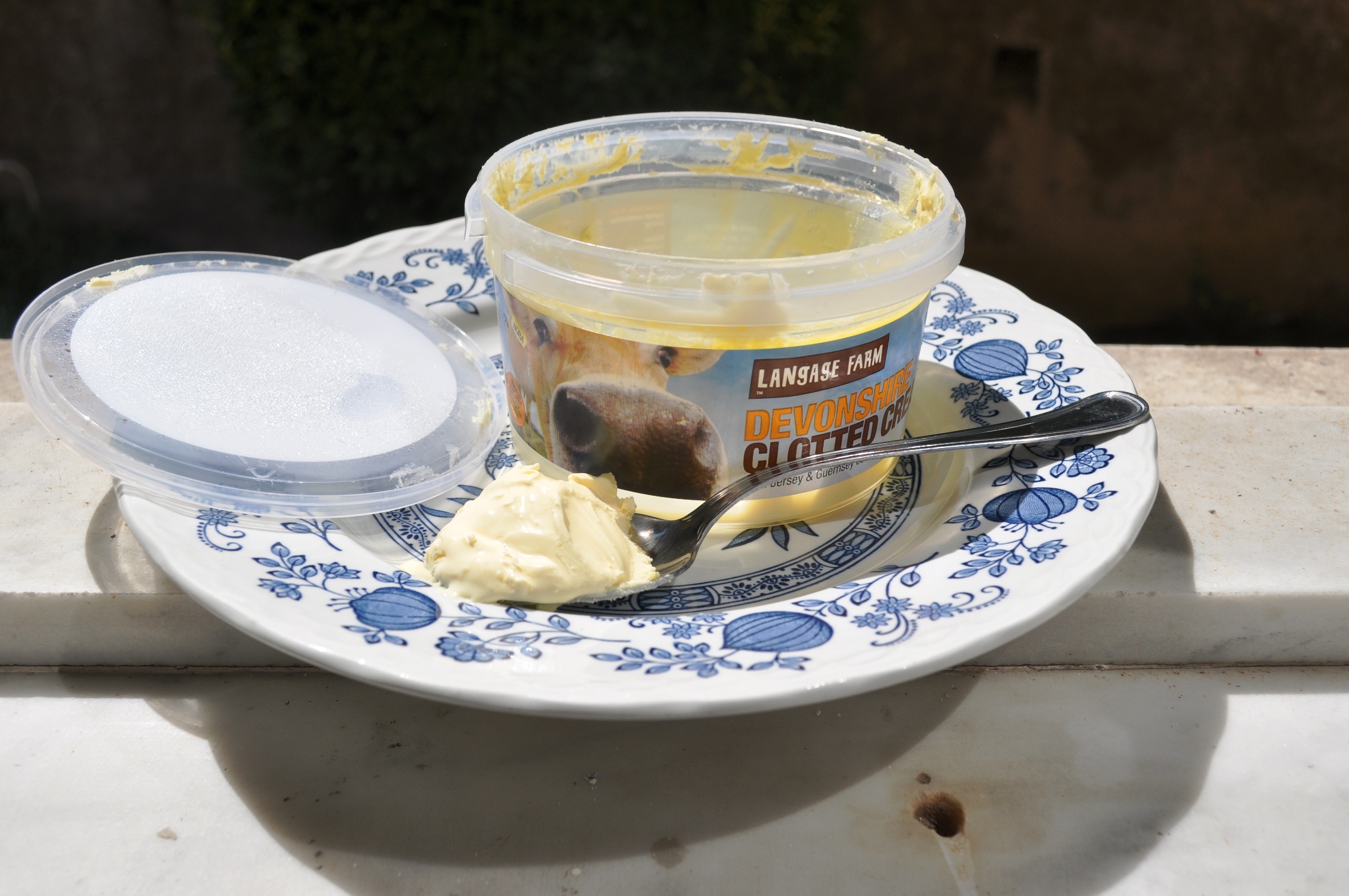
Among the few things we crave but are just impossible to source in Rome are halloumi cheese and clotted cream. For those who don’t know, the latter is a nectar-like dairy product that comes from the Southwest of England. Fran’s from the southwest and I have strong connections, so we both have clotted cream in the blood. So to speak. It’s an essential component of a proper cream tea.

I’ve always used clotted cream with scones, but it’s also used with a less well known variation the cream tea: with splits. When I smuggled a massive tub of clotted cream back home from Blighty last week, I resolved to make splits, and do a bit of a comparison with scones.

A large - nearly empty - ot of Langage clotted cream

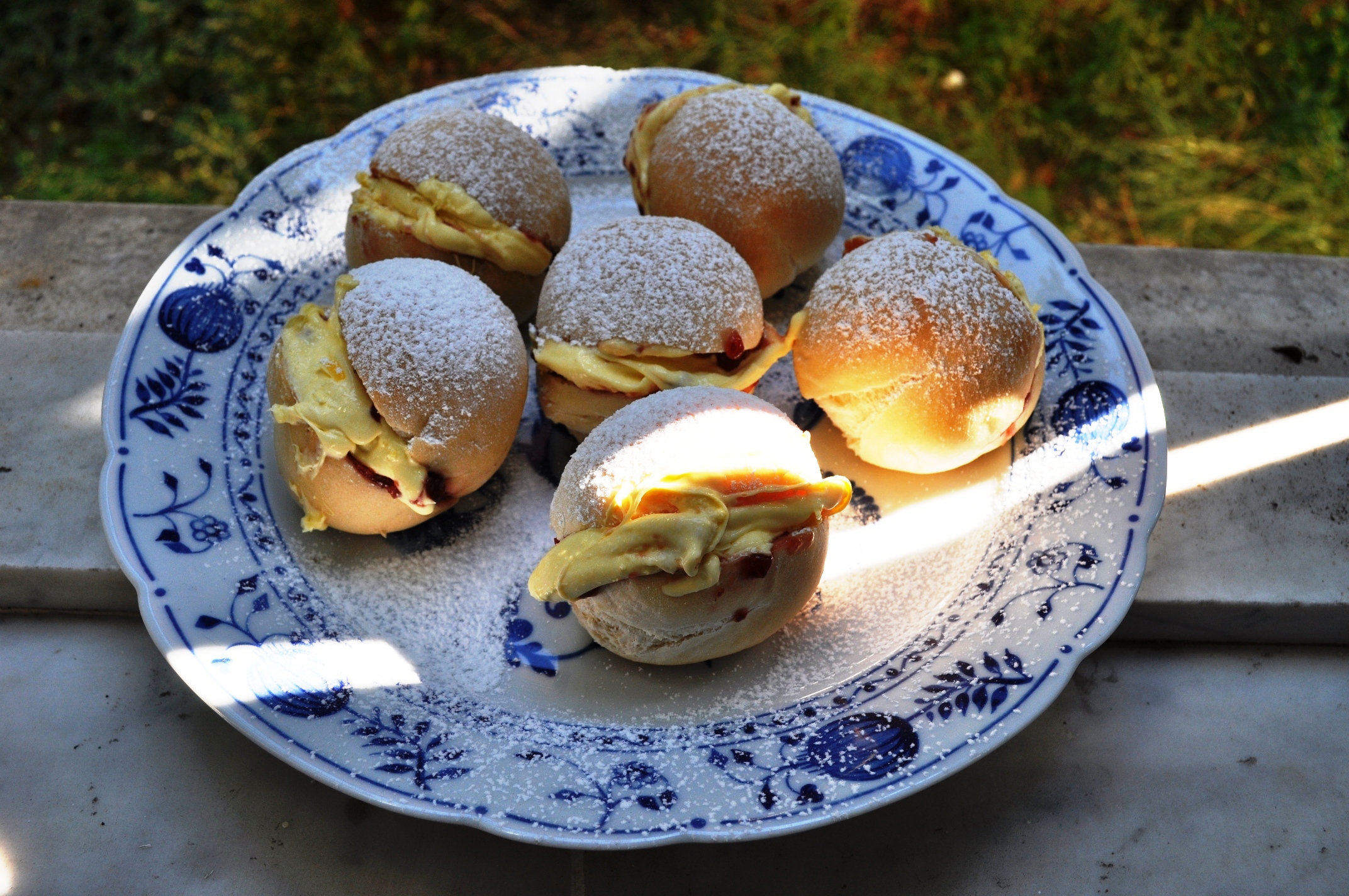
What is a split anyway? Well, it’s basically just a cream bun, made with a basic enriched dough, split and smeared with jam and clotted cream. (Messily smeared in our case – I’m a little ashamed we didn’t do it a bit more neatly, but then I’m no food stylist and we just wanted to scoff them!). As Rachel pointed out when we were doing just that yesterday, as it’s really not unlike a maritozzo con la panna. Though with slightly more demure amounts of cream. Sort of – clotted cream is cooked, so it’s denser and richer than whipped cream.
A split and a scone

The next question involves their origins. Are they Cornish splits? Can they be Devonshire splits? Or is the Devon cream tea always based on the split’s easier-to-make cousin the scone? I’ve always assumed splits are actually “Cornish splits”, but then I started encountering recipes for “Devonshire splits”. What you call them probably just depends your loyalties. The white cross on black or the white cross on dark green? (Something that’s almost entirely irrelevant to people outside the spatting ground of southwestern England.)

And is there a difference between a Devon and a Cornwall version? Discussing splits, and Elizabeth David’s recipe, here Nigel Slater suggests Devon splits are smaller, though the recipe I based mine on was called “Devonshire splits” – and they’re quite big.

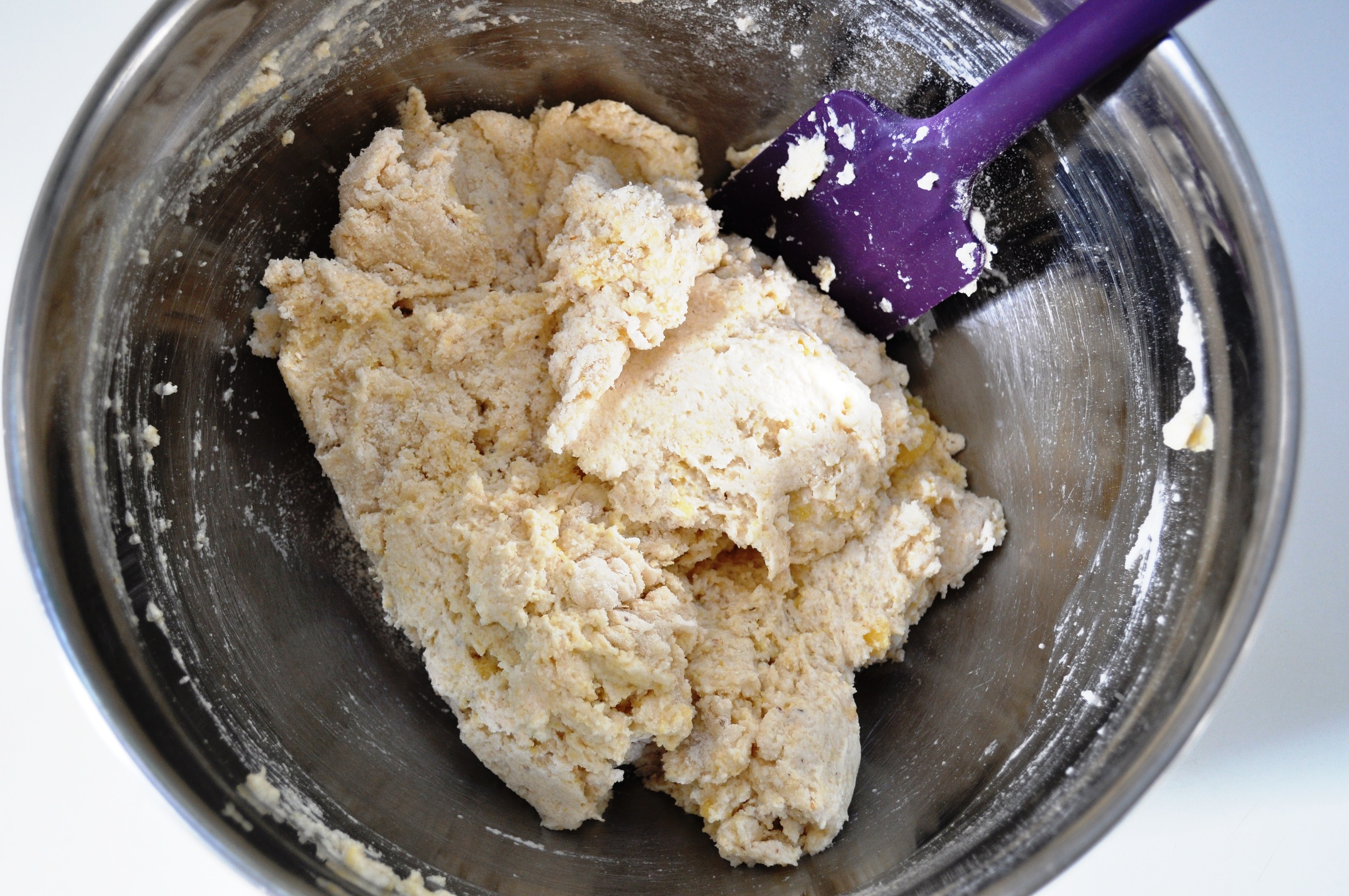
Initial dough mixture for Cornish split, or Devon split - flour, sugar, butter, milk, yeast

And why do these two counties get their knickers in such a twist anyway? After all, surely pasties and cream teas are from the West Country, not from either county in particular? Hey, I just love the West Country in general; I’ve been going there all my life and my mother’s mother’s family is from border country in northeast Cornwall/northwest Devon. Although there are cultural differences between Devon and Cornwall, there are plenty of cultural similarities too: clotted cream for starters.

This delicious treat is, frankly, from the West Country in general and neither county in particular. Especially not now in our industrial age when clotted cream is no longer produced by local farms and dairies but instead comes from larger producers like Langage (Devon) and Rodda’s (Cornwall) – both of which are available in supermarkets in both counties and beyond.

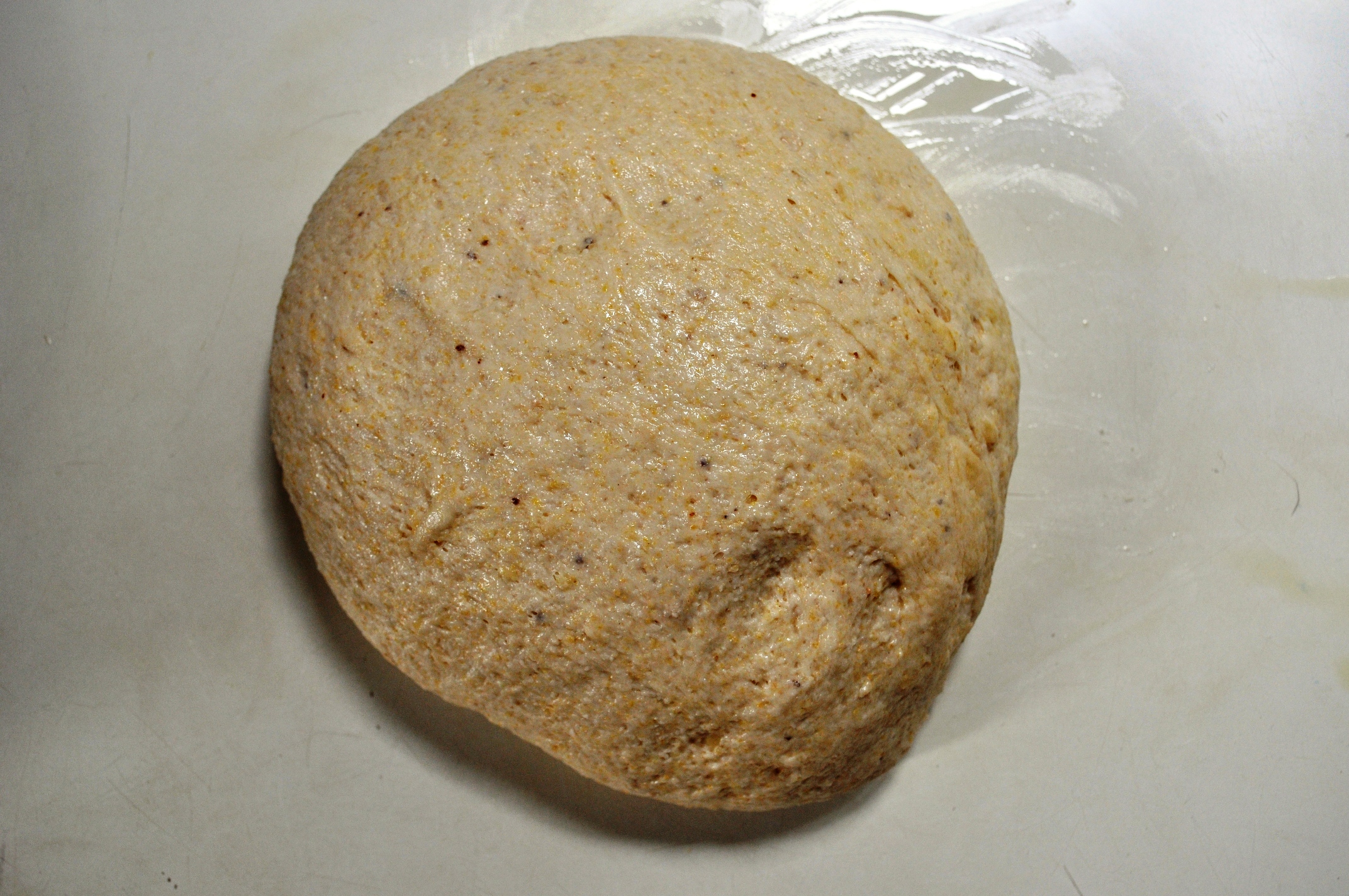
Kneading Devonshire split dough

Anyway, I’ve made scones all my life and I even did a very scientific experiment to address the important question of whether cream or jam goes on first (includes recipe). This is my first go at splits though. They were very nice, but I’m not sure they’ll dethrone scones from my tea-time repertoire. For starters, scones are easier to make (just don’t overwork the dough!) and have a satisfying crunchy crust and crumby interior, which I found preferable to the more bread-like consistency of the splits.

Anyway. Here’s the recipe:

Makes 12 splits.

25g fresh yeast (aka lievito di birra)
300g full-fat milk
25g unsalted butter
500g strong (high protein) white bread flour (farina di Manitoba in Italy)
3g fine sea salt
25g caster sugar

Shaping balls of dough for Devonshire splits. Or Cornish splits

1. Warm the milk and butter, melting the latter and bring the liquid to around body temperature.
2. Crumble the yeast into the liquid, and give it a whisk.
3. Put the flour, salt and sugar in a large bowl and stir to combine. (If you want to use easyblend yeast, add 10g now instead).
4. Add the liquid to the flour mix, and bring together.
5. Turn out and make a dough, kneading until smooth.
6. Put the dough in a clean bowl, and cover with clingfilm/plastic wrap.
7. Leave to ferment and prove until doubled in size.
8. Turn out, gently deflate and divide into 12 pieces – they should each weigh around 68-70g.
9. Form the pieces into balls, keeping them covered with a cloth.
10. Place the balls on a baking sheet, and again, keep them covered.
11. Let them prove again, for about 20 minutes, until they’re soft to the touch. (Time will vary depending on the temperature.)
12. Preheat the oven to 200C.
13. Bake the balls for about 15 minutes. Again, time will vary depending on your oven. You want them to start browning nicely on top.
14. Remove from the oven and cool completely on a rack.
15. When cool, slice the buns on a diagonal. Into this split (hence the name) add jam of choice and clotted cream.
16. Serve dusted with icing sugar.
17. Eat, messily. Whether you’re nearly two or 42.

Balls of dough, pre-bake, for Devonshire splits. Or Cornish splits

I clearly lied in my last post about getting back to talking about Italian and Roman beer and baked goods didn’t I? Oh well – if it’s any consolation, we were sitting in a Roman garden, drinking prosecco, getting eaten by mosquitoes and being glowered at my our oddball neighbours when we ate these.

Freshly baked  Devonshire split buns

So it was a kind of English-Roman hybrid cream tea. But probably the best cream tea consumed in Rome for a while. I don’t make any bones about saying my scones are excellent, and good clotted cream is always awesome. Plus, well, Babington’s, the famous “English” tea room by the Spanish Steps, serve their cream with whipped cream not clotted cream – which is frankly just an abomination. No contest.

11 Comments

Filed under Breads, Cakes, Recipes, Uncategorized

Malted wheat bread

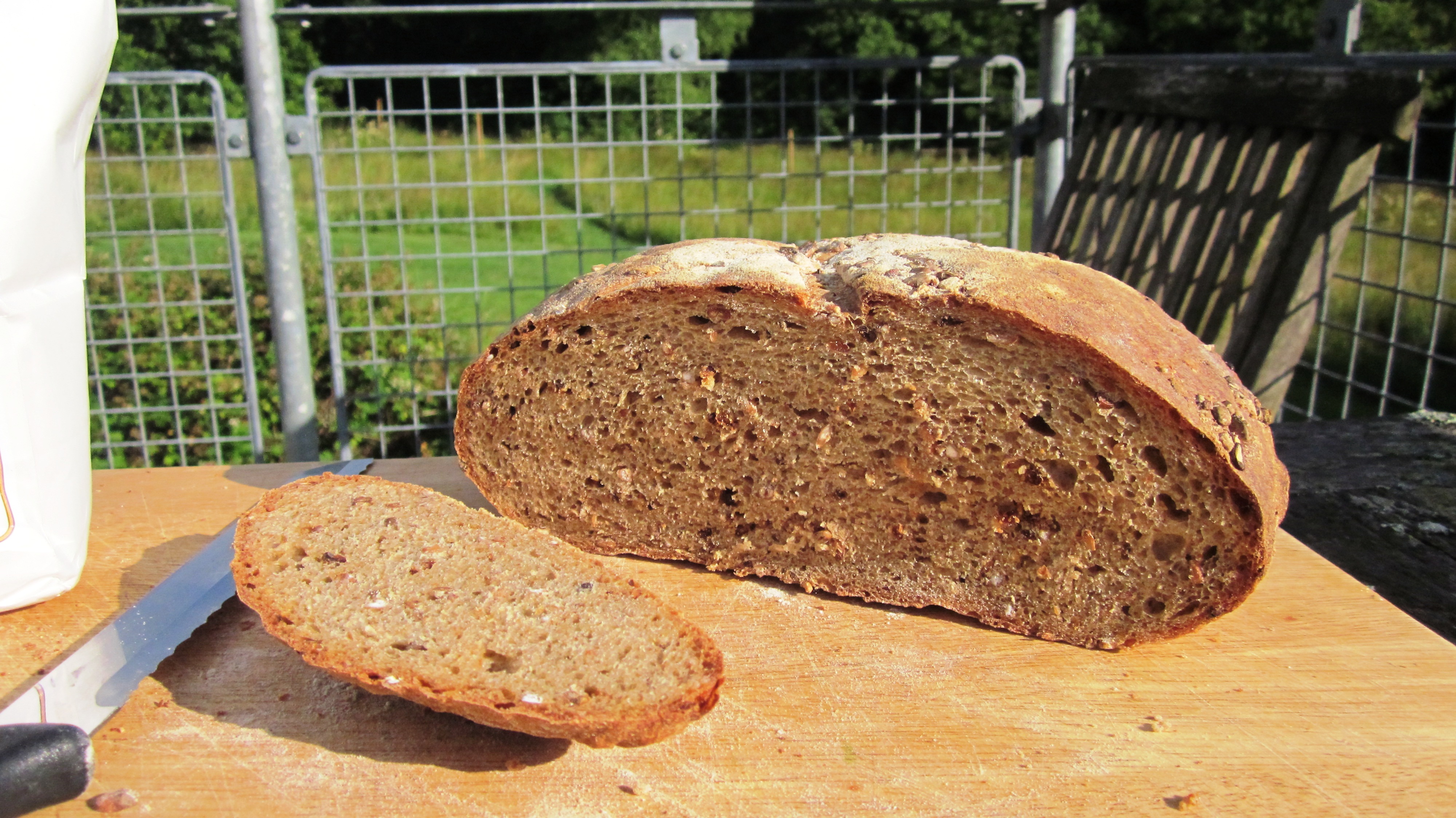
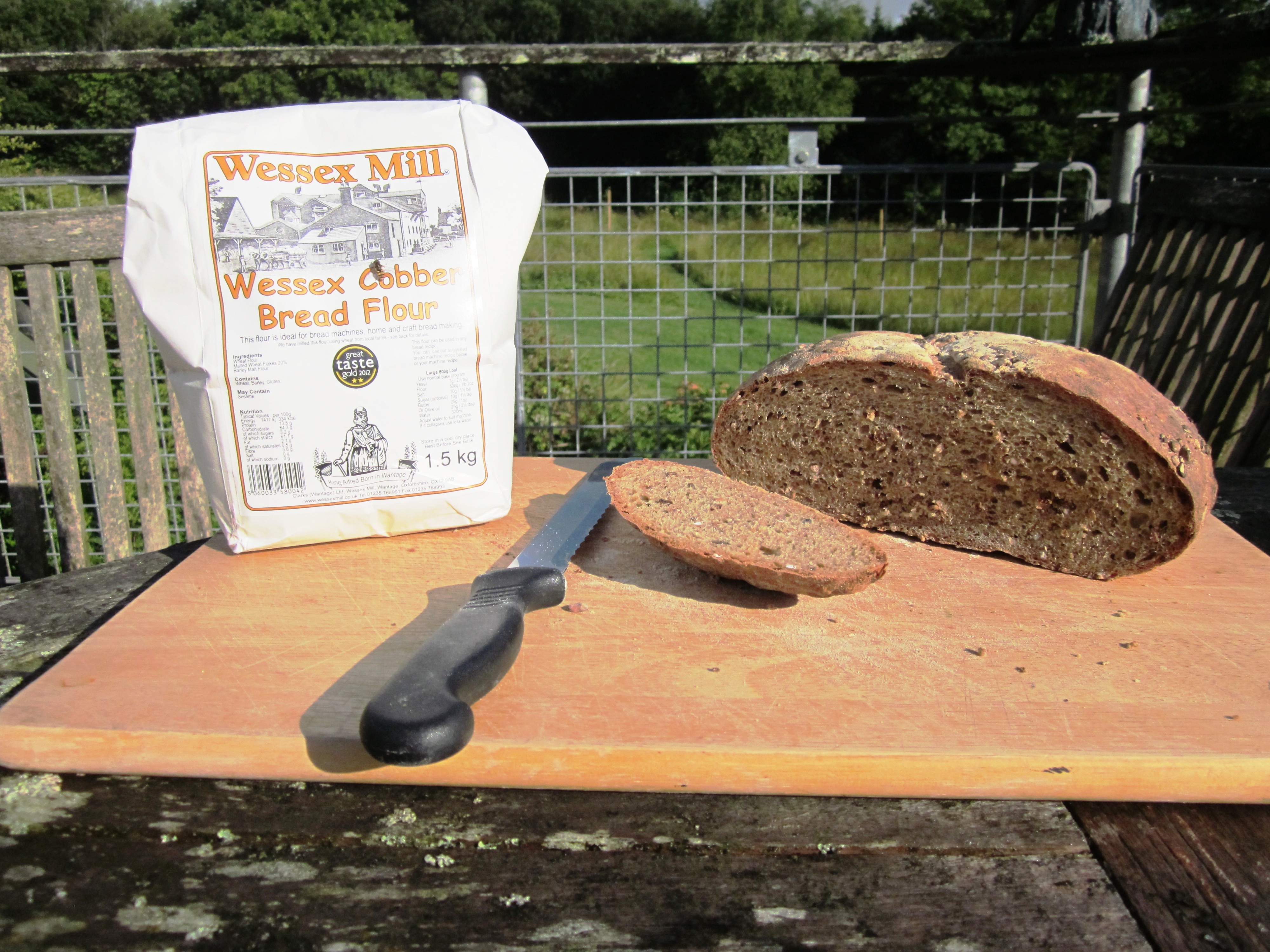
Malted wheat bread made with Wessex Cobber flour

After my recent problems with bread-making at home in Rome, I was keen to try and make some bread during my visit to England last week. Although everyone kept telling me they’d just had three weeks of sun and 30C+ temperatures, when I arrived the British weather returned to form. I left the heat of Rome and was met by rain and grey at Gatwick. (There was one day when it was hot and sunny again, but I spent most of it in transit: on a train, then waiting for a very late-running bus, then waiting on the roadside in a village in the middle of nowhere in Devon when said very late bus broke down. Overheated.)

Eventually I made it to my folks’ place in the middle of nowhere in another part of the Devon countryside. I visited the local town, Holsworthy, bought some flour and yeast, then made some bread. That day, the weather was mixed and barely more than 20C. So nice and familiar and manageable, unlike the 40C ish Roman inferno.

The flour I bought was Wessex Cobber Bread Flour from Wessex Mill. Now, for those without even a passing knowledge of English history (or the literature of Thomas Hardy), Wessex is an ancient English kingdom, where the West Saxons (Wes-sax – geddit?) not only conquered neighbouring Anglo-Saxon tribes, but also fought the Vikings to a standstill under Alfred the Great, effectively creating the first version of an English nation in the 9th century. Or at least that’s my précis. Proper historians who would probably tell it differently, but I have Wessex campanilismo. Either way, Wessex, unlike Essex and two Sussexes, no longer exists as a county. Though at its height, it did dominate much of Devon, a region then mostly still inhabited by Britain’s older, “Celtic” inhabitants. Anyway, the point I’m making is that although it wasn’t a local flour brand, it wasn’t that far away from being local.

Except that when I read the packet more closely it said that because of Britain’s poor cereal yields in 2012 (ruined by the non-summer), the flour was instead milled from Canadian grain. D’oh. Seriously, when I leave Italy and return to tediously supermarket dominated and tragically climate-change-ravaged England locavorism is going to be an interesting challenge. Here in Rome I can buy numerous flours ground from grains grown in neighbouring regions.

*Sigh*

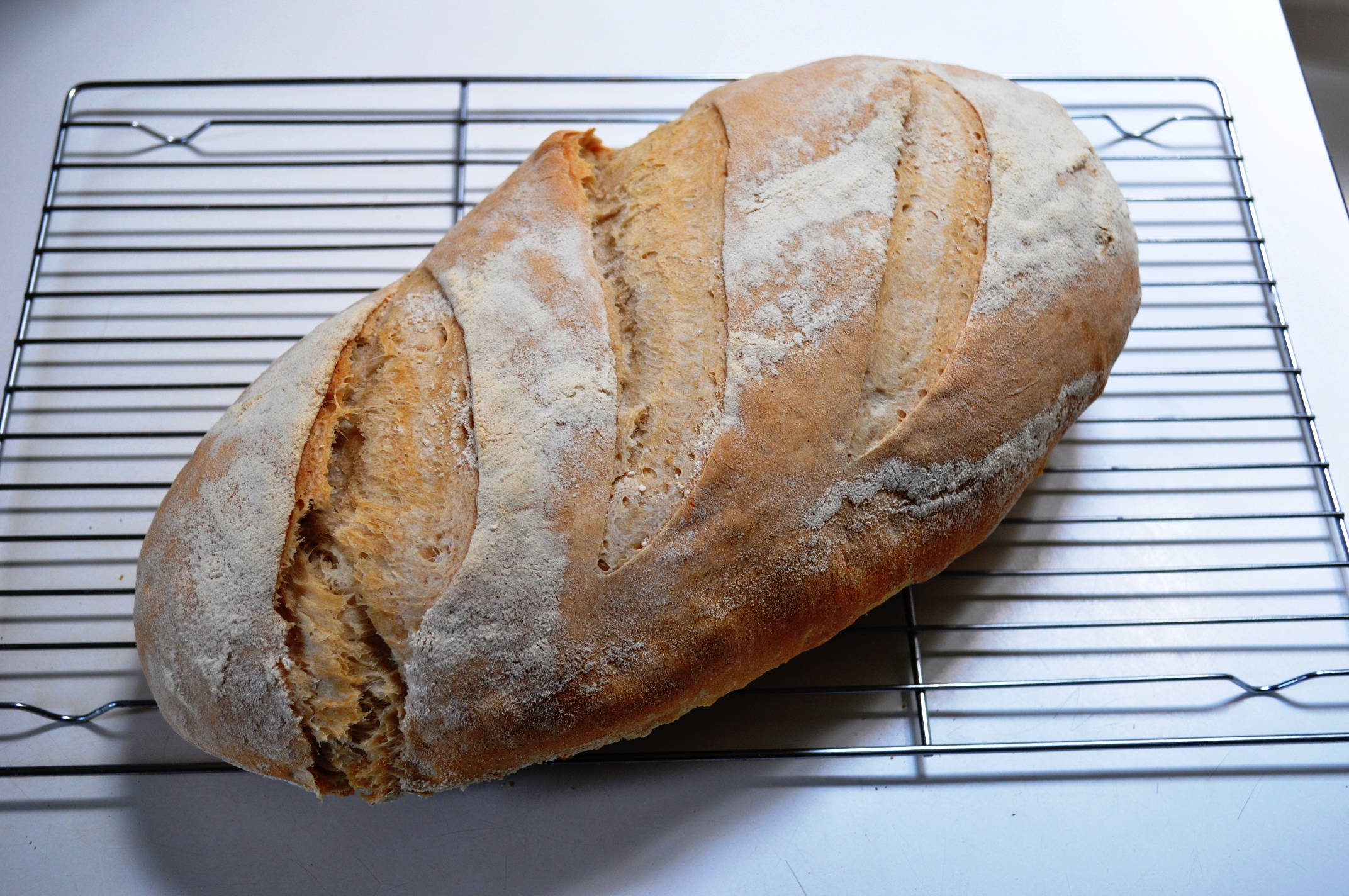
I went ahead and made some bread anyway. Wessex Cobber Bread Flour is a roller-milled wheat flour, containing some barley malt flour and malted wheat grains. The type of bread it makes is more commonly known in the UK as “Granary”, but Granary is in fact a trademarked malted flour owned by Premier Foods, owner of the Hovis brand. So much like you can’t call a Kölsch-style beer “Kölsch” unless it’s made in Cologne the right way, you can’t technically call a Granary loaf “Granary” unless it’s actually made with Rank Hovis flour.

For this bread I used the reliable proportions of 1000g flour / 700g water / 20g fresh yeast / 20g fine salt, ie 70% hydration, though I tend to halve that for a smaller loaf. And I just did a basic bulk fermentation, proving twice until doubled in size. No flies were included in the mix.

Wessex Cobber flour, with fly, and bread

The results were a bit dense, but it was moist and chewy, and after a few days I didn’t get any of the problems I’ve had recently in Rome with the centre of the loaf damply disintegrating. Although that still doesn’t help me diagnose said problems.

Hi ho.

Oh and I’m not entirely sure what a cobber is. I’m guessing it’s a dialect variation on cob, the more common British English name for a round loaf, equivalent to the French boule. It rings a bell. Though the main usage of cobber that springs to mind is the Australian English for “mate, buddy, chum”.

3 Comments

Filed under Breads

Bread malfunction!

In my last post about bread-making, I mentioned that the previous two loaves I’d made had started out seeming fine but after a few days they went bad. The crumb, which had previously been firm and at that sweet-spot between dry and moist, started to collapse, becoming dense and damp in the centre. It wasn’t a problem I’d had before so I started wondering what was causing it: under-proving,  over-baking, some dodgy flour?

Or the heat.

Surely it was something to do with the heat? Although I baked with decent results last summer, when July and August similiarly peaked at around 40C  (100-plus in ye olde Fahrenheit), this year my bread seems to be suffering.

Even the nice durum wheat-strong bread flour loaf I baked last Thursday. Although it was great on Thursday and Friday, by Saturday morning, when we headed out of town for a night, it was suffering from the same problems. We got back last night, and the crust that was left was in a very sorry state.

So this is how it looked after it had cooled on the day of bake:

CU

And this is how it looked after three and a half days.

bread gone wrong

Sure it was a few days old, and getting stale (particularly around the edges, near the crust), but the core has gone all damp and dank, fizzy and yeasty. Not pleasant.

This yeastiness got me thinking: has it started fermenting again? The yeasts used in the dough were killed by the oven of course – the bread was baked at around 230C, and yeasts die at around 60C.  So are there wild yeasts in my bread bin for example? I mooted this question with my friend Michele. He’s not a baker, though he is a master brewer (at Mastri Birrai Umbri, whose wares we were enjoying Saturday night), so he knows his yeasts.

2013-07-27 20.29.52

He asked if I had fruit near where I stored the bread. Yes, I said, there’s a fruit bowl near the bread bin. It’s a great time of the year for seasonal fruit here in Roma – the region is cranking out apricots, plums, peaches, Coscia pears, figs, etc etc etc. Even someone like me who doesn’t much like fruit is enjoying this bounty.

But maybe it’s messing up my bread. Fruit, even when rinsed, has abundant wild yeast cultures on its skin.  Just think of advice you might have read about starting a natural leaven/sourdough: use some grapes, or raisins, or a some rhubarb (not strictly fruit, but close enough). These wild yeasts will be thriving at the moment, as the weather is humid and hot, as Rome heads for high summer. Even now, without the oven cranking at 240C, the kitchen is 30C. A pretty nice temperature for yeasts, moulds and bacteria.

So maybe the wild yeasts are finding my bread and starting to feed on it.  Which might indicate that I’ve not proved long enough, not leaving the yeast I’ve used in the bake long enough to cosume all the natural sugars in the flour. I’m not sure.

Fellow bakers – any thoughts?

4 Comments

Filed under Breads, Discussion, Flour & grain

Durum wheat sponge and dough bread

Baked and cut durum and Manitoba bread

After my recent, pleasingly successful experiment with a biga, I made a couple of loaves that seemed wonderful, but one turned out to be under-baked (shame on me), and the second just went weird after a few days. I think, like me, it can’t really handle the heat, as the Roman summer inches towards the trials of August, with  its high-30s (100 ish and more old money) temperatures, and thriving tiger mosquito population.

I made a multigrain seeded loaf that seemed great the first few slices, but didn’t like being taken to the park for a picnic in 35C temperatures (followed by a massive storm). The previously nice, firm crumb collapsed and went kind of fizzy. Again, it was as it if had been under-baked. And possibly even under-proved, though this is bizarre as it’d had a nice long prove, mostly in the fridge as the 25C kitchen was too warm.

To try and diagnose this mystery, I vowed I’d make a nice simple white loaf, just with strong white flour (or Manitoba as it’s known in Italy) and see how it coped with the heat.

Farina di grano duro and farina di Manitoba

Every time I open my flour bin, however, I see a pack of something that needs a bit of stock-rotation. In this case, I wanted to use up some of a bag of grano duro flour, that is durum wheat, (Triticum durum). It’s a type of flour that is more typically used for pasta, but I’ve baked with it before. I also had a bag of rice flour hanging around, so some of that went in too.

Also, following the biga experiment, I decided to do a sponge and dough method. Just to see if it coped better with the heat than the previous two loaves, that were made with the bulk fermentation method (BFM).

The BFM is your basic bread-making that involves creating a dough with all the flour, all the water, all the yeast, and processing that: first prove, shaping, second prove, bake. The sponge and dough method, on the other hand, involves using liquid (all or most of it) and part of the flour, with the yeast, then fermenting that more liquid mixture, called the sponge, before adding the rest of the flour and proceeding with a dough, proving, shaping and baking. Like a biga, a sponge is a type of pre-ferment.

Duro-Manitoba sponge

A note on the yeast
I use fresh yeast. It’s known as lievito di birra in Italy, or cake yeast in North America.

If you’ve only got active dried yeast (ADY), use 4g. If you’ve only got instant/easyblend yeast, use 3g. Add the latter directly to the part of the flour you’re mixing with the liquid to make the sponge.

A basic rule of thumb for conversion is x3: that is, 3g ADY = 9g fresh yeast. You need less instant yeast than ADY. But I wouldn’t agonise: as long as your least is alive and well and happy, it’ll do what it needs to do even with a few gram’s variation. The time it takes the dough to ferment and prove will also vary depending on the temperature of water you use, the temperature of your kitchen, etc.

Ingredients
200g grano duro/durum wheat flour
50g rice flour
250g strong white/Manitoba flour (00 or 0 grade)
350g water (tepid)
10g fresh yeast
10g fine sea salt

Dough, unkneaded

Method
1. Combine the water and yeast in a bowl. Whisk slightly to break up the yeast.
2. Combine all the flours in a bowl.
3. Put half of the flour mix in another bowl. Add the water/yeast mixture.
4. Stir together the flour and water/yeast to make a sponge.
5. Leave the sponge , covered, to ferment. I left mine for about 80 minutes in a warm kitchen. It should look nice and bubbly and active when it’s ready.
6. Add the salt to the remaining dry flour, mix it in, then add this to the sponge.
7. Bring the dough together in the bowl, turning it out when it’s mostly combined.
8. Knead the dough until smooth. You can do a longer knead once, or the Dan Lepard method of short kneads three times in half an hour.

Dough, kneaded
9. Form a ball of dough and place it in a clean bowl. I add a drop of veg oil to the bowl for nonstickiness.
10. Cover and leave to prove until doubled in size. Again, depends on temps etc, so check every now and then. It’ll probably be around one and a half hours if it’s in a warm place.

Dough, first prove
11. Turn out the dough, and form a ball.
12. Leave the ball to rest for 10 minutes.
13. Form a baton.
14. Leave the baton to prove again, ideally in a basket or banneton lined with floured cloth.

Dough, in proving basket
15. Pre-heat oven to 220C.
16. When the baton is doubled in size and soft to the touch, turn out onto a baking sheet.
17. Bake for around 25 minutes, then turn down the heat to 200C and bake for another 20 minutes, or until the loaf is well-browned and feels fairly light and ‘hollow’ when picked up.
18. Cool on a wire rack.

Dough, in proving basket, proved

Thus far, this bread has been behaving – and not giving me any insights into what went wrong with my previous loaf. If the crumb suddenly collapses and starts to ferment, I’ll report back.

Leave a comment

Filed under Breads, Recipes

Biga 2: making a loaf

freshly cut biga loaf

After visiting Il Vecchio Forno in Pescasseroli, Abruzzo, and getting advice from the master baker, I had to try making bread using a biga.

Although I’ve experimented a lot with natural leavens (sourdough), sponge and dough techniques and long fermentations of the finished dough (such as overnight in the fridge), I’ve never actually tried to make bread based specifically on the biga technique, that is using a low-hydration Italian style pre-ferment. This is still experimental though, as I’ve not made a strict biga – I had a healthy batch of leaven around, so I’ve added some of that. Also, I didn’t have enough of one type of flour, so I’ve done a mixture.

The flour types I used were a 0 grano tenero, at 11.5% protein, and a 0 Manitoba at 15.5% protein, W360-400. For an explanation of Italian flour types, see here. For a description of what the heck “W” means in this context, see my previous post.

mixing the biga

Biga

500g flour (370g grano tenero, 130g Manitoba)
250g water (cold, you don’t need to rush the yeast)
5g fresh yeast
30g leaven (at 80% hydration)

biga, before fermentation

1 Dissolve the yeast and leaven in the cold water, giving it a whisk.
2 Add the liquid to the flour in a roomy bowl, and combine.
3 Turn out the mixture onto a lightly oiled surface and bring the dough together. It’ll be quite firm, as it’s only 50% (give or take) hydration at this point
4 Put the biga in a container with a lid.
5 I left mine at room temperature to ferment for half an hour then put it in the fridge… because a) it’s warm here, around 25C (77F) and b) because I had to go out (to a gig).
6 Leave the biga in the fridge for 10-14 hours, until it is soft and relatively lively. It won’t be lively like a liquid leaven as it’s effectively a fairly dry dough.

biga, after fermentation

Bread dough

200g more flour (Manitoba/strong white bread flour)
200g water
10g salt

pieces of biga

1 Take the biga out of the fridge. You can leave it as is, but one site I read suggested cutting into pieces, which seemed like a good idea. Why? Because it’ll warm up more evenly that way and it’ll be easier to combine into the final dough.
2 Cover the pieces and leave to come up to room temperature for an hour or so.
3 In a roomy bowl, combine 200g flour, 200g water and 10g salt, making a pasty mixture.
4 Add all the biga pieces, and mix well, with a spatula and your hands. Really get in there and squeeze it all together, to help form one uniform dough.

making a biga dough
5 Turn the mixture out of the bowl onto a lightly oiled surface and bring together the dough. At this point, it’s around 65% hydration, so it should be moist without being totally sticky and awkward to handle.
6 Form a ball and return to the roomy bowl (lightly oiled).

dough, ball
7 Cover (I used a shower cap), and leave to prove until it’s doubled in size and soft. Time will vary but it took 1 1/2 hours for me. My kitchen was warm, up to 26C (79F).

dough, end of first prove
8 Turn out the dough. It should weigh around 1.2kg, so you could make two smaller loaves, but I wanted to make one large-ish loaf. Form a ball, then leave to rest for about 10 minutes.
9 Form a baton, then place, seam-side up, in a proving basket lined with a floured cloth.

baton
10 Prove again. I left mine for half an hour in the warm kitchen, and it was nice and soft (morbido). I probably could have left it a bit longer – you want it soft and springy.

final prove
11 Turn the dough out onto a baking sheet lined with parchment (I sprinkled mine with coarse cornmeal). Slash the top in your preferred manner.

ready to bake
12 Put a dish of boiling water in the bottom of the oven to fill the oven with steam, preheated to 220C. My oven takes ages to come to temperature but you might have a new-fangled type that heats in 10 minutes. Lucky you.
13 Bake for 25 minutes, then turn the heat down to 200C and keep baking for another 20 minutes. I left mine another 10 minutes, trying to get some colour on top.

Results

All in all, this is one of the better loaves I’ve made recently. Despite our oven not really having any top heat to colour the crust, the rudimentary steam system (domestically, I prefer to use a mister spray, but I ain’t got one at the moment) gave the crust a reasonable crisp crunchiness. The crumb isn’t particularly open, but it’s soft.

Best of all, I got a decent oven spring! I’ve been struggling with the form of my loaves recently. I doubt this decent shape is the result of the biga per se, it may well be more because the dough was a lower hydration than other doughs I’ve made recently (more usually 70% hydration) and because the Manitoba is easier to handle and glutinous then the farro flours and whatnot I’ve been playing with.

I’m not sure my loaf is really a genuine rustic Italian style bread: with its fairly close and soft crumb, it’s more like a classic British bloomer. But hey, I’m happy with that for a first try.

Oh, and yes, from the cracking it was clearly a little underproved, but not radically so.

fresh from oven

Bakers’ percentages

If you’re not familiar with bakers’ percentages, they’re just a way of expressing the proportion of ingredients as a percentage of the flour – or more precisely a percentage of the flour weight. This blog provides a good explanation, if you’re in the mood for some maths.

So, the total ingredients here, including both the biga and the final dough are:

700g flour
450g water
30g leaven
5g yeast (fresh yeast, aka lievito di birra)
10g salt

However, if I break down the leaven, more accurately this means:
717g flour
463g water
5g yeast
10g salt

As bakers’ percentages this is:
100% flour
65% water
0.7% yeast
1.4% salt

Having said all that, I’m sure I’ll keep playing with this technique, and experiment more with quantities – playing with the qb, or quantobasta. This is the “how much is enough”, the quantities that, more intuitively, feel right. (Something that’s discussed by Rachel over here). For starters I think the biga I made was too low hydration, despite the maestro’s advice. So I’ll increase the water, or, if I’m using more of my high hydration leaven (to make a semi-biga, semi-madre), add more of that. Vediamo!

6 Comments

Filed under Breads, Recipes

Biga 1: Advice from the maestro at Il Vecchio Forno, Pescasseroli

Il Vecchio Forno, Pescasseroli, Abruzzo

After our wonderful hiking in Abruzzo, we had a delicious dinner at Plistia restaurant in Pescasseroli. As I asked a lot of questions, particularly about the bread, the host, Cicitto, offered to take me to the bakery where his brother-in-law (sibling of Cicitto’s chef wife, Laura) is the master baker. Aside from how just plain lovely this small town dynamic seems to someone like me, who grew up in Britain at a time where traditional food trade was being killed off by supermarkets, it was also just a wonderful opportunity. Cicitto was offering to get me some lievito madre (natural leaven starter), but the jaunt actually turned into a handy lesson.

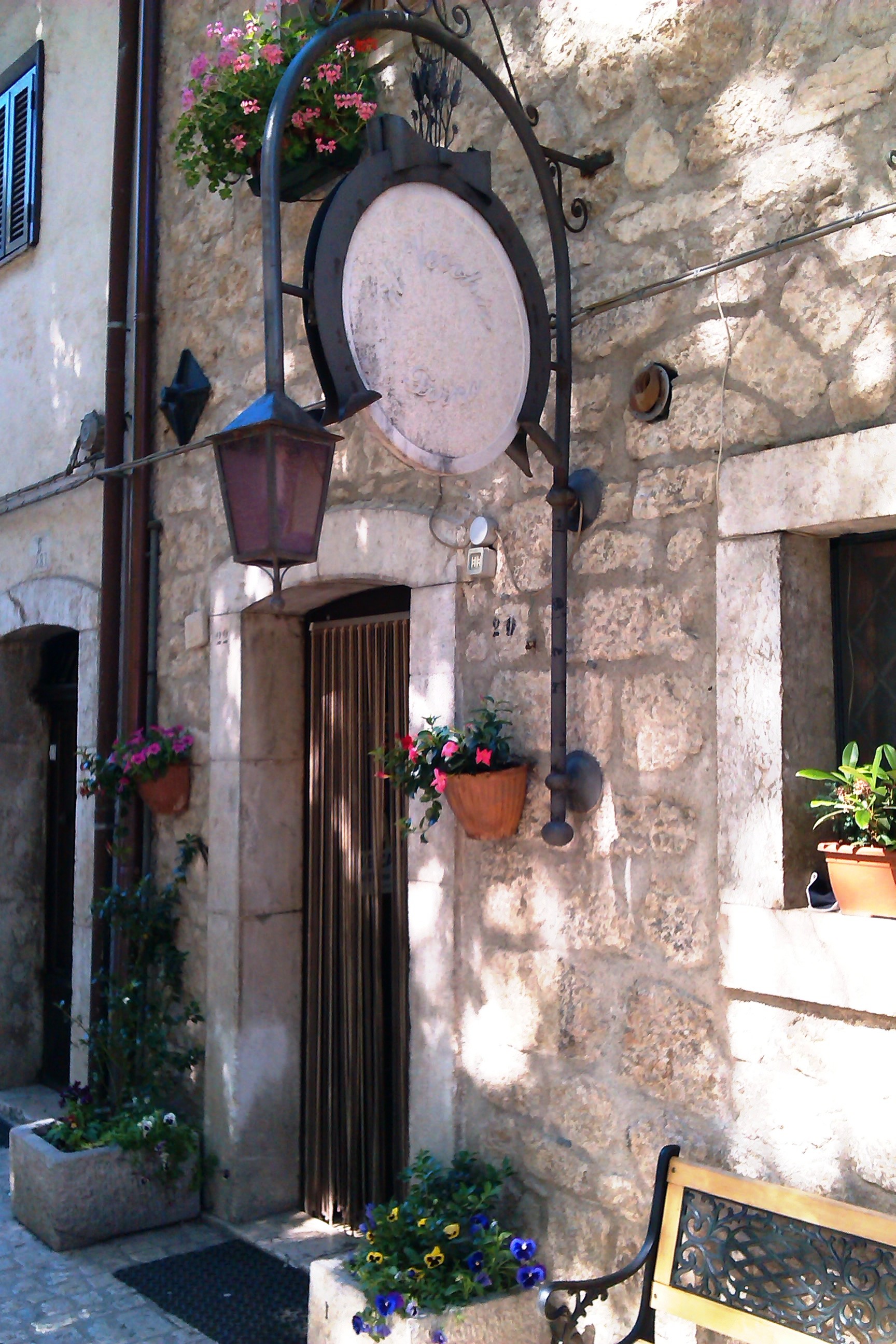
Il Vecchio Forno (The Old Bakery, or The Old Oven),  is located in the centre of Pescasseroli, in a row of old stone buildings. Its shop sign is barely legible, there’s no window showing the wares and a ribbon curtain covers the doorway, so it’d be easy to walk past – were it not for the intoxicating smell of freshly baked bread emerging. We entered down a side entrance, and wandered into the bake-house at the back.

My old teachers at the NBS in London have conditioned me well, as I felt self-conscious about my street clothes, but hygiene legislation clearly wasn’t exactly a priority as there were at least a couple of lit cigarettes in there. Boggling! Still, the loaves being turned out from the large deck oven looked great, as did some plump pizza bianca (an olive-oily flat-ish bread that looks more like what we’d call focaccia in the UK, though actually that’s Ligurian focaccia; in Rome, the name focaccia is used for a flatter, crisp and crunchy bread).

The maestro kindly gave us half an hour of his time, first introducing us to his mother. His lievito madre – mother yeast or leaven – that is. What surprised me about this was how much it just resembled a dough, unlike the more liquid, ie higher hydration, sourdough cultures I’d previously learned about and been using. The madre is about 50 per cent hydration, where recently I’ve been keeping my leaven at around 100 per cent.

Bread at Il Vecchio Forno, Pescasseroli, Abruzzo

We chatted about the issues I’d been having with my naturally leavened breads, and he did some diagnosis. I was fermenting the dough for too long he said, resulting in too sour a flavour – though arguably, a sour sourdough is more in line with certain northern European breads than Italian naturally leavened breads, where the flavours are generally milder, nutty but not sour.

His biggest piece of advice to me, as a home baker making bread once a week, was actually to not worry about using a lievito madre at all. So no sample of their venerable madre for me. Instead, he recommended using a biga.

A biga is an Italian pre-ferment, not unlike a British sponge or French poolish. Unlike those pre-ferments, however, it’s much lower hydration – again, like his madre, more lively dough than bubbling gloop. The maestro went on to give me a recipe for a biga. He recommended using a 00 (ie a fine grade) flour, then got a bit technical for me – saying to use a flour with a P/L grade of 0.55 and a W…. To be honest, with my bad Italian, and terrible handwriting, my note-taking abilities failed me. My notes either say a W of 240 or 400.

But just what are P/L and W? Well, some research  tells me the former is an elasticity rating, the latter the forza della farina (“strength, force of the flour”). Italian Wikipedia calls it the fattore di panificabilità, which you could translate as the “breadability of the flour”.

Although this is in Italian, and fairly technical, it includes a good table. Which I’ve borrowed, as the blogger himself seems to have borrowed it from Professor Franco Antoniazzi of the University of Parma.

W P/L Proteine Utilizzo
90/130 0,4/0,5 9/10,5 Biscotti ad impasto diretto
130/200 0,4/0,5 10/11 Grissini, Crackers
170/200 0,45 10,5/11,5 Pane comune, Ciabatte, impasto diretto, pancarré, pizze, focacce, fette biscottate
220/240 0,45/0,5 12/12,5 Baguettes, pane comune con impasto diretto, maggiolini, ciabatte a impasto diretto e biga di 5/6 ore
300/310 0,55 13 Pane lavorato, pasticceria lievitata con biga di 15 ore e impasto diretto
340/400 0,55/0,6 13,5/15 Pane soffiato, pandoro, panettone, lievitati a lunga fermentazione, pasticceria lievitata con biga oltre le 15 ore, pane per Hamburgher


Basically, it says that the higher the W, generally the higher the P/L, and the higher the protein. To translate that into familiar products, a flour with a lower W and P/L (used for biscuits/cookies etc) is akin to a plain or all-purpose flour, while a flour with a higher W and P/L (used for enriched breads with long fermentations like panettone) is akin to a strong white bread flour. So really not that technical after all. Ahem.

Phew.

Not that domestically purchased packs of flour generally include this grading information, but it’s good to know. All part of my baking education.

So anyway, armed with this knowledge, straight from the maestro a cool old bakery in pleasant little Italian mountain town, I embarked on my first biga experiments… Coming soon!

Infodump:
Il Vecchio Forno, Piazza Vittorio Emanuele III 20, 67032 Pescasseroli, Abruzzo

5 Comments

Filed under Bakeries, Breads

Maize bread, pane di mais

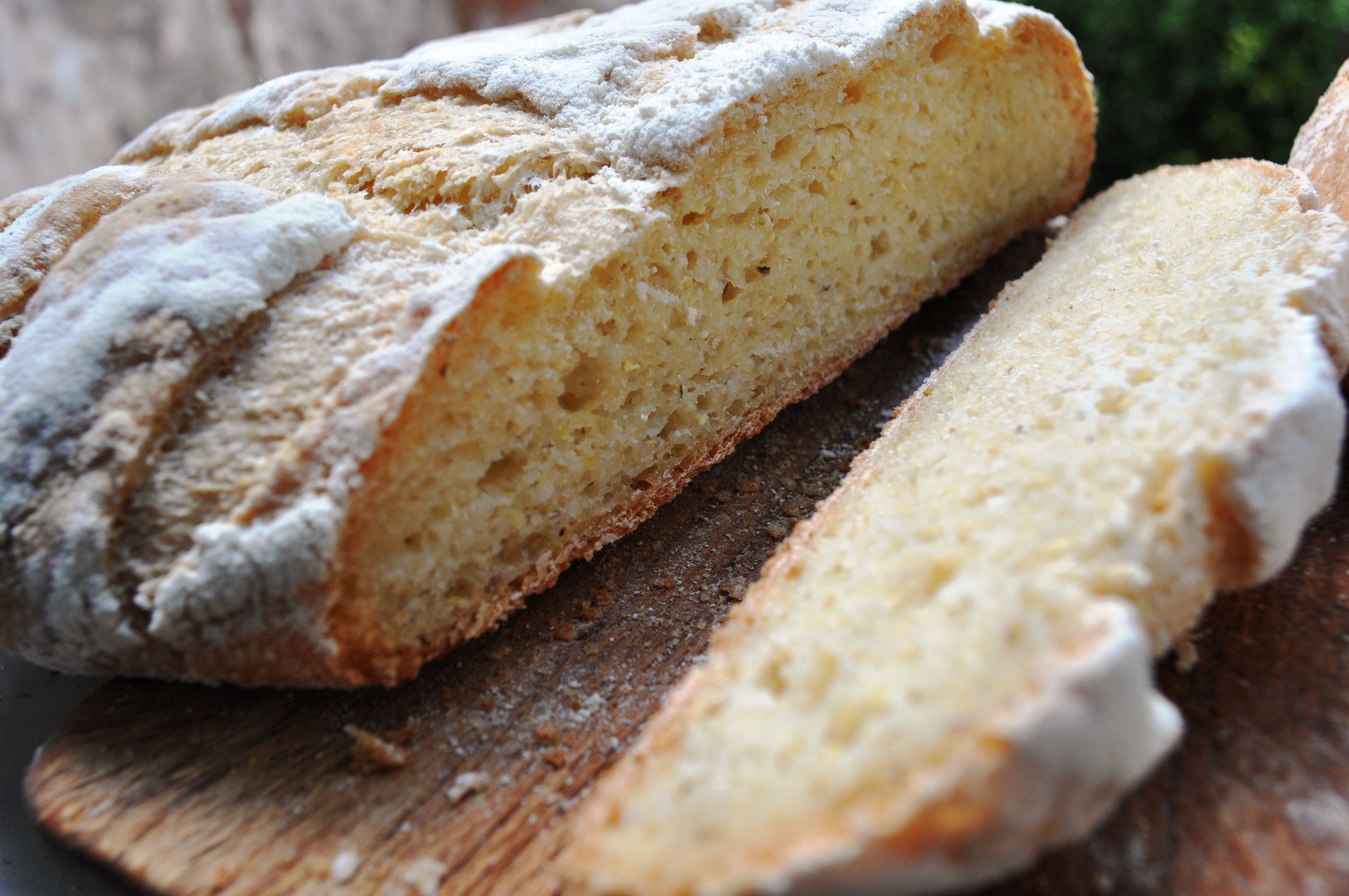
sliced

Maize, mais, Zea mays – the cereal cop mostly commonly known these days as “corn”. Although my brain still can’t quite embrace that as in British English “corn” is a more generic word for cereal grain, specifically in England it’s traditionally used to refer to wheat grain. Etymologically, it apparently comes from the old Germanic and Norse word korn meaning “grain”.

The word corn still makes me think of corn dollies – forms and figures woven in Britain from the harvest’s last sheaf of wheat, ryes, oats or barley. Although wonderfully pagan (they were believed to contain the fertility of the grain over winter, before being ploughed back into the ground with the sowing of the new season’s crop), they were still making these things for harvest festival and including them in displays in church during my Christian upbringing.

Meira flour

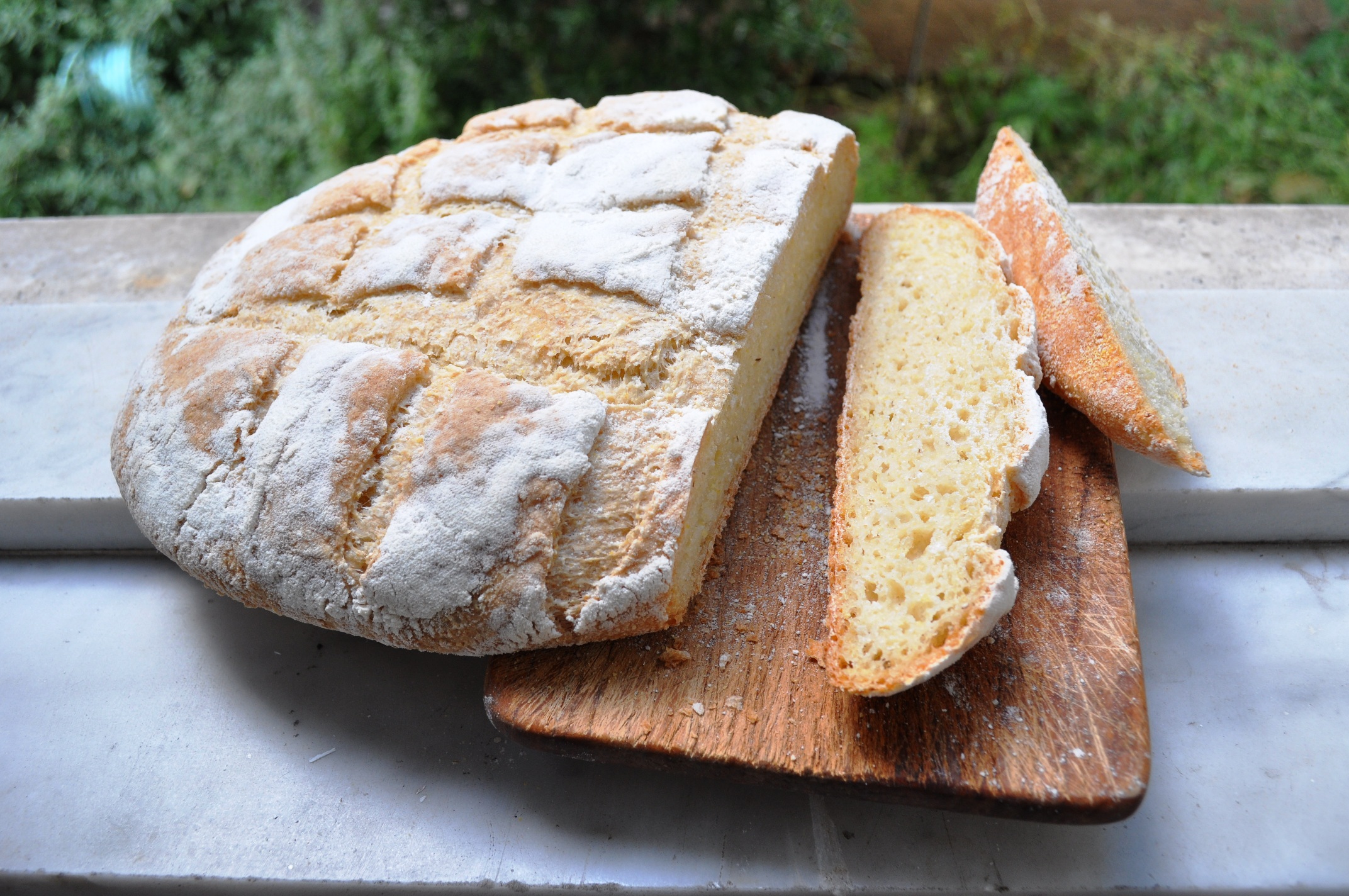
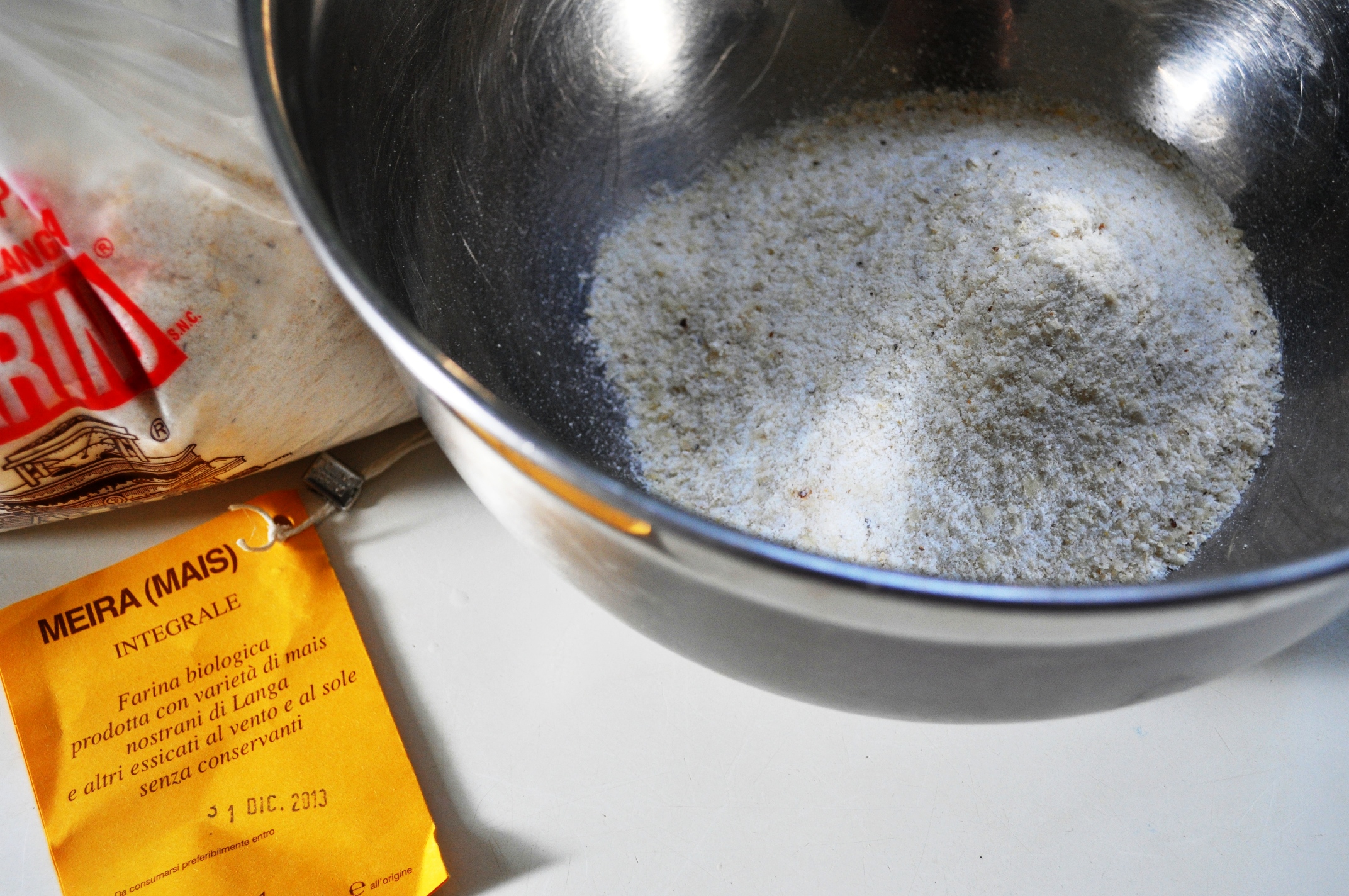
Anyway, here’s a maize bread. It’s not a cornbread, as that name’s already taken by a staple of the US South, and, well, this is a very different proposition. This one is based on a Dan Lepard recipe in his essential baking book The Handmade Loaf. Apparently Lepard was inspired by pane di mais of northern Italy. Which doesn’t surprise me, given the importance of maize and polenta up there, but I’ve never encountered a maize bread down here in Roma. He also talks about it being a “yellow bread”, but I made mine using Mulino Marino‘s ‘Meira’, which is surprisingly pale and white. With rustic dark bits – it’s an organic wholegrain (integrale) flour, made with maize dried by the wind and sun and stoneground, according to the spiel on the label.

Incidentally, some of the Mulino Marino range is now available in the UK through the excellent Bakery Bits online shop. I’ve got mixed feelings about this as I’m increasingly trying, as much as possible, to use the produce of the area I’m living in, or at least the country, as food transportation is a serious contributor to climate change. Although the 2006 book is dating, I highly recommend Michael Pollan’s The Omnivore’s Dilemma, which talks a lot about the fossil fuel factor in food production and transportation, and also goes into the horrifying story of how, at an industrial scale, maize has become an insanely inefficient and illogical (in calorie terms) primary crop. Indeed maize is the second biggest agricultural product in the world, with much of it used to produce high fructose corn syrup, a key driver of the obesity epidemics of the US and UK etc.

forming dough maize loaf

I’d like to imagine the maize that was used to make my Meira flour is a world away from the quietly apocalyptic industrial plains of maize in the US Midwest, China and Brazil. Certainly Italy’s not a major maize grower – despite the historical role of polenta here, the country is too generally mountainous to be caught up in modern industrial agricultural practises on the epic scale found in these larger nations. (In 2011, it produced around 9.7 million tonnes, compared to 313 million tonnes grown in the US. Source: FAOSTAT)

So yes. When I’m living back in the UK, the whole locavore thing is going to be an interesting challenge after living in Italy, place of eternal citrus and a umpteen flour varieties. (I am genuinely worried – the British weather was always haphazard, but climate change is really affecting it, with 2012 apparently devoid of a summer, and much of the British grain harvest ruined by the damp. “It’s been a soul-destroying year for farmers growing crops.”)

Anyway.

Back to the bread.

dough ball

I’d made a version of this one before, almost exactly three years ago. That time, I used a Mexican style maize flour – masa harina. Reading about it all now, I realise that although masa harina and farina di mais are both basically flours made with maize grain, they’re very different propositions. The former has been made with grain that’s been “nixtamalized”: soaked with slaked lime. This alkali liquid changes the molecular structure and means the resulting flour is easier to make into a dough (notably a corn tortilla dough). It’s all a bit technical for me. I’m sure Jeremy Cherfas could explain the chemistry properly.

well risen

The Meira flour is more for polenta, I believe, and needs to be cooked up with water. Which I didn’t exactly do. Food for thought for next time. The bread turned out okay. Even if I’m still really annoyed with myself for losing my moulding mojo. A lot of the freeform bread I’m making at the moment just collapses when I take it out of the proving bowl or basket. This one was no exception. Furthermore, I’m not getting great oven spring. Grrr. Annoyed.

bloody discus

But it tasted good. And, Googling pane di mais now, even one of the Italian versions I found had the old discus form factor, so I’m not the only one (see this fairly low hydration one, made with 500g grano tenero 00, 300g maize flour and 450ml water). Another other Italian one, here, seems to be 100% hydration – 500g maize flour, 500ml water – though it appears to be tin-baked, with some nice oven spring. If it the one on the left of the pic. Not sure. Then there’s a very different version here, made in more of a challah form and flavoured with rosemary.

Anyway. Again. This post is getting long. People tell me not to write long and ramble, but sod that. If I can’t do it in my own blog post, and can’t me my true side-tracking self, what’s the point in blogging?

bloody discus baked

The recipe:

1. Mix together 50g polenta flour / farina di mais and 100g water.
2. Cook it together in a pan, stirring, then turn out to cool.
3. Crumble, squish and squash the polenta up into 300g warm water.
4. Add 60g yogurt and stir.
5. Add 15g fresh yeast (lievito di birra) and stir well.
6. Stir together 200g maize flour (in this case, Meira farina di mais), 300g strong white bread flour and 8g fine sea salt in a large-ish bowl.
7. Add the liquid to the flour and bring to a dough.
8. Knead reasonably well and bring to a ball.
9. Rest for about 10-15 minutes, then give it another knead.
10. Repeat this process 5 times, then leave the dough to prove for about half an hour, until doubled in size.
11. Gently form a ball.
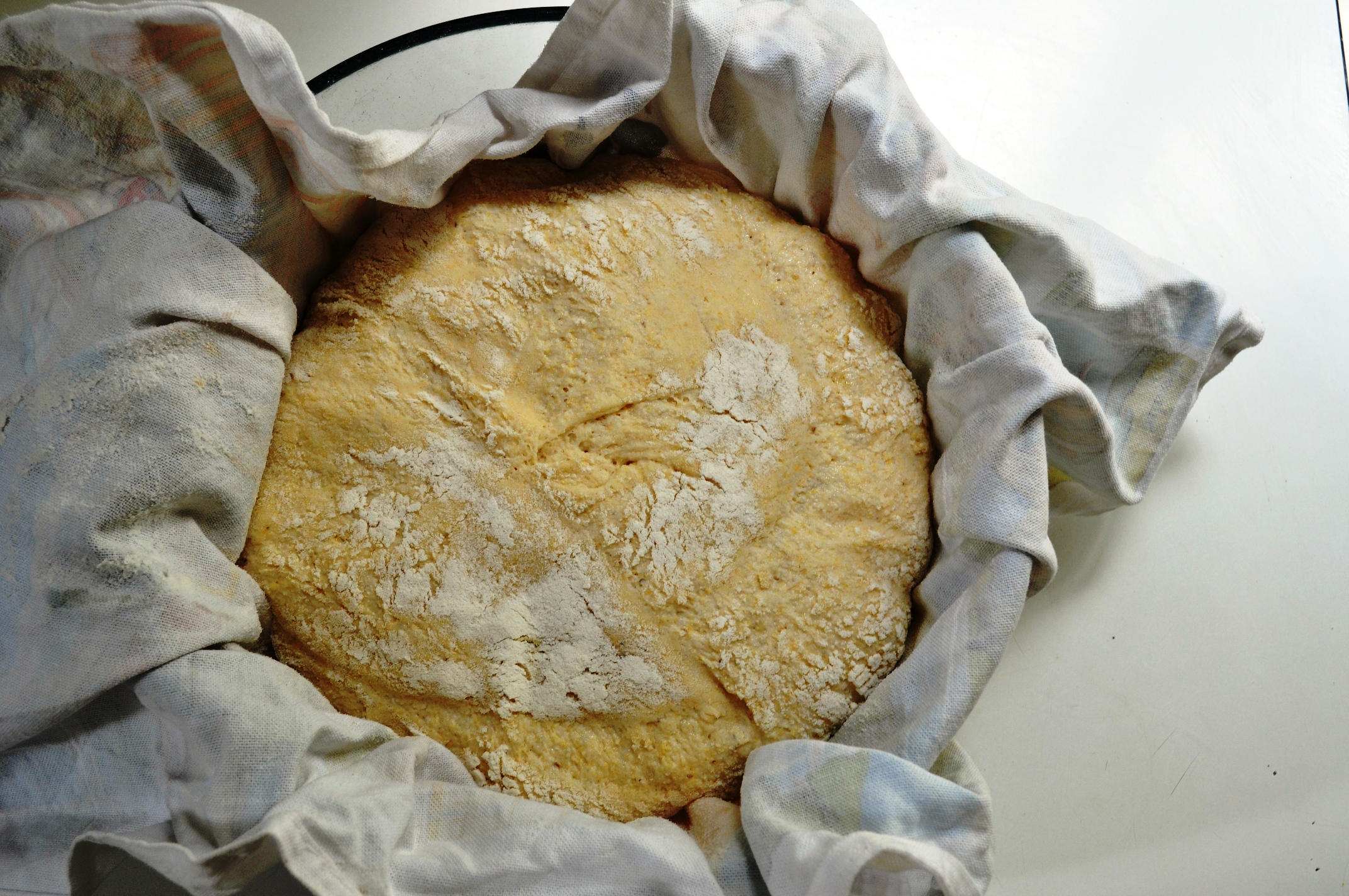
12. Line a 25cm (10 inch) bowl with a cloth, rubbed with flour. Put the ball of dough, seam-side up, in the bowl and cover with the cloth. You can even use a shower cap over the bowl to keep the nice warm healthy fermenty atmosphere in, a tip I learned from my fellow ex-pat Roman baker Krumkaker.
13. Prove again until doubled in size.
14. Preheat oven to 220C.
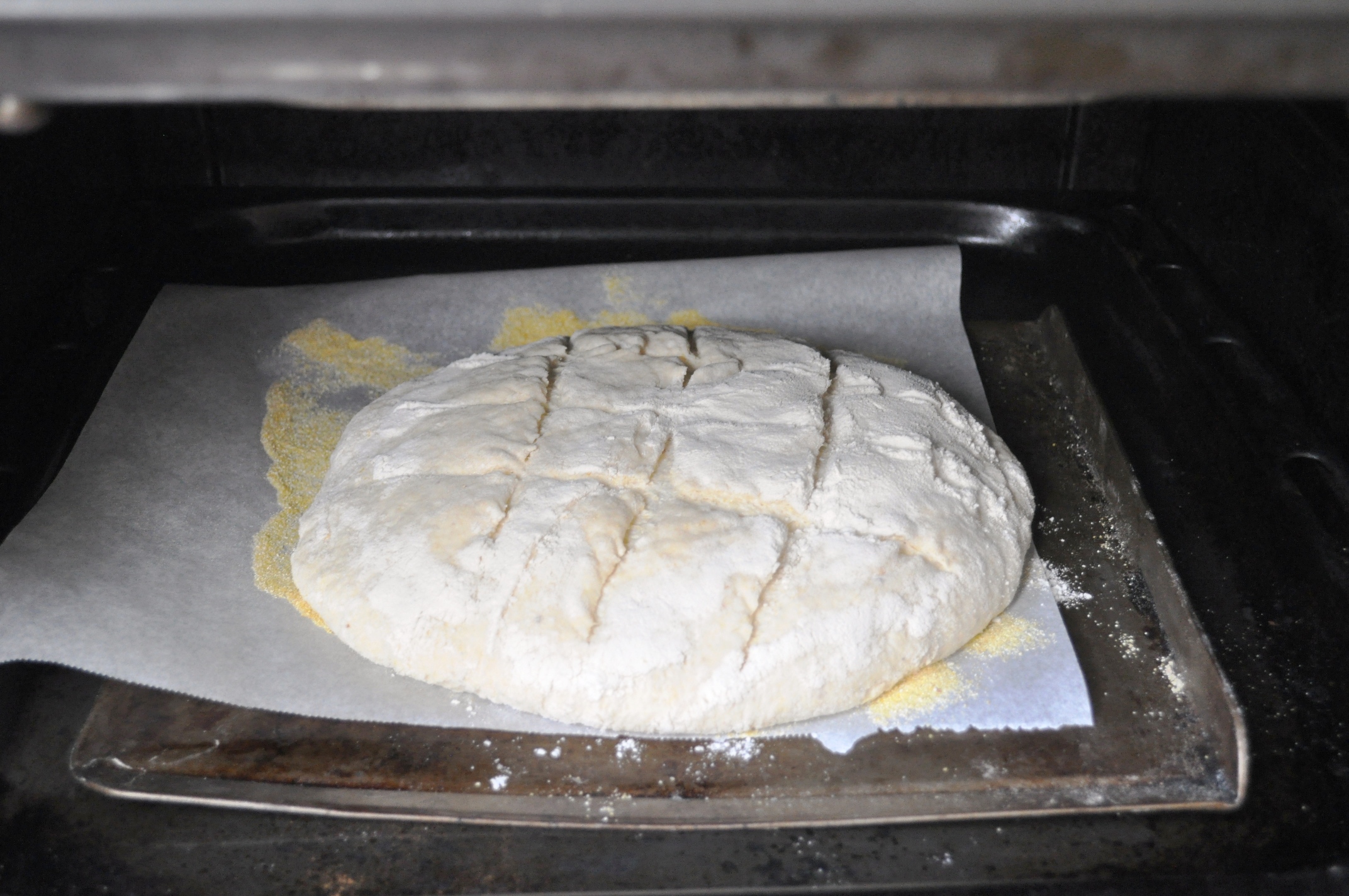
15. Gently turn out the dough onto a baking tray lined with parchment sprinkled with more farina di mais or polenta.
16. Cut a grid pattern into the dough with a sharp knife or lame.
17. Bake for around 50 minutes. I turned my oven down to 200C after around 25 minutes, but every oven is different.
18. When baked, cool on a wire rack.
19. Eat – with lots of salad and your finest local cheeses. We had some great sheep and goat milk cheeses from the farmers’ market near the Circus Maximus. I always think of Charlton Heston and Ben-Hur when I’m down there, even if in that film the race took place in another circus, in Jerusalem, and even if Rome’s Circo Massimo is basically just a scrappy field with very little in the way of remaining structure.

crumb CU

2 Comments

Filed under Breads, Recipes

Durum wheat bread with linseed and farro grains

grano duro, farro, linseed bread

Another one of my bread experiments. For some reason I’d ended up with two packets of farina di grano duro – that is, flour made from Triticum durum wheat (with duro meaning “hard” in Italian and Latin respectively.) It’s more typically used for making pasta, but it seems to be a reasonable bread component too and is used fairly widely. I have used it in the mix with good results before, such as in my Absurdly wholesome multigrain, multiseed loaf, but this one made with a much higher proportion of farina di grano duro.

So anyway.

100g farro grains. I used farro perlato. With farro here meaning farro dicocco (Triticum dicoccum), also known in English as emmer. You could use any type of wheat grain (such as spelt grains), or even, say, pearl barley.
50g linseed (“good for you mane and tail” as my friend Stephen McGrath of Newton Livery, NZ, once told me)
8g fresh yeast
300g cooking liquid from the grain (see below)
80g leaven
100g strong white flour (I used what’s known as “Manitoba” in Italy)
400g farina di grano duro / durum wheat flour or fine semolina flour
10g fine sea salt

1. Cook the farro grains in water until they’re soft but a little chewy. This can take around 20 minutes, but will more likely be more. Keep tasting them to check.
2. Strain the cooked grains, reserving the cooking water.
3. Weight out 150g of the cooked farro grains. (You can use any leftovers for other breads, or add them to salads.)

Cooked farro grain
4. Grind the linseed to break it up a bit but don’t completely pulverise. You can use a pestle and mortar, coffee grinder or even a liquidiser goblet.
5. Cover the broken linseed with a little of the cooking water. (This will help soften it up slightly before it’s added to the dough, but arguably isn’t strictly necessary.)
6. Combine the yeast, 300g of the grain cooking water and leaven and whisk together.
7. Put the flours and salt in a large bowl and mix slightly to distribute the salt.
8. Add the yeasty mix to the flours and bring to a dough.
9. Turn out onto a lightly oiled work surface and knead to combine. As this bread is using so much durum wheat, the dough won’t be as springy and stretchy as one made with a strong white bread flour.
10. Form a ball and return the dough to the bowl (cleaned). Rest for ten minutes, then knead again briefly. Repeat this process once more.
11. Gently stretch out the dough, then add the seeds and grains. Knead to combine.
12. Leave the dough to prove in a bowl covered with a clean cloth until it’s doubled in size. Times will vary, according to the temperature and the liveliness of your leaven.
13. Once the dough has doubled, take it out of the bowl and knead briefly and gently before forming a ball. Cover and rest for 10 minutes.
14. Tighten up the ball, then place in a proving basket or bowl lined with a floured cloth, with the smooth surface downwards and the “tucked” surface upwards.
15. Cover and prove again until doubled in size.
16. Preheat your oven to 220C.
17. Turn out the dough on onto a lined baking tray.
18. I brushed mine with egg white as I had some spare, but you could use whole egg or milk to give slightly different glazes.
19. Cut a cross.
20. Put in the oven and bake for 20 minutes, then turn down the oven to 200C and bake for a further 20 minutes.
21. If it’s baked enough (tap the bottom, check the colour; don’t be afraid to overbake a bit more if you’re not sure it’s done), take out and cool on a wire rack.
22. Eat as you see fit.

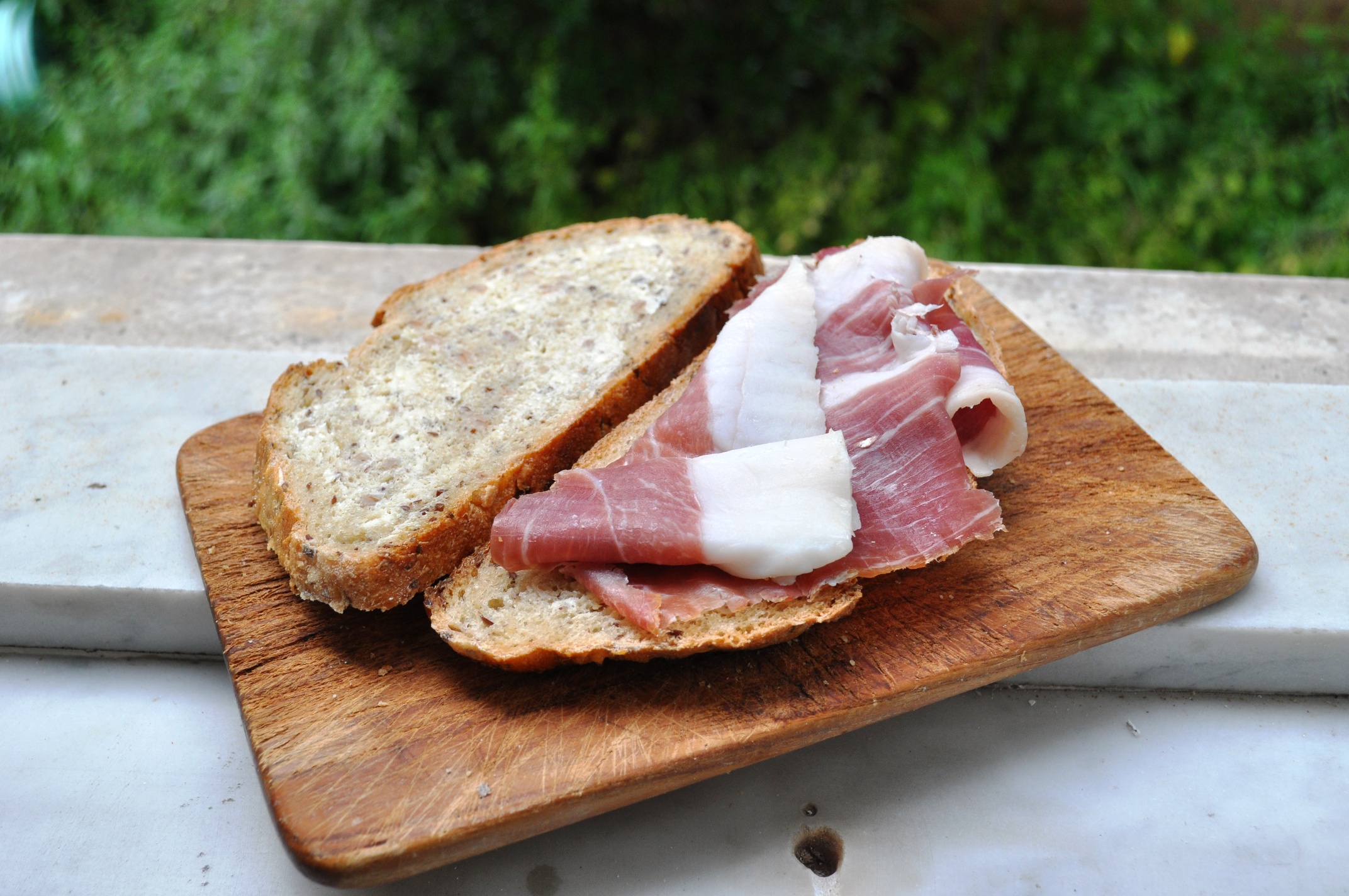
Prosciutto sandwich

Leave a comment

Filed under Breads, Recipes

Easter in Rome – colomba, casatiello, seasonal pizzas and the like

If you like baked goodies (and considering you’re visiting a blog named Bread, Cakes and Ale, I have to conclude that you do), Easter is a great time to be living in Rome. Sure, the Spring might be making half-hearted attempts to arrive, and sure the mild + damp has resulted in my first 5am mosquito strafing (damn them), and sure the city council might have decided to move my favourite farmers market out of walking distance (from Testaccio’s Ex-Mattatoio to Garbatella – *weep*. End of an era) BUT the bakeries the past week of so have been full of seasonal specialities. Which compensates nicely.

This is my, um, second Easter in Rome, and I vowed I’d try and make X or Y after seeing, buying, consuming and enjoying them last year. But you know what, I can’t get that really nice light airy crumb on an enriched dough in my domestic oven, and I’m working long hours, so I thought stuff it, I’ll just buy an X. In this case the X refers to colomba.

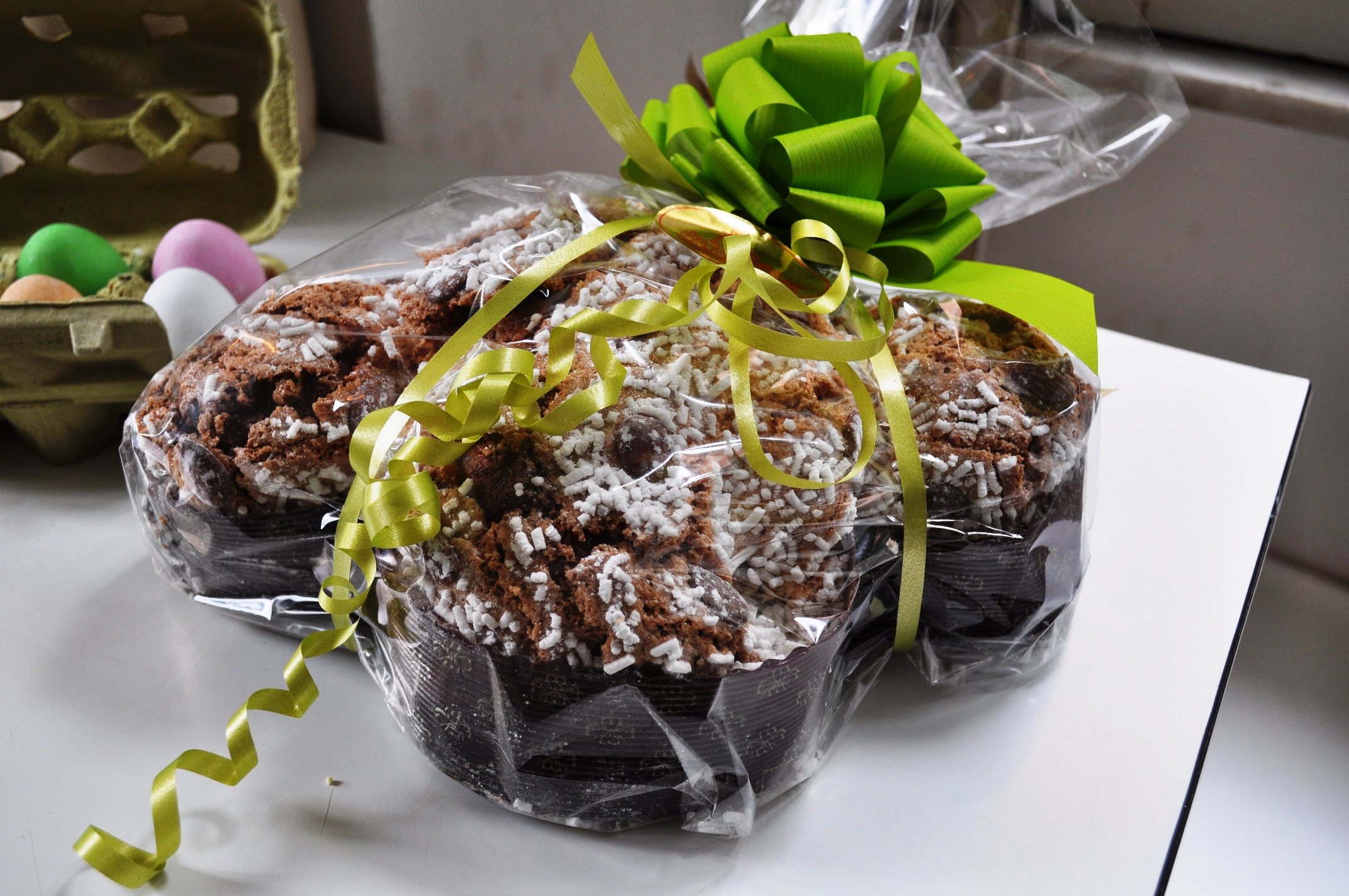
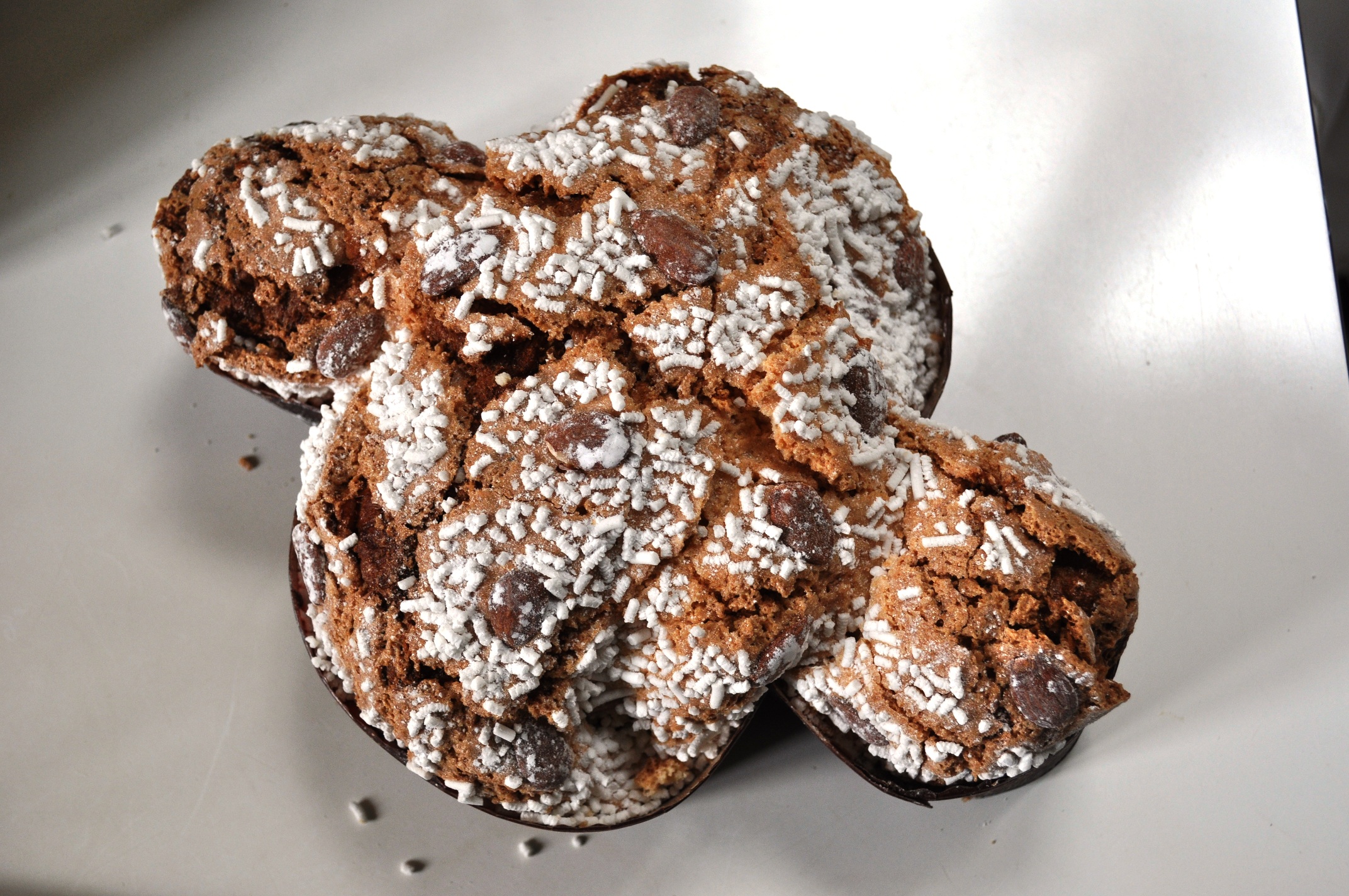
Colomba di Pasqua

Colomba means dove in Italian, so this is an Easter dove cake. No doves are used in the bake though. Instead, Colomba is basically the same kind of enriched dough as used in a Panettone, just baked in a different form. Indeed, it’s shaped like an X, appropriately enough for Easter and considering my phrasing above. Though the X isn’t supposed to represent a cross, it’s supposed to represent the shape of a bird, in flight. You know, wings outstretched on either side, head, tail. Ta da.

We bought ours from Pasticceria Nonna Nani, Via Giacinto Carini 35, Monteverde Vecchio. It was made with a natural leaven though it had no trace of a sour sourdough flavour, presumably thanks to the generous presence of sugar, eggs and candied peel. Very nice.

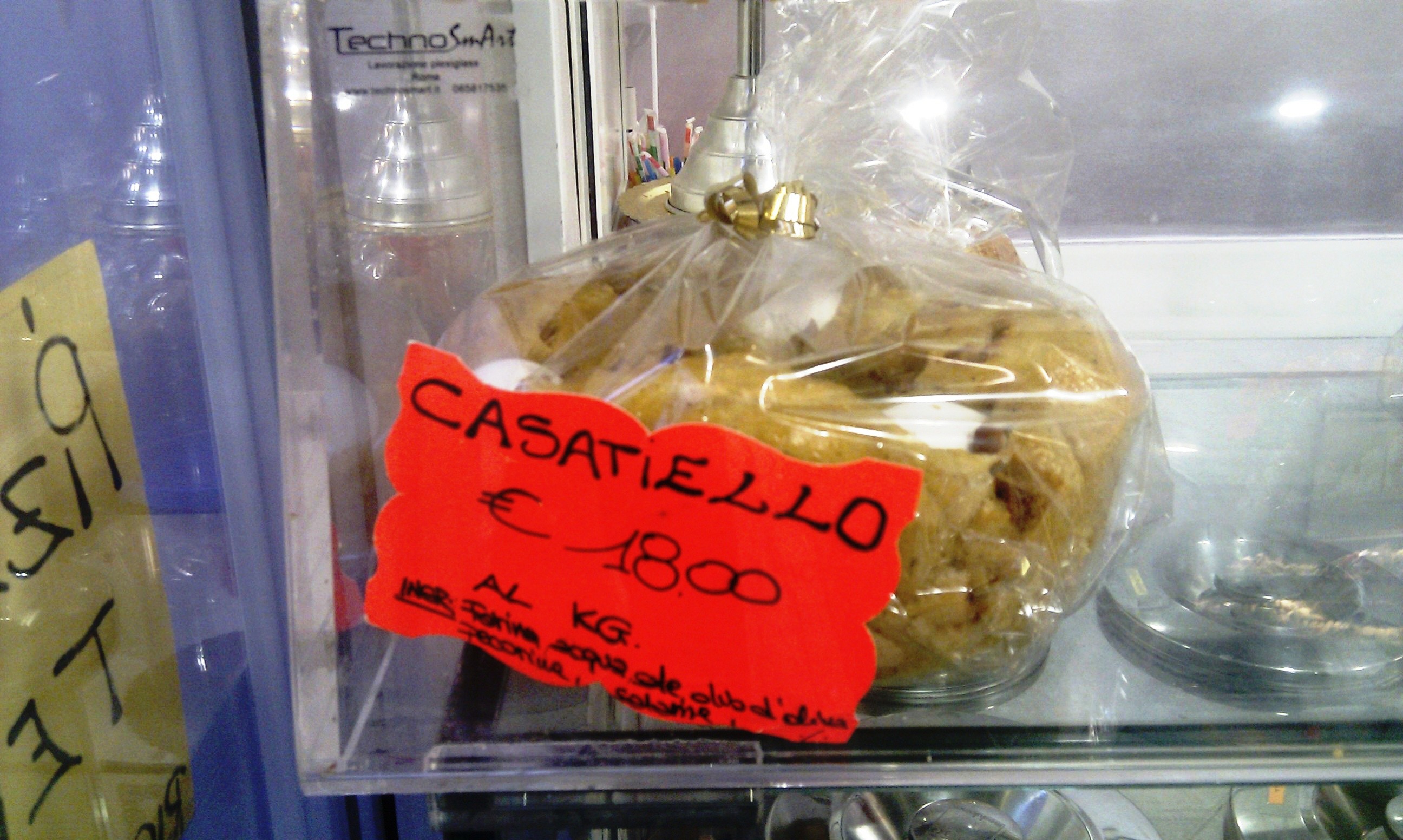
Casatiello

While buying the Colomba I also spied Nonna Nani’s Casatiello. I’ve seen these a lot in Roman bakeries the past two Easters, though apparently they’re not Roman traditionally, they’re Neopolitan. Indeed, a Neopolitan lady who was giving me Italian classes last year gave me some.

This bread is most notable for the presence of eggs placed in the dough before baking, whole, intact and intero, including the shell. The dough is made with lard, and also contains cheese(s) and cured meats. This recipe on the Giallo Zafferano site includes pancetta and salami, but the Italian Wikipedia entry says it should contain cicoli. Otherwise known as ciccioli. In the ‘Pig’s Fat’ entry of Gillian Riley’s Oxford Companion to Italian Food, she says “Strutto is the name of lard: fat from all parts of the carcass, internal and external, rendered down – the delicious crispy bits left over are called ciccioli.”

So now you know.

Now, I’m not much of a meat fiend, so I’ve never really been that drawn to Casatiello, though my wife Fran is a meataholic, and was keen to bake something meatily traditional this Easter. It’s the end of Lent, so a blow-out is kinda traditional I suppose. As I was researching Italian Easter baked goods, sweet and savoury, I came across pizza gaina/pizzagaina, also known as pizza chiena.

Pizza gaina, aka pizza chiena

This seems to be a type of pizza rustica or pizza ripiena that’s made for Easter. Before you say, “eh, pizza?”, note that the word doesn’t just refer to flat bread discs with stuff smeared on top here in Italy. Pizza rustica, for example, is a generic term for things that are basically rustic pies – though rather than being made with a pastry crust, they’re made with a yeasted pizza dough crust. Pizza ripiena, meanwhile, literally just means stuffed or filled pizza. No one really seems to be that in agreement about the origins of the word pizza, so I’m not going to go on an etymology ramble. If you read Riley, or John Dickie’s Delizia!, the term seems to have had many and varied uses.

Oddly, I can’t really get a handle on where pizza gaina/chiena is from. I’ve not actually seen it in bakeries here in Rome and most of the recipes online seem to be American, or Italian-American, rather than Italian. And even Britain’s own Nigella Lawson has a version, though she makes no mention of Easter, and simply calls it Pizza rustica. Indeed, it’s quite a natural fit with British food, as it’s really not unlike a ham and egg pie.

The version Fran did was basically just an excuse for a meat (and cheese) fest. She made a basic white dough and used it to line a springform cake tin. She then filled the case with various strata of cheese and meat. Vegetarians – look away! Vegans – look away and weep!

In this pic (above) you can see the freshly baked pizza gaina, still cooling in its springform tin. Alongside is a wholemeal farro loaf.

Pizza ricresciuta (or cresciuta) di Pasqua

Another type of Easer pizza I have seen in Rome is the pizza ricresciuta. This is even more unlike your familiar disc-shaped pizzas because it’s tall, round loaf or cake eaten for Easter breakfast. Indeed, it seems to come in sweet and savoury versions, though I’ve mostly seen cheesey ones in the windows of Roman bakeries. Crescere, btw, means to grow, to grow up, to increase, so I guess you could imagine it as a pizza dough that’s been left to expand, to shake off the shackles of disc-like flatness.

And finally

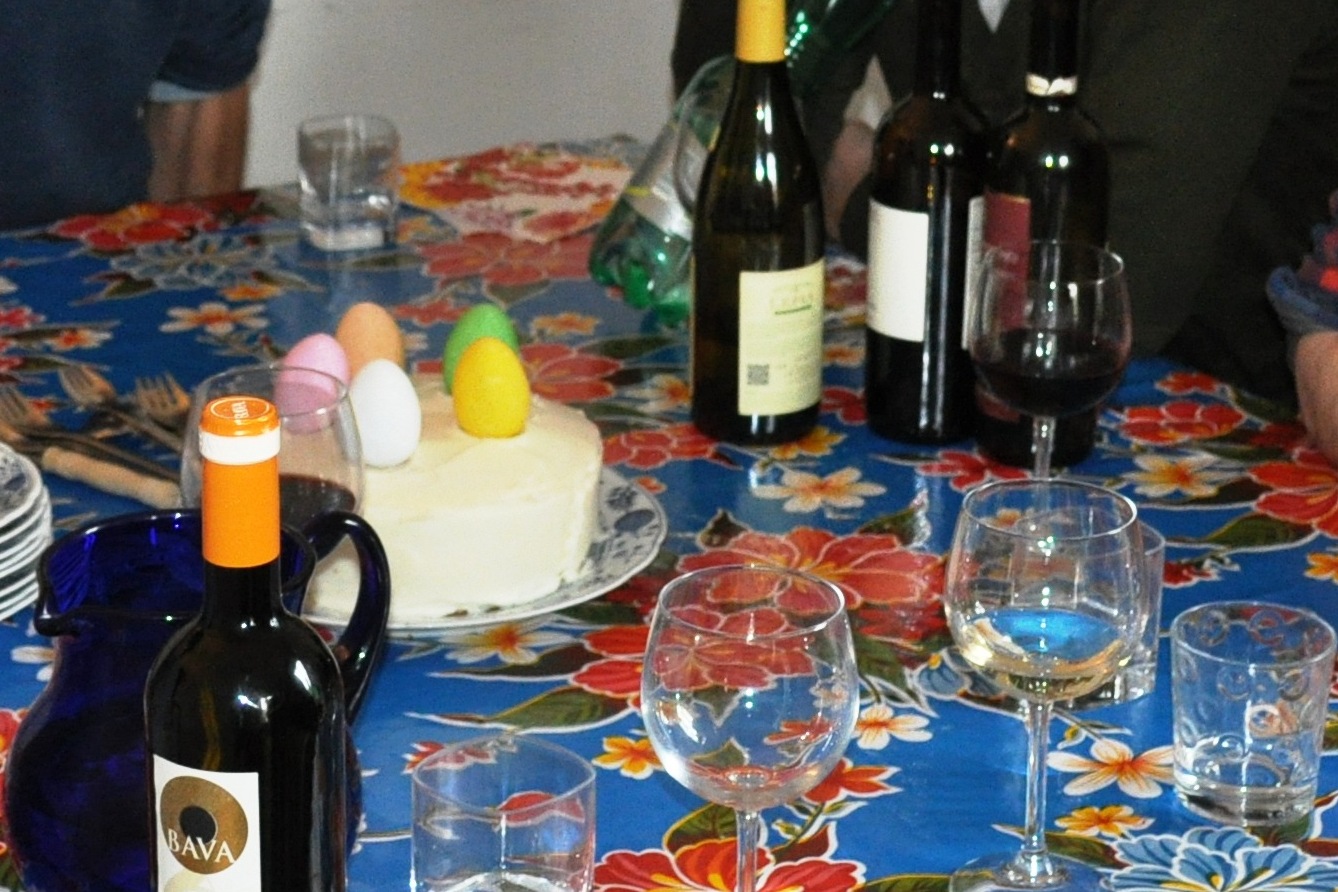
Look, I know the Simnel Cake is the traditional British Easter cake, but I really don’t much like dense fruit cakes, okay? In our family, we’ve always just made a lemon sponge decorated with lemon butter icing and Mini Eggs. So that’s just what I did. Annoyingly, I didn’t really get to thinking about it until Easter Sunday then made it Easter Monday. What I really thought would be a nice Italian twist would be to put a layer of mascarpone in the middle, along with a layer of lemon curd (maybe that bit’s not quite so Italian), then maybe just a sprinkle of icing sugar on top. None of that happened though. I noobed my lemon curd, and we couldn’t get any Mini Eggs, so instead went with those sugar-coated chocolate eggs that resemble real eggs. And are really hard on the teeth.

Then I forgot to take a proper photo, which is a shame as it was cute. All I’ve got is this crop, with the cake nestled among many wine bottles. We were  doing a sensible, sophisticated wine tasting, honest.

Wine and Easter cake

Anyway, Happy Easter, belatedly.

1 Comment

Filed under Breads, Cakes (yeasted)