Category Archives: Baking

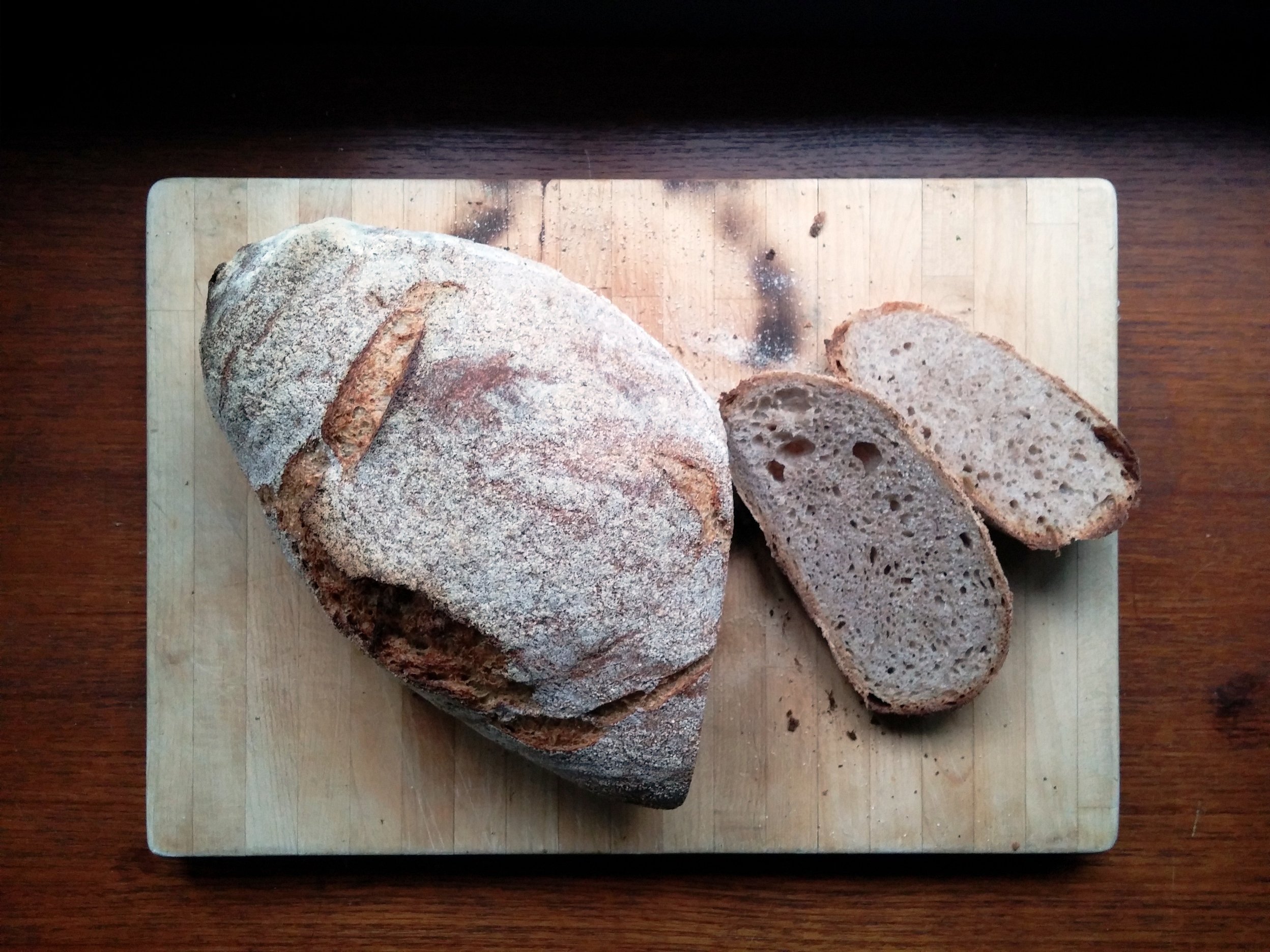
Baking – Daniel Etherington’s bread experiements

Fritti, pizza, local Sussex booze – and chocolate pine nut ricottta tart

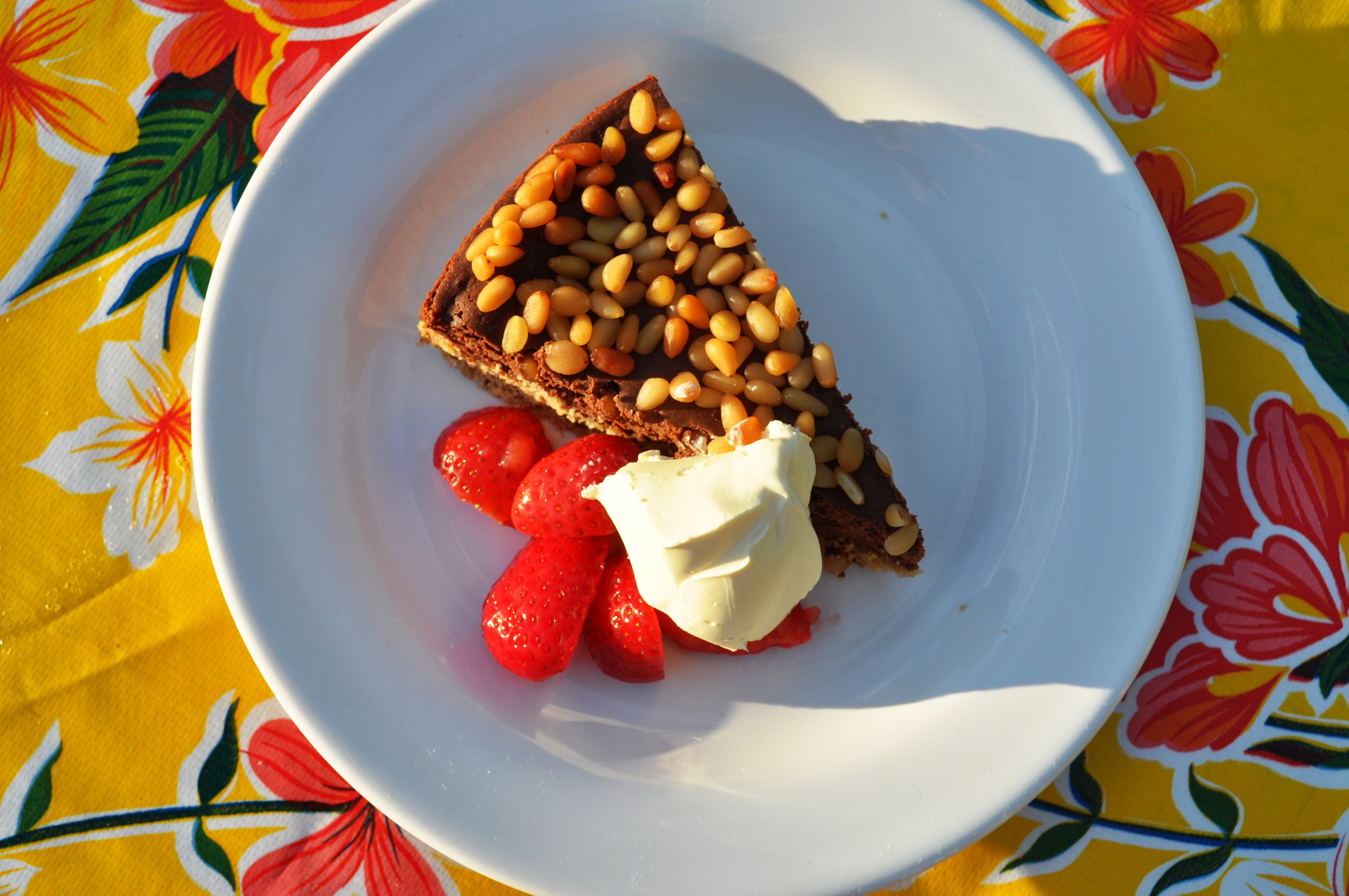
Slice with strawbs and cream

We’d been planning a pizza and local beer evening with friends here in Lewes, Sussex, for a while. This evolved into a pizza, local beer, local wine, local cider and Roman-style fried starters (fritti) evening, with the latter becoming viable after we borrowed a deep fat fryer.

We started the evening with an aperitivo of kir royales made with sparkling wine from Breaky Bottom, one of several vineyards we’re lucky enough to have near us on the chalk South Downs. I tried not to drink too much though, as I was driving the deep fat fryer.

Breaky Bottom

Missing these things from Rome, we did suppli al telefono, which are deep-fried balls of risotto with melting mozzarella inside; carciofi alla giudia, Romano-Jewish deep-fried artichokes, which I’d never done before, but worked very well (you trim the artichoke, remove the choke, then deep-fry it. Then deep-fry it again); and calamari fritti – fried squid bits, which I simply floured with semolina.
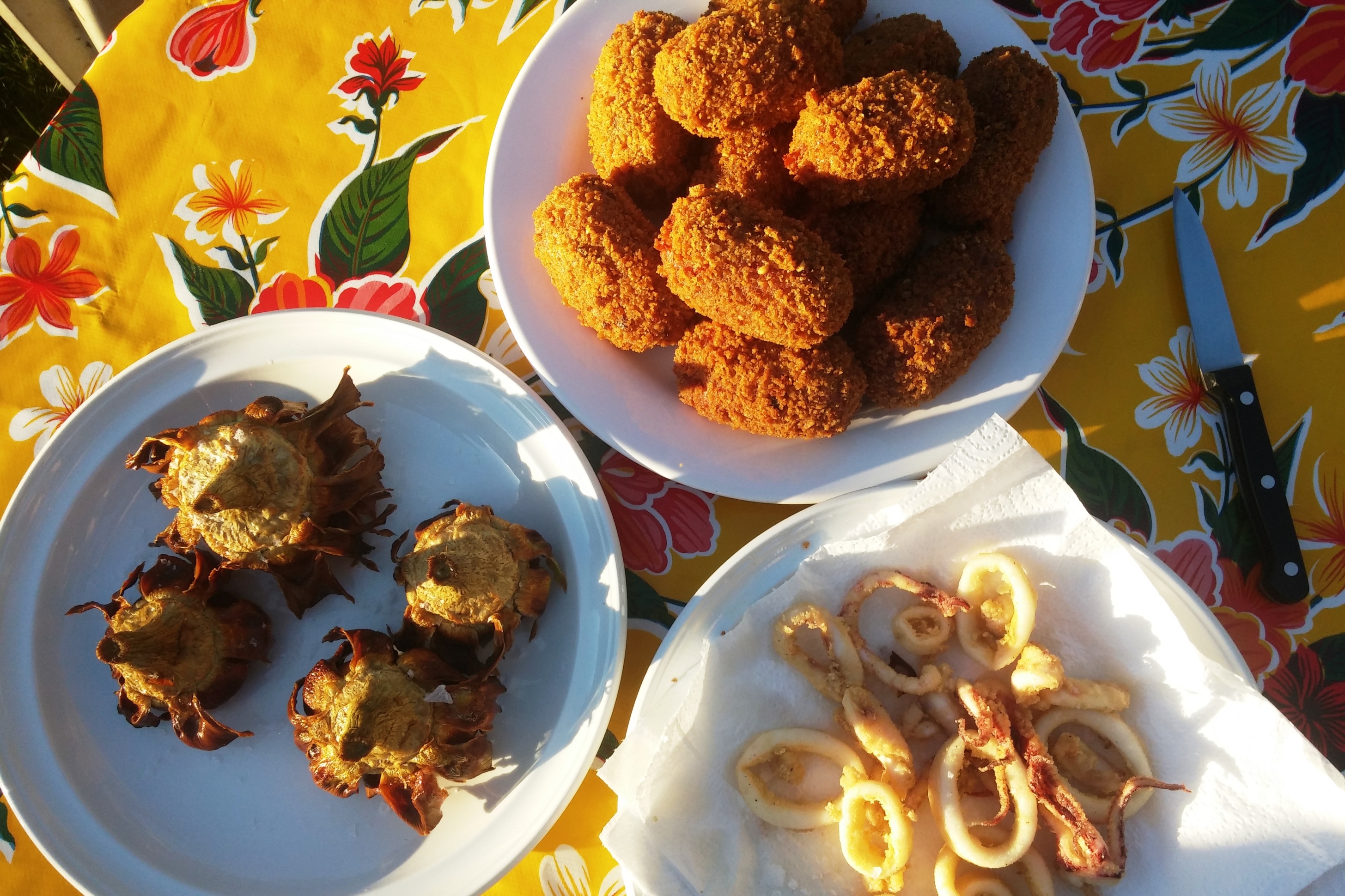
Fritti

Seasonal pizza
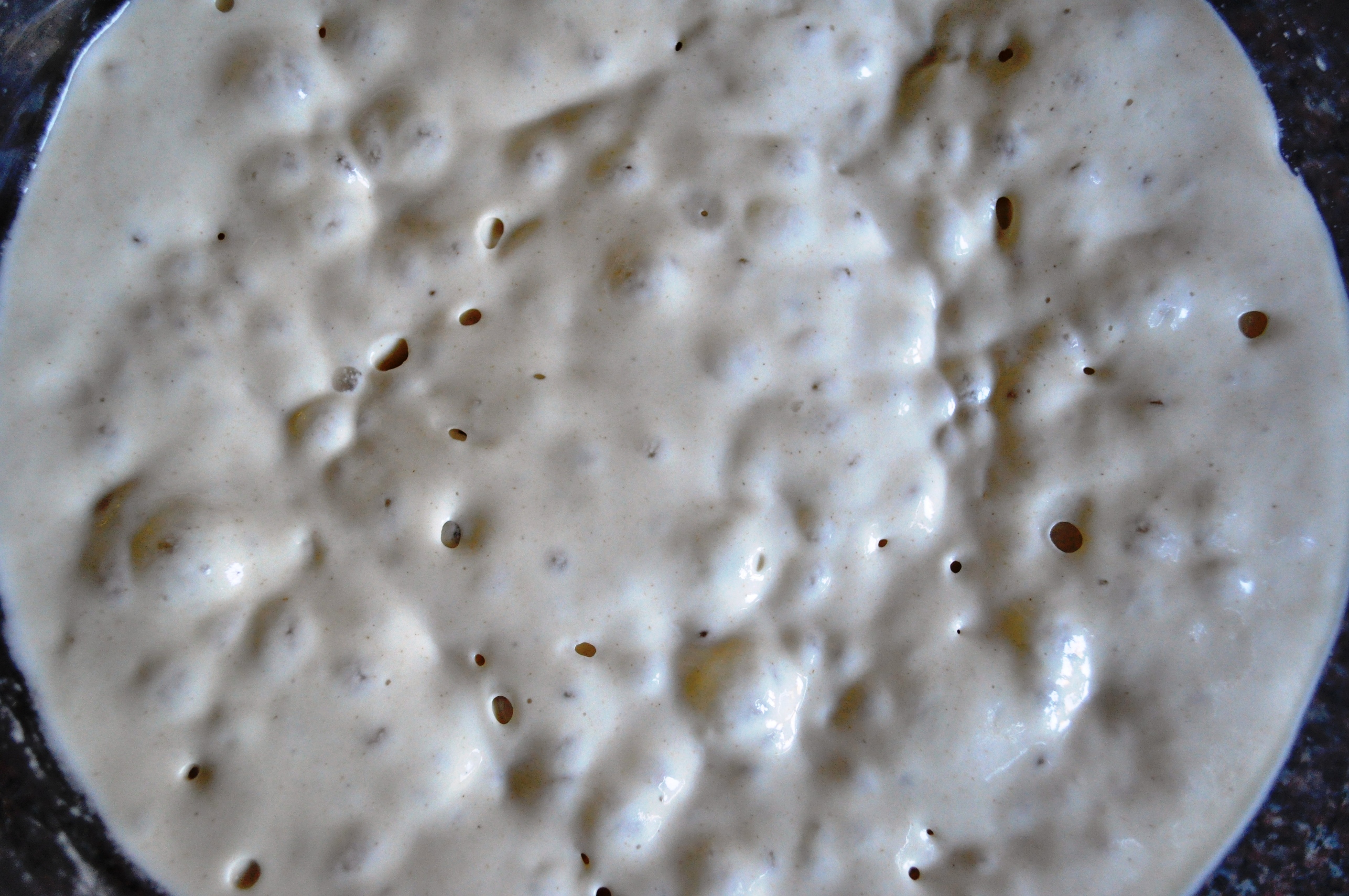
For the pizzas, I did about 2kg of dough. Here it is before and after its 24 hour prove. It was a monster.
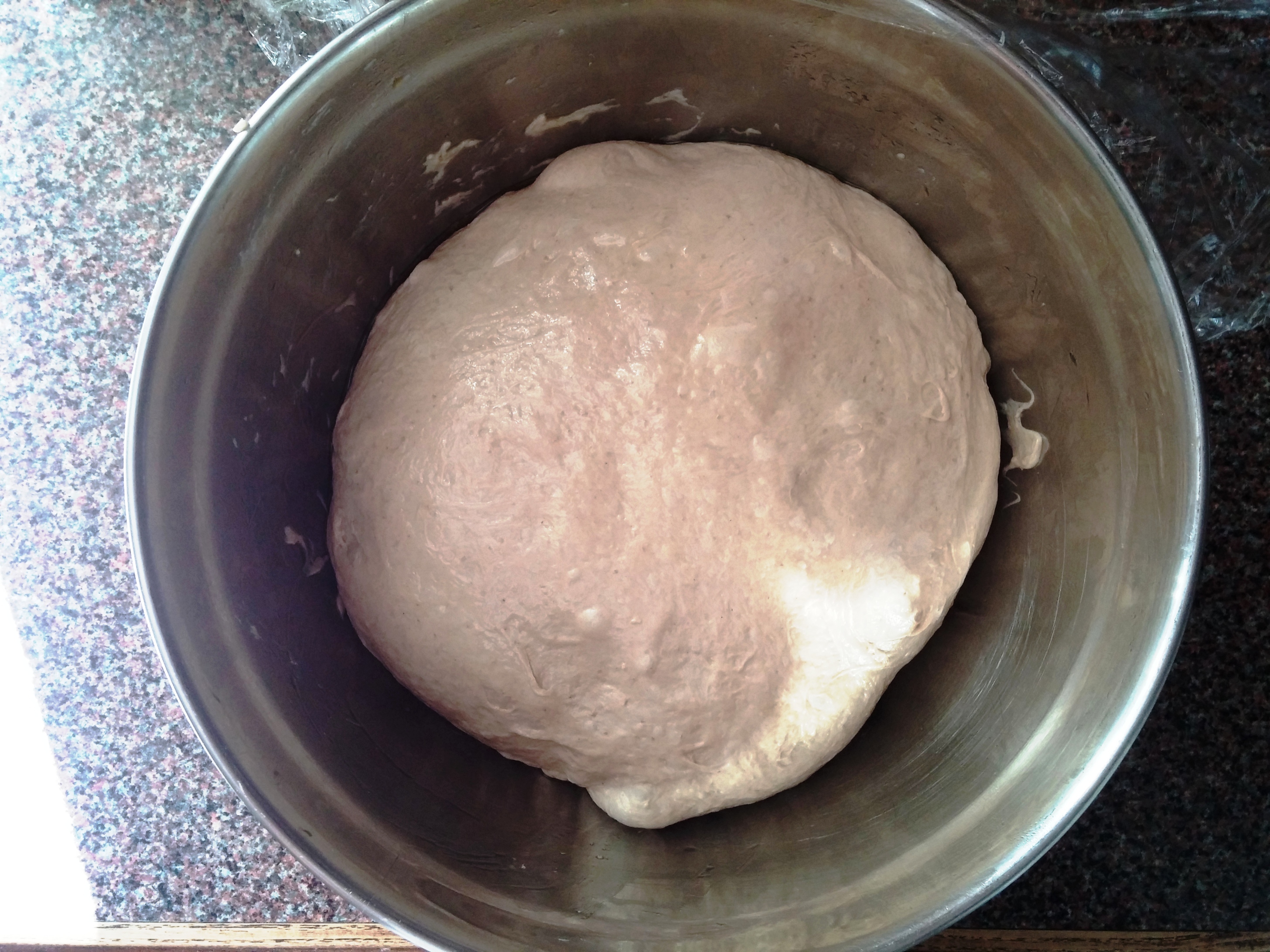
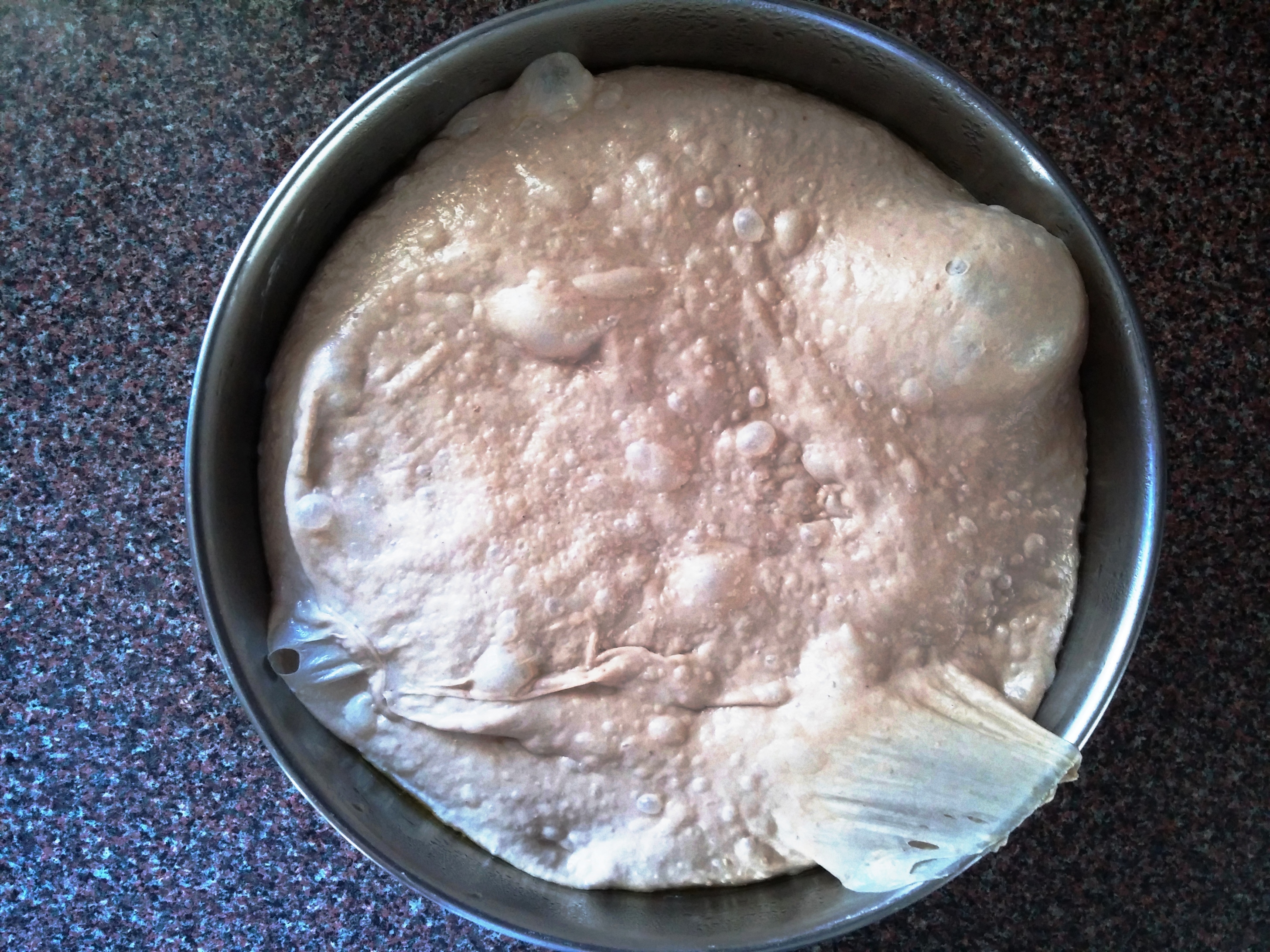
Pizza doughPizza dough, after final prove

Then we made four different topping. One thing we learned from Gabrieli Bonci in Rome is to not be afraid to experiment with toppings, not be a slave to the canonical pizzas, and to use seasonal ingredients. It’s a great time of year for seasonal produce, so alongside the artichokes, the markets also furnished us with other good stuff like asparagus and radicchio. Here’s our pizza menu, typos and all.

Pizza menu

We were so busy trying to bake them and serve them – and drink our way through a very fine selection of further wines, cider and beer – we forgot to take any pics. The booze included Danebury Vineyards’ Madeline Angevine white (not Sussex, but Hampshire, though bought from Harveys) and various beers from Harveys and Long Man, the brewery named after the giant figure on the hillside at Wilmington, about 10 miles east of Lewes.

We did do one classic pizza, a Margherita, but otherwise we used seasonal ingredients and local cheeses and meats. For the latter, we used some smoked pancetta from Beal’s Farm Charcuterie, combined with local asparagus. The other two pizzas we did were bianche – white, that is, without tomato sauce. This is commonplace in Rome, but international pizza all seems to default to rossa (red), with tomato sauce. First, we did radicchio, fresh garlic and two cheeses from High Weald Dairy: their ricotta and Medita, a salty feta-style sheep’s milk cheese. Second, we did roasted baby leeks with mozzarella and Twineham Grange, a local parmesan-style cheese, aged for 15 months, which satisfies my need for a local cheese that’s good for grating on pasta dishes etc. We did use bog-standard mozzarella throughout, as no one’s making a Sussex version. Yet.*

Pie!
After all that fried food and stodge, what else did the meal need? Ah yes, fat and sugar. A dessert. After making a pine nut tart recently, I’ve been wondering about a chocolate version. As, like any sane person, I adore chocolate. Plus, we’d seen the High Weald ricotta on the market.

Side, through glass cloche

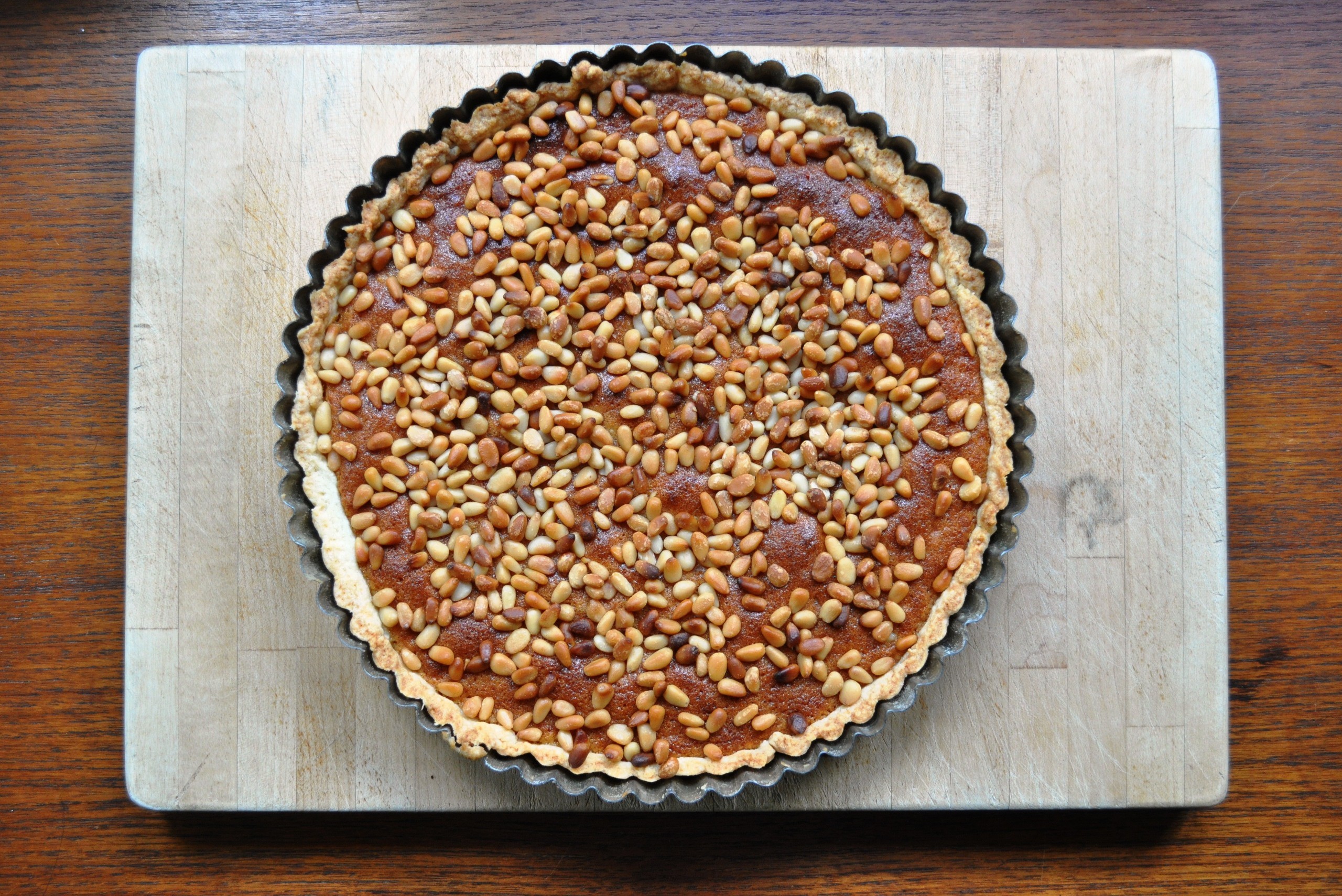
Anyway, the chocolate pine nut ricotta tart is based on a recipe by Giada de Laurentiis, granddaughter of the legendary film producer Dino and iconic actress Silvana Mangano. The original recipe was in cup measures. I tried translating these to grams using online charts, as well as using actual cup measuring spoons: each approach gave me completely different weights. This is why I’m not a fan of cups – for flour, especially, they’re inaccurate, as there’s the question of how compacted the powder is.

The resulting pastry was very crumbly and impossible to roll, so I effectively filled the bottom of a loose-bottom cake tin with it, as you would with biscuit crumbs for a cheesecake. Indeed, this is basically a type of cheesecake, though the filling is dense and very rich. After all that fritti and pizza and booze it was perhaps a bit much – or at least a big slice was a bit much. Perhaps it’d be a more suitable end to a slightly lighter meal!

You’ll need a food processor for this recipe.

Pastry
200g plain flour
20g polenta
100g pine nuts, toasted
35g caster sugar
Pinch salt
120g butter, melted and cooled slightly

Filling
110g water
150g caster sugar
225g dark chocolate, chopped
200g ricotta
8og full-fat cream cheese
3 eggs
100g pine nuts

1. To make the pastry, combine the plain flour, polenta, 35g sugar, salt and 100g toasted pine nuts in a food processor, blending until the nuts are well ground.
2. Add the butter and pulse until the mixture is well combined. It’s unlikely it’ll ball up like a normal pastry dough.
3. Use the mix to line a 26cm loose-bottomed tin. I used a cake tin, though a flan or pie tin would work.
4. Put the pastry case in the fridge for at least half an hour, or for a day or so if you make it in advance.
5. Preheat oven to 180C (160C fan).
6. Line the pastry case with baking parchment then fill with baking beans.
7. Bake for about 25 minutes, then remove the beans and parchment and bake for another 10 minutes until golden.
8. Allow the pie case to cool while you prepare the filling.
9. Heat the water and 150g sugar in a small saucepan, bring to the boil and simmer to dissolve the sugar, then remove from the heat and allow to cool slightly.
10. Over a separate pan of simmering water, melt the chocolate in a heatproof bowl, avoiding contact with the water.
11. Beat together the eggs.
12. Using a hand blender or the food processor again, combine the ricotta and cream cheese, then slowly add the egg.
13. Continue beating or processing until smooth.
14. Slowly add the sugar syrup, beating or processing until all combined.
15. Pour the filling into the pastry case and bake, at the same temperature, until almost set – check at about 15 minutes.
16. Sprinkle the other, non-toasted pine-nuts over the top then continue baking until it’s all set and the pine-nuts are nicely toasted, another 15-20 minutes, depending on your oven.
17. Allow to cool and serve. We served it with some cream and macerated strawberries.

Cloche

A note on the food matching
Although we and our guests put together a great collection of local boozes, after the initial aperitivo I stuck with Harveys’ Knots of May. This is a seasonal light mild, reddish-brown in colour and only 3%, which I bought direct from cask at Harveys in a 4 pint / 2.4 litre plastic jug, aka container, aka rigger, aka growler, aka polysomething or other.

It’s a delicious beer, but I’m not sure its malty sweetness made for the best food pairing with the fritti and pizza. Something a little more acid or bitter might have been better for cutting through the fattiness of the cheese etc.

It did, however, work well with the desert. I’m still blundering uncertainly through the beer and food matching business but that malty sweetness, and light, low body, went well with the dense, chocolately pudding.
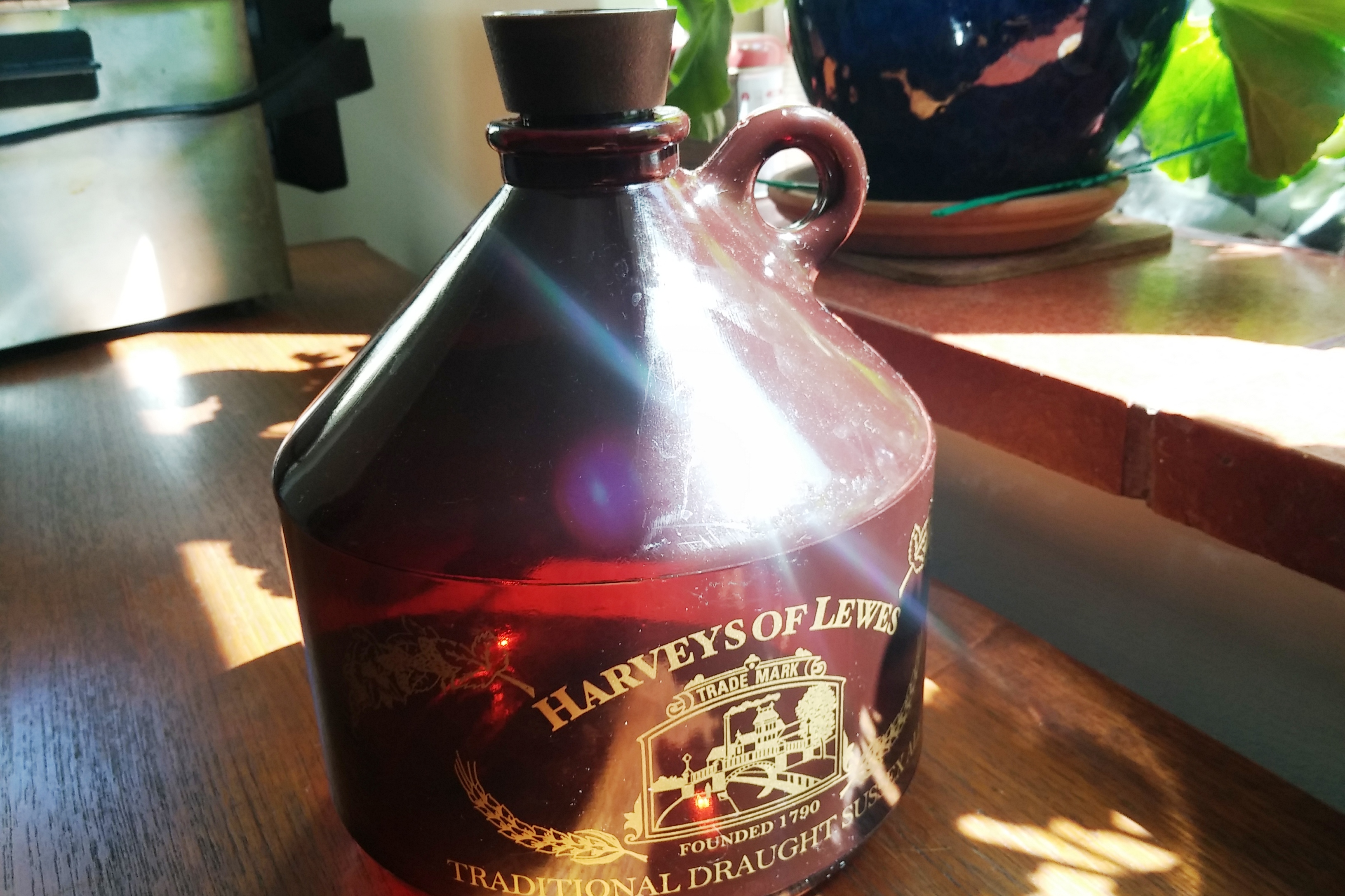
Little brown jug - empty


* There is a British buffalo mozzarella being made these days, from my home county of Hampshire, just to the west. I’ve yet to try it. Plus, mozzarella di bufala is far too good – and pricey – to use for melting directly on pizza. For that you use the standard cow milk mozzarella, known as fior di latte (“flower of milk”, “milk flower”) in Italy. Bufala is best added after the end comes out of the oven and allowed to melt just slightly with the latent heat.
2 Comments

Filed under Ale, beer, Baking, Pies & tarts

Cornish saffron cake

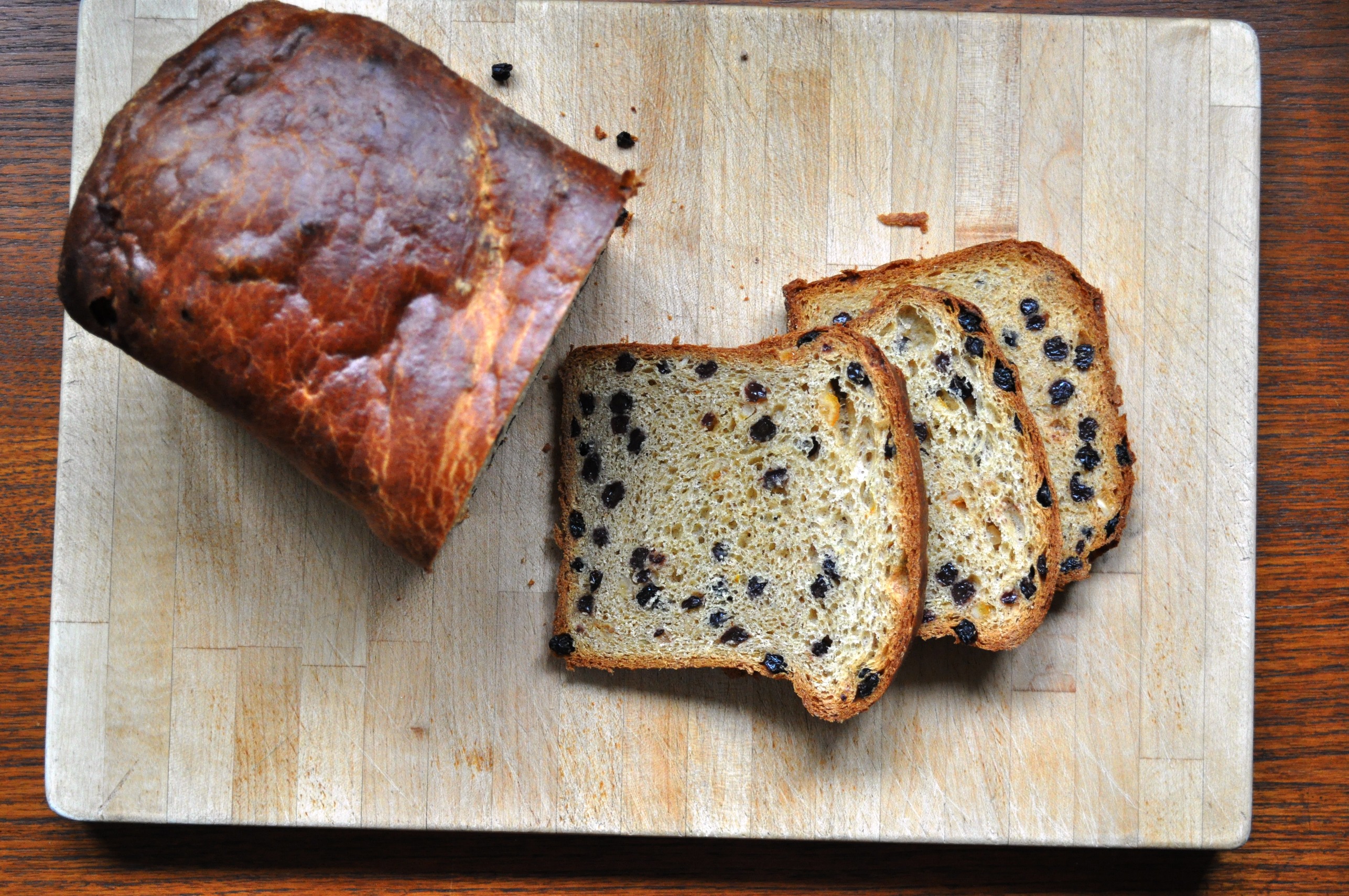
Overhead

Last week, I spent several days down in north Devon, helping my father shift part of a 14 ton pile of gravel. It wasn’t our only activity though. I also counted 80 marsh orchids in their meadow; saw my first Leworthy lizard (was it lost? Surely it’s far too soggy there for a sun-loving reptile?), visited Holsworthy Ales and tried their new honeyed golden ale, Bizzy Buzzy (very pleasant on a sunny day, despite the infantile name and label); and I even saw my first ever British kingfisher, which shot underneath me when I was standing on a small footbridge over the river Deer. Plus, this being the Etherington family, I also did a lot of eating, include a requisite cream tea.

Scones and clotted cream

Normally, when visiting my folks in that part of the world we go for a meal at The Castle Restaurant, Bude, over the Devon border, on the Cornish coast. But sadly it closed down in October 2013 after a six-year run. It’s a real shame, as it was one of the only places serving real food in that area of north Devon/Cornwall. It’s also a wider shame there aren’t more real food places in that area, as it’s got an interesting food heritage. For example, Stratton, just inland from Bude on the way back to Holsworthy, used to be one of England’s key saffron-growing centres.

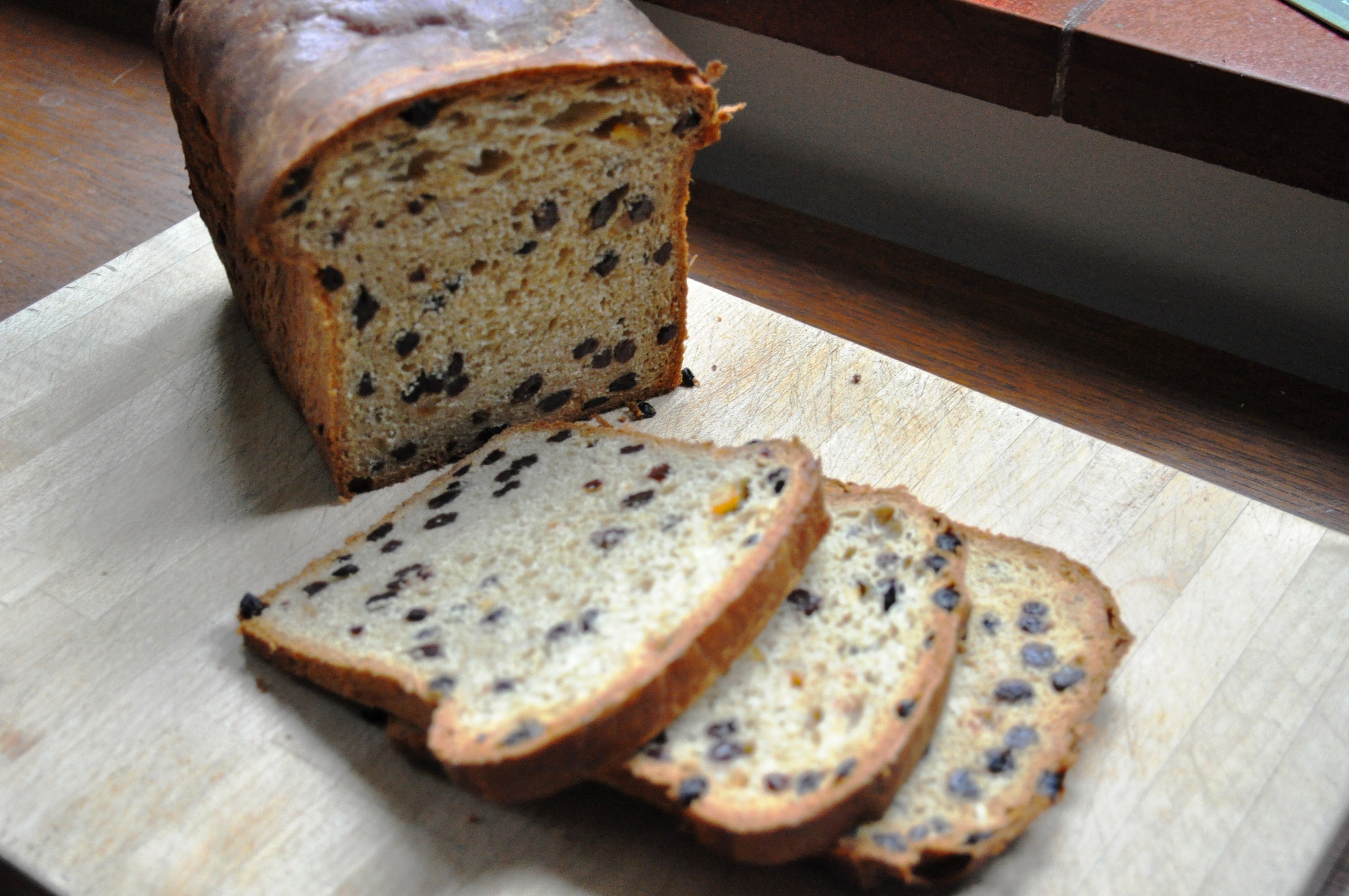
The saffron grown there would have been used in, among other things, Cornish saffron cake. This is an enriched bread, something like a yeasted cousin to English tea loaf (aka tea bread), though dyed (slightly) with the distinctive orange-yellow of saffron. In ‘English Food’, Jane Grigson says, “Saffron has always been expensive, even during the Middle Ages when it was at the height of European popularity for flavouring dishes, and even more for the colour it gave them. People liked their food to look gay, so that saffron… was found in every prosperous household.”

While in ‘English Bread and Yeast Cookery’, Elizabeth David says, “Among the most costly of spices used in early English cooking, and one which has survived – that is in our true native cooking – almost solely in yeast cakes and buns, is saffron. Originally treated as a colouring rather than a flavouring agent, it was used lavishly in sauces and for almost any category of dish, whether fruit, flesh, fowl or fish, sweet cream or savoury stew, whenever it was felt that a fine yellow colour would be appropriate.” She said its use died out through the 19th century – except in the West Country for buns and saffron cake. She suggests that when WWII deprivation forced people to replace saffron with annatto, they came to realise the former “was a very great deal more than just a colouring agent.”

Price spice
Saffron is the stigmas of Crocus sativus – Saffron crocus – which have to be harvested by hand. I imagine it’s backbreaking, slow work. The little pot I’ve got simply gives that frustratingly vague “Produce of more than one country”, which may mean India, Iran, Spain, Turkey, Morocco, Egypt, Spain, probably even China and perhaps even Greece, where the plant’s presumed wild ancestor (Crocus cartwrightianus) may have originated.

Grigson says, “It has been estimated it takes a quarter of a million flowers to produce one pound,” that is 454g. So if my little pot contained just 0.5g of stigmas, that’s still around 275 flowers (I think; maths isn’t my strong point). Sheesh. Or to look at it another way, if Waitrose Spanish saffron costs £3.99 for 0.4g, that’s £9.96 for 1g, for £9,975 for a kilo. The classic comparison is with gold, which at the time of writing costs about £24,000 per kilo (depending on carat).

Grigson also says the crocus was introduced to England in the 16th century and was still cultivated here until the practise died out at start of the 20th century. One enterprising grower did, however, start cultivating it in Essex again in 2001. His works out at £15 for 0.2g, or £75,000 a kilo. This is clearly a lot more than gold, but such high prices are a reflection the labour-intensiveness of a small scale operation in a first-world economy. I wonder if anyone grows it in Devon or Cornwall still? Or at least has Crocus sativus in their garden without realising the worth of its tiny red stigmas, despite how excruciatingly hard they are to extract.

For this recipe, I referred to the one in ‘English Food’ and another recipe from one of those little old-school ‘Favourite recipe’ books published by J Salmon Ltd (“Britain’s oldest post card and calendar publisher”). Despite the (somewhat haphazard) recipes, given with pounds and ounces only, and the cute watercolour wash illustrations, the books are a great repository of traditional British recipes. David also has a recipe, but I didn’t look at that till afterwards. In it she says one “valuable detail” she learned in her research was that “the little bits of saffron in the infusion which colours the cake are not strained out”. I hadn’t. They really help maintain the flavour, and just go to prove you didn’t use any old yellow colouring.

1 good pinch of saffron
A few tablespoons of boiling water
250g strong white bread flour
200g plain white flour
200g milk
7g instant yeast, or 20g fresh
100g butter
100g lard (or just use 200g butter)
1/2 t fine salt
60g caster sugar
1/2 t cinnamon
A few grates of fresh nutmeg
150g currants
50g candied peel

Saffron strands

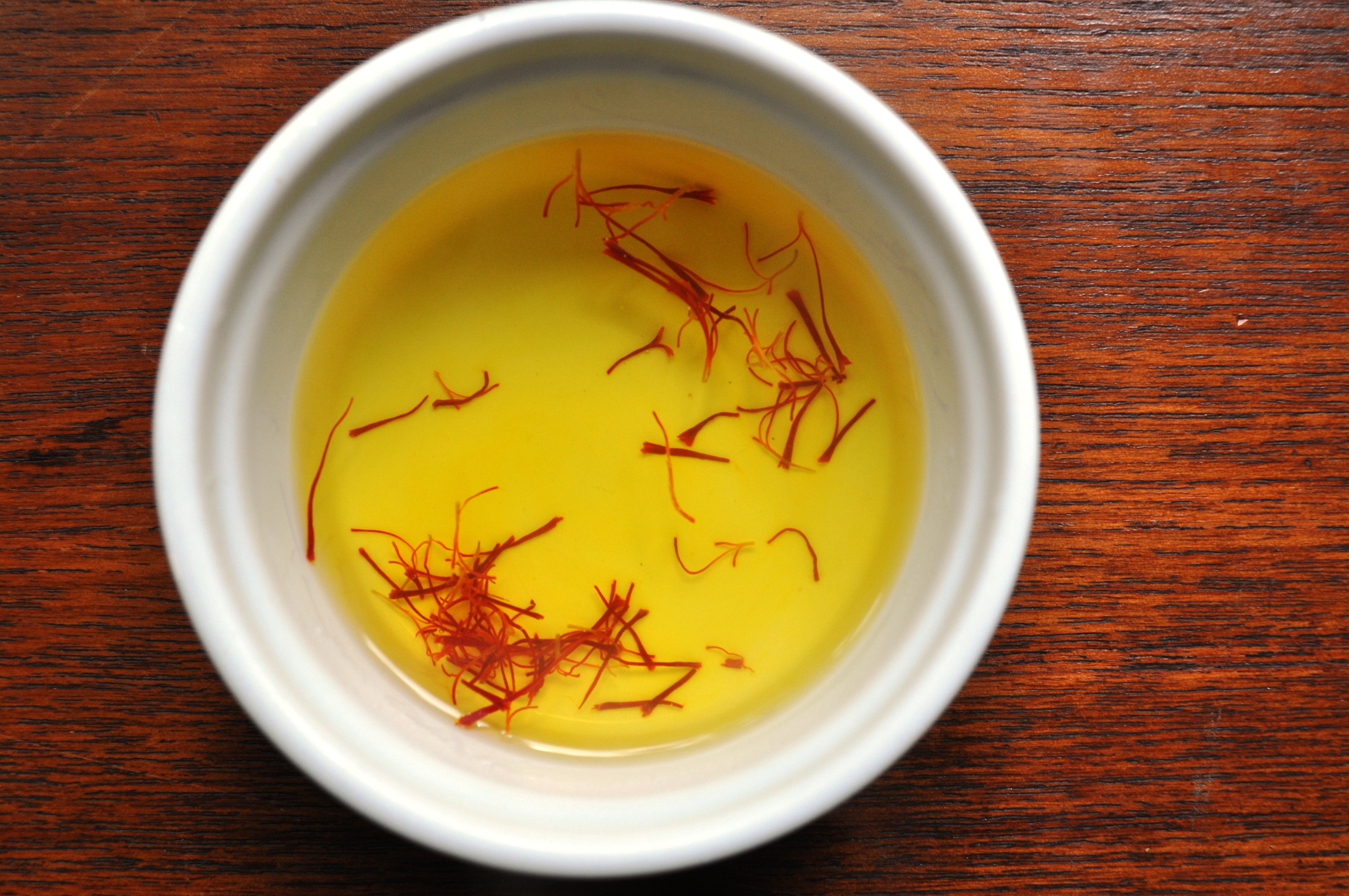
1. In a small bowl, cover the saffron filaments with the boiling water and leave to infuse – for at least 5 hours, or overnight.

Saffron, infusing
2. Make a sponge or pre-ferment by mixing 150g strong white flour, the yeast and the milk, warmed to about body temperature. Don’t agonise about this. If it’s cooler, it’ll simply ferment slower. Just don’t get it too hot.
3. Let the sponge ferment until it’s nice and frothy.
4. In another, large mixing bowl combine the other 100g strong white bread flour and the 200g plain flour.
5. Cut the fats into cubes, then rub into the flour until it resembles breadcrumbs, more or less.
6. Add the salt, the sugar and the spices to the fatty floury mixture.

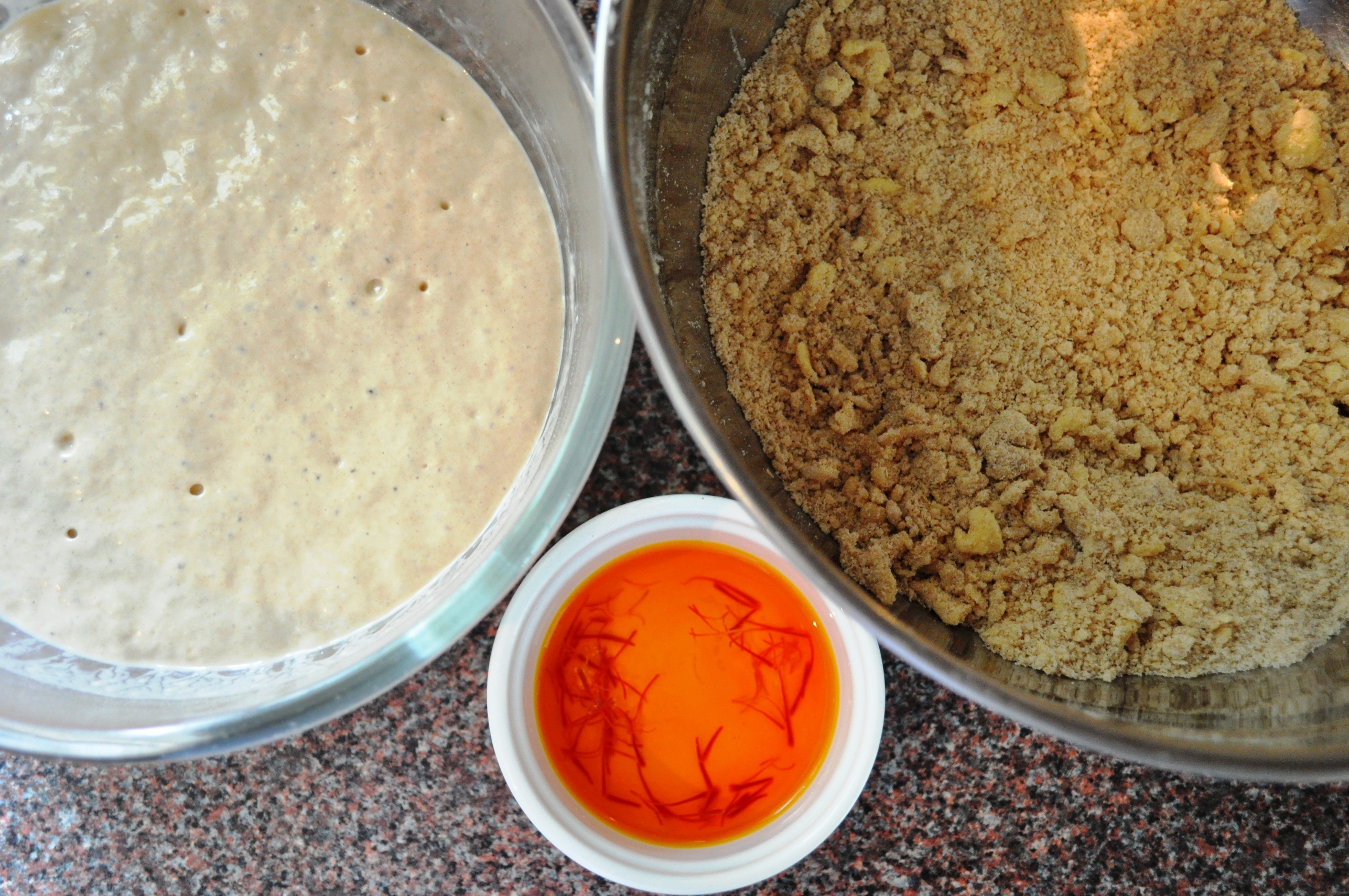
Ferment, flour mix and saffron infusion
7. Add the sponge along with the saffron and water to the floury mix.

Combine
8. Combine all the ingredients to form a dough. You want it moist; if it’s too dry, add a little more water or milk.
9. Give the dough a good knead, for 5 minutes or so, until it’s nice and smooth.
10. Stretch out the dough, add the dried fruit, then give it until gentle knead to distribute the fruit.
11. Form the dough into a ball and put back in the bowl, cleaned and oiled slightly.
12. Cover the bowl with a cloth or shower cap and leave to prove in a draught-free place until doubled in size. Time will vary depending on the temperature and the mood of your yeast.
13. Remove the dough and form it into a ball again, then rest this for another ten minutes or so.
14. Preheat your oven to 220C (200C fan oven).

Final prove
15. Form the dough into a baton and place this in a greased loaf tin. Cover it and leave to prove again, until it’s risen again and the dough re-inflates slightly when you push a finger into it.
16. Bake for about 20 minutes, then turn the oven down 20 degrees and keep baking for another 30 minutes. Watch it doesn’t colour too much – if it looks like it’s going to burn, cover it with foil.
17. Once baked, take it out of the tin and leave it to cool completely on a wire rack. (Or if you don’t mind a bit of indigestion, eat it while it’s still warm. Bakers don’t recommend this as a loaf that’s still warm is effectively still baking.)
18. Serve at tea time, generously buttered. It’s nice for breakfast or elevenses too.

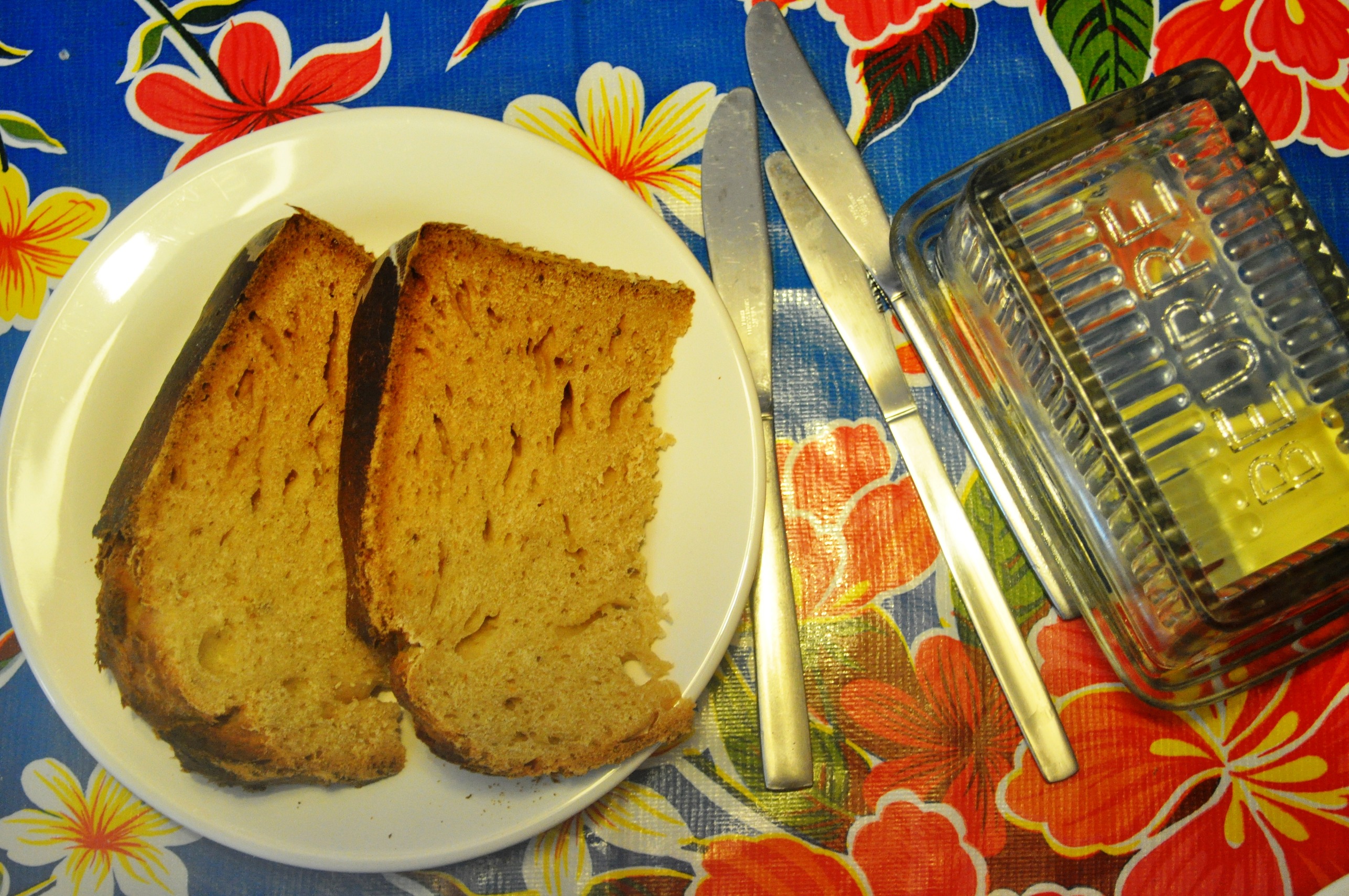
Cut

Anyway, having done all that, I also subsequently noticed that David gives recipes for Cornish saffron cake and a Devonshire cake, a “variation” that can be made with one of my favourite foodstuffs – clotted cream. So I really ought to do that next time, considering my folks’ place is actually in Devon, and Fran, the missus, is a Devonshire girl. Although my mother’s mother was from a Cornish family (the Olivers of St Minver), and I developed a strong love of Cornwall after several childhood holidays, so I suppose I’m allowed to feel torn.

A note on the flour
I’ve just bought some supplies from Stoates in Dorset. Or “Stoate & Son / Established since 1832” as it says on their site, though I’ll overlook the grammatical strangeness as they’re producing quality stone-ground products using a proportion of locally grown grain. The site also says, “We take great care in selecting our wheat much of which is sourced locally but is always blended with a proportion of Canadian wheat to achieve an end product with consistent baking and eating qualities.”I contacted Stoates about the specific blend and Michael Stoate got back to me saying “The mix at present is about 65% local UK grain (Paragon spring wheat) and 35% Kazakhstan high protein wheat. This is giving a protein content of about 12.50% – 13.00%.”
Stoates flours

The Stoates white flours, being stone-ground and less heavily sieved retains more the bran than more industrially produced flours. It’s also not bleached. So it’s not so bright white, meaning my “white” loaves will never quite achieve that gleam like a Hollywood film star’s teeth. But they will be healthier and more wholesome.

6 Comments

Filed under Baking, Breads, Cakes (yeasted), Flour & grain, Recipes

Pine nut tart

Pine nut tart

Torta della nonna – you’ll often see this on menus in Rome and other parts of Italy. It just means “grandma’s tart” or “granny’s cake”. I’m not sure I believe every single restaurant I saw it in had a grandmother toiling away making them, but it’s a cute selling point. I’m also not sure there’s a specific type of dessert tart that qualifies as torta della nonna – though the basic theme seemed to be variations on custard and pine nut tarts, made with or without ricotta, and with or without pine nuts on top.

The other day, our friend Dom asked me to supply the pudding for a meal he was making for his wife’s Min’s birthday. Immediately, I thought “tart” – for the pudding that is, not insulting either of them. A quick browse of the contents of the fridge and store cupboard, and of a few books, notably ‘Sweet Pies and Tarts’ by Linda Collister, suggested a pine nut tart. Which brought about fond memories of torta della nonna, even if this recipe is made without ricotta and has a filling that’s more an almondy sponge than a custard. Who knows though, I’m sure there are nonne out there who do use a bit of farina di mandorle (ground almonds) in their tarts.

The politics of pine nuts
Since coming home from Italy I’ve been having a bit of an issue with pine nuts. In Italy, I bought Italian pine nuts, harvested from Italian pine trees. Here, even in the most nominally right-on of health-foody shops, all the pine nuts seem to be from China. And I really can’t bring myself to buy them. It just seems insane to lug such produce half-way round the world, especially from China, a country with a dubious regime, a country that’s achieved borderline world-domination in everything from clothes to electronics, and a country that’s not exactly a paragon of environmental standards, with its economic revolution’s high energy demands. I’m not sure I trust its organic certification either.

Infinity Foods in Brighton, for example, sells Chinese pine nuts; pretty much all their dried beans are from China too – it’s really unfortunate as pulses are a big part of my diet. Can’t we grow anything a little closer to home? Can’t we get beans and pine nuts in Britain with slightly better ethical credentials? I realise the economics are complex, but cheaper food – cheaper imported food – often has hidden costs in terms of the environmental repercussions.

Plus, I remember Dom talking a few years ago about how Chinese pine nuts were leaving a strange metallic taste in his mouth – something to do with pollution perhaps? Or because Chinese exporters were mixing nuts from Pinus koraiensis trees with cheaper nuts from Pinus armandii, which some reports suggest is the cause of this “pine nut syndrome”. The EU changed rules regarding imports of the latter, but is it really that well regulated? And is it really just down to the Pinus armandii? (I’ll stop before I start sounding any more conspiracy theorist.)

I did finally find some pine nuts at La Porte’s in Lewes that were from the EU. Phew. This is what I had in my store cupboard.

Despite the depressing popularity of a certain political party whose name sounds like an injunction to have a nap* in last week’s elections, I’m happy to with a cultural identity that’s English, British and European, and as someone who prefers to buy food from as close to home, EU-grown produce is preferable to Chinese.

For the pastry:
90g butter, cold
150g plain flour
20g caster sugar
1 egg
1-2 tablespoons water (cold)

For the filling:
55g butter, at room temp, or softened slightly in microwave or a warm location
70g caster sugar
2 tablespoons honey (say 30g)
2 eggs, beaten
70g ground almonds
25g plain flour
1/2 teaspoon baking powder
120g pine nuts

1. Dice the butter then toss it in the flour. If you’re using unsalted butter, add a pinch of salt.
2. If making by hand, rub the butter into the flour until it resembles breadcrumbs, if you’re using a food processor, pulse it quickly to achieve a similar result.
3. Add the egg and bring the dough together, again either by hand on by machine. Add some cold water to form a dough, but not too much! You don’t want it squishy, you want it dry-ish, and short and crumbly once baked.
4. Form the dough into a ball, wrap in plastic and to in the fridge to rest.
5. Make the filling by creaming together the butter and sugar, then beating in the honey and egg.
6. Add the ground almonds, then sieve in the flour and baking powder together. Combine the mixture.
7. Add about a third of the pine nuts to the mixture.
8. Get your dough out of the fridge, roll it out and use it to line a loose-bottom flan tin, about 22-25cm in diameter. If you do this ahead of time, you can rest it again in the fridge for a while.
9. Preheat the oven to 180C.
10. Put the filling in the pastry case, then bake for about 10 minutes.
11. Carefully remove the half-baked tart, and gently sprinkle the rest of the pine nuts on top.
12. Put it back in the oven and bake for about 15-20 minutes, until nicely browned.
13. Remove from the oven and cool on rack. Serve warm or cold, preferably with a huge dollop of thick or clotted cream.


* Ukip – geddit?

4 Comments

Filed under Baking, Pastry, Pies & tarts, Puddings & desserts

Real Bread Maker Week, 10-16 May 2014

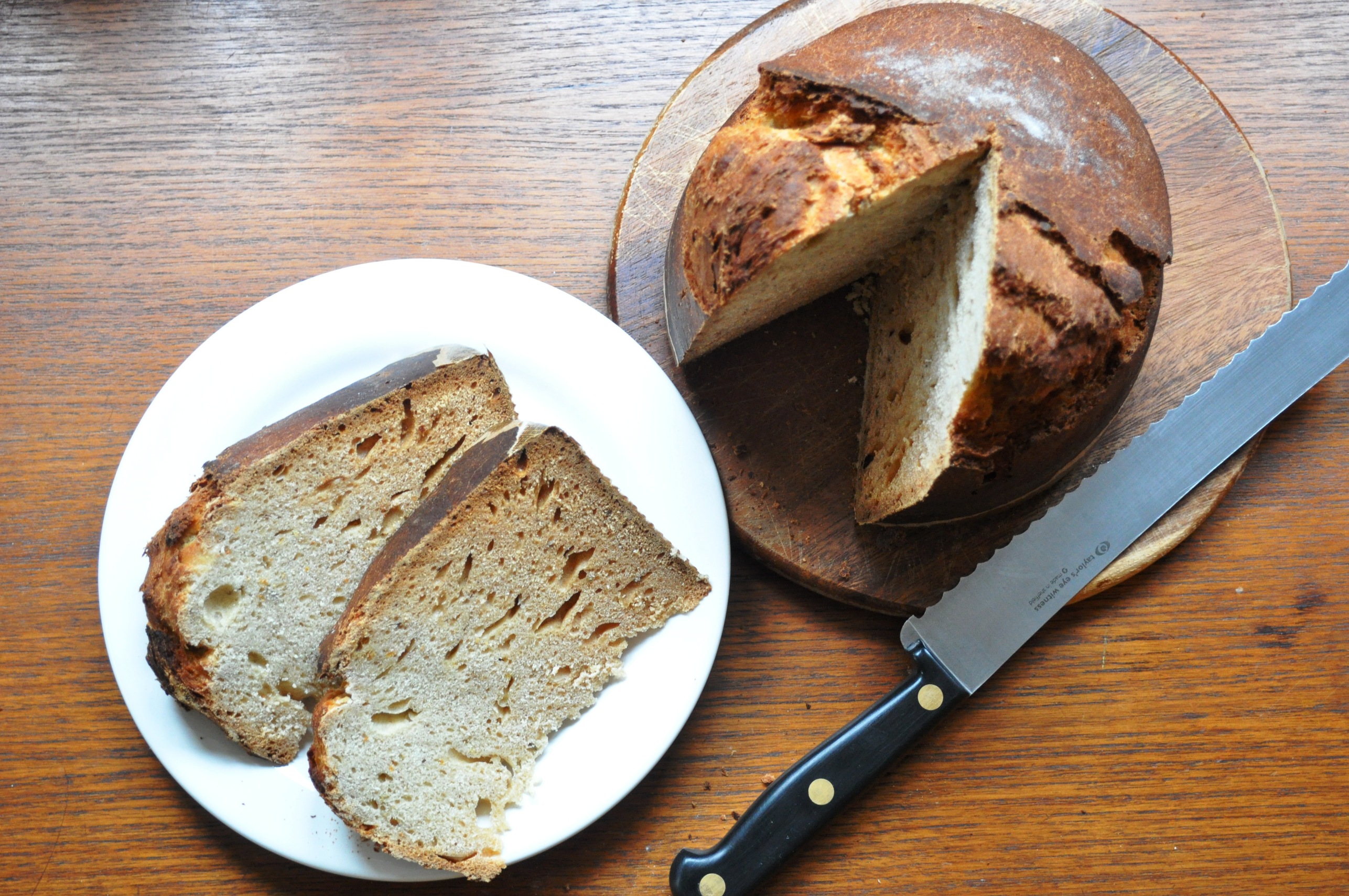
Sliced overhead
Earlier this week I had a fantastic bike ride up from Lewes to Wapsbourne Manor (44km there and back along verdant Sussex country lanes; route here), home of the renowned campsite also known as Wowo. There, I met owner Paul Cragg along with Andy Forbes of the Brockwell Bake, who is working to restore British heritage wheats and has a crop at Wapsbourne.

Our conversations were informative and wide-ranging and I’m still trying to work out how to write a blog about it all. This is partly because the Brockwell Bake is involved in a fascinating range of activities, all interconnected around questions of grain and bread, cultivating and baking, but each with its own detail and complexities. Among the activities are educational projects, encouraging a wider understanding of what goes into bread and how it’s made. And when I say bread, I mean real bread, not that wheat-based garbage wrapped in plastic you find on supermarket shelves.

Real Bread Campaign
In this respect, the Brockwell Bake’s work overlaps with that of the Real Bread Campaign. The campaign is part of the charity Sustain – the alliance for better food and farming. Their primary remit involves education about what constitutes real bread – a healthy item that’s been a part of the human diet for millennia but has been tarnished by the grotesque compromises of the mid-20th century industrialisation of food production. And how you can make it. Or where you can buy it. Or indeed, how you can set up your own business making and selling it. You can find out more about what the campaign here.

Anyway, tomorrow, 10 May, marks the start of the campaign’s Real Bread Maker Week: “The annual celebration of Real Bread and its makers: on your high street, in the back of your kitchen cupboard and at the ends of your sleeves.” Furthermore, according to the site, “The main aim of the week is to encourage people to get baking Real Bread or buying it from local, independent bakeries.” Various events are taking place around the country. Find out more here.

RealBread_MakerWeek_small

Red casserole bread
In the meantime, here’s the latest real bread I’ve made. I’m really loving using an old red casserole dish I acquired from my mother, who inherited it from her mother. It’s a heavy Danish cast-iron piece of kit that lends itself really well to the technique of pre-heating it as hot as your oven will go, then adding the bread, putting the lid on and baking.

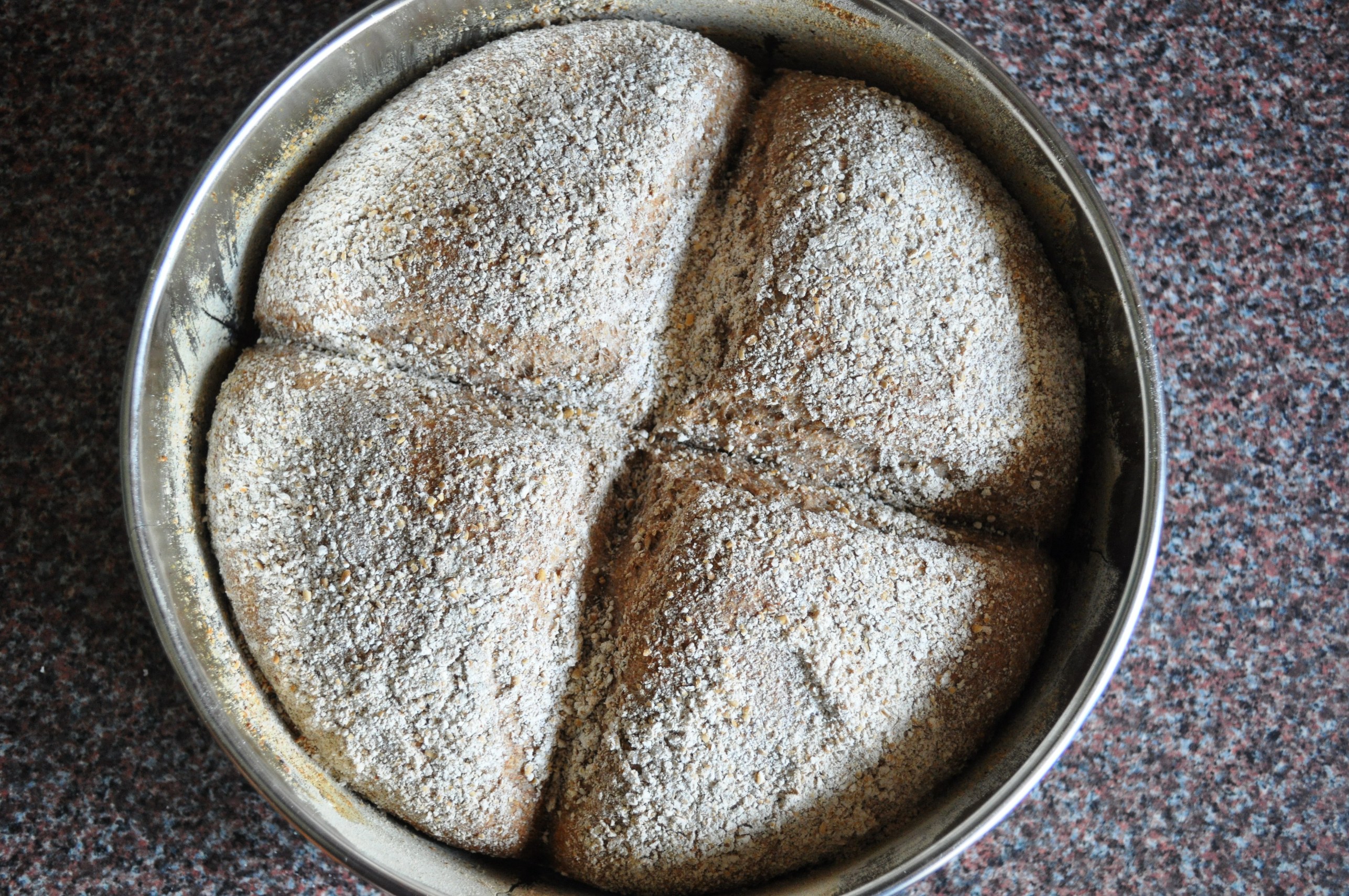
Rye and wheat casserole bread

This is sourdough made with the sponge-and-dough technique. This involves making a pre-ferment – the sponge – with some of the flour and the liquid, letting that ferment, then adding the rest of the flour and salt and forming your dough.

Sponge:
100g rye leaven/sourdough starter (at 100% hydration)
320g water (filtered)
270g flour (I used 170g local wholegrain wheat, 100g slightly less local strong white)

1. Whisk together the water and leaven.
2. Add the flour and mix well.
3. Cover with a cloth and leave to ferment for 9-16 hours. Say while you’re at work.

Dough:
11g salt
270g flour (again, I used a mixture of wholegrain wheat and strong white).

Sliced, angle

4. Combine the salt and flour.
5. Add to the sponge and bring together with a spatula or wooden spoon or you can even get your hands in there if you want.
6. Bring to a dough with a quick knead, to make sure everything is well combined.
7. Form a ball and return to the bowl (cleaned and oiled slightly). Cover again and leave for few hours.
8. Take out the ball of dough, stretch it and give it a fold – that is, folding up one then, then the other down to form a kind of enveloped. Return to the bowl, then repeat this process again a few more times every 15 minutes.
9. Cover the bowl with cling film or put it in a plastic bag, then put it in the fridge for about 8-10 hours – I did it overnight.
10. Take out the dough, and allow it to come back to room temperature.
11. Gently form the dough into a ball, then rest it for 15 minutes.
12. Form the ball into a baton – but gently as you don’t want to de-gas it too much. (I really must do a series of photos or some videos of shaping dough.)
13. Give the dough one final prove (or proof) in a basket lined with floured cloth, with the seam of the baton upwards. I did this for about an hour in the airing cupboard, which is 24C.
14. Preheat the oven – I did mine as hot as it’ll get, 250C.
15. Put the casserole in the oven to get to the same temperature – I left mine for 30 minutes.
16. Take the casserole out and quickly and carefully invert the dough into it, so the seam goes to the bottom.
17. Put the lid back on, and bake for 30 minutes.
18. Take the lid off and bake for another 15 minutes, or until the top is nicely coloured – I like nice “high bake”, a dark colour.
19. Take out the loaf and allow to cool completely on a wire rack.

Oh, and while you’re baking, what better item to wear than a snazzy Real Bread Campaign apron? You can get a limited edition “I [loaf] Real Bread’ apron from Balcony Shirts here, with £3 from every sale going to the campaign.

Real Bread Campaign apron


1 Comment

Filed under Baking, Breads, Discussion, Flour & grain, Misc

Ricotta rough puff pastry and sbriciolata di millefoglie

Butter and ricotta

It’s probably fair to say that Italian cuisine isn’t most famous for its desserts and puddings. Sure, tiramisu has an internation reputation, but generally the desserts aren’t really up there with Italy’s other great, world-dominating culinary exports (you know, pizza, pasta, that kind of thing).

Italian pastries, biscuits and cakes are great, but they’re not typically desserts. Pastries like cornetti (the sweet Italian equivalent of a croissant) and maritozzi con la panna (sweet cream buns) are typically eaten for breakfast. Cakes and enriched breads are often used to celebrate feast days (like panettone at Christmas, colomba or pizza cresciuta at Easter). And biscuits, such as the famed hard biscotti di Prato / cantuccini (and similar) and ciambelline al vino, are generally eaten with a glass of strong digestivo liquor after dinner.

The Roman pasticcerie we frequented would sell small pastries and cakes – described with the French name mignon (dainty). These could be bought by weight on trays, neatly wrapped and used as gifts when visiting friends or family. I never quite got my head around what time of day they’d be consumed, but the one time we did an English afternoon tea party for friends in Rome, many of the Italians were very confused to be faced by sweet baked goods, dolci, mid-afternoon.

Deconstructured mille-feuille
Having said all that, one Italian dessert, very much offered by restaurants in Rome after you’d eaten your primo and/or secondo piatto (pasta and meat/fish courses), was sbriciolata di millefoglie. I have very affectionate memories of eating it at Trattoria da Bucatino in Testaccio.

The name sbriciolata di millefoglie means something like “crumbled up mille-feuille” – that is, a kind of rough, deconstructed take on the Italian version (millefoglie) or the French mille-feuille, that pastry whose name means “thousand leaves” in both languages and refers to the layering of puff pastry with a filling of cream or custard, specifically thick pastry custard, crema pasticcera in Italian, or crème pâtissière1 in French. (Note, in Italian, custard is just called crema, while cream is panna.) So a sbriciolata di millefoglie could simply be described as a bowl of custard with broken puff pastry on top.

And yet it’s so good. I made a weird onme a while back after I’d made frappe. Italians would say non si fa (it’s just not done), but I had some broken frappe, and fancied some custard, and the result was good. I then thought I should try it again with a proper, non-deep-fried pastry, puff,  or at least a rough puff, pastry.

So I did. Then Fran’s camera broke and I didn’t get any photos of the finished desert. Plus, well, we had lots of guests over the bank holiday weekend so scrabbling around with cameras and crude attempts at food styling might have been a bit antisocial and broken the flow of the very important business of eating. (And boy did we eat a lot.)

For the custard just find yourself a recipe for crème pâtissière or similar thick custard. Dan Lepard has a good one called Extra thick vanilla cream custard in ‘Short and Sweet’, or you could use something like this. (I may revisit this at some point and find a more specifically Italian custard recipe.)

For the pastry, I used a lovely Italian pasta sfoglia2 veloce – quick rough puff pastry – made with butter and ricotta.

Butter and ricotta 2

250g plain (all-purpose) flour
250g ricotta
125g butter, coarsely grated
1/2 t salt

Mash together

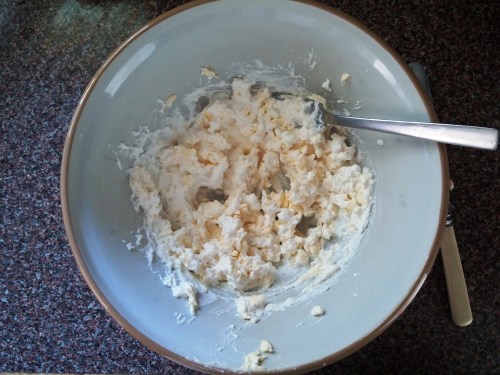
1. In a bowl, mash together the ricotta and grated butter with a fork. You could also do this with a zizzer – aka hand blende. But don’t overdo it, as you don’t want to heat up the mixture too much.

Add flour
2. Add the flour and salt and keep mashing together, hen bring together a dough with your hands.

Form dough
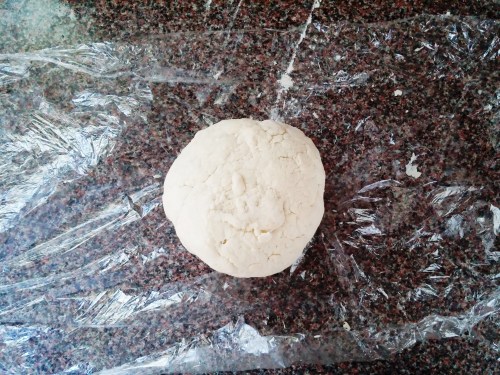
3. Wrap the dough in plastic and leave to rest for a few hours, or even overnight.

Roll out
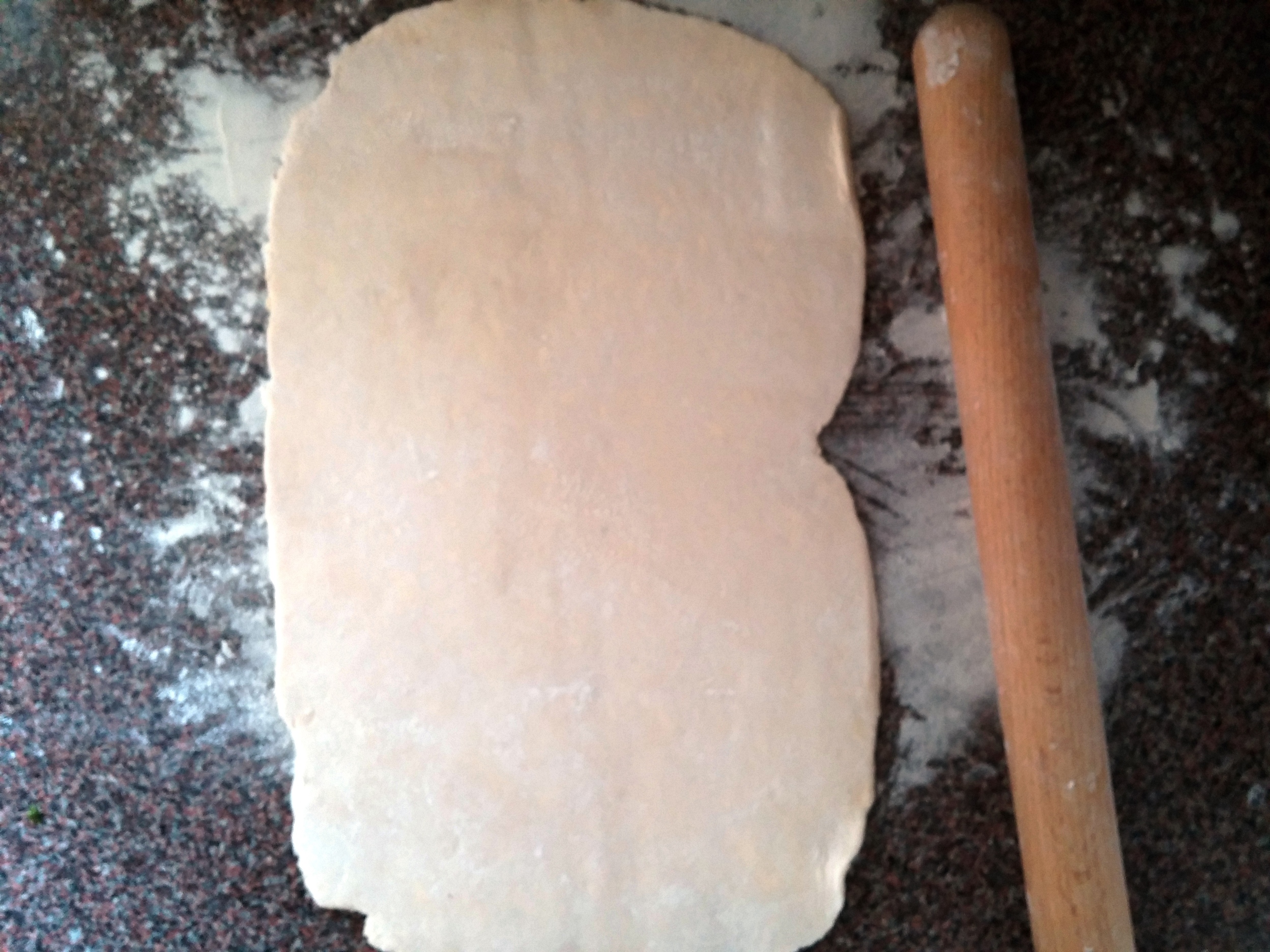
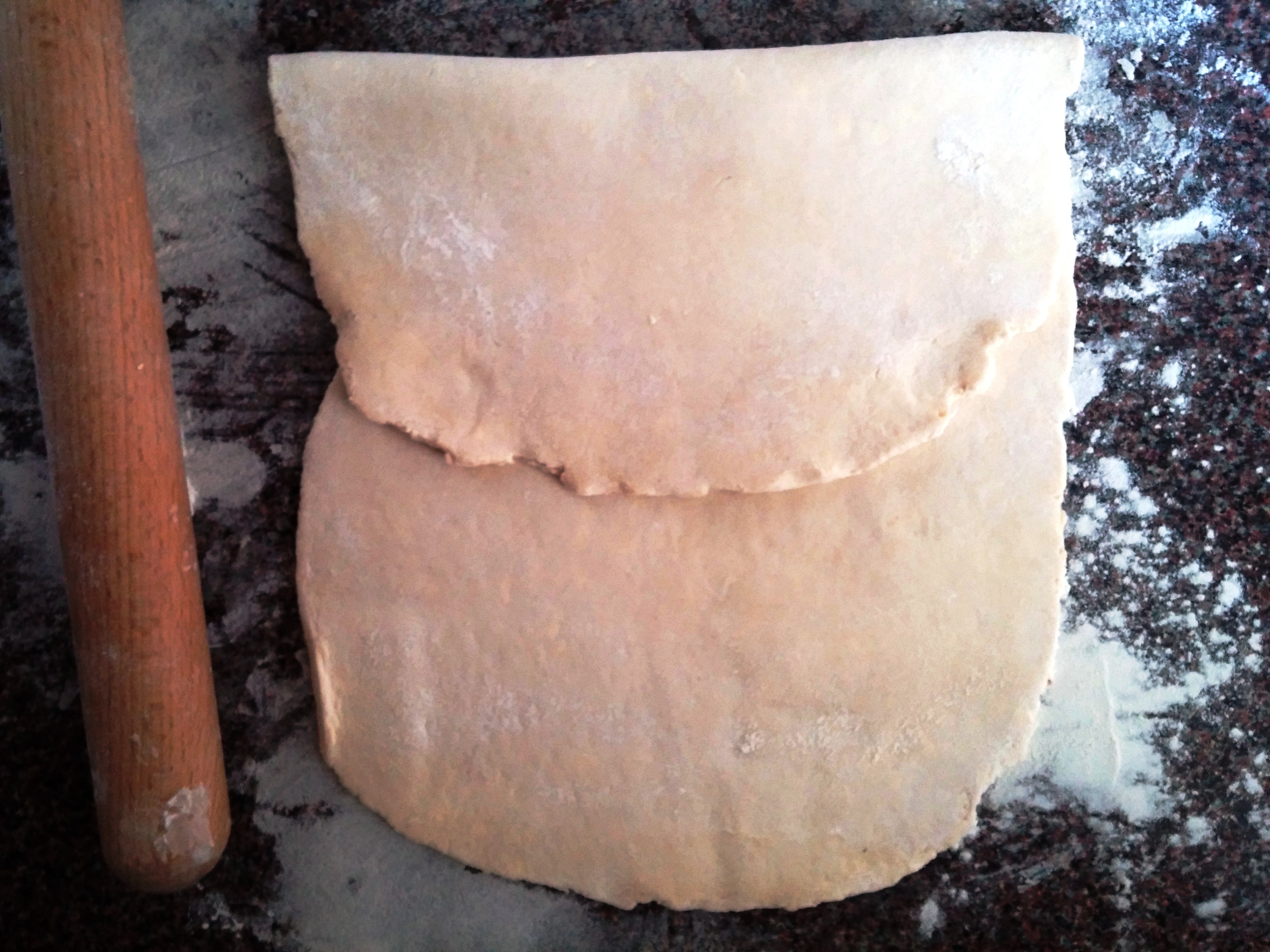
4. Roll out the dough to form a rectangle about 20 by 35cm (or 8 by 14 inches for you 19th century types) and give it a letter fold, that is folding up one third, then folding the other third down over the top.

Fold
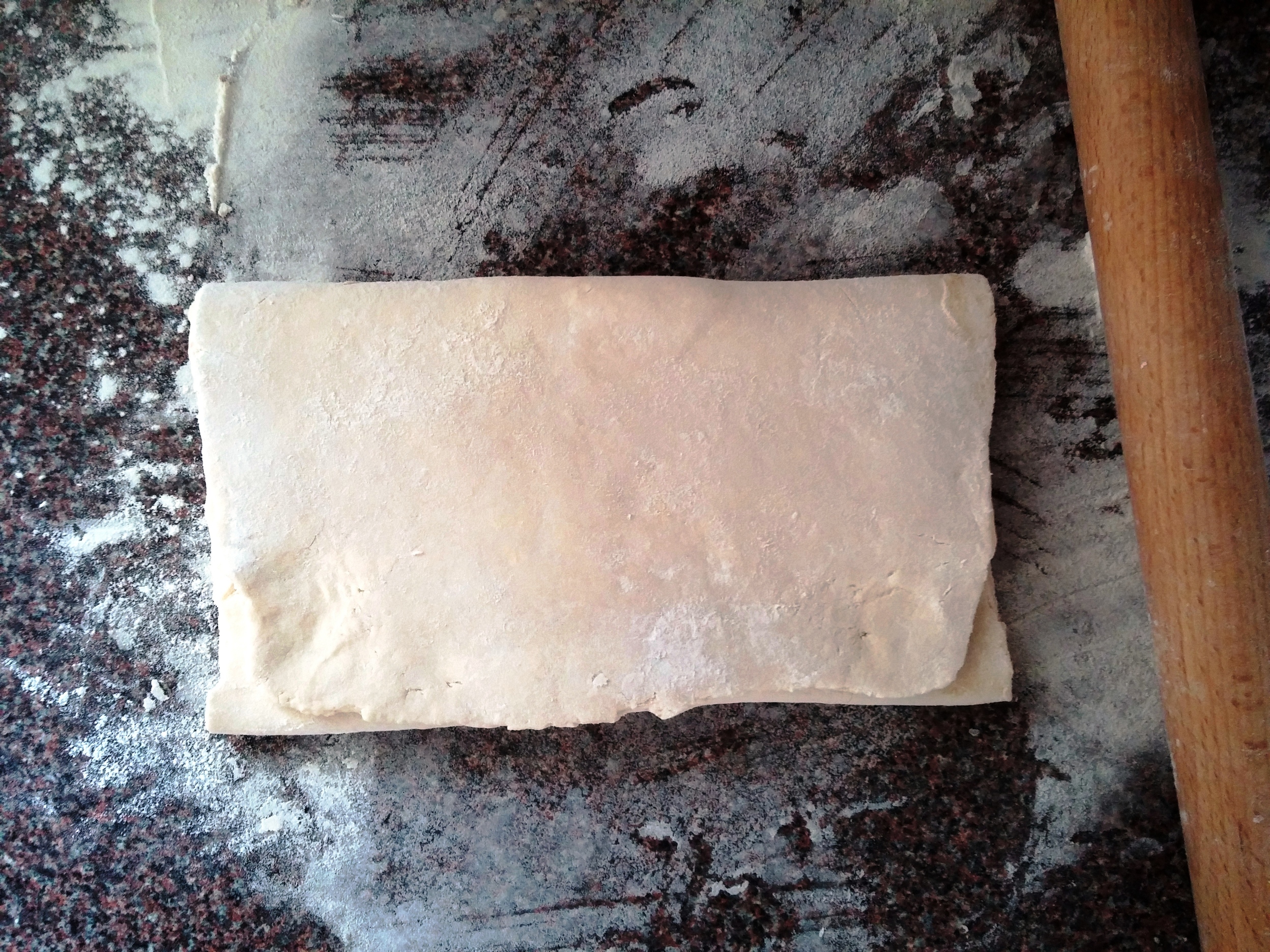
5. Roll out and repeat the folding process. Repeat this once more. Try to strech the corners a bit to neaten up the rectangles if you like, but it’s not essential – this is rough form of pastry lamination after all.

Fold again
6. Wrap in plastic and rest again, for at least half an hour.

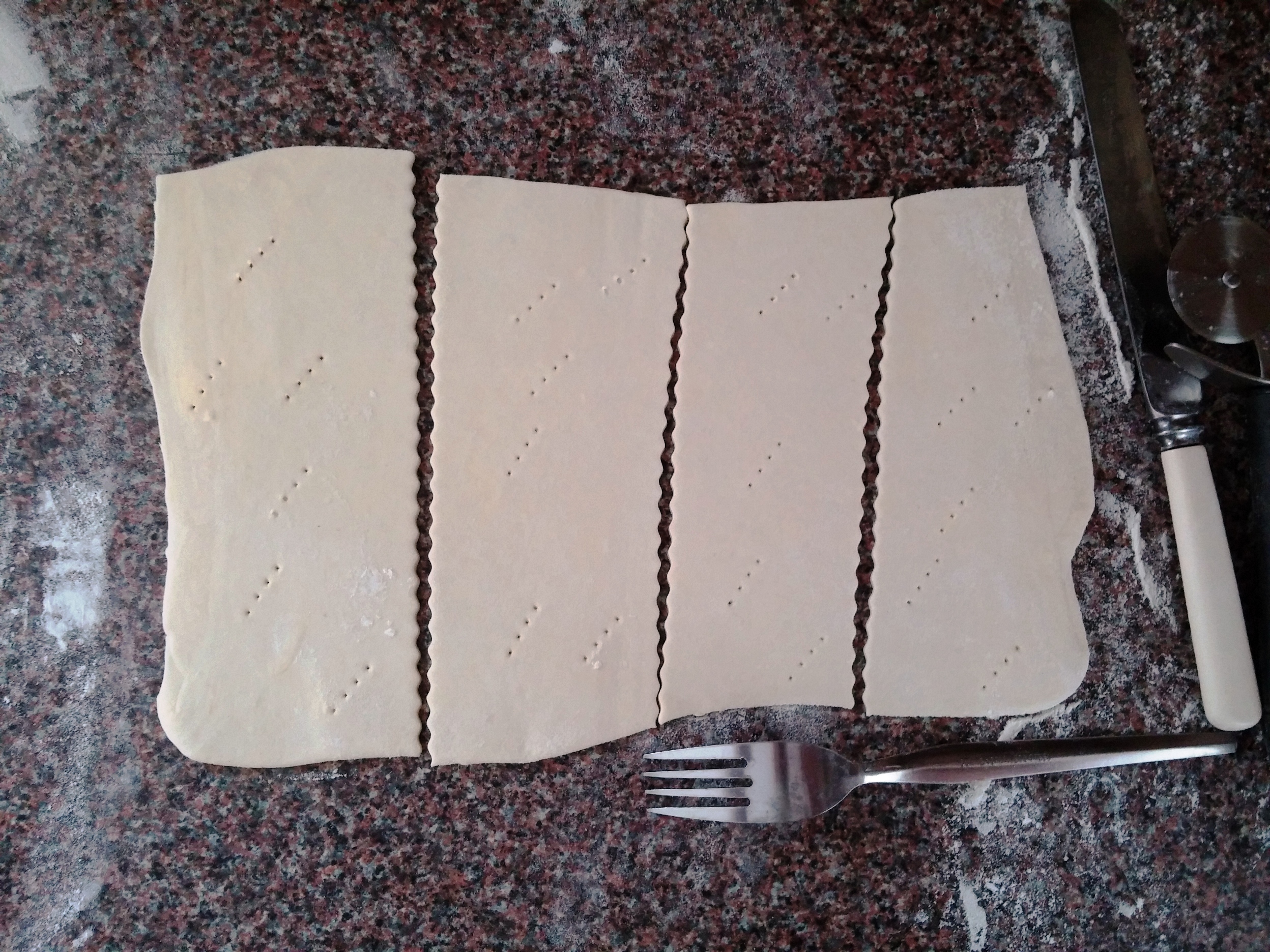
Cut out and prick
7. Roll out the dough to few milimetres thick and cut into required shapes. I just wanted crumbled scraps for my sbriciolata so didn’t do them very reguarly, but if you were doing, say, Italian-style millefoglie, cut them into regular rectangles about 4 by 10cm.

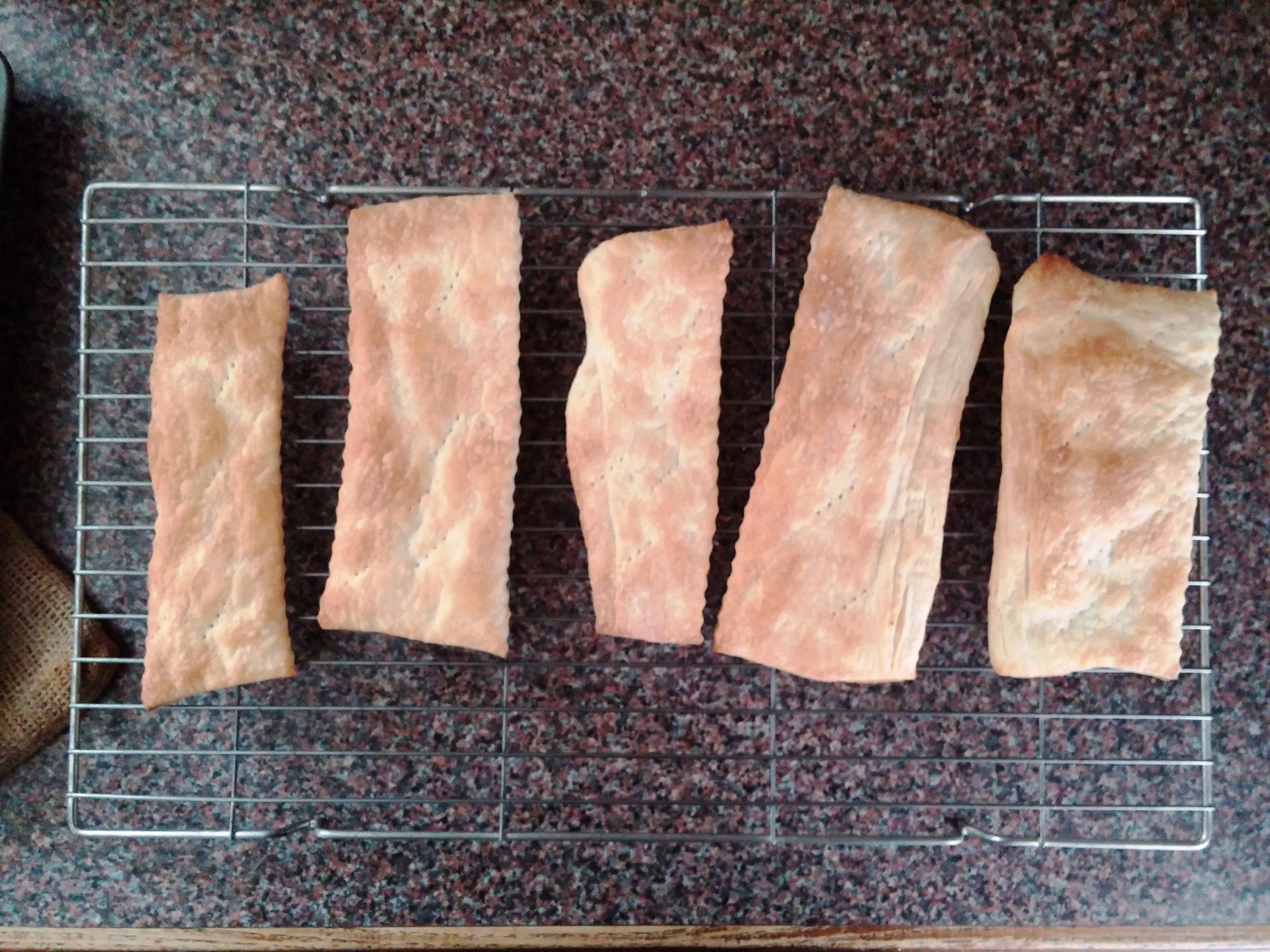
Baked
8. Prick with a form then bake in an oven preheated to 200C for about 15 minutes, until nicely browned. You want the pastry crisp

To assemble a sbriciolata di millefoglie, fill individual bowls with the thick custard, or do one large family bowl. Break up your pieces of pastry roughly, and sprinkle the pieces onto the custard. Before serving, dust with icing (powdered) sugar.


1 Can I just say, it’s pronounced “crem pa-teess-i-air” ([patisjɛːʁ]), not “crem pa-teess-er-ree” ([pɑtisʁi]) as so many people seem to say on Great British Bake Off etc. A “pa-teess-er-ree” is a pâtisserie, the shop where you buy the sweet pastries and cakes that may or may not be made with crème pâtissière.
2 So while millefoglia means “thousand leaves”, with foglia the Italian for leaf (feuille in French), sfoglia is the Italian for a leaf or layer of filo or puff pastry. Foglio, meanwhile, means sheet or leaf of paper, or indeed the English folio. It all relates to or is derived from from the Latin folium (plural folia), leaf.

2 Comments

Filed under Baking, Pastry

Holey-er than thou

Holey bread 1

A lot of my recent bread has been fairly dense, with a close crumb. I like bread like this, especially with wholegrain breads like the 100% wholegrain wheat and spelt I’ve been making recently. They’ve tasted great and when fresh aren’t bad for open sandwiches and when a bit old they’re perfect for toast. But the favoured style of “artisan” bread these days is all about the open crumb. A nice crisp crust and an open, irregular crumb with a variety of big holes.

I know I’ve made holey bread like that in the past, but, I dunno, through all my experiments the past few years with seriously rustic flours, bought from farmers’ markets in Rome and here in Sussex, I seem to have lost the knack slightly. Learning to bake is one of those life-long challenges, especially if you’re a home baker and aren’t churning out massive batches. But it’s funny to feel you’ve learned something then forgotten it again.

High extraction challenge
It does seem that holey breads are a particular challenge if you’re using flour with a high extraction rate. The extraction rate is the amount of the grain that remains in the milled flour. So a genuinely wholegrain flour in principle should be 100% extraction. Modern, industrial, nominally brown flours, however, may only be about 80-85% extraction, whereas white flours, which have been sieved or bolted1 may be closer to 70% extraction – with the bran and germ (ie, the healthiest bits) removed and just the starches and proteins remaining. 

I’m sure the masters of the contemporary bread scene, especially those who work with ancient and heritage grains (like Chad Robertson of Tartine and the bakers producing the great looking results of the Brockwell Bake) could get a nice open, irregular holey crumb from 100% extraction flours, but not me. The wholegrain flours I’ve been buying lately have been very branny, stoneground, and I suspect probably close to 100% extraction. They taste great, but I need to get at it to open that crumb out.

I did go back to a classic Dan Lepard 100% white sourdough recipe the other day, and did get a holey crumb. Bit it’s wholly too holey. Holey-er than though. With giant crazy giant holes. So I’ve gone from one extreme to the other.

I reckon the next few weeks, I’m going to try and make breads that are 50/50 white and wholegrain and try the so-called “no knead” method. This seems to be very popular among US bakers and does seem to give holey crumb loaves. It involves mixing up the dough, resting it, and giving it a few stretch-and-folds over time. This does seem very similar to Dan L’s method of mixing, doing a short knead, resting it, and doing another short knead, then repeating, as those kneads basically just involve folding over the dough. I generally use Dan L’s method, with a few stretch-and-folds anyway. And there’s arguably a fine line between “kneading” and “folding”.

In the meantime, here are some pics of my comically holey bread. The flour was nothing fancy2, but the loaves still tasted pretty good. Even if they weren’t idea for making sarnies.

Holey bread 2


1 Etymology geek chums, bolting generally means sieving – or indeed sifting – through cloth. The word comes from 12th century Middle English bulten, from the old French bulter, which is probably from the Old High German būtil, meaning bag.)

2 Strong white from Waitrose supermarket. Although Waitrose/John Lewis does has its own farm,  the Leckford Estate in Hampshire, my home county, and to the west of Sussex in the south of England, they don’t seem to grow wheat that produces a strong white bread flour. The Waitrose own brand strong white is “produce of more than one country” – they, and even the likes of Dove’s Farm and Shipton Mill, Britain’s two big organic flour brands, don’t seem to be forthcoming about which countries. Presumably Canada, Kazakhstan, India, etc. I’ve now ordered some strong white flour from Stoate & Sons now instead. I believe they do manage to locally source and mill  a strong, high protein variety of wheat  in Dorset, the next country along from Hampshire.)

5 Comments

Filed under Baking, Breads, Discussion, Flour & grain

Hundred per cent local spelt loaf

Spelt loaf 1

The collection of different flours in my cupboard is getting a bit silly (again). I just can’t resist it when I see a new type I’ve not tried before. In this case, it was some spelt flour, grown and milled by Toos Jeuken, who I buy a lot of my veg from at the weekly Lewes market.

There’s a full profile of the Dutch-born Toos here on The Guardian site, from 2004, and a more recent profile on the market site here. They say she arrived in England on a bike in 1978 and has been farming in Sussex, specifically at Cuckfield, 16 miles from Lewes, since.

I hadn’t really registered that she sold grains as she always has such a wonderful selection of veg at her stall, even now, in the hungry gap. (Spring might be verdant, but traditionally March and April were the time of year when, as Paul Waddington puts it in Seasonal Food, “winter stores ran low and new produce had yet to mature.” Sure, there is still a selection of local produce – last week the farmers’ market had its first asparagus – but it’s a long way from late summer.)

Anyway, at her Laines Organic Farm, alongside all the veg, Toos grows several grains, including oats, barley and spelt. Last week I bought some of her rolled oats (hand-rolled!) and wholegrain spelt flour.

Too many chromasomes
Spelt (Triticum spelta) is an older variety of wheat, less manipulated1 than modern strains of bread wheat (Triticum aestivum). Though they are closely related, with spelt alternatively classified as a subspecies: Triticum aestivum subsp. Spelta. Both are what is called hexaploid plant species – that is, they have six sets of chromasomes. By comparison, more ancient wheats have few sets of chromasomes: einkorn (Triticum monococcum) is diploid, with two sets. Emmer (Triticum diococcum) is tetrapolid, with four sets, as is Durum wheat (Triciticum durum, or Triticum turgidum subsp. Durum) – the wheat most commonly used for pasta, which was domesticated from emmer.

In the issue 19 of ‘True Loaf’, the magazine of the Real Bread Campaign, Penny Williams of the Artisan Bakery School, highlights the importance of long fermentation of proper bread, but also looks at the issue of wheat varieties and how they may affect digestibility. She quotes a 2011 Indian study2 and concern about a potential “impending epidemic” of coeliac and other wheat protein related issues as India transitions from older diploid and tetraploid wheats to hexaploid wheats, notably modern strains of Triticum aestivum. She goes on to quote a 2010 study3 that looks at a broad selection of wheat varieties, with an eye to their “antigenic gliadins” – that is, the gluten proteins that may be responsible for “triggering autoimmune response in people with coeliac disease.”

“The findings suggest,” she writes, “that modern wheat breeding practices may have led to an incresed exposure to these coeliac ‘trigger’ proteins. While they also identified a few modern wheat varieties that had relatively low levels of antigenic proteins… I question whether tinkering with modern wheat is really the right direction to be going in.”

Less tinkered with
I would have to agree with that. Although I can’t really entirely avoid using modern wheat as I like to made cakes and enriched breads that rely on white flours too much, and these are hard4 to replace with older wheats.

I do at least try to use older wheat varieties in my wholesome bread experiments. And while spelt may be hexaploid, it’s a lot less tinkered with than modern, industrially cultivated and processed bread wheat. Especially as I’ve been lucky enough to find an experienced organic grower so close to home in the form of Toos. Next time I see her I’ll have to ask if she’s growing any emmer or einkorn.
So anyway. This was my 100% (or 99.5%) spelt loaf.

Spelt loaf 2

500g wholegrain spelt flour, nice and branny
340g water
10g fresh yeast
10g salt
50g wheat leaven, 100% hydration

This wasn’t a proper recipe. I just made a sponge, or pre-ferment, with 250g of the spelt flour, the 340g of water and the 10g of yeast in the evening and left it overnight. I wasn’t planning to use any sourdough leaven, but was playing around with it in the morning, so just chucked a bit into the sponge. I then added the rest of the flour and the salt and formed a dough. Did the on-and-off easy knead thing, let it prove up, formed a ball, gave it a final prove, then baked it the hot Le Creuset (like this bread), spraying some water onto the top crust before putting the lid on, resulting in a shiny floury glaze.

It wasn’t my best loaf in terms of the crumb – it’s crumbly and a bit underbaked – but boy did it taste good. The 100% wholegrain spelt flour just had a nuttiness and depth of flavour that’s more pronounced than the breads I’ve been making recently with the Sussex Red wholegrain flour (from Barlow, a modern wheat variety). As I do long fermentations, and avoid foul industrial wheat-based products (white sliced “bread” etc), I don’t suffer from negative reactions to “antigenic gliadians” etc, but I suspect even if I did, this spelt bread would be perfectly digestible.


Footnotes
1. By which I mean selective cultivation, over many centuries, but especially accelerated since the so-called Green Revolution of the 1960s when new strains of various crops with higher yields were developed. Higher yields but, we know now, potentially higher environmental repurcussions, due to their heavy reliance on chemical fertilisers, pesticides etc. So not really very “green” in the modern, sustainability sense.

1. ‘Celiac disease: can we avert the impending epidemic in India?’

2. ‘Presence of celiac disease epitopes in modern and old hexaploid wheat varieties: wheat breeding may have contributed to increased prevalence of celiac disease.’

3. Hard, but not necessarily impossible. It’ll just be a lifelong challenge to revise favourite recipes etc so they work with these more earnest, properly old-school wheat varieties.

6 Comments

Filed under Baking, Breads, Discussion, Misc

Golspie loaf

Dan Lepard Golspie loaf

Over past several years, probably nearly a decade, my favourite bread book has been Dan Lepard’s ‘The Handmade Loaf’. A lot of the pics from this old Flickr set of mine are the results of recipes from the book. I had a lot of fun trying them, and the book was a real inspiration for me as I got more serious about baking. I thought I’d tried all the recipes, but looking through the book again the other day I found a few I’d missed. The Golspie loaf is one of them.

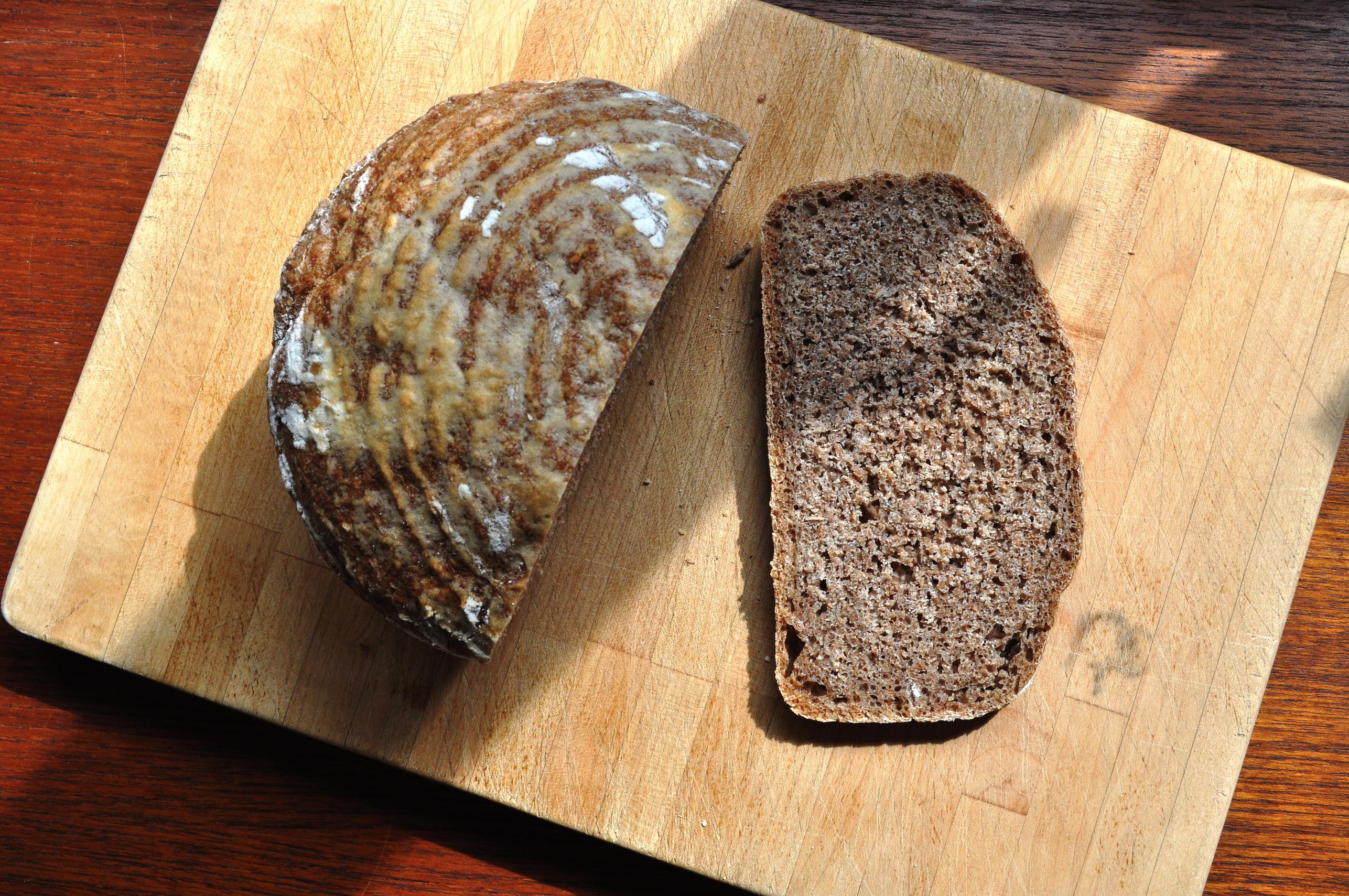
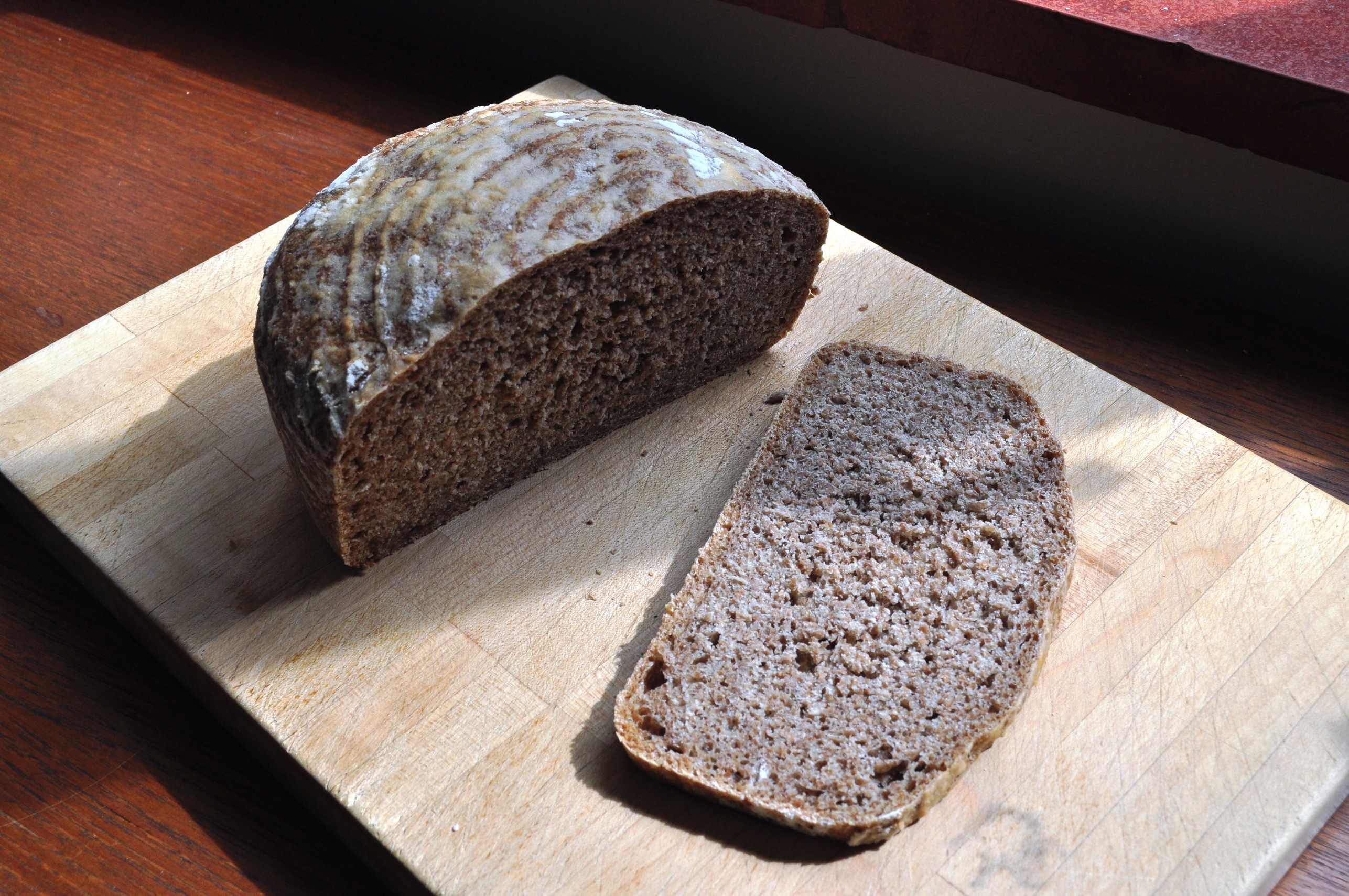
Dan explains it gets its name from a watermill in Suterhland, northern Scotland, which produces its own stoneground flours and meals. Before wheat became readily available, more common grains used for breadmaking in northern Britain were barley and oats. Traditionally, the round, flat bannock is made from oats or barley. The Golspie loaf is another disc-shaped loaf, with Dan’s recipe based on a barley or rye leaven (sourdough starter) and strong wholemeal flour. I’ve still got some of the Surrey wholewheat flour I used here, while my leaven has been mostly fed with rye lately. Dan’s recipe also used a little extra yeast, but mine’s wholly sourdough. I also added some oatmeal to the dough, as any addition of oats seems to result in a lovely most dough.

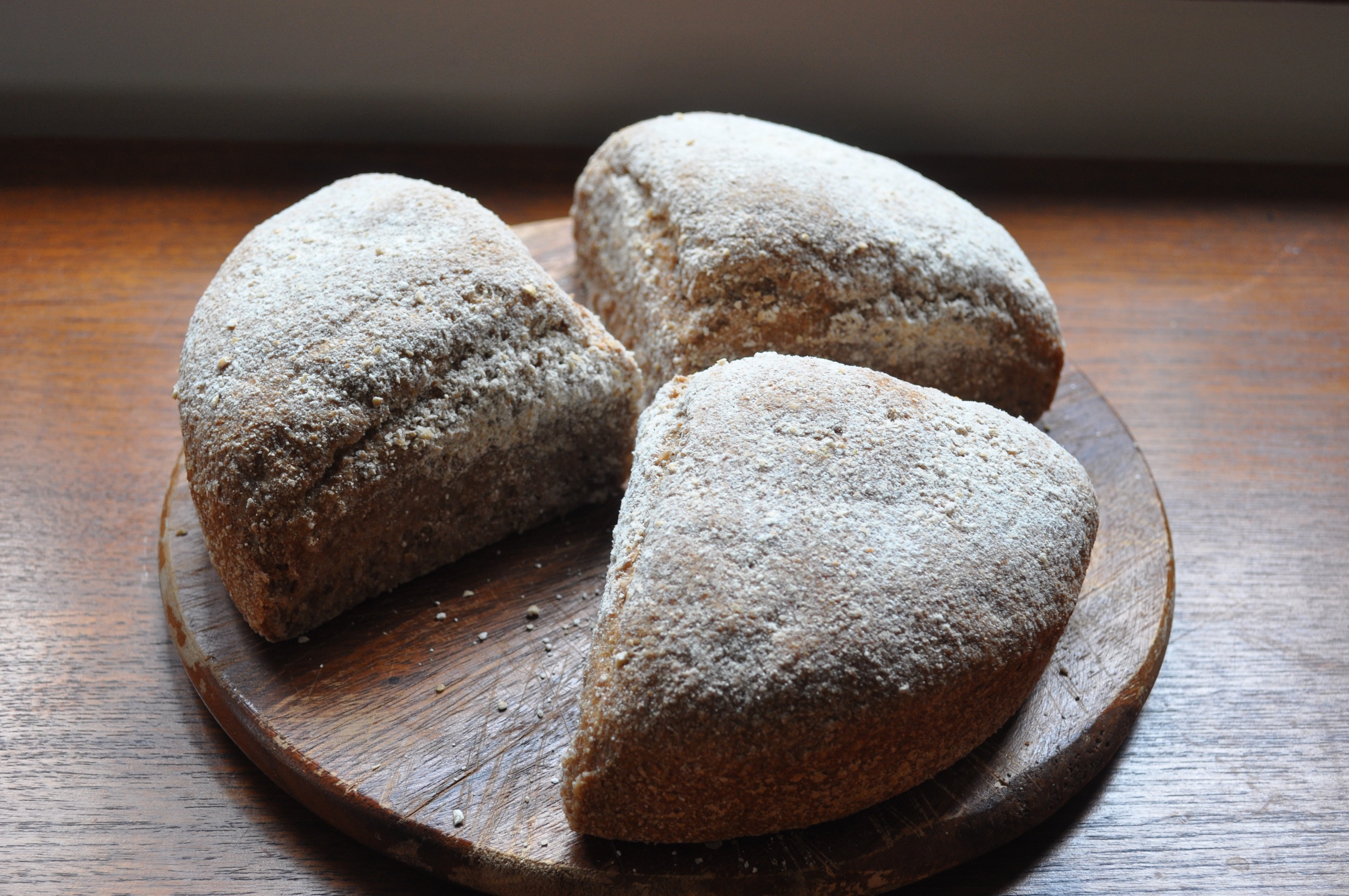
Dan Lepard Golspie loaf torn apart

350g leaven – mine was based on rye, but then fed on strong wholewheat flour and was 100% hydration (that is, made with equal proportions of water and flour)
210g water
6g salt
400g strong wholewheat flour
20g oatmeal (I used medium coarse)
Extra oatmeal to coat

1. Put the flour, 20g oatmeal and salt in a large bowl.
2. In a separate bowl, whisk together the leaven and water.
3. Pour the gloopy leaven and water mix into the flour and bring together a dough.
4. Cover and rest for 10 minutes, then give it a brief knead.
5. Cover and rest for 10 minutes, then give it another brief knead. Repeat this once or twice more.
6. Cover and leave the dough to prove. I did this in a cool cupboard over about 4 hours. You want it to prove up until it’s almost doubled in size. You can speed it up a bit in a warmer place, but a slower prove allows the flavour to develop more, and the yeast to work on the wheat proteins.
7. Lightly oil a 20cm springform cake tin and spinkle the inside with oatmeal.

Dough and tin
8. Form the dough into a ball, then flatten this into a disc.

In tin, before final prove
9. Put the disc of dough in the tin, and spread it to fill with your knuckles.
10. Sprinkle the top with further oatmeal.
11. Leave to prove up again. Again, how long this takes will depend on the warmth of the spot, and also the liveliness of your leaven.
12. Preheat oven to 220C (200C fan).

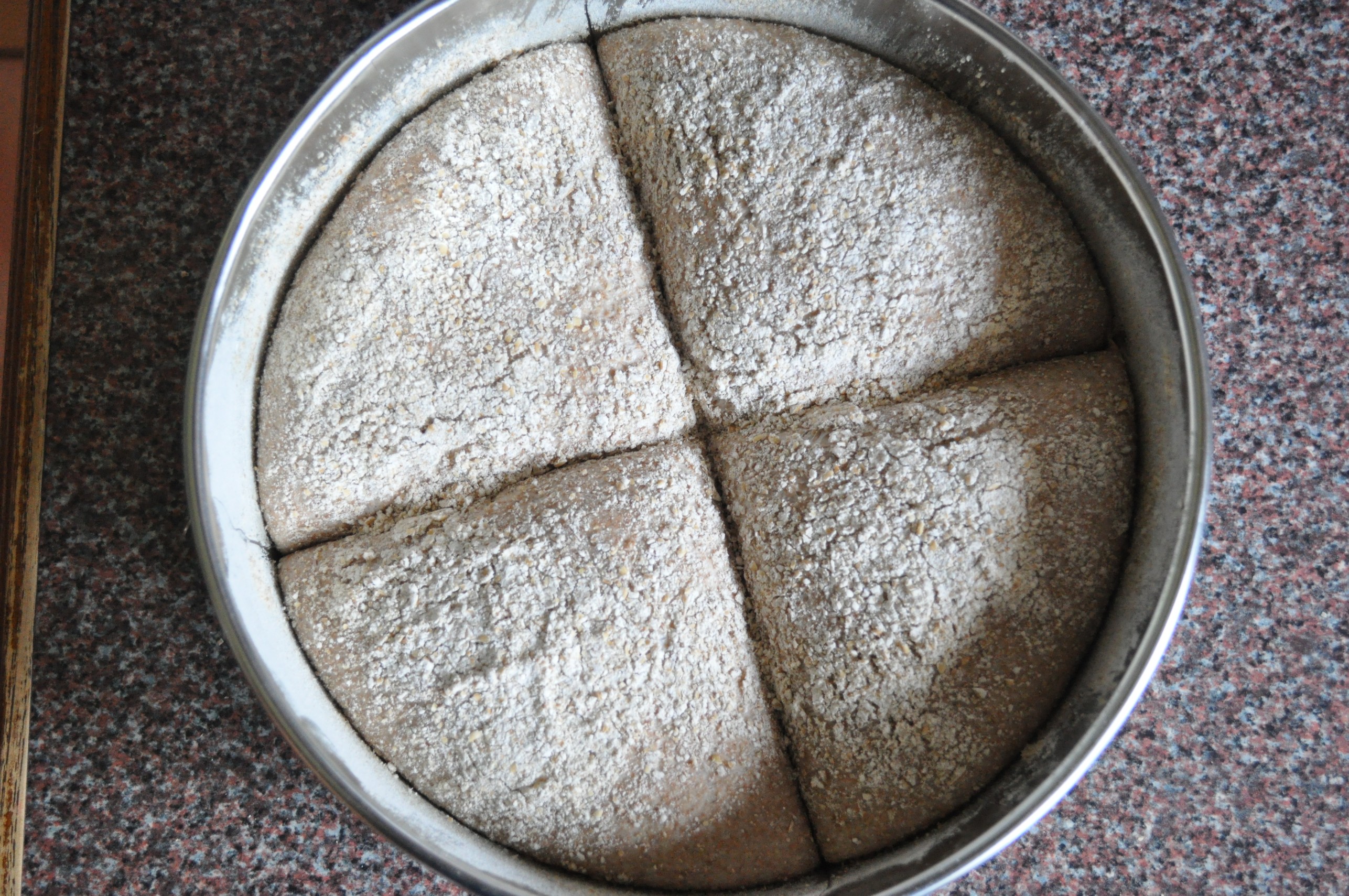
Before bake
13. When the dough is nicely risen, and reinflates slowly when prodded, cut two slices thrpough it in a cross shape, all the way to the bottom. (A metal scraper or cutter like this is very handy.)
14. Bake for 20 minutes, then turn the oven down by 20 degrees and bake for another 25 minutes. Baking times vary depending on your oven too but you want it nicely browned. If you have a fierce oven, check after about 30 minutes.
15. Turn out onto a wire rack and cool completely.

After bake

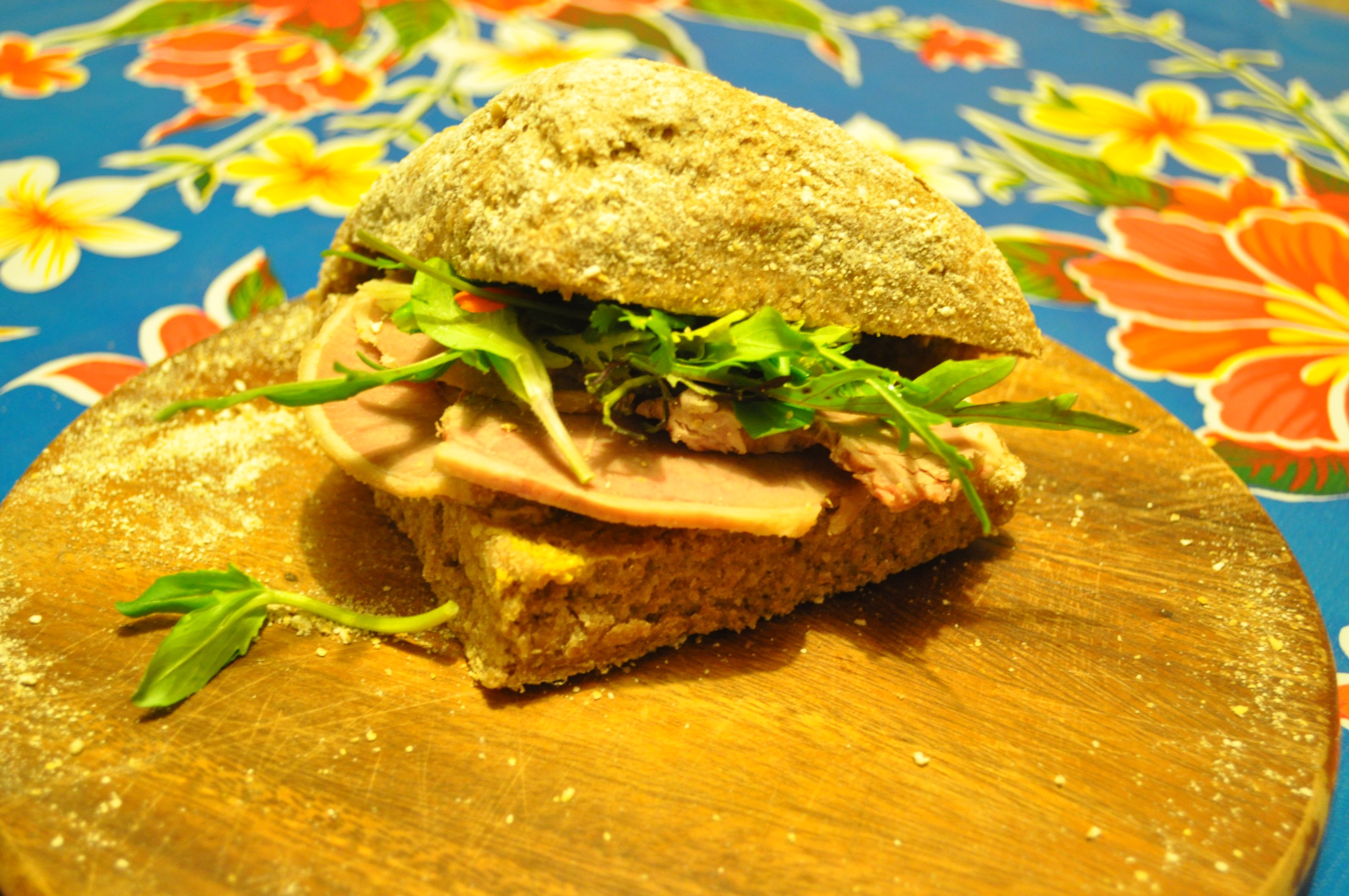
This is a real companionable bread – the cuts mean you can tear it easily into portions for sharing. Fran’s taken a quarter to work today with some of her salt beef, a project that’s been floating around in brine the past few weeks but was cooked up on Easter Sunday.

Salt beef sarnie

4 Comments

Filed under Baking, Breads, Recipes

Pasticcini di mandorle, soft almond biscuits

Sicilian almond pastries, biscuits

Alongside the renowned corporate outfit Cosa Nostra, Inc, the half-finished bridges, the bandy-legged hero cop (“Montalbano sono”) and its incredible history from Greeks and Phoenicians, to a Norman conquest around the same time as the 1066 one us English kids learned about at school, to said Mafia scrapping the nascent Italian state during unification, Sicily also is home to some of the world’s finest pastries and sweets. Or at least, I’m assuming it is – I’ve never been, but base my experience instead on Sicilian pasticcerie I frequented in Rome. Notable among them were Dagnino, an overpriced place near Termini station located in a wonderful 1950s arcade, and Sicilia e Duci on Via Marmorata in Testaccio.

The latter was a fairly regular stop for me as it was on my route home from Piramide and Porto San Paolo station, or from hanging out in Testaccio with Rachel and co. I’ve no idea if their wares are especially renowned, but they did it for me. In particular the various permutations of almond… thing. I never learned what they were called specifically, but looking now it seems such things made with a paste or dough of ground almonds are simply called Paste di mandorla sicialiane (Sicilian almond pastries) or Pasticcini siciliani alle mandorle (little Sicilian almonds pastries). So basically marzipan, and quite possibly a legacy of Arabic Sicilian food culture.

I can’t quite bring myself to call them cookies, as I’m English, but nor can I quite call them biscuits, as they’re not biscotti (“twice cooked”). If anyone Sicilian can tell me a more specific name, I’d love to hear it, as Google has failed me.

Plate, overhead

I believe more authentic (whatever the heck that means) recipes would use some bitter almonds, that is almonds of the strain Prunus dulcis var. amara (as opposed to sweet almonds, var. dulcis) that have a particularly distinctive flavour – and certain notoriety for containing traces of Prussic acid, aka hydrogen cyanide. But they’re not readily available in smalltown England, so I just went for normal almonds. In fact, I cheated – I should probably have freshly ground blanched almonds, but just used ground almonds instead.

Boy are they good. I’m eating one as I type, and it’s bringing back memories of indulging in a bagful from Sicilia e Duci.

They’ve got a chewy, slightly crisp crust, and a sweet, moist centre. Morbido is the Italian word. Moreish is another word. It’s probably one of those words that some conceited food writers say should be avoided, but, bollocks, I rarely, if ever, use it, so think I can get away with it here.

Makes 24*

290g ground almonds, or whole blanched almonds (see below).
110g granulated sugar
1/2 t vanilla essence
1/2 t almond essence
20g runny honey
2 egg whites (that is, about 64g)
Icing sugar

1. Preheat oven to 180C (160C fan oven).
2. If you’re using whole blanched almonds, put them in a food processor with 25g of the sugar. Grind to a coarse powder. If you’re using ground almonds, go to step 3. Do not pass Go, do not collect £200…
3. Combine all the ingredients in a bowl, working the mixture with your hands to combine. You want a soft, moist, slightly sandy paste
4. Form the dough into a ball.
5. Sieve icing sugar (aka confectioners’ sugar) onto your work surface.

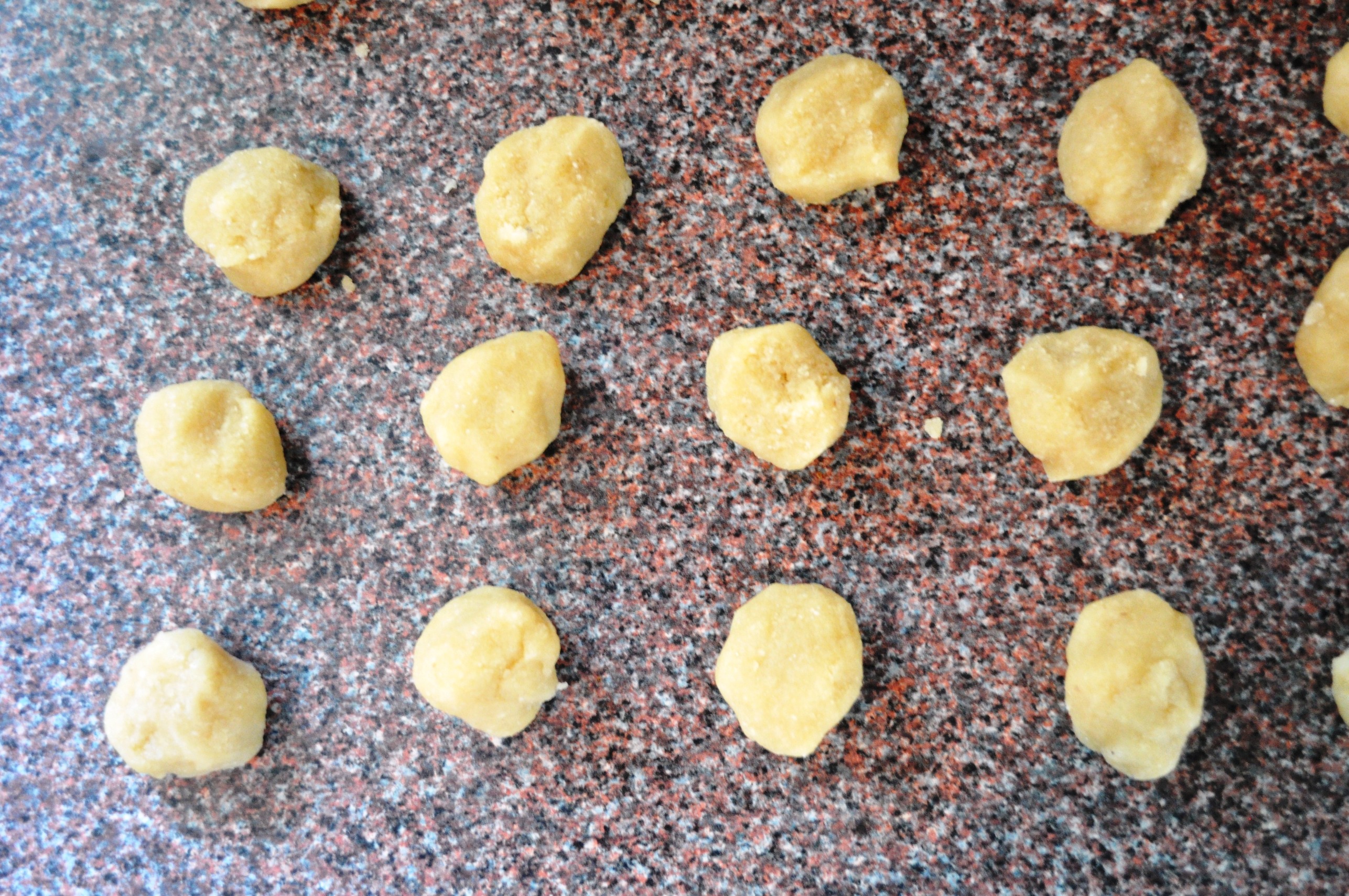
Balls of almond paste
6. Weigh the ball of paste. It should be about 485g. Form the ball into a sausage, then cut off small portions, each weighing 20g (more or less).
7. Roll the pieces of paste into sausage shapes, about 10cm long and 1cm thick, coating them well with the sugar.

Shaping
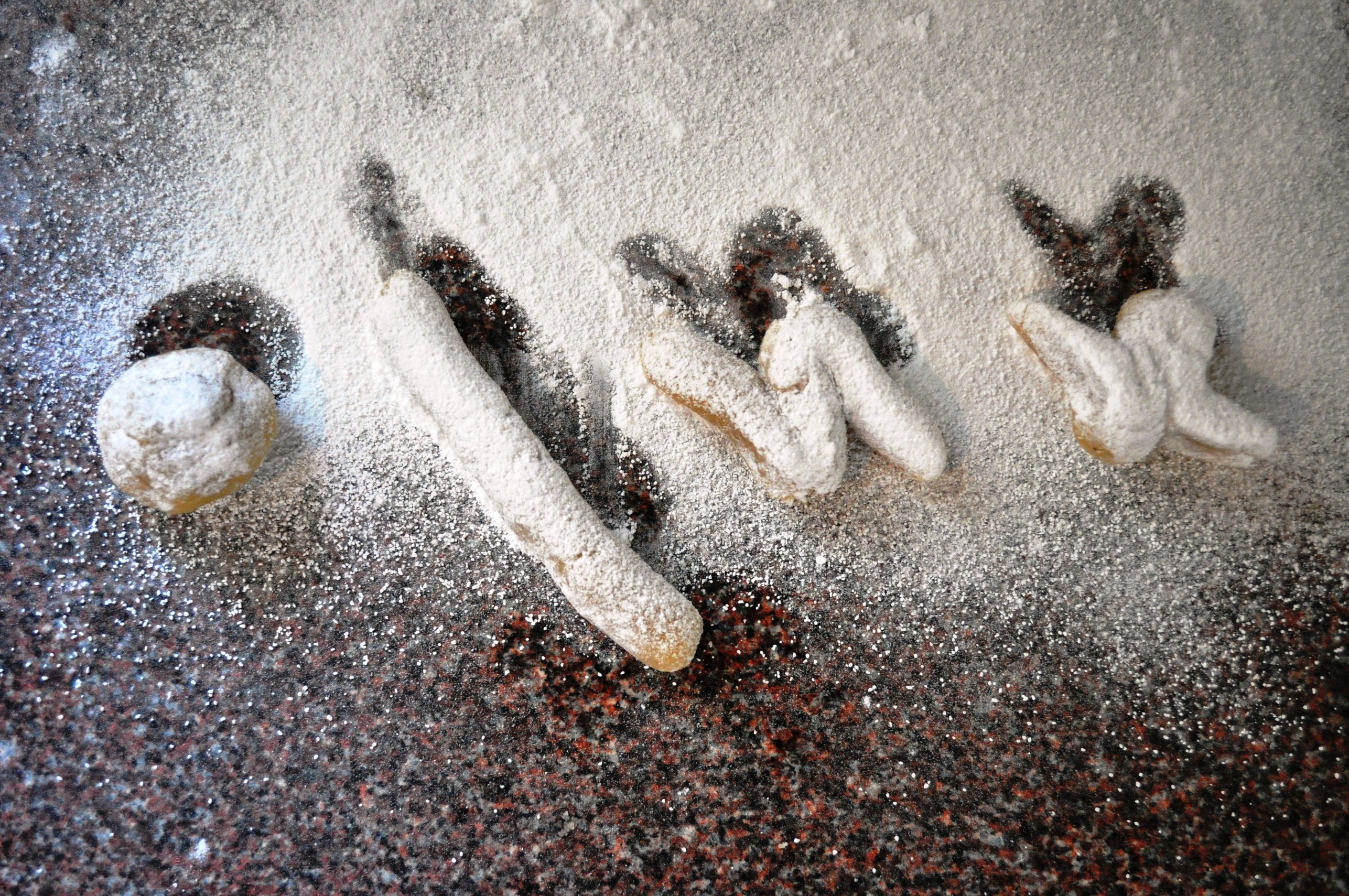
8. Form these into shapes like the letter N, pinching the ends slightly.

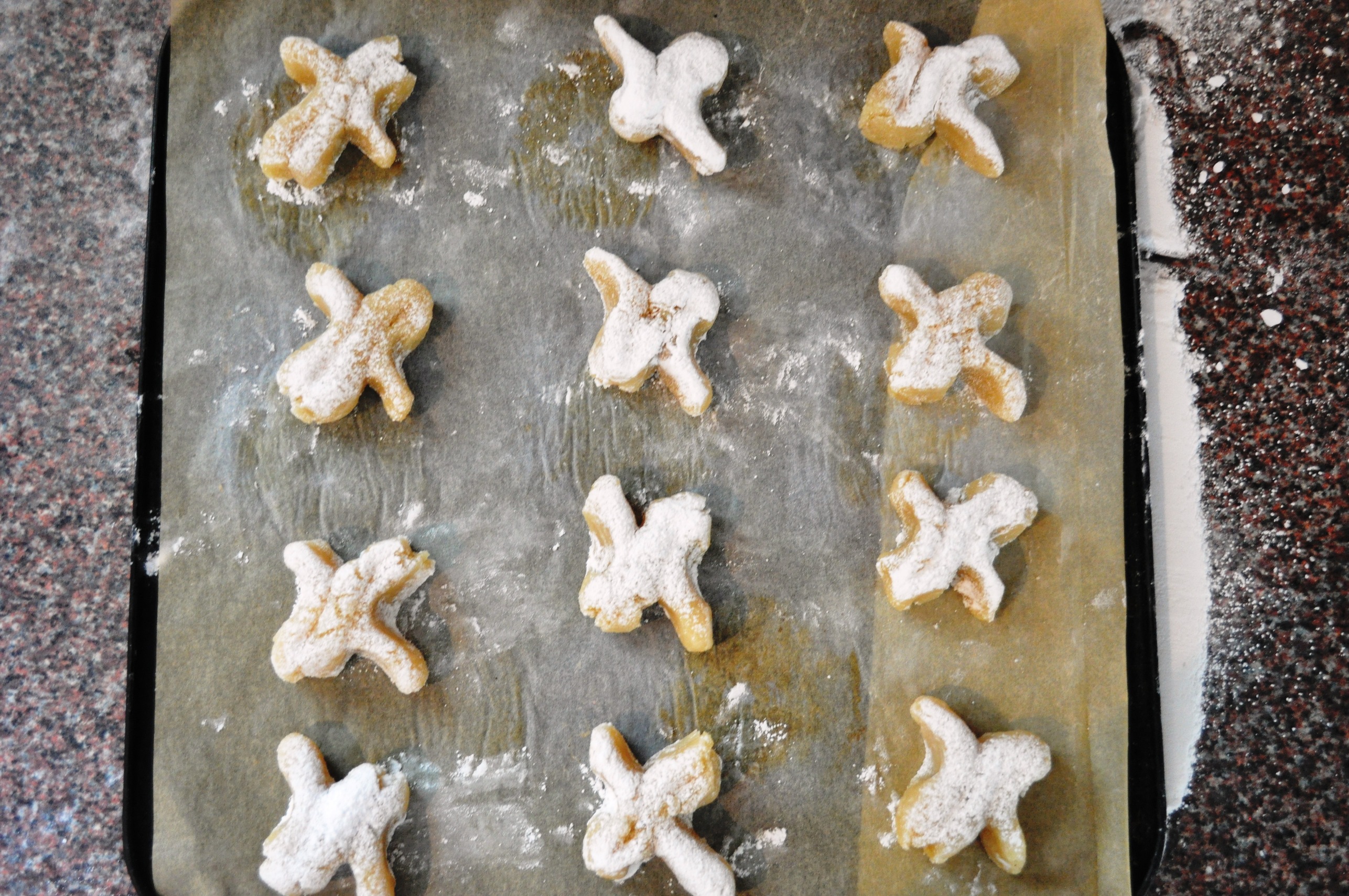
Prebake
9. Place the shapes onto baking sheets lined with baking parchment, leaving a little space between them. They don’t expand much in the oven.

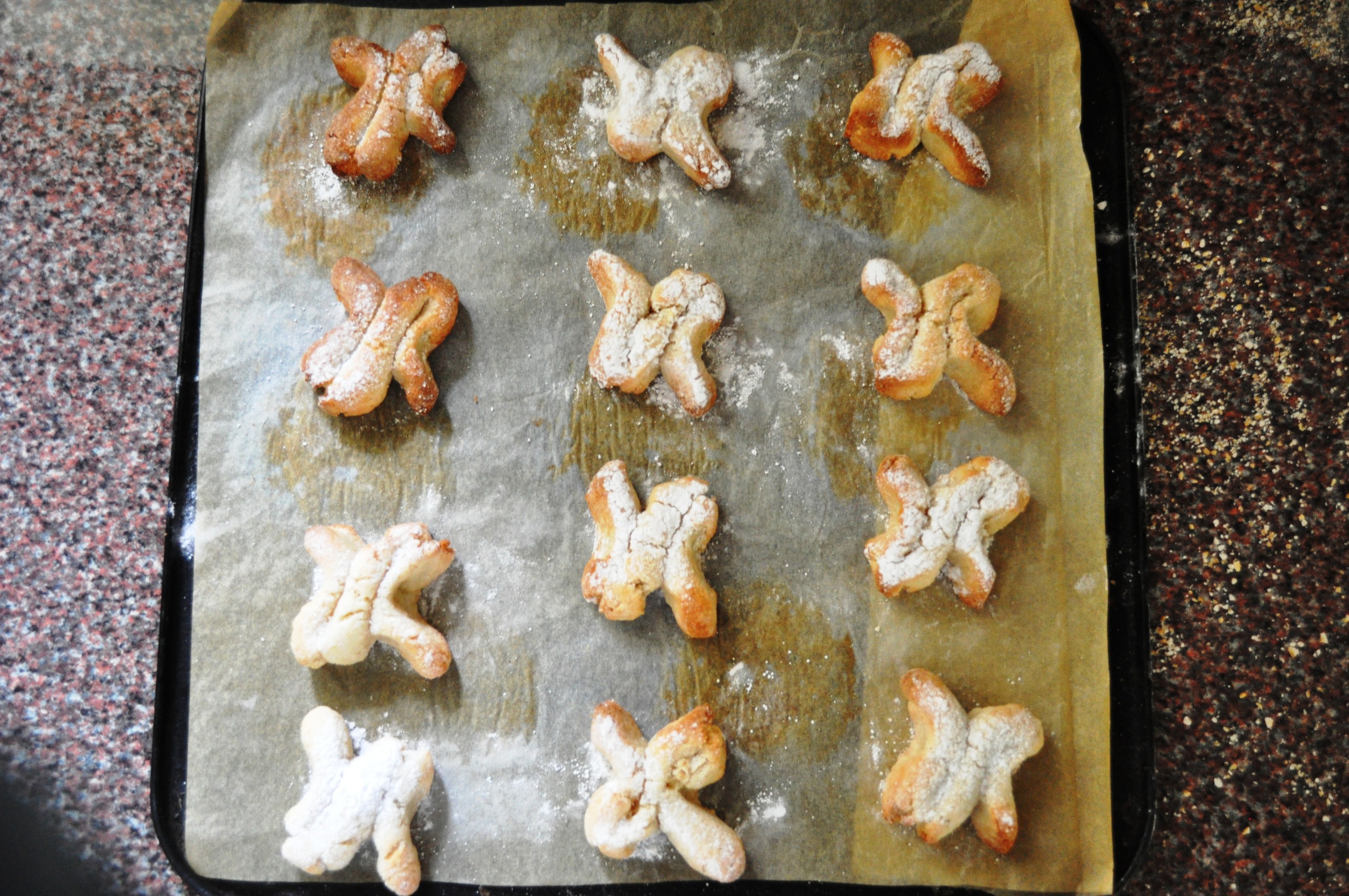
Baked
10. Bake for about 10 minutes until browning.
11. Sieve a bit more sugar over them.

Cooling

12. Scoff the lot.

Sugar shapes

* Recipe based on Biscotti alle mandorle amare found in ‘Biscotti: Recipes from the Kitchen of the American Academy in Rome’ by Mirella Misenti (an actual Sicilian) and Mona Talbot.

4 Comments

Filed under Baking, Recipes

Pizza cresciuta di Pasqua… Sort of.

Pizza cresciuta di Pasqua, sliced

You could say pizza cresciuta is an Easter (Pasqua*) equivalent of the traditional north Italian Christmas cake panettone. Pizza cresciuta is one the many distinctive Italian baked products I saw during our two years in Rome. I mentioned it last year in a round-up of Easter baked goods and baking, saying that the verb crescere means “to rise”, as in the word crescendo. I also mentioned that the word pizza means a lot more than just a topped dough disc in Italy. So this is a “risen pizza” (it’s also called pizza ricresciuta – “re-risen pizza”). I believe a cresciuta is also term for what we’d call a sponge or pre-ferment – yeast, water and some of the recipe’s flour mixed ahead of time to get the leavening going nicely. It’s a term that’s also applied, in Naples I think, for a yeasted batter. Anyone with more knowledge about this, please do comment!

In shape the pizza cresciuta di Pasqua I saw in Rome was more like a tall round cake – that is, like panettone. Except when it’s savoury. Looking at recipes online, most of them are an enriched dough with some spices, but there are even recipes online in Italian for cheesy versions.

As the ones I’d seen in Rome were always sweet, I wanted to try that this Easter. Though I’ll say now that this is one of those experiments that didn’t really quite exactly work. Blogging it anyway, as a record. If I do try to perfect it, I don’t think it’ll be until next Easter.

A lot of the recipes I found used spices – notably anise seed and cinnamon. Most of them also used some liquor, notably spiced or herbal liquers like Alchermes (aka Alkermes) and Strega. One recipe I saw even contained 100ml each of rum, vermouth, alchermes, cognac, and cointreau! But I thought this much strong liquor was sure to bugger things up with the yeast (I note now that that recipe uses “lievito paneangeli” – I think this is a kind of vanilla flavoured baking powder).

I couldn’t hope to get Alchermes and Strega, but was able to source a bottle of the latter from TwentyOne Wines in Brighton (thanks Philip, who opened up for me during his Easter holiday last week). I was also finally able to track down some aniseed – something I’ve not been able to source in smalltown Lewes, and really want for several other Italian recipes, notably aniseed-flavoured ciambelline al vino (ring biscuits often eaten with a digestivo after dinner).

So here’s my recipe. Tweaked slightly from the weekend’s effort, but to really work I think it’ll need more tweaking. If you do have a try yourself, or have a better recipe, again, please let me know.

Some ingredients

Liqueur
50g Strega
2 t aniseed

Sponge / pre-ferment, or cresciuta
100g strong white flour
100g water
10g fresh yeast

Dough
250g strong white flour
300g plain, all-purpose or type ‘0’ flour
6g salt
Zest of one lemon
Zest of one orange
1 t cinnamon
1/2 t nutmeg
5 medium eggs
2 t vanilla
300g caster sugar (seems a lot but vabé)
50g lard
50g butter

Aniseed in Strega

1. Put the aniseed in the liqeur and leave to macerate for at least 4 hours, preferably overnight.
2. Make a sponge with the yeast, the water and 100g of the the strong white flour.

Lively sponge
3. Leave the sponge to ferment, covered, in a cool, draft-free place overnight.
4. Lightly beat together the eggs, vanilla, zests, sugar, booze and other spices.
6. Melt together the lard and butter then allow to cool.
7. Add the melted fat to the egg and liqeur mix.
5. Put the rest of the flour in a large bowl, along with the salt, then add the wet mixture.

Slightly strange sticky pizza cresciuta dough action shot
6. Make a dough – a nice soft, wet, tricky-to-handle dough.
8. Give the dough three short kneads every 10 minutes over half an hour or so, forming a ball, returning it to the bowl and covering between each knead. (This is the very handy Dan Lepard method.)
9. After the final knead, put the ball back in the bowl, cover again, then leave to prove until doubled in size.
10. Form a ball and allow to rest for 10 minutes.
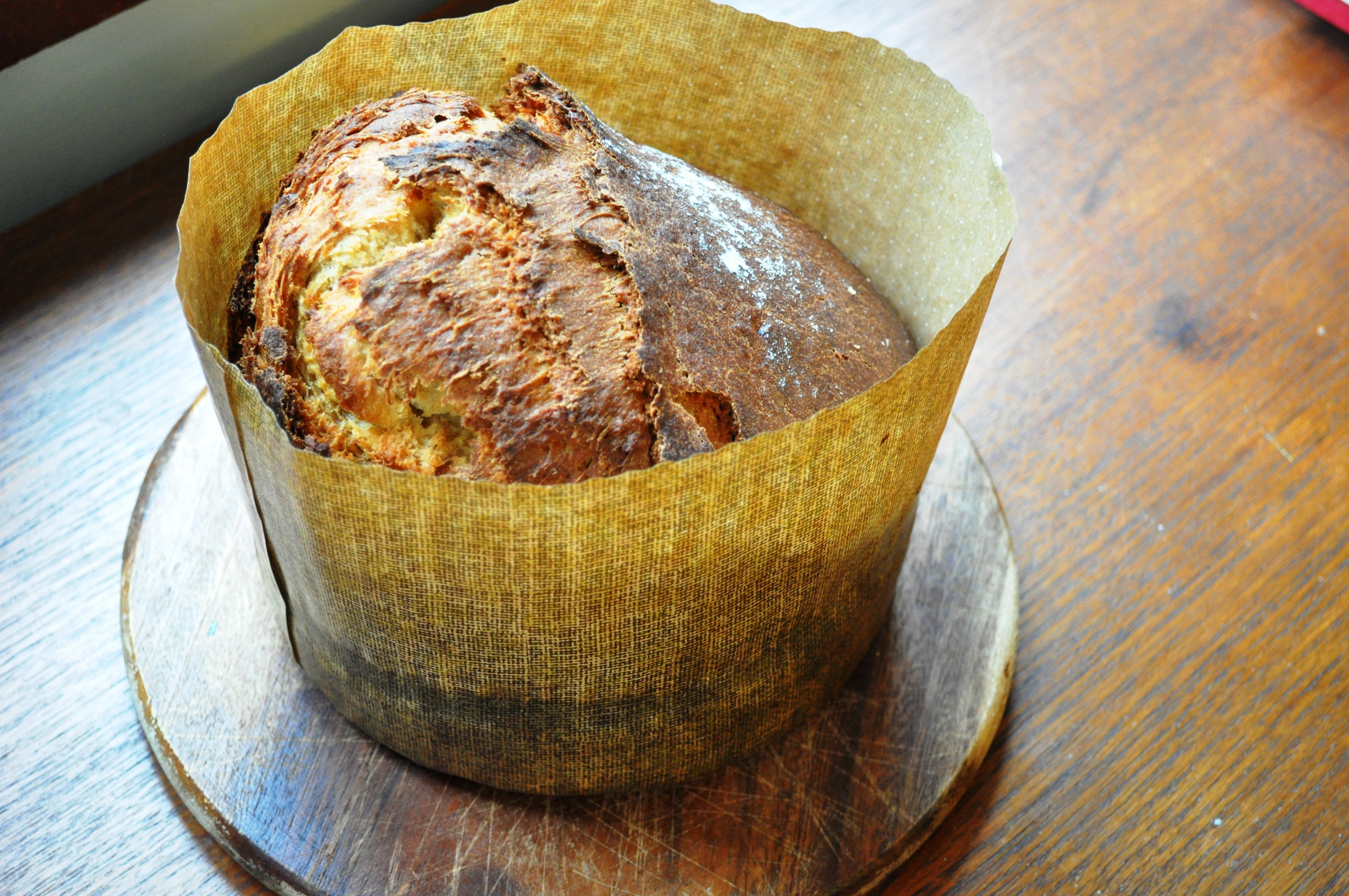
11. Tighten up the ball, then put it in a tall, deep tin (it could be an old food tin, which is what I did when I made panettone, though note – not one with plastic lining), or in a paper panettone case. I used the latter, which are available from Bakery Bits.
12. Leave to prove up again. Ideally you want it to double in size and feel nicely inflated. Hm. See discussion below.
13. Preheat the oven to 220C (200C fan oven).
14. Brush the top of the dough beaten egg. I didn’t bother as, frankly, my dough didn’t look great.
15. Bake the pizza for about 20 minutes, then turn down the oven by 20C.
16. Test to see if it’s done with a knock on the bottom. Hm. See discussion below.
17. Allow to cool completely on a wire rack.

Pizza cresciuta di Pasqua. Sort of.

Eat for your Easter Sunday breakfast. In Rome, the pizza cresciuta is eaten for Easter Sunday breakfast with corallina salami. We had this one for breakfast, even though I was disappointed with the results. And couldn’t get corallina.
I knew it was going wrong when the dough seemed sluggish for the final prove. There was some (very irregular) oven spring, but I knew it was going even wronger when I first took it out of the oven – it just felt hefty, not light like a panettone. I had the oven set too low originally, and it baked too slowly, and ended up both dense and thick-crusted.

Easter Sunday breakfast - Pizza cresciuta di Pasqua

The taste was interesting though, thanks to the Strega, which features saffron, mint and fennel among its many ingredients, and the aniseed. Though I do wonder about the Strega. Certainly yeast produces alcohol alongside CO2 when it’s active in the dough, but not too much alcohol, or the presence of strong alcohol retards the action. Scratching my head about this today, I found one comment at Delia Online (here) that says “Baker’s yeast is tolerant to alcohol to about 3%. That’s 3% C2H5OH [ethanol] by mass. Brandy is about 40% C2H5OH.” I’m not sure my 50g Strega could really retard the yeast quite so much, but clearly something was awry. My proving times were quite possibly problematic too. And  I suspect all that sugar might have been a factor in affecting the activity of the yeast too.

Anyway, next time I try it, I might adapt my attempt at panettone a few years ago, which was much more successful, and go easier on the strong liquor too. Fun experiment anyway even if the result is slighty heavy duty. We had a load more for Easter Monday breakfast earlier, and it was pretty good toasted.


* While the English word for Easter comes from the name of a pagan goddesses – the Anglo-Saxon Ēostre – the Italian word relates to the word Passover, which comes from Pesach and the Hebrew pesah and pasah.


4 Comments

Filed under Baking, Other food, Pizza, Recipes, Rome